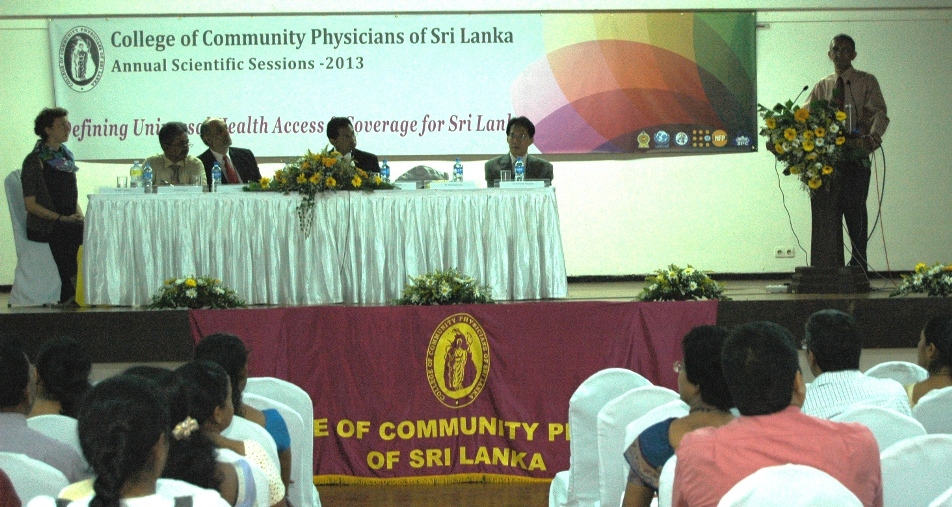
“21st Century Demons & Universal Health Access in Sri Lanka” was the topic of my plenary talk to the annual scientific sessions of the College of Community Physicians Sri Lanka held in Colombo on 23 – 24 September 2013.
Speaking to an audience of medical practitioners, researchers and academics focusing on community medicine, I explored how public perceptions influence private choices and, ultimately, public health trends and progress.
I was part of a plenary session titled ‘Multi-sectoral approaches for universal health access’, co-chaired by the Director General of Health Services (Dr Palitha Maheepala) and WHO Country Representative in Sri Lanka (Dr F R Mehta).
Achieving universal health access and a robust public healthcare system requires not only medical and para-medical systems but also paying attention to sociological, anthropological and psychological aspects of wellness and illness in the Lankan context, I argued.
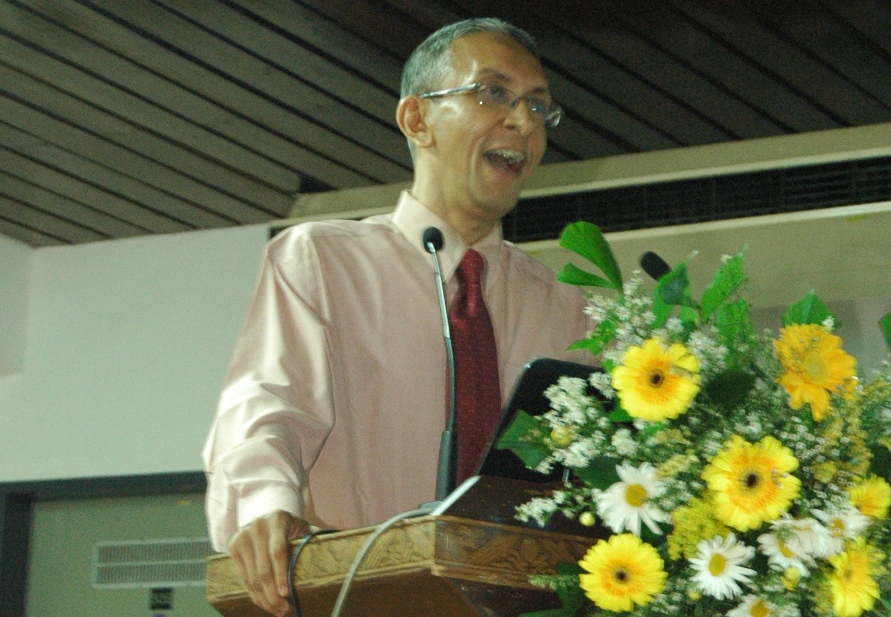
I have long been interested in the nexus between public perceptions and environmental conservation. The same principles apply in public health: it’s not just facts, figures and technocratic analysis but people’s impressions, apprehensions, suspicions and fears that shape the public mind. These, in turn, influence public policies (which in democracies try to respond to public opinion — for better or worse!).
Investing LKR billions of public funds in the health sector is necessary, but not sufficient. Such public funds are at risk of being undermined if the public mind is occupied by assorted demons old and new. The new demons come dressed in the clothes of pseudo-science!
The media can either amplify ill-founded public perceptions, or help clarify matters. For the latter, medical professionals need to collaborate with sympathetic media editors and practitioners. This is a long-haul task.
I built on ideas initially expressed in:
Ceylon Today, 22 Sep 2013: When Worlds Collide #84: Have Lankans Suspended Disbelief Permanently?
Groundviews.org, 13 Jan 2012: Can Rationalists Awaken the Sleep-walking Lankan Nation?
PowerPoint:
<div style=”margin-bottom:5px”> <strong> <a href=”https://www.slideshare.net/NalakaG/21st-century-demons-public-health-in-sri-lanka-by-nalaka-gunawardene-24-sep-2013″ title=”21st Century Demons & Public Health in Sri Lanka by Nalaka Gunawardene, 24 sep 2013″ target=”_blank”>21st Century Demons & Public Health in Sri Lanka by Nalaka Gunawardene, 24 sep 2013</a> </strong> from <strong><a href=”http://www.slideshare.net/NalakaG” target=”_blank”>Nalaka Gunawardene</a></strong> </div>

 Open Minds!
I bought your book “සිව්මන්සල කොලු ගැටයා” few days ago , it was brilliant … This slides provide perfect insight on true demons in our health industry, I hope facts and points you raised make an impact to our decision makers. Keep your good work !