Today, 10 October, is the International Day for Disaster Reduction. So we’re going to talk about playing games on disasters.
Yes, that’s right: games. Disasters are serious phenomena, but there’s no reason why disaster awareness and preparedness have to be all dull and dreary.
There’s a old Chinese saying: “I hear and I forget; I see and I remember; I do and I understand.” Disaster preparedness and training are now moving more into the realm of understanding by doing — simulations or drills for community evacuation, and games that allow players to prevent or manage a disaster.
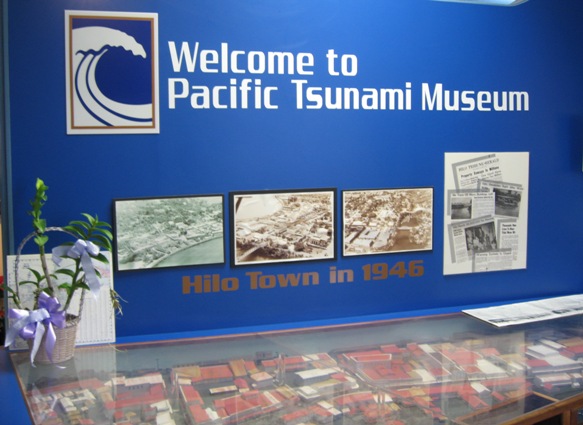
I first played such a game in January 2007 when, while in Honolulu for a conference, I took the day off and flew to Hilo where the Pacific Tsunami Museum is located. The volunteer-run museum, based in what is known as the tsunami capital of the world, engages local people and foreign visitors (including curious US mainlanders) on the science, history and sociology of tsunamis.
A basic game there allows a visitor to be play the role of Director of Pacific Tsunami Warning Centre (PTWC) , a US government institute that monitors seismic activity and has a mandate to issue alerts, watches or warnings to all countries in and around the Pacific Ocean. The game allows players to choose one of three locations where an earthquake happens — Alaska, Chile or Japan — and also decide on its magnitude from 6.0 to 8.5 on the Richter Scale.
In the real PTWC, five geophycisists are on duty round the clock. If the magnitude exceeds 7.5, the epicentre is located. If it’s in an area likely to cause a tsunami, a tsunami watch is sent to nearby coasts and a tsunami watch is set for areas with a travel time more than three hours away. Messages are sent to the tide observers for reports on the first wave, and telemetered water level gauges are checked. It’s by quickly assessing the seismic, sea level and historical data that scientists at PTWC decide if a warning is needed for areas already placed under a tsunami watch.
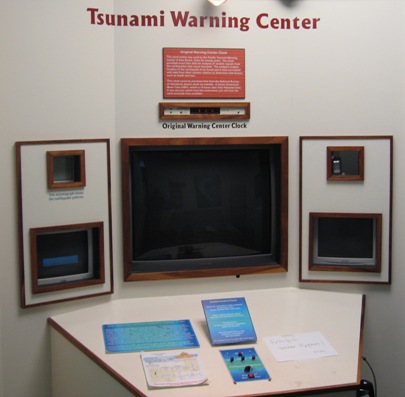
Since the system was set up in 1947, it has never missed warning of a damaging tsunami, but there have been a number of very expensive evacuations that turned out to be unnecessary. “These precautions are needed to ensure public safety, but scientists are working to minimise unnecessary warnings without ever missing a hazardous event,” the Tsunami Museum panel explained.
It’s revealing to play the role of a scientist who must quickly marshal lots of information and decide on whether or not to issue a warning. The cost of inaction can be high — but a false alarm doesn’t come cheap either.
I played the game three times, and each time erred on the side of caution — costing the hapless Hawaiian tax payers lots of money.
In real life, those who have their finger on the alert/warning button have to take many considerations into account. Repeated false alarms can erode public confidence in early warning systems. But suppressing a warning on a real breaking disaster — such as what happened in Thailand when the Indian Ocean Tsunami broke in December 2004 — can be truly devastating.
I don’t envy those who have to make this decision as part of their daily work. But after playing the game, I appreciate their challenges a great deal better.
Read more about Tsuamis on Wikipedia


