“The key to successful foreign policy in today’s world is networked diplomacy. Managing international crises requires mobilizing international networks of public and private actors,” says Anne-Marie Slaughter, an international lawyer and political scientist who is a former Princeton academic and ex-Director of Policy Planning at the US State Department under U.S. Secretary of StateHillary Clinton.
Diplomacy then…and now
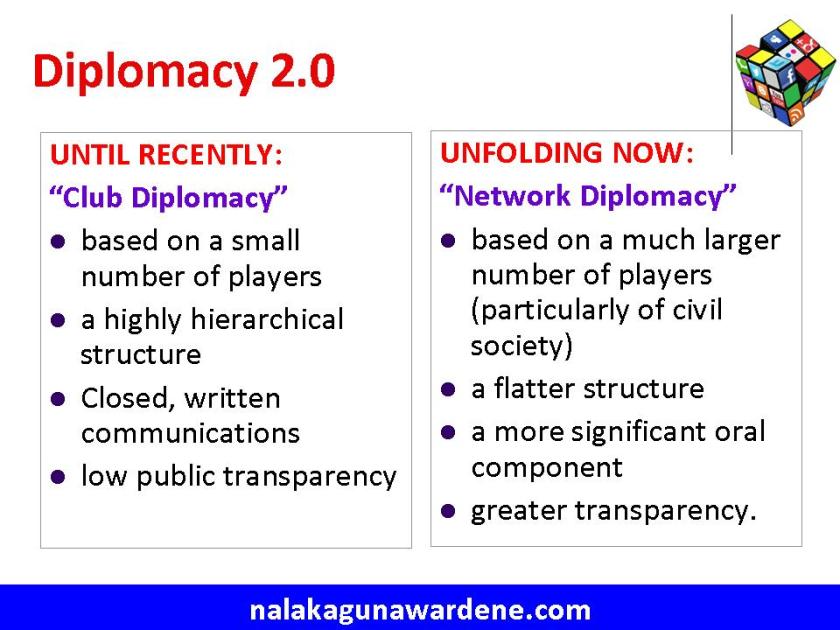
The nature of this ‘networked diplomacy’ is still being documented and studied. Some governments are not even convinced of its value, but meanwhile, others are encouraging it perhaps as a way of ‘exploiting the inevitable’.
I am neither diplomat nor scholar, but sometimes dabble as a writer and researcher on how new media – including social media – impact our society, economy and governance. So I welcomed an opportunity to engage a group of mid-career professionals on the topic Diplomacy & Foreign Relations in the Social Media Age.
I made this presentation on 14 November 2015 as part of the Certificate Course in Creative Diplomacy, conducted by the Regional Centre for Strategic Studies (RCSS) in Colombo, Sri Lanka – a think tank on international relations.
In this, I introduce and briefly explore the new kind of real-time, public diplomacy that is being ushered in with the spreading of social media. I show how diplomats and other government officials can no longer ignore this mass medium, but at the same time their traditional ways of communications need to be reoriented to suit the realities of this new information ecosystem that is informal, irreverent and fleeting.
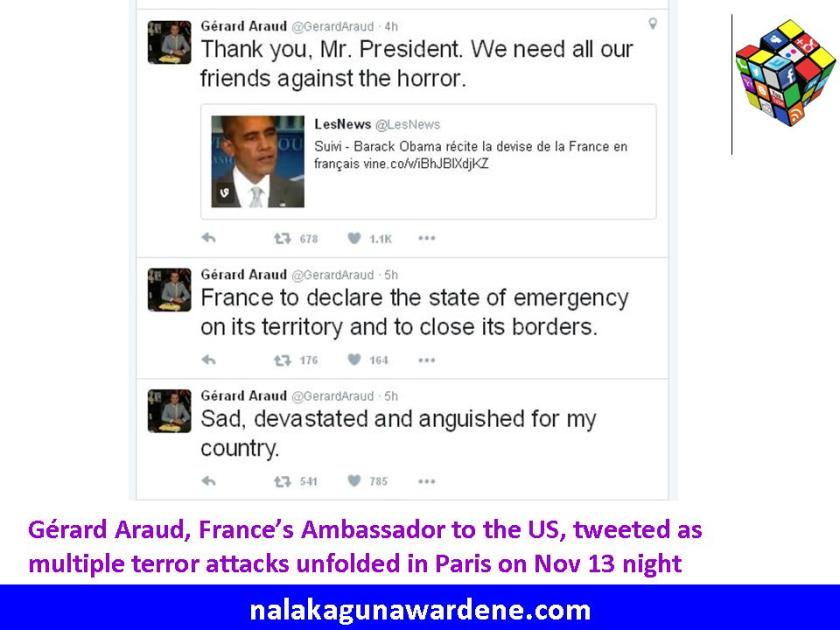
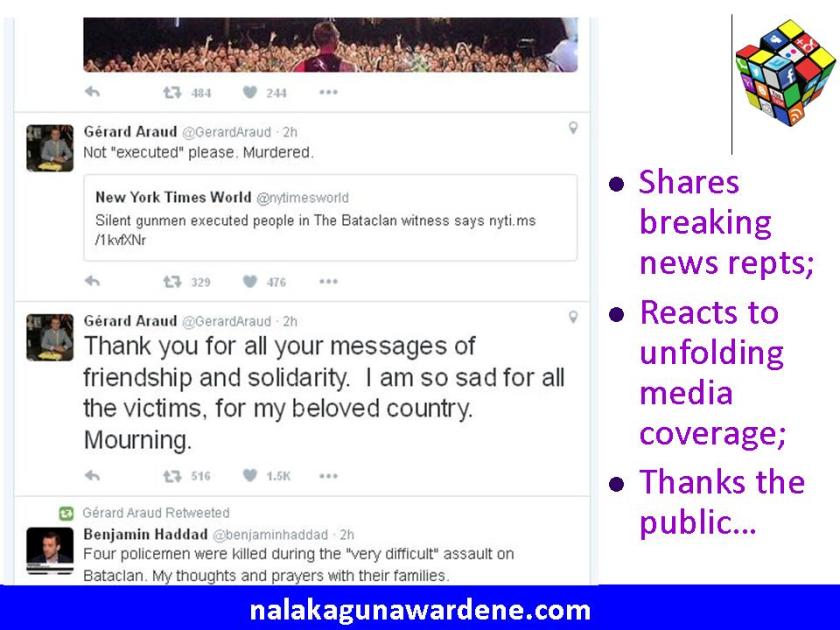
As I spoke on the day after the ISIS terrorist attacks in France, I used (among others) the latest examples of how Gérard Araud, France’s Ambassador to the US, tweeted live as multiple terror attacks unfolded in Paris on Nov 13 night.
Real time tweeting by French Ambassador to the US while Paris attack was underway on 13 Nov 2015…More tweets from Ambassador Gérard Araud on 13 Nov 2015…
To see the bigger picture, I’ve distilled some wisdom of key researchers in this area including: Anne-Marie Slaughter, former Princeton Academic and ex-Director of Policy Planning, US State Department; Philip Seib, Professor of Journalism and Public Diplomacy, University of Southern California; and Ramesh Thakur, Professor, Crawford School of Public Policy, Australian National University (ANU).
I also used the case study of Indian Ministry of External Affairs using social media for crisis management when 18,000 Indian nationals were stranded in Libya in Feb – March 2011 who had to be evacuated urgently.
As Ramesh Thakur has written, it is “a useful case study in the utility of social media tools in connecting the government with people who are normally well outside their range, but who can be a useful channel to send out time-urgent critical information and to receive equally valuable information from sources on the ground.”
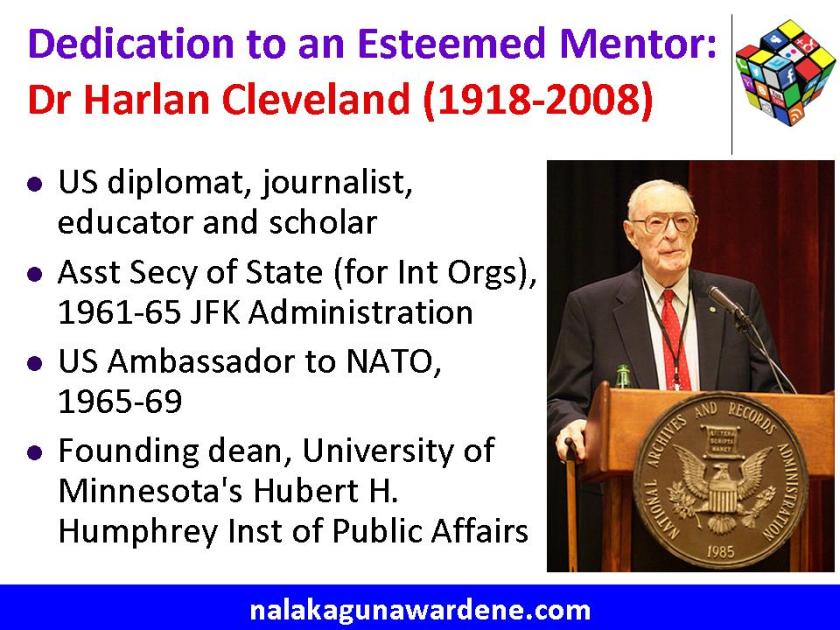
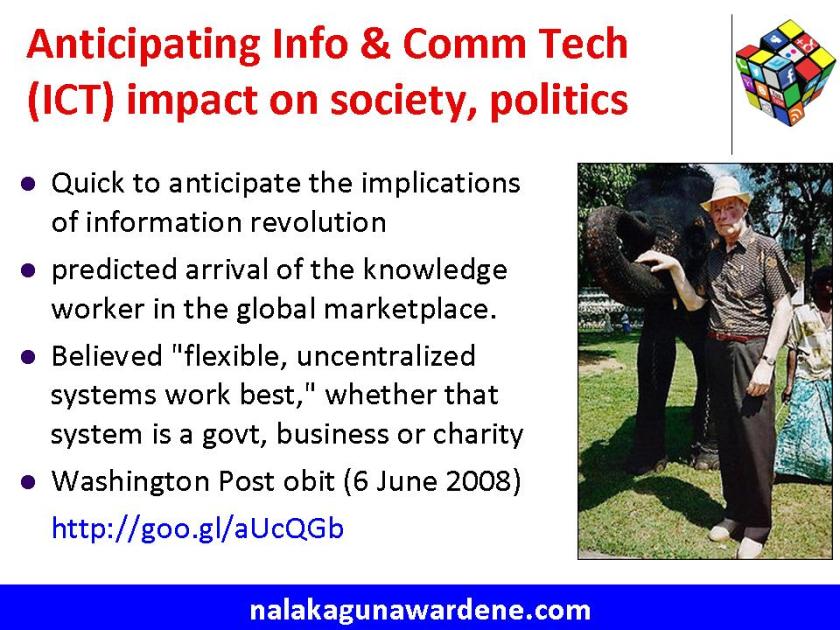
Dedication to a remarkable diplomat-scholar who spent a few days in the Summer of 1995 mentoring a group of youth leaders from around the world, including myself, who were brought to the UN Headquarters in New York…
I dedicated this presentation to a diplomat and scholar whose mentoring I was privileged to receive 20 years ago: Dr Harlan Cleveland (1918 – 2008) who served as US Ambassador to NATO, 1965–1969 (Johnson Administration), and earlier as US Assistant Secretary of State for International Organization Affairs, 1961–1965 (Kennedy Administration).
Harlan Cleveland, among the first ‘philosophers’ of the Information Age
According to RCSS, their Course in Creative Diplomacy “provides theoretical and practical insights into the various facets of Creative Diplomacy. The course will expand participants’ understanding of the concept of diplomacy and expose them to new skills and alternative perspectives to engage with stakeholders. It is further envisioned that this post-disciplinary approach, which will be followed by the course, will explore a whole host of new mediums through which mediation, cooperation and negotiation can be carried out.”
In 2015, the UN is 70 and Sri Lanka’s membership is 60 years
On 24 October 2015, United Nations marks its 70th birthday. A few weeks later, on 15 December 2015, is the 60th anniversary of Sri Lanka (then Ceylon) becoming a member state of this inter-governmental organisation.
In this week’s Ravaya column, (appearing in issue of 25 Oct 2015), I continue my focus on Sri Lanka’s engagement with the UN system. In last week’s column, we recalled how Sri Lanka’s heads of state/government and diplomats engaged with the General Assembly and Security Council.
Today, we look at some eminent Lankan professionals who joined the UN system in expert or management positions and contributed to its intellectual and institutional development over the decades.
As Thalif Deen, a journalist of Lankan origin who has been reporting from the UN headquarters since the mid 1970s, once wrote: “When future historians take stock of Sri Lanka’s enduring contributions during its first 50 years at the United Nations, they may realise that our political legacy spanned both the upper and lower limits of the universe: the sky above and the oceans below.”
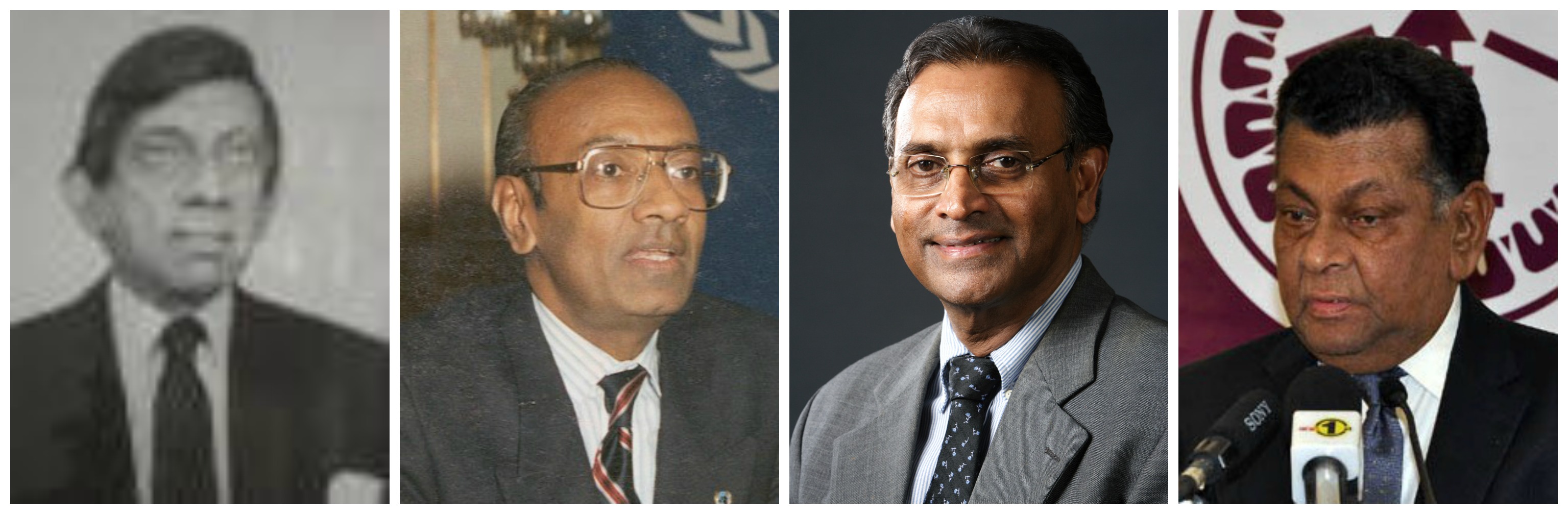
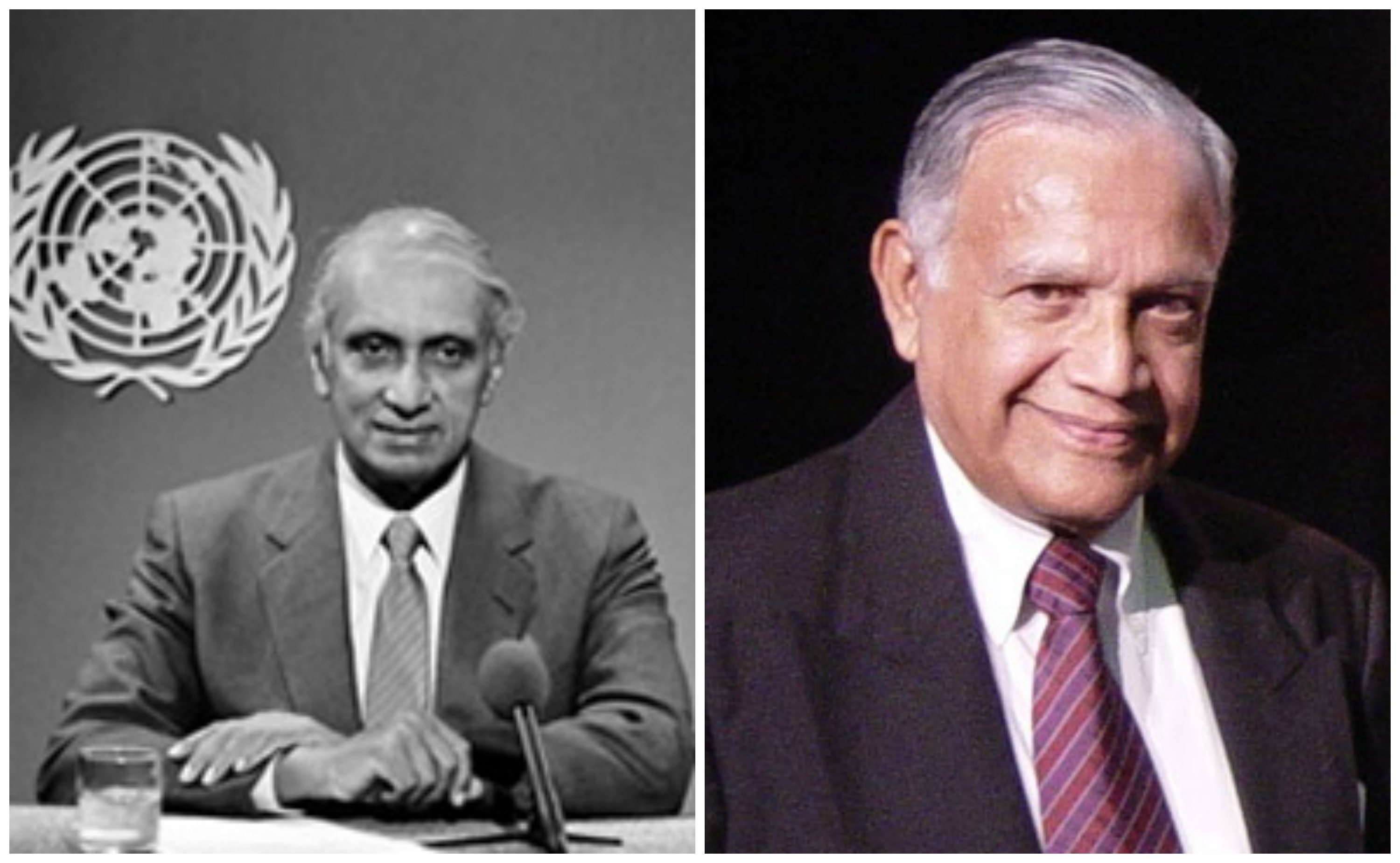
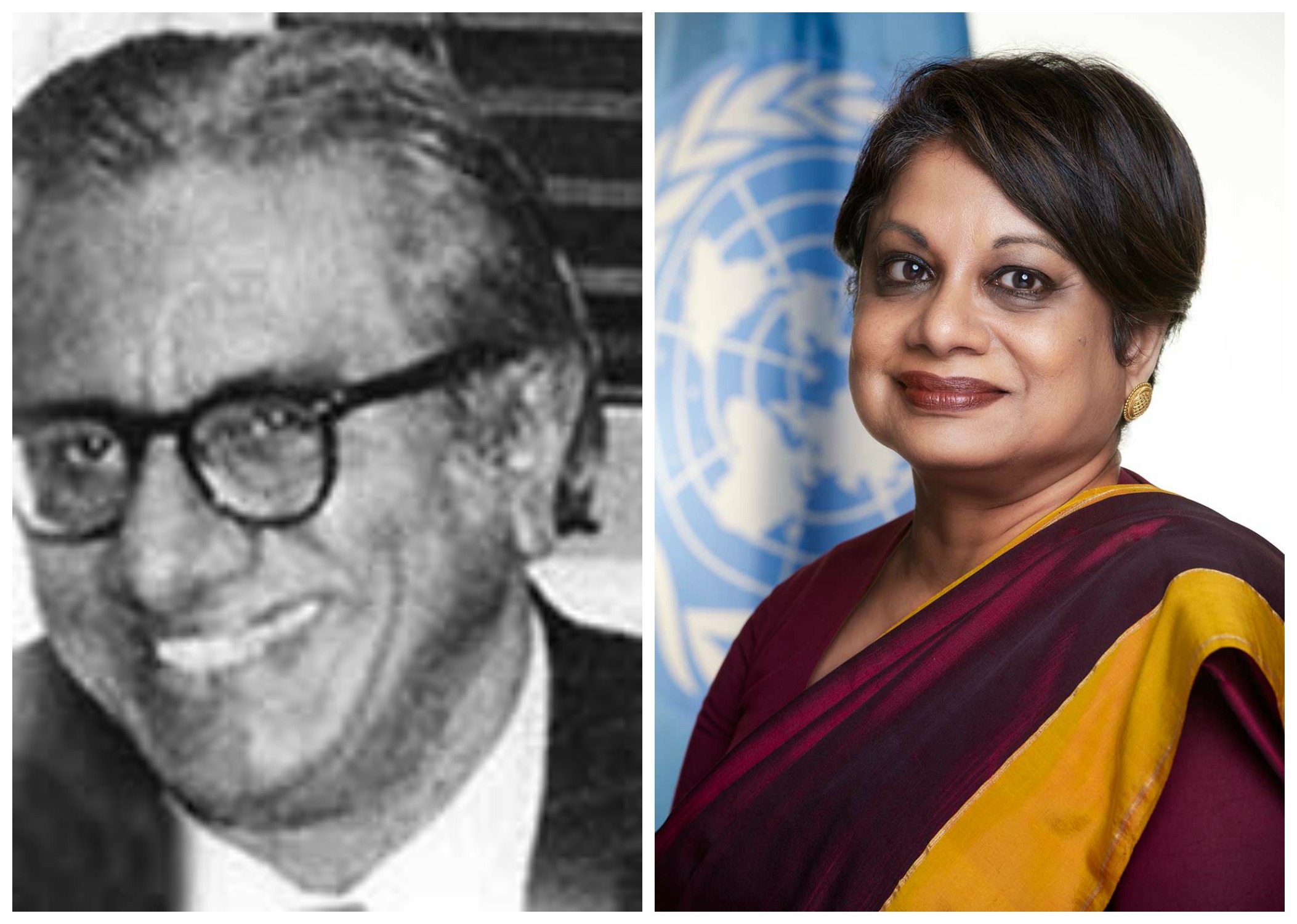
The list of Lankans who have excelled within the UN system is long, and I have had to be selective here. The ones mentioned in this column are:
Dhanapala Samarasekera (one of the earliest Lankans to join the UN system, as an expert with ECOSOC);
Neville Kanakaratne (legal advisor to the second Secretary General Dag Hammarskjold);
Nandasiri Jasentuliyana (Director of UN Office for Outer Space Affairs among other positions);
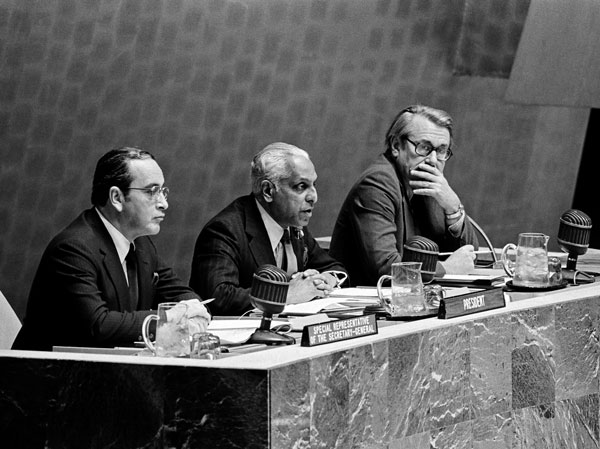
Hamilton Shirley Amerasinghe (President of the UN General Assembly in 1976, and later president of the UN Law of the Sea Conference);
Gritakumar E Chitty (a former Registrar of the International Tribunal for the Law of the Sea);
Gamani Corea (a former Secretary General of UNCTAD);
Christopher G Weeramantry (Justice of the International Court of Justice and later its Vice President);
Rajendra Coomaraswamy (Assistant Administrator of UNDP and Director of UNDP’s Regional Bureau for Asia and the Pacific);
Radhika Coomaraswamy (UN Special Representative for Children and Armed Conflict 2006-2012);
Jayantha Dhanapala, President of the Nuclear Non-Proliferation Treaty Conference 1995 and Under Secretary General heading the UN Department of Disarmament (1998–2003)
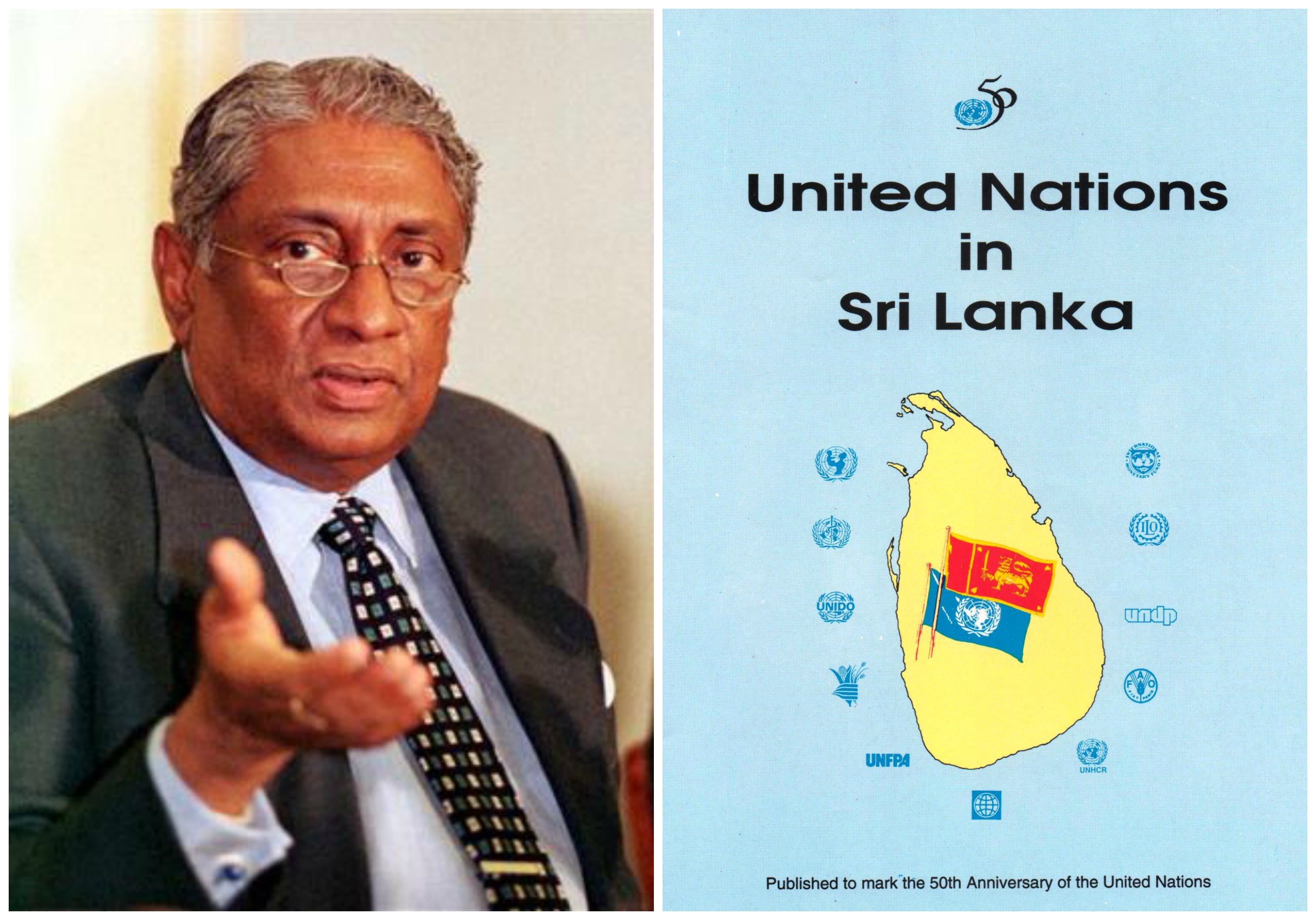
I end with a reference to Lakshman Kadirgamar, who served the ILO and later WIPO in senior positions in Geneva before becoming Sri Lanka’s finest Minister of Foreign Affairs in 1994. I quote from the Foreword that Kadirgamar wrote to a book on the United Nations in Sri Lanka that I wrote for the UN Information Centre (UNIC) in Colombo in 1995 to mark the UN’s 50th anniversary.
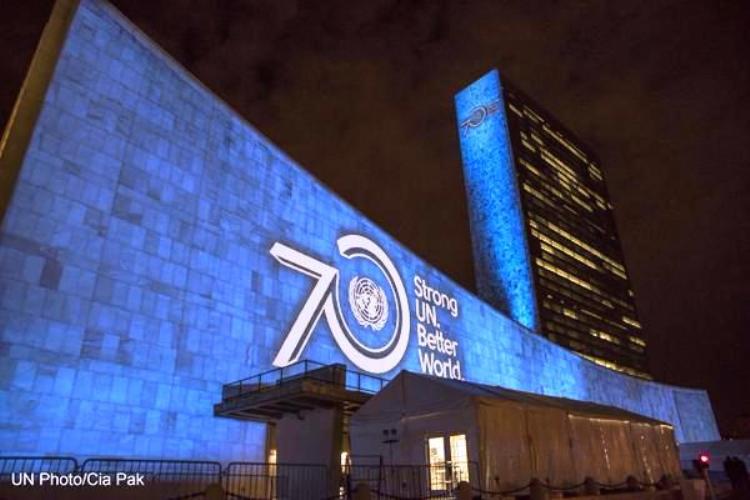
UN Headquarters in New York lights up for 70th birthday (UN Photo)
On 24 October 2015, United Nations marks its 70th birthday. A few weeks later, on 15 December 2015, is the 60th anniversary of Sri Lanka (then Ceylon) becoming a member state of this inter-governmental organisation.
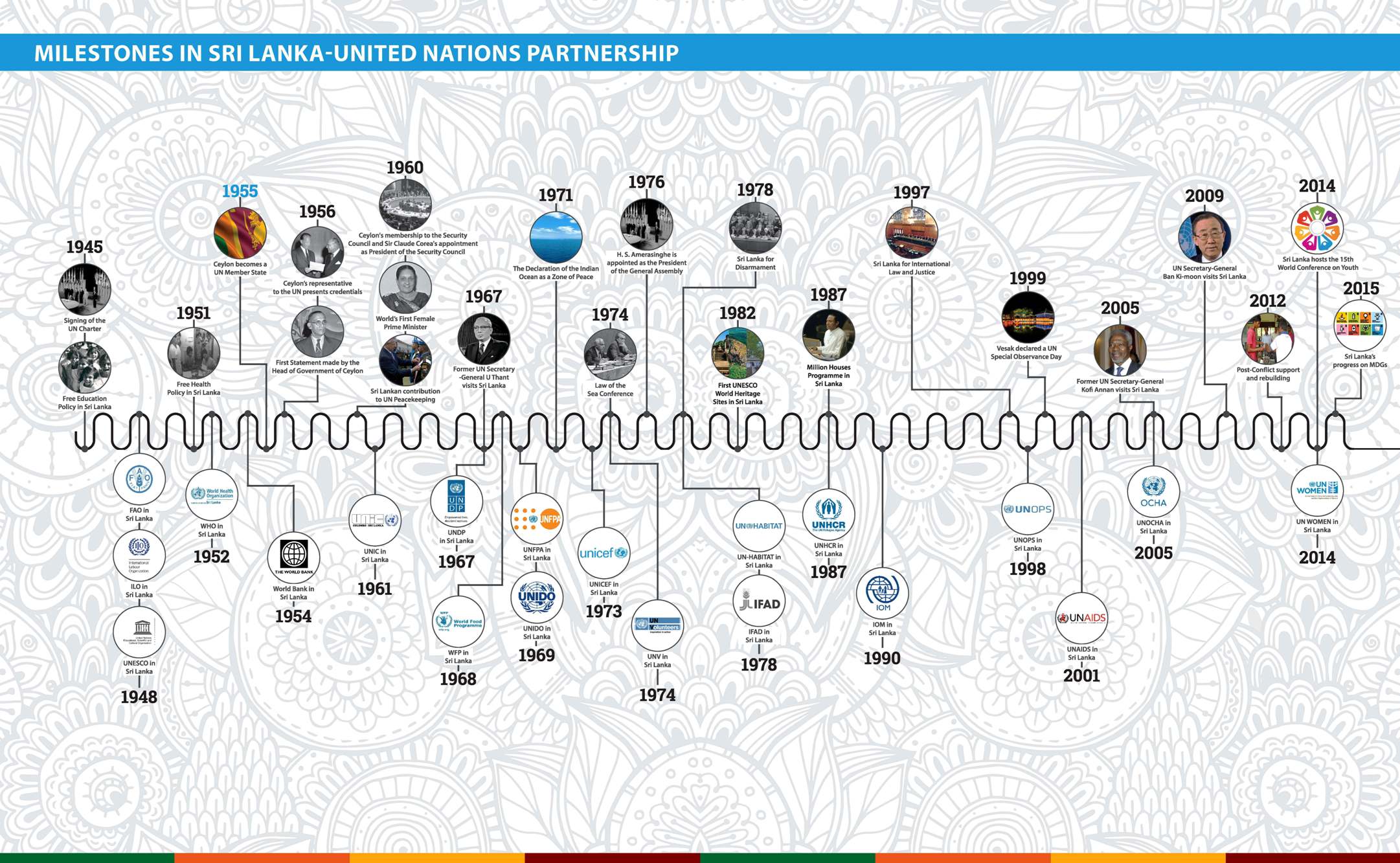
In this week’s Ravaya column, (appearing in issue of 18 Oct 2015), I look at Sri Lanka’s engagement with the UN. It started in December 1955, when Ceylon was admitted to membership (after its application had been resisted by the Soviet Union since 1950, on the grounds that Ceylon was ‘not fully independent’).
Ceylon/Sri Lanka has thus had 60 years of fruitful engagement with the UN through its permanent mission that was set up in New York in early 1956. The country has played a key role in global debates at the General Assembly, Security Council and other bodies and specialized agencies of the UN family.
I quote from the first speech by a Lankan head of government at the General Assembly, made by Prime Minister Solomon W R D Bandaranaike on 22 Nov 1956. I refer to illustrious ambassadors of Ceylon/Sri Lanka who have served as Permanent Representative to the UN – among them scholars, eminent lawyers and career diplomats.
They not only articulated their country’s position at the UN, but also stood for larger ideals such as non-alignment, peaceful resolution of conflicts, nuclear disarmament, and peaceful uses of both outer space and the international seas beyond territorial waters of states.
I point out that, through intellectual contributions and principled positions, Sri Lanka has had an influence disproportionate to the size of its population and economy – a case of punching above its weight category.
I also clarify that the UN Secretariat in New York and its extension in Colombo are actually at the service of its 193 member states which remain the ultimate masters. In fact, Sri Lanka has been a fee-paying member state: its contribution to the UN regular budget for 2015 is USD 678,391 (approx LKR 93,155,300).
So when occasional protesters demonstrate outside the UN office in Colombo, it only shows their gross ignorance of who actually heads the UN. Their own government is one of 193 members that determine the inter-governmental body’s policies and operations. Meanwhile we the citizens of Sri Lanka pay 0.025% of the UN’s annual budget.
Sadly, the UN Information Centre in Colombo has failed to promote such conceptual clarity among the Lankan politicians and media, some of who harbour serious misconceptions about the UN and its operations.
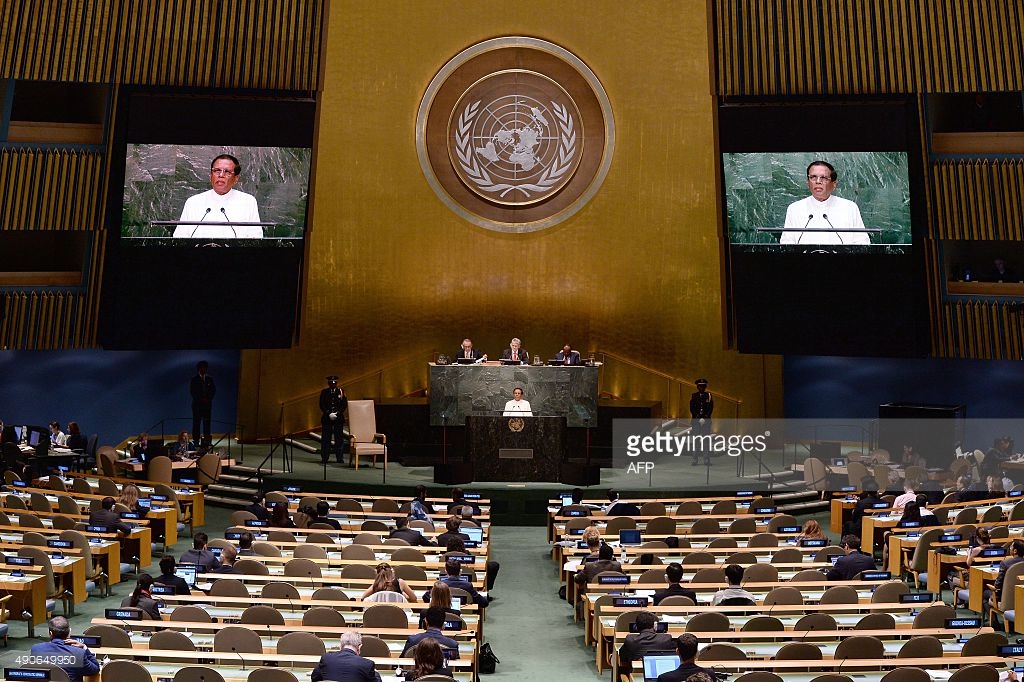
Sri Lanka’s President Maithripala Sirisena addresses the 70th Session of the United Nations General Assembly at the UN in New York on September 30, 2015. AFP PHOTO – JEWEL SAMAD
Sir Senerat Gunewardene, right, Ceylon’s first Permament Representative to the United Nations, with the then UN Secretary-General Dag Hammarskjold (UN Photo Archive)
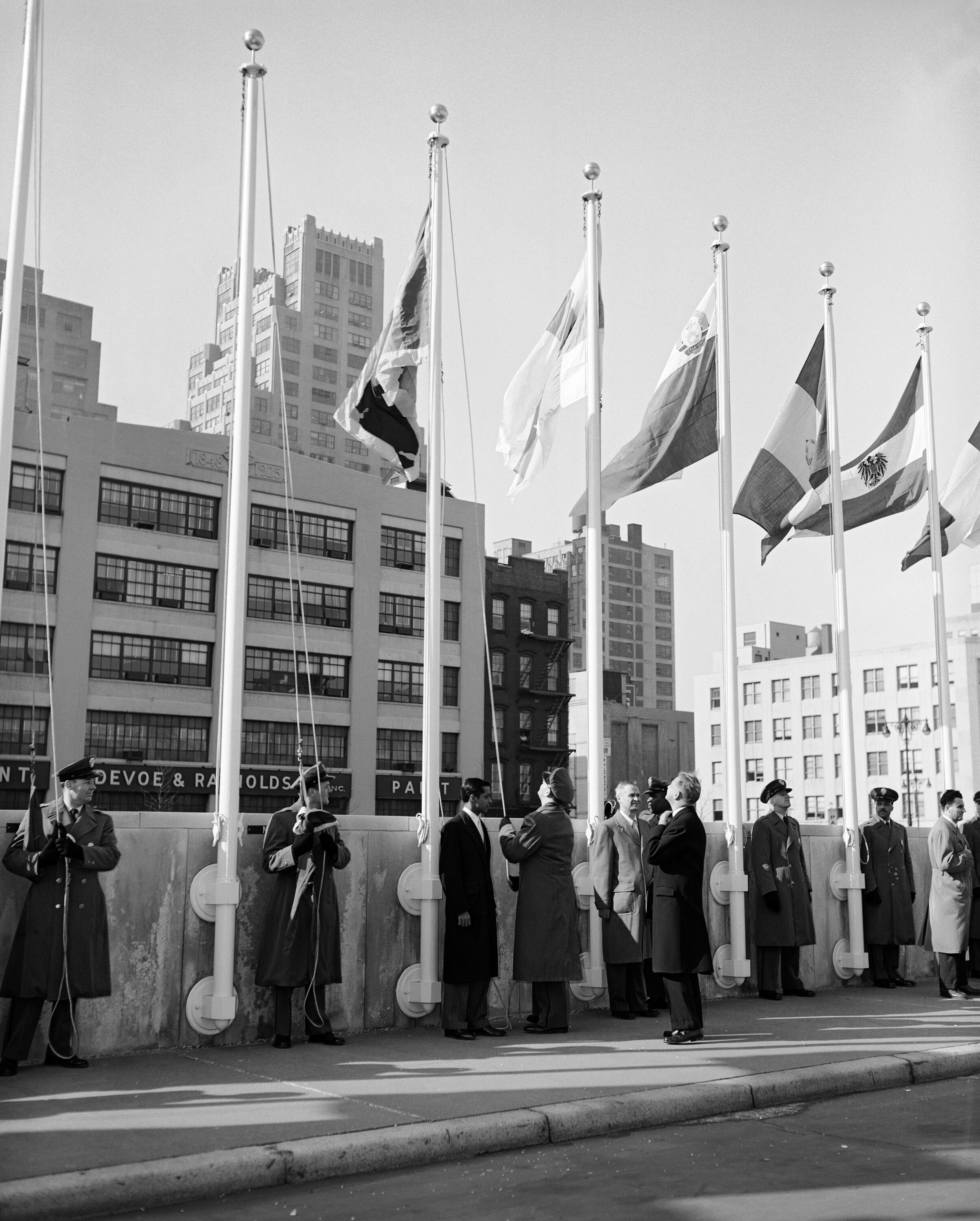
Ceylon Prime Minister S W R D Bandaranaike (third from left) at the UN Headquarters, Nov 1956. On extreme right is Sir Senerat Gunewardene, Ceylon’s first Permanent Representative to the UN (UN Photo Archive)
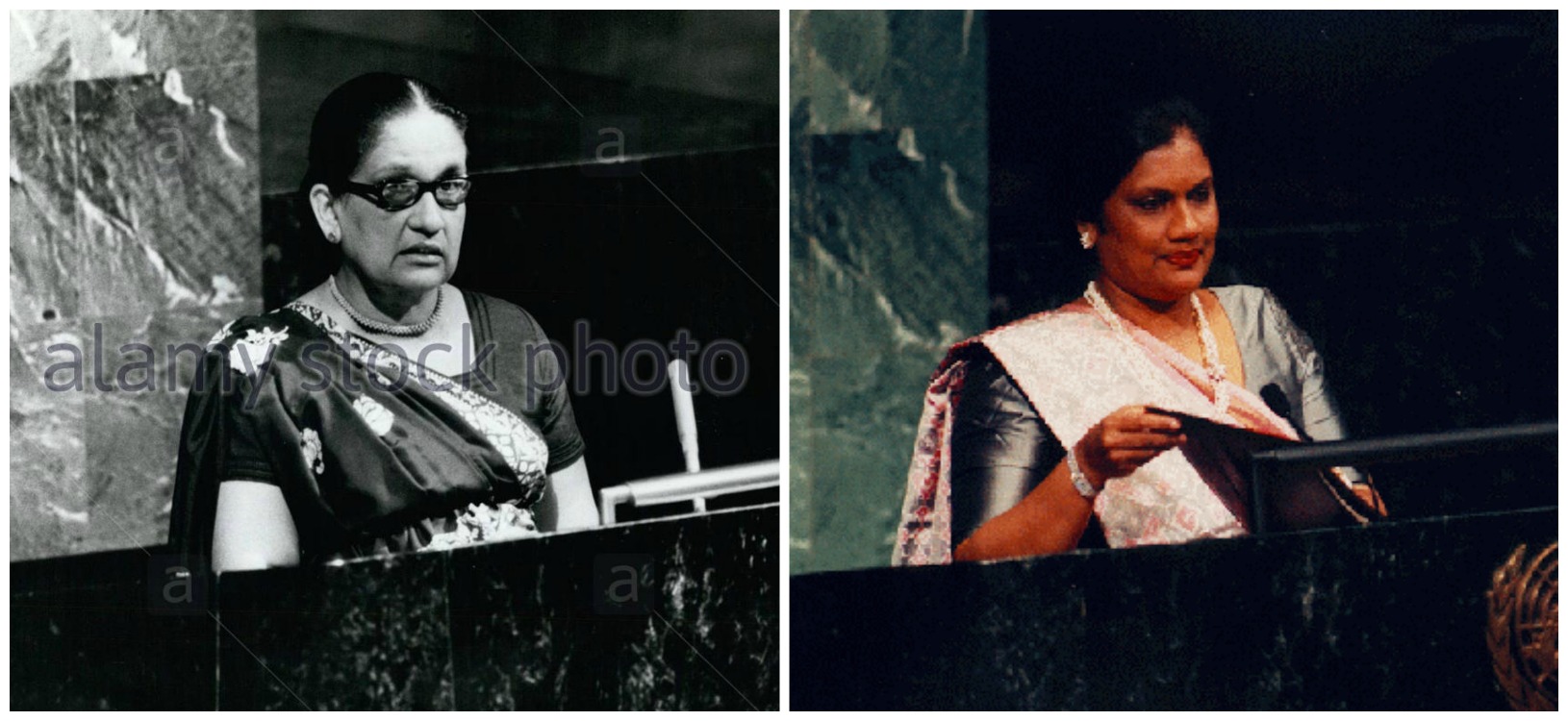
Left – Sri Lanka PM Sirimavo Bandaranaike speaking at UN on 9 Sep 1976, and her daughter President Chandrika Bandaranaike Kumaratunga speaking at UN in September 1995 (UN Photos)
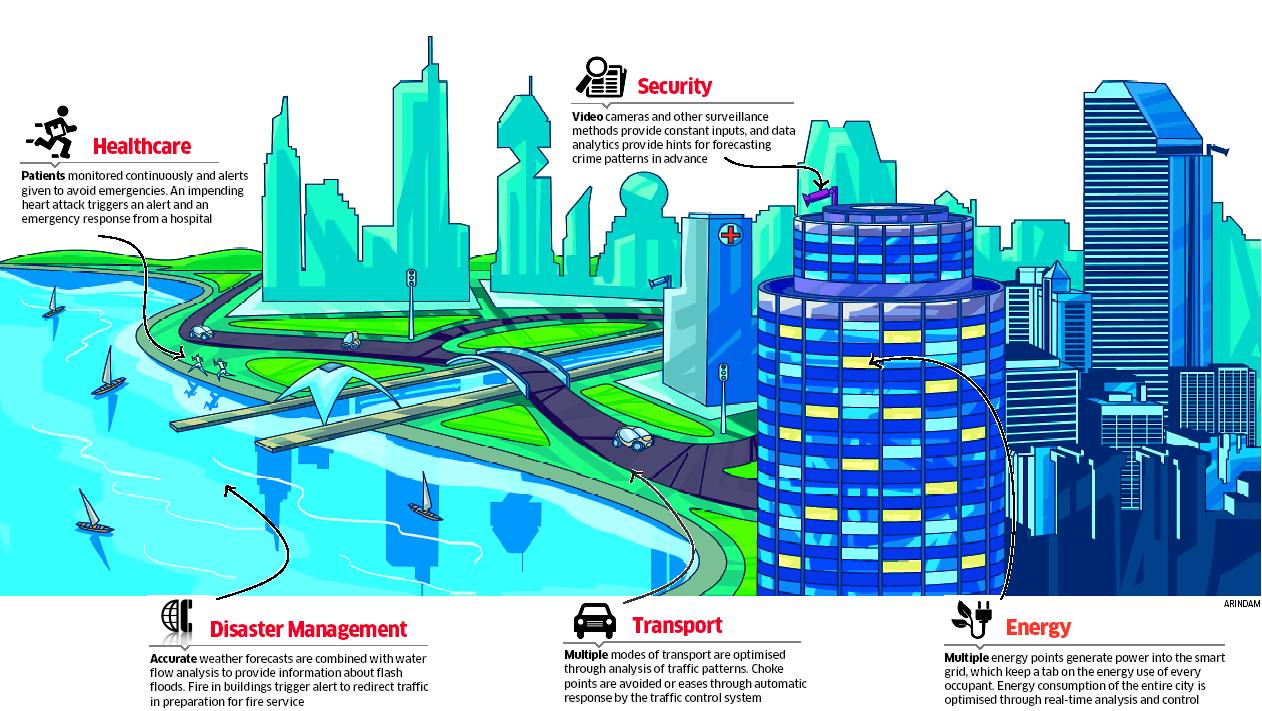
The term ‘smart city’ refers to urban systems, and not to the smartness of residents. In fact, there is no universal definition of smart cities: it can mean smart utilities, smart housing, smart mobility or smart design.
Smart cities use information and communications technologies (ICTs) as their principal infrastructure. These become the basis for improving the quality and performance of urban services, reducing costs and resource consumption, and for engaging citizens more effectively.
ICTs – ranging from automatic sensors to data centres — would create ‘feedback loops’ within the complex city systems. If processed properly, this flow of data in real time can vastly improve the design of “hard” physical environment and the provision of “soft” services to citizens.
In this week’s Ravaya column, (in Sinhala, appearing in issue of 4 Oct 2015), I explore the concept of smart cities, which the new government of Sri Lanka wants to develop.
It is a formidable task. India in 2014 announced an ambitious programme to create 100 smart cities. Under this, state capitals, as well as many tourist and heritage cities are to receive funding for upgrading their infrastructure. But Prime Minister Modi and his technocrats have been struggling since then to explain just what they mean by smart cities.
I argue that smart cities need empowered people and engaged city administrators. I have argued in earlier in this column, concrete and steel do not a city make. Likewise, ICT enabled smart infrastructure alone will not create smart cities – unless the human factor is well integrated.
Over the weekend of September 25 – 27, the United Nations headquarters in New York hosted the Sustainable Development Summit 2015. It was a high-level segment of the 70th UN General Assembly that was attended by many world leaders including Sri Lanka’s President Maithripala Sirisena.
Sustainable Development Summit 2015 Logo
The UN, which turns 70 this year, is once again rallying its member governments to a lofty vision and ambitious goal: to embark on new paths to improve the lives of people everywhere.
For this, the Summit adopted a new and improved global task-list called Sustainable Development Goals (SDGs). Prepared after two years of worldwide consultations, the SDGs offer a blueprint for development until 2030.
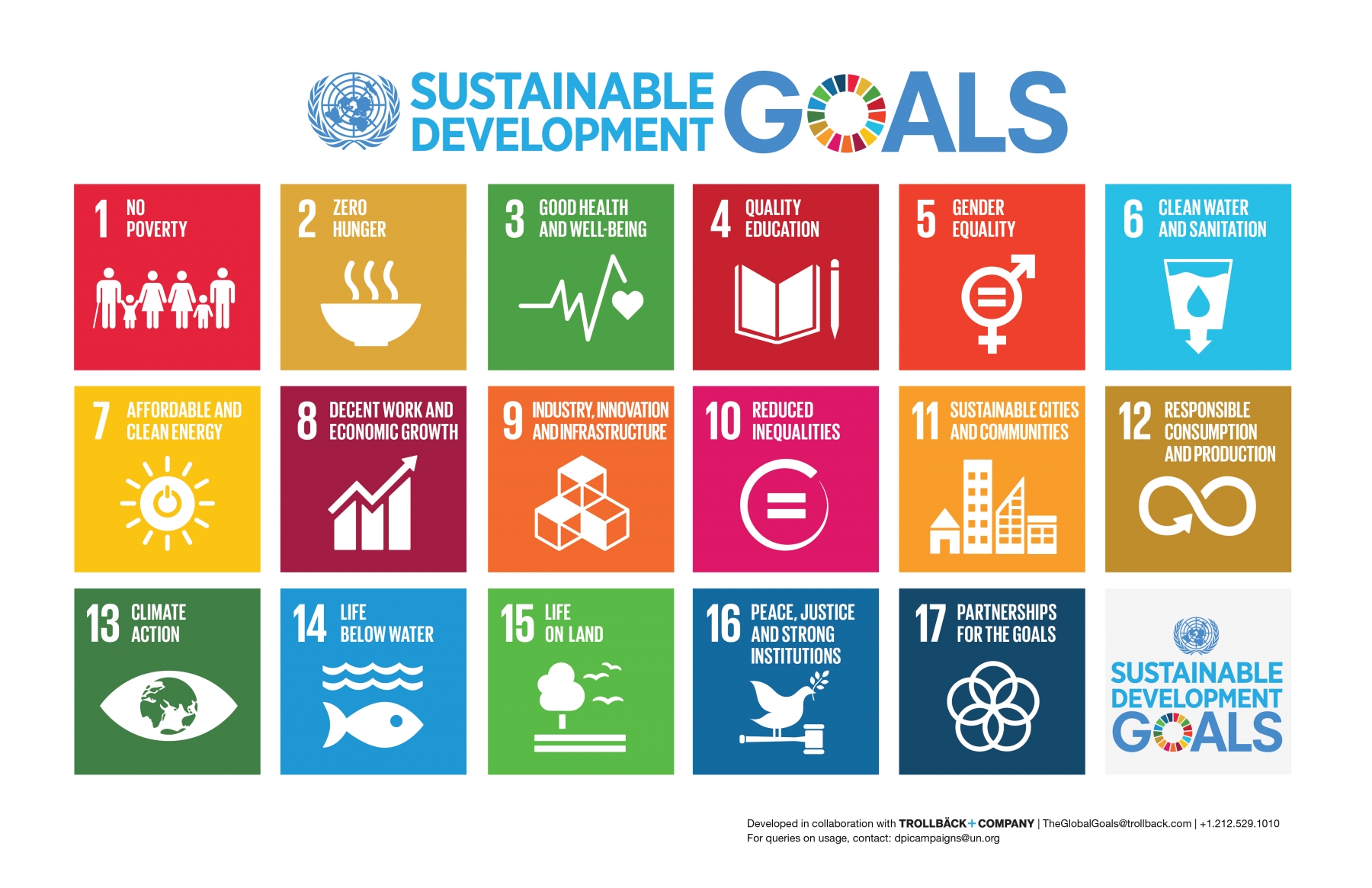
There are 17 SDGs tackling long-standing problems like ending poverty and reducing inequality to relatively newer challenges like creating more liveable cities and tackling climate change. These are broken down into 169 specific targets. Their implementation will formally begin on 1 January 2016.
SDGs in a nutshell – courtesy UN
The SDGs are to take over from the Millennium Development Goals, or MDGs, that have guided the development sector for 15 years. Sri Lanka was among the 189 countries that adopted the MDGs at the Millennium Summit the UN hosted in New York in September 2000. On that occasion, the country was represented by Lakshman Kadirgamar as Minister of Foreign Affairs.
The eight MDGs covered a broad spectrum of goals, from eradicating absolute poverty and hunger to combating HIV, and from ensuring all children attend primary school to saving mothers from dying during pregnancy and childbirth.
Much has happened in the nearly 5,500 days separating the adoption of the original MDGs and now, the successor SDGs. This month, as the world commits to ‘leaving no one behind’ (as UN Secretary General Ban Ki-moon has said), it is useful to look back, briefly.
Good ‘Report Card’
How has Sri Lanka pursued the MDGs while the country coped with a long drawn civil war, political change, and the fall-out of a global economic recession?
In fact, it has done reasonably well. In its human development efforts, Sri Lanka has quietly achieved a great deal. However, there are gaps that need attention, and some goals not yet met.
We might sum it up with a phrase that teachers are fond of using, even on good students: “You’re doing well – but can do better! Try harder!”
For the past 15 years, the MDGs have provided a framework for Sri Lanka’s national development programmes. Progress has been assessed every few years: the most recent ‘report card’ came out in March 2015.
The MDG Country Report 2014, prepared by the Institute of Policy Studies (IPS), is a joint publication by the Government of Sri Lanka and the United Nations in Sri Lanka. Data from the 2012 census and Household Income and Expenditure Survey 2012/13 have generated plenty of data to assess MDG situation across the country, including the war affected areas.
“Sri Lanka has already achieved the targets of 13 important MDG indicators out of 44 indicators relevant to Sri Lanka. Most of the other indicators are either ‘On Track’ or progressing well,” says IPS Executive Director Dr Saman Kelegama in his foreword to the report.
Highlights
The report offers insights into how Sri Lanka’s ‘soft infrastructure’ — all the systems and institutions required to maintain the economic, health, cultural and social standards of a country – are faring.
Consider these highlights:
Sri Lanka’s overall income poverty rates, when measured using accepted statistical benchmarks, have come down from 2% in 2006/7 to 6.7% in 2012.
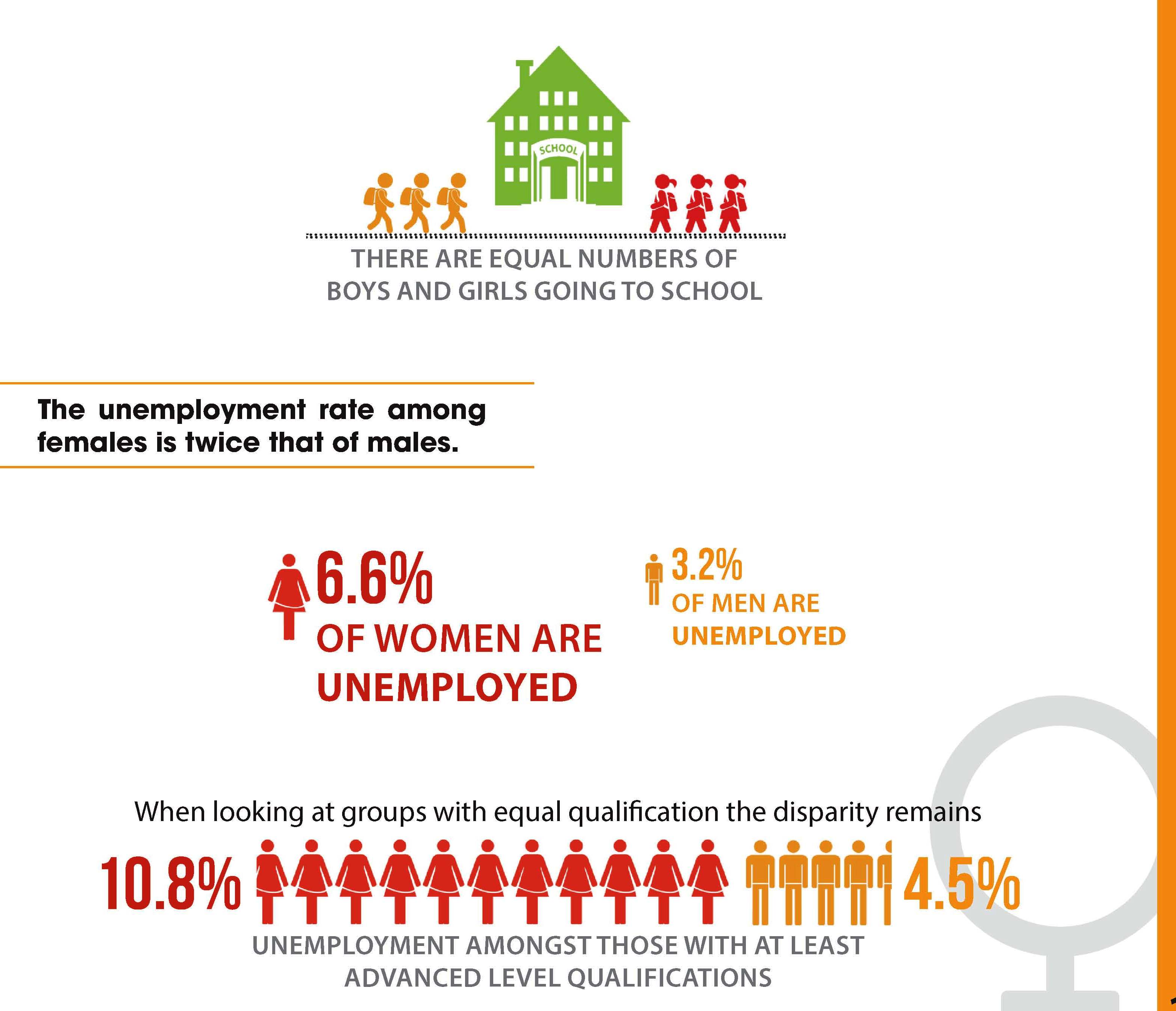
Unemployment rate has declined from 8% in 1993 to 3.9% in 2012. However, unemployment rate among women is twice as high as among men.
While food production keeps up with population growth, malnutrition is a concern. A fifth of all children under five are underweight. And half of all people still consume less than the minimum requirement of daily dietary energy.
Nearly all (99%) school going children enter primary school. At that stage, the numbers of boys and girls are equal. In secondary school and beyond (university), in fact, there now are more girls than boys.
More babies now survive their first year of life than ever before: infant mortality rate has come down to 9.4 among 1,000 live births (from 17.7 in 1991). Deaths among children under five have also been nearly halved (down from 2 in 1991 to 11.3 in 2009).
Fewer women die needlessly of complications arising from pregnancy and childbirth. The maternal mortality rate, which stood at 92 deaths per 100,000 live births in 1990, plummeted to 33 by 2010. Doctors or skilled health workers are now present during almost all births.
Sri Lanka’s HIV infection levels have remained now, even though the number of cases is slowly increasing. Meanwhile, in a major public health triumph, the country has all but eradicated malaria: there have been no indigenous malaria cases since November 2012, and no malaria-related deaths since 2007.
More Lankans now have access to safe drinking water (up from 68% in 1990 to almost 90% in 2012-2013.)
These and other social development outcomes are the result of progressive policies that have been sustained for decades.
“Sri Lanka’s long history of investment in health, education and poverty alleviation programmes has translated into robust performance against the MDGs, and Sri Lanka has many lessons to share,” said Sri Lanka’s UN Resident Coordinator and UNDP Resident Representative, Subinay Nandy, at the report’s launch in March 2015.
Proportion of Lankans living below the poverty line – total head count and breakdown by district
Mind the Gaps!
Despite these results, many gaps and challenges remain that need closer attention and action in the coming years.
One key concern is how some impressive national level statistics can eclipse disparities at provincial and district levels. The MDG data analysis clearly shows that all parts of Sri Lanka have not progressed equally well.
For example, while most districts have already cut income poverty rates in half, there are some exceptions. These include eight districts in the Northern and Eastern provinces, for which reliable data are not available to compare with earlier years, and the Monaragala District in Uva Province – where poverty has, in fact, increased in the past few years.
Likewise, many human development indicators are lower in the plantation estate sector, where 4.4% of the population lives. An example: while at least 90% of people in urban and rural areas can access safe drinking water, the rate in the estate sector is 46.3%.
Another major concern: the gap between rich and poor remains despite economic growth. “Income inequality has not changed, although many poor people managed to move out of poverty and improve their living conditions,” the MDG Progress report says.
In Gender Equality, Sri Lanka’s performance is mixed. There is no male-female disparity in education, and in fact, there are more literate women in the 15 to 24 age than men. But “these achievements have not helped in increasing the share of women in wage employment in the non-agricultural sector,” notes the report.
Disappointingly, women’s political participation is also very low. The last Parliament had 13 women members out of 225. That was 5.8% compared to the South Asian rate of 17.8% and global rate of 21.1%. The report has urged for “measures to encourage a substantial increase in the number of women in political offices”.
Of course, MDGs and human development are not just a numbers game. While measurable progress is important, quality matters too.
The MDG report highlights the urgent need to improve the quality and relevance of our public education. Among the policy measures needed are increasing opportunities for tertiary education, bridging the gap between education and employment, and reducing the skills mismatch in the labour market.
On the health front, too, there is unfinished – and never ending — business. Surveillance for infectious diseases cannot be relaxed. Even as malaria fades away, dengue has been spreading. Old diseases like tuberculosis (8,000 cases per year) stubbornly persist. A rise in non-communicable diseases – like heart attacks, stroke, cancers and asthma – poses a whole new set of public health challenges.
Sri Lanka offers the safest motherhood in South Asia
Open Development
So the ‘well-performing’ nation of Sri Lanka still has plenty to do. It is just as important to sustain progress already achieved.
The new and broader SDGs will provide guidance in this process, but each country must set its own priorities and have its own monitoring systems. The spread of information and communications technologies (ICTs) has created new sources of real-time data that can help keep track of progress, or lack of it, more easily and faster.
Whereas MDGs covered mostly “safe” themes like poverty, primary education and child deaths, the SDGs take on topics such as governance, institutions, human rights, inequality, ageing and peace. This reflects how much international debates have changed since the late 1990s when the MDGs were developed mostly by diplomats and technocrats.
This time around, not only governments and academics but advocacy groups and activists have also been involved in hundreds of physical and virtual consultations to agree on SDGs. In total, more than seven million people have contributed their views.
As the government of Sri Lanka pursues the SDGs that it has just committed to in New York, we the people expect a similar consultative process.
Goodbye, closed development. Welcome, Open Development!
Science writer Nalaka Gunawardene wrote an earlier version of this for UN Population Fund (UNFPA) Sri Lanka’s new blog Kiyanna.lk. The views are his own, based on 25 years of development communication experience.
Equal numbers of girls and boys go to school in Sri Lanka today, But women struggle harder to find employment.
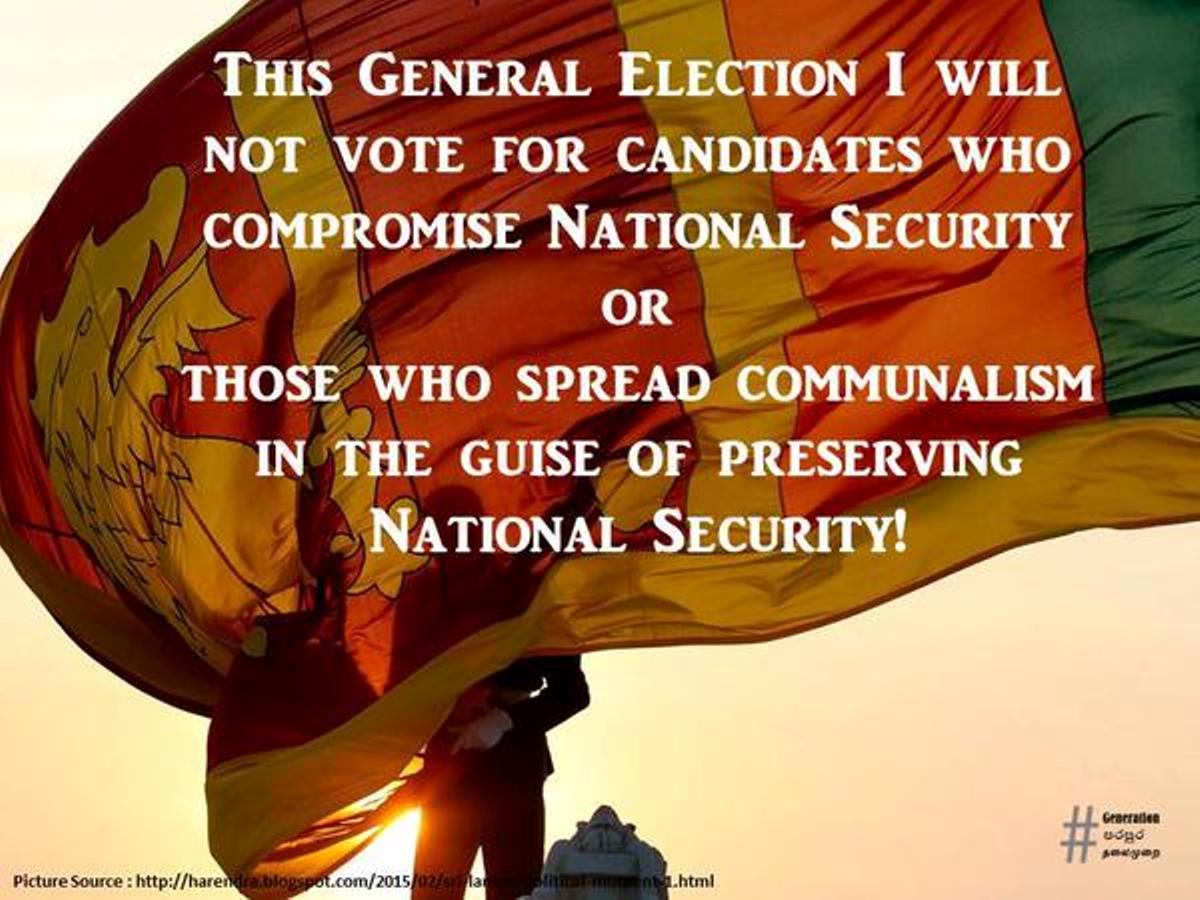
A Popular Election Meme created by Hashtag Generation, Sri Lanka
“Every citizen – including activists and academics — can play a part in shaping the future of our democracy. In this, technology is not the only key driver; what matters even more is the strategic use of our imagination and determination.
“We may not yet have all the detailed answers of our digital future, but one thing is clear. In 2015, we the people of Sri Lanka embarked on a progressive digitalization of our politics and governance.
“It is going to be a bumpy road – be forewarned — but there is no turning back.”
Since then, things have evolved further. In this essay, I look at how the Elections Commission, political parties, election candidates, civil society advocacy groups and individual cyber activists have used various social media tools and platforms in the run-up to, during and immediately after the Parliamentary Election.
More hands make better democracy – but it can also lead to chaos, unless we’re careful…
Regular elections are a necessary but not a sufficient condition for a vibrant democracy. There is much more to democracy than holding free and fair elections.
The ‘sufficient conditions’ include having public institutions that allow citizens the chance to participate in political process on an on-going basis; a guarantee that all people are equal before the law (independent and apolitical judiciary); respect for cultural, ethnic and religious diversity; and freedom of opinion without fearing any repercussions. Sri Lanka has much work to do on all these fronts.
Democracy itself, as practised for centuries, can do with some ‘upgrading’ to catch up with modern information societies.
In this week’s Ravaya column, (in Sinhala, appearing in issue of 23 August 2015), I discuss methodologies that enable citizens as well as civil society organisations (CSOs) to engage with policymakers and citizen service providers on an on-going basis.
Some call it social accountability (or SAcc), and others refer to it as participatory democracy. Whatever the label, the idea is to ensure greater accountability in how the public sector manages public funds and responds to citizens’ needs.
Text of my column written for Echelon monthly business magazine, Sri Lanka, August 2015 issue
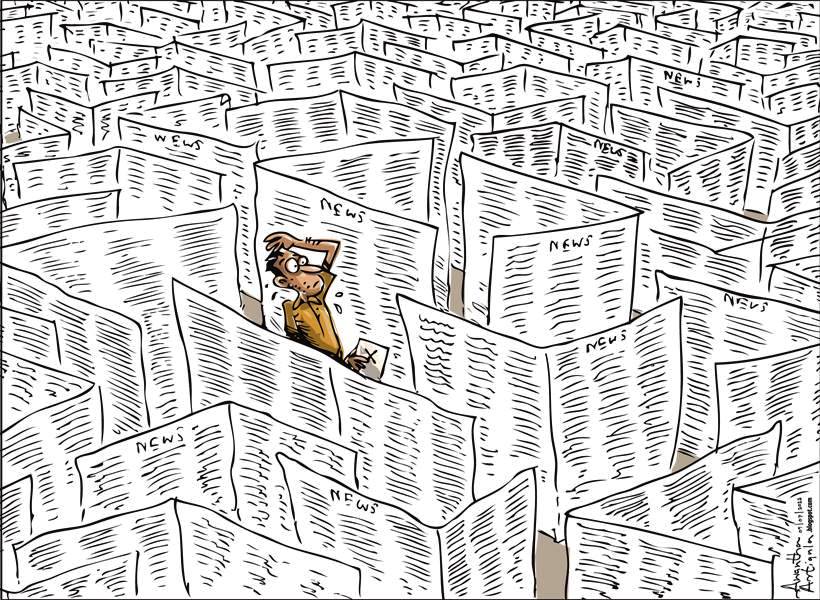
Cartoon by Awantha Artigala, Sri Lanka Cartoonist of the Year 2014
Media Reforms: The Unfinished Agenda
By Nalaka Gunawardene
When I was growing up in the 1970s, Sri Lanka’s media landscape was very different. We had only one radio station (state-owned SLBC) and three newspaper houses (Lake House, Times of Ceylon and Independent Newspapers). There was no TV, and the web wasn’t even invented.
At that time, most discussions on media freedom and reforms centred around how to contain the overbearing state – which was a key publisher, as well as the sole broadcaster, dominant advertiser and media regulator, all rolled into one.
Four decades on, the state still looms large on our media landscape, but there are many more players. The number of media companies, organisations and products has steadily increased, especially after private sector participation in broadcasting was allowed in 1992.
More does not necessarily mean better, however. Media researchers and advocacy groups lament that broadcast diversification has not led to a corresponding rise in media pluralism – not just in terms of media ownership and content, but also in how the media reflects diversity of public opinion, particularly of those living on the margins of society.
As the late Tilak Jayaratne and Sarath Kellapotha, two experienced broadcasters, noted in a recent book, “There exists a huge imbalance in both media coverage and media education as regards minorities and the marginalised. This does not come as a surprise, as it is known that media in Sri Lanka, both print and broadcast, cater mainly to the elite, irrespective of racial differences.”
Media under pressure
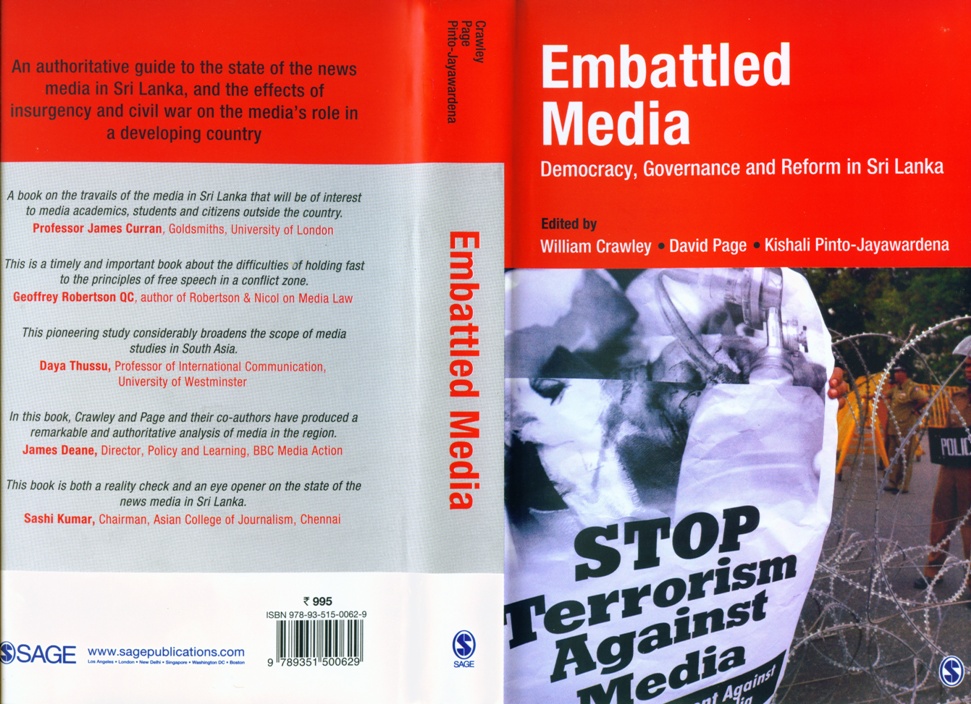
The multi-author book, titled Embattled Media: Democracy, Governance and Reform in Sri Lanka(Sage Publications, Feb 2015), was compiled during 2012-14 by a group of researchers and activists who aspired for a freer and more responsible media. It came out just weeks after the last Presidential Election, where media freedom and reforms were a key campaigning issue.
In their preface, co-editors William Crawley, David Page and Kishali Pinto-Jayawardena say: “Media liberalisation from the 1990s onwards had extended the range of choice for viewers and listeners and created a more diverse media landscape. But the war in the north and insurrections in the south had taken their toll of media freedoms. The island had lived under a permanent state of emergency for nearly three decades. The balance of power between government, judiciary, the media and the public had been put under immense strain.”
Embattled Media – Democracy, Governance and Reform in Sri Lanka
The book, to which I have contributed a chapter on new media, traces the evolution mass media in post-colonial Sri Lanka, with focus on the relevant policies and laws, and on journalism education. It discusses how the civil war continues to cast “a long shadow” on our media. Breaking free from that legacy is one of many challenges confronting the media industry today.
Some progress has been made since the Presidential election. The new government has taken steps to end threats against media organisations and journalists, and started or resumed criminal investigations on some past atrocities. Political websites that were arbitrarily blocked from are once again accessible. Journalists who went into exile to save their lives have started returning.
On the law-making front, meanwhile, the 19th Amendment to the Constitution recognized the right to information as a fundamental right. But the long-awaited Right to Information Bill could not be adopted before Parliament’s dissolution.
Thus much more remains to be done. For this, a clear set of priorities has been identified through recent consultative processes that involved media owners, practitioners, researchers, advocacy groups and trainers. These discussions culminated with the National Summit on Media Reforms organised by the Ministry of Media, the University of Colombo, Sri Lanka Press Institute (SLPI) and International Media Support (IMS), and held in Colombo on 13 and 14 May.
We can only hope that the next Parliament, to be elected at the August 17 general election, would take up the policy and law related aspects of the media reform agenda (while the media industry and profession tackles issues like capacity building and greater professionalism, and the education system works to enhance media literacy of everyone).
Pursuing these reforms needs both political commitment and persistent advocacy efforts.
Right to Information: The new Parliament should pass, on a priority basis, the Right to Information Bill that was finalised in May 2015 with inputs from media and civil society groups.
Media Self-Regulation: The Press Council Act 5 of 1973, which created a quasi-judicial entity called the Press Council with draconian powers to punish journalists, should be abolished. Instead, the self-regulatory body established in 2003, known as the Press Complaints Commission of Sri Lanka (PCCSL), should be strengthened. Ideally its scope should expand to cover the broadcast media as well.
Law Review and Revision: Some civil and criminal laws pose various restrictions to media freedom. These include the Official Secrets Act and sedition laws (both relics of the colonial era) and the draconian Prevention of Terrorism Act that has outlived the civil war. There are also needlessly rigid laws covering contempt of court and Parliamentary privileges, which don’t suit a mature democracy. All these need review and revision to bring them into line with international standards regarding freedom of expression.
Broadcast regulation: Our radio and TV industries have expanded many times during the past quarter century within an ad hoc legal framework. This has led to various anomalies and the gross mismanagement of the electromagnetic spectrum, a finite public property. Sri Lanka urgently needs a comprehensive law on broadcasting. Among other things, it should provide for an independent body to regulate broadcasting in the public interest, more equitable and efficient allocation of frequencies, and a three-tier system of broadcasting which recognises public, commercial and community broadcasters. All broadcasters – riding on the public owned airwaves — should have a legal obligation be balanced and impartial in coverage of politics and other matters of public concern.
Restructuring State Broadcasters: The three state broadcasters – the Sri Lanka Rupavahini Corporation (SLRC), the Sri Lanka Broadcasting Corporation (SLBC) and the Independent Television Network (ITN) – should be transformed into independent public service broadcasters. There should be legal provisions to ensure their editorial independence, and a clear mandate to serve the public (and not the political parties in office). To make them less dependent on the market, they should be given some public funding but in ways that don’t make them beholden to politicians or officials.
Reforming Lake House: Associated Newspapers of Ceylon Limited or Lake House was nationalised in 1973 to ‘broadbase’ its ownership. Instead, it has remained as a propaganda mill of successive ruling parties. Democratic governments committed to good governance should not be running newspaper houses. To redeem Lake House after more than four decades of state abuse, it needs to operate independently of government and regain editorial freedom. A public consultation should determine the most appropriate way forward and the best business model.
Preventing Censorship: No prior censorship should be imposed on the media. Where necessary, courts may review media content for their legality after publication (on an urgent basis). Laws and regulations that permit censorship should be reviewed and amended. We must revisit the Public Performance Ordinance, which empowers a state body to pre-approve all feature films and drama productions.
Blocking of Websites: Ensuring internet freedoms is far more important than setting up free public WiFi services. There should be no attempts to limit online content and social media activities contravening fundamental freedoms guaranteed by the Constitution and international conventions. Restrictions on any illegal content may be imposed only through the courts (and not via unwritten orders given by the telecom regulator). There should be a public list of all websites blocked through such judicial sanction.
Privacy and Surveillance: The state should protect the privacy of all citizens. There should be strict limits to the state’s surveillance of private individuals’ and private entities’ telephone conversations, emails and other electronic communications. In exceptional situations (e.g. crime investigations), such surveillance should only be permitted with judicial oversight and according to a clear set of guidelines.
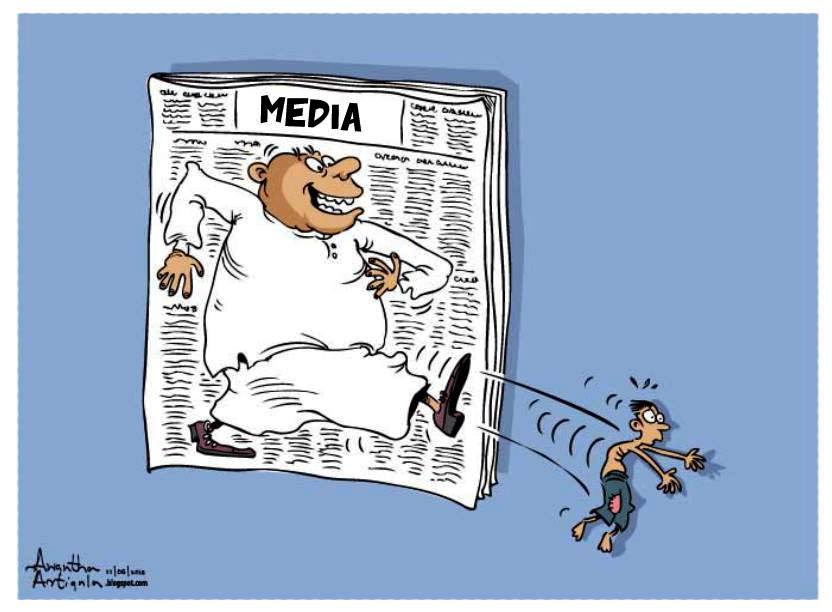
Cartoon by Awantha Artigala, Sri Lanka Cartoonist of the Year 2014
Dealing with Past Demons
While all these are forward looking steps, the media industry as a whole also needs state assistance to exorcise demons of the recent past — when against journalists and ‘censorship by murder’ reached unprecedented levels. Not a single perpetrator has been punished by law todate.
This is why media rights groups advocate an independent Commission of Inquiry should be created with a mandate and adequate powers to investigate killings and disappearances of journalists and attacks on media organisations. Ideally, it should cover the entire duration of the war, as well as the post-war years.
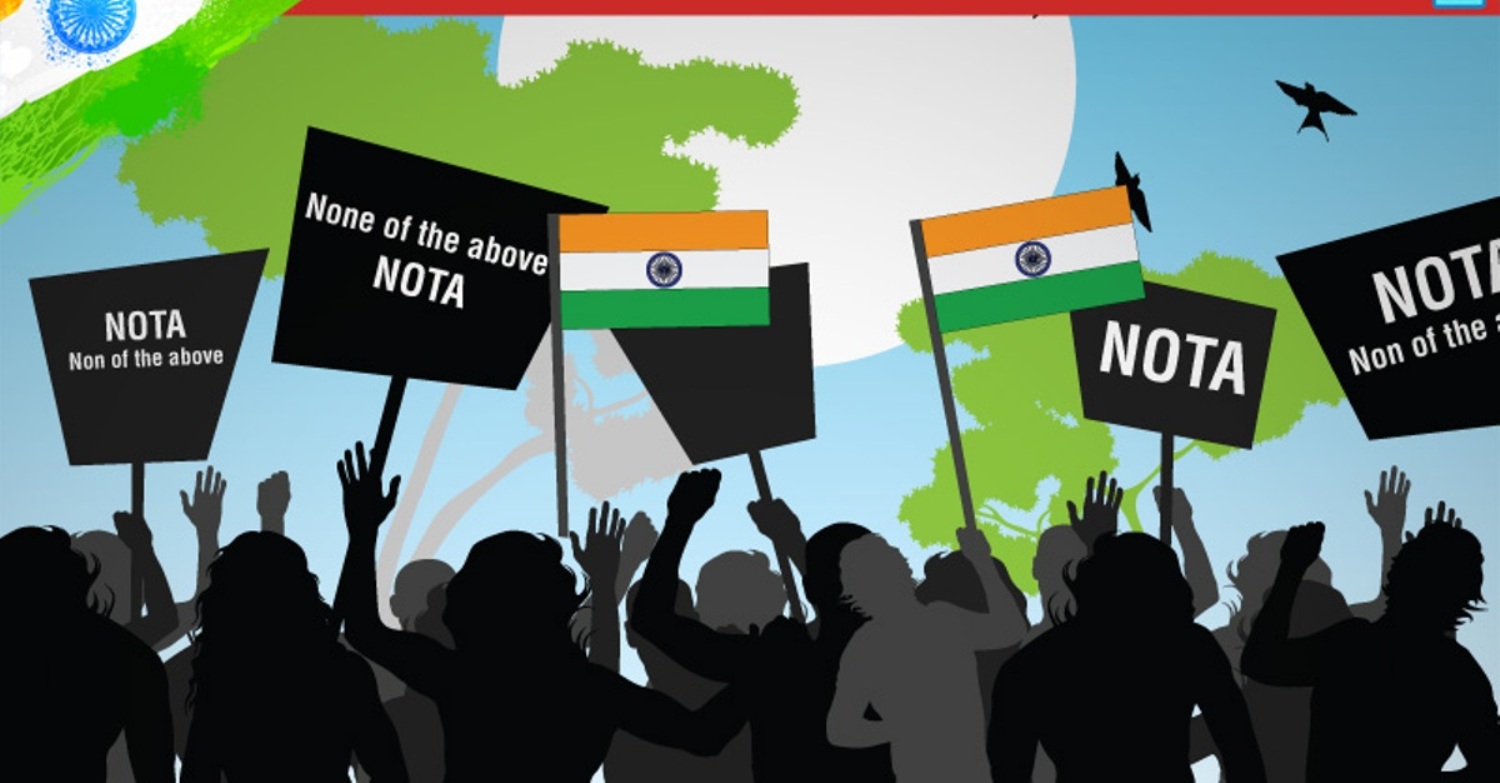
Indian campaign for “None of the Above” (NOTA) option at elections
In this week’s Ravaya column, (in Sinhala, appearing in issue of 9 August 2015), I discuss two concepts that could make representative democracy more meaningful.
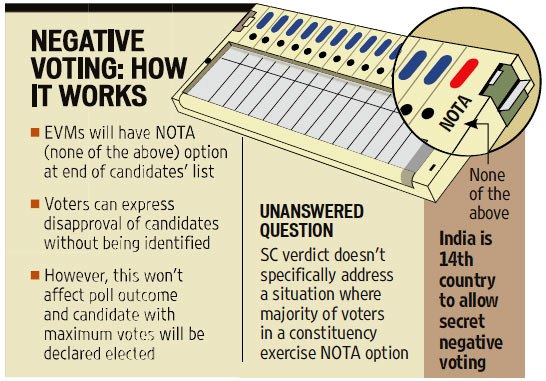
First is adding the option of None of the Above (NOTA) to the list of candidates in an election, so voters can exercise a negative vote – and send a powerful message to political parties and personalities about the quality of politicians society prefers.
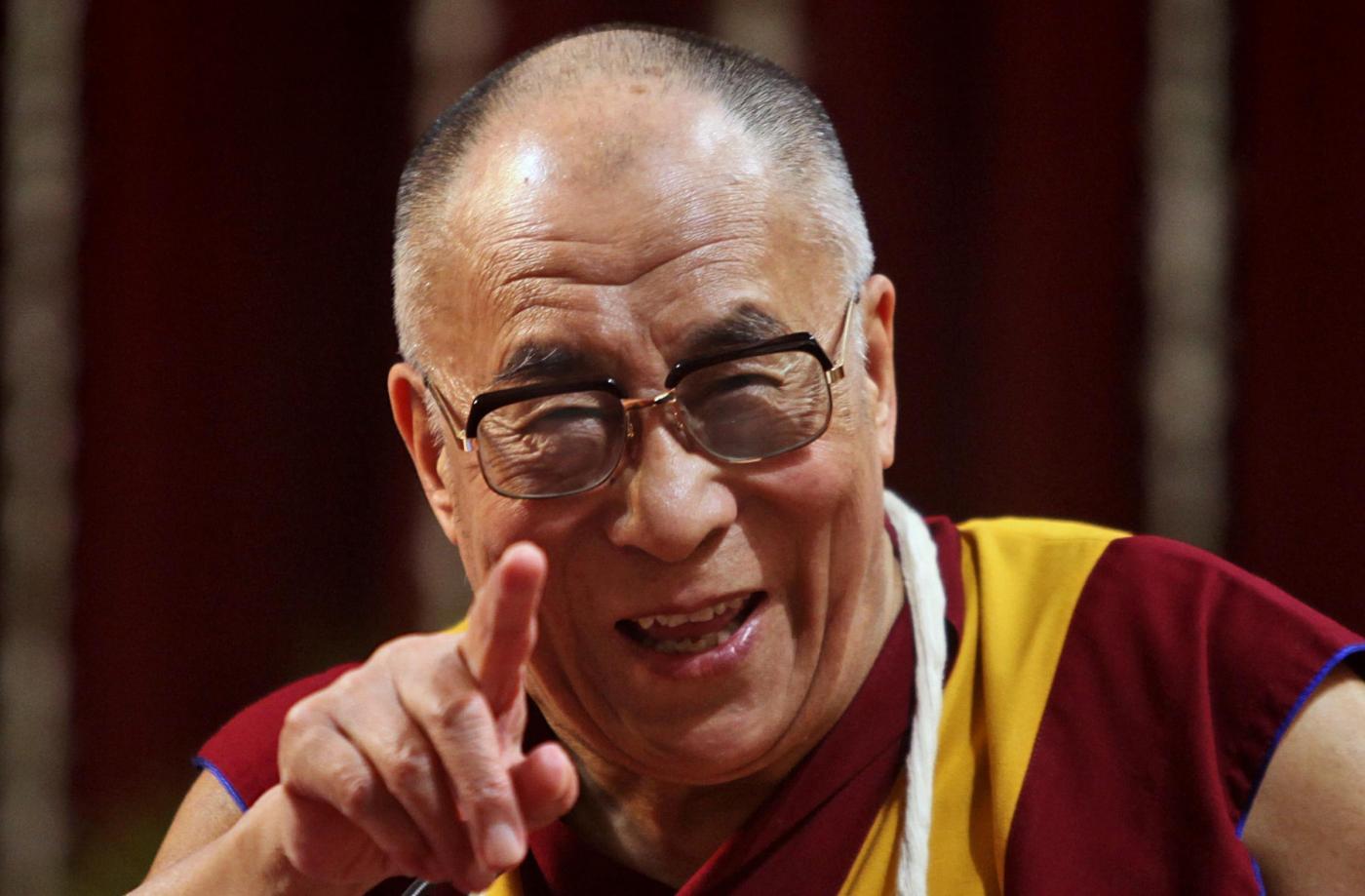
In this Feb. 18, 2011 photo, Tibetan spiritual leader the Dalai Lama gestures as he addresses the Mumbai University students in Mumbai, India. (AP Photo/Rafiq Maqbool)
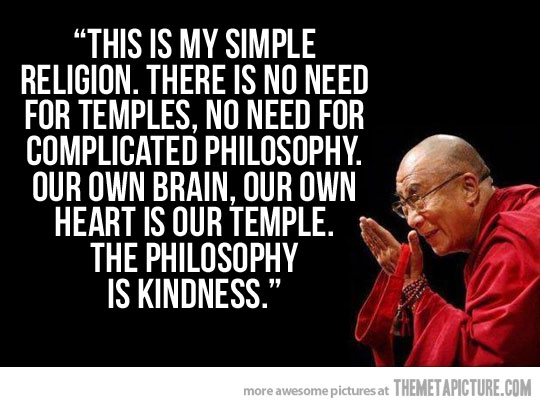
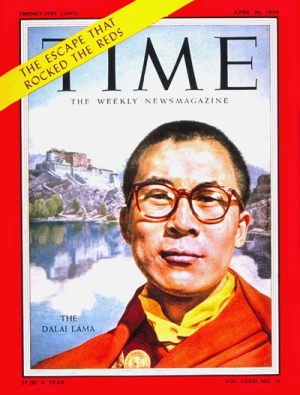
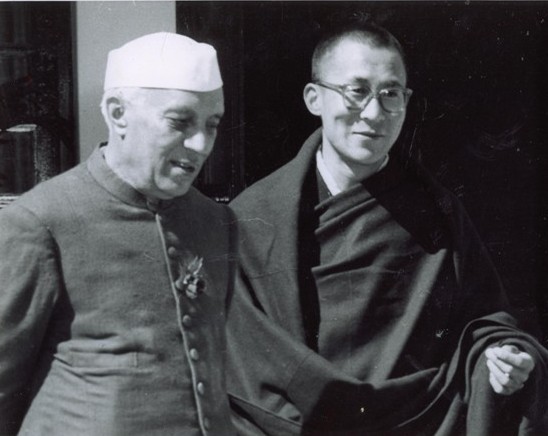
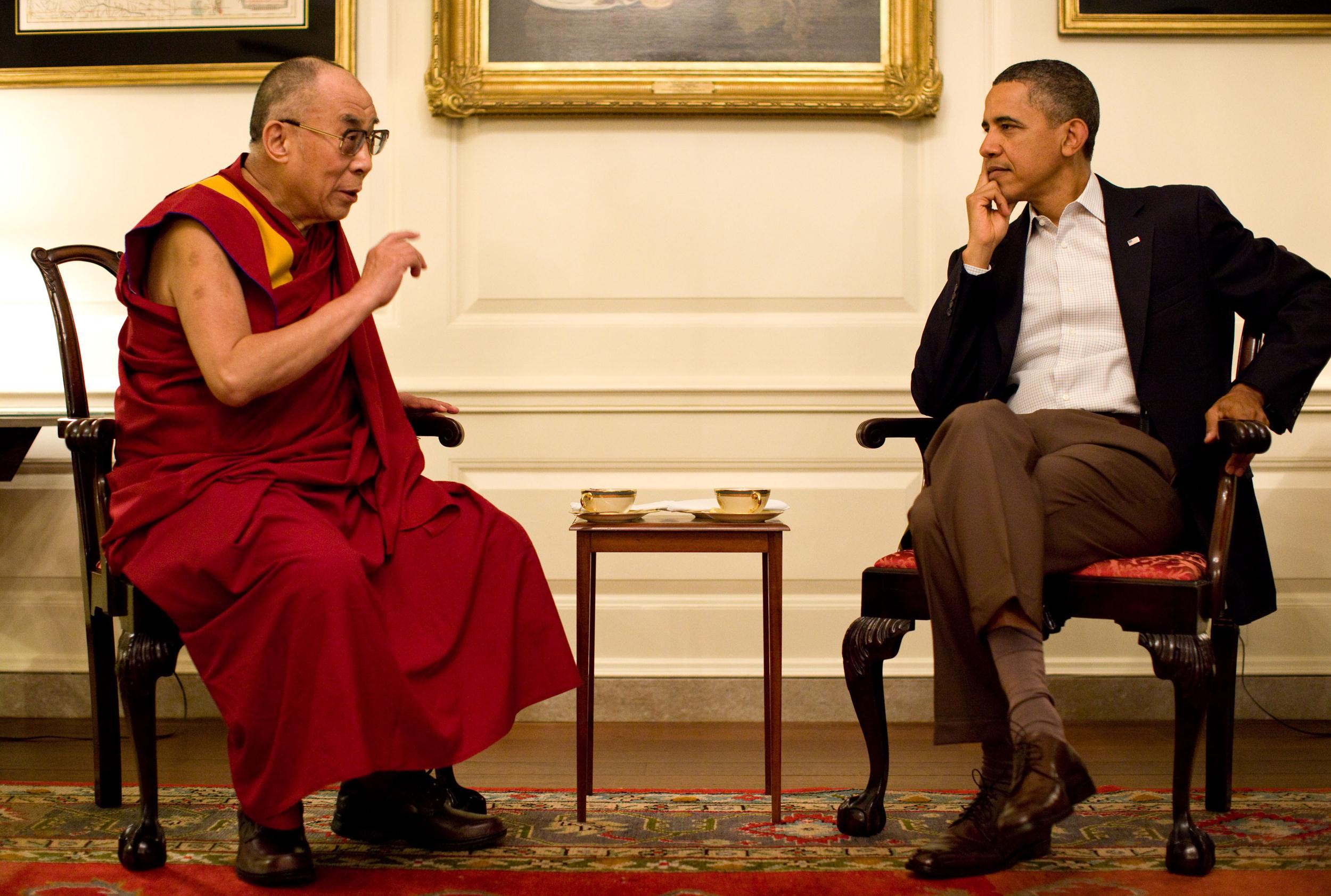
In this week’s Ravaya column, (in Sinhala, appearing in issue of 19 July 2015), I salute the Dalai Lama who turned 80 on July 6. One of the world’s best known and admired public figures, the Tibetan Buddhist spiritual leader has earned the respect of many non-Buddhists because of his wisdom, tolerance and pragmatism.
Why are Lankan governments so beholden to China? Why isn’t this Buddhist leader allowed to visit the island when three Popes have visited during the past half century? Questions that citizens of Lanka must keep posing to their government…
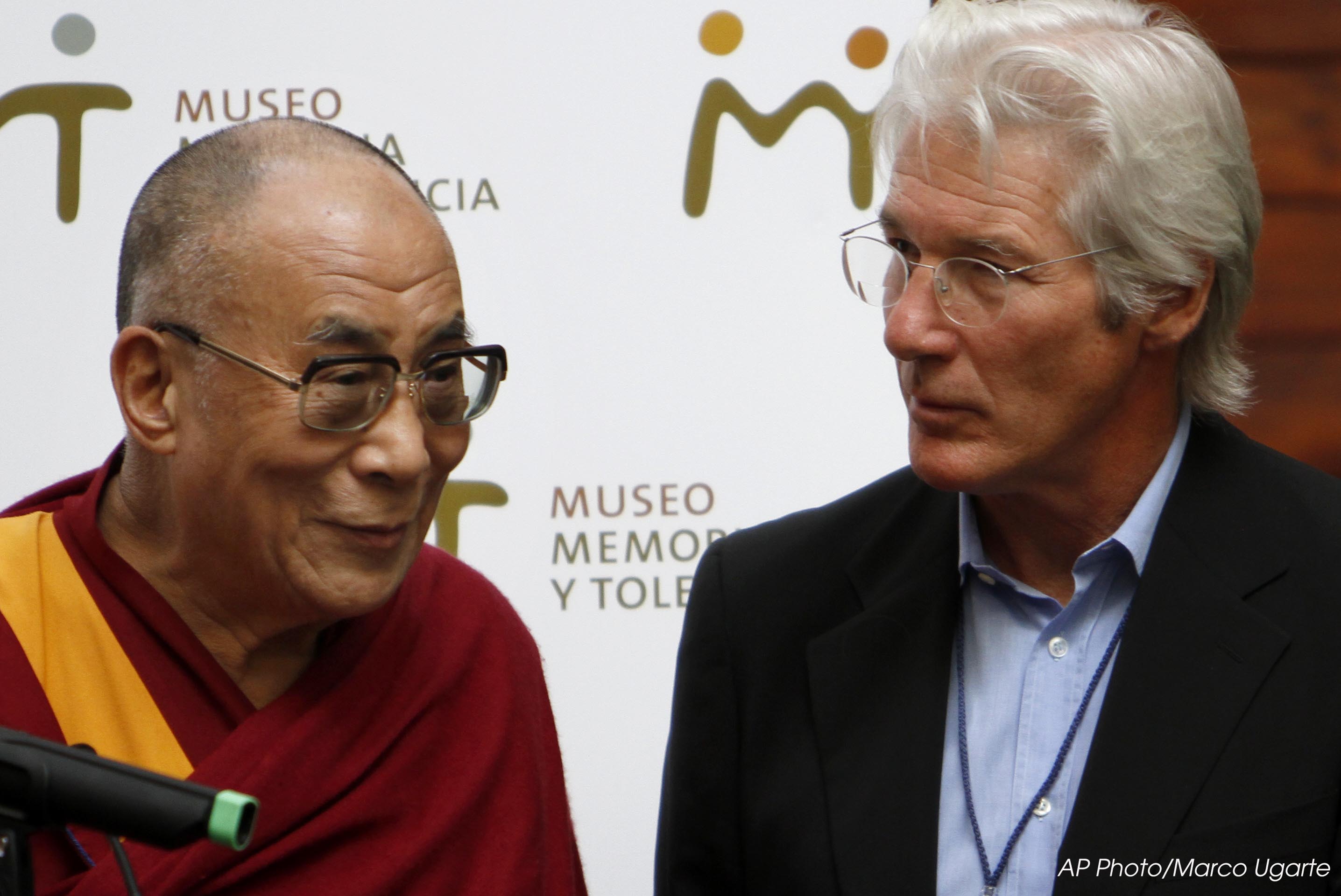
Tibet’s spiritual leader the Dalai Lama and actor Richard Gere hold hands during the inauguration of the exhibit; Tibet, Memories of a Lost Motherland at the Museum of Memory and Tolerance in Mexico City, Saturday Sept. 10, 2011. On Sunday the Dalai Lama and Gere, a Buddhist, will host a public event titled, Finding Happiness in Difficult Times at the Cruz Azul stadium in which 30,000 people are expected to attend. This is the spiritual leader’s third visit to Mexico. (AP Photo/Marco Ugarte)















 Open Minds!