The Coming Pesticide Tsunami: Made in China?

Feature article published in Ceylon Today broadsheet newspaper on 14 March 2013.
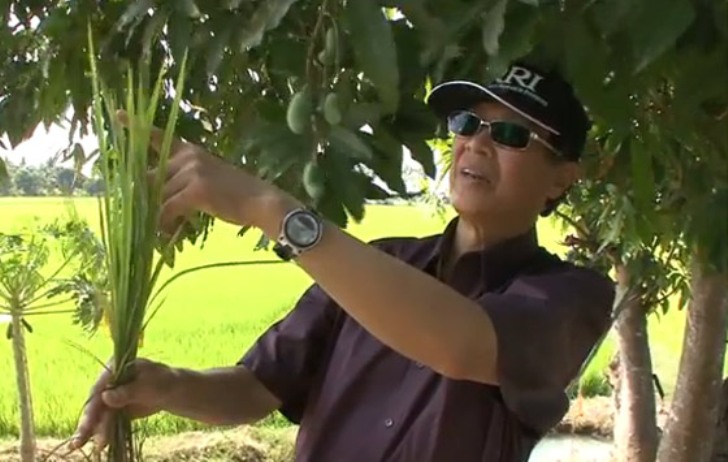
Dr K L Heong: Beware of South-South dumping of hazardous pesticides!

The Coming Pesticide Tsunami: Made in China?

By Nalaka Gunawardene

Countries in Asia and Africa are threatened by a ‘Pesticide Tsunami’ that can seriously affect people’s health and the environment, a leading Asian entomologist warns.

Many developing countries that lack laws and regulations for pesticide marketing are vulnerable to ‘South-South dumping’ of highly hazardous agrochemicals coming from elsewhere in the developing world itself.

In recent years, China has become the world’s largest producer of pesticides, with most of its output being exported to developing countries, says Dr Kong Luen “K.L.” Heong, Principal Scientist at the International Rice Research Institute (IRRI), in Los Banos, the Philippines.

Dr Heong has been researching insect ecology in Asian paddy fields for decades. He is a leading advocate of integrated pest management (IPM) and sustainable agriculture that seeks to reduce current high dependence on agrochemicals in farming.

“Unless developing countries develop mechanisms to protect themselves, the coming Pesticide Tsunami is going to hit them hard. We urgently need to build self-protection at country level,” he said at a regional workshop of science and environmental communicators held recently in Bangkok, Thailand.

Dr Heong called for developing country governments to play a stronger governance role “to ensure quality information and pesticide prescriptions for farmers”.

Analysing statistics from China’s Institute for the Control of Agrochemicals, Ministry of Agriculture (ICAMA), Dr Heong showed how pesticide production in China has more than quadrupled between 2000 and 2009 – from around 500,0000 metric tons to over 2 million metric tons.

In that time, however, China’s domestic use of pesticides showed only a modest increase. That means much of the surplus was exported.

“It goes to countries that have lesser controls. It will not go to Australia, or Europe, or the United States for sure. Where else would it go? The developing world,” Dr Heong said in an interview.

Statistics maintained by the United Nations Food and Agricultural Organisation (FAO), which collates national data received from member governments, show that pesticide imports into developing countries have escalated during the past few years.

According to this database (available at: http://faostat.fao.org) Sri Lanka imported pesticides worth a total of USD 60.15 million in 2011. The figure for the previous year, 2010, was USD 47 million, i.e. an increase of over 20%. (Import quantities are not shown.)

South-South Dumping?

For decades, health and environmental activists have accused western multinational companies of ‘dumping’ hazardous pesticides in the developing world when, in fact, many such substances are banned in their own countries.

During the past decade, however, countries like China and India have also begun exporting their pesticides to the rest of the developing world. Some of these are no longer allowed use within their countries. (See box below: China’s Rising Toxic Exports).

“We are not (sufficiently) well aware of South-South dumping,” Dr Heong said. “We in Southeast Asia know this now. (But) what about Africa? There is a mechanism that dominates pesticide sales there, and it is worrying.”

In 2001, an international treaty called the Stockholm Convention was adopted to eliminate or restrict the production and use of persistent organic pollutants (POPs). These chemical substances, once widely used in pesticides, run off from farmlands and slowly build up through food chains, threatening human health and the environment.

The Stockholm Convention, and the related Rotterdam Convention for Prior-Informed Consent, both came into force in 2004. The latter provides a first line of defence giving importing countries the tools and information they need to identify the potential hazards and to exclude chemicals they cannot manage safely.

Dr Heong emphasized the critical role of governance in strengthening defences against the pesticide tsunami: sound policies, adequate national laws and regulations, and their proper enforcement.

“We cannot control exports by another country. But we can all control imports into our own countries. It’s all about individual countries acting in their own defence,” he said.

He added: “This is deadly poison we are talking about! I feel strongly that the poison should not be sold like toothpaste in the open market. And that is the key: governments should either revive their laws or implement the laws (for effective regulation)”.

Filipino rice farmer spraying pesticides

Governance crucial

He emphasized the need for structural transformation in policy and governance — which he likened to the ‘roof’ of the ‘house’ of agricultural production and consumption.

“We spend a lot of money training our farmers; we spend even more money researching ecological engineering, new (plant) varieties and so on. These are like the furniture, and very nice furniture. But because they are placed in a ‘house without a roof’, they just get washed away. So building a roof is vital,” he explained.

In his view, registering importers of agrochemicals and licensing wholesale traders is necessary – but not sufficient. Toxic agrochemicals are currently being peddled to farmers mostly by untrained salespersons and vendors – they have no certification, and operate without much (or any) supervision and accountability.

“Most subsistence rice farmers across Asia simply ask their nearest local vendor for crop protection advice – and the vendors, in turn, promote whatever they have in stock, or whichever brand that gives them the highest profit margins,” Dr Heong said.

He wants to see developing countries introduce regulatory and certification systems similar to how pharmaceutical drugs are imported and distributed. The medical and healthcare professionals have their own certification schemes to ensure compliance with laws and regulations.

“We are dealing with a profession, and we are dealing with poison! Why are we not having a certification programme (for those peddling it to end users)?” Dr Heong asked.

Malaysian-born K L Heong holds a PhD and DSc from Imperial College, London. Besides insect ecology, he has also studied the sociology of farmers’ decision making, and designed communication strategies for educating farmers on sustainable agriculture.

His research and campaigns have changed rice farmers’ attitudes and practices in plant protection in many countries. For example, his work in Vietnam contributed to farmers more than halving their insecticide use in several provinces in the Mekong Delta; similar reductions were also recorded when his work extended to Central Thailand and Northern Vietnam.

Dr Heong is a leading voice interviewed in ‘Hopper Race’, a new documentary film produced by TVE Japan looking at rice planthopper threats to rice production in Asia. The Bangkok workshop was held to plan the documentary’s distribution across South and Southeast Asia.

Read my full interview with Dr K L Heong, published on TVEAP website

Text Box: China’s Rising Toxic Exports

China’s domination in the world pesticides trade is borne out by global statistics compiled by the UN’s FAO, and confirmed by independent researchers.

Writing a paper in the Proceedings of the International Academy of Ecology and Environmental Sciences in 2011, researchers Wen Jung Zhang, Fu Bing Jiang and Jiang Feng Ou say China is now the largest producer and exporter, and the second largest consumer of pesticides in the world.

The researchers, attached to the School of Life Sciences at Sun Yet-sen University in Guangzhou, note: “Since 1983, China has increased the production of organophosphorus and carbamated pesticides. Meanwhile, pyrethroid and other pesticides were developed. Since 1994, pesticide export of China has exceeded its imports.

“So far, more than 2,000 pesticide companies, of which more than 400 companies are manufacturers of original pesticides; more than 300 varieties of original pesticides and 3,000 preparations are being manufactured…”

They add: “Pesticide pollution of air, water bodies and soils, and pesticide induced deaths in China has been serious” in recent years.

They say China has banned the use of high-residual HCH, DDT and other organochlorined pesticides since 1983. And since 2007, several highly poisonous organophosphorous pesticides (namely, parathionmethyl, parathion, methamidophos, and phosphamidon) are also banned.

What is not clear is if similar considerations are applied to pesticides that China exports to other developing countries.

Their full paper, “Global pesticide consumption and pollution: with China as a focus” is online at: http://tiny.cc/PestC
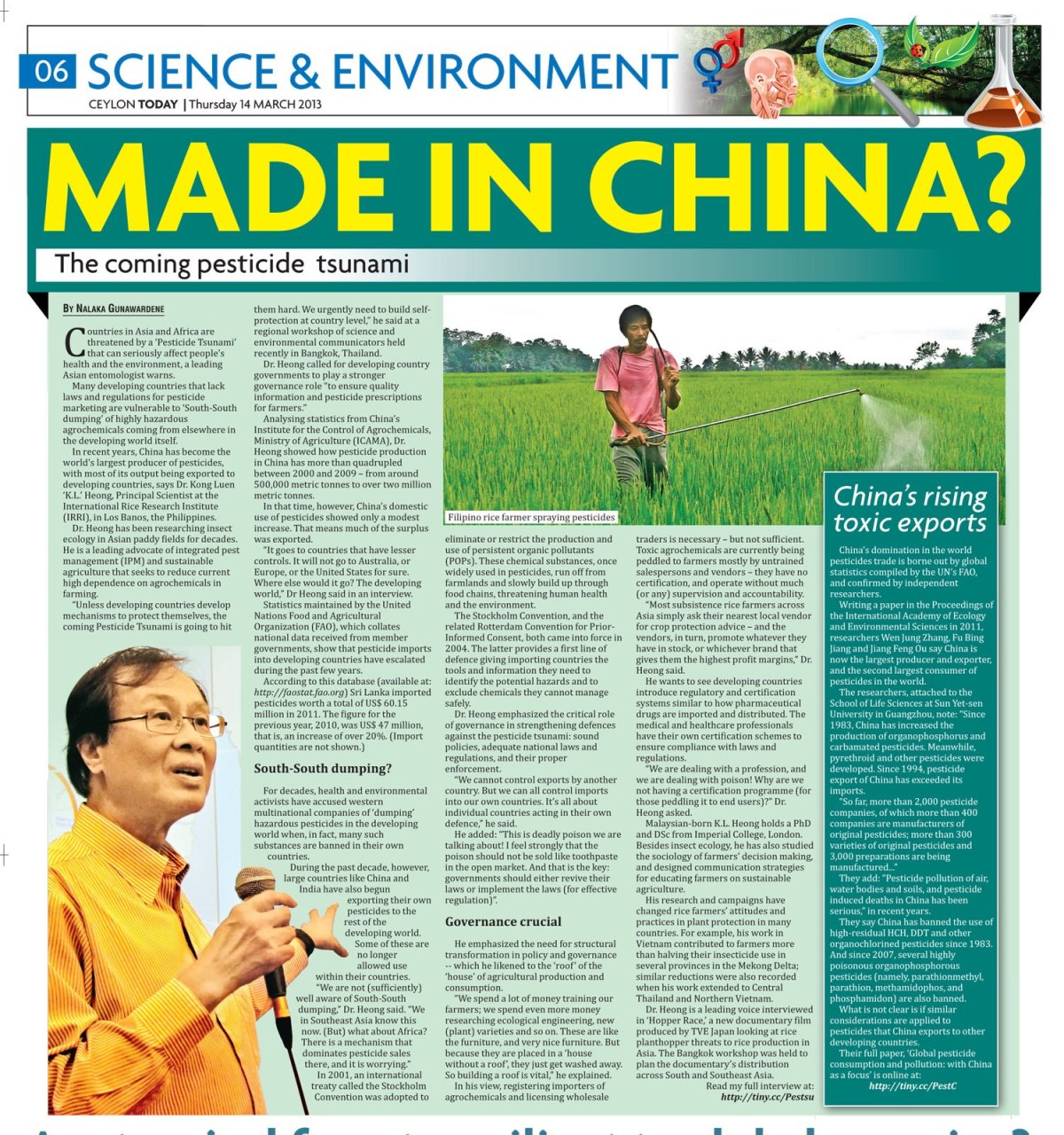
Ceylon Today, 14 March 2013 - The Coming Pesticide Tsunami - Made in China
Ceylon Today, 14 March 2013 – The Coming Pesticide Tsunami – Made in China

සිවුමංසල කොලුගැටයා #48: නව නිපැයුම්කරුවන්ට සැබෑ ලෝකයෙන් අභියෝග රැසක්

In our age of technology, hundreds of millions of people — most of them poor, and women — are still toiling away in tasks where simple machines or devices could reduce their daily drudgery. Few inventors have bothered with these — probably because the beneficiaries are on the margins of society. Their needs are not a priority for most research institutes or high tech laboratories.

This is the theme of my Ravaya column (in Sinhala) published on 8 Jan 2012, reproduced in full below.It was inspired by, and mostly based on the inaugural Ray Wijewardene memorial lecture delivered by Dr Anil Kumar Gupta, India’s top innovation-spotter, in Colombo on 13 December 2011. He spoke on “Grassroots Innovation for Inclusive Development: From Rhetoric to Reality”

It covers the same ground as did my English op-ed essay, published in The Sunday Times on 25 Dec 2011: Wanted: More ‘Idiots’ to tackle grassroots innovation challenges.

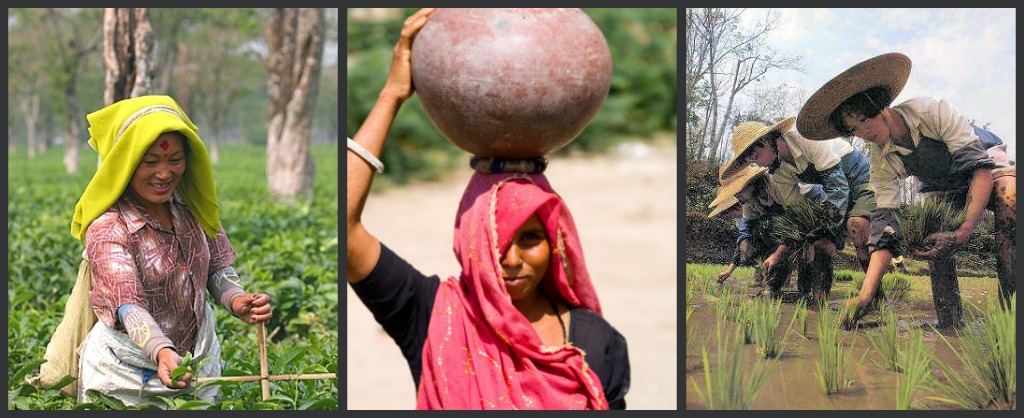
Tea plucking, water fetching and rice transplanting -- three tasks that millions of women do manually everyday...

‘එළිමහනේ එදිනෙදා වැඩකටයුතුවලදී අපට ඉතා ප්‍රයෝජනවත් වන, මිනිස් බලයෙන් දිවෙන තනි රෝදයේ වාහනය කුමක්ද?’

මා පාසල් යන කාලයේ රසවත්ව හා හරවත්ව විද්‍යාව ඉගැන් වූ ගුරුවරයෙකු මේ ප්‍රශ්නය අපට යොමු කළා තවමත් මතකයි. උත්තරය – වීල් බැරෝව නැතිනම් වීල් බැරැක්කය.

මීට සියවස් 24කට පෙර පුරාණ ග්‍රීසියේත්, සියවස් 18කට පෙර චීනයේත් වීල් බැරැක්ක භාවිත වූ බවට සාක්ෂි තිබෙනවා. වීල් බැරැක්කය ලීවර හා රෝදය නමැති යාන්ත්‍රික සංකල්ප දෙක දක්ෂ ලෙස සංකලනය කොට නිපදවා ගත් සරල විසඳුමක්. එදිනෙදා ජීවිතයේ මානවයන් වෙහෙස කරන ආයාසය (drudgery) අඩු කරමින් ඔවුන්ගේ ඵලදායීතාව වැඩි කරන නිපැයුමක්.

වීල් බැරැක්කය මගේ සිහියට ආවේ 2011 දෙසැම්බරයේ කොළඹදී රේ විජේවර්ධන සමරු දේශනය පැවැත් වූ ඉන්දියාවේ ආචාර්ය අනිල් කුමාර් ගුප්තට සවන් දෙන විටයි. නවෝත්පාදනයන් (innovations) ගම් මට්ටමින් හා බිම් මට්ටමින් හඟනා ගෙන ප්‍රවර්ධනය කිරීමේ භාරත-ව්‍යාප්ත ප්‍රයත්නයක යෙදී සිටින මේ අසාමාන්‍ය ගණයේ විද්වතා දැක් වූ අදහස් කීපයක් අප ගිය සතියේ සාරාංශගත කළා.

සිය දේශනයේදී අනිල් ගුප්ත අවධානය යොමු කළ එක් තේමාවක් වූයේ නව නිපැයුම්කරුවන්ට තවමත් හරිහැටි විසඟම් සොයා ගන්නට නොහැකිව ඉතිරි වී තිබෙන ප්‍රායෝගික අභියෝගයි. වසරක් පාසා ලෝකයේ නව නිපැයුම් හා සංකල්පවල බුද්ධිමය අයිතිය තහවුරු කැරෙන පේටන්ට් ලක්ෂ ගණනක් අදාල බලධාරීන් නිකුත් කරනවා. එසේ වූවත් මානවයන් මිලියන් සිය ගණනක් දිනපතා මුහුණදෙන ගැටළු ගණනාවකට තවමත් පිළිගත හැකි හා ප්‍රචලිත මට්ටමේ විසඟම් ලැබී නැහැ.

“කෘත්‍රිම චන්ද්‍රිකා නිපදවා උඩුගුවන් ගත කිරීමේ හැකියාව ඉන්දියාව ලබා තිබෙනවා. ලෝකයේ ඉහළ ම පෙළේ විද්‍යා පර්යේෂණාගාර හා පරිගණක සමාගම් රැසක් ඉන්දියාවේ තිබෙනවා. ඒත් දිගු කලක් තිස්සේ මිලියන් ගණනක් දුගී ඉන්දියානුවන් දිනපතා මහත් සේ වෙහෙස කරවන ප්‍රායෝගික ගැටළු රැසකට හරිහැටි විසඟම් සපයාගන්නට අපට තවමත් නොහැකි වී තිබෙනවා,” ආචාර්ය ගුප්ත අවංක තක්සේරුවක් කළා. ඔහු මෙය දකින්නේ අධි තාක්ෂණික ජයග්‍රහණ ගැන උදම් වන විද්‍යාවේ පසුබෑමක් හැටියටයි.

ආචාර්ය ගුප්තගේ පුරෝගාමීත්වයෙන් 1987දී ඇරඹි මී මැසි ජාලය (Honey Bee Network) හරහා ගම් හා බිම් මට්ටමේ සාමාන්‍ය ඉන්දියානුවන් අතින් බිහි වූ නවෝත්පාදන දහස් ගණනක් ලේඛනගත කොට තිබෙනවා. එහෙත් තවමත් සාර්ථක ලෙස විසඳා ගත නොහැකි වූ ප්‍රායෝගික අභියෝග ගණනාවක් ද ඇති බව ඔහු පෙන්වා දෙනවා.

එයට ප්‍රබල උදාහරණ තුනක්:

• ආසියාව පුරා ම හමුවන වෙල්යාය බොහොමයක ගොයම් සිටුවීමේ කාර්යය තවමත් කැරෙන්නේ දෛනික ශ්‍රමිකයන් ලෙස සුළු ගෙවීමක් ලබන කාන්තාවන් අතින්. දිගු වේලාවක් කොන්ද නවා ගෙන වතුරේ බැස ගෙන කළ යුතු මෙය ලෙහෙසි පහසු කාරියක් නොවෙයි. වතුරේ සිටීමෙන් විවිධ සමේ රෝග ඇති වීමේ අවදානමක් ද තිබෙනවා. ගොයම් සිටුවීමේ යන්ත්‍ර සැළසුම් කිහිපයක් ම යෝජනා වී ඇතත් කාර්යක්ෂම හා පාවිච්චියට පහසු යන්ත්‍රයක් තවමත් භාවිතයට පැමිණ නැති බව ගුප්ත කියනවා.

• ලිප් ගල් තුනක් මත පදනම් වූ දර ලිප ආසියාව හා අප්‍රිකාව පුරා සියවස් ගණනක් තිස්සේ පාවිච්චි කැරෙනවා. සාම්ප්‍රදායික දර ලිප, බලශක්තිය අපතේ යවන අතර දුම් පිට කිරීම හරහා ගෘහණියන්ගේ සෞඛ්‍යයට ද අහිතකර බලපෑම් කරනවා. වඩාත් අරපිරිමැසුම්දායක දර ලිපක් සැළසුම් කිරීමට දශක ගණනාවක සිට විවිධ රටවල උත්සාහ කර ඇතත් විද්‍යාඥයන් හා ඉංජිනේරුවන් යෝජනා කරන සැළසුම් බොහොමයක් ගෘහණියන් අතර ජනප්‍රිය වී නැහැ. විවිධ හැඩයේ භාජන යොදා ගනිමින්, විවිධාකාර ආහාර ද්‍රව්‍ය නොයෙක් ක්‍රමවලට පිස ගැනීමට හැකියාව ඇති සරල දර ලිපක් සැළසුම් කිරීමේ අභියෝගය තවමත් මුළුමනින් ජය ගෙන නැති බවයි ගුප්තගේ මතය. මේ සඳහා තාක්ෂණය, සැලසුම්කරණය හා සාංස්කෘතික සාධක යන කාරණා ත්‍රිත්වය ම සැලකිල්ලට ගත යුතුයි.

• ලංකාව, ඉන්දියාව, කෙන්යාව වැනි රටවල තේ කර්මාන්තයේ තේ දළු නෙළීම තවමත් මුළුමනින් ම පාහේ කරන්නේ කාන්තාවන් විසින්. තේ දළු කූඩයක් පිටේ බැඳ ගෙන, බෑවුම් සහිත බිම්වල ගමන් කරමින් සියුම්ව තේ දළු නෙළීම දිනකට පැය කිහිපයක් කළ යුතුයි. තේ පානය රස විඳින බොහෝ දෙනෙකු දළු නෙළීමේදී අතට හා ගතට දැනෙන වේදනාත්මක විඩාව ගැන දන්නේ නැහැ. දළු නෙළීමේ කාර්යය අර්ධ වශයෙන් හෝ යාන්ත්‍රීකරණය කළ හැකි නම් නෙළන්නියන්ගේ රැකියාවලට තර්ජනයක් නොකොට ඔවුන්ගේ ආයාසය අඩු කළ හැකියි.

“මේ අභියෝග ගැන සරසවි හා විද්‍යා පර්යේෂණ ආයතන එතරම් තැකීමක් කරන්නේ නැහැ. මේ දෛනික කාර්යයන්ගෙන් පීඩාවට පත් වන්නේ දුගී හා ග්‍රාමීය මිනිසුන් – විශේෂයෙන් ම කාන්තාවන්. එබඳු අයට තමන්ගේ ගැටළු ගැන හඬක් නැඟීමට ඇති ඉඩකඩ ඉතා අඩුයි. බිම් මට්ටමේ නව නිපැයුම්කරුවන් පවා මේ අභියෝග ගැන ඇති තරම් අවධානයක් යොමු කර නැහැ!” ඔහු පෙන්වා දුන්නා.

සමහර ගැටළුවලට අර්ධ විසඳුම් ලබා දීමට නව නිපැයුම්කරුවන් සමත්ව සිටිනවා. උදාහරණයක්ථ බොහෝ ග්‍රාමීය ප්‍රදේශවල කාන්තාවන් බීමට ජලය සොයා කිලෝමීටර් ගණනක් දුර ගමන් කරනවා. සොයා ගන්නා ජලය කලගෙඩි හෝ වෙනත් භාජනවලට පුරවා හිසේ හෝ ඉනේ තබා ගෙන ගෙදර ගෙන යාමයි සිරිත. මේ ක්‍රියාවේ ආයාසය අඩු කර ගන්නට පානි හාරි (Pani Hari) නම් සරල ඇටවුමක් ඉන්දියාවේ කිම්ජිබායි කනාඩියා (Khimjibhai Kanadia) නිපද වූවා. එයින් කරන්නේ හිස මත තබා ගත් වතුර කලයේ බර, උරහිස් දෙකට බෙදා හැරීමයි. මීට අමතරව වතුර පුරවා පැළඳගෙන යා හැකි වතුර කබායක් (water-carrying jacket) තවත් නිපැයුම්කරුවෙකු සැලසුම් කර තිබෙනවා. මේවා යම් මට්ටමකට ගැටළුව විසඳන නමුත් පුළුල් භාවිතයට ගන්නට පෙර වැඩි දියුණු කළ යුතු බව ගුප්ත කියනවා.

තවත් පුළුල්ව අත්දකින ප්‍රායෝගික ගැටළුවක් නම් කඳුකර බෑවුම් ප්‍රදේශවල භාණ්ඩ ප්‍රවාහනයයි. අඩි පාරක් පමණක් ඇති, බයිසිකලයක්වත් පැද ගෙන යා නොහැකි බෑවුම් ප්‍රදේශවල පදිංචිකරුවන් හැම දෙයක් ම කරපිටින් ඔසවා ගෙන යා යුතුයි. නැතිනම් ගවයන්, බූරුවන් වැනි සතුන් යොදා ගත යුතුයි. කඳුහෙල් බහුල බෑවුම් බිමෙහි යා හැකි ට්‍රොලියක් වැනි ප්‍රවාහන ක්‍රමයක් නිපද වූවොත් කඳුකර වැසියන් මිලියන ගණනක් එයින් වාසි ලබනවා නියතයි.

පසුගිය අඩ සියවසක කාලය පුරා විශාල වශයෙන් ආයෝජන කළත් තවමත් සාර්ථකව විසඳා නොගත් සංවර්ධන අභියෝගයක් නම් ග්‍රාමීය වැසිකිළි සැළසුමයි. ජලය භාවිතය අරපිරිමසින, මළ මුත්‍ර මනා සේ ඉවත දමන, අඩු වියදමින් තනා ගත හැකි වැසිකිළි සැළසුම් තවමත් ජය නොගත් අභියෝගයක්. ලෝකයේ බිලියන 7ක ජනගහනයෙන් බිලියන 2කට කිසි වැසිකිළි පහසුමකමක් නැහැ. නිරාවරණය වූ එළිමහන් තැන්වල මළපහ කිරීම නිසා ජලය අපවිත්‍ර වීමෙන් හට ගන්නා පාචන රෝග හා අකල් මරණ සංඛ්‍යාව විශාලයි.

හඳ මතුපිට ජල සම්පත් ගවේෂණය කරන්නට ස්වයංක්‍රීය අභ්‍යවකාශ යානා නිර්මාණය කළ ඉන්දියාවේ ම තවමත් මිලියන් 400ක් මිනිසුන් අන්ත දුගී ජීවිත ගත කරමින් බීමට පිරිසිදු වතුර සොයා ගැනීමේ දෛනික අරගලයක යෙදෙනවා. දියුණු වන ලෝකයේ බොහෝ රටවල යථාර්ථය මෙයට වෙනස් නැහැ. තවමත් හරිහැටි විසඳා නොගත් මෙකී නොකී ප්‍රායෝගික අභියෝගවල ලැයිස්තුවක් ආචාර්ය ගුප්ත සම්පාදනය කර තිබෙනවා.

නාගරික හා ග්‍රාමීය දුගී ජනයා දිනපතා මුහුණ දෙන ආයාසකාරී තත‍වයන්ට හැකි තාක් විසඳුම් සොයා දීමට ජාතික මට්ටමේ ප්‍රමුඛතාවක්, ආයෝජනයක් හා කැපවීමක් අවශ්‍ය බව ගුප්ත අවධාරණය කරනවා. තනි නිපැයුම්කරුවන්, රාජ්‍ය පර්යේෂණයාතන මෙන් ම පෞද්ගලික අංශය ද මේ අභියෝගවලට මීට වඩා ප්‍රතිචාර දැක්විය යුතු බව ඔහු කියනවා.

අප ගිය සතියේ ද සඳහන් කළ පරිදි හැම නව නිපැයුමක් ම ලොව හොල්ලන හෝ වෙළඳපොළ අල්ලන හෝ ඒවා වීම අවශ්‍ය නැහැ. ප්‍රායෝගික ගැටළුවලට විසඳුම් සොයා යාමේදී කුඩා පරිමාණයේ දියුණු කිරීමකින් වුවත්, බොහෝ දෙනෙකුට සහනයක්, උපකාරයක් ලබා දිය හැකියි. එබන්දකට පේටන්ට් බලපත්‍රයක් නොලැබෙන්නට පුළුවනිග එහෙත් නව නිපැයුම්කරුවන්ගේ එක ම අරමුණ විය යුත්තේ පේටන්ට් ගොන්නක් හිමි කර ගැනීම නොවෙයි.

‘3 Idiots’ හින්දි චිත්‍රපටයේ එක් ජවනිකාවක යාන්ත්‍රික ඉංජිනේරු ගුරුවරයා යන්ත්‍රයක් නිර්වචනය කරන ලෙස සිසුන්ට කියනවා. අමීර් ඛාන් රඟපාන චරිතය වන රංචෝගේ විග්‍රහයට අනුව යන්ත්‍රයක් යනු මිනිස් ආයාසය අඩු කරන ඕනෑ ම උපක්‍රමයක් හෝ උපකරණයක්. එහෙත් උගත්කමේ මාන්නයෙන් පිම්බුණු මහාචාර්යවරයාට ඒ සරල විග්‍රහය සෑහෙන්නේ නැහැ. පාරිභාෂික වචන හා බරපතල සංකල්ප ඇතුළත් මහ දිග නිර්වචනයක් ඔහුට අවශ්‍යයි. ඉංජිනේරු තාක්ෂණය ජනතාවගේ ප්‍රශ්න විසඳන්නට මීට වඩා යොදා නොගැනීමට හේතුව මෙබඟ පොතේ ගුරුන් අපේ සමාජයේ බහුලවීමයි.

එදිනෙදා ගැටළු විසඳන්නට වඩාත් ප්‍රයෝජනවත් වන්නේ තැනට සුදුසු විදියට හා සූක්ෂම බුද්ධියෙන් යුක්තව පවතින මෙවලම් (tools) සහ යන්ත්‍ර (machines) යොදා ගැනීමයි. පවතින මෙවලමක් හෝ යන්ත්‍රයක් හෝ සකසා ගත නොහැකි නම් අලුතින් යමක් නිපදවීමේ අවකාශය තිබෙනවා. එහිදී නිපැයුම්කරුවන් කළ යුත්තේ හැකි තාක් සරල හා අඩු වියදම් විසඳුම් සොයා යාමයි.

ප්‍රායෝගික ගැටළු විසඳීමේදි ඒවාට නිතිපතා මුහුණ දෙන මිනිසුන්, ගැහණුන් හා ළමයින් සම්බන්ධ කර ගැනීම ද වැදගත්. තාක්ෂණවේදීන්, ඉංජිනේරුවන් හා විද්‍යාඥයන්ට ගැටළු විසඳීමේ මූලධර්ම මට්ටමේ චින්තනය ලබා දිය හැකියි. අත්හදා බැලීම් කළ හැකියි. එහෙත් අන්තිමේදී විසඳුමක් සාර්ථක වන්නේ එය පාවිච්චි කරන අය අතර පිළිගැනීමට ලක් වූවොත් පමණයි.

නාගරික හා ග්‍රාමීය දුගී ජනයා දිනපතා මුහුණ දෙන ආයාසකාරී තත‍වයන්ට හැකි තාක් විසඳුම් සොයා දීමට ජාතික මට්ටමේ ප්‍රමුඛතාවක්, ආයෝජනයක් හා කැපවීමක් අවශ්‍ය බව ගුප්ත අවධාරණය කරනවා. තනි නිපැයුම්කරුවන්, රාජ්‍ය පර්යේෂණයාතන මෙන් ම පෞද්ගලික අංශය ද මේ අභියෝගවලට මීට වඩා ප්‍රතිචාර දැක්විය යුතු බව ඔහු කියනවා.

ගැටළු විසඳීමේ සාර්ථකත්වයට සාධක තුනක් මුසු වීම අවශ්‍ය බව ගුප්තගේ මතයයි. ඉංග්‍රීසි C අකුරෙන් ඇරඹෙන ඒ වචන තුන: curiosity (කුතුහලය), compassion (මානව දයාව) හා collaboration (සාමුහික ක්‍රියාකාරිත්වය).

ආචාර්ය ගුප්ත ලාංකික විද්වතුන්ට හා නව නිපැයුම්කරුවන්ට දාර්ශනික ඔවදනක් ද දුන්නා. “දශක ගණනාවක් ඉන්දියාවේ උගතුන් හා පර්යේෂකයන් අපට තිබෙන ගැටළු හා අභියෝග ගැඹුරින් අධ්‍යයනය කළා. ඒවාට විසඳුම් ගැනත් බෙහෙවින් වාද විවාද කළා. ඒත් ප්‍රායෝගිකව යමක් කරන්නට අප පෙරට ආවේ නැහැ. මගේ පරම්පරාවේ උගතුන් කළ මේ ලොකු වරද නැවතත් නොකරන්නට වග බලා ගන්න!”

නව නිපැයුම්කරුවන්ට ඔහු දුන් වැදගත් ම අවවාදය මෙයයි: “පන්ති කාමර, විද්‍යාගාර හා වැඩපොළවලට කොටු වී නොසිට සැබෑ ලෝකයේ හැකි තරම් සැරිසරන්නග මඟ තොටේ, කඩමණ්ඩියේ, වෙල් යායවල, හේන්වල හා ගං ඉවුරුවල විසඳා ගත යුතූ – හැකි ප්‍රායෝගික ගැටළු රැසක් තිබෙනවාග පවතින සමාජ තත්ත‍වයන් ගැන තෘප්තිමත් නොවූ මානවයන් ඒවා ගැන සංවේදී වනවා. නව නිපැයුම් බිහිවන්නේ ඔවුන් අතින්. ඔවුන්ගේ පර්යේෂණාගාරය මුළු මහත් ජන සමාජයයි!”

Love that Bug: Spinal Beetle completes charity run across South Asia

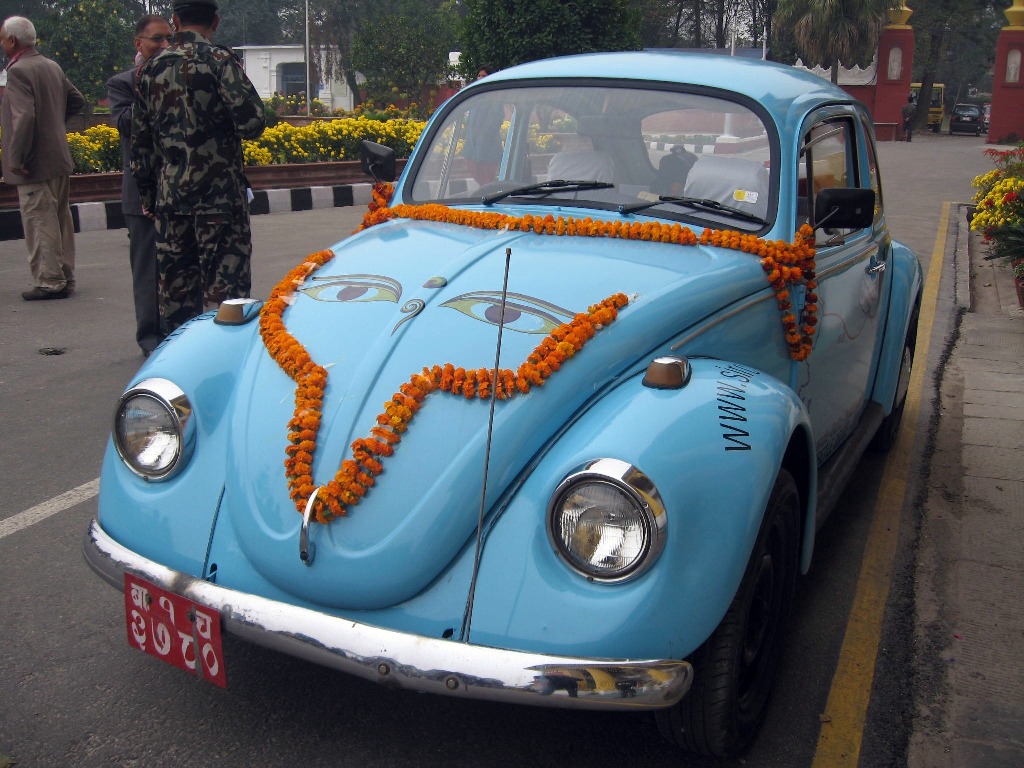
Here's looking at you, people! The Love Bug had only two eyes, but the Spinal Beetle has four. Photo by Nalaka Gunawardene

Deep down in our hearts, we are all Volkswagen Beetle fans: some of us have owned one (my first car was a red bug!), others dream of doing so. The world’s most enduringly popular car design has a particular appeal in South Asia.

And now, South Asian VW Beetle fans have a adorable new mascot. Move over, Disney’s Love Bug (thanks for tons of fun); welcome, Spinal Beetle!

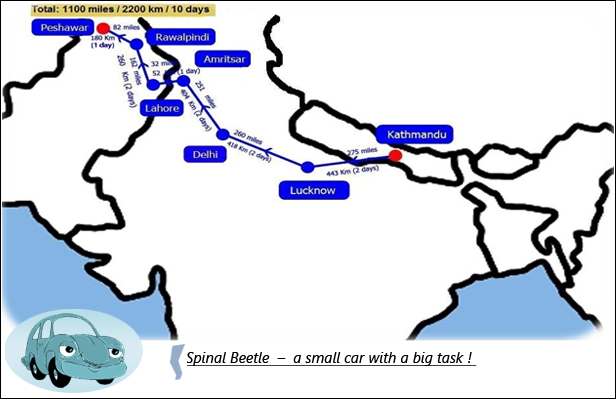
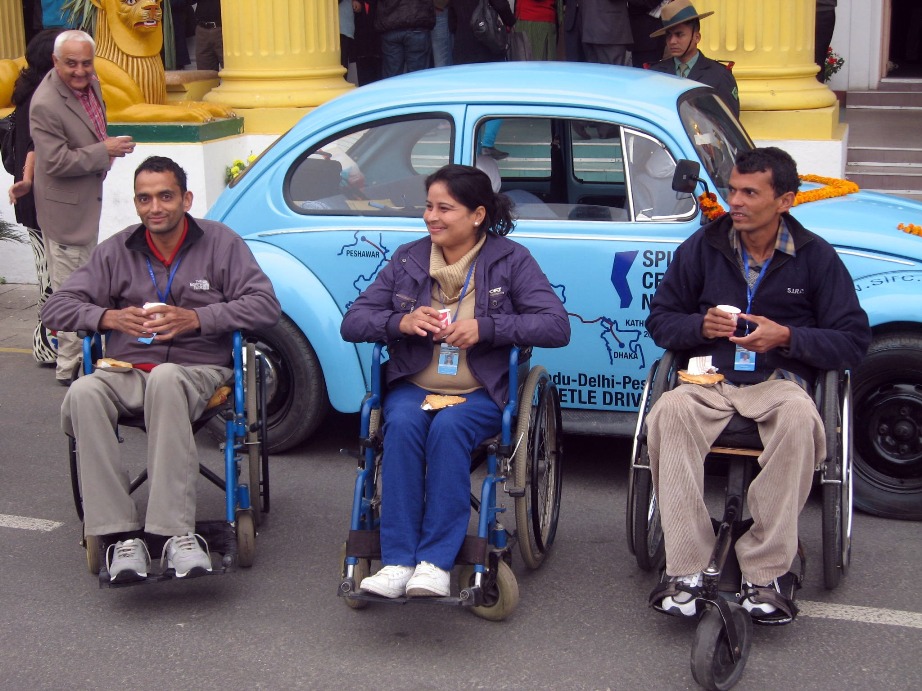
My friend – and hero – Kanak Mani Dixit and his wife Shanta have just completed a 2,200 km (1,100 mile) journey in their nearly 40-year-old Beetle that took them from Kathmandu in Nepal to Peshawar in Pakistan. It was a 12-day, 3-country drive that was to raise funds for spinal injury treatment in Nepal.

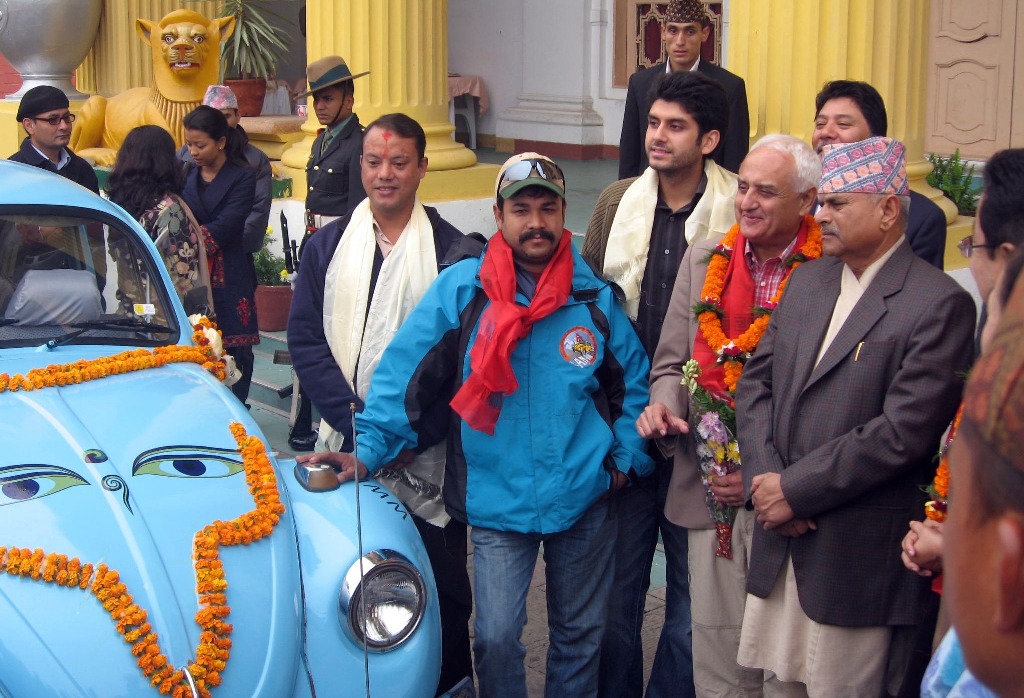
By happy coincidence, I was in Kathmandu on 4 Nov 2011 when the President of Nepal waved off Kanak and Shanta on their journey from the President’s House. It was an informal gathering of friends and well-wishers — with none of the pomposity usually associated with heads of state.

So the photos in this post are all mine. The text that follows is from Kanak and his media team:

President Ram Baran Yadav about to send off Kanak Mani Dixit and Shanta Dixit on 12-day journey in Spinal Beetle - Photo by Nalaka Gunawardene

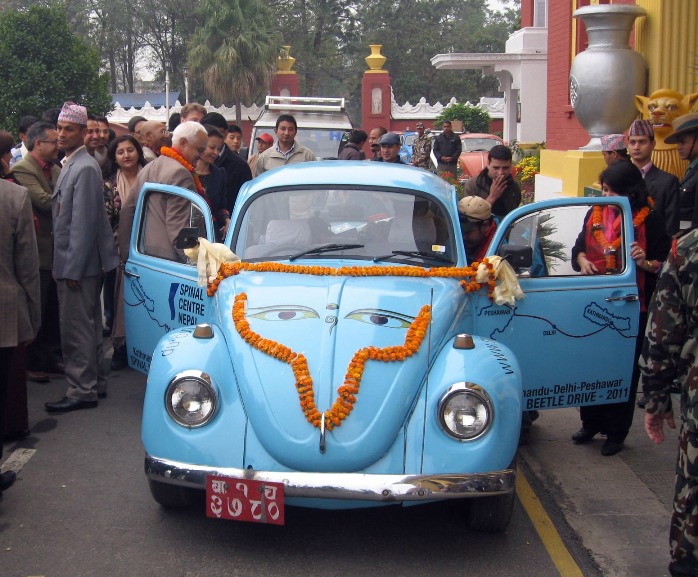
The ‘Great Nepal-India-Pakistan Spinal Beetle Drive’ arrived in Peshawar on 16 November, ending a 1100-mile odyssey that took the 1973 VW Beetle from Kathmandu through Lucknow, Agra, Delhi, Amritsar, Lahore, Islamabad and Rawalpindi.

“It was an exhilarating journey across the friendly landmass of Southasia, and I hope a pointer towards easy land-crossings for people from all our countries,” said Dixit. “Most of our journey was along the Grand Trunk Road, built originally by Sher Shah Suri in the 16th century. The 21st century demands that we open this highway for the people, commerce and ideas to flow.”

The journey of the sky-blue Beetle was conducted with three goals of promoting ‘land connectivity’ in Southasia, developing links between spinal injury institutions across the Subcontinent, and raising funds for the Spinal Injury Rehabilitation Centre in Nepal.

“The matter of land connectivity is important because airline links can never provide the mass-level contact that our people and economies deserve. One would want to see the same cacophony at the Atari-Wagah border as at the Nepal-India border of Bhairahawa-Sunauli,” said Dixit.

The trip was helpful in developing linkages between organisations such as the Spinal Centre in Nepal, the Indian Spinal Injuries Centre in Delhi (ISIC), the Mayo Hospital in Lahore, the National Institute for Rehabilitation Medicine in Islamabad, the Armed Forces Institute for Rehabilitation Medicine in Rawalpindi, and the Paraplegic Centre in Peshawar.

As for the goal of raising emergency funds for the Spinal Centre-Nepal in order to cope with sudden rise in demand for its services, Dixit said that a little over half of the USD 110,000 goal had been raised. “We hope to complete our goal through a retroactive campaign because the spinally injured of Nepal badly need support,” he said.

Dixit is a civil rights activist, writer and journalist who injured his spine in a trekking accident a decade ago. The Spinal Centre was started in 2002 and inaugurated by the late Sir Edmund Hillary.

Kanak and Shanta Dixit setting off on their long journey in Spinal Beetle from Sheetal Niwas on 4 Nov 2011 morning - Photo by Nalaka Gunawardene

In the ‘Spinal Beetle’ driven by Dixit, he was accompanied by Shanta Dixit, educator and founding member of the Spinal Centre-Nepal. The back-up car, a Mahindra Bolero, included VW Beetle specialist Naresh Nakarmi, Spinal Centre staff member Suman Khadka and Eelum Dixit, doing videography and photography. Social worker Meera Jyoti is chair of the Spinal Centre-Nepal.

The Spinal Beetle drive was flagged off on 4 November by President Ram Baran Yadav of Nepal. In New Delhi, it was received by Maj. H.P.S. Ahluwalia, founder of ISIC, as well as journalist Kuldip Nayar and actor Om Puri. The physicist and peace activist A.H. Nayyar received the Spinal Beetle at the Wagah-Atari border. Throughout the Southasian drive, the team was graciously hosted by members of the Pakistan-India People’s Forum for Peace and Democracy and other organisations, such as the Indian Doctors for Peace and Development in Agra, and Asha for Education in Lucknow.

Among the many interesting aspects of the trip, from the emotional to the historical, Dixit includes the following:

• The Spinal Beetle team responded to the request of 96-year-old Barkat Singh ‘Pahalwan’ of Jalandhar (Indian Punjab) that some earth be collected from his childhood village of Fatehgarh near Sialkot (Pakistani Punjab). Taking a detour from the GT Road, the team found the place, which had now become an urban suburb of Sialkot, and collected a jarful of agricultural earth for Barkat Singh. (for a picture of Barkat Singh and other images, go to ‘Selected Photographs’ on http://www.sirc.org.np)

• The memory of Sher Shah Suri, the Afghan sultan from present-day Bihar who ruled from Agra, followed the team through much of the route, which he had regularised in the mid-16th century as an administrative and commercial artery. His memory was revived by the ‘kos’ markers along the Delhi-Chandigarh stretch, a neglected postal station outside Wazirabad, the great roadside banyans providing shade to travellers then and now, and the Rohtas Fort on the approach to Rawalpindi.

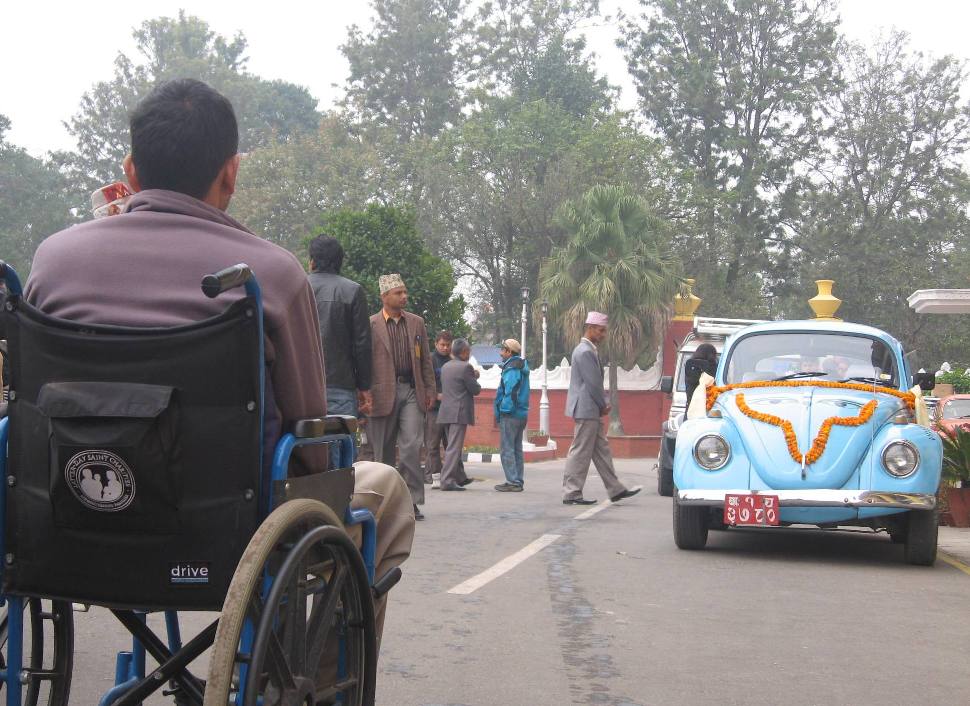
A Nepali on wheelchair watches Spinal Beetle about to depart on a long journey to raise funds for people like him - Photo by Nalaka Gunawardene

• Having started in the Lumbini region of Nepal, where the Buddha was born more than 2,500 years ago, the Spinal Beetle ended its journey in the Gandhar region around Peshawar, a vast centre for Buddhist learning, art and architecture where the Sakyamuni was first etched in human form a few centuries later. In the Potohar Plateau near Islamabad, the Spinal Beetle visited the gigantic Buddhist stupa at the village of Manikyal.

• Arriving in Agra, the Spinal Beetle visited the Taj Mahal on the day of Eid ul-Azha. It arrived in Amritsar and visited Harminder Saheb (the Golden Temple) on the Guru Nanak’s birthday. Passing Gorkha District of Nepal (named after the Gorakhnath temple situated there), the Spinal Beetle traversed Gorakhpur, the base of the Nath sect, and ended its journey in Peshawar where the team visited the Gorakhnath Temple there, opened only a month ago after 60 years of closure. The Delhi-Amritsar leg of the journey was started with a visit to the dargah of Nizamuddin Aulia.

• After watching the mock-militarist show at the Wagah-Atari border between the Indian and Pakistani goose-stepping men in khaki, that very evening the team attended a play on Bhagat Singh and his fight for independence, put on by the Ajoka Theatre of Lahore.

• The Bharatpur government hospital in Chitwan District of Nepal was the first stop of the Spinal Beetle out of Kathmandu. The Bharatpur hospital sought help for setting up a spinal injury rehabilitation unit, which is in line with the Spinal Centre’s belief in decentralising rehabilitation. As a gesture of goodwill for the Nepal-India-Pakistan drive, the hospital committee donated NRs 50,000, which was gratefully received.

• In New Delhi, Maj. H.P.S. Ahluwalia of ISIC suggested that Dixit work to set up a Southasian network for spinal injury rehabilitation, given the specificity of the need. There was an enthusiastic response to this idea throughout the rest of the trip all the way to the Paraplegic Centre in Peshawar.

• At the Mayo Hospital in Lahore, the Medical Superintendent Dr. Zahid Pervaiz and Head of Rehabilitation Medicine Dr. Waseem Iqbal provided information on spinal injury and trauma response that had been developed in Pakistan. They graciously offered four-year full fellowships for two doctors to be sent by the Spinal Centre-Nepal.

Only a Nepali team and a German Bug could get past border babus like this!

• In Islamabad, the Nepal team got specific information on the response to the 2005 earthquake which hit Kashmir and the Hazara division. The team invited Pakistani specialists to Kathmandu to share information on the medical, rescue, social work and humanitarian aspects, so that Nepal would be better able to tackle the mega-tremor that is projected to hit Kathmandu Valley and surrounding areas before long.

• In Islamabad, activist and politician Nafisa Khattak introduced the team to the Melody Theatre, which had served as a staging ground for the sudden rush of victims from the 2005 earthquake. Poignantly, this only cinema hall of the city had been set to torch by a radical mob some years earlier.

• In Agra, members of the Indian Doctors for Peace and Development reminded the team that while there were 8-9 neurosurgeons in the city, there was no rehabilitation centre.

• The Volkswagen Club of Pakistan (VCP) took the Spinal Beetle under its wings in Islamabad and made sure that the car was made ship-shape after the climb up from the Punjab plains. Discussion was started with the club members about organising a VW Beetle rally from Islamabad all the way to Dhaka through India and via Kathmandu, as an exemplary means to develop people-to-people contact in the Subcontinent. This would require cooperation between the VCP, the Association of Nepal’s Beetle Users (ANBUG), the Volkswagen Club of Bangladesh and the Volkswagen Beetle community in India.

• At a meeting organised by the Pakistan-India People’s Forum for Peace and Democracy and the Islamabad Cultural Forum, Dixit spoke on the theme of ‘land connectivity’ in Southasia. “If on an old VW Beetle can do the Kathmandu-to-Peshawar trip with ease, imagine how easy it will be for everyone else.” At this time of geopolitical rapprochement between India, Pakistan and Bangladesh, a special push must be made for land connectivity, he added. “Let a hundred thousand networks bloom across Southasia, in the spectrum from spinal injury to VW Beetles and beyond, to bring the people together.”

More on the Spinal Beetle drive: The sudden rise of the number of patients over the last year has forced the Spinal Centre-Nepal to raise its service from 39 beds to 51. We seek to raise USD 110,000 from the 1,100 mile journey of the Spinal Beetle, at the ‘rate’ of USD 100 per mile from friends and supporters worldwide. By the time the Spinal Beetle arrived at Peshawar on 16 November, a little over half that amount had been raised. The Spinal Beetle Rally is also an effort to raise awareness of spinal injury prevention, rescue, care and rehabilitation in the Subcontinent.

The Spinal Beetle has done the Kathmandu-Dhaka stretch twice, in 2002 and 2005, and touched base at the Centre for the Rehabilitation of the Paralysed (CRP) in Bangladesh. The CRP would be a key institution in the networking of spinal injury rehabilitation institutions that is proposed.

The Spinal Beetle will carry their hopes and dreams across three countries, driven by that small man standing behind - Photo by Nalaka Gunawardene

සිවුමංසල කොලූගැටයා #36: ස්ටීව් ජොබ්ස් – අසම්මතය සුන්දර කළ ‘විකාරකාරයා’

We might admire – even revere – genius mavericks like Steve Jobs from afar, but few Asians have any idea where mavericks come from, or how best to deal with them. Our conformist and hierarchical societies don’t nurture mavericks. Our cultures tend to suppress odd-balls and iconoclasts. That’s probably why we don’t have enough of our own Steve Jobses.

This is the crux of my argument in my latest Sinhala column published in Ravaya newspaper on 16 Oct 2011. For a longer discussion of the same topic, see my English essay Goodbye, Steve Jobs; Long Live Mavericks!

පසුගිය වසර 35ක කාලය තුළ ඇපල් පරිගණක හා විද්යුත් උපකරණ නූතන තොරතුරු සමාජයේ ප්‍රගමනයේ පෙරගමන්කරුවන් ලෙස ක්‍රියා කළ බව ලෝකය ම පිළිගන්නවා. මේ නව ලොව තනන්නට මහත් සේ දායක වුණු ඇපල් සමාරම්භක ස්ටීවන් පෝල් ජොබ්ස් හෙවත් ස්ටීව් ජොබ්ස් (Steve Jobs) 2011 ඔක්තෝබර් 5 වනදා මිය ගිය විට ලෝකය ම කම්පාවට පත්වුණා. පිලිකාවක් සමග වසර ගණනක් පොර බැදීමෙන් ඔහු අන්තිමට පරාජය වන විට වයස අවුරුදු 56යි.

සරසවි ඉගෙනුම වෙනුවට තමන්ගේ ම නිර්මාණශීලී අදහස් ඔස්සේ දැඩි අධිෂ්ඨානයෙන් ඉදිරියට ගිය ස්ටීව් ජොබ්ස්, තොරතුරු තාක‍ෂණය, පාරිභෝගික විද්‍යුත් උපකරණ හා ජනප්‍රිය සංස්කෘතිය යන ෙක‍ෂත්‍ර තුනෙහි ම දැවැන්තයකු වූ බව ඔහුගේ ව්‍යාපාරික තර`ගකරුවන් පවා එක හෙළා පිළිගත්තා. අසම්මතය, පරිකල්පනය හා සුන්දරත්වය කැටි කළ ස්ටී්ව් ජොබ්ස් කථාවේ එක් පැතිකඩක් ගැන අපි අද කථා කරමු. එහි යටි අරමුණ අපේ රටවලත් ස්ටීව් ජොබ්ස්ලා බිහි විය හැකිද යන්න විග්‍රහ කිරීමයි.

1997දී ඇපල් සමාගම අපූරු ප්‍රචාරණ ව්‍යාපාරයක් හදුන්වා දුන්නා. තමන් තවත් එක් පරිගණක නිෂ්පාදන සමාගමක් නොවන බව හුවා දැක්වීම ඉලක්ක කර ගත් ඒ දැන්වීම් පෙළේ මුඛ්‍ය තේමාව වූයේ වෙනස් විධියට සිතන්න (Think Different) යන්නයි. එහි වඩාත් ම සිත් ඇද ගන්නා අංගය වූයේ තත්පර 30 හා 60 යන ධාවන කාලයන්ට නිර්මාණය වූ ටෙලිවිෂන් දැන්වීමක්. ඉතිහාසය පුරා විවිධ ෙක‍ෂත්‍රයන්ගේ විපර්යාස ඇති කරන්නට දායක වුණු චරිත 17ක රූප ඉතා ඉක්මනින් තිරයේ දිස් වුණා. තනිකර කළු-සුදු වර්ණයෙන් නිර්මිත එයට මහත්මා ගාන්ධි, ඇල්බට් අයින්ස්ටයින්, තෝමස් අල්වා එඩිසන් හා අමීලියා ඉයර්හාට් වැනි චරිත මෙන් ම බීට්ල්ස් ගායක ජෝන් ලෙනන්, පබ්ලෝ පිකාසෝ හා මොහමඩ් අලි වැනි විවිධ ෙක‍ෂත්‍රවල දැවැන්තයන් ද ඇතුළත් වුණා. මේ හැම දෙනා ම සම්මතයට එරෙහිව ගිය නිදහස් මතධාරීන් හෙවත් මැව්රික්ස් (mavericks) හැටියට පිළි ගැනෙනවා.

ඒ දැන්වීමේ කථනය සාරාංශයක් ලෙස කිවහොත්: ‍”මෙන්න විකාරකාරයෝ. විප්ලවවාදියෝ. කරදරකාරයෝ. හැම දෙයක් ම වෙනස් විධියට දකින මේ අය පිස්සන් කියා බොහෝ දෙනකු සිතුවා. එහෙත් අප ඔවුන් දකින්නේ මහ මොළකාරයන් හැටියටයි. ඉතිහාසය පුරා ම අපේ ලෝකය වෙනස් කළේ මෙවැනි අසම්මත විකාරකාරයන් තමයි.” ඒ දැන්වීම YouTube හරහා නරඹන්න: http://tiny.cc/ThinkD

ඒ දැන්වීමේ කිසි තැනෙක පරිගණකයක් දිස් වූයේ නැහැ. එහි අරමුණ වූයේ සංකල්පමය වශයෙන් ඇපල් සමාගම අනෙකුත් සියළු පරිගණක හා තොරතුරු තාක‍ෂණ සමාගම්වලට වඩා වෙනස් බව කියා පෑම පමණයි. එය ප්‍රචාරය වීම අරඹන කාලයේ ඇපල් සමාගමට තිබූ වෙළදපොල ඉතා සීමිතයි. එවකට අලෙවියෙන් හා ලාබයෙන් කුඩා වූවත් මේ අසම්මත සමාගම විකාරකාරයන්ගේ මගෙහි යන පෙරළිකාරයෙක් වීමේ පෙරනිමිති පළ කළා.
1997 දී ලෝකයට දුන් ඒ ප්‍රතිඥාව දශකයක් ඇතුළත ඉතා මැනවින් ක්‍රියාවට නැංවීමට ස්ටීව් ජොබ්ස් දිවා රෑ වෙහෙසී වැඩ කළා. iMac පරිගණකය (1998), iPod ජංගම සංගීත/මාධ්‍ය උපකරණය (2001), iTunes නම් වූ සයිබර් අවකාශයේ මහා සල්පිල (2003) iPhone ජංගම දුරකථනය (2007) හා iPad ජංගම ටැබ්ලටය (2010) ඔහු ආ අසම්මත මගෙහි අමතක නොවන පියසටහන්. කලක් සාපේක‍ෂව කුඩා පරිගණක හා විද්්‍යුත් උපකරණ සමාගමක් හැටියට පැවතුණු ඇපල් සමාගම 2010 වන විට Microsoft, IBM ඇතුළු අනෙකුත් සියළු තාක‍ෂණ සමාගම් අභිබවා ගියා.

ජොබ්ස්ගේ තාක‍ෂණ, සැළසුම් (design) හා අලෙවිකරණ කුසලතා ගැන පසුගිය දිනවල බොහෝ සෙයින් කථාබහ කෙරුණා. ඒ තොරතුරු යළිත් කීම මගේ අරමුණ නොවෙයි. නව නිපැයුම් සදහා පේටන්ට් 338ක් ඔහුට තිබුණා. එහෙත් ඔහුට වඩා පේටන්ට් ලබාගත් තව බොහෝ නිර්මාපකයන් සිටිනවා. (උදාහරණ: තෝමස් අල්වා එඩිසන් 1,093යි. පෝලරොයිඩ් කැමරාව තැනූ එඩ්වින් ලෑන්ඩ් 525යි.) කුඩා පරිමාණයේ නව නිපැයුම් විශාල ගණනක් බිහිකරනවා වෙනුවට ජොබ්ස් වැඩි අවධානය යොමු කළේ සමස්ත කර්මාන්තයක් හෝ ෙක‍ෂ්ත්‍රයක් ම විප්ලවයකට ලක් කරන ආකාරයේ වැඩ කරන්නයි. පුද්ගල පරිගණකය, ජංගම සංගීත/මාධ්‍ය උපකරණය, ජංගම දුරකථනය වැනි කිසිවක් මුල්වරට නිපදවූයේ ස්ටීව් ජොබ්ස් නොවේ. එහෙත් ඔහු කළේ පවත්නා තාක‍ෂණය උඩුකුරු වන මට්ටමේ ප්‍රබල දියුණු කිරීම් ඇති කිරීමයි. මේ සුවිශේෂී ගුණය නිසා ඔහු අපේ කාලයේ සිටි දක‍ෂතම තාක‍ෂණික ප්‍රතිනිර්මාපකයා (technology’s great re-inventor) හැටියට ටයිම් සගරාව හදුන්වා දෙනවා. එය ජොබ්ස්ගේ අසම්මත කථාව ගැන කළ හැකි හොද සම්පිණ්ඩනයක්.

බොහෝ නිපැයුම්කරුවන්ගේ කුසලතාවය හා දැක්ම පටු පරාසයකට සීමා වන නමුත් ජොබ්ස් පුළුල් දැක්මකින් යුක්තව ක්‍රමීය වෙනස්කම්වලට (systemic changes) යොමු වූ කෙනෙක්. එබදු වෙනස්කම් සදහා තාක‍ෂණය, සෞන්දර්යාත්මක සැළසුම (aesthetic design) අලෙවිකරණය (marketing) හා හොද සන්නිවේදනය යන සතරවිධ හැකියාවන් ඔහුට නොඅඩුව තිබුණා.

ස්ටීව් ජොබ්ස් තුළ මේ සංකල්ප බිහි වූයේ කෙලෙස ද? අමෙරිකාවේ වඩාත් ලිහිල් සමාජ පසුබිමක් පවතින බටහිර වෙරළේ කැලිෆෝනියාවේ ඉපදි හැදී වැඩීම ද? සහජ හැකියාවන් තියුණු කර ගනිමින් වෙහෙස මහන්සි වී වැඩ කිරීම තුළින් ඕනෑ ම කෙනකුට හිස එසවීමට ඉඩක් තිඛෙන සමානාත්මක :ැට්කසඒරස්බ- අමෙරිකානු සමාජ ක්‍රමය ද? 1960-70 දශකයන්වල බටහිර රටවල තරුණ තරුණියන් බොහෝ දෙනාට බලපෑමක් ඇති කළ හිපි සංස්කෘතිය ද? (තරුණ වියේ ඉන්දියාවට පැමිණ ආශ්‍රමයන්හි කල් ගත කළ ඔහු පෙරදිග දර්ශනයන් — විශේෂයෙන්ම ටිඛෙට් හා ජපන් සම්ප්‍රදායයන් — ගැන උනන්දු වූවා.) එසේ නැතිනම් මේ සියළු සාධකයන් මිශ්‍ර වීමේ අවසාන ප්‍රතිඵලය ද?

මේ ප්‍රශ්නවලට එක එල්ලේ පිළිතුරු දෙන්න අමාරුයි. නිර්මාණශීලිබව (creativity) පැන නගින්නේ මිනිස් මනසේ කොතැනින් ද, එයට රුකුල් දෙන අධ්‍යාපනික, සමාජයීය හා සාංස්කෘතික බලපෑම් මොනවා ද යන්න මානව විද්‍යාඥයන් හා සමාජ විද්‍යාඥයන් මහත් ඕනෑකමින් අධ්‍යයනය කරනවා. එවන් පර්යේෂකයන්ට ස්ටීව් ජොබ්ස් චරිතය ඉතා ප්‍රයෝජනවත්.

ඔහුගේ අසම්මත ජීවන කථාව ආසියාවේ අපට වැදගත් වන තව හේතුවක් තිඛෙනවා. ජන සමාජයන් සමස්තයක් වශයෙන් ගෙන සසදන විට ගණිතය, ඉංජිනේරු විද්‍යාව හා තාක‍ෂණයට සම්බන්ධ කි්‍රයාවලදී ආසියානුවන් ලෝකයේ වෙනත් බොහෝ ජාතීන්ට වඩා ඉදිරියෙන් සිටිනවා. 1950-2010 කාලය තුළ ලෝකයේ වැඩි ම ආර්ථීක වර්ධන වේගය පවත්වා ගන්නට ආසියානු කලාපයට හැකි වූයේ තාක‍ෂණ ෙක‍ෂත්‍රයන්හි නව නිපැයුම්, ආයෝජන හා හපන්කම් නිසායි. ජපානය, චීනය, කොරියාව හා ඉන්දියාව වැනි රටවල් අද විද්‍යාව හා තාක‍ෂණය අතින් ලෝකයේ පෙරමුණ ගෙන සිටිනවා. පර්යේෂණ නිබන්ධන, පේටන්ට් බලපත්‍ර ආදී නිර්නායක හරහා මේ ප්‍රවණතා මැනිය හැකියි.

එසේ වූවත් තාක‍ෂණ ෙක‍ෂත්‍රයේ ආසියානුවන්ගේ හපන්කම් බහුතරයක් සාමූහික ප්‍රයත්නයන්. අද ලොව සංකීර්ණ අවශ්‍යතාවලට නිපැයුම්කරුවන්ට තනිව ම මුහුණදීම අපහසු බව ඇත්ත. එහෙත් ලොව ජය ගත් පාරිභෝගික තාක‍ෂණයන් විශාල සංඛ්‍යාවකට මුල් වූ ජපානයේ Sony කොරියාවේ Samsung වැනි සමාගම් අප හදුනන්නේ වෙළද නාමයෙන් (brands) පමණයි. නිපැයුම්කරුවන්ගේ නමක් අප දන්නේ නැහැ. මේ රටවල සංචාරය කරන විට මට පෙනී ගිය දෙයක් නම් ඒ රටවල සාමාන්‍ය ජනයා පවා සිය නිපැයුම්කරුවන් ගැන දන්නේ ඉතා අඩුවෙන් බවයි. මෙයට හේතුව තොරතුරු ගලනයේ දුර්වලතා ද? නැතිනම් බටහිර රටවල තරම් තනි පුද්ගල මට්ටමේ නව නිපැයුම්කරුවන් ආසියාවේ මතු නොවීම ද?

මෙය මතු පිටින් විග්‍රහ කොට නිගමනවලට එළඹිය හැකි සරල ප්‍රශ්නයක් නොවේ. එහෙත් පෙරදිග අපේ රටවල අසම්මත මගක යන නිදහස් මතධාරීන්ට එරෙහි වන සමාජයීය හා සාංස්කෘතික සාධක තිඛෙන බව පිළි ගත යුතුයි. (මෙහිදී මා කථා කරන්නේ පොදුවේ ආසියානු ජන සමාජයන් ගැනයි.) ආසියාවේ බොහෝ සමාජයන්ගේ දරදඩු සමාජ මට්ටම් හා ධූරානුක්‍රම (hierarchies) තිඛෙනවා. ඒවා වත්කම, උගත්කම ආදී සාධකවලින් තවත් තීව්‍ර වනවා. සමාජ පසුබිමින් එක හා සමාන අය අතර වයස්ගත වූවන්ගේ මතයට වැඩි පිළිගැනීමක් ලැඛෙනවා. ගුරුකුල බිහි වීමේ අන්තරායක් තිඛෙනවා.

මේ සියල්ල නිසා අමුතු විදියට සිතන, සම්මතයට අභියෝග කරන නිදහස් මතධාරීන්ට ආසියානු සමාජවල ඇති අවකාශය ඉතා අඩුයි. හැම කෙනෙකු ම එක හා සමාන රේඛීය ජීවන මගක ගමන් ගත යුතු බවත්, එසේ නොගොස් ‘අයාලේ යන’ අය පිස්සන්, විකාරකාරයන් හෝ සමාජ විරෝධීන් වන බවත් මුල් බැස ගත් මතයක්. මෙබදු වාතාවරණයක අළුත් දෙයක් හිතන, කියන හා අත්හදා බලන දරුවන් හා තරුණ තරුණියන් ඔවුන්ගේ පවුල්වලින්, පාසලෙන්, සරසවියෙන් හා ජන සමාජයේ අන් අයගෙන් දැඩි පීඩනයකට ලක් වනවා. මෙය මගේ මතවාදයක් පමණක් නොවෙයි. ඉතා සරල උදාහරණයක් ගත හොත් උපතින් ම වමත්කරුවන් වන අයට ලාංකික සමාජය දක්වන ප්‍රතිචාරය ගැන මදක් සිතන්න!

මේ ගැන ශාස්ත්‍රීයව ගවේෂණය නොකළත්, අදාල අත්දැකීම් රාශියක් සොයා ගැනීමේ අවස්ථාවක් 2009-10 කාලයේ මට ලැබුණා. සියත TV හරහා නව නිපැයුම්කරුවන් හදුන්වා දෙන සතිපතා වැඩසටහන් මාලාවක් මා ඉදිරිපත් කළා. දෙස් විදෙස් සම්මාන ලද නව නිපැයුම්කරුවන් සැළකිය යුතු සංඛ්‍යාවක් සමග මා සම්මුඛ සාකච්ඡා කළා. එහිදී මා නිතර ඇසූ ප්‍රශ්නයක් වූයේ කුඩා කාලයේ අළුත් දෙයක් කරන්නට ලැබුණු උපකාර, උපදෙස් මෙන් ම බාධක මොනවා ද යන්නයි.

නව නිපැයුම්කරුවන්ගෙන් බහුතරයකට තම පවුලෙන්, අසල්වාසීන්ගෙන් බහුතරයකට තම පවුලෙන්, අසල්වාසීන්ගෙන් හෝ පාසලෙන් ලැබී ඇත්තේ දිරිගැන්වීම් නොවෙයි – උදාසීන හෝ අයහපත් ප්‍රතිචාරයක්. අසම්මත දේ කරන්නට ගොස් විභාග අසමත් වී අනාගතය අදුරු කර නොගන්නා ලෙස ඔවුන්ට අවවාද ලැබී තිඛෙනවා. එදිනෙදා ජීවිකාවක් සදහා ශිල්ප ඉගෙනීමෙන් ඔබ්බට ලෝකය වෙනස් කරන්නට සිතීම නිශ්චල ‘දැගලිල්ලක්’ බව වැඩිහිටියන් ඔවුන්ගේ මුහුණට ම කියා තිඛෙනවා.

නිතිපතා එල්ල වන මේ පීඩනය නොතකා ඒකායන අරමුණින් ‘දඩබ්බර’ විදියට ඉදිරියට යන ටික දෙනකු තමයි අවසානයේ නව නිපැයුම් බිහි කරන්නේ. එය ද එක් රැයකින් කළ හැක්කක් නොවෙයි. එහෙත් නොසැළුණු අය අතර තව කී දෙනෙක් තමන්ගේ සිහින අත්හැර දමන්නට ඇත් ද? › ලංකාවේ නව නිපැයුම්කරුවන් අතර කාන්තා නියෝජනය ඉතා අඩු ඇයි?

අපේ නව නිපැයුම්කරුවන් මුහුණ දෙන ආර්ථීක, තාක‍ෂණික බාධකයන් රැසක් ද තිඛෙනවා. ඒවා දැනටමත් හදුනා ගෙන ඇති අතර ඒ බාධක දුරුකිරීමට යම් පියවර ගන්නා බව නිපැයුම්කරුවන්ගේ කොමිසමේ වත්මන් ප්‍රධානියා මෑතදී මට කියා සිටියා. එහෙත් තනි රාජ්‍ය ආයතනයකට හෝ අධ්‍යාපන/පුහුණු ආයතනයකට හෝ නව නිපැයුම්කරුවන් බිහි කිරීමට නොහැකියි. එය සමාජ ප්‍රවාහයන් ගණනාවක අවසන් ප්‍රතිඵලයක්.

බොහෝ ආසියානුවන්ට මෙන්ම ලාංකිකයන්ට ද තාක‍ෂණ ෙක‍ෂත්‍රයේ සහජ හැකියාවක් තිඛෙනවා. එහෙත් ඒ විභවය දැගලිල්ලක්, දඩබ්බරකමක් හරහා අළුත් සංකල්පයක් හෝ නිපැයුමක් හෝ බවට පත් වන්නට පියවර ගණනාවක් පසු කළ යුතුයි. ස්ටීව් ජොබ්ස්ලා අපේ රටවල බිහි නොවන්නේ පහසුකම් හා ආයෝජන නැති නිසා පමණක් නොවෙයි. අසම්මතයට සිතන ‘විකාරකාරයන්ට’ අපේ සමාජවල ඉඩක් නොදෙන නිසා යයි මා තර්ක කරනවා. මා එසේ කියන්නේ අසම්මත මගක නිර්මාණශීලීව ගමන් කළ කෙනකු හැටියට මගේ අත්දැකීම් ද පාදක කර ගනිමින්.

සිවුමංසල කොලූගැටයා #32: ඔන්න බබෝ අන්නා එනවා!

This is my weekly column in Sinhala, published in the Ravaya newspaper on 18 Sep 2011. In this, I discuss how India’s prominent anti-corruption activist Anna Hazare uses broadcast television and new media in his advocacy campaigns.

Can this drunken wild beast be tamed by anyone?

අන්නා හසාරේ!

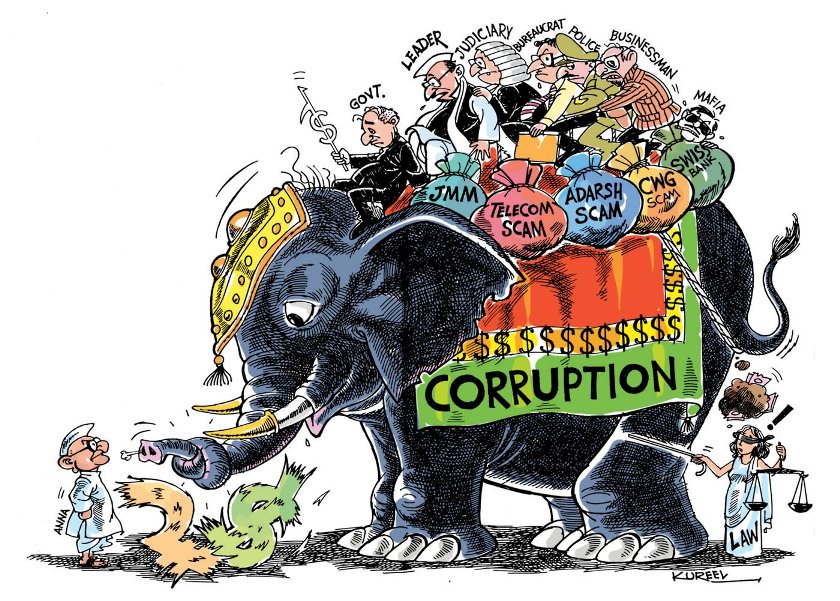
ඉන්දියාව පුරා ම රැව් දෙන නමක් හා ජන ඝෝෂාවක් බවට මේ නම පත්ව තිඛෙනවා. ඔහු තනි සුදු කපු ඇදුමෙන් සැරසුණු, ගාන්ධි තොප්පියක් පැළ`ද ගත්, ඇස් කන්නාඩි සහිත කුඩා මිනිසෙක්. දූෂණයට හා වංචාවට එරෙහිව සමස්ත ඉන්දියාව දෙදරුම් කවන හ`ඩක් බවට මේ පුංචි මිනිහා පත්ව සිටිනවා. ඔහුගේ උපන් නම කිසාන් බාපත් බබුරාවෝ හසාරේ ((Kisan Bapat Baburao Hazare).එහෙත් ජනප්‍රිය හා ජනාදර නාමය අන්නා හසාරේ Anna Hazare.

කලක් ඉන්දියානු යුධ හමුදාවේ ජීප් රියදුරකු ලෙස රැකියාව කළත් ඔහු වඩාත් ප්‍රකට වූයේ ග්‍රාම සංවර්ධනය හා පරිසර සංරක‍ෂණය සදහා ප්‍රජා මට්ටමින් කැප වුණු ක්‍රියාකාරිකයකු හැටියටයි. මහත්මා ගාන්ධිගේ දර්ශනය අනුව යමින් දුගී දුප්පත් ඉන්දියානුවන්ට ආත්ම ගෞරවයකින් යුතු ව හිස ඔසවන්නට අවස්ථා උදා කර දීමයි ඔහුගේ අවසාන ඉලක්කය. එයට මහා බාධකයක් බවට පත් ව තිඛෙන දූෂණයට එරෙහිව ඔහු පොදු ජන යුද්ධයක් ප්‍රකාශ කොට තිඛෙනවා. නීතිමය රාමුව තුළ හරි දේ හරියට කරන්නට රජයට හා ව්‍යාපාරිකයන්ට අවිහිංසාවාදීව බල කිරීමයි ඔහුගේ අරගලයේ අරමුණ.

අන්නා හසාරේ ගැන මා මුලින් ම දැන ගත්තේ 2000 වසරේදී. විද්‍යාව හා පරිසරය සදහා වන මධ්‍යස්ථානය (Centre for Science and Environment, CSE) නම් පර්යේෂණ ආයතනය ආරම්භ කළ මා මිත්‍ර ඉන්දියානු විද්‍යා ලේඛක හා පරිසරවේදී අනිල් අගර්වාල් හසාරේ ගැන මහත් උද්‍යොගයෙන් කථා කළා. හසාරේ සිය ග්‍රාම සංවර්ධන වැඩ පටන් ගත් මහාරාෂ්ට්‍ර ප්‍රාන්ත්‍රයේ රාලේගාන් සිද්ධි (Ralegan Siddhi) ගම්මානයට ගොස් ඒ ක්‍රියාදාමය සමීපව අධ්‍යයනය කළ අනිල්, එහි වැදගත්කම කල් තබා ම තේරුම් ගත්තා.

පරිසරය, සංවර්ධනය හා දූෂණය ගැන ඉන්දියානු අත්දැකීම් පාදක කරගෙන ජාත්‍යන්තර වාර්තා චිත්‍රපටයක් හදන්නට අනිල්ගේ අනුගාමික, වාර්තා චිත්‍රපට අධ්‍යක‍ෂක ප්‍රදීප් සාහාට (Pradip Saha) 2000 දී මා අවස්ථාවක් පාදා දුන්නා. ඒ අනුව ඔහු නිපද වූ Bandits and Backhanders නම් වාර්තා චිත්‍රපටය BBC World ලෝක ටෙලිවිෂන් සේවය හරහා විකාශය වුණා. එහි විනාඩි 6 ක් වෙන් කළේ අන්නා හසාරේ දූෂණයට එරෙහිව එවකට ගම් මට්ටමෙන් කරමින් සිටි උද්ඝෝෂණ ගැනයි.

තමා දූෂණයට එරෙහි වන්නට තීරණය කළේ ඇයි ද යන්න හසාරේ එහිදී පැහැදිලි කරනවා: “අපට ඕනැ වුණේ දුප්පත්කම අඩු කරමින් අපේ ගම්වල ජීවන තත්ත්වය නගා සිටුවන්න. මහ රජය හා ප්‍රාන්ත රජය ග්‍රාම සංවර්ධනයට හා දුගී බව පිටු දකින්නට වෙන් කරන මුදල්වලින් අති විශාල ප්‍රමාණයක් දූෂණය නිසා අතරමගදී කාන්දු වී අතුරුදහන් වන සැටි අපි හො`දාකාර දුටුවා. සංවර්ධන ප්‍රතිපාදන වශයෙන් ලැඛෙන එක රුපියලකින් සත 10 – 12 ක් වත් අන්තිමේදී එය ඉලක්ක කරන ගම්වලට හෝ ගැමියන්ට හෝ ලැඛෙන්න නැහැ. මේ නිසා ගම් දියුණු කරන්නට නම් මුලින් ම දූෂණය පිටු දැකිය යුතු බව අප තේරුම් ගත්තා.”

හසාරේගේ ග්‍රාම සංවර්ධන හා දූෂණ විරෝධී ව්‍යපාරය පන්නරය ලැබුවේ බිම් ප්‍රමාණයෙන් මෙන් ම ජනගහනය අතින් ද ඉන්දියාවේ තුන් වන විශාල ප්‍රාන්තය වන මහාරාෂ්ට්‍රයේදී. (සංසන්දනය සදහා එය ලංකාව මෙන් හතර හමාර ගුණයක් විශාල බිම් ප්‍රමාණයක්. මෙරට ජනගහනය මෙන් පස් ගුණයක් එහි වාසය කරනවා.) හසාරේ ඇතුළු ක්‍රියාකාරිකයන් පිරිස දූෂණයට සම්බන්ධ රාජ්‍ය නිලධාරීන් හා දූෂණයට දිරි දෙන අනෙක් අය ගැන කරුණු ගවේෂණය කරනවා. එසේ තහවුරු කර ගත් පසු හසාරේ අනුගාමිකයෝ ඇතුළු අනෙක් ගම්වාසීන් දූෂිත නිලධාරියකුගේ නිවස ඉදිරිපිට මහපාරේ සාමකාමීව බිම වාඩි වී හින්දු භක්ති ගී කියනවා. බැලු බැල්මට ආගමික ක්‍රියාවක් සේ පෙනුනත් මෙයින් සංකේතවත් වන්නේ කුමක් ද යන්න ටික කලකින් හැමෝ ම දැන ගන්නවා. එයින් ඒ පවුල ම ගමේ අවමානයට ලක් වෙනවා.

Anna Hazare: He means business!

සියුම් ලෙසින් මහජන මතය ඇති කරමින් දූෂකයන්ට බලපෑම් කිරීමට ඔහු මහාරාෂ්ට්‍ර ප්‍රාන්තයේ ගත් පියවර, දැන් ජන මාධ්‍ය හා නව මාධ්‍යවල පිහිටෙන් මුළු රටට ම ව්‍යාප්ත කරනවා. දූෂණය ඉන්දියානු සමාජයේ හැම තැන ම පිලිකාවක් සේ පැතිර ඇති බවත්, දූෂිතයන් නම් කිරීමෙන් හා හෑල්ලූවට පත් කිරීමෙන් පමණක් එය මැඩ පැවැත්විය නොහැකි බවත් ඔහු ඉක්මනින් ම තේරුම් ගත්තා. ඒ නිසා දූෂණයට ඉඩ සළසන රාජ්‍ය ප්‍රතිපත්ති, නීති, රෙකුලාසි සහ ක්‍රියාකලාපයන්ගේ ප්‍රබල සංශෝධන ඇති කළ යුතු බවත්, ඒ සටන ගම් මට්ටමේ සිට ඉහළටත්, ජාතික පාර්ලිමේන්තු මට්ටමේ සිට පහළටත් එකවර ජයගත යුතු බවත් ඔහු නිගමනය කළා.

ඉතා සැකෙවින් කියනවා නම් අන්නා හසාරේගේ දූෂණය පිටු දැකීමේ ව්‍යයාමයේ නිමිත්ත එයයි. හසාරේ දූෂණයට එරෙහිව වඩාත් දැඩි නීති ඉල්ලා සිය පළමු සත්‍යග්‍රහය කළේ 2011 අප්‍රේල් මුල සතියේ. දූෂණ හා වංචා විමර්ශනය කිරීමට ඔම්බඩ්ස්මන්වරයකු පත් කරන ලෙස බල කරමින් ඔහු තමන්ගේ ම නීති කෙටුම්පතක් ඉන්දීය රජයට ඉදිරිපත් කළා.

මෙය සාර්ථක වන්නට නම් ලෝකයේ (ජනගහනයෙන්) විශාලතම ප්‍රජාතන්ත්‍රවාදී රට වන ඉන්දියාවේ මහජන මතය දූෂණයට එරෙහිව පෙළ ගැස්විය යුතු බවත්, ඒ සදහා ජනමාධ්‍ය අත්‍යවශ්‍ය බවත් හසාරේ දන්නවා. ගමෙන් මතුව ආ සැබෑ ජන ක්‍රියාකාරිකයකු වූවත්, අද වන විට ජාතික හා ජාත්‍යන්තර ප්‍රතිරූපයක් ගොඩ නගා ගෙන තිඛෙන හසාරේ, මාධ්‍ය චරිතයක් හැටියට ඉන්දියානු ටෙලිවිෂන් නාලිකාවලට නැතුව ම බැරි තත්ත්වයක් උදාවී තිඛෙනවා. රජයට ජන බලපෑම් එල්ල කරන්න ඒ යථාර්ථයෙන් ඔහුත් ප්‍රයෝජන ගන්නවා.

හසාරේගේ සංවිධායකයන් කණ්ඩායම කෙටි කාලයක් ඇතුළත් අති විවිධ වූත් සංකීර්ණ වූත් ඉන්දියානු ජනමාධ්‍ය හා වෙබ් මාධ්‍ය ඉතා හොදින් හසුරුවන්නට සමත්ව සිටිනවා. එහි ප්‍රතිඵලය නම් 21 වන සියවසේ මහත්මා ගාන්ධි ලෙසින් දැවැන්ත ප්‍රතිරූපයක් හසාරේ ගොඩ නගා ගැනීමයි.

2011 අප්‍රේල් 3 – 11 අතර සතියක කාලය තුළ අන්නා හසාරේගේ පළමුවන සත්‍යග්‍රහය ගැන වාර්තාකරණයට වෙන් කරන ලද සමස්ත ටෙලිවිෂන් නාලිකා ගුවන් කාලය පැය 655ක්. එය මිළට ගත්තා නම් වැය වන මුදල ඉන්දියානු රුපියල් බිලියන 1.76 ක් (ලංකා රුපියල් බිලියන් 4 ක් පමණ) බවත් එරට විද්්‍යුත් මාධ්‍ය වෙළදපොල අධ්‍යයනය කරන පර්යේෂණ සමාගමක් ගණන් බලා තිඛෙනවා. නමුත් ඉන්දියාවේ මාධ්‍ය ෙක‍ෂත්‍රය ගැන ස්වාධීනව නිරීක‍ෂණය කරන The Hoot වෙබ් අඩවිය ප්‍රකාශ කරන්නේ අන්නා හසාරේ ඊටත් වඩා විද්්‍යුත් මාධ්‍යවලට වටිනා සම්පතක් බවයි.

අන්නා හසාරේගේ මාධ්‍ය ප්‍රතිරූපය පවත්වාගෙන යන්නට උපදෙස් දෙන්නේ හිටපු ටෙලිවිෂන් මාධ්‍යවේදීන් පිරිසක්. අළුතෙන් යමක් කියන කරන විට ඒ සදහා උපරිම සජීව ටෙලිවිෂන් ප්‍රවෘත්ති වාර්තාකරණයක් ලබා ගත හැකි වේලාවන් හා ස්ථානයන් ගැන ඔවුන් හසාරේට හොද මග පෙන්වීමක් කරනවා. ප්‍රධාන පෙළේ ක්‍රිකට් තරගයක් විකාශය වන වේලාවට හෝ ජනප්‍රිය ටෙලි නාට්‍යයක් ප්‍රචාරය වන විට හෝ ඔහු කිසි විටෙක මාධ්‍ය අමතන්නේ නැහැ. ඉන්දියාවේ ජාතික සංකේත හා ජාතික වශයෙන් වැදගත් ස්ථාන හා දිනයන් වටා හසාරේගේ බල කිරීමේ ව්‍යාපාරයේ හැම අළුත් පියවරක් ම තබන්නට මේ සන්නිවේදන උපදේශකයන් වග බලා ගන්නවා.

2011 අගෝස්තු 16 වනදා ඔහු අත්අඩංගුවට ගත් විට තව දුරටත් ඔහුගේ සජීව රූප දර්ශන ටෙලිවිෂන් නාලිකාවලට ලබාගත නොහැකි වුණා. එවිට හසාරේ කණ්ඩායම කළේ ඔහුගේ පණිවුඩ රැගත් කෙටි වීඩියෝ YouTube වෙබ් අඩවිය හරහා ප්‍රචාරය කිරීමයි. ඊට අමතරව ජංගම දුරකථන හා Facebook හරහා ඉතා පුළුල් විධියට හසාරේගේ ප්‍රතිරූපය මුල් තැනක තබමින් දූෂණයට එරෙහිව ඉන්දියානුවන් පෙළ ගස්වන්නට ඔවුන් සමත්ව සිටිනවා.

මේ සදහා මුදල් වියදම් කරනවා වෙනුවට හසාරේ කරන්නේ පරිගණක තාක‍ෂණය අතින් හපන් ඉන්දියානුවන්ට ස්වේච්ඡාවෙන් තම කාලය හා කුසලතා ප්‍රදානය කරන ලෙස ඉල්ලීමයි. ‘අපට ඕනෑ හැම ඉන්දියානුවකුගේ ම සාක්කුවේ අන්නා ගෙන යනවා දකින්නටයි’ යනුවෙන් කියන්නේ එසේ ස්වේච්ඡාවෙන් කටයුතු කරන පරිගණකවේදීයකු වන නිශාන්ත් කුමාර් ඩීන්.

මේ පරිගණක හා ජංගම දුරකථන ‘සුනාමිය’ ඇරඹුණේ කරග්පුර්හි ඉන්දියානු තාක‍ෂණ ආයතනය (Indian Institute of Technology Kharagpur) නම් විශ්ව විද්‍යාලයේ පරිගණක සිසුන් අතර. ‘බලවත් උදවිය ඉදහිටවත් ටිකක් සලිත කරන්නට අපිත් ආසයි. ඒත් එයට අපට අවස්ථාවක් ලැඛෙන්නේ කලාතුරකින්’ එහි ශිෂ්‍යයකු වන රිටේෂ් සිං කියනවා.

රාජ්‍ය බලය හා ව්‍යාපාරික බලය තිබුණත් ඇති තරම් උපක්‍රමශීලි නොවීම නිසා ඉන්දියානු රජය මේ දිනවල මාධ්‍ය සබදතා පැත්තෙන් ලොකු පසුබෑමක සිටින බව පාලක කොංග්‍රස් පක‍ෂයේ දැවැන්තයන් ම පිළි ගන්නවා. එහෙත් මහජන ඡන්දයෙන් බලයට පත් වුණු ප්‍රජාතන්ත්‍රවාදී රජයකට මෙසේ ජනමාධ්‍යවල බලය යොදා ගෙන බලපෑම් කිරීමට අන්නා හසාරේට සදාචාරමය හෝ නීතිමය හෝ අයිතියක් ඇත්දැයි ඉන්දියාවේ ඇතැම් දෙනා ප්‍රශ්න කරනවා. හැම දෙයක් ගැන ම මෙසේ දිගින් දිගට වාද කිරිම ඉන්දියානු ජන සමාජයේ ගති සොබාවක්.

අන්නා හසාරේගේ අරගලය ජය ගනීවි ද යන්න හරි හැටි කිව නොහැකියි. එහෙත් එයට අවශ්‍ය ගම්‍යතාවය ජනනය කරන්න හා පවත්වා ගන්න ඔහු උපක්‍රමශීලී බව නම් පැහැදිලියි. අද කාලේ මහත්මා ගාන්ධි ජීවත් වූවා නම් ඔහුත් ජන මාධ්‍ය හා නව මාධ්‍ය තමන්ගේ නිදහස් අරගලයට පුළුල් ලෙස යොදා ගන්නට තිබුණා. පොදු යහපතට සන්නිවේදන තාක‍ෂණයන් යොදා ගැනීමේ වටිනාකම 21 වන සියවසේ සියළු ජනතා ක්‍රියාකාරිකයන් වටහා ගත යුතුයි. එහිදී වෙළදපොලට හා ව්‍යාපාරික ප්‍රජාවට නතු වී තිඛෙන වාණිජමය මාධ්‍ය හා දුරකථන සේවා ඔස්සේ ද මහජනතාවට සමීප වීමට විශාල ඉඩක් ඇති බව හසාරේ හොද හැටි දන්නවා.

ප්‍රදීප් සාහා නිපද වූ වාර්තා චිත්‍රපටය නරඹන්න:

Fraudband or Broadband? Find out for yourself! New film tells how…

The user is willing, but the network is not...?

I once saw a sports car on the narrow streets of Malé, capital of the Maldives (total population 350,000). Nothing unusual about it — except that the whole of Malé is about two square km: we can WALK the length and breadth of the crowded capital in 10 or 15 minutes. The other 1,200 islands that make up the Indian Ocean archipelago are even smaller.

That reality didn’t stop an optimistic Maldivian from investing in a fast vehicle – after all, a car (especially a sports model) is more just a means of transport.

Something akin to this plays out in the virtual world everyday in many parts of developing Asia. Many Internet users have state of the art access devices — ranging from the latest laptops and high-speed desk tops to ipads and internet-enabled mobile phones. But most of the time the users and devices are held up by poor quality internet connections. I mean patchy, uneven, really S-L-O-W ones.

So part of the time — how often and how long depends on where you are, and who your internet service provider or ISP is — we are all like that Maldivian sports car owner. Dressed up and rearing to go, but not really going very far. Because our network is overloaded.

What can you do when your broadband internet connectivity slows down, making some web applications tedious or impossible? How can you measure and compare the quality of broadband service within the same telecom network or across different service providers?

As consumers, we have limited options. We can grin and bear, and be grateful that we are among the 2 billion (and counting) human beings who regularly access the Internet. We can grumble and rant, and even complain to our ISP. But chances are that they’ll plead it was a system fluke, an exception to the norm.

Now there’s another option. The Ashoka-Tissa method, a simple and free software developed by LIRNEasia and IIT Madras, enables just that: with it, you can gather evidence before taking it up with telecom operators.

Rohan Samarajiva: Fraudband-buster?
At TVE Asia Pacific , we have just produced a short video in which LIRNEasia — a regional ICT policy and regulation think tank active across the Asia Pacific — sums up their experience in developing a user-friendly method to measure broadband quality of service experience. It also shows how they engaged telecom operators and regulators in South and Southeast Asia from 2007 t0 2010.

“256 kbps up and down is the minimum definition (of broadband),” says Dr Rohan Samarajiva, LIRNEasia’s Chair and CEO. “There are various people debating about it: whether it should be 2Mbps and so on, but I will give an acceptable minimum definition…Our research shows that, in fact, many broadband products that say they are giving 2Mbps don’t even meet this minimum rate.”

The former Sri Lankan telecom regulator adds: “Then of course there is this whole story of companies promising all kinds of things. 2Mbps up, 2Mbps down and various other things being promised and giving not even 256kbps. So there is almost like a dishonesty factor here. As one of my friends says, this is not broadband; this is fraudband!”

Watch Fraudband or Broadband?

More information at: BroadbandAsia.info

PS: While writing this blog post, I was frustrated by the poor quality of my own supposedly high-speed broadband connection, provided by Sri Lanka’s oldest telecom operator.

Wiz Quiz 6: Cricket World Cup special – What’s your score?

1,100 million fools following 11 flannelled fools...for six weeks!
“Eleven flannelled fools chasing a red ball, with eleven thousand fools cheering them.”

That’s how Irishman George Barnard Shaw described the very English game of cricket.

A few decades later, he might well have said 1,100 million fools cheering. Probably that many people will watch or otherwise follow the The ICC Cricket World Cup 2011, currently underway in the world’s most ardent cricketing region: South Asia!

In terms of television audiences and media-linked sponsorship money, the ICC Cricket World Cup is the world’s third largest sporting event: only the FIFA Football World Cup and the Summer Olympics are bigger than this event.

Not everyone is equally enthusiastic about cricket. Those in non-playing countries must wonder just what the cricket frenzy is all about. But frenzy time it is, right now, in much of South Asia. The ICC Cricket World Cup 2011 started on 19 February 2011, and will continue until 2 April 2011.

What's your score, mate?
This is the world’s leading men’s one day international (ODI) cricket tournament, organized by the sport’s governing body, the International Cricket Council (ICC). National teams of 14 countries are participating in this tournament, being hosted jointly by Bangladesh, India and Sri Lanka.

To mark the ICC Cricket World Cup 2011, Wiz Quiz in Daily News this week was a cricket special, where we probed our readers’ knowledge of World Cup history, as well as the wider subculture of cricket.

I’m not a cricket fan myself, but living in South Asia, it is impossible to avoid catching at least bits and pieces of cricket fever. But cricket is not just a game of players and matches, but a whole cultural and social phenomenon, especially in South Asia. If the English invented cricket, the one-time British colonies have vastly globalised it.

So try your wider cricketing knowledge with this week’s quiz…and see what your score is!

Wiz Quiz 6: Cricket World Cup is here! (scroll down the page to get to the quiz)

When green stories make some see red: who protects the reporters?

Who says environment is a ‘safe’ subject for journalists and broadcasters to cover?

Journalist colleagues who work on conflict, security and political topics often have an illusion that environmental reporting is a ‘cosy and comfortable beat’ – one that allows reporters to travel to exotic locations, see cuddly animals, relax in pristine environments and generally take things easy.

That might have been the case some years ago, in another century that’s now receding in our memories. But not any longer: there’s as much conflict, intrigue and complexity in many of today’s environmental topics, and covering them can often be hazardous to the courageous journalists who go after them.

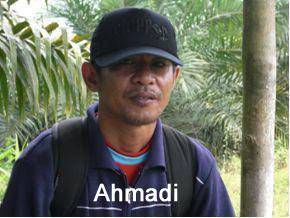
Ahmadi: Beaten up for expose
Just ask Ahmadi, a journalist working for Harian Aceh in Indonesia. Together with a fellow journalist, working for News Investigasi in Medan, he recently investigated a flood that had taken place in the Alapan district in April 2010. During their journey, they met some people cutting up logs. The journalists asked workers who owned these logs and were told that they belonged to the Alapan District Police Station and the Alapan Military Sub-District Command. Hmm…

When confronted with this information, a high ranking military officer reacted quickly and sharply: he wanted the whole story suppressed. In defiance, Harian Aceh published the story on 21 May 2010 — which resulted in Ahmadi being assaulted and threatened with death by the same officer.

“Ahmadi joins the long list of journalists who have been targeted for shedding light on deforestation, which is responsible for at least 18 per cent of the world’s greenhouse gas emissions,” says Reporters Without Borders (RSF), the international watchdog on media freedom.

It says attacks on journalists and bloggers who try to cover any kind of environmental damage are growing steadily all over the world. Among them, those who investigate industrial pollution or the destruction of forests are particularly at risk.

No longer a cosy beat...
This week, on the eve of World Environment Day (5 June), RSF released a new report titled Deforestation and pollution: High-risk subjects. It makes grim reading for all of us who are committed to journalism as if the planet mattered.

It follows and echoes their call last year: “We must defend journalists who expose attacks on the environment”.

The new report, the second of its kind within just a few months from RSF, was prepared with the help of its worldwide network of correspondents. They gathered information about incidents in Indonesia, Argentina, El Salvador, Gabon, India, Azerbaijan, China and Morocco. Behind each of these threats and attacks, there were big corporations, criminal gangs or government officials who had been corrupted by money from mining or logging.

Asia features prominently in the report, which condemns the responsibility of the Vietnamese and Chinese governments in serious press freedom violations that deprive the public of crucial information about cases of pollution or deforestation.

The report describes, for example, the way the government in Hanoi has tried to suppress any debate about the environmental impact of bauxite mines being operated by a Chinese company. A field investigation in Argentina established that journalists are under pressure from both supporters and opponents of a mining project.

Mining companies (Aluminium Corp of China, China Metallurgical Group and the Canadian companies Yamana Gold and Pacific Rim), oil companies (Shell, Addax and Synopec), wood pulp companies (Sinar Mas and Riau Andalan Pulp and Paper) and two French multinationals (Bollor and Areva) are all identified in this report as having a direct or indirect role in cases of intimidation or censorship.

This is the second report that RSF has published on this subject. In September 2009, a report titled “The dangers for journalists who expose environmental issues.“, looked at 15 cases of journalists and bloggers who had been killed, attacked, jailed, threatened or censored for covering environmental problems in Russia, Cambodia, Bulgaria and Brazil.

RSF this week reiterated the appeal it launched during last December’s Copenhagen Summit: The media are needed to gather information and disseminate it to the public. Where climate change was concerned, it reminded everyone one, it was the media who helped to establish credible, independent diagnoses of the state of our planet. Their analyses continue to play a crucial role in helping decision-makers to adopt policies and rules that will lead to the desired changes.

On this blog, we have consistently highlighted the need for safeguarding journalists who pursue environmental stories that threaten vested interests within and across borders. For example:

September 2009: Who will protect journalists fighting for a better planet?

November 2007: Protect journalists who fight for social and environmental justice!

In April 2007, we asked: Can journalists save the planet? Yes, they can be front-runners in the world’s attempts to save species, habitats and entire ecosystems. But only if the rest of society protects and stands by them. When our planetary house is on fire, shooting the messenger isn’t going to save anyone.

Children of Tsunami: No More Tears…

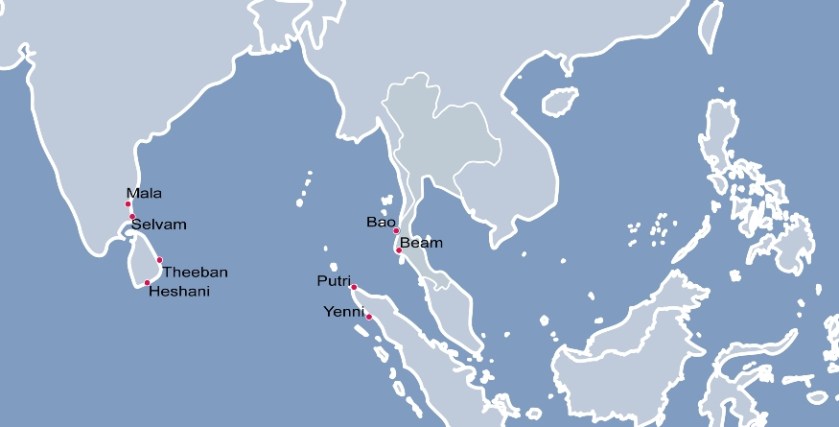
where Children of Tsunami stories were filmed for much of 2005
Four countries, eight locations: where Children of Tsunami stories were filmed for much of 2005

They have never met each other. Some have never travelled beyond their native village. On December 26 2004, the sea rose and rose and took everything they cherished.

Documented over the year, locally-based filmmakers returned to Asia’s battered coasts in India, Indonesia, Sri Lanka and Thailand to track the healing and the hurt through the eyes of children.

Asia’s recovery process from the tsunami is being captured through the stories of three girls and two boys aged 8 to 16 years.

Of different races, worshipping different Gods, they live on different shores in different countries. They are the tsunami generation, sharing the vulnerability of a child and the legacy of the tragic tides.

Young survivors of the Asian tsunami let us into their lives to personalise the mass of statistics, aid pledges and recovery plans. “Children of Tsunami” is a tapestry of intimate stories, woven by voices of individual and collective resilience, heroism and recovery.

Children of Tsunami: No More Tears – Part 1 of 3

Part 2 of 3

Part 3 of 3

Duration: 24 mins
Year of production: 2005
Countries filmed in: India, Indonesia, Sri Lanka, Thailand
In each country, a locally based production crew carried out filming for TVE Asia Pacific.

Regional Production Team
Supervising Producer: Bruce Moir
Production Assistant: Yohan Abeynaike
Production Manager: Manori Wijesekera
Executive Producers: Joanne Teoh Kheng Yau and Nalaka Gunawardene

Co-Produced by: Channel News Asia, Singapore
In partnership with TVE Asia Pacific

Broadcast Asia-wide on the first anniversary of the Asian Tsunami, 26 Dec 2005

For more information, visit: www.childrenoftsunami.info

See also: Channel News Asia – Making of a pan-Asian news channel

‘Saving the Planet’ new Asian TV series is ready for release!

It's planet saving time...and everybody is invited!

Can ordinary people help save our planet?

What does it take to change their attitudes and lifestyles to consume and waste less?

For over two years, my team at TVE Asia Pacific and I have been working on a new TV series, modestly called Saving the Planet. It will be released at a regional conference in Tokyo, Japan, on 22 August 2009.

In this Asian series, produced in partnership with Asia Pacific Cultural Centre for UNESCO (ACCU), we profile successful initiatives that combine knowledge, skills and passion to create cleaner and healthier environments.

It was filmed in six countries in South and Southeast Asia: Cambodia, India, Laos, Nepal, the Philippines and Thailand.

The groups profiled in Saving the Planet often work without external funding and beyond the media spotlight. They have persisted with clarity of vision, sincerity of purpose and sheer determination. Their stories inspire many others to pursue grassroots action for a cleaner and safer planet.

Watch the series trailer here:

The dedicated website has just been revamped for the launch.

Watch out for more updates!