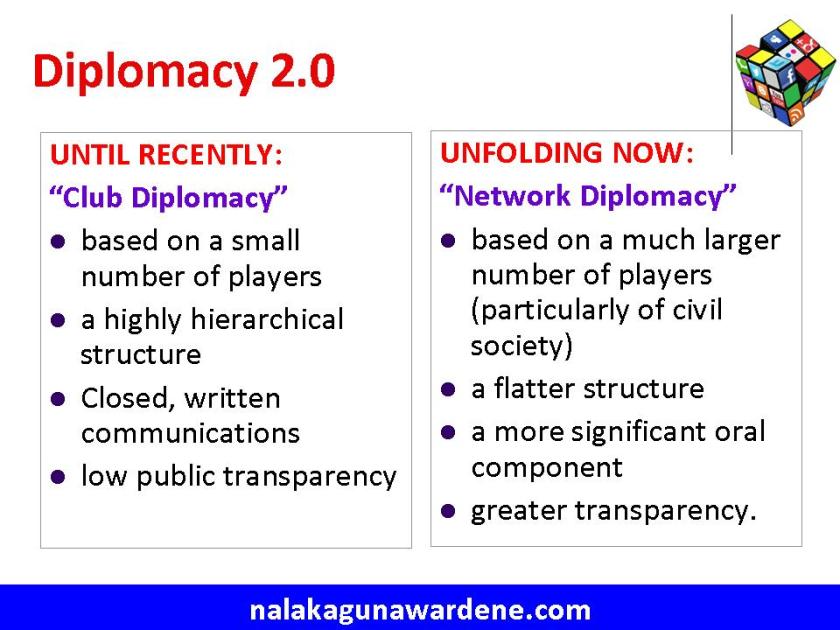
“The key to successful foreign policy in today’s world is networked diplomacy. Managing international crises requires mobilizing international networks of public and private actors,” says Anne-Marie Slaughter, an international lawyer and political scientist who is a former Princeton academic and ex-Director of Policy Planning at the US State Department under U.S. Secretary of StateHillary Clinton.
Diplomacy then…and now
The nature of this ‘networked diplomacy’ is still being documented and studied. Some governments are not even convinced of its value, but meanwhile, others are encouraging it perhaps as a way of ‘exploiting the inevitable’.
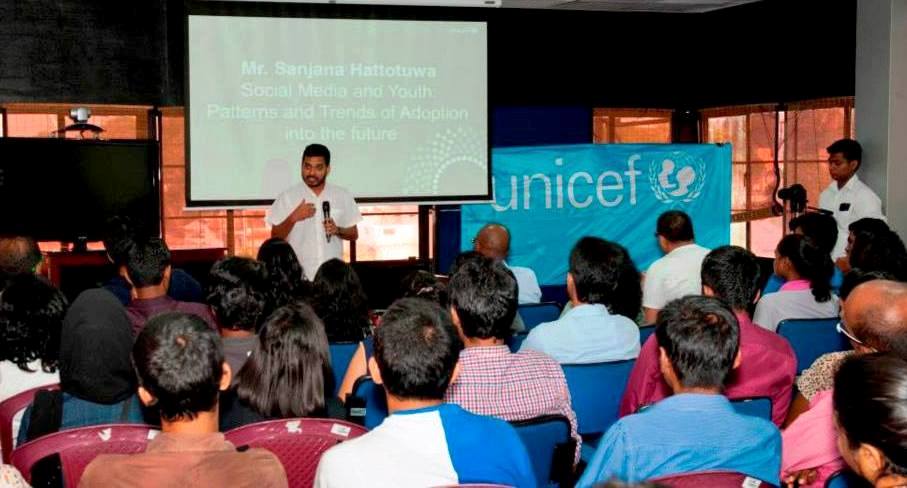
I am neither diplomat nor scholar, but sometimes dabble as a writer and researcher on how new media – including social media – impact our society, economy and governance. So I welcomed an opportunity to engage a group of mid-career professionals on the topic Diplomacy & Foreign Relations in the Social Media Age.
I made this presentation on 14 November 2015 as part of the Certificate Course in Creative Diplomacy, conducted by the Regional Centre for Strategic Studies (RCSS) in Colombo, Sri Lanka – a think tank on international relations.
In this, I introduce and briefly explore the new kind of real-time, public diplomacy that is being ushered in with the spreading of social media. I show how diplomats and other government officials can no longer ignore this mass medium, but at the same time their traditional ways of communications need to be reoriented to suit the realities of this new information ecosystem that is informal, irreverent and fleeting.
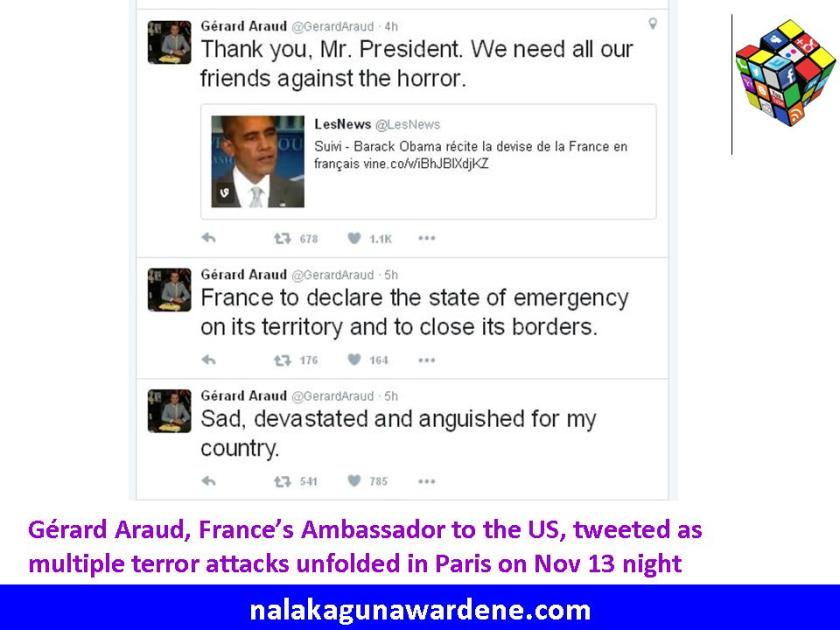
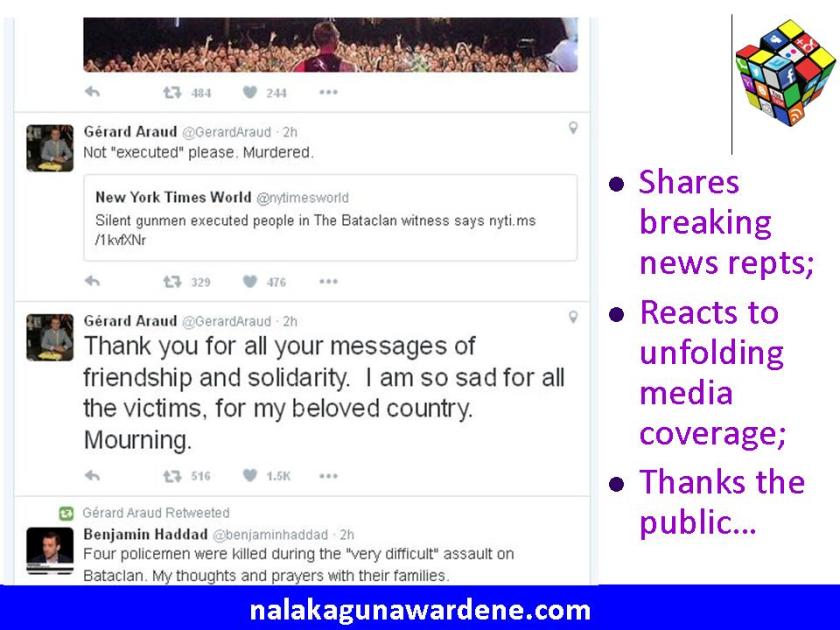
As I spoke on the day after the ISIS terrorist attacks in France, I used (among others) the latest examples of how Gérard Araud, France’s Ambassador to the US, tweeted live as multiple terror attacks unfolded in Paris on Nov 13 night.
Real time tweeting by French Ambassador to the US while Paris attack was underway on 13 Nov 2015…More tweets from Ambassador Gérard Araud on 13 Nov 2015…
To see the bigger picture, I’ve distilled some wisdom of key researchers in this area including: Anne-Marie Slaughter, former Princeton Academic and ex-Director of Policy Planning, US State Department; Philip Seib, Professor of Journalism and Public Diplomacy, University of Southern California; and Ramesh Thakur, Professor, Crawford School of Public Policy, Australian National University (ANU).
I also used the case study of Indian Ministry of External Affairs using social media for crisis management when 18,000 Indian nationals were stranded in Libya in Feb – March 2011 who had to be evacuated urgently.
As Ramesh Thakur has written, it is “a useful case study in the utility of social media tools in connecting the government with people who are normally well outside their range, but who can be a useful channel to send out time-urgent critical information and to receive equally valuable information from sources on the ground.”
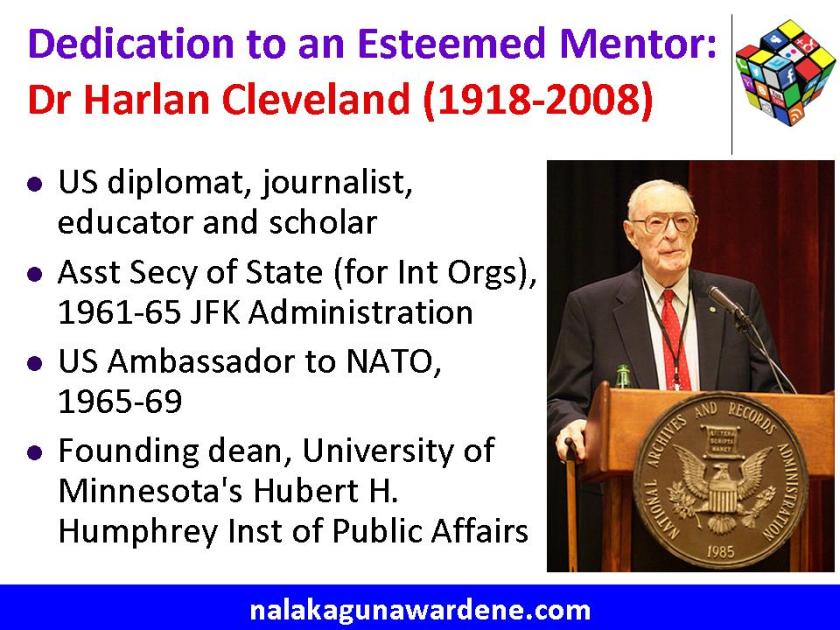
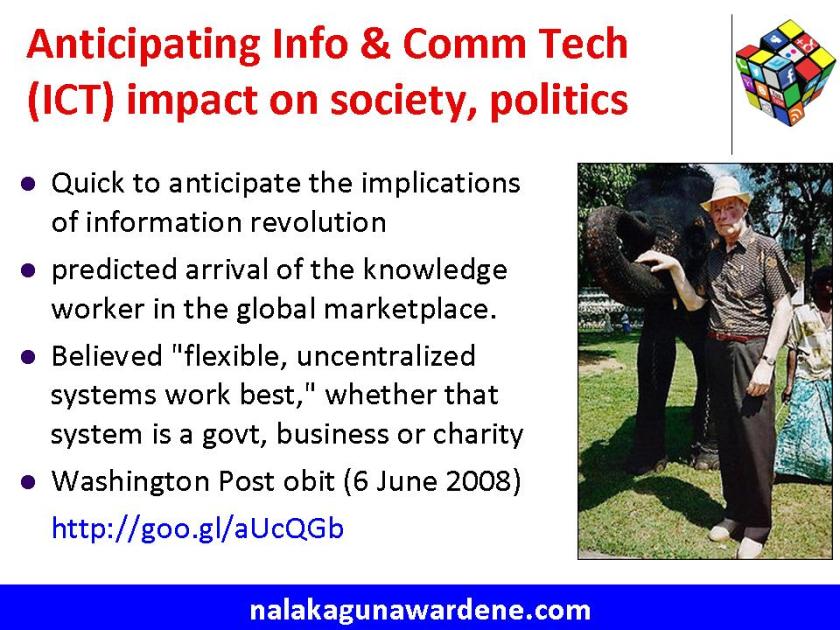
Dedication to a remarkable diplomat-scholar who spent a few days in the Summer of 1995 mentoring a group of youth leaders from around the world, including myself, who were brought to the UN Headquarters in New York…
I dedicated this presentation to a diplomat and scholar whose mentoring I was privileged to receive 20 years ago: Dr Harlan Cleveland (1918 – 2008) who served as US Ambassador to NATO, 1965–1969 (Johnson Administration), and earlier as US Assistant Secretary of State for International Organization Affairs, 1961–1965 (Kennedy Administration).
Harlan Cleveland, among the first ‘philosophers’ of the Information Age
According to RCSS, their Course in Creative Diplomacy “provides theoretical and practical insights into the various facets of Creative Diplomacy. The course will expand participants’ understanding of the concept of diplomacy and expose them to new skills and alternative perspectives to engage with stakeholders. It is further envisioned that this post-disciplinary approach, which will be followed by the course, will explore a whole host of new mediums through which mediation, cooperation and negotiation can be carried out.”
I looked at the larger news media industry in Sri Lanka to which provincial journalists supply ground level news, images and video materials. These are used on a discretionary basis by media companies mostly based in the capital Colombo (and some based in the northern provincial capital of Jaffna). Suppliers have no control over whether or how their material is processed. They work without employment benefits, are poorly paid, and also exposed to various pressures and coercion.
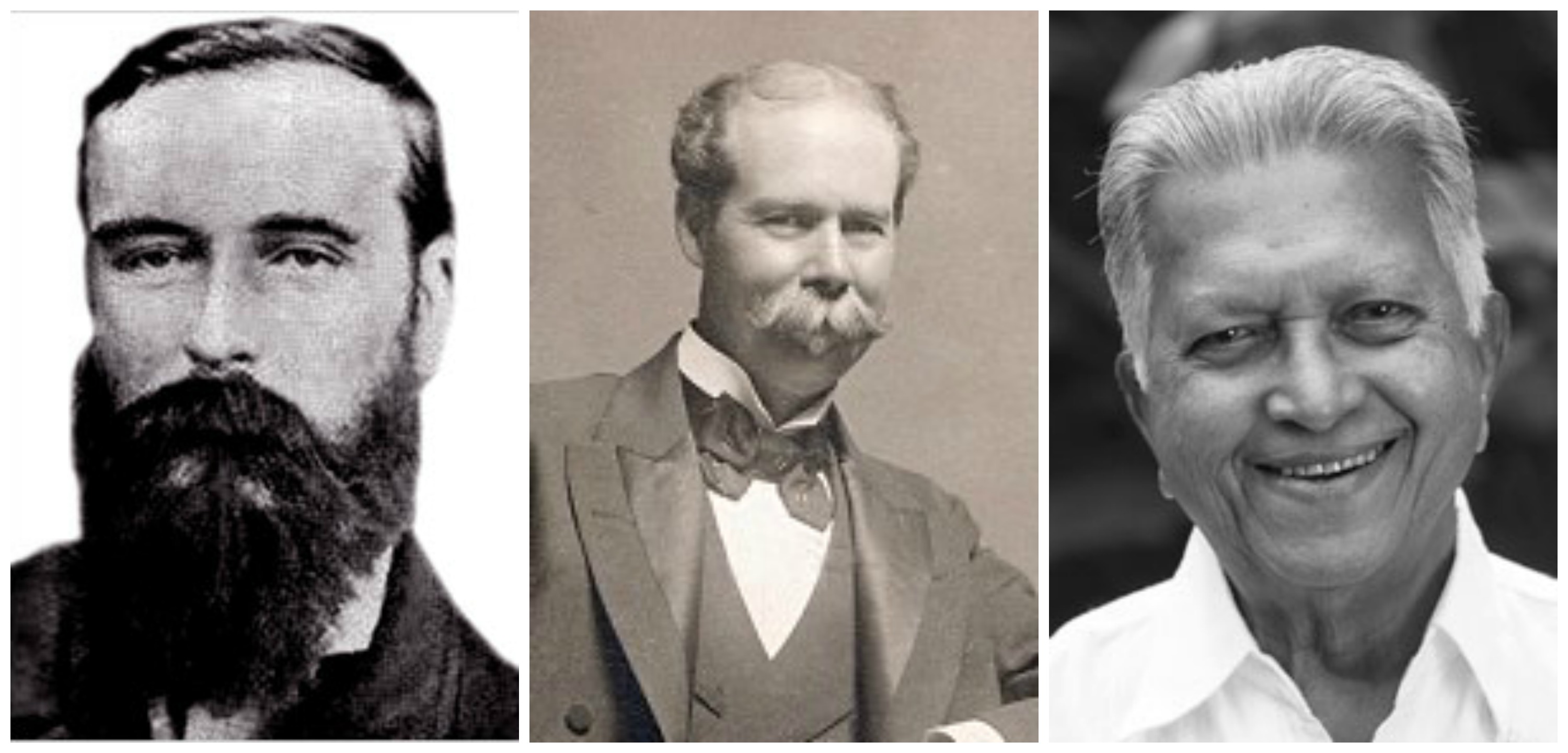
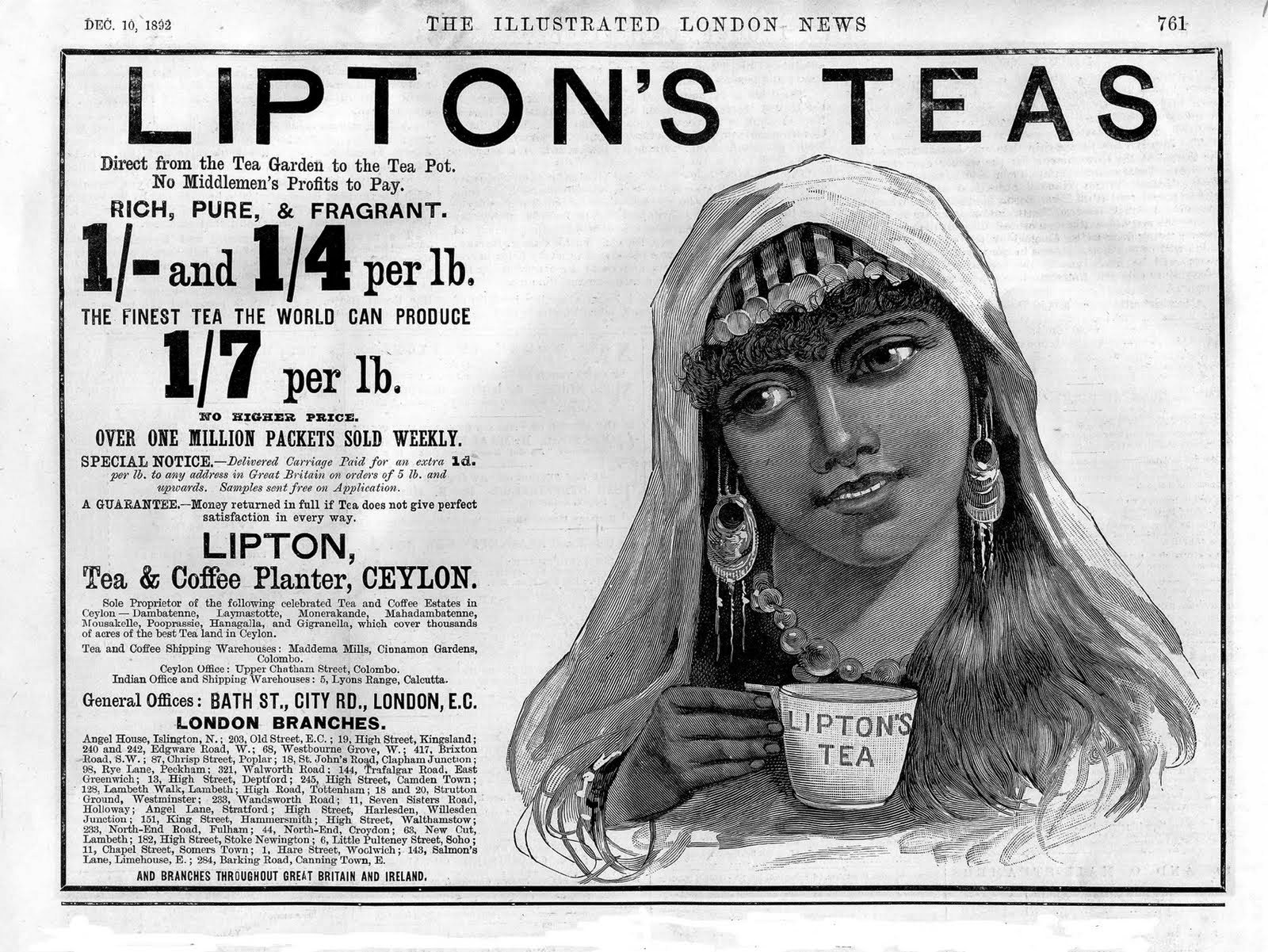
I drew an analogy with the nearly 150-year old Ceylon Tea industry, which in 2014 earned USD 1.67 billion through exports. For much of its history, Ceylon tea producers were supplying high quality tea leaves in bulk form to London based tea distributors and marketers like Lipton. Then, in the 1970s, a former tea taster called Merrill J Fernando established Dilmah brand – the first producer owned tea brand that did product innovation at source, and entered direct retail.
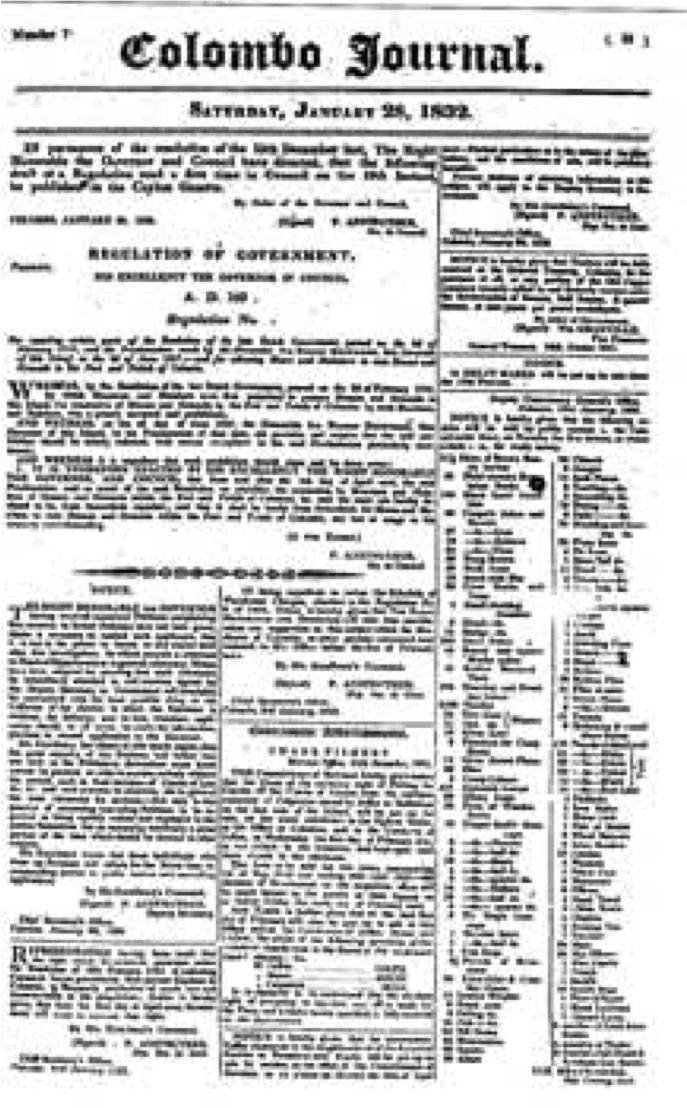
The media industry also started during British colonial times, and in fact dates back to 1832. But I questioned why, after 180+ years, our media industry broadly follows the same production model: material sourced is centrally processed and distributed, without much adaptation to new digital media realities.
In this week’s Ravaya column, (appearing in issue of 11 Oct 2015), I have adapted my talk into Sinhala.
Ceylon Tea industry pioneers and innovator: L to R – James Taylor, Thomas Lipton, Merrill Fernando
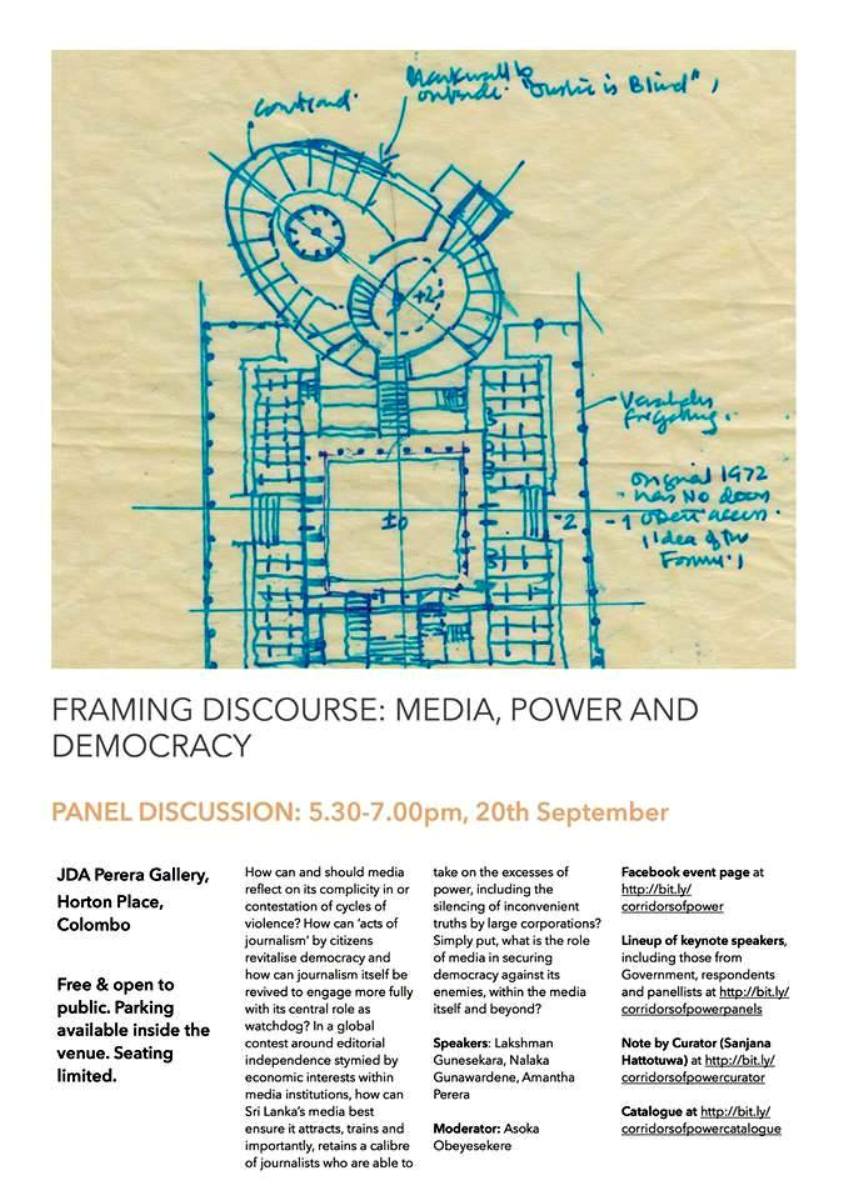
The architecture of the mainstream media, and increasingly, social media (even though distinct divisions between the two are increasingly blurred) to varying degrees reflects or contests the timbre of governance and the nature of government.
How can ‘acts of journalism’ by citizens revitalise democracy and how can journalism itself be revived to engage more fully with its central role as watchdog?
In a global contest around editorial independence stymied by economic interests within media institutions, how can Sri Lanka’s media best ensure it attracts, trains and importantly, retains a calibre of journalists who are able to take on the excesses of power, including the silencing of inconvenient truths by large corporations?
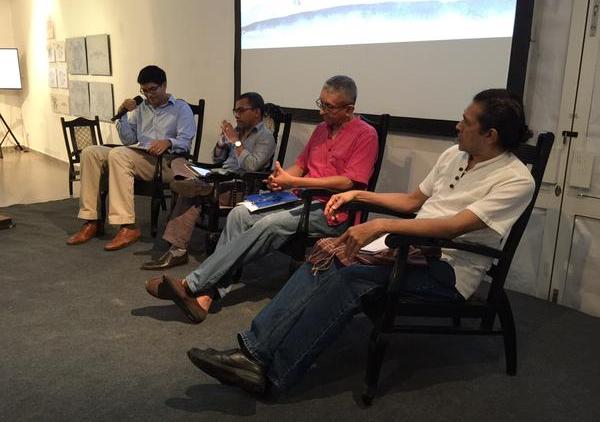
The panel, moderated by lawyer and political scientist Asoka Obeyesekere comprised freelance journalist Amantha Perera, Sunday Observer editor Lakshman Gunasekera, and myself.
Here are my opening remarks (including some remarks made during Q&A).
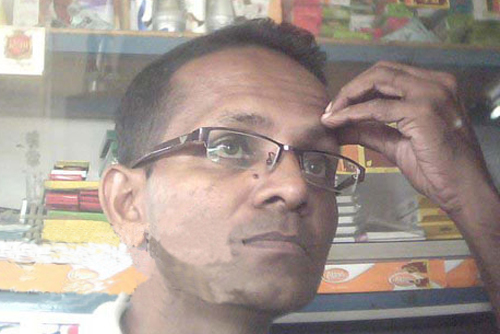
Nalaka Gunawardene speaks during media panel at Corridors of Power – Photo by Manisha Aryal
Panel on “Framing discourse: Media, Power and Democracy”
20 Sep 2015, Colombo
Remarks by Nalaka Gunawardene
Curator Sanjana has asked us to reflect on a key question: What is the role of media in securing democracy against its enemies, within the media itself and beyond?
I would argue that we are in the midst of multiple, overlapping deficits:
Democracy Deficit, a legacy of the past decade in particular, which is now recognised and being addressed (but we have a long way to go)
Public Trust Deficit in politicians and public institutions – not as widely recognised, but is just as pervasive and should be worrying us all.
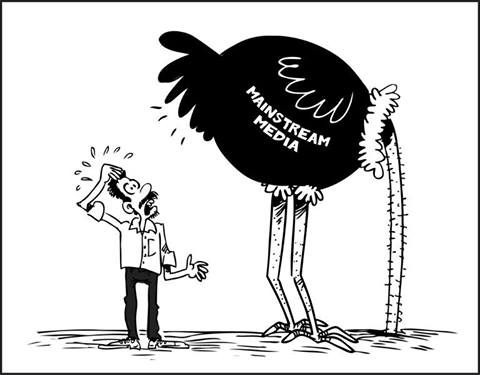
Media Deficit, probably the least recognised deficit of all. This has nothing to do with media’s penetration or outreach. Rather, it concerns how our established (or mainstream) MEDIA FALLS SHORT IN PERFORMING the responsibilities of watchdog, public platform and the responsibility to “comfort the afflicted and afflict the comfortable”.
In this context, can new media – citizens leveraging the web, mobile devices and the social media platforms – bridge this deficit?
My answer is both: YES and NO!
YES because new media opportunities can be seized – and are being seized — by our citizens to enhance a whole range of public interest purposes, including:
Political participation
Advocacy and activism
Transparency and accountability in public institutions
Peace-building and reconciliation
Monitoring and critiquing corporate conduct
All these trends are set to grow and involve more and more citizens in the coming years. Right now, one in four Lankans uses the web, mostly thru mobile devices.
BUT CAN IT REPLACE THE MAINSTREAM MEDIA?
NO, not in the near term. For now, these counter-media efforts are not sufficient by themselves to bridge the three deficits I have listed above. The mainstream media’s products have far more outreach and and the institutions, far more resources.
Also, the rise of citizen-driven new media does NOT – and should NOT — allow mainstream media to abdicate its social responsibilities.
This is why we urgently need MEDIA SECTOR REFORMS in Sri Lanka – to enhance editorial independence AND professionalism.
The debate is no longer about who is better – Mainstream media (MSM) or citizen driven civic media.
WE NEED BOTH.
So let us accept and celebrate our increasingly HYBRID MEDIA REALITY (‘hybrid’ seems to be currently popular!). This involves, among other things:
MSM drawing on Civic Media content; and
Civic Media spreading MSM content even as they critique MSM
To me, what really matters are the ACTS OF JOURNALISM – whether they are RANDOM acts or DELIBERATE acts of journalism.
Let me end by drawing on my own experience. Trained and experienced in mainstream print and broadcast media, I took to web-based social media 8 years ago when I started blogging (for fun). I started tweeting five years ago, and am about to cross 5,000 followers.
It’s been an interesting journey – and nowhere near finished yet.
Rational demarcation of Ministry subject areas (a lost cause now)
Implications of XXL Cabinet of the National/Consensus Govt
Questionable role of our Attorney General in certain prosecutions
Report on Sri Lanka at the UN Human Rights Council (UNHRC) Session
Is Death Penalty the right response to rise of brutal murders?
Can our media be more restrained and balanced in covering sexual crimes involving minors?
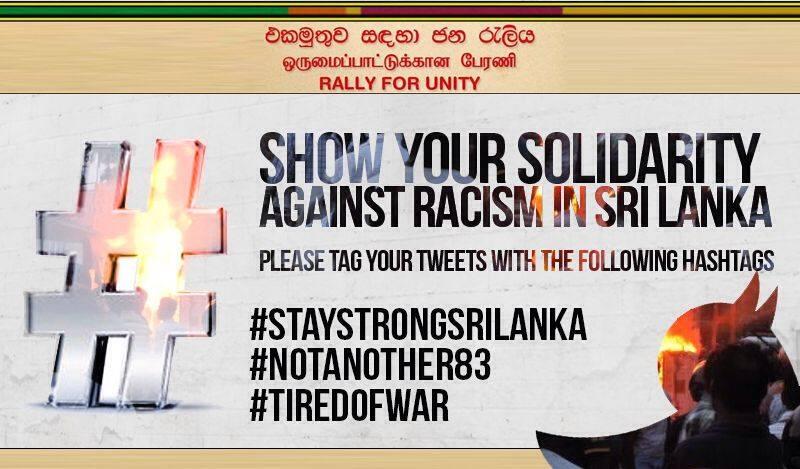
How to cope with Hate Speech on ethnic or religious grounds
What kind of Smart Cities or MegaCity do we really need?
How to hold CocaCola LK responsible for polluting Kelani waters?
Yes, many of these are fleeting and incomplete conversations. So what?
And also, there’s a lot of noise in social media: it’s what I call the Global Cacophony.
BUT these conversations and cross-talk often enrich my own understanding — and hopefully help other participants too.
Self-promotional as this might sound, how many Newspaper Editors in Sri Lanka can claim to have as many public conversations as I am having using social media?
Let me end with the closing para in a chapter on social media and governance I recently wrote for Transparency International’s Sri Lanka Governance Report 2014 (currently in print):
“Although there have been serious levels of malgovernance in Sri Lanka in recent years, the build up on social media platforms to the Presidential Election 2015 showed that Lankan citizens have sufficient maturity to use ICTs and other forms of social mobilisation for a more peaceful call for regime change. Channelling this civic energy into governance reform is the next challenge.”
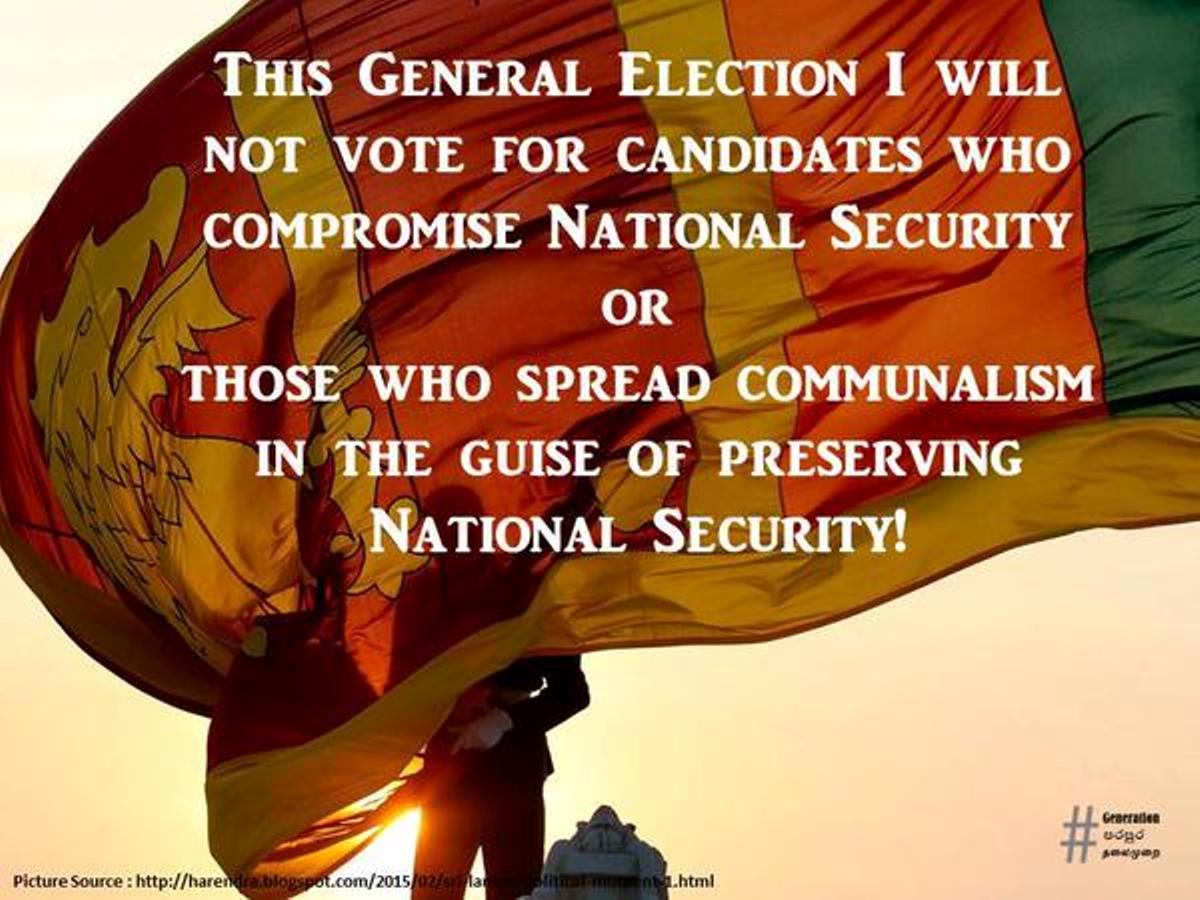
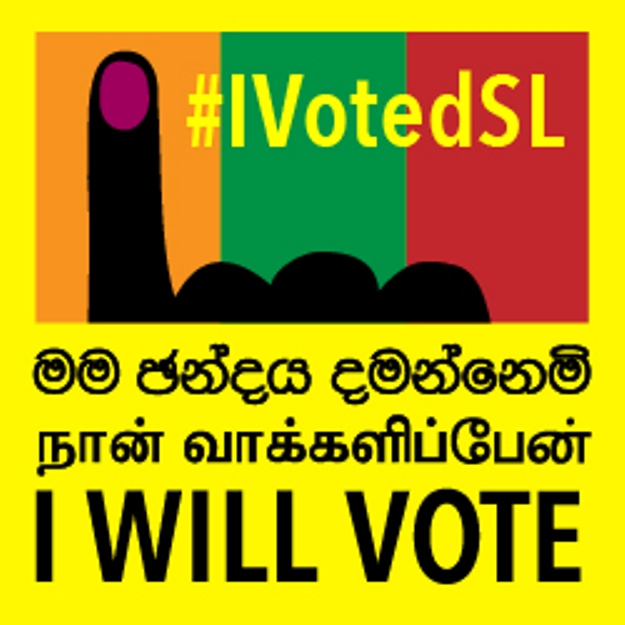
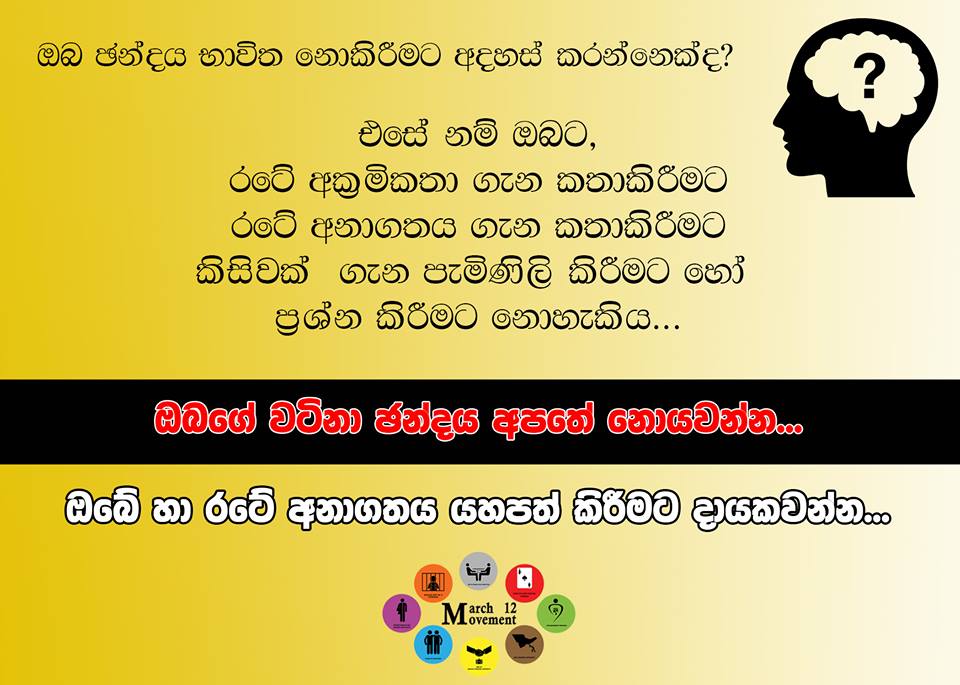
A Popular Election Meme created by Hashtag Generation, Sri Lanka
“Every citizen – including activists and academics — can play a part in shaping the future of our democracy. In this, technology is not the only key driver; what matters even more is the strategic use of our imagination and determination.
“We may not yet have all the detailed answers of our digital future, but one thing is clear. In 2015, we the people of Sri Lanka embarked on a progressive digitalization of our politics and governance.
“It is going to be a bumpy road – be forewarned — but there is no turning back.”
Since then, things have evolved further. In this essay, I look at how the Elections Commission, political parties, election candidates, civil society advocacy groups and individual cyber activists have used various social media tools and platforms in the run-up to, during and immediately after the Parliamentary Election.
In this week’s Ravaya column, (in Sinhala, appearing in issue of 26 July 2015), I review how Lankan politicians and political parties are using social media in the run-up to the general election to be held on 17 August 2015.
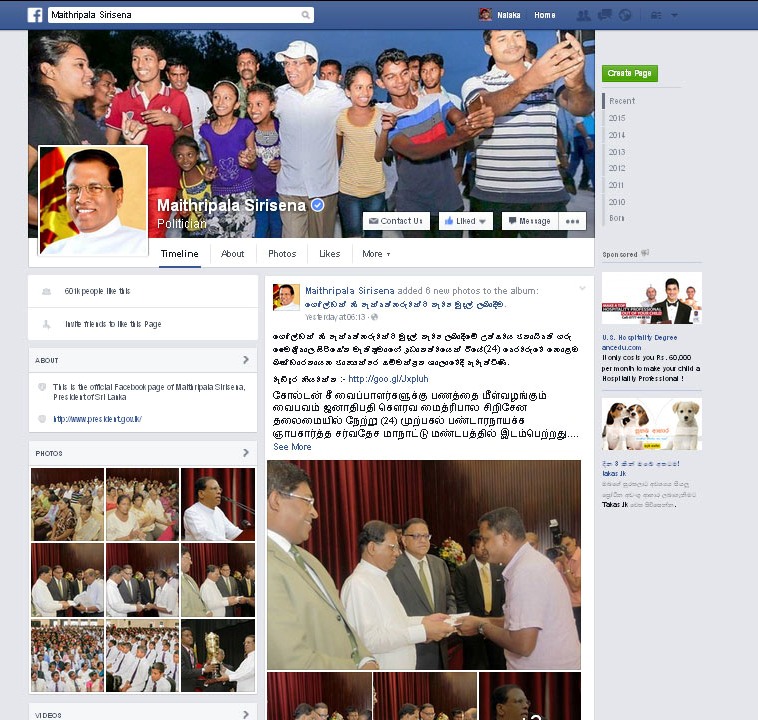
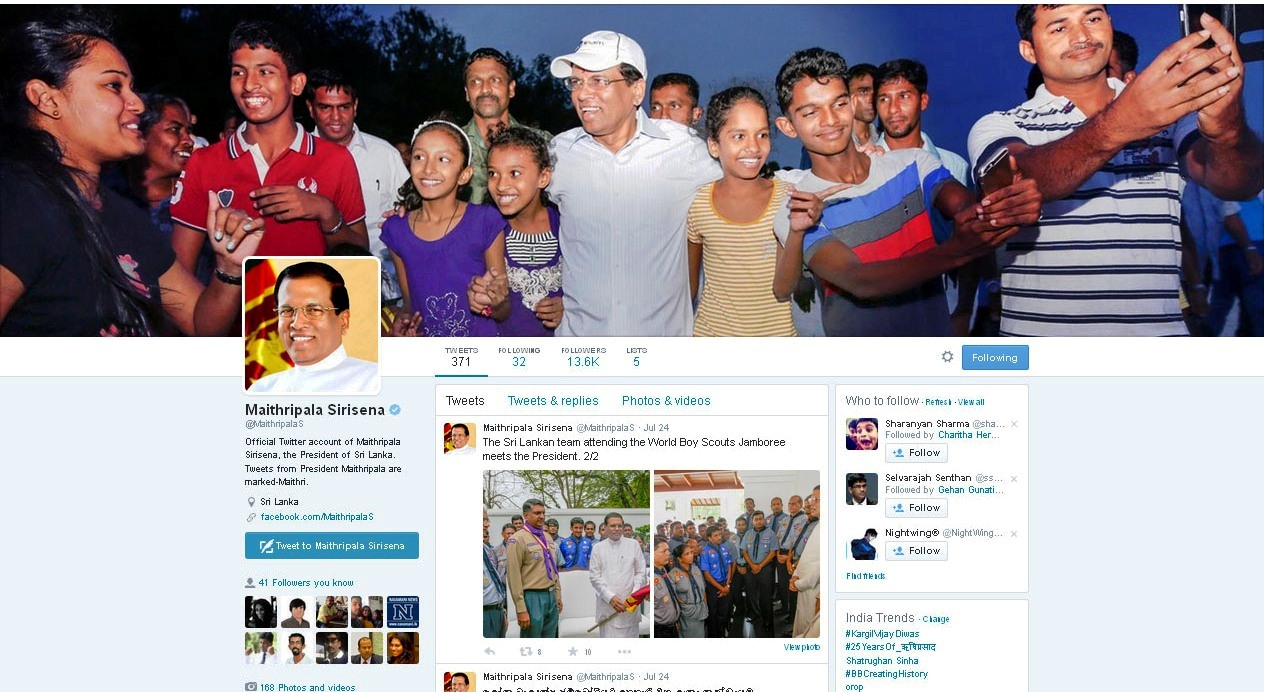
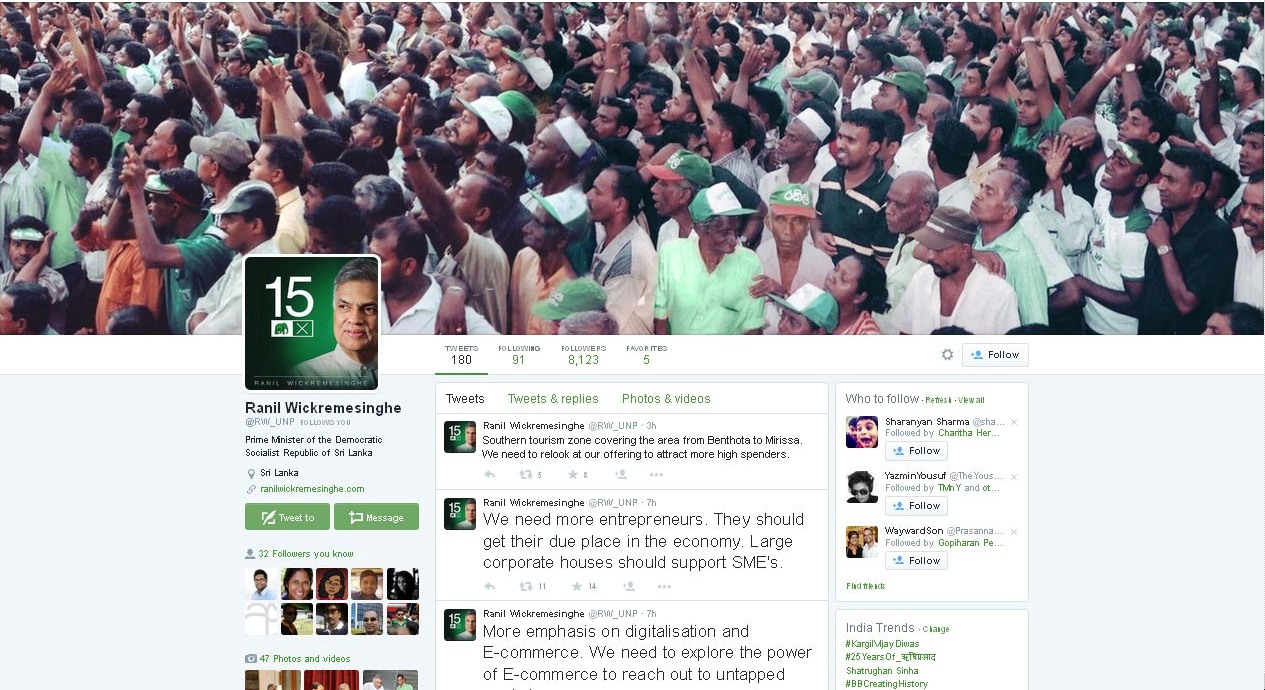
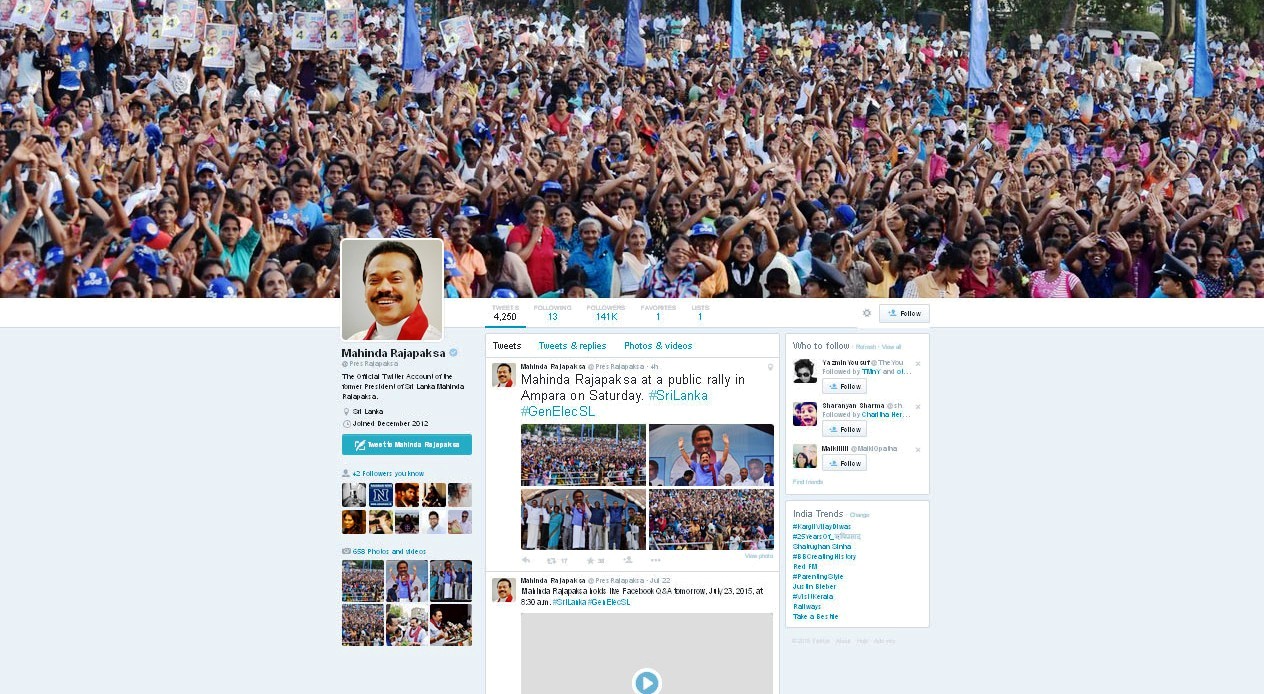
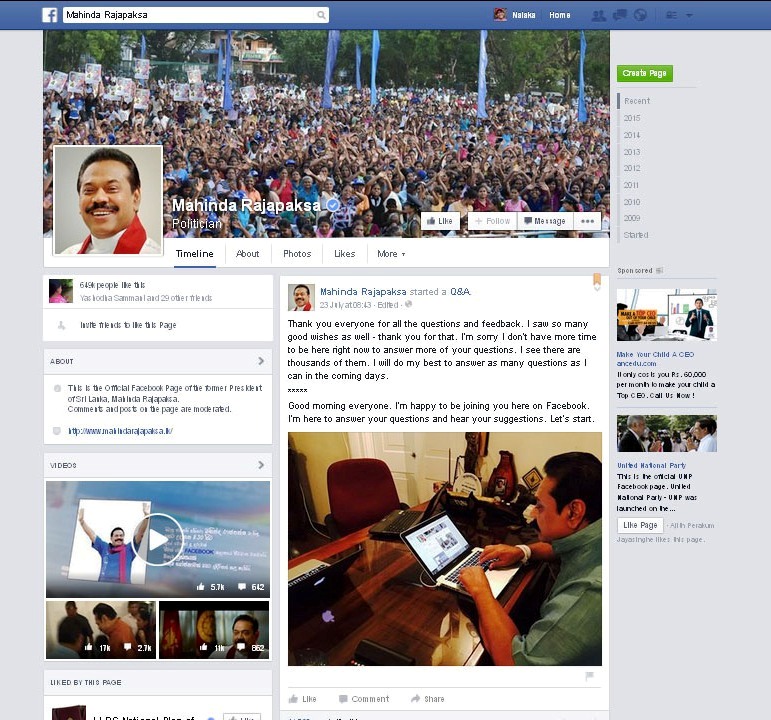
In particular, I look at how President Maithripala Sirisena and Prime Minister Ranil Wickremesinghe are using Facebook and Twitter (mostly to ‘broadcast’ their news and images, and hardly ever to engage citizens). I also remark on two other politicians who have shown initiative in social media use, i.e. former President Mahinda Rajapaksa and JHU leader Champika Ranawaka (both of who have held live Q&As on social media with varying degrees of engagement).
I raise questions like these: Can political parties afford to not engage 25% of Lankan population now regularly using the web? When would election campaigners – rooted in the legacy media’s practice of controlling and fine-tuning messages – come to terms with the unpredictable and sometimes unruly nature of social media?
While politicians, their campaigners and parties struggle to find their niches on social media, politically conscious citizens need to up their game too. Cyber literacy has been slower to spread than mere internet connectivity in Sri Lanka, and we need enlightened and innovative use of social media in the public interest. Every citizen, activist and advocacy group can play a part.
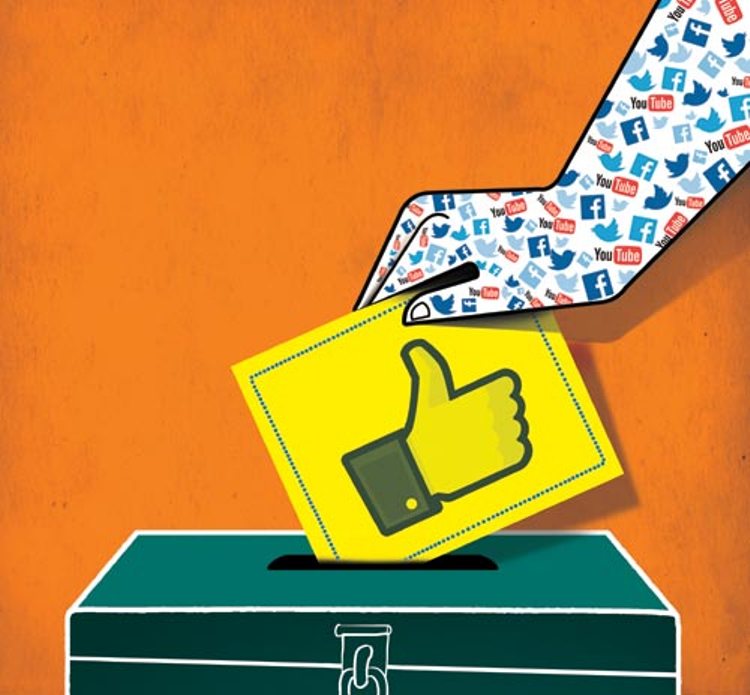
Can social media communications influence voting patterns?
For over 48 hours, there was little coverage of the incidents in newspapers, or on radio and TV. This gap was partly filled by social media and international media reports – but only to the extent they have outreach in the island. Those who rely on local newspapers, radio and TV had to settle for ‘radio silence’ while media gatekeepers hesitated and held back.
In this week’s Ravaya column (in Sinhala language), I probe why sections of Lankan society are habouring growing fears of social media, especially Facebook.
A few have called for a blanket ban of Facebook, which the secretary to the Ministry of Media has assured (in his Twitter feed) would not happen. There is an urgent need, however, to enhance public understanding in Sri Lanka of social media use, with particular attention on safety precautions, privacy protection and cyber civility.
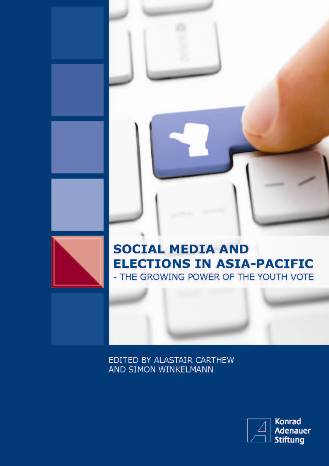
Did youth vote and social media make a difference in Colombo Municipal Council election in Sri Lanka held in October 2011?
This was the question that Chanuka Wattegama and I asked ourselves and set out to answer when invited to contribute a chapter to a regional book on how social media are influencing elections in Asia.
The book comprises 10 chapters covering 11 nations written by local contributors from Australia, Indonesia, Japan, Malaysia, New Zealand, Singapore, South Korea, Sri Lanka, the Philippines, Taiwan and Thailand.
It examines trends and outcomes surrounding recent elections in these countries — and how social media influenced election campaigning and voting, especially among young voters.
Topics include:
• Use of social media surrounding elections
• Digital electioneering
• How social media can make a difference
• How important is voting to young people?
• Detailed polling of political trends
Our summary for the Sri Lanka chapter:
The Colombo Municipal Council (CMC) is the local government body that administers Sri Lanka’s largest city and its commercial capital. Its last election, held in October 2011, saw the nationally ruling coalition losing this key municipality while winning all other municipalities as well as many of the smaller local government bodies.
What made CMC election outcome different? This election saw some apolitical activists and researchers engaging the mayoral candidates on social media, questioning and critiquing their election manifestos and trying to hold them accountable. Did these online activities influence voter behaviour? What lesson does this hold for other elections and the overall political landscape in Sri Lanka?
Who is a citizen journalist? Does everyone who blogs and tweets automatically become one? If not, who qualifies? Who judges this on what criteria? And what niche in media and public sphere do citizen journalists fill when compared with salaried journalists working for more institutionalised or mainstream media?
These have been debated for years, and there is no global consensus. They are belatedly being asked and discussed in Sri Lanka, and form the basis of my latest Ravaya column (in Sinhala).
My views were summed up sometime ago in this comment I left on a blog:“Just as journalism is too important to be left solely to full-time, salaried journalists, citizen journalism is too important to be left simply to irresponsible individuals with internet access who may have opinions (and spare time) without the substance or clarity to make those opinions count.”