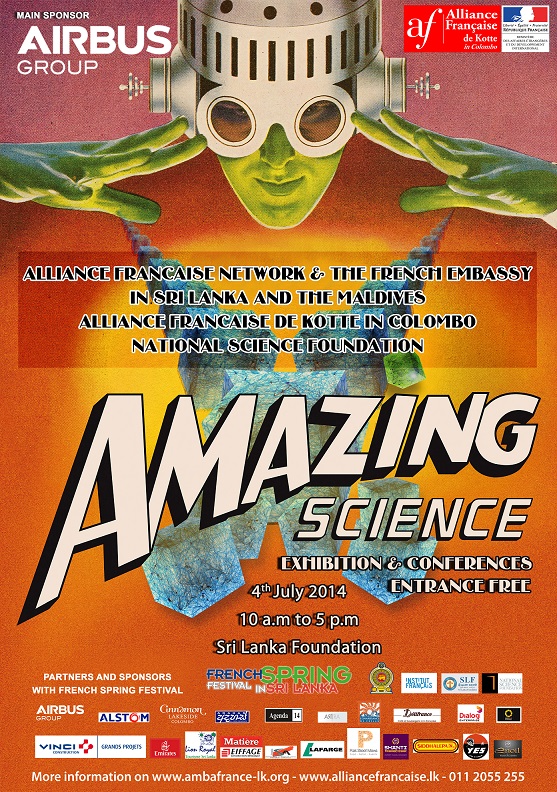
AMAZING SCIENCE comes to Colombo, Sri Lanka, on 4 July 2014 as part of the French Spring Festival organised by Alliance Française de Kotte in COLOMBO and its partners.
Here’s the day’s program, to be held at Sri Lanka Foundation Institute, Independence Avenue, Colombo. I’ll be speaking on “Long shadow of Pulp Science Fiction: Popular culture for promoting science and imagination” at 11 AM, and repeating it again at 1 PM.
Amazing Science in Colombo – Programme for 4 July 2014
Amazing Science is a travelling exhibit put together by French scientific institutes inspired by American ‘pulp’ science fiction magazines during the first half of the 20th century.
As the creators say, it “takes you on an exploratory journey into uncharted territory, on the frontiers of pulp culture, science fiction and scientific research”.
The exhibition revives the old “pulp” look through a blend of scientific research, creative writing and popular culture. From the infinitely small to the infinitely large, the most advanced areas of science are now the realm of unexpected encounters with the real and the imaginary worlds. Each of the exhibition panels features scientific visuals based on a specific research area.
Here’s the Abstract of our own talk:
Long shadow of Pulp Science Fiction: Popular culture for promoting science and imagination
by Nalaka Gunawardene, science writer
and S M Banduseela, science fiction translator
‘Pulp magazines’ is a generic term for inexpensive magazines published in the United States from 1896 to the 1950s. They provided popular entertainment, especially before broadcast television became well established, and carried illustrated short stories and serialized stories in categories like adventure, travel, detective and science fiction.
This illustrated presentation will look at the role pulp magazines played in promoting science fiction writing and reading as part of 20th century popular culture. Many who later became mainstream writers, such as Robert A Heinlein, Arthur C Clarke, Isaac Asimov and Ray Bradbury first established themselves by writing to such publications.
In this talk, we look at how pulp science fiction inspired scientific discovery and innovation in areas as diverse as space exploration, computer science, robotics, evolution and materials science.
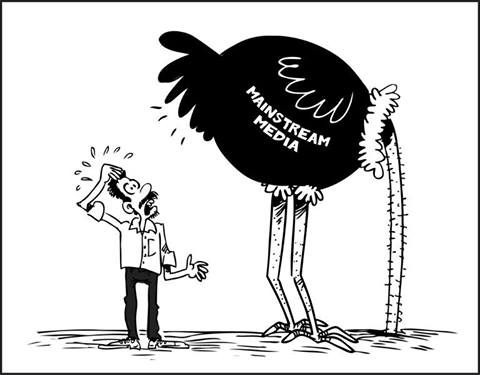
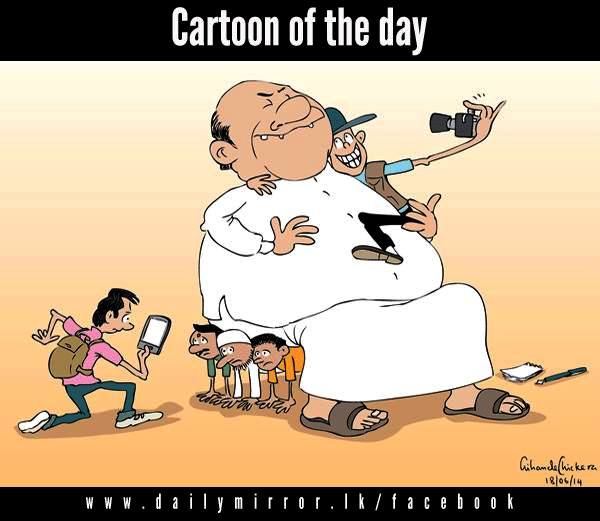
For over 48 hours, there was little coverage of the incidents in newspapers, or on radio and TV. This gap was partly filled by social media and international media reports – but only to the extent they have outreach in the island. Those who rely on local newspapers, radio and TV had to settle for ‘radio silence’ while media gatekeepers hesitated and held back.
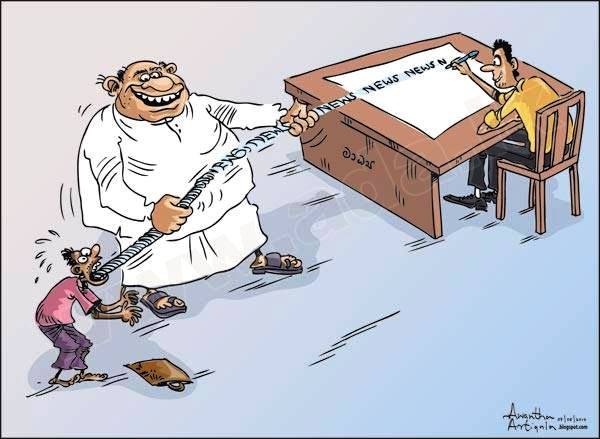
In this week’s Ravaya column (in Sinhala, published on 15 June 2014), I turn the spotlight on the world of media itself. In particular, how the Lankan print and broadcast media exploits freelance writers and other creative professionals who are paid extremely low rates even by highly profitable media companies.
I cite my own experiences with the world of print and broadcasting, where editors and staff journalists have no hesitation in getting outsiders to work for practically free. Is this fair or right, I ask, when the same media stands for social justice in their editorial positions.
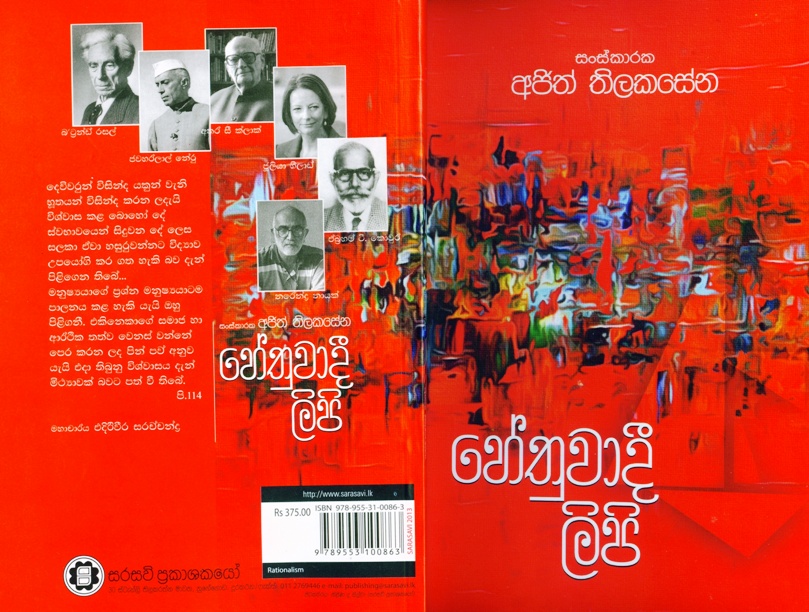
In this week’s Ravaya column (in Sinhala), I introduce a recent anthology of rationalist essays compiled and edited by leading Sinhala language writer Ajith Thilakasena. I was asked to talk about the book at a recent meeting of the Sri Lanka Rationalists’ Association. Since I too have contributed a chapter, I cannot review the book; this is merely an exploration of the book’s provocative contents.
In his last published short story, written only a few months before his death, Sir Arthur C Clarke envisioned a world without religions by the year 2500.
Yes, ALL organised, institutionalised religions (i.e. those with holy scripture, priests and places of worship) will gradually go into oblivion! No exceptions.
In it, Sir Arthur described the development of reliable psychological probes, using which any suspected individual could be ‘painlessly and accurately interrogated, by being asked to answer a series of questions’. While its original purpose is to keep the world safe from criminals and terrorists, the “Psi-probe” soon proves to be useful on another front: to weed out religious fanaticism – and all religions themselves – which is a greater threat to humanity.
A few weeks ago, with the concurrence of the Arthur C Clarke Estate, I invited S M Banduseela, the most prolific translator of Clarke’s work in Sri Lanka, to render this last story into Sinhala. Here it is, being published for the first time here:
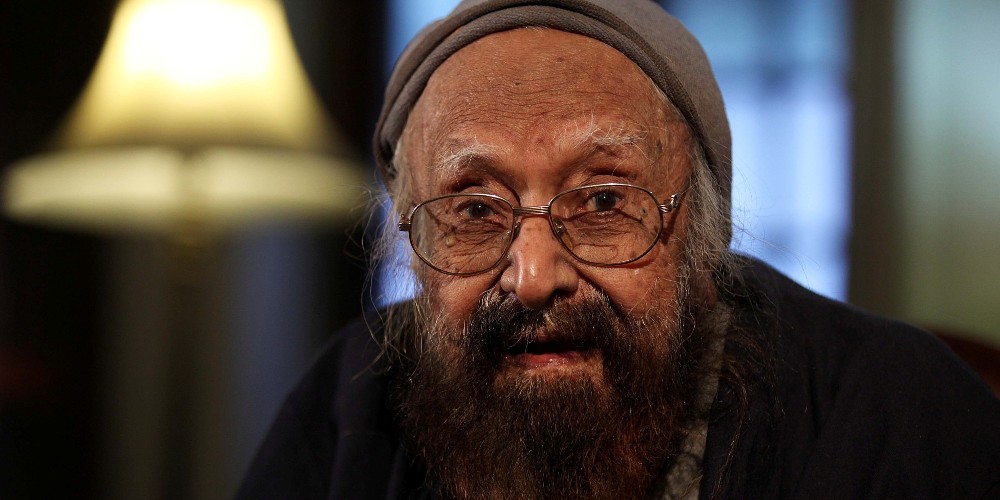
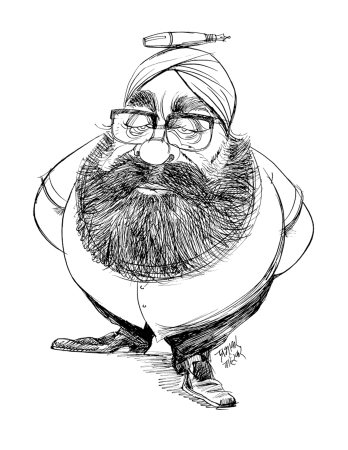
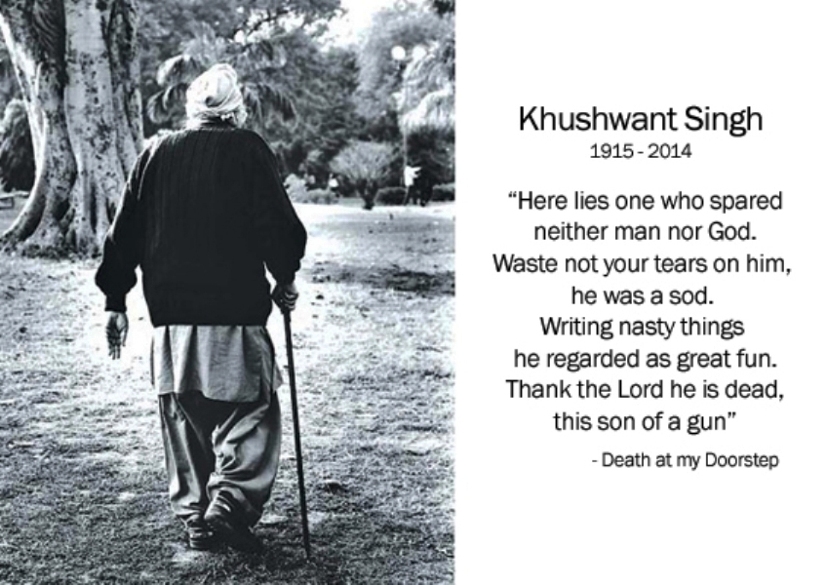
In this week’s Ravaya column (in Sinhala), I pay tribute to Khushwant Singh (1915-2014), writer and journalist who died on 20 March 2014 aged 99. He is best remembered for his satire, humour and trenchant secularism. I make special mention of his defiance of death threats from Sikh fundamentalists in the 1980s, and his vocal stand against all organised religions.
IBN TV’s tribute to Khushwant Singh played on the image of editor inside the light bulb – the graphic used by him when he edited Illustrated Weekly of India (1969-78)
Cartoon by Popa Matumula – Courtesy Cartoon Movement
“To garner public support for their causes, the development community must connect with rest of society using everyday phrases, metaphors and images. That is a far better strategy than expecting everyone to understand their gobbledygook.”
This is the central argument in my latest op-ed essay, just published on the Communication Initiative blog.
Titled Crossing the ‘Dev-Code’ Divide, I revisit a theme familiar to my regular readers: getting development pr0fessionals to communicate better.
Another excerpt:
“After working with technological ‘geeks’ and development workers for many years, I know they have at least one thing in common: their own peculiar languages that don’t make much sense to the rest of us.
“Talking in code is fine for peer-to-peer conversations. But it’s a nonstarter for engaging policy makers and the public.”
This essay is a tribute to my mentor and former colleague Robert Lamb (1952 – 2012), who was a grandmaster in communicating development to public and policy audiences using simple language and powerful imagery.
Working with Robert for 15 years, I saw how he brought seemingly dreary development issues alive on TV and video – dominant media of his time — through simple and sincere story telling. He mixed inter-governmental processes with stark ground level realities. In three decades he produced or commissioned hundreds of international TV documentaries exploring what sustainable development meant in the real world.
Indian filmmaker Satyajit Ray (1921-1992) was keen to make India’s first science fiction movie, and in 1967 wrote a script for a film to be called The Alien, based on his own short story “Bankubabur Bandhu” (“Banku Babu’s Friend”). The story was about an alien spaceship that landed in rural Bengal, carrying a highly intelligent and friendly alien being with magical powers.
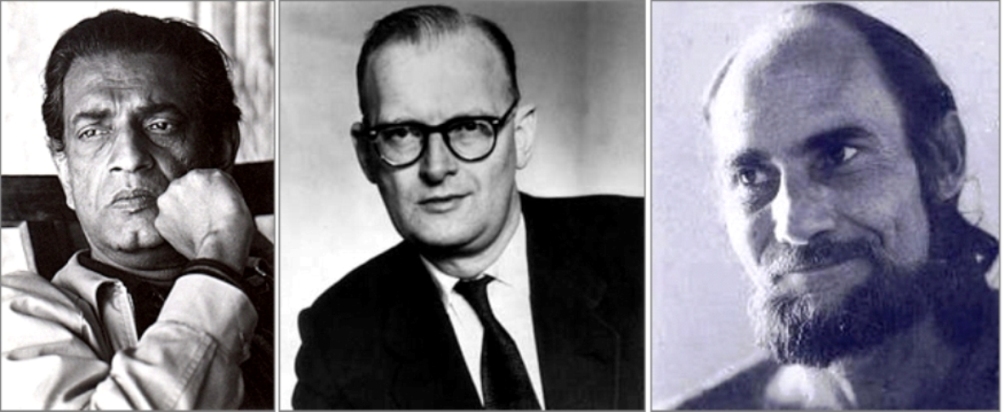
Ray’s friend Arthur C Clarke recommended and introduced him to Hollywood, but the film never reached production. In this week’s Ravaya column (in Sinhala), I continue the story of what happened to The Alien.
Thanks to writer and film historian Richard Boyle for sharing excerpts from his as-yet unpublished manuscript on this topic, which is one of the greatest might-have-beens in the history of the cinema.
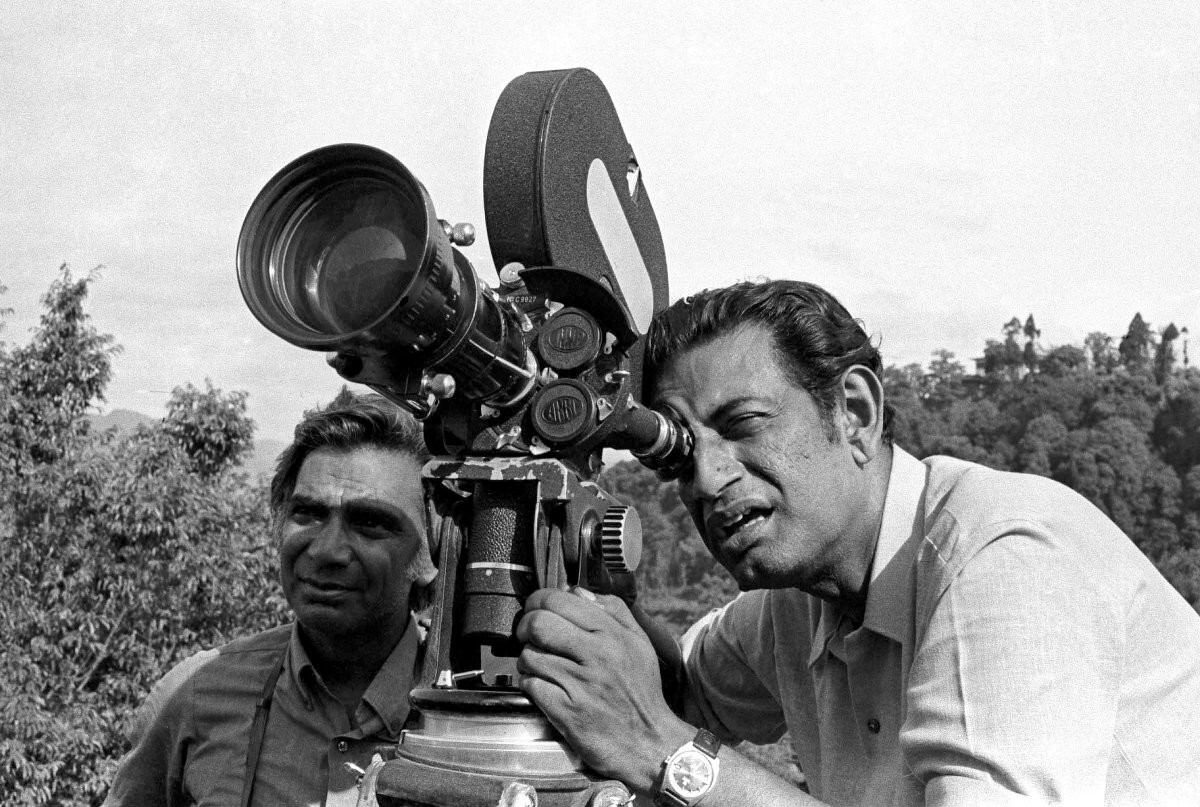
Renowned Indian filmmaker Satyajit Ray (1921-1992) directed 36 films, including feature films, documentaries and shorts. He was also a fiction writer, publisher, illustrator, calligrapher, graphic designer and film critic.
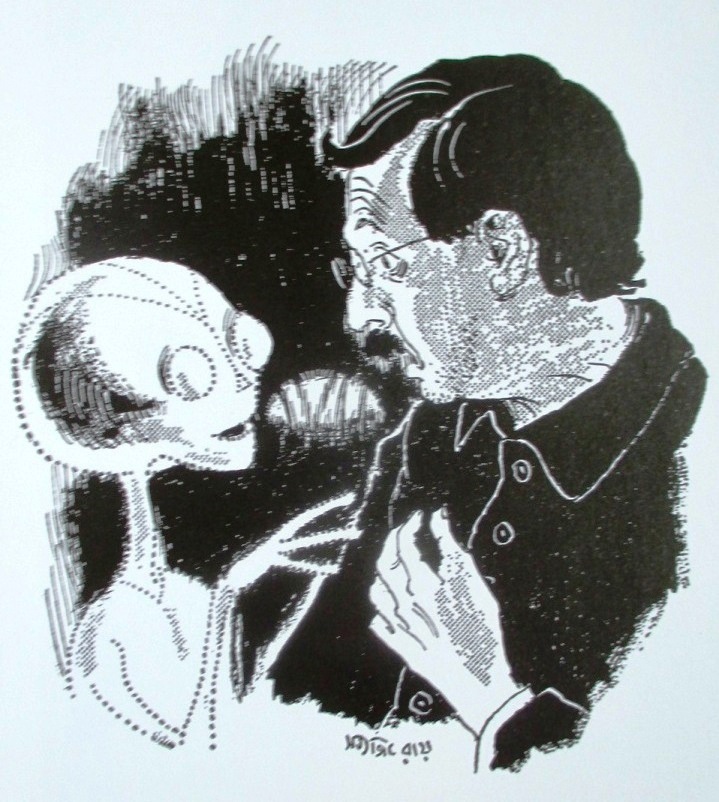
In 1967, Ray wrote a script for a film to be called The Alien, based on his own short story “Bankubabur Bandhu” (“Banku Babu’s Friend”) which had appeared in Sandesh, the Ray family magazine, in 1962. The story was about an alien spaceship that landed in a pond in rural Bengal, carrying a highly intelligent and friendly alien being with magical powers and best capable of interacting with children.
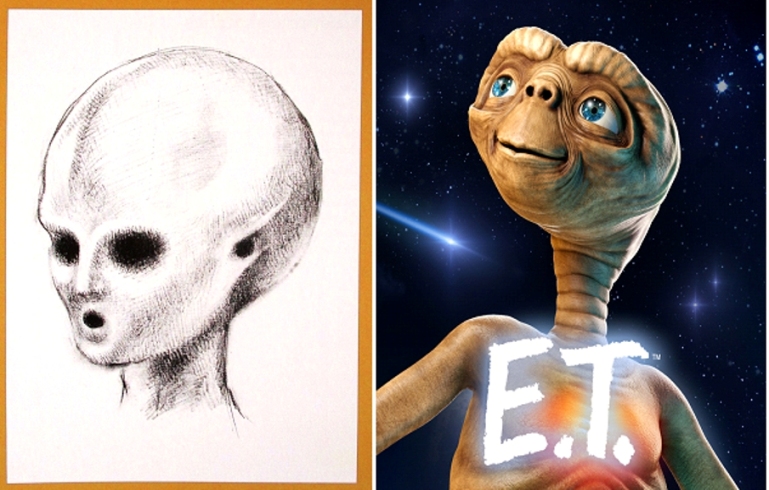
Ray was keen to collaborate with Hollywood for making this movie that required special effects and a higher budget than his other movies. His friend Arthur C Clarke recommended and introduced him to Hollywood, but the film never reached production. Years later, when Steven Spielberg made ET, Ray and his friends noticed remarkable similarities between the two stories. Coincidence?
In this week’s Ravaya column (in Sinhala), I relate the story behind the story of what happened to The Alien. This is reconstructed from Ray’s own published account, Ordeals of The Alien. I’m grateful to writer and film historian Richard Boyle for sharing excerpts from his as-yet unpublished manuscript on this topic, one of the greatest might-have-beens in the history of the cinema.













 Open Minds!