In this week’s Ravaya column (in Sinhala), I write about an Indian friend of mine: Moji Riba, filmmaker and cultural anthropologist, who lives and works in India’s north-eastern Arunachal Pradesh.
It’s an isolated remote and sparsely populated part of the country that is home to 26 major tribal communities,. Each one has its own distinctive dialect, lifestyle, faith, traditional practices and social mores. They live side by side with about 30 smaller communities.
A combination of economic development, improved communications, the exodus of the young and the gradual renunciation of animist beliefs for mainstream religions threatens Arunachal’s colourful traditions. “It is not my place to denounce this change or to counter it,” says Moji. “But, as the older generation holds the last link to the storehouse of indigenous knowledge systems, we are at risk of losing out on an entire value system, and very soon.”
For the past 15 years, he has been documenting it on video and photos. Read my English blogposts about him in Nov 2008 and Jan 2009.
I caught up with him in Delhi last week, which inspired this column.
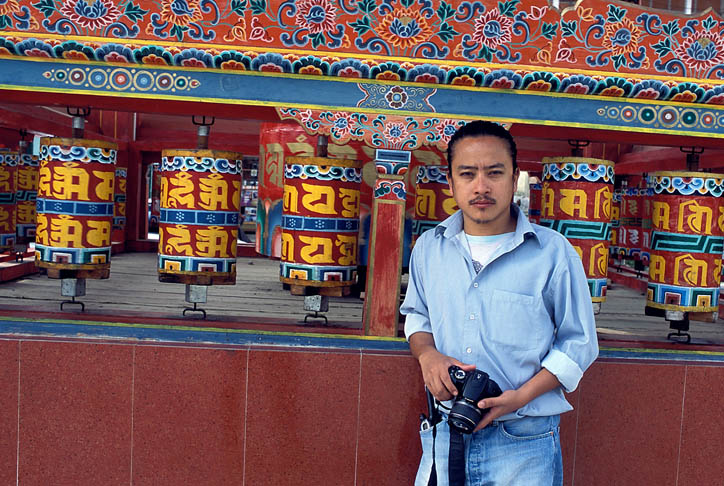
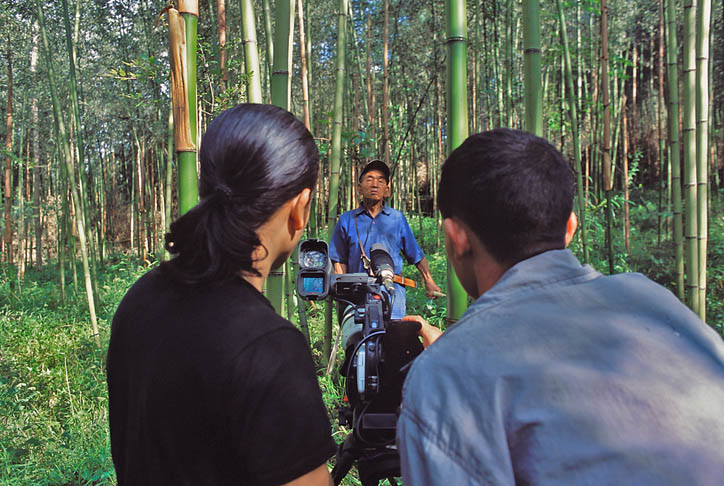
Moji Riba has been working since 1997 to document Arunachal Pradesh's rich cultural heritage. Image courtesy Rolex Awards
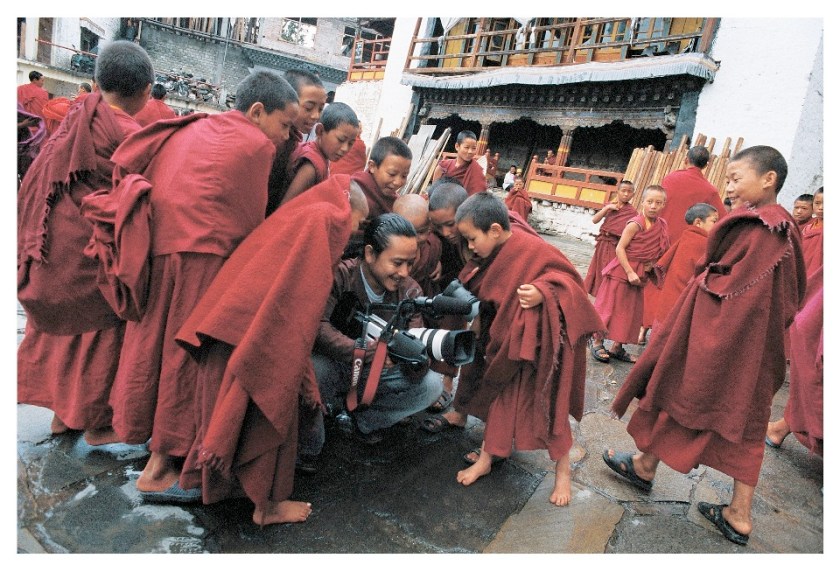
Surrounded by young monks, Moji Riba films rituals celebrating Buddha’s birth at Galden Namgyal Lhatse monastery. Tawang, Arunachal Pradesh, India, 2008 (Photo courtesy Rolex Awards)
සංස්කෘතික පර්යේෂණ හා ලේඛනගත කිරීමේ කේන්ද්රය (Centre for Cultural Research and Documentation, CCRD) අරඹමින් තවත් ඔහු වැනි ම කිහිප දෙනෙකු සමඟ ප්රාන්තයේ ජන සංස්කෘතිය ගැන වීඩියෝ වාර්තා චිත්රපට නිපදවීම ඇරඹුවා.
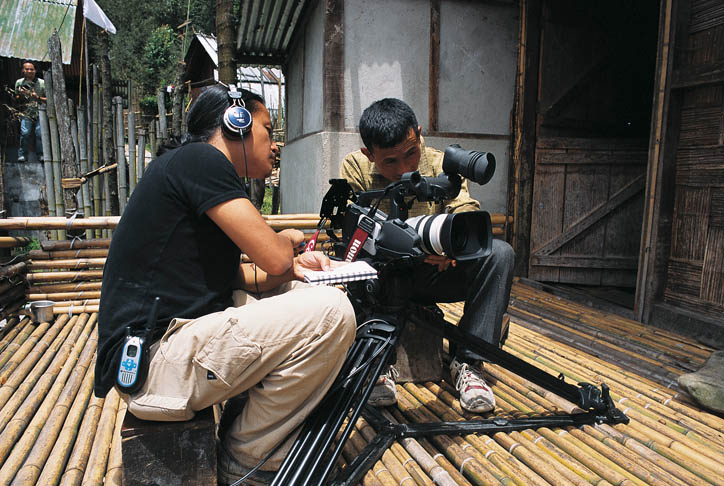
Riba teaches Hage Komo the basic camera skills that will allow the young Apatani to film an interview with his father and an animist priest, thus recording his tribe's oral history (Photo courtesy Rolex Awards)
Hage Komo gets video instructions from Moji Riba, who is enlisting local young people to capture the oral histories, languages and rituals of their tribes for his project. Komo films his father gathering bamboo in a grove outside Hari Village. (Photo courtesy Rolex Awards)
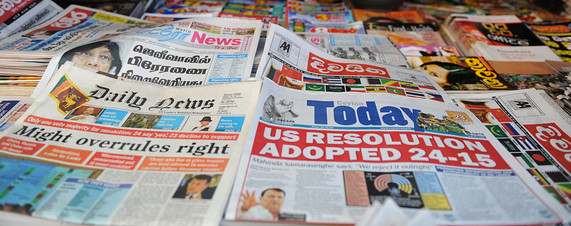
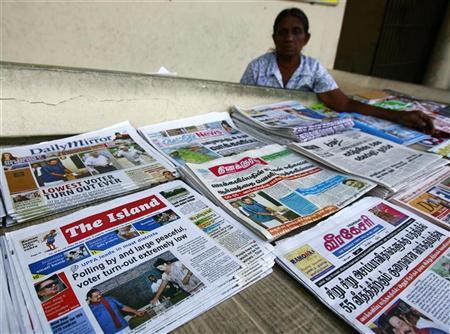
“Sri Lanka’s newspaper history dates back to Colombo Journal (1832) which apparently had a short but feisty life before it invoked the ire of the British Raj. Nearly two centuries and hundreds of titles later, the long march of printer’s ink — laced with courage and passion – continues.
“How long can this last?
Print journalism’s business models are crumbling in many parts of the world, with decades old publications closing down or going entirely online. This trend is less pronounced in Asia, which industry analysts say is enjoying history’s last newspaper boom. Yet, as I speculated three years ago when talking to a group of press barons, we’ll be lucky to have a decade to prepare for the inevitable…”
These are excerpts from a short essay I originally wrote last week to mark the first anniversary of Ceylon Today newspaper, where I’m a Sunday columnist. It was printed in their first anniversary supplement on 18 Nov 2012.
Groundviews.org has just republished it today, making it easily available to a much wider audience. Read full essay:
Another excerpt: “In the coming years, waves of technology, demographics and economics can sweep away some venerable old media along with much of the deadwood that deserves extinction. The adaptive and nimble players who win audience trust will be the ones left to write tomorrow’s first drafts of history.”
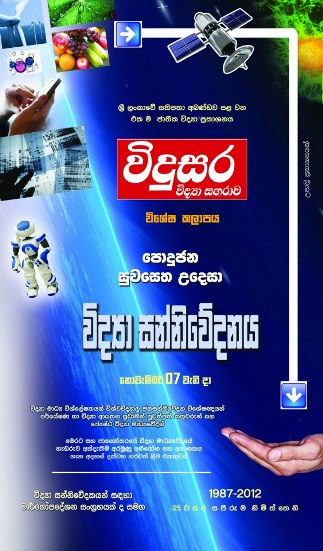
I have an interview (in Sinhala) on science communication for their 25th anniversary issue, which can be found here.
I have followed up with an expansion of some of these ideas in my Sunday column in Ravaya newspaper. My theme this week is science journalism (a subset of science communication) — why is it important for modern societies and what challenges are faced by Lankan science journalists.
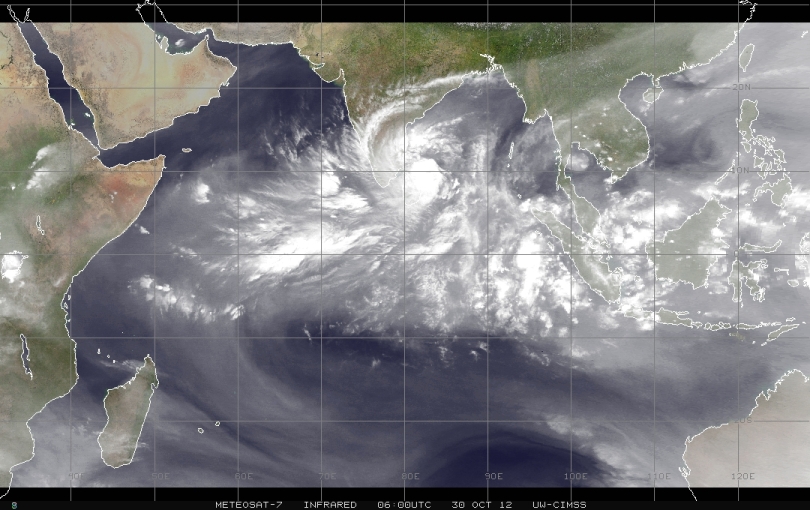
Meteosat 7 weather satellite image of the Indian Ocean – 30 Oct 2012 at 6 UTC As Hurricane Sandy hammered the US East Coast earlier this week, we had our own meteorological worries. A tropical cyclone — belatedly named Neelam — swept past parts of Sri Lanka’s North and East. It then headed to southern India.
The two atmospheric turbulences were not comparable. Sandy was far more ferocious. But Neelam caused enough disruption as well — it wasn’t just a passing gust of wind.
As I followed the two disasters through print, TV and web media reporting, I wondered: how come we had more about Sandy in our own media than on Neelam?
Is it because, as some argue, the global media were so preoccupied with Sandy, and provided saturation coverage? Or are our own media outlets unable, or unwilling, to cover a local weather anomaly with depth and clarity?
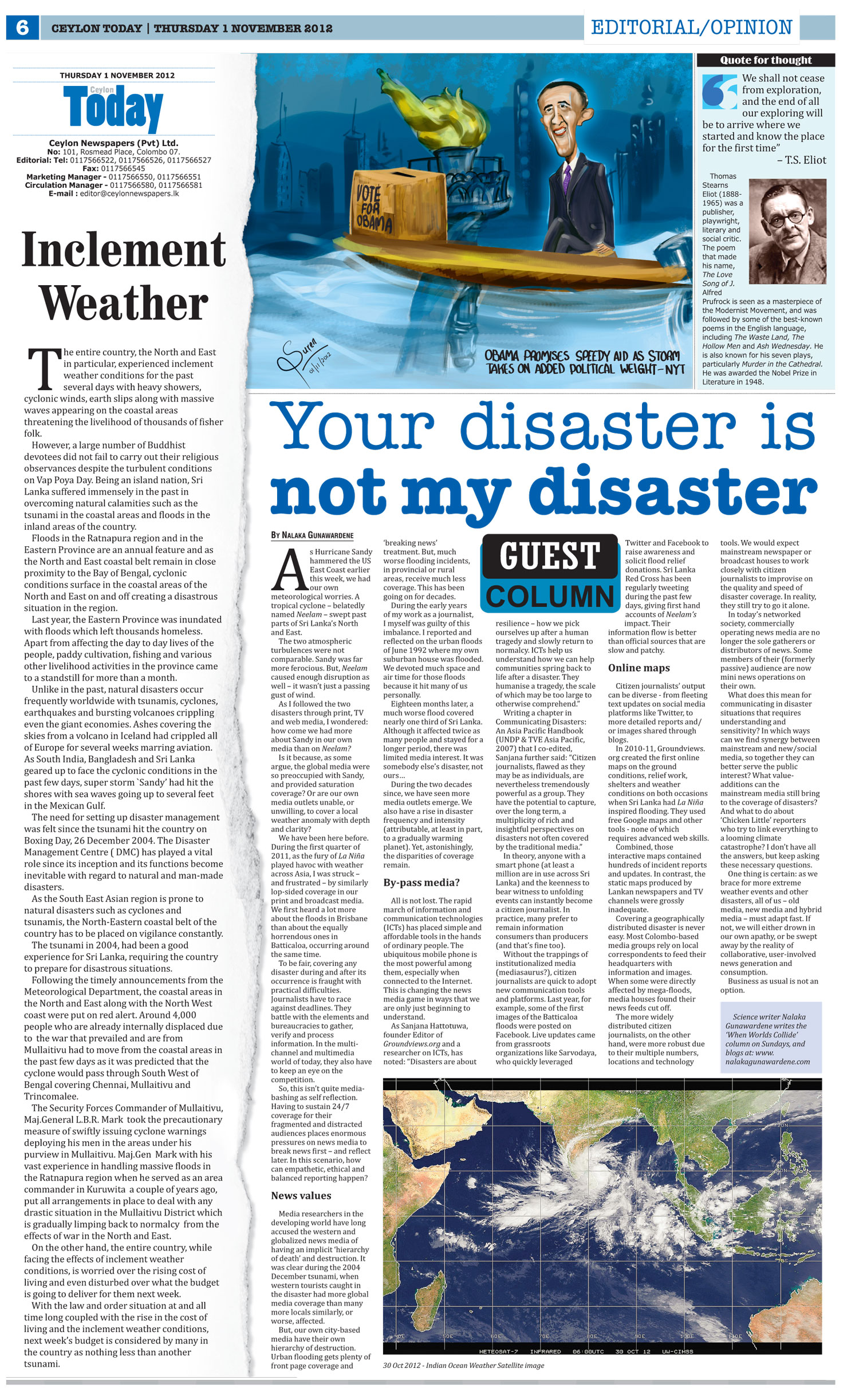
This is the opening of my latest op-ed essay, Your Disaster is Not My Disaster, published in Ceylon Today newspaper, 1 Nov 2012.
Another excerpt:
“In today’s networked society, commercially operating news media are no longer the sole gatherers or distributors of news. Some members of their (formerly passive) audience are now mini news operations on their own.
“What does this mean for communicating in disaster situations that requires understanding and sensitivity? In which ways can we find synergy between mainstream and new/social media, so together they can better serve the public interest? What value-additions can the mainstream media still bring to the coverage of disasters? And what to do about ‘Chicken Little’ reporters who try to link everything to a looming climate catastrophe? I don’t have all the answers, but keep asking these necessary questions.”
Here’s the full text, saved from the e-paper:
Your Disaster is not My Disaster – by Nalaka Gunawardene, Ceylon Today 1 Nov 2012
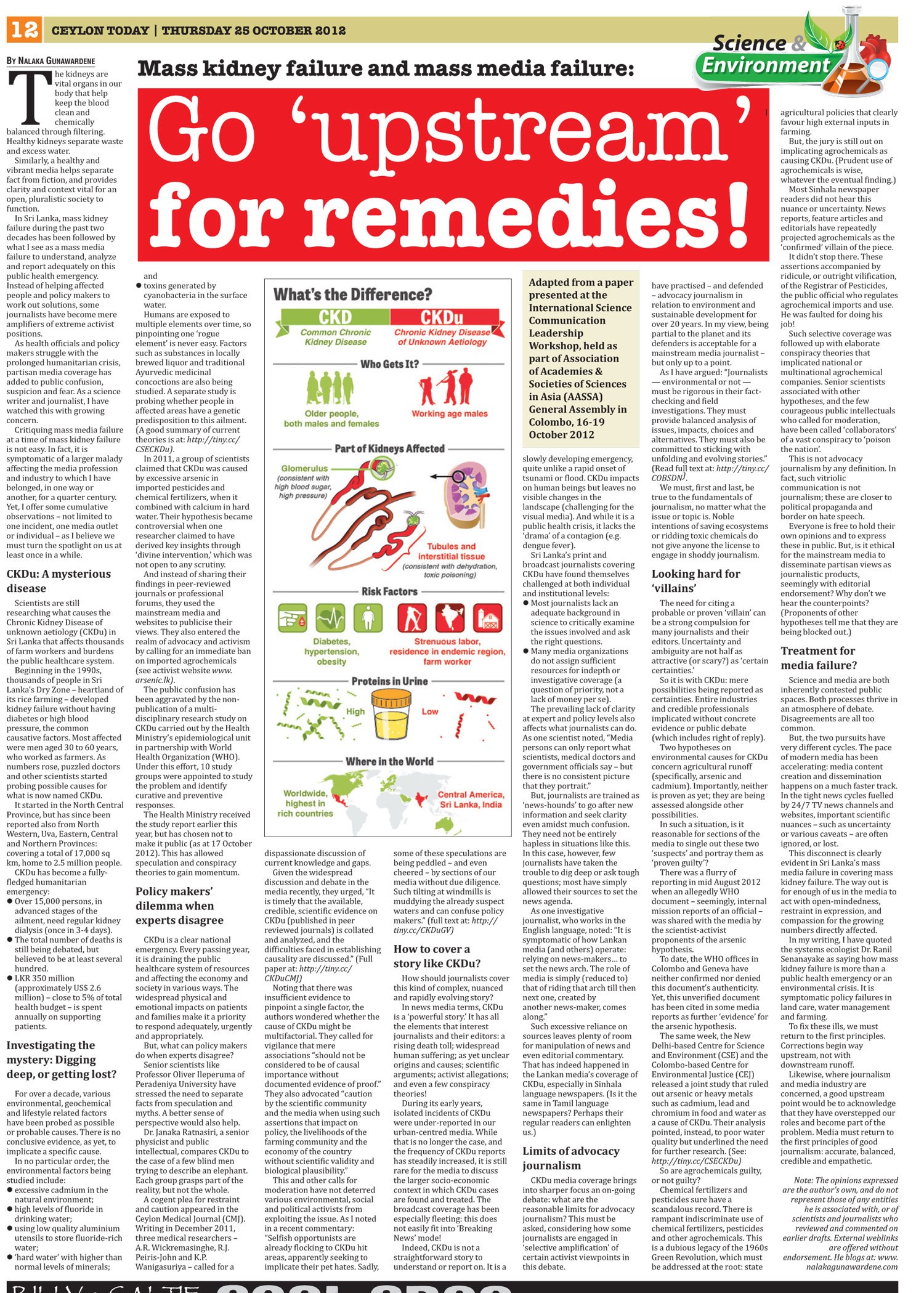
Ceylon Today newspaper has just published my article titled: Mass Kidney Failure & Mass Media Failure: Go ‘Upstream’ for Remedies!
It is adapted from a paper I presented last week at the International Science Communication Leadership Workshop, held as part of Association of Academies & Societies of Sciences in Asia (AASSA) General Assembly in Colombo, 16-19 October 2012.
In Sri Lanka, mass kidney failure during the past two decades has been followed by what I call a mass media failure. Most of our media have failed to understand, analyse and report adequately on this public health emergency. Instead of helping affected people and policy makers to work out solutions, some journalists have become amplifiers of extreme activist positions.
As health officials and policy makers struggle with the prolonged humanitarian crisis, partisan media coverage has added to public confusion, suspicion and fear. As a science writer and journalist, I have watched this with growing concern.
This is a critique of the Lankan media sector to which I have belonged, in one way or another, for a quarter century. I hope this will inspire some much-needed self-reflection among our media, which I feel over overstepped the boundaries of advocacy journalism in this issue. As I suggest, a return to first principles can help…
Full article below. Constructive engagement is welcomed.
Mass Kidney Failure & Mass Media Failure – Nalaka Gunawardene – Ceylon Today 25 Oct 2012
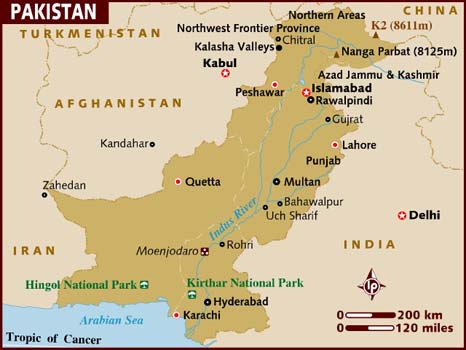
In this week’s Ravaya column (in Sinhala), I reflect on my recent visit to Pakistan, after 15 years.
When I last visited, in 1997, there were only state owned radio and TV channels. That changed in 2002 when private ownership was allowed. In a decade, private broadcasting has grown and expanded — especially in news and current affairs TV channels, which are now a dominant factor in Pakistan’s everyday life.
What does this mean for media pluralism, governance and social order in a country as complex as Pakistan? Are 24/7 news channels part of the problem or part of the solution? Since the genie cannot be sent back into the lamp, how best can its powers be harnessed for the public interest?
“ඇෆ්ගනිස්ථානයට යාබදව තිබෙන විකාර දේශය” හැටියට මගේ මිය ගිය පාකිස්ථානු මිතුරිය සනියා හුසේන් ඇගේ උපන් බිම හදුන්වා දෙන්නට පුරුදුව සිටියා. එය වඩාත් තිව්ර ලෙස දැනුනේ ඉංගී්රසියෙන් කී විටයි. ‘I live in Absurdistan, located next to Afghanistan!’
The kidneys are vital organs in our body that help keep the blood clean and chemically balanced through filtering. Healthy kidneys separate waste and excess water.
Similarly, a healthy and vibrant media helps separate fact from fiction, and provides clarity and context vital for an open, pluralistic society to function.
In Sri Lanka, mass kidney failure during the past two decades has been followed by what I see as a mass media failure to understand, analyse and report adequately on this public health emergency. Instead of helping affected people and policy makers to work out solutions, some journalists have become mere amplifiers of extreme activist positions.
As health officials and policy makers struggle with the prolonged humanitarian crisis, partisan media coverage has added to public confusion, suspicion and fear. As a science writer and journalist, I have watched this with growing concern.
I just gave a talk on this to the Science Communication Leadership Workshop which was part of the First General Assembly of Association of Academies and Societies of Sciences in Asia (AASSA) held in Colombo, Sri Lanka, on 17 October 2012.
This is the (Sinhala) text of my Sunday column in Ravaya newspaper on 5 August 2012. This week, I trace the moving images coverage of the Olympics, from the early days of cinema to the modern instantaneous live coverage that makes the whole world watch the Games as they unfold.
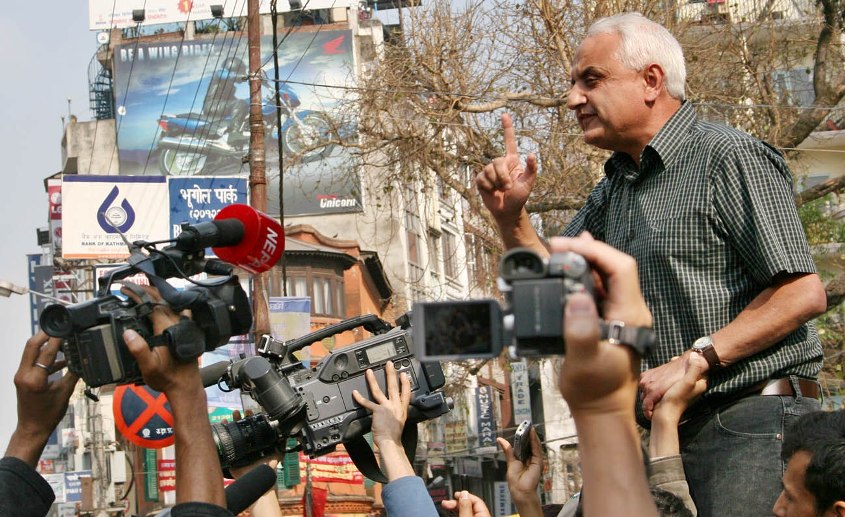
Journalist Kanak Dixit in a protesting rally in Kathmandu on 5 April 2006, Kathmandu. Photo by Shehab Uddin
Expanded from introductory remarks at Ceylon Newspapers Limited office in Colombo, Sri Lanka, on 2 Aug 2012:
There are many ways to introduce my good friend and partner in crime, Kanak Mani Dixit.
Aunty Google, as well as his own website (www.kanakmanidixit.com) can tell you the basic info about his education and career path, which I won’t repeat here. Instead, let me personalise what I know about this courageous man I’ve known and worked with for over 15 years.
Kanak is a journalist, editor and activist – all rolled into one. And if you think that journalists cannot become effective social or democracy activists, just watch him balance these seemingly daunting roles. Study how he juggles reporting, commentary writing, editing and social intervention.
Kanak came from a privileged family background, and could easily have spent his life in leisurely scholarship and endlessly doing the cocktail and conference circuits in South Asia and beyond. He CHOSE to be different.
Kanak spent a few years with the UN Department of Public Information in New York, and yet chucked up a promising international career to return to South Asia – a chaotic, unpredictable but also exhilarating part of the world that we call home. Another conscious choice.
Back home, Kanak could have watched over his beloved Kathmandu Valley and simply commented or satirised about the politics, economy and society of his impoverished land, one of 49 least developed countries in the world. He does that, too, but when needed he takes to the streets. As he did back in 2005/2006 when Nepalis rose against a tyrannical king…
He paid a price for his frontline activism. He was arrested – along with thousands of others – for defying a curfew and demanding democratic reform. He spent 19 days in a Kathmandu jail that he once pointed out to me from afar. As an influential publisher, he could have worked out some deal for a quicker release, but again, chose not to.
How many other South Asia editors or publishers do you know who won’t peddle influence for their personal gain or safety?
Some editors and publishers think of themselves as ‘king-makers’ in the political arena. This editor-publisher was literally a ‘king-dumper’: Nepal’s People Power forced autocratic King Gyanendra to restore Parliament in April 2006. Two years later, the whole monarchy was phased out.
Kanak has spoken truth to power, stared authority in the eye, and yet he has not allowed himself to be corrupted by the temptations of political, diplomatic or other positions. He continues to critique and needle those in public and elected office.
In fact, the very revolutionaries he too helped to bring into office – through elections – now don’t seem to like him much: he was recently dubbed ‘an Enemy of the People’.
He must be doing a few things right to be reviled by both monarchists and republicans!
But Kanak is much more than a media and political activist. He has too many involvements and interests to keep track of.
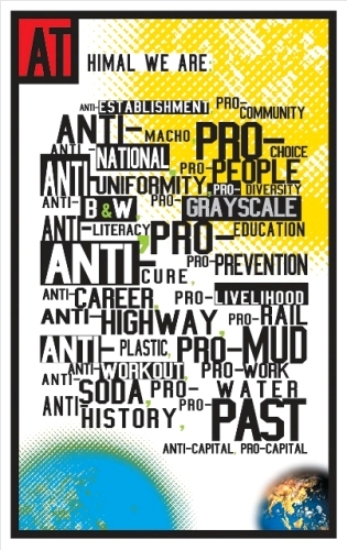
To cite but a few: What Himal is all about…• He is a great believer in the idea of South Asian integration, going well beyond the bureaucratic trappings of SAARC. (His Southasia, which he insists on spelling as one word, includes Tibet and Burma.)
• He founded Himal Southasian magazine in 1987, and sustained it for 25 years with great effort and dedication. It is the first and only regional news and analysis magazine in our region of 1.4 billion people.
• He promotes documentaries as a means of cultural self expression and exchange, and in 1997 founded Film South Asia, a biennial festival that brings the best of South Asian films.
• He nurtures social science research and scholarly exchange, and is endlessly incubating new ventures or institutions in the public interest.
• He supports spinal injury rehabilitation in Nepal, having realised the pitiful state of such care when he suffered serious spinal injury himself a few years ago after a mountain hiking accident.
Amidst all this, he finds time to write regular columns and op-eds – in both English AND Nepali – as well as occasional books.
For these and many other reasons, Kanak Dixit is one of my role models, and a constant source of inspiration. He is one of the few human beings that I’d like to CLONE if and when that becomes a real prospect.
We need many more Media Typhoons like him to drive change in South Asia.
In fact, I sometimes wonder if there is more than one Kanak Dixit already! But that’s only speculation. For now, my friends, meet the one and only Kanak Mani Dixit confirmed to exist…




 Open Minds!