සිවුමංසල කොලූගැටයා #242: එක්සත් ජාතීන්ට බුද්ධිමය නායකත්වය දුන් අපේ හපන්නු

In 2015, the UN is 70 and Sri Lanka's membership is 60 years
In 2015, the UN is 70 and Sri Lanka’s membership is 60 years

On 24 October 2015, United Nations marks its 70th birthday. A few weeks later, on 15 December 2015, is the 60th anniversary of Sri Lanka (then Ceylon) becoming a member state of this inter-governmental organisation.

In this week’s Ravaya column, (appearing in issue of 25 Oct 2015), I continue my focus on Sri Lanka’s engagement with the UN system. In last week’s column, we recalled how Sri Lanka’s heads of state/government and diplomats engaged with the General Assembly and Security Council.

සිවුමංසල කොලූගැටයා #241: හැට වසරක් පුරා එක්සත් ජාතීන්ගේ ලාංකික ලකුණ

Today, we look at some eminent Lankan professionals who joined the UN system in expert or management positions and contributed to its intellectual and institutional development over the decades.

As Thalif Deen, a journalist of Lankan origin who has been reporting from the UN headquarters since the mid 1970s, once wrote: “When future historians take stock of Sri Lanka’s enduring contributions during its first 50 years at the United Nations, they may realise that our political legacy spanned both the upper and lower limits of the universe: the sky above and the oceans below.”

The list of Lankans who have excelled within the UN system is long, and I have had to be selective here. The ones mentioned in this column are:

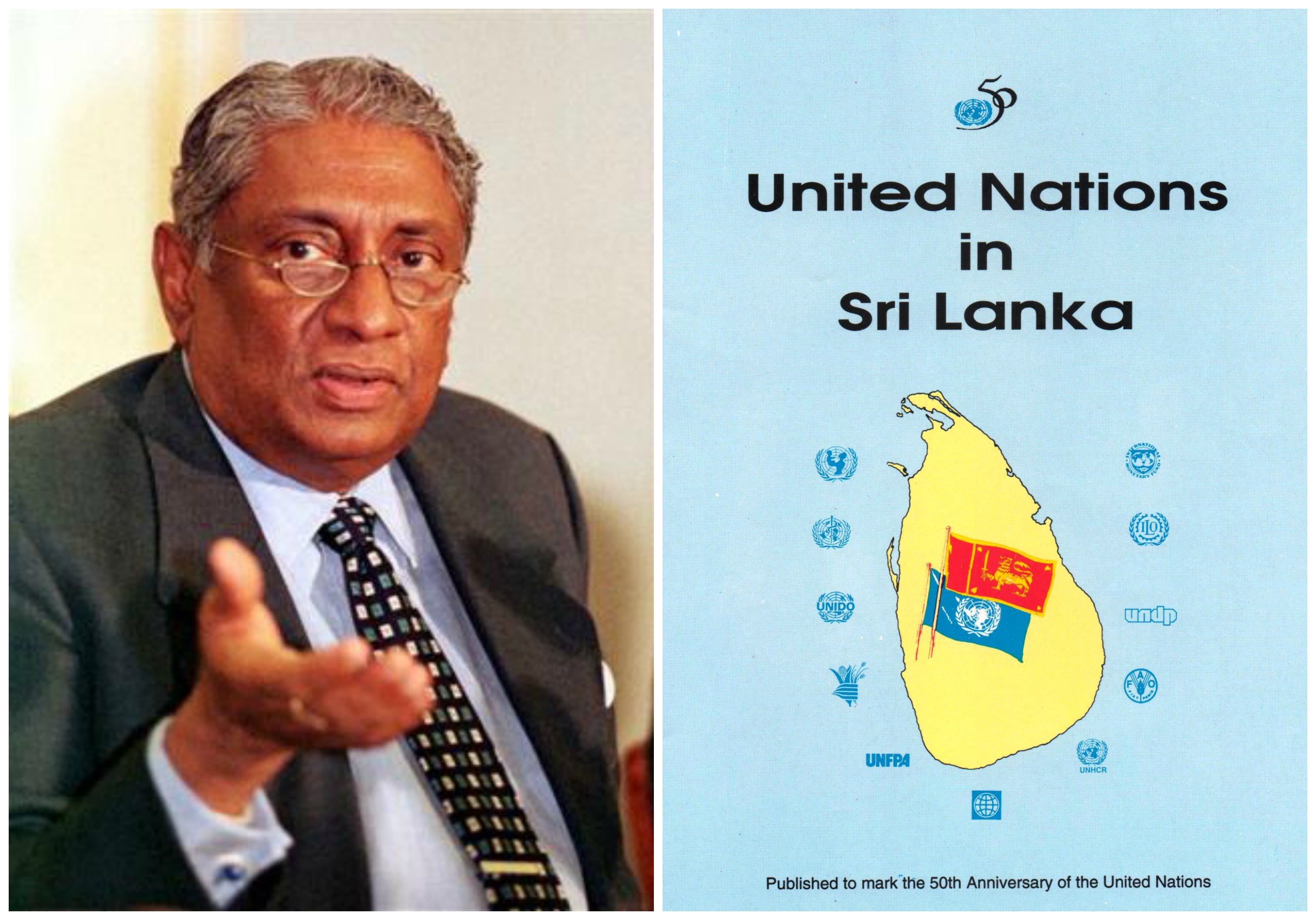
I end with a reference to Lakshman Kadirgamar, who served the ILO and later WIPO in senior positions in Geneva before becoming Sri Lanka’s finest Minister of Foreign Affairs in 1994. I quote from the Foreword that Kadirgamar wrote to a book on the United Nations in Sri Lanka that I wrote for the UN Information Centre (UNIC) in Colombo in 1995 to mark the UN’s 50th anniversary.
402unitednations

See also:

7 April 2013: සිවුමංසල කොලූගැටයා #112: අදීන හා අභීත පුවත්පත් කතුවරයා – ටාසි විට්ටච්චි

21 April 2013: සිවුමංසල කොලූගැටයා #114: ටාසිගේ ලෝකය හා මගේ ලෝකය

1 Dec 2013: සිවුමංසල කොලූගැටයා #145: තුන්වන ලෝකයට බුද්ධිමය පහන්ටැඹක් වූ ආචාර්ය ගාමිනී කොරෙයා

22 Dec 2013: සිවුමංසල කොලූගැටයා #148: වර්ණභේදවාදය පිටු දැකීමට ලැබුණු ලාංකික දායකත්වය

18 Oct 2015: සිවුමංසල කොලූගැටයා #241: හැට වසරක් පුරා එක්සත් ජාතීන්ගේ ලාංකික ලකුණ

එක්සත් ජාතීන්ගේ 70 වන උපන් දිනය ඔක්තෝබර් 24 වැනිදාට යෙදෙනවා. ශ‍්‍රී ලංකාව මේ අන්තර් රාජ්‍ය සංවිධානයේ සාමාජිකත්වය ලබා මේ වසරට දශක හයක් සම්පූර්ණ වෙනවා.

මේ දශක හයේදී මෙරට නියෝජනය කරමින් එජා සමුළු හා වෙනත් ක‍්‍රියාකාරකම්වලට සම්බන්ධ වූ කීර්තිමත් රාජ්‍ය තාන්ත‍්‍රිකයන් කිහිප දෙනකු ගැන ගිය සතියේ අප කතා කළා. අද අප විමසන්නේ එජා කාර්ය මණ්ඩලයට බැඳී බුද්ධිමය දායකත්වය හරහා එය පෝෂණය කළ ලාංකික විද්වතුන් ගැනයි.

එක්සත් ජාතීන් ලෙස පොදුවේ හැඳින් වෙන ආයතන හා සංවිධාන ජාලයක් හෙවත් පවුලක් තිබෙනවා. එයින් සමහරක් තමන්ගේම පාලක සභාවක් සහිත විශේෂ සංවිධානයි. එජා සංවර්ධන වැඩසටහන (UNDP) එජා ළමා අරමුදල (UNICEF) හා ආහාර හා කෘෂිකර්ම සංවිධානය (UN-FAO) මීට නිදසුන්. එවැනි ආයතනවලට තමන්ගේම විධායක අධ්‍යක්ෂවරයකු හා පරිපාලන තන්ත‍්‍රයක් සතුයි.

එදා මෙන්ම අදත් බලගතු රාජ්‍යයන්ට එක්සත් ජාතීන්ගේ ව්‍යුහය තුළ වැඩි බලපෑමක් කළ හැකියි. එය 1945දී පැවති බලතුලනය මත තීරණය වූ හා අද ලෝකයට නොගැළපෙන විසමතාවක්. එහෙත් එය එසේ වූ පමණට මධ්‍යම හා කුඩා ප‍්‍රමාණයේ රටවල් කොන්වීමක් සිදු වන්නේ ද නැහැ.

ආරක්ෂක මණ්ඩලය තුළ චීනය, රුසියාව, බි‍්‍රතාන්‍යය, අමෙරිකා එක්සත් ජනපදය හා ප‍්‍රංශය යන රටවල් පහට නිෂේධ බලය ඇතත් අන් සියලූ ආයතන ව්‍යුහයන්ගේ තීරණ සඳහා ලොකු කුඩා හැම සාමාජික රාජ්‍යයටම ඇත්තේ එක් ඡන්දය බැගින්. තීරණ ගන්නේ බහුතර ඡන්දය මත පදනම් වීයි.

දේශපාලනිකව තීරණාත්මක මහා මණ්ඩලය, ආරක්ෂක මණ්ඩලය වැනි ආයතනික ව්‍යුහයන් ඍජුවම එජා මහ ලේකම් කාර්යාලය විසින් පරිපාලනය කැරෙනවා. එය කරන්නේ ජාත්‍යන්තර සිවිල් සේවකයන් ලෙෂ හැඳින්විය හැකි කාර්ය මණ්ඩලයක් විසින්.
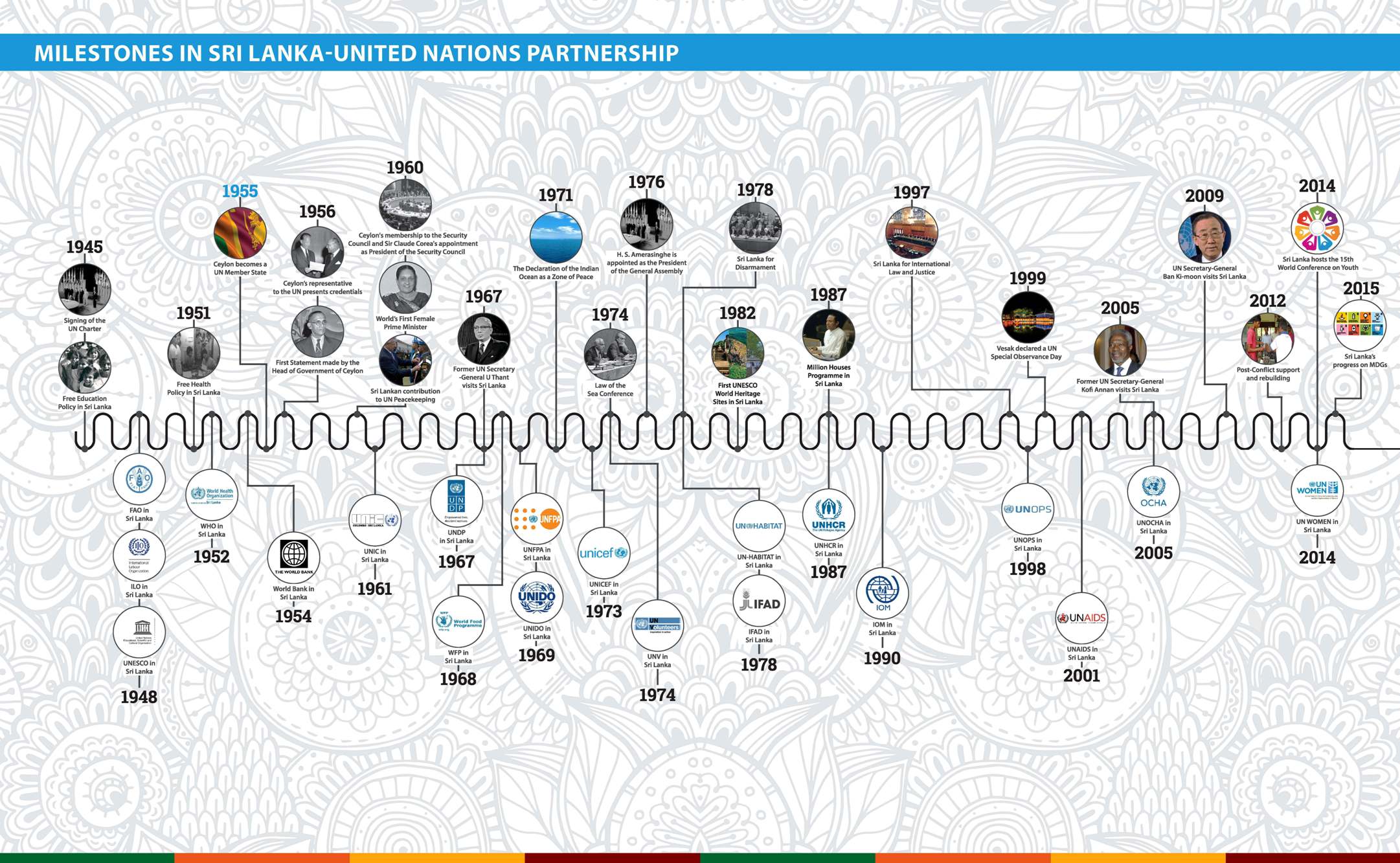
Milestones in Sri Lanka - UN Partnership - Courtesy UN in Sri Lanka website
Milestones in Sri Lanka – UN Partnership – Courtesy UN in Sri Lanka website

මහ ලේකම්වරයා යටතේ ක‍්‍රියාත්මක වන මේ පිරිස ඔහු හරහා සාමාජික රාජ්‍ය 193ටම වගකීමට බැඳී සිටිනවා. වාර්ෂිකව එජා නඩත්තුවට සාමාජික මුදල් ගෙවන ශ‍්‍රී ලංකාව ඇතුළු සාමාජික රටවලට මේ නිලධාරීන් නිශ්චිත උපදේශන හා සම්බන්ධීකරණ සේවා සපයනවා.

ජාත්‍යන්තර සිවිල් සේවයට බඳවා ගන්නේ එජා සංවිධානයේ නිල භාෂා 6න් (ඉංග‍්‍රීසි, ප‍්‍රංශ, අරාබි, රුසියානු, චීන හා ස්පාඤ්ඤ) අඩු තරමින් එකක් හරිහැටි ප‍්‍රගුණ කළ, නිසි සුදුසුකම් සපුරා ගත් අයයි. ලෝකයේ ඕනෑම සාමාජක රටක පුරවැසියන්ට මේ තනතුරුවලට ඉල්ලූම් කළ හැකියි.

මේ කාර්ය මණ්ඩලය, එජා සමුළුවට සහභාගිවීමට යන තානාපති හා රාජ්‍ය නිලධාරීන්ට වඩා වෙනස්. ඔවුන් තනි රටකට නොව සියලූ සාමාජික රටවලට සේවය කිරීමටත්, එජා ප‍්‍රඥප්තිය හා මූලධර්ම සුරැකීමටත් බැඳී සිටිනවා.

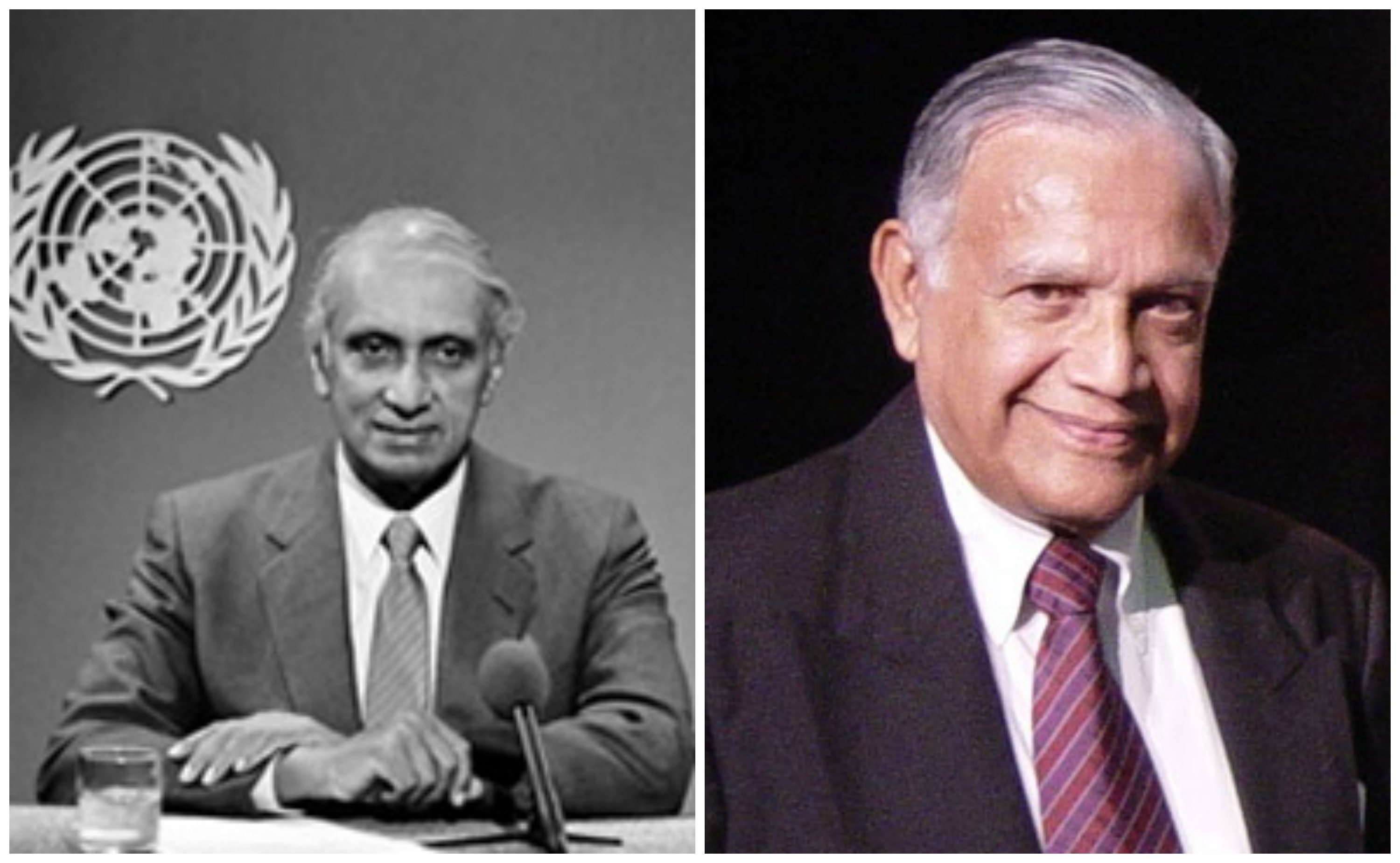
1955දී ශ‍්‍රී ලංකාව එජා සාමාජිකත්වය ලබන්නටත් පෙර පටන් කෘතහස්ත ලාංකිකයෝ එජා කාර්ය මණ්ඩලයට බැඳී සේවය කරමින් සිටියා. 1952-59 වකවානුවේ එජා ආර්ථික හා සමාජයීය කොමිසමේ (ECOSOC) උසස් නිලධාරියකු වූ ධනපාල සමරසේකර එක් උදාහරණයක්. ආසියානු හා අප‍්‍රිකානු රාජ්‍ය නායකයන්ගේ මුල්ම සමුළුව 1955 අපේ‍්‍රල් මස ඉන්දුනීසියාවේ බන්දුන් නුවර පැවති විට එජා සංවිධානය නියෝජනය කරමින් සහභාගි වූයේ ඔහුයි.
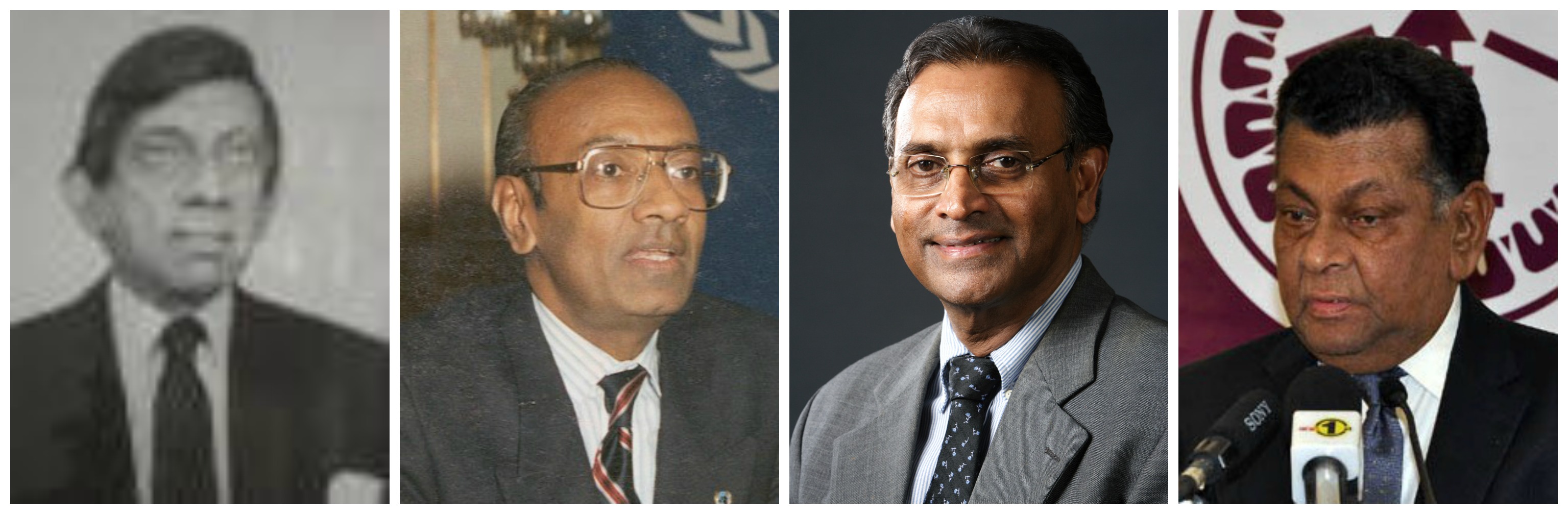
L to R - Neville Kanakaratne, Nandasiri Jasentuliyana, Jayantha Dhanapala, Gritakumar Chitty
L to R – Neville Kanakaratne, Nandasiri Jasentuliyana, Jayantha Dhanapala, Gritakumar Chitty

කේම්බි‍්‍රජ් සරසවියෙන් නීති උපාධි ලැබූ නීතිඥ නෙවිල් කනකරත්න මුල් යුගයේ එජා කාර්ය මණ්ඩලයට බැඳුණු දක්ෂයෙක්. 1957-60 වකවානුවේ එජා මූලස්ථානයේ ලංකා දූත කාර්යාලයේ නීති උපදේශක වූ ඔහු 1960දී නීති හා දේශපාලන උපදේශකයකු ලෙස එජා කාර්ය මණ්ඩලයට එක් වුණා. 1960-64 කාලයේ එජා සාම සාධක හමුදාවලට නීති උපදෙස් ලබා දුන් ඔහු දෙවන මහ ලේකම් වූ ඩැග් හැමර්ෂල්ඞ්ගේ නීති උපදේශකවරයා ද වූවා.

1961 සැප්තැම්බරයේ කොංගෝවේ ගැටුම් ඇවිලී ගොස් සටන් විරාමයක් සඳහා සාකච්ඡා කරන්නට මහ ලේකම් අප‍්‍රිකාවට ගියා. ඔහු සමග කනකරත්න ද යාමට නියමිතව සිටියත් අවසන් මොහොතේ තමාට වඩා හොඳින් ප‍්‍රංශ බස කතා කරන නීති විශාරදයකුට තැන දී කනකරත්න නතර වුණා. (අප‍්‍රිකාවේ සමහර රටවල දෙවන බස ප‍්‍රංශ බසයි.)

1961 සැප් 18 වැනිදා මහලේකම්වරයා සහ තවත් 15 දෙනකු රැගත් එජා ගුවන් යානය දැන් සැම්බියාවට අයත් න්දෝලා නම් ස්ථානයේදී කඩා වැටුණා. ඔවුන් සියලූ දෙනා මිය ගියා. මේ අනතුර අහම්බයක් ද හිතාමතා කළ දෙයක් ද යන්න ගැන අද දක්වා විවාද කැරෙනවා.

කෙසේ වෙත්ත යාන්තමින් බේරුණු කනකරත්න පසු කලෙක අමෙරිකා එක්සත් ජනපදයේ, රුසියාවේ හා ඉන්දියාවේ ශ‍්‍රී ලංකා තානාපතිවරයා ලෙස අතිශය වගකීම් සහගත තනතුරු දැරුවා.

1978දී අමෙරිකාවේ ජෝර්ජ් වොෂිංටන් සරසවිය විසින් ඔහුට ගෞරව ආචාර්ය උපාධියක් පිරිනමනු ලැබුවා. ඉතා චතුර හා සිත් ගන්නා සුලූ කථිකයකු වූ ඔහු යම් දිනෙක ලෝක පාර්ලිමේන්තුවක් බිහි වූවොත් එහි කතානායක වීමට සුදුසු යැයි සරසවියේ අධිපතිවරයා එදා ප‍්‍රකාශ කළා.

එක්සත් ජාතීන්ගේ ඉහළ තනතුරු හොබවමින් බුද්ධිමය නායකත්වයක් ලබා දුන් තවත් කීර්තිමත් ලාංකික නීතිඥයකු නම් නන්දසිරි ජසෙන්තුලියන. 1965 සිට 1999 දක්වා එජා කාර්ය මණ්ඩලයේ සිටි ඔහු 1988-99 වකවානුවේ ඔස්ටි‍්‍රයාවේ වියානා නුවර පිහිටි අභ්‍යවකාශය පිළිබඳ එජා කාර්යාලයේ (UN Office for Outer Space Affairs) අධ්‍යක්ෂවරයා වූවා.

අභ්‍යවකාශ නීතිය ගැන ලොව ප‍්‍රමුඛ පෙළේ විද්වතකු වන ඔහු ජාත්‍යන්තර මට්ටමේ අභ්‍යවකාශ සහයෝගිතා සමුළු ගණනාවක් මෙහෙය වූ අතර ඒ ගැන පොත්පත් හා නිබන්ධන රැසක් ලියා තිබෙනවා.

අමෙරිකාවේ ජාතික අභ්‍යවකාශ සංගමය (National Space Society) මීට වසර කිහිපයකට පෙර අභ්‍යවකාශ ගවේෂණයට සම්බන්ධ ලෝකයේ ප‍්‍රමුඛතම චරිත 100ක් නම් කළා. යූරි ගගාරීන්, නීල් ආම්ස්ට්‍රෝං වැනි පුරෝගාමීන් මෙන්ම තාක්ෂණවේදීන් හා අනාගතවේදීන් අයත් වූ මේ ලැයිස්තුවේ සිටි එකම ලාංකිකයා වූයේ නන්දසිරි ජසෙන්තුලියනයි.

ඔහු අභ්‍යවකාශය පොදු මානව උරුමයක් ලෙස තහවුරු කරන්නට නීතිමය රාමුව සකසන විට තවත් ලාංකිකයන් දෙදෙනෙක් සාගරය ලෝක දායාදයක් ලෙස පිළිගැනීම සඳහා ලෝක සාගර නීතිය (Law of the Sea) බිහි කිරීමට මුල් තැන ගත්තා.

එයින් පළමුවැන්නා 1973-80 වකවානුවේ ලෝක සාගර නීති සමුළුවේ සභාපති ලෙස ක‍්‍රියා කළ හැමිල්ටන් ෂර්ලි අමරසිංහයි. 1967-78 කාලයේ ශ‍්‍රී ලංකාවේ නිත්‍ය නියෝජිතයා ලෙස එජා මූලස්ථානයේ ඔහු කටයුතු කළ සැටි ගිය සතියේ අප සඳහන් කළා.
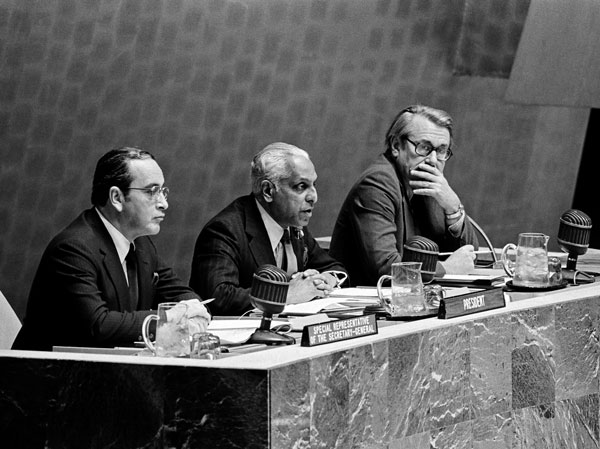
Hamilton Shirley Amerasinghe (centre) chairing UN Law of the Sea conference, March 1980. UN Photo

1975-80 කාලයේ අමරසිංහ සමග එකට වැඩ කළ ලාංකික නීතිඥ ග‍්‍රීතකුමාර් චිටි (Gritakumar Chitty) වසර 36ක් පුරා එජා සාගර නීති ක‍්‍රියාත්මක කිරීමට නායකත්වය සැපයුවා. එයින් අන්තිම වසර කිහිපය ඔහු ජර්මනියේ හැම්බර්ග් නුවර ජාත්‍යන්තර සාගර නීති අධිකරණයේ (International Tribunal for the Law of the Sea) රෙජිස්ට‍්‍රාර්වරයා ලෙස ක‍්‍රියා කළා.

මේ අනුව බලන විට අභ්‍යවකාශයේත්, සාගරයේත් ජාත්‍යන්තර සහයෝගිතාව ප‍්‍රවර්ධනය කිරීමට එක්සත් ජාතීන්ගේ කාර්ය මණ්ඩලයේ ලාංකිකයන් වැදගත් බුද්ධිමය දායකත්වයක් සපයා ඇති බව ලාංකික මාධ්‍යවේදී තලිෆ් ඞීන් (Thalif Deen) කියනවා. 1973 සිට නිව්යෝක් නුවර වෙසෙන ඔහු දශක හතරකට වැඩි කාලයක් එජා මූලස්ථානයේ සිදුවීම් මෙරට හා ලෝක මාධ්‍යවලට වාර්තා කරන්නෙක්.

මානව සංවර්ධනය හා ලෝක සාමය සඳහාද එක්සත් ජාතීන්ගේ විවිධ කටයුතුවලට ලාංකික විද්වත් දායකත්වය ලැබී ඇත්තේ රටේ ජනගහනයේ ප‍්‍රමාණයට සමානුපාතිකව ඉහළ මට්ටමකින්.

Gamani Corea (left) and Justice Christopher G Weeramantry

1974-84 වකවානුවේ වෙළෙඳාම හා සංවර්ධනය පිළිබඳ එජා සමුළුව (UNCTAD) මහ ලේකම්වරයා ලෙස ආර්ථික විශේෂඥ ආචාර්ය ගාමණී කොරයා කළ සුවිශේෂී කාර්යභාරය ගැන 2013 නොවැම්බරයේ සම්පූර්ණ කොලමක් හරහා මා සිහිපත් කළා.

එජා පවුලටම අයත්, හේග් නුවර පිහිටි ජාත්‍යන්තර අධිකරණයේ විනිසුරුකරුවකු ලෙස 1991-2000 වකවානුවේ ආචාර්ය ක‍්‍රිස්ටෝෆර් වීරමන්ත‍්‍රී ක‍්‍රියා කළා. එයින් 1997-2000 අතර කාලයේ ඔහු එහි උප සභාපතිවරයා වූවා. සංකීර්ණ ලෝක ප‍්‍රශ්න ගැන විද්වත් හා තුලනාත්මක නඩු තීන්දු ලබා දීම ගැන ඔහු මහත් ගෞරවයට පාත‍්‍ර වූ කෙනෙක්.

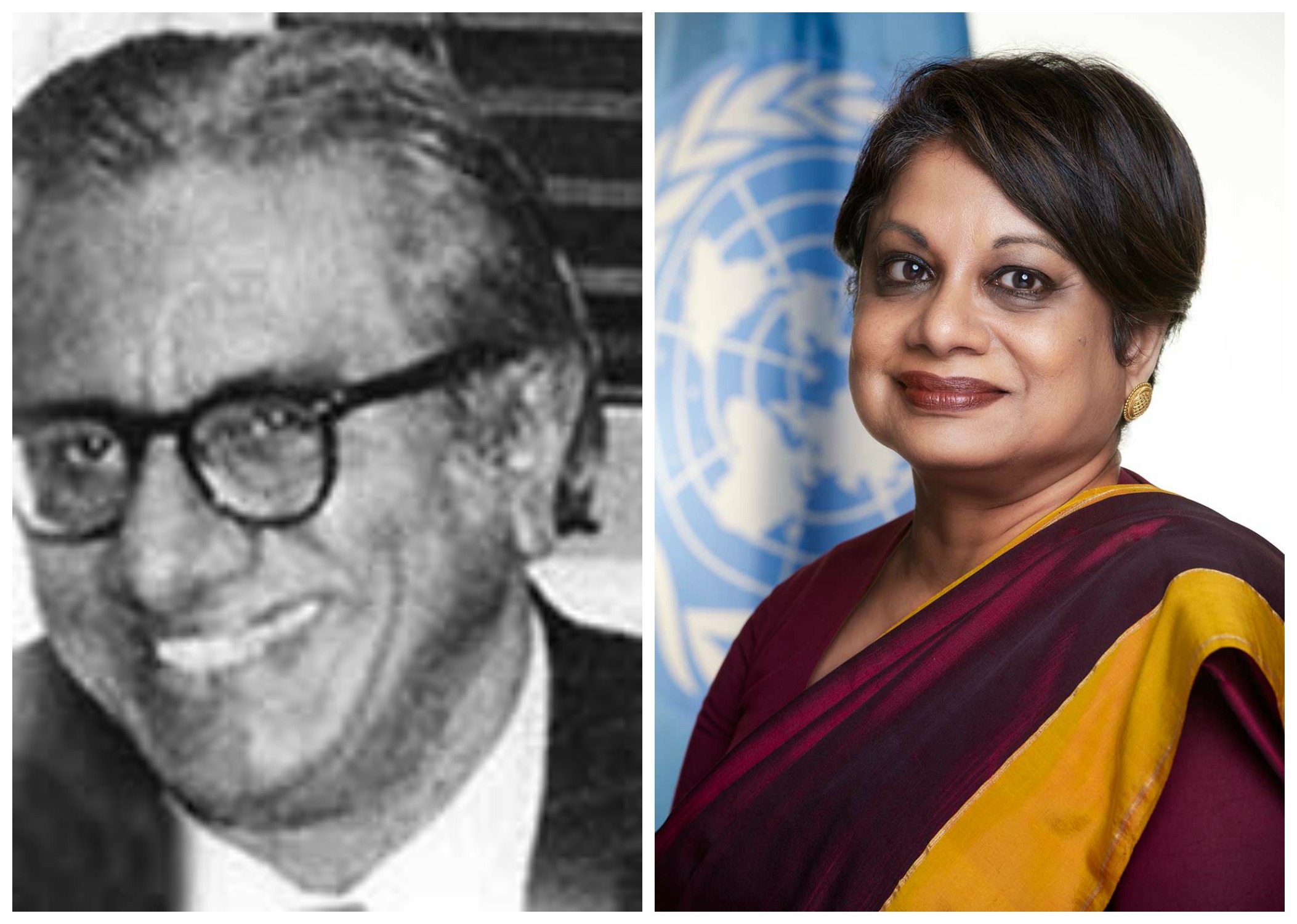
Raju Coomaraswamy and his daugher Radhika Coomaraswamy

UNDP ආයතනයේ ආසියානු ප‍්‍රධානියා බවට මුලින්ම පත් වූ ලාංකිකයා රාජේන්ද්‍ර (රාජු) කුමාරස්වාමි (1915-1981). ඔහුත් මෙරට සිවිල් සේවයේ සිට පසුව ජාත්‍යන්තර සිවිල් සේවයට ගිය දක්ෂයෙක්.

ඔහුගේ දියණිය නීති විශාරද ආචාර්ය රාධිකා කුමාරස්වාමි. ඇයද පසු කලෙක එජා මූලස්ථානයේ ඉහළ තනතුරකට පත් වුණා. ඒ යුද්ධ හා ළමයින් පිළිබඳ විශේෂ නියෝජියා ලෙසින්. 2006-2012 එම තනතුරේ ක‍්‍රියා කරද්දී ගැටුම් හා ප‍්‍රචණ්ඩත්වය ළමයින්ට බලපාන ඍජු හා වක‍්‍ර ආකාරයක් ගැන අය ලෝක අවධානයට යොමු කළා.

ඇන්ඩෲ ජෝසෆ් (Andrew J. Joseph) මුල් යුගයේ එජා සේවයට ගිය තවත් ලාංකික සිවිල් සේවකයෙක්. 1959දී මුලින් ලෝක සෞඛ්‍ය සංවිධානයට බැඳුණු ඔහු පසුව UNDP ආයතනයට මාරු වුණා. සමස්ත ආසියාවේම ඹභෘඡු ප‍්‍රධානියා ලෙස වසර ගණනක් කටයුතු කළ ඔහු පසුව ලෝක ව්‍යාප්ත මට්ටමින් UNDP දෙවැනි ප‍්‍රධානියා ලෙස සේවය කොට විශ‍්‍රාම ගියා.

එජා තනතුරු බැබල වූ තරු අතරට ජයන්ත ධනපාලගේ නමත් එකතු වනවා. ඔහු ලංකා විදේශ සේවයේ වෘත්තීය තානාපති නිලධාරියෙක්. ලන්ඩන්, බේජිං, නවදිල්ලිය, ජිනීවා හා වොෂින්ටන් නුවර යන ස්ථානවල ලංකා තානාපති කාර්යාලවල සේවය කළා. ඔහු ලෝක කීර්තියට පත්වූයේ 1995දී න්‍යෂ්ටික අවි ප‍්‍රචලිතවීම වැළැක්වීම පිළිබඳ එක්සත් ජාතීන්ගේ සමුළුව මෙහෙයවූ එහි සභාපතිවරයා ලෙසයි.

යුද අවිහරණය ගැන විශේෂඥයකු වන ඔහු 1998-2003 කාලයේ එක්සත් ජාතීන්ගේ නිරායුධකරණ කාර්යාලයේ (UN Department of Disarmament) අධිපතිවරයා වූවා.

එක්සත් ජාතීන්ගේ ධුරාවලියෙහි යාමට හැකි ඉහළම තුන්වන මට්ටමට (Under-Secretary-General) ළඟා වූ ලාංකිකයන් සිවු දෙනකු සිටිනවා. එනම් ගාමනී කොරයා, ඇන්ඩෘ ජෝසෆ්, රාධිකා කුමාරස්වාමි සහ ජයන්ත ධනපාලයි.

ධනපාල 2006දී මහ ලේකම් තනතුර සඳහා ඉදිරිපත් වූවත් අවශ්‍ය තරම් සහයෝගය නොලැබීම නිසා පසුව තරගයෙන් ඉවත් වුණා.

එක්සත් ජාතීන්ගේ ආයතනික ව්‍යුහය තුළ විද්වත් මට්ටමින් හා පරිපාලන මට්ටමින් සේවය කළ තවත් ලාංකිකයන් සිය ගණනක් සිටිනවා. තමා උපන් රට නියෝජනය කරවා වෙනුවට තම හැකි පමණින් ලෝක සාමය, සංවර්ධනය හා සහයෝගිතාව සඳහා දායක වූ ඔවුන් සැම මේ මොහොතේ සිහිපත් කිරීම වටිනවා.

1974-1988 කාලයේ ජිනීවා නුවර එජා සංවිධාන සමග වැඩ කළ ලාංකික නීතිඥ ලක්ෂ්මන් කදිරගාමර් එම ආයතන ව්‍යුහය ගැන මනාව දැන සිටියා. ඔහු මුලින් ලෝක කම්කරු සංවිධානයේ (ILO) උපදේශකයකු වුණා. පසුව ලෝක බුද්ධිමය දේපළ සංවිධානයේ (WIPO) ආසියා කලාපීය අධ්‍යක්ෂවරයා වුණා.

Lakshman Kadirgamar and the 1995 book on United Nations in Sri Lanka, written by Nalaka Gunawardene for UN Information Centre, Colombo

එක්සත් ජාතීන් හා ශ‍්‍රී ලංකාව ගැන 1995දී මා ලියූ ඉංග‍්‍රීසි පොතකට පෙරවදන සැපයුවේ ඒ වන විට ශී‍්‍ර ලංකා විදේශ අමාත්‍යවරයා බවට පත්ව සිටි කදිරගාමර් මහතායි. එහි ඔහු මෙසේ ප‍්‍රකාශ කළා.

‘මුල් යුගයේ පටන්ම මනා ජාත්‍යන්තර දැක්මක් සහිතව ලෝක ප‍්‍රජාව සමග ගනුදෙනු කරන්නට ලංකාවේ රජයන් ක‍්‍රියා කොට තිබෙනවා. එක්සත් ජාතීන්ගේ ප‍්‍රඥප්තිය හා සෙසු මූලධර්ම ගැන අවබෝධයකින් යුතුව කටයුතු කිරීම නිසා ශ‍්‍රී ලංකාව හා එක්සත් ජාතීන්ගේ ආයතන සමුදාය අතර කවදත් සමීප බැඳීමක් පැවතුණා. මෙරට රජයන් වෙනස් වූවද බැඳීම දිගටම පැවතීම විශේෂයි. එක්සත් ජාතීන්ගේ දායකත්වය අපට උපකාර වනවා මෙන්ම අපේ දක්ෂයන්ගේ දායකත්වය එක්සත් ජාතීන්ට මහත් සවියක් වනවා. මෙය අන්‍යොන්‍ය සහයෝගිතාවේ ප‍්‍රතිපූර්තියක් බඳුයි.’

Message from Foreign Minister Lakshman Kadirgamar to United Nations in Sri Lanka book written by Nalaka Gunawardene in 1995

Exploring Open Data and Open Government in Sri Lanka

An Open Dialogue about Open Data

Today, I gave the opening speech at an introductory seminar on ‘open data’ held at the Sri Lanka Press Institute, Colombo, on 15 Oct 2015.

Organised by InterNews and Transparency International Sri Lanka, the seminar explored the concepts of ‘open data’ and ‘big data’ and discussed that role civil society, media and technologists can play in advocating to government to open up its data, enabling a culture of transparency and open government.

An Open Dialogue on Open Data - 15 Oct 2015 Coloombo - L to R - Sriganesh Lokanathan, Nalaka Gunawardene, Sanjana Hattotuwa [Photo by Sam de Silva]
An Open Dialogue on Open Data – 15 Oct 2015 Coloombo – L to R – Sriganesh Lokanathan, Nalaka Gunawardene, Sanjana Hattotuwa [Photo by Sam de Silva]
My premise was that while the proliferation of digital tools and growth of web-based data storage (the cloud) opens up new possibilities for information generation and sharing, South Asian societies need to tackle institutional and cultural factors before democratised and digital data can really transform governance and development. Our countries must adopt more inclusive policies and practices for public sharing of scientific and other public data.

This resonates with a call by the United Nations for a ‘data revolution for development’. I cited the UN Secretary-General’s Independent Expert Advisory Group on a Data Revolution for Sustainable Development (IEAG) highlighted this in a report titled  A World That Counts: Mobilising The Data Revolution for Sustainable Development (Nov 2014).

A World that Counts...
A World that Counts…

I also referred to the Sustainable Development Goals (SDGs) that were adopted by member states of the UN at a heads of state level summit in New York on 25-27 September 2015. Underpinning all 17 SDGs is an explicit recognition of the value of data for development — to better inform decisions, and to better monitor progress.

Sri Lanka’s President Maithripala Sirisena addressed the Summit, and officially committed Sri Lanka to the SDGs. I argue that implicit in that commitment is a recognition of data for development and open data policies. We now need to ask our government to introduce a government-wide policy on data collection, storage and sharing. In short, it must open up!

This was my open call to the President to open up:

Open Your Govt's Data, Mr President! Hope you don't give us HAL's famous answer...
Open Your Govt’s Data, Mr President! Hope you don’t give us HAL’s famous answer…

Sri Lanka has taken tentative steps towards open data. In 2013, the Open Data initiative of Government started making some official datasets freely available online. It focuses on machine-readable (well-structured and open) datasets.

I quoted from my own recent op-ed published in Daily Mirror broadsheet newspaper:

Daily Mirror, 14 Sep 2015: Beyond RTI: Moving to Open Data and Open Govt. by Nalaka Gunawardene

After many years of advocacy by civil society, Sri Lanka will soon adopt a law that guarantees citizens’ Right to Information (RTI). It has recently been added to the Constitution as a fundamental right.

Passing the RTI law is only a beginning — institutionalising it requires much effort, considerable funds, and continued vigilance on civil society’s part.

RTI is Coming: Are We Ready? My question to Lankan civil society and media

As champions of RTI, media and civil society must now switch roles, I said. While benefiting from RTI themselves, they can nurture the newly promised openness in every sphere, showing citizens how best to make use of it. Reorienting our public institutions to a new culture of openness and information sharing will be an essential step.

Here is my full PPT:


සිවුමංසල කොලූගැටයා #239: ශ‍්‍රී ලංකාවේ ස්මාට් නගර බිහි කරන්නට අප සූදානම්ද?

Smart city visualisation

The term ‘smart city’ refers to urban systems, and not to the smartness of residents. In fact, there is no universal definition of smart cities: it can mean smart utilities, smart housing, smart mobility or smart design.

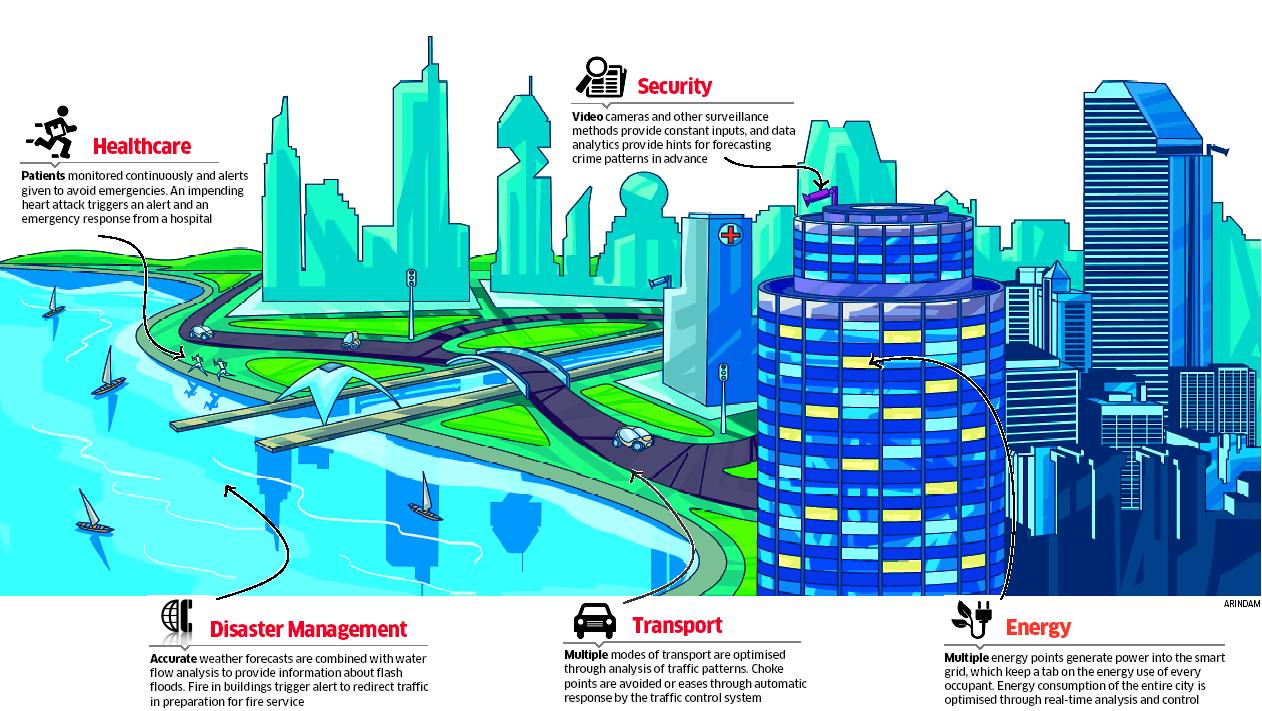
Smart cities use information and communications technologies (ICTs) as their principal infrastructure. These become the basis for improving the quality and performance of urban services, reducing costs and resource consumption, and for engaging citizens more effectively.

ICTs – ranging from automatic sensors to data centres — would create ‘feedback loops’ within the complex city systems. If processed properly, this flow of data in real time can vastly improve the design of “hard” physical environment and the provision of “soft” services to citizens.

In this week’s Ravaya column, (in Sinhala, appearing in issue of 4 Oct 2015), I explore the concept of smart cities, which the new government of Sri Lanka wants to develop.

It is a formidable task. India in 2014 announced an ambitious programme to create 100 smart cities. Under this, state capitals, as well as many tourist and heritage cities are to receive funding for upgrading their infrastructure. But Prime Minister Modi and his technocrats have been struggling since then to explain just what they mean by smart cities.

I argue that smart cities need empowered people and engaged city administrators. I have argued in earlier in this column, concrete and steel do not a city make. Likewise, ICT enabled smart infrastructure alone will not create smart cities – unless the human factor is well integrated.

Smart City illustration by Times of India

ස්මාට් නගර ගැන කතාබහක් මතුවෙමින් තිබෙනවා. යෝජිත බස්නාහිර මෙගා නගරය (Western Regional Megapolis) ස්මාට් නගර ආකෘතියේ එකක් වනු ඇතැයි ද කියනවා.

ඒ අතර නගර සැලසුම් අමාත්‍ය රවුෆ් හකීම් සැප්තැම්බර් මුලදී කීවේ මහනුවර මෙරට මුල්ම ස්මාට් නගරය කිරීමට තමන්ට ඕනෑ බවයි.

ස්මාට් නගර යනු මොනවාදැයි හරිහැටි දැනගෙන මේ සංවාද කිරීම වැදගත්.

ඉංග‍්‍රීසියෙන් Smart Cities කියන්නේ ඩිජිටල් තාක්ෂණය හෙවත් තොරතුරු හා සන්නිවේදන තාක්ෂණ (ICT) සූක්ෂම ලෙස යොදා ගනිමින් නාගරික සේවාවල තත්ත්වය හා ප‍්‍රමිතිය උසස් කරන නාගරික ප‍්‍රදේශවලටයි.

ඒ හරහා සම්පත් හා බලශක්ති පරිභෝජනය කාර්යක්ෂම කර ගන්නා අතර වියදම් අඩු කර ගන්නවා. නාගරික කළමනාකරණය විද්වත් පදනමක් මත කරන ගමන් ජනතා සහභාගීත්වය ද වැඩි කරනවා. අප කවුරුත් පතන්නේ මෙවැනි නගර තමයි!

Smart Cities යන්නට වඩා සුදුසු සිංහල යෙදුම කුමක්ද?

මීට සති කිහිපයකට පෙර මේ ප‍්‍රශ්නය මා ෆේස්බුක් ජාලයේ මතු කළා. යෝජනා ගණනාවක් ලැබුණා. සූක්ෂ්ම නගර, බුද්ධිමත් නගර හා සවිඥානික නගර ආදී වශයෙන්.

ආචාර්ය සුනිල් විජේසිරිවර්ධන නුවණැති නගර යන්නත්, ආචාර්ය සුමනසිරි ලියනගේ දැනුමැති නගර යන යෙදුමත් යෝජනා කළා. මේ අතර රෙන්ටන් ද අල්විස් කීවේ උදාර නගර හෝ නැණැති නගර උචිත බවයි. ආචාර්ය හර්ෂණ රඹුක්වැල්ල සිතන්නේ ප‍්‍රබුද්ධ නගර වඩා හොඳ බවයි.

බ්ලොග් ලේඛක අජිත් පැරකුම් ජයසිංහ සංවාදයට එක් වෙමින් කීවේ මෙයයි: ‘‘ස්මාට් කියන වචනය දැන් බොහෝ දුරට සිංහල වෙලා නිසා මෙයට වෙනත් වචනයක් හදන්න උත්සාහ නොකර ස්මාට් පුරවර කියන යෙදුම හොඳයි.’’

ස්මාට් නගර ගැන පුළුල්ව සංවාද කිරීම අවශ්‍යයි. පණ්ඩිත යෙදුමක් වෙනුවට කාටත් පහසුවෙන් තේරුම් ගත හැකි සම්මත සිංහල වචනයක් එකඟ විය හැකි නම් හොඳයි. එතෙක් ස්මාට් නගර හා ස්මාට් පුරවර යන්න මා යොදා ගන්නවා.

Smart Cities image

ස්මාට් නගරවලට තනි නිර්වචනයක් නැහැ. නගරයක් ‘ස්මාට්’ වන්නේ යටිතල සැලසුම් පහසුකම්, ප‍්‍රවාහන සේවාවන් හෝ සැලසුම්කරණය අතින් විය හැකියි. පොදු සාධකය වන්නේ සංකීර්ණ පද්ධතිවල ක‍්‍රියාකාරීත්වය නිරතුරුව හා සජීවී ලෙසින් නිරික්සමින් නඩත්තු කිරීමේ තීරණ හා පියවර ක්ෂණිකව ගනිමින් සිටීමයි.

මෙයට ඉංග‍්‍රීසියෙන් feedback loop යයි කියනවා. නිරතුරු ප‍්‍රතිශෝෂණය හරහා ප‍්‍රමිතීන්ට අනුකූලව සේවා ප‍්‍රශස්තව පවත්වා ගැනීම යයි අපට සිංහලෙන් කිව හැකියි.

තාක්ෂණික හෝ පාරිභාෂික යෙදුම්වලට වඩා වැදගත් වන්නේ සංකල්පීය නිරවුල් බවයි. කොන්ක‍්‍රීට් හා වානේ ගොඩක් එක් තැන් කළ පමණට කිසිදිනෙක ස්මාට් නගර බිහි වන්නේ නැහැ. ප‍්‍රවේශම් විය යුතු තැනත් එතැනයි. ජනතා සිතුම් පැතුම් නොතකා තැනූ හම්බන්තොට වැනි නගර ස්මාට් නගරවල විරුද්ධ පදය වැනියි.

ස්මාට් නගරවල මුඛ්‍ය අරමුණ එහි සියලූ නේවාසික වැසියන්ට හා එයට පිටතින් පැමිණෙන අයට ආයාසය හා වියදම් අඩු කාර්යක්ෂම සේවා සපයාදීමයි. නගරයක විසීම හෝ නගරයකට යම් කාරියක් සඳහා යාම වදයක් නොවී ප‍්‍රමෝදයක් බවට පත් කිරීමයි.

නාගරීකරණය නොනැවතී ඉදිරියට යන ලෝක ව්‍යාප්ත සංසිද්ධියක්. 2010දී අප වැදගත් කඩඉමක් පසු කළා. ලෝක ඉතිහාසයේ මුල් වතාවට ලොව ජනගහනයෙන් අඩක් (50%) නගරවල වෙසෙන බව සංඛ්‍යා ලේඛන තහවුරු කළා.

කලාපීය වශයෙන් ගත් විට දකුණු ආසියාවේ දැනට නාගරික ජන ප‍්‍රතිශතය 30%යි. එහෙත් එය සීග‍්‍රයෙන් ඉහළ යමින් තිබෙනවා. ඉදිරි දශකවල (2050 වනවිට) ඉන්දියාවේ පමණක් නාගරික ජනගහනය තවත් මිලියන 404ක් එකතු වෙතැයි ගණන් බලා තිබෙනවා.

මේ සඳහා වැඩිපුර දායක වන්නේ ග‍්‍රාමීය පෙදෙස්වලින් නගරවලට ඇදී එන ජන සංක‍්‍රමණයයි. පහසුකම් හා අවස්ථා සොයාගෙන එසේ පැමිණීම තහනම් කරන්නට ප‍්‍රජාතන්ත‍්‍රවාදී රටවලට බැහැ. කළ හැකි එකම දෙය එය දරාගන්නට සැලසුම් හා ආයෝජන කිරීමයි.

14 Sep 2015: World Bank Report on Leveraging Urbanization in South Asia

ස්මාට් නගර සන්නිවේදන තාක්ෂණය යොදා ගන්නේ දත්ත මත පදනම් වී සජීව ලෙසින් තීරණ ගන්නටග ඉන්ටර්නෙට් පරිනාමයේ ඊළඟ අදියර නම් ස්වයංක‍්‍රීයව අවට පරිසරය නිරීක්ෂණය කරමින්, දත්ත රැස් කරමින්, ඒවා එසැනින් හා නිරතුරුව ඉන්ටර්නෙට් හරහා යම් නිශ්චිත කේන්ද්‍රයකට සපයන සංවේදක (Sensors) ප‍්‍රචලිත වීමයි. මෙය දැනටමත් ඇරැඹී තිබෙනවා.

ඉදිරි වසර කිහිපයේ මේ ප‍්‍රවණතාව අධිවේගීව වර්ධනය වනු ඇති. ඉන්ටර්නෙට් මාධ්‍යය ස්වයංක‍්‍රීයව අපේ ලෝකය ගැන සංවේදී වීම හඳුන්වන්නේ Internet of Things (IOT) කියායි. මෙහි මූලික පදනම මුළුමනින් යන්ත‍්‍ර අතර කැරෙන සන්නිවේදනය හෙවත් තොරතුරු හුවමාරුවයි. (Machine-to-machine communications, M2M).

මේ හැම සංවේදකයටම එයට ආවේණික වූ අංකයක් (IP Address) තිබෙන නිසා එය නිශ්චිතව හඳුනා ගත හැකියි. සංවේදක ප‍්‍රමාදයකින් තොරව සජීවී ලෙසින් සපයන දත්ත හරහා යම් තැනෙක, යම් ප‍්‍රවාහයක අලූත්ම තත්ත්වය දුර සිට නිරීක්ෂණය කළ හැකියි. (මේ සංවේදක CCTV කැමරා සමග පටලවා නොගන්න. අප මෙහිදී කතා කරන්නේ ක්ෂුද්‍ර පරිපථ මට්ටමේ සියුම් උපාංග ගැනයි.)

මෙබදු සංවේදක දැනටමත් විශාල පරිමාණයෙන් දකුණු කොරියාව, ඩෙන්මාර්කය, ස්විට්සර්ලන්තය, ඇමරිකා එක්සත් ජනපදය හා ජර්මනිය වැනි රටවල නවීන නගරවල හා සමහර කර්මාන්තවල භාවිත වනවා.

සංවේදකවලට අමතරව හැම වස්තුවකටම එයට ආවේණික අනන්‍යතාවක් ලබාදීම ද තාක්ෂණික ප‍්‍රගමනයේ තවත් අරමුණක්. මේ සඳහා බාර්කෝඞ්, QR කෝඞ් ආදී තාක්ෂණ දැනටමත් බහුලව යොදා ගන්නවා.

නගරයක පොදු අවකාශයේ ඇති හැම ලයිට් කණුවක්, ටෙලිෆෝන් කනුවක්, කසල බාල්දියක්, පොදු දුරකතනයක් ආදිය මෙසේ සංවේදක හරහා අනන්‍යතාවට ලක් කළ විට ඒවායේ තත්ත්වය දුර සිට විමර්ෂනය කළ හැකියි. ක‍්‍රියාකාරීත්වයේ ගැටලූවක් මතු වූ විට හරියටම ප‍්‍රශ්නකාරී තැන ඉක්මනින් හඳුනා ගත හැකියි. ඉලක්කගතව ප‍්‍රශ්න කඩිනමින් විසඳිය හැකියි.

බලශක්ති අරපිරිමැසුම, පාරිසරික තත්ත්වය නිරීක්ෂණය, කසල කළමනාකරණය, ප‍්‍රවාහන පද්ධති ප‍්‍රශස්තිකරණය ආදී බොහෝ භාවිතයන්ට මේ තාක්ෂණය දැනටමත් සමහර දියුණු රටවල නගර යොදා ගන්නවා. අලූතෙන් බිහි වන ස්මාට් නගර මුල පටන්ම නිර්මාණය කැරෙන්නේ මේ තාක්ෂණය පදනම් කර ගෙනයි.

South Korea's Songdo is one of the world's first smart cities
South Korea’s Songdo is one of the world’s first smart cities

උදාහරණයක් නම් දකුණු කොරියාවේ සොංඩෝ (Songdo) ස්මාට් නගරය. අගනුවර සෝල් සිට කි.මි. 65ක් නිරිතදිගින් හෙක්ටාර් 600ක විසිරුණු මේ නගරය මුළුමනින්ම ස්වයං-සංවේදක මගින් නිරීක්ෂණය කැරෙන හා කළමනාකරණය කැරෙන ස්ථානයක්. තවමත් ඉදි වෙමින් පවතින මෙය ව්‍යාපාරික, නේවාසික හා පොදු පහසුකම් රැසකින් සමන්විත වනු ඇති.

එය මතු වන්නේ ඉන්චොන් (Incheon) නුවරට ආසන්නව මුහුද ගොඩ කර තනා ගත් බිම් පෙදෙසකයි. 2015 අගවන විට නිම කිරීමට නියමිත මෙහි වියදම ඩොලර් බිලියන 40ක්. තනිකරම පෞද්ගලික අංශයේ ආයෝජනයක්.

මෙසේ මුල සිටම සැලසුම් කොට අලූතෙන් ගොඩ නගන නගර ‘ස්මාට්’ කිරීම සාපේක්ෂව වඩා පහසුයි. එහෙත් ඓතිහාසිකව අක‍්‍රමිකවත් ලෙස වර්ධනය වූ හා අවුල් සහගතව පවතින නගරවලටත් නව තාක්ෂණයන් නැණවත්ව යොදා ගෙන ස්මාට් වීමට හැකියි.

පවතින නගර ස්මාට් නගර බවට පරිවර්තනය කිරීමේ දැවැන්ත ප‍්‍රතිසැලසුම්කරණ ව්‍යාපෘති අරඹා තිබෙනවාට උදාහරණ ගණනාවක් තිබෙනවා. නෙදර්ලන්තයේ ඇම්ස්ටර්ඩෑම්, ස්පාඤ්ඤයේ බාසෙලෝනා, ස්වීඩනයේ ස්ටොකෝම්, ඇමෙරිකාවේ කැලිෆෝනියා ජනපදයේ සැන්ටා කෲස් ඒ අතර වනවා.

ඉන්දියාව මුහුණ දි සිටින දැවැන්ත නාගරිකකරණ අභියෝගයට ප‍්‍රතිචාර දක්වමින් 2014 මැදදී අගමැති නරේන්ද්‍ර මෝඩිගේ රජය ප‍්‍රකාශ කළේ එළැඹෙන වසර කිහිපයේදී ස්මාට් නගර 100ක් ඇති කිරීමට ඉන්දියාව පියවර ගන්නා බවයි. ප‍්‍රාන්තවල අගනගර, සංචාරකයන්ට වැදගත් ඓතිහාසික නගර ආදිය මේ ලැයිස්තුවට අයත්. ඒ අතර අලූතින්ම සැලසුම් කොට මුල සිටම බිහි කරන නගරත් කිහිපයක් තිබෙනවා. http://smartcities.gov.in/

එහෙත් වසරකට පසුව මේ ස්මාට් නගර සඳහා නිශ්චිත ඉදිරි දැක්මක් ප‍්‍රකාශ කිරීම ඉන්දීය නිලධාරීන්ට අපහසු වී තිබෙනවා. අතිශයින් සංකීර්ණ නාගරික කළමනාකරණ ගැටලූවලට තනිකර තාක්ෂණික විසඳුම් නැහැ. සමාජ විද්‍යාත්මක උපදෙස් මත, ජනතා සිතුම් පැතුම්වලට සංවේදීවෙමින් ක‍්‍රමයෙන් කළ යුතු වෙනස්කම් රැසක් තිබෙනවා.

India's proposed smart cities
India’s proposed smart cities

හරිහැටි මූලික පහසුකම් පවා නොමැතිව ජීවත්වන මිලියන ගණන් ජනයා ඉන්දියානු නගරවල සිටිනවා. ස්මාට් නගර බිහි කිරීමේ අරමුණ සාර්ථක වන්නේ සානුකම්පිතව හා සංවේදීව නාගරික සංවර්ධනය කළ හොත් පමණයි. ඉන්දියාවේ සබුද්ධික හා සක‍්‍රීය සිවිල් සමාජ ක‍්‍රියාකාරිකයන් නිසා රජයකට හිතුමතේ ක‍්‍රියා කරන්නට බැහැ.

ස්මාට් නගරයක මූලිකම ගුණාංගය නම් ඉහළ කාර්යක්ෂමතාවයි. කාර්යක්ෂම නගර සැලසුම් කරන්නට හා කළමනාකරණය කරන්නට නම් නේවාසික ජනයා සහ දිනපතා නගරයට ඇදී එන ජනයාගේ චර්යා රටා සමීපව හඳුනාගත යුතුයි.

නගරයක වැඩිපුර ජනයා ගැවසෙන්නේ කුමන ස්ථානවල කිනම් වේලාවකද? සතියේ දිනවල හා සති අන්ත දිනවල වෙනස්කම් මොනවාද? මහාමාර්ග, බස් හා දුම්රිය නැවතුම් පොළවල්, කඩපිල් හා සාප්පු සංකීර්ණ මෙන්ම උද්‍යාන හා වෙනත් විවෘත ස්ථානවල දවසේ පැය 24 ගෙවී යන්නේ කුමන ජන රාශිගත වීම් අනුවද?

මෙකී නොකී තොරතුරු හැකිතාක් දැන ගැනීම සැලසුම්කරණයට උපකාර වනවා. මේවා ගැන දළ හැගීමක් නාගරික ජනයාට ඇතත් සැලසුම්කරණයට නිශ්චිත දත්ත හා ඒවායේ විචල්‍ය පරාසය (වෙනස් වන සැටි) දැනගැනීම අවශ්‍යයි.

මේ සඳහා මෙතෙක් යොදාගත්තේ විටින් විට කරන සමීක්ෂණයි. එහෙත් සමීක්ෂණවලට සංකීර්ණ පද්ධතියක සියලූ විස්තර හසු කර ගන්න බැහැ. මේ නිසා පරිගණක හා සන්නිවේදන තාක්ෂණ යොදාගනිමින් දැන් නව දත්ත විශ්ලේෂණ ක්ෂේත‍්‍රයක් බිහිවී තිබෙනවා.

ඉංග‍්‍රීසියෙන් Big Data යයි කියන මෙයට මහා දත්ත විශ්ලේෂණය යයි අපට කිව හැකියි. මේ ගැන වෙනම කොලමකින් ඉදිරි සතියක කතා කරමු.

ස්මාට්, සංවේදී හා සානුකම්පිත යන ගුණාංග සියල්ල කැටිකරගත් විට තමයි සැබෑ ස්මාට් නගර බිහිවන්නේ.


From MDGs to SDGs: Well done, Sri Lanka, but mind the gaps!

This op-ed appeared in Daily Mirror broadsheet newspaper in Sri Lanka on 1 October 2015.

From MDGs to SDGs:

Well done, Sri Lanka — but mind the gaps!

By Nalaka Gunawardene

Over the weekend of September 25 – 27, the United Nations headquarters in New York hosted the Sustainable Development Summit 2015. It was a high-level segment of the 70th UN General Assembly that was attended by many world leaders including Sri Lanka’s President Maithripala Sirisena.

Sustainable Development Summit 2015 Logo

The UN, which turns 70 this year, is once again rallying its member governments to a lofty vision and ambitious goal: to embark on new paths to improve the lives of people everywhere.

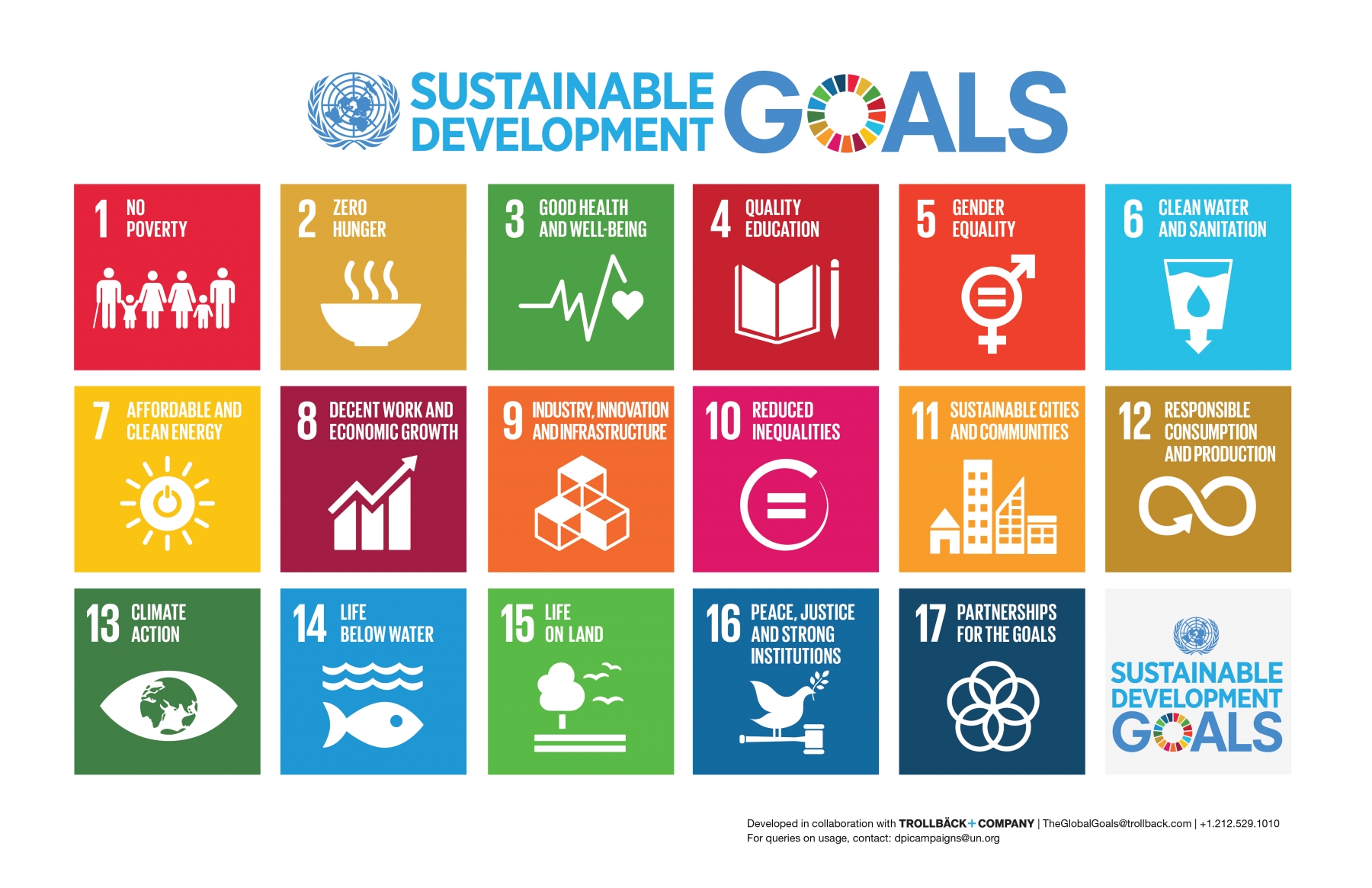
For this, the Summit adopted a new and improved global task-list called Sustainable Development Goals (SDGs). Prepared after two years of worldwide consultations, the SDGs offer a blueprint for development until 2030.

There are 17 SDGs tackling long-standing problems like ending poverty and reducing inequality to relatively newer challenges like creating more liveable cities and tackling climate change. These are broken down into 169 specific targets. Their implementation will formally begin on 1 January 2016.

SDGs in a nutshell - courtesy UN
SDGs in a nutshell – courtesy UN

The SDGs are to take over from the Millennium Development Goals, or MDGs, that have guided the development sector for 15 years. Sri Lanka was among the 189 countries that adopted the MDGs at the Millennium Summit the UN hosted in New York in September 2000. On that occasion, the country was represented by Lakshman Kadirgamar as Minister of Foreign Affairs.

The eight MDGs covered a broad spectrum of goals, from eradicating absolute poverty and hunger to combating HIV, and from ensuring all children attend primary school to saving mothers from dying during pregnancy and childbirth.

Much has happened in the nearly 5,500 days separating the adoption of the original MDGs and now, the successor SDGs. This month, as the world commits to ‘leaving no one behind’ (as UN Secretary General Ban Ki-moon has said), it is useful to look back, briefly.

Good ‘Report Card’

How has Sri Lanka pursued the MDGs while the country coped with a long drawn civil war, political change, and the fall-out of a global economic recession?

In fact, it has done reasonably well. In its human development efforts, Sri Lanka has quietly achieved a great deal. However, there are gaps that need attention, and some goals not yet met.

That is also the overall message in a recent report that took stock of Sri Lanka’s pursuit of Millennium Development Goals, or MDGs.

Sri Lanka MDG Country Report 2014

We might sum it up with a phrase that teachers are fond of using, even on good students: “You’re doing well – but can do better! Try harder!”

For the past 15 years, the MDGs have provided a framework for Sri Lanka’s national development programmes. Progress has been assessed every few years: the most recent ‘report card’ came out in March 2015.

The MDG Country Report 2014, prepared by the Institute of Policy Studies (IPS), is a joint publication by the Government of Sri Lanka and the United Nations in Sri Lanka. Data from the 2012 census and Household Income and Expenditure Survey 2012/13 have generated plenty of data to assess MDG situation across the country, including the war affected areas.

“Sri Lanka has already achieved the targets of 13 important MDG indicators out of 44 indicators relevant to Sri Lanka. Most of the other indicators are either ‘On Track’ or progressing well,” says IPS Executive Director Dr Saman Kelegama in his foreword to the report.

Highlights

 The report offers insights into how Sri Lanka’s ‘soft infrastructure’ — all the systems and institutions required to maintain the economic, health, cultural and social standards of a country – are faring.

Consider these highlights:

  • Sri Lanka’s overall income poverty rates, when measured using accepted statistical benchmarks, have come down from 2% in 2006/7 to 6.7% in 2012.
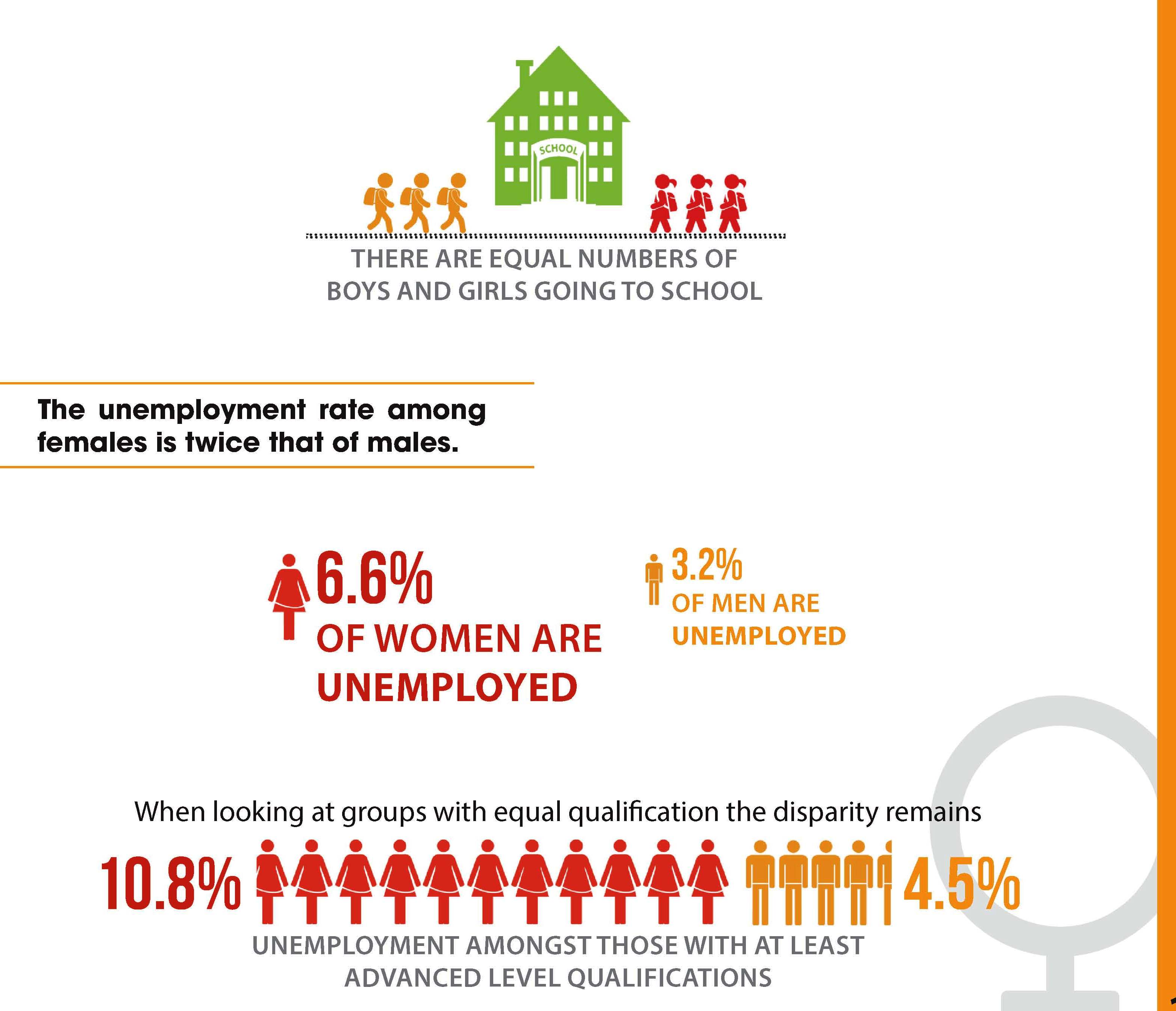
  • Unemployment rate has declined from 8% in 1993 to 3.9% in 2012. However, unemployment rate among women is twice as high as among men.
  • While food production keeps up with population growth, malnutrition is a concern. A fifth of all children under five are underweight. And half of all people still consume less than the minimum requirement of daily dietary energy.
  • Nearly all (99%) school going children enter primary school. At that stage, the numbers of boys and girls are equal. In secondary school and beyond (university), in fact, there now are more girls than boys.
  • More babies now survive their first year of life than ever before: infant mortality rate has come down to 9.4 among 1,000 live births (from 17.7 in 1991). Deaths among children under five have also been nearly halved (down from 2 in 1991 to 11.3 in 2009).
  • Fewer women die needlessly of complications arising from pregnancy and childbirth. The maternal mortality rate, which stood at 92 deaths per 100,000 live births in 1990, plummeted to 33 by 2010. Doctors or skilled health workers are now present during almost all births.
  • Sri Lanka’s HIV infection levels have remained now, even though the number of cases is slowly increasing. Meanwhile, in a major public health triumph, the country has all but eradicated malaria: there have been no indigenous malaria cases since November 2012, and no malaria-related deaths since 2007.
  • More Lankans now have access to safe drinking water (up from 68% in 1990 to almost 90% in 2012-2013.)

These and other social development outcomes are the result of progressive policies that have been sustained for decades.

“Sri Lanka’s long history of investment in health, education and poverty alleviation programmes has translated into robust performance against the MDGs, and Sri Lanka has many lessons to share,” said Sri Lanka’s UN Resident Coordinator and UNDP Resident Representative, Subinay Nandy, at the report’s launch in March 2015.

Proportion of Lankans living below the poverty line - total head count and breakdown by district
Proportion of Lankans living below the poverty line – total head count and breakdown by district

Mind the Gaps!

Despite these results, many gaps and challenges remain that need closer attention and action in the coming years.

One key concern is how some impressive national level statistics can eclipse disparities at provincial and district levels. The MDG data analysis clearly shows that all parts of Sri Lanka have not progressed equally well.

For example, while most districts have already cut income poverty rates in half, there are some exceptions. These include eight districts in the Northern and Eastern provinces, for which reliable data are not available to compare with earlier years, and the Monaragala District in Uva Province – where poverty has, in fact, increased in the past few years.

Likewise, many human development indicators are lower in the plantation estate sector, where 4.4% of the population lives. An example: while at least 90% of people in urban and rural areas can access safe drinking water, the rate in the estate sector is 46.3%.

Another major concern: the gap between rich and poor remains despite economic growth. “Income inequality has not changed, although many poor people managed to move out of poverty and improve their living conditions,” the MDG Progress report says.

In Gender Equality, Sri Lanka’s performance is mixed. There is no male-female disparity in education, and in fact, there are more literate women in the 15 to 24 age than men. But “these achievements have not helped in increasing the share of women in wage employment in the non-agricultural sector,” notes the report.

Disappointingly, women’s political participation is also very low. The last Parliament had 13 women members out of 225. That was 5.8% compared to the South Asian rate of 17.8% and global rate of 21.1%. The report has urged for “measures to encourage a substantial increase in the number of women in political offices”.

Of course, MDGs and human development are not just a numbers game. While measurable progress is important, quality matters too.

The MDG report highlights the urgent need to improve the quality and relevance of our public education. Among the policy measures needed are increasing opportunities for tertiary education, bridging the gap between education and employment, and reducing the skills mismatch in the labour market.

On the health front, too, there is unfinished – and never ending — business. Surveillance for infectious diseases cannot be relaxed. Even as malaria fades away, dengue has been spreading. Old diseases like tuberculosis (8,000 cases per year) stubbornly persist. A rise in non-communicable diseases – like heart attacks, stroke, cancers and asthma – poses a whole new set of public health challenges.

Sri Lanka offers the safest motherhood in South Asia

Open Development

So the ‘well-performing’ nation of Sri Lanka still has plenty to do. It is just as important to sustain progress already achieved.

The new and broader SDGs will provide guidance in this process, but each country must set its own priorities and have its own monitoring systems. The spread of information and communications technologies (ICTs) has created new sources of real-time data that can help keep track of progress, or lack of it, more easily and faster.

Whereas MDGs covered mostly “safe” themes like poverty, primary education and child deaths, the SDGs take on topics such as governance, institutions, human rights, inequality, ageing and peace. This reflects how much international debates have changed since the late 1990s when the MDGs were developed mostly by diplomats and technocrats.

This time around, not only governments and academics but advocacy groups and activists have also been involved in hundreds of physical and virtual consultations to agree on SDGs. In total, more than seven million people have contributed their views.

As the government of Sri Lanka pursues the SDGs that it has just committed to in New York, we the people expect a similar consultative process.

Goodbye, closed development. Welcome, Open Development!

Science writer Nalaka Gunawardene wrote an earlier version of this for UN Population Fund (UNFPA) Sri Lanka’s new blog Kiyanna.lk. The views are his own, based on 25 years of development communication experience.

Equal numbers of girls and boys go to school in Sri Lanka today, But women struggle harder to find employment.

All infographics courtesy: Millennium Development Goals: Sri Lanka’s Progress and Key Achivements, http://countryoffice.unfpa.org/srilanka/?reports=10872

සිවුමංසල කොලූගැටයා #238: බස්නාහිර මෙගාපොලිස් යනු 21 සියවසේ මහවැලි ව්‍යාපෘතියද?

MegaPolis logo is out - but not much details in the public domain yet
MegaPolis logo is out – but not much details in the public domain yet

In this week’s Ravaya column, (in Sinhala, appearing in issue of 27 Sep 2015), I discuss the proposal to turn Sri Lanka’s Western Province into a megapolis, to become “the most attractive megapolis in South Asia”.

In their manifesto for the Parliamentary Election in August 2015, the United National Front for Good Governance talked about Megapolis. Now in office, UNFGG wants to make it happen.

The proposal is not exactly new. It first emerged over a decade ago, when Ranil Wickremesinghe was last Prime Minister. The original plan was developed by CESMA International, a part of Singapore’s state-run Housing Development Corporation (now rebranded as Surbana).

The aim was to create a large metropolitan region “expanding outwards from Colombo to Avissawella in the north and Panadura to the south”.

The revived megapolis plan would probably resemble original. And it looks set to become the Mahaweli of the new government.

Despite regime change in January 2015, we in Sri Lanka still live with corruption, technocratic arrogance and political expediency. Our rulers love to monitor private actions of citizens in the name of ‘national security’. Can megapolis or smart cities become another extension of our overbearing state?

I argue here that the new government must also learn from the decade-long misadventure of Hambantota where investments did not match local needs or people’s aspirations.

See also: My interview with Dr Ranil Senanayake (2012):

Sri Lanka’s Fast-track to Post-war Development: Remember the Mahaweli’s Costly Lessons!

From www.facebook.com/wrmpp
From http://www.facebook.com/wrmpp

ශ‍්‍රී ලංකාවේ බස්නාහිර පළාත මෙගාපොලිස් (Megapolis) ලෙසින් නාගරික සංවර්ධනයට ලක් කිරීමට රජය තීරණය කර තිබෙනවා. ඒ සඳහාම කැබිනට් ඇමතිවරයකු ද පත් කොට සිටිනවා.

මෙගාපොලිස් අපට තවමත් අලූත් යෙදුමක්. මෙය පොලිසිය සමග කිසිදු සම්බන්ධයක් නැහැ. Polis යන ඉංග‍්‍රීසි වචනයේ ග‍්‍රීක මුල් අරුත නගරය යන්නයි. එය මුලින්ම යෙදුණේ පුරාණ ග‍්‍රීසියේ නගර රාජ්‍යයන්ට අදාළවයි.

මෙගා යන්න සුවිසල් අරුත දෙන බව අප දන්නවා. ඒ අනුව මෙගාපොලිස් යන්න මහා නගරය ලෙස සිංහලට පෙරළා ගත හැකියි.

එහෙත් ජාත්‍යන්තරව මහා නගර (Mega Cities) ලෙස අරුත් දැක්වෙන්නේ නේවාසික ජනගහනය මිලියන් 10ට වැඩි නගරයි. 2015 වනවිට මෙවන් මහා නගර 46ක් ලෝකයේ විවිධ රටවල තිබෙනවා.

ලොව විශාලතම මහා නගර වන්නේ තෝකියෝ-යෝකෝහමා ද්විත්ව නගරය (ජනගහනය මිලියන් 37.9), ඉන්දුනීසියාවේ ජකර්තාව (මිලියන් 30.326), දකුණු කොරියාවේ සෝල් (මිලියන් 26.1), ඉන්දියාවේ දිල්ලිය (මිලියන් 25.7) හා චීනයේ ෂැංහයි (මිලියන් 25.4).

දකුණු ආසියාවේ මහා නගර වන්නේ (දිල්ලියට අමතරව) පාකිස්තානයේ කරාචි (මිලියන් 24.0), මුම්බාය (මිලියන් 20.4), බංග්ලාදේශයේ ඩාකා (මිලියන් 18.25), කොල්කතාව (මිලියන් 14.76) හා පාකිස්තානයේ ලාහෝරය (මිලියන් 10.05) නගරයි.

2012 ජන සංගණනයට අනුව අපේ රටේ බස්නාහිර පළාතේ ජනගහනය 5,821,710යි (මිලියන් 5.82). රටේ සමස්ත ජනගහනයෙන් 28.73%ක් ජීවත් වන මේ පළාතට රටේ මුළු බිම් ප‍්‍රමාණයෙන් අයත් වන්නේ 5.61%ක් පමණයි. මේ නිසා ජන ඝනත්වය (වර්ග කිලෝමීටරයක වෙසෙන ජන සංඛ්‍යාව) ඉහළයි.

එහෙත් ජාත්යන්තරව මහා නගරයක් ලෙස සලකනු ලැබීමට අවශ් අවම ජන සංඛ්යාවවත් බස්නාහිර පළාතේ නැහැ. මේ නිසා අපේ යෝජිත මෙගා නගරය අපටම ආවේණික එකක්.

අගෝස්තුවේ පාර්ලිමේන්තු මැතිවරණය සඳහා එක්සත් ජාතික යහපාලන පෙරමුණේ මැතිවරණ ප‍්‍රකාශනයේ එක් ප‍්‍රතිඥාවක් වූයේ බස්නාහිර පළාත දකුණු ආසියාවේ වඩාත්ම ආකර්ෂණීය මෙගා නගරය බවට පත් කරන බවයි.

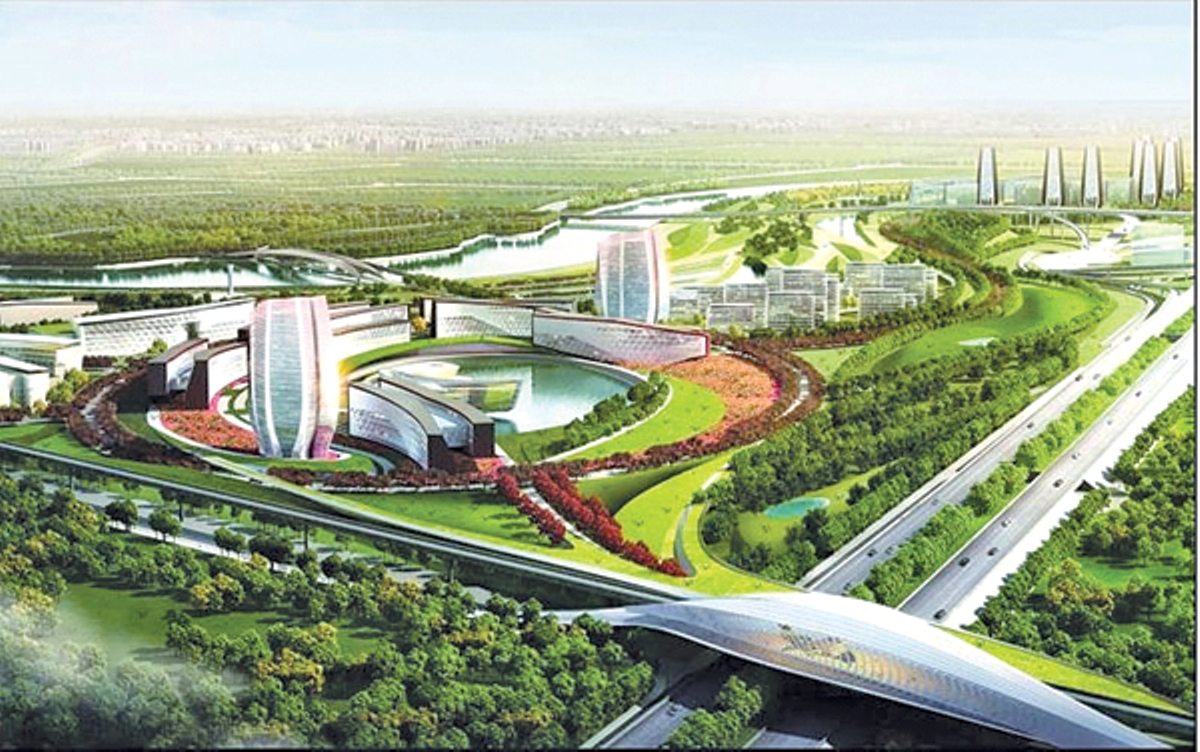
Artist imagination of a future Western Region Megapolis - Image source: www.facebook.com/wrmpp
Artist imagination of a future Western Region Megapolis – Image source: http://www.facebook.com/wrmpp

මේ යෝජනාව යළි මතුව ඇතත් මුලින්ම ඉදිරිපත් වූයේ 2003දී රනිල් වික‍්‍රමසිංහ මීට පෙර අගමැතිව සිටි වතාවේ සිංගප්පූරුවේ රජයට අනුබද්ධ නාගරික නිවාස සැලසුම් ආයතනයේ (CESMA International, now Surbana) උපදෙස් මත මුල්වරට මෙය සැලසුම් කෙරුණා. එහෙත් රජය වෙනස් වූ නිසා එය ක‍්‍රියාත්මක වූයේ නැහැ.

එවකට ප‍්‍රකාශිත අරමුණ වූයේ කොළඹ නගරයේ සිට උතුරට අවිස්සාවේල්ල දක්වාත්, දකුණට පානදුර දක්වාත් විහිදෙන කලාපයක් නාගරික සංවර්ධන ව්‍යාපෘතියකට යටත් කිරීමයි.

මෙවර සැලසුම එයම ද නැතිනම් වෙනස් වේද යන්න තවම පැහැදිලි නැහැ. එහෙත් මේ සඳහා මේ වසර මුලදී බස්නාහිර ප‍්‍රදේශයේ මෙගා නගර සැලසුම් ව්‍යාපෘතිය (Western Regional Megapolis Planning Project, WRMPP) නම් කාර්යාලයක් පිහිටුවනු ලැබුවා. ඔවුන්ගේ නිල වෙබ් අඩවිය (http://wrmpp.gov.lk) තවමත් එළි දක්වා නැහැ.

මෙම ව්‍යාපෘතිය විසින් පවත්වාගෙන යන ෆේස්බුක් පිටුවේ බස්නාහිර මෙගා නගරයේ ඉදිරි දැක්ම ලෙස වචන 50කටත් වඩා දිගු සංකීර්ණ ඉංග‍්‍රීසි වාක්‍යයක් තිබෙනවා. එය ඇරඹෙන්නේ ‘මේ ව්‍යාපෘතිය මෙරට බස්නාහිර පළාත වාසයට ඉතා හිතකර හා නානාජාතික වූ ස්මාට් නගරයක් බවට පත් කරන’ බව කියමින්. (www.facebook.com/wrmpp).

මෙගා නගර සැලසුම් ව්‍යාපෘතිය ගැන වැඩිදුර විස්තර ළඟදීම හෙළි කැරෙනු ඇතැ’යි අප පතමු. එසේම එම විස්තර මෙරට රාජ්‍ය භාෂා දෙකෙන්ම ජනතාවට ඉදිරිපත් කිරීමට නව ඇමතිවරයා වග බලා ගනු ඇතැයි ද අපි බලාපොරොත්තු වෙමු.

එතෙක් අපට කළහැක්කේ පොදුවේ මෙරට නාගරීකරණ ප‍්‍රවණතා ගැන හා ස්මාට් නගර (Smart Cities) යනු කුමක්ද යන්න කතා කිරීමයි.

රටක් සංවර්ධනය වන විට එහි නගර ලෙස සැලකෙන බිම් ප‍්‍රදේශ විස්තාරණය වන බවත්, නාගරික ජනගහනය වැඩි වන බවත් ලොව පුරා අත්දුටු ප‍්‍රවණතාවක්. හේතුව පහසුකම් හා අවස්ථා වැඩි නගරවලට සෙසු ප‍්‍රදේශවලින් ජනයා ඇදී ඒමයි.

2012 ජන සංගණනයේදී මෙරට නාගරික ජනගහනය ලෙස නිර්ණය කෙරුණේ සමස්ත ජනගහනයෙන් 18.2‍%ක් පමණයි. එහෙත් මෙය නිවැරදි තත්ත්වය නොවන බව ජන ලේඛන හා සංඛ්‍යා ලේඛන දෙපාර්තමේන්තුවම පිළිගන්නවා. ජන සංගණනයේ ප‍්‍රධාන සොයා ගැනීම් කැටි කරන 2014 නිල ප‍්‍රකාශනයක ඔවුන් මෙසේ කියනවා:

‘ශ‍්‍රී ලංකාවේ නාගරීකරණය දැනට අඩු තක්සේරුවට ලක් වන්නේ නාගරික ප‍්‍රදේශ (urban areas) යන්නෙහි නිර්වචනයේ දුර්වලකම නිසයි. දැනට මෙරට නාගරික ලෙස සලකනු ලබන්නේ මහ නගර සභා හා නගර සභා යන පළාත් පාලන ආයතනවල බල ප‍්‍රදේශ පමණයි. නාගරික ගති සොබා සියල්ල ඇති වෙනත් සමහර ප‍්‍රදේශවලට නාගරික වර්ගීකරණය ලැබෙන්නේ නැහැ. මේ නිසා වඩාත් තාත්වික නිර්වචනයක් යොදා ගෙන මෙරට නාගරික ප‍්‍රදේශ යළි අර්ථ දැක්වීම අවශ්‍යයි. හුදෙක් පරිපාලනමය වර්ගීකරණවලට සීමා වීම නුවණට හුරු නැහැ.’

දෙපාර්තමේන්තුව මෙතැනදී එක එල්ලේ නොකීවාට මේ අවුල ඇරඹුණේ 1980 දශකය අගදී ප‍්‍රාදේශීය සභා නම් නව පළාත් පාලන ඒකකයක් හඳුන්වා දීමත් සමගයි.

මොරටුව සරසවියේ නගර සැලසුම් විශේෂඥ මහාචාර්ය ඈෂ්ලි එල්. එස්. පෙරේරා හොඳින් විග‍්‍රහ කර ඇති පරිදි ප‍්‍රාදේශීය සභා බල ප‍්‍රදේශ නිර්ණය කරන විට ඒවා නාගරිකද ග‍්‍රාමීයද යන්න කිසිසේත් සැලකිල්ලට ගත්තේ නැහැ. එහෙත් එතැන් පටන් මෙරට සියලූම ප‍්‍රාදේශීය සභා බල ප‍්‍රදේශ ග‍්‍රාමීය යැයි සැලකෙනවා.

සැබැවින්ම සමහර ප‍්‍රාදේශීය සභා බල ප‍්‍රදේශ නාගරීකරණය වී දශක ගණනක් ගෙවී ඇතත් මේ විපරීත වර්ගීකරණය නිසා අපේ රටේ ග‍්‍රාමීය හා නාගරික යථාර්ථය සැබෑ ලෙස වටහා ගැනීම හා එයට අනුව සැලසුම්කරණය දුෂ්කර වී තිබෙනවා. සුළුතරයක් වන නගරවලට තව වැරදි චිත‍්‍රය සිතේ දරා ගෙනයි.

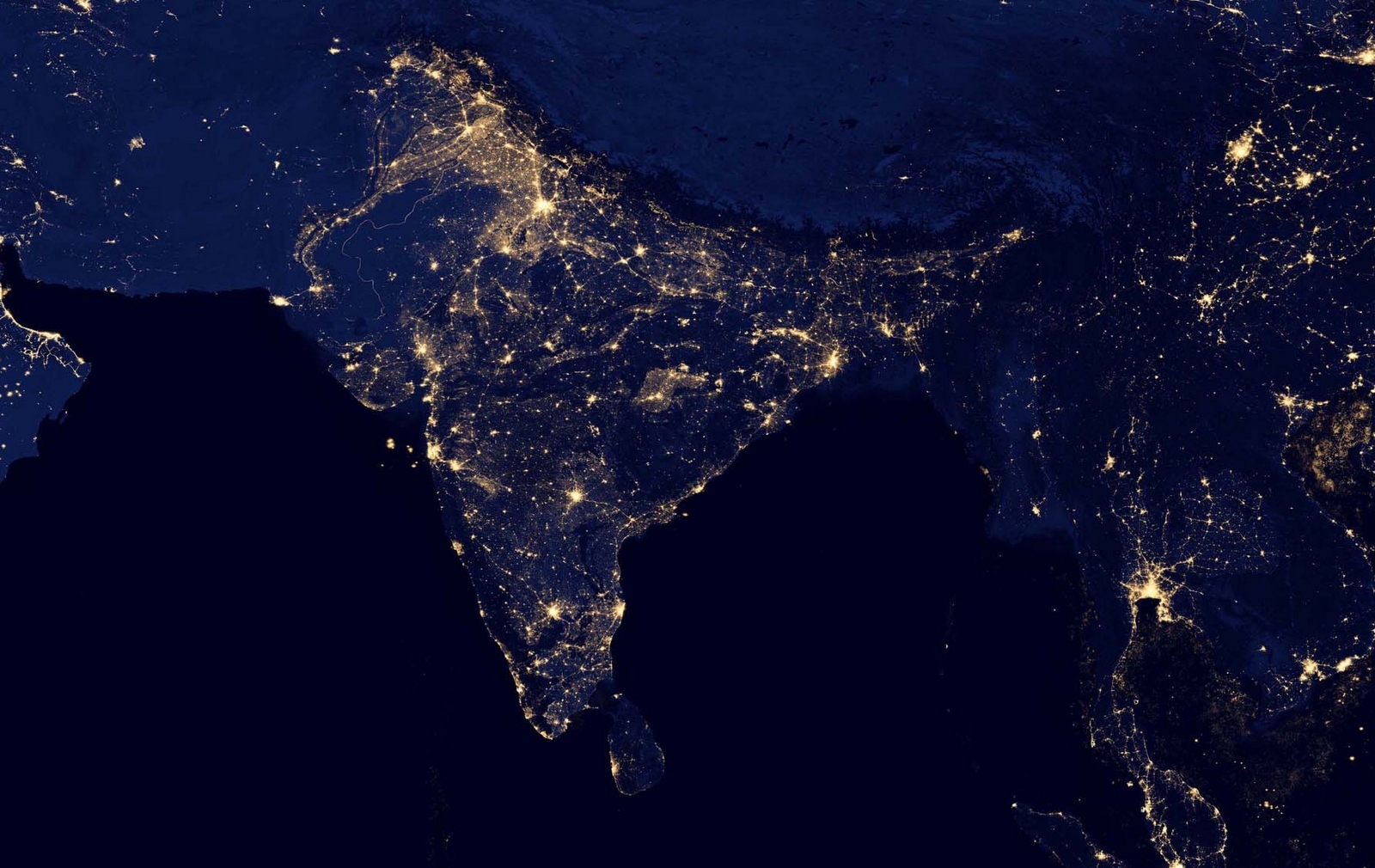
සැබැවින්ම ගත හොත් දැනටමත් රටේ ජනගහනයෙන් 30-40‍%ක් නාගරික පෙදෙස්වල වසන බවට අනුමාන කළ හැකියිග කවුරු කෙසේ කීවත් පහසුකම් වැඩි නාගරික ප‍්‍රදේශවලට පදිංචියට ඒමට මෙරට ජනයා තුළ තිබෙන කැමැත්තේ නම් අඩුවක් නැහැ.

Cities and bright lights usually go together: South Asia at night - composite satellite image taken in April & Oct 2012 - Image courtesy NASA
Cities and bright lights usually go together: South Asia at night – composite satellite image taken in April & Oct 2012 – Image courtesy NASA

2025 වනවිට මෙරට ජනගහනයෙන් බාගයක්ම නාගරික රදේශවල පදිංචිකරුවන් වනු ඇතැයි ජන විද්යාඥයන් ගණන් බලනවා.

2012 ජන සංගණනයෙන් හෙළි වූයේ මෙරට ජනගහනයෙන් විශාලතම නගර 8ක්ම තිබෙන්නේ බස්නාහිර පළාතේ බවයි. එයින් හතක් (කොළඹ, කඩුවෙල, දෙහිවල-ගල්කිස්ස, මොරටුව, කෝට්ටේ, කැස්බෑව හා මහරගම) කොළඹ දිස්ත‍්‍රික්කයේත්, අනෙක (මීගමුව) ගම්පහ දිස්ත‍්‍රික්කයේත් හමු වනවා.

මෑතක් වන තුරු දිවයිනේ සමස්ත දළ ජාතික නිෂ්පාදිතයෙන් අඩකටත් වඩා ලැබුණේ බස්නාහිර පළාතෙන්, 2012දී එය 43.4%ක් වූවා. ඇත්තටම බස්නාහිර පළාත හරියට වෙනත් රටක් වගේ තත්ත්වයක්.

අනෙක් පළාත්වලට නිසි සැළකිලි දෙන අතර බස්නාහිර පළාත දිගටම දියුණු කිරීම රටට වැඩදායකයි. ඉතා සුළු ජනගනනයක් වෙසෙන හම්බන්තොටට අතිවිශාල ආයෝජනයක් කිරීමේ වරද යළි කිසිදා නොකල යුතුයි.

අපේ නගර හා නාගරික ප‍්‍රදේශ මීට වඩා බෙහෙවින් සැලසුම්කරණයට ලක් විය යුතු බව පැහැදිලියි. මුල පටන්ම සැලසුම් කර තැනූ නගර අපේ රටේ නැහැ. පවතින නගර දශක ගණනාවක් පුරා ටිකෙන් ටික, අවිධිමත්ව ව්‍යාප්ත වූ ඒවායි. මහාමාර්ග, ජලමාර්ග, ජලාපවාහන පද්ධති, විවෘත අවකාශයන් හා සෙසු පොදු පහසුකම් බොහොමයක් ජනාකීර්ණ බව හා කලබලකාරී බව නිසා අධික පීඩාවට පත්ව තිබෙනවා.

තව දුරටත් මේ විසමතා පැවතුණොත් රථවාහන තදබදය, නිවාස හිඟය, කසළ ඉවත් කිරීමේ ප‍්‍රශ්න ආදිය තවත් උග‍්‍ර වනු ඇති. මේ නිසා වඩාත් ක‍්‍රමවත් නගර කළමනාකරණයක් අත්‍යවශ්‍යයි.

එහෙත් නගර සංවර්ධනය හා නාගරික කළමනාකරණය යනු පසුගිය රජය කළාක් මෙන් නගර අලංකරණය (city beautification) පමණක් නොවෙයි. එසේම පරම්පරා ගණනක් නගරයේ විසූ ඇතැම් ජන පිරිස් රාජ්‍ය බලහත්කාරයෙන් ඉවත් කොට ඔවුන්ගේ ඉඩම් මහා පරිමාණ ව්‍යාපාරිකයන්ට හා විදේශ ආයෝජකයන්ට ලබා දීමද නොවෙයි.

නගර අලංකරණය සමහර මධ්යම පාන්තිකයන්ගේ තාවකාලික රමෝදයට හේතු වුවත් යථාර්ථය විනිවිද දකින විද්වතුන් හා සමාජ රියාකාරිකයන් එය සම කළේ බරපතල හෝ මාරාන්තික රෝගයකින් පෙළෙන කෙනෙකුට මේකප්තවරා හැඩ ගැන්වීමටයි!

එවැනි අහිතකර හා අධම නාගරික සංවර්ධනයක් බස්නාහිර මහා නගර ව්‍යාපෘතියෙන් සිදු නොකරන බවට නව රජයට හා අමාත්‍යවරයාට සහතික විය හැකිද?

Western Region Megapolis - artist imagination
Western Region Megapolis – artist imagination

නගර දියුණු කිරීම යනු හුදෙක් භෞතික යටිතල පහසුකම් හා ව්‍යාපාර අවස්ථා නංවාලීම පමණක් නොවෙයි. සියලූ ආදායම් මට්ටම්වල සිටින ජනයාට නීත්‍යනුකූල ජීවිකාවන් වඩා විධිමත්ව කර ගෙන යාමටත්, විවේක කාලය වඩා හරවත්ව ගත කිරීමටත් උපකාර වන භෞතික හා සමාජයීය පරිසරය නිර්මාණය කිරීමයි.

එසේම නවෝත්පාදන, කලා නිර්මාණ හා ප‍්‍රජා බල ගැන්වීම ආදී ප‍්‍රවණතා සඳහා හිතකර වාතාවරණයක් බිහි කිරීමයි.

මේ නිසා තමයි මෙගා නගර සැලසුම්කරණයට හා කළමනාකරණයට වාස්තු විද්යාඥයන් හා ඉංජිනේරුවන් පමණක් නොව සමාජ විද්යාඥයන්, මානව විද්යාඥයන් හා පරිසර විද්යාඥයන්ද මුල පටන්ම සම්බන්ධ විය යුත්තේ. පසුගිය දශකයේ මර්දනකාරි නගර අලංකරණයට මෙබඳු සංවේදී රවේශයක් තිබුණේම නැහැ.

බස්නාහිර මෙගා නගර සංවර්ධනයට ඇමතිවරයෙක් හා ව්‍යාපෘති කාර්යාලයක් වෙන් කැරෙන අතර නගර සැලසුම්කරණය හා ජලාපවාහනය සඳහා තවත් කැබිනට් ඇමතිවරයෙක් ද පත් කොට තිබෙනවා. 2015 සැප්තැම්බර් 21 වැනිදා ගැසට් කරන ලද අමාත්‍යාංශවල වගකීම් හා ආයතන ලැයිස්තුව යටතේ නගර සැලසුම් අමාත්‍යාංශයට ‘විශේෂ නගර සැලසුම්කරණය හා සංවර්ධනය’ අනුයුක්ත කොට තිබෙනවා.

මේ අමාත්‍යාංශ දෙක මෙරට පවතින නාගරික ව්‍යාකූලතා තවත් වැඩි නොකර සීරුවෙන් තම වගකීම් ඉටු කරයිද?

සමහරුන් කැමති වූවත් නැතත් බස්නාහිර මෙගා නගර ව්‍යාපෘතිය පෙරට යන බව පැහැදිලියි. මෙයට අගමැතිවරයා දෙන ප‍්‍රමුඛතාව අනුව එය ඔහුගේ රජයේ මහවැලි වැඩපිළිවෙල වැනි යයි කිව හැකියි.

1978දී මහවැලි වැඩපිළිවෙළ කඩිනම් කළ අවස්ථාවේ මා අසා ඇති පරිදි නම් එහි දිගුකාලීන ශක්‍යතාව හා බලපෑම් ගැන පුළුල් සංවාදයක් සිදු වුණේ නැහැ. මහවැලියේ ආර්ථික වාසි ගැන කිසිදු විවාදයක් නැතත්, එහි සමාජයීය හා පාරිසරික බලපෑම් පෙනී ගියේ වසර ගණනාවකට පසුවයි. රජරට ජල සංයුතිය වෙනස්වීම හා වැදි ජනයා සමග ඇති කර ගත් අනවශ්‍ය ගැටුම ආදිය තවමත් නොවිසඳුණු ප‍්‍රශ්නයි.

එදාට වඩා සන්නිවේදන රම මෙන්ම රජාතන්තරීය රමවේදයන්ද දියුණු වී තිබෙන අද මෙගා නගර සැලසුම් ගැන තොරතුරු ජනතාවට ඉදිරිපත් කොට හරවත් සංවාදයකට රජය යොමු විය යුතුයි.

සමාජ මාධ්‍ය යොදා ගැනීමේ කුසලතාව දැනටමත් පෙන්වා ඇති චම්පික රණවක අමාත්‍යවරයා මෙගා නගර සංවාදවලට එය ද යොදා ගනු ඇතැයි අප සිතනවා.

මෙගා නගර ව්‍යාපෘතිය මහවැලිය මෙන් තාක්ෂණික හා ඉංජිනේරු තීරක ක‍්‍රියාදාමයක් පමණක් නොවී පුළුල් සමාජ සහයෝගයෙන්, ප්‍රජාතන්ත්‍රීය හා මානුෂික ලෙසින් ඉදිරියට ගෙන යෑමේ අභියෝගය අමාත්‍යවරයා හමුවේ තිබෙනවා.

ස්මාට් නගර පිළිබඳ විගරහයක් ලබන සතියේ.

See also: My interview with Dr Ranil Senanayake (2012):

Sri Lanka’s Fast-track to Post-war Development: Remember the Mahaweli’s Costly Lessons!

Daily Mirror, 29 September 2015: The flagship project Megapolis: Concept and scope in Sri Lankan context

World Urbanisation Prospects 2014 (UN Report)


Corridors of Power Panel: Tapping our ‘Hybrid Media Reality’ to secure democracy in Sri Lanka

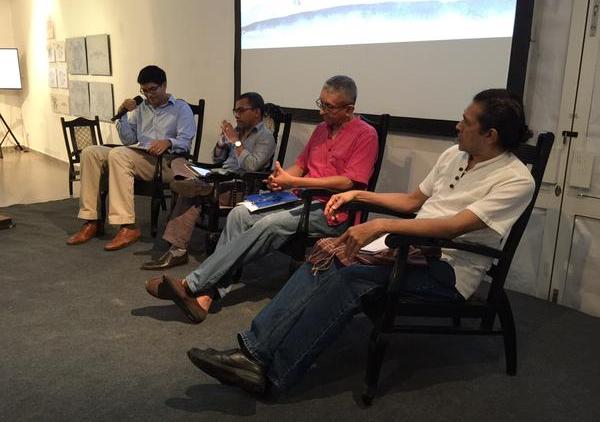
Sanjana Hattotuwa, curator, introduces panel L to R Asoka Obeyesekere, Amantha Perera, Nalaka Gunawardene, Lakshman Gunasekera
Sanjana Hattotuwa, curator, introduces panel L to R Asoka Obeyesekere, Amantha Perera, Nalaka Gunawardene, Lakshman Gunasekera. Photo by Manisha Aryal

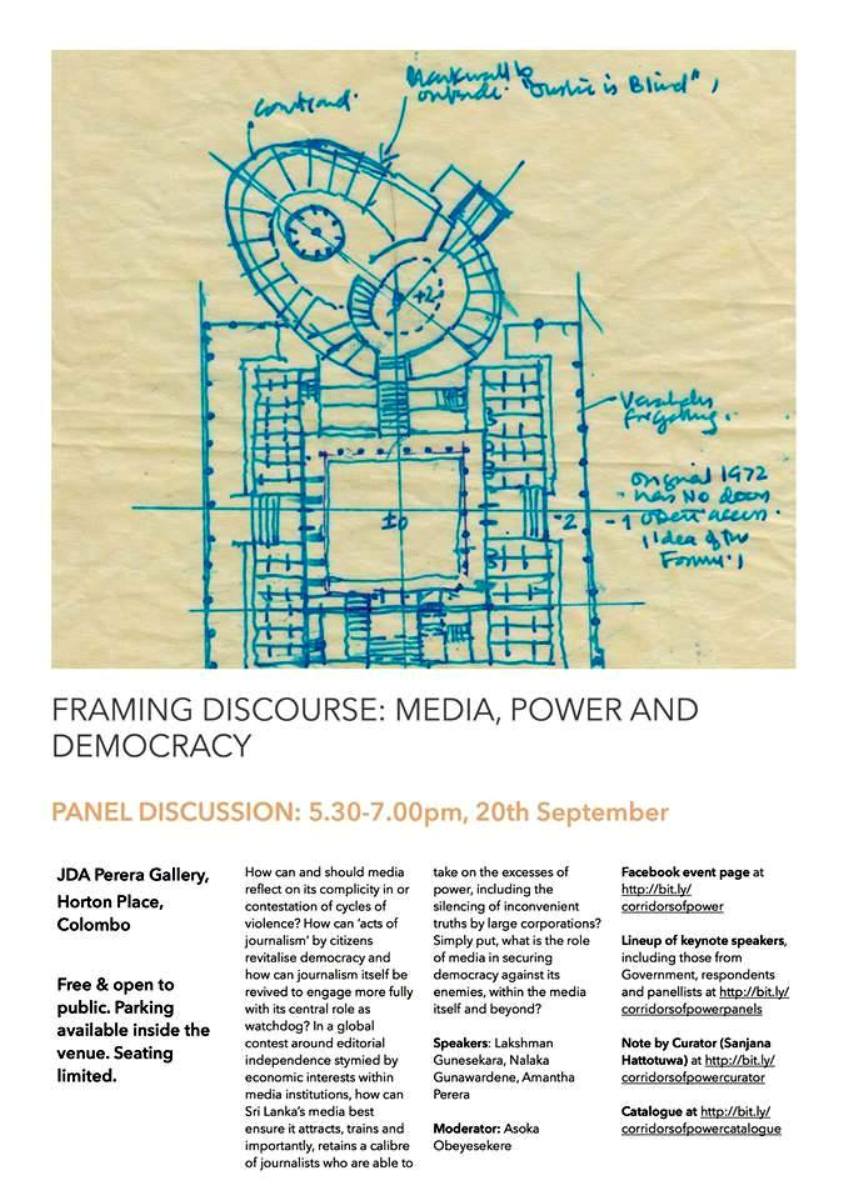
I just spoke on a panel on “Framing discourse: Media, Power and Democracy” which was part of the public exhibition in Colombo called Corridors of power: Drawing and modelling Sri Lanka’s tryst with democracy.

Media panel promo

The premise for our panel was as follows:

The architecture of the mainstream media, and increasingly, social media (even though distinct divisions between the two are increasingly blurred) to varying degrees reflects or contests the timbre of governance and the nature of government.

How can ‘acts of journalism’ by citizens revitalise democracy and how can journalism itself be revived to engage more fully with its central role as watchdog?

In a global contest around editorial independence stymied by economic interests within media institutions, how can Sri Lanka’s media best ensure it attracts, trains and importantly, retains a calibre of journalists who are able to take on the excesses of power, including the silencing of inconvenient truths by large corporations?

The panel, moderated by lawyer and political scientist Asoka Obeyesekere comprised freelance journalist Amantha Perera, Sunday Observer editor Lakshman Gunasekera, and myself.

Here are my opening remarks (including some remarks made during Q&A).

Nalaka Gunawardene speaks during media panel at Corridors of Power - Photo by Manisha Aryal
Nalaka Gunawardene speaks during media panel at Corridors of Power – Photo by Manisha Aryal

Panel on “Framing discourse: Media, Power and Democracy”

20 Sep 2015, Colombo

Remarks by Nalaka Gunawardene

Curator Sanjana has asked us to reflect on a key question: What is the role of media in securing democracy against its enemies, within the media itself and beyond?

I would argue that we are in the midst of multiple, overlapping deficits:

  • Democracy Deficit, a legacy of the past decade in particular, which is now recognised and being addressed (but we have a long way to go)
  • Public Trust Deficit in politicians and public institutions – not as widely recognised, but is just as pervasive and should be worrying us all.
  • Media Deficit, probably the least recognised deficit of all. This has nothing to do with media’s penetration or outreach. Rather, it concerns how our established (or mainstream) MEDIA FALLS SHORT IN PERFORMING the responsibilities of watchdog, public platform and the responsibility to “comfort the afflicted and afflict the comfortable”.

In this context, can new media – citizens leveraging the web, mobile devices and the social media platforms – bridge this deficit?

My answer is both: YES and NO!

YES because new media opportunities can be seized – and are being seized — by our citizens to enhance a whole range of public interest purposes, including:

  • Political participation
  • Advocacy and activism
  • Transparency and accountability in public institutions
  • Peace-building and reconciliation
  • Monitoring and critiquing corporate conduct

All these trends are set to grow and involve more and more citizens in the coming years. Right now, one in four Lankans uses the web, mostly thru mobile devices.

BUT CAN IT REPLACE THE MAINSTREAM MEDIA?

NO, not in the near term. For now, these counter-media efforts are not sufficient by themselves to bridge the three deficits I have listed above. The mainstream media’s products have far more outreach and and the institutions, far more resources.

Also, the rise of citizen-driven new media does NOT – and should NOT — allow mainstream media to abdicate its social responsibilities.

This is why we urgently need MEDIA SECTOR REFORMS in Sri Lanka – to enhance editorial independence AND professionalism.

The debate is no longer about who is better – Mainstream media (MSM) or citizen driven civic media.

WE NEED BOTH.

So let us accept and celebrate our increasingly HYBRID MEDIA REALITY (‘hybrid’ seems to be currently popular!). This involves, among other things:

  • MSM drawing on Civic Media content; and
  • Civic Media spreading MSM content even as they critique MSM

To me, what really matters are the ACTS OF JOURNALISM – whether they are RANDOM acts or DELIBERATE acts of journalism.

Let me end by drawing on my own experience. Trained and experienced in mainstream print and broadcast media, I took to web-based social media 8 years ago when I started blogging (for fun). I started tweeting five years ago, and am about to cross 5,000 followers.

It’s been an interesting journey – and nowhere near finished yet.

Everyday now, I have many and varied CONVERSATIONS with some of my nearly 5,000 followers on Twitter. Here are some of the public interest topics we have discussed during this month:

  • Rational demarcation of Ministry subject areas (a lost cause now)
  • Implications of XXL Cabinet of the National/Consensus Govt
  • Questionable role of our Attorney General in certain prosecutions
  • Report on Sri Lanka at the UN Human Rights Council (UNHRC) Session
  • Is Death Penalty the right response to rise of brutal murders?
  • Can our media be more restrained and balanced in covering sexual crimes involving minors?
  • How to cope with Hate Speech on ethnic or religious grounds
  • What kind of Smart Cities or MegaCity do we really need?
  • How to hold CocaCola LK responsible for polluting Kelani waters?

Yes, many of these are fleeting and incomplete conversations. So what?

And also, there’s a lot of noise in social media: it’s what I call the Global Cacophony.

BUT these conversations and cross-talk often enrich my own understanding — and hopefully help other participants too.

Self-promotional as this might sound, how many Newspaper Editors in Sri Lanka can claim to have as many public conversations as I am having using social media?

Let me end with the closing para in a chapter on social media and governance I recently wrote for Transparency International’s Sri Lanka Governance Report 2014 (currently in print):

“Although there have been serious levels of malgovernance in Sri Lanka in recent years, the build up on social media platforms to the Presidential Election 2015 showed that Lankan citizens have sufficient maturity to use ICTs and other forms of social mobilisation for a more peaceful call for regime change. Channelling this civic energy into governance reform is the next challenge.”

Photo by Sanjana Hattotuwa

සිවුමංසල කොලූගැටයා #236: කොකා-කෝලාවෙන් ඔබ්බට දිවෙන ජල සම්පත රැක ගැනීමේ අභියෝගය

Citizen Meme protesting Coca Cola Sri Lanka polluting Kelani River, source of metro Colombo's drinking water supplies
Citizen Meme protesting Coca Cola Sri Lanka polluting Kelani River, source of metro Colombo’s drinking water supplies

In this week’s Ravaya column, (in Sinhala, appearing in issue of 13 Sep 2015), I look at the controversy surrounding Coca Cola Sri Lanka polluting a key river in Sri Lanka on two occasions in August 2015.

The water contamination was caused when an oil tank at Coca Cola Beverages Sri Lanka Ltd in Biyagama leaked, causing effluents to enter the nearby Kelani River on 17 and 28 August 2015.

Kelani is the second longest river in Sri Lanka, and source of water that is treated and distributed to Greater Colombo and Gampaha metropolitan areas by the state owned utility, the National Water Supply and Drainage Board (NWSDB).

This oil leak aggravated chemical pollution of Kelani River, already the highest polluted water body in the country. The Water Board and state environmental regulator CEA have investigated this oil leak, but details of their findings have not been made public except for media statements.

The incident has highlighted the lack of accountability on the part of both corporate entities and state regulators. It also raised concerns about the country’s environmental monitoring capabilities (samples always have to be sent to India or Singapore for testing, delaying investigations).

High profile Coca Cola is not the only industrial polluter of water sources in Sri Lanka. For example, a diesel powered thermal power plant in Chunnakam, in Jaffna district, has been accused of polluting the groundwater in that area. Over 18,000 residents have been affected, some of who have been protesting for months. The company involved, MTD Walkers PLC, denies responsibility (whereas Coca Cola Sri Lanka belatedly accepted the blame and reportedly paid a heavy fine).

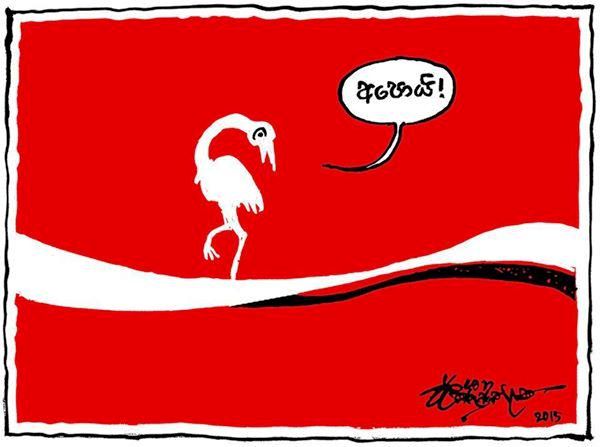
Coca Cola pollutes Kelani River in Sri Lanka: Cartoon by Dharshana Karunathilake

කොකා-කෝලා ශ‍්‍රී ලංකා සමාගමේ බියගම පිහිටි කර්මාන්ත ශාලාවෙන් නිකුත් වූ අපද්‍රව්‍යයක් කැලණි ගඟට මුසුවීම මහත් ආන්දෝලනයක් ඇති කළා.

2015 අගෝස්තු මාසයේ අඩු තරමින් දෙවතාවක් මෙය සිදු වුණා. මහ මැතිවරණය පැවති අගෝස්තු 17 වැනිදා කොළඹ නගරයේ හා තදාසන්න ප‍්‍රදේශවල ජල නලයේ අසාමාන්‍ය ගන්ධයක් සමහරුන් නිරීක්ෂණය කළා. ජලසම්පාදන හා ජලාප‍්‍රවාහන මණ්ඩලය පාරිභෝගික පැමිණිලි අනුව විමර්ශනය කරන විට එය සැබෑවක් බව පෙනී ගියා. පැය කිහිපයකට ජල සැපයුම නතර කිරීමටත්, දූෂණයේ මූලාශ‍්‍රය සොයා ගැනීමටත් ඔවුන් ක‍්‍රියා කළා.

මුලදී බොහෝ මාධ්‍ය වාර්තා කීවේ මෙය බියගම කොකා-කෝලා කම්හලෙන් නිකුත් වූ ඞීසල් තෙල් කාන්දුවක් බවයි. එහෙත් සැප්තැම්බර් 5 වනදා මාධ්‍ය වාර්තාවලට අනුව මණ්ඩලයේ සභාපතිවරයා දැන් කියන්නේ එය කාබනික රසායනික ද්‍රව්‍යයක් විය හැකි බවයි.

වැඩිදුර පරීක්ෂණ සඳහා ඉන්දියාවට යවන ලද ජල සාම්පල හරහා ජලයේ මෙතිලින් සාන්ද්‍රණය ඉහළ ගිය බවක් පෙන්නුම් කරන බව ඔහු කියනවා. එහෙත් එයට නිශ්චිත හේතු කාරකය කුමක්දැයි තවමත් නිර්ණය කොට නැහැ.

මේ අතර මධ්‍යම පරිසර අධිකාරිය කියන්නේ සිය ගම්පහ කාර්යාලය අඹතලේ ජලාශයෙන් ලබා ගත් සාම්පල රසායනාගාර පරීක්ෂාවට ලක් කළ විට එහි ඛනිජ තෙල් මුසු වීමක් හමු වූ බවයි.

අගෝස්තු 28 වැනිදා දෙවන වරටත් එම කර්මාන්තශාලාවෙන් ම අපද්‍රව්‍ය කාන්දුවක් සිදු වී නැවතත් කොළඹ හා අවට පෙදෙස්වලට ජල සැපයුම පැය කිහිපයකට නතර කෙරුණා.

අමාත්‍යාංශ දෙකකට අයත් ජලාප‍්‍රවාහන මණ්ඩලය හා පරිසර අධිකාරිය ඇතැම් විට පරස්පර විරෝධී ප‍්‍රකාශ කිරීමත්, තමන් සොයා ගත් සියලූ තොරතුරු එක්වර ප‍්‍රසිද්ධියට පත් නොකිරීමත් ජනතා අප‍්‍රසාදයටත් සැකයටත් හේතුවනවා.

අපේ සෞඛ්යය හා පරිසරය රැක ගන්නට මේ මහජන ආයතනවලට කෙතරම් ඕනෑකමක් තිබේද?

Creation courtesy SL Memes

කි.මී. 145ක් දිග කැලණි ගඟට අයිති ගංගා නිම්න ප‍්‍රදේශය වර්ග කි.මී. 2,292ක් වනවා. එය මෙරට දෙවන විශාලතම ජලධාරක ප‍්‍රදේශයයි (watershed). එසේම කැලණි ගඟ මෙරට වඩාත්ම දූෂිත ජල ප‍්‍රවාහය බව මධ්‍යම පරිසර අධිකාරියේ වෙබ් අඩවිය කියනවා.

ඔවුන්ට අනුව, පිරිපහදු කළ හා නොකළ කර්මාන්ත අපද්‍රව්‍ය, කෘෂිකර්මාන්ත අපද්‍රව්‍ය, ගෘහාශ‍්‍රිත හා නගරාශ‍්‍රිත බැහැර කිරීම් කැලණි ගඟට විශාල ප්‍රමාණයක් එකතු කරනවා. විශේෂයෙන් බතික් හා ලෝහ නිමැවීමේ හා සැකසීමේ කර්මාන්ත නිසා කැලණි ගඟ දිනපතා අපවිත‍්‍ර වනවා.

කැලණි ගෙඟහි ජල තත්ත්ව නිරීක්ෂණය හා කර්මාන්තවලින් මුදා හැරීම් පාලනය කිරීම ගැන පරිසර අධිකාරියේ වෙබ් අඩවිය මෙසේ කියනවා.

“විශ්ලේෂණය කරන ලද පරාමිතීන් අවම අගයක් ගැනීම සහ සම්මත අගයයන්ගෙන් අවම උච්ඡාවචයනයන් දක්වන ලද්දේ හංවැල්ල සහ වැලිවිට ප්‍රදේශයන්හි පමණකි. පරාමිතීන්ගේ ඉහළම අගයයන් සහ උපරිම උච්ඡාවචයනයන් දක්වන ලද්දේ සීතාවක තොටුපොළ සහ වික්ටෝරියා පාලම යන ප්‍රදේශයන්හිය. එම ස්ථාන දෙකෙහි ජලයේ තත්ත්ව දර්ශකය පහළ අගයක් ගන්නා අතර එම ස්ථානයන්හි ජලය සෞඛ්‍යාරක්ෂිත භාවයෙන් අවම තත්ත්වයක පවතී. කැලණි ගංගා ජලයෙහි ඉහළම ජලයේ තත්ත්ව දර්ශක අගයයක් නිරීක්ෂණය කරන ලද්දේ ගඟේ මධ්‍යම ප්‍රදේශය වන වැලිවිට (68) වන අතර අවම අගයයන් නිරීක්ෂණය වූයේ තල්දූව (46) සහ සීතාවක (51) ප්‍රදේශවලිනි.”

මෙයට අමතරව ගංගා පතුළ මුහුදු මට්ටමට වඩා පහත් වීම නිසා මුහුදු ජලයද විටින් විට ගඟ තුළට පැමිණ යම් තාක් දුරට උඩුගං බලා විහිදෙනවා (salt water intrusion). මෙයට එක් හේතුවක් නම් ගං පතුළින් අධික ලෙස වැලි ගොඩ දැමීමයි. කැලණි ගං මෝයට කිමී 14ක් උඩුංගව පිහිටි අඹතලේ ජලාශය දක්වා මේ ලවණ මිශ‍්‍රිත මුහුදු ජලය ඇදී ආ අවස්ථා ගණනාවක් මෑත වසරවල වාර්තාගතයි.

පරිසර අධිකාරියේ වෙබ් අඩවිය තව දුරටත් මෙසේ කියනවා. “මැණික් ගැරීමල ගංගා වැලි ගොඩ දැමීම වැනි මානව ක්‍රියාකාරකම් නිසා ගංගා ඉවුරුවලට දැඩි හානි සිදු වී ඇති අතර එම නිසා ගංගා ජලයට රොන්මඩ එක් වීම ඉහළ ගොස් ඇත. ක්ෂුද්‍ර ජීවී ගණත්වය ඉහළ යාම සහ රොන්මඩ තැන්පත් වීම කැලණි ගංගා දූෂණයට බලපාන ප්‍රධාන සාධක දෙකකි. රොන්මඩ තැන්පත් වීමේ ප්‍රමාණය…ජලයේ අඩංගු අවලම්භිත ඝන ද්‍රව්‍ය ප්‍රමාණය පිළිබඳ මිනුමක් ද වේ. රොන්මඩ තැන්පත් වීමේ ප්‍රමාණය සෑම විටම ගඟ ඉහළ ප්‍රදේශයන්හි සිදු කෙරෙන කැණීම් කටයුතු සහ වනාන්තර හෙළි කිරීම නිසා වර්ෂාව සමග ගලා එන ද්‍රව්‍ය මත ද රඳා පවතී. රොන්මඩ තැන්පත් වීමල වැලි ගොඩ දැමීම, මැණික් ගැරීම සහ පාලනය කළ නොහැකි ඝන අපද්‍රව්‍ය බැහැර කිරීම් ජල සාම්පල ලබා ගත් සෑම ස්ථානයක ම මනාව නිරීක්ෂණය විය.”

වැඩි විස්තර: http://www.cea.lk/web/index.php/si/water?id=160

මේ අනුව පෙනෙන්නේ කැලණි දූෂණය බහුවිධ සාධක නිසා සිදු වන බවයි.

Citizen meme demanding justice for Kelani River after Coca Cola Sri Lanka discharged untreated effluent on 17 and 28 August 2015

කොකා-කෝලා සිද්ධිය තේමා කරගෙන 2015 සැප්තැම්බර් 6 වැනිදා රාවයට ලිපියක් ලියූ තරිඳු උඩුවරගෙදර ගෙනා තර්කයට මා මුළුමනින් එකඟයි. ඔහු කීවේ කොකා-කෝලා සමාගමට එල්ල වන ජන විරෝධයෙන් ඔබ්බට ගොස් සමස්ත කැලණි ගඟ දූෂණය හා එයට දායක වන ලොකු කුඩා ප‍්‍රභවයන් ගැන ද අප දැනුවත් හා සංවේදී විය යුතු බවයි.

මෙයට සමාන්තර අදහසක් ජල සම්පත් පර්යේෂිකාවක් හා ක‍්‍රියාකාරිනියක් වන කුසුම් අතුකෝරල මතු කරනවා. අප හමුවේ තිබෙන්නේ හුදෙක් තනි සමාගමක වරදක් හෝ එක් දූෂණ සිද්ධියක් පමණක් නොවන බවත්, දැන් මතුව ඇති ජන ආවේගය, ජල සම්පත සියළුම ප‍්‍රභවයන්ගෙන් අපවිත‍්‍රවීම වළක්වා ගැනීමේ වැදගත්කම යළි සිහිපත් කරවන බවත් ඇය කියනවා.

‘‘ගෘහාශ‍්‍රිත අපද්‍රව්‍ය, වැසිකිළි අපද්‍රව්‍ය මෙන්ම කර්මාන්ත අපද්‍රව්‍ය බොහොමයක් ද කිසිදු පවිත‍්‍ර කිරීමකින් (effluent treatment) තොරව අසල ඇති ජල ධාරාවකට හෝ ජලාශයකට මුදා හැරීම කලෙක පටන් රටේ බොහෝ ප‍්‍රදේශවල කැරෙනවා. මේ ගැන අපි ටික දෙනෙක් හඬ නැගුවත් බොහෝ දෙනකුට එය ප‍්‍රමුඛතාවක් වුණේ නැහැ. මේ අලූත් සිදුවීම හරහා මහජනයා හා ප‍්‍රතිපත්ති සම්පාදකයන් අවදි කිරීමට අනතුරු ඇඟවීමක් ලැබෙනවා නම් එය ප‍්‍රයෝජනවත්. ඒත් මෙය හරහා දිගුකාලීන පියවර ගැනීමට අප යොමු විය යුතුයි.’’ ඇය කියනවා.

ඇළ දොළ ගංගාවලට පොඩි මිනිසුන් අපද්රව් ටිකක් මුදා හැරිය විට දැඩි නීතිමය පියවර ගන්නා අයුරින්ම ලොකු හෝ කුඩා හෝ කර්මාන්තශාලා දියර අපද්රව් ජල සම්පතට එක් කරන විටත් බලධාරීන් නිසි නීතිමය පියවර ගත යුතුයි. මෙය කර්මාන්ත විරෝධී ආකල්පයක් නොවෙයි. මහජන සෞඛ්යය හා පාරිසරික පිවිතුරු බව රැක ගැනීමට අත්යවශ් පිළිවෙතක්.

පසුගිය දශක කිහිපය පුරා කර්මාන්තශාලා පිහිටු වන විට පුළුල් සැලැස්මක් යටතේ ඒවා ස්ථානගත කිරීම බොහෝ විට සිදු වුණේ නැහැ.

කර්මාන්තශාලාවල දියර අපද්‍රව්‍ය යම් පවිත‍්‍ර කිරීමකට ලක් කළ හැකි පහසුකම් හා තාක්ෂණය තිබෙනවා. මේ පහසුකම් හැම කර්මාන්තශාලාවකටම එක බැගින් ඉදි කිරීම වියදම් අධික කාරියක්. කර්මාන්තශාලා කිහිපයක් සමීපව ඇති නම් ඔවුන්ට හවුලේ මෙබන්දක් ඉදි කොට භාවිත කළ හැකියි.

සමහර ආයෝජන ප‍්‍රවර්ධන කලාපයන්හි සීමිත වශයෙන් මෙය කරනවා. එහෙත් විශේෂයෙන්ම කුඩා හා මධ්‍යම පරිමාණයේ කර්මාන්තශාලා රැසකට මේ පහසුකම නැහැ. ඔවුන් හීන් සීරුවේ අවට ඇති කාණුවකට හෝ දිය පාරකට අපද්‍රව්‍ය පිට කරනවා.

එසේම ඉන්ධන පිරවුම්හල්, මෝටර් කාර්මික ගරාජයන්, ලියවන පට්ටල්, වාත්තු කම්හල් ආදී ස්ථානවලින් ඉවත ලන තෙල් හා අනෙකුත් රසායන ද්‍රව්‍ය කාණු ඔස්සේ ගලා ගොස් අවට ජල ධාරාවන්ට එකතු වනවා. මෙරට පෙට්‍රෝලියම් අපද්‍රව්‍ය නිසා සිදු වන ජල දූෂණය වැඩි වෙමින් පවතින බව වෛද්‍ය පර්යේෂකයන් කියනවා.

1990 පමණ පටන් මධ්‍යම පරිසර අධිකාරිය කර්මාන්තවලට පරිසර ආරක්ෂණ බලපත‍්‍ර (Environmental Protection License, EPL) නිකුත් කරනවා. ඒ වායු, ද්‍රව හා ඝන අපද්‍රව්‍ය පාලනය කරන්නට නිසි පියවර ගන්නා බවට තහවුරු වූ පසුවයි.

කොකා-කෝලා සමාගමටත් එබන්දක් තිබුණා. එසේ තිබියදීත් සිදුවූ තෙල්/රසායනික කාන්දුව ‘අත්වැරදීමක්’ බවයි සමාගම ප‍්‍රකාශ කරන්නේ. කොතරම් ප‍්‍රවේශමින් ක‍්‍රියාත්මක වන කර්මාන්තශාලාවක වුවත් ඉඳහිට වැරදි සිදු විය හැකියි. අනපේක්ෂිත ගැටලූ මතු විය හැකියි. එවන් අවස්ථාවල දිවා රැය නොබලා වහා ක‍්‍රියාත්මක වී හානිය අවම කර ගැනීමට සැලසුමක්ද (contingency plan) තිබිය යුතුයි.

තීරණාත්මක මහජන සේවා සපයන රාජ්‍ය ආයතනවලටත් මෙය අදාලයි. එහෙත් කොකා-කෝලා සමාගමට හෝ ජලාප‍්‍රවාහන මණ්ඩලයට හෝ මෙවන් සැලසුමක් තිබුණාදැයි පැහැදිලි නැහැ. නළ ජලයේ අමුත්තක් ගැන පාරිභෝගිකයන් කියන තුරු මණ්ඩලය දැන නොසිටි බවයි පෙනෙන්නේ.

සිද්ධිය දැන ගත් වහාම ප‍්‍රවේශම්කාරී පියවර ගැනීම හොඳයි. එහෙත් මෙසේ දුගඳක්, වෙනසක් නොදැනෙන ආකාරයේ විසක් ජලයට මුසු වූවා නම්? අනතුරක් වූවත් නැතත් නිරතුරු ජල සැපයුම තත්ව පරීක්ෂාවන්ට ලක් කළ යුතු මෙනිසායි.

අගෝස්තු 20 වනදා ක්‍රියාකරිත්වය නතර කළ කොකා-කෝලා කම්හල යළි සැප්තැම්බර් 1 වනදා වැඩ ඇරඹුවේ පරිසර අධිකාරියෙන් කොන්දේසි සහගත අනුමැතියක් ලබා ගෙන බව සමාගම ප්‍රකාශයක් හරහා කියනවා. http://lk.coca-cola.com/en/update/

නීති තර්ක විතර්කවලට මුවා වී සිය වගකීම්වලින් මග හැර යාමට කොකාකෝලා සමාගම තැත් නොකළ යුතුයි. බහුජාතික පාරිභෝගික භාණ්ඩ මෙරට නිපදවා අලෙවි කරන මේ සමාගම දේශීය අධ්යක්ෂ මණ්ඩලයකින් පාලනය වන්නක්. දශක 5ක් පමණ මෙරට රියාත්මක වන අත්දැකීම් බහුල සමාගමක්.

එසේම හුදු කොකා-කෝලා විරෝධයකට හා බහුජාතික සමාගම් හෙළා දැකීමකට එහා යන පුළුල් ජන ආවේගයකට මේ සිදුවීම අප පෙරළා ගත යුතුයි.

ජල දූෂනයෙන් බැට කන්නේ කොළඹ අවට නල ජලය ලැබෙන අය පමණක් නොවෙයිග තවත් උදාහරණයක්: යාපනය දිස්ත‍්‍රික්කයේ චුන්නාකම් (Chunnakam) ප‍්‍රදේශයේ භූගත ජලය අපවිත‍්‍ර වීම නිසා 18,000කට වැඩි වැසියන් සංඛ්‍යාවක් මාස ගණනක සිට බලවත් හිරිහැරයකට මුහුණ පා සිටිනවා. ඔඩුවිල්හි අධිකරණ වෛද්‍යවරයා කියන්නේ මේ ජලය පානයට කිසිසේත් නොසුදුසු බවයි.

School children in Jaffna protesting against Chunnakam water pollution - image from Tamil Guardian
School children in Jaffna protesting against Chunnakam water pollution – image from Tamil Guardian

මේ දූෂණයට චෝදනා ලැබ සිටින්නේ MTD වෝකර්ස් නම් සමාගමට අයත් එහි පිහිටි 30MW ධාරිතාවෙන් යුතු තාප විදුලි බලාගාරයයි. 2009දී ක‍්‍රියාකාරීත්වය ඇරඹූ මේ බලාගාරයෙන් මුදාහරින අපද්‍රව්‍ය තම ළිං ජලය හා භූගත ජල සම්පත දූෂණය කරන බවට එහි වැසියන් නගන චෝදනාව සමාගම ප‍්‍රසිද්ධියේ ප‍්‍රතික්ෂේප කර තිබෙනවා.

තමන් සියලූ පාරිසරික අනුමැතියන් ලබාගෙන නිසි ප‍්‍රමිතීන්ට අනුකූලව ක‍්‍රියාකරන බවත්, අදාළ රාජ්‍ය ආයතනවලට ඕනෑම වෙලාවක පරීක්ෂා කර බැලිය හැකි බවත් බලාගාර සමාගම කියනවා.

මෙබඳු චෝදනා ලබන සමාගම්වල ස්ථාවරය වන්නේ රටේ නීතියට හා ප්‍රමිතීන්ට තමන් අනුකූල වන බවයි. බොහෝ සමාගම් ඉන් ඔබ්බට සමාජයීය වගකීමක් භාර ගන්නේ නැහැ.

2013 අගෝස්තුවේ වැලිවේරියේ රතුපස්වල රබර් අත්වැසුම් කර්මාන්තශාලාව හා ප‍්‍රදේශවාසීන් අතර හට ගත් මෙබඳුම මතභේදයක් කෙළවර වූයේ පසුගිය රජය හමුදා බලය යොදවා නිර්දය ලෙස ප‍්‍රදේශවාසීන් මර්දනය කිරීමෙන්.

එහෙත් රාජ්‍ය බලය අනිසි ලෙස භාවිතයෙන් සංකීර්ණ ප‍්‍රශ්න විසඳන්නට බැහැ. විද්‍යාත්මක තොරතුරු මත පදනම් වූ පාරිසරික තත්ත්ව ඇගැයීම් මෙන්ම සානුකම්පිත ලෙස ප‍්‍රදේශවාසීන්ගේ දුක්ගැනවිලි සලකා බැලීම ද අවශ්‍යයි.

බියගම, රතුපස්වල, කල්පිටිය, චුන්නාකම් හා දිවයිනේ වෙනත් තැන්වලින් මතු වන්නේ මතුපිට හා භූගත ජලය නැණවත්ව හා ප‍්‍රවේශමින් භාවිත නොකිරීමේ විපාකයි.

කොකා-කෝලා සමාගම කැලණි ගඟට අපද්‍රව්‍ය මුදාහැරීමට සමාව අයැද, සම්පූර්ණ හානියට වන්දි ගෙවා දඩයක් ද ගෙවිය යුතුය යන්න මගේ මතයයි. එතැනින් ඔබ්බට කොකා-කෝලා බොන නොබොන එක පෞද්ගලික තේරීමක්. දැනමටත් සංකීර්ණ ප‍්‍රශ්නයක් තවත් ව්‍යාකූල කළ යුතු නැහැ.

කොකා-කෝලා වුණත්, දේශීය සමාගමක් වුණත් රටේ පරිසර ප‍්‍රමිතීන්ට අනුකූල විය යුතුයි. පාරිභෝගිකයන් ලෙස අප ද කවුරු කළත් වරද වරදමයි යන ස්ථාවරය ගත යුතුයි.

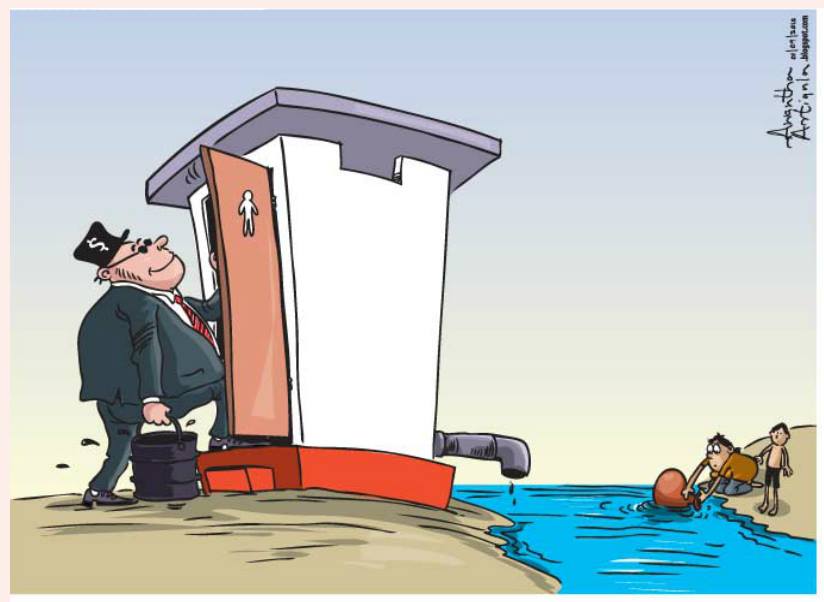
Rich polluters and poor water users - Cartoon by Awantha Artigala
Rich polluters and poor water users – Cartoon by Awantha Artigala

Sri Lanka Parliamentary Election 2015: How did Social Media make a difference?

A Popular Election Meme created by Hashtag Generation, Sri Lanka

“Every citizen – including activists and academics — can play a part in shaping the future of our democracy. In this, technology is not the only key driver; what matters even more is the strategic use of our imagination and determination.

“We may not yet have all the detailed answers of our digital future, but one thing is clear. In 2015, we the people of Sri Lanka embarked on a progressive digitalization of our politics and governance.

“It is going to be a bumpy road – be forewarned — but there is no turning back.”

These are the closing paras of a long format essay I have just written on the role of social media in the recently concluded Sri Lanka Parliamentary (General) Election on 17 August 2015.  It has been published by Groundviews.org citizen journalism website.

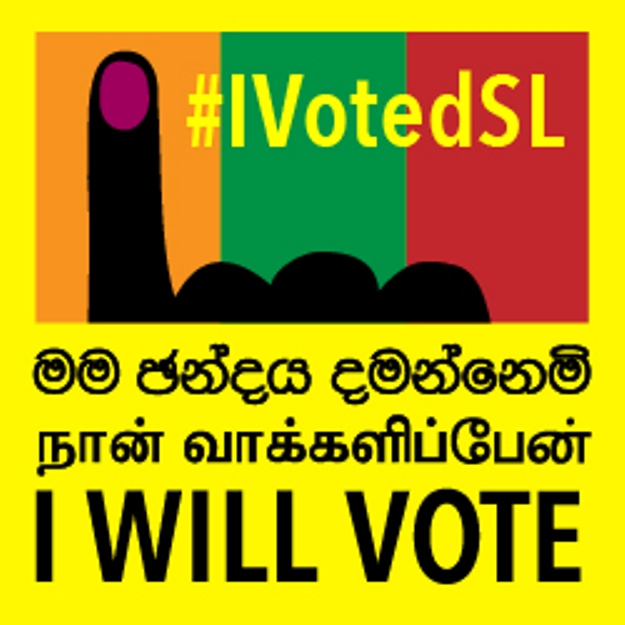
I Will Vote meme created by Groundviews.org - trilingual version
I Will Vote meme created by Groundviews.org – trilingual version

Shortly after the Presidential Election of 8 January 2015 ended, I called it Sri Lanka’s first cyber election. That was based on my insights from over 20 years of watching and chronicling the gradual spread of information and communications technologies (ICTs) in Sri Lanka and the resulting rise of an information society.

Since then, things have evolved further. In this essay, I look at how the Elections Commission, political parties, election candidates, civil society advocacy groups and individual cyber activists have used various social media tools and platforms in the run-up to, during and immediately after the Parliamentary Election.

Read full text at:

Groundviews.org 3 September 2015: Sri Lanka Parliamentary Election 2015: How did Social Media make a difference

A compact version appeared in Daily Mirror, 3 September 2015: Social Media and LK General Election 2015: Has E-democracy arrived in Sri Lanka?

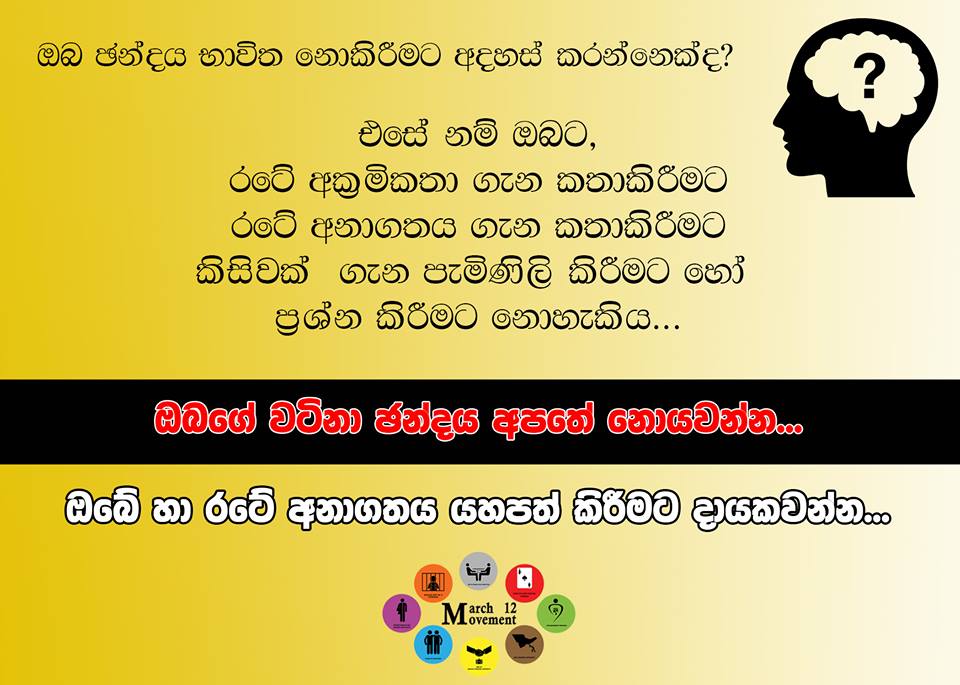
Not voting - then you have no right to complain afterwards! Voter message from March 12 Movement for Clean Politicians, Sri Lanka
Not voting – then you have no right to complain afterwards! Voter message from March 12 Movement for Clean Politicians, Sri Lanka

Social Media and LK General Election 2015: Has E-democracy arrived in Sri Lanka?

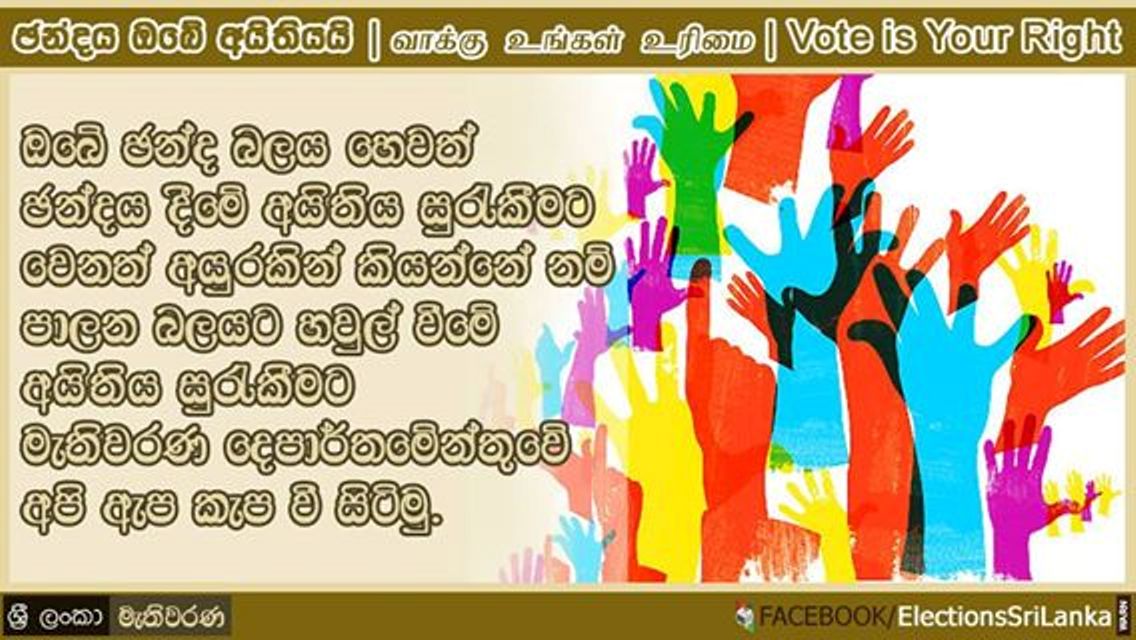
From Sri Lanka Elections Department Facebook page

“What role (if any) did social media play in the recently concluded General Election on 17 August 2015?

“Many are asking this question – and coming up with different answers. That is characteristic of the cyber realm: there is no single right answer when it comes to a multi-faceted and fast-evolving phenomenon like social media.

“Shortly after the Presidential Election of 8 January 2015 ended, I called it Sri Lanka’s first cyber election. That was based on my insights from over 20 years of watching and chronicling the gradual spread of information and communications technologies (ICTs) in Sri Lanka and the resulting rise of an information society.

“That was not the first time social media had figured in Lankan election campaigns. The trend started slowly some years ago, with a few tech-aware politicians and advertising agencies using websites, Facebook pages and twitter accounts for political outreach. However, such uses did not reach a ‘critical mass’ in the general and presidential elections held in 2010, or in the provincial and local government elections held thereafter.

“By late 2014, that changed significantly but this time the frontrunners were politically charged and digitally empowered citizens, not politicians or their support teams.”

The above is an extract from an op-ed I have just written and published in Daily Mirror broadsheet national newspaper in Sri Lanka (3 Sep 2015).

Full text is found online here:

Special thanks to Sanjana Hattotuwa and Yudhanjaya Wijeratne from whose analyses I have drawn. The unattributed opinions are all mine.

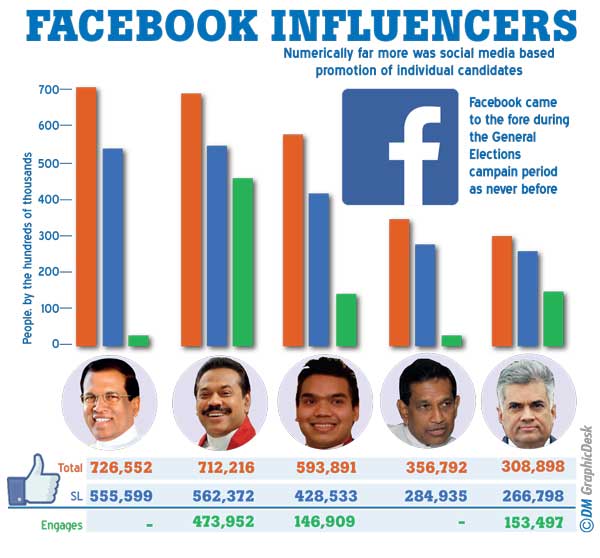
Infographic by Daily Mirror Sri Lanka

සිවුමංසල කොලූගැටයා #233: ප‍්‍රජාතන්ත‍්‍රවාදය නවීකරණය කරන සමාජයීය වගවීම

More hands make better democracy - but it can also lead to chaos, unless we're careful...
More hands make better democracy – but it can also lead to chaos, unless we’re careful…

Regular elections are a necessary but not a sufficient condition for a vibrant democracy. There is much more to democracy than holding free and fair elections.

The ‘sufficient conditions’ include having public institutions that allow citizens the chance to participate in political process on an on-going basis; a guarantee that all people are equal before the law (independent and apolitical judiciary); respect for cultural, ethnic and religious diversity; and freedom of opinion without fearing any repercussions. Sri Lanka has much work to do on all these fronts.

Democracy itself, as practised for centuries, can do with some ‘upgrading’ to catch up with modern information societies.

In this week’s Ravaya column, (in Sinhala, appearing in issue of 23 August 2015), I discuss methodologies that enable citizens as well as civil society organisations (CSOs) to engage with policymakers and citizen service providers on an on-going basis.

Some call it social accountability (or SAcc), and others refer to it as participatory democracy. Whatever the label, the idea is to ensure greater accountability in how the public sector manages public funds and responds to citizens’ needs.

An early champion of social accountability was the Peruvian economist Hernando de Soto, whom I quote. Also cited are views of Dr Bela Bhatia, an associate fellow at the Centre for the Study of Developing Societies in India.

See also my English article on this topic in Echelon magazine, Feb 2015: ‘People Power’ Beyond Elections

Time to upgrade -- but how?
Time to upgrade — but how?

‘‘ඡන්දයක් පවත්වන දිනයක එයට නියමිත පැය අට තුළ ගොසින් ඡන්දය දමා ආ පමණට ප‍්‍රජාතන්ත‍්‍රවාදය තහවුරු වන්නේ නැහැ. එය ප‍්‍රජාතන්ත‍්‍රවාදී සමාජයක මූලික අංගයක් විතරයි. ඉඳහිට පවත්වන මැතිවරණ අතර කාලයේ ඡන්දදායකයන් වන අප සැම රාජ්‍ය පාලනයට හැකි අන්දමින් සහභාගි වීමෙන් තමයි සැබෑ යහපාලනයට මග හෙළි කර ගත හැක්කේ.’’

Dr Hernando de Soto
Dr Hernando de Soto

මෙසේ කියන්නේ පේරු රටේ උපන්, ජාත්‍යන්තර කීර්තියට පත් ආර්ථික විද්‍යාඥ හර්නාන්ඩෝ ඩි සෝටෝ (Dr Hernando de Soto). සමස්ත ලතින් ඇමෙරිකාවේම මහ මොළකාරයෙක් හා සමාජ නව්‍යකරණයට කැප වූවකු ලෙස නමක් දිනා සිටින ඔහු, නියෝජිත ප‍්‍රජාතන්ත‍්‍රවාදය විසි එක් වන සියවසට වඩාත් ගැලපෙන ලෙසින් හැඩ ගස්වා ගත හැකි ක‍්‍රමවේද සොයන්නෙක්.

නියෝජිත ප‍්‍රජාතන්ත‍්‍රවාදය (representative democracy) යනු අප සියලූ දෙනා වෙනුවෙන් නියෝජිතයන් යම් සංඛ්‍යාවක් තෝරා පත් කොට ඔවුන්ට නීති තැනීමේ හා ආණ්ඩුකරණ බලතල දීමයි.

හැම පුරවැසියකුටම ආණ්ඩුකරණයට ඍජුව සම්බන්ධ වීමට කාල වේලාව හෝ අවකාශය නැති නිසා මේ ක‍්‍රමවේදය සියවස් ගණනක සිට විවිධ සමාජවල යොදා ගැනෙනවා. මෙහි වාසි මෙන්ම අවාසිත් තිබෙනවා.

ප්‍රකට අවාසියක් නම් පූර්ණ කාලීනල වෘත්තිමය දේශපාලනඥයන් පිරිසක් බිහි වී ඔවුන් ජනතා නියෝජිත වගකීම හරිහැටි ඉටු කරනු වෙනුවට අකාර්යක්ෂම, දූෂිත හා වංචනික බවට පත් වීමයි. මේ අහිතකර තත්ත්වය සමනය කරන්නට නම් පුරවැසියන් වඩාත් සක‍්‍රීයව ආණ්ඩුකරණයට නිතිපතා සම්බන්ධ විය යුතුයි. එයට සහභාගිත්ව ප‍්‍රජාතන්ත‍්‍රවාදය (participatory democracy) යයි කියනවා.

ගෙවී ගිය වසර 25 පමණ කාලය තුළ සහභාගිත්ව රජාතන්තරවාදී රමවේදයන් අත්හදා බලා වඩාත් රායෝගික ඒවා ජාතික රතිපත්ති හා නීති මටිටමින් ආයතනගත කිරීමට දියුණුවන රටවල් ගණනාවක් කටයුතු කර තිබෙනවා. මෙහිදී මුල් තැනක් ගන්නේ ඉන්දියාව, දකුණු අපරිකාව, රසීලය සහ තවත් ලතින් ඇමරිකානු රටවල් කිහිපයක්. මේ අයගේ අත්දැකීම්වලින් අපට බොහෝ දේ උගත හැකියි.

ප‍්‍රජාතන්ත‍්‍රවාදය නවීකරණය කිරීමේ චින්තන නායකයකු වන ඩි සෝටෝ මෙසේ කියනවා. ‘‘ඓතිහාසිකව සලකා බලන විට අයහපාලනයට එරෙහිව ජනයා ප‍්‍රතිචාර දක්වන දෙවිධියක් තිබෙනවා. එකක් නම් කලින් කලට පැවැත්වෙන මැතිවරණවලදී අකාර්යක්ෂම හා දූෂිත ආණ්ඩු ගෙදර යැවීම. එයට ඉඩක් නොතබන ඒකාධිපති පාලකයන් මහජන උද්ඝෝෂණ උත්සන්න වී බලයෙන් පලවා හැරෙන අවස්ථා ද ඉඳහිට තිබෙනවා. මේ දෙවිධියේම ආවේණික සීමාවන්ද තිබෙන බව අප හඳුනාගත යුතුයි.’’

ඩි සෝටෝ කියන්නේ අකාර්යක්ෂම හෝ දූෂිත පාලකයන් නෙරපා හැර විකල්ප පිරිසක් එතැනට පත් කර ගැනීම අවශ්‍ය වන නමුදු සෑහෙන්නේ නැති බවයි (necessary, but not sufficient). කලින් කල සිදුවන මැතිවරණ හෝ ජන බලය (‘People Power’) ආකාරයේ නැගී සිටීම්වලින් ඔබ්බට යන ආකාරයේ නිරතුරු ගනුදෙනුවක් ජනයා හා රජයන් අතර පවත්වා ගත යුතු වනවා.

Voting in Sri Lanka - AFP Photo
Voting in Sri Lanka – AFP Photo

මෙතැන තිබෙන ලොකුම අභියෝගය මෙයයි. අප බොහෝ දෙනෙකු පූර්ණ කාලීනව දේශපාලනයේ නිතර වූවන් නොවේ. දේශපාලනය හා යහපාලනය ගැන උනන්දු වුවත් අප අධ්‍යයන කටයුතු, රැකියා හෝ පවුල් වගකීම් ආදිය සමග මේ උනන්දුව තුලනය කර ගත යුතුයි. මෙය කෙසේ කරන්නද?

මෑතක් වන තුරු ජනයා හා රජයන් අතර නිරතුරු සබඳතාව ලෙහෙසියෙන් පවත්වා ගෙන යන්නට හැකියාවක් තිබුණේ නැහැ. එහෙත් නූතන තොරතුරු හා සන්නිවේදන තාක්ෂණයන්ගේ උදව්වෙන් එසේ කිරීම ප‍්‍රායෝගිකව වඩාත් පහසු වී තිබෙනවා. ප‍්‍රජාතන්ත‍්‍රවාදයේ නව මුහුණුවර (Democracy 2.0) බිහි වන්නේ මේ හරහායි.

මහජන ඡන්දයෙන් තේරී පත්වන නියෝජිතයන් සමග දිගටම සබඳතා පවත්වා ගනිමින් ඔවුන් නීත්‍යානුකූලව හා කාර්යක්ෂමව ක‍්‍රියා කරන බව තහවුරු කිරීමට ජනතා පීඩනය පවත්වා ගැනීම “සමාජයීය වගවීම” (Social Accountability) යයි හඳුන් වනවා. 1980 ගණන්වලදී පර්යේෂණාත්මක මට්ටමින් මතුව ආ මේ සංකල්පය දැන් ප‍්‍රායෝගික ලෙසින් ලොව විවිධ රටවල ක‍්‍රියාත්මක කැරෙනවා.

මැතිවරණය දවසේ ඡන්දය දමන්නට යන හා ප‍්‍රතිඵල විග‍්‍රහ කරන උද්-යෝගය තරම්ම නොවුවත් යම් මට්ටමක නිරතුරු දේශපාලන උනන්දුවක් හා මැදිහත්වීමක් පවත්වා ගැනීමට හැකි ක‍්‍රමවේද සකස් කර ගත යුතුව තිබෙනවා. සමාජයීය වගවීම උත්සාහ කරන්නේ එයයි.

සමාජයීය වගවීම හරිහැටි ක‍්‍රියාත්මක වන්නට නම් මහජනයාට තොරතුරු දැනගැනීමේ අයිතිය නීතිමය වශයෙන් තහවුරු වී තිබීම ප‍්‍රයෝජනවත්. මහජන මුදල් එකතු කරන ආකාරය, වැය කිරීමට තීරණය කරන පදනම හා වැය කළ පසු ගණන් පියවීම ආදී සියල්ල විනිවිද බවකින් යුතුව සිදු විය යුතුයි. (අපේ රටේ මේ දක්වා සම්මත කර ගන්නට බැරි වූ තොරතුරු අයිතිය පිළිබඳ පනත නව පාර්ලිමේන්තුව ප‍්‍රමුඛතාවක් දී විවාද කොට සම්මත කර ගනු ඇතැයි අප පතනවා.)

එහෙත් සමාජයීය වගවීමට නීති පමණක් සෑහෙන්නේ නැහැ. නීතියෙන් ලැබෙන අයිතීන් හරිහැටි භාවිත කරමින් පොදු ආයතනවල මූල්‍යමය ක‍්‍රියා කලාපය, ප‍්‍රතිපත්තිමය තිරසාර බව හා කාර්යක්ෂමතාව ආදී සාධක නිතිපතා අධීක්ෂණයට ලක් කරන පුරවැසි ක‍්‍රියාකාරිකයන් සිටීම අවශ්‍යයි.

නූතන තොරතුරු තාක්ෂණය මේ අධීක්ෂණය පහසු කරනවා. එහෙත් එය හරිහැටි කරන්නට දැනුම, කැපවීම හා කාල වේලාව මිඩංගු කිරීම ඕනෑ කරනවා. ප‍්‍රජාතන්ත‍්‍රවාදය හරියට වැඩ කරන්නේ අලසයන් හෝ ආත්මාර්ථකාමීන් සිටින සමාජවල නොවේ!

සමාජයීය වගවීම ක‍්‍රියාත්මක කළ හැකි ක‍්‍රමවේදයකට ප‍්‍රකට උදාහරණයක් නම් බ‍්‍රසීලයේ පෝටෝ ඇලගේ‍්‍ර (Porto Alegre) නගරයේ නගර සභාව වාර්ෂිකව කරන සහභාගිත්ව අයවැයයි (Participatory Budgeting) 1989දී පටන් ගෙන නගරවාසීන් 20,000ක් පමණ දෙනාගේ අදහස් උදහස් සම්පිණ්ඩනය කරමින් තීරණය කරනු ලබන මේ අයවැය හරහා ජනතාවගේ ප‍්‍රමුඛතා නිසි ලෙස හඳුනා ගන්නා අතර ගියවර වියදම් කෙසේ කෙසේ සිදු වූවා දැයි යන්න ප‍්‍රසිද්ධියේ විමර්ශනය කරනවා.


මෙබඳු ආකෘතීන් විශාල ජනකායක් වෙසෙන නගරවල ප‍්‍රායෝගිකව කිරීමේ දුෂ්කරතා තිබෙනවා. 20,000ක් වුවත් එකවර එක් තැනෙකට රැස් කොට සංවාදයක් පැවැත්වීම අපහසුයි.

එහෙත් මධ්‍යම රජයක්, පලාත් රජයක් හෝ පලාත් පාලන ආයතනයක් සිය ප‍්‍රතිපත්ති හා අයවැය යෝජනා කෙටුම්පත් මට්ටමින් වෙබ් ගත කර, මහජන අදහස් දැක්වීමට නිශ්චිත කාල සීමාවක් ලබා දීම හරහා මෙය වඩා ප‍්‍රායෝගිකව කළ හැකියි. වෙබ් ප‍්‍රවේශය හැමට නැතත් ප‍්‍රජා මධ්‍යස්ථාන, මහජන පුස්තකාල ආදී ස්ථාන හරහා මේ යෝජනා පරිශීලනය කිරීමට ඉඩකඩ සලසනවා.

තම රටට, නගරයට හෝ ප‍්‍රදේශයට වඩාත්ම උචිත සමාජයීය වගවීමේ ක‍්‍රමවේද සකස් කර ගැනීම ඒ ඒ ප‍්‍රජාවට හා ඔවුන්ගේ ඡන්දයෙන් තෝරා ගත් මහජන නියෝජිතයන්ට පැවරෙන අභියෝගයක්. හැකි තාක් දෙනෙකුට අඩුම පරිශ‍්‍රමයකින් වඩාත් පුළුල් ලෙස යම් තීරණ ගැනීමේ ක‍්‍රියාවලියකට සහභාගිවීමට ඉඩකඩ සැලැස්වීම මෙහිදී අවශ්‍යයි.

එමෙන්ම මහජනයාගෙන් ලැබෙන ප‍්‍රතිචාර, යෝජනා හා විරෝධතා සියල්ල සාවධානව සලකා බලන හා තුලනය කර ගන්නා දක්ෂ කාර්ය මණ්ඩලයක් හෝ ස්වාධීන විද්වතුන් පිරිසක් ද මෙයට සම්බන්ධ කරගත යුතුයි. (අපේ රටේ සමහර ආයතන කරන්නාක් මෙන් කිසිදා විවෘත නොකරන මහජන පැමිණිලි/යෝජනා පෙට්ටි ආකාරයේ ක‍්‍රමවේද කිසිසේත් සෑහෙන්නේ නැහැ!)

සමාජයීය වගවීම යනු ප‍්‍රජාතන්ත‍්‍රවාදය එදිනෙදා තීරණවලට ප‍්‍රායෝගිකව අදාල කර ගැනීම බව ඩි සොටෝ කියනවා. ‘‘පවතින ක‍්‍රමයේදී වසර 4, 5 හෝ 6ක් රජයක් කරන කියන දේ පිළිබඳව මහජනයා බලා සිටිනවා. ඔවුන්ගේ විරෝධය පළ කිරීමේ යම් ඉඩක් ඇතත් ජනතා නියෝජිතයන්ට ඍජු බලපෑම් එල්ල කළ හැකි මාර්ග ඉතා සීමිතයි. මහජන අප‍්‍රසාදයට පත්වන රජයක් ගෙදර යවන්නට ඊළඟ මැතිවරණය එළැඹෙන තෙක් සිටිය යුතුයි. එසේම දේශපාලකයන්ට සමීප වන ලොකු ධනවතුන් හා සමාගම් රාජ්‍ය ප‍්‍රතිපත්ති ඔවුන්ට වාසිදායක ලෙස හසුරුවනු බලා සිටිමින් ආවේගශීලී වීම හැර වෙනත් කළ හැකි දෙයක් ඡන්දදායකයන්ට නැති වීම වත්මන් ක‍්‍රමයේ ආවේණික දුර්වලතාවක්. මැතිවරණ දෙකක් අතර වසර කිහිපයක කාලයේ නිතිපතා මහජනයා හා රජය අතර අදහස් හුවමාරුවක් හා සහභාගිත්ව ක‍්‍රමවේදයක් තිබීම ඉතා වැදගත් වන්නේ මේ නිසයි.’’

සමහරුන් මෙය දකින්නේ රජාතන්තරවාදය නිසි ලෙස රියාත්මක වීමට කරන මහජන ආයෝජනයක් ලෙසයි. මෙහිදී ආයෝජනයයනු මුදල් නොව කාලය, රමය හා බුද්ධිමය කැපවීමයි.

කියන දේ කරන, කරන දේ කියන හා නිසි ප‍්‍රතිපත්ති රාමුවක් තුළ වැඩ කරන ආණ්ඩුකරණයක් පවත්වා ගන්නට නම් මේ නිතිපතා මැදිහත්වීම අවශ්‍යයි. එබන්දක් නැති විට මන්ත‍්‍රීන්, ඇමතීන්, ඔවුන්ගේ ගජමිතුරන් හා පාක්ෂිකයන් රටේ දේපොල විනාශ කරමින්, වංචා කරමින්, සංවර්ධන මුවාවෙන් බඩවඩා ගනිමින් කරන නිර්ලජ්ජ්ත ක‍්‍රියාකලාපය 2005 – 2014 අඳුරු දශකය තුළ ලක් සමාජය හොඳ හැටි අත්දුටුවා. අපට සිටියේ ඡන්දයෙන් දිනූ එහෙත් සමාජයීය වගවීමක් නොතිබූ ආණ්ඩුයි.

සංවර්ධනය සඳහා යොමු කැරෙන දේශීය (මහජන බදු) මුදල් හා විදේශීය ණය ආධාර අදාල කටයුතු සඳහා පමණක් වැය කැරෙන බව සහතික කිරීමට සමාජයීය වගවීමේ තීරණාත්මක මෙහෙවර ලෝක බැංකුව, ආසියානු සංවර්ධන බැංකුව හා එක්සත් ජාතීන්ගේ සංවිධානයේ ආයතන ද පිළිගන්නවා.

මේ ක‍්‍රමවේදයන් අධ්‍යයනය කරන හා අත්හදා බලන ඉන්දියානු සිවිල් සමාජ සංවිධානත්, විද්වත් පර්යේෂකයිනුත් සිටිනවා. එයින් එකක් වන නව දිල්ලියේ පිහිටි දියුණුවන සමාජ අධ්‍යයනය කිරීම සඳහා කේන්ද්‍රයේ ආචාර්ය බීලා භාතියා (Dr Bela Bhatia of Centre for the Study of Developing Societies) මෙසේ කියනවා.

Dr Bela Bhatia
Dr Bela Bhatia

‘‘අවසාන විනිශ්චයේදී ප‍්‍රජාතන්ත‍්‍රවාදයේ වගකීම පුරවැසි හා ඡන්දදායක අප සැමට පැවරෙනවා. අපේ සමහරක් මහජන නියෝජිතයන් දූෂිත හෝ වංචනික හෝ අදක්ෂ හෝ වේ නම් එහි දෝෂාරෝපනය අපටම එල්ල විය යුතුයි. මන්ද මේ ආකාරයේ දේශපාලකයන් තෝරා පත් කර ගන්නේත් අප සමහරුන්ම නිසා. මේ ඛෙදජනක තත්ත්වය පිටු දකින්නට දැඩි අධිෂ්ටානයෙන් ක්‍රියා කිරීම පුරවැසි අපට දැන් ඇති අභියෝගයයි. ’’

ඇය තව දුරටත් මෙසේ කියනවා: ‘‘රජයන් හා දේශපාලනඥයන්ගේ පැත්තෙන් වඩාත් සහභාගිත්ව ප‍්‍රජාතන්ත‍්‍රවාදයකට ඉඩදීම ඔවුන්ට ද හිතකරයි. එසේ නැතහොත් කැකෑරෙන මහජන අප‍්‍රසාදය ගොඩනැංවී යම් දිනෙක පුපුරා යන්නේ උද්ඝෝෂණ, අරගල හෝ සන්නද්ධ විප්ලව හැටියට නිසා…’’

සමාජයීය වගවීම ආචාර්ය භාතියා දකින්නේ යහපත් දේශපාලන හා ආණ්ඩුකරණ රටාවන් බිහි කරන්නටත් දේශපාලන රචණ්ඩත්වය වළක්වා ගන්නටත් උපකාර වන දූරදර්ශී පිළිවෙතක් හැටියටයි.

හර්නාන්ඩෝ ඩි සෝටෝ, බීලා භාතියා වැනි විද්වතුන්ගේ දර්ශනය අපේ දේශපාලන හා ආණ්ඩුකරණ ප‍්‍රවාහයන්ට හඳුන්වා දීමට කාලය ඇවිත්.