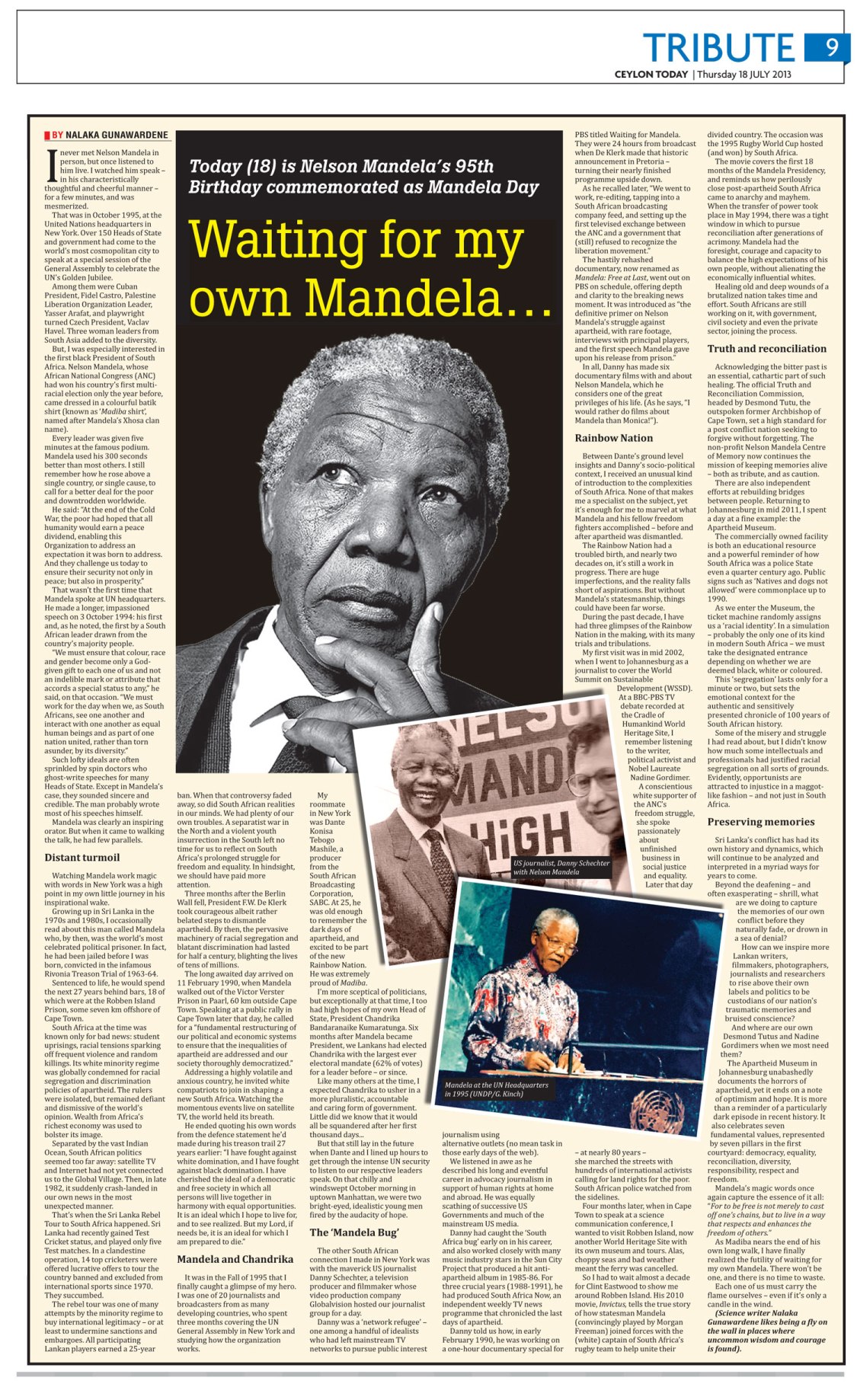
In a wistful essay titled ‘Memories of War, Dreams of Peace, hurriedly put together in mid May 2009 as Sri Lanka’s long and brutal civil war ended, I wrote: “Our political leaders, in whom we entrust our collective destiny, now face a historic choice… African analogies can go only so far in Asia, but at this juncture, it is tempting to ask: would our leaders now choose the Mandela Road or the Mugabe Road for the journey ahead?”
Four years on, that now reads rather naïve. In hindsight, I should have known better — and not pinned any hopes on political leaders again.
I say “again” because, just once before in my life, I did so: In mid 1994, six months after Nelson Mandela became the first majority elected President of South Africa, we Lankans elected Chandrika Bandaranaike Kumaratunga as our own President, with the largest ever electoral mandate (62% of votes).
Like many others at the time, I expected Chandrika to usher in a more pluralistic, accountable and caring form of government. Little did we know that it would all be squandered after her first 1,000 days…
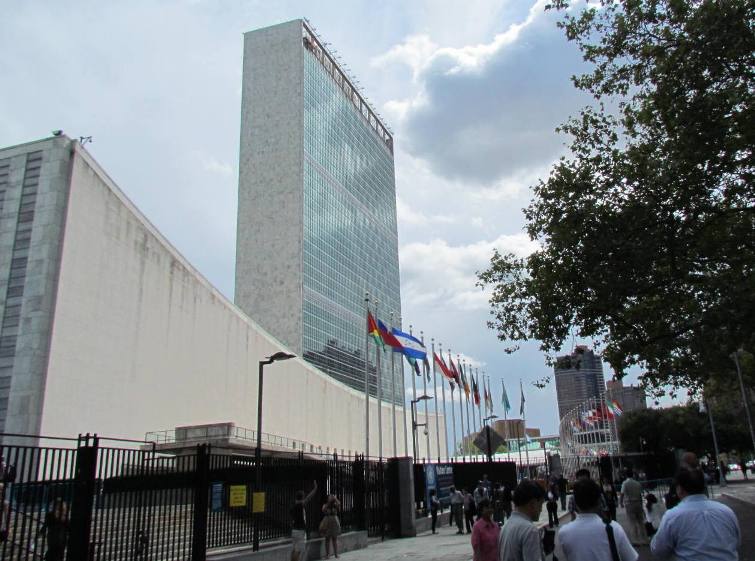
The essay draws on my own memorable experience of listening to Mandela speak at the UN Headquarters in New York, in October 1995, and my three brief visits to post-apartheid South Africa over the past dozen years.
Oh, President Chandrika also came to the UN in New York on that occasion, accompanied by her astute foreign minister, the late Lakshman Kadirgamar — who came closest to being Lanka’s moral and intellectual colossus of global stature.
My South African room mate in New York, Dante Mashile, and I lined up hours ahead of the event to get through the intense UN security. On that chilly and windswept October morning in uptown Manhattan, we were two bright-eyed, idealistic young men fired by the audacity of hope.
In the end, my own leader didn’t walk her talk. But Dante’s did. That made all the difference for our two nations…
The Rainbow Nation had a troubled birth, and nearly two decades on, it’s still a work in progress. There are huge imperfections, and the reality falls short of aspirations. But without Mandela’s statesmanship, things could have been far worse.
As I note in this new essay:
“I have finally realized the futility of waiting for my own Mandela. There won’t be one, and there’s no time to waste.
“We must carry the flame ourselves — even if it’s only a candle in the wind.”
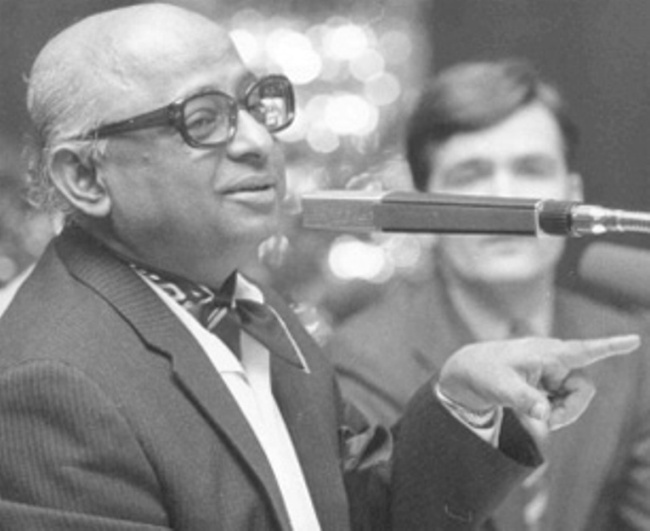
In the early 1990s, I had the privilege of working with the late Anil Agarwal, the outstanding environmentalist and journalist. He founded the Centre for Science and Environment (CSE), which continues his mission of articulating science-based, southern perspectives in issues of sustainable development and social justice.
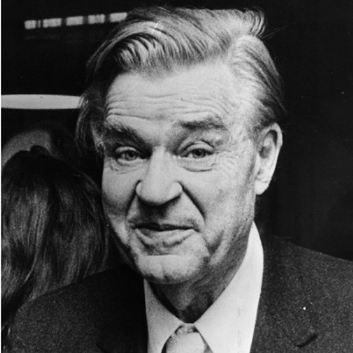
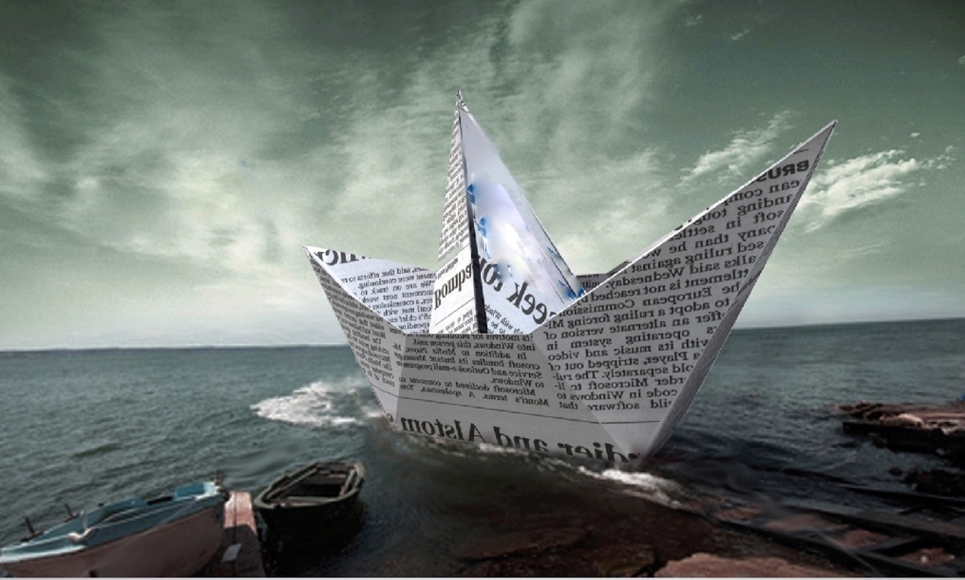
In this week’s Ravaya column (in Sinhala), I invoke one of Anil’s favourite quotes, about books being akin to time bombs — which he attributed to the Swedish economist and Nobel laureate Gunnar Myrdal. I extend the metaphor to media products — in print, audio and video — and ask: what can we do to shorten their fuse?
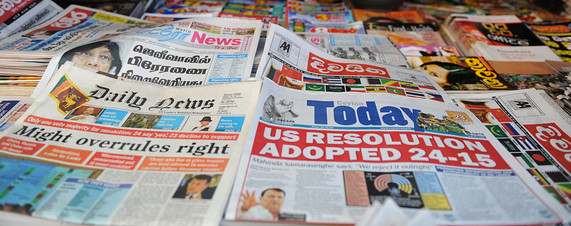
This is also a commentary on the lack of adequate public discussion and debate on matters of public interest in Sri Lanka, and what we can learn from the more argumentative Indians.
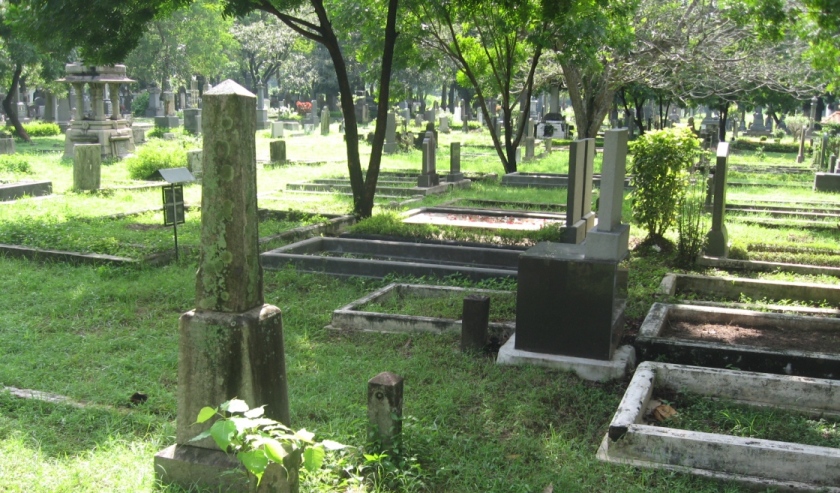
Colombo General Cemetery: No discussion or debate…
ශ්රී ලංකාවේ මීට ඉහත පරම්පරාවක ප්රතිපත්තිගරුක වාමාංශික නායකයකු වූ බර්නාඞ් සොයිසා වරක් කොළඹ කනත්ත සුසාන භූමිය හඳුන්වා දුන්නේ ‘වාද විවාද – තර්ක විතර්ක කිසිවක් නොමැති වූ කොළඹ එක ම ස්ථානය’ හැටියටයි (“The only place in Colombo where there is no discussion or debate”).
“Books are like time bombs. If they contain ideas that are correct, then one day they will explode. And if they don’t, they will be consigned to the dustbin of history.”
Who is a citizen journalist? Does everyone who blogs and tweets automatically become one? If not, who qualifies? Who judges this on what criteria? And what niche in media and public sphere do citizen journalists fill when compared with salaried journalists working for more institutionalised or mainstream media?
These have been debated for years, and there is no global consensus. They are belatedly being asked and discussed in Sri Lanka, and form the basis of my latest Ravaya column (in Sinhala).
My views were summed up sometime ago in this comment I left on a blog:“Just as journalism is too important to be left solely to full-time, salaried journalists, citizen journalism is too important to be left simply to irresponsible individuals with internet access who may have opinions (and spare time) without the substance or clarity to make those opinions count.”
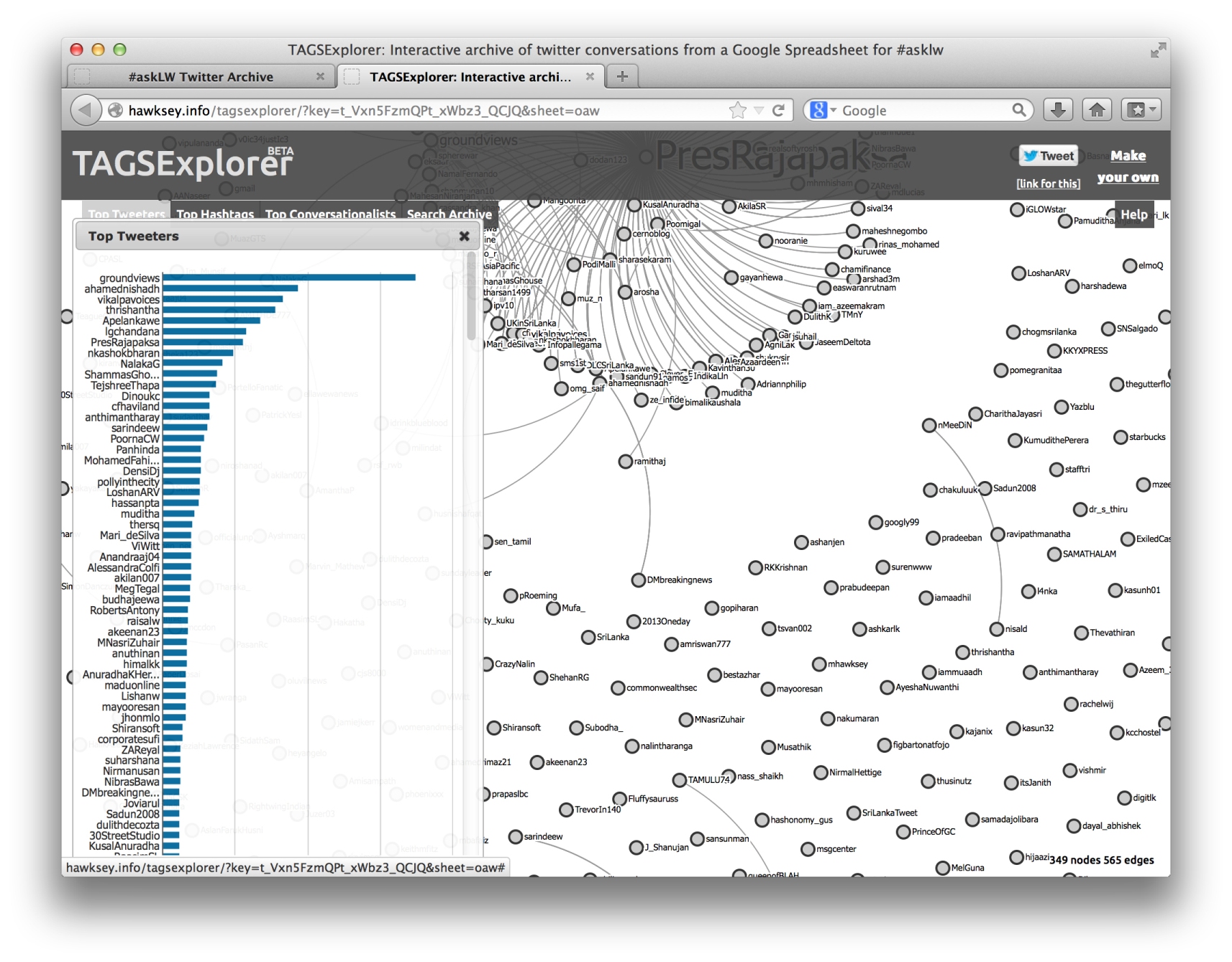
Screen Shot 2013-06-19 at 8.31.53 PM Courtesy Groundviews.org
Along with dozens of tweeps, I took part in an interesting Twitter Q&A session with Lalith Weeratunga, Secretary to the President of Sri Lanka, which unfolded from 14:30 to 16:00 Sri Lanka Time on 19 June 2013.
Our questions were posed using the hashtag #AskLW: they are all displayed on Twitter at https://twitter.com/search/realtime?q=%23askLW While most were in English, some came in the local languages of Sinhala and Tamil too.
Groundviews.org, the citizen journalism website, has archived online 2,680+ tweets related to this exchange. Of these, some 1,140 are original tweets (posted since 14 June 2013, when #askLW was first announced) while others are retweets.
As Groundviews.org noted, “There was no historical precedent for this kind of engagement over social media, especially for someone so high up in Government and in daily contact with the (Lankan) President.”
Commenting on the timing of this exchange, Groundviews editor Sanjana added: “Ironically, the announcement of the Twitter Q&A with Weeratunga came on the same day Gotabaya Rajapaksa, the President’s brother, in a spark of unrivalled genius, called social media no less than a national security threat in post-war Sri Lanka.”
Sanjana has done a quick and very good analysis of what was asked, which selected few among many were actually answered, and which topics gained traction among those participating – especially during the period the event was live.
Even more interesting is how contentious and controversial topics were completely ignored. To be sure, Weeratunga isn’t the first public official to do so, and some might even argue that he had the right to choose his questions. (That won’t have been so easy in a physical press conference.)
All the same, it is highly revealing that the top public servant in Sri Lanka chose not to respond to questions on Islamphobia, Buddhist extremism, hate speech, militarisation, human rights and other topics of great public interest in today’s Sri Lanka.
It’s remarkable that such questions were posed, in a public platform, which is more than what the mainstream media (MSM) of Sri Lanka regularly ask at official press conferences given by senior government officials. From all accounts, the monthly breakfast meetings that the President has with newspaper editors is also a lame affair where no critical questions are raised.
Yes, MSM and citizen journalists are not directly comparable. In the prevailing intolerant environment, it is telling that many social media users took cover under pseudonyms to pose questions to the top civil servant of Lanka (while the rest of us asked under our own names). There was even speculation among some tweeps about what might happen to those who ask pesky questions…
In this post, I want to collate and briefly annotate my own questions to Weeratunga – all of which he chose not to answer. I’m not surprised and certainly not sulky: these were admittedly not as easy as some others.
I posed a few questions in advance, and then some more during the live event. They were in one way or another related to the multiple positions that Weeratunga holds in the Lankan government.
One question stemmed from Weeratunga’s meaningful speech at the fifth National Conference on the Role of ICT in Reconciliation held at the Lakshman Kadirgamar Institute for International Relations and Strategic Studies (LKIIRSS) in Colombo in Nov 2012.
#AskLW: I read your speech on ICTs at LKIIRSS last Oct. How can #lka govt that doesn't tolerate any dissent really promote #reconciliation?
Commenting on the very different – sometimes contradictory – messages given out by senior elected and other public officials of the Lankan government on matters of domestic and global interest, I asked:
#AskLW#lka Govt publicly stated positions often remind us of 'Strange Case of Dr Jekyll and Mr Hyde'. Why this sharply split personality?
Weeratunga, who does not yet have his own Twitter account, gave his selected answers using the President’s official account, @PresRajapaksa. This was noted by others, and I replied to one:
Many tweeps asked him to comment on the Defence Secretary’s recent remark on social media. Having noted, only minutes earlier, that “Social Media is a powerful tool”, Weeratunga added later: “Sec/Defence has a point; since it has been used for destructive purposes elsewhere, he has said so.”
Some tweeps reacted to this observation among ourselves. My contribution:
@AmanthaP@PresRajapaksa Oh, knives, telephones, books, cars, even fists have been used 4 destructive purposes too! Intention matters #AskLW
Knowing well Lankans don’t like to be compared to Indians, who nevertheless hold many lessons for us in managing diversity and in balancing modernity with tradition, I asked:
Not answered. (Well, after all, this wasn’t Hard Talk!).
Prompted by @Groundviews, there was a brief exchange on Sri Lanka’s fully state owned budget airline Mihin, which has been losing billions of public funds from Day One. I reacted:
I’ve described myself as a hybrid journalist with ‘one foot in each grave’ — straddling the worlds of mainstream media and citizen journalism. In years of mainstream journalism — practised in Sri Lanka and across Asia — I have sharpened the art of asking pointed questions. I often ask more questions than I find answers for. So this is part of that process.
But I’m very glad all our questions are archived online — which is highly significant as part of the public record of our times. When Weeratunga next speaks about ICTs nationally or internationally, this digital record will be part of his legacy.
For now, many thanks to Weeratunga and @PresRajapaksa new media team for having organised this event. It’s a good start, and hopefully they will repeat this from time to time with improved capability at their end to cope with the info flood…
My last tweet in this exchange was a salute to the original cyber politician of Sri Lanka:
#AskLW scored around 3.5 on Moragoda Scale of #lka Cyber Engagement where @milindamoragoda set benchmark of 1 & high end is 10. Do u Agree?
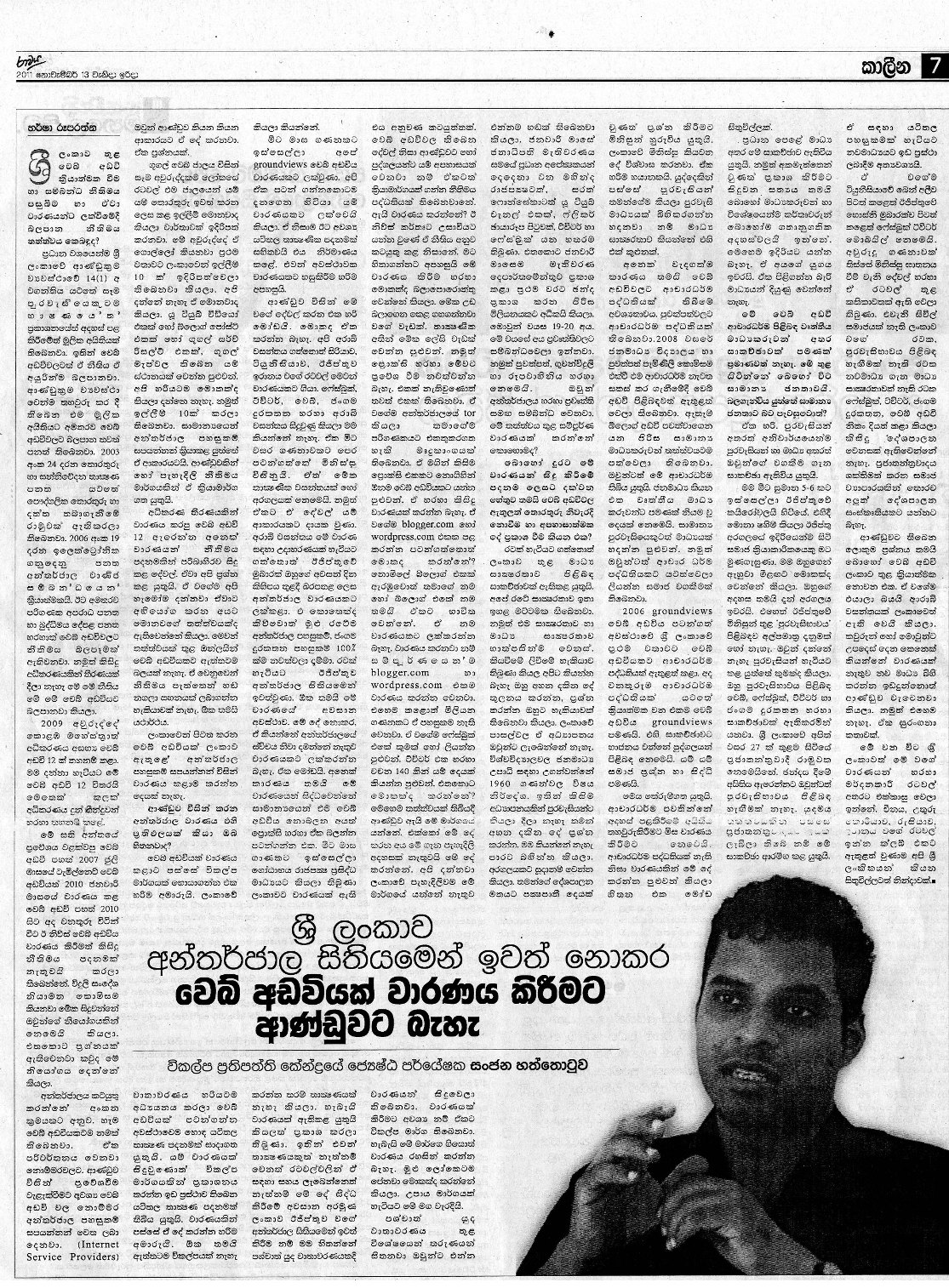
In this week’s Ravaya column (in Sinhala), I continue my discussion on challenges of modernisation for small, independent media in the world today when print media industry faces formidable challenges.
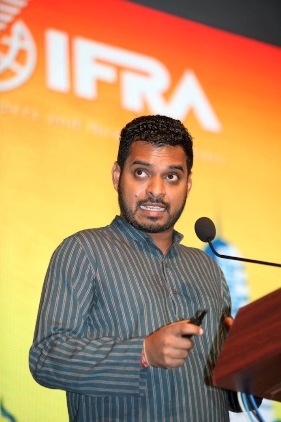
I quote Sanjana Hattotuwa, new media researcher and activist, who was a speaker at the recent 65th annual congress of the World Association of Newspapers and News Publishers (WAN-IFRA) held in Bangkok.
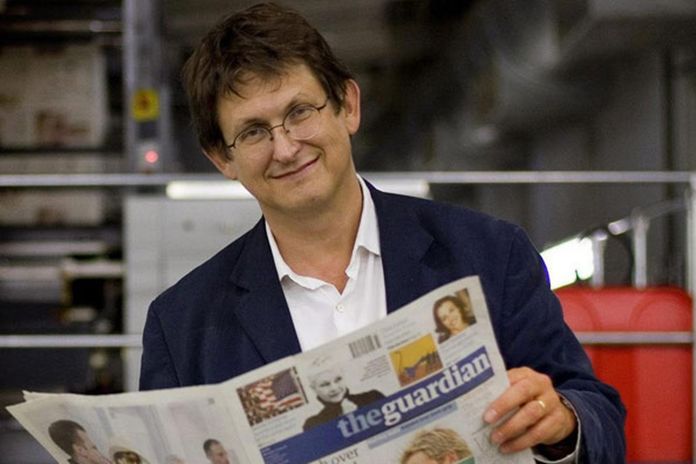
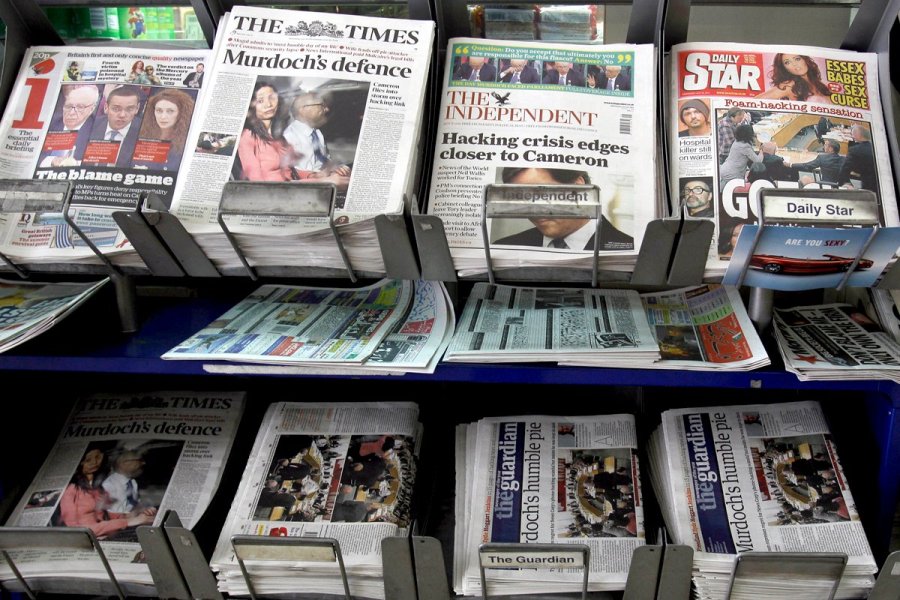
I also refer to the Guardian newspaper’s model of Open Journalism, and ask how this can be adapted to suit our own realities. The challenges are more within the minds of media organisations, I argue, than in the technology tools or platforms.
I observe how, some 18 years after commercial Internet connectivity was introduced in Sri Lanka, not a single Lankan newspaper has been able to develop a modern website: all are stuck in the 1990s first generation web, and their attempts to ‘modernise’ and enter the 21st Century have been pitiful and hilarious at the same time. Ravaya has a real opportunity, therefore, to become the first Lankan newspaper — in any language — to develop an engaging and interactive website. But first, it must make some top level decisions on how it wants to position itself in the rapidly changing world of media content creation, dissemination and consumption.
Ravaya, Sri Lanka’s only newspaper owned by its journalists and editors, has embarked on a process to modernise itself — and sparked off a debate on how new investments should be raised. Some loyal readers are concerned what might happen to the newspaper’s editorial independence when private capital comes in.
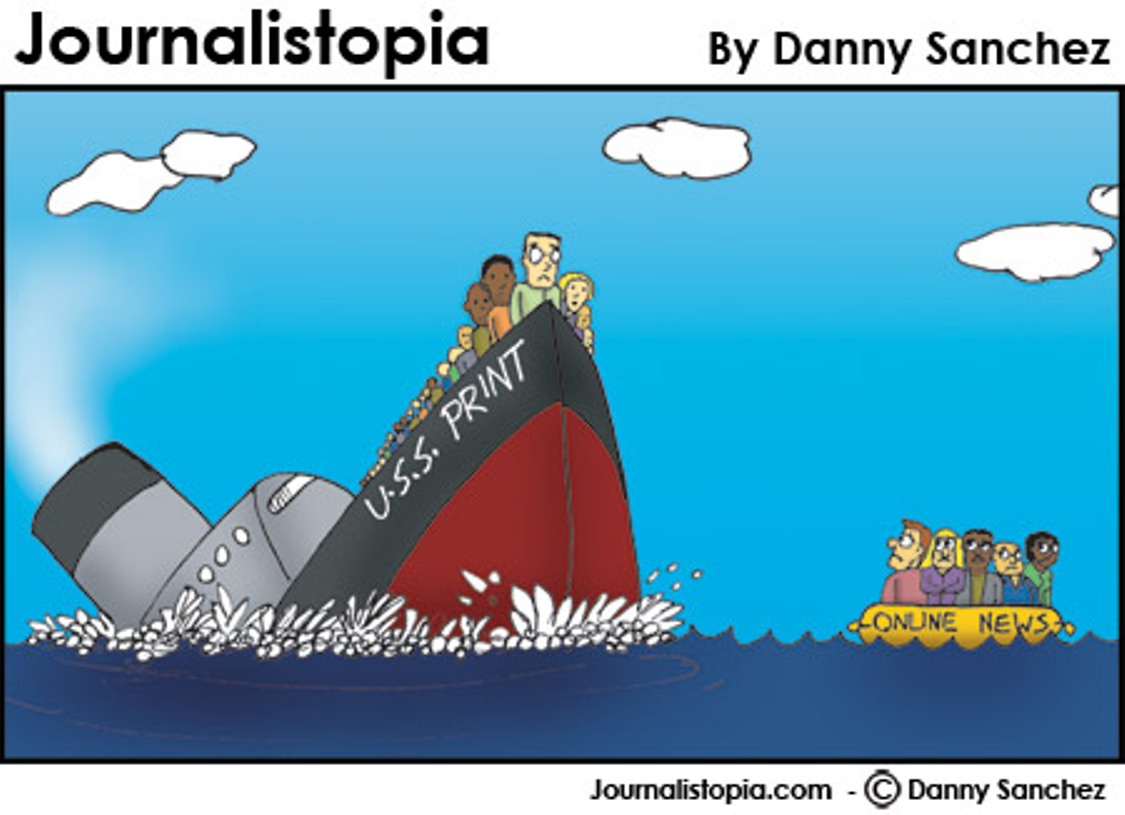
In this week’s Ravaya column, I place this debate in the context of economic survival challenges of the newspaper industry worldwide. I take the experience of the Guardian (UK) and the New York Times to explore what changes in strategy and funding they have adopted, and with what degree of success.
The biggest challenge, I argue, is that the newspaper industry must find how to engage the web as a central part of its content creation, dissemination and archiving.
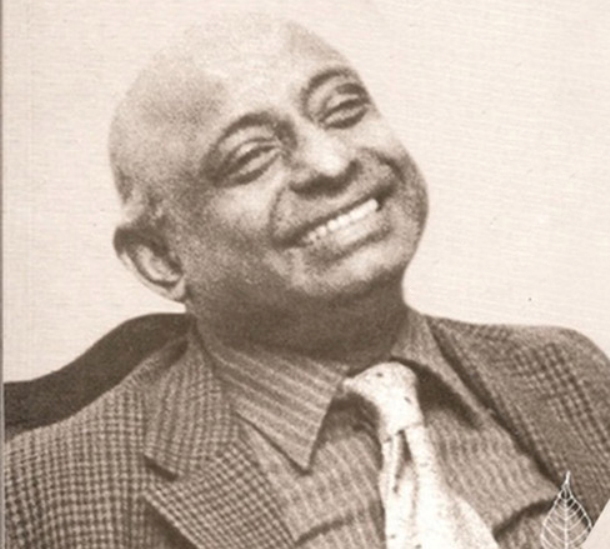
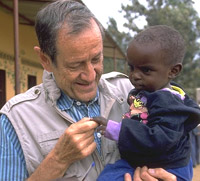
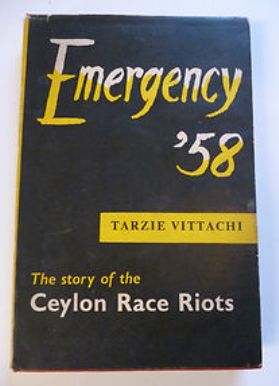
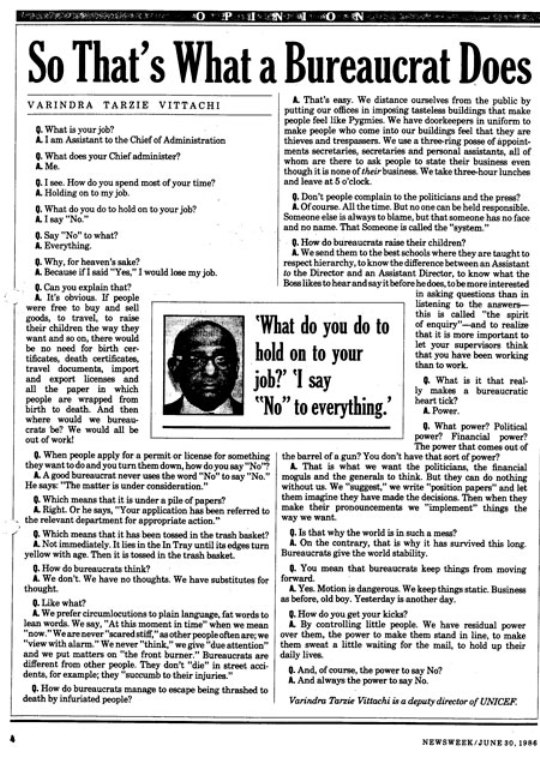
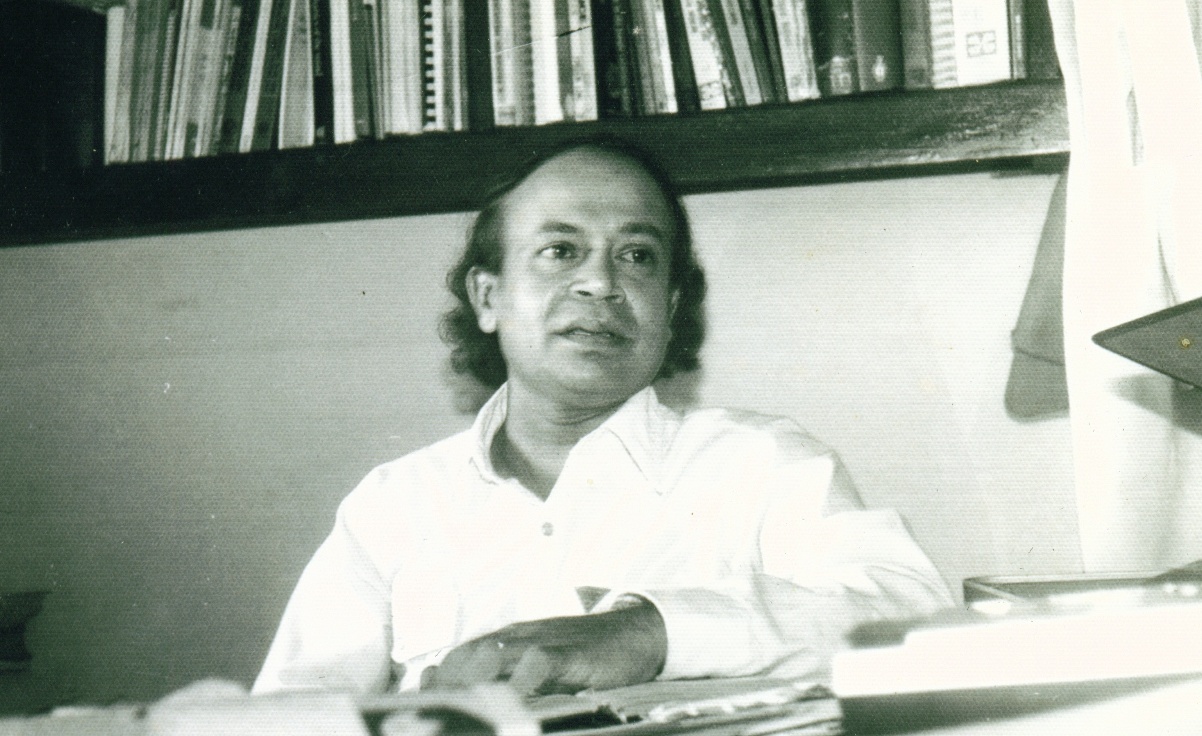
I have devoted another weekend column in Ravaya newspaper (in Sinhala) to celebrate the memory of the illustrious Lankan journalist, editor and development communicator, Tarzie Vitachi (1921 – 1993). This time, I talk about his time at the United Nations, first as communication chief at UNFPA, and then as Deputy Executive Director at UNICEF.
My weekend column in Ravaya newspaper (in Sinhala) is devoted this week to remember the illustrious Lankan journalist, editor and development communicator, Tarzie Vitachi (1921 – 1993).
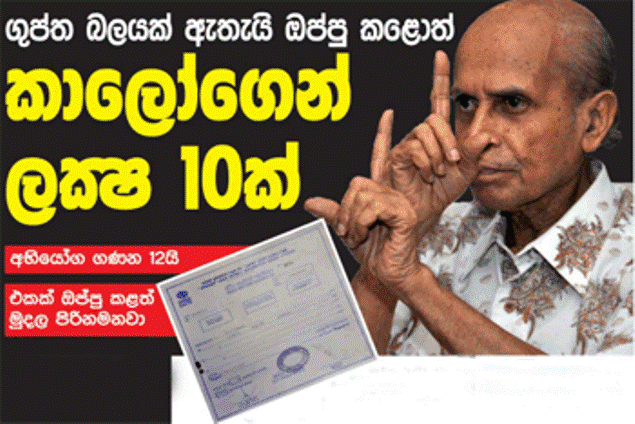
In this week’s Ravaya Sunday newspaper column (in Sinhala), I’ve written a tribute to Dr Carlo Fonseka, Emeritus Professor of Physiology at the University of Colombo, rationalist and public intellectual, who turned 80 earlier this month.

 illy and windswept October morning in uptown Manhattan, we were two bright-eyed, idealistic young men fired by the audacity of hope.