From MDGs to SDGs: Well done, Sri Lanka, but mind the gaps!

This op-ed appeared in Daily Mirror broadsheet newspaper in Sri Lanka on 1 October 2015.

From MDGs to SDGs:

Well done, Sri Lanka — but mind the gaps!

By Nalaka Gunawardene

Over the weekend of September 25 – 27, the United Nations headquarters in New York hosted the Sustainable Development Summit 2015. It was a high-level segment of the 70th UN General Assembly that was attended by many world leaders including Sri Lanka’s President Maithripala Sirisena.
Sustainable Development Summit 2015 Logo

The UN, which turns 70 this year, is once again rallying its member governments to a lofty vision and ambitious goal: to embark on new paths to improve the lives of people everywhere.

For this, the Summit adopted a new and improved global task-list called Sustainable Development Goals (SDGs). Prepared after two years of worldwide consultations, the SDGs offer a blueprint for development until 2030.

There are 17 SDGs tackling long-standing problems like ending poverty and reducing inequality to relatively newer challenges like creating more liveable cities and tackling climate change. These are broken down into 169 specific targets. Their implementation will formally begin on 1 January 2016.
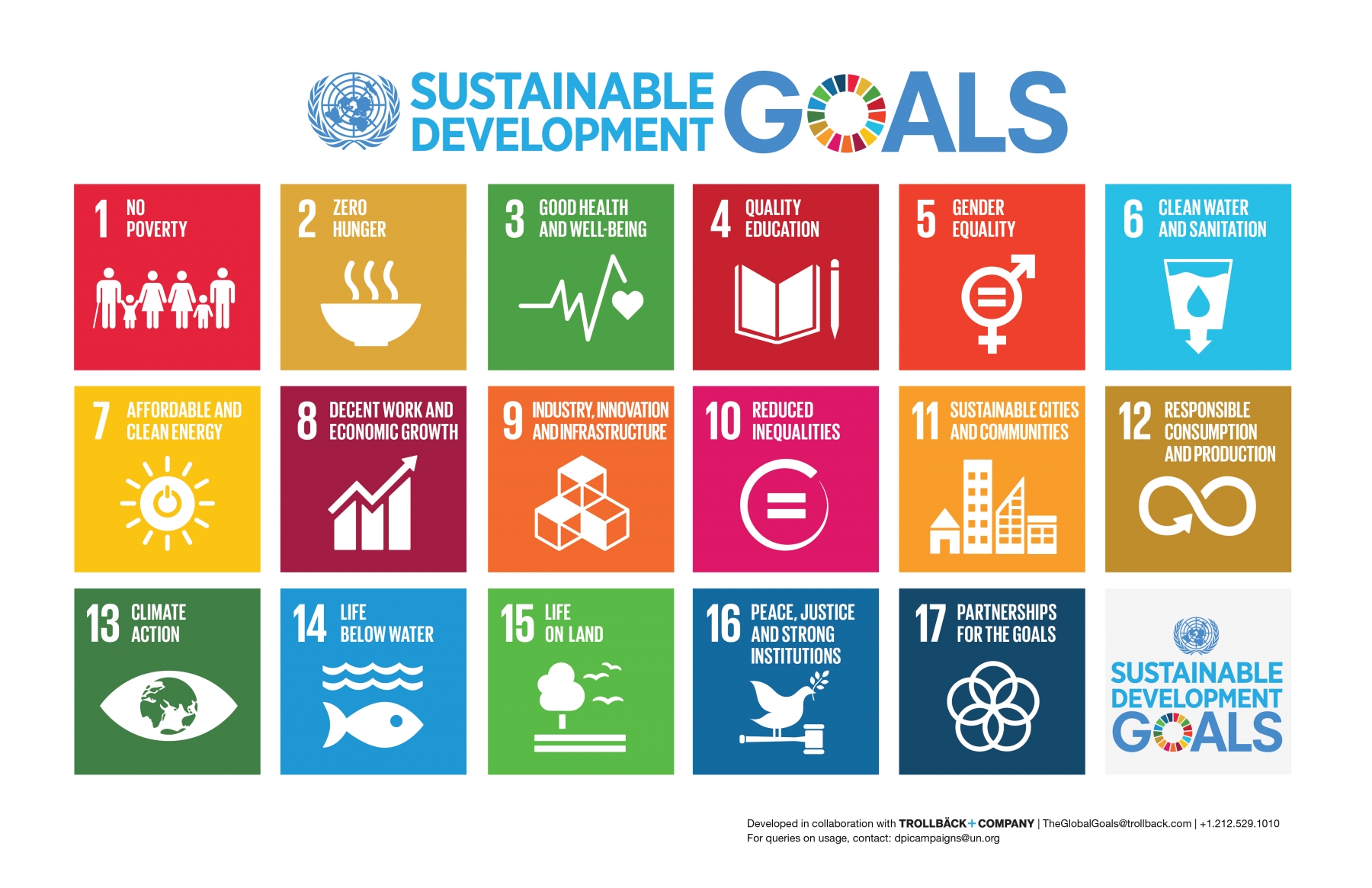
SDGs in a nutshell - courtesy UN
SDGs in a nutshell – courtesy UN

The SDGs are to take over from the Millennium Development Goals, or MDGs, that have guided the development sector for 15 years. Sri Lanka was among the 189 countries that adopted the MDGs at the Millennium Summit the UN hosted in New York in September 2000. On that occasion, the country was represented by Lakshman Kadirgamar as Minister of Foreign Affairs.

The eight MDGs covered a broad spectrum of goals, from eradicating absolute poverty and hunger to combating HIV, and from ensuring all children attend primary school to saving mothers from dying during pregnancy and childbirth.

Much has happened in the nearly 5,500 days separating the adoption of the original MDGs and now, the successor SDGs. This month, as the world commits to ‘leaving no one behind’ (as UN Secretary General Ban Ki-moon has said), it is useful to look back, briefly.

Good ‘Report Card’

How has Sri Lanka pursued the MDGs while the country coped with a long drawn civil war, political change, and the fall-out of a global economic recession?

In fact, it has done reasonably well. In its human development efforts, Sri Lanka has quietly achieved a great deal. However, there are gaps that need attention, and some goals not yet met.

That is also the overall message in a recent report that took stock of Sri Lanka’s pursuit of Millennium Development Goals, or MDGs.
Sri Lanka MDG Country Report 2014

We might sum it up with a phrase that teachers are fond of using, even on good students: “You’re doing well – but can do better! Try harder!”

For the past 15 years, the MDGs have provided a framework for Sri Lanka’s national development programmes. Progress has been assessed every few years: the most recent ‘report card’ came out in March 2015.

The MDG Country Report 2014, prepared by the Institute of Policy Studies (IPS), is a joint publication by the Government of Sri Lanka and the United Nations in Sri Lanka. Data from the 2012 census and Household Income and Expenditure Survey 2012/13 have generated plenty of data to assess MDG situation across the country, including the war affected areas.

“Sri Lanka has already achieved the targets of 13 important MDG indicators out of 44 indicators relevant to Sri Lanka. Most of the other indicators are either ‘On Track’ or progressing well,” says IPS Executive Director Dr Saman Kelegama in his foreword to the report.

Highlights

 The report offers insights into how Sri Lanka’s ‘soft infrastructure’ — all the systems and institutions required to maintain the economic, health, cultural and social standards of a country – are faring.

Consider these highlights:

  • Sri Lanka’s overall income poverty rates, when measured using accepted statistical benchmarks, have come down from 2% in 2006/7 to 6.7% in 2012.
  • Unemployment rate has declined from 8% in 1993 to 3.9% in 2012. However, unemployment rate among women is twice as high as among men.
  • While food production keeps up with population growth, malnutrition is a concern. A fifth of all children under five are underweight. And half of all people still consume less than the minimum requirement of daily dietary energy.
  • Nearly all (99%) school going children enter primary school. At that stage, the numbers of boys and girls are equal. In secondary school and beyond (university), in fact, there now are more girls than boys.
  • More babies now survive their first year of life than ever before: infant mortality rate has come down to 9.4 among 1,000 live births (from 17.7 in 1991). Deaths among children under five have also been nearly halved (down from 2 in 1991 to 11.3 in 2009).
  • Fewer women die needlessly of complications arising from pregnancy and childbirth. The maternal mortality rate, which stood at 92 deaths per 100,000 live births in 1990, plummeted to 33 by 2010. Doctors or skilled health workers are now present during almost all births.
  • Sri Lanka’s HIV infection levels have remained now, even though the number of cases is slowly increasing. Meanwhile, in a major public health triumph, the country has all but eradicated malaria: there have been no indigenous malaria cases since November 2012, and no malaria-related deaths since 2007.
  • More Lankans now have access to safe drinking water (up from 68% in 1990 to almost 90% in 2012-2013.)

These and other social development outcomes are the result of progressive policies that have been sustained for decades.

“Sri Lanka’s long history of investment in health, education and poverty alleviation programmes has translated into robust performance against the MDGs, and Sri Lanka has many lessons to share,” said Sri Lanka’s UN Resident Coordinator and UNDP Resident Representative, Subinay Nandy, at the report’s launch in March 2015.

Proportion of Lankans living below the poverty line - total head count and breakdown by district
Proportion of Lankans living below the poverty line – total head count and breakdown by district

Mind the Gaps!

Despite these results, many gaps and challenges remain that need closer attention and action in the coming years.

One key concern is how some impressive national level statistics can eclipse disparities at provincial and district levels. The MDG data analysis clearly shows that all parts of Sri Lanka have not progressed equally well.

For example, while most districts have already cut income poverty rates in half, there are some exceptions. These include eight districts in the Northern and Eastern provinces, for which reliable data are not available to compare with earlier years, and the Monaragala District in Uva Province – where poverty has, in fact, increased in the past few years.

Likewise, many human development indicators are lower in the plantation estate sector, where 4.4% of the population lives. An example: while at least 90% of people in urban and rural areas can access safe drinking water, the rate in the estate sector is 46.3%.

Another major concern: the gap between rich and poor remains despite economic growth. “Income inequality has not changed, although many poor people managed to move out of poverty and improve their living conditions,” the MDG Progress report says.

In Gender Equality, Sri Lanka’s performance is mixed. There is no male-female disparity in education, and in fact, there are more literate women in the 15 to 24 age than men. But “these achievements have not helped in increasing the share of women in wage employment in the non-agricultural sector,” notes the report.

Disappointingly, women’s political participation is also very low. The last Parliament had 13 women members out of 225. That was 5.8% compared to the South Asian rate of 17.8% and global rate of 21.1%. The report has urged for “measures to encourage a substantial increase in the number of women in political offices”.

Of course, MDGs and human development are not just a numbers game. While measurable progress is important, quality matters too.

The MDG report highlights the urgent need to improve the quality and relevance of our public education. Among the policy measures needed are increasing opportunities for tertiary education, bridging the gap between education and employment, and reducing the skills mismatch in the labour market.

On the health front, too, there is unfinished – and never ending — business. Surveillance for infectious diseases cannot be relaxed. Even as malaria fades away, dengue has been spreading. Old diseases like tuberculosis (8,000 cases per year) stubbornly persist. A rise in non-communicable diseases – like heart attacks, stroke, cancers and asthma – poses a whole new set of public health challenges.

Sri Lanka offers the safest motherhood in South Asia

Open Development

So the ‘well-performing’ nation of Sri Lanka still has plenty to do. It is just as important to sustain progress already achieved.

The new and broader SDGs will provide guidance in this process, but each country must set its own priorities and have its own monitoring systems. The spread of information and communications technologies (ICTs) has created new sources of real-time data that can help keep track of progress, or lack of it, more easily and faster.

Whereas MDGs covered mostly “safe” themes like poverty, primary education and child deaths, the SDGs take on topics such as governance, institutions, human rights, inequality, ageing and peace. This reflects how much international debates have changed since the late 1990s when the MDGs were developed mostly by diplomats and technocrats.

This time around, not only governments and academics but advocacy groups and activists have also been involved in hundreds of physical and virtual consultations to agree on SDGs. In total, more than seven million people have contributed their views.

As the government of Sri Lanka pursues the SDGs that it has just committed to in New York, we the people expect a similar consultative process.

Goodbye, closed development. Welcome, Open Development!

Science writer Nalaka Gunawardene wrote an earlier version of this for UN Population Fund (UNFPA) Sri Lanka’s new blog Kiyanna.lk. The views are his own, based on 25 years of development communication experience.
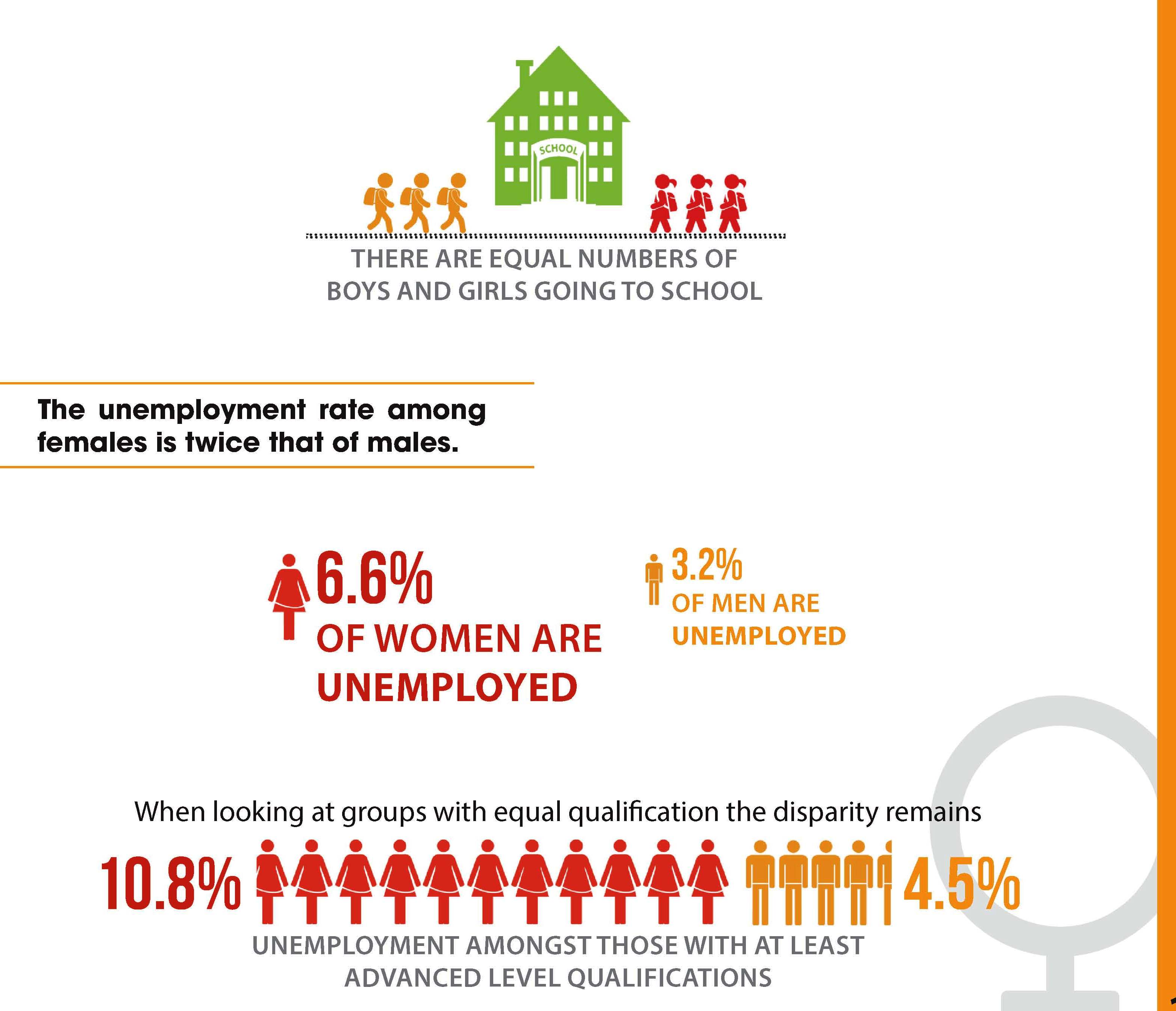
Equal numbers of girls and boys go to school in Sri Lanka today, But women struggle harder to find employment.

All infographics courtesy: Millennium Development Goals: Sri Lanka’s Progress and Key Achivements, http://countryoffice.unfpa.org/srilanka/?reports=10872
Echelon August 2015 column: Media Reforms – The Unfinished Agenda

Text of my column written for Echelon monthly business magazine, Sri Lanka, August 2015 issue

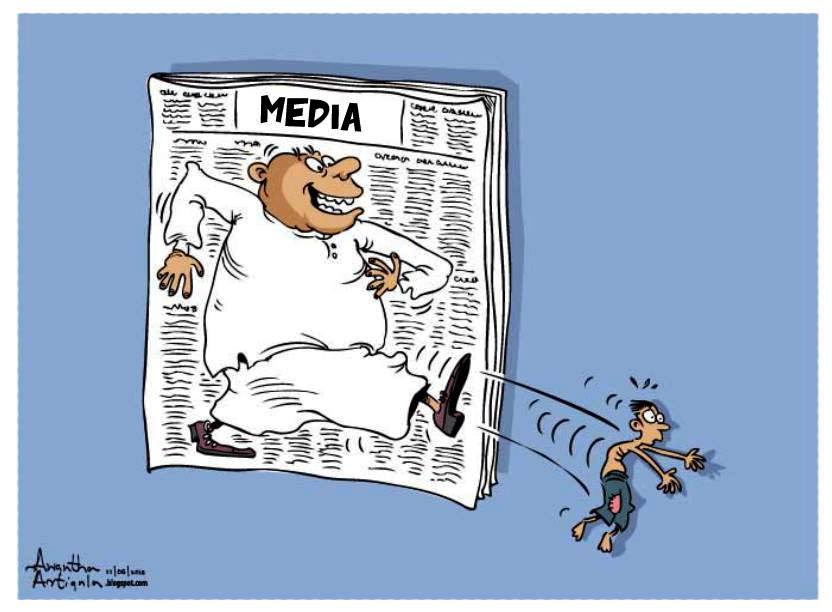
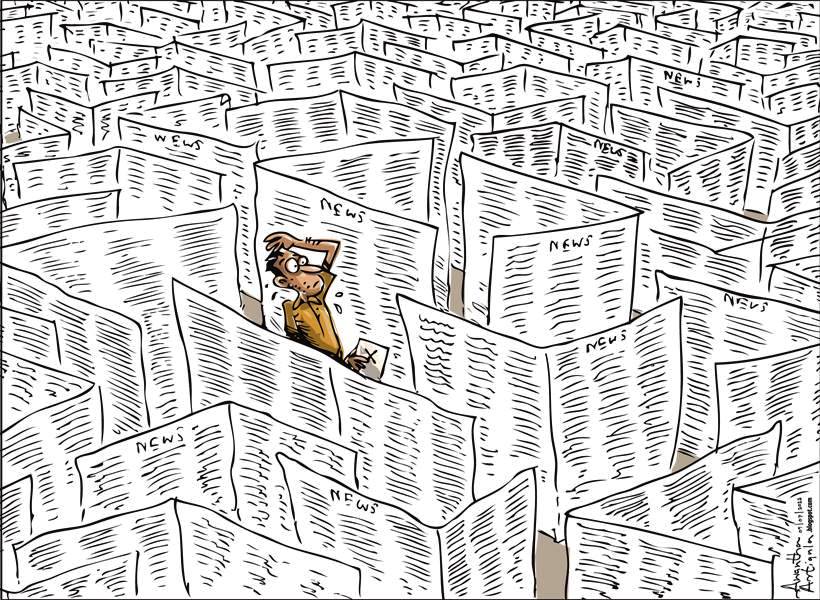
Cartoon by Awantha Artigala, Sri Lanka Cartoonist of the Year 2014

Media Reforms: The Unfinished Agenda

By Nalaka Gunawardene

When I was growing up in the 1970s, Sri Lanka’s media landscape was very different. We had only one radio station (state-owned SLBC) and three newspaper houses (Lake House, Times of Ceylon and Independent Newspapers). There was no TV, and the web wasn’t even invented.

At that time, most discussions on media freedom and reforms centred around how to contain the overbearing state – which was a key publisher, as well as the sole broadcaster, dominant advertiser and media regulator, all rolled into one.

Four decades on, the state still looms large on our media landscape, but there are many more players. The number of media companies, organisations and products has steadily increased, especially after private sector participation in broadcasting was allowed in 1992.

More does not necessarily mean better, however. Media researchers and advocacy groups lament that broadcast diversification has not led to a corresponding rise in media pluralism – not just in terms of media ownership and content, but also in how the media reflects diversity of public opinion, particularly of those living on the margins of society.

As the late Tilak Jayaratne and Sarath Kellapotha, two experienced broadcasters, noted in a recent book, “There exists a huge imbalance in both media coverage and media education as regards minorities and the marginalised. This does not come as a surprise, as it is known that media in Sri Lanka, both print and broadcast, cater mainly to the elite, irrespective of racial differences.”

 Media under pressure

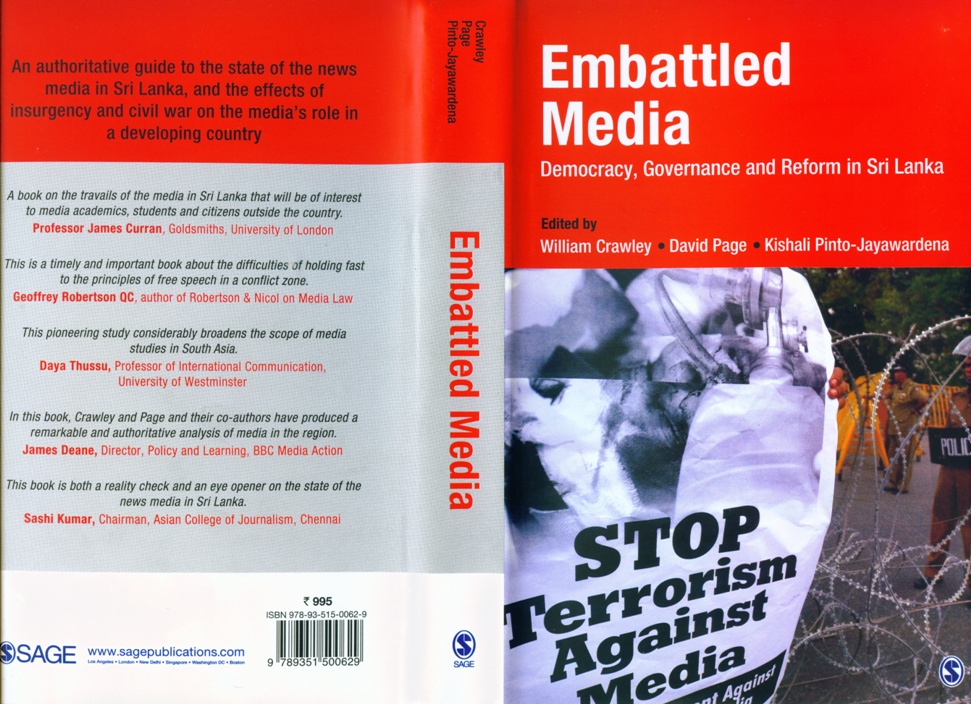
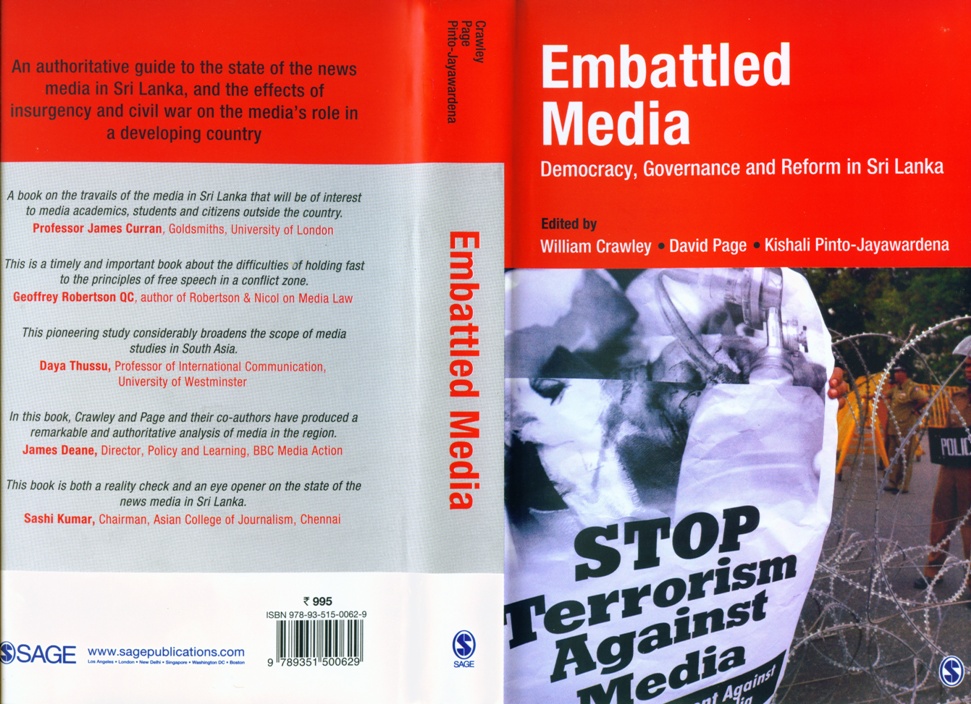
 The multi-author book, titled Embattled Media: Democracy, Governance and Reform in Sri Lanka (Sage Publications, Feb 2015), was compiled during 2012-14 by a group of researchers and activists who aspired for a freer and more responsible media. It came out just weeks after the last Presidential Election, where media freedom and reforms were a key campaigning issue.

In their preface, co-editors William Crawley, David Page and Kishali Pinto-Jayawardena say: “Media liberalisation from the 1990s onwards had extended the range of choice for viewers and listeners and created a more diverse media landscape. But the war in the north and insurrections in the south had taken their toll of media freedoms. The island had lived under a permanent state of emergency for nearly three decades. The balance of power between government, judiciary, the media and the public had been put under immense strain.”

Embattled Media - Democracy, Governance and Reform in Sri Lanka
Embattled Media – Democracy, Governance and Reform in Sri Lanka

The book, to which I have contributed a chapter on new media, traces the evolution mass media in post-colonial Sri Lanka, with focus on the relevant policies and laws, and on journalism education. It discusses how the civil war continues to cast “a long shadow” on our media. Breaking free from that legacy is one of many challenges confronting the media industry today.

Some progress has been made since the Presidential election. The new government has taken steps to end threats against media organisations and journalists, and started or resumed criminal investigations on some past atrocities. Political websites that were arbitrarily blocked from are once again accessible. Journalists who went into exile to save their lives have started returning.

On the law-making front, meanwhile, the 19th Amendment to the Constitution recognized the right to information as a fundamental right. But the long-awaited Right to Information Bill could not be adopted before Parliament’s dissolution.

Thus much more remains to be done. For this, a clear set of priorities has been identified through recent consultative processes that involved media owners, practitioners, researchers, advocacy groups and trainers. These discussions culminated with the National Summit on Media Reforms organised by the Ministry of Media, the University of Colombo, Sri Lanka Press Institute (SLPI) and International Media Support (IMS), and held in Colombo on 13 and 14 May.

Parallel to this, there were two international missions to Sri Lanka (in March and May) by representatives of leading organisations like Article 19, UNESCO and the International Federation of Journalists (IFJ). I served as secretary to the May mission that met a range of political and media leaders in Colombo and Jaffna.

 Unfinished business

We can only hope that the next Parliament, to be elected at the August 17 general election, would take up the policy and law related aspects of the media reform agenda (while the media industry and profession tackles issues like capacity building and greater professionalism, and the education system works to enhance media literacy of everyone).

Pursuing these reforms needs both political commitment and persistent advocacy efforts.


  • Right to Information: The new Parliament should pass, on a priority basis, the Right to Information Bill that was finalised in May 2015 with inputs from media and civil society groups.


  • Media Self-Regulation: The Press Council Act 5 of 1973, which created a quasi-judicial entity called the Press Council with draconian powers to punish journalists, should be abolished. Instead, the self-regulatory body established in 2003, known as the Press Complaints Commission of Sri Lanka (PCCSL), should be strengthened. Ideally its scope should expand to cover the broadcast media as well.


  • Law Review and Revision: Some civil and criminal laws pose various restrictions to media freedom. These include the Official Secrets Act and sedition laws (both relics of the colonial era) and the draconian Prevention of Terrorism Act that has outlived the civil war. There are also needlessly rigid laws covering contempt of court and Parliamentary privileges, which don’t suit a mature democracy. All these need review and revision to bring them into line with international standards regarding freedom of expression.


  • Broadcast regulation: Our radio and TV industries have expanded many times during the past quarter century within an ad hoc legal framework. This has led to various anomalies and the gross mismanagement of the electromagnetic spectrum, a finite public property. Sri Lanka urgently needs a comprehensive law on broadcasting. Among other things, it should provide for an independent body to regulate broadcasting in the public interest, more equitable and efficient allocation of frequencies, and a three-tier system of broadcasting which recognises public, commercial and community broadcasters. All broadcasters – riding on the public owned airwaves — should have a legal obligation be balanced and impartial in coverage of politics and other matters of public concern.


  • Restructuring State Broadcasters: The three state broadcasters – the Sri Lanka Rupavahini Corporation (SLRC), the Sri Lanka Broadcasting Corporation (SLBC) and the Independent Television Network (ITN) – should be transformed into independent public service broadcasters. There should be legal provisions to ensure their editorial independence, and a clear mandate to serve the public (and not the political parties in office). To make them less dependent on the market, they should be given some public funding but in ways that don’t make them beholden to politicians or officials.


  • Reforming Lake House: Associated Newspapers of Ceylon Limited or Lake House was nationalised in 1973 to ‘broadbase’ its ownership. Instead, it has remained as a propaganda mill of successive ruling parties. Democratic governments committed to good governance should not be running newspaper houses. To redeem Lake House after more than four decades of state abuse, it needs to operate independently of government and regain editorial freedom. A public consultation should determine the most appropriate way forward and the best business model.


  • Preventing Censorship: No prior censorship should be imposed on the media. Where necessary, courts may review media content for their legality after publication (on an urgent basis). Laws and regulations that permit censorship should be reviewed and amended. We must revisit the Public Performance Ordinance, which empowers a state body to pre-approve all feature films and drama productions.


  • Blocking of Websites: Ensuring internet freedoms is far more important than setting up free public WiFi services. There should be no attempts to limit online content and social media activities contravening fundamental freedoms guaranteed by the Constitution and international conventions. Restrictions on any illegal content may be imposed only through the courts (and not via unwritten orders given by the telecom regulator). There should be a public list of all websites blocked through such judicial sanction.


  • Privacy and Surveillance: The state should protect the privacy of all citizens. There should be strict limits to the state’s surveillance of private individuals’ and private entities’ telephone conversations, emails and other electronic communications. In exceptional situations (e.g. crime investigations), such surveillance should only be permitted with judicial oversight and according to a clear set of guidelines.
Cartoon by Awantha Artigala, Sri Lanka Cartoonist of the Year 2014

 Dealing with Past Demons

While all these are forward looking steps, the media industry as a whole also needs state assistance to exorcise demons of the recent past — when against journalists and ‘censorship by murder’ reached unprecedented levels. Not a single perpetrator has been punished by law todate.

This is why media rights groups advocate an independent Commission of Inquiry should be created with a mandate and adequate powers to investigate killings and disappearances of journalists and attacks on media organisations. Ideally, it should cover the entire duration of the war, as well as the post-war years.

Science writer Nalaka Gunawardene is on Twitter @NalakaG and blogs at http://nalakagunawardene.com

Media Sector Reforms in Sri Lanka: Some ‘Big Picture’ Level Thoughts

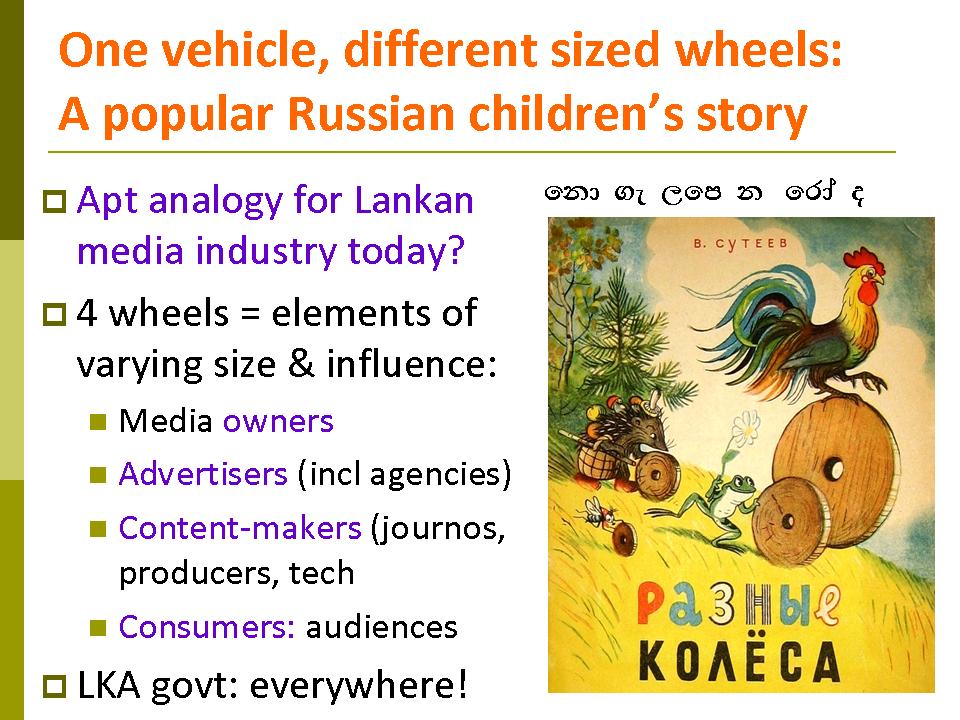
නොගැලපෙන  රෝද - четыре колеса сказка
නොගැලපෙන රෝද – четыре колеса сказка

I’m a story teller at heart. I sometimes moonlight as a media researcher or commentator but have no pretensions of being academic. I always try to make my points as interesting as possible — using analogies, metaphors, examples, etc.

This is the approach I used when asked to talk to the working group on Sri Lanka Media Reforms, convened by the Media Ministry, Sri Lanka Press Institute, International Media Support (IMS) and the University of Colombo.

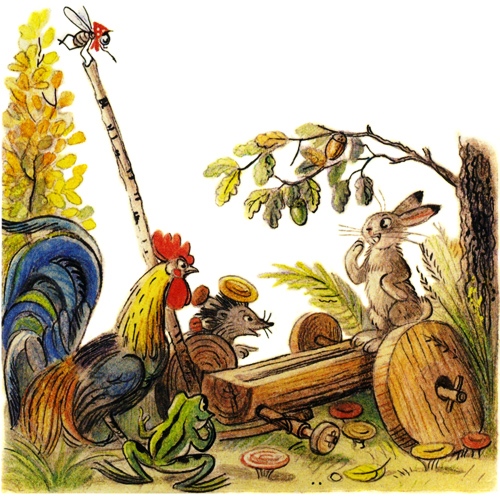
I used a well-loved Russian children’s story that was known in Sinhala translation as නොගැලපෙන රෝද — the story of one vehicle with different sized wheels, and how animal friends tried to make it move and when it proved impossible, how they put each wheel to a unique use…

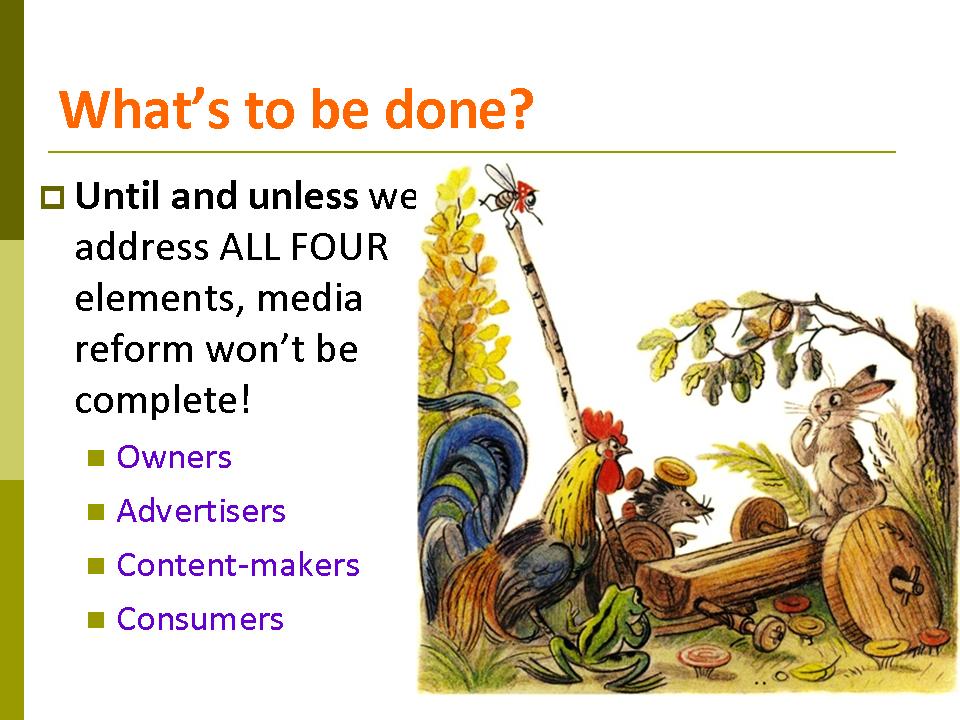
A framework for media reform in Sri Lanka...by Nalaka Gunawardene
A framework for media reform in Sri Lanka…by Nalaka Gunawardene
A framework for media reform in Sri Lanka...by Nalaka Gunawardene
A framework for media reform in Sri Lanka…by Nalaka Gunawardene

Well, in the case of media reforms, we can’t go off in different directions. We must make the vehicle work, somehow.

Full presentation here: http://www.slideshare.net/NalakaG/media-reforms-in-lanka-big-picture-ideas-by-nalaka-gunawardene

Embattled Media: New Book explores aspects of Democracy, Governance and Reform in Sri Lanka

Embattled Media - Democracy, Governance and Reform in Sri Lanka (Sage, Feb 2015; 416 pages)
Embattled Media – Democracy, Governance and Reform in Sri Lanka (Sage, Feb 2015; 416 pages)

A new multi-author book offers valuable insights into the importance of independent media for democratic governance in the wider South Asian region.

Titled Embattled Media: Democracy, Governance and Reform in Sri Lanka (Sage, Feb 2015; 416 pages), the book examines the role of the media in a state committed to democracy and the rule of law which had suffered extraordinary stresses as a result of ethnic strife, insurrection and civil war.

The book is co-edited by William Crawley and David Page, both fellows of Institute of Commonwealth Studies, University of London, UK, and Kishali Pinto-Jayawardena, a legal analyst on civil liberties and columnist with The Sunday Times newspaper in Sri Lanka.

According to its publishers, Sage Publications in India and the UK, the book is an ‘authoritative guide to the state of the news media in Sri Lanka, and the effects of insurgency and civil war on the media’s role in a developing country’.

This is the first book to look comprehensively at the evolution of news media in post-colonial Sri Lanka, with a focus on media policy, law and education. The book reviews the role of new media platforms in widening the scope for public debate.

Further, it provides a detailed analysis of the existing media laws and policies and of campaigns to reform them. It also focuses on the role of institutions in media education by providing a comprehensive analysis of existing media curricula and underlining the importance of improved media literacy and introduction of Right to Information Act for a healthy democracy.

The contributors to this volume, including leading journalists, broadcasters, practitioners in public law, media academics and analysts, write from extensive experience. Chapters have been written by: Sinha Ratnatunga, Ameen Izzadeen, Namini Wijedasa, Amal Jayasinghe, Tilak Jayaratne and Sarath Kellapotha, Nalaka Gunawardene, Kishali Pinto-Jayawardena and Gehan Gunatilleke, Jayantha de Almeida Guneratne, and S. Raguram.

The book is dedicated to the memory of the late Tilak Jayaratne (1943-2013), who ‘ably represented a generation of honourable and committed broadcasters’. Having contributed significantly to the book, he did not live to see its publication.

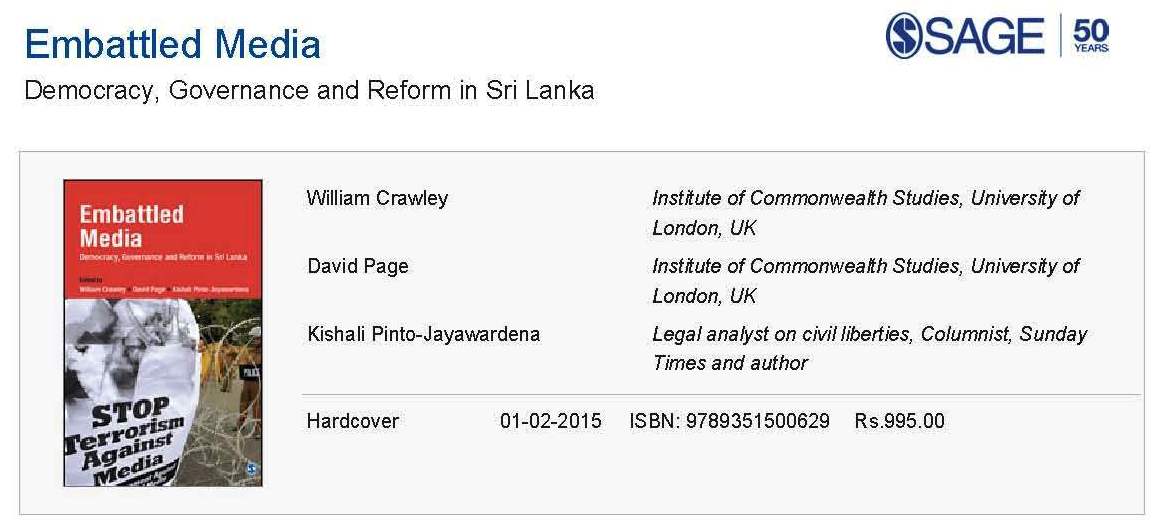
Embattled Media - Publishing Information
Embattled Media – Publishing Information

In their preface to the book, the co-editors write: “Media liberalisation from the 1990s onwards had extended the range of choice for viewers and listeners and created a more diverse media landscape. But the war in the north and insurrections in the south had taken their toll of media freedoms. The island had lived under a permanent state of emergency for nearly three decades. The balance of power between government, judiciary, the media and the public had been put under immense strain.

“In 2009, with the end of the war in the north, all this seemed about to change, increasing the relevance of our enquiries and raising hopes of media reform and greater freedom of expression. But progress towards a different sort of normality has been slow. The war and its aftermath have continued to cast a long shadow, which has limited the scope of our research…

“Over the past few years, universities have been closed for long periods. University teachers have been engaged in disputes with the government, which has affected their teaching and their research. The NGO sector has been heavily criticised by the government for pursuing foreign-funded agendas and finds itself under fire and on the defensive. Many media proprietors and journalists have maintained their long-established habit of self-censorship, for fear of inviting reprisals of one sort or another. Though not on the same scale as previously, there have been killings and disappearances of journalists since 2009 and the memory of past abuses still affects people’s thinking. All this has made the study more challenging.”

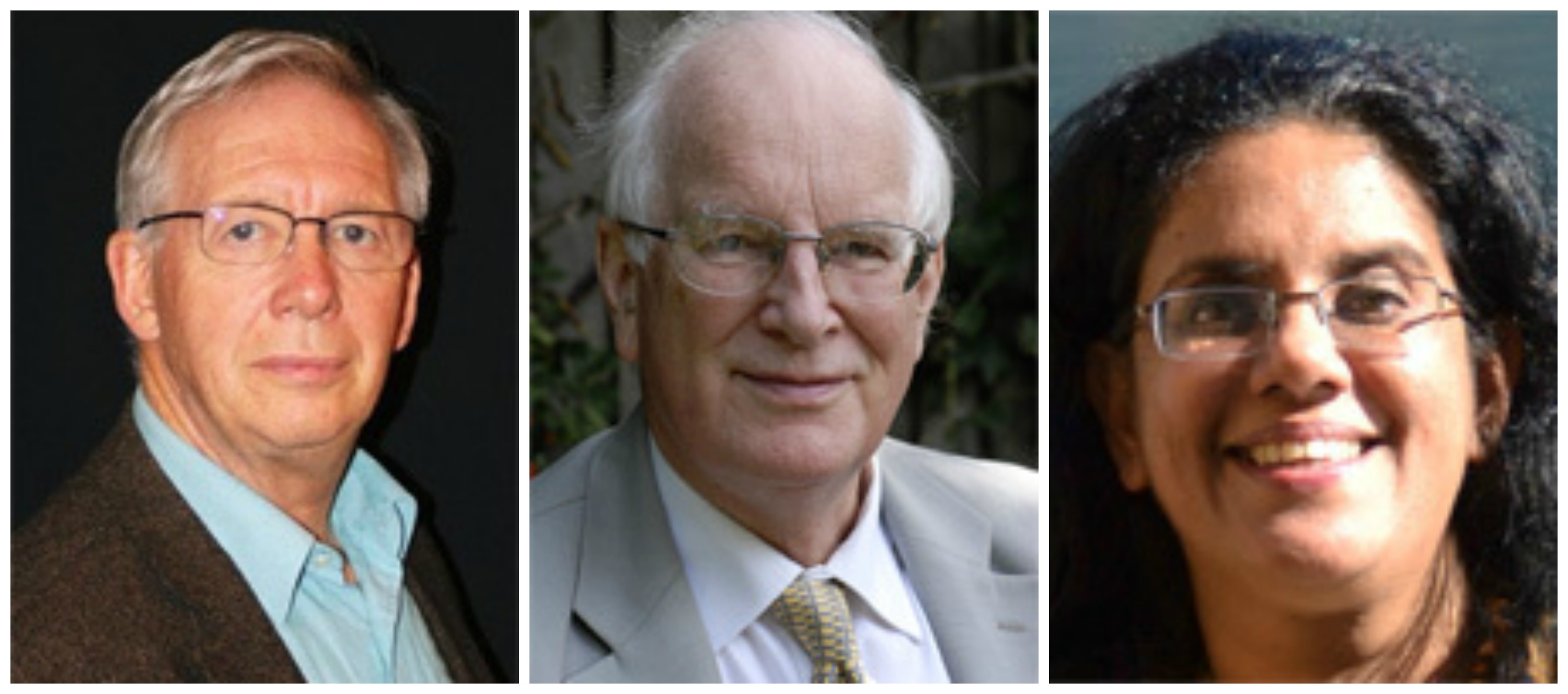
Co-editors of Embattled Media - (L to R) William Crawley, David Page and Kishali Pinto-Jayawardena (photos courtesy Sage Publications website)
Co-editors of Embattled Media – (L to R) William Crawley, David Page and Kishali Pinto-Jayawardena (photos courtesy Sage Publications website)

The book also contains a glossary of media related terms; a bibliography and an index.

The Indian edition is priced at INR 995. It is currently available from Sage Publications India: http://www.sagepub.in/books/Book244886?siteId=sage-india&prodTypes=any&q=Embattled+Media&fs=1

Echelon March 2015 column: Beyond RTI – Towards Open Government

Text of my column written for Echelon monthly business magazine, Sri Lanka, March 2015 issue. Published online at: http://www.echelon.lk/home/beyond-rti-towards-open-government/

Beyond RTI: Towards Open Government

 By Nalaka Gunawardene

Illustration by Echelon magazine, http://www.echelon.lk/

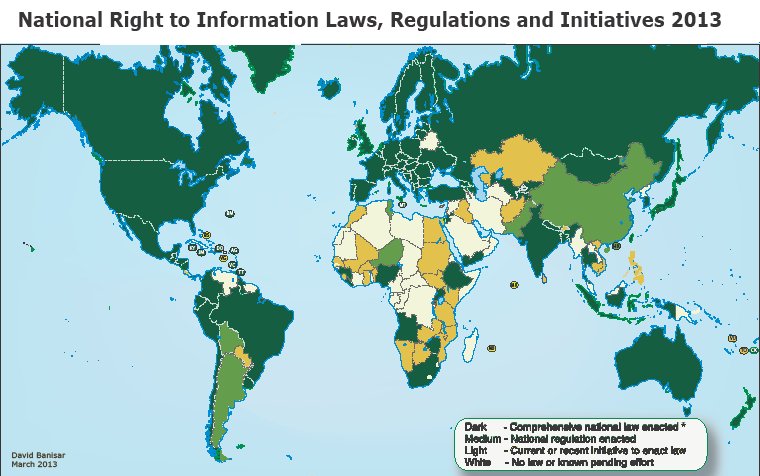
After many years of advocacy by civil society, Sri Lanka is set to adopt a law that guarantees citizens’ Right to Information (RTI). With that, we will at last catch up with nearly 100 countries that have introduced such progressive laws.

Better late than never — but passing the law is only a beginning. Institutionalising it requires effort and funds. Continued vigilance is needed on civil society’s part to guard against the process becoming mired in red tape.

RTI signifies unleashing a new potential. To draw an analogy from water management, opening a ‘sluice’ does not by itself mean much unless the downstream systems are in place. In both cases, the recipients need to know how to make the best use of what comes through.

Journey so far

Why is RTI such a big deal?

Its basis is that in democracies, the public have every right to know what is being done in their name by those entrusted with governance.

RTI is the right to access and obtain information from public officials. This right serves several purposes: improve public participation in policy making; promote transparency and accountability in government; and minimise wastage and corruption of state resources by public officials.

RTI and freedom of information are used interchangeably, but there is an important distinction between the two.

According to lawyer Gehan Gunatilleke, who recently wrote a book on the subject (published by Sri Lanka Press Institute, 2014), freedom of information implies a citizen’s freedom to access and receive public information on request. In such a situation, the government should not violate that freedom by restricting access. RTI goes further, and implies that information is an inherent right of the people. Governments are duty-bound to provide such information.

The concept of RTI can be traced back to the principle of ‘public access’ which emerged in Europe during the 18th century. In 1766, Sweden became the first country to legislate RTI: it allowed the public access to government documents.

The Universal Declaration of Human Rights, adopted at the United Nations in 1948, recognised the right to seek, impart and receive information as part the fundamental right to freedom of speech and expression (Article 19).

Article 19 of Universal Declaration of Human Rights

RTI does not mean opening up everything. Sensitive information – related to national security, for example – is excluded. The challenge is to strike a healthy balance between full transparency and a few justified exemptions.

 Indian experience

In Asia, India was a frontrunner in developing RTI laws. The campaign for RTI started in the 1990s with a grassroots movement driven by social activists and rural groups. They saw its clear value to counter the growing misuse of authority and public funds by local officials.

State level RTI laws were adopted in Tamil Nadu (1997), Goa (1997), Rajasthan (2000), Delhi (2001) and Maharashtra (2002). The national law came into effect in October 2005 after a decade of agitation.

Under the Indian law, citizens can request information from any ‘public authority’ within 30 days. It covers all branches of government — executive, legislature and judiciary – as well as institutions and statutory bodies set up by an act of national Parliament or a state legislature. Even non-governmental organisations, if they receive significant amounts of government funds, are covered.

The act required all public authorities to appoint a public information officer (PIO) to handle RTI requests. It also mandated computerizing of public records so that certain categories of information are proactively published online, enabling interested citizens to just look it up.

Since the RTI law was introduced, India has seen an improvement in governance, dissemination of information and involvement of civil society in the governance process, says Dr Rajesh Tandon, founder and head of the Society for Participatory Research in Asia (PRIA), a voluntary organisation providing support to grassroots initiatives.

At the same time, Tandon points out that some challenges remain at implementation level. Certain states in India have been more active in creating a culture of information sharing and open government, he told me in a television interview in mid 2014.

As Indians found out, it isn’t easy to shake off centuries of misplaced state secrecy and mistrust in the public. “Old rules and procedures continue to co-exist as new laws and methods are invented. Official Secrecy Act and Right to Information Act co-exist, just as written precedent and e-governance co-exist,” says Tandon (watch our full interview: https://vimeo.com/118544161).

 New challenges

In Sri Lanka, civil society groups and journalists’ organisations were at the forefront advocating RTI. Groups like Transparency International and Sri Lanka Press Institute (SLPI) have been lobbying, training and raising awareness on the societal value of this right.

However, RTI is not only for journalists or social activists. It is a right for all citizens living in modern societies where their well-being – sometimes even survival – depends on knowing critical information. Ignorance may have been bliss once upon a time, but it is not recommended for the 21st century.

Reorienting the public institutions to a new culture of openness and sharing will be an essential step. Undoing decades of habits will take effort.

Asanga Welikala, a legal scholar now with the Edinburgh Law School, said in a tweet that we need a moratorium of ‘at least two years’ before RTI law comes into force – so as to train officials and make all government procedures compliant.

He also says the Information Commission must have a proper budget for promotion and public awareness of the new Act, rights and procedures. For example, how to ensure citizen information requests can be accommodated equally in both official languages and the link language?

As champions of RTI, media and civil society must now switch roles. While benefiting from it themselves, they can nurture the newly promised openness in every sphere, showing citizens how best to make use of it.

National Right to Ino laws status - as of 2013 Source: http://home.broadpark.no/~wkeim/foi.htm
National Right to Ino laws status – as of 2013 Source: http://home.broadpark.no/~wkeim/foi.htm

Info Literacy

Public information can exist in many forms today – ranging from minutes of meetings, budget allocation and expense records, and scientifically gathered information such as census data, or trade statistics. These may be stored on paper, tape or – increasingly – in digital formats.

In recent years, with digital technologies the volume of specialised data held by governments has risen phenomenally. Both the data custodians and public today need higher levels of information literacy to navigate through this torrent.

The good news: the web makes it easier to store and share information. ‘Open Data’ means that certain data should be freely available to everyone to use and republish as they wish, without restrictions from copyright, patents or other mechanisms of control.

The open data approach is especially applied to scientific data and government data. But the debate is far from settled: while there are many strong arguments for opening up, some are concerned about potential misuses. Guidelines are still evolving.

A key attribute of open data is its usability. Each country needs to adopt information gathering and data storage standards, so as to minimize users facing problems that arise with the use of different devices, systems and measuring systems.

Some public data custodians in South Asia still release vast amounts of data in hard copy (paper-based) form. For example, India’s Marine Fisherfolk Census of 2010 had results running into thousands of pages of data tables – they were only released on paper. That made further analysis impossible. Undaunted, a fishers’ collective mobilised some tech-savvy volunteers to create computerised spreadsheet databases.

Like many other elements of good governance, RTI’s effectiveness depends on imagination, innovation and persistence on the part of citizens. Its best results will accrue in a society and political culture where evidence and analysis are trusted. Sri Lanka is not there yet.

The road to RTI is a journey, not a destination!

ACT


Echelon Feb 2015: ‘People Power’ Beyond Elections

Illustration by Echelon magazine, http://www.echelon.lk

Text of my column written for Echelon monthly business magazine, Sri Lanka, Feb 2015 issue. Published online at: http://www.echelon.lk/home/people-power-beyond-elections/

‘People Power’ Beyond Elections

 By Nalaka Gunawardene

Sri Lanka’s democratic credentials were put to test once again during the Presidential Election on 8 January 2015.

An impressive 81.52% of registered voters turned up, and their majority choice changed the regime. A well-oiled system that has been holding elections since 1931 proved its efficacy again. And if its integrity came under threat, the formidable Commissioner of Elections stood up for the due process.

As we pat ourselves on the back, however, let us remember: an election is a necessary but not a sufficient condition for a vibrant democracy. There is much more to democracy than holding free and fair elections.

The ‘sufficient conditions’ include having public institutions that allow citizens the chance to participate in political process on an on-going basis; a guarantee that all people are equal before the law (independent and apolitical judiciary); respect for cultural, ethnic and religious diversity; and freedom of opinion without fearing any repercussions. Sri Lanka has much work to do on all these fronts.

Democracy itself, as practised for centuries, can do with some ‘upgrading’ to catch up with modern information societies.

Historically, people have responded to bad governance by changing governments at elections, or by occasionally overthrowing corrupt or despotic regimes through mass agitation.

Yet such ‘people power’ has its own limits: in country after country where one political party – or the entire political system — was replaced with another through popular vote (or revolt), people have been disappointed at how quickly the new brooms lose their bristles.

The solution must, therefore, lie in not just participating in elections (or revolutions), but in constantly engaging governments and keeping the pressure on them to govern well.

In practice, we citizens must juggle it along with our personal and professional lives. As information society advances, however, new tools and methods are becoming available to make it easier.

Social Accountability

This relatively new approach involves citizens gathering data, systematically analysing it and then engaging (or confronting, when necessary) elected and other officials in government. Citizens across the developing world are using information to improve the use of common property resources (e.g. water, state land and electromagnetic spectrum, etc.), and management of funds collected through taxation or borrowed from international sources.

Such engagement enables citizens as well as civil society organisations (CSOs) to engage with policymakers and citizen service providers. Some call it social accountability (or SAcc), and others refer to it as participatory democracy. Whatever the label, the idea is to ensure greater accountability in how the public sector manages public funds and responds to citizens’ needs.

For this to work, citizens need to access public sector information – about budgets, expenditures, problems and performance. Over 100 countries now have laws guaranteeing people’s right to information (RTI). Sadly, Sri Lanka is lagging behind all other SAARC countries, five of which have already enacted RTI laws and two (Afghanistan and Bhutan) have draft bills under consideration. Attempts to introduce RTI in Sri Lanka were repeatedly thwarted by the previous government.

Economist Hernando de Soto (image from Wikipedia)

An early champion of social accountability was the Peruvian economist Hernando de Soto who has been researching on poverty, development and governance issues. He says: “Supposedly in a democracy, if the majority of people are poor, then they set the criteria of what is right. Yet all those mechanisms that allow [society] to decide where the money goes — and that it is appropriately allocated — are not in place throughout the Third World.”

The result? “We take turns electing authoritarian governments. The country, therefore, is left to the [whims] of big-time interests, and whoever funded the elections or parties. We have no right of review or oversight. We have no way for the people’s voice to be heard — except for eight hours on election day!”

It is this important right of review and oversight in between elections that SAcc promotes. Call it an ‘insurance’ against democracy being subverted by big money, corrupt officials or special interest groups…

A dozen years ago, concerned by development investments being undermined by pervasive corruption and excessive bureaucracy, the World Bank started advocating SAcc. Their research shows how, even in the most hopeless situations, ordinary people often come together to collect their voice and exert pressure on governments to be responsive.

“Social accountability is about affirming and operationalising direct accountability relationships between citizens and the state. It refers to the broad range of actions and mechanisms beyond voting that citizens can use to hold the state to account,” says a World Bank sourcebook on the subject. (See: http://go.worldbank.org/Y0UDF953D0)

What does that mean in plain language? Seeking to go beyond theory and jargon, the Bank funded a global documentary in 2003, which I co-produced. Titled ‘Earth Report: People Power’ and first broadcast on BBC in February 2004, it featured four inspiring SAcc examples drawn from Brazil, India, Ireland and Malawi (online: http://goo.gl/xQnr9v).

These case studies, among the best at the time, showed how SAcc concepts could be adapted in different societies and economic systems


  • In Porto Alegre, Brazil, community members participate annually in a series of meetings to decide on the City Budget. This material is presented to Parliament which finds it difficult to refuse the recommendations — because over 20,000 have contribute to its preparation. As many or more watch how the budget is spent.


  • In Rajasthan, India, an advocacy group named MKSS holds a public meeting where the affidavits of local candidates standing for the state elections are available to the people. This ‘right to information’ extends all the way down to villages where people can find out about public spending.


  • In Ireland, the government has partnered with trade unions, employers, training institutions and community groups on a strategy to deal with problems affecting youth (such as school drop-outs and high unemployment). Citizens set priorities for social spending.


  • In Malawi, villagers participate in assessing local health clinics by scoring various elements of the service. A Health Village Committee then meets the service providers who also assess themselves. Together, they work out ways to improve the service.

During the last decade, many more examples have emerged – some driven by public intellectuals, others by civil society groups or socially responsible companies. Their issues, challenges and responses vary but everyone is looking for practical ways to sustain civic engagement in between elections.

The development community has long held romanticized views on grassroots empowerment. While SAcc builds on that, it is no castle in the air: the rise of digital technologies, web and social media allows better monitoring, analysis and dissemination. And government monopolies over public information have been breached — not just by progressive policies and RTI laws but also by efforts such as WikiLeaks.

Confronted by the growing flood of often technical information, citizens need to be well organised and skilled to use in the public interest. Evidence-based advocacy is harder than rhetorical protests.

Dr Bela Bhatia, then an associate fellow at the Centre for the Study of Developing Societies in India, says on the film: “Ultimately the responsibility in a democracy is ours…and if today we have corrupt politicians, it is because we have allowed corruption to happen, to take root.”

Rather than debating endlessly on how things became so bad, SAcc promoters show a way forward – with emphasis on collaboration, not confrontation.

“It’s up to the governments to make up their mind whether they want to respect the more participatory model or invite more confrontation, to invite violence and perhaps ultimately the dismantling of the very democratic system,” says Bhatia.

How can we deepen our democracy with SAcc? Start with RTI, and see what happens.

Public perceptions of pesticides & how they influence policy: Case of CKDu in Sri Lanka

I am not a public health or environmental expert, but have long covered related topics as a science journalist.

Among my long-standing interests are the downstream health and environmental effects agrochemicals – both chemical fertilizers and farm chemicals applied against pests and weeds. Parallel to this, I have also been covering chronic kidney disease of uncertain aetiology (CKDu), a mysterious illness that has been affecting thousands of Lankan farmers for nearly 25 years.

A link between agrochemicals and CKDu is suspected, but not yet scientifically proven (even though environmentalists ask us to believe so). It is a current yet contentious topic, which I chose for my presentation to an international workshop on “Pesticides and Global Health: Research, Collaboration and Impact” held at the Department of Anthropology, University of Durham, UK, on 10 – 11 February 2015.

This workshop launched Pesticides and Global Health: An Ethnographic Study of Agrochemical Lives — a research project funded by the Wellcome Trust and hosted by Durham University.

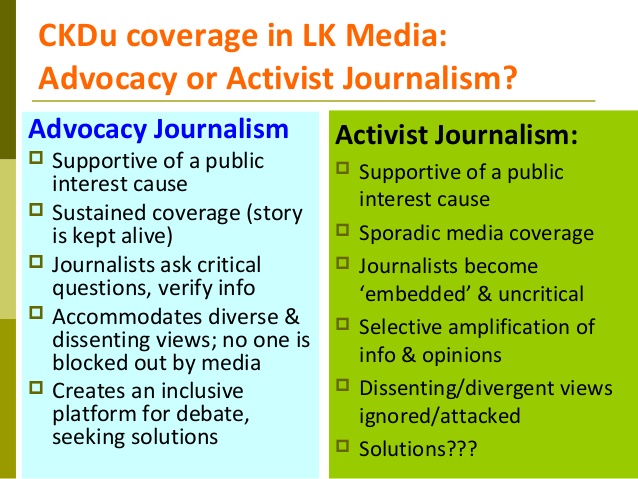
In my presentation, I explore the topic from the angle of public perceptions, which are largely shaped by what appears in the media. This has been problematic since mass kidney failure in Sri Lanka has been compounded by what I call a ‘mass media failure’.

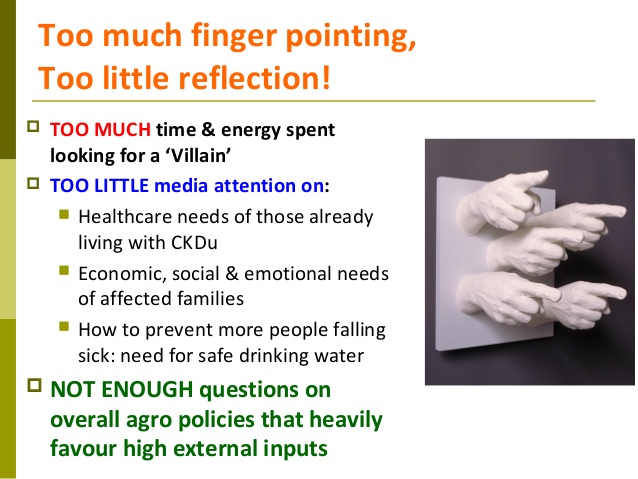
Most of our media have failed to understand, analyse and report adequately on this public health emergency. Instead of helping affected people and policy makers to work out solutions, some journalists have become amplifiers of extreme activist positions. This has led to alarmism and policy confusion.

What is to be done? There are no short-cuts to the scientific investigation process which must follow – that means further research is needed to find definitive evidence for causative factors. That could take a while, given how people are exposed to multiple environmental, lifestyle and genetic factors.

But meanwhile, the welfare of those already affected by the disease and their families needs to receive greater public support. Environmentalists trying to score points from this tragedy overlook this vital humanitarian aspect.

A few excerpts from the presentation below. See full presentation above.

Advocacy journalism is fine; activist journalism is questionable
We need Lankan media to be more reflective, less accusatory
Spare a thought for today’s policy-makers who must think and act on the run…


Mysterious Kidney Disease in Sri Lanka: Nalaka Gunawardene answers BBC’s questions

As a science journalist, I have been covering scientific aspects of the public health emergency of mass kidney failure that has killed an estimated 20,000 persons in Sri Lanka over the past two decades.

It emerged in the early 1990s, when hundreds of people in Sri Lanka’s Dry Zone – heartland of its farming — developed kidney failure without having the common causative factors of diabetes or high blood pressure.

Most affected were men aged between 30 and 60 years who worked as farmers. The disease built up inside the body without tell-tale signs or symptoms, manifesting only in advanced stages.

Over the years, many scientific studies have been carried out on what causes this mysterious disease, now called Chronic Kidney Disease of unknown aetiology, or CKDu. Various environmental, geochemical and lifestyle related factors have been probed. Researchers now suspect environmental and genetic factors as causes – but a definitive link to a specific factor has yet to be found.

On 23 January 2015, I answered a few questions posed by BBC World Service (radio) on CKDu, to feed a news report they were producing for global broadcast.

My full answers are shared here in the public interest.

Science writer Nalaka Gunawardene responds to questions from BBC World Service on the mysterious mass kidney failure in Sri Lanka: 23 January 2015

Question 1: What are the various theories that scientists have put forward as a possible cause for this disease which has been studied for 20 years?

Question 2: As a science journalist, you’ve been tracking the research on this public health concern for some years. What do you think is most likely cause?

Question 3: The World Health Organisation supported research has suggested a link with agrochemical use. Don’t you think that such a link is likely?

Question 4: The new government of Sri Lanka has just pledged to give high priority to the kidney disease. What are the challenges faced by the government in dealing with this crisis?


සිවුමංසල කොලූගැටයා #196:මහා රාවණා පරයේ බිඳුණු නැවේ අබිරහස – 2

In this week’s Ravaya column (in Sinhala), published on 30 November 2014, I continue the story of a group of divers accidentally discovering a shipwreck while diving off the south-eastern coast of Sri Lanka close to the Great Basses Reef lighthouse. The discovery was made by Mike Wilson, who was variously talented as a diver, photographer, writer and filmmaker, along with collaborators Arthur C Clarke, Rodney Jonklaas and Hector Ekanayake.

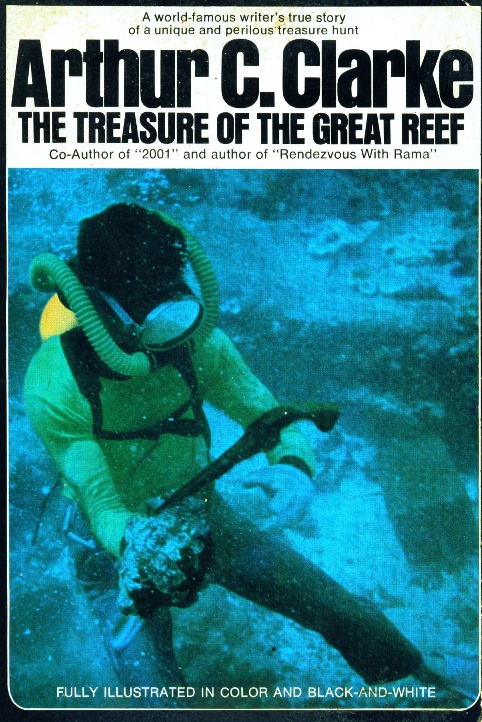
This story is fully documented in Clarke’s The Treasure of the Great Reef, and also summarised here by Dr Kavan Ratnatunga:

http://lakdiva.com/coins/clarke/greatbasses/exhibit.html

See also: 26 Aug 2012: සිවුමංසල කොලූගැටයා #80: මහා රාවණා කොටුවෙන් රන් මුතු දුවට…

Treasure of the Great Reef, by Arthur C Clarke, 1964

ශ‍්‍රී ලංකා දුපතට ගිණිකොන දෙසින් කිලෝමීටර් 10 ක් පමණ ඔබ්බෙන් පිහිටි මහා රාවණා කොටුව නම් ගල්පරය අවට මුහුදුබත් වී බිඳී ගිය නැවක් 1961 මාර්තුවේදී සොයා ගත් කථාවේ මුල් කොටස අප 2014 නොවැම්බර් 16 වනදා ඉදිරිපත් කළා.

මෙරට පුරෝගාමී කිමිදුම් හා සාගර ගවේෂකයන් අතර වූ රොඞ්නි ජොන්ක්ලස්, හෙක්ටර් ඒකනායක, මයික් විල්සන් හා ආතර් සී ක්ලාක් සම්බන්ධ වූ මේ ගවේෂණය මෙරට මුහුදු පුරාවිද්‍යාවේ ද ආරම්භයයි. අද එහි ඉතිරි කොටස.

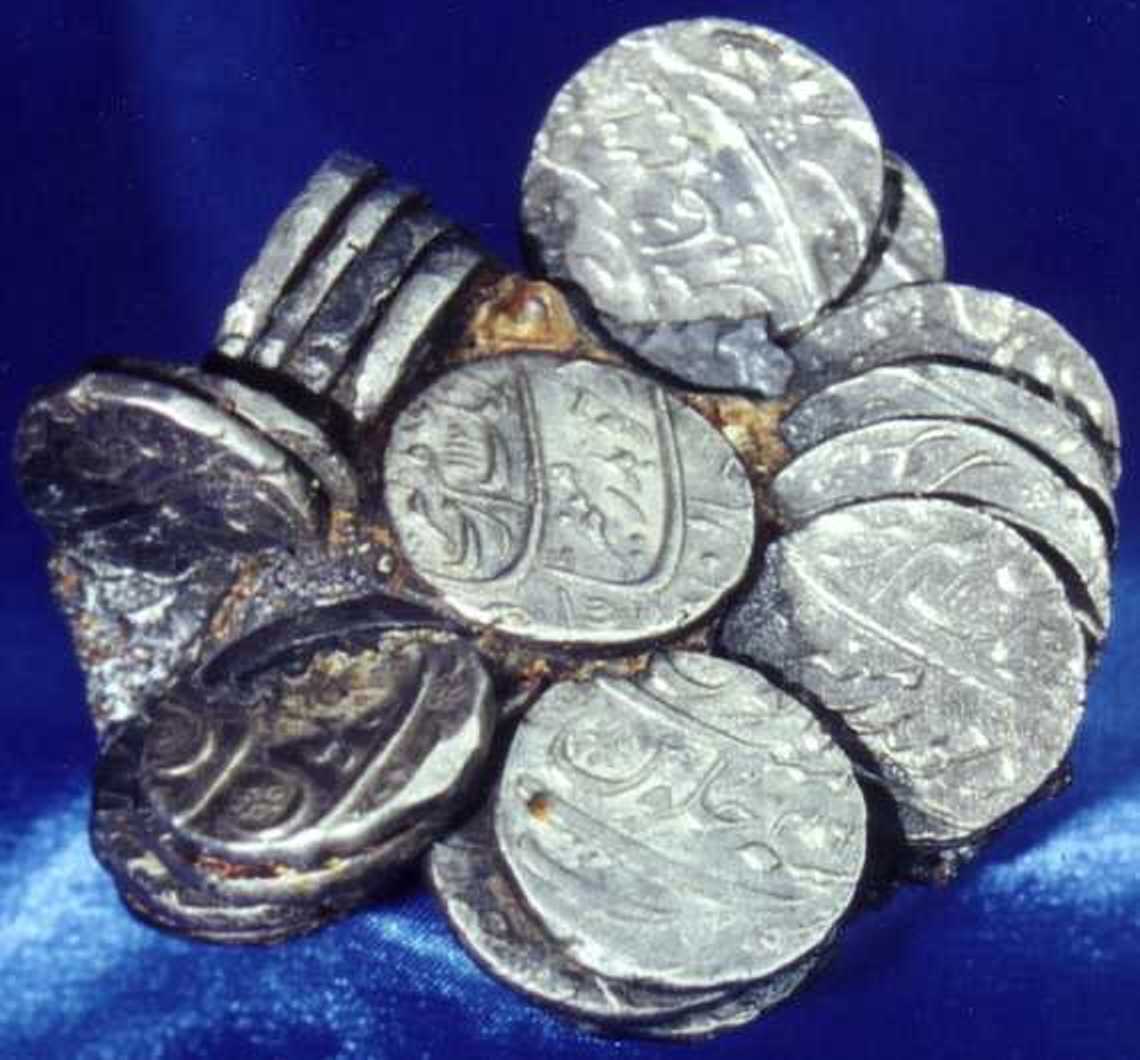
නැව ගිලූණු තැන අවට මුහුදුපත්ලේ විසිරි රිදී කාසි දහස් ගණණක් හමු වුණා. මේ කාසි තොගය රැගත් නැව ආවේ කොහි සිටද? එහි ගමනාන්තය වූයේ කුමක්ද? මේ රිදී කාසිවල ලෝහමය වටිනාකමට වැඩි කෞතුක වටිනාකමක් ඇත්ද?

මෙබඳු ප‍්‍රශ්න රැසක් විල්සන්, ක්ලාක් හා කිමිදුම් සමඟයන්ට මතු වුණා. ඔවුන් මෙරට පුරාවිද්‍යාඥයන්, සාගර විද්‍යාඥයන් (එතෙර හා මෙතෙර) හා කාසි එකතු කරන්නන්ගේ ද සහාය ඇතිව මේ ප‍්‍රශ්න වලට පිළිතුරු ගවේෂණය කළා.

මුහුදුබත් වූ නැවක් කාලයාගේ ඇවෑමෙන් හඳුනාගත නොහැකි තත්ත්වයට පත්වනවා. කඩදාසි, රෙදි හා ලෝහවලින් තැනූ දේ දිරාපත්ව යනවා. මේ නිසා එබන්දක නිශ්චිත අනන්‍යතාවය නිර්ණය කිරීම අසීරු කාරියක්. කාසි සමීපව නිරික්සීමේදී පෙනී ගියේ ඒවා එකම අච්චුවේ බවයි. හැම එකකම සළකුණු හතරක් තිබුණා.

පසුව හඳුනාගනු ලැබුවේ ඒවා අරාබි ඉලක්කම් වලින් 1113 සංකේතවත් කරන බවයි. මේ කාසි නිපද වූ වර්ෂයද? අරාබි කැලැන්ඩරයේ වසර ගණන් කිරීම ඇරඹෙන්නේ ක‍්‍රි. ව. 622න්. එසේම අරාබි වර්ෂ හා සම්මත වර්ෂ අතර යම් වෙනසක් ද තිබෙනවා. මේ සියළු සාධක සැළකිල්ලට ගෙන ගණන් බැලූ විට 1113 යනු සම්මත (කි‍්‍රස්තු) වර්ෂ 1702 බව පෙනී ගියා.

Aurangzeb seated on the Peacock Throne

කාසි ඉතිහාසඥයන් කීවේ මෙබඳු කාසි තැනීම කෙරුණේ 1658-1707 වකවානුවේ ඉන්දියාවේ සුරත් නගරයේදී බවයි. ඒ භාරතයේ වැඩි ප‍්‍රදේශයක පාලකයා වූ ඔරංසෙබ් (Aurangzeb) නම් මෝගල් අධිරාජයාගේ කාලයේ.

ඔරංසෙබ් අධිරාජයා වසර 49ක් සිහසුනේ සිටියා. ඔහු මෝගල් රාජ වංශිකයන් අතර නමක් ගත් අවසාන අධිරාජයායි. ඔහුගේ පියා ෂා ජහාන් ඉතිහාසගත වූයේ අඩු වයසින් මියය ගිය මුම්ටාස් මහාල් දේවිය වෙනුවෙන් ටාජ් මහලය ඉදිකිරීම නිසායි. මුම්ටාස් මහාල් ඔරංසෙබ්ගේ මවයි.

දැඩි ඉස්ලාමීය පාලනයක් සමස්ත භාරත ජනයා මත බලෙන් පැටවූ ඔරංසෙබ්ගේ මරණයෙන් පසු ජන විරෝධයන් මතු වී මෝගල් අධිරාජ්‍යය ඉක්මනින් බිඳ වැටුණා. කුඩා ප‍්‍රාන්ත රාජ්‍ය ලෙස බෙදී ඇණ කොටා ගත් භාරතය ආක‍්‍රමණය කොට අන්තිමේදී යටත් කර ගැනීමට බටහිර ජාතීන්ට වඩාත් පහසු වුණා.

ඔරංසෙබ්ගේ පාලන කාලයේ නැගෙනහිර ඉන්දීය සමාගම යටතේ බි‍්‍රතාන්‍ය වෙළඳුන් ඉන්දියාවේ ගනුදෙනු කරමින් සිටියා. භාරතය හා යුරෝපීය රාජ්‍ය අතර ජාත්‍යන්තර වෙළඳාම කලෙක සිට කෙරුණු අතර ඒ වන විට ඉන්දියානු සාගරයේ ආධිපත්‍යයට ලන්දේසි හා ඉංග‍්‍රීසි ජාතිකයෝ තරග කරමින් සිටියා.

1702 වන විට ලංකාවේ වෙරළබඩ ප‍්‍රදේශ පාලනය කළේ ලන්දේසින්. ඔවුන්ට සම්බන්ධ වූ ඕලන්ද ඉන්දියා සමාගමක් ද තිබුණා. ඉන්දියාව හා ලංකාව අතර මේ කාලය වන විට නාවුක සබඳතා පැවතියේ ලන්දේසින් හරහායි.

මහා රාවණා කොරල්පරයේ මුහුදුබත් වූ නැව, ලංකාවට ආ ගිය නැවක් ද? නැතහොත් දුපත වටා යාත‍්‍රා කරමින් ඉන්දියාවේ සිට පැමිණි හෝ නික්ම ගිය නැවක්ද? මේ ප‍්‍රශ්නය අපේ සාගර ගවේෂකයෝ මතු කළා.

තමන් මුහුදුපත්ලෙන් සොයා ගත් වස්තුන්ගේ ඉතිහාසය ගවේෂණය කරන අතර රටේ නීතියට අනුකූල වන්නට ද ඔවුන් වග බලා ගත්තා. ලංකා රේගු දෙපාර්තමේන්තුවේ උසස් නිලධාරියකුට කාසි හා අන් වස්තූන් පෙන්වූ විට ඔහු කීවේ මේවා මුහුදෙන් රට තුළට ගෙන ඒම හරහා කිසිදු නීතියක් හෝ රෙකුලාසියක් කඩ වී නැති බවයි.

Dr Charles E Godakumbura

ඊලඟට ක්ලාක් හා මිතුරෝ එවකට සිටි පුරාවිද්‍යා කොමාරිස් ආචාර්ය චාල්ස් ගොඩකුඹුරට සියළු දේ ඉදිරිපත් කළා. මේවා සොයා ගත් මුහුදුපත්ලේ ප‍්‍රදේශය තව දුරටත් ගවේෂණයට අවශ්‍ය අවසරය කොමාරිස්වරයා ඔවුන්ට ලිඛිත බලපත‍්‍රයක් ලෙස ලබා දුන්නා. ‘‘හැම දෙයක්ම පොතේ හැටියට කිරීමටත්, බලධාරින් දැනුවත් කර තිබීමටත් අපට අවශ්‍ය වුණා’’ යයි ක්ලාක් තම පොත්වල පැහැදිලිව ලියා තිබෙනවා.

වඩාත් සංවිධානාත්මක කිමිදුම් ගවේෂණයකට මහා රාවණා කොරල්පරයට ආපසු යන්නට මේ මිතුරු පිරිසට තමන්ගේම බෝට්ටුවක ඕනෑකම තදින් දැනුණා. (මේ දක්වා ඔවුන් කළේ කුලියට ගත් කුඩා බෝට්ටුවක හෝ ප‍්‍රදීපාගාරයක බෝට්ටුවේ ගමන් කිරීමයි.) ඒ සඳහා ගැලපෙන බෝට්ටුවකට අඩු තරමින් අමෙරිකානු ඩොලර් දස දහසක් (10,000)වත් අවශ්‍ය වුණා. මේ මුදල හම්බකර ගැනීමේ අරමුණින් සිංහල වෘතාන්ත චිත‍්‍රපටයක් නිපදවීමට මයිකල් විල්සන් යෝජනා කළා.

දිය යට දර්ශන රැගත් මුල්ම ලාංකික වෘතාන්ත චිත‍්‍රපටය වූත්, වර්ණයෙන් මුළුමනින්ම තැනුනු පළමුවන සිංහල චිත‍්‍රපටය වූත් ‘‘රන්මුතුදුව’’ චිත‍්‍රපටය 1961-62 වකවානුවේ නිපදවනු ලැබුවේ ඒ අනුවයි. එහි කථා රචකයා, කැමරාකරුවා හා අධ්‍යක්‍ෂවරයා වූයේ මයික් විල්සන්. එයට වැය වූ වියදමෙන් කොටසක් දුන්නේ ක්ලාක්.

1962 අගෝස්තුවේ මුල් වරට මහජන ප‍්‍රදර්ශනය ඇරඹුණු රන්මුතුදුව බෙහෙවින් ජනප‍්‍රිය වුණා. එහි ආදායම් වාර්තාව වසර ගණනාවක් යන තුරු කිසිදු චිත‍්‍රපටයක් මගින් සම කෙරුණේ නැහැ. මේ ආයෝජනයෙන් ලැබුණු ලාබය නිසා තමන්ට ඕනෑ වූ බෝට්ටුව මිලට ගන්නත්, 1963දී මහා රාවණා කොරල්පරයට ආපසු යන්නත් මිතුරන්ට හැකි වුණා.

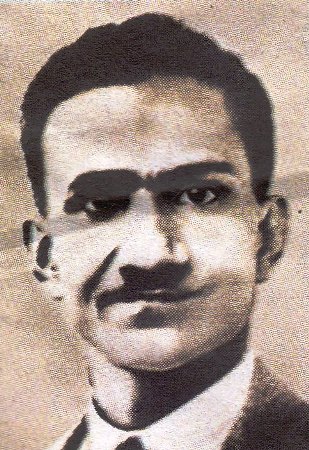
Peter Throckmorton
Peter Throckmorton

මෙවර ගවේෂණයට ඔවුන් හා එකතු වූයේ මුහුදුබත් වූ නෞකා ගවේෂණයේ විශේෂඥයකු වූ පීටර් ත්‍රොක්මෝට්න් (Peter Throckmorton, 1928-1990) තුර්කි වෙරළේ ගෙලිඩොන්යා ස්ථානයට ඔබ්බෙන් වසර 3,200කට පෙර මුහුදුබත් වූ ඉපැරණී නෞකාවක් ගවේෂණය කිරීම නිසා ඔහු ලෝක ප‍්‍රකටව සිටියා.

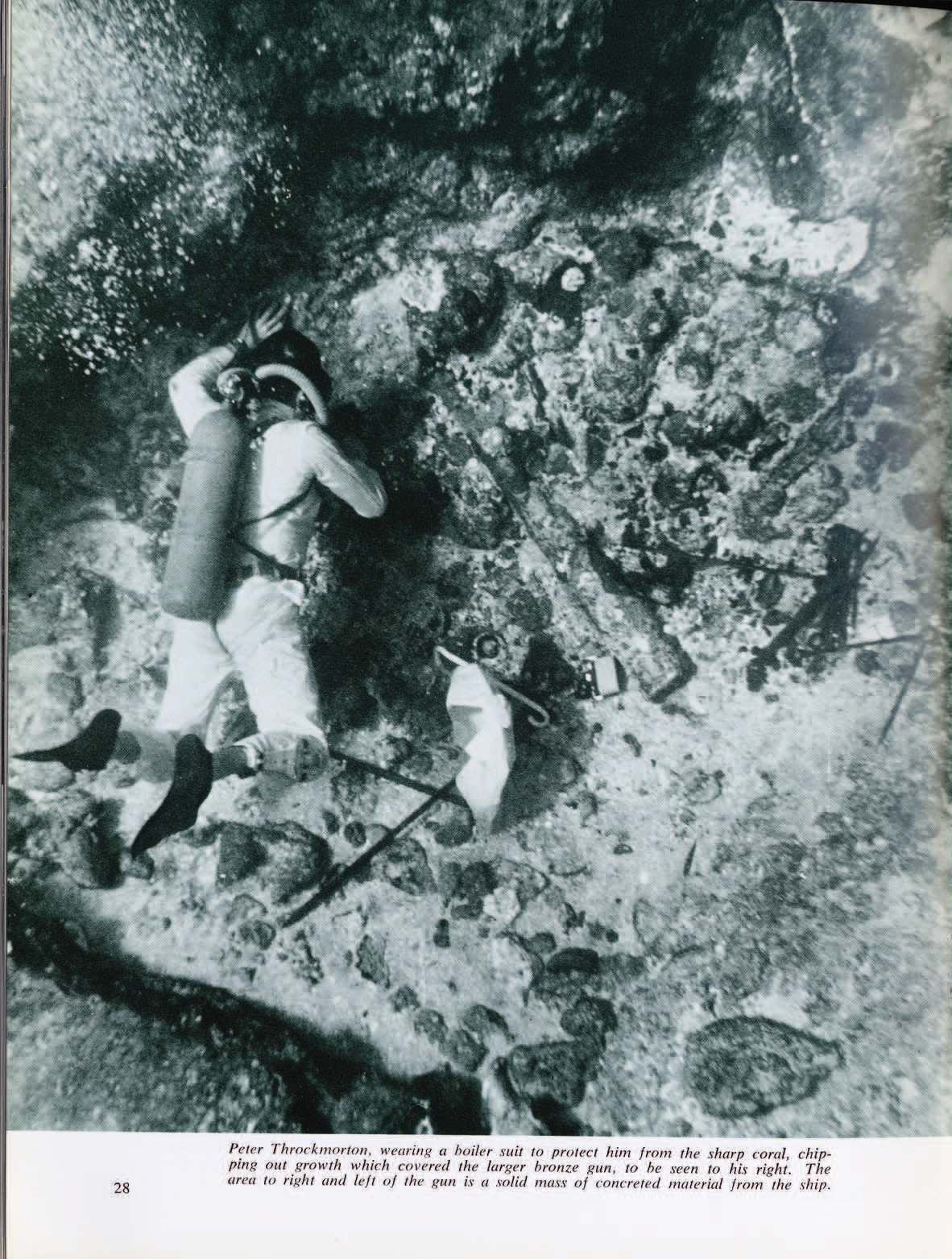
ඔහු විශේෂඥ මග පෙන්වීම යටතේ මෙවර මුහුදුබත් වූ නැවේ ඉතිරිව තිබූ ලී කොටස්වලින් සාම්පල් ද තවත් නටඹුන් ද ප‍්‍රවේශමින් එකතු කරනු ලැබුවා. කොරල් බැඳීම නිසා කුට්ටි බවට පත්ව තිබූ තවත් රිදී කාසි රැසක් ද හමු වුණා.

සියවස් ගණනක් මුහුද යට තිබී යළිත් මතු පිටට ගෙනෙන ලෝහමය, ලී හා වෙනත් ද්‍රව්‍ය නිසි ලෙස වහා සංරක්‍ෂණය කළ යුතුයි. නැතිනම් වාතයට නිරාවරණය වීම නිසා ඒවා ඉක්මනින් ඛාදනය වී විනාශ වනවා. මේ නිසි පියවර ගැනීමට ත්‍රොක්මෝට්න් සමත් වුණා.

Dr P E P Deraniyagala

එසේම සොයා ගත් සියළු වස්තුන් විස්තරාත්මකව ලයිස්තුගත කිරීම හා ඡායාරූපගත කිරීමත්, පසුව සමස්ත ගවේෂණය ගැන ශාස්ත‍්‍රීය මට්ටමේ වාර්තාවක් ලිවීමත් ත්‍රොක්මෝට්න්ගේ මූලිකත්වයෙන් සිදු වුණා.

ත්‍රොක්මෝට්න් ලංකාවෙන් පිටත්ව යන්නට පෙර කිමිදුම් කණ්ඩායම තම සොයා ගැනීම් සමග ජාතික කෞතුකාගාරයේ එවකට අධ්‍යක්‍ෂ ආචාර්ය පී. ඊ. පී. දැරණියගල හා පුරාවිද්‍යා කොමසාරිස් ආචාර්ය චාල්ස් ගොඩකුඹුර මුණ ගැසී වාචික වාර්තාවක් ද ඉදිරිපත් කළා.

‘‘අපේ අපේක්‍ෂාව මේ සොයා ගත් සමුද්‍ර පුරාවස්තු යම් දිනෙක කොළඹ කෞතුකාගාරයේ සදාකාලික ප‍්‍රදර්ශනයට තබනු ඇත කියායි. මුළු ඉන්දියානු සාගරයේම සොයා ගත් මුල්ම නිධාන නෞකාව ලෙස මෙය සුවිශේෂී තැනක් ගන්නවා’’ යයි ක්ලාක් සිය 1964 පොතේ ලියා තැබුවා.

1963 රන්මුතු බෝට්ටුවේ නැගී මහා රාවණා කොරල්පරය අවට මුහුද ගවේෂණය කළ පසු මේ පුරෝගාමී කිමිදුම්කරුවන් කණ්ඩායමක් ලෙස නැවත එහි ගියේ නැහැ. මේ ගවේෂණයේ විස්තර රැගත් ක්ලාක්ගේ The Treasure of the Great Reef නම් වූ පොත 1964දී මුල්වරටත් (වැඩි ඡායාරූප සමග) 1974දී දෙවන වරටත් ඉංග‍්‍රීසියෙන් පළ වුණා.

මහා රාවණා කොරල්පරයේ මුහුදු බත් වූ නැව හමුවන අන්දම ගැන පීටර් ත්‍රොක්මෝටන් විසින් අඳින ලද සිතියම් ද එහි තිබෙනවා. මේ ඉඟි ඔස්සේ පසු කළෙක එහි කිමිදීමේ ගිය දෙස් විදෙස් කිමිදුම්කරුවෝ හැකි අන්දමින් රිදී කාසි හා වෙනත් නැවේ තිබූ කුඩා භාණ්ඩ සොයා ගොඩබිමට ගෙන ආවා.

එසේ හමු වූ සමහර රිදී කාසි තවමත් පැරණි කාසි එකතු කරන අය අතර හුවමාරු වනවා. ශ‍්‍රී ලංකා පැරණි කාසි සංගමයේ සභාපති ආචාර්ය කාවන් රත්නතුංග ද විවෘත වෙළඳපොලෙන් මෙබඳු කාසි කිහිපයක් මිලට ගෙන තිබෙනවා. කාසි ගැන ඡායාරූප හා විස්තර ඔහුගේ වෙබ් අඩවියේ බලා ගත හැකියි. http://lakdiva.com/coins/clarke/greatbasses/exhibit.html

සුරත් නගරයේ තැනූ රිදී කාසි ගැන ඉන්දියානු වාර්තා අධ්‍යයනයෙන් කාවන් කියන්නේ මහා රාවණා පරයේ මුහුදුබත් වූ නැවේ ගෙන ගිය කාසි 1702 මැයි මාසයේ පමණ තනන්නට ඇති බවයි. එසේ නම් ඒවා තනා සති කිහිපයක් තුළ යම් තැනකට යැවීමට නැව් ගත කරන්නට ඇති. නැව අනතුරට පත්ව ගිලූණේ 1702 වසරේම මැද හෝ අග යයි කාවන් අනුමාන කරනවා.

ශ‍්‍රී ලංකාවේ මුහුදු පුරා විද්‍යා ගවේෂණ ඇරැඹෙන්නේ මහා රාවණා පරයේ මුහුදුබත් වූ නැව ක්ලාක්, විල්සන් ඇතුළු කිමිදුම්කරුවන් සොයා ගැනීම සමගයි. මෙය තනිකරම පෞද්ගලික මට්ටමේ උත්සාහයක් වුවත් විශේෂඥ පීටර් ත්‍රොක්මෝටන් සම්බන්ධ කර ගැනීම හරහා ශාස්ත‍්‍රීය මට්ටමෙන් අදාල ස්ථානය සිතියම්ගත කිරීම හා ලේඛණගත කිරීම සිදු වුණා. මේ පුරෝගාමී මෙහෙවර මෙරට මුහුදු පුරා විද්‍යා ක්‍ෂෙත‍්‍රයේ දැන් නියැලී සිටින පර්යේෂකයන් සිහිපත් කරනවා. අදාල රාජ්‍ය ආයතනවල නිල වෙබ් අඩවිවල ද සඳහන් කැරෙනවා.

බිඳුණු නැව සොයා ගෙන අඩ සියවසකට පසුවත් එහි අනන්‍යතාවය තවමත් හෙළිදරව් වී නැහැ. ඉන්දියානු සාගරයේ එම වකවානුවේ සැළකිය යුතු තරමින් නැව් ගමනාගමනයක් පැවතුණා. එසේම ශ‍්‍රී ලංකා දුපත වටා අනතුරට පත්ව මුහුදුබත් වූ නැව් විශාල සංඛ්‍යාවක් තිබෙනවා. ඒ හැම එකක්ම මුහුදුපත්ලේ තිබෙන තැන සොයාගෙන ඒවායේ ඉතිහාසය තහවුරු කර ගෙන ද නැහැ. තවමත් දශක දෙක තුනකට නොවැඩි වූ ඉතිහාසයක් ඇති අපේ මුහුදු පුරාවිද්‍යා ගවේෂණවලට අනාවරණය කර ගන්නට බොහෝ දේ තිබෙනවා.

මේ මුහුදුබත්වූ නැව සොයා ගත්තේ තනිකරම මයික්ගේ තීක්‍ෂණ ඇස නිසා බව ක්ලාක් කියනවා. ‘‘දිය යට පෙනුම කොහොමටත් සීමිතයි. දිලිසෙන යමක් නෙත ගැටුණු මයික්ගේ කුතුහලය ඇවිස්සුණා. එය නොගැඹුරු මුහුදු පත්ලේ කුඩා කාලතුවක්කුවක් බව දුටු විට එතැන නැවක් ගිලී ඇති බව ඔහු සැනෙකින් වටහා ගත්තා. වැලි හා කොරල් වලින් වැසුණු ගොඩැලි කිහිපයක් පමණක් තිබූ මෙබඳු තැනක් කිමිදුම්කරුවන්ගෙන් සියයට 99ක අවධානයට ලක් වන්නේ නැහැ.’’

Coins from the Great Basses shipwreck

සමස්ත අත්දැකීම පසු කලෙක ආවර්ජනය කරමින් ක්ලාක් මෙසේ ලියුවා. ‘‘මුහුදේ කිමිදෙන බොහෝ දෙනකුට මුහුදුබත් වූ නැවක් හමුවේය යන පැතුම තිබෙනවා. ඉඳහිට කිමිදුම්කරුවකුට මෙතෙක් සොයා නොගත් එබඳු බිඳුණු නැවක් හමු වුවත් එබන්දක රන් රිදී කාසි තිබෙන්නේ කලාතුරකින්. මෙබඳු දුර්ලභ අත්දැකීමක් අපට අහම්බෙන් ලැබුණා.’’

මේ බිඳුණු නැවෙන් ගොඩගත් එක් රීදී කාසි ගොනුවක් මෙරට බලධාරින්ගෙ අනුදැනුම හා අවසරය ඇතිව 1960 ගණන්වලදී ක්ලාක් විසින් අමෙරිකානු ස්මිත්සෝනියන් කෞතුකාගරයට පරිත්‍යාග කරනු ලැබුවා. එය කලක් එහි මහජන ප‍්‍රදර්ශනයට තැබුණු අතර දැන් සුරක්‍ෂිතව ගබඩා කර තිබෙනවා. පර්යේෂකයන්ට නිරික්සිය හැකි පරිදි.

මේ කාසි තොගය යළි මෙරට ගෙන ආ යුතු යැයි ඇතැම් දෙනා කියතත් කාවන් රත්නතුංග අවධාරණය කරන්නේ ස්මිත්සෝනියන් වැනි ආරක්‍ෂිත තැනකම එය දිගටම තිබීම වඩාත් උචිත බවයි. (කෞතුකගාරවල දැනට තියෙන අපේ වටිනා කෞතුක වස්තු පවා රැක ගන්නට බැරි පසුබිමක් තුළ මෙය සාධාරණ තර්කයක්.)

ගවේෂණයට හවුල් වූ කිමිදුම්කරුවන්ගෙන් අද (2014 නොවැම්බර්) වන විට ජීවත්ව සිටින්නේ හෙක්ටර් ඒකනායක පමණයි. රොඞ්නි ජොන්ක්ලාස් 1989දීත්, මයික් විල්සන් 1996දීත්, ආතර් සී. ක්ලාක් 2008දීත් මිය ගියා. ඔවුන් එක් අයකුටවත් බිඳුනු නැවේ අනන්‍යතාවය දැන ගන්නට ලැබුණේ නැහැ.

1960 දශකයට වඩා මේ වන විට මුහුදු පුරාවස්තු ගැන අවබෝධයක් හා ඇගයීමක් මෙරට ඇති වී තිබෙනවා. දශක ගණනාවක් තිස්සේ ගොඩබිම ගවේෂණයට පමණක් සීමාවී තිබූ අපේ පුරාවිද්‍යා පර්යේෂණ 1980 දශකයේ පටන් මුහුදු පුරාවිද්‍යාත්මක අධ්‍යයනට හා සංර්ක්‍ෂණයට ද යොමුවී තිබෙනවා. මෙය සිදු වූ හැටි වෙනම කථා කළ යුතුයි.

See also:

Ceylon and the Underwater Archaeologist. By Arthur C. Clarke May 1964 University of Pennsylvania Museum.

The Maritime Archaeology Unit (MAU), Central Cultural Fund, Sri Lanka

Sri Lanka Coastguard: What is Maritime Archaeology?

Peter Throckmorton, wearing a boiler suit to protect him from the sharp coral, chipping out growth which covered the larger bronze gun, to his right.

සිවුමංසල කොලූගැටයා #195: අපේ රටේ බලවත්ම පුද්ගලයෝ ජ්‍යොතිර් ඇදුරන්ද?

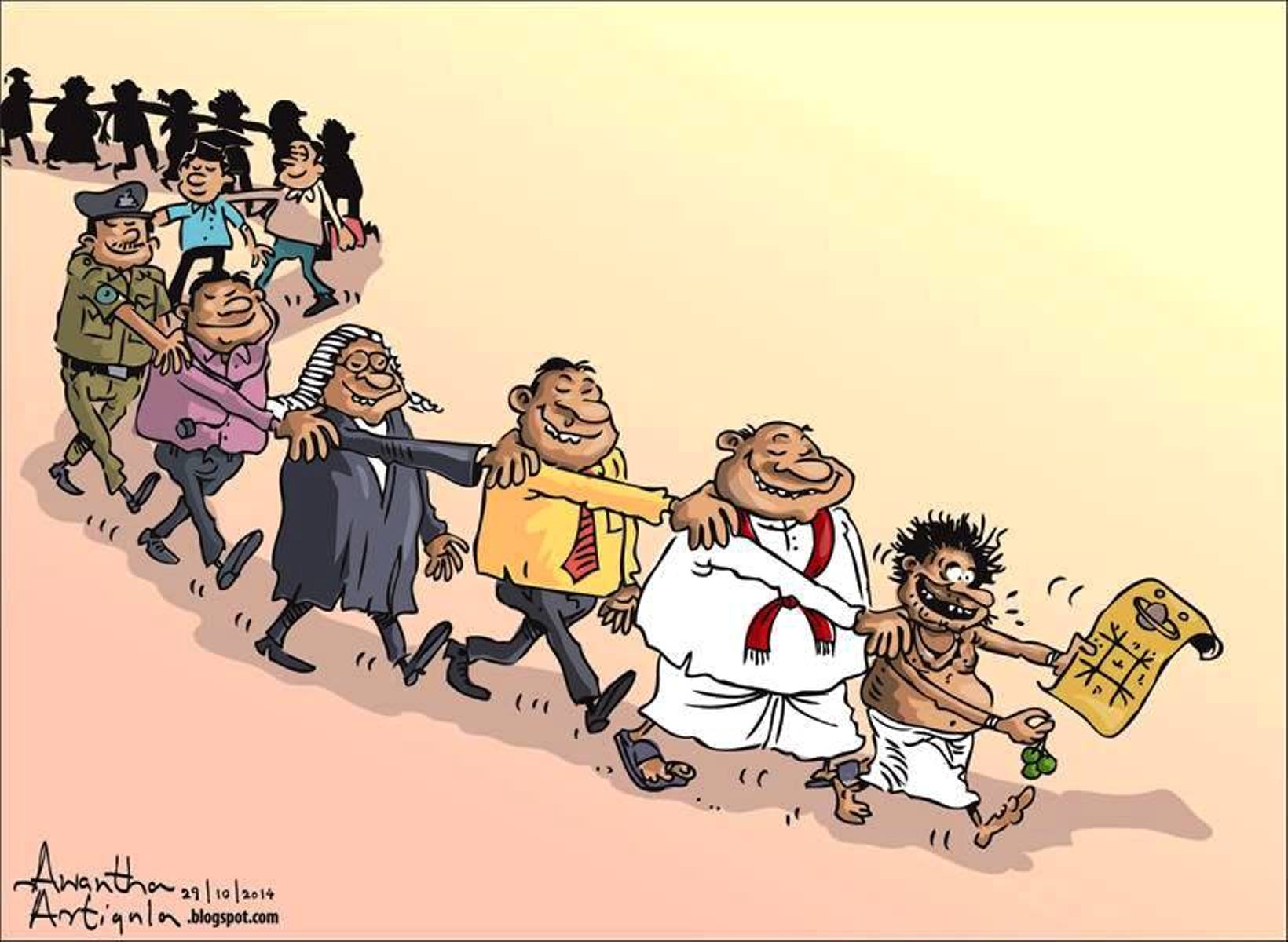
In this week’s Ravaya column (in Sinhala), published on 23 November 2014, I ask whether astrologers are the most powerful persons in Sri Lanka. This is because all important decisions of the state, including the ceremonial opening of Parliament and scheduling of elections, is done strictly on astrological advice.

Speaking at a recent meeting of the Sri Lanka Rationalists’ Association to discuss my latest book, writer and political commentator Gamini Viyangoda said astrology determines so many personal and public decisions in Sri Lanka. In this obsession, ruling party and opposition party politicians seem united.

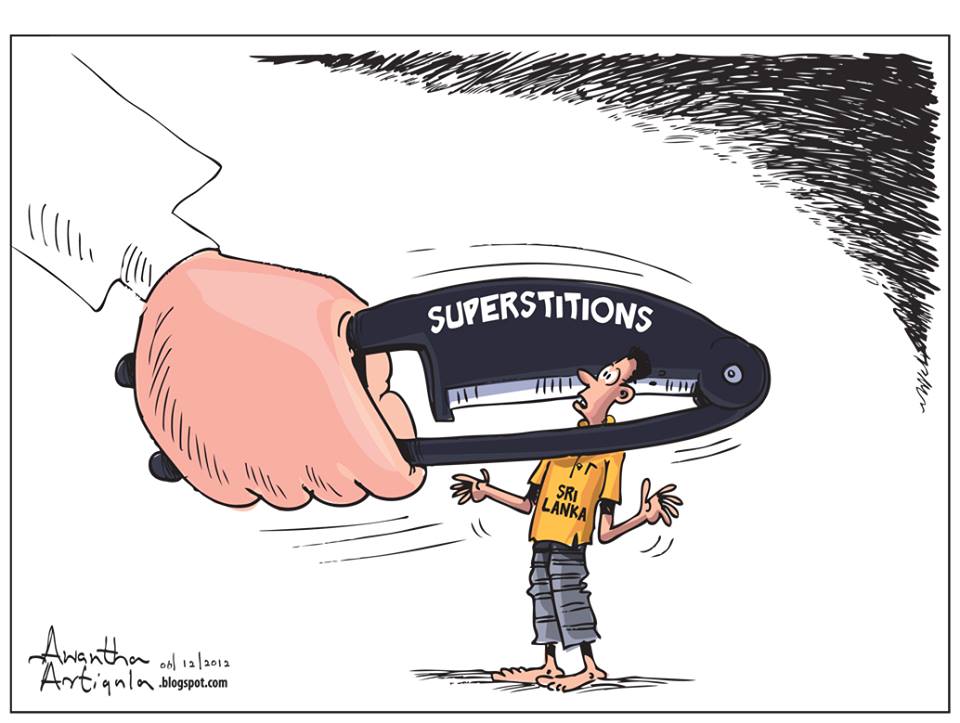
Cartoon by Awantha Artigala

‘‘අද අපේ රටේ රාජ්‍ය පාලනයට ජ්‍යොතිෂය සෘජුවම බලපෑම් කරනවා. එයට හේතුව රාජ්‍ය නායකයා මේවා දැඩි ලෙස විශ්වාස කරන්නකු වීම නිසා. එපමණක් නොවෙයි, පාලක හා විරුද්ධ පක්‍ෂ සියල්ලේම පාහේ සිටින බොහෝ නායකයෝ හා අපේ ඡන්දයෙන් පාර්ලිමේන්තුවට යන ජනතා නියෝජිතයෝ ජ්‍යෙතිෂයට අනුව තමයි රටේ තීරණාත්මක පියවර හා ප‍්‍රතිපත්ති නිර්ණය කරන්නේ.’’

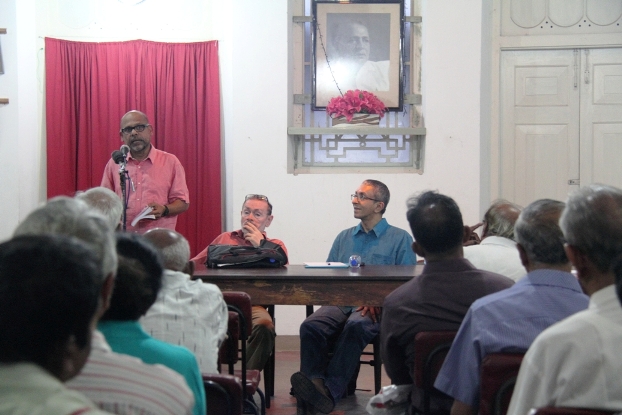
ප‍්‍රවීණ ලේඛක හා දේශපාලන විචාරක ගාමිණී වියන්ගොඩ මේ ප්‍රකාශය කළේ මගේ අලූත්ම පොත ‘කාල බෝම්බ ඕනෑකර තිබේ’ නිමිත්ත කර ගෙන ශ‍්‍රී ලංකා හේතුවාදීන්ගෙ සංගමය 2014 ඔක්තෝබර් 23දා කොළඹ එන්. එම්. පෙරේරා කේන්ද්‍රයේ පැවැත්වූ සංවාද මණ්ඩපයේදී.

සිවුමංසල කොලූ ගැටයා තීරු ලිපියේ හේතුවාදී දැක්මක් තිබෙනවා. මා හේතුවාදීන්ගෙ සංගමයේ සාමාජිකයකු නොවූවත් ඔවුන්ගේ තර්කානුකූල හා විචාරශීලි ප‍්‍රවේශය මට ද සමීපයි. ඇත්තටම මා මේ තීරු ලිපිය ලියන්නේ හේතුවාදීන් නොවන බහුතරයක් ලාංකිකයන්ගේ මනැස ටිකක් හෝ විවෘත කිරීමේ අරමුණින්.

හේතුවාදීන්ගෙ සංගමයේ වත්මන් සභාපති සූරපාල රණතුංගත්, ලේකම් තාරක වරාපිටියත් මූලික හැඳින්වීමක් කළ පසු හේතුවාදී ක‍්‍රියාකාරිකයන් හා ලේඛකයන් වන ගාමිණි වියන්ගොඩ හා එස්. එම්. බන්දුසීල දෙදෙනා මගේ පොත හා තීරු ලිපි ගැන අදහස් දැක්වූවා.

Rationalists Association of Sri Lanka discussion on කාල බෝම්බ  ඕනෑකර තිබේ book, 23 October 2014
Rationalists Association of Sri Lanka discussion on කාල බෝම්බ ඕනෑකර තිබේ book, 23 October 2014

ගාමිණි වියන්ගොඩ තව දුරටත් මෙසේ කියා සිටියා: ‘‘අපේ මැතිවරණ පවත්වන්නේ, පාලකයාගේ කේන්දරයට වඩාත්ම සුබදායි යයි කියන දිනයක මිස වෙනත් කිසිදු සාධකයක් සළකා බලා නොවෙයි. මේ නිසා පාලකයන්ටත් වඩා ඉහලින් බලපෑම් කිරීමේ හැකියාව සමහරු ජ්‍යෙතිෂකාරයන්ට අද ලැබී තිබෙනවා.’’

‘‘අද අපේ රටේ බොහෝ දෙනකු නොදන්නා හෝ නූගත් හෝ උදවිය නොවෙයි. ආගම් ඇදහීමේදීත්, ජ්‍යොතිෂය ඇතුලූ ගුප්ත විද්‍යා දැඩි ලෙස විශ්වාස කිරිමේදීත් ඔවුන් තම දැන උගත්කම පසෙක තබා ඔහේ කි‍්‍රයා කරනවා.’’

‘‘මා මෙය දකින්නේ මොළය වෙහෙසවීමට ඇති අලසකම ලෙසයි. මොළය වෙහෙසා තර්කානුකූලව හා බුද්ධිගෝචරව යථාර්ථය විග‍්‍රහ කරනවාට වඩා ඉතා ලෙහෙසිනේ මොළය නිද්‍රාශීලීව තබා ගෙන තමන්ගේ වැදගත්ම තීරණ ආගමට හෝ ජ්‍යොතිෂයට හෝ ඒ දෙකටම භාර දීම.’’

‘‘එසේ මොළය නිද්‍රාශීලීවීමට ඉඩ නොදී, අලස නොවී ස්වාධීනව සිතන ටික දෙනකු නිසා තමයි ලෝකය ඉදිරියට යන්නේ. විද්‍යාව හා ශාස්ත‍්‍ර දියුණු වන්නේත්, ශිෂ්ටාචාරය වර්ධනය වන්නේත් එබන්දන්ගේ පිහිටෙන්. අපට තව තවත් අවශ්‍ය මේ අවධි වූ සිහියෙන් සිටින අයයි.’’

‘‘මොළය අලසව නිද්‍රාශීලීව සිටින උදවිය අවධි කිරීමේ ලොකු වගකීමක් අපට තිබෙනවා. සමාජය විවෘත හා විචාරශීලී කිරිමට මග පෙන්වීම තමයි හේතුවාදීන්ගේ සැබෑ කාර්ය භාරය. හේතුවාදීව සිතිය හැකි දේශපාලනික නොවන කාරණා ඕනෑ තරම් තිබෙනවා. හේතුවාදීන් පුළුල් පරාසයකට යොමු කරන්නට සිවුමංසල කොලූ ගැටයා තීරු ලිපිය හා පොත් මහත් සේ උපකාර වනවා.’’

අපේ ඇතැම් දෙනා ක‍්‍රියා කරන ආකාරය දෙස බලන විට ශ්‍රී ලංකා දුපතේ බුද්ධිමත් ජීවීන් සිටිනවා ද යන්න සැක සහිතයි. මේ තරම් සාක්‍ෂරතාවය ඉහළ හා මාධ්‍ය භාවිතය ප‍්‍රචලිත වූ රටක, මේ තරම් ලෙහෙසියෙන් මුලා කළ හැකි ජනතාවක්, හමු වන්නේ ඇයි?

පසුගිය මැයි මාසයේ මට විද්යුත් ලියුමක් එවමින් රාවය පාඨක නිමල් ජයසිංහ මෙසේ කියා සිටියා: ‘‘අද ශ්‍රී ලාංකිකයෝ පුදුම ගණයේ ආත්මාර්ථකාමියෝය. උගුලෙන් බැරිනම් කෙමණෙන් හෝ තම කාර්ය සිදු වන්නේ නම් එයින් සතුටු වන නරුමයෝය. එබැවින් ඔවුන්ට හැම දෙයක්ම ඕනෑය. උදේ පන්සිල් ගෙන ගෙදරින් පිට වන ඔවුන් ශාන්ත අන්තෝනි පල්ලියේ ද ඉටිපන්දමක් දල්වා වැඩට යති. කාගෙන් හෝ වැඩේ කෙරුනොත් ඇති යන සිතුවිල්ලෙන් කල් ගෙවන මොවුන් විමර්ශනශීලී මිනිසුන් හෝ ගැහැණුන් නොවේ. මොවුන්ට මම ආමන්ත්‍රණය කරන්නේ රැළේ යන්නෝ කියලාය!”

මේ විග්‍රහය මටත් පිලිගන්න සිදු වනවා. මෙවැනි අදහස් අද විවෘතව පල කැරෙන්නේ ද කලාතුරකින්.

‘‘හේතුවාදී ලිපි’’ නමින් 2013දී ප‍්‍රකාශිත ග‍්‍රන්ථයට පූර්විකාවක් ලියමින් එහි සංස්කාරක හා ප‍්‍රවීණ ලේඛක අජිත් තිලකසේන මෙසේ කියනවා:

‘‘අපේ රටටත්, කලාපීය රටවල් ගණනාවකටත් බලපාපු 2004 දෙසැම්බර් 26 සුනාමිය මෙහි 50,000ක පමණ ජනයින්හට මරු කැඳවමින්, සිද්ධ කරපු දේපල හානිය ද විශාලයි. මෙය මතක ඇති ඉතිහාසයේ සිද්ධ නොවු බිහිසුනු ස්වාභාවික විපතක් වුවත් එය පුරෝකථනය කරන්න (එනම් කල් තබා අනතුරු ඇඟවීමට) කිසිම ජ්‍යොතිර් ඇදුරෙක්ට පුලූවන් උනේ නෑ!’’

‘‘ජ්‍යොතිර් ඇදුරන්ට, පේනකරුවන්ට ස්ථිරව යමක් කියන්න බැරි බව දැන දැනත්, කියාපු දේවල් බොරු වූ අවස්ථා දැක දැකත්, ඒ පසු පස යන්නන්ගේ අඩුවක් ශ‍්‍රී ලංකා සමාජය තුළ දැක ගන්න නැහැ…. එසේම තම අවශ්‍යතා ඉටු කර ගන්න විවිධ දෙවි දේවතාවන් කරා ගොස් බාරහාර වන ජනයින්ගේ අඩුවක් දැක ගන්නත් නැහැ’’ ඔහු තව දුරටත් කියනවා.

මා කවදත් කියන්නේ මෙයයි. තනි පුද්ගල මට්ටමින් ඕනෑ කෙනෙකුට ඕනෑම අභව්‍ය දෙයක් ඇදහීමට හා ඒ සඳහා තම කාලය හා මුදල් වැය කරන්නට නිදහස තිබෙනවා. එහෙත් එම ඇදහිලි හා විශ්වාස සෙසු සමාජයට බලෙන් ආරෝපණය කිරීමට හෝ රාජ්‍ය ප‍්‍රතිපත්ති හා රාජ්‍ය පාලනයට ඒවා හරහා බලපෑම් කිරීමට හෝ නිදහසක් නැහැ.

මිථ්‍යාවට මුවා වී, ජනයා බියපත් කර මුදල් ගසා කන වංචනික ජ්‍යෙතිෂවේදීන් හා වෙනත් ගුප්ත ශාස්ත‍්‍රකරුවන් මෑතක සිට තමන්ගේ සටකපට කි‍්‍රයා සඟවන්නට තැත් කරන්නේ ‘සාම්ප‍්‍රදායික දැනුම’ නම් තිරයට මුවා වෙමින්.

දේශීය උරුමය හා පාරම්පරික දැනුම වුව වර්තමානයේ තර්කානුකූල විවාදයට ලක් විය යුතුයි. ආසියාවේ බිහි වූ විශිෂ්ඨතම හේතුවාදියෙකු හා නිදහස් චින්තකයෙකු ලෙස සැලකෙන ආචාර්ය ඒබ‍්‍රහම් තෝමස් කොවූර් (1898 – 1978) එදා කී දේ අදටත් හරියටම ගැලපෙනවා. ‘‘තමන්ගේ ආශ්චර්යයන් පරීක්‍ෂා කිරීමට ඉඩ නොදෙන්නා වංචනිකයෙක්. එබඳු දේ විමසීමට ධෛර්යය නොමැත්තා පහසුවෙන් රැවටිය හැකි කෙනෙක්. එබඳු ආශ්චර්යයන් හා මතවාදයන් ඉස්මුදුනින් පිළිගෙන අදහන්නා මෝඩයෙක්.’’

කොවූර් ශ්‍රී ලංකා හේතුවාදී සංගමය ආරම්භ කළේ 1960දී. විවෘත මනසකින් යුත් විචාරශීලී ලාංකිකයන් රැසක් එයට ඇද ගන්නට ඔහු සමත් වුණා. එනයින් බලන විට කොවූර් හේතුවාදී සංගමයෙන් හා ව්‍යාපාරයෙන් ඔබ්බට ගිය විද්‍යාත්මක චින්තන විප්ලවයකට මුල පිරුවා යයි කිව හැකියි. මේ සදහා විද්‍යාව ඉහළට උගත් එහෙත් ඒ උගත්කමින් මනස මොට කර නොගත් බුද්ධිමතුන් ගණනාවක් මෙන්ම සිංහලෙන් හා දෙමලෙන් ජන සමාජයට මේ පණිවුඩ ගෙන යා හැකි ලේඛන හැකියාව ඇති කලාකරුවන් කිහිප දෙනකු ද ඔහු සම්බන්ධ කර ගත්තා.

එයින් මුල් ගණයට වැටුණු අයගෙන් වඩාත් ප‍්‍රකට වූ චරිතයක් වෛද්‍ය කාලෝ ෆොන්සේකා. තරුණ වෛද්‍යවරයකු හැටියට 1970දී පමණ ඔහු ගිනි පෑගීමේ විද්‍යාත්මක පදනම ගවේෂණාත්මකව ඔප්පු කළේ එය කිසිදු හාස්කමක් හෝ දේවබලයක් හෝ නැතිව කළ හැකි බව ප‍්‍රායෝගිකව පෙන්වා දෙමින්.

කොවූර් වටා ඒකරාශී වූ චරිත අතර ප‍්‍රවීණ ලේඛකයන් වූ අජිත තිලකසේන හා අමුණුගොඩ තිලකරත්න ද සිටියා. පසු කලෙක ශ්‍රී ලංකා හේතුවාදී සංගමයේ සභාපති ලෙස ක‍්‍රියා කළ නීතිඥ ධර්මපාල සේනාරත්න තරුණයකු හැටියට හේතුවාදී ව්‍යාපාරයට ඇදී ආවේ ද 1960-1970 යුගයේයි.

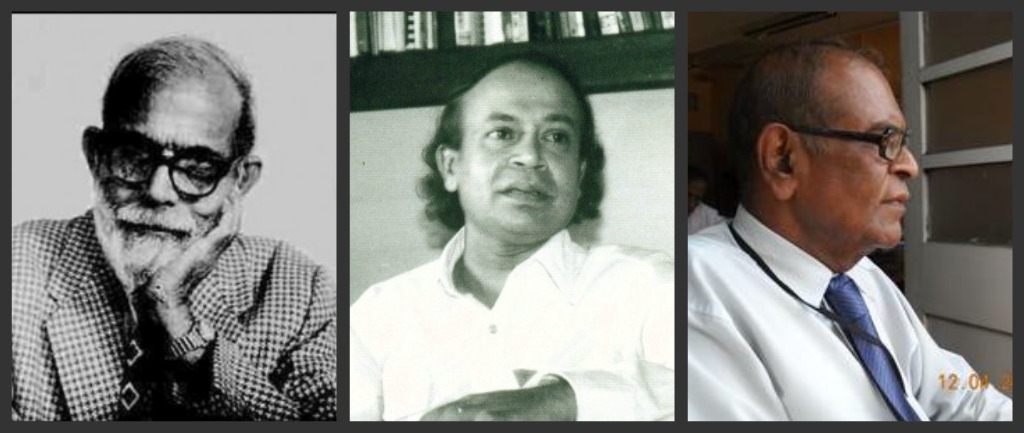
Keepers of Rationalist Flame L to R - Abraham Kovoor, Carlo Fonseka, Dharmapala Senaratne
Keepers of Rationalist Flame L to R – Abraham Kovoor, Carlo Fonseka, Dharmapala Senaratne

මෙරට හේතුවාදී ව්‍යාපාරයේ ස්වර්ණමය යුගය වූයේ ද ඒ දශක දෙකයි. එයට එක් හේතුවක් නම් කොවූර් හා ඔහු වටා එක් වූ දක්‍ෂයන් පිරිසයි. එහෙත් එවකට ලක් සමාජය අදට වඩා එදා විවෘත හා බුද්ධිගෝචර වූ බවට ද තර්ක කළ හැකියි. ඒ ඇයි?

1963 ජන සංගණනයට අනුව මෙරට ජනගහනයෙන් සියයට 76.8ක් දෙනා සාක්‍ෂරතාවය ලබා සිටියා. 1971 සංගණනය වන විට එය සියයට 78.5 දක්වා දියුණු වූ අතර මේ වන විට එය සියයට 92ක් පමණ වනවා. මෙරට අධ්‍යාපන මට්ටම් හා ඒවාට යොමු වන ජන සංඛ්‍යාව හා ප‍්‍රතිශතයන් ඉහළ ගොස් ඇති බව පැහැදිලියි.

සන්නිවේදන තාක්‍ෂණයය පැත්තෙන් බැලූ විට ද සංඛ්‍යාත්මකව විශාල වැඩිවීමක් සිදු වී තිබෙනවා. දුරකථන, රේඩියෝ හා පුවත්පත් පරිශීලනය කරන ජන සංඛ්‍යාව හා ප‍්‍රතිශතය වැඩි අතර එදා නොතිබුණු ටෙලිවිෂන් හා ඉන්ටර්නෙට් මාධ්‍යත්, ජංගම දුරකථනත් අද සමාජයේ ස්ථාපිත වෙලා. තොරතුරු හා දැනුම ලබා ගන්නට හා බෙදා ගන්නට හැකියාව මීට වසර 50කට වඩා අද පැහැදිළිව ම වැඩියි.

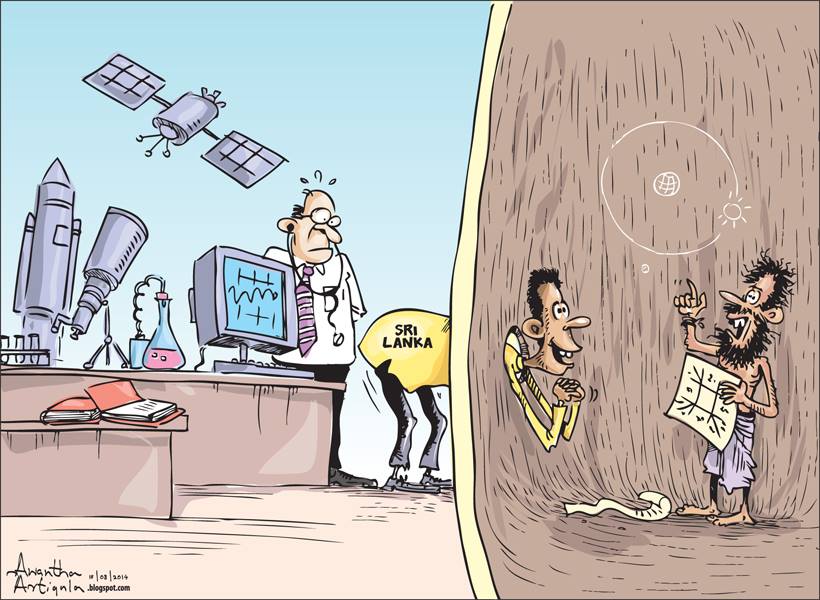
"Modern" Lankan? Cartoon by Awantha Artigala
“Modern” Lankan? Cartoon by Awantha Artigala

මේ ප‍්‍රමාණාත්මක දියුණවත් සමග ගුණාත්මකව දියුණුවක් ඇති වී තිබේ ද යන්න විවාදත්මකයි. අපේ ඇතැම් අය මෙන් මා යටගියාව ගැන රොමෑන්ටික් ලෙසින් අතිශයොක්තියෙන් දකින්නකු නොවේ. එහෙත් හේතුවාදීන්ගේ ස්වර්ණමය යුගයේ ඔවුන්ගේ සමාජ මෙහෙවරට අනුබල දෙන්නට, දිරි ගන්වන්නට මෙරට බුද්ධිමතුන්, කලාකරුවන්, වෘත්තිකයන් හා පුවත්පත් කතුවරයන් රැසක් ඉදිරිපත්ව සිටියා.

කොවුර් නඬේ ගුරා වූවත් ඔහු ඒ අභීත බුද්ධිමය චාරිකා ගියේ ලොකු කුඩා බොහෝ දෙනාගේ ආශිර්වාදය හා සහයෝගය ඇතිවයි. එවන් පිරිසක් අද සිටී ද?

2012 ජනවාරියේ ලිපියකින් මා කීවේ මෙයයි: “අපේ මවුපියන්ගේ තරුණ අවධියේ කෙටි කලෙකින් ලක් සමාජයේ බුද්ධිමත් ස්ථරයන්ගේ පිළි ගැනීමට පාත‍්‍ර වූ ආචාර්ය කොවූර් බැරි වෙලාවත් අද මුල් වරට මෙරටට පැමිණ ඒ මෙහෙවර ම ඉටු කරන්නට තැත් කළොත් ප‍්‍රතිචාරය කෙබඳු වේවිද?”

“ඔහු කියන දෙයට සවන් දෙනවා වෙනුවට ඔහුගේ සම්භවය, පෙනුම හා පසුබිම ගැන වැඩි අවධානය යොමු වෙයි. රැවුල වවා ගත්, දකුණු ඉන්දියානු සම්භවය ඇති මලයාලි ජාතිකයෙකු අපේ සංස්කෘතික උරුමයට හා ජාතික අනන්‍යතාවයට (සමහර විට ජාතික ආරක්‍ෂාවට පවා!) තර්ජනයක් කරන බවට චෝදනා එල්ල විය හැකියි.”

“නැතහොත් පුවත්පත් සාකච්ඡාවල දී ඔහුට ජාතිද්‍රෝහී, රාජ්‍ය විරෝධි ලේබල් ලෙහෙසියෙන් ඇලවිය හැකියි! අදෘශ්‍යමාන භුත අවතාර හා පිල්ලි වෙනුවට නාඳුනන තුවක්කුකරුවන්ගේ තර්ජනයට ඔහු ලක් විය හැකියි!”

අපි කුමක් කරමුද? මේ ප්‍රශ්නය යලි යලිත් ඇසීමට කාලයයි.

See also:

22 Jan 2012: සිවුමංසල කොලූගැටයා #50: අවිචාරයේ සැඩ සුළගට මැදි වුණු හේතුවාදී පහන් සිළුව

29 Jan 2012: සිවුමංසල කොලූගැටයා #51: ඔබේ විචාර බුද්ධිය දැන් අක‍්‍රීය කරන්න!

18 May 2014: සිවුමංසල කොලූගැටයා #168: නින්දෙන් ඇවිදින ලක් සමාජය හේතුවාදීන්ට අවදි කළ හැකිද?

Cartoon by Awantha Artigala