It's planet saving time...and everybody is invited!
Can ordinary people help save our planet?
What does it take to change their attitudes and lifestyles to consume and waste less?
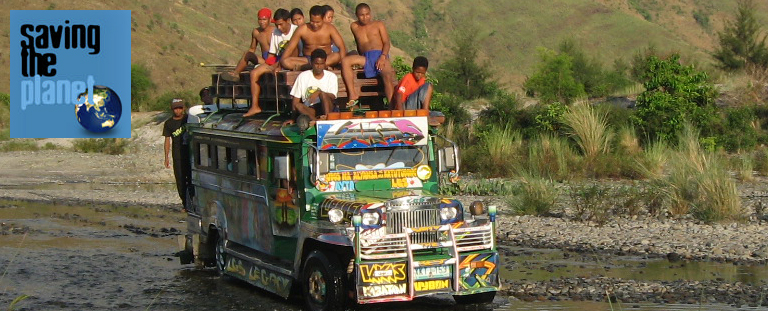
For over two years, my team at TVE Asia Pacific and I have been working on a new TV series, modestly called Saving the Planet. It will be released at a regional conference in Tokyo, Japan, on 22 August 2009.
In this Asian series, produced in partnership with Asia Pacific Cultural Centre for UNESCO (ACCU), we profile successful initiatives that combine knowledge, skills and passion to create cleaner and healthier environments.
It was filmed in six countries in South and Southeast Asia: Cambodia, India, Laos, Nepal, the Philippines and Thailand.
The groups profiled in Saving the Planet often work without external funding and beyond the media spotlight. They have persisted with clarity of vision, sincerity of purpose and sheer determination. Their stories inspire many others to pursue grassroots action for a cleaner and safer planet.
I ended a recent blog post, News wrapped in laughter, with this thought: “There is another dimension to satirising the news in immature democracies as well as in outright autocracies where media freedoms are suppressed or denied. When open dissent is akin to signing your own death warrant, and investigative journalists risk their lives on a daily basis, satire and comedy becomes an important, creative – and often the only – way to comment on matters of public interest. It’s how public-spirited journalists and their courageous publishers get around draconian laws, stifling regulations and trigger-happy goon squads. This is precisely what is happening right now in countries like Kenya and Sri Lanka, and it’s certainly no laughing matter.”
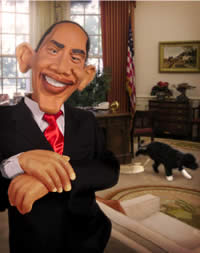
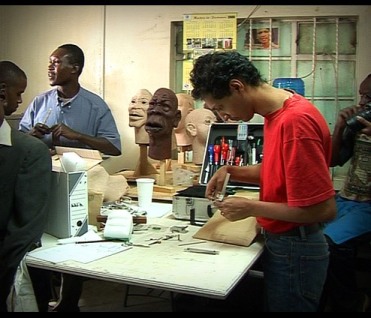
An interesting experiment in political satire on Kenyan television has just ended its first season on 9 August 2009. It’s a show called the XYZ Show, which was broadcast weekly on Kenya’s Citizen TV. Started in mid May 2009, the first season introduced Kenyan viewers to a new form of satire television, with life-sized puppets made to resemble famous persons, mostly politicians.
Gado the CreatorThe XYZ Show was inspired by famous puppet satire series like the British “Spitting Image” and the French “Les Guignols de l’Info” shows. In the XYZ Show, the puppets commented on news and current events from both Kenya and overseas.
The XYZ Show was developed by a team led by Kenyan cartoonist Godfrey Mwampembwa, alias Gado. He is the most widely syndicated cartoonist in East and Central Africa. He publishes a daily cartoon in The Nation, the largest newspaper in Kenya, and his work has been published in Le Monde (France), Washington Times (US), De Standaard (Belgium) and The Japan Times.
According to its creators, the XYZ Show challenged famous figures from Kenyan high society and politics using humour and satire. It aimed to become a new forum for social and political debate, one that provides room for open discussion.
Watch XYZ Show’s first episode trailer, produced one year ago:
Says the Prince Claus Fund of the Netherlands, which supported the show’s production: “Although freedom of the press is a constitutional right in Kenya, it is difficult for many journalists to practice their profession without interference. Gado and his team hope that the XYZ Show will contribute positively to strengthening freedom of the press and increasing political and social awareness among the people of Kenya. The show provides commentary on current social and political developments and aims to use humour and artistry to reinforce freedom of speech in Kenya.”
From what I’ve been able to watch online, on the show’s YouTube channel and elsewhere, the production values are at a high standard, comparable to such shows made in Europe and East Asia. The puppets are attractive, movements convincing and the pace quick and slick.
Who pulls his strings?The producers have also tried hard to make XYZ more than just a TV show. The website, in English, shows how the content is being adapted for the web (as webisodes) and mobile phones (as mobisodes). The show’s official blog takes us on to the set and shares with us the story behind the story, and introduces us to the artists and technical geniuses involved. Full marks for trying to engage the audience.
Then there is Barack Obama. Using his Kenyan connections, the show casts him (really, a puppet in his image) in a ‘supporting actor’ role. This has clearly inspired some interest in the show beyond Kenya.
So far, so good. But how does it work with the audience? The show is directed mainly at local audiences, and even if it’s presented in a mix of English and local language, it’s not something a complete outsider like myself can appreciate.
So I ‘crowd-sourced’ by asking a Kenyan reader of my blog, Marion N N, for her opinion. Marion is part of Sojourner, which her blog introduces as “a social enterprise that exists to promote the origination, production and distribution of African viewpoints through visual media. We are passionate about African film-making and seek its viable promotion globally”.
Marion wrote a comment in her blog after watching one episode a few weeks ago. She lives and works in Kenya, and her views are far more valid than my own.
Behind the screen, creators at work...She wrote: “My first off impression was fascination about the quality of the show in terms of animation which is very new to the local TV production scene in Kenya. Once past the fascination of the animation, I found that the content failed to hold my interest, connect with me or engage me as an audience. As a socio-political spoof show, humor ideally should be the hook that captures audience but in this case, humor comes across as mindless, illogical or simply stupid action on the screen. As if in evidence to this fact, at some point my husband in between laughter remarked ‘This show is really stupid’. I would imagine this would be a compliment to the Production becuase it provoked laughter in a viewer. However beyond that moment, it seemed only natural for us to flick over to more substantial entertainment having enjoyed that brief flight of fancy that failed to arouse an appetite for more.”
Marion also wondered what the show’s intended audience was, and highlighted the many challenges in getting the levels and balances right in doing political satire: “That politicians sometimes (nay, most times) behave ridiculously is not new or fresh. But the treatment, underlying themes, ideas communicated to audiences should be. Why do I suggest this? Because political satire by its nature speaks to an audience that is fairly mature, and exposed. To use childish humor that is poorly developed will not hold the audience’s attention. Infact at some point the content may become a tad irritating to watch. Political satire needs to be treated with a peppering of fact, wit, fresh perspective or take -out: The achievement of some underlying objective and not just mindless visual gimmicks that lead to the feeling of ‘stooping to idiocy; by audiences. This seeming insult of intelligence causes us as an audience to switch off.”
In my own view, The XYZ Show had at least three major challenges. Doing any puppet show is hard enough, and these days the on-air competition is neither local nor fair: it comes from global entertainment corporations like MTV and their regional variations, usually with deep pockets. Doing political satire is even harder, especially if the political culture is intolerant or repressive. To get the look, feel and balances right in a country where such a show is being done locally for the first time is a formidable challenge by itself.
But I’ll let Marion have the last word. In spite of the various concerns, she feels that the XYZ Show has ‘room to grow and conquer the airwaves’. But, as she notes, “The production team have their work cut out for them in pre-production. It’s back to the drawing board and ask who is my audience? What appeals to them? How do I connect with them, define an objective for the show and its audiences? Research facts and opinions about national sentiment on issues then develop scripts and sequences…”
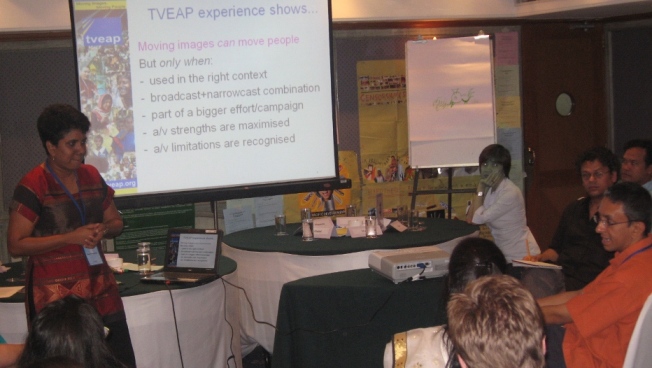
The framework, building on a dozen years of TVEAP experience in working with television broadcasters and other media outlets across the Asia Pacific region, guides individuals and institutions to get the best out of the media. One key to success is building sustained relationships with media professionals and their gatekeepers (the bosses at media organisations who decide what content to publish or broadcast).
We introduced the framework to a group of ICT researchers drawn from across Asia who came together for a two-day workshop in Hyderabad, India, on 1 – 2 December 2008. The workshop aimed to build their capacity to use different communication frameworks and tools to engage policy makers, various other stake-holders and the wider public.
Our friends at IDRC have recently edited highlights of our presentation into a short video, which mixes excerpts from an interview they filmed with me. It can be watched here:
“Development” is seen as a hard sell in the increasingly commercialised media in the Asia Pacific. Researchers, activists and educators engaged in development work often complain that they are blocked out of the print and broadcast media. Yet they fail to understand a basic truth about the media: there is no quota of print space or air time set aside for development. Information and opinions on development topics must compete with other areas of human endeavour for the limited space and time available.
It is unrealistic to expect any legally or otherwise guaranteed space or time for development content. Even if there were, that can only apply on the media owners and media professionals. There can be no guarantee that media audiences will accept such content.
I get rather weary when well-meaning development players complain about the airwaves being full of entertainment, as if that airtime is something they have been deprived of. There is nothing intrinsically wrong with entertainment. The world will be a very dull place if the broadcasters listened to development people and packed every minute of air time with ‘information and education’.
Hitch a hike, but don't expect to get in the driver's seat...
This is the big challenge to the development community — how to get that delicate balance right, and learn to co-exist with other forms of media products catering to the wide and varied human interests. Hitch-hiking with the media avoids confrontation, looks for the common ground and tries to nurture collaboration for mutual benefit.
As my colleague Manori Wijesekera (presenting in the photo above) told the Hyderabad workshop: “Researchers and activists are a good source of information and opinions for the media, who need a constant supply of these. This can be a win-win situation for both parties, but we have to remember that we are hitching a ride with the media. So we can’t get into the driving seat or demand too much at once!”
So here’s our commercial: TVEAP conducts short, customised training sessions and workshops for researchers and civil society groups to enhance their media skills. These offer guidance on how to build and sustain ‘bridges’ with the media, and receive quality coverage that go well beyond publicity and public relations. If interested, get in touch with us!
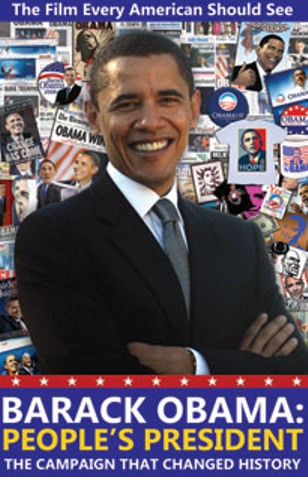
A film to reveal what the old media didn't show...When Barack Obama and his running made Joe Biden won the US Presidential Election held on 4 November 2008, they not only beat the Republican duo McCain-Palin but also a host of other also-rans. It’s too soon to tell, but that date might also mark the beginning of the end for the old media, also called the mediasaurus, who have been dominating the public’s access to news, information and commentary for over a century.
But how did it all happen? Who can tell us the real story as it happened, and why, without filters and biases so rampant among the mediasaurus?
On this blog, we have watched with deep interest and some fascination the rise of Barack Obama from relative obscurity to become the President of the United States. On 6 November 2008, soon after the election results were confirmed, we noted how Obama had just been elected ‘President of the New Media world’. I explained: “Obama’s rise has epitomised change in many ways. Among other things, he is the first elected leader of a major democracy who shows understanding and mastery over the New Media World, which is radically different from the old media order.”
On 20 January 2009, when he was inaugurated, we wrote: “For four or eight years, Obama’s every move, word and gesture will be captured, dissected and debated to exhaustion by admirers and detractors alike. And his administration will be under scrutiny by thousands of citizen journalists who don’t share much except the digital platforms and social networks on which they post their impressions. Welcome to the New Media Presidency. The hard work – and real fun – begin now!”
And now, one of the world’s leading new media activists, Danny Schechter, is about to release a new documentary on how the Obama campaign rode the new media wave to the White House — and more importantly, how the same new media can help the American public to keep Obama Administration accountable.
The film “Barack Obama, People’s President”, (slated for DVD release later this month by ChoiceMedia.net), documents the online and on the ground techniques that were used to win the highest office in the land.
As the film’s advance promo blurb says: The one story that most TV outlets didn’t tell in the 2008 election was the most important one -how did a young and relatively unknown candidate become President? If you voted for Barack Obama or not, this is a story you will want to know because it shows how the face of presidential politics changed forever. Barack Obama used techniques never seen before in a nationwide election — his grassroots mobilization and use of the internet was unprecedented, inspiring and effective. You have seen the rest of the coverage — now see the real story.
The film goes inside the official and unofficial campaign to show how Barack Obama was turned into a political brand to appeal to young first time voters. It shows how social networking on the internet — blogs, Facebook, texting and other techniques — were used carry the message to the masses and to raise tens of millions of dollars for the campaign. Popular online videos such as “Obama Girl”, along with those created by regular yet passionate supporters to engage their own communities, became one of the most important tools in the campaign’s success.
Watch the trailer of “Barack Obama, People’s President” directed by Danny Schechter:
Emmy award winning film-maker Danny Schechter, who is also blogger-in-chief at MediaChannel.org that keeps a critical eye on the media, just wrote this explaining why he made this film:
“It is hard to remember that two years earlier Obama was barely known, registering on the radar screen for just 10% of voters. He was also hardly a brand name as a first term Senator who spent more time in state politics in Illinois than on the national stage. Moreover, he was young and a man of color — not qualities that usually prevail in a presidential arena which tends to draw far older, far whiter, and far more centrist candidates. The thought that he would beat frontrunner Hillary Clinton in the primaries was, quite frankly, unthinkable to most of the elite.
“And yet he prevailed, as he used a phrase appropriated from labor organizer and Latino legend Caesar Chavez. Obama turned the farm workers Spanish language slogan “Si Se Puede” into “Yes We Can.” Rather than focus on specific political issues, he built a campaign on the promise of “Hope.” Rather than just rely on traditional fundraising — although by the end, he was plush with it — he reached out over the internet for smaller donations from millions of donors.
Perils of the New Media Generation...“Few in the major media gave him a chance, but he was not discouraged because he had created his own grassroots media operation using sophisticated organizing and social networking techniques to build a bottom-up movement, not the usual top-down apparatus. While his campaign ran the show, he encouraged independent initiatives including citizen-generated media, music videos, personalized websites, twittering and texting, etc..
“This is the new direction our politics has taken. It is a story that may be somewhat threatening to old media – and older activists – who prefer a one to many approach to communication, as opposed to forging a more interactive empowering platform. There is no question that young people — especially those mobilized by Obama — prefer online media and that choice is making it harder and harder for traditional outlets to sustain their influence and, in some cases, even their organizations. Old media may be on the way out.
“This is why our film is, in my mind, so important, not just as a record of how Obama won and what happened in 2008, but in what will happen, can happen, and is happening in the future. This is why I believe its critical for Americans to see it — and others in the world as well — to recognize how Obama represents more than just another politician, but a whole new approach to politics. That old adage is worth remembering: “It’s not the ship that makes the wave, it’s the motion of the ocean.”
“Obama, for all his shortcomings, which are becoming more obvious by the day, has pioneered the way change must be won — not by people on the top, but by all of us. It remains for “us” to hold him accountable. We live in a culture of amnesia – it is important to learn the lessons of the recent past.”
Read the full comment: New Film Tells Unreported Story of Obama’s Election on MediaChannel.org
In January 2008, I wrote about two short videos made by Pradip Saha and colleagues at the Centre for Science and Environment (CSE) in India on the auto industry’s contribution to worsening traffic congestion, air pollution and public health in metropolitan India.
Now Pradip & Co have come out with another revealing short video. It answers a simple question: of the various types of motorised transport on our roads, which one emits the most carbon dioxide per person that slowly but surely bakes our planet?
Their blurb says:
Watch video to find out who wins in this race to emit more. A blue graph will appear shortly on your screen. Do not be alarmed. It is an attempt to illustrate the Carbon each of us emits while traveling to work everyday.
This short video reminds of what we can do with broadband-enabled online video to raise awareness and catalyse discussion on matters of public interest. I haven’t specifically asked Pradip about this, but it seems like a low-cost, quick-turnaround effort. It’s certainly effective in making a single, important point that has far-reaching policy and practical implications.
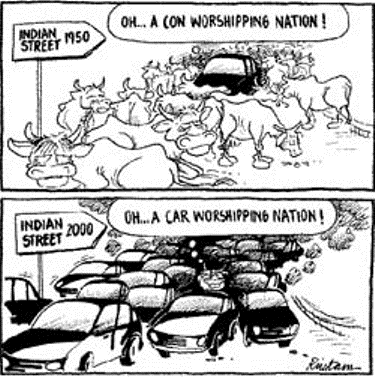
What a difference half a century makes: cartoon courtesy CSE India The big question is: who is listening in modern India that has turned itself into a car-worshipping nation?
I’m a bit anxious about impending teenhood. No, not my own, thank you, but my kid’s.
As a single parent raising a 12-year-old who will soon turn 13, I keep reading and hearing all kinds of advice these days on how best to cope with a teenager in the house — that phase in growing up that everyone predicts will involve some turbulence.
On top of all else that comes with hormones-on-legs, there’s now the worry of Teenage Affluenza. It’s a condition that affects millions of teenagers around the world. Most of them live in the developed countries, but in this topsy-turvey, globalised world, there’s no stopping the rapid spread of such conditions all over the majority world.
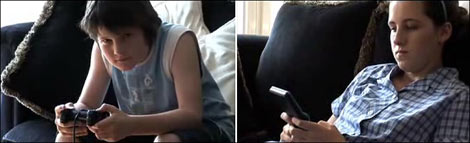
Look carefully, and you can see the symptoms of TA - image courtesy WorldVision Australia
I belatedly came across this campaign video called Teenage Affluenza, made by the charity WorldVision Australia in mid 2007. It was first made for a promotion kit for the 40 Hour Famine, to be used in Australian schools. World Vision media staff worked with Rohan Zerna Films, Melbourne, who had worked on previous spots for World Vision. The team decided to take the route of irony, providing a spoof feel. The budget wasn’t high. A family friend of the producer starred as the Melbourne teenager. The voice-over was donated by a regular with World Vision promotions. Overseas footage, already held by World Vision Australia, was spliced into the story.
Read news story in The Age newspaper, Australia, on 2 July 2007
Erin is a fifteen year old girl living deep in the South Eastern suburbs of Melbourne, Australia. She is at risk from teenage affluenza, like five million children and teenagers in her country. She still sleeps in the wooden colonial bed her parents bought her when she was ten. Although meals, travel and education are readily available to girls like Erin, many are forced to live on less than $40 pocket money each week. Erin’s iPod only holds 1 GB.
And so the satirical commentary continues. Juxtaposed with Erin’s ‘tragic life’ is the reality faced by children and teenagers in Vietnam, Sudan and other countries affected by famine and the long term impact of civil war. The video ends with the message “Do something else. Do something real. Do something.”
Teenage Affluenza is Spreading Fast: From WorldVision Australia
The video has attracted thousands of responses on YouTube’s online-comments section, including some honest self-analysis from teenagers, while others started a discussion about who is to blame – corrupt governments or first-world greed.
Meanwhile, WorldVision US has released another version of the video, slightly shorter and featuring American teeangers. If anything, the condition is more prevalent there.
Teenage Affluenza: from WorldVision United States
The message to parents is clear: we’re the ones who can prevent our teenagers from contracting Affluenza. All it takes is thoughtful and sustained action. When teens say gimme-gimme-gimme, we have to known when it’s really needed and when it’s wanted. Easier said than done. I know, because teenages seem to arrive in pre-teens these days.
We the parents would certainly welcome reinforcements from any sensible source. WorldVision Australia runs an interesting website called Stir, which tries to engage youth on issues of development and global justice. As a direct intervention charity, WorldVision doesn’t leave it to governments, but urges people to get involved — and do something.
At the height of the Cold War, some of the best brains in both the United States and the now extinct USSR worked for their respective nation’s nuclear weapons development and maintenance work. They were basically driven by Mutually Assured Destruction, a doctrine of military strategy in which a full-scale use of nuclear weapons by two opposing sides would effectively result in the destruction of both the attacker and the defender. It was appropriately abbreviated as M.A.D.
The men (it was mostly if not entirely male) with these deadly toys have been described as very smart people with no common sense. They’ve been the subject of much study, commentary and satire — Stanley Kubrick’s 1964 black comedy film Dr Strangelove among them.
Where would very smart men with no common sense (and few, if any, scruples) find work in the post Cold War period? Looks like some of them went into banking!
How else could we explain the deadly games played by bankers that triggered the credit crisis which has snowballed into a global economic recession affecting us all?
Sub-prime mortgages, collateralised debt obligations, frozen credit markets and credit default swaps. These terms are now being bandied around but a year ago, few had heard of them and even now, how many of us non-bankers understand what they mean?
Aren’t they the weapons of mass destruction of our times? While the nukes were well guarded and their use was tightly controlled (with only a few near misses over decades), where was regulatory oversight when bankers accumulated toxic credit over time?
In September 2008, I wrote a blog called Financial Meltdown: Putting pieces together of a gigantic whodunnit with links to some current affairs documentaries that tried to explain what was happening. In December 2008, I named the American blogger, investigative journalist and film-maker Danny Schechter as Moving Images Person of the Year for his relentless, now prophetic work cautioning about the coming credit crisis from years ago.
Watch it on YouTube: Crisis of Credit, part 1 of 2
Crisis of Credit, part 2 of 2
Here’s his description:
The goal of giving form to a complex situation like the credit crisis is to quickly supply the essence of the situation to those unfamiliar and uninitiated. This project was completed as part of my thesis work in the Media Design Program, a graduate studio at the Art Center College of Design in Pasadena, California.
For more on his thesis work exploring the use of new media to make sense of a increasingly complex world, visit jonathanjarvis.com
“This year alone, more than 500,000 women will die during pregnancy or childbirth. That’s one woman missing every minute of every day. We call these women ‘missing’ because their deaths could have been avoided. In fact, 80 per cent of maternal deaths could be averted if women had access to essential maternal health services.
“We know where and how these women are dying, and we have the resources to prevent these deaths. Yet, maternal mortality is still one of the most neglected problems internationally.”
Unfortunately, critical issues like these often don’t make the news – or worse, are relegated to the background as inevitable. As Joseph Stalin said in a different context, one death is a tragedy; a million deaths a mere statistic.
The challenge to the development community is to go beyond simply counting deaths in cold, clinical terms. UNICEF has recently released a two minute video, “Missing Mothers” as a tool for international development professionals to use in raising awareness of the issue of mothers dying needlessly.
Having a baby is both a very natural process and a joyous occasion for the parents and extended family concerned. Yet having a baby still remains one of the biggest health risks for millions of women worldwide.
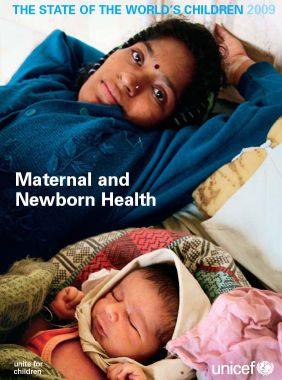
Time to make missing women count...As Unicef’s 2009 State of the World’s Children report reminded us recently, 1,500 women die every day in the world due to complications arising during pregnancy and childbirth. The chances of a woman in developing countries dying before or during childbirth are 300 times greater than for a woman in an industrialised country like the United States. Such a gap does not exist in any other social indicator.
She noted: “The solution has been known for years. The problem is the will to make it work. We also know that the solution would benefit everyone, not just women. Yet, affordable and accessible health care, for instance, has not received the thrust that is needed.”
The Missing Women video suggests to activists and campaigners that action can start with five steps: 1. Educate girls, young women and yourself; 2. Respect their rights; 3. Empower them to participate; 4. Invest in maternal health; 5. Protect against violence and abuse. The Unicef website, meanwhile, lists 10 ways in which concerned individuals can make a difference.
All very commendable and necessary — but not sufficient. With all the good intentions in the world, Unicef’s experts and officials come across as, well, detached and geeky. They don’t connect well enough to the real world people whose needs and interests they are genuinely trying to serve. Their messages are lost somewhere in their precise terms, jargon and endless acronyms.
Just take, for example, the very phrase of maternal mortality itself. Precise but also very stiff and dry. Who outside the medical and development circles uses such terms in conversation? When I write or make films about the issue, I prefer to call it ‘mothers dying needlessly while having babies’. Yes, it’s more wordy and perhaps less exacting. But most ordinary people would get what I’m talking about.
If the jargon-ridden language reads dry in text, it completely puts off people when they watch such words being spoken on video. Such films may pander to the Narcissism of Unicef mandarins, but they completely flop in terms of public communication and engagement.
This is the same point I made in October 2008 when commenting on the Unicef-inspired first Global Handwashing Day: “Passion used to be the hallmark of UNICEF during the time of its legendary executive director James Grant, who strongly believed in communicating messages of child survival and well-being. He gave UNICEF a head start in working with the media, especially television.”
Jim Grant’s deputy, journalist Tarzie Vittachi, who came over to the UN children’s agency after a stint at the UN population fund, used to say: “Governments don’t have babies; people do”. We might extend that to: inter-governmental agencies don’t have babies; real women do. That may be why Unicef insists on delivering its life-saving messages so riddled in politically and scientifically correct, but so sterile language.
Unicef’s YouTube channel has a number of short videos related to what they insist on calling maternal mortality. Here’s an example where Unicef’s Chief of Health Dr. Peter Salama says it’s really an unconscionable number of deaths, and a human tragedy on a massive scale:
We have now passed the half way mark, but progress has been patchy and unimpressive. And it will remain so as long as the UN agencies and other development players insist on peddling jargon and acronyms. Considering the issues of life and death involved here, we must view bad communication as a killer — joining the ranks of unsafe drinking water and violence against women and girls.
Writing an editorial for SciDev.Net in September 2005, I noted: “All development workers and UN officials should take a simple test: explain to the least technical person in your office the core message and relevance of your work. Many jargon-using, data-wielding, acronym-loving development workers would probably fail this test. But unless development-speak is translated into simpler language, the MDGs will remain a buzzword confined to development experts and activists.”
I don’t believe in ghosts, but it’s time to bring back the spirits of Jim Grant and Tarzie Vittachi to Unicef to again humanise the agency so mired in its own ‘geekspeak’. The intellectual rigours of evidence-based, scientific analysis must be balanced with clarity and accessibility. It’s fine to be informed by science, but learn to say it simply, clearly and concisely.
The lives of half a million women and millions of children depend on it.
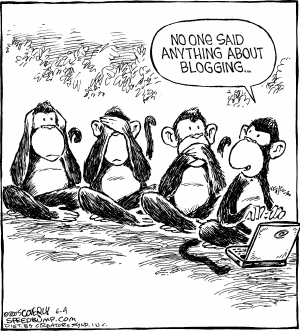
Being the fourth monkey?“Historically, organised and commercialised mass media have existed only in the past five centuries, since the first newspapers — as we know them — emerged in Europe. Before the printing press was invented, all news was local and there were few gatekeepers controlling its flow. Having evolved highly centralised systems of media for half a millennium, we are now returning to a second era of mass media — in the true sense of that term. Blogs, wikis and citizen journalism are all signs of things to come.”
This is how Sir Arthur C Clarke and I summed up the transformative change that is currently taking place in the world of mass media, in an essay we co-wrote for the Indian news magazine Outlook in October 2005.
We’d given it the title ‘From Citizen Kane to Citizen Journalist’ – a formulation that I’m still proud of – but the editors changed it to ‘Arise, Citizen Journalist!’. Of course, our original title made evocative sense only for those who knew the popular culture reference to the movie Citizen Kane.
I recently had a chance to revisit these issues and explore them further in a half-hour, in-depth TV interview with media researcher/activist and fellow citizen journalist Sanjana Hattotuwa. This was part of The Interview series produced by Young Asia Television, and broadcast on two Sri Lankan TV channels, TNL and ETV during the second week of February 2009.
Sanjana covered a wide range in his questions. Starting with a brief reflection on my 21-year association with Sir Arthur Clarke, we moved on to the bewildering world of new media and its co-existence with the mainstream media. We discussed the fragmentation of audience and the concern that some current and would-be bloggers harbour: is anyone listening or reading?
And more importantly, how do we get conversations started and going. I look back on my own experience as an active blogger for almost two years, and assert that if we have something new and worthwhile to say, and know how to express it well, we can slowly build up an audience. There’s no blueprint or road map – everything is in ‘beta’ mode, and the name of the game is try-it-and-see!
Here’s that full interview on YouTube, broken into four parts:
Sanjana Hattotuwa talks to Nalaka Gunawardene – Part 1 of 4:
Sanjana Hattotuwa talks to Nalaka Gunawardene – Part 2 of 4:
Sanjana Hattotuwa talks to Nalaka Gunawardene – Part 3 of 4:
Sanjana Hattotuwa talks to Nalaka Gunawardene – Part 4 of 4:
Uncommon move, once again!This allows others to download, share, remix, subtitle and eventually rebroadcast (or webcast) the material originally gathered by Al Jazeera’s own reporters or freelancers. It has the potential to revolutionise how the media industry gathers and uses TV news and current affairs footage – a lucrative market where there are only a very few suppliers operating at global scale.
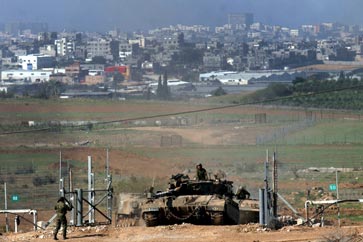
Al Jazeera’s uncommon sharing has started with the network’s coverage of the conflict in the Gaza strip, Palestine. Each day they plan to add the latest footage coming from Gaza. Additional Gaza footage from the start of the war is to be made available shortly.
This is the first time that video footage produced by a news broadcaster is released under the ‘Creative Commons 3.0 Attribution’ license which allows for commercial and non-commercial use.
“We have made available our exclusive Arabic and English video footage from the Gaza Strip produced by our correspondents and crews” says the introductory text in Al Jazeera Creative Commons Repository. “The ongoing war and crisis in Gaza, together with the scarcity of news footage available, make this repository a key resource for anyone.”
Gaza in darknessThe website adds: “This means that news outlets, filmmakers and bloggers will be able to easily share, remix, subtitle or reuse our footage.”
Under the Creative Commons framework, Al Jazeera seeks no payment (licensing fees) of any kind. Users are free to reuse the material with acknowledgement to Al Jazeera. This means such users must attribute the footage to Al Jazeera (“but not in any way that suggests that we endorse you or your use of our work”). They are also required to leave the Al Jazeera logos intact, give reference to the Al Jazeera Creative Commons Repository, and the ‘Creative Commons 3.0 Attribution’ license itself.
Says Joi Ito, CEO of Creative Commons: “Video news footage is an essential part of modern journalism. Providing material under a Creative Commons license to allow commercial and amateur users to share, edit, subtitle and cite video news is an enormous contribution to the global dialog around important events. Al Jazeera has set the example and the standard that we hope others will follow.”
Gaza under siege...Professor Lawrence Lessig, founder of Creative Commons, has hailed this initiative: “Al Jazeera is teaching an important lesson about how free speech gets built and supported. By providing a free resource for the world, the network is encouraging wider debate, and a richer understanding.”
Al Jazeera – which means ‘the island’ or ‘the peninsula’ in Arabic – started out in 1995 as the first independent Arabic news channel in the world dedicated to providing comprehensive television news and live debate for the Arab world. Al Jazeera English, the 24-hour English-language news and current affairs channel, was launched in 2006 and is headquartered in Doha, Qatar. The organisation is the world’s first global English language news channel to be headquartered in the Middle East.
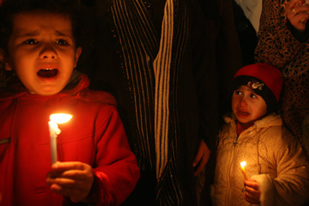
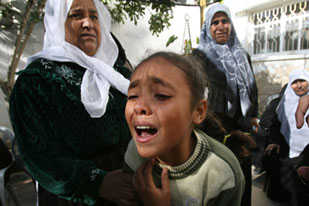
Screams, amplified by media?But we have no hesitation in applauding their sharing of news footage. This move makes it easier for many television stations, websites and bloggers to access authentic moving images from the frontlines of news — we certainly hope Gaza marks only the beginning of AJ’s sharing.
It would also make commercial distributors of news and current affairs footage a bit nervous, for such material trades in hundreds or thousands of dollars per second. The logistical difficulties in gathering such footage, and sometimes the enormous risks involved to the news crews, partly explains the high cost. But the small number of suppliers and syndicators has made it possible for high prices to be maintained. If Al Jazeera sustains its sharing, that could mark the beginning of the end for another pillar of the mainstream media industry.
All images used in this blog post are courtesy Al Jazeera websites







 Open Minds!