“The key to successful foreign policy in today’s world is networked diplomacy. Managing international crises requires mobilizing international networks of public and private actors,” says Anne-Marie Slaughter, an international lawyer and political scientist who is a former Princeton academic and ex-Director of Policy Planning at the US State Department under U.S. Secretary of StateHillary Clinton.
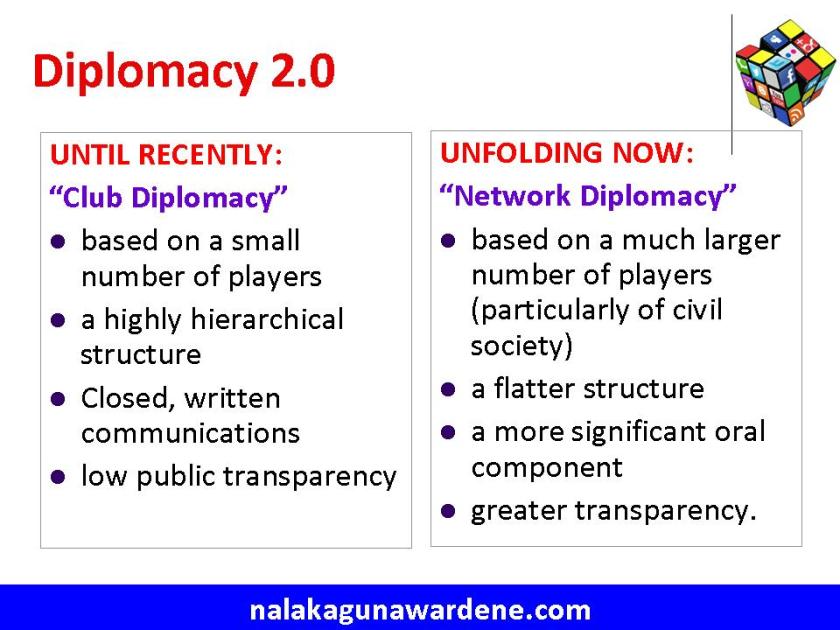
Diplomacy then…and now
The nature of this ‘networked diplomacy’ is still being documented and studied. Some governments are not even convinced of its value, but meanwhile, others are encouraging it perhaps as a way of ‘exploiting the inevitable’.
I am neither diplomat nor scholar, but sometimes dabble as a writer and researcher on how new media – including social media – impact our society, economy and governance. So I welcomed an opportunity to engage a group of mid-career professionals on the topic Diplomacy & Foreign Relations in the Social Media Age.
I made this presentation on 14 November 2015 as part of the Certificate Course in Creative Diplomacy, conducted by the Regional Centre for Strategic Studies (RCSS) in Colombo, Sri Lanka – a think tank on international relations.
In this, I introduce and briefly explore the new kind of real-time, public diplomacy that is being ushered in with the spreading of social media. I show how diplomats and other government officials can no longer ignore this mass medium, but at the same time their traditional ways of communications need to be reoriented to suit the realities of this new information ecosystem that is informal, irreverent and fleeting.
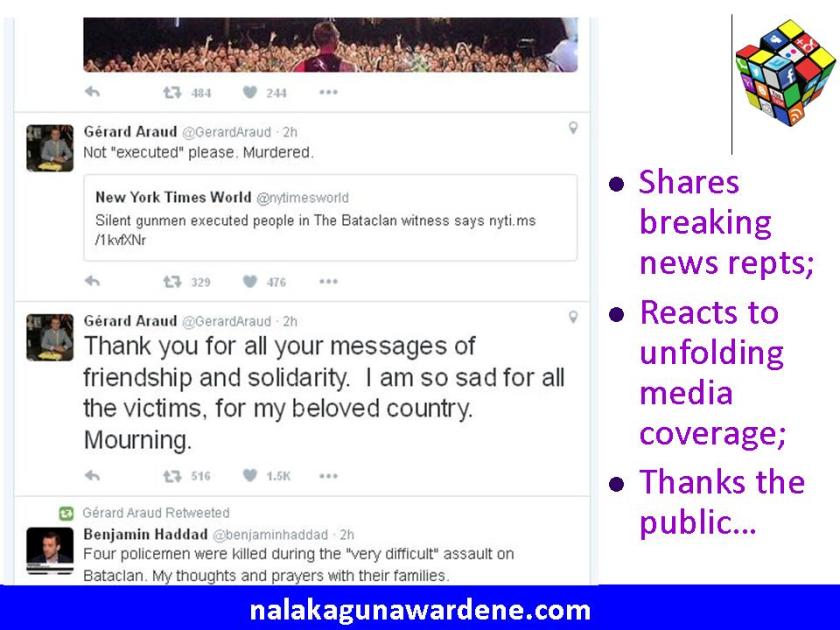
As I spoke on the day after the ISIS terrorist attacks in France, I used (among others) the latest examples of how Gérard Araud, France’s Ambassador to the US, tweeted live as multiple terror attacks unfolded in Paris on Nov 13 night.
Real time tweeting by French Ambassador to the US while Paris attack was underway on 13 Nov 2015…More tweets from Ambassador Gérard Araud on 13 Nov 2015…
To see the bigger picture, I’ve distilled some wisdom of key researchers in this area including: Anne-Marie Slaughter, former Princeton Academic and ex-Director of Policy Planning, US State Department; Philip Seib, Professor of Journalism and Public Diplomacy, University of Southern California; and Ramesh Thakur, Professor, Crawford School of Public Policy, Australian National University (ANU).
I also used the case study of Indian Ministry of External Affairs using social media for crisis management when 18,000 Indian nationals were stranded in Libya in Feb – March 2011 who had to be evacuated urgently.
As Ramesh Thakur has written, it is “a useful case study in the utility of social media tools in connecting the government with people who are normally well outside their range, but who can be a useful channel to send out time-urgent critical information and to receive equally valuable information from sources on the ground.”
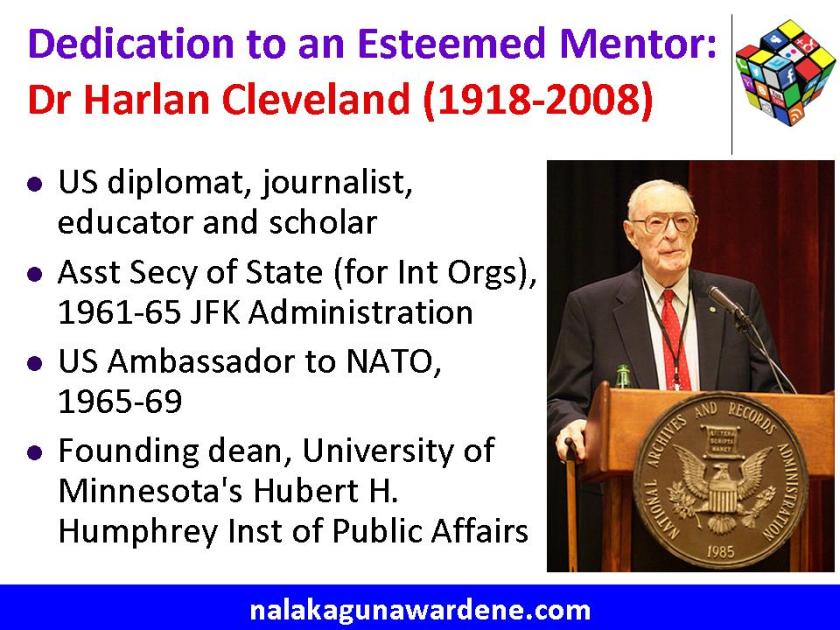
Dedication to a remarkable diplomat-scholar who spent a few days in the Summer of 1995 mentoring a group of youth leaders from around the world, including myself, who were brought to the UN Headquarters in New York…
I dedicated this presentation to a diplomat and scholar whose mentoring I was privileged to receive 20 years ago: Dr Harlan Cleveland (1918 – 2008) who served as US Ambassador to NATO, 1965–1969 (Johnson Administration), and earlier as US Assistant Secretary of State for International Organization Affairs, 1961–1965 (Kennedy Administration).
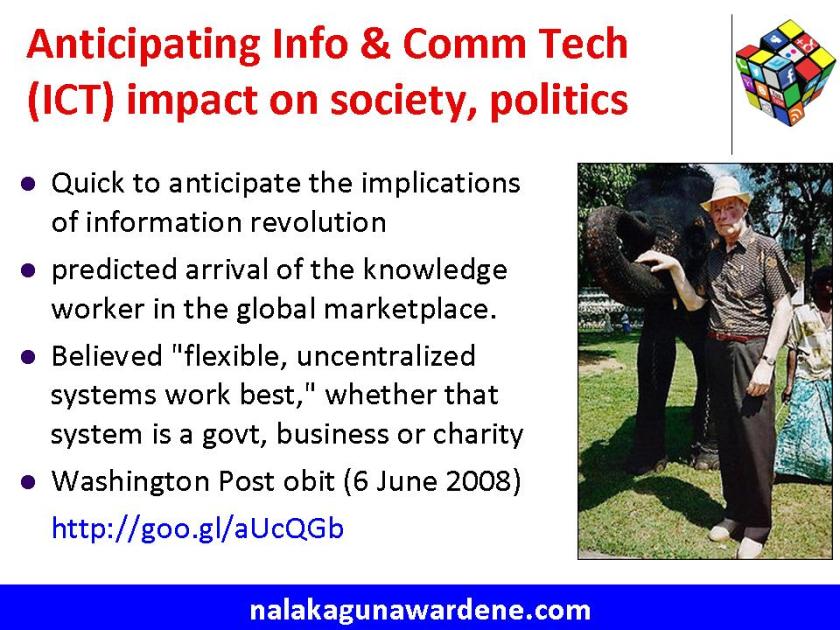
Harlan Cleveland, among the first ‘philosophers’ of the Information Age
According to RCSS, their Course in Creative Diplomacy “provides theoretical and practical insights into the various facets of Creative Diplomacy. The course will expand participants’ understanding of the concept of diplomacy and expose them to new skills and alternative perspectives to engage with stakeholders. It is further envisioned that this post-disciplinary approach, which will be followed by the course, will explore a whole host of new mediums through which mediation, cooperation and negotiation can be carried out.”
The level of urbanization is an indicator of a country’s economic development and the living standards of its people.
Some purists might disagree, but it is universally agreed that urban areas – cities and towns of various size and shape – offer better facilities and opportunities for their residents.
So how urbanized is Sri Lanka? Many among us keep repeating a notion that ‘we are predominantly rural’, but is it really so?
The 2012 Census of Population and Housing categorised only 18.2% of the Lankan population as being urban. However, that figure is highly misleading because we currently use a narrow definition.
Currently, only those living in Municipal Council (MC) or Urban Council (UC) areas are considered urban. However, some Pradeshiya Sabha areas (the next local government unit) are just as urbanised.
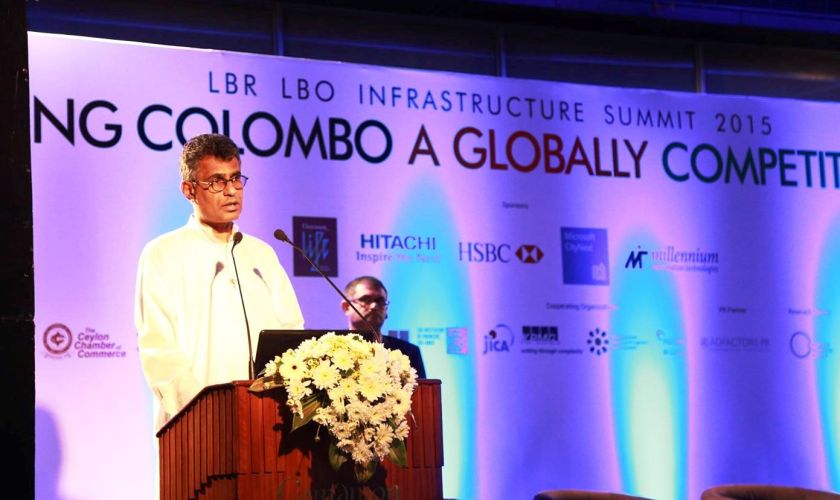
Minister of Megapolis and Western Development Champika Ranawaka speaks at LBO-LBR Infrastructure Summit 2015 (Image courtesy LBO)
At the recent LBR/LBO Infrastructure Summit 2015 held in Colombo in early November, Minister of Megapolis and Western Development Champika Ranawaka took on this myth head on. He argued that Sri Lanka’s urban population share is probably as high as 48% — which is two and a half times higher than the current figure.
He mentioned as examples Pradeshiya Sabha areas like Homagama, Beruwala and Weligama that are administratively classified as ‘rural’ despite having many urban characteristics.
His concern: misconceptions such as this distort the country’s policy decisions on infrastructure planning and urban development.
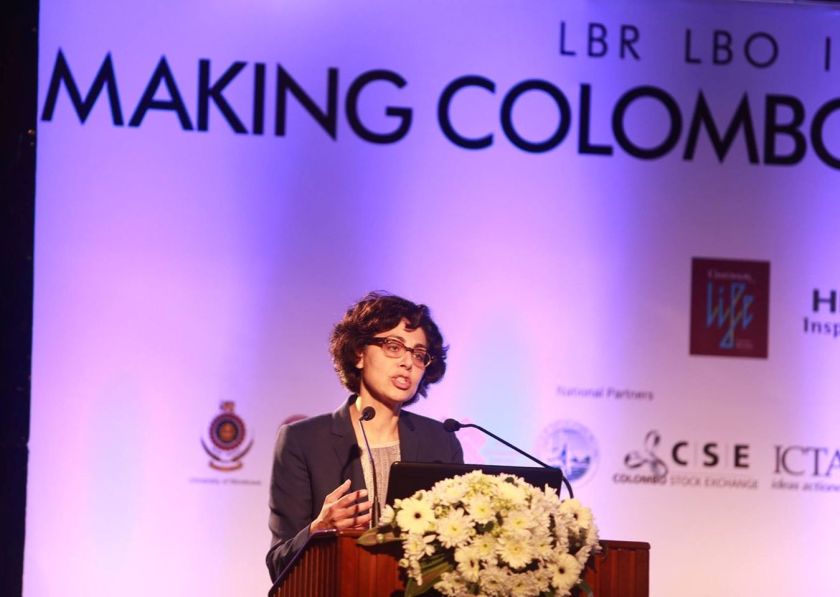
The World Bank’s global lead for urban development strategies, Sumila Gulyani, who spoke during the opening session, agreed with the Minister’s contention of nearly half of Sri Lanka’s population having already become urban.
The Bank’s own estimates are roughly the same, she said. “The official statistics of urban population in Sri Lanka is from 14% to 18% — but if you look at the agglomeration, it is (actually) around 47%”.
World Bank’s Sumila Gulyani speaks in Colombo, 3 Nov 2015. (Image courtesy LBO)
She added: “All South Asia countries under-state their urbanization level relative to, say, Latin America. In India it’s the same story. The reason has traditionally been that the rural areas got more national subsidy programmes — and no administration wanted to be called urban!”
Taking South Asia as a whole, 30% of its combined population now lives in cities. A massive rise in this urban share is expected in the coming decades. Sri Lanka cannot buck this trend.
Despite this, old myths linger on for years. The problem, as Gulyani highlighted, is in the mismatch of capabilities: “If the (local government) council that is managing an urban area is a rural council, you are not going to see the kind of planning and urban management you need to see for productive urban growth.”
Hidden Urbanization
Meanwhile, a new World Bank report on urban trends in South Asia reminds us that Sri Lanka’s share of the population officially classified as living in urban areas actually fell slightly between 2000 and 2010.
The report suggests that as much as one-third of Sri Lanka’s population may be living in areas that, while not officially classified as urban, “nevertheless possess strong urban characteristics”.
This report tries to overcome our region’s data deficiencies by drawing on some unconventional data sources — such as nighttime lights and other forms of remotely sensed earth observation data.
Analysis of night lights has also revealed a more general growth of multi-city agglomerations – continuously lit belts of urbanization containing two or more sizeable cities – across South Asia. Their number has risen from 37 in 1999 to 45 in 2010.
In Sri Lanka, the report says, such ‘ribbon development’ radiates out from Colombo along major transport arteries to link it with both Kandy and Galle/Matara, revealing a dynamic urbanization process.
A general conclusion of the report is that South Asian countries urgent need to increase higher quality and more comprehensive data on urban trends and conditions.
South Asia at night – composite satellite image taken in April & Oct 2012 (Image courtesy NASA)
Anomaly of 1987
In Sri Lanka, the low figure for urban population is the direct result of an administrative decision to count all Pradeshiya Sabha areas as being rural. This has long been critiqued by experts such as town planner Prof Ashley L S Perera of the University of Moratuwa.
When the new local government unit was created in 1987 for political expediency, their demarcations totally ignored the existing ground realities, he says. That has led to much confusion about ‘urban areas’ in Sri Lanka for the past quarter century.
Statisticians in Sri Lanka’s government are also well aware of this. Analysing the key findings of the 2012 head count, the Department of Census and Statistics says that the country’s urban percentage “would have been much higher if the definitional issues were resolved”.
In its Census of Population and Housing 2012: Key Findings, the Department notes: “Areas coming under all Municipal Councils (MC) and Urban Councils (UC) are currently considered as urban sector in Sri Lanka. Prior to 1987, Town Councils were also included in the definition of urban areas. With the setting up of Provincial Councils in 1987, these Town Councils were absorbed into Pradeshiya Sabhas which fall into the rural sector since then.”
After 1987, some towns lost their urban status and overnight became ‘officially rural’. The Department acknowledges that there are many areas outside MCs and UCs that “have urban outlook but still classified as rural”.
This leads to underestimation of the degree of urbanization and comparison becomes difficult over the years, it says.
The Department highlights the need to “introduce a realistic definition of urban areas taking into account of the characteristics of the population rather than based on pure administrative considerations.”
It says that Sri Lanka’s urban percentage “would have been much higher if the definitional issues were resolved”.
At the time of the 2012 Census, Sri Lanka had a total of 23 MCs and 41 UCs. According to the Census findings, the country’s eight largest cities – Colombo, Kaduwela, Dehiwala-Mount Lavinia, Moratuwa, Negombo, Kotte, Kesbewa and Maharagama – made up nearly half (48%) of what is officially considered the ‘urban’ population. All these are located in the Western Province.
The balance 56 urban areas include 26 small cities with population below 25,000. “This shows the uneven distribution of the urbanization” says the Department.
The Census found that in the Colombo district, three out of four people (77.6%) already live in urban areas. Batticaloa (28.7%), Ampara (23.6%), Trincomalee (22.4%) districts in Eastern province and Mannar (24.5%), Vavuniya (20.2%), Jaffna (20.1%) districts in Northern province all have urbanization levels higher than the current national average of 18.2%.
Misleading the world
Adopting a more pragmatic and realistic definition of ‘urban’ is thus a policy priority for Sri Lanka. That can help better planning of our rapidly urbanising human habitats.
Such a move can, hopefully, also awaken those Lankans who insist about their ‘very rural island’ contrary to what the evidence suggests.
It would also stop international organisations and researchers from mistakenly labelling Sri Lanka as a country with only a small urban population.
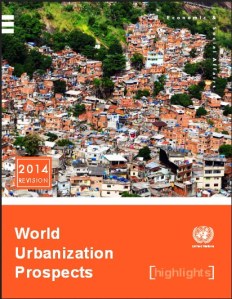
For example, World Urbanization Prospects 2014, a global overview published by the UN Department of Economic and Social Affairs, has listed Sri Lanka as one of 16 countries worldwide that “still have low levels of urbanization, i.e. below 20 per cent”. (As an inter-governmental body, the UN goes by national governmental data.)
The largest (by population) among these ‘low urbanized countries’, were listed as Burundi, Ethiopia, Malawi, Niger, South Sudan, Uganda, Nepal and Sri Lanka. “By 2050, all of these countries are expected to become significantly more urbanized, with as much as twice their respective proportions urban in 2014,” the UN report noted.
However, as minister Ranawaka just publicly declared, that doubling has already happened in Sri Lanka! Now if only official data custodians can change definitions, we can finally move away from the illusion of being a rural country…
In 2015, the UN is 70 and Sri Lanka’s membership is 60 years
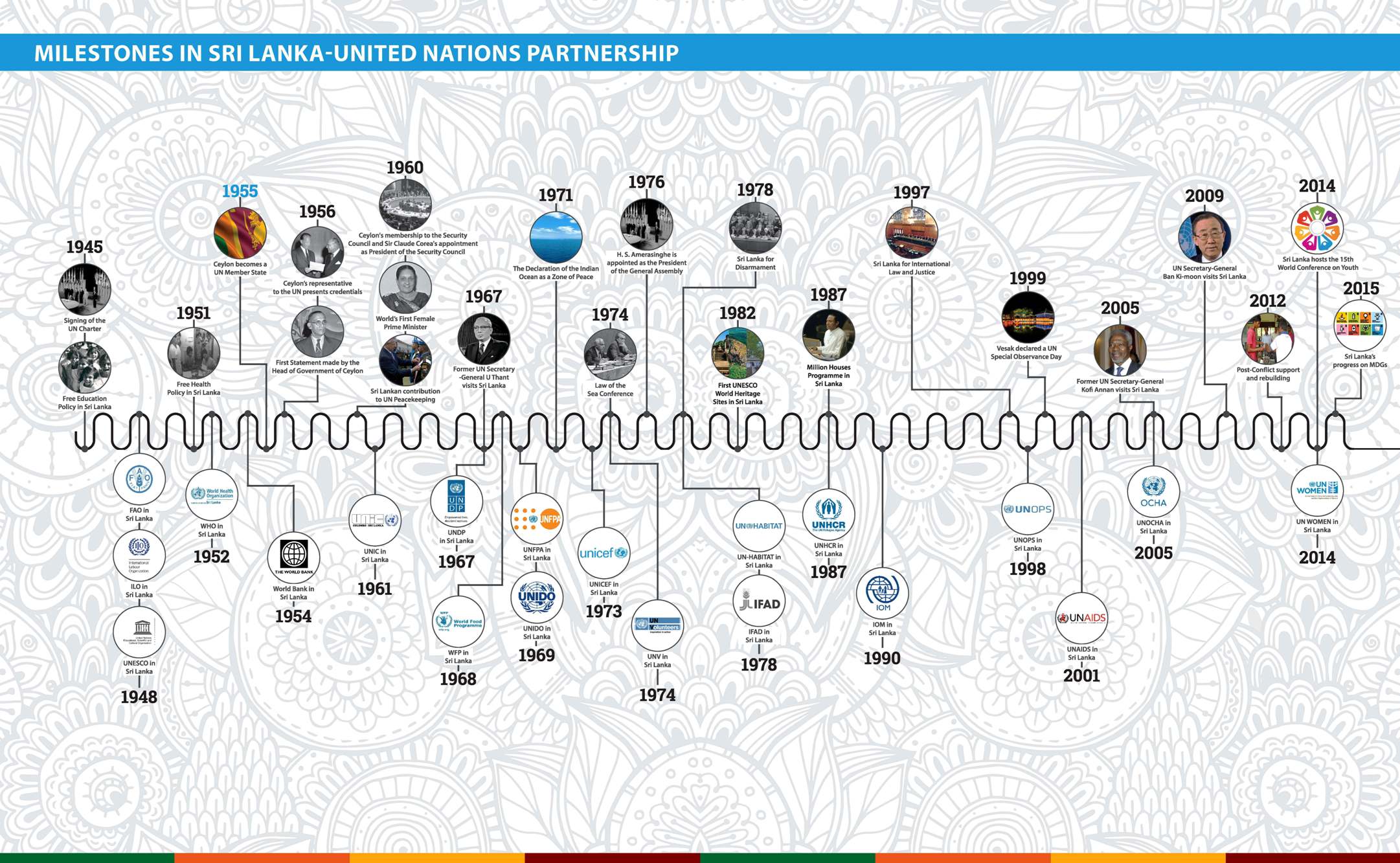
On 24 October 2015, United Nations marks its 70th birthday. A few weeks later, on 15 December 2015, is the 60th anniversary of Sri Lanka (then Ceylon) becoming a member state of this inter-governmental organisation.
In this week’s Ravaya column, (appearing in issue of 25 Oct 2015), I continue my focus on Sri Lanka’s engagement with the UN system. In last week’s column, we recalled how Sri Lanka’s heads of state/government and diplomats engaged with the General Assembly and Security Council.
Today, we look at some eminent Lankan professionals who joined the UN system in expert or management positions and contributed to its intellectual and institutional development over the decades.
As Thalif Deen, a journalist of Lankan origin who has been reporting from the UN headquarters since the mid 1970s, once wrote: “When future historians take stock of Sri Lanka’s enduring contributions during its first 50 years at the United Nations, they may realise that our political legacy spanned both the upper and lower limits of the universe: the sky above and the oceans below.”
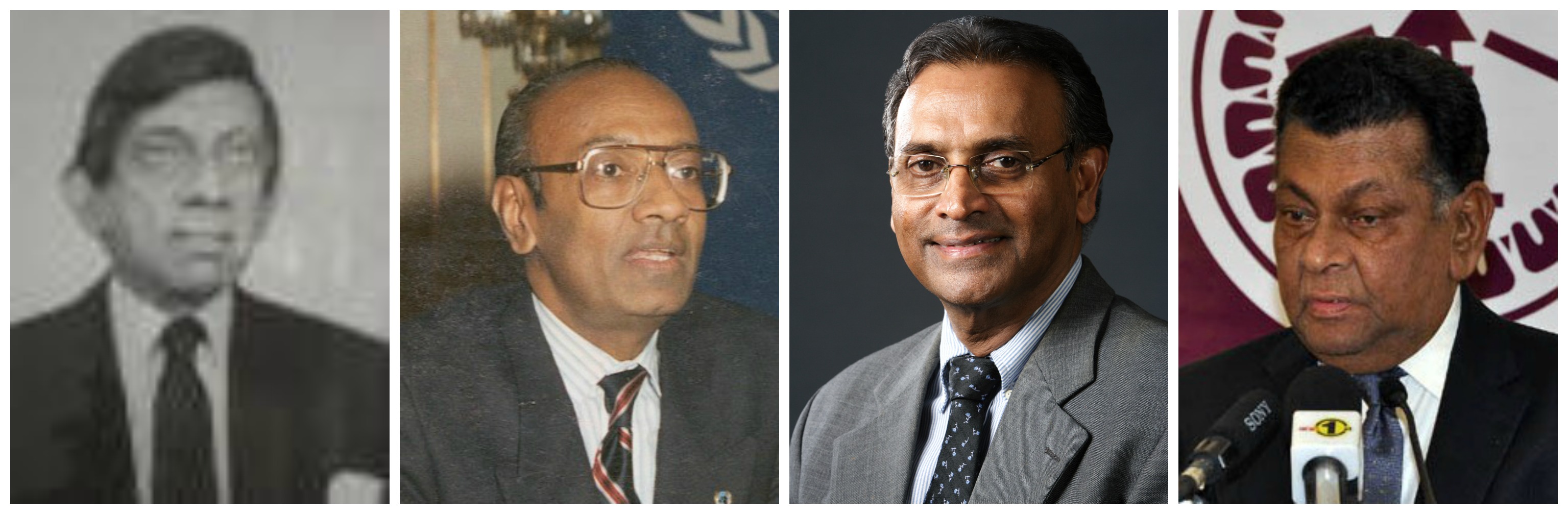
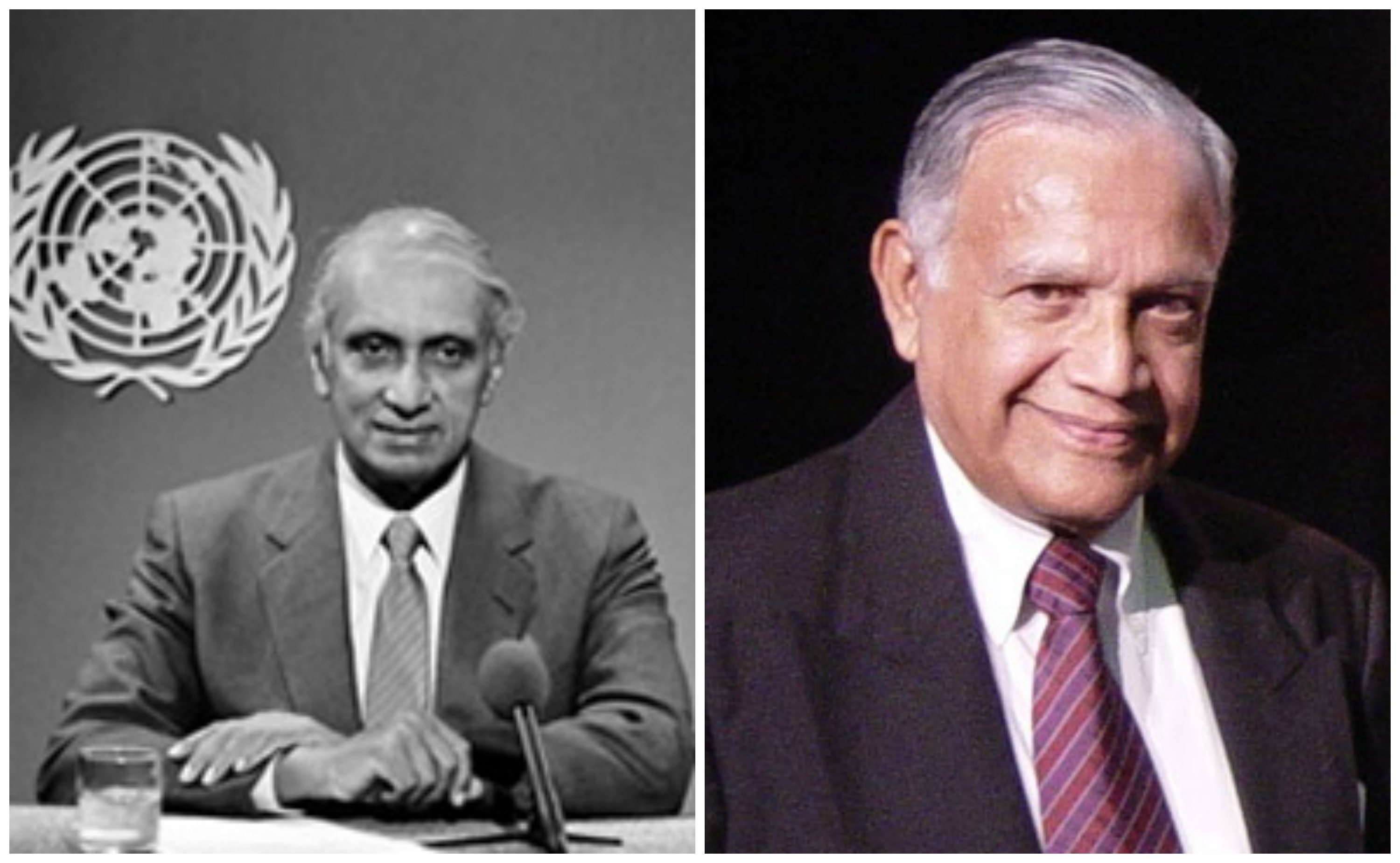
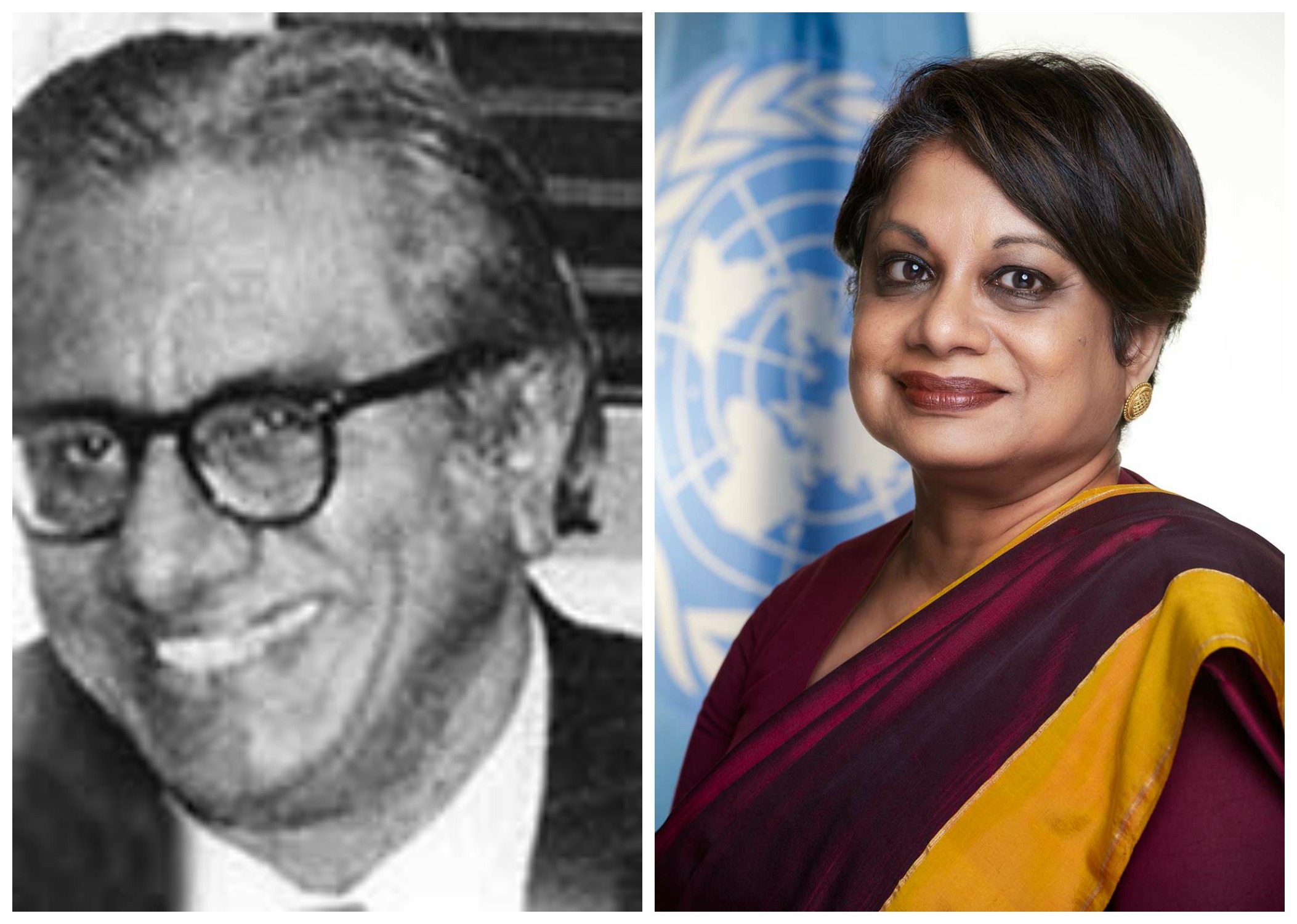
The list of Lankans who have excelled within the UN system is long, and I have had to be selective here. The ones mentioned in this column are:
Dhanapala Samarasekera (one of the earliest Lankans to join the UN system, as an expert with ECOSOC);
Neville Kanakaratne (legal advisor to the second Secretary General Dag Hammarskjold);
Nandasiri Jasentuliyana (Director of UN Office for Outer Space Affairs among other positions);
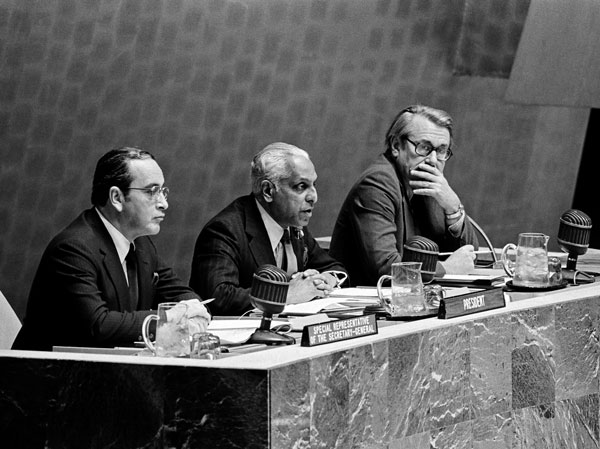
Hamilton Shirley Amerasinghe (President of the UN General Assembly in 1976, and later president of the UN Law of the Sea Conference);
Gritakumar E Chitty (a former Registrar of the International Tribunal for the Law of the Sea);
Gamani Corea (a former Secretary General of UNCTAD);
Christopher G Weeramantry (Justice of the International Court of Justice and later its Vice President);
Rajendra Coomaraswamy (Assistant Administrator of UNDP and Director of UNDP’s Regional Bureau for Asia and the Pacific);
Radhika Coomaraswamy (UN Special Representative for Children and Armed Conflict 2006-2012);
Jayantha Dhanapala, President of the Nuclear Non-Proliferation Treaty Conference 1995 and Under Secretary General heading the UN Department of Disarmament (1998–2003)
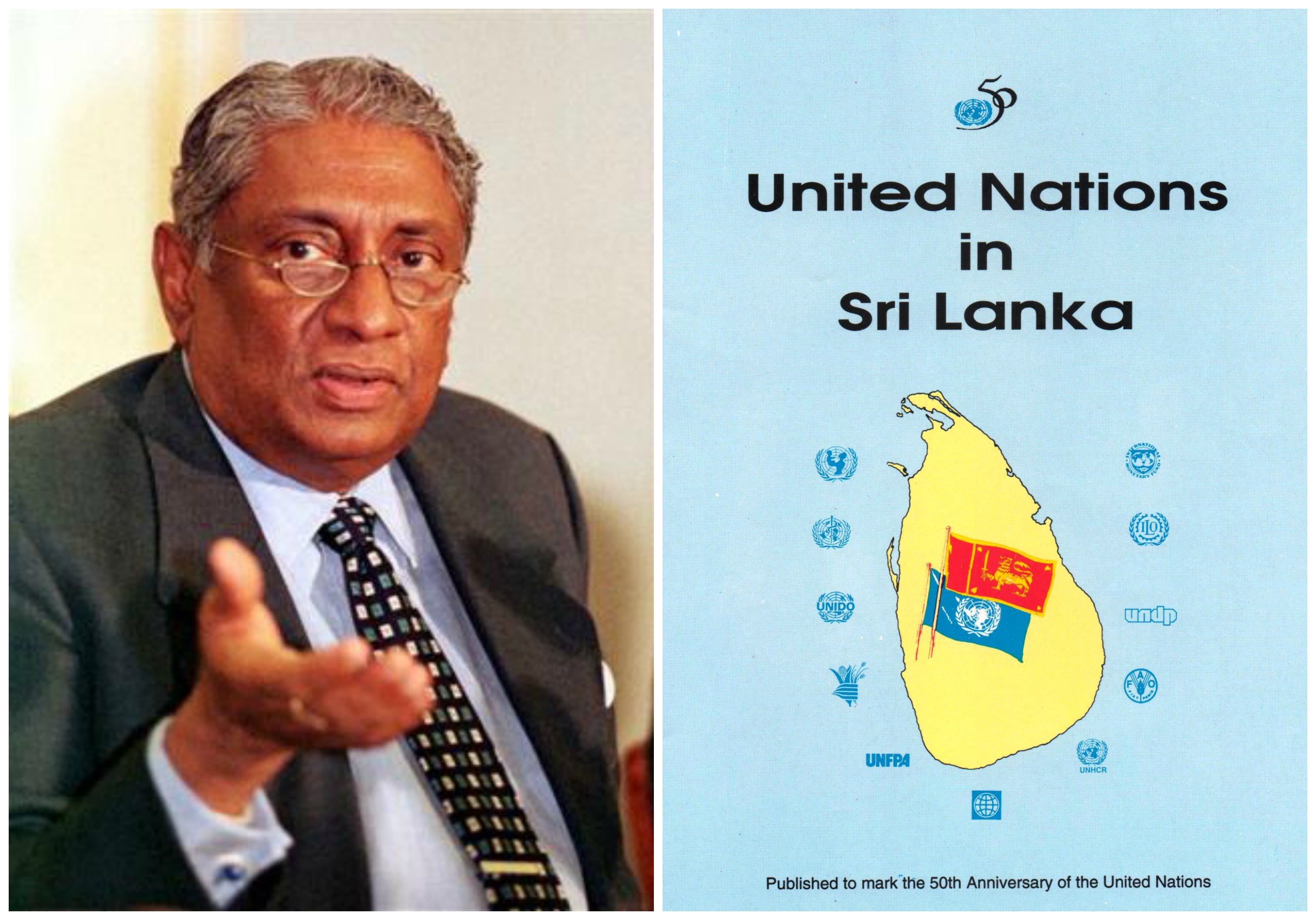
I end with a reference to Lakshman Kadirgamar, who served the ILO and later WIPO in senior positions in Geneva before becoming Sri Lanka’s finest Minister of Foreign Affairs in 1994. I quote from the Foreword that Kadirgamar wrote to a book on the United Nations in Sri Lanka that I wrote for the UN Information Centre (UNIC) in Colombo in 1995 to mark the UN’s 50th anniversary.
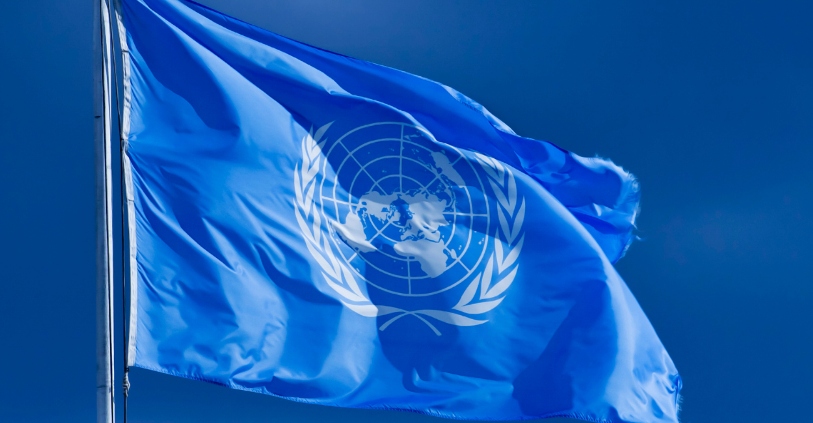
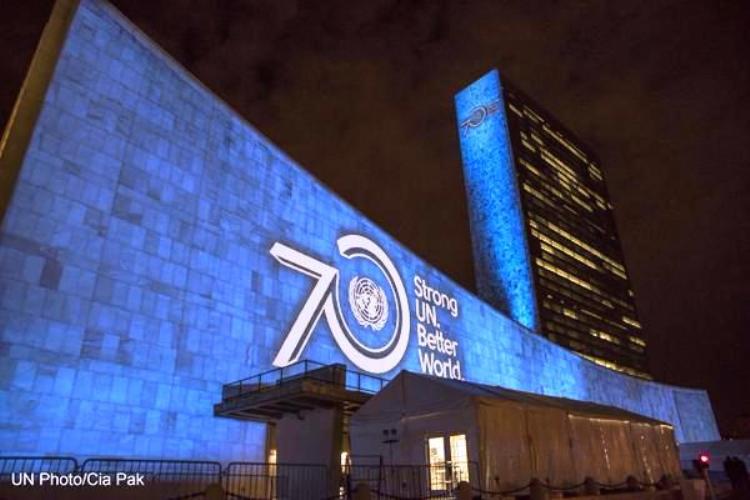
UN Headquarters in New York lights up for 70th birthday (UN Photo)
On 24 October 2015, United Nations marks its 70th birthday. A few weeks later, on 15 December 2015, is the 60th anniversary of Sri Lanka (then Ceylon) becoming a member state of this inter-governmental organisation.
In this week’s Ravaya column, (appearing in issue of 18 Oct 2015), I look at Sri Lanka’s engagement with the UN. It started in December 1955, when Ceylon was admitted to membership (after its application had been resisted by the Soviet Union since 1950, on the grounds that Ceylon was ‘not fully independent’).
Ceylon/Sri Lanka has thus had 60 years of fruitful engagement with the UN through its permanent mission that was set up in New York in early 1956. The country has played a key role in global debates at the General Assembly, Security Council and other bodies and specialized agencies of the UN family.
I quote from the first speech by a Lankan head of government at the General Assembly, made by Prime Minister Solomon W R D Bandaranaike on 22 Nov 1956. I refer to illustrious ambassadors of Ceylon/Sri Lanka who have served as Permanent Representative to the UN – among them scholars, eminent lawyers and career diplomats.
They not only articulated their country’s position at the UN, but also stood for larger ideals such as non-alignment, peaceful resolution of conflicts, nuclear disarmament, and peaceful uses of both outer space and the international seas beyond territorial waters of states.
I point out that, through intellectual contributions and principled positions, Sri Lanka has had an influence disproportionate to the size of its population and economy – a case of punching above its weight category.
I also clarify that the UN Secretariat in New York and its extension in Colombo are actually at the service of its 193 member states which remain the ultimate masters. In fact, Sri Lanka has been a fee-paying member state: its contribution to the UN regular budget for 2015 is USD 678,391 (approx LKR 93,155,300).
So when occasional protesters demonstrate outside the UN office in Colombo, it only shows their gross ignorance of who actually heads the UN. Their own government is one of 193 members that determine the inter-governmental body’s policies and operations. Meanwhile we the citizens of Sri Lanka pay 0.025% of the UN’s annual budget.
Sadly, the UN Information Centre in Colombo has failed to promote such conceptual clarity among the Lankan politicians and media, some of who harbour serious misconceptions about the UN and its operations.
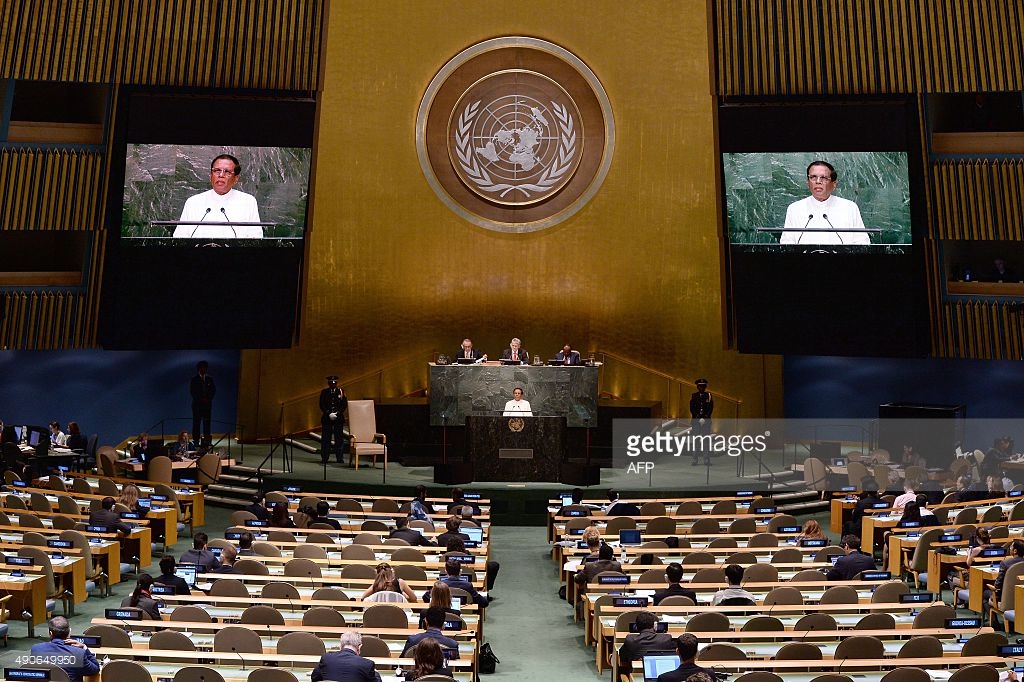
Sri Lanka’s President Maithripala Sirisena addresses the 70th Session of the United Nations General Assembly at the UN in New York on September 30, 2015. AFP PHOTO – JEWEL SAMAD
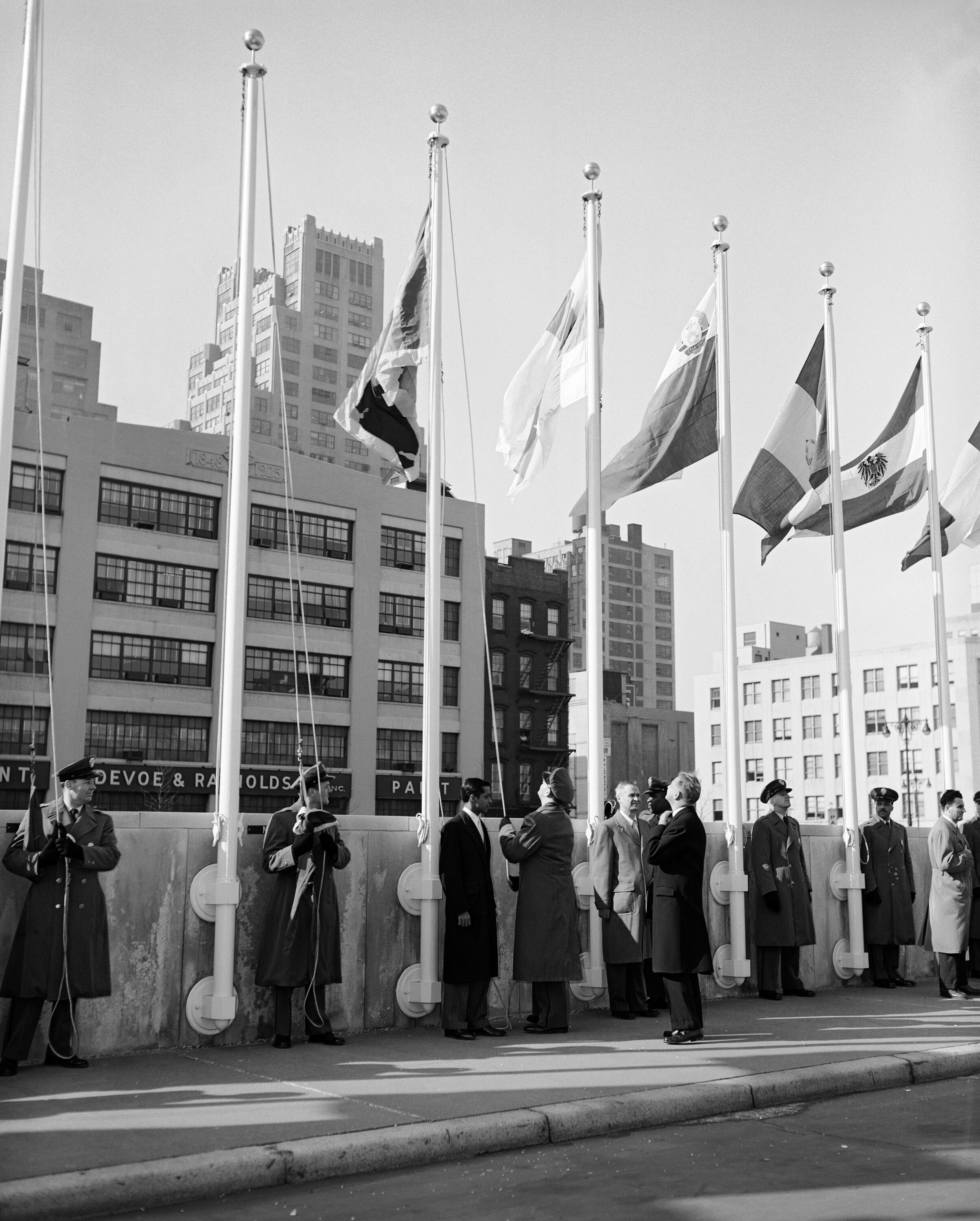
Sir Senerat Gunewardene, right, Ceylon’s first Permament Representative to the United Nations, with the then UN Secretary-General Dag Hammarskjold (UN Photo Archive)
Ceylon Prime Minister S W R D Bandaranaike (third from left) at the UN Headquarters, Nov 1956. On extreme right is Sir Senerat Gunewardene, Ceylon’s first Permanent Representative to the UN (UN Photo Archive)
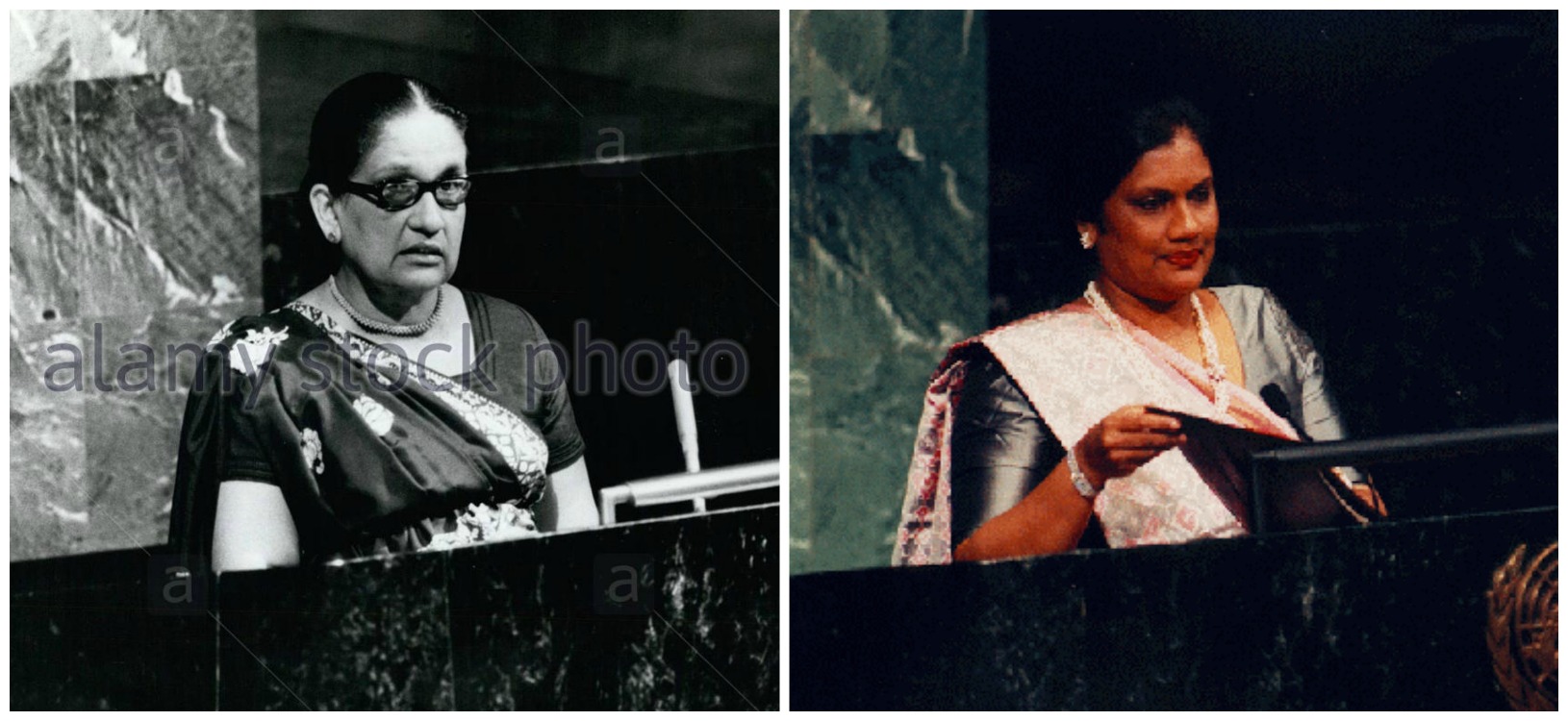
Left – Sri Lanka PM Sirimavo Bandaranaike speaking at UN on 9 Sep 1976, and her daughter President Chandrika Bandaranaike Kumaratunga speaking at UN in September 1995 (UN Photos)
Today, I gave the opening speech at an introductory seminar on ‘open data’ held at the Sri Lanka Press Institute, Colombo, on 15 Oct 2015.
Organised by InterNews and Transparency International Sri Lanka, the seminar explored the concepts of ‘open data’ and ‘big data’ and discussed that role civil society, media and technologists can play in advocating to government to open up its data, enabling a culture of transparency and open government.
An Open Dialogue on Open Data – 15 Oct 2015 Coloombo – L to R – Sriganesh Lokanathan, Nalaka Gunawardene, Sanjana Hattotuwa [Photo by Sam de Silva]My premise was that while the proliferation of digital tools and growth of web-based data storage (the cloud) opens up new possibilities for information generation and sharing, South Asian societies need to tackle institutional and cultural factors before democratised and digital data can really transform governance and development. Our countries must adopt more inclusive policies and practices for public sharing of scientific and other public data.
This resonates with a call by the United Nations for a ‘data revolution for development’. I cited the UN Secretary-General’s Independent Expert Advisory Group on a Data Revolution for Sustainable Development (IEAG) highlighted this in a report titled A World That Counts: Mobilising The Data Revolution for Sustainable Development (Nov 2014).
A World that Counts…
I also referred to the Sustainable Development Goals (SDGs) that were adopted by member states of the UN at a heads of state level summit in New York on 25-27 September 2015. Underpinning all 17 SDGs is an explicit recognition of the value of data for development — to better inform decisions, and to better monitor progress.
Sri Lanka’s President Maithripala Sirisena addressed the Summit, and officially committed Sri Lanka to the SDGs. I argue that implicit in that commitment is a recognition of data for development and open data policies. We now need to ask our government to introduce a government-wide policy on data collection, storage and sharing. In short, it must open up!
This was my open call to the President to open up:
Open Your Govt’s Data, Mr President! Hope you don’t give us HAL’s famous answer…
Sri Lanka has taken tentative steps towards open data. In 2013, the Open Data initiative of Government started making some official datasets freely available online. It focuses on machine-readable (well-structured and open) datasets.
I quoted from my own recent op-ed published in Daily Mirror broadsheet newspaper:
After many years of advocacy by civil society, Sri Lanka will soon adopt a law that guarantees citizens’ Right to Information (RTI). It has recently been added to the Constitution as a fundamental right.
Passing the RTI law is only a beginning — institutionalising it requires much effort, considerable funds, and continued vigilance on civil society’s part.
RTI is Coming: Are We Ready? My question to Lankan civil society and media
As champions of RTI, media and civil society must now switch roles, I said. While benefiting from RTI themselves, they can nurture the newly promised openness in every sphere, showing citizens how best to make use of it. Reorienting our public institutions to a new culture of openness and information sharing will be an essential step.
Over the weekend of September 25 – 27, the United Nations headquarters in New York hosted the Sustainable Development Summit 2015. It was a high-level segment of the 70th UN General Assembly that was attended by many world leaders including Sri Lanka’s President Maithripala Sirisena.
Sustainable Development Summit 2015 Logo
The UN, which turns 70 this year, is once again rallying its member governments to a lofty vision and ambitious goal: to embark on new paths to improve the lives of people everywhere.
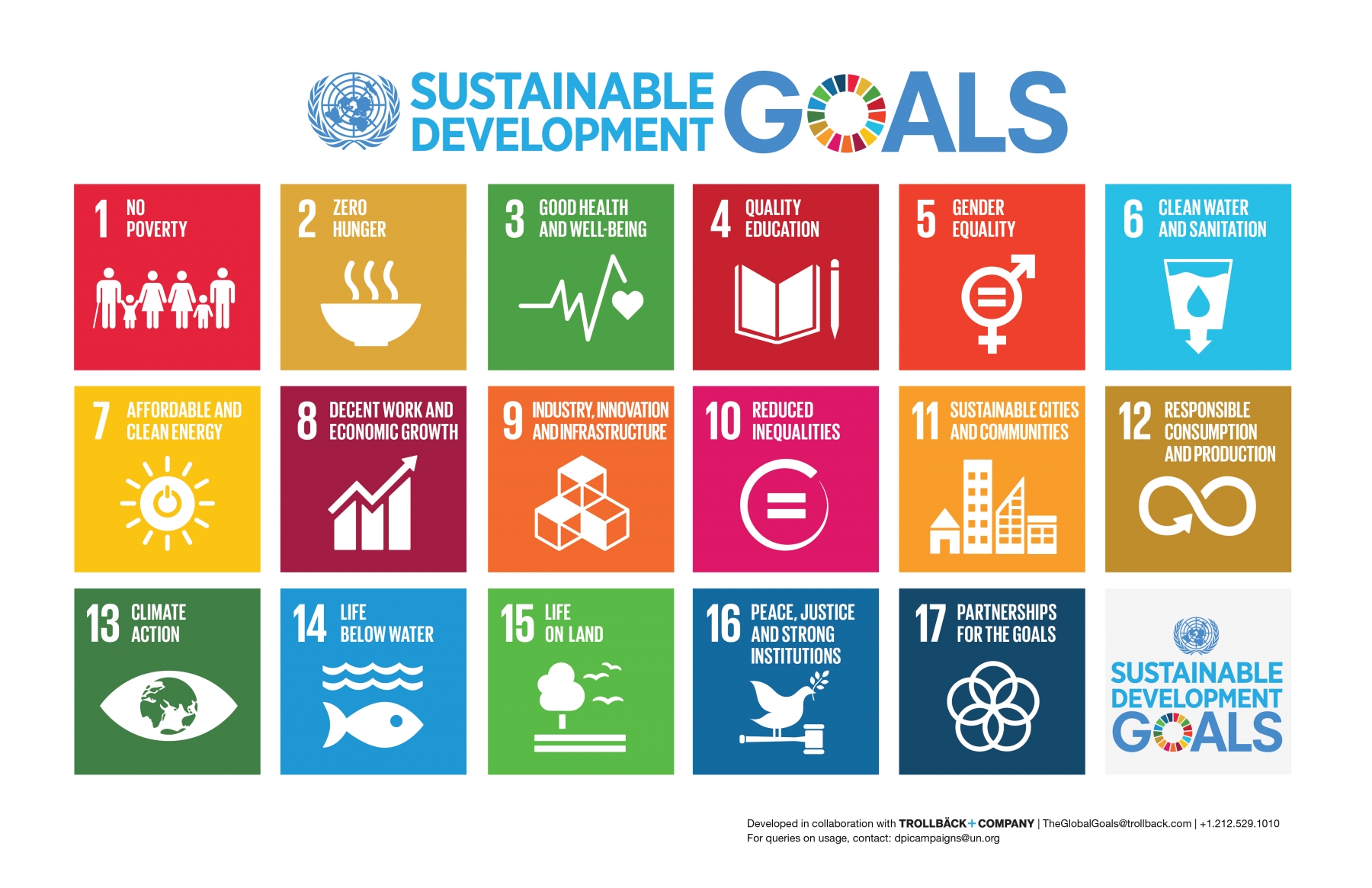
For this, the Summit adopted a new and improved global task-list called Sustainable Development Goals (SDGs). Prepared after two years of worldwide consultations, the SDGs offer a blueprint for development until 2030.
There are 17 SDGs tackling long-standing problems like ending poverty and reducing inequality to relatively newer challenges like creating more liveable cities and tackling climate change. These are broken down into 169 specific targets. Their implementation will formally begin on 1 January 2016.
SDGs in a nutshell – courtesy UN
The SDGs are to take over from the Millennium Development Goals, or MDGs, that have guided the development sector for 15 years. Sri Lanka was among the 189 countries that adopted the MDGs at the Millennium Summit the UN hosted in New York in September 2000. On that occasion, the country was represented by Lakshman Kadirgamar as Minister of Foreign Affairs.
The eight MDGs covered a broad spectrum of goals, from eradicating absolute poverty and hunger to combating HIV, and from ensuring all children attend primary school to saving mothers from dying during pregnancy and childbirth.
Much has happened in the nearly 5,500 days separating the adoption of the original MDGs and now, the successor SDGs. This month, as the world commits to ‘leaving no one behind’ (as UN Secretary General Ban Ki-moon has said), it is useful to look back, briefly.
Good ‘Report Card’
How has Sri Lanka pursued the MDGs while the country coped with a long drawn civil war, political change, and the fall-out of a global economic recession?
In fact, it has done reasonably well. In its human development efforts, Sri Lanka has quietly achieved a great deal. However, there are gaps that need attention, and some goals not yet met.
We might sum it up with a phrase that teachers are fond of using, even on good students: “You’re doing well – but can do better! Try harder!”
For the past 15 years, the MDGs have provided a framework for Sri Lanka’s national development programmes. Progress has been assessed every few years: the most recent ‘report card’ came out in March 2015.
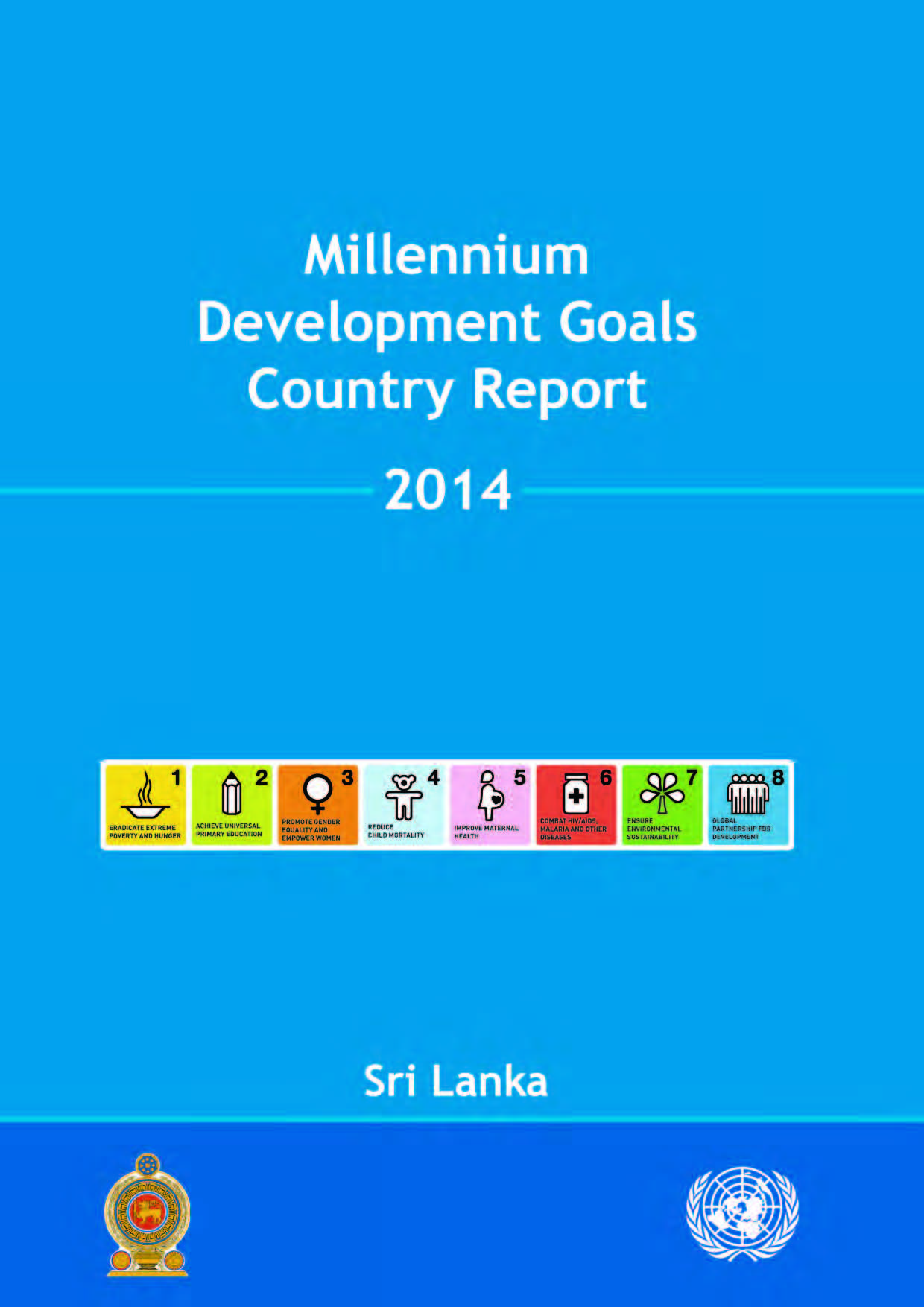
The MDG Country Report 2014, prepared by the Institute of Policy Studies (IPS), is a joint publication by the Government of Sri Lanka and the United Nations in Sri Lanka. Data from the 2012 census and Household Income and Expenditure Survey 2012/13 have generated plenty of data to assess MDG situation across the country, including the war affected areas.
“Sri Lanka has already achieved the targets of 13 important MDG indicators out of 44 indicators relevant to Sri Lanka. Most of the other indicators are either ‘On Track’ or progressing well,” says IPS Executive Director Dr Saman Kelegama in his foreword to the report.
Highlights
The report offers insights into how Sri Lanka’s ‘soft infrastructure’ — all the systems and institutions required to maintain the economic, health, cultural and social standards of a country – are faring.
Consider these highlights:
Sri Lanka’s overall income poverty rates, when measured using accepted statistical benchmarks, have come down from 2% in 2006/7 to 6.7% in 2012.
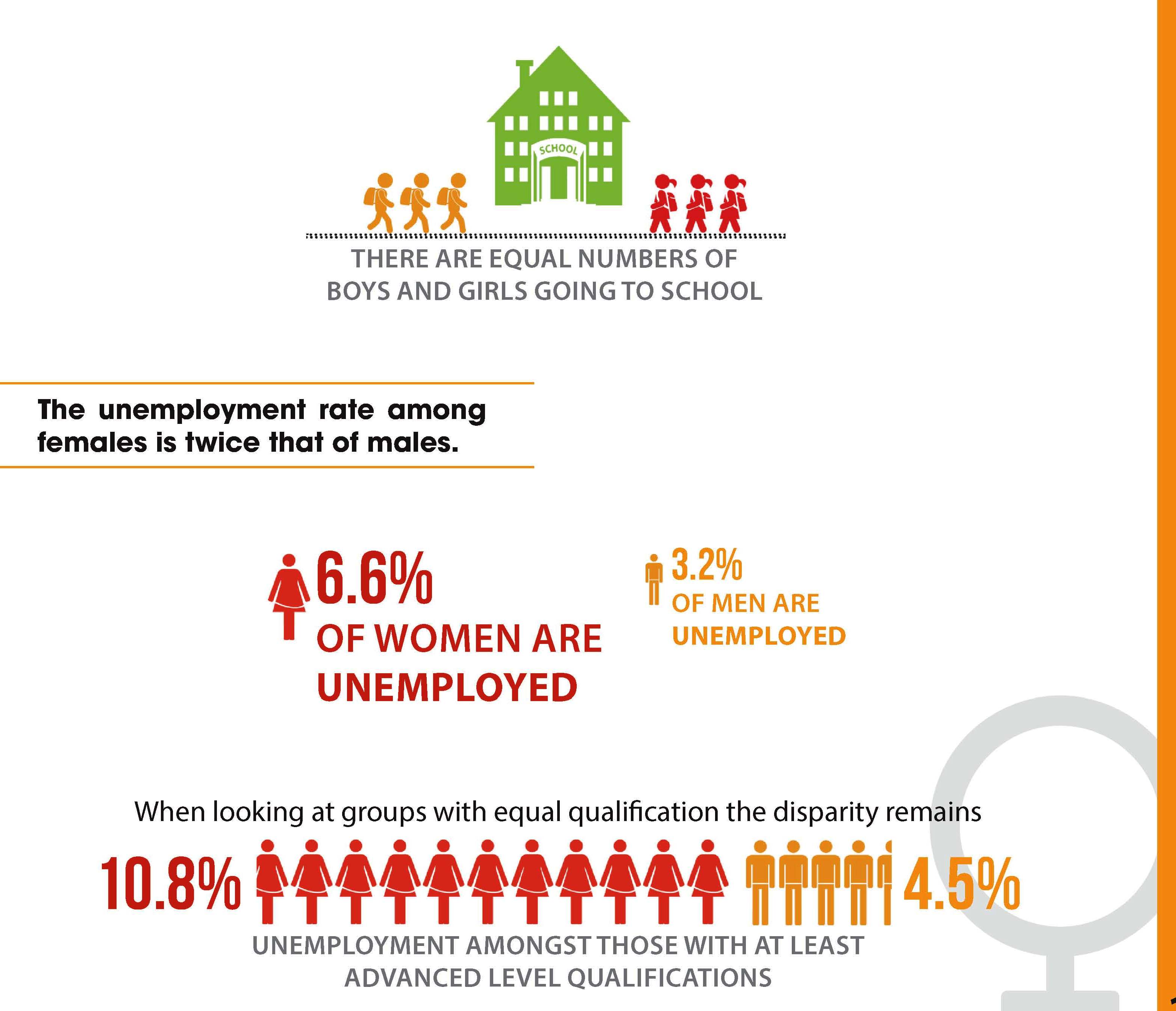
Unemployment rate has declined from 8% in 1993 to 3.9% in 2012. However, unemployment rate among women is twice as high as among men.
While food production keeps up with population growth, malnutrition is a concern. A fifth of all children under five are underweight. And half of all people still consume less than the minimum requirement of daily dietary energy.
Nearly all (99%) school going children enter primary school. At that stage, the numbers of boys and girls are equal. In secondary school and beyond (university), in fact, there now are more girls than boys.
More babies now survive their first year of life than ever before: infant mortality rate has come down to 9.4 among 1,000 live births (from 17.7 in 1991). Deaths among children under five have also been nearly halved (down from 2 in 1991 to 11.3 in 2009).
Fewer women die needlessly of complications arising from pregnancy and childbirth. The maternal mortality rate, which stood at 92 deaths per 100,000 live births in 1990, plummeted to 33 by 2010. Doctors or skilled health workers are now present during almost all births.
Sri Lanka’s HIV infection levels have remained now, even though the number of cases is slowly increasing. Meanwhile, in a major public health triumph, the country has all but eradicated malaria: there have been no indigenous malaria cases since November 2012, and no malaria-related deaths since 2007.
More Lankans now have access to safe drinking water (up from 68% in 1990 to almost 90% in 2012-2013.)
These and other social development outcomes are the result of progressive policies that have been sustained for decades.
“Sri Lanka’s long history of investment in health, education and poverty alleviation programmes has translated into robust performance against the MDGs, and Sri Lanka has many lessons to share,” said Sri Lanka’s UN Resident Coordinator and UNDP Resident Representative, Subinay Nandy, at the report’s launch in March 2015.
Proportion of Lankans living below the poverty line – total head count and breakdown by district
Mind the Gaps!
Despite these results, many gaps and challenges remain that need closer attention and action in the coming years.
One key concern is how some impressive national level statistics can eclipse disparities at provincial and district levels. The MDG data analysis clearly shows that all parts of Sri Lanka have not progressed equally well.
For example, while most districts have already cut income poverty rates in half, there are some exceptions. These include eight districts in the Northern and Eastern provinces, for which reliable data are not available to compare with earlier years, and the Monaragala District in Uva Province – where poverty has, in fact, increased in the past few years.
Likewise, many human development indicators are lower in the plantation estate sector, where 4.4% of the population lives. An example: while at least 90% of people in urban and rural areas can access safe drinking water, the rate in the estate sector is 46.3%.
Another major concern: the gap between rich and poor remains despite economic growth. “Income inequality has not changed, although many poor people managed to move out of poverty and improve their living conditions,” the MDG Progress report says.
In Gender Equality, Sri Lanka’s performance is mixed. There is no male-female disparity in education, and in fact, there are more literate women in the 15 to 24 age than men. But “these achievements have not helped in increasing the share of women in wage employment in the non-agricultural sector,” notes the report.
Disappointingly, women’s political participation is also very low. The last Parliament had 13 women members out of 225. That was 5.8% compared to the South Asian rate of 17.8% and global rate of 21.1%. The report has urged for “measures to encourage a substantial increase in the number of women in political offices”.
Of course, MDGs and human development are not just a numbers game. While measurable progress is important, quality matters too.
The MDG report highlights the urgent need to improve the quality and relevance of our public education. Among the policy measures needed are increasing opportunities for tertiary education, bridging the gap between education and employment, and reducing the skills mismatch in the labour market.
On the health front, too, there is unfinished – and never ending — business. Surveillance for infectious diseases cannot be relaxed. Even as malaria fades away, dengue has been spreading. Old diseases like tuberculosis (8,000 cases per year) stubbornly persist. A rise in non-communicable diseases – like heart attacks, stroke, cancers and asthma – poses a whole new set of public health challenges.
Sri Lanka offers the safest motherhood in South Asia
Open Development
So the ‘well-performing’ nation of Sri Lanka still has plenty to do. It is just as important to sustain progress already achieved.
The new and broader SDGs will provide guidance in this process, but each country must set its own priorities and have its own monitoring systems. The spread of information and communications technologies (ICTs) has created new sources of real-time data that can help keep track of progress, or lack of it, more easily and faster.
Whereas MDGs covered mostly “safe” themes like poverty, primary education and child deaths, the SDGs take on topics such as governance, institutions, human rights, inequality, ageing and peace. This reflects how much international debates have changed since the late 1990s when the MDGs were developed mostly by diplomats and technocrats.
This time around, not only governments and academics but advocacy groups and activists have also been involved in hundreds of physical and virtual consultations to agree on SDGs. In total, more than seven million people have contributed their views.
As the government of Sri Lanka pursues the SDGs that it has just committed to in New York, we the people expect a similar consultative process.
Goodbye, closed development. Welcome, Open Development!
Science writer Nalaka Gunawardene wrote an earlier version of this for UN Population Fund (UNFPA) Sri Lanka’s new blog Kiyanna.lk. The views are his own, based on 25 years of development communication experience.
Equal numbers of girls and boys go to school in Sri Lanka today, But women struggle harder to find employment.
Managing Demographic Transition: The ‘Silver Dividend’
By Nalaka Gunawardene
Infographic by Echelon based on HelpAge International analysis
Back in December 1993, Wired magazine asked readers to nominate seven modern wonders of the world – extraordinary structures or phenomena that characterise our age. Its editors made the final choices based on hundreds of ideas received.
Predictably enough, the list was dominated by high tech developments like the Human Genome Project, the Internet and micro-manufacturing. With remarkable foresight, they also included senior citizens.
That’s right! The editors said: “Among the greatest feats of bio-social engineering ever executed and yet one that remains strangely overlooked is our abundance of senior citizens.”
There is no historical precedent for this, in any place or any time. Prior to the Second World War, Wired noted, an old person was ‘an oddity’ in Western cultures, with only an insignificant proportion of the population reaching that age. But by end 20th century, old people and their needs “will dominate political and social debate.”
“The dream of an immortal society is the dominant engine powering the bulk of most 20th century research in countless areas including medicine, pharmaceuticals, surgery, and life extension techniques as well as developments in politics and finance — entitlements, pension funds and mutual funds,” added Wired.
Now, into the second decade of the new century, societies worldwide are facing the challenge of ageing populations. To manage this demographic transition well, they need the right attitudes and policies.
Gradual shift
Population ageing happens when older people (typically over 60) account for an increasingly large proportion of the total population. It is the result of declining fertility rates, lower infant mortality and increasing survival at older ages – all triumphs of development.
Infographic by HelpAge International
This happened slowly but steadily during the last few decades. Worldwide, older people’s share of population has risen sharply. In 1950, when the world’s population was 2.5 billion, there were 205 million persons over 60. In 2014, there were 868 million such persons – nearly 12% of the total.
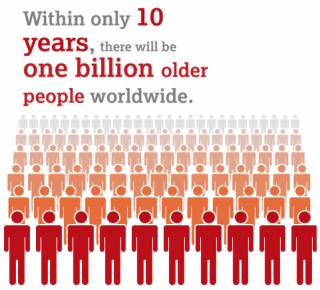
Meanwhile, the number of new-borns has been falling. In 2000, for the first time in history, there were more people over 60 globally than children below 5. And within the next decade, the number of older persons will surpass 1 billion.
Proportions matter more than absolute numbers. It is the age structure of a country’s population that directly affects economic productivity and human development.
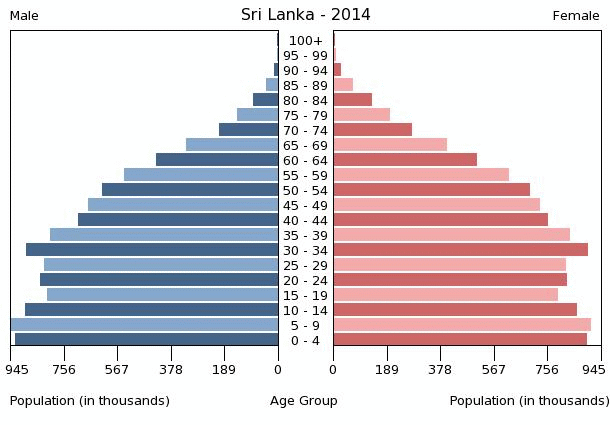
In South Asia (SAARC region), Sri Lanka has the highest proportion of older people, which was 13% in 2014. This is projected to rise to 20% by 2031, and a quarter by 2041. Parallel to this, the proportion of working age population – which reached its peak in 2006 (65.1%) – will keep falling. This is similar to what is happened in many East Asian countries.
“As Sri Lanka experiences a demographic transition, the country will face several economic and social challenges, especially in handling the social protection and health care needs of a rising elderly population,” cautioned the Institute of Policy Studies (IPS) in its ‘Sri Lanka State of the Economy 2014’ report. “In addition, Sri Lanka will also have to address the implications of a shrinking workforce on the growth of the country.”
How can we prepare for this shift, to avoid being overwhelmed economically and socially?
Philip O’Keefe, the World Bank’s lead economist on social protection and labour, says the risks associated with ageing are real — but can be mitigated with the right policy responses.
For example, as people enjoy longer and healthier lives, retirement age and habits need rethinking.
O’Keefe says that many Asian countries’ retirement age has not kept up with rising life expectancy. But rather than embarking on the often contentious revision of retirement age, countries could gradually ‘blur the line’ between working and stopping it – as Japan, Korea and Singapore have done.
In Sri Lanka, mandatory retirement age for public servants is 60 years (with some exceptions). Last year, then health minister (and now President) Maithripala Sirisena proposed that this be raised to 65, with the option of retiring at 60.
The rationale is clear. Lankans have an average life expectancy of over 76 years, with women living a few years longer than men. Also, today’s older people are markedly different compared to those two generations ago. They are healthier and remain more active well into their 70s or 80s. This enhances their value to society: they are a resource to be harnessed.
This is the trend across Asia. To benefit from this, societies must redesign and realign themselves, says Eduardo Klien, regional director of HelpAge International for East Asia and Pacific. Countries need to make far-reaching changes to address population ageing so as to optimise older people’s contributions.
Governments, civil society, private sector, development donors and the research community all have roles to play. The policy window is limited, Klien says. “The time to act is the next few years.”
In formulating policies, it is important to avoid alarmism. The common media portrayal of ageing as a ‘demographic time-bomb’ or ‘silver tsunami’ is not accurate. Nor is this fate inevitable as developed country experience shows.
Global AgeWatch 2014 report – country rankings
Evidence-based policies
Better data gathering and analysis can help promote a more balanced approach. For example, censuses need to collect statistics that are more disaggregated by age and gender (lumping together everyone over 60 or 65 is no longer good enough).
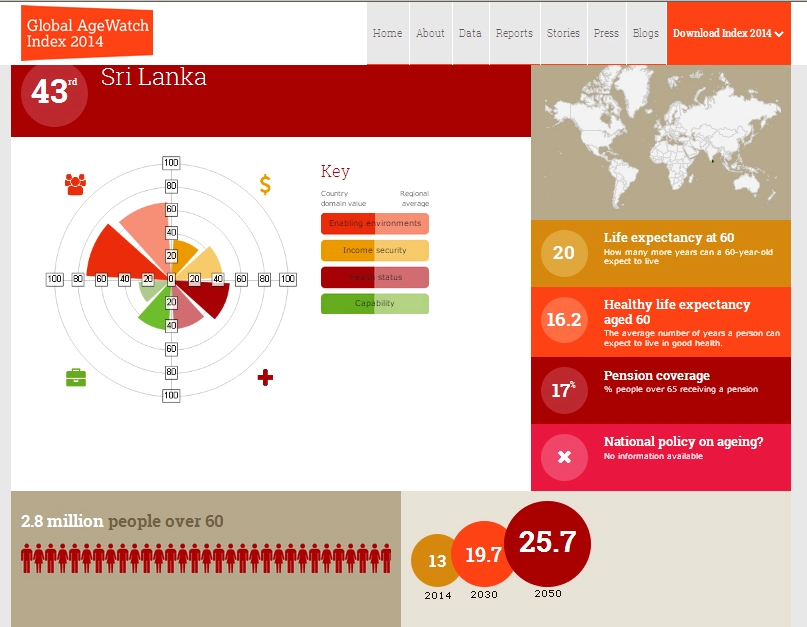
The Global AgeWatch Index, which ranks countries by how well their ageing populations are faring, takes stock of how countries are faring. Compiled by HelpAge International, it measures performance in four areas: income, health, employment and education, and existence of an ‘enabling environment’ (based on factors like physical safety, civic freedom and access to public transport).
Global AgeWatch Index 2014 assessed 96 countries which covered nine out of ten people over 60 worldwide. Norway topped the list, followed by Sweden and Switzerland. The only Asian country among the top 10 was Japan (No 9). In South Asia, Sri Lanka was placed higher (No 43) than other SAARC countries – but there is much to be done.
According to the data crunched, an average Lankan of 60 years can expect to live for another 20 years, 16.2 of which are likely to be in good health. But many of our older persons experience problems of psychological wellbeing – and a lack of counseling support.
More worrying is income security. Pension income coverage in Sri Lanka is 17% of older persons, despite there being several public and private schemes. Given that more people work in the informal sectors – such as farming, fishing and trading – enhancing coverage will need a multi-pronged approach.
One option is non-contributory social pension schemes, but this needs to be balanced with long-term viability. Sri Lanka already spends around 1.5% of GDP on public sector pensions. Pension reform with innovation thus becomes a policy priority.
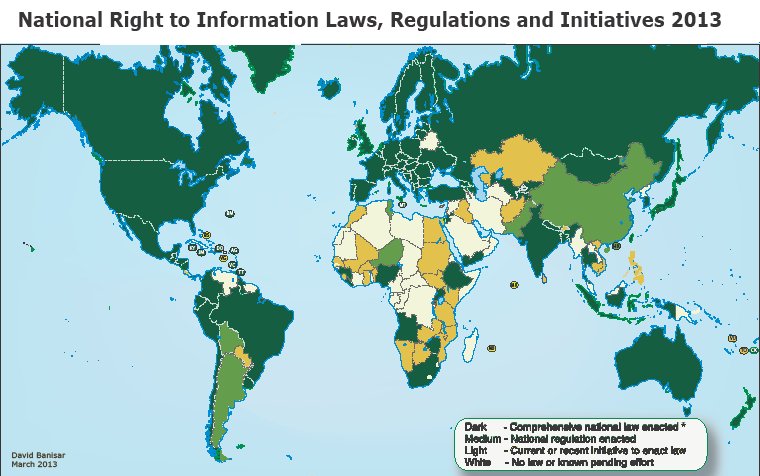
After many years of advocacy by civil society, Sri Lanka is set to adopt a law that guarantees citizens’ Right to Information (RTI). With that, we will at last catch up with nearly 100 countries that have introduced such progressive laws.
Better late than never — but passing the law is only a beginning. Institutionalising it requires effort and funds. Continued vigilance is needed on civil society’s part to guard against the process becoming mired in red tape.
RTI signifies unleashing a new potential. To draw an analogy from water management, opening a ‘sluice’ does not by itself mean much unless the downstream systems are in place. In both cases, the recipients need to know how to make the best use of what comes through.
Journey so far
Why is RTI such a big deal?
Its basis is that in democracies, the public have every right to know what is being done in their name by those entrusted with governance.
RTI is the right to access and obtain information from public officials. This right serves several purposes: improve public participation in policy making; promote transparency and accountability in government; and minimise wastage and corruption of state resources by public officials.
RTI and freedom of information are used interchangeably, but there is an important distinction between the two.
According to lawyer Gehan Gunatilleke, who recently wrote a book on the subject (published by Sri Lanka Press Institute, 2014), freedom of information implies a citizen’s freedom to access and receive public information on request. In such a situation, the government should not violate that freedom by restricting access. RTI goes further, and implies that information is an inherent right of the people. Governments are duty-bound to provide such information.
The Universal Declaration of Human Rights, adopted at the United Nations in 1948, recognised the right to seek, impart and receive information as part the fundamental right to freedom of speech and expression (Article 19).
Article 19 of Universal Declaration of Human Rights
RTI does not mean opening up everything. Sensitive information – related to national security, for example – is excluded. The challenge is to strike a healthy balance between full transparency and a few justified exemptions.
Indian experience
In Asia, India was a frontrunner in developing RTI laws. The campaign for RTI started in the 1990s with a grassroots movement driven by social activists and rural groups. They saw its clear value to counter the growing misuse of authority and public funds by local officials.
State level RTI laws were adopted in Tamil Nadu (1997), Goa (1997), Rajasthan (2000), Delhi (2001) and Maharashtra (2002). The national law came into effect in October 2005 after a decade of agitation.
Under the Indian law, citizens can request information from any ‘public authority’ within 30 days. It covers all branches of government — executive, legislature and judiciary – as well as institutions and statutory bodies set up by an act of national Parliament or a state legislature. Even non-governmental organisations, if they receive significant amounts of government funds, are covered.
The act required all public authorities to appoint a public information officer (PIO) to handle RTI requests. It also mandated computerizing of public records so that certain categories of information are proactively published online, enabling interested citizens to just look it up.
Since the RTI law was introduced, India has seen an improvement in governance, dissemination of information and involvement of civil society in the governance process, says Dr Rajesh Tandon, founder and head of the Society for Participatory Research in Asia (PRIA), a voluntary organisation providing support to grassroots initiatives.
At the same time, Tandon points out that some challenges remain at implementation level. Certain states in India have been more active in creating a culture of information sharing and open government, he told me in a television interview in mid 2014.
As Indians found out, it isn’t easy to shake off centuries of misplaced state secrecy and mistrust in the public. “Old rules and procedures continue to co-exist as new laws and methods are invented. Official Secrecy Act and Right to Information Act co-exist, just as written precedent and e-governance co-exist,” says Tandon (watch our full interview: https://vimeo.com/118544161).
New challenges
In Sri Lanka, civil society groups and journalists’ organisations were at the forefront advocating RTI. Groups like Transparency International and Sri Lanka Press Institute (SLPI) have been lobbying, training and raising awareness on the societal value of this right.
However, RTI is not only for journalists or social activists. It is a right for all citizens living in modern societies where their well-being – sometimes even survival – depends on knowing critical information. Ignorance may have been bliss once upon a time, but it is not recommended for the 21st century.
Reorienting the public institutions to a new culture of openness and sharing will be an essential step. Undoing decades of habits will take effort.
Asanga Welikala, a legal scholar now with the Edinburgh Law School, said in a tweet that we need a moratorium of ‘at least two years’ before RTI law comes into force – so as to train officials and make all government procedures compliant.
He also says the Information Commission must have a proper budget for promotion and public awareness of the new Act, rights and procedures. For example, how to ensure citizen information requests can be accommodated equally in both official languages and the link language?
As champions of RTI, media and civil society must now switch roles. While benefiting from it themselves, they can nurture the newly promised openness in every sphere, showing citizens how best to make use of it.
Public information can exist in many forms today – ranging from minutes of meetings, budget allocation and expense records, and scientifically gathered information such as census data, or trade statistics. These may be stored on paper, tape or – increasingly – in digital formats.
In recent years, with digital technologies the volume of specialised data held by governments has risen phenomenally. Both the data custodians and public today need higher levels of information literacy to navigate through this torrent.
The good news: the web makes it easier to store and share information. ‘Open Data’ means that certain data should be freely available to everyone to use and republish as they wish, without restrictions from copyright, patents or other mechanisms of control.
The open data approach is especially applied to scientific data and government data. But the debate is far from settled: while there are many strong arguments for opening up, some are concerned about potential misuses. Guidelines are still evolving.
A key attribute of open data is its usability. Each country needs to adopt information gathering and data storage standards, so as to minimize users facing problems that arise with the use of different devices, systems and measuring systems.
Some public data custodians in South Asia still release vast amounts of data in hard copy (paper-based) form. For example, India’s Marine Fisherfolk Census of 2010 had results running into thousands of pages of data tables – they were only released on paper. That made further analysis impossible. Undaunted, a fishers’ collective mobilised some tech-savvy volunteers to create computerised spreadsheet databases.
Like many other elements of good governance, RTI’s effectiveness depends on imagination, innovation and persistence on the part of citizens. Its best results will accrue in a society and political culture where evidence and analysis are trusted. Sri Lanka is not there yet.
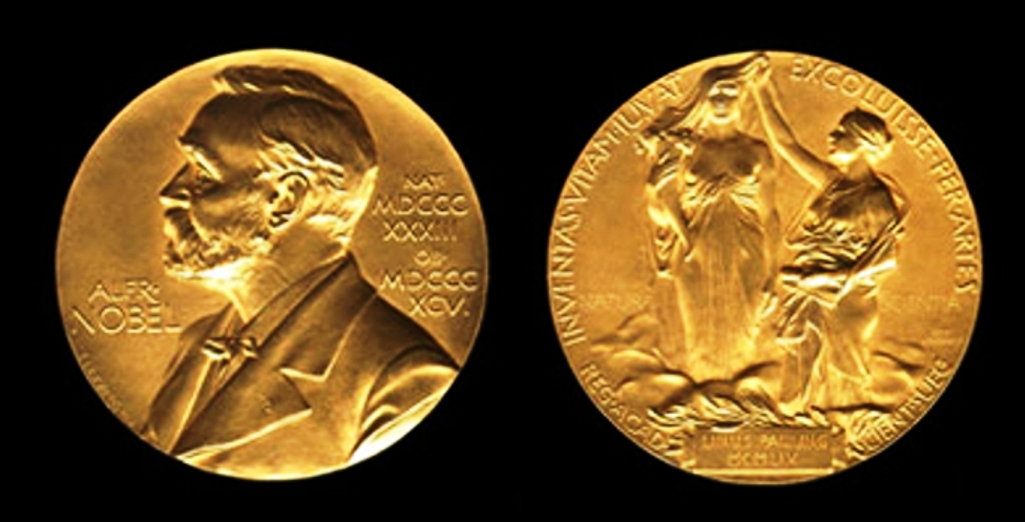
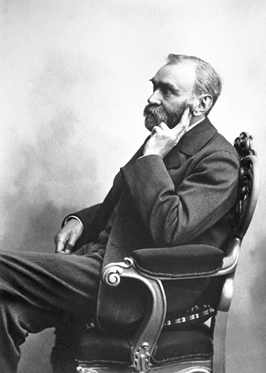
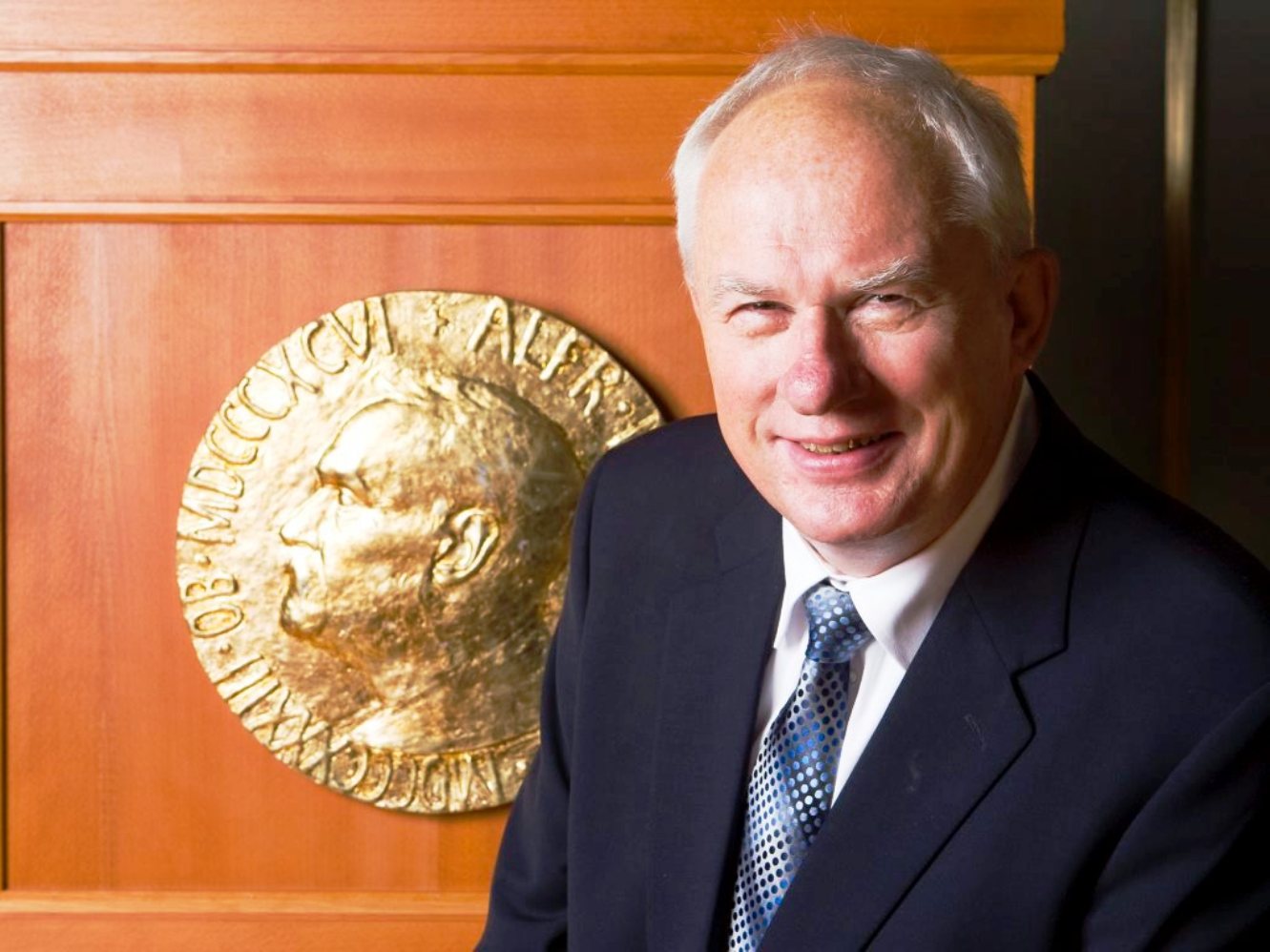
The selection of Nobel Peace Prize laureate often stirs more debate than all other Nobel prizes (in chemistry, physics, medicine, literature and economics) combined. The peace prize remains an essentially political one, reflecting the reality that most conflicts — and their resolution — are largely influenced by political considerations.
Members of the Norwegian Nobel Committee, all Norwegian nationals, may not be too well known beyond their country. Yet their annual selection reverberates around the world.
Five years ago, on a visit to the Norwegian capital, I listened to a talk by Dr Geir Lundestad, a historian who is Director of the Nobel Institute in Oslo and secretary to the Norwegian Nobel Committee. He gave some interesting insights into the legacy and limitations of the prize. I share these in my latest Ravaya column (in Sinhala) just as the winners of Nobel Peace Prize 2014 are to be announced this week.
Although it has been discussed for centuries, there is no universally accepted definition of basic human needs. During the 1970s, basic needs emerged as a key topic in development debates. Various studies – catalysed by UN agencies and the Club of Rome – tried to define it.
In 1976, the International Labour Organization (ILO) prepared a report that identified basic needs as food, clothing, housing, education and public transportation. It partially drew on ILO’s country reports on Columbia, Kenya and Sri Lanka. Since then, different development agencies have adopted variations of the original ILO list. National planners have used the concept to benchmark economic growth.
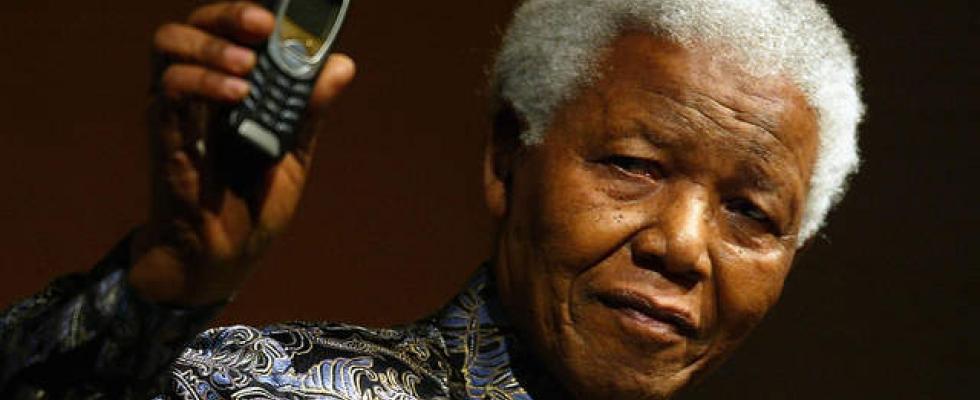
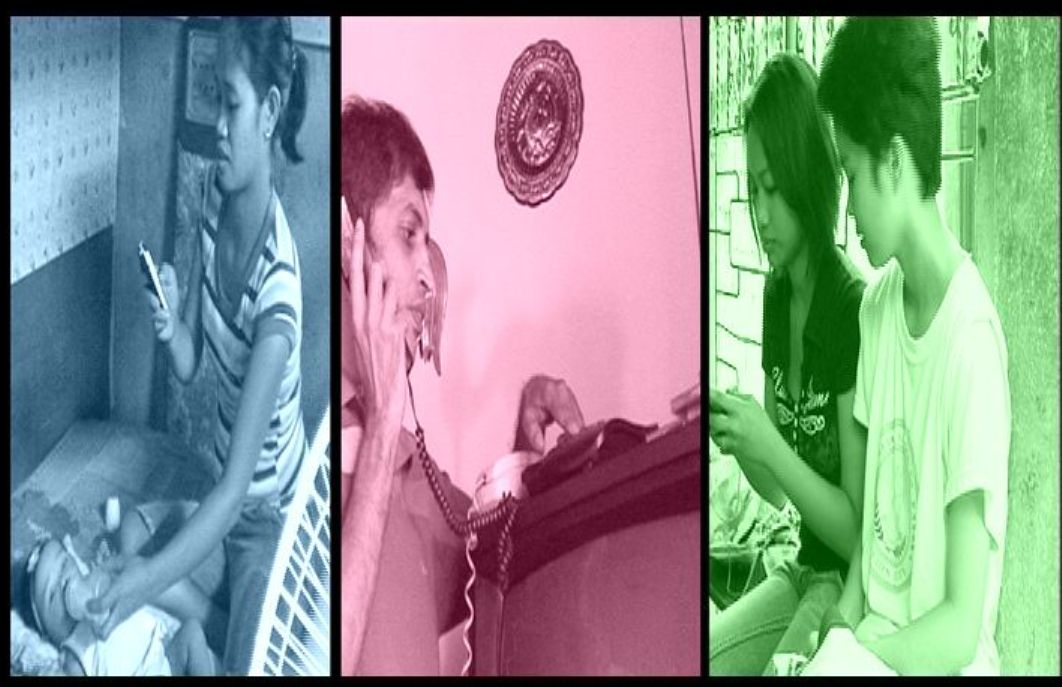
The ground reality has changed drastically since those heady days. In view of the rapid evolution of information society, communication should be considered a basic human need. This is the basic thrust in my latest Ravaya column (in Sinhala).
See also my related writing on revisiting basic needs:

 Meanwhile, a new World Bank report on urban trends in South Asia reminds us that Sri Lanka’s share of the population officially classified as living in urban areas actually fell slightly between 2000 and 2010.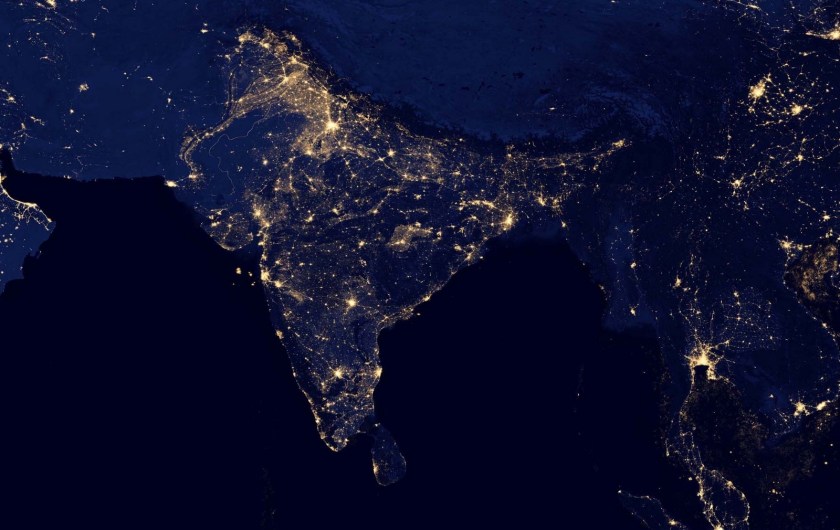
 For example,





![An Open Dialogue on Open Data - 15 Oct 2015 Coloombo - L to R - Sriganesh Lokanathan, Nalaka Gunawardene, Sanjana Hattotuwa [Photo by Sam de Silva]](https://nalakagunawardene.com/wp-content/uploads/2015/10/an-open-dialogue-on-open-data-15-oct-2015-coloombo-l-to-r-sriganesh-lokanathan-nalaka-gunawardene-sanjana-hattotuwa.jpg)








 Open Minds!