Wanted: More ‘Idiots’ to tackle grassroots innovation challenges!

Aspirations are common; solutions are not...Cartoon by R K Laxman

The late Ray Wijewardene was very fond of this cartoon, drawn decades ago by the outstanding Indian cartoonist, R K Laxman.

It epitomised, in Ray’s view, poor people’s aspirations for useful technology: machines or processes that provided relief from drudgery and put money in their pockets.

The bicycle used to be a common aspiration among many people. Among today’s generation, the mobile phone is another. (But most people who want a phone have already got one – for a variety of personal and utilitarian reasons).

Ironically in our age of technology, hundreds of millions of people — most of them poor, and a majority of women — are still toiling away in tasks where simple machines or devices could reduce their daily drudgery.

Few inventors have bothered with these — probably because the beneficiaries are on the margins of society. Their needs are not a priority for most research institutes or high tech laboratories.

This is the focus of my latest op-ed essay, published in The Sunday Times on 25 Dec 2011: Wanted: More ‘Idiots’ to tackle grassroots innovation challenges

It was inspired by, and mostly based on the inaugural Ray Wijewardene memorial lecture delivered by Dr Anil Kumar Gupta, India’s top innovation-spotter, in Colombo on 13 December 2011. He spoke on “Grassroots Innovation for Inclusive Development: From Rhetoric to Reality”

India’s Honey Bee Network, which Gupta founded in the mid 1980s, has documented
thousands of grassroots innovations and traditional knowledge practices for a quarter century. And yet, many everyday life problems remain unresolved. Ones, when tackled, can bring immediate relief to hundreds of millions of men and women from their daily drudgery.

Find out more – read the full article:
Wanted: More ‘Idiots’ to tackle grassroots innovation challenges

Anil Gupta’s Advice: Unleash Sri Lanka’s Grassroots Innovators!

This is the full text of an article I have written in The Nation Sunday newspaper today, 18 Dec 2011, with more images, embedded weblinks and in a better searchable format. It is based on the inaugural Ray Wijewardene Memorial Lecture delivered by Prof Anil K Gupta on 13 Dec 2011 and my conversations with him in Colombo.

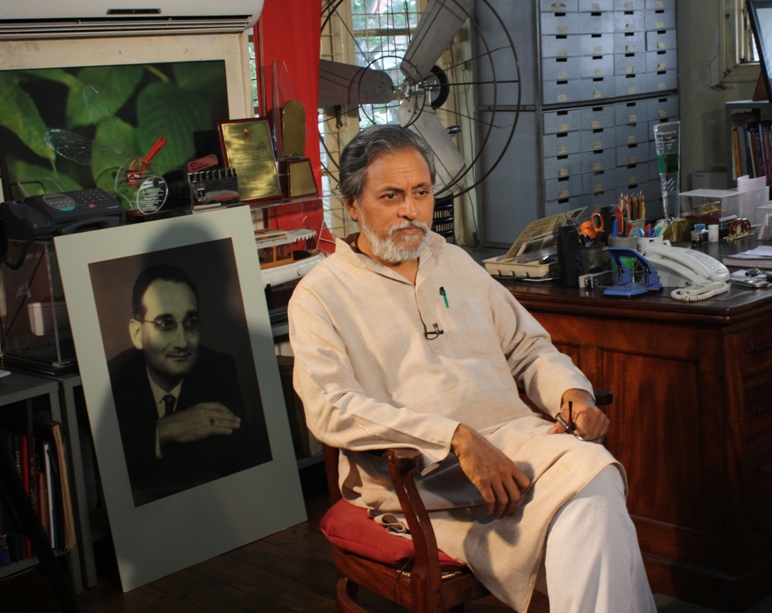
Prof Anil Gupta sits in the Colombo study of late Dr Ray Wijewardene - photo by Anisha Gooneratne

What does an inventor look like?

A nerdy kid in glasses and a white coat, tinkering perilously in a lab? Or a tightly-focused technician toiling away in a greasy workshop?

Perhaps. But most innovators are ordinary people moving among us. For the most part, they are unnoticed and unsung as they try to crack problems that have engaged their attention — or frustrated them for too long.

At one level, many of us improvise everyday for personal gain — to save money, lighten our workload or boost yields. Only a few take it to a higher level. They are unhappy with the status quo. They probe how things work and speculate how it can improve. They tackle problems that daunt most.

Spotting them isn’t easy. Such innovators may come from any social, educational or cultural background but they all march to the beat of a different drum. While education and training help, some of the most successful inventors in history were entirely self-taught.

The late Ray Wijewardene was one quintessential ‘tinkerer’ who led a life-long quest to solve practical problems and improve the quality of life – for himself, those around him, and society at large. He left his mark in agriculture, engineering design, renewable energy, transport and aviation. Just as importantly, he nurtured other innovators to go after nagging problems. A firm believer in trial and error, he encouraged constant experimentation.

Ray’s spirit of enquiry and enterprise was rekindled this week when one of the world’s leading innovation-spotters delivered the inaugural Ray Wijewardene Memorial Lecture in Colombo.

Dr Anil Kumar Gupta, a Professor at the Indian Institute of Management (IIM) in Ahmedabad, India, and Founder of the Honey Bee Network, spoke on “Grassroots Innovation for Inclusive Development: From Rhetoric to Reality” at the Institution of Engineers on 13 December 2011.

With inspiring examples and illustrations, Gupta emphasized that grassroots innovations can provide a new ray of hope – if we let them grow.

Speaking of his own country’s experience, he said: “Outside of India’s major cities, unsung heroes of the country are solving, or trying to solve, local problems in spite of the structures that have bypassed them so far. Creativity, compassion and collaboration are the key characteristics of these voices from grassroots. Let’s listen to them and resonate with them!”

And it isn’t just an Indian phenomenon. At the outset, Gupta listed a dozen recent innovations made by Lankans. Some, like the safe kerosene bottle lamp, are widely known but most remain obscure. Yet, all have been authenticated, and many granted patents.

Home-grown inventions

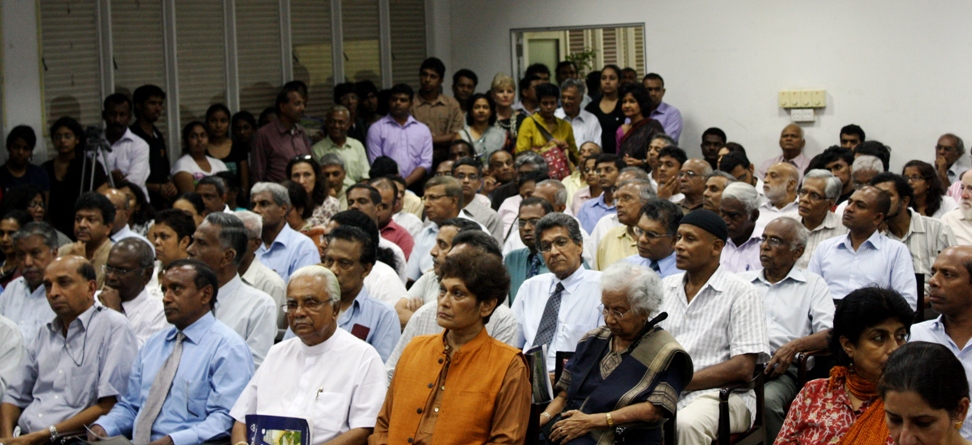
Few among the packed Colombo audience of over 200 seemed to recognise these home-grown innovations — just the point the professor was making.

“You get innovators all over Sri Lanka, but most are not known or recognised even in their own communities,” he said.

To make matters more challenging, most innovators tend to be loners: they are day-dreamers who don’t follow the pack.

“They don’t come to meetings or speak up much. We have to reach out to them, make them feel comfortable and valued,” Gupta added.

His suggestion: Sri Lanka should launch a national effort to discover its own innovators — both technological and social. The media can play a big role in spotting and promoting innovators, as can schools, universities and state agencies with relevant mandates.

But Gupta also had a strong word of caution: “Whatever we do, we must never try to convert these precious ‘odd-balls’ into conformists.”

Ray would surely have applauded. He was an accomplished non-conformist, or maverick, who didn’t fit into the stereotyped academic or engineering circles. Now the Ray Wijewardene Charitable Trust (RWCT), set up to promote his legacy, wants to nurture innovation in Sri Lanka.

The Trust made an auspicious start by inviting Anil Gupta to deliver the first lecture in Ray’s memory. Gupta and Wijewardene were kindred spirits who stayed in touch over the years across the Palk Strait.

Gupta himself defies the standard notion of an academic. He is an unusual professor who walks his talk — and walks through the villages and slums of India in search of innovation. His mission for the past two decades has been to ensure that grassroots innovators receive due recognition, respect and reward for their bright ideas. He also seeks to embed an innovative ethic in educational policy and institutions.

He founded the Honey Bee Network in 1986-87 “to promote a fair and responsible knowledge ecosystem”, where innovators can benefit by sharing their ideas. In the 1990s, he set up the Society for Research and Initiatives for Sustainable Technologies and Institutions (SRISTI) and Grassroots Innovation Augmentation Network (GIAN) both of which support the Honey Bee Network to scale up and convert grassroots innovations into viable products.

The man doesn’t sit in his campus; he goes innovator-scouting all over India. “In our walks, we move from village to village spotting grassroots innovations and honouring them. We have come across very simple modifications make life easier for people, and also help save natural resources,” Gupta said.

A simple example: at a rural location, he found someone had fitted six tapes on to the outlet of a single water pump. It allowed that many to draw water at the same time, and also reduced pumped up water going waste.

The bicycle is another invention that has been adapted for multiple purposes across India. Genius improvisers are using it for moving on land (and water), generating electricity, helping with the cooking, and even in washing clothes.

The popular Hindi film 3 Idiots featured a pedal-powered washing machine, which was inspired by the invention of a 20-year-old woman from Kerala, Remya Jose. It has since been showcased on Discovery Channel as part of the ‘Indian Innovators’ series of short films.

Part of audience at Ray Wijewardene Memorial Lecture in Colombo, 13 Dec 2011 - photo by Anisha Gooneratne

Benefit sharing

One defining characteristic of such grassroots innovation is that those tinkering are also immediate benefits of any improvements. As Gupta puts it: “From agricultural innovations to the gas-powered iron or pressure-cooker-driven coffee maker, we find that solutions developed by producers who are also users reflect the concerns of both the production and consumption environments.”

Not all inventions need to be earth-shattering. In fact, many aren’t – and that is perfectly fine, says Gupta.

“Even basic improvements in a water pump, for example, can make life easier for millions of people. When we look for design improvements, we should consider not only the benefits to humans, but even to domesticated animals.”

How can society ensure that grassroots innovators not just receive accolades but also get paid for their creative ideas?

Much of innovation related knowledge is ‘open source’ – meaning it has been developed by a number of people collaboratively and non-secretively. But that doesn’t mean their knowledge rights should be trampled with.

Taking out patents is one way to ensure such rights. The Honey Bee network has successfully obtained over 550 patents for grassroots innovations – more than some well-funded laboratories in India! This was made possible by mobilising pro bono lawyers and other volunteers.

The spirit of volunteerism common in Asian cultures can do much to nurture innovation and safeguard intellectual property rights at the same time, Gupta said.

His hope: “The Ray Wijewardene Trust should be able to find public-spirited lawyers in Sri Lanka to emulate the Indian experience.”

And what about glaring gaps that often exist between inventive minds and the ruthless market?

Don’t try to turn every innovator into businessman, Gupta said. “Most innovators are not good entrepreneurs because they are incorrigible improvisers. In many cases, we try to persuade and counsel innovators to work on their products. There are some who do very well, while others take time.”

Instead of trying to turn every inventor into an entrepreneur, we have to create institutions, schemes and networks that bring these two types together – the one who tinker and those who market.

We have to find ways to link innovation with investment and enterprise. Together, these three elements form what Gupta calls the ‘golden triangle’ for grassroots creativity.

Science writer Nalaka Gunawardene is a trustee of the Ray Wijewardene Charitable Trust, and has been profiling Lankan innovators for 25 years.

සිවුමංසල කොලූගැටයා #45: තොරතුරු සමාජයේ මාධ්‍ය භාවිතය හා වාරණය

As I have often said on this blog, Television used to be the favourite whipping boy of those who love to criticise communication technologies and consumer gadgets — until the Internet and mobile phones came along.

When it finally arrived in Asia in 1991, direct TV broadcasting by satellite scared the daylights out of many Asian governments and self-appointed guardians of culture and public morals. How can the unexposed (i.e. ‘unspoilt’) hundreds of millions of Asians cope with massive volumes of information and entertainment beaming down from the skies, they asked. Their real concern was the loss of control over what the public watched, which governments and ruling elites had tightly controlled for decades since radio and TV emerged as mass media.

So, for much of that decade, we witnessed howls of protests from them — but their worst fears never materialised. Satellite TV found its niche alongside terrestrial transmissions, and Asian broadcasters soon mastered the medium. Today, global broadcasters like CNN, BBC and Al Jazeera compete with hundreds of Asian satellite TV channels and the audiences have a far greater choice.

As I wrote in September 2008: “In 1990, most Asian viewers had access to an average of 2.4 TV channels, all of them state owned. This has changed dramatically — first with the advent of satellite television over Asia in 1991, and then through the gradual (albeit partial) broadcast liberalisation during the 1990s. Asian audiences, at last freed from the unimaginative, propaganda-laden state channels, exercised their new-found choice and quickly migrated to privately owned, commercially operated channels.”

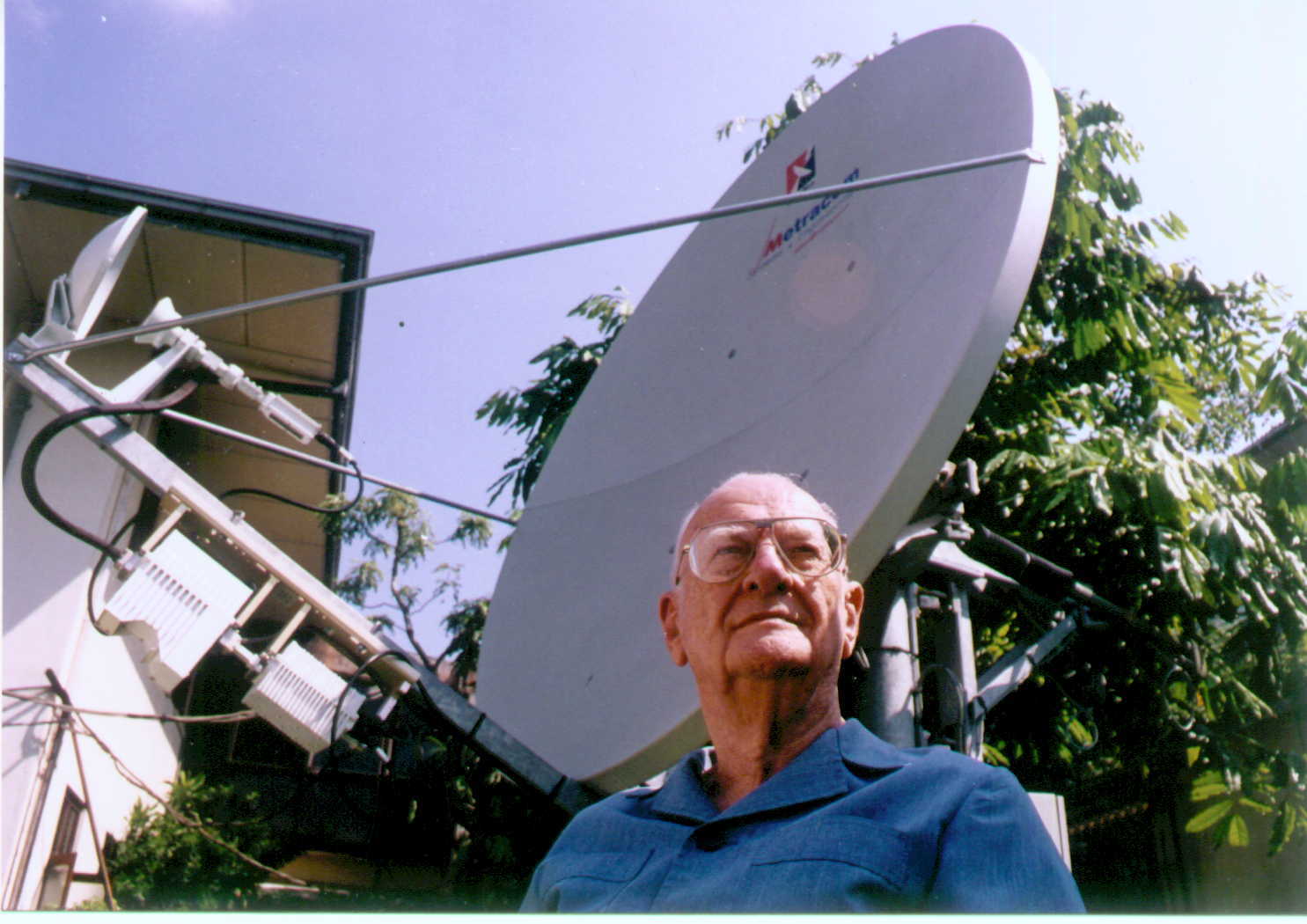
Sir Arthur Clarke was the man who triggered this satellite communication revolution. In 1945, while still in his late 20s, he was the first to propose the concept of using a network of satellites in the geo-synchronous orbit for television and telecommunications. His vision became a reality in the mid 1960s, and within a generation, humankind has come to rely critically on the network of comsats placed, in what is now called the Clarke Orbit, some 22,300 miles above the earth.

In December 2003, on the eve of the World Summit on the Information Society (WSIS) and days before his 86th birthday, I did a wide-ranging interview with Sir Arthur Clarke on satellite TV, internet, censorship and other challenges of information societies. It was published in One World South Asia on 5 December 2003.

For my Ravaya column this week (18 Dec 2011), I have adapted parts of that interview into Sinhala, making the point that much of what he said about satellite TV at the time is now equally relevant to the rapid spread of the Internet. It’s also a nice way to mark his 94th birth anniversary this week.

Sir Arthur C Clarke: Opened up the heavens as part of information superhighway...

අතට හසු නොවන, මනසට අළුත් හා නුහුරු ඉන්ටර්නෙට් ගැන ඇතැම් දෙනා බිය සැක උපදවා ගැනීම පුදුමයක් නොවෙයි. 2011 නොවැම්බර් 20දා මා කීවේ වසර 16ක් ගත වීත් ලක් සමාජය තවමත් ඉන්ටර්නෙට් සමග බද්ධ වන්නේ යම් චකිතයක්, සැකයක් හා දෙගිඩියාවක් සමග බවයි.

ඉන්ටර්නෙට් ආගමනයට කලින් මේ අයුරින් ම බය හා සැක ඇති කළ මාධ්‍ය ප්‍රවණතාවක් වූයේ කෘත්‍රිම චන්ද්‍රිකා හරහා ටෙලිවිෂන් විකාශයන් විසුරුවා හැරීමයි. (direct broadcasting by satellite)’ ආසියා කලාපයේ මෙය ඇරඹුණේ 1991දී. AsiaSat චන්ද්‍රිකාව BBC, CNN හා STAR TV නාලිකාවල උඩුගුවනින් එන ටෙලිවිෂන් සංඥා, අඩු වියදමකින් තනා ගන්නා දීසි ආකාරයේ ඇන්ටෙනාවකින් හසු කර ගත හැකි වුණා.

රාජ්‍ය දේශ සීමා ගැන තැකීමක් නොකර නිදහසේ පාවී එන මේ විකාශ ගැන එවකට ආසියානු රජයන් සලිත වූ සැටි මට මතකයි. වර්තමානයේ ඉන්ටර්නෙට් මාධ්‍යයට එරෙහිව නගන චෝදනාවලට සමාන චෝදනා ගොන්නක් 1990 දශකය පුරා අපේ පණ්ඩිතයෝ චන්ද්‍රිකා හරහා එන ටෙලිවිෂන් විකාශයන්ටත් එල්ල කළා. එය ආසියානු රටවල දේශපාලන ස්ථාවරත්වයට, සංස්කෘතීන්ට හා ජන සමාජයන්ට බරපතල අහිතකර බලපෑම් ඇති කළ හැකි යයි ඇතැම් උගතුන් හා ‘සංස්කෘතික බහිරවයන්’ අනතුරු ඇගවීම් ද කළා.

එහෙත් එබන්දක් සිදු වූයේ නැහැ! නොබෝ කලකින් ආසියානු නාලිකා තම ප්‍රේක්ෂකයන්ට වඩාත් අදාල හා ප්‍රයෝජනවත් වැඩසටහන් විකාශය කරන්නටත් ඒ චන්ද්‍රිකා තාක‍ෂණය ම යොදාගත්තා. මේ වන විට ලෝක ටෙලිවිෂන් නාලිකා, ආසියානු නාලිකා හා දේශීය නාලිකා තුන ම අපේ ටෙලිවිෂන් යන්ත්‍ර හරහා බලා ගත හැකියි.

හාස්‍යජනක කරුණක් නම් මේ දැඩි විවේචනවල යෙදෙන ඇතැම් දෙනා එකී මාධ්‍ය දැක හෝ භාවිතා කර නැති අය වීමයි! එහෙන් මෙහෙන් අහුලාගත් කොටස් මත පදනම් වී කරන මේ විවේචන පිළි ගන්නා රාජ්‍ය නිලධාරීන් හා ප්‍රතිපත්ති සම්පාදකයන් ද සිටීම තමා අපේ ඛේදවාචකය. විෂය දත්තවුන් නිහඩව සිටින මේ දූපතේ, කුමන්ත්‍රණවාදීන් හැම දෙයක් ම නොපිටට හරවා ගන්නවා. (විකිලීක්ස් හා විකිපීඩියා දෙක පටලවා ගැනීම පිළිබද මගේ විග්‍රහය බලන්න: 2011 ජූලි 10)

වඩාත් ප්‍රබලව මතුව එන තොරතුරු තාක‍ෂණ හා සන්නිවේදන අභියෝගයන්ට ප්‍රශස්තව මුහුණ දෙන සැටි අන්තර් රාජ්‍ය මට්ටමින් සාකච්ඡා කළ තොරතුරු සමාජය පිළිබඳ පළමුවන ලෝක සමුළුව (World Summit on the Information Society, WSIS-1) 2003 දෙසැම්බරයේ ජිනීවා නුවර පවත්වනු ලැබුවා. එයට මුල් වුයේ යුනෙස්කෝ සංවිධානය, ලෝක විදුලි සංදේශ සංගමය (ITU) හා එක්සත් ජාතීන්ගේ සංවර්ධන වැඩසටහන (UNDP) යන ආයතන ත්‍රිත්වයයි. මේ සමුළුවට දින කිහිපයකට පෙර ශ්‍රීමත් ආතර් සී ක්ලාක් සමග මා කළ දීර්ඝ සාකච්ඡාවක් (ඉන්දියාවෙන් සංස්කරණය කැරෙන) One World South Asia ජාත්‍යන්තර වෙබ් අඩවිය පළ කළා.

මගේ ඉලක්කය වූයේ තොරතුරු සමාජයේ පෙර ගමන්කරුවෙකු වු ක්ලාක් එවකට දැකිය හැකි වු අළුත් ප්‍රවණතා සහ අභියෝග ගැන දරණ විද්වත් අදහස් ඒ තීරණාත්මක මොහොතේ ලෝකය සමග ඛෙදා ගැනීමයි. ක්ලාක්ගේ 94 වන ජන්ම සංවත්සරය (2011 දෙසැම්බර් 16) සැමරෙන මේ සතියේ ඒ සාකච්ඡාවෙන් කොටස් කිහිපයක් මා සිංහලට අනුවාදය කළා.

එදා චන්ද්‍රිකා ටෙලිවිෂන් ගැන ක්ලාක් කී බොහෝ දේ අද ඉන්ටර්නෙට් සඳහා ද වලංගූයි. නමුත් එක් ප්‍රබල වෙනසක් නම් චන්ද්‍රිකා හරහා ටෙලිවිෂන් විකාශ කිරීමට තාක්ෂණය හා වත්කම තිබුණේ ප්‍රධාන පෙළේ මාධ්‍ය සමාගම්වලට පමණක් වුවත් ඉන්ටර්නෙට් හරහා ලොවට සන්නිවේදනය කිරීමේ හැකියාව ලොකු පොඩි කාටත් එක සේ උදා වී තිබීමයි. දැවැන්ත මාධ්‍ය සමාගම් අතළොස්සක් නීතිමය හා නීතියට පරිබාහිර උපක්‍රමවලින් හැසිරවීමේ අත්දැකීම් ඇති ලෝකයේ ආණ්ඩුවලට, කුඩා පරිමාණයේ පුරවැසි මාධ්‍යවේදීන් සිය දහස් ගණනක් සමග කුමන ආකාරයෙන් ගනුදෙනු කළ හැකි ද යන්න විශාල අභියෝගයක් වී තිඛෙනවා. ක්ලාක් අප අතර නැතත්, වසර අටකට පෙර ඔහු පළ කළ අදහස් අදටත් අදාලයි.

නාලක: චන්ද්‍රිකා ටෙලිවිෂන් නාලිකා ඔස්සේ එන වැඩසටහන්වල අන්තර්ගතය ගැන කිසිදු රජයකට පාලනයක් නැහැ. රටක පවතින මාධ්‍ය නීති රීති හෝ සාරධර්ම ඒ අයුරින් ම පිළිපැදිය යුතු යැයි චන්ද්‍රිකා ටෙලිවිෂන්වලට බලපෑම් කරන්නටත් බැහැ. මේ පසුබිම තුළ මෙම මාධ්‍යය වඩාත් තදින් හැසිරවිය යුතු යැයි ඔබ සිතනවාද?

ක්ලාක්: පෘථීවියට ඉහළ කක‍ෂගතව තිඛෙන පණිවුඩ චන්ද්‍රිකාවලින් එන ටෙලිවිෂන් විකාශයන් පාලනය කිරීමට හෝ තහනම් කිරීමට හෝ කිසිදු ආණ්ඩුවකට හැකි වේ යැයි මා සිතන්නේ නැහැ. කෙසේ වෙතත් මාධ්‍යයක් තහනම් කිරීම, නීති විරෝධී කිරීම හෝ වාරණය කිරීම ප්‍රගතශීලි පියවරක් ලෙස මා පිළිගන්නේත් නැහැ. අපි මේ තත්ත්වය පුළුල් දෘෂ්ටි කෝණයකින් විග්‍රහ කළ යුතුයි. මෙබඳු ප්‍රශ්න ගැන කථාබහ කරන අප බොහෝ දෙනකුට තොරතුරු හා විනෝදාස්වාදය ලබා ගත හැකි මාර්ග ගණනාවක් තිඛෙනවා. බොහෝ විට අප සිටින්නේ තොරතුරු අධිපෝෂණය නැතහොත් තොරතුරු දූෂණය (information pollution) නමැති තත්ත්වයේයි. මේ නිසා එහි ප්‍රතිවිරුද්ධ තත්ත්වයල එනම් තොරතුරු සාගතය (information starvation) ගැන අපට හරි වැටහීමක් නැහැ.

මට සිතෙන්නේ චන්ද්‍රිකා ටෙලිවිෂන් වැඩසටහන්වලින් ජන ජීවිතයට, සංස්කෘතියට හෝ සභ්‍යත්වයට හානි සිදුවේ යැයි කෑ මොර ගසන උදවිය තමන්ගේ බුද්ධියේ ප්‍රමාණයට වඩා වැඩි අධ්‍යාපනයක් ලැබීම නිසා බක පණ්ඩිතයන් වී සිටින අය බවයි. සමාජයේ බහුතරයකගේ සිතුම් පැතුම් හෝ රුචි අරුචිකම් හෝ ගැන මේ ‘කල්චරල් අප්පුලාට’ හැඟීමක් හෝ තැකීමක් නැහැ. ඔවුන් සිතන්නේ ඔවුන් ටික දෙනෙකුගේ අභිමතය හා අභිරුචිය මත සියලූ දෙනාගේ කියැවීමේ පුරුදු හෝ ටෙලිවිෂන් නැරඹීමේ රටා සකස් විය යුතුයි කියායි. බටහිර සභ්‍යත්වයට හෝ ජාත්‍යන්තර ප්‍රවාහයන්ට අනාවරණය නොවු ගැමි ජනයා සදහට ම එම තත්ත්වයේ තබා ගත යුතු බවත්, චන්ද්‍රිකා ටෙලිවිෂන් හා ඉන්ටර්නෙට් බඳු මාධ්‍ය මඟින් මේ ජනයාගේ මනස දූෂණය වන බවත් මෙකී පණ්ඩිතයෝ කියනවා. එසේ කියමින් ඔවුන් තමන්ගේ පවුල්වල පාවිච්චියට මේ හැම නවීන තාක‍ෂණයක් ම යොදා ගන්නවා. (මෙය හරියට රටේ බහුතරයකට ස්වභාෂාවලින් වැඩ කරන්නට යැයි කියමින් ටික දෙනෙකු ඉංගිරිසිය දිගට ම භාවිත කිරීම වැනි ක්‍රියාවක්!) මෙබඳු ආත්මාර්ථකාමී, වංක විද්වතුන්ගෙන් රටට හා සමාජයට වන යහපතට වඩා හානිය වැඩියි.

චන්ද්‍රිකා ඔස්සේ එන ටෙලිවිෂන් විකාශයන් මෙන් ම පොළව මත පිහිටි සම්ප්‍රේෂණාගාරවලින් ඛෙදා හැරෙන (terrestrial) ටෙලිවිෂන් විකාශයන් ඔස්සේත් හොඳ-නරක දෙයාකාරයේ ම වැඩසටහන් අපට හමු වෙනවා. අප කළ යුතුව ඇත්තේ ක්‍රමානුකූලව ප්‍රේක‍ෂකයන් වඩාත් දැනුවත් හා නැණවත් පිරිසක් බවට පත් කිරීමෙන් මේ ගුණාගුණ තෝරා බේරා ගන්නට හැකි පිරිසක් බවට ඔවුන් පත් කිරීමයි. දිගු කලක් තිස්සේ ටෙලිවිෂන් මාධ්‍යය හා සම්බන්ධව ක්‍රියා කිරීමෙන් පසුව මා තීරණය කර ඇත්තේ මෙයයි: ගුණාත්මක බවින් අඩු ටෙලිවිෂන් වැඩසටහන් පවා, කිසියම් වටිනාකමකින් යුක්තයි. (Even bad TV is better than no TV!). අප කළ යුත්තේ ටෙලිවිෂන් යන්ත්‍ර නිවා දැමීම හෝ විකාශ තහනම් කිරීම හෝ නොවේ. ගුණාත්මක පැත්ත වර්ධනය කර ගන්නට වෙර දැරීමයි.

ස්වාධීනව පාලනය කැරෙන, ස්වාධීනව අදහස් දක්වන මාධ්‍ය ආයතන – විශේෂයෙන් ටෙලිවිෂන් ආයතන – කෙරෙහි බොහෝ ආණ්ඩු දක්වන්නේ අයහපත් ආකල්පයක් නේද?

එයට හේතුව නිදහසේ තොරතුරු හා අදහස් ගලා යාම හරහා සිවිල් සමාජය ශක්තිමත් වන නිසායි. එවිට ඒකාධිපති පාලකයන්ට හා ආණ්ඩුවලට එය තර්ජනයක් වෙනවා. පසුගිය දශක දෙක පමණ කාලය තුළ තමයි චන්ද්‍රිකා ඔස්සේ විකාශය වන ටෙලිවිෂන් සේවාවන් ප්‍රචලිත වී ඇත්තේ. ඊට පෙර සියලූ ටෙලිවිෂන් විකාශයන් මහ පොළොව මත පිහිටි සම්ප්‍රේෂණයන් හරහායි සිදු කෙරුණේ. ඒ යුගයේ මෙම මාධ්‍යය මීට වඩා පාලනය කිරීමට ආණ්ඩුවලට හැකි වුණා. කොටින් ම කිවහොත් මේ මාධ්‍යයට බිය වූ ඇතැම් පාලකයෝ තමන්ගේ රටවල ජාතික ටෙලිවිෂන් සේවාවන් ඇරඹීම වසර ගණන් ප්‍රමාද කළා.

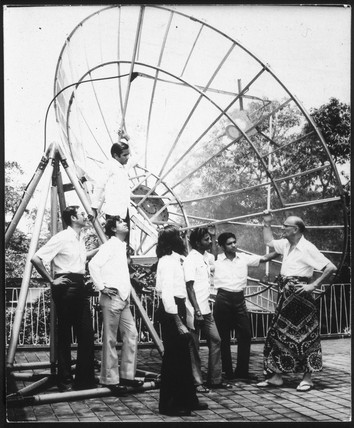
Arthur C Clare (extreme right) with Indian ISRO engineers who installed satellite antenna at his Colombo home, in 1975
හොඳම උදාහරණය ලැඛෙන්නේ දකුණු අප්‍රිකාවෙන්. 1960 දශකය වන විට ලෝකයේ ඉසුරුබර රාජ්‍යයන් අතුරෙන් ටෙලිවිෂන් සේවාවක් අරඹා නොතිබූ එක ම රට වූයේ දකුණු අපිකාවයි. එවකට එහි පැවති සුදු පාලකයන්ගේ රජයේ සන්නිවේදන අමාත්‍යවරයා එරට ටෙලිවිෂන් සේවාවක් ඇරඹීමට කිසිසේත් එකග වූයේ නැහැ. ‘ටෙලිවිෂන් තමයි අප්‍රිකාවේ සුදු මිනිසාගේ පාලනය හමාර කරන්නේ’ යයි ඔහු කළ ප්‍රකාශයෙහි ලොකු අරුතක් ගැබ් වී තිබුණා. ^‘Television will mean the end of the white man in Africa.’)

ඔහුගේ දෘෂ්ටිකෝණයෙන් විග්‍රහ කළ විට ඔහු කී දේ හරියට ම හරි! පසු කලෙක වර්ණභේදවාදයට විරුද්ධව ගෙන ගිය අරගලයට ටෙලිවිෂන් මාධ්‍යයේ බලපෑම හා දායකත්වය ලැබුණා. කඩුවට වඩා පෑන බලවත් බව අප අසා තිඛෙනවා. ඔය දෙකට ම වඩා ටෙලිවිෂන් කැමරාව බලවත්. මේ නිසා ලෝකයේ හැම ආකාරයේ ආණ්ඩුවක්ම – ප්‍රජාතාන්ත්‍රවාදී වේවා, ඒකාධිපති වේවා – මේ මාධ්‍යය හසුරුවන්නට අඩු වැඩි පමණින් උත්සාහ කිරීම පුදුමයක් නොවෙයි.

මාධ්‍ය හා පුවත් වාරණය (media censorship) ගැන ඔබ සිතන්නේ කුමක්ද?

මාධ්‍ය වාරණය යනු සංකීර්ණ ක්‍රියාදාමයක්. ඒ ගැන සරලව හා පොදුවේ අදහස් දැක්වීමට අපහසුයි. මාධ්‍ය වාරණයට මා එක`ග නැති වුවත්, ඇතැම් අවස්ථාවල යම් යම් සුවිශේෂී තත්ත්වයන් යටතේ ටික කලකට මාධ්‍ය වාරණය කිරීමට අවශ්‍ය වන බව මා පිළිගන්නවා. බහුතරයකගේ යහපත සදහා. ඒ වාගේ ම කාගේත් යහපත උදෙසා මාධ්‍යවලින් පිටු දැකිය යුතු හා තුරන් කළ යුතු අංග ද තිඛෙනවා. උදාහරණ නම් ලිංගික වශයෙන් විකෘති අදහස් ඉදිරිපත් කරන රූප හා තොරතුරු, සහ ජාති-ආගම් භේද අවුස්සමින් ප්‍රචන්ඩත්වයට දායක විය හැකි ආකාරයේ ලියකියවිලි.

නමුත් යම්කිසි තොරතුරක්, විග්‍රහයක් හෝ අදහසක් සමාජයට හිතකර ද නැත් ද යන්න නිර්ණය කිරීම ලෙහෙසි නැහැ. එය විවිධ පුද්ගලයන් විසින් විවිධාකාරයෙන් විනිශ්චය කළ හැකියි නේද?

ඇත්තෙන්ම ඔව්. මේ ප්‍රශ්නය සම්බන්ධයෙන් මැදහත්, අපක‍ෂපාතී පුද්ගලයන් පවා බොහෝ විට එකග වන්නේ නැහැ. මහජනයාට ඉදිරිපත් කළ යුත්තේ කුමක් ද? වසන් කළ යුත්තේ කුමක් ද යන්න තෝරා බේරා ගැනීම ඉතා අසීරුයි. එහෙත් රජයන් හා පාලකයන්ගේ පැත්තෙන් බැලු විට මෙන්න මෙසේ කිව හැකියි. දූෂණ, අක්‍රමිකතා, වංචා සහ බලය අනිසි ලෙස භාවිතා කිරීම් ආදිය පිළිබද මාධ්‍ය මගින් කැරෙන අනාවරණයන් පාලකයන් බොහෝ විට බලවත් අපහසුතාවයට පත් කරන බව ඇත්ත. එහෙත් එය ඔවුන්ට ඉතා ප්‍රයෝජනවත් හා වැදගත් වන්නට ද පුළුවන්.

තමන්ගේ රටේ සැබැවින් ම සිදු වන්නේ කුමක්දැයි හරිහැටි දැන ගන්නට නිසි අවකාශ තිබුණා නම් බොහෝ පාලකයන්ට තමන්ගේ බලය – ඇතැම්විට ජීවිතය පවා – මීට වැඩි කාලයක් රැක ගන්නට තිබුණා යයි අපට කිව හැකියි. ඕනෑ ම පාලකයකු වටා ඒකරාශී වන වන්දිභට්ටයන් පිරිස ඉදිරිපත් කරන පක‍ෂග්‍රාහී විග්‍රහයට වඩා ඔබ්බට ගොස් තොරතුරු දැනගැනීමේ උපක්‍රමයක් හැම පාලකයකුට ම අවශ්‍යයි. මේ නිසා තමයි එක් බටහිර ප්‍රජාතන්ත්‍රවාදී රටක නායකයකු වරක් කියා සිටියේ නිදහස් මාධ්‍ය පාලකයන්ට මහත් හිසරදයක් විය හැකි වූවත්, බොහෝ විට ඔවුන්ගේ හිස රැක ගන්නත් ඒ නිදහස් මාධ්‍ය ම දායක වන බව.

මෙය ටෙලිවිෂන් ප්‍රවෘත්ති වාර්තාකරණය පැත්තෙන් බැලු විට මුද්‍රිත මාධ්‍යයටත් වඩා ප්‍රබල සත්‍යයක්. විශේෂයෙන්ම චන‍ද්‍රිකා සන්නිවේදන තාක‍ෂණය නිසා අද ටෙලිවිෂන් ඔස්සේ ප්‍රවෘත්ති විකාශය කිරීම බොහෝ විට සජීවී ලෙසින් සිදු කැරෙනවා. මේ නිසා අළුතෙන් යමක් සිදුවන විට ඒ මොහොතේම ලොව හැමතැනටම එය දැක බලාගත හැකියි. මෙය කිරීමේදී ඉමහත් වගකීමකින් යුතුව ක්‍රියා කිරීමට ටෙලිවිෂන් ආයතන හා මාධ්‍යවේදීන්ට සිදුවෙනවා.

සන්නිවේදනයේ මීළඟ වසර 50 ගැන නෙතඟ බැල්මක් හෙළිය හැකි ද?

පුළුල්ව කිව හොත්, සන්නිවේදනයේ අපට රිසි ඕනෑ ම දෙයක් කළ හැකි තත්ත්වයට අද අප පත්ව සිටිනවා. මේ ඉදිරි ගමන සීමා කරන්නේ තාක්ෂණික හෝ ඉංජිනේරුමය හෝ සාධක නොවේ. එය සිදු වන්නේ නීතිමය, මූල්‍යමය හා දේශපාලනික සාධක මගින්. මෙකී සාධකල තාක්ෂණයේ ප්‍රගමනය තරම් වේගවත්ව හා කාලානුරූපව හැඩ ගැසී නැහැ.

මාධ්‍ය මත බල පෑ රාජ්‍යමය හා අනෙකුත් සීමාකාරී සාධක එකින් එක බිද වැටෙන විට මාධ්‍යවල බලය හා මාධ්‍ය අනිසි ලෙස පරිහරණය කිරීමේ ඉඩකඩ ද ඒ හා සමානුපාතිකව වැඩි විය හැකි බව අප සිහි තබා ගත යුතුයි. ජන සමාජයට හා රටට අහිතකර ප්‍රවාහයන් නූතන සන්නිවේදන මාධ්‍යයන් හරහා ඒමට එරෙහිව ගත හැකි හොද ම ආරක‍ෂක විධි විධානය ලෙස මා දකින්නේ අධ්‍යාපනයයි. මේ රටේ ප්‍රධානතම ප්‍රමුඛතාවයක් විය යුත්තේ ඉදිරි සියවසට ගැලපෙන හා විශ්ව ගම්මානයේ අභියෝගවලට මුහුණදිය හැකි ආකාරයේ ජනතාවක් බිහි කරන අධ්‍යාපන රටාවක් ගොඩ නැගීමයි.

Prof Anil K Gupta rekindles the innovative spirit of Ray Wijewardene

Prof Anil K Gupta lights oil lamp in front of Ray Wijewardene photo before delivering Inaugural Ray Lecture in Colombo, 13 Dec 2011 - photo by Ruveen Mandawala

Ray Wijewardene was a man well ahead of his time, which might explain why he was not better understood and appreciated. He was also a systemic thinker who went to the root of problems and looked for elegant and efficient ways of solving them. He was not mesmerised by technology alone.”

With these words, an eminent Indian scholar paid tribute to the late Ray Wijewardene (1924 – 2010), whose website I helped design and launch a few weeks ago.

Dr Anil Kumar Gupta, a Professor at the Indian Institute of Management (IIM) in Ahmedabad, India, and Founder of the Honey Bee Network, spoke on “Grassroots Innovation for Inclusive Development: From Rhetoric to Reality” at the Institution of Engineers Sri Lanka (IESL) on 13 December 2011.

The IESL auditorium was packed to capacity, with more people standing and spilling over to the corridor. Anil Gupta gave an engaging talk that makes him the subcontinent’s foremost innovation-spotter. With inspiring examples and illustrations, he emphasized that grassroots innovations can provide a new ray of hope — provided we let them grow.

The lecture was organised by IESL and the Ray Wijewardene Charitable Trust (RWCT), set up to promote Ray’s legacy, and committed to nurturing innovation in Sri Lanka.

The Trust made an auspicious start by inviting Anil Gupta to deliver the first lecture in Ray’s memory. Gupta and Wijewardene were kindred spirits who stayed in touch over the years across the Palk Strait.

“It is a privilege for me and the Honey Bee Network to be invited for a lecture in honour of such an illustrious innovator, social change activist and thought leader of our sub-continent, and indeed the entire developing world,” Professor Gupta said when I first reached out to him a few months ago to invite for the lecture.

More coverage of the talk itself will follow, both on this blog and on Ray website.

17 Dec 2011: 3 Idiots and Honey Bee Network launch India’s Grassroots Innovators into New Orbit

The Nation, 18 Dec 2011: Anil Gupta’s Advice: Unleash Sri Lanka’s Grassroots Innovators!

Prof Anil Gupta delivers inaugural Ray Wijewardene memorial lecture in Colombo, 13 Dec 2011 - Photo by Ruveen Mandawala

Anil K Gupta is an unusual professor who walks the talk — and walks through the villages and slums of India in search of innovation. His mission is to ensure that grassroots innovators receive due recognition, respect and reward for their bright ideas. He also seeks to embed an innovative ethic in educational policy and institutions.

He founded the Honey Bee Network in 1986-87 “to promote a fair and responsible knowledge ecosystem”, where innovators can benefit by sharing their ideas. In the 1990s, he set up the Society for Research and Initiatives for Sustainable Technologies and Institutions (SRISTI) and Grassroots Innovation Augmentation Network (GIAN) both of which support the Honey Bee Network to scale up and convert grassroots innovations into viable products.

All three entities are partners of the National Innovation Foundation (NIF India), an autonomous body under the Department of Science and Technology in India. Since 2000, NIF has mobilized more than 160,000 innovations and traditional knowledge practices from all over India, and now holds the largest database of its kind in the world. Professor Gupta is Executive Vice Chair of the NIF, and is also a member of the National Innovation Council of India.

More images at http://www.facebook.com/RayWijewardene

Love that Bug: Spinal Beetle completes charity run across South Asia

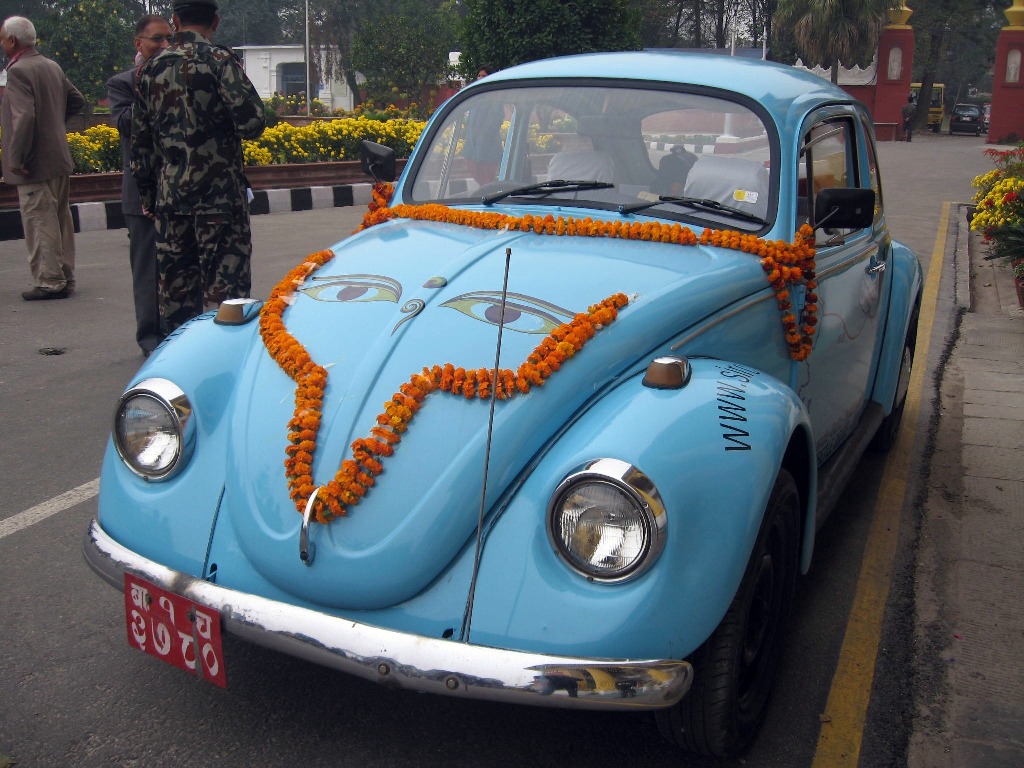
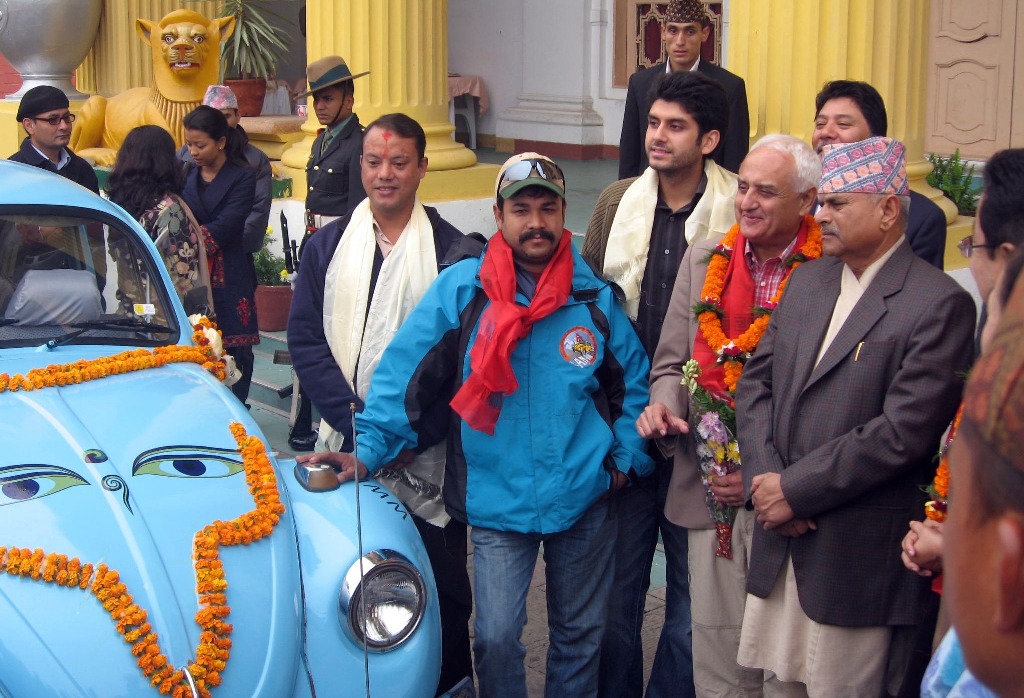
Here's looking at you, people! The Love Bug had only two eyes, but the Spinal Beetle has four. Photo by Nalaka Gunawardene

Deep down in our hearts, we are all Volkswagen Beetle fans: some of us have owned one (my first car was a red bug!), others dream of doing so. The world’s most enduringly popular car design has a particular appeal in South Asia.

And now, South Asian VW Beetle fans have a adorable new mascot. Move over, Disney’s Love Bug (thanks for tons of fun); welcome, Spinal Beetle!

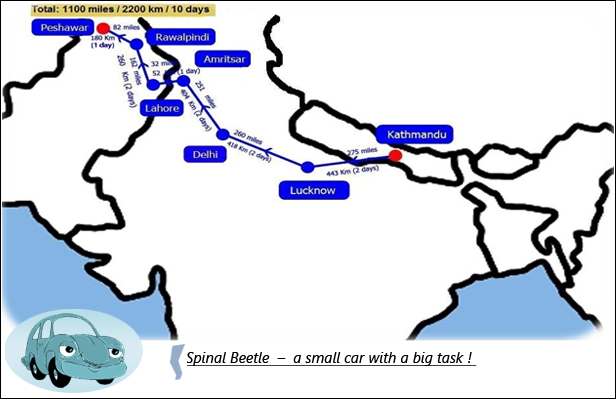
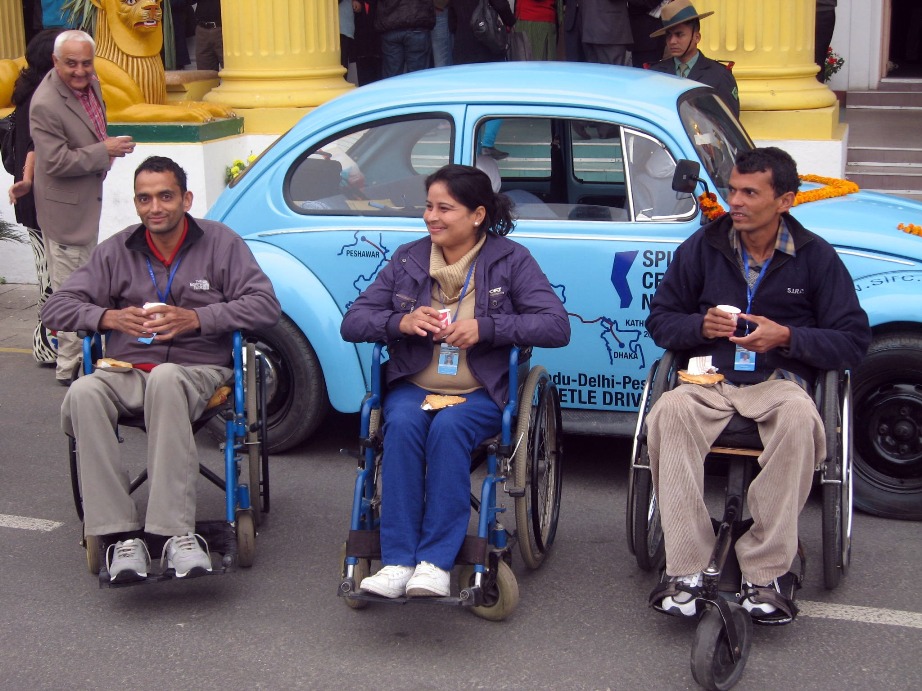
My friend – and hero – Kanak Mani Dixit and his wife Shanta have just completed a 2,200 km (1,100 mile) journey in their nearly 40-year-old Beetle that took them from Kathmandu in Nepal to Peshawar in Pakistan. It was a 12-day, 3-country drive that was to raise funds for spinal injury treatment in Nepal.

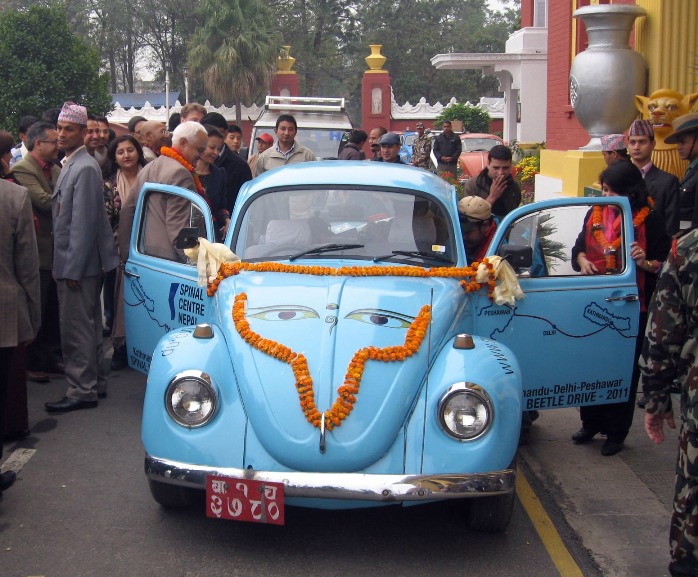
By happy coincidence, I was in Kathmandu on 4 Nov 2011 when the President of Nepal waved off Kanak and Shanta on their journey from the President’s House. It was an informal gathering of friends and well-wishers — with none of the pomposity usually associated with heads of state.

So the photos in this post are all mine. The text that follows is from Kanak and his media team:

President Ram Baran Yadav about to send off Kanak Mani Dixit and Shanta Dixit on 12-day journey in Spinal Beetle - Photo by Nalaka Gunawardene

The ‘Great Nepal-India-Pakistan Spinal Beetle Drive’ arrived in Peshawar on 16 November, ending a 1100-mile odyssey that took the 1973 VW Beetle from Kathmandu through Lucknow, Agra, Delhi, Amritsar, Lahore, Islamabad and Rawalpindi.

“It was an exhilarating journey across the friendly landmass of Southasia, and I hope a pointer towards easy land-crossings for people from all our countries,” said Dixit. “Most of our journey was along the Grand Trunk Road, built originally by Sher Shah Suri in the 16th century. The 21st century demands that we open this highway for the people, commerce and ideas to flow.”

The journey of the sky-blue Beetle was conducted with three goals of promoting ‘land connectivity’ in Southasia, developing links between spinal injury institutions across the Subcontinent, and raising funds for the Spinal Injury Rehabilitation Centre in Nepal.

“The matter of land connectivity is important because airline links can never provide the mass-level contact that our people and economies deserve. One would want to see the same cacophony at the Atari-Wagah border as at the Nepal-India border of Bhairahawa-Sunauli,” said Dixit.

The trip was helpful in developing linkages between organisations such as the Spinal Centre in Nepal, the Indian Spinal Injuries Centre in Delhi (ISIC), the Mayo Hospital in Lahore, the National Institute for Rehabilitation Medicine in Islamabad, the Armed Forces Institute for Rehabilitation Medicine in Rawalpindi, and the Paraplegic Centre in Peshawar.

As for the goal of raising emergency funds for the Spinal Centre-Nepal in order to cope with sudden rise in demand for its services, Dixit said that a little over half of the USD 110,000 goal had been raised. “We hope to complete our goal through a retroactive campaign because the spinally injured of Nepal badly need support,” he said.

Dixit is a civil rights activist, writer and journalist who injured his spine in a trekking accident a decade ago. The Spinal Centre was started in 2002 and inaugurated by the late Sir Edmund Hillary.

Kanak and Shanta Dixit setting off on their long journey in Spinal Beetle from Sheetal Niwas on 4 Nov 2011 morning - Photo by Nalaka Gunawardene

In the ‘Spinal Beetle’ driven by Dixit, he was accompanied by Shanta Dixit, educator and founding member of the Spinal Centre-Nepal. The back-up car, a Mahindra Bolero, included VW Beetle specialist Naresh Nakarmi, Spinal Centre staff member Suman Khadka and Eelum Dixit, doing videography and photography. Social worker Meera Jyoti is chair of the Spinal Centre-Nepal.

The Spinal Beetle drive was flagged off on 4 November by President Ram Baran Yadav of Nepal. In New Delhi, it was received by Maj. H.P.S. Ahluwalia, founder of ISIC, as well as journalist Kuldip Nayar and actor Om Puri. The physicist and peace activist A.H. Nayyar received the Spinal Beetle at the Wagah-Atari border. Throughout the Southasian drive, the team was graciously hosted by members of the Pakistan-India People’s Forum for Peace and Democracy and other organisations, such as the Indian Doctors for Peace and Development in Agra, and Asha for Education in Lucknow.

Among the many interesting aspects of the trip, from the emotional to the historical, Dixit includes the following:

• The Spinal Beetle team responded to the request of 96-year-old Barkat Singh ‘Pahalwan’ of Jalandhar (Indian Punjab) that some earth be collected from his childhood village of Fatehgarh near Sialkot (Pakistani Punjab). Taking a detour from the GT Road, the team found the place, which had now become an urban suburb of Sialkot, and collected a jarful of agricultural earth for Barkat Singh. (for a picture of Barkat Singh and other images, go to ‘Selected Photographs’ on http://www.sirc.org.np)

• The memory of Sher Shah Suri, the Afghan sultan from present-day Bihar who ruled from Agra, followed the team through much of the route, which he had regularised in the mid-16th century as an administrative and commercial artery. His memory was revived by the ‘kos’ markers along the Delhi-Chandigarh stretch, a neglected postal station outside Wazirabad, the great roadside banyans providing shade to travellers then and now, and the Rohtas Fort on the approach to Rawalpindi.

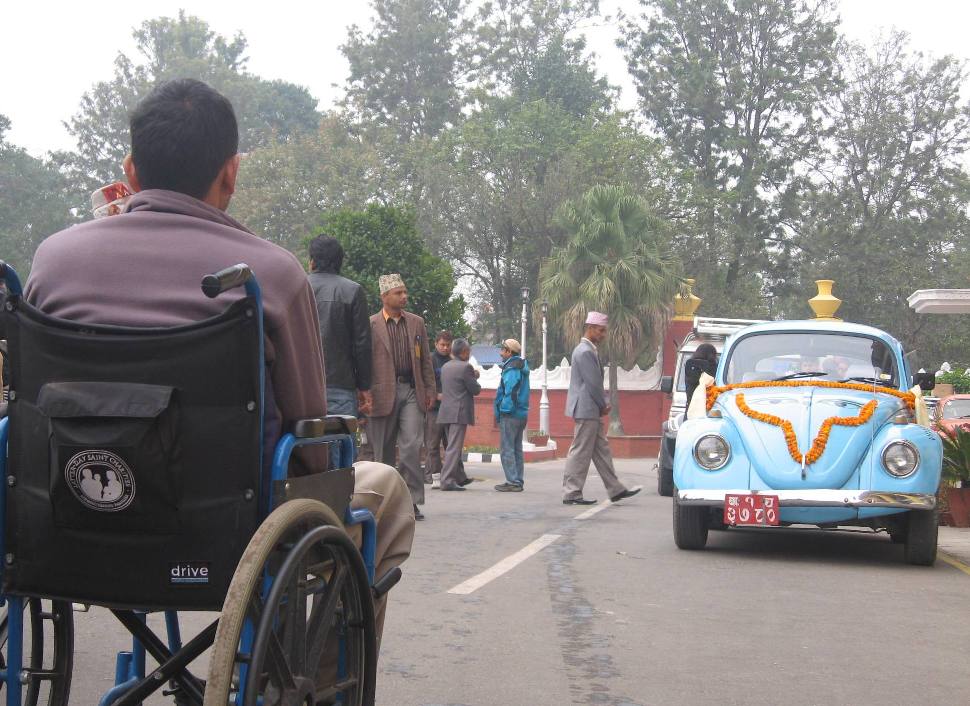
A Nepali on wheelchair watches Spinal Beetle about to depart on a long journey to raise funds for people like him - Photo by Nalaka Gunawardene

• Having started in the Lumbini region of Nepal, where the Buddha was born more than 2,500 years ago, the Spinal Beetle ended its journey in the Gandhar region around Peshawar, a vast centre for Buddhist learning, art and architecture where the Sakyamuni was first etched in human form a few centuries later. In the Potohar Plateau near Islamabad, the Spinal Beetle visited the gigantic Buddhist stupa at the village of Manikyal.

• Arriving in Agra, the Spinal Beetle visited the Taj Mahal on the day of Eid ul-Azha. It arrived in Amritsar and visited Harminder Saheb (the Golden Temple) on the Guru Nanak’s birthday. Passing Gorkha District of Nepal (named after the Gorakhnath temple situated there), the Spinal Beetle traversed Gorakhpur, the base of the Nath sect, and ended its journey in Peshawar where the team visited the Gorakhnath Temple there, opened only a month ago after 60 years of closure. The Delhi-Amritsar leg of the journey was started with a visit to the dargah of Nizamuddin Aulia.

• After watching the mock-militarist show at the Wagah-Atari border between the Indian and Pakistani goose-stepping men in khaki, that very evening the team attended a play on Bhagat Singh and his fight for independence, put on by the Ajoka Theatre of Lahore.

• The Bharatpur government hospital in Chitwan District of Nepal was the first stop of the Spinal Beetle out of Kathmandu. The Bharatpur hospital sought help for setting up a spinal injury rehabilitation unit, which is in line with the Spinal Centre’s belief in decentralising rehabilitation. As a gesture of goodwill for the Nepal-India-Pakistan drive, the hospital committee donated NRs 50,000, which was gratefully received.

• In New Delhi, Maj. H.P.S. Ahluwalia of ISIC suggested that Dixit work to set up a Southasian network for spinal injury rehabilitation, given the specificity of the need. There was an enthusiastic response to this idea throughout the rest of the trip all the way to the Paraplegic Centre in Peshawar.

• At the Mayo Hospital in Lahore, the Medical Superintendent Dr. Zahid Pervaiz and Head of Rehabilitation Medicine Dr. Waseem Iqbal provided information on spinal injury and trauma response that had been developed in Pakistan. They graciously offered four-year full fellowships for two doctors to be sent by the Spinal Centre-Nepal.

Only a Nepali team and a German Bug could get past border babus like this!

• In Islamabad, the Nepal team got specific information on the response to the 2005 earthquake which hit Kashmir and the Hazara division. The team invited Pakistani specialists to Kathmandu to share information on the medical, rescue, social work and humanitarian aspects, so that Nepal would be better able to tackle the mega-tremor that is projected to hit Kathmandu Valley and surrounding areas before long.

• In Islamabad, activist and politician Nafisa Khattak introduced the team to the Melody Theatre, which had served as a staging ground for the sudden rush of victims from the 2005 earthquake. Poignantly, this only cinema hall of the city had been set to torch by a radical mob some years earlier.

• In Agra, members of the Indian Doctors for Peace and Development reminded the team that while there were 8-9 neurosurgeons in the city, there was no rehabilitation centre.

• The Volkswagen Club of Pakistan (VCP) took the Spinal Beetle under its wings in Islamabad and made sure that the car was made ship-shape after the climb up from the Punjab plains. Discussion was started with the club members about organising a VW Beetle rally from Islamabad all the way to Dhaka through India and via Kathmandu, as an exemplary means to develop people-to-people contact in the Subcontinent. This would require cooperation between the VCP, the Association of Nepal’s Beetle Users (ANBUG), the Volkswagen Club of Bangladesh and the Volkswagen Beetle community in India.

• At a meeting organised by the Pakistan-India People’s Forum for Peace and Democracy and the Islamabad Cultural Forum, Dixit spoke on the theme of ‘land connectivity’ in Southasia. “If on an old VW Beetle can do the Kathmandu-to-Peshawar trip with ease, imagine how easy it will be for everyone else.” At this time of geopolitical rapprochement between India, Pakistan and Bangladesh, a special push must be made for land connectivity, he added. “Let a hundred thousand networks bloom across Southasia, in the spectrum from spinal injury to VW Beetles and beyond, to bring the people together.”

More on the Spinal Beetle drive: The sudden rise of the number of patients over the last year has forced the Spinal Centre-Nepal to raise its service from 39 beds to 51. We seek to raise USD 110,000 from the 1,100 mile journey of the Spinal Beetle, at the ‘rate’ of USD 100 per mile from friends and supporters worldwide. By the time the Spinal Beetle arrived at Peshawar on 16 November, a little over half that amount had been raised. The Spinal Beetle Rally is also an effort to raise awareness of spinal injury prevention, rescue, care and rehabilitation in the Subcontinent.

The Spinal Beetle has done the Kathmandu-Dhaka stretch twice, in 2002 and 2005, and touched base at the Centre for the Rehabilitation of the Paralysed (CRP) in Bangladesh. The CRP would be a key institution in the networking of spinal injury rehabilitation institutions that is proposed.

The Spinal Beetle will carry their hopes and dreams across three countries, driven by that small man standing behind - Photo by Nalaka Gunawardene

සිවුමංසල කොලූගැටයා #40: පුවත්පතේ අනාගතේ 2 – ළඟ ළඟ එන මහා මාරුතය

This is the Sinhala text of my Ravaya column published on 13 Nov 2011, where I continue my discussion on the future of newspapers. I look at the last newspaper boom currently on in Asia, and caution that good times won’t last for long: take advantage of it to prepare for the coming (and assured) turbulence in the mainstream media!

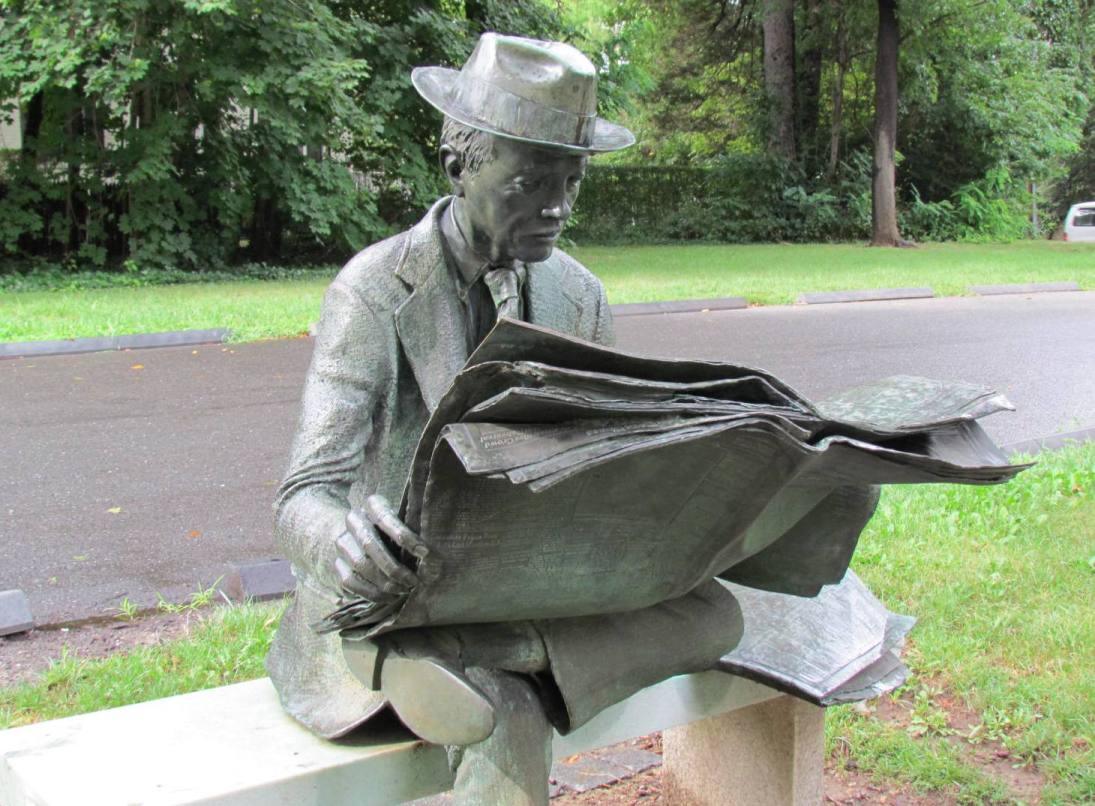
J Seward Johnson's statue of Newspaper Reader - at Princeton University garden

අප දන්නා විදියේ පුවත්පත්වලට වසර 400කට වැඩි ඉතිහාසයක් තිඛෙනවා. ලංකාවේ පුවත්පත් කලා ඉතිහාසයත් වසර 180ක් පමණ පැරණියි. තවමත් නිතිපතා ජනතාව අතරට යන පැරණිතම ජනමාධ්‍ය වන පුවත්පත්, 21 වන සියවසේ තාක‍ෂණික හා ආර්ථීක අභියෝග ජය ගනියි ද? අප විවිධ පැතිකඩවලින් විග්‍රහ කරන ප්‍රශ්නය මෙයයි.

පුවත්පත් කර්මාන්තය සසල කරමින් ලොව බොහෝ රටවල මේ දිනවල පැතිර යන මාරුතය ගැන අප ගිය සතියේ කථා කළා. බටහිර රටවල පුවත්පත් සහ සගරා මිළදී ගැනීම සැළකිය යුතු අන්දමින් අඩු වී තිඛෙනවා. එයට වෙනස් ප්‍රවණතාවක් ආසියාවේ දක්නට ඇති බවත් සදහන් කළා. කුමක් ද මේ වෙනස?

2000 දශකය අවසන් වන විට ආසියාවේ පුවත්පත් සදහා වෙළදපොල ඉල්ලූම වැඩිවෙමින් තිබුණා. ලෝක පුවත්පත් සංගමය (World Association of Newspapers, WAN) එකතු කළ දත්තවලට අනුව, ලොව වැඩිපුර ම අලෙවි වන පුවත්පත් 10න් 9ක් ම ඇත්තේ ආසියාවේ – එනම් ජපානයේ හා චීනයේ. පත්තර ලෑලි හරහා හෝ දායකත්වය හරහා හෝ විකිණෙන පුවත්පත්වල (නොමිළයේ දෙන පුවත්පත් නොවෙයි) සමස්ත අලෙවිය සළකන විට අද ලෝකයේ විශාලතම පුවත්පත් වෙළදපොලවල් ඇත්තේ චීනය, ඉන්දියාව හා ජපානය යන රටවල් තුනේයි. සිවු වැනි තැනට එන්නේ අමෙරිකාවයි. (බලන්න: http://tiny.cc/Circ)

ලෝකයේ වෙනත් කලාපවල පාඨකයන් පුවත්පත් මිළදී ගැනීම අඩු කරන අතර ආසියාවේ එය වැඩි වෙමින් පවතින බව WAN සංඛ්‍යා ලේඛන පෙන්නුම් කරනවා. උදාහරණයකට 2008 වසරේ ඉන්දියානුවන් මිලියන 11.5ක් දෙනා ප්‍රථම වතාවට පුවත්පත් කියවන්නට පටන් ගත්තා. මේ ඇයි?

ආසියාවේ ආර්ථීක වර්ධනයත් සමග මධ්‍යම ජාතිකයන් සංඛ්‍යාව සීඝ්‍රයෙන් වැඩි වෙමින් පවතිනවා. ඉහළ යන ආදායම් මට්ටම් හා සාක‍ෂරතා/අධ්‍යාපනික මට්ටම් සමග පුවත්පත් සදහා ඉල්ලූම වැඩි වනවා. එමෙන්ම පත්තරයක් දිනපතා මිළට ගැනීම යම් අන්දමකින් සමාජ තත්ත්වයක් පෙන්නුම් කරන බවට පිළිගැනීමක් ඉන්දියාව, ඉන්දුනීසියාව, තායිලන්තය වැනි රටවල තිඛෙනවා.

ජනගහනයට සාපේක‍ෂව වැඩිපුර ම පුවත්පත් මිළදී ගන්නා රට ජපානයයි. ලෝකයේ සියළුම රටවල සියළුම භාෂාවලින් පළ කැරෙන පුවත්පත් අතර වැඩිපුර ම අලෙවි වන පුවත්පත් 5 හමුවන්නේ ජපානයේ. පත්තර කියවීම ජපන් ජාතිකයන් අතර ඉතා හොදින් මුල් බැස ගත් පුරුද්දක්. ලංකාවේ පුවත්පත් අලෙවිය පිළිබද නිවැරදි හා පැහැදිලි තොරතුරු සොයා ගැනීම අසීරුයි. කිසිදු පුවත්පත් සමාගමක් තම අලෙවි සංඛ්‍යා හෙළි කරන්නේ නැහැ. ඇතැම් රටවල මෙන් අපක‍ෂපාතව මුද්‍රිත මාධ්‍ය ෙක‍ෂත්‍රයේ දත්ත විග්‍රහ කරන පර්යේෂණායතන ඇත්තේ ද නැහැ.%

අප ආසියාවේ දැන් අත් විදින්නේ පුවත්පත් ප්‍රකාශන ලෝකයේ දැකිය හැකි වන අවසාන සරු කාලය (world’s last newspaper boom) බව ඇතැම් පර්යේෂකයන්ගේ මතයයි. පුවත්පත් පමණක් නොව ජන මාධ්‍ය හැමෙකක් ම පාහේ වැඩිපුරම පරිශීලනය වන්නේ ප්‍රචලිත වී ඇත්තේ ආසියාවේයි. එයට හේතුව (නොබෝදා බිලියන් 7 ඉක්මවා ගිය) ලෝක ජනගහනයෙන් සියයට 60ක් වෙසෙන්නේ ආසියාවේ වීමයි. තවත් හේතුවක් නම් පසුගිය දශක දෙක තුළ එතෙක් සංවෘතව තිබූ මාධ්‍ය වෙළදපොලවල් විවෘත වීම නිසා දෙස් විදෙස් ආයෝජන මාධ්‍ය ෙක‍ෂත්‍රයට වැඩියෙන් ගලා ඒමයි.

මේ වත්මන් ප්‍රවණතා දෙස බලන විට අප නිගමනය කළ යුත්තේ සෙසු ලෝකයේ දැනට සිදුවන මාධ්‍ය වෙළදපොල ගරාවැටීම ආසියාවට නොඑන බව ද? වෙළදපොල පරිනාමීය ප්‍රවාහයන්ට ඔරොත්තු දිය හැකි තරම් ආසියානු මාධ්‍ය ආයතන ශක්තිමත් බව ද?

ගෝලීයකරණය වූ තොරතුරු සමාජය තුළ ලෝක ව්‍යාප්තව පැතිර යන සැඩ සුළංවලින් ආසියාවේ අපට මුළුමනින් ම ආරක‍ෂා වී සිටිය හැකි යයි සිතීම ස්වයං මුලාවක්. 2009 අගදී මෙරට පුවත්පත් හිමිකරුවන්, කතුවරුන් හා ජ්‍යෙෂ්ඨ මාධ්‍යවේදීන් සිටි සභාවක් අමතමින් මා කියා සිටියේ ලෝක මට්ටමින් සිදු වන සන්නිවේදන ප්‍රවණතා මෙරටට පැමිණෙන්නට යම් තරමක ප්‍රමාදයක් ඇති බවයි.

උදහරණයකට ලෝකයේ ටෙලිවිෂන් විකාශයන් 1929දී (අමෙරිකාවේ) ඇරඹුණත් එය ලංකාවේ පටන් ගත්තේ 1979දී – එනම් වසර 50කට පසුව. එහෙත් වාණිජ මට්ටමේ ජංගම දුරකථන සේවා මුල්වරට (ජපානයේ) 1979දී ඇරැඹි දස වසක ඇවෑමෙන් 1989දී මෙරට මුල් ම ජංගම දුරකථන ජාලය ක්‍රියාත්මක වුණා. වාණිජ මට්ටමේ ඉන්ටර්නෙට් සේවා 1980 දශකය අගදී ලොව දියුණු රටවල ඇරැඹුණු අතර 1995දී ලංකාවත් සයිබර් අවකාශයට සම්බන්ධ වුණා.

මේ කාලාන්තරය එන්න එන්න ම කෙටි වීම අද තොරතුරුක සමාජයේ ගති සොබාවයි. එය ප්‍රවණතාවක් හැටියට ගතහොත් හොදට හෝ නරකට හෝ මාධ්‍ය හා තොරතුරු තාක‍ෂණ ෙක‍ෂත්‍රයේ ලොව ඇති වන නව රැලි නොබෝ දිනකින් ම අපේ දූපතටත් ළගා වනවා.

ලොව පුරා හමා යන මාධ්‍ය වෙළදපොල සැඩ සුළංවලින් අපව සුරැකෙන්නේ නැහැ. එයට තව වසර කිහිපයක් තුළ අපට ද මුහුණ දෙන්න සිදු වනවා. එහෙත් අපට උපක්‍රමශීලීව මේ ප්‍රමාදයෙන් ප්‍රයෝජන ගත හැකියි. වෙනත් දියුණු හා දියුණු වන රටවල මාධ්‍ය ආයතන මේ අභියෝගයට මුහුණ දෙන සැටි හා හැඩ ගැසෙන සැටි අප හොදින් අධ්‍යයනය කළ යුතුයි. ළග එන මාරුතයට මුහුණදීමට අපේ මාධ්‍ය පෙළ ගැසීම අවශ්‍යයි.

පුවත්පත් යනු කර්මාන්තයක් වුවත් එය අනෙකුත් වාණිජමය ව්‍යාපාරවලට වඩා සංකල්පමය හා ප්‍රායෝගික අතින් වෙනස්. පුවත්පතක අන්තර්ගතය නිර්මාණය වන්නේ පූර්ණකාලීන හා නිදහස් මාධ්‍යවේදීන් ගණනාවකගේ දායකත්වයෙන්. ප්‍රවෘත්ති, විචිත්‍රාංග, ඡායාරූප හා විද්වත් ලිපි ආදිය පුවත්පත් කාර්යාලයක් ඇතුළතින් මෙන් ම පිටතින් ද ජනනය වනවා. මේ සියල්ල සමානුපාතික කොට, නිසි පිටු සැළසුමක් සහිතව කලට වේලාවට මුද්‍රණය කරන්නටත්, එම පිටපත් රට පුරා කාර්යක‍ෂමව ඛෙදා හරින්නටත් මනා සම්බන්ධීකරණයක් තිබිය යුතුයි. එමෙන්ම පුවත්පත් ආදායමට සම්මාදම් වන වෙළද දැන්වීම්කරුවන් සමග නිති සබදතා පවත්වා ගත යුතුයි.

වෙනත් භාණ්ඩ මෙන් නිපදවා ගබඩා කර ගැනීමේ හැකියාවක් පුවත්පත්වලට නැහැ. වඩාත්ම අළුත් පුවත් හා විග්‍රහයන් හැකි ඉක්මනින් පාඨකයන් අතට පත් කිරීමේ අභියෝගයට ලොව පුරා පුවත්පත් කාර්්‍යාලවල කර්තෘ මණ්ඩල මෙන්ම මුද්‍රණ හා ඛෙදා හැරීමේ සේවකයන්ද දිවා රෑ මුහුණ දෙනවා. කාලය සමග කරන මේ තරග දීවීමට සමාන්තරව ඔවුන් තමන්ගේ තාරගකාරී පුවත්පත් ගැන අවධානය යොමු කළ යුතුයි.

රටේ බල පවත්නා නීති, සදාචාරමය රීතිවලට ගරු කරමින් ඒ සම්මත රාමුව තුළ නැවුම් වූත්, සිත් ඇද ගන්නා වූත් පුවත්පතක් දිනපතා හෝ සතිපතා නිකුත් කළ යුතුයි. ඔබ මේ කියවන පත්තර පිටපත ඔබ අතට එන්නට බොහෝ දෙනකු නන් අයුරින් දායක වී තිඛෙනවා. බලා ගෙන ගියා ම පත්තරයක් කියන්නේ සුළුපටු ප්‍රයත්නයක් නොවෙයි!

එමෙන්ම පුවත්පත් යනු හුදෙක් මුද්‍රිත කොළ කෑලි සමූහයක් නොවෙයි. ප්‍රකාශන ඉතිහාසය මුළුල්ලේ දියුණු වී ආ සම්ප්‍රදායයන් හා ආචාරධර්ම රැසක් නූතන පුවත්පත් කලාවට තිඛෙනවා. ලෝකයේ හැම පුවත්පතක් ම එක හා සමාන අයුරින් මේවාට අනුගත වන්නේ නැහැ. එහෙත් පුළුල්ව පිළි ගැනෙන ‘පොදු සාධකයක්’ නම් පුවත්පත් නියෝජනය කරන්නේ හිමිකරුවන් හා දැන්වීම්කරුවන්ට වඩා පාඨකයන් ඇතුළු ජන සමාජය බවයි. මේ පොදු උන්නතිය (public interest) වෙනුවෙන් පෙනී සිටීම නිසා මාධ්‍ය ආයතනවලට හා ඒවාට අනුයුක්ත මාධ්‍යවේදීන්ට සමාජයේ සුවිශේෂ තැනක් ලැඛෙනවා.

මහජනයාට තොරතුරු දැන ගැනීමේ අයිතිය හා අදහස් ප්‍රකාශ කිරීමේ අයිතිය නියෝජනය කරන පුවත්පත් රැක ගැනීමට සිවිල් සමාජයේ නැඹුරුවක් තිඛෙනවා. සාමාන්‍ය මුද්‍රණාලයකට තබා පොත් මුද්‍රණය කරන ප්‍රකාශන සමාගමකටවත් නැති තරමේ ගෞරවයක් පුවත්පත් ආයතනවලට තවමත් ලැඛෙනවා. නමුත් මේ ඓතිහාසික සබැදියාව පලූදු වන ආකාරයේ බාල අන්තර්ගතයන් ඛෙදන්නට පටන් ගත් විට පාඨකයන් එබදු පුවත්පත් මිළට ගන්නට (හෝ නිකම් දුන්නත් කියවන්නට) කැමැති වන්නේ නැහැ.

අමෙරිකානු මාධ්‍ය ආයතනවල අනාගතය ගැන 1993දී ප්‍රකට ලේඛකයකු කළ අනාවැකියක් ගැන අප ගිය සතියේ සදහන් කළා. පාඨක විශ්වාසය ගරා වැටෙන බව දැන ගත් ඇතැම් මාධ්‍ය ආයතන තමන්ගේ ප්‍රකාශන කියවීමට විවිධාකාර ත්‍යාග පවා දීමට පටන්ගෙන තිඛෙනවා. මේ ආකාරයේ ‘අල්ලස්’ හා ‘සීනිබෝල’වලින් බහුතර පාඨකයන් රවටන්නට අමාරුයි. මොන උපක්‍රම යොදා ගත්තත් පාඨකයන්ගේ විශ්වාසය නොමැතිව වැඩි කල් පවතින්නට කිසිදු පුවත්පතකට බැහැ.

පත්තරයක් කියන්නේ මහජන මනාපය දිනපතා ම හෝ සති අගදී හෝ නිරතුරුව පතන හා ලබන ප්‍රකාශනයක්. මේ මනාපය දිගින් දිගට පවත්වා ගැනීමේ අභියෝගයක් තිඛෙනවා. එය තරගකාරී වෙනත් පුවත්පත් සමග පමණක් ඇති තරග දිවීමක් නොවෙයි. පත්තරවලට වඩා ඉක්මනින් ප්‍රවෘත්ති රටට දීමේ හැකියාව රේඩියෝ, ටෙලිවිෂන් හා ඉන්ටර්නෙට් මාධ්‍යයන්ට තිඛෙනවා. ඒ විද්යුත් මාධ්‍යවල ව්‍යප්තියත් සමග තමන්ගේ අන්තර්තය හා මුහුණුවර වෙනස් කරන්නට බොහෝ පුවත්පත්වලට පසුගිය දශක දෙක තුළ සිදුවුණා.

විද්යුත් මාධ්‍ය ඉක්මන් වූවත් යමක් ගැඹුරින් විග්‍රහ කිරීමේ ඉඩකඩ සීමිතයි. මේ නිසා ලොව පුරා පුවත්පත් තනිකර ප්‍රවෘත්ති ආවරණයට වඩා අද උත්සාහ කරන්නේ ප්‍රවෘත්ති විග්‍රහ කිරීමටයි. ප්‍රවෘත්ති බවට පත් වන සිදුවීම් සමාජයේ විවිධාකාර ප්‍රවාහයන්ගෙන් මතු වන නිසා පිටුපසින් ඇති සාධක හා ප්‍රවණතා මනා සේ හදුනාගැනීම සංකීර්ණ සමාජයක වෙසෙන අප කාටත් වැදගත්. මේ ප්‍රවාහයන් ගැන පර්යේෂකයන්, සමාජ සේවකයන් හා විද්වතුන් කරන විග්‍රහවලට දැන් පුවත්පත් හා පුවත් සඟරාවල වැඩි තැනක් ලැඛෙනවා. අද බටහිර ඇතැම් පුවත්පත් Newspaper යන නමට සමාන්තරව Viewspaper යන නම ද තමන් හැදින්වීමට යොදා ගන්නවා.

මෙකී නොකී සියල්ල මා දකින්නේ පරිනාමීය හැඩ ගැසීම් හැටියටයි. වඩාත් සවිමත් උචිත වූ ජීවීන් ඉතිරි කරමින් දුර්වලයන් වඳ කර දමන ජෛවීය පරිනාමය මෙන් ම තොරතුරු සමාජයේ ද පරිනාමීය බලවේග ක්‍රියාත්මක වනවා. එහෙත් ජෛව පරිනාමයට වඩා එය සියුම් හා බුද්ධිගෝචරයි. මාධ්‍ය ග්‍රාහකයන්ට හරවත්, ප්‍රයෝජනවත් දෙයක් සිත් කාවදින අයුරින් ඉදිරිපත් කරන පුවත්පතකට අද මහා තොරතුරු ප්‍රවාහයේ නොගිලී පවතින්නට ඉඩක් ඇතැයි මා විශ්වාස කරනවා.

බලන්න: http://tiny.cc/DigImi

සිවුමංසල කොලූගැටයා #36: ස්ටීව් ජොබ්ස් – අසම්මතය සුන්දර කළ ‘විකාරකාරයා’

We might admire – even revere – genius mavericks like Steve Jobs from afar, but few Asians have any idea where mavericks come from, or how best to deal with them. Our conformist and hierarchical societies don’t nurture mavericks. Our cultures tend to suppress odd-balls and iconoclasts. That’s probably why we don’t have enough of our own Steve Jobses.

This is the crux of my argument in my latest Sinhala column published in Ravaya newspaper on 16 Oct 2011. For a longer discussion of the same topic, see my English essay Goodbye, Steve Jobs; Long Live Mavericks!

පසුගිය වසර 35ක කාලය තුළ ඇපල් පරිගණක හා විද්යුත් උපකරණ නූතන තොරතුරු සමාජයේ ප්‍රගමනයේ පෙරගමන්කරුවන් ලෙස ක්‍රියා කළ බව ලෝකය ම පිළිගන්නවා. මේ නව ලොව තනන්නට මහත් සේ දායක වුණු ඇපල් සමාරම්භක ස්ටීවන් පෝල් ජොබ්ස් හෙවත් ස්ටීව් ජොබ්ස් (Steve Jobs) 2011 ඔක්තෝබර් 5 වනදා මිය ගිය විට ලෝකය ම කම්පාවට පත්වුණා. පිලිකාවක් සමග වසර ගණනක් පොර බැදීමෙන් ඔහු අන්තිමට පරාජය වන විට වයස අවුරුදු 56යි.

සරසවි ඉගෙනුම වෙනුවට තමන්ගේ ම නිර්මාණශීලී අදහස් ඔස්සේ දැඩි අධිෂ්ඨානයෙන් ඉදිරියට ගිය ස්ටීව් ජොබ්ස්, තොරතුරු තාක‍ෂණය, පාරිභෝගික විද්‍යුත් උපකරණ හා ජනප්‍රිය සංස්කෘතිය යන ෙක‍ෂත්‍ර තුනෙහි ම දැවැන්තයකු වූ බව ඔහුගේ ව්‍යාපාරික තර`ගකරුවන් පවා එක හෙළා පිළිගත්තා. අසම්මතය, පරිකල්පනය හා සුන්දරත්වය කැටි කළ ස්ටී්ව් ජොබ්ස් කථාවේ එක් පැතිකඩක් ගැන අපි අද කථා කරමු. එහි යටි අරමුණ අපේ රටවලත් ස්ටීව් ජොබ්ස්ලා බිහි විය හැකිද යන්න විග්‍රහ කිරීමයි.

1997දී ඇපල් සමාගම අපූරු ප්‍රචාරණ ව්‍යාපාරයක් හදුන්වා දුන්නා. තමන් තවත් එක් පරිගණක නිෂ්පාදන සමාගමක් නොවන බව හුවා දැක්වීම ඉලක්ක කර ගත් ඒ දැන්වීම් පෙළේ මුඛ්‍ය තේමාව වූයේ වෙනස් විධියට සිතන්න (Think Different) යන්නයි. එහි වඩාත් ම සිත් ඇද ගන්නා අංගය වූයේ තත්පර 30 හා 60 යන ධාවන කාලයන්ට නිර්මාණය වූ ටෙලිවිෂන් දැන්වීමක්. ඉතිහාසය පුරා විවිධ ෙක‍ෂත්‍රයන්ගේ විපර්යාස ඇති කරන්නට දායක වුණු චරිත 17ක රූප ඉතා ඉක්මනින් තිරයේ දිස් වුණා. තනිකර කළු-සුදු වර්ණයෙන් නිර්මිත එයට මහත්මා ගාන්ධි, ඇල්බට් අයින්ස්ටයින්, තෝමස් අල්වා එඩිසන් හා අමීලියා ඉයර්හාට් වැනි චරිත මෙන් ම බීට්ල්ස් ගායක ජෝන් ලෙනන්, පබ්ලෝ පිකාසෝ හා මොහමඩ් අලි වැනි විවිධ ෙක‍ෂත්‍රවල දැවැන්තයන් ද ඇතුළත් වුණා. මේ හැම දෙනා ම සම්මතයට එරෙහිව ගිය නිදහස් මතධාරීන් හෙවත් මැව්රික්ස් (mavericks) හැටියට පිළි ගැනෙනවා.

ඒ දැන්වීමේ කථනය සාරාංශයක් ලෙස කිවහොත්: ‍”මෙන්න විකාරකාරයෝ. විප්ලවවාදියෝ. කරදරකාරයෝ. හැම දෙයක් ම වෙනස් විධියට දකින මේ අය පිස්සන් කියා බොහෝ දෙනකු සිතුවා. එහෙත් අප ඔවුන් දකින්නේ මහ මොළකාරයන් හැටියටයි. ඉතිහාසය පුරා ම අපේ ලෝකය වෙනස් කළේ මෙවැනි අසම්මත විකාරකාරයන් තමයි.” ඒ දැන්වීම YouTube හරහා නරඹන්න: http://tiny.cc/ThinkD

ඒ දැන්වීමේ කිසි තැනෙක පරිගණකයක් දිස් වූයේ නැහැ. එහි අරමුණ වූයේ සංකල්පමය වශයෙන් ඇපල් සමාගම අනෙකුත් සියළු පරිගණක හා තොරතුරු තාක‍ෂණ සමාගම්වලට වඩා වෙනස් බව කියා පෑම පමණයි. එය ප්‍රචාරය වීම අරඹන කාලයේ ඇපල් සමාගමට තිබූ වෙළදපොල ඉතා සීමිතයි. එවකට අලෙවියෙන් හා ලාබයෙන් කුඩා වූවත් මේ අසම්මත සමාගම විකාරකාරයන්ගේ මගෙහි යන පෙරළිකාරයෙක් වීමේ පෙරනිමිති පළ කළා.
1997 දී ලෝකයට දුන් ඒ ප්‍රතිඥාව දශකයක් ඇතුළත ඉතා මැනවින් ක්‍රියාවට නැංවීමට ස්ටීව් ජොබ්ස් දිවා රෑ වෙහෙසී වැඩ කළා. iMac පරිගණකය (1998), iPod ජංගම සංගීත/මාධ්‍ය උපකරණය (2001), iTunes නම් වූ සයිබර් අවකාශයේ මහා සල්පිල (2003) iPhone ජංගම දුරකථනය (2007) හා iPad ජංගම ටැබ්ලටය (2010) ඔහු ආ අසම්මත මගෙහි අමතක නොවන පියසටහන්. කලක් සාපේක‍ෂව කුඩා පරිගණක හා විද්්‍යුත් උපකරණ සමාගමක් හැටියට පැවතුණු ඇපල් සමාගම 2010 වන විට Microsoft, IBM ඇතුළු අනෙකුත් සියළු තාක‍ෂණ සමාගම් අභිබවා ගියා.

ජොබ්ස්ගේ තාක‍ෂණ, සැළසුම් (design) හා අලෙවිකරණ කුසලතා ගැන පසුගිය දිනවල බොහෝ සෙයින් කථාබහ කෙරුණා. ඒ තොරතුරු යළිත් කීම මගේ අරමුණ නොවෙයි. නව නිපැයුම් සදහා පේටන්ට් 338ක් ඔහුට තිබුණා. එහෙත් ඔහුට වඩා පේටන්ට් ලබාගත් තව බොහෝ නිර්මාපකයන් සිටිනවා. (උදාහරණ: තෝමස් අල්වා එඩිසන් 1,093යි. පෝලරොයිඩ් කැමරාව තැනූ එඩ්වින් ලෑන්ඩ් 525යි.) කුඩා පරිමාණයේ නව නිපැයුම් විශාල ගණනක් බිහිකරනවා වෙනුවට ජොබ්ස් වැඩි අවධානය යොමු කළේ සමස්ත කර්මාන්තයක් හෝ ෙක‍ෂ්ත්‍රයක් ම විප්ලවයකට ලක් කරන ආකාරයේ වැඩ කරන්නයි. පුද්ගල පරිගණකය, ජංගම සංගීත/මාධ්‍ය උපකරණය, ජංගම දුරකථනය වැනි කිසිවක් මුල්වරට නිපදවූයේ ස්ටීව් ජොබ්ස් නොවේ. එහෙත් ඔහු කළේ පවත්නා තාක‍ෂණය උඩුකුරු වන මට්ටමේ ප්‍රබල දියුණු කිරීම් ඇති කිරීමයි. මේ සුවිශේෂී ගුණය නිසා ඔහු අපේ කාලයේ සිටි දක‍ෂතම තාක‍ෂණික ප්‍රතිනිර්මාපකයා (technology’s great re-inventor) හැටියට ටයිම් සගරාව හදුන්වා දෙනවා. එය ජොබ්ස්ගේ අසම්මත කථාව ගැන කළ හැකි හොද සම්පිණ්ඩනයක්.

බොහෝ නිපැයුම්කරුවන්ගේ කුසලතාවය හා දැක්ම පටු පරාසයකට සීමා වන නමුත් ජොබ්ස් පුළුල් දැක්මකින් යුක්තව ක්‍රමීය වෙනස්කම්වලට (systemic changes) යොමු වූ කෙනෙක්. එබදු වෙනස්කම් සදහා තාක‍ෂණය, සෞන්දර්යාත්මක සැළසුම (aesthetic design) අලෙවිකරණය (marketing) හා හොද සන්නිවේදනය යන සතරවිධ හැකියාවන් ඔහුට නොඅඩුව තිබුණා.

ස්ටීව් ජොබ්ස් තුළ මේ සංකල්ප බිහි වූයේ කෙලෙස ද? අමෙරිකාවේ වඩාත් ලිහිල් සමාජ පසුබිමක් පවතින බටහිර වෙරළේ කැලිෆෝනියාවේ ඉපදි හැදී වැඩීම ද? සහජ හැකියාවන් තියුණු කර ගනිමින් වෙහෙස මහන්සි වී වැඩ කිරීම තුළින් ඕනෑ ම කෙනකුට හිස එසවීමට ඉඩක් තිඛෙන සමානාත්මක :ැට්කසඒරස්බ- අමෙරිකානු සමාජ ක්‍රමය ද? 1960-70 දශකයන්වල බටහිර රටවල තරුණ තරුණියන් බොහෝ දෙනාට බලපෑමක් ඇති කළ හිපි සංස්කෘතිය ද? (තරුණ වියේ ඉන්දියාවට පැමිණ ආශ්‍රමයන්හි කල් ගත කළ ඔහු පෙරදිග දර්ශනයන් — විශේෂයෙන්ම ටිඛෙට් හා ජපන් සම්ප්‍රදායයන් — ගැන උනන්දු වූවා.) එසේ නැතිනම් මේ සියළු සාධකයන් මිශ්‍ර වීමේ අවසාන ප්‍රතිඵලය ද?

මේ ප්‍රශ්නවලට එක එල්ලේ පිළිතුරු දෙන්න අමාරුයි. නිර්මාණශීලිබව (creativity) පැන නගින්නේ මිනිස් මනසේ කොතැනින් ද, එයට රුකුල් දෙන අධ්‍යාපනික, සමාජයීය හා සාංස්කෘතික බලපෑම් මොනවා ද යන්න මානව විද්‍යාඥයන් හා සමාජ විද්‍යාඥයන් මහත් ඕනෑකමින් අධ්‍යයනය කරනවා. එවන් පර්යේෂකයන්ට ස්ටීව් ජොබ්ස් චරිතය ඉතා ප්‍රයෝජනවත්.

ඔහුගේ අසම්මත ජීවන කථාව ආසියාවේ අපට වැදගත් වන තව හේතුවක් තිඛෙනවා. ජන සමාජයන් සමස්තයක් වශයෙන් ගෙන සසදන විට ගණිතය, ඉංජිනේරු විද්‍යාව හා තාක‍ෂණයට සම්බන්ධ කි්‍රයාවලදී ආසියානුවන් ලෝකයේ වෙනත් බොහෝ ජාතීන්ට වඩා ඉදිරියෙන් සිටිනවා. 1950-2010 කාලය තුළ ලෝකයේ වැඩි ම ආර්ථීක වර්ධන වේගය පවත්වා ගන්නට ආසියානු කලාපයට හැකි වූයේ තාක‍ෂණ ෙක‍ෂත්‍රයන්හි නව නිපැයුම්, ආයෝජන හා හපන්කම් නිසායි. ජපානය, චීනය, කොරියාව හා ඉන්දියාව වැනි රටවල් අද විද්‍යාව හා තාක‍ෂණය අතින් ලෝකයේ පෙරමුණ ගෙන සිටිනවා. පර්යේෂණ නිබන්ධන, පේටන්ට් බලපත්‍ර ආදී නිර්නායක හරහා මේ ප්‍රවණතා මැනිය හැකියි.

එසේ වූවත් තාක‍ෂණ ෙක‍ෂත්‍රයේ ආසියානුවන්ගේ හපන්කම් බහුතරයක් සාමූහික ප්‍රයත්නයන්. අද ලොව සංකීර්ණ අවශ්‍යතාවලට නිපැයුම්කරුවන්ට තනිව ම මුහුණදීම අපහසු බව ඇත්ත. එහෙත් ලොව ජය ගත් පාරිභෝගික තාක‍ෂණයන් විශාල සංඛ්‍යාවකට මුල් වූ ජපානයේ Sony කොරියාවේ Samsung වැනි සමාගම් අප හදුනන්නේ වෙළද නාමයෙන් (brands) පමණයි. නිපැයුම්කරුවන්ගේ නමක් අප දන්නේ නැහැ. මේ රටවල සංචාරය කරන විට මට පෙනී ගිය දෙයක් නම් ඒ රටවල සාමාන්‍ය ජනයා පවා සිය නිපැයුම්කරුවන් ගැන දන්නේ ඉතා අඩුවෙන් බවයි. මෙයට හේතුව තොරතුරු ගලනයේ දුර්වලතා ද? නැතිනම් බටහිර රටවල තරම් තනි පුද්ගල මට්ටමේ නව නිපැයුම්කරුවන් ආසියාවේ මතු නොවීම ද?

මෙය මතු පිටින් විග්‍රහ කොට නිගමනවලට එළඹිය හැකි සරල ප්‍රශ්නයක් නොවේ. එහෙත් පෙරදිග අපේ රටවල අසම්මත මගක යන නිදහස් මතධාරීන්ට එරෙහි වන සමාජයීය හා සාංස්කෘතික සාධක තිඛෙන බව පිළි ගත යුතුයි. (මෙහිදී මා කථා කරන්නේ පොදුවේ ආසියානු ජන සමාජයන් ගැනයි.) ආසියාවේ බොහෝ සමාජයන්ගේ දරදඩු සමාජ මට්ටම් හා ධූරානුක්‍රම (hierarchies) තිඛෙනවා. ඒවා වත්කම, උගත්කම ආදී සාධකවලින් තවත් තීව්‍ර වනවා. සමාජ පසුබිමින් එක හා සමාන අය අතර වයස්ගත වූවන්ගේ මතයට වැඩි පිළිගැනීමක් ලැඛෙනවා. ගුරුකුල බිහි වීමේ අන්තරායක් තිඛෙනවා.

මේ සියල්ල නිසා අමුතු විදියට සිතන, සම්මතයට අභියෝග කරන නිදහස් මතධාරීන්ට ආසියානු සමාජවල ඇති අවකාශය ඉතා අඩුයි. හැම කෙනෙකු ම එක හා සමාන රේඛීය ජීවන මගක ගමන් ගත යුතු බවත්, එසේ නොගොස් ‘අයාලේ යන’ අය පිස්සන්, විකාරකාරයන් හෝ සමාජ විරෝධීන් වන බවත් මුල් බැස ගත් මතයක්. මෙබදු වාතාවරණයක අළුත් දෙයක් හිතන, කියන හා අත්හදා බලන දරුවන් හා තරුණ තරුණියන් ඔවුන්ගේ පවුල්වලින්, පාසලෙන්, සරසවියෙන් හා ජන සමාජයේ අන් අයගෙන් දැඩි පීඩනයකට ලක් වනවා. මෙය මගේ මතවාදයක් පමණක් නොවෙයි. ඉතා සරල උදාහරණයක් ගත හොත් උපතින් ම වමත්කරුවන් වන අයට ලාංකික සමාජය දක්වන ප්‍රතිචාරය ගැන මදක් සිතන්න!

මේ ගැන ශාස්ත්‍රීයව ගවේෂණය නොකළත්, අදාල අත්දැකීම් රාශියක් සොයා ගැනීමේ අවස්ථාවක් 2009-10 කාලයේ මට ලැබුණා. සියත TV හරහා නව නිපැයුම්කරුවන් හදුන්වා දෙන සතිපතා වැඩසටහන් මාලාවක් මා ඉදිරිපත් කළා. දෙස් විදෙස් සම්මාන ලද නව නිපැයුම්කරුවන් සැළකිය යුතු සංඛ්‍යාවක් සමග මා සම්මුඛ සාකච්ඡා කළා. එහිදී මා නිතර ඇසූ ප්‍රශ්නයක් වූයේ කුඩා කාලයේ අළුත් දෙයක් කරන්නට ලැබුණු උපකාර, උපදෙස් මෙන් ම බාධක මොනවා ද යන්නයි.

නව නිපැයුම්කරුවන්ගෙන් බහුතරයකට තම පවුලෙන්, අසල්වාසීන්ගෙන් බහුතරයකට තම පවුලෙන්, අසල්වාසීන්ගෙන් හෝ පාසලෙන් ලැබී ඇත්තේ දිරිගැන්වීම් නොවෙයි – උදාසීන හෝ අයහපත් ප්‍රතිචාරයක්. අසම්මත දේ කරන්නට ගොස් විභාග අසමත් වී අනාගතය අදුරු කර නොගන්නා ලෙස ඔවුන්ට අවවාද ලැබී තිඛෙනවා. එදිනෙදා ජීවිකාවක් සදහා ශිල්ප ඉගෙනීමෙන් ඔබ්බට ලෝකය වෙනස් කරන්නට සිතීම නිශ්චල ‘දැගලිල්ලක්’ බව වැඩිහිටියන් ඔවුන්ගේ මුහුණට ම කියා තිඛෙනවා.

නිතිපතා එල්ල වන මේ පීඩනය නොතකා ඒකායන අරමුණින් ‘දඩබ්බර’ විදියට ඉදිරියට යන ටික දෙනකු තමයි අවසානයේ නව නිපැයුම් බිහි කරන්නේ. එය ද එක් රැයකින් කළ හැක්කක් නොවෙයි. එහෙත් නොසැළුණු අය අතර තව කී දෙනෙක් තමන්ගේ සිහින අත්හැර දමන්නට ඇත් ද? › ලංකාවේ නව නිපැයුම්කරුවන් අතර කාන්තා නියෝජනය ඉතා අඩු ඇයි?

අපේ නව නිපැයුම්කරුවන් මුහුණ දෙන ආර්ථීක, තාක‍ෂණික බාධකයන් රැසක් ද තිඛෙනවා. ඒවා දැනටමත් හදුනා ගෙන ඇති අතර ඒ බාධක දුරුකිරීමට යම් පියවර ගන්නා බව නිපැයුම්කරුවන්ගේ කොමිසමේ වත්මන් ප්‍රධානියා මෑතදී මට කියා සිටියා. එහෙත් තනි රාජ්‍ය ආයතනයකට හෝ අධ්‍යාපන/පුහුණු ආයතනයකට හෝ නව නිපැයුම්කරුවන් බිහි කිරීමට නොහැකියි. එය සමාජ ප්‍රවාහයන් ගණනාවක අවසන් ප්‍රතිඵලයක්.

බොහෝ ආසියානුවන්ට මෙන්ම ලාංකිකයන්ට ද තාක‍ෂණ ෙක‍ෂත්‍රයේ සහජ හැකියාවක් තිඛෙනවා. එහෙත් ඒ විභවය දැගලිල්ලක්, දඩබ්බරකමක් හරහා අළුත් සංකල්පයක් හෝ නිපැයුමක් හෝ බවට පත් වන්නට පියවර ගණනාවක් පසු කළ යුතුයි. ස්ටීව් ජොබ්ස්ලා අපේ රටවල බිහි නොවන්නේ පහසුකම් හා ආයෝජන නැති නිසා පමණක් නොවෙයි. අසම්මතයට සිතන ‘විකාරකාරයන්ට’ අපේ සමාජවල ඉඩක් නොදෙන නිසා යයි මා තර්ක කරනවා. මා එසේ කියන්නේ අසම්මත මගක නිර්මාණශීලීව ගමන් කළ කෙනකු හැටියට මගේ අත්දැකීම් ද පාදක කර ගනිමින්.

සිවුමංසල කොලූගැටයා #34: අන්නා හසාරේ පුවත් මාරුතයෙන් ඔබ්බට…

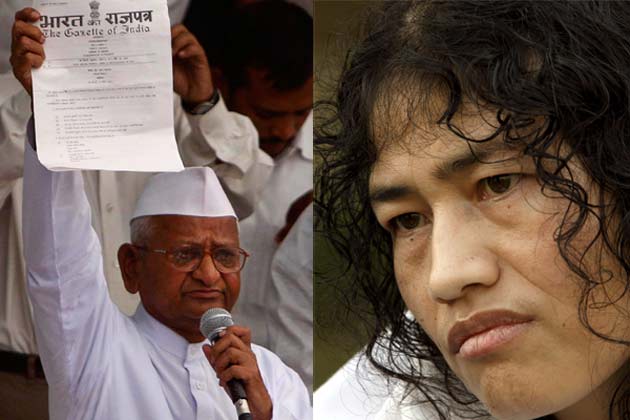
Fasting for a personal or public interest cause is a very old tradition in India. Today, social activists of all colours and hue resort to fasting — but not everyone evokes the same interest and coverage in the media. In a previous column, I looked at how and why the anti-corruption activist Anna Hazare has become the darling of the Indian media. In my latest Ravaya column published on 2 October 2011, I look at two other fasts: one by Swami Nigamananda, who died in June calling for a stop to sand-mining in the Ganges River, and woman activist Irom Sharmila in Manipur who is engaged in the longest fast in the world, 11 years and counting…

Anna Hazare (left) and Irom Sharmila - two very different fasts...

යම් අරමුණක් ඉටුකර ගැනීම සදහා ආහාර පාන ගැනීමෙන් වැළකී උපවාස කිරීම ඉන්දියාවේ ඉපැරණි සම්ප්‍රදායක්. මේ ගැන ක්‍රිස්තු පූර්ව 750 දක්වා අතීතයට දිවෙන සදහන් එරට හමුවෙනවා. දින 3ක් නිරාහාරව සිටීමේ හැකියාව නිරෝගී බොහෝ දෙනකුට ඇතත්, ඉන් පසු ටිකෙන් ටික ශරීර ක්‍රියාකාරකම් අඩපණ වන්නට පටන් ගන්නවා. ආහාර නොගත්තත් වතුර පානය කිරීමෙන් තොරව ශරීරයට ජීව ක්‍රියා පවත්වාගන්නට නොහැකියි.

සමාජයීය හෝ දේශපාලනමය හෝ ඉල්ලීම් දිනා ගැනීමට උපවාස කිරීම අදත් ඉන්දියාවේ බහුලව දැකිය හැකියි. එයට වඩාත් ම ප්‍රකට මෑත උදාහරණය නම් දූෂණයට එරෙහි ජන ක්‍රියාකාරික අන්නා හසාරේ 2011 අප්‍රේල් හා අගෝස්තු මාසවල කළ උපවාසයන්.

ඉන්දියාවේ ටෙලිවිෂන් නාලිකා අති බහුතරයක් පෞද්ගලික හිමිකරුවන් විසින් පවත්වා ගෙන යන වාණිජ මට්ටමේ නාලිකායි. ඒ නිසා බලයේ පවතින රජය නිර්දය ලෙස විවේචනය කිරීමටත්, රාජ්‍ය ප්‍රතිපත්ති විවෘතව සංවාදයට ලක් කරන්නටත් ඉඩ තිඛෙනවා. මේ නාලිකා අතර ප්‍රේක‍ෂකයන් ඇද ගන්නට දැඩි තරගයක් පවතිනවා. හැම නාලිකාවක් ම උත්සාහ කරන්නේ සිද්ධීන් උලූප්පා දක්වමින්, හැම සිදුවීමක් ම ‘Breaking News’ බවට පත් කර ගන්නටයි. එවැන ප්‍රවෘත්ති හැමදාමත් හමු නොවන නිසා ඉ`දහිට මතුව එන හසාරේ වැනි නිර්දේශපාලනීය චරිතයක් වඩා ටෙලිවිෂන් වාර්තාකරුවෝ ඉක්මනින් රොක් වෙනවා. ටික දිනකින් එබදු ජන හිතකාමී චරිත කරන කියන හැම දෙයක් ම පුවත් බවට පත් කර ගන්නවා. මේ තත්ත්වය දිගු කලක් නොපැවතුනත් අද වන විට ඉන්දියාවේ අතිශය තරගකාරී හා බහුවිධ ටෙලිවිෂන්, රේඩියෝ හා වෙබ් අඩවිවලට පුවත් මවන ජනප්‍රියතම ‘පුවත් මාරුතය’ බවට අන්නා හසාරේ පත්ව සිටිනවා.

එහෙත් ඔහුගේ උපවාසයන්ට ලැබුණු ඉමහත් මාධ්‍ය වාර්තාකරණය නොලද පොදු අරගල සදහා සිදු කැරෙන තවත් උපවාසයන් රැසක් ඉන්දියාවේ තිඛෙනවා. උදාහරණ දෙකක් හරහා මේ ගැන කථා කළ හැකියි.

පළමුවන උදාහරණයට අදාල පුද්ගලයා හින්දු පූජකයෙක්. ස්වාමි නිග්මානන්ද (Swami Nigamananda) සිය උපවාසය ඇරඹුවේ 2011 පෙබරවාරි 19 වනදා. එයට නිමිත්ත වූයේ උතුරු ඉන්දියාවේ උත්තරාකන්ද් ප්‍රාන්තයේ හරිද්වාර් (Haridwar) නගරය අසලින් ගලා යන ගංගා නදියේ නීති විරෝධී ලෙස වැලි ගොඩ දැමීම නතර කරන ලෙස ඉල්ලීම. හිමාලයෙන් ඇරඹී ගලා ගෙන එන ගංගා නදිය ඉන්දු-ගංගා තැන්නට මුල්වරට ප්‍රවේශ වන්නේ හරිද්වාරයේදී. ඒ නිසා එහිදී ග`ගට කරන පාරිසරික හානිය කිලෝමීටර් 2,525ක් දිග නදියේ ගලා යාමට අතිශයින් බලපානවා. හරිද්වාරයේ මෛත්‍රී සදාන් ආශ්‍රමයේ නේවාසික වූ මේ පරිසර හිතකාමී ස්වාමීවරයා සිය සාධාරණ ඉල්ලීම ඉටු කරන ලෙස බලධාරීන්ගෙන් මෙන් ම වැලි ගොඩ දැමීමේ නිරත වූවන්ගෙන් ද මහත් ඕනෑකමින් ඉල්ලා සිටියා. නමුත් ඔවුන් ඒ ඉල්ලීම ගැන තැකීමක් කළේ නැහැ. ප්‍රාන්තයේ හා ජාතික මට්ටමේ මාධ්‍යවලින් ද මේ ගැන අවධානයක් යොමු වුණේ නැහැ. අප්‍රේල් 30 වනදා ප්‍රාන්ත බලධාරීන් ඔහුව බලහත්කාරයෙන් රෝහල් ගත කළත් එහිදීත් ඔහු කිසිවක් ආහාරයට ගැනීම ප්‍රතිෙක‍ෂ්ප කළා. ඔහුගේ අධිෂ්ඨාන ශක්තිය වෙනස් වූයේ නැහැ. දින 115ක උපවාසය අවසන් වූයේ ජුනි 14 වනදා ඔහු මිය යාමෙන්.

ඔහුගේ මරණය ඉන්දියානු ටෙලිවිෂන් මාධ්‍යයන්ට ප්‍රවෘත්තියක් වූවත් එය සුළු වේලාවකට පමණයි. ඒ වන විට ඔවුන් (අන්නා හසාරේට අමතරව) ව්‍යාපාරික මට්ටමින් මහා පරිමාණයෙන් යෝග ව්‍යායාම් පුහුණු කරන බාබා රාම්දේව (Baba Ramdev) නම් තවත් හින්දු ස්වාමිවරයකුගේ උපවාසයකට මුල් තැන දෙමින් සිටියා. දූෂණයට එරෙහිව නැගී සිටින චරිතයක් බවට පත්වීමට බාබා රාම්දේව් ප්‍රබල උත්සාහයක් ගත්තත් ඔහුගේ සැබෑ අරමුණු ගැනත් පෙර ක්‍රියාකලාපය ගැනත් මාධ්‍යවලට යම් සැකයක් තිබුණා. ඔහුගේ උපවාසය දින 9කින් නිමා කළ අතර ඉන් පසු ඔහු ගැන මාධ්‍ය වාර්තාකරණය එතරම් උත්සන්න වූයේ නැහැ.

හැම නිර්ව්‍යාජ උපවාසයක් ම පුවත් මාරුතයක් බවට පත් වන්නේත් නැහැ. අන්නා හසාරේ ගැන අධ්‍යයනය කරන මාධ්‍ය පර්යේෂකයන් සොයා යන්නේ වෙනත් සාධාරණ උපවාසයන්ට වඩා හසාරේගේ අරගලයට මෙතරම් මාධ්‍ය අවධානයක් යොමුවන්නේ ඇයි ද යන්නයි. මෙයට එක් ප්‍රධාන හේතුවක් අපි සැප්තැම්බර් 18 වනදා කොලමින් විග්‍රහ කළා. අන්නා හසාරේට සූක‍ෂම ලෙස උපදෙස් දෙන මාධ්‍ය උපදේශකයන් සිටිනවා. ඔවුන් වෙළදපොල මාධ්‍ය සමග හොදහැටි ගනුදෙනු කරන්නට දන්නවා. එහෙත් උතුම් අරමුණක් පමණක් නිමිති කර ගෙන, උපක්‍රමශීලි නොවී උපවාස කරන බොහෝ අයට එබදු මාධ්‍ය හැසිරවිමේ හා මාධ්‍යවලට බද්ධවීමේ හැකියාව නැහැ. බැලු බැල්මට මෙය අසාධාරණයක් ලෙස පෙනී යතත් සැබෑ තත්ත්වය එයයි.

මේ ගැන හොද උදාහරණයක් ජ්‍යෙෂ්ඨ ඉන්දියානු මාධ්‍යවේදිනියක හා “ර්‍ද හින්දු” පුවත්පතේ හිටපු නියෝජ්‍ය කතුවරියක වන කල්පනා ශර්මා (Kalpana Sharma) ගෙන හැර දක්වනවා. ඒ තමයි ඉරෝම් ශර්මිලාගේ (Irom Sharmila) දශකයකට වැඩි කලක් පවතින උපවාසය.

ඉරෝම් ශර්මිලා චානුගේ වයස 39 යි. ඇය ඉන්දියාවේ ඊසානදිග ප්‍රාන්තයක් වන මනිපූරයේ මානව හිමිකම් හා දේශපාලන කි්‍රයාකාරිකයෙක්. එමෙන් ම කිවි`දියක්. මිලියන 2.7 ක ජනගහනයක් සිටින, බුරුම දේශසිමාවේ පිහිටි මනිපුරයේ කලක සිට දේශපාලන නොසන්සුන් බවක් හා ප්‍රචන්ඩකාරී ස්වභාවයක් පවතිනවා. ඉන්දීය රජය මේ තත්ත්වය පාලනය කරන්නට හමුදා විශේෂ බලතල නීතියක් (Armed Forces Special Powers Act, 1958) යටතේ දැඩි මර්දනකාරී ප්‍රතිපත්තියක් ගෙන යනවා. මධ්‍යම රජය මේ ප්‍රාන්තයේ ප්‍රශ්න විග්‍රහ කරන්නේ කරදරකාරීන් පිරිසකගේ අනවශ්‍ය අරගලයක් හැටියටයි. එහෙත් මනිපූර් වැසියන්ට සිය ප්‍රශ්නවලට සාධාරණ විස`දුම් දිගු කලක් තිස්සේ ලැබී නැතුවා පමණක් නොවෙයි දරද`ඩු පරිපාලයක් යටතේ දිවි ගෙවන්නට සිදුව තිඛෙනවා.

මේ නිසා හමුදාවලට දැඩි බලතල දෙන නීතිය නතර කරන ලෙස ඉල්ලා ඉරෝම් ශර්මිලා උපවාසයක් ඇරඹුවේ 2000 නොවැම්බරයේ. එය ඇරඹී දින කිහිපයකට පසු ‘සිය දිවි නසා ගන්නට තැත් කිරීමේ’ චෝදනා මත පොලිස් අත්අඩංගුවට ගනු ලැබුවා. මනිපුරයේ ප්‍රාන්ත අගනගරය වන ඉම්ෆාල් නුවර මහජන රෝහලේදී ඇයට බලහත්කාරයෙන් ආහාර කවනු ලැබුවා. (හින්දු ස්වාමි කෙනකුට වඩා ග‘හි කාන්තාවකට බලෙන් කෑම දීමට සෞඛ්‍ය සේවකයන් ද පෙරට එනවාෟ) මාස ගණනක් මෙසේ අත් අඩංගුවේ රෝහල්ගතව බලෙන් ආහාරපාන දීමට ලක්වන ඇය ඉන් පසු නිදහස් වෙනවා. එවිගස ම ඇය නැවතත් ප්‍රසිද්ධියේ උපවාස කිරීම අරඹනවා. එවිට දින කිහිපයකින් යළිත් අත් අඩංගුවට පත් වන ඇය රෝහල් ගත කොට බලෙන් කෑම බීම ලබා දීමට ලක් වනවා. මේ සිදුවීම් මාලාව චක්‍රාකාරව වසර 11ක් පුරා නොනැවතී ඉදිරියට යන බවත්, ඒ නිසා මෙය ලෝකයේ වැඩි ම කාලයක් පවතින උපවාසය බවත් කල්පනා ශර්මා කියනවා.

Arundhati Roy: "I'd Rather Not be Anna!"

එහෙත් ඉරෝම් ශර්මිලාගේ අරමුණ ගිනස් වාර්තා පිහිටුවීම නොවෙයි. 2004දී හින්දු මූලධර්මවාදී BJP රජය පරාජය වී කොංග්‍රස් ප්‍රමුඛ සභාග රජයක් ඉන්දියාවේ බලයට පත් වුණා. නව රජය හිටපු ශ්‍රේෂ්ඨාධිකරණ විනිසුරුවරයකුගේ ප්‍රධානත්වයෙන් කොමිටියක් පත් කළා. මේ කමිටුව කරුණු ගවේෂණයෙන් පසු නිර්දේශ කළේ මනිපුරයේ ගෙන යන දරදඩු පරිපාලනය ලිහිල් කොට හමුදා බලතල සීමා කළ යුතු බවයි. එහෙත් මේ නිර්දේශයෙන් වසර 6කට පසුත් එය ක්‍රියාත්මක කර නැහැ. ඒ නිසා ඉරෝම් ශර්මිලා සිය උපවාසය දිගට ම කරගෙන යනවා.

“මනිපුරයේ ජනතාවත් ඉන්දියානු රටවැසියෝ. එහෙත් සෙසු රටවැසියන්ට ආණ්ඩුක්‍රම ව්‍යවස්ථාවෙන් සහතික කැරෙන මූලික අයිතිවාසිකම් බොහොමයක් මනිපුර ජනතාවට දිගු කලක සිට ලැඛෙන්නේ නැහැ. මේ දැඩි අසාධාරණය ගැන සෙසු ඉන්දියාවේ අපට එතරම් හැගීමක් හෝ අවබෝධයක් හෝ නැතිවීම ඉතා කණගාටුදායකයි” කල්පනා සිය ලිපියේ එසේ කියනවා.

ඉරෝම් ශර්මිලාගේ තිරසාර අධිෂ්ඨාන ශක්තිය ගැන ගෞරව පූර්වකව මාධ්‍යවල කථා කරන තවත් කෙනෙක් සම්මානනීය ලේඛිකා අරුන්දතී රෝයි (Arundhati Roy). අන්නා හසාරේගේ අරගලය ගැන අරුන්දතී දැඩි විවේචනයක් කරනවා. දූෂණය හා වංචාව පිටු දැකීමට නම් ඉන්දියානු සමාජය පුරා දරුණු ලෙස මුල් බැස තිඛෙන ඇති-නැති පරතරය අඩු කළ යුතු බව ඇය කියනවා. බොහෝ විට දූෂණ හා වංචාවලට මුල් වන්නේ, උල්පන්දම් දෙන්නේ අන්ත දුප්පතුන් නොව අතමිට සරු අය බවත්, ඒ අය සමාජ අසාධාරණකම් දිගට ම පවත්වා ගැනීම හරහා අයථා ප්‍රයෝජන හා වරප්‍රසාද ලබන බවට උදාහරණ සහිතව තර්ක කරනවා.

අරුන්දතී රෝයි ඉන්දියානු රාජ්‍යයේ (state) හෝ බලයේ පවතින රජයේ (government) හිතවතකු නොවෙයි. ඉන්දියානු රාජ්‍යයේ විෂමතා ගැන බරපතල විවේචන ඇය ප්‍රසිද්ධියේ ලියනවා. එබදු දැඩි විවේචකයන්ට ද ඉඩකඩ පැවතීම ඉන්දියාවේ පරිනත ප්‍රජාතන්ත්‍රවාදයේ හොද ලක‍ෂණයක්. චතුර ලෙස කථා කරන්නට හා සූක‍ෂම ලෙස තර්ක කරන්නට හැකි වීම නිසා ඉන්දියානු විද්්‍යුත් මාධ්‍ය ද ඇයට තැනක් හා කාලයක් දෙනවා. මෙවර සිදු වී ඇත්තේ ඉන්දියන් ටෙලිවිෂන් නාලිකා බහුතරයක අළුත් ම වීරයා බවට පත්ව සිටින අන්නා හසාරේගේ ක්‍රමවේදයන් එම නාලිකාවල ම ජනප්‍රිය චරිතයක් හා පුවත් මවන්නියක වන අරුන්දතී රෝයිගේ නිර්දය විවේචනයට හසුවීමයි!

2011 අගෝස්තු 22 දා The Hindu පුවත්පතේ ලිපියක් ලියමින් ඇරුන්දතී රෝයි අනතුරු ඇගවීමක් කළා. අන්නා හසාරේගේ යෝජිත නීති කෙටුම්පත හා නිර්දේශිත සැළසුම් ඉදිරියට ගියොත් ඉන්දියාවේ දුගී දුප්පතුන්ට තවත් නිලධාරීවාදයකට කර ගසන්නට සිදු විය හැකි බවට. සමාජයක ව්‍යුහාත්මක වෙනස්කම් ඇති නොකොට පැලැස්තර විස`දුම් දීම තුළින් දූෂණය පිටු දැකිය නොහැකි බවත්, වැඩියෙන් ම හඩ නගන අරගලකරුවාට පමණක් සවන්දීම සාර්ථක විසදුම් සොයා යාමේ ප්‍රවේශයක් නොවන බවත් ඈ කියනවා.
ර්‍
“අද දූෂණ හා වංචා සිදුවන්නේ රාජ්‍ය තන්ත්‍රය තුළ පමණක් නොවෙයි. ව්‍යාපාර ආයතනල රාජ්‍ය නොවන ආයතන මෙන් ම මාධ්‍ය ආයතනවලත් විශාල වශයෙන් දූෂණ සිදුවනවා. ඒ ගැන කිසි අවධානයක් යොමු නොකර රාජ්‍ය ෙක‍ෂත්‍රයේ දූෂණය ගැන පමණක් නීතිරීති තද කිරීම හසාරේ ඇතුළු පිරිසගේ උත්සාහයයි. මෙයින් ඉන්දියානු සමාජයේ දූෂණ පිටු දකින්නට බැහැ.” අරුන්දතී තර්ක කරනවා.

ඉන්දියානු සමාජය හා මාධ්‍ය ෙක‍ෂ්ත්‍රය ගැන නෙත් යොමා සිටින මට පෙනෙන්නේ ආවේගශීලි නොවී ප්‍රතිපත්තිමය හා තාර්කික පදනමකින් ප්‍රශ්න විග්‍රහ කිරීමේ හැකියාව අන්නා හසාරේට වඩා අරුන්දතී රෝයිට වැඩි බවයි. මේ දෙදෙනාගේ ම පාරිශ=ද්ධභාවය ගැන කිසිදු විවාදයක් නැහැ. එහෙත් වඩාත් ප්‍රායෝගික විසදුම් සෙවීම කළ හැක්කේ කාට ද යන්න ඉක්මනින් ම තෝරා ගන්නට ඉන්දියානු සමාජයට හා මාධ්‍යවලට සිදු වනවා.

BBC Panorama, caught faking child labour footage, returns prestigious TV award

Primark: On the Rack
Two weeks after the BBC admitted that its journalists had partly faked child labour footage in India, the public broadcaster has returned a prestigious television award won by the controversial programme.

BBC had earlier won the Current Affairs Home Prize at the Royal Television Society awards for its show Primark: On The Rack, which was first broadcast on BBC 1 channel in June 2008.

In an internal investigation, the BBC Trust – an independent body which safeguards the values of the publicly funded corporation – found that it ‘more likely than not’ that certain footage in the Panorama programme was not authentic.

The implicated retailer, Primark, criticised the BBC for taking so long to find in its favour when evidence casting doubt on some of the video material has been in the corporation’s possession since before the documentary first aired in 2008.

BBC Panorama claims to be the world’s longest running investigative TV show, and has been on the air for more than 50 years. In that time, it has done some excellent exposures on matters of vital public interest.

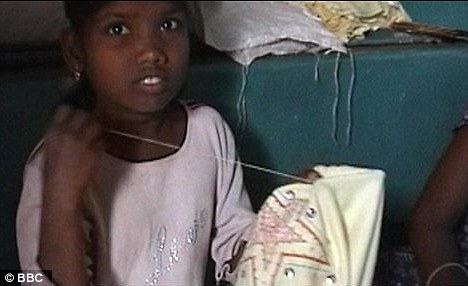
Yet hinting a decline in both editorial and ethical standards at the BBC, the reporting team was found to have taken liberties with certain visuals in this particular programme. It investigated Primark’s claims that it can deliver ‘cheap, fast fashion’ without breaking ethical guidelines, and included footage obtained in a Bangalore workshop of three boys carrying out an activity described in the programme as ‘testing the stitching’ on Primark garments.

According to the Daily Mail: “The BBC Trust’s Editorial Standards Committee examined evidence such as the unedited ‘rushes’ of the programme and emails to the production team from the freelance journalist Dan McDougall, who obtained the footage.”

BBC Trustee and Chair of the ESC Alison Hastings said after their investigations: “The BBC’s investigative journalism is rightly held in very high regard, and for more than fifty years Panorama has made a very significant contribution to that. But great investigative journalism must be based on the highest standards of accuracy, and this programme on Primark failed to meet those standards. While it’s important to recognise that the programme did find evidence elsewhere that Primark was contravening its own ethical guidelines, there were still serious failings in the making of the programme. The Trust would like to apologise on behalf of the BBC to Primark and to the audience at home for this rare lapse in quality.”

Read full report here.

Despite all these developments, the BBC Panorama official web page for this programme shows no indication of this turn of events. Accessed on at 01:30 GMT on 30 June 2011, the page says it was “last updated at 13:31 GMT, Wednesday, 18 June 2008 14:31 UK”. No apology, no correction, no link to the BBC Trust’s report.

The programme’s blurb still reads: “Panorama puts Primark’s claims that it can deliver cheap, fast fashion without breaking ethical guidelines to the test. Posing as industry buyers in India, the programme’s reporter Tom Heap and his team find some of India’s poorest people working long, gruelling hours on Primark clothes in slum workshops and refugee camps.”

So who puts the BBC Panorama to test? Are investigative journalists above the ethics of journalism because their work is hazardous, and is ultimately meant to be in the public interest?

Even Homer nods, and the best intended investigative journalists can – and do – make occasional mistakes. The important question is whether this was a bona fide error in judgement, or does it suggest a trend where the BBC’s investigative journalists and producers arrogantly believe that the end justifies the means?

Many documentaries rely on re-enactments for certain scenes, which are usually labelled as such. Does exposing child labour in supply chains give the license for do-gooding journalists to manipulate individuals and images to suit a preconceived notion of a corporation’s complicity? Could they not have resorted to other means – perhaps with less dramatic visuals, but more honest in their sourcing?

Does this rare admission of error on the part of the BBC also raise questions about the integrity of some other hard-hitting and controversial Panorama investigations over the years which have taken on some big-time targets such as the Vatican, the United Nations Peace Keepers or the CIA?

Hard questions indeed for the usually self-righteous Auntie Beeb.

Gasping for Fresh Air in Delhi and Colombo: Miles to go before we can breathe easily!

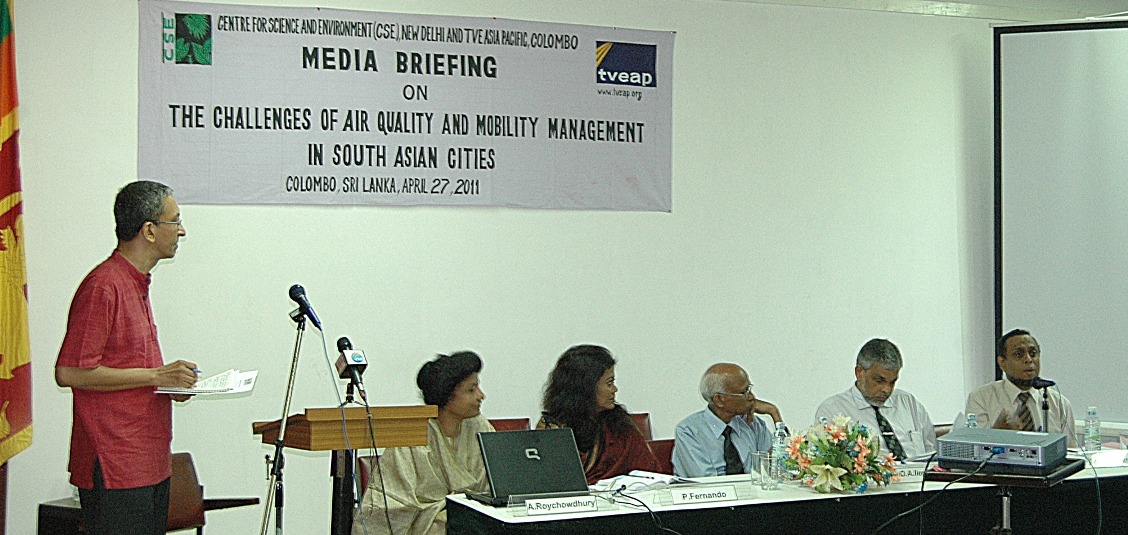
CSE TVEAP Media Briefing on Air Qualitry Issues in Colombo, 27 April 2011

Almost exactly four years ago, I wrote a blog post called Gasp! Asthma on the rise – and we made it all possible. I argued how we who suffer from Asthma — and our numbers keep increasing — are also contributing to making the bad problem worse.

So I write, speak and make films about clean air entirely with an enlightened self interest: I want to breathe more easily. This week, just a few days ahead of the annual World Asthma Day, I once again declared this as I opened a Media Briefing on the Challenges of Air Quality and Mobility Management in South Asian Cities organised in Colombo today by the Centre for Science and Environment (CSE), New Delhi and TVE Asia Pacific.

I held up my life-saving inhaler that I always carry around wherever I go, and am never more than a few feet away from. This is not theatrics, but drama in real life. Almost exactly a year ago, I was rushed to hospital at night for nebulisation. I don’t suffer such attacks too often, thank goodness, but I also don’t want to take chances — as I can never count on good air in my home city.

And I’m far from being alone. Wherever I go, I find increasing numbers of fellow asthma sufferers: we gripe and groan, but only a few among us realise that our lifestyles, choices and apathy contributes to the worsening quality of our air.

Almost every South Asian city today is reeling under severe air pollution and gridlocked urban traffic congestion. Colombo, a medium sized city by South Asian standards, has the (slight) advantage of the sea breeze flushing out part of its polluted air — but Greater Colombo is still struggling with polluting fuels, outdated vehicle technologies and rising numbers of private vehicles leading to massive congestion. Air quality levels vary considerably as we travel to the interior of the island, but some provincial cities now have mounting air pollution problems.

Finding the 'Common Air' in everybody's self interest...

This is why we collaborated with CSE, which has a long track record in knowledge-based advocacy for clean air in India and other countries of developing Asia, to organise this event. It was an open forum where air quality experts in Sri Lanka and India engaged Sri Lankan journalists and broadcasters on the status of Sri Lanka’s air quality and what it can learn from the neighbouring countries.

In my remarks, I said: “The quest for clean air in developing Asia is much more than a simple pollution story. It has many layers and complex links to government policies, regulation, industrial lobbies and technology options.

I added: “Our big challenge, as professional story-tellers, is to ask tough questions, seek clarity and then connect the dots for our audiences. At stake is our health, prosperity and indeed our very lives. Air pollution kills, slowly but surely!”

See my PowerPoint presentation:

Read more: Gasping for Fresh Air, Seeking More Liveable Cities in South Asia