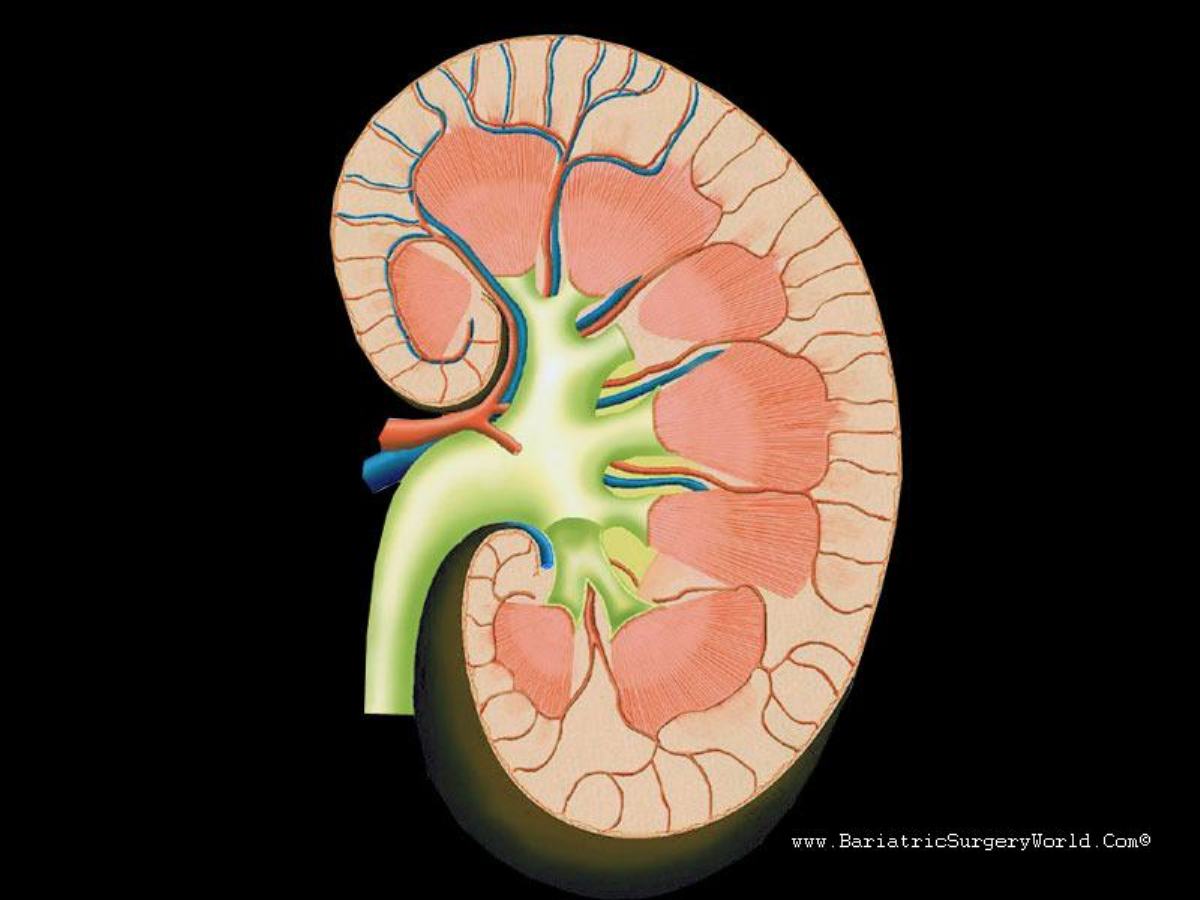
The kidneys are vital organs in our body that help keep the blood clean and chemically balanced through filtering. Healthy kidneys separate waste and excess water.
Similarly, a healthy and vibrant media helps separate fact from fiction, and provides clarity and context vital for an open, pluralistic society to function.
In Sri Lanka, mass kidney failure during the past two decades has been followed by what I see as a mass media failure to understand, analyse and report adequately on this public health emergency. Instead of helping affected people and policy makers to work out solutions, some journalists have become mere amplifiers of extreme activist positions.
As health officials and policy makers struggle with the prolonged humanitarian crisis, partisan media coverage has added to public confusion, suspicion and fear. As a science writer and journalist, I have watched this with growing concern.
I just gave a talk on this to the Science Communication Leadership Workshop which was part of the First General Assembly of Association of Academies and Societies of Sciences in Asia (AASSA) held in Colombo, Sri Lanka, on 17 October 2012.
Despite the recent International Year of Chemistry (2011), chemicals don’t get good press in Sri Lanka. If at all they make it to the news, or become a current affairs topic, that is usually as a bad story: a chemical spill, water contamination or suspected pesticide residues in our food.
All these happen, and we should be concerned. But chemicals are everywhere in our modern lives — reducing drudgery, protecting us from disease and overall improving the quality of life. It’s all a question of balancing risks with benefits. Also discerning what we really need as opposed to what we want.
Focusing on bad news is the media’s typical approach, and demonising science and technology is common in many sections of our print and broadcast media. Such posturing also fits well into the prevailing narrative of the ‘whole world being out to undermine, destabilise and destroy us’. So chemical industries must be part of that ‘conspiracy’, no?
Many of Lanka’s environmental activists don’t allow facts and analysis to get in the way of a good scare story. Uncritical journalists and their editors often peddle their half-baked arguments and conspiracy theories unsupported by any evidence. Very few scientists speak out for science and reason.
So when the Centre for Environmental Justice (CEJ), a moderate advocacy group, invited me to talk to a group of journalists and broadcasters at a media workshop, I welcomed the opportunity.
I based my talk on five scientists each of who took on once-revered chemicals and formidable industry interests, all in the public interest. By showcasing these champions of public science, I wanted to show that there are honest, diligent scientists who engage in evidence-based advocacy. Not all scientists are part of some global conspiracy to poison us…
The five are those who worked tirelessly and left their mark in their discipline, and in how we look at chemical and environmental management: Rachel Carson (1907 – 1964) Alice Hamilton (1869 – 1970) Sherwood Rowland (1927 – 2012) Theo Colborn (1927 – ) Anil Agarwal (1947 – 2002)
I ended by urging journalists to look for credible and moderate scientists who are led by evidence, not conjecture or prejudice. Amplifying their voices is something we in the media are well positioned to do, but don’t do nearly enough.
Presentation to Media workshop on scientific reporting on chemical issues, organised by Centre for Environmental Justice in Colombo, 25 September 2012:
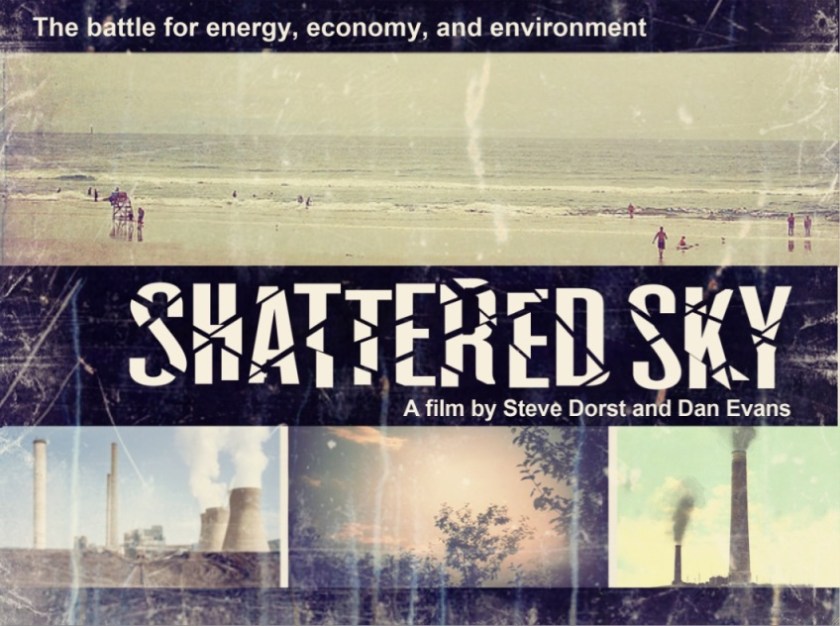
A film by Steve Dorst and Dan Evans.
An invisible compound threatens Earth’s life-support systems, with effects so pervasive that scientists sound the alarm, businesses must innovate, politicians are forced to take action—and American leadership is absolutely vital. Climate change? No…the hole in the ozone layer. For the first time in film, Shattered Sky tells the story of how—during geopolitical turmoil, a recession, and two consecutive Republican administrations— America led the world to solve the biggest environmental crisis ever seen. Today, will we dare to do the same on energy and climate?
A film by Steve Dorst and Dan Evans. The story of how America led the world to solve the biggest environmental crisis ever seen. Today, will we dare to do the same on energy and climate?
A new film looks at American leadership during the ozone crisis and compares it to the situation with global warming today. A good interview with the filmmaker.
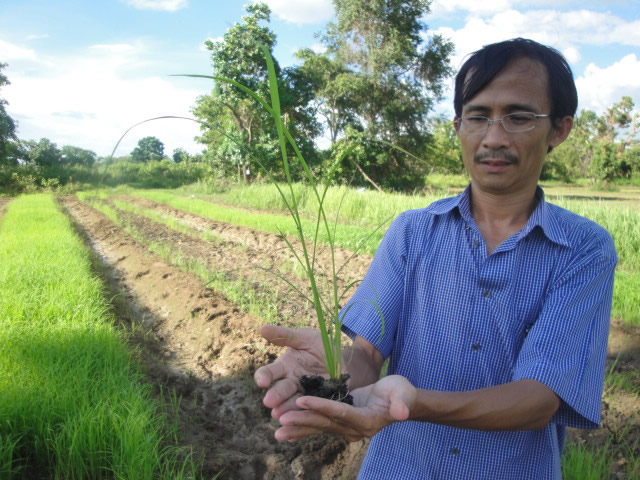
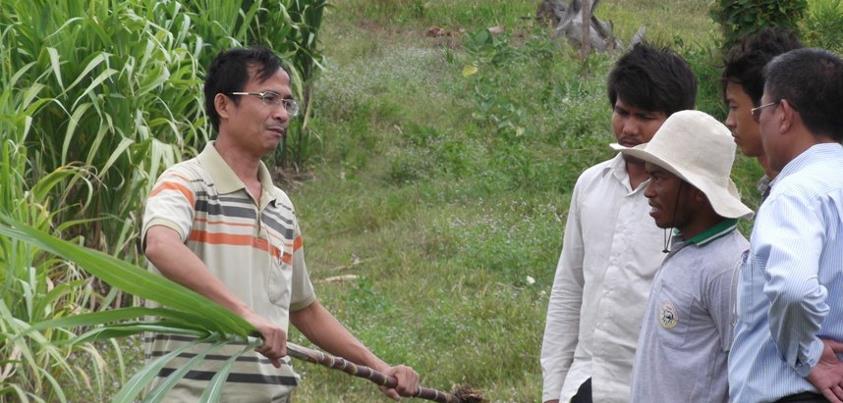
This week’s Ravaya column (in Sinhala) is about a maverick scientist: Dr Yang Saing Koma. For 15 years, this Cambodian agronomist has driven a grassroots revolution that is changing farming and livelihoods in one of the least developed countries in Asia.
A champion of farmer-led innovation in sustainable agriculture, Koma founded the Cambodian Centre for Study and Development in Agriculture (CEDAC) in 1997. Today, it is the largest agricultural and rural development organisation in Cambodia, supporting 140,000 farmer families in 21 provinces.
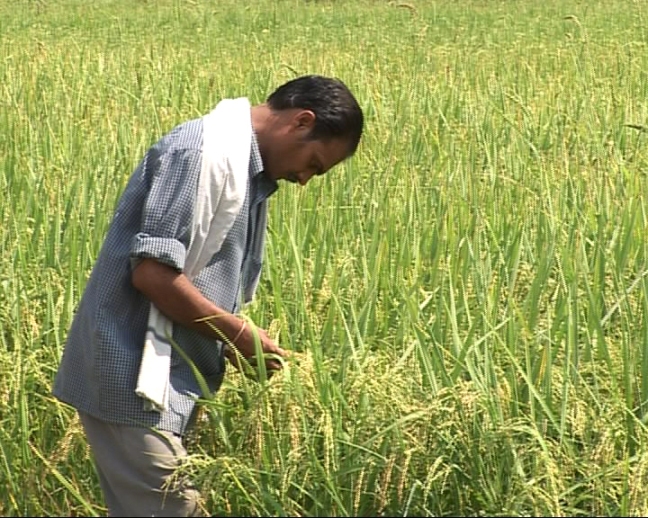
The chronic kidney disease (CKDu) that has already affected thousands in its heartland of farming, has brought into sharp focus some serious environmental concerns that ecologists have long highlighted. These stem from our farmers’ high reliance on inorganic (chemical) fertilisers.
While some fertiliser is needed to sustain soil fertility when growing crops repeatedly on the same land, the ‘Green Revolution’ from the 1960s urged Lankan farmers to use large volumes of fertiliser, provided to them on massive state subsidies. That, in turn, led to indiscriminate use and waste — and higher agricultural runoffs.
Farmers aren’t thrifty because they get fertiliser at a fraction of the market price. In this week’s Ravaya column (in Sinhala, on 2 September 2012), I look at what this national addiction to chemical fertiliser is doing to both our economy and ecology. I also look at organic alternatives and probe why they are not being adopted more widely.
CKDu was first reported in the early 1990s from a single Province in our heartland of farming, but it has now spread across approximately 17,000 sq km (a quarter of the island), which is home to around 2.5 million people. Several thousand have already died; the exact number is not clear. Over 15,000 people are kept alive with regular kidney dialysis.
Investigating causes of this ailment — still not pinned down to a particular cause or factor — has been contentious with scientists, nationalists and politicians trying to hijack the issue for their own agenda setting. Some journalists have added fuel to the fire with sensationalist reporting and fear-mongering. In this column, I ask everyone to focus on the prolonged suffering of those already affected and their families.
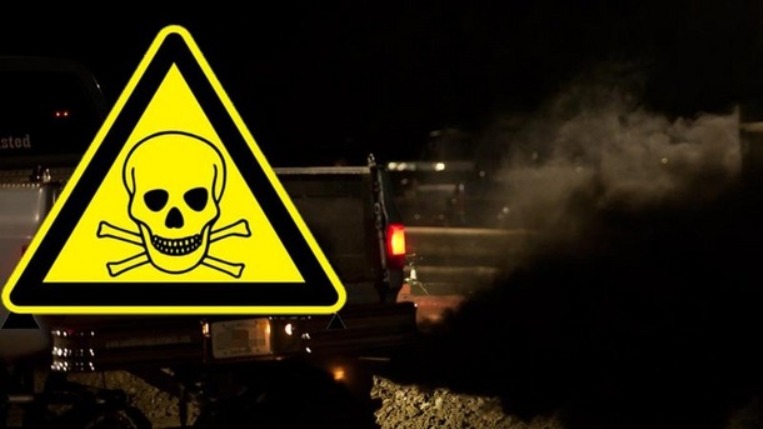
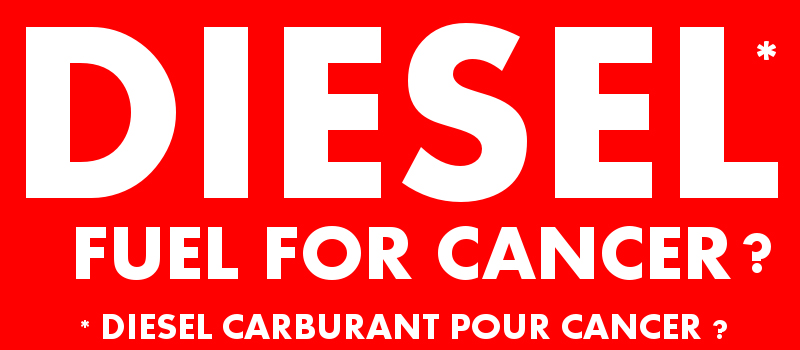
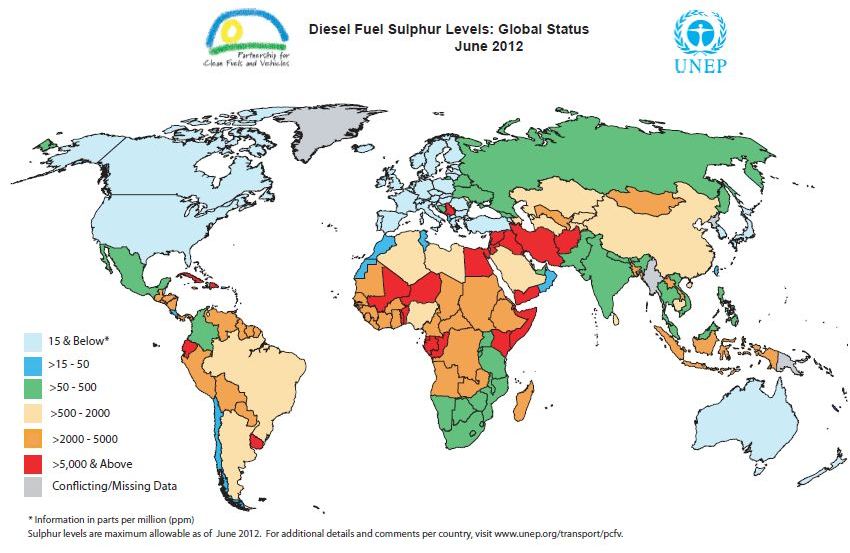
In this week’s Ravaya column (in Sinhala), I look back at the scientific, legal and policy struggles in Sri Lanka that finally god rid of lead additives in petrol (gasoline) in 2002. It is a success story in safeguarding public health and combating environmental pollution that holds valuable lessons in a new challenge that confronts us: how to reduce sulphur content in the diesel distributed in Sri Lanka that currently contains one of the highest sulphur levels in Asia. This is now urgent and important with WHO confirming diesel fumes cause lung causer.
Buckminster Fuller, the visionary American engineer and designer who used challenge his audiences saying: “There’s no energy shortage; there’s no energy crisis; there’s a crisis of ignorance.”
In this episode of Malima (New Directions in Innovation), a Sinhala language TV series on science, technology and innovation, we feature a wide-ranging interview on how innovation can find solutions to the energy crisis.
Produced by Suminda Thilakasena and hosted by science writer Nalaka Gunawardene, this show interviews two Lankan specialists:
• Dr Ajith de Alwis, Professor of Chemical and Process Engineering, University of Moratuwa, Sri Lanka
• Engineer Asoka Abeygunawardana, Adviser to the Minister of Power and Energy and Executive Director, Energy Forum, Sri Lanka
The interview opens with an overview of Sri Lanka’s energy generation and use, and then looks at the current role and future potential of renewable energy sources – ranging from biomass and hydro electricity to wind, solar, biogas and dendro power. In particular, we look at what Lankan inventors can do to make renewable energies cheaper, safer and more user-friendly.
In this week’s Sunday column in Ravaya (22 July 2012, in Sinhala), I discuss the far-reaching public health implications of the World Health Organisation (WHO)’s recent assessment that diesel engine fumes do certainly cause cancer, especially lung cancer, in humans.
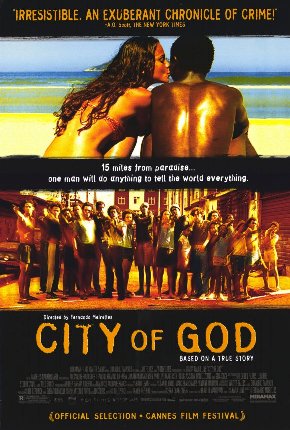
In this week’s Ravaya column (in Sinhala), I share my impressions and reflections of the city of Rio de Janeiro that just hosted the Rio+20 conference. But this piece is not about the event, but its venue — where the first world of affluence and third world of deprivation co-exist.
Statue of Christ te Redeemer looks down on Rio de Janeiro from Corcovado Mountain
තිරසාර සංවර්ධනය පිළිබඳ එක්සත් ජාතීන්ගේ සමුළුව (UN Conference on Sustainable Development, Rio+20) බ්රසීලයේ රියෝ ද ජනෙයිරෝ නුවර පැවැත්වුණා.



 Open Minds!