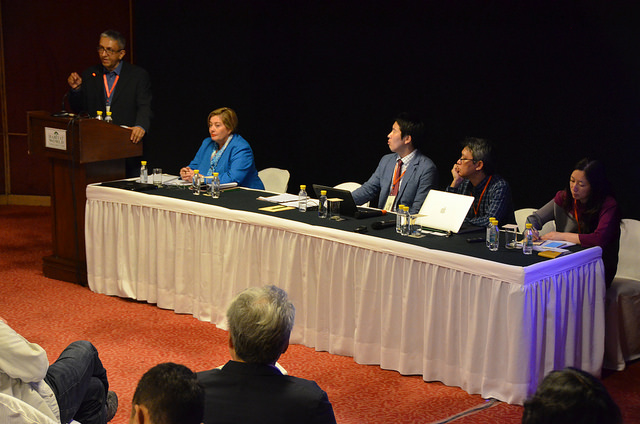
On September 11, I took part in a breakout session that discussed media innovation in Asia and the United States. While my fellow panelists spoke mainly about digital media innovation of their media outlet or media sector, I opted to survey the bigger picture: what does innovation really mean when media is under siege, and how can the media sector switch from such ‘innovation under duress’ to regular market or product innovation?
Here are my remarks, cleaned up and somewhat expanded:
Nalaka Gunawardene speaks on media innovation under duress
Innovation has been going on in media from the beginning. Faced with major challenges from advancing technologies and changing demography, innovation is now an imperative for market survival.
We can discuss this at different levels: product innovation, process innovation and systemic innovation. I like to add another kind for our discussion: innovation for physical survival.
With forces social and market Darwinism constantly at work, you might ask, shouldn’t the most adaptable and nimble players survive – while others perish?
Yes and No. Sometimes the odds against independent and progressive media organisations are disproportionately high – they should not be left to fend for themselves. This is where media consumers and public spirited groups need to step in.
Let me explain with a couple of examples from South Asia.
They say necessity is the mother of invention or innovation. I would argue that tyranny – from the state and/or extremist groups – provides another strong impetus for innovation in the media.
In Nepal, all media came under strict control when King Gyanendra assumed total control in February 2005. Among other draconian measures, he suspended press freedom, imposing a blanket ban on private or community broadcasters carrying news, thus making it a monopoly of state broadcasters.
The army told broadcasters that the stations were free to carry music, but not news or current affairs. Soldiers were sent to radio and TV stations to ensure compliance.
When the king’s siege of democracy continued for weeks and months, some media started defying censorship – they joined human rights activists and civil society groups in a mass movement for political reforms, including the restoration of parliamentary democracy.
Some of Nepal’s many community radio stations found creative ways of defying censorship. One station started singing the news – after all, there was no state control over music and entertainment! Another one in central Nepal went outside their studio, set up an impromptu news desk on the roadside, and read the news to passers-by every evening at 6 pm.
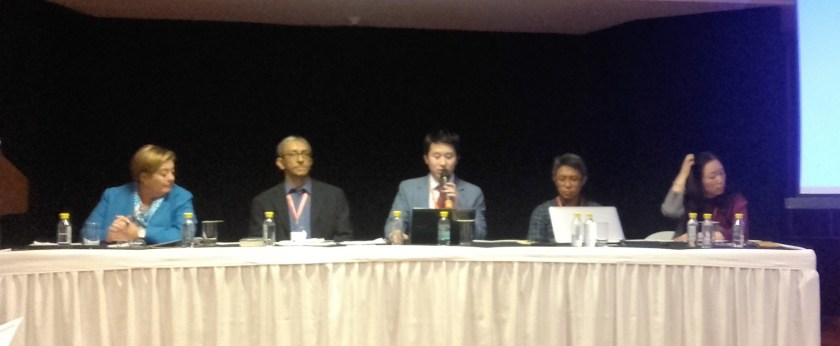
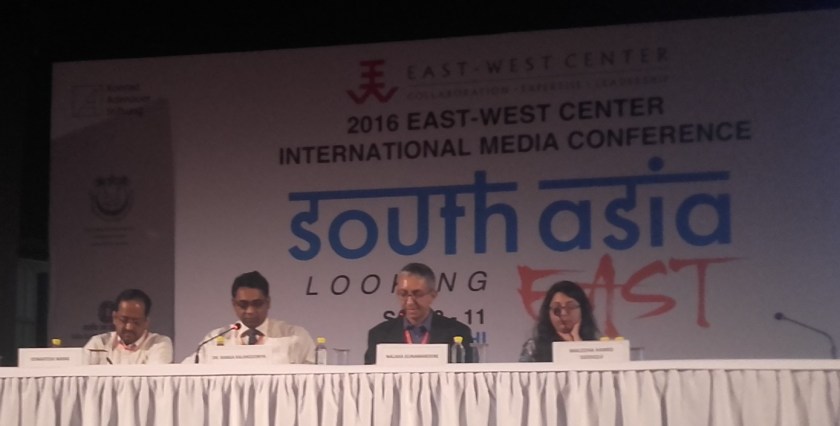
Panel on Media innovation at East-West Center Media Conference, Delhi, 11 Sep 2016: L to R – Philippa McDonald, Nalaka Gunawardene, LEE Doo Won, Fernando (Jun) SEPE, Jr. and ZHONG Xin
The unwavering resolve of these and other media groups and pro-democracy activists led to the restoration of parliamentary democracy in April 2006 and the subsequent abolition of the Nepali monarchy.
My second example is from Sri Lanka where I live and work.
We are recovering from almost a decade of authoritarian rule that we ended in January 2015 by changing that government in an election. The years preceding that change were the darkest for freedom of expression and media freedom in Sri Lanka – the country, then nominally a democracy, was ranked 165th among 183 countries in the World Press Freedom Index for 2014.
In June 2012, Sri Lanka was one of 16 countries named by the UN Special Rapporteur on the promotion and protection of the right to freedom of opinion and expression for “attacks against journalists during coverage of street protests and demonstrations, such as arbitrary arrests and detention, verbal and physical attacks, confiscation or destruction of equipment, as well as killings.”
Threats of attacks and actual incidents of physical violence in recent years led to a climate of fear and widespread self-censorship among journalists in Sri Lanka. This is slowly changing now, but old habits die hard.
At the height of media repression by the former regime, we saw some of our media innovating simply for physical survival. One strategy was using satire and parody – which became important forms of political commentary, sometimes the only ones that were possible without evoking violent reprisals.
What I wrote then, while still in the thick of crackdown, is worth recalling:
“For sure, serious journalism can’t be fully outsourced to satirists and stand-up comics. But comedy and political satire can play a key role in critiquing politicians, businessmen and others whose actions impact the public.
“There is another dimension to political satire and caricature that isn’t widely appreciated in liberal democracies where freedom of expression is constitutionally guaranteed.
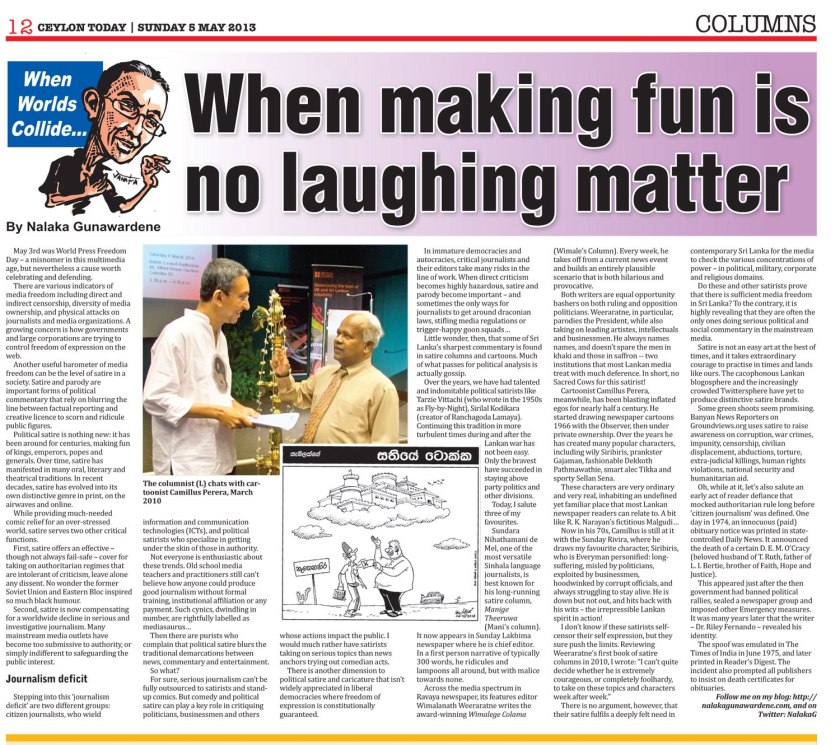
“In immature democracies and autocracies, critical journalists and their editors take many risks in the line of work. When direct criticism becomes highly hazardous, satire and parody become important — and sometimes the only – ways for journalists get around draconian laws, stifling media regulations or trigger-happy goon squads…
“Little wonder, then, that some of Sri Lanka’s sharpest commentary is found in satire columns and cartoons. Much of what passes for political analysis is actually gossip.”
For years, cartoonists and political satirists fulfilled a deeply felt need in Sri Lanka for the media to check the various concentrations of power — in political, military, corporate and religious domains.
They still continue to perform an important role, but there is more space today for journalists and editors to report things as they are, and to comment on the key stories of the day.
During the past decade, we have also seen the rise of citizen journalism and vibrant blogospheres in the local languages of Sinhala and Tamil. Their advantage during the dark years was that they were too numerous and scattered for the repressive state to go after each one (We do know, however, that electronic surveillance was attempted with Chinese technical assistance.)
Of course, Sri Lanka’s media still face formidable challenges that threaten their market survival.
Rebuilding Public Trust: An Assessment of the Media Industry and Profession in Sri Lanka (May 2016)
A new assessment of Sri Lanka’s media, which I edited earlier this year, noted: “The economic sustainability of media houses and businesses remains a major challenge. The mainstream media as a whole is struggling to retain its consumer base. Several factors have contributed to this. Many media houses have been slow in integrating digital tools and web-based platforms. As a result, there is a growing gulf between media’s production models and their audiences’ consumption patterns.”
Innovation and imagination are essential for our media to break out of 20th century mindsets and evolve new ways of content generation and consumption. There are some promising new initiatives to watch, even as much of the mainstream continues business as usual – albeit with diminishing circulations and shrinking audience shares.
Innovate or perish still applies to our media. We are glad, however, that we no longer have to innovate just to stay safe from goon squads.
On September 11, I moderated a plenary session on Right to Information (RTI) in South Asia: Staying the Course on a Bumpy Road.
It tried to distill key lessons in RTI implementation from India and Pakistan, especially for the benefit of Sri Lanka that has recently adopted its RTI law. Such lessons could also benefit other countries currently advocating their own RTI laws.
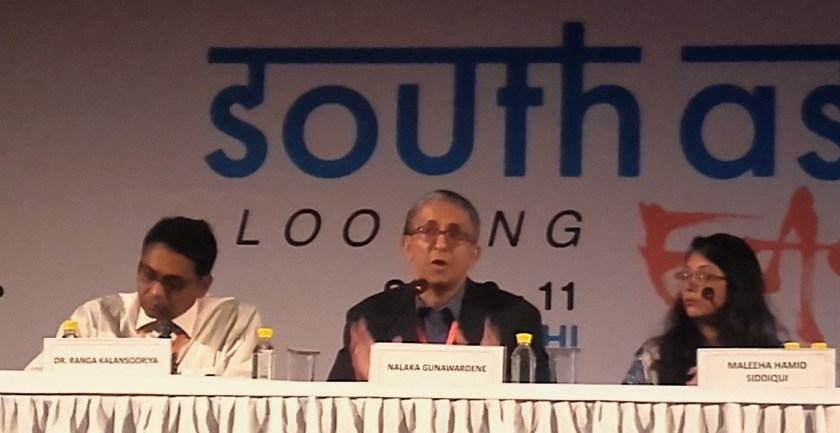
Panel on Right to Information in South Asia, 11 Sep 2016 in New Delhi. L to R – Venkatesh Nayak, Dr Ranga Kalansooriya, Nalaka Gunawardene & Maleeha Hamid Siddiqui
Here is the synopsis I wrote for the panel:
Right to Information (RTI) in South Asia:
Staying the Course on a Bumpy Road
In June 2016, Sri Lanka’s Parliament unanimously passed a Right to Information (RTI) Act, making the island nation the 108th country to have a RTI or freedom of information (FOI) law. That leaves only Bhutan in South Asia without such a law, according to the Commonwealth Human Rights Initiative (CHRI) in New Delhi.
Sri Lanka’s RTI law was preceded by over two decades of sustained advocacy by journalists, social activists and progressive lawyers. But the struggle is far from over. The island nation now faces the daunting task of ‘walking the talk’ on RTI, which involves a total reorientation of government and active engagement by citizens. As other South Asian countries know only too well, proper RTI implementation requires political will, administrative support and sufficient funds.
This panel is an attempt to address the following key questions:
How do India and Pakistan fare in terms of implementing their RTI laws?
What challenges did they face in the early days of RTI implementation?
What roles did government, civil society and media play in RTI process?
What key lessons and cautions can their experiences offer to Sri Lanka?
Can South Asia’s RTI experience offer hope for other countries pursuing RTI laws of their own?
In this session, experienced RTI activists from India and Pakistan will join a Sri Lankan policymaker in surveying the challenges of openness and transparency through RTI.
Panel:
Dr Ranga Kalansooriya, Director General, Department of Information, Ministry of Parliamentary Reforms and Mass Media, Government of Sri Lanka
Mr Venkatesh Nayak, RTI activist; Programme Coordinator, Commonwealth Human Rights Initiative (CHRI), New Delhi
Ms Maleeha Hamid SIDDIQUI, Senior Sub-Editor and Reporter, Dawn, Karachi, Pakistan
Moderator: Mr Nalaka Gunawardene, Science writer and media researcher who is secretary of the RTI Advisory Task Force of Ministry of Mass Media, Sri Lanka
L to R – Ranga Kalansooriya, Nalaka Gunawardene & Maleeha Hamid Siddiqui
Nalaka Gunawardene speaks on “Using Social Media for Discussing Science” at the Science, Technology & Society Forum in Colombo, Sri Lanka, 9 Sep 2016. Photo by Smriti Daniel
Sri Lanka’s first Science and Technology for Society (STS) Forum took place from 7 to 10 September in Colombo. Organized by the Prime Minister’s Office and the Ministry of Science, Technology and Research, it was one of the largest gatherings of its kind to be hosted by Sri Lanka.
Modelled on Japan’s well known annual STS forums, the event was attended by over 750 participants coming from 24 countries – among them local and foreign scientists, inventors, science managers, science communicators and students.
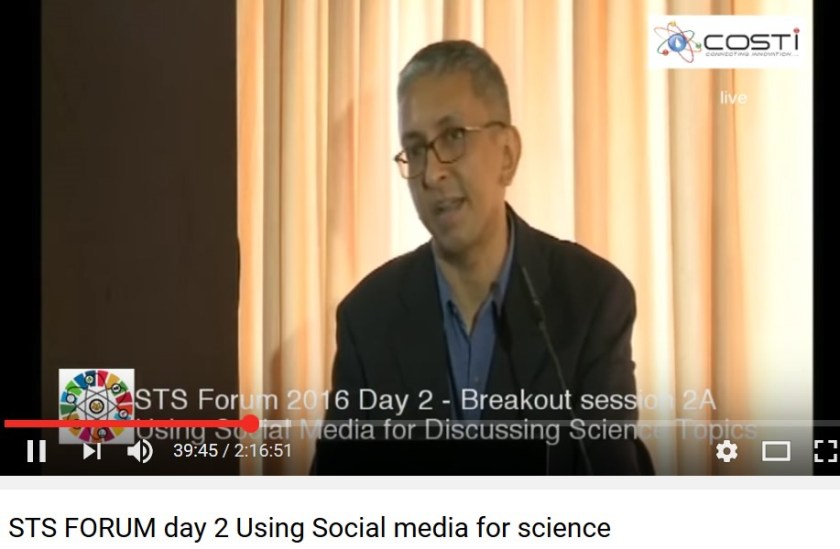
I was keynote speaker during the session on ‘Using Social Media for Discussing Science Topics’. I used it to highlight how social media have become both a boon and bane for scientific information and thinking in Sri Lanka. This is due to peddlers of pseudo-science, anti-science and superstition being faster and better to adopt social media platforms than actual scientists, science educators and science communicators.
Social Media in #LKA:Do Science & Reason stand a chance? Asks Nalaka Gunawardene
Sri Lanka takes justified pride in its high literacy levels and equally high coverage of vaccination against infectious diseases. But we cannot claim to have a high level of scientific literacy. If we did, it would not be so easy for far-fetched conspiracy theories to spread rapidly even among educated persons. Social media tools have ‘turbo-charged’ the spread of associated myths, superstitions and conspiracy theories!
I cautioned: “Unless we make scientific literacy an integral part of everyone’s lives, ambitious state policies and programmes to modernize the nation could well be jeopardized. Progress can be undermined — or even reversed — by extremist forces of tribalism, feudalism and ultra-nationalism that thrive in a society that lacks the ability to think critically.”
It is not a case of all doom and gloom. I cited examples of private individuals creatively using social media to bust myths and critique all ‘sacred cows’ in Lankan society – including religions and military. These voluntary efforts contrast with much of the mainstream media cynically making money from substantial advertising from black magic industries that hoodwink and swindle the public.
My PowerPoint presentation:
Video recording of our full session:
The scoping note I wrote for our session:
Sri Lanka STS Forum panel on Using Social Media for Discussing Science Topics. 9 Sep 2016. L to R – Asanga Abeygunasekera, Nalaka Gunawardene, Dr Piyal Ariyananda, Dr Ananda Galappatti & Smriti Daniel
Session: Using Social Media for Discussing Science Topics
With 30 per cent of Sri Lanka’s 21 million people regularly using the Internet, web-based social media platforms have become an important part of the public sphere where myriad conversations are unfolding on all sorts of topics and issues. Facebook is the most popular social media outlet in Sri Lanka, with 3.5 million users, but other niche platforms like Twitter, YouTube and Instagram are also gaining ground. Meanwhile, the Sinhala and Tamil blogospheres continue to provide space for discussions ranging from prosaic to profound. Marketers, political parties and activist groups have discovered that being active in social media is to their advantage.
Some science and technology related topics also get discussed in this cacophony, but given the scattered nature of conversations, it is impossible to grasp the full, bigger picture. For example, some individuals or entities involved in water management, climate advocacy, mental health support groups and data-driven development (SDG framework) are active in Sri Lanka’s social media platforms. But who is listening, and what influence – if any – are these often fleeting conservations having on individual lifestyles or public policies?
Is there a danger that self-selecting thematic groups using social media are creating for themselves ‘echo chambers’ – a metaphorical description of a situation in which information, ideas, or beliefs are amplified or reinforced by transmission and repetition inside an “enclosed” system, where different or competing views are dismissed, disallowed, or under-represented?
Even if this is sometimes the case, can scientists and science communicators afford to ignore social media altogether? For now, it appears that pseudo-science and anti-science sentiments – some of it rooted in ultra-nationalism or conspiracy theories — dominate many Lankan social media exchanges. The keynote speaker once described this as Lankan society permanently suspending disbelief. How and where can the counter-narratives be promoted on behalf of evidenced based, rational discussions? Is this a hopeless task in the face of irrationality engulfing wider Lankan society? Or can progressive and creative use of social media help turn the tide in favour of reason?
This panel would explore these questions with local examples drawn from various fields of science and skeptical enquiry.
Sri Lanka’s first Science and Technology for Society (STS) Forum took place from 7 to 10 September in Colombo. Organized by the Prime Minister’s Office and the Ministry of Science, Technology and Research, it is one of the largest gatherings of its kind to be hosted by Sri Lanka.
What sets STS Forums apart is that they are not merely events where scientists talk to each other. That surely will happen, but there will be many more voices and, hopefully, much broader conversations.
In this week’s Ravaya column (in Sinhala, appearing in the print issue of 11 Sep 2016), I look at Sri Lanka’s appalling lack of scientific literacy.
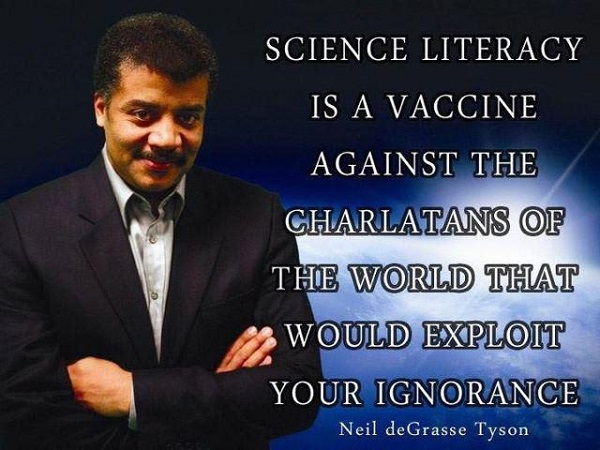
As Dr Neil deGrasse Tyson, American astrophysicist, cosmologist and science communicator, says, “Scientific literacy is an intellectual vaccine against the claims of charlatans who would exploit ignorance.”
Sri Lanka takes justified pride in its high literacy levels and equally high coverage of vaccination against infectious diseases. But we cannot claim to have a high level of scientific literacy.
A healthy dose of scepticism is essential to safeguard ourselves from superstitions, political claims and increasingly sophisticated – but often dishonest – product advertising. That’s what scientific literacy builds inside our minds.
I argue that unless we make scientific literacy an integral part of everyone’s lives, ambitious state policies and programmes to modernize the nation could well be jeopardized. Progress can be undermined — or even reversed — by extremist forces of tribalism, feudalism and ultra-nationalism that thrive in a society that lacks the ability to think critically.
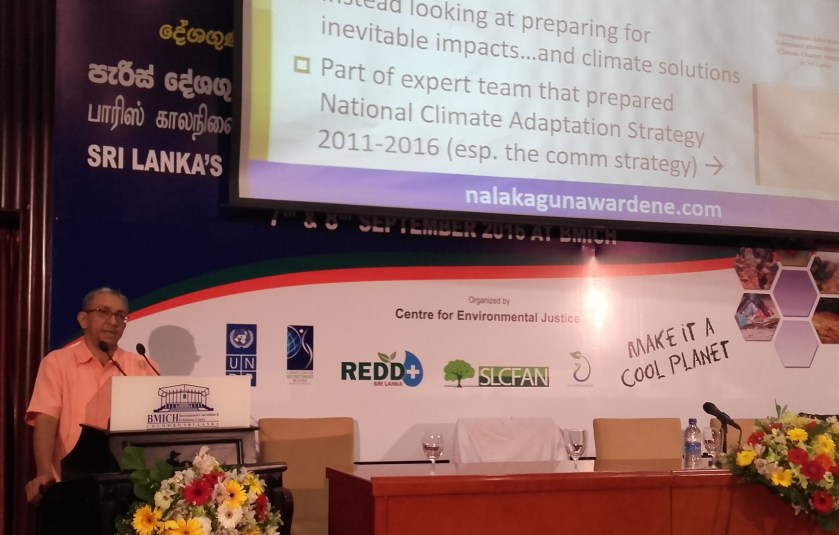
Nalaka Gunawardene speaks at national conference on Sri Lanka’s readiness for implementing the Paris Agreement. BMICH Colombo, 8 September 2016
Climate change COP21 in December 2015 adopted the Paris Agreement to avoid, mitigate and adapt to climate change. Among many other solutions, Sri Lanka’s “intended nationally determined contribution” (INDC) has agreed to reduce 7% emissions from energy and transport and 23% conditional reductions by 2030.
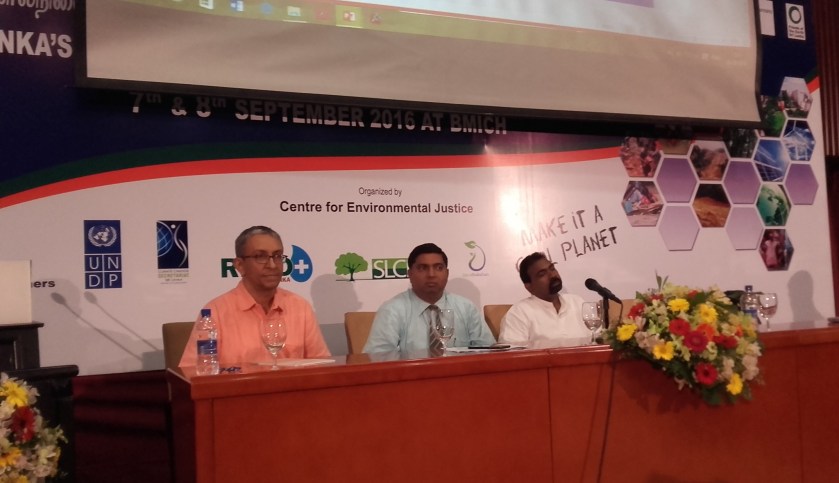
Sri Lanka’s Centre for Environmental Justice in collaboration with the government’s Climate Change Secretariat, UNDP and Janathakshan held a national conference on “SRI LANKA’S READINESS FOR IMPLEMENTING PARIS CLIMATE AGREEMENT” on 7 and 8 September 2016 in Colombo. It was attended by over 200 representatives from government, civil society and corporate sectors.
I was asked to speak in Session 5: Climate Solutions, on “Climate communication and Behaviour changes”. This is a summary of what I said, and the PowerPoint presentation used.
L to R: Nalaka Gunawardene; Nalin Munasinghe, National Programme Manager at Sri Lanka UN-REDD Programme, and Uchita de Zoysa
As climate change impacts are felt more widely, the imperative for action is greater than ever. Telling the climate story in accurate and accessible ways should be an essential part of our climate response.
That response is currently organised around two ‘planks’: mitigation and adaptation. Climate communication can be the ‘third plank’ that strengthens the first two.
Encouragingly, more journalists, broadcasters, researchers and advocacy groups are taking up this challenge. They urgently need more media and public spaces — as well as greater resources — to sustain public engagement.
The United Nations Framework Convention on Climate Change (UNFCCC), which Sri Lanka has signed and ratified, recognizes the importance of IEC. It calls for “improving awareness and understanding of climate change, and creating solutions to facilitate access to information on a changing climate” to winning public support for climate related policies.
The UNFCCC, through its Article 6, and its Kyoto Protocol, through its Article 10 (e), call on governments “to educate, empower and engage all stakeholders and major groups on policies relating to climate change”.
When strategically carried out, IEC can be a powerful force for change on both the ‘supply’ and ‘demand’ sides of climate adaptation and climate related public information. In this analogy:
‘supply’ involves providing authentic, relevant and timely information to all those who need it, in languages and formats they can readily use; and
‘demand’ means inspiring more individuals and entities to look for specific knowledge and skills that can help make themselves more climate resilient.
These two sides of the equation can positively reinforce each other, contributing significantly to Sri Lanka’s fight against climate change.
To be effective, climate communication also needs to strike a balance between alarmism and complacence. We have to place climate concerns within wider development and social justice debates. We must also localise and personalise as much as possible.
Dr M Sanjayan, vice president of development and communications strategy at Conservation International, a leading advocacy group, says environmentalists and scientists have failed to build sufficient urgency for action on climate change. He feels we need new communication approaches.
The Lankan-born science communicator wrote in 2013: “By focusing on strong narratives about peoples’ lives in the present rather than the future; by keeping stories local and action-oriented (solvable); and by harnessing the power of narrative and emotion, we have a better chance to build widespread public support for solutions.”
Scientific Literacy: ‘Mind Vaccine’ Sri Lanka Urgently Needs
By Nalaka Gunawardene
STS Forum Sri Lanka
Sri Lanka’s first Science and Technology for Society (STS) Forum will take place from 7 to 10 September in Colombo. Organized by the Prime Minister’s Office and the Ministry of Science, Technology and Research, it is one of the largest gatherings of its kind to be hosted by Sri Lanka.
Modelled on Japan’s well known annual STS forums, this event will be attended by over 750 participants coming from 24 countries – among them will be local and foreign scientists, inventors, science managers, science communicators and students.
What sets STS Forums apart is that they are not merely events where scientists talk to each other. That surely will happen, but there will be many more voices and, hopefully, much broader conversations.
As a member of the content planning team for this event, my particular focus has been on the strand called “citizen science” – interpreted, in this instance, as activities that enhance the public understanding of science and technology.
Under this strand, there will be four sessions that explore: community involvement in science and research; informal science education for the 21st century; communicating science, technology and innovation; and using social media for discussing science.
At first glance, these topics don’t seem as exciting as nanotechnology, robotics and space technology that are being covered in other sessions. But I would argue that public engagement is the most decisive factor if science and technology are to play a significant role in the economic development and future prosperity of Sri Lanka.
Wanted: Mind Vaccines!
Public engagement of science goes well beyond teaching science and technology subjects in schools or universities. It is also bigger than (state or private sector driven) science centres, exhibitions or science content in the media. All these elements help, but at its most basic, what we need to promote is a way of thinking known as scientific literacy.
Scientific literacy is defined as “the knowledge and understanding of scientific concepts and processes required for personal decision making, participation in civic and cultural affairs, and economic productivity”.
Indeed, some basic scientific knowledge and technical skills have become essential for survival in the 21st century. But scientific literacy provides more than just utility benefits.
As Dr Neil deGrasse Tyson, American astrophysicist, cosmologist and science communicator, says, “Scientific literacy is an intellectual vaccine against the claims of charlatans who would exploit ignorance.”
Dr Neil deGrasse Tyson: One man worth cloning if that were feasible…
Sri Lanka takes justified pride in its high literacy levels and equally high coverage of vaccination against infectious diseases. But we cannot claim to have a high level of scientific literacy.
If we did, it would not be so easy for far-fetched conspiracy theories to spread rapidly even among educated persons. For example, claims of an ‘infertility plot’ to make majority ethnic group lose its ability to reproduce. Or tales of miracle waters and ‘cosmic forces’ healing those terminally ill. Or alien spacecraft (allegedly) threatening national security…
It is customary to temporarily suspend our disbelief to enjoy films, novels and other creative art forms. But most of us don’t confuse fiction with fact, even with highly plausible scenarios.
These inconvenient questions are worth asking, if only to make us pause and think.
Sleepwalking Nation?
Dr Abraham Thomas Kovoor (1898 – 1978): Myth-buster who feared none
Half a century ago, a Kerala-born science teacher named Dr Abraham Thomas Kovoor (1898 – 1978) settled down in newly independent Ceylon. After retirement, he took to investigating so-called supernatural phenomena and paranormal practices. He found adequate physical or psychological explanations for almost all of them. In that process, he exposed many ‘god men’ who were thriving on people’s ignorance, gullibility and insecurities.
Dr Kovoor, who founded Ceylon Rationalist Association in 1960, summed it up in these words: “He who does not allow his miracles to be investigated is a crook; he who does not have the courage to investigate a miracle is gullible; and he who is prepared to believe without verification is a fool.”
Most Lankans would fall into one of these three categories – and the minority with open minds are under ‘peer pressure’ to assimilate!
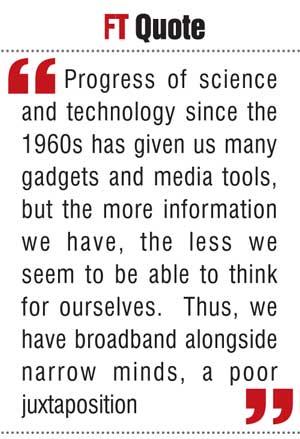
Progress of science and technology since the 1960s has given us many gadgets and media tools, but the more information we have, the less we seem to be able to think for ourselves. Thus, we have broadband alongside narrow minds, a poor juxtaposition!
This has been building up for some years. In an op-ed titled ‘Can Rationalists Awaken the Sleep-walking Lankan Nation?’ published in Groundviews.org in January 2012, I wrote: “Paradoxically, we now have far more communication channels and technologies yet decidedly fewer opportunities and platforms for dispassionate public debate. Today’s Lankan society welcomes and blindly follows Malayalis who claim to know more about our personal pasts and futures than we’d ever know ourselves. And when we see how our political and business elite patronize Sai Baba, Sri Chinmoy and other gurus so uncritically, we must wonder if there is any intelligent life in Colombo…”
Not every source of mass hallucination is imported, of course. As I noted four years ago, “Sacred cows, it seems, have multiplied faster than humans in the past half century. Our cacophonous airwaves and multi-colour Sunday newspapers are bustling with an embarrassment of choice for salvation, wealth, matrimony, retribution and various other ‘quick fixes’ for this life and (imagined) next ones. Embarrassment, indeed!”
Science for All
So what is to be done?
The proliferation of smartphones and other digital tools have not necessarily opened our minds, or made us Lankans any less gullible to charlatans or zealots. This is a huge conundrum of our times.
That is because mastery over gadgets does not necessarily give us scientific literacy. It involves a rational thought process that entails questioning, observing physical reality, testing, hypothesizing, analyzing and then discussing (not always in that order).
A healthy dose of scepticism is essential to safeguard ourselves from superstitions, political claims and increasingly sophisticated – but often dishonest – product advertising. That’s what scientific literacy builds inside our minds.
Unless we make scientific literacy an integral part of everyone’s lives, ambitious state policies and programmes to modernize the nation could well be jeopardized. Progress can be undermined — or even reversed — by extremist forces of tribalism, feudalism and ultra-nationalism that thrive in a society that lacks the ability to think critically.
A sporting analogy can illustrate what is needed. Cricket is undisputedly our national passion. It is played professionally only by a handful of men (and even fewer women) who make up the national teams and pools. But most of the 21 million Lankans know enough about cricket to follow and appreciate this very English game.
Similarly, there are only a few thousand Lankans engaged in researching or teaching different branches of science and technology – they are the ‘professionals’ who do it for a living. But in today’s world, the rest of society also needs to know at least the basic concepts of science.
Cricket didn’t has become part of our socio-cultural landscape overnight. It took years of innovation and persistence, especially by trail-blazing radio cricket commentators in Sinhala and Tamil. By the time we achieved Test status in 1981, all levels of our society were familiar with cricket’s rules and nuances.
Giving everyone a minimum dose of scientific literacy requires a similar marshalling of forces – including civil society mobilization, media collaboration, creative innovation and social marketing.
‘Science for All’ acquires true meaning only when every citizen – irrespective of education, profession or income level – gets enough skepticism to avoid being exploited by various scams or misled by conspiracy theorists.
Are we ready to embark on this intellectual vaccination process?
Award-winning science writer Nalaka Gunawardene counts over 25 years of national and international media experience. He blogs at https://nalakagunawardene.com and is active on Twitter as @NalakaG
The South-East Asia Region of the World Health Organization (WHO-SEARO) held its 69th Regional Committee meeting in Colombo from 5 to 9 September 2016. The meeting of 15 ministers of health from the region took a close look at Sri Lanka’s public health system – which has been able to provide substantial value over the decades.
Yet, the public health system rares gets the credit it deserves: the media and citizens alike often highlight its shortcomings without acknowledging what it delivers, year after year.
In this week’s Ravaya column (in Sinhala, appearing in the print issue of 4 Sep 2016), I salute the public health system of Sri Lanka that has accomplished much amidst various challenges.
Sri Lanka’s public hospitals and related field programmes – like public health inspectors, family health workers and specific disease control efforts — provide a broad range of preventive and curative services. In most cases, these are provided free to recipients, irrespective of their ability to pay.
This is sustained by taxes: Sri Lanka’s public health sector annually receives allocations equal to around 2% of the country’s GDP.
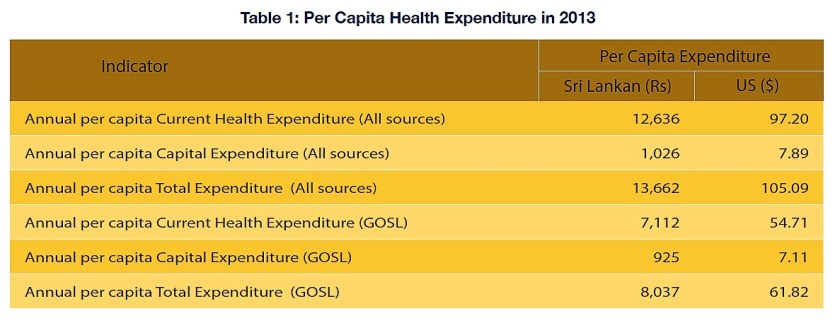
I quote from the recently released Sri Lanka National Health Accounts (2013) report. Its data analysis shows that the Government of Sri Lanka accounts for 55% of the total health care provision of the country. Considering all financial sources (public and private), the per capita current health expenditure of Sri Lanka in 2013 amounted to LKR 12,636 (97.2 US$).
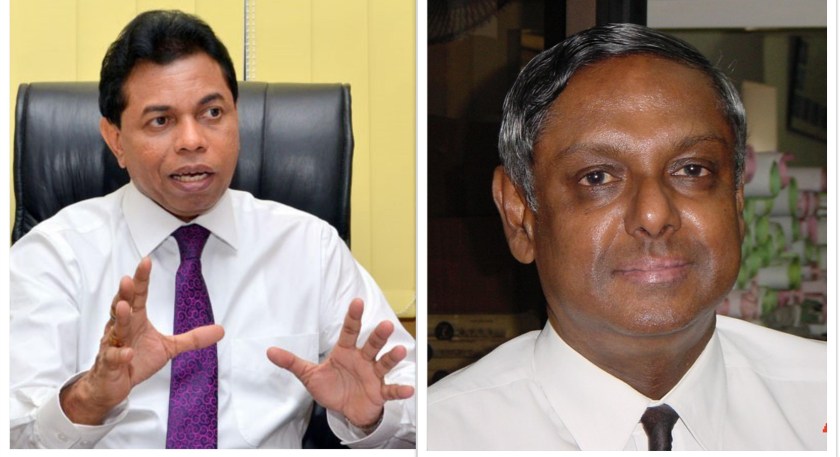
L to R – Dr Palitha Mahipala, Director General of Health Services, and Dr Jacob Kumaresan, WHO Representative to Sri lanka [WHO Photo]කොතරම් කළත් ලෙහෙසියෙන් හොඳක් නොඅසන රාජ්ය ක්ෂේත්රයන් තිබෙනවා. එයින් එකක් තමයි අපේ මහජන සෞඛ්ය සේවාව.
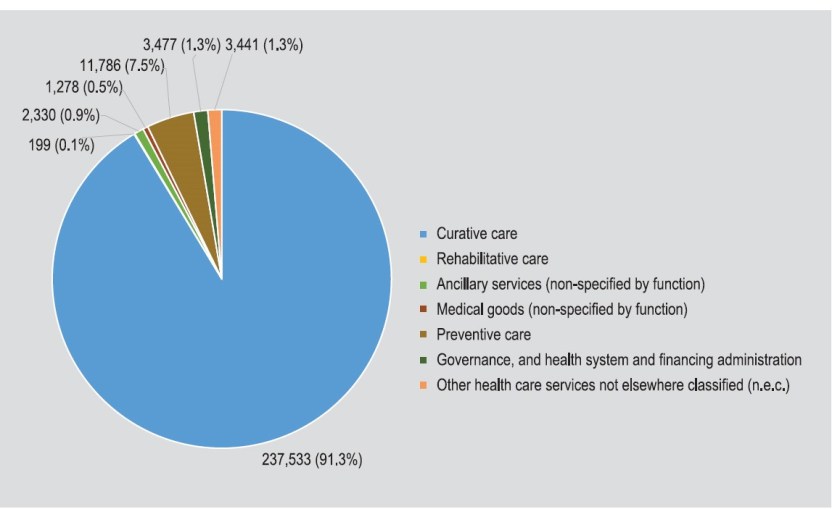
Distribution of Sri Lanka’s current health expenditure 2013 by Broader Categories of illnesses (LKR million, %) – Source: National Health Accounts 2013
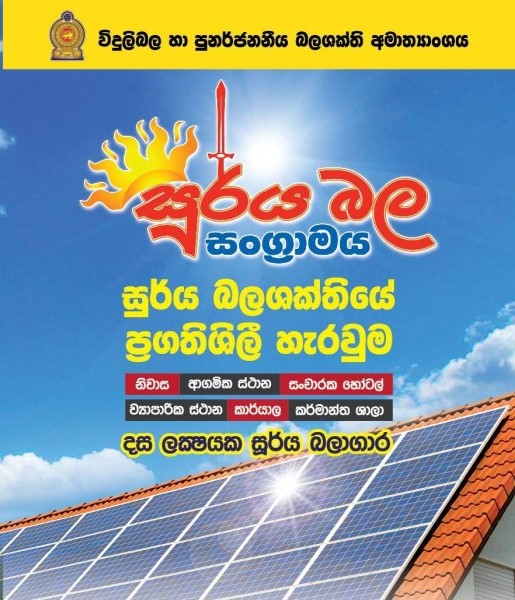
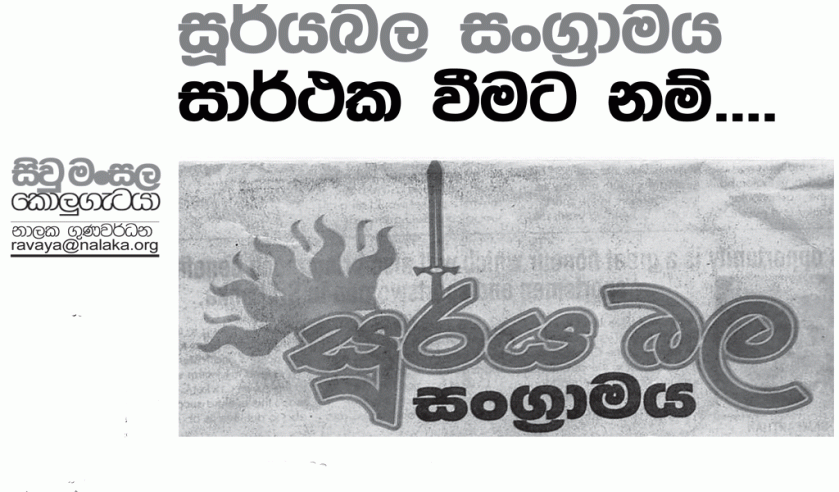
Soorya Bala Sangramaya – සූර්යබල සංග්රාමය Image courtesy Ministry of Power and Renewable Energy, Sri Lanka
In this week’s Ravaya column (in Sinhala, appearing in the print issue of 28 August 2016), I applaud the Sri Lanka government’s new solar power generation programme, and suggest ways in which it can be made more effective in securing energy independence of the nation.
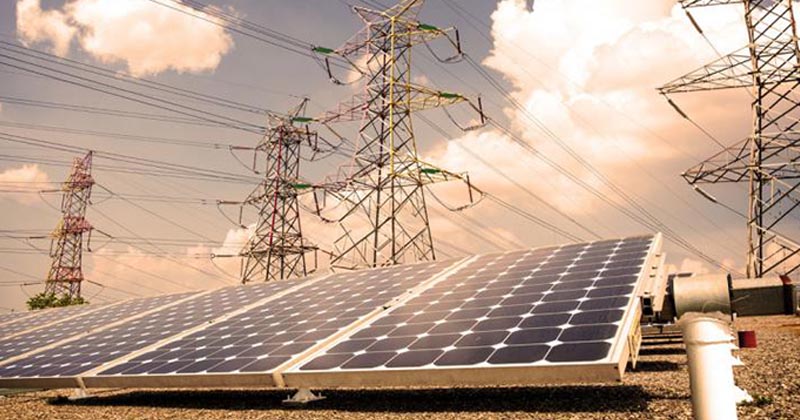
The global trend, especially for domestic and small scale electricity users, is towards decentralized and distributed energy systems. In this scenario, users generate power on site, tapping into renewable sources available locally.
How can our tropical island plug into the sun, wind, trees and the ocean to meet more of our energy needs? Why don’t renewable energies produce a larger share of our energy mix? Who or what are the bottlenecks? I discuss these and other related issues in the column this week.
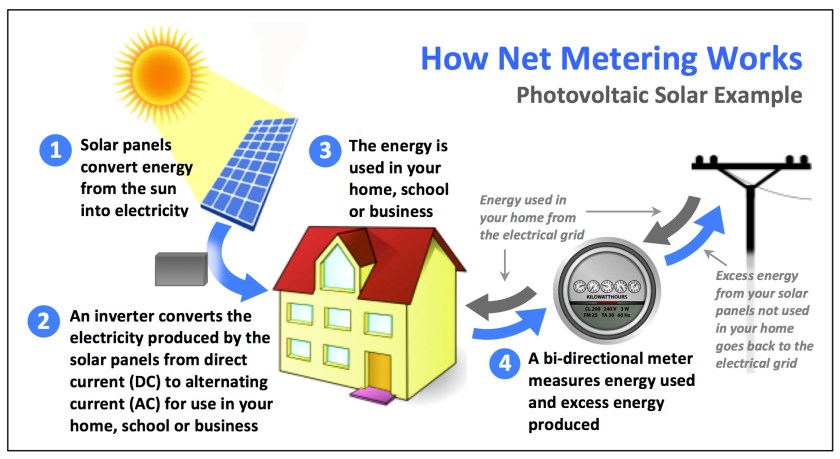
Self-generating electricity from renewables is slowly picking up, partly encouraged by the introduction in 2009 of net metering. This allows private individuals or companies to “sell” their surplus power to the national grid (the transaction happens in kind, not cash). A two-way electricity meter enables this process.
In August 2016, the Cabinet approved a community based solar power generation programme. Known as “Soorya Bala Sangramaya” (Battle for Solar Energy), it is expected to make at least 20% of electricity consumers to also generate electricity using solar panels – they will be able to sell their excess to the national grid under a guaranteed tariff.
Announcing the Cabinet decision, the government said: “Currently 50% of electricity production in Sri Lanka is done by renewable energy sources and it is expected to increase this percentage to 60% in 2020 and to 70% in 2030. Accordingly, it is required to build wind power plants of 600 MW and solar power plants of 3,000 MW within the next 10 years. It is expected to join consumers in power generation and to promote small solar power plants established on the roof of their houses by the project called ‘Soorya Bala Sangramaya’. It is expected to make at least 20% of consumers to produce electricity and it is expected pay for the excess electricity generated by the consumer.”
Drawing from my recent interactions with the IGF Academy, as well as several academic and civil society groups, I position the current public debates on web’s socio-cultural impacts in the context of freedom of expression.
With 30 per cent of our population now using the Internet, it is no longer a peripheral pursuit. Neither is it limited to cities or rich people. So we urgently need more accurate insights into how society and economy are being transformed by these modern tools.
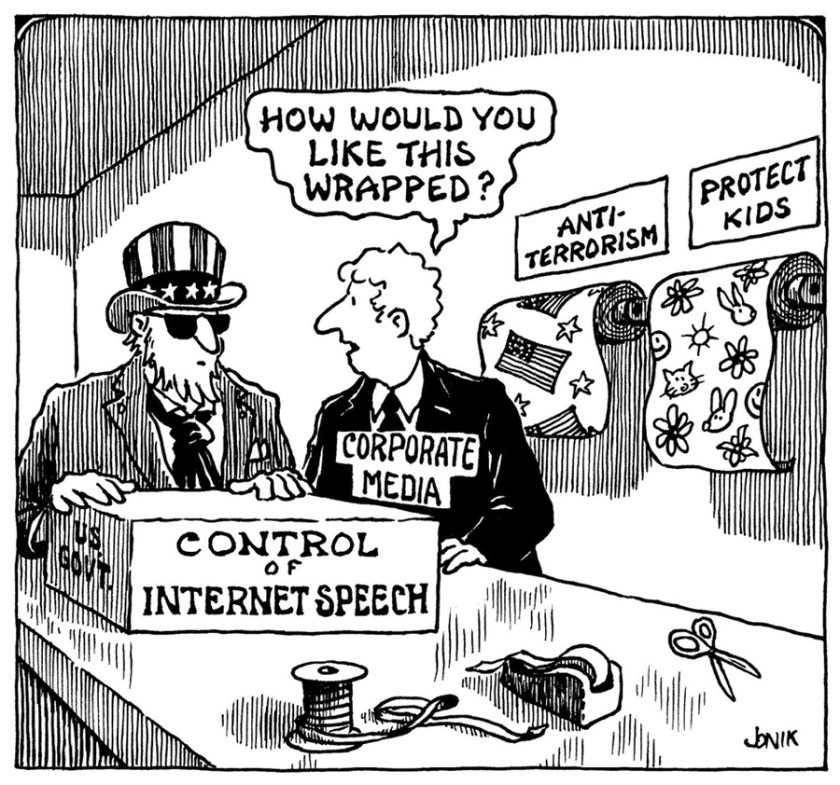
My basic premise: many well-meaning persons who urge for greater regulation of the web and social media overlook that governments in Sri Lanka have a terrible track record in stifling dissent in the name of safeguarding the public.
Cartoon by John Jonik
I argue: “As a democracy recovering from a decade of authoritarianism, we need to be especially careful how public sentiments based on fear or populism can push policymakers to restrict freedom of expression online. The web has become the last frontier for free speech when it is under pressure elsewhere.
“When our politicians look up to academics and researchers for policy guidance, the advice they often get is control or block these new media. Instead, what we need is more study, deeper reflection and – after that, if really required – some light-touch regulation.”
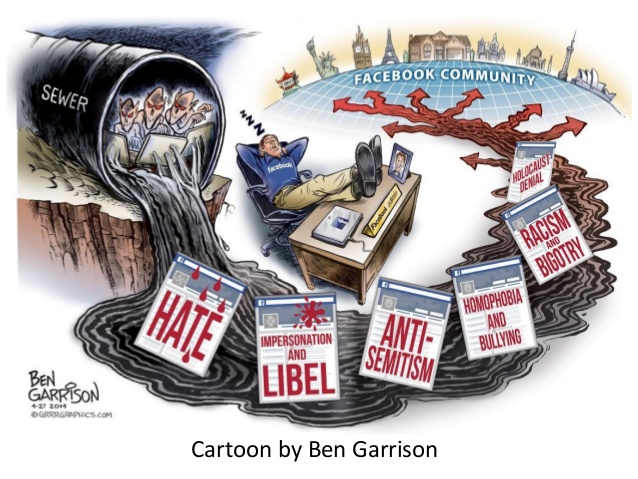
I acknowledge that there indeed are problems arising from these new technologies – some predictable, and others not. They include cyber-bullying, hate speech, identity theft through account hijacking, trolling (deliberately offensive or provocative online postings) and sexting (sending and receiving sexually explicit messages, primarily via mobile phones).
I cite some research findings from the work done by non-profit groups or media activists. These findings are not pretty, and some of them outright damning. But bans, blocks and penalties alone cannot deal with these or other abuses, I argue.
I end with these words: “We can and must shape the new cyber frontier to be safer and more inclusive. But a safer web experience would lose its meaning if the heavy hand of government or social orthodoxy tries to make it a sanitized, lame or sycophantic environment at the same time. We sure don’t need a cyber nanny state.”
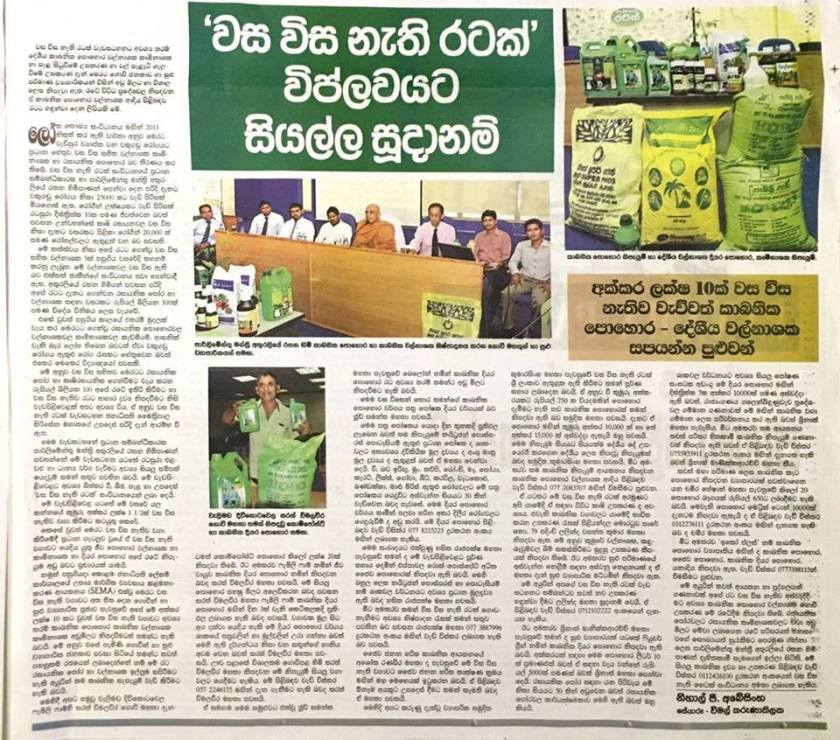
In this week’s Ravaya column (appearing in the print issue of 21 August 2016), I take a critical look at the Sri Lanka government’s new ‘Toxin-Free Nation” effort. Announced in 2015, it is a three year programme (2016-2018) “to convert Sri Lanka into a green nation and enable its citizens to enjoy foods free of chemicals and agro-toxins”.
Curiously, the programme is being implemented by a state entity called the Strategic Enterprise Management Agency (SEMA), set up in 2004 originally to monitor and support state owned enterprises. The century old and widely experienced Department of Agriculture is not involved (and apparently fully excluded).
Toxin free country – SEMA image
According to the official programme document, available on SEMA website, “the aim of the program is to replace import driven agrochemical based agriculture with organic, sustainable natural agro-culture.”
[Quoted verbatim: not sure why they insist on using the term agro-culture instead of agriculture.]
The document claims, without citing any references or sources, that Sri Lanka spends LKR 300 billion a year “to import milk products, sugar, agrochemicals, seeds, etc., while farmer subsidies account for a further Rs.30 billion a year” (p12).
It further says, on p23, “As a long-term strategy for toxin-free agriculture, it is anticipated that indigenous rice varieties will significantly replace the improved varieties that are presently grown by farmers. According to the plan, 30% of rice produced in Sri Lanka would be indigenous varieties at the end of the three year plan. Further, organic, natural, biological fertilizers and pest repellants will replace the agrochemicals used to cultivate these improved varieties and it is anticipated that these toxins will be completely eradicated from Sri Lankan soil by the third year of the program.”
The document is full of uncorroborated claims and seemingly unrealistic goals. In 2014, organically farmed land accounted for less than one percent of the total cultivated land in Sri Lanka.
The exact methodology of going from under 1 percent to 33% in three years is not clear. On p15, the document says: “A toxin-less agro-culture is a system geared to obtain the required “plant-food” from the air, the land and the immediate environment. Multicropping, soil conservation, water and irrigation management, promoting the presence of agrofriendly fauna and flora as well as mechanical systems for pest control are all part of these systems.”
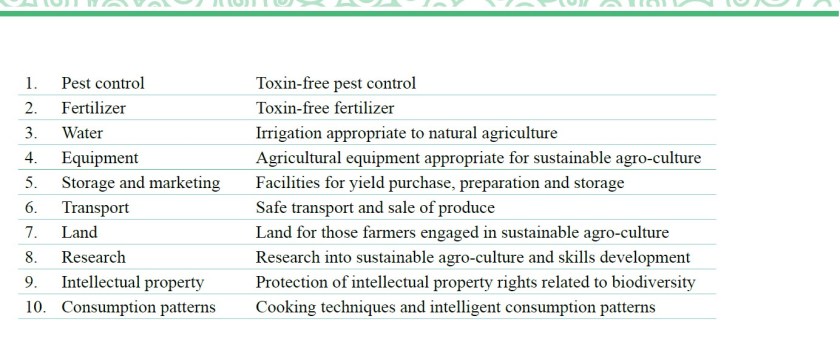
The plan lists a 10 point, multi-pronged approach as follows:
The plan does make some sense when it takes stock of organically grown food available in the market today. “In 2015, the price of organics was two or three times that of foods produced with the application of agrochemicals. Therefore, only the middle upper and upper income bracket of consumer could afford them leaving the common citizen of the country no choice but to purchase and consume toxin laced alternatives.” (p13).
I have been saying this for years. As I wrote in August 2014: “Despite their appeal, organics will remain a niche market, albeit a growing one, for years to come. Nobody wants to eat food laced with agrochemical residues (for which no safe upper limits have been set in Sri Lanka). But when organics typically cost 50% or more than non-organics, how many can really afford it? Unless this gap is narrowed, organics will remain beyond reach for many.”
As a long standing watcher and commentator on conservation farming (which is bigger than organics), I have been seeking clarity on this Toxin-Free Nation plan of Sri Lanka, being spearheaded by President Maithripala Sirisena himself. But his staff involved in promoting and implementing the programme have opted not to respond to specific queries in the public media and scientific forums.
Worse, they have shown high levels of intolerance towards critics — sometimes vilifying critics as ‘agents of chemical farming’ or ‘promoters of agrochemical companies’! This utter failure to engage is inconsistent with good governance policies of the President and government. The Department of Agriculture being excluded from the whole process is also a matter for grave concern: this means there now are TWO parallel structures for farming policy and promotion in Sri Lanka!
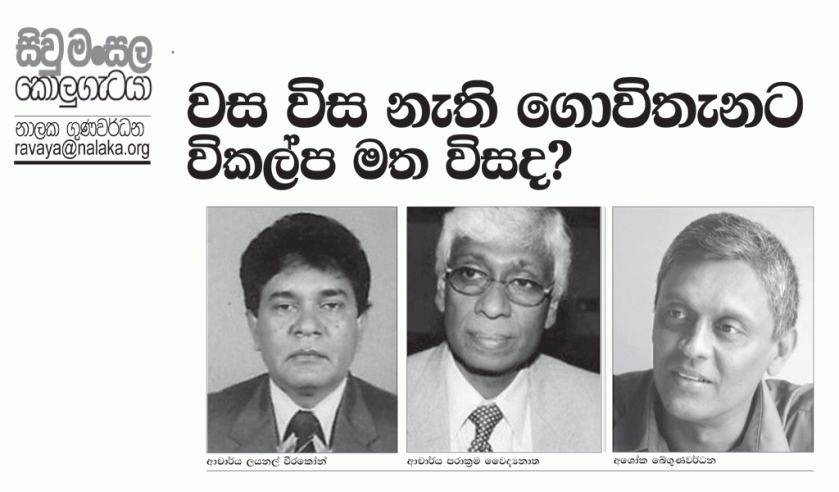
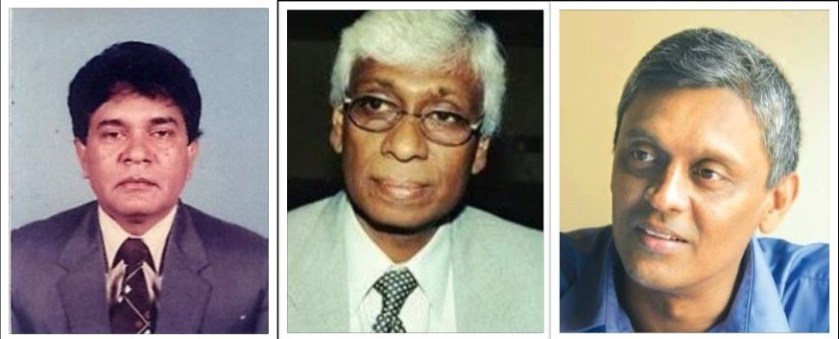
In this column, I call for a dispassionate, rational discussion of this politically driven national programme for toxin-free farming. I also refer to three outstanding Lankan scientists who have advocated conservation farming for decades – but they have done so without the intellectual arrogance and confrontational politics of the current effort. These pathfinders are: late Dr Ray Wijewardene, Dr Lionel Weerakoon and Dr Parakrama Waidyanatha.
L to R – Dr Lionel Weerakoon, Dr Parakrama Waiyanatha, Asoka Abeygunawardena
Uncritical media reporting (such as this one in state media) leaves the Toxin-Free Nation Programme unchallenged even when its claims and plans don’t add up…






 What sets STS Forums apart is that they are not merely events where scientists talk to each other. That surely will happen, but there will be many more voices and, hopefully, much broader conversations.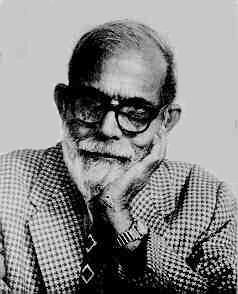
 That is because mastery over gadgets does not necessarily give us scientific literacy. It involves a rational thought process that entails questioning, observing physical reality, testing, hypothesizing, analyzing and then discussing (not always in that order).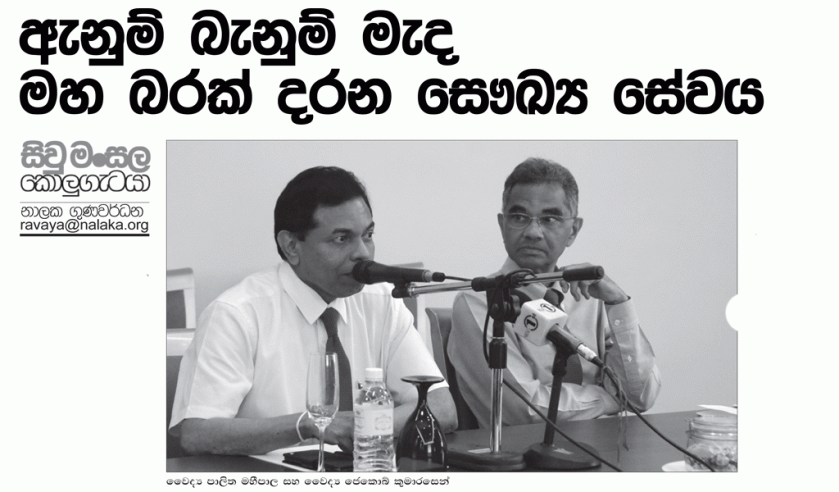
![L to R - Dr Palitha Mahipala, Director General of Health Services, and Dr Jacob Kumaresan, WHO Representative to Sri lanka [WHO Photo]](https://nalakagunawardene.com/wp-content/uploads/2016/10/l-to-r-dr-palitha-mahipala-director-general-of-health-services-and-dr-jacob-kumaresan-who-representative-to-sri-lanka.jpg?w=840)