I discuss Facebook’s Community Standards and the complaints mechanism currently in place, and the difficulties that non-English language content poses for Facebook’s designated monitors looking out for violations of these standards. Hate speech and other objectionable content produced in local languages like Sinhala sometimes pass through FB’s scrutiny. This indicates more needs to be done both by the platform’s administrators, as well as by concerned FB users who spot such content.
But I sound a caution about introducing new Sri Lankan laws to regulate social media, as that can easily stifle citizens’ right to freedom of expression to question, challenge and criticise politicians and officials. Of course, FoE can have reasonable and proportionate limits, and our challenge is to have a public dialogue on what these limits are for online speech and self-expression that social media enables.
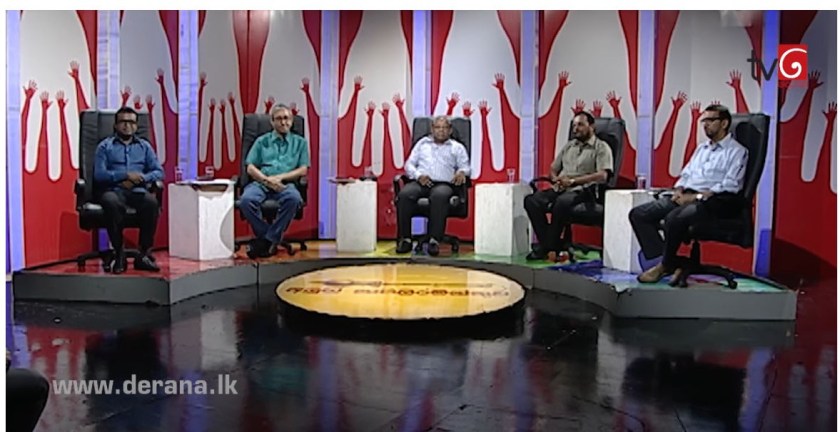
Aluth Parlimenthuwa live talk show on Social Media Blocking in Sri Lanka – TV Derana, 14 March 2018
Sri Lanka’s first ever social media blocking lasted from 7 to 15 March 2018. During that time, Facebook and Instagram were completely blocked while chat apps WhatsApp and Viber were restricted (no images, audio or video, but text allowed).
On 7 March 2018, the country’s telecom regulator, Telecommunications Regulatory Commission (TRCSL), ordered all telecom operators to impose this blocking across the country for three days, Reuters reported. This was “to prevent the spread of communal violence”, the news agency quoted an unnamed government official as saying. In the end, the blocking lasted 8 days.
Both actions are unprecedented. In the 23 years Sri Lanka has had commercial Internet services, it has never imposed complete network shutdowns (although during the last phase of the civil war between 2005 and 2009, the government periodically shut down telephone services in the Northern and Eastern Provinces). Nor has any social media or messaging platforms been blocked before.
I protested this course of action from the very outset. Restricting public communications networks is ill-advised at any time — and especially bad during an emergency when people are frantically seeking reliable situation updates and/or sharing information about the safety of loved ones.
Blocking selected websites or platforms is a self-defeating exercise in any case, since those who are more digitally savvy – many hate peddlers among them –can and will use proxy servers to get around. It is the average web user who will be deprived of news, views and updates.
While the blocking was on, I gave many media interviews to local and international media. I urged the government “to Police the streets, not the web!”.
At the same time, I acknowledged and explained how a few political and religious extremist groups have systematically ‘weaponised’ social media in Sri Lanka during recent years. These groups have been peddling racially charged hate speech online and offline. A law to deal with hate speech has been in the country’s law books for over a decade. The International Covenant on Civil and Political Rights (ICCPR) Act No 56 of 2007 prohibits the advocacy of ‘religious hatred that constitutes incitement to discrimination, hostility or violence’. This law, fully compliant with international human rights standards, has not been enforced.
On 14 March 2018, I took part in the ‘Aluth Parlimenthuwa’ TV talk show of TV Derana on this topic, where I articulated the above and related views. The other panelists were Deputy Minister Karu Paranawithana, presidential advisor Shiral Lakthilaka, Bar Association of Sri Lanka chairman U R de Silva, and media commentator Mohan Samaranayake.
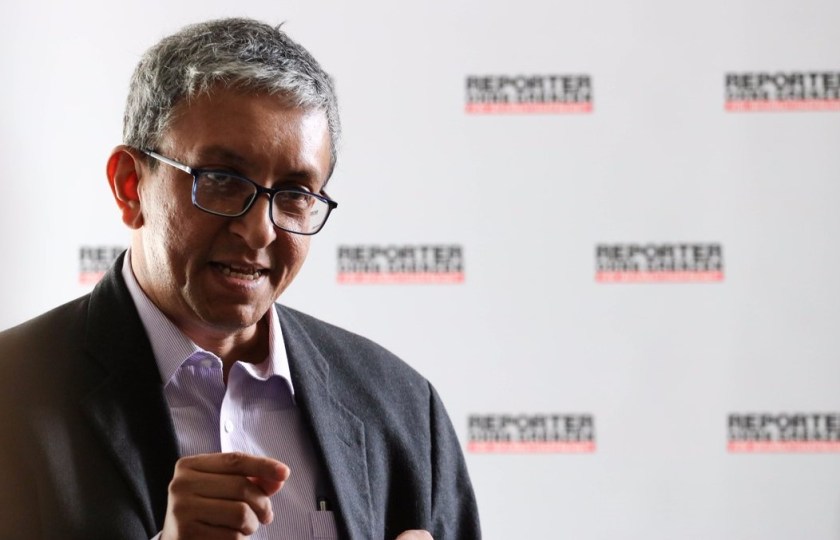
Nalaka Gunawardene speaks on media freedom and media professionalism in Sri Lanka at Germany’s Reporters without Borders (RSF, or Reporter ohne Grenzen) in Berlin, 17 Nov 2017
On a brief visit to Berlin, Germany, to speak at a media research and academic symposium, I was invited by Germany’s Reporters without Borders (RSF, or Reporter ohne Grenzen) to address a side event at their office that looked at media freedom status and media development needs of Sri Lanka.
It was a small gathering that involved some media rights activists, researchers and journalists in Germany who take an interest in media freedom and media development issues in Asia. I engaged in a conversation first with Anne Renzenbrink of RSF Germany (who covers Asia) and then with my audience.
I said the media freedoms have significantly improved since the change of government in Jan 2015 – journalists and activists are no longer living in fear of white vans and government goon squads when they criticise political leaders.
But the pre-2015 benchmarks were abysmally low and we should never be complacent with progress so far, as much more needs to be done. We need to institutionalise media freedoms AND media responsibilities. So our media reforms agenda is both wide ranging and urgent, I said (and provided some details).
I used my favourite metaphor: the media freedom glass in Sri Lanka is less than half full today, and we need to gradually fill it up. But never forget: there was no water, and not even a glass, before Jan 2015!
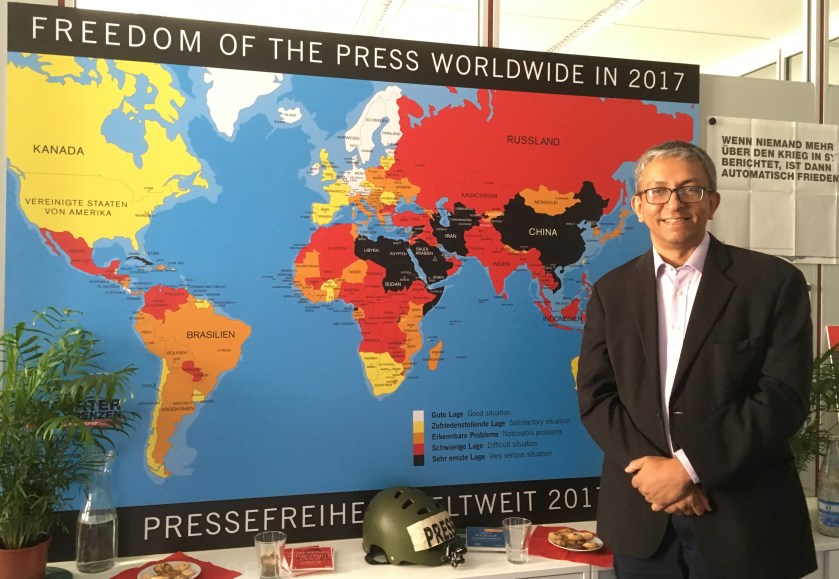
Sri Lanka has risen 24 points in the World Press Freedom Index that RSF compiles every year: 2016, we jumped up from 165th rank (in 2015, which reflected the previous year’s conditions) to 141st rank out of 180 countries assessed. The new ranking remained the same between 2016 and 2017. Sri Lanka is still marked as red on the world map of the Index, indicating ‘Difficult situation’. We still have a long way to go…
When asked how European partners can help, I said: please keep monitoring media freedom in Sri Lanka, provide international solidarity when needed, and support the journalists’ organisations and trade unions to advocate for both media rights and media professionalism.
I was also asked about slow progress in investigating past atrocities against journalists and media organisations; recent resumption of web censorship after a lull of two years; how journalists are benefitting from Sri Lanka’s new Right to Information law; the particular challenges faced by journalists in the North and East of Sri Lanka (former war areas); and the status of media regulation by state and self-regulation by the media industry.
I also touched on how the mainstream media’s monopoly over news gathering and analysis has been ended by social media becoming a place where individuals are sharing news, updates – as well as misinformation, thereby raising new challenges.
I gave candid and measured answers, all of which are on the record but too detailed to be captured here. My answers were consistent with what I have been saying in public forums (within and outside Sri Lanka), and publicly on Twitter and Facebook.
And, of course, I was speaking my personal views and not the views of any entity that I am working with.
Nalaka Gunawardene at RSF Germany office in Berlin, next to World Press Freedom Index 2017 map
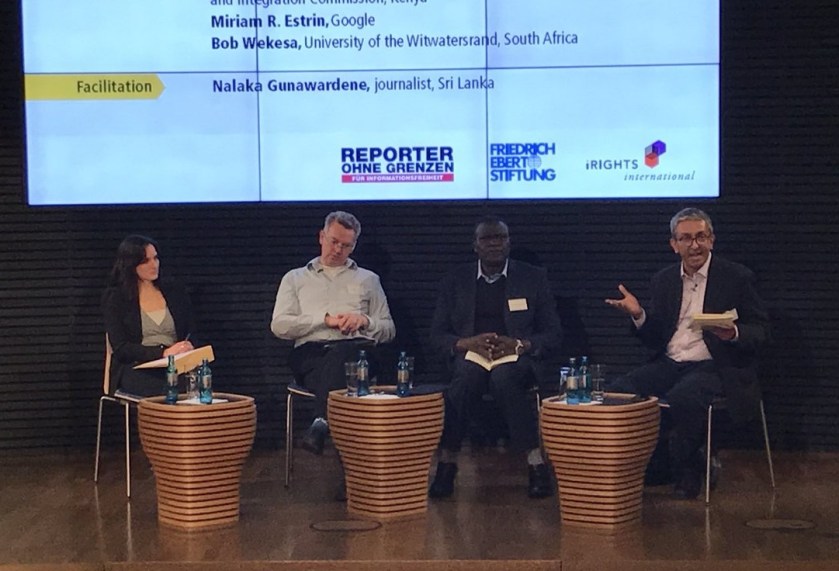
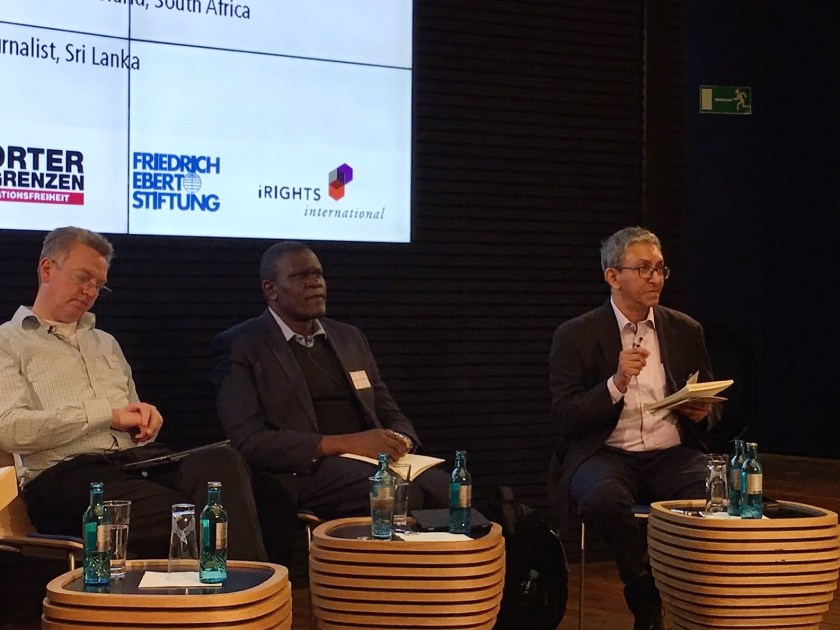
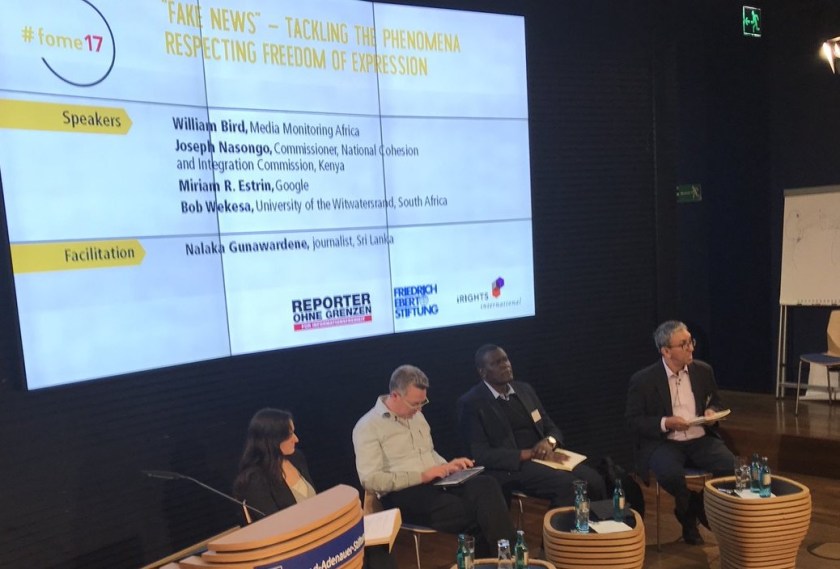
Nalaka Gunawardene (extreme right) moderates FoME 2017 session on “Fake News: Tackling the phenomenon while respecting freedom of expression”, Berlin, 17 Nov 2017
The German “Forum on Media and Development” (Forum Medien und Entwicklung, FOME) is a network of institutions and individuals active in the field of media development cooperation. I was invited to participate in, and moderate a panel at FoME Symposium 2017 held in Berlin on 16 – 17 November 2017.
This year’s symposium theme was Power Shifts – Media Freedom and the Internet. It explored how Internet governance issues are becoming more and more important for those who want to develop media (both mainstream media and social media) as democratic platforms.
On 17 November 2017, I moderated an international panel on Fake News: Tackling the phenomena respecting freedom of expression. It brought together representatives from government, civil society and a global media platform to discuss their roles and how they can interact to tackle the issue – all within the framework of Freedom of Expression (FOE).
Miriam Estrin, Public Policy Manager for Europe, Middle East and Africa, Google
Nalaka Gunawardene speaks on Fake News and Freedom of Expression at FoME 2017 Symposium in Berlin, 17 Nov 2017 – Photo courtesy Helani Galpaya
Here are my opening remarks that set the context for our discussion:
Just as there are many definitions of Fake News, there can also be many perspectives on the topic. We all recognise Fake News as a problem, so let’s focus on how it can be countered. What are the local, national and global level strategies? What alliances, tools and resources are needed for such countering? What cautions and alarms can we raise?
To respond to any problem, we need to understand its contours.
Fake News is not new. The phenomenon has been around, in one form or another, for decades! Many of us in the global South have grown up amidst intentionally fake news stories in our media, some of it coming from governments, no less. And the developing world governments don’t have a monopoly over Fake News either: for over half a century, the erstwhile Soviet Union and Eastern Bloc countries manufactured a vast amount of disinformation (i.e. deliberately wrong information) that was fed to their own citizens and spread overseas in sustained propaganda efforts.
Sitting here, within a few kilometres from where the Berlin Wall once stood, we need to acknowledge that veritable factory of lies that operated on the other side!
So what’s new? During the past decade, as broadband Internet spread worldwide, fake news peddlers found an easy and fast medium online. From websites to social media accounts (many hiding behind pseudonyms), the web has provided a globalised playing field where dubious content could go ‘viral’.
Yesterday at this Symposium, Mark Nelson from CIMA said “We live in a world where lies are very cheap, and much easier to disseminate than the truth.”
Which reminded me of one of my favourite quotes: ““A lie can travel halfway around the world while the truth is putting on its shoes!”
Variations of this quote have been attributed to several persons including Jonathan Swift and Mark Twain. Whoever said it first, these words neatly sum up a long standing challenge to modern societies: how to cope with the spread of deliberate falsehoods.
As Mark Nelson asked us yesterday, how can we “make the Internet a place where truth is valued and spread – instead of disinformation?” This is the crux of our challenge.
So what is to be done? Among the options available, which ones are most desirable?
In searching for solutions to the Fake News crisis, we must recognise it is a nuanced, complex and variable phenomenon. There cannot be one global solution or quick fix.
Indeed, any ‘medicine’ prescribed for the malady of Fake News should not be worse than the ailment itself! We must proceed with caution, safeguarding the principles of Freedom of Expression and applying its reasonable limitations.
As human rights defenders caution, there is a danger that governments in their zeal to counter fake news could impose direct or indirect censorships, suppress critical thinking, or take other steps that violate international human rights law. This is NOT the way to deal with Fake News.
In my view, Fake News is a symptom of a wider and deeper crisis. It is a crisis of public trust in journalism and the media that has been building up over the years in many countries. Some call this a ‘Journalism Deficit’, or a gulf between what journalism ought be, and what it has (mostly) become today.
In my view, a free press is not an automatic guarantee against Fake News. In other words, media freedom is necessary — but not sufficient — to ensure that media content is trusted by the public. We need to better measure public trust in media and what the current trust levels mean for those producing media content professionally.
I would argue that the medium to long term response to Fake News is to narrow and bridge the Journalism Deficit by nurturing quality journalism and critical consumption of media. If you agree with this premise, what specific measures can we recommend and advocate?
Let us explore how media development can counter Fake News by exposing it, undermining it, and equipping media consumers with the knowledge and skills to spot it – and not spread it inadvertently.
For this, we need everyone’s cooperation.
We need global social media platforms and digital gatekeepers like Google to join with all their might (and what might!).
We need governments to be thoughtfully, carefully evaluate the optimum responses.
We need civil society to go beyond mere hand waving and finger pointing to help enhance media and information literacy.
We need researchers to keep studying and discerning trends that can influence policy and regulation (where appropriate).
We are not going to solve the problem in an hour. But we can at least ask the right questions, and clarify the issues in our minds. Onward!
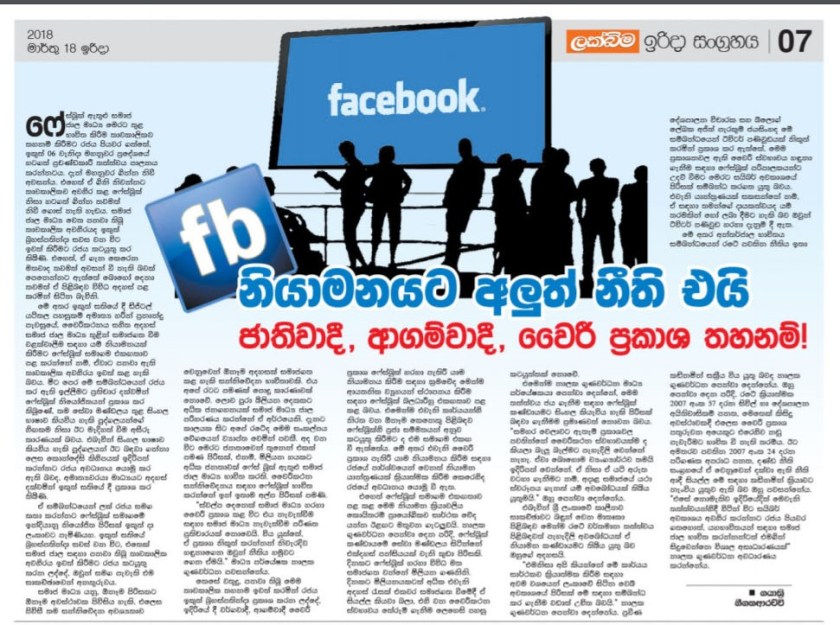
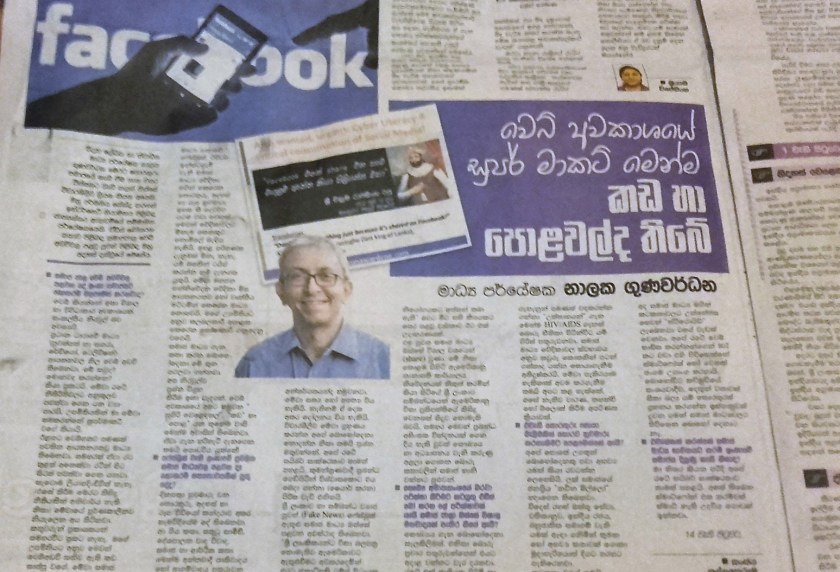
I have just given an interview to Sunday Lakbima, a broadsheet newspaper in Sri Lanka (in Sinhala) on social media in Sri Lanka – what should be the optimum regulatory and societal responses. The interviewer, young and digitally savvy journalist Sanjaya Nallaperuma, asked intelligent questions which enabled me to explore the topic well.
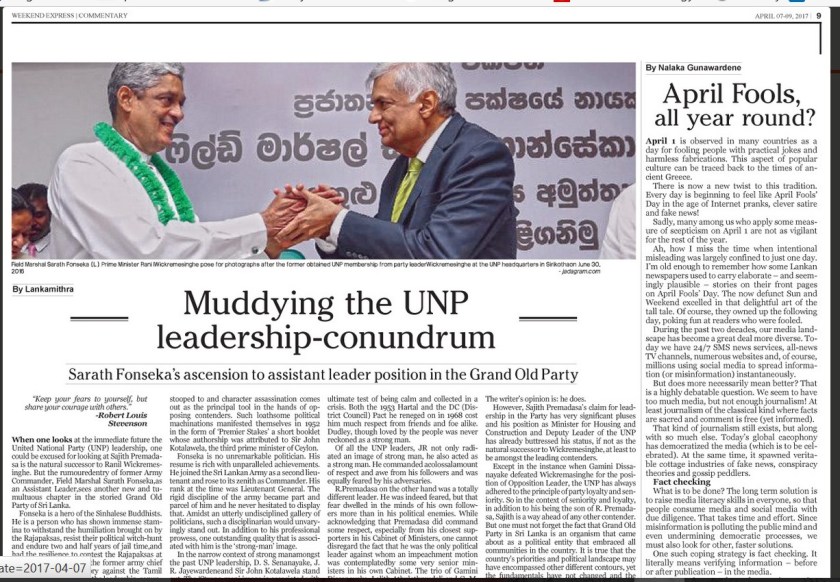
April Fools All Year Round? Op-ed by Nalaka Gunawardene, Weekend Express, 7 April 2017
April Fools, All Year Round?
By Nalaka Gunawardene
April 1 is observed in many countries as a day for fooling people with practical jokes and harmless fabrications. This aspect of popular culture can be traced back to the times of ancient Greece.
There is now a new twist to this tradition. Every day is beginning to feel like April Fools’ Day in the age of Internet pranks, clever satire and fake news!
Sadly, many among us who apply some measure of skepticism on April 1 are not as vigilant for the rest of the year.
Ah, how I miss the time when intentional misleading was largely confined to just one day. I’m old enough to remember how some Lankan newspapers used to carry elaborate – and seemingly plausible – stories on their front pages on April Fools’ day. The now defunct Sun and Weekend excelled in that delightful art of the tall tale. Of course, they owned up the following day, poking fun at readers who were fooled.
During the past two decades, our media landscape has become a great deal more diverse. Today we have 24/7 SMS news services, all-news TV channels, numerous websites and, of course, millions using social media to spread information (or misinformation) instantaneously.
But does more necessarily mean better? That is a highly debatable question. We seem to have too much media, but not enough journalism! At least journalism of the classical kind where facts are sacred and comment is free (yet informed).
That kind of journalism still exists, but along with so much else. Today’s global cacophony has democratized the media (which is to be celebrated). At the same time, it spawned veritable cottage industries of fake news, conspiracy theories and gossip peddlers.
Image source – American Journalism Review, 21 April 2015
Fact checking
What is to be done? The long term solution is to raise media literacy skills in everyone, so that people consume media and social media with due diligence.
That takes time and effort. Since misinformation is polluting the public mind and even undermining democratic processes, we must also look for other, faster solutions.
One such coping strategy is fact checking. It literally means verifying information – before or after publication – in the media.
In a growing number of countries, mainstream media outlets practise fact checking as an integral part of their commitment to professionalism. They seek to balance accuracy with speed, which has been made more challenging by the never-ending news cycle.
In other cases, independent researchers or civil society groups are keeping track of news media content after publication. In the United States, where the practice is well developed, several groups are devoted to such post-hoc fact checking. These include FactCheck, PolitiFact, and NewsTrust’s Truth Squad. They fact check the media as well as statements by politicians and other public figures.
In 2015, fact checking organisations formed a world network and this year, they observed the inaugural International Fact Checking Day.
The initiative is a collaboration by fact checkers and journalism organisations from around the world, “with a goal to enlist the public in the fight against misinformation in all its forms.”
“International Fact Checking Day is not a single event but a rallying cry for more facts — and fact checking — in politics, journalism and everyday life,” says Alexios Mantzarlis, director of the International Fact-Checking Network at the Poynter Institute for Media Studies in the US.
Oops!
Pinocchios
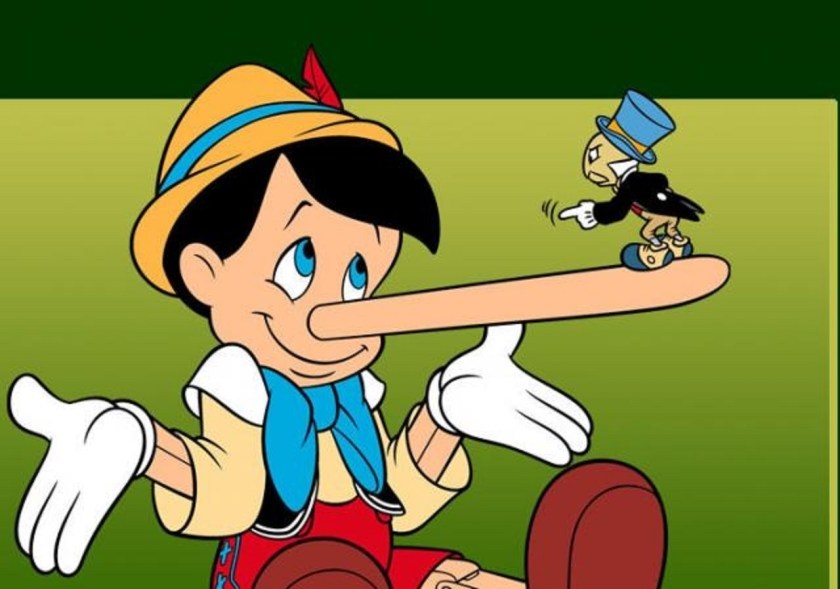
One visual icon for the Fact-Checking Day is Pinocchio, the fictional puppet character whose nose grew long each time he uttered a lie.
We in Sri Lanka urgently need a professional, non-partisan fact checking service to save us from the alarming proliferation of Pinocchios in public life. Not just our politicians, but also many academics and activists who peddle outdated statistics, outlandish claims or outright conspiracy theories.
Take, for example, the recent claim by a retired professor of political science that 94 Members of Parliament had not even passed the GCE Ordinary Level exam. Apparently no one asked for his source at the press conference (maybe because it fed a preconceived notion). Later, when a (rare?) skeptical journalist checked with him, he said he’d “read it in a newspaper some time ago” — and couldn’t name the publication.
A simple Google search shows that an MP (Buddhika Pathirana) had cited this exact number in September 2014 – about the last Parliament!
Given the state of our media, which often takes down dictation rather than asks hard questions, fact checking is best done by a research group outside the media industry.
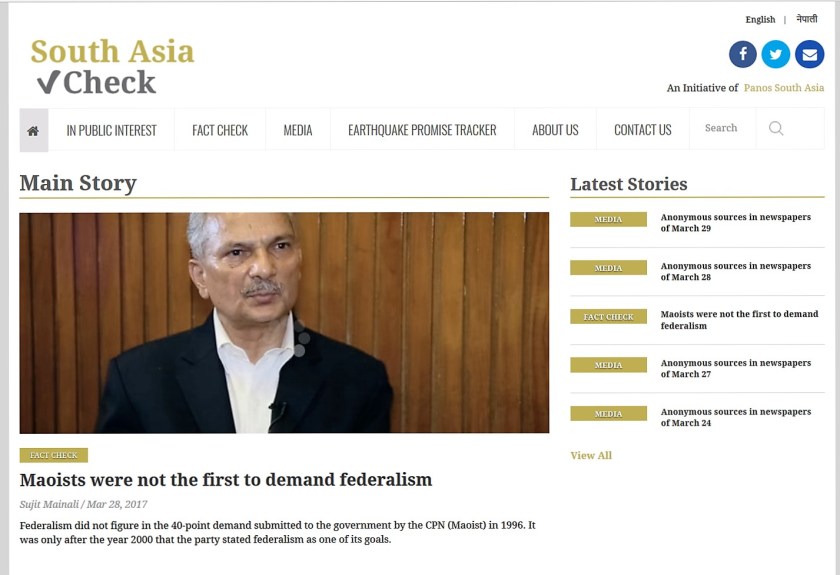
A useful model could be South Asia Check, an independent, non-partisan initiative by Panos South Asia anchored in Kathmandu. It “aims to promote accuracy and accountability in public debate” by examining statements and claims made by public figures in Nepal and occasionally, across South Asia (http://southasiacheck.org).
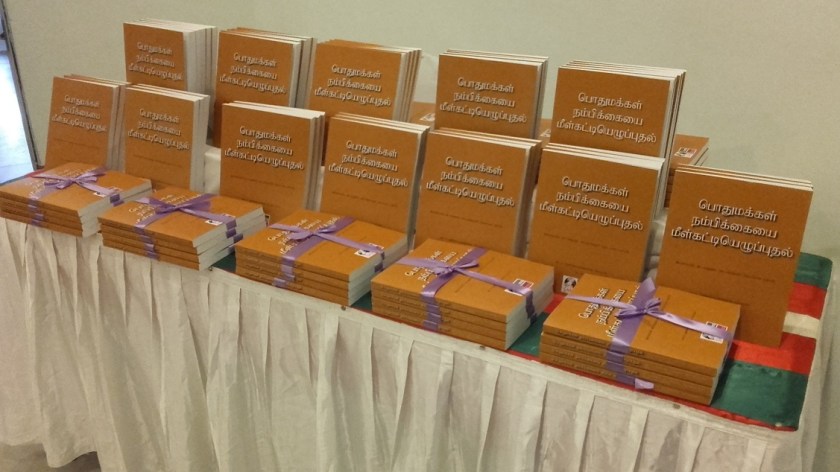
Rebuilding Public Trust: Tamil version copies displayed at the launch in Jaffna, 24 Jan 2017
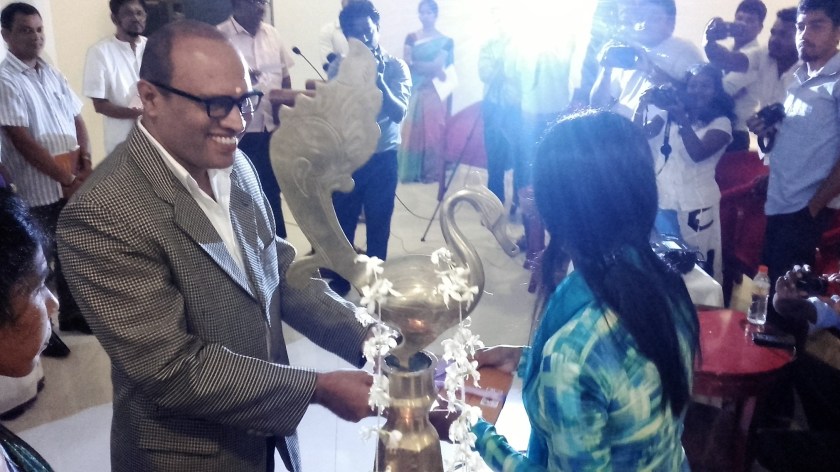
Journalists, academics, politicians and civil society representatives joined the launch of Tamil language version of Sri Lanka’s Media Development Indicators (MDI) Report in Jaffna on 24 January 2017.
The report, for which I served as overall editor, is the outcome of a 14-month-long consultative process that involved media professionals, owners, managers, academics and relevant government officials. It offers a timely analysis, accompanied by policy directions and practical recommendations.
Students of Jaffna University Media Studies programme with its head, Dr S Raguram, at the launch of MDI Sri Lanka Tamil version, Jaffna, 24 January 2017
Reginald Cooray, Governor of the Northern Province, in a message said: “I am sure that the elected leaders and the policy makers of this government of Good governance will seize the opportunity to make a professionally ethical media environment in Sri Lanka which will strengthen the democracy and good governance.”
He added: “The research work should be studied, appreciated and utilised by the leaders and the policy makers. Everyone who was involved in the work should be greatly thanked for their research presentation with clarity.”
Lars Bestle of International Media Support (IMS) speaks at Sri Lanka MDI Report’s Tamil version launch in Jaffna, 24 January 2017
Speaking at the event, Sinnadurai Thavarajah, Leader of the Opposition of the Northern Provincial Council, urged journalists to separate facts from their opinions. “Media freedom is important, but so is unbiased and balanced reporting,” he said.
Lars Bestle, Head of Department for Asia and Latin America at International Media Support (IMS), which co-published the report, said: “Creating a healthy environment for the media that is inclusive of the whole country is an essential part of ensuring democratic transition.”
He added: “This assessment points the way forward. It is now up to the local actors – government, civil society, media, businesses and academia – with support from international community, to implement its recommendations.”
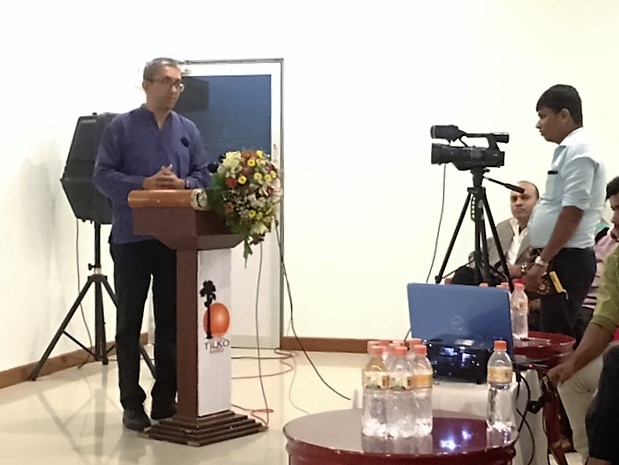
Nalaka Gunawardene, Consultant Editor of Sri Lanka Media Development Indicators (MDI) Report, speaks at the launch of Tamil version in Jaffna on 24 Jan 2017
I introduced the report’s key findings and recommendations. In doing so, I noted how the government has welcomed those recommendations applicable to state policies, laws and regulations and already embarked on law review and regulatory reforms. In sharp contrast, there has been no reaction whatsoever from the media owners and media gatekeepers (editors).
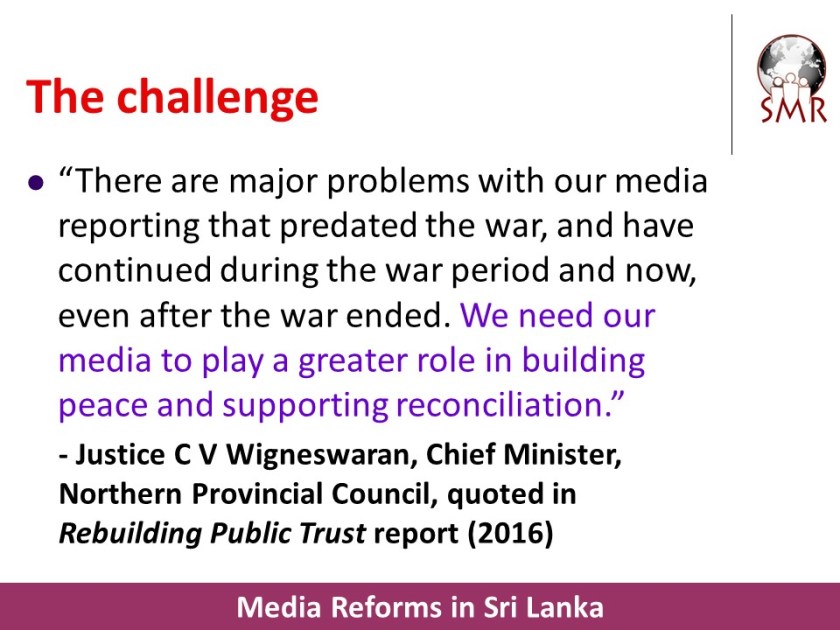
Quote from ‘Rebuilding Public Trust’ – State of Sri Lanka’s media report
Dr S Raguram, Head of Media Studies at the University of Jaffna (who edited the Tamil version) and Jaffna Press Club president Ratnam Thayaparan also spoke.
The report comes out at a time when the country’s media industry and profession face multiple crises stemming from an overbearing state, unpredictable market forces and rapid technological advancements.
Balancing the public interest and commercial viability is one of the media sector’s biggest challenges today. The report says: “As the existing business models no longer generate sufficient income, some media have turned to peddling gossip and excessive sensationalism in the place of quality journalism. At another level, most journalists and other media workers are paid low wages which leaves them open to coercion and manipulation by persons of authority or power with an interest in swaying media coverage.”
Notwithstanding these negative trends, the report notes that there still are editors and journalists who produce professional content in the public interest while also abiding by media ethics. Unfortunately, their work is eclipsed by media content that is politically partisan and/or ethnically divisive.
The result: public trust in media has been eroded, and younger Lankans are increasingly turning to entirely web-based media products and social media platforms for information and self-expression. A major overhaul of media’s professional standards and ethics is needed to reverse these trends.
MDI Sri Lanka – Tamil version being presented to stakeholders in Jaffna, 24 Jan 2017MDI Sri Lanka – Tamil version being presented to stakeholders in Jaffna, 24 Jan 2017
The Tamil report is available for free download at:
Brief comment provided to Daily Mirror newspaper, Sri Lanka, on 20 January 2017:
‘Eyes in the Sky’ need ethical and careful ‘pilots’
By Nalaka Gunawardene
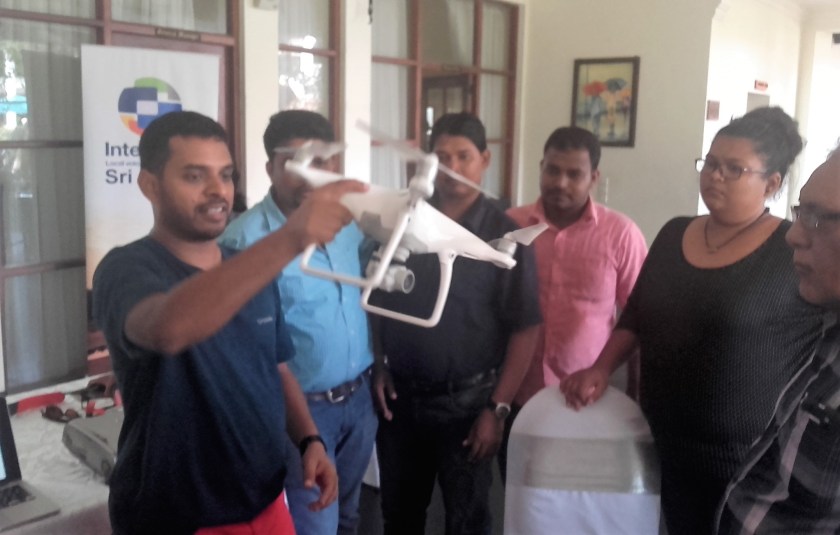
Bird’s eye view provides a new, useful perspective in journalistic story telling. Image courtesy InterNews Sri Lanka
For some, drones conjure images of death and destruction – military applications have been their most widely reported application. But unmanned aerial vehicles or UAVs are increasingly being used for many peaceful purposes. That poses a host of ethical and legal challenges we must confront to get the best of this new technology while minimizing potential harms.
In the past few years, the cost of drones came down (an entry level unit sells for around LKR 35,000 in Colombo) as their versatility increased. This spurred many uses from newsgathering and post-disaster assessments to goods delivery and smart farming.
In Sri Lanka, surveyors, photographers, TV journalists and political parties were among the early civilian users of drones. They all grasped the value of the ‘bigger picture’ perspective such aerial photos or videos can provide. Until recently, accessing that vantage point was possible only through helicopters or fixed wing aircraft – a facility few could afford.
Having the bird’s eye view helps journalists and their audiences to make sense of complex situations like climate change impacts, conflicts over resources or political agitations. We certainly need more field-based and investigative reporting that goes beyond press releases and press conferences. Drones are fast joining the journalists’ toolkit — but what matters is their imaginative and responsible use.
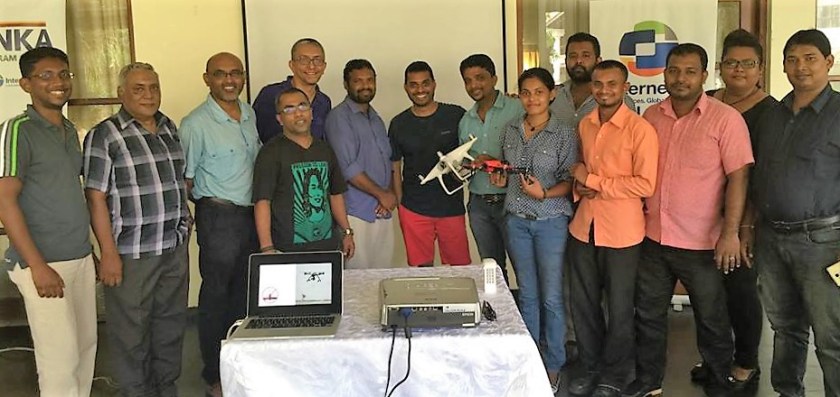
Participants and trainers at Sri Lanka’s first workshop on drone assisted journalism, Aug 2016 in Mt Lavinia
Here, we have both good news and bad news. On the positive side, over two dozen journalists and photojournalists have been trained in drone-assisted journalism during 2016 by drone journalism enthusiast (and drone pilot) Sanjana Hattotuwa and journalist Amantha Perera. Some trainees have since done good stories with drone-gathered images. Examples include probing the drought’s impacts in the dry zone, rising garbage crisis in Kattankudy on the east coast, and taking a close look at land use patterns in Hambantota.
Internews Sri Lanka: Drone gathered footage supporting journalism
The downside is that some news organisations are deploying drones without due regard for public safety or existing codes of media ethics. A drone hovered over the Colombo general cemetery as slain editor Lasantha Wickremetunge’s body was exhumed in September 2016. That disregarded a family request for privacy.
The end never justifies the means in good journalism. If some media groups continue to operate drones in such reckless manner, they risk discrediting the new technology and attracting excessive regulations.
Drones or any other new technologies need to be anchored in the basic ethics of journalism. Each new tool would also bring along its own layer of ethics. Where drone use is concerned, respecting privacy and considering the safety of others is far more important than, say, when using a handheld camera.
In February 2016, the Civil Aviation Authority of Sri Lanka (CAASL) published regulations for drone operation which apply to all users including journalists. This has been updated in January 2017. The Information Department, in a recent release, says it is working with CAASL to simplify these rules and streamline approval processes. That is a welcome move.
For now, Lankan journalists can follow the Code of Ethics for Drone Journalists already formulated by practitioners and researchers in the United States. It is available at: http://www.dronejournalism.org/code-of-ethics/
Nalaka Gunawardene is a columnist and independent media researcher. He tweets from @NalakaG
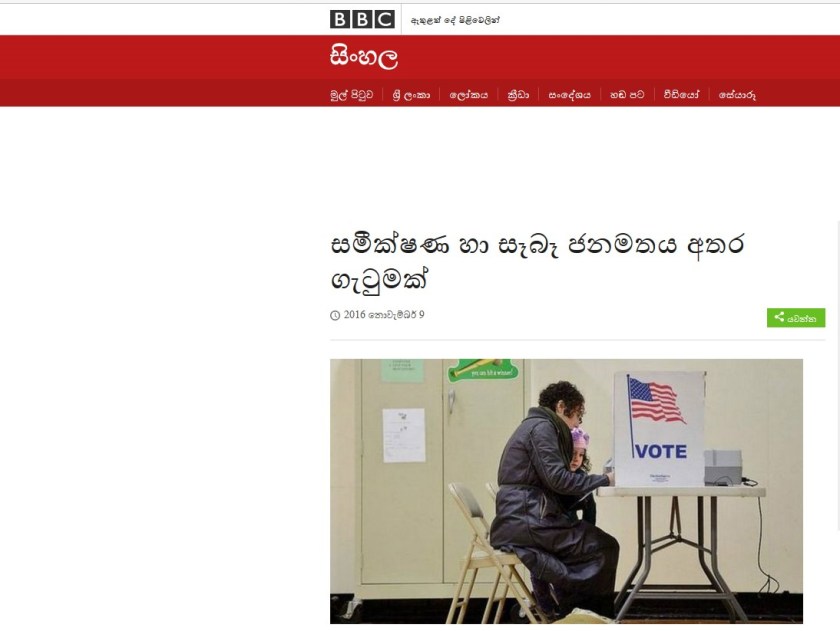
Within hours of the US Presidential Election’s results becoming known on 9 November 2016, I gave a telephone interview to BBC Sinhala service. They asked me how almost all the opinion polls did not see Donald Trump winning the election, even though many polls said it was going to be a close contest.
For some, drones still conjure images of death and destruction – that has been their most widely reported use. But that reality is fast changing. Unmanned aerial vehicles (UAVs) are being used for many peaceful purposes, from newsgathering and post-disaster assessments to goods delivery and smart farming.
Drones come in various shapes and sizes: as miniature fixed-wing airplanes or, more commonly, quadcopters and other multi-bladed small helicopters. All types are getting simpler, cheaper and more versatile.
Unlike radio-controlled model aircraft, which aviation hobbyists have used for decades, UAVs are equipped with an autopilot using GPS and a camera controlled by the autopilot. These battery operated flying machines can be manually controlled or pre-programmed for an entire, low altitude flight.
In this week’s Ravaya column (in Sinhala, appearing in the print issue of 25 Sep 2016), I survey the many civilian applications of drones – and the legal, ethical and technical challenges they pose.
Drones are already being used in Sri Lanka by photographers, TV journalists and political parties but few seem to respect public safety or privacy of individuals.
I quote Sanjana Hattotuwa, a researcher and activist on ICTs, who in August 2016 conducted Sri Lanka’s first workshop on drone journalism which I attended. I agree with his view: drones are here to stay, and are going to be used in many applications. So the sooner we sort out public safety and privacy concerns, the better for all.