[Op-ed] Investigative Journalists uncover Asia, one story at a time

Op-ed written for Sri Lanka’s Weekend Express newspaper, 23 September 2016

Investigative Journalists uncover Asia, one story at a time

By Nalaka Gunawardene

Second Asian Investigative Journalism Conference: Kathmandu, Nepal, 23-25 September 2016

The second Asian Investigative Journalism Conference in opens in Kathmandu, Nepal, on September 23.

Themed as ‘Uncovering Asia’ it is organized jointly by the Global Investigative Journalism Network (GIJN), Centre for Investigative Journalism in Nepal, and the German foundation Konrad-Adenauer-Stiftung (2016.uncoveringasia.org).

Founded in 2003, GIJN is the world’s leading international association of investigative reporters’ and their organizations. Its membership includes more than 100 non-profits and NGOs in 45 countries. They are committed to expanding and supporting quality investigative journalism worldwide. This is done through sponsoring global and regional conferences, including the every-two-year Global Investigative Journalism Conference. GIJN also does training, links journalists together worldwide, and promotes best practices in investigative and data journalism.

For three days in Kathmandu, reporters from across Asia and beyond – including several from Sri Lanka – will swap stories, cheer each other, and take stock of their particular craft.

It is true that all good journalism should be investigative as well as reflective. Journalism urges its practitioners to follow the money and power — two factors that often lead to excesses and abuses.

At the same time, investigative journalism (IJ) is actually a specialized genre of the profession of journalism. It is where reporters deeply investigate a single topic of public interest — such as serious crimes, political corruption, or corporate wrongdoing. In recent years, probing environmental crimes, human smuggling, and sporting match fixing have joined IJ’s traditional topics.

Investigative journalists may spend months or years researching and preparing a report (or documentary). They would consult eye witnesses, subject experts and lawyers to get their story exactly right. In some cases, they would also have to withstand extreme pressures exerted by the party being probed.

This process is illustrated in the Academy award winning Hollywood movie ‘Spotlight’ (2015). It is based on The Boston Globe‘s investigative coverage of sexual abuse in the Catholic Church. The movie reconstructs how a small team systematically amassed and analyzed evidence for months before going public.
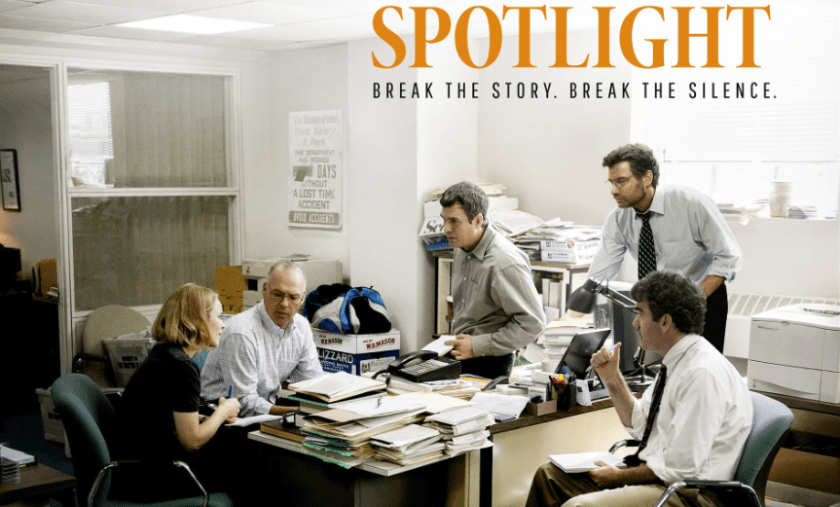
Spotlight: investigative journalism at work

Nosing Not Easy

Investigative journalism is not for the faint-hearted. But it epitomizes, perhaps more than anything else, the public interest value of an independent media.

The many challenges investigative journalists face was a key topic at the recent International Media Conference of the Hawaii-based East-West Center, held in New Delhi, India, from 8 to 11 September 2016.

In mature democracies, freedom of expression and media freedoms are constitutionally guaranteed and respected in practice (well, most of the time). That creates an enabling environment for whistle-blowers and journalists to probe various stories in the public interest.

Many Asian investigative journalists don’t have that luxury. They persist amidst uncaring (or repressive) governments, intimidating wielders of authority, unpredictable judicial mechanisms and unsupportive publishers. They often risk their jobs, and sometimes life and limb, in going after investigative stories.

Yet, as participants and speakers in Delhi confirmed, and those converging in Kathmandu this week will no doubt demonstrate, investigative journalism prevails. It even thrives when indefatigable journalists are backed by exceptionally courageous publishers.

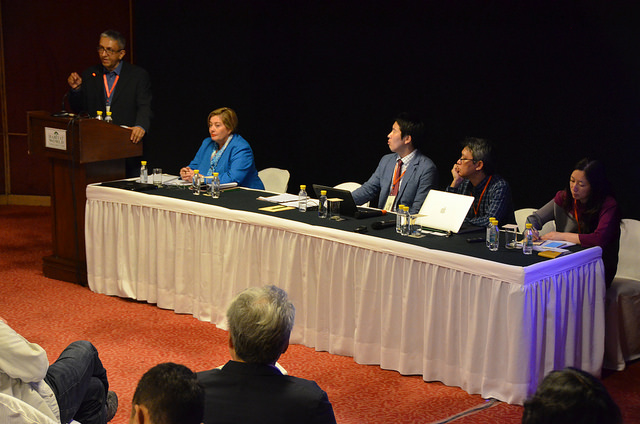
Delhi conference panel: investigative journalists share experiences on how they probed Panama Papers

Cross-border Probing

 As capital and information flows have become globalized, so has investigative journalism. Today, illicit money, narcotics, exotic animals and illegal immigrants crisscross political borders all the time. Journalists following such stories simply have to step beyond their own territories to get the bigger picture.

Here, international networking helps like-nosed journalists. The Delhi conference showcased the Panama Papers experience as reaffirming the value of cross-border collaboration.

Panama Papers involved a giant “leak” of more than 11.5 million financial and legal records exposing an intricate system that enables crime, corruption and wrongdoing, all hidden behind secretive offshore companies.

This biggest act of whistle blowing in history contained information on some 214,488 offshore entities. The documents had all been created by Panamanian law firm and corporate service provider Mossack-Fonseca since the 1970s.

A German newspaper, Süddeutsche Zeitung, originally received the leaked data. Because of its massive volume, it turned to the International Consortium of Investigative Journalists (ICIJ), a Washington-anchored but globally distributed network of journalists from over 60 countries who collaborate in probing cross-border crimes, corruption and the accountability of power.

Coordinated by ICIJ, journalists from 107 media organizations in 80 countries analyzed the Panama Papers. They were sworn to secrecy and worked on a collective embargo. Within that framework, each one was free to pursue local angles on their own.

After more than one year of analysis and verifications, the news stories were first published on 3 April 2016 simultaneously in participating newspapers worldwide. At the same time, ICIJ also released on its website 150 documents themselves (the rest being released progressively).

Registering offshore business entities per se is not illegal in some countries. Yet, reporters sifting through the records found that some offshore companies have been used for illegal purposes like fraud, tax evasion and stashing away money looted by dictators and their cronies.

Strange Silence

 In Delhi, reporters from India, Indonesia and Malaysia described how they went after Panama leaks information connected to their countries. For example, Ritu Sarin, Executive Editor (News and Investigation) of the Indian Express said she and two dozen colleagues worked for eight months before publishing a series of exposes linking some politicians and celebrities to offshore companies.

Listening to them, I once again wondered why ICIJ’s sole contact in Sri Lanka (and his respected newspaper) never carried a single word about Panama Leaks. That, despite nearly two dozen Lankan names coming to light.

Some of our other mainstream media splashed the Lankan names associated with Panama Papers (often mixing it up with earlier Offshore Leaks), but there has been little follow-up. In this vacuum, it was left to civic media platforms like Groundviews.org and data-savvy bloggers like Yudhanjaya Wijeratne (http://icaruswept.com) to do some intelligent probing. Their efforts are salutary but inadequate.

Now, Panama Leaks have just been followed up by Bahamas Leaks on September 22. The data is available online, for any nosy professional or citizen journalist to follow up. How many will go after it?

Given Sri Lanka’s alarming journalism deficit, investigative reporting can no longer be left to those trained in the craft and their outlets.

Science writer Nalaka Gunawardene blogs at http://nalakagunawardene.com, and is on Twitter as @NalakaG.

Media innovation in Sri Lanka: Responding then to tyranny, and now to opportunity

East-West Center 2016 International Media Conference in New Delhi, India, from September 8 to 11, 2016

The Hawaii-based East-West Center held its 2016 International Media Conference in New Delhi, India, from September 8 to 11, 2016. Themed “South Asia Looking East”, it drew over 350 participants from across Asia and the United States.
On September 11, I took part in a breakout session that discussed media innovation in Asia and the United States. While my fellow panelists spoke mainly about digital media innovation of their media outlet or media sector, I opted to survey the bigger picture: what does innovation really mean when media is under siege, and how can the media sector switch from such ‘innovation under duress’ to regular market or product innovation?

Here are my remarks, cleaned up and somewhat expanded:

Nalaka Gunawardene speaks on media innovation under duress

Innovation has been going on in media from the beginning. Faced with major challenges from advancing technologies and changing demography, innovation is now an imperative for market survival.

We can discuss this at different levels: product innovation, process innovation and systemic innovation. I like to add another kind for our discussion: innovation for physical survival.

With forces social and market Darwinism constantly at work, you might ask, shouldn’t the most adaptable and nimble players survive – while others perish?

Yes and No. Sometimes the odds against independent and progressive media organisations are disproportionately high – they should not be left to fend for themselves. This is where media consumers and public spirited groups need to step in.

Let me explain with a couple of examples from South Asia.

They say necessity is the mother of invention or innovation. I would argue that tyranny – from the state and/or extremist groups – provides another strong impetus for innovation in the media.

In Nepal, all media came under strict control when King Gyanendra assumed total control in February 2005. Among other draconian measures, he suspended press freedom, imposing a blanket ban on private or community broadcasters carrying news, thus making it a monopoly of state broadcasters.

The army told broadcasters that the stations were free to carry music, but not news or current affairs. Soldiers were sent to radio and TV stations to ensure compliance.

When the king’s siege of democracy continued for weeks and months, some media started defying censorship – they joined human rights activists and civil society groups in a mass movement for political reforms, including the restoration of parliamentary democracy.

Some of Nepal’s many community radio stations found creative ways of defying censorship. One station started singing the news – after all, there was no state control over music and entertainment! Another one in central Nepal went outside their studio, set up an impromptu news desk on the roadside, and read the news to passers-by every evening at 6 pm.

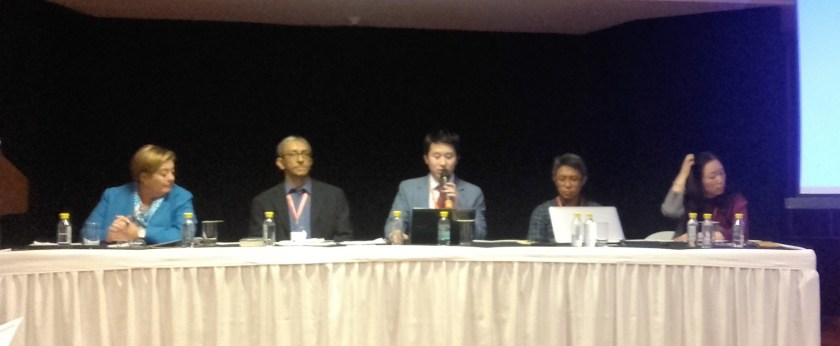
Panel on Media innovation at East-West Center Media Conference, Delhi, 11 Sep 2016: L to R - Philippa McDonald, Nalaka Gunawardene, LEE Doo Won, Fernando (Jun) SEPE, Jr. and ZHONG Xin
Panel on Media innovation at East-West Center Media Conference, Delhi, 11 Sep 2016: L to R – Philippa McDonald, Nalaka Gunawardene, LEE Doo Won, Fernando (Jun) SEPE, Jr. and ZHONG Xin

The unwavering resolve of these and other media groups and pro-democracy activists led to the restoration of parliamentary democracy in April 2006 and the subsequent abolition of the Nepali monarchy.

My second example is from Sri Lanka where I live and work.

We are recovering from almost a decade of authoritarian rule that we ended in January 2015 by changing that government in an election. The years preceding that change were the darkest for freedom of expression and media freedom in Sri Lanka – the country, then nominally a democracy, was ranked 165th among 183 countries in the World Press Freedom Index for 2014.

In June 2012, Sri Lanka was one of 16 countries named by the UN Special Rapporteur on the promotion and protection of the right to freedom of opinion and expression for “attacks against journalists during coverage of street protests and demonstrations, such as arbitrary arrests and detention, verbal and physical attacks, confiscation or destruction of equipment, as well as killings.”

Threats of attacks and actual incidents of physical violence in recent years led to a climate of fear and widespread self-censorship among journalists in Sri Lanka. This is slowly changing now, but old habits die hard.

At the height of media repression by the former regime, we saw some of our media innovating simply for physical survival. One strategy was using satire and parody – which became important forms of political commentary, sometimes the only ones that were possible without evoking violent reprisals.

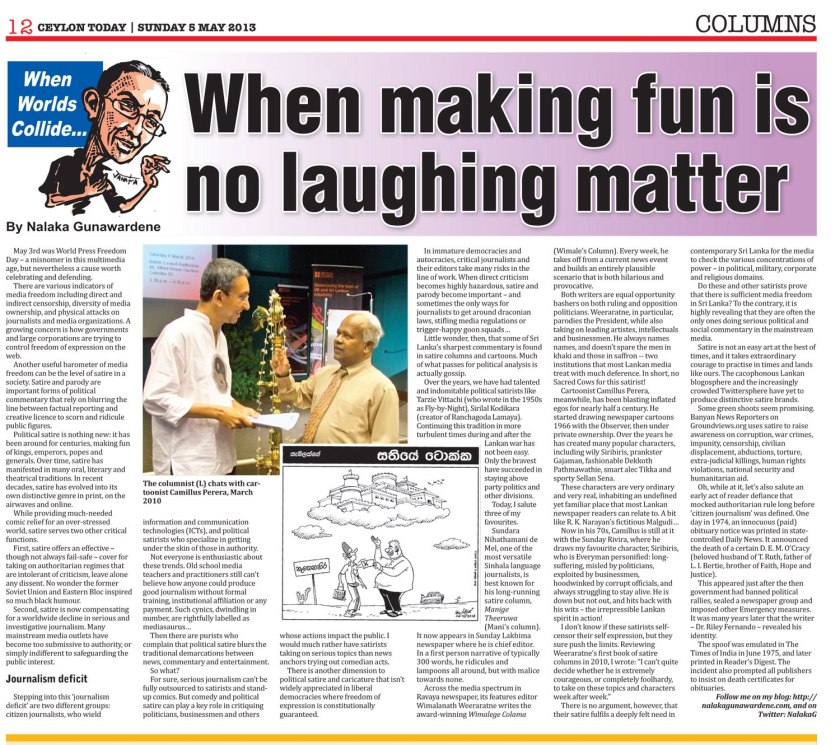
Three years ago, I wrote a column about this phenomenon which I titled ‘When making fun is no laughing matter (Ceylon Today, 5 May 2013).

Full text: https://collidecolumn.wordpress.com/2013/05/05/when-worlds-collide-65-when-making-fun-is-no-laughing-matter/

What I wrote then, while still in the thick of crackdown, is worth recalling:

“For sure, serious journalism can’t be fully outsourced to satirists and stand-up comics. But comedy and political satire can play a key role in critiquing politicians, businessmen and others whose actions impact the public.

“There is another dimension to political satire and caricature that isn’t widely appreciated in liberal democracies where freedom of expression is constitutionally guaranteed.

“In immature democracies and autocracies, critical journalists and their editors take many risks in the line of work. When direct criticism becomes highly hazardous, satire and parody become important — and sometimes the only – ways for journalists get around draconian laws, stifling media regulations or trigger-happy goon squads…

“Little wonder, then, that some of Sri Lanka’s sharpest commentary is found in satire columns and cartoons. Much of what passes for political analysis is actually gossip.”

For years, cartoonists and political satirists fulfilled a deeply felt need in Sri Lanka for the media to check the various concentrations of power — in political, military, corporate and religious domains.

They still continue to perform an important role, but there is more space today for journalists and editors to report things as they are, and to comment on the key stories of the day.

During the past decade, we have also seen the rise of citizen journalism and vibrant blogospheres in the local languages of Sinhala and Tamil. Their advantage during the dark years was that they were too numerous and scattered for the repressive state to go after each one (We do know, however, that electronic surveillance was attempted with Chinese technical assistance.)

Of course, Sri Lanka’s media still face formidable challenges that threaten their market survival.

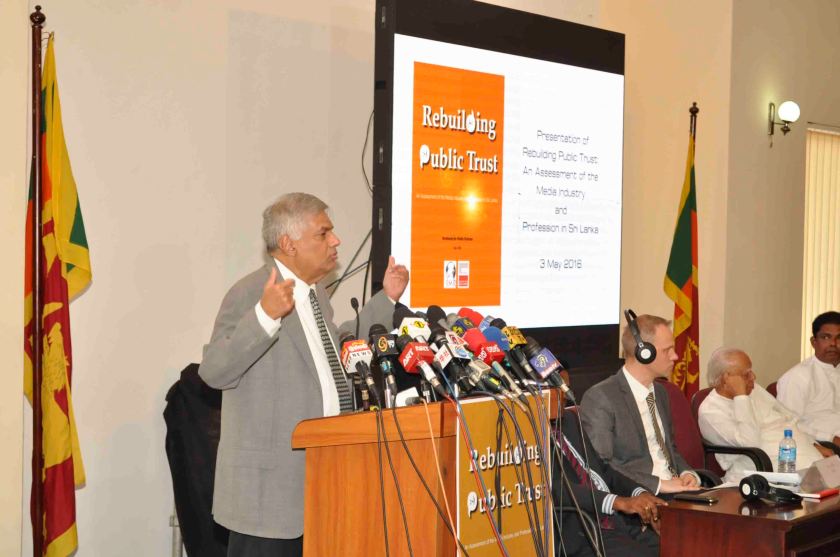
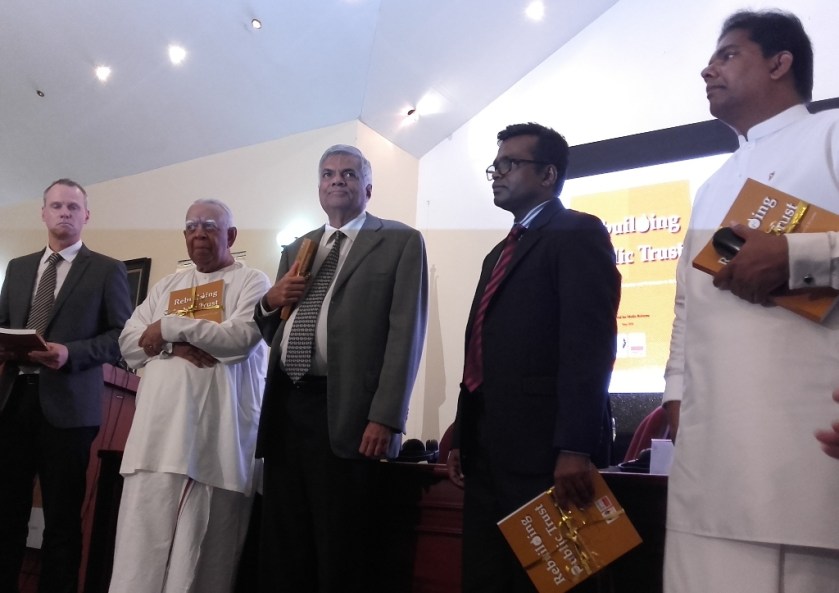
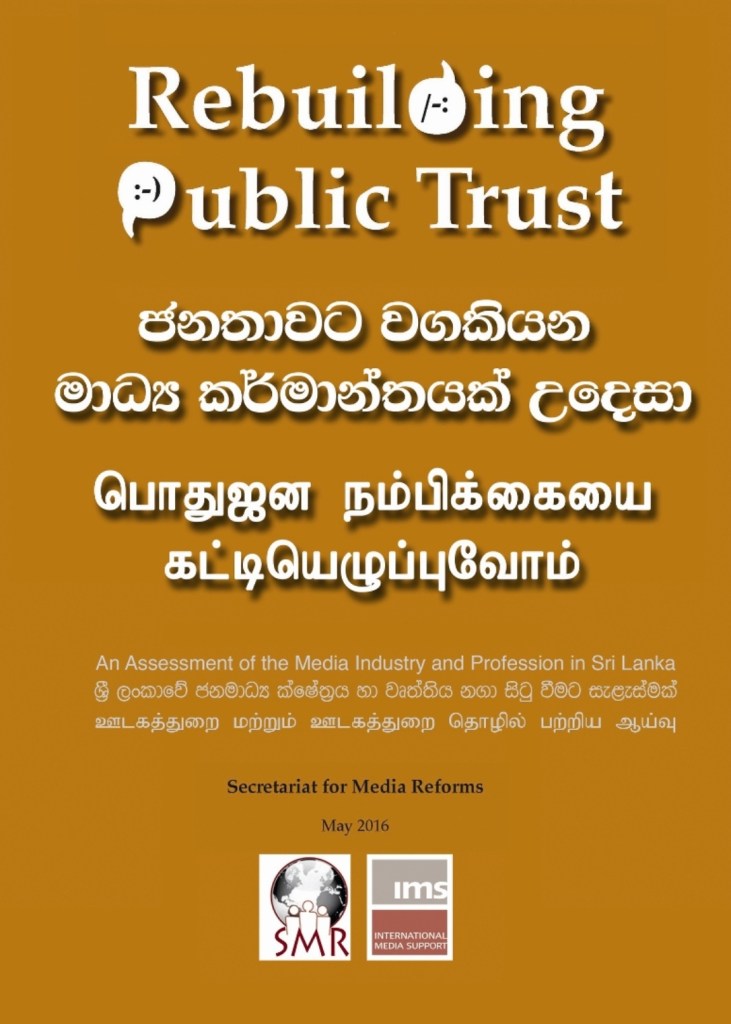
Rebuilding Public Trust: An Assessment of the Media Industry and Profession in Sri Lanka (May 2016)

A new assessment of Sri Lanka’s media, which I edited earlier this year, noted: “The economic sustainability of media houses and businesses remains a major challenge. The mainstream media as a whole is struggling to retain its consumer base. Several factors have contributed to this. Many media houses have been slow in integrating digital tools and web-based platforms. As a result, there is a growing gulf between media’s production models and their audiences’ consumption patterns.”

Innovation and imagination are essential for our media to break out of 20th century mindsets and evolve new ways of content generation and consumption. There are some promising new initiatives to watch, even as much of the mainstream continues business as usual – albeit with diminishing circulations and shrinking audience shares.

Innovate or perish still applies to our media. We are glad, however, that we no longer have to innovate just to stay safe from goon squads.


Social Media in Sri Lanka: Do Science and Reason Stand a Chance?

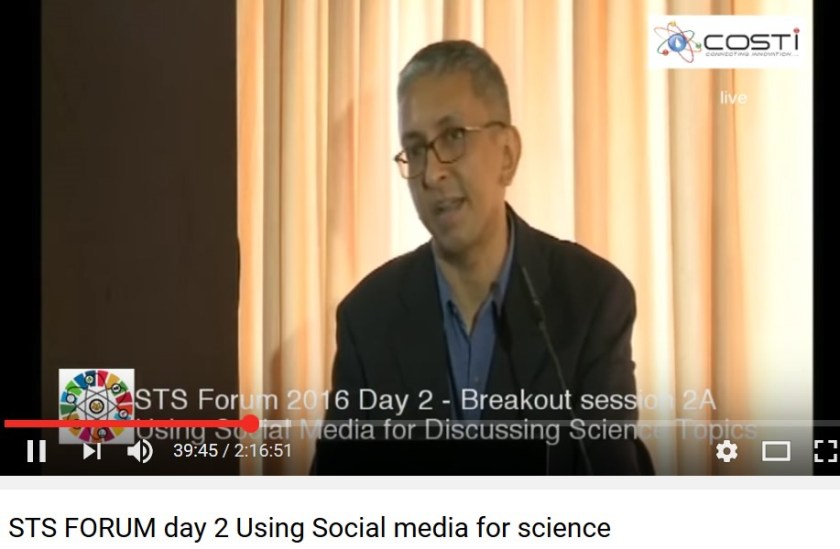
Nalaka Gunawardene speaks on "Using Social Media for Discussing Science" at the Science, Technology & Society Forum in Colombo, Sri Lanka, 9 Sep 2016. Photo by Smriti Daniel
Nalaka Gunawardene speaks on “Using Social Media for Discussing Science” at the Science, Technology & Society Forum in Colombo, Sri Lanka, 9 Sep 2016. Photo by Smriti Daniel

Sri Lanka’s first Science and Technology for Society (STS) Forum took place from 7 to 10 September in Colombo. Organized by the Prime Minister’s Office and the Ministry of Science, Technology and Research, it was one of the largest gatherings of its kind to be hosted by Sri Lanka.

Modelled on Japan’s well known annual STS forums, the event was attended by over 750 participants coming from 24 countries – among them local and foreign scientists, inventors, science managers, science communicators and students.

I was keynote speaker during the session on ‘Using Social Media for Discussing Science Topics’. I used it to highlight how social media have become both a boon and bane for scientific information and thinking in Sri Lanka. This is due to peddlers of pseudo-science, anti-science and superstition being faster and better to adopt social media platforms than actual scientists, science educators and science communicators.

Social Media in #LKA:Do Science & Reason stand a chance? Asks Nalaka Gunawardene

Sri Lanka takes justified pride in its high literacy levels and equally high coverage of vaccination against infectious diseases. But we cannot claim to have a high level of scientific literacy. If we did, it would not be so easy for far-fetched conspiracy theories to spread rapidly even among educated persons. Social media tools have ‘turbo-charged’ the spread of associated myths, superstitions and conspiracy theories!

I cautioned: “Unless we make scientific literacy an integral part of everyone’s lives, ambitious state policies and programmes to modernize the nation could well be jeopardized. Progress can be undermined — or even reversed — by extremist forces of tribalism, feudalism and ultra-nationalism that thrive in a society that lacks the ability to think critically.”

It is not a case of all doom and gloom. I cited examples of private individuals creatively using social media to bust myths and critique all ‘sacred cows’ in Lankan society – including religions and military. These voluntary efforts contrast with much of the mainstream media cynically making money from substantial advertising from black magic industries that hoodwink and swindle the public.

My PowerPoint presentation:


Video recording of our full session:


The scoping note I wrote for our session:

Sri Lanka STS Forum panel on Using Social Media for Discussing Science Topics. 9 Sep 2016. L to R - Asanga Abeygunasekera, Nalaka Gunawardene, Dr Piyal Ariyananda, Dr Ananda Galappatti & Smriti Daniel
Sri Lanka STS Forum panel on Using Social Media for Discussing Science Topics. 9 Sep 2016.
L to R – Asanga Abeygunasekera, Nalaka Gunawardene, Dr Piyal Ariyananda, Dr Ananda Galappatti &
Smriti Daniel

Session: Using Social Media for Discussing Science Topics

With 30 per cent of Sri Lanka’s 21 million people regularly using the Internet, web-based social media platforms have become an important part of the public sphere where myriad conversations are unfolding on all sorts of topics and issues. Facebook is the most popular social media outlet in Sri Lanka, with 3.5 million users, but other niche platforms like Twitter, YouTube and Instagram are also gaining ground. Meanwhile, the Sinhala and Tamil blogospheres continue to provide space for discussions ranging from prosaic to profound. Marketers, political parties and activist groups have discovered that being active in social media is to their advantage.

Some science and technology related topics also get discussed in this cacophony, but given the scattered nature of conversations, it is impossible to grasp the full, bigger picture. For example, some individuals or entities involved in water management, climate advocacy, mental health support groups and data-driven development (SDG framework) are active in Sri Lanka’s social media platforms. But who is listening, and what influence – if any – are these often fleeting conservations having on individual lifestyles or public policies?

Is there a danger that self-selecting thematic groups using social media are creating for themselves ‘echo chambers’ – a metaphorical description of a situation in which information, ideas, or beliefs are amplified or reinforced by transmission and repetition inside an “enclosed” system, where different or competing views are dismissed, disallowed, or under-represented?

Even if this is sometimes the case, can scientists and science communicators afford to ignore social media altogether? For now, it appears that pseudo-science and anti-science sentiments – some of it rooted in ultra-nationalism or conspiracy theories — dominate many Lankan social media exchanges. The keynote speaker once described this as Lankan society permanently suspending disbelief. How and where can the counter-narratives be promoted on behalf of evidenced based, rational discussions? Is this a hopeless task in the face of irrationality engulfing wider Lankan society? Or can progressive and creative use of social media help turn the tide in favour of reason?

This panel would explore these questions with local examples drawn from various fields of science and skeptical enquiry.


සිවුමංසල කොලුගැටයා #283: ලක් සමාජය වංචනිකයන්ගෙන් බේරා ගැනීමට බුද්ධිමය ප්‍රතිශක්තිකරණයක් ඕනෑ!

STS Forum Sri Lanka
STS Forum Sri Lanka

Sri Lanka’s first Science and Technology for Society (STS) Forum took place from 7 to 10 September in Colombo. Organized by the Prime Minister’s Office and the Ministry of Science, Technology and Research, it is one of the largest gatherings of its kind to be hosted by Sri Lanka.

What sets STS Forums apart is that they are not merely events where scientists talk to each other.  That surely will happen, but there will be many more voices and, hopefully, much broader conversations.

In this week’s Ravaya column (in Sinhala, appearing in the print issue of 11 Sep 2016), I look at Sri Lanka’s appalling lack of scientific literacy.

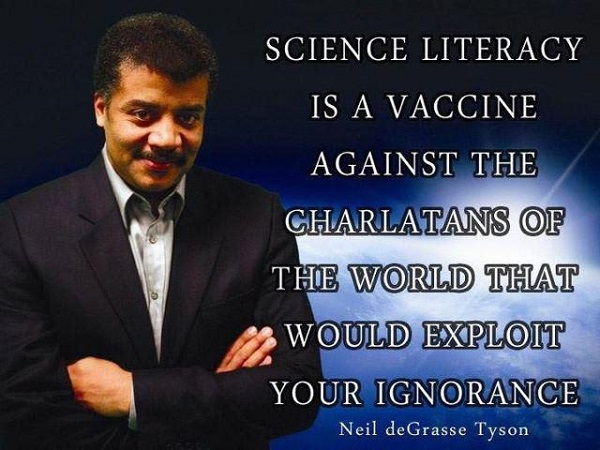
As Dr Neil deGrasse Tyson, American astrophysicist, cosmologist and science communicator, says, “Scientific literacy is an intellectual vaccine against the claims of charlatans who would exploit ignorance.”

Sri Lanka takes justified pride in its high literacy levels and equally high coverage of vaccination against infectious diseases. But we cannot claim to have a high level of scientific literacy.

A healthy dose of scepticism is essential to safeguard ourselves from superstitions, political claims and increasingly sophisticated – but often dishonest – product advertising. That’s what scientific literacy builds inside our minds.

I argue that unless we make scientific literacy an integral part of everyone’s lives, ambitious state policies and programmes to modernize the nation could well be jeopardized. Progress can be undermined — or even reversed — by extremist forces of tribalism, feudalism and ultra-nationalism that thrive in a society that lacks the ability to think critically.

See also my English op-ed: Scientific Literacy: ‘Mind Vaccine’ Sri Lanka Urgently Needs

Dr Neil deGrasse Tyson: One man worth cloning if that were feasible...
Dr Neil deGrasse Tyson: One man worth cloning if that were feasible…

විද්‍යාව, තාක්ෂණය හා සමාජය ගැන ජාත්‍යන්තර සමුළුවක් සැප්තැම්බර් 7 – 10 වකවානුව තුළ කොළඹදී පැවැත්වෙනවා.

”විද්‍යාව හා තාක්ෂණය තිරසාර සංවර්ධනයට නිසි ලෙස යොදා ගැනීම” මෙහි ප්‍රධාන තේමාවයි. ඒ යටතේ අනුතේමා හා මාතෘකා රැසක් වටා සැසිවාර පැවැත්වෙනවා.

අග්‍රාමාත්‍ය කාර්යාලය හා විද්‍යා – තාක්ෂණ අමාත්‍යාංශය සංවිධානය කරන මේ සමුළුව හුදෙක් විද්‍යාඥයන් හා තාක්ෂණවේදීන් එක් රැස් කරන තවත් අවස්ථාවක් පමණක් නොවෙයි.

මේ අයට අමතරව ප්‍රතිපත්ති සම්පාදකයන්, නව නිපැයුම්කරුවන්, විද්‍යා සන්නිවේදකයන්, විද්‍යා ගුරුවරුන්  හා ශිෂ්‍යයන් ද මෙයට සම්බන්ධ වනවා. ඇතැම් සැසිවාරවල අදහස් දක්වන්නේද මේ වඩාත් පුළුල් පිරිසෙන් තෝරා ගත් කථීකයන්.

මහජනයා සඳහා විද්‍යාව (citizen science) යන තේමාව යටතේ සැසිවාර කිහිපයක් සැළසුම් කිරීමට සංවිධායකවරුන් මට ඇරැයුම් කළා.

සාමාන්‍යයෙන් විද්‍යාත්මක සමුළුවලදී විද්‍යාව හා සෙසු සමාජය අතර සබඳතා ගැන එතරම් අවධානයක් යොමු කරන්නේ නැහැ. විද්වතුන් අතර කෙරෙන කථාබහ මාධ්‍ය වාර්තාකරණයට හසු වන්නේ ද සීමිතවයි.

එසේ බලන විට මේ සමුළුව අන් බොහෝ ඒවාට වඩා ඉදිරියෙන් සිටිනවා.

සාකච්ඡා කැරෙන අභ්‍යාවකාශ තාක්ෂණය, පරිගණ තාක්ෂණය, නැනෝ තාක්ෂණය, ජාතික නවොත්පාදන ප්‍රතිපත්තිරාමුව ආදී තේමා සියල්ල රටේ ආර්ථීක හා සමාජ සංවර්ධනයට දායක කරගත හැකි ක්ෂේත්‍රයන්.

එහෙත් විද්‍යාත්මක චින්තනය හා විවෘත මනසක් රටේ ස්ථාපිත නොවන තාක් කල් මේ කුමන තාක්ෂණයක් ප්‍රවර්ධනය කළත් එතරම් වැඩක් නැහැ. මන්ද තර්කානුකූලව සිතීමට හා ක්‍රියාකිරීමට නොහැකි සමාජයක් ලෙහෙසියෙන් වංචනිකයන් හා දේශපාලන අවස්ථාවාදීන්ට රවටා ගත හැකි නිසා.

වත්මන් සංකීර්ණ සමාජයේ ප්‍රවේශමින් දිවි ගෙවීමට බාල මහලු කොයි කාටත් යම් අවම විද්‍යාත්මක දැනුමක් හා චින්තනයක් අවශ්‍යයි.

එය පාසලේ හෝ සරසවියේ විෂ්‍ය නිර්දේශ අනුව උගන්වන විද්‍යාවන් නොවෙයි. එසේ විධිමත් ලෙස විද්‍යා විෂයයන් ඉගෙනීමට අවස්ථාවක් ලැබෙන්නේ අපේ ජනගහනයෙන් සාපේක්ෂව සීමිත පිරිසකට පමණයි.

එහෙත් මිලියන 21ක සියලු ලාංකිකයන්ට මූලික මට්ටමේ විද්‍යාත්මක අවබෝධයක් ලබා දීම වැදගත්.

මෙහිදී අවශ්‍ය වන්නේ විශේෂඥ දැනුම නොව විද්‍යාත්මකව සිතීම හා  එය එදිනෙදා ජීවිතයට අදාළ කර ගැනීමයි. ”විද්‍යාත්මක සාක්ෂරතාවය” (scientific literacy) ලෙස හඳුන්වන්නේ එයයි.

එහි නිර්වචනය නම් විද්‍යාත්මක සංකල්ප හා ක්‍රියාදාමයන් ගැන මූලික දැනුමක් හා අවබෝධයක් ලැබීම හා එය පෞද්ගලික ජීවිතයේ තීරණ ගැනීමට මෙන්ම වෘත්තීය හා සංස්කෘතික ක්‍රියාකාරකම්වලට පාදක කර ගැනීමයි.

අද ලොව සිටින දක්ෂතම හා වඩාත් ප්‍රකට විද්‍යා සන්නිවේදකයකු වන අමෙරිකානු තාරකා භෞතික විද්‍යාඥ ආචාර්ය නීල්ඩිග්‍රාස් ටයිසන් (Dr Neil deGrasse Tyson) එය වඩාත් සිත් කාවදින ලෙසින් මෙසේ කියනවා.

”විද්‍යාත්මක සාක්ෂරතාවය හරියට මනසට ලබා දෙන බුද්ධිමය එන්නතකට සමානයි. අපේ නොදැනුවත්කම හරහා අප රවටන්නට බලා සිටින සටකපට තක්කඩියන්ගෙන් බේරීමට හොඳම උපක්‍රමයයි.”

ආසියාවේම ඉහළ සාක්ෂරතාවයක් ගැහැණු, පිරිමි දෙපිරිසටම ලබා ගැනීම ගැන සමාජයක් ලෙස අප ආඩම්බර වනවා. එසේම බෝවන රෝග වළක්වා ගැනීමට එන්නත් හරහා ප්‍රතිශක්තිකරණය ලබා දීම අතින්ද රටේ මුළු ජනගහනයම පාහේ ආවරණය කිරීමට අපේ සෞඛ්‍ය සේවාව සමත්ව සිටිනවා.

untitled-614

එහෙත් අපේ විද්‍යාත්මක සාක්ෂරතාව ගැන නම් කිසිසේත්ම සෑහීමකට පත් වන්නට බැහැ. උගත්කම, වත්කම, සමාජ තරාතිරම හා වෘත්තිමය පසුබිම කුමක් වෙතත් තර්කානුකූලව සිතීමට හැකියාව ඇත්තේ අප අතර ටික දෙනකුට පමණයි.

මෙහි රෝග ලක්ෂණ හෙවත් විපාක  ඕනෑ තරම් අප සමාජයේ දැකිය හැකියි.

22 Jan 2012: සිවුමංසල කොලූගැටයා #50: අවිචාරයේ සැඩ සුළගට මැදි වුණු හේතුවාදී පහන් සිළුව

29 Jan 2012: සිවුමංසල කොලූගැටයා #51: ඔබේ විචාර බුද්ධිය දැන් අක‍්‍රීය කරන්න!

එක් පසෙකින් ජ්‍යොතිෂවේදීන්, දේවාල කපුවන්, විශ්ව ශක්තිකාරයන්, බලිතොවිල් කාරයන් හා වෙනත් ගුප්ත ශාස්ත්‍ර අලෙවි කරන්නන් පසුපස යමින් පෞද්ගලික ජීවිතයේ අවශ්‍යතා සඳහා ඉක්මනින්, කෙටික්‍රම (ෂෝට් කට්) සොයන්නෝ එමටයි. ඒ අතර ඕනෑතරම් පොතේ උගතුන්ද සිටිනවා.

විශ්වාස හා ඇදහිලි මත පදනම් වු වංචනික ක්‍රියා කෙතරම් අප සමාජයේ එළිපිට සිදු කැරෙනවා ද? විභාග ජය, රැකියා ජය, විවාහයන් හා ව්‍යාපාර සාර්ථකත්වය වැනි විවිධාකාර ජීවන අභියෝගවලට උපකාර ලබා දෙන බවට පොරොන්දු වන දැන්වීම් ඉරිදා පුවත්පත්වලත්, ඇතැම් ටෙලිවිෂන් නාලිකා තීරයේ පහළිනුත් ප්‍රසිද්ධියේ පළ කරනවා.

ඊටත් එහා යන ප්‍රබල ගුරුකම්ල අණවින හා කොඩිවින ද තිබෙනවා. මේවායේ සේවය ලබා ගන්නට විශාල වශයෙන් මුදල් ගෙවන බොහෝ දෙනෙකු සිටියත්, ඒ ගැන කථා කරන්නට ඉදිරිපත් වන්නේ ඉතා ටික දෙනයි.

මේවාට යොමු වන්නෝ මොහොතක් සිතා බැලුවොත් තමන් කරන දෙයෙහි නිශ්ඵල බව පෙනී යාවි. උදාහරණයකට දේව අනුග්‍රහයෙන් විභාග සමත් විය හැකි නම් කපුවන්ගේ දරුවන් ප්‍රසිද්ධ විභාග සියල්ලෙන් උසස්ම ප්‍රතිඵල ගත යුතුයි නේද? ගුප්ත ශාස්ත්‍රකරුවන් ඉතා ඉසුරුමත් විය යුතුයි නේද?

මීට අමතරව රටේ රාජ්‍ය නායකයා තම ග්‍රහණයට හසු කර ගෙන, රාජ්‍යයේ සියලු වැදගත් තීරණවලට ජ්‍යොතිෂවේදීන් බලපෑම් කළ සැටිත්, අන්තිමේදී ඔවුන්ගේ උපදෙස් මත කලින් ජනපතිවරණයක් පවත්වා හිටපු නායකයා සිය ධූර කාලයෙන් වසර දෙකක් අහිමි කර ගත් සැටිත් අප දන්නවා.

23 Nov 2014: සිවුමංසල කොලූගැටයා #195: අපේ රටේ බලවත්ම පුද්ගලයෝ ජ්‍යොතිර් ඇදුරන්ද?

අනෙක් පසෙකින් ඕනෑම  කුමන්ත්‍රණවාදී තර්කයන් කිසිදු විමර්ශනයකින් තොරව විශ්වාස කරන ලාංකිකයන් සංඛ්‍යාව අති විශාලයි. මෙයට උදාහරණ ඕනෑ තරම් තිබෙනවා.

රටේ බහුතර ජන කොටස වඳ බවට පත් කිරීමේ උත්සාහයන් ගැන, නැතිනම්  සමස්ත ශ්‍රී ලංකාවටම කර ඇතැයි කියන සාපයන් ගැන ප්‍රබන්ධ කථා පැතිර යන්නේ අධිවේගයෙන්.

එයට සමාන්තරව රටේ ආරක්ෂාවට, ආර්ථීකය හා රජයට එරෙහිව විවිධ ජාත්‍යන්තර කුමන්ත්‍රණ දිග හැරෙනවාය යන්න අපේ බොහෝ දෙනා විශ්වාස කරනවා. මේ කිසිවක් සඳහා සාක්ෂි ඉල්ලා සිටින්නේ නැහැ.

Words of Dr Abraham Thomas Kovoor (1898 – 1978), rationalist

හැම තරාතිරමකම ලාංකිකයන් නොමඟ යැවීම මෙතරම් පහසු වී ඇත්තේ ඇයි? පොතේ උගතුන් මුලා කිරීම මින් පර නොවූ විරූ ලෙස අද පසහු වී ඇත්තේ ඇයි?

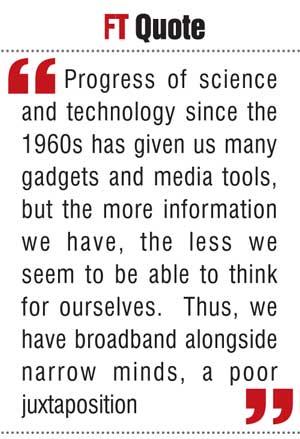
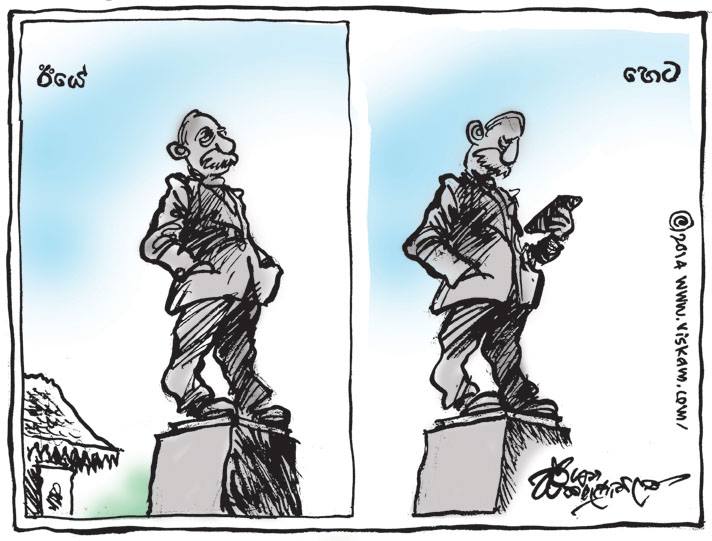
තාක්ෂණය ප්‍රචලිත වීම හරහා අද ඉන්ටර්නෙට් භාවිතය, ස්මාට්ෆෝන් භාවිතය පුළුල් වුවත්  ඒ නව මාධ්‍ය හරහා ද අපේ බොහෝ දෙනා තොරතුරු හා අදහස් හුවමාරු කර ගන්නේ කිසිදු විචාර බුද්ධියකින් තොරවයි.

අතේ තිබෙන ස්මාට්ෆෝන් එක තරම්වත් ස්මාට් නැති අය එමට හමු වනවා! තම තමන්ගේ මෝඩකම්වල ආදීනව ඔවුන්ටම විඳින්නට ඉඩ දී අප බලා සිටිමුද?

එහෙත් තනි පුද්ගලයන්ට එහා යන බිහිසුණු යථාර්ථයක් මෙහි තිබෙනවා. එනම් සමාජයක් ලෙස අයාලේ යැවීමට, රවටවා ගැනීමට සටකපට ඕනැම අයකුට හැකි වීමයි.

මිථ්‍යාව හා අවිචාරය විසින් වෙලා ගත් සමාජයක් දිගටම පවතිනු දැක්මට අවස්ථාවාදී දේශපාලකයන් හා තන්හාධික ව්‍යාපාරිකයන් යන දෙපිරිසම කැමතියි.

please-turn-off-your-brain-cells

කියන ඕනෑම ප්‍රලාපයක්, ගෙඩි පිටින් අදහන ජනතාවක් ගෝත්‍රවාදය, වැඩවසම්වාදය හා ජාතිකවාදය වැනි අන්තවාදී සංකල්ප වෙත හරවා ගැනීම ඉතා පහසුයි.

එක් පසෙකින් එවන් ජනතාවක් රවටා දේශපාලකයන් ඔවුන්ගේ ඡන්දය (හා අනාගතය) ඩැහැ ගන්නා අතර අනෙක් පසින් මෝඩ ජනතාව මුලා කර වංචනික වෙළඳෙ ප්‍රචාරණ හරහා ව්‍යාපාරිකයන් ඔවුන්ගේ මිළමුදල් හීන්සීරුවේ ලබා ගන්නවා. (සුදු වෙන්න, ස්මාට් වෙන්න, ඇඟ නොවෙහෙසා ෆිට් වෙන්න, කඩිනම් ප්‍රතිකර්ම කෙතරම් අද දවසේ මාධ්‍ය හරහා ප්‍රසිද්ධියේම අලෙවිකරණය කරනවාද?)

විද්‍යාත්මක සාක්ෂරතාවය අවශ්‍ය වන්නේ මේ සැමගෙන් බේරී, අපේ ඡන්දය, මිළ මුදල්, පණ කෙන්ද හා ආත්ම ගරුත්වය රැක ගැනීමටයි.

විද්‍යාත්මක  සාක්ෂරතාවය අනවශ්‍ය ලෙස සංකීර්ණ කර ගත යුතු නැහැ. එයට තුඩු දෙන ඔවදන් අපේ ජන විඥානයේම තිබෙනවා. ”කියන්නා කෙසේ කීවත් අසන්නා සිහි බුද්ධියෙන් ඇසිය යුතුයි’ යන්න එවැන්නක්.

විද්‍යාත්මක චින්තනය ප්‍රගුණ කර ගත්තෝ කිසිවක් එකවර පිළි ගන්නේ නැහැ. ප්‍රශ්න කරනවා. සාක්ෂි සොයනවා. භෞතික සිද්ධියක් නම් එය හොඳින් නිරීක්ෂණය කරනවා. අත්හදා බැලිය හැකි නම් එසේ කරනවා. හැම දෙයක්ම සංශයවාදීව (skeptically) විමර්ශනය කරනවා.

එසේ කොට යමක් තේරුම් ගෙන පිළිගත්තද නව දැනුමට හා නව විග්‍රහයන්ට ඔවුන් විවෘතයි. ඔවුන්ගේ මනස එක තැන පල් වෙන්නේ නෑ.

විද්‍යාත්මක සාක්ෂරතාව හෙවත් චින්තනයට පෙරදිග, බටහිර ක්‍රියා වෙනසක් නැහැ. පෙරදිගින් බිහි වූ බුදුදහම වැනි සාමයික චින්තන ක්‍රමවලත්, බටහිර තර්ක ශාස්ත්‍රඥයන්ගේ ඉගැන්වීම්වලත් අවධාරණය කරන්නේ ඕනෑම දෙයක් ඉතා හොඳින් විමර්ශනය කිරීමේ අවශ්‍යතාවයයි.

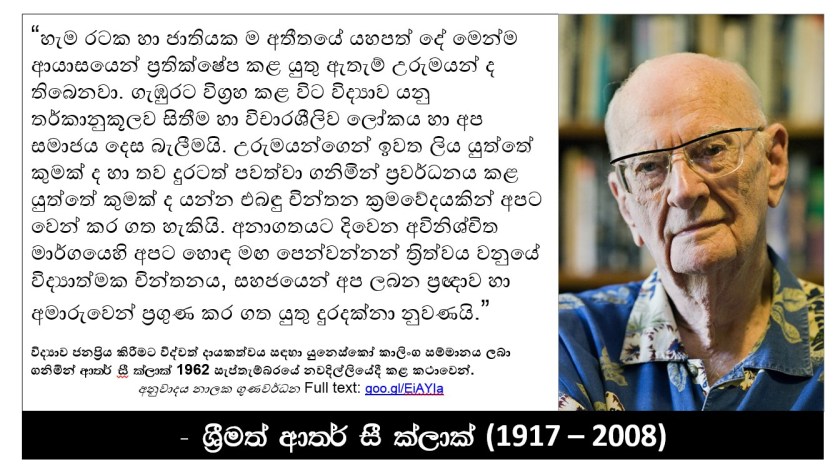
Arthur C Clarke quote on balancing traditions and modernity (Sinhala translation from UNESCO Kalinga Award acceptance speech, 1962)

ශ‍්‍රීමත් ආතර් සී. ක්ලාක් අඩ සියවසක් පුරා මෙරට වාසය කරමින් නිතර ලක් සමාජයට අවවාද කළේත් මෙයයි.

විද්‍යාව ජනප්‍රිය කිරීමට ලෝක මට්ටමින් කරන විද්වත් දායකත්වය සඳහා යුනෙස්කෝ පිරිනමන කාලිංග සම්මානය 1961දී හිමි වූයේ ක්ලාක්ටයි. එය ලබා ගනිමින් ඔහු 1962 සැප්තැම්බරයේ නවදිල්ලියේදී කළ කථාවේ අවසාන වැකි කිහිපය අඩසියවසක් ගත වී තවමත් අපට අදාල කර ගත හැකියි.

“තර්කානුකූලව හා සාක්ෂි මත පදනම් වූ චින්තනයක් පෙර අපර දෙදිග සියලු රටවලට අවශ්‍යයි. එය වඩාත් හදිසි අවශ්‍යතාවක් වන්නේ දියුණු වෙමින් පවතින රටවලයි. ආසියාවේ හා අප්‍රිකාවේ බොහෝ රටවල මිලියන් ගණනක් ජනයා භෞතික, මානසික හා ආධ්‍යාත්මික දරිද්‍රතාවයේ ඇද බැඳ තබන ප්‍රබල සාධක දෙකක් තිබෙනවා. එනම් අන්ධ භක්තිය හා මිථ්‍යා විශ්වාසයි.

 “විද්‍යාව එහි සාංස්කෘතිකමය හා තාක්ෂ‚ක යන මුහුණුවර දෙකෙන් ම මේ පසුගාමී සාධකවලට එරෙහි වනවා. ගතානුගතිකත්වයේ යදම් බිඳ දමා මුළු මහත් ජාතීන් වඩා යහපත් ජීවන තත්ත්වයන් වෙත කැඳවා ගෙන යන්නට විද්‍යාත්මක චින්තනය මඟ පෙන්වනවා.

 “විවෘත මනසින් යුතුව හා විචාරශීලිව හැම දෙයක් ම ප්‍රශ්න කිරීම විද්‍යාවේ ක්‍රමවේදයයි. ඉන්ද්‍රිය ගෝචර ප්‍රත්‍යක්ෂ හරහා මතු වන දේ අපේ එල්බ ගත් විශ්වාසවලට පටහැනි වන විට දී පවා එය පිළිගැනීම විද්‍යාවේ විනයයි.

 “එහෙත් අන්තවාදියාගේ ආදර්ශ පාඨය වන්නේ කරුණු හා තර්ක ඉදිරිපත් කරන්නට එපා – මගේ තීරණය අවසාන විනිශ්චයයියන්නයි. එබඳු අධිපතිවාදයක් විද්‍යාවේ නැති නිසා අන්තවාදීන්ට විද්‍යාවේ තැනක් ද නැහැ.

 “මිථ්‍යා විශ්වාස හා ඇදහිලි ඕනෑ තරම් පෙරදිග රටවල හමු වනවා. සමහරක් ඒවා අහිංසක නොමඟ යාම් වූවත් ඇතැම් ඒවා පුද්ගලයන්ට හා ජන සමාජයන්ට ඉතා අහිතකරයි…හැම රටක හා ජාතියක ම අතීතයේ ආයාසයෙන් ප්‍රතිකේෂප කළ යුතු ඇතැම් උරුමයන් ද තිබෙනවා.

 “ගැඹුරට විග්‍රහ කළ විට විද්‍යාව යනු තර්කානුකූලව සිතීම හා විචාරශීලිව ලෝකය හා සමාජය දෙස බැලීමයි. අප ඉවත ලිය යුත්තේ කුමක් ද හා තව දුරටත් පවත්වා ගනිමින් ප්‍රවර්ධනය කළ යුත්තේ කුමක් ද යන්න එබඳු චින්තන ක්‍රමවේදයකින් අපට වෙන් කර ගත හැකියි. අනාගතයට දිවෙන අවිනිශ්චිත මාර්ගයෙහි අපට හොඳම මඟ පෙන්වන්නන් ත්‍රිත්වය වනුයේ විද්‍යාත්මක චින්තනය, සහජයෙන් අප ලබන ප්‍රඥාව හා අමාරුවෙන් ප්‍රගුණ කර ගත යුතු දුරදක්නා නුවණයි.”

ශ්‍රී ලංකාවේ විද්‍යාත්මක  සාක්ෂරතාවය ප්‍රවර්ධනය කිරීමේ වගකීම විධිමත් අවධ්‍යාපන ක්ෂේත්‍රයට (පාසල් හා සරසවි) සීමා කළ නොහැකියි. ඒ සඳහා සිවිල් සමාජ පෙළගැස්මක්, මාධ්‍ය ප්‍රබුද්ධයන්ගේ දායකත්වයක් හා වෘත්තිකයන්ගේ සහභාගිත්වයක් අවශ්‍යයි.

පරම්පරාවකට පෙර ජාතික ප්‍රතිශක්තිකරණ වැඩසටහන සමාජගත කරන්නට කලාකරුවන්ල විද්වතුන් හා වෙනත් බොහෝ අය හවුල් වුණා. බුද්ධි ප්‍රතිශක්තිකරණයටත් එවන් ප්‍රයත්නයක් ඕනෑ!

Read also: සිවුමංසල කොලූගැටයා #96: ආතර් සී. ක්ලාක් නැවත කියවමු!

[Echelon column] Balancing Broadband and Narrow Minds

This column originally appeared in Echelon business magazine, March 2014 issue. It is being republished here (without change) as part of a process to archive all my recent writing in one place – on this blog.

Image courtesy Echelon magazine

Balancing Broadband and Narrow Minds

By Nalaka Gunawardene

Are we cyber-stunted?

I posed this question some weeks ago at Sri Lanka Innovation Summit 2013 organised by Echelon and News 1st. We were talking about how to harness the web’s potential for spurring innovation.

We cannot innovate much as a society when our broadband is stymied by narrow minds. How many among the (at least) 3.5 million Lankans who regularly access the web have the right mindset for making the best use of the medium, I asked.

We didn’t get to discuss it much there, but this bothers me. Sri Lanka has now had 19 years of commercial Internet connectivity (the first ISP, Lanka Internet Services, started in April 1995). That’s a long time online: we have gone past toddler years and childhood (remember dial-up, anyone?) and been through turbulent ‘teen years’ as well.

Technology and regulation have moved on, imperfect though the latter maybe. But psychologically, as a nation we have yet to find our comfort level with the not-so-new medium.

There are various indicators for this. Consider, for example, the widespread societal apprehensions about social media, frequent web-bashing by editorialists in the mainstream media, and the apparent lack of public trust in e-commerce services. These and other trends are worth further study by social scientists and anthropologists.

Another barometer of cyber maturity is how we engage each other online, i.e. the tone of comments and interactions. This phenomenon is increasingly common on news and commentary websites; it forms the very basis of social media.

Agree to disagree?

‘Facts are sacred, comment is free’ is a cherished tenet in journalism and public debates. But expressing unfashionable opinions or questioning the status quo in Lankan cyber discussions can attract unpleasant reactions. Agreeing to disagree rarely seems an option.

Over the years, I have had my share of online engagement – some rewarding, others neutral and a few decidedly depressing. These have come mostly at the multi-author opinion platforms where I contribute, but sometimes also through my own blogs and twitterfeed.

One trend seems clear. In many discussions, the ‘singer’ is probed more than the ‘song’. I have been called unkind names, my credentials and patriotism questioned, my publishers’ bona fides doubted, and my (usually moderate) positions attributed to personality disorders or genetic defects! There have been a few threats too (“You just wait – we’ll deal with traitors soon!”).

I know those who comment on mainstream political issues receive far more invective. Most of this is done under the cover of anonymity or pseudonymity. These useful web facilities – which protect those criticising the state or other powerful interests – are widely abused in Lankan cyberspace to malign individuals expressing uncommon views.

There are some practical reasons, too, why our readers may misunderstand what we write, or take offence needlessly.

Poor English comprehension must account for a good share of web arguments. Many fail to grasp (or appreciate) subtlety, intentional rhetoric and certain metaphors. Increasingly, readers react to a few key words or phrases in longer piece — without absorbing its totality.

A recent example is my reflective essay ‘Who Really Killed Mel Gunasekera?’. I wrote it in early February shortly after a highly respected journalist friend was murdered in her suburban home by a burglar.

I argued that we were all responsible, collectively, for this and other rising incidents of violence. I saw it as the residual product of Lankan society’s brutalisation during war years, made worse by economic marginalisation. Rather than barricading ourselves and living in constant fear, we should tackle the root causes of this decay, I urged.

The plea resonated well beyond Mel’s many friends and admirers. But some readers were more than miffed. They (wrongly) reduced my 1,100 words to a mere comparison of crime statistics among nations.

I aim to write clearly, and also probe beyond headlines and statistics. But is such nuance a lost art when many online readers merely scan or speed-read what we labour on? In today’s fast-tracked world, can reflective writing draw discerning readers and thoughtful engagement any longer? I wonder.

Too serious

Then there is the humour factor – or the lack of it. Many among us don’t get textual satire, as Groundviews.org discovered with its sub-brand called Banyan News Reporters (BNR). Their mock news items and spoofs were frequently taken literally – and roundly condemned.

The web is a noisy place, but some stand out in that cacophony because of their one-tracked minds. They are those who perceive and react to everything through a pet topic or peeve. That ‘lens’ may be girls vs boys, or lions vs tigers, or capitalism vs socialism or something else. No matter what the topic, such people will always sing same old tune!

Tribal divisions are among the most entrenched positions, and questioning matters of faith assures a backlash. It seems impossible to discuss secularism in Sri Lanka without seemingly offending all competing brands of salvation! (The last time I tried, they were bickering among themselves long after I quietly left the platform…)

Oh sure, everybody is entitled to a bee or two in her bonnet. But what to do with those harbouring an entire bee colony — which they unleash at the slightest provocation?

I just let them be (well, most of the time). I used to get affected by online abuse from cloaked detractors but have learnt to take it with equanimity. This is what economist and public intellectual W A Wijewardena also recommends.

“You must treat commentators as your own teachers; some make even the most stupid comment in the eyes of an intelligent person, but that comment teaches us more than anything else,” he wrote in a recent Facebook discussion.

He added: “Individual wisdom and opinions are varied and one cannot expect the same type of intervention by all. I always respect even the most damaging comment made by some on what I have written!”

Moderating extreme comments is a thankless and challenging job for those operating opinion platforms. If they are too strict or cautious, they risk diluting worthwhile public debates for which space is shrinking in the mainstream media. At the same time, hate speech peddlers cannot be allowed free license in the name of free speech.

Where to draw the line? Each publisher must evolve own guidelines.

Groundviews.org, whose vision is to “enable civil, progressive and inclusive discussions on democracy, rights, governance and peace in Sri Lanka” encourages “a collegial, non-insulting tone” in all contributors. It also reminds readers that “comments containing hate speech, obscenity and personal attacks will not be approved.”

Colombo Telegraph, another popular opinion and reporting website, “offers a right to reply for any individual or organisation who feels they have been misreported”. Sadly, this courtesy is not available in many online news and commentary websites carrying Lankan content.

In the end, even the most discerning publishers and editors can do only so much. As more Lankans get online and cyber chatter increases, we have to evolve more tolerant and pluralistic ways of engagement.

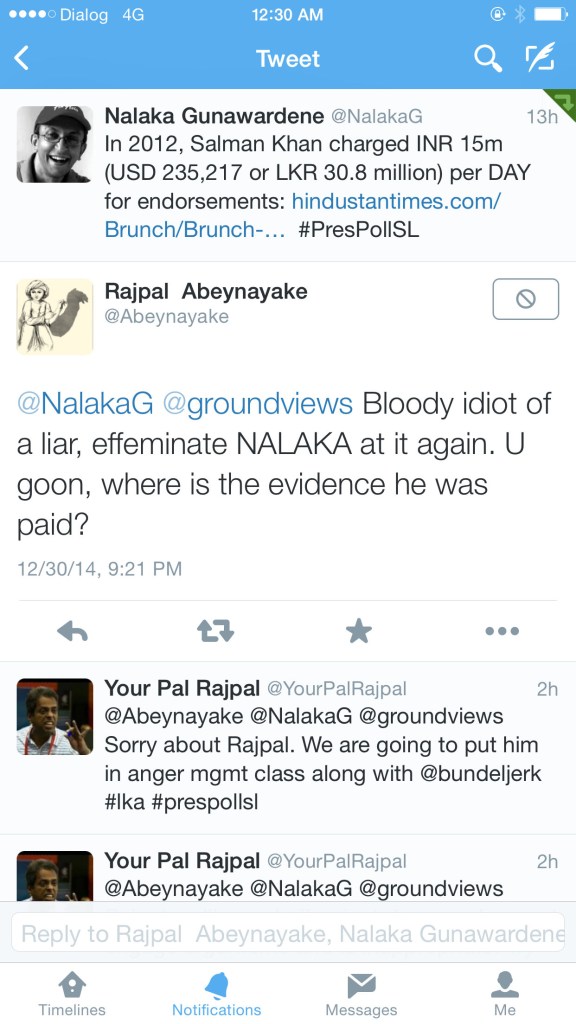
An example of cyber intolerance and name-calling: one of many...
An example of cyber intolerance and name-calling from December 2014, during the campaign for Sri Lanka’s Presidential Election (when Bollywood’s Salman Khan was brought to Sri Lanka to promote then incumbent Mahinda Rajapalksa’s election campaign)


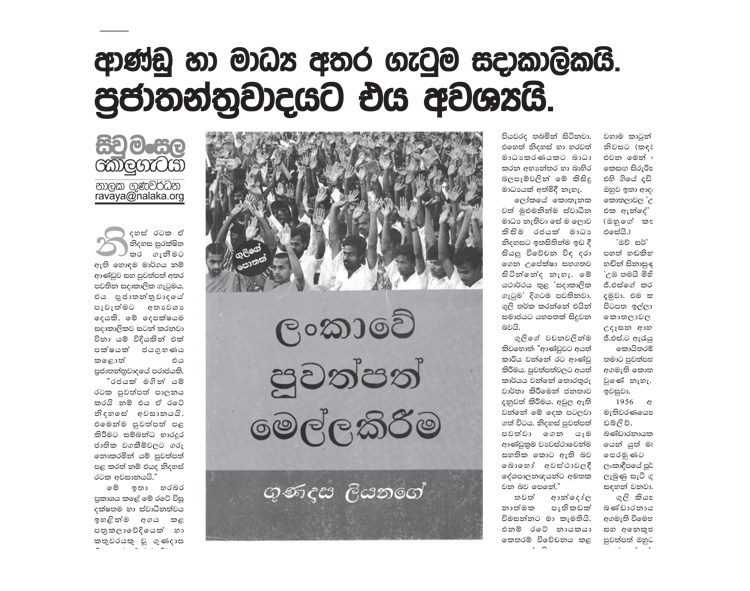
සිවුමංසල කොලුගැටයා #279: ආණ්ඩු හා මාධ්‍ය අතර ගැටුම සදාකාලිකයි. ප්‍රජාතන්ත්‍රවාදයට එය අවශ්‍යයි.

Sivu Mansala Kolu Getaya column by Nalaka Gunawardene, Ravaya 14 Aug 2016

In this week’s Ravaya column (appearing in the print issue of 14 August 2016), I take a close look at the perennial tension between governments and the media.

I open with an extract from late Gunadasa Liyanage (1930-1997), one of Sri Lanka’s most accomplished and respected editors of the 20th century. In his 1993 book on ‘Taming the Press in Sri Lanka’ (in Sinhala), he argued that the never-ending confrontation between the government and media is, in fact, a protection for democratic freedoms. If either party wins, it is a set back for democracy.

“If a government controls the media that marks the end of human freedoms in that country. On the other hand, if the media behaves without any responsibility, that too threatens freedoms in society,” he wrote.

So the tension between these two continues in 21st century Sri Lanka, even as we recover from a Decade of Darkness (2005-2014) under the authoritarian rule of Mahinda Rajapaksa. As the government elected in 2015 tries to balance media freedoms with economic growth and political reforms, it faces some familiar challenges.

How much can or should the government allow ultra-nationalists and other political opportunists to exploit media freedom? What are the sane and safe limits to which media houses should accommodate partisan agendas and vitriolic messages emanating from sections of the (serving and retired) military, clergy and electorally defeated political parties?

This column also quotes Vijitha Yapa, one of Sri Lanka’s most senior journalists who was founder editor of The Island, The Sunday Island and the (revived) Sunday Times – all of which positions he quit when he could no longer operate with editorial independence.

I also raise a related point: how far can the President and Prime Minister be criticized in the media?

ගුණදාස ලියනගේ  'ලංකාවේ පුවත්පත් මෙල්ල කිරීම' Taming the Press in Sri Lanka, by Gunadasa Liyanage (1993)
‘ලංකාවේ පුවත්පත් මෙල්ල කිරීම’ – Taming the Press in Sri Lanka, by Gunadasa Liyanage (1993)

”නිදහස් රටක ඒ නිදහස සුරක්ෂිත කර ගැනීමට ඇති හොඳම මාර්ගය නම් ආණ්ඩුව සහ පුවත්පත් අතර පවතින සදාකාලික ගැටුමය. එය ප්‍රජාතන්ත්‍රවාදයේ පැවැත්මට අත්‍යවශ්‍ය දෙයකි. මේ දෙපක්ෂයම සදාකාලිකව සටන් කරනවා විනා යම් විදියකින් එක් පක්ෂයක් ජයග්‍රහණය කළොත් එය ප්‍රජාතන්ත්‍රවාදයේ පරාජයකි.

”රජයක් මගින් යම් රටක පුවත්පත් පාලනය කරයි නම් එය ඒ රටේ නිදහසේ අවසානයයි. එමෙන්ම පුවත්පත් පළ කිරීමට සම්බන්ධ භාරදූර ජාතික වගකීම්වලට ගරු නොකරමින් යම් පුවත්පත් පළ කරත් නම් එයද නිදහස් රටක අවසානයයි.”

මේ ඉතා හරබර ප්‍රකාශය කළේ මේ රටේ විසූ දක්ෂතම හා ස්වාධීනත්වය ඉහළින්ම අගය කළ පත්‍රකලාවේදියෙක් හා කතුවරයකු වූ ගුණදාස ලියනගේ සූරීන්.

‘ගුලි’ යන කෙටි නමින් ප්‍රකට වූ ඔහු මෙරට ජාතික පත්තර ආයතන ගණනාවකම ප්‍රධාන කර්තෘ හා ඉහළ තනතුරු හෙබවූ, එහෙත් කර්තෘ මණ්ඩල ස්වාධීනත්වයට බලපෑම් එල්ල වූ සැම විටම ඒ සියල්ල දමා ගසා ඉල්ලා අස් වී යෑමට බිය නොවූ අයෙක්.

Gunadasa Liyanage (1930-1997)

මේ ප්‍රකාශය හමු වන්නේ ඔහු 1993දී ලියූ ‘ලංකාවේ පුවත්පත් මෙල්ල කිරීම’ නම් පොතේ අවසානයේදී. 1948 සිට 1992 දක්වා දශක හතර හමාරක පමණ කාලය තුළ අපේ රටේ පුවත්පත් හා රජය අතර නොනිමි අරගලය ඔහු එම පොතෙහි මැනවින් විග්‍රහ කරනවා.

ඒ ජනමාධ්‍ය ඇදුරන් කරන පරිදි හුදෙක් න්‍යායාත්මකව නොවෙයි, ප්‍රායෝගික යථාර්ථයන් අත්දැකීම් හරහා ගෙන හැර දක්වමින්.

මේ පොත මා යළිත් කියවූයේ වත්මන් රජය හා මාධ්‍ය අතර පවතින නොසන්සුන් බව හා ආතතිය තේරුම් ගැනීමටයි.

එදාට වඩා අද මාධ්‍ය ක්ෂේත්‍රයේ විවිධත්වය හා සංකීර්ණත්වය වැඩි වී ඇතත් මූලධර්මීය ලෙසින් එකල පැවති බලඅරගලය අදත් එසේම පවතිනවා යැයි කිව හැකියි.

ප්‍රජාතන්ත්‍රවාදයේ පැවැත්මට හා තහවුරු වීමට මාධ්‍ය නිදහස අවශ්‍යයි. එහෙත් ඒ නිදහසට සමාන්තර මාධ්‍ය වගකීම් සමුදායක්ද තිබෙනවා. මේ සාධක දෙක තුලනය කර ගැනීම ලෙහෙසි නැහැ – විශේෂයෙන්ම වෙළඳෙපොළ තරගකාරීත්වය හමුවේ.

පසුගිය මාස කිහිපය තුළ අගමැතිවරයා අවස්ථා ගණනාවකදී මාධ්‍ය ආයතන හා මාධ්‍යවේදීන් සමහරකගේ නම්ද සඳහන් කරමින් දැඩි විවේචනයන් කළා. ඔහුගේ විවේචනවලට සාක්ෂිමය පදනමක් ඇතත් පුද්ගල-කේන්ද්‍රීය වාග් ප්‍රහාර අනවශ්‍ය බව මගේ අදහසයි.

ඒ අතර රජයේ සංවර්ධන වැඩ ගැන ප්‍රමාණවත් ආවරණයක් බොහෝ මාධ්‍ය හරහා නොලැබෙන බව ජනාධිපතිවරයා කියනවා.

ඔහුගේ කෝණයෙන් බැලූ විට එසේ පෙනී යා හැකියි. එහෙත් තමන් ආවරණය කරන්නේ කුමක්ද හා එයට ලබා දෙන සාපේක්ෂ වැදගත්කම තීරණය කිරීමේ පූර්ණ අභිමතය ඇත්තේ මාධ්‍ය කතුවරුන්ටයි.

එයට දේශපාලකයන්, නිලධාරීන් හෝ පිටස්තර වෙන කිසිවකුත් බලපෑම් නොකළ යුතුයි. මාධ්‍යවල සංලේඛ්‍ය නිදහස (editorial independence)  සුරැකෙන්නේ එවිටයි.

හිමිකරුවන්ගේ බලපෑම් පවා නොතකා සිටීමට මේ මූලධර්මය යටතේ කර්තෘ මණ්ඩලයට නිදහස තිබිය යුතුයි. (එහෙත් මෙය ප්‍රායෝගිකව සිදු නොවන බවත් හොඳාකාර පෙනෙනවා.)

Vijitha Yapa, photo from Wikimedia Commons

”තුන්වන ලෝකයේ බොහෝ රටවල් පුවත්පත් නිදහස ගැන කතා කරතත්, සත්‍යය හාරා අවුස්සා එළිදරව් කිරීම පිණිස පත්‍රකලාවේදීන්ට අවශ්‍ය වාතාවරණය ඇති කිරීමට උපකාර නොකරති.” ගුලිගේ පොතට පසුවදනක් ලියන හිටපු ජ්‍යෙෂ්ඨ කතුවර විජිත යාපා කියනවා.

ඔහු ‘දි අයිලන්ඩ්’ සහ (වර්තමාන) ‘සන්ඩේ ටයිම්ස්’ පත්‍ර දෙකෙහිම ආරම්භක කතුවරයා. නිදහසේ වැඩ කිරීමට නොහැකියැ’යි හැඟුණු විට තනතුරුවලින් නොපැකිළ ඉල්ලා අස් වූ ගුලිගේ ජාතියේම දුර්ලභ චරිතයක්.

විජිත යාපා මෙසේද කියනවා. ”ලෝකය ජීවත්වීමට තරම් ආරක්ෂිත ස්ථානයක් බවට පත් වී ඇත්තේ පුවත්පත් කලාවේදියාගේ සත්‍ය ගවේෂණය නිසා බව බොහෝ දෙනෙක් අවබෝධ කර නොගනිති. මෙම කටයුත්ත සඳහා ඉදිරිපත් වන පුවත්පත් කලාවේදියාගේ ජීවිතය රෝසමල් යහනාවක් නොවේ. වරෙක නොමසුරුව ඔහුට ප්‍රශංසා කරන දේශපාලනඥයන් ගැන සත්‍ය කරුණු ඇතුළත් එහෙත් අප්‍රසාදජනක යමක් ප්‍රකාශ කළ විට පත්‍රකලාවේදියාගේ බොටුව කඩා ලේ උරා බීමට මුලින්ම ඉදිරිපත් වන්නේත් එම දේශපාලනඥයන්මය. පළ කිරීමට සුදුසු ප්‍රවෘත්ති හැටියට ඔවුන් සලකන්නේ ඔවුන්ගේ පුරාජේරුව සහ ඔවුන්ගේ ඉරිතැලී ගිය කණ්ණාඩිවලින් දකින ආකාරය අනුව ප්‍රවෘත්ති යයි ඔවුන් නිගමනය කරන දේ පමණකි.”

ගුලිගේ පොතේ වැදගත්කම නම් විවිධ එජාප, ශ්‍රී ලංකා සහ හවුල් රජයන් යටතේ මෙරට පුවත්පත් මෙල්ල කරන්නට නීති, නියාමන හා ව්‍යාපාරික බලපෑම් හරහා ගත් උත්සාහයන් ගැන දේශපාලන භේදයකින් තොරව ලේඛනගත කර තිබීමයි.

1960-65 රජය පුවත්පත් පනතක් ගෙන ඒමට කළ උත්සාහය හා ඒ හරහා අර්බුදයකට ගොස් තමන්ට තිබූ පාර්ලිමේන්තු බහුතරය අහිමි වූ සැටිත්, පත්තර නිදහස මුල් කර ගෙන පැවති මෙරට ප්‍රථම මහ මැතිවරණය ලෙස සැලකිය හැකි 1965 මාර්තු මැතිවරණය ගැනත් ගුලි විස්තරාත්මකව විග්‍රහ කරනවා.

එසේම 1970දී බලයට පත් තුන් හවුල් රජය ලේක්හවුස් ආයතනය ජනසතු කළ සැටිත්, මාධ්‍යවේදීන්ට දැඩි දඬුවම්දීමේ බලය ඇති පුවත්පත් මණ්ඩලය නම් මර්දනකාරී රාජ්‍ය ආයතනය 1973 පනතක් හරහා කඩිමුඩියේම පිහිට වූ සැටිත් එයට තුඩුදුන් දේශපාලනමය, ව්‍යාපාරික හා පෞද්ගලික සාධකත් ඔහු විස්තර කරනවා.

පත්‍රකලාවේදීන් සැම දෙනා සැම විට පරමාදර්ශී නොවන බවත්, ඔවුන් අතරින් සමහරුන් දේශපාලන පක්ෂවල හා දේශපාලන චරිතවල අවශ්‍යතා සඳහා ඍජුව හෝ වක්‍රව පෙනී සිටින බවත් ගුලි උදාහරණ සහිතව පෙන්වා දෙනවා. ඒ කියන්නේ කාගෙ කාගෙත් කිල්ලෝටවල හුණු අඩු වැඩි පමණට ඇති බවයි!

වසර 139ක් පැවති, මෙරට පැරණිම පුවත්පත් ආයතනයක් වූ ටයිම්ස් ඔෆ් සිලෝන් සමාගම සිය ප්‍රකාශන දේශපාලන න්‍යාය පත්‍රයන්ට දැඩි ලෙස නතු කිරීමට යාම හරහා ගරා වැටී, පාඨක විශ්වාසය හානි කොට ගෙන, රජයට පවරා ගනු ලැබ 1985 ජනවාරි 31 වැනිදා වසා දැමීමේ ඉතිහාසය ගුලි කම්පාවෙන් යුතුව වාර්තා කරනවා.

එසේම ගුණසේන සමාගම යටතේ 1960 ගණන්වල ඇරැඹි ස්වාධීන පුවත්පත් සමගම (දවස නිවස) 1974 අප්‍රේල් සිට 1977 පෙබරවාරි දක්වා රජය විසින් සීල් කොට තැබීමේ කුප්‍රකට ඉතිහාසයත්, නැවත පණ ගැන්වුණු දවස නිවස අන්තිමේදී 1990 දෙසැම්බර් 26 වැනිදා අභ්‍යන්තර ප්‍රශ්න නිසා වසා දැමීමත් ගුලි සටහන් කර ඇත්තේ එම ආයතනයේ මහ පුටුව කලක් හෙබවූවකුගේ පරිණත දෘෂ්ටි කෝණයෙන්.

කලක් මෙරට ජන ජීවිතයට ලොකු බලපෑම් කළ ප්‍රධාන ප්‍රවාහයේ මාධ්‍ය ආයතන දෙකක ඛේදජනක අවසානයට තුඩු දුන් සාධක අද දක්වාත් මාධ්‍ය ක්ෂේත්‍රය තුළ විවිධාකාරයෙන් ක්‍රියාත්මක වනු දැකිය හැකියි.

අද වන විට පුවත්පත් අභිබවා රේඩියෝ – ටෙලිවිෂන් මාධ්‍ය පෙරට විත් තිබෙනවා. වෙබ්ගත නව මාධ්‍යකරණයක ඉදිරි පියවරද තබමින් සිටිනවා. එහෙත් නිදහස් හා හරවත් මාධ්‍යකරණයකට බාධා කරන අභ්‍යන්තර හා බාහිර බලපෑම්වලින් මේ කිසිදු මාධ්‍යයක් අත්මිදී නැහැ.

ලෝකයේ කොතැනකවත් මුළුමනින්ම ස්වාධීන මාධ්‍ය නැතිවා සේ ම ලොව කිසිම රජයක් මාධ්‍ය නිදහසට ඉත සිතින්ම ඉඩ දී සියලු විවේචන විඳ දරා ගෙන උපේක්ෂා සහගතව සිටින්නේද නැහැ. මේ යථාර්ථය තුළ ‘සදාකාලික ගැටුම’ දිගටම පවතිනවා. ගුලි තර්ක කරන්නේ එයින් සමාජයට යහපතක් සිදුවන බවයි.

ගුලිගේ වචනවලින්ම කිවහොත්: ආණ්ඩුවට අයත් කාරිය වන්නේ රට ආණ්ඩු කිරීමය. පුවත්පත්වලට අයත් කාර්යය වන්නේ තොරතුරු වාර්තා කිරීමෙන් ජනතාව දැනුවත් කිරීමය. අවුල ඇති වන්නේ මේ දෙක පටලවා ගත් විටය. නිදහස් පුවත්පත් පවත්වා ගෙන යෑම ආණ්ඩුක්‍රම ව්‍යවස්ථාවෙන්ම සහතික කොට ඇති බව බොහෝ අවස්ථාවලදී දේශපාලනඥයන්ට අමතක වන බව පෙනේ.

තවත් ආන්දෝලනාත්මක පැතිකඩක් විමසන්නට මා කැමතියි. එනම් රටේ නායකයා කෙතරම් විවේචනය කළ යුතුද යන්නයි.

තනතුර හොබවන රාජ්‍ය නායකයාට හා ආණ්ඩු නායකයාට විශාල මාධ්‍ය අවධානයක් නිතැතින්ම ලැබෙනවා. එය ඔවුන්ගේ වරප්‍රසාදයක් නොව ඔවුන් එම තනතුරේ ක්‍රියා කරන ආකාරය පිළිබඳ විමර්ශනයක්.

රාජ්‍ය මාධ්‍ය වන්දිභට්ටකම් කළත් සෙසු මාධ්‍ය එසේ කිරීමට බැඳී නැහැ. (රාජ්‍ය මාධ්‍ය ද මේ නරක පුරුද්දෙන් කවදා හෝ අත්මිදිය යුතුයි.) රටේ නායකයන් කියන කරන දේ විවේචනය කිරීමට මාධ්‍යවලට මෙන්ම සියලු පුරවැසියන්ට අයිතියක් තිබෙනවා.

මුළු රටම “රාජපක්ෂ වලව්වක්” යයි සිතා පාලකයා ක්‍රියා කළ අඳුරු දශකයේ ආභාසය හා අහිතකර සෙවණැලි තවමත් සමහරුන්ගේ මනසේ රැඳී ඇති. එහෙත් මේ වැඩවසම්, නිවට මානසිකත්වය දුරු කළ යුතුයි.

අසාධාරණ ලෙස තමන්ට අපහාස කළොත් අපහාස නීතිය යටතේ සිවිල් නඩුවක් පැවරීමේ අයිතිය රටේ නායකයන්ටද තිබෙනවා. (හිටපු සමහර නායකයෝ එසේ නඩු කියා විශාල වන්දි මුදල් පවා ලබා ගත් බව මතකයි.) එහෙත් සැබෑ ලිබරල් හා පරිණත නායකයෝ මහජන හා මාධ්‍ය විවේචන ඉවසා සිටීමේ හැකියාව ඇත්තෝයි.

මෙයට ප්‍රධාන පක්ෂ දෙකේම ඉතිහාසයෙන් උදාහරණ හමුවෙනවා.

1953-56 වකවානුවේ අගමැති ධුරය හෙබ වූ ශ්‍රීමත් ජෝන් කොතලාවල කෙළින් කතා කරන, යකාටවත් බය නැති කෙනෙක්.

G S Fernando, cartoonist

වරක් ඔහු පොල්ගොල්ලේ පශු ගොවිපළක් නිරික්සීමට ගියා. එහිදී සුන්දර යුවතියන් මහත් ඕනෑකමින් ගවයන් හා එළදෙනුන් රැක බලා ගන්නා ආකාරය දැක ‘අනේ මටත් ගවයෙක් වෙලා උපදින්න ආසයි’ යයි විහිලුවට  කීවා.

මේ ආරංචිය ලැබුණු ටයිම්ස් සමාගමේ ප්‍රධාන කාටූන් ශිල්පියා වූ ජී. එස්. ප්‍රනාන්දු පසුවදා ලංකාදීපයට අපූරු කාටූනයක් ඇන්දා. කොතලාවලගේ මුහුණ සහිත ගවයකු වට කර ගත් යුවතියන් පිරිසක් එහි සිටියා.

එදා උදෙන්ම ලංකාදීප කතුවර ඩී. බී. ධනපාල සූරීන්ට කතා කළ අගමැති, වහාම කාටූන් ශිල්පියා තම නිවසට (කඳවල වලව්වට) එවන මෙන් ඉල්ලා සිටියා. කෙසඟ සිරුරින් හෙබි ජී. එස්. එහි ගියේ දැඩි බියකින්.

ඒත් ඔහුව ඉතා ආදරයෙන් පිළිගත් කොතලාවල ‘උඹද මේ කාටූන් එක ඇන්දේ’ යැයි ඇසුවා. (ඔහුගේ කතා ශෛලිය එසේයි.)

‘ඔව් සර්’ යැයි ජී. එස්. පහත් හඬකින් කී විට මහ හඬින් සිනාසුණු කොතලාවල ‘උඹ තමයි මිනිහා!’ යයි කියා ජී.එස්ගේ කරට උඩින් අත දැමුවා.

එම කාටූනයේ මුල් පිටපත ඉල්ලා සිටි අගමැති කොතලාවල තමා සමග උදෑසන ආහාරය ගන්නට ජී.එස්.ට ඇරැයුම් කළා.

කොයි තරම් නිර්දය ලෙස තමාට පුවත්පත් පහර ගැසුවත් අගමැති කොතලාවල කලබල වුණේ නැහැ. ඒවා සිනාසී ඉවසුවා.

1956 අප්‍රේල් මහ මැතිවරණයෙන් ජය ගත් එස්. ඩබ්ලිව්. ආර්. ඩී. බණ්ඩාරනායකගේ නායකත්වයෙන් යුත් මහජන එක්සත් පෙරමුණට එවකට ලංකාදීපයේ පූර්ණ සහයෝගය ලැබුණු සැටි ගුලිගේ පොතේ සඳහන් වනවා.

ගුලි කියන හැටියට: ”බණ්ඩාරනායක මහතා අගමැති වීමෙන් පසු ‘දිනමිණ’ සහ අනෙකුත් ලේක්හවුස්  පුවත්පත් ඔහුට නිර්දය ලෙස පහර දුන්නේ කෙසේ හෝ ඔහුගේ ආණ්ඩුව කඩා නැවත වරක් එජාපය බලයට පත් කිරීමේ අරමුණ ඇතිවය. තමාට කොතරම් පහර දුන්නත් පුවත්පත් නිදහස මහත් සේ අගය කළ ශ්‍රේෂ්ඨ ප්‍රජාතන්ත්‍රවාදියකු වූ බණ්ඩාරනායක මහතා රාජ්‍ය බලය යොදවා පුවත්පත් මෙල්ල කිරීමට කිසි අවස්ථාවක කටයුතු කළේ නැත.”

Sri Chandrarathna Manawasinghe

සමස්තයක් ලෙස ලංකාදීපය මඑපෙ රජයට හිතවාදී වුවත් එහි ජනප්‍රිය තීරු ලිපියක් වූ ‘වගතුග’ ලියූ ශ්‍රී චන්ද්‍රරත්න මානවසිංහ ටික දිනකින්ම නව රජය ද හේතු සහිතව විවේචනය කිරීම ඇරඹුවා. මෙය අගමැතිට කෙසේ වෙතත් ඔහු වටා සිටි පිරිසට නම් ඇල්ලුවේ නැහැ.

මේ නිසා මානවසිංහ රාජ්‍ය විරෝධියකු ලෙස ලේබල් කරනු ලැබුවා. මෑතදී ලියූ ලිපියක ඔහුගේ පුත් උදය මානවසිංහ ආවර්ජනය කළේ මෙසේයි.

“1956 ජයග්‍රහණයෙන් පසු වැඩිකල් යන්නට පෙර…‘වගතුග’ තීරයේ සුපුරුදු විචාරක්ෂිය බණ්ඩාරනායක රජයට ද එල්ල වන්න විය. මෙහිදී බණ්ඩාරනායක මහතාගේ උසස් ගුණාංගයක් මතු වුණු සිද්ධියක් උපුටා දැක්වීම මැනවැයි සිතේ.

“2500 බුද්ධ ජයන්තිය නිමිත්තෙන් ඉන්දීය රජයේ ආරාධනයක් පිට සිනමාවේදී බිමල් රෝයි විසින් නිපදවන ලද බෞද්ධ චිත්‍රපටයක පිටපතක් ලංකාවට ද දෙනු ලැබීය. ගෞතම බුද්ධ නම් වූ එම චිත්‍රපටය සිංහලෙන් හඬ කවා රට පුරා ප්‍රදර්ශනය කරන ලෙස බණ්ඩාරනායක මහතා සංස්කෘතික බලධාරීන්ට උපදෙස් දුන්නේය.

“වරක් බණ්ඩාරනායක අගමැතිතුමා එම කටයුත්තේ ප්‍රගතිය පිළිබඳව එය පැවරුණු නිලධාරියාගෙන් විමසන විට ඒ සඳහා සුදුසු කෙනෙක් සොයා ගන්නට බැරි වුණා යයි නිලධාරියා කියා ඇත. ‘ඇයි මානවසිංහට දුන්නෙ නැද්දැයි’ අගමැතිතුමා යළි විමසන විට ‘දැන් මානවසිංහ සර්ට විරුද්ධයිනෙ’ යන්න ඊට නිලධාරියාගේ පිළිතුර විය.

“කෝපයට පත් බණ්ඩාරනායක මහතා ‘අයිසෙ එයා මට විරුද්ධ වුණත් බුදු හාමුදුරුවන්ට විරුද්ධ නැහැ! ගිහින් මේක එයාට දෙන්න’ යනුවෙන් ගුගුළේය. සිංහල භාෂාවට පරිවර්තනය කරන ලද එම චිත්‍රපටය තාත්තාගේ කටහඬින් ම පසුබිම් කථනය සහිතව එකල ‘බෝධාලෝකය’ නමින් රට පුරා පන්සල්වල ප්‍රදර්ශනය කෙරිණ.”

සැබෑ ලිබරල් ජන නායකයන්ගේ හැටි එහෙමයි.


සිවුමංසල කොලූගැටයා #276: අසාර්ථක වූ තුර්කි කුමන්ත්‍රණයෙන් මතු වන නවීන සන්නිවේදන පාඩම්

In this week’s Ravaya column (appearing in the print issue of 24 July 2016), I discuss the role of new communications technologies and social media during the coup d’état that was attempted in Turkey against the government on the night of on 15 July 2016.

The attempt was carried out by a faction within the Turkish Armed Forces that organized themselves under a council called the Peace at Home Council. Reasons for its failure have been widely discussed.

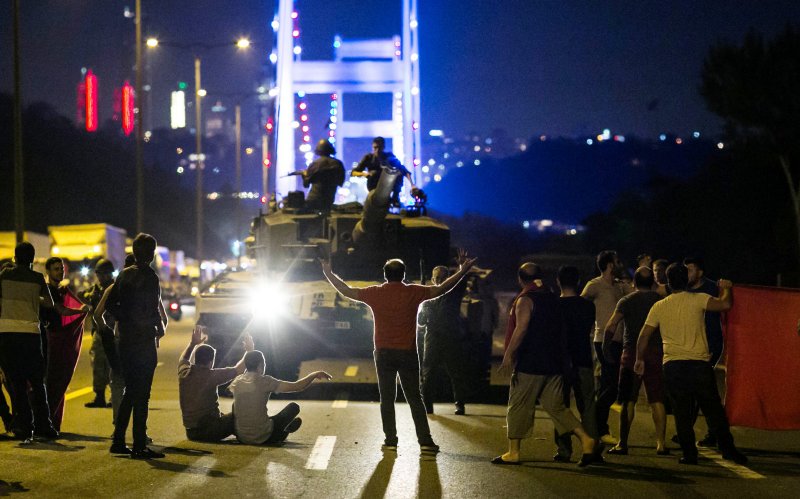
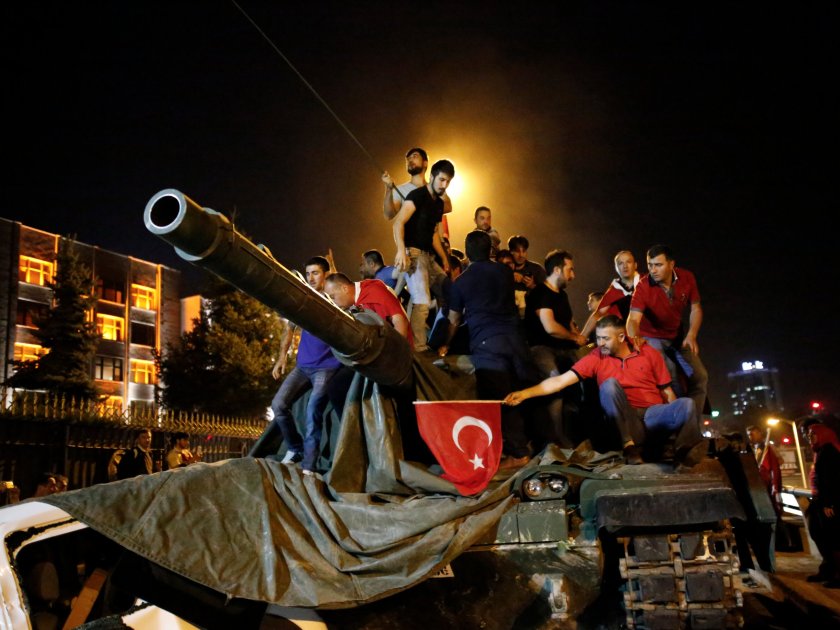
Citizen resistance to Turkey coup on 16 July 2016 - wire service photos
Citizen resistance to Turkey coup on 16 July 2016 – wire service photos

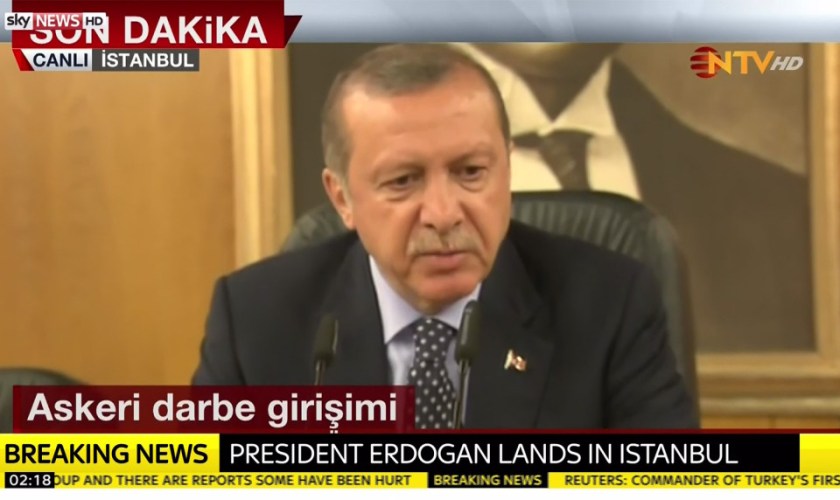
As Zeynep Tufekci, an assistant professor at the University of North Carolina School of Information and Library Science, described in a New York Times op-ed on 20 July 2016: “In the confusing hours after the coup attempt began, the country had heard from President Recep Tayyip Erdogan — and even learned that he was alive — when he called a television station via FaceTime, an easy-to-use video chat app. As the camera focused on the iPhone in the anchor’s hand, the president called on the people of Turkey to take to the streets and guard the airports. But this couldn’t happen by itself. People would need WhatsApp, Twitter and other tools on their phones to mobilize. The president also tweeted out the call to his more than eight million followers to resist the coup.”

She added: “The journalist Erhan Celik later tweeted that the public’s response had deterred potential coup supporters, especially within the military, from taking a side…Meanwhile, the immediacy of the president’s on-air appeal via FaceTime was an impetus for people to take to the streets. The video link protected the government from charges that it was using fraud or doctoring — both common in the Turkish news media — to assure the public that the president was safe. A phone call would not have worked the same way.”

I discuss the irony of a leader like Erdogan, who has been cracking down on independent media practitioners and social media users, had to rely on these very outlets in his crucial hour of need.

I echo the views of Zeynep Tufekci for not just Turkey but other countries where autocratic rulers are trying to censor the web and control the media: “The role of internet and press freedoms in defeating the coup presents a significant opportunity. Rather than further polarization and painting of all dissent as illegitimate, the government should embrace real reforms and reverse its censorship policies.”

See also: How the Internet Saved Turkey’s Internet-Hating President

Photo from The Daily Beast

කුමන හෝ හේතුවක් නිසා රටක දේශපාලන බලය බලහත්කාරයෙන් අත්කර ගැනීමට එරට හමුදාවට නීතිමය හෝ සදාචාරාත්මක අයිතියක් නැහැ.

එහෙත් විටින් විට ලෝකයේ විවිධ රටවල හමුදා කුමන්ත්‍රණ සිදුවනවා. දකුණු ආසියානු කලාපයේ බංග්ලාදේශය හා පාකිස්ථානය මේ අමිහිරි අත්දැකීම් රැසක් ලබා තිබෙනවා.

යුරෝපය හා ආසියාව හමු වන තැන පිහිටි තුර්කියේ මීට දින කීපයකට පෙර අසාර්ථක වූ හමුදා කුමන්ත්‍රණයට මා අවධානය යොමු කළේ නවීන සන්නිවේදන තාක්ෂණයන් එහි වැදගත් භූමිකාවක් ඉටු කළ නිසායි.

නව මාධ්‍යයන් හරහා කුමන්ත්‍රණයට එරෙහිව මහජනයා පෙළ ගැස්වීමට එරට නායකයා සමත් වුණා. විශාල අවි හා සෙබල බල පරාක්‍රමයක් සතු හමුදාවක් ජන බලය හා සන්නිවේදන හැකියාව හරහා ආපසු බැරැක්කවලට යැවීමට හැකි වීම විමසා බැලිය යුතු සංසිද්ධියක්.

කුමන්ත්‍රණය මාස ගණනක් සිට සූක්ෂ්ම ලෙසින් සැලසුම් කරන ලද බව හෙළි වී තිබෙනවා. රටට සාමය සඳහා සභාව (Peace at Home Council) ලෙසින් සංවිධානය වූ තුර්කි හමුදාවේ කොටසක් තමයි මේ උත්සාහයේ යෙදුණේ.

එහි අක්මුල් තවමත් හරිහැටි පැහැදිලි නැහැ. එහෙත් 2016 ජූලි 15-16 දෙදින තුළ ඔවුන් රටේ බලය අල්ලා ගන්නට ප්‍රචණ්ඩව තැත් කළා.

තුර්කි ජනාධිපති රෙචෙප් ටයිප් අර්ඩොගන් (Recep Tayyip Erdoğan) කෙටි නිවාඩුවකට අගනුවරින් බැහැරව, මර්මාරිස් නම් පිටිසර නිවාඩු නිකේතනයේ සිිටියා. ජූලි 15-16 මධ්‍යම රාත්‍රියට ආසන්නව යුද්ධ ටැංකි එරට අගනුවර අන්කාරා, විශාලතම නගරය වන ඉස්තාන්බුල් හා තවත් ප්‍රධාන නගරවලට ඇතුළු වුණා. ප්‍රහාරක ගුවන් යානා පහළින් පියාසර කළා.

තම බලය පෙන්වීමට හමුදා කුමන්ත්‍රණකරුවෝ කිහිප පොළක ප්‍රහාර දියත් කළා. රටේ පාර්ලිමේන්තු මන්දිරයට හා ජනාධිපති මැදුරට හානි සිදු කෙරුණා.

කුමන්ත්‍රණකරුවන්ගේ එක් ඉලක්කයක් වූයේ ජනාධිපතිවරයා අත්අඩංගුවට ගැනීම හෝ මරා දැමීමයි. එහෙත් කුමන්ත්‍රණය ගැන දැන ගත් වහාම ඔහුගේ ආරක්ෂක පිරිස ඔහු නැවතී සිටි නිවාඩු නිකේතනයෙන් රහසිගත තැනකට ගෙන ගියා.

මැදියම් රැය පසු වූ විගස රාජ්‍ය රේඩියෝ හා ටෙලිවිෂන් (TRT) ආයතනයට ඇතුලු වූ හමුදා පිරිසක්, එහි සිටි නිවේදකයන්ට ප්‍රකාශයක් කියවන මෙන් බලකර සිටියා. ප්‍රජාතන්ත්‍රවාදය හා නිර්ආගමික පාලනය රටේ යළි ස්ථාපිත කිරීමට හමුදාව බලය පවරා ගන්නා බව එහි සඳහන් වුණා. තාවකාලිකව මාෂල් නීතිය ක්‍රියාත්මක කරන බවත්, නව ව්‍යවස්ථාවක් ළඟදීම හඳුන්වා දෙන බවත් හමුදා කුමන්ත්‍රණකරුවෝ රටට ප්‍රකාශ කළා.

The Turkish president spoke to local television with his office unwilling to confirm his location, simply saying he is safe

පාන්දර 3.10 වනවිට තමන් රටේ සමස්ත පාලන බලය සියතට ගෙන ඇති බව කුමන්ත්‍රණකරුවන් ලොවට කීවත් එය එසේ වූයේ නැහැ. ජනාධිපති අර්ඩොගන් හා අගමැති බිනාලි යිල්දිරිම් (Binali Yıldırım) ඒ තීරණාත්මක අලුයම පැය කිහිපයේ තීක්ෂණ ලෙසින් සිය ප්‍රතිරෝධය දියත් කළා.

හමුදා කුමන්ත්‍රණකරුවන් දේශපාලනික හා සම්ප්‍රදායික රාජ්‍ය මාධ්‍ය මර්මස්ථාන මුලින් ඉලක්ක කළ නමුත් නව සන්නිවේදන තාක්ෂණයන් හා නව මාධ්‍ය ගැන අවධානයක් යොමු කළේ නැහැ. පළපුරුදු හා සටකපට දේශපාලකයකු වන තුර්කි ජනාධිපතිවරයා මේ දුර්වලතාව සැනෙකින් වටහා ගත්තා.

තුර්කිය විශාල රටක්. ලෝක බැංකු දත්තවලට අනුව එරට මිලියන 80කට ආසන්න ජනගහනයෙන් බාගයකට වඩා (58%) ඉන්ටනෙට් භාවිත කරනවා. මෙයින් බහුතරයක් ස්මාට්ෆෝන් හිමිකරුවන්. 2015 අග වනවිට එරට ජංගම දුරකථන සක්‍රීය ගිණුම් මිලියන 73ක් තිබුණා.

හමුදා කුමන්ත්‍රණය ගැන දැන ගත් වහාම ජනාධිපතිවරයා තමාට හිතවත් හමුදා ජ්‍යෙෂ්ඨ නිලධාරීන් ගැන තක්සේරු කරන අතරම සන්නිවේදන ජාල හරහා තුර්කි ජනයා වෙත ආයාචනා කිරීමට තීරණය කළා. මේ සඳහා අවශ්‍ය වූ ව්‍යාපාරික සබඳතා හා තාක්ෂණික දැනුම ඔහුගේ කාර්ය මණ්ඩලය සතුව තිබුණා.

සියල්ල පාන්දර යාමයේ සිදු වුණත් ඉක්මනින් ක්‍රියාත්මක වීමේ වැදගත්කම ජනාධිපතිගේ හිතවත් පිරිස දැන සිටියා.

කුමන්ත්‍රණකරුවන් පෞද්ගලික ටෙලිවිෂන් නාලිකා, ටෙලිකොම් සමාගම් හෝ සමාජ මාධ්‍ය ජාල සියතට ගැනීමට මුල් වටයේ කිසිදු උත්සාහයක් ගත්තේ නැහැ. මහජන ඡන්දයෙන් පත්වූ තම රජය රැක ගන්නට වීදි බසින්න යැයි ජනාධිපතිවරයා මේ මාධ්‍ය හරහා යළි යළිත් ඉල්ලා සිටියා.

මුලින්ම රටේ සියලුම ජංගම දුරකථන ග්‍රාහකයන් වෙත කෙටි පණ්වුඩයක් යවමින් ජනපති අර්ඩොගන් කීවේ හැකි සෑම අයුරකින්ම කුමන්ත්‍රණයට විරෝධය දක්වන්න කියායි.

NINTCHDBPICT000252431176

ඒ අනුව ඉස්ලාම් බහුතර (96.5%) එරටෙහි ආගමික ස්ථාන ලවුඩ්ස්පීකර් හරහා විශේෂ යාඥා විසුරු වන්නට පටන් ගත්තා. අවේලාව නොබලා බොහෝ ජනයා වීදි බැස්සා.

ප්‍රධාන නගරවල වීදිවලට පිරුණු ජනයා බහුතරයක් පාලක පක්ෂයේ අනුගාමිකයන් වුවද සියලු දෙනා එසේ වූයේ නැහැ. කොතරම් අඩුපාඩු හා අත්තනෝමතික හැසිරීම් තිබුණද බහුතර ඡන්දයකින් පත් වූ රජයක් පෙරළීමට හමුදාවට කිසිදු වරමක් හෝ අවසරයක් නැතැයි විශ්වාස කළ අයද එහි සිටියා.

තුර්කියේ හමුදාව යනු බලගතු ආයතනයක්ග එම හමුදාව රාජ්‍ය පාලනයට මැදිහත් වීමේ කූප්‍රකට ඉතිහාසයක් තිබෙනවා. 1960 මැයි මාසයේ, 1971 මාර්තුවේ හා 1980 සැප්තැම්බරයේ හමුදා කුමන්ත්‍රණ සාර්ථක වී මිලිටරි පාලන බිහි වුණා. 1995දී ඡන්දයෙන් පත් වූ හවුල් රජයට 1977දී හමුදාව ‘නිර්දේශ’ ගණනක් ඉදිරිපත් කොට ඒවා පිළි ගන්නට බලපෑම් කළා. මේ මෑත ඉතිහාසය ජනතාවට මතකයිග

තුර්කි රාජ්‍යය නිර්ආගමිකයි (secular state). එහෙත් මෑත කාලයේ ඉස්ලාමීය දේශපාලන පක්ෂ වඩාත් ජනප්‍රිය වීම හරහා රාජ්‍ය පාලනයේ ඉස්ලාමීය නැඹුරුවක් හට ගෙන තිබෙනවා.

හමුදාව මෙයට කැමති නැහැ. ව්‍යවස්ථාවෙන්ම ප්‍රකාශිත පරිදි රාජ්‍යය තව දුරටත්  නිර්ආගමික විය යුතු බවත්, ඉස්ලාම්වාදීන් බලගතු වීම සීමා කළ යුතු බවත් හමුදාවේ මතයයි. මෙය මතවාදී අරගලයකට සීමා නොවී දේශපාලන බල අරගලයකට තුඩු දී තිබෙනවා. 2016 කුමන්ත්‍රණයේ පසුබිම සංකීර්ණ වුවද ආගමික-නිර්ආගමික ගැටුමද එහි එක් වැදගත් සාධකයක්.

කුමන්ත්‍රණකරුවන් නිවාඩු නිකේතනයට පහර දීමට කලින් එතැනින් පලා ගිය ජනාධිපති අර්ඩොගන්, සැඟවී නොසිට  හිරු උදා වන විට එරට විශාලතම ජාත්‍යන්තර ගුවන් තොටුපළ වන ඉස්තාන්බූල් ගුවන් තොටුපළට සිය නිල ගුවන් යානයෙන් පැමිණියා. මැදියම් රැයේ ටික වේලාවකට කුමන්ත්‍රණකාරීන් අත්පත් කර ගත් ගුවන් තොටුපළ ඒ වන විට යළිත් හිතවත් හමුදා අතට පත්ව තිබුණා.

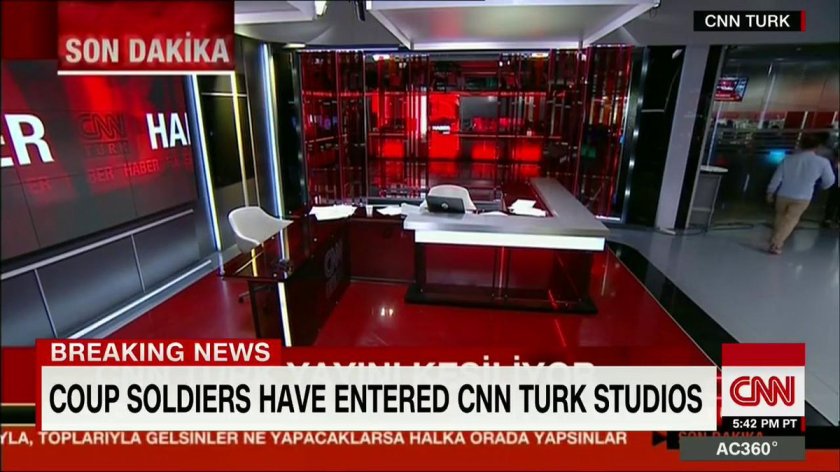
ගුවන් තොටුපළේ සිට මාධ්‍යවේදියකුගේ ස්මාට්ෆෝන් එකක් හරහා ජනාධිපතිවරයා එරට පෞද්ගලික ටෙලිවිෂන් නාලිකාවක් වූ CNN Turkට සජීව ලෙසින් සම්බන්ධ වුණා.

‘ප්‍රජාතන්ත්‍රවාදය රැක ගන්න නගරවල වීදි හා චතුරස්‍රවලට එක් රොක් වන්න. මේ කුමන්ත්‍රණකරුවන් අපට ඉක්මනින් ඉවත් කළ හැකි වේවි. ඔවුන්ට නිසි පිළිතුර දෙන්න ඕනෑ අපේ මහජනතාවයි’ ඔහු ආයාචනා කළා.

කුමන්ත්‍රණකරුවන් නොසිතූ විලසින් මේ පණිවුඩ ඉතා ඉක්මනින් එරට ජනයා අතර පැතිර ගියා. ෆේස්බුක්, ට්විටර් හා අනෙක් සමාජ මාධ්‍ය ජාල මෙයට මහත් සේ දායක වුණා.

මේ අතර ජනපති කාර්ය මණ්ඩලය සමාජ මාධ්‍ය යොදා ගනිමින් ජනපතිවරයා ආරක්ෂිත බවත්, ඔහු කුමන්ත්‍රණකරුවන්ට එරෙහිව කරන අරගලයට ඍජුව නායකත්වය දෙන බවත්, ජාත්‍යන්තර මාධ්‍යවලට හා විදෙස් රටවලට දැනුම් දුන්නා.

හමුදාව බලය ඇල්ලීමට තැත් කිරීම කෙතරම් තුර්කි වැසියන් කුපිත කළාද කිවහොත් සමහර ස්ථානවල යටත් වූ කුමන්ත්‍රණකාමී හමුදා සෙබලුන් හා නිලධාරීන්ට සාමාන්‍ය ජනයා වට කර ගෙන පහර දෙනු ලැබුවා. ඔවුන් ප්‍රසිද්ධ නිග්‍රහවලට ලක් වුණා.

CncnmhQXEAApKN0

යම් අවස්ථාවක කුමන්ත්‍රණකරුවන් CNN Turk පෞද්ගලික නාලිකාව නිහඬ කිරීමට ද තැත් කළා. ඇමරිකානු CNN මාධ්‍ය ජාලය හා තුර්කි සමාගමක් හවුලේ කරන මේ නාලිකාව හමුදා බලපෑම් ප්‍රතික්ෂේප කළා. දිගටම සිය සජීව විකාශයන් කර ගෙන ගියා.

කුමන්ත්‍රණය දියත් කොට පැය 24ක් ගතවීමට පෙර රටේ පාලන බලය යළිත් ඡන්දයෙන් පත් වූ රජය යටතට මුළුමනින්ම ගැනීමට ජනපති-අගමැති දෙපළ සමත් වුණා.

ඉන් පසුව කුමන්ත්‍රණයට සම්බන්ධ දහස් ගණනක් හමුදා නිලධාරීන් හා සිවිල් වැසියන් අත්අඩංගුවට ගනු ලැබුවා. මේ අය අධිකරණ ක්‍රියාදාමයකට ලක්වනු ඇති. මේ බොහෝ දෙනකු නොමඟ ගිය හමුදා නිලධාරීන් හා ඔවුන්ගේ හිතවත් පරිපාලන නිලධාරීන් බව පසුව හඳුනාගනු ලැබුවා.

කුමන්ත්‍රණය අසාර්ථක වීමට හේතු දේශපාලන විචාරකයෝ තවමත් සමීපව අධ්‍යයනය කරනවා. ඔවුන් පිළිගන්නා එක් දෙයක් තිබෙනවා. 20 වන සියවසේ බොහෝ අවස්ථාවල විවිධ රටවල සාර්ථක වූ බලය ඇල්ලීමේ ආකෘතියක් මෙවර තුර්කියේදී ව්‍යර්ථ වූයේ 21 වන සියවසේ සන්නිවේදන තාක්ෂණයන් නිසා බවයි.

‘කුමන්ත්‍රණකරුවන් පොතේ හැටියට සියල්ල සැලසුම් කොට ක්‍රියාත්මක වුණා. රාජ්‍ය නායකයා අගනුවරින් බැහැරව සිටි, සිකුරාදා රැයකයි ඔවුන් බලය අල්ලන්න තැත් කළේ. ඒත් ඔවුන්ගේ අවාසියට ඔවුන් භාවිත කළ වට්ටටෝරුව යල් පැන ගිහින්.’ යයි ඉස්තාන්බුල් නුවර පර්යේෂකයකු වන ගැරත් ජෙන්කින්ස් කියනවා.

මේ සමස්ත සිදුවීම් දාමයේ ඉතාම උත්ප්‍රාසජනක පැතිකඩ මෙයයි. සමාජ මාධ්‍ය ජාතික ආරක්ෂාවට තර්ජනයක් යයි කියමින් ඒවා හෙළි දැකීමට හා විටින් විට ඒවා බ්ලොක් කිරීමට පුරුදුව සිටි අර්ඩොගන් ජනපතිවරයාට තීරණාත්මක මොහොතේ ඒවා ඉමහත් ලෙස ප්‍රයෝජනවත් වීමයි.

මේක ඇත්තටම කන්නට ඕනෑ වූ විට කබරගොයාත් තලගොයා වීමේ කතාවක්.

A man stands in front of a Turkish army tank at Ataturk airport in Istanbul, Turkey July 16, 2016. REUTERS/IHLAS News Agency

2003-2014 කාලයේ තුර්කි අගමැතිව සිටි අර්ඩොගන් 2014දී ජනාධිපතිවරණයට ඉදිරිපත් වී ප්‍රකාශිත ඡන්දවලින් 51.79%ක් ලබමින් ජය ගත්තා. ඔහු තමා වටා විධායක බලය කේන්ද්‍ර කර ගනිමින්, විපක්ෂවලට හිරිහැර කරමින් ඒකාධිපති පාලනයක් ගෙන යන බවට චෝදනා නැගෙනවා. මාධ්‍ය නිදහසට හා පුරවැසියන්ට ප්‍රකාශන නිදහසටත් ඔහුගේ රජයෙන් නිතර බාධා පැමිණෙනවා.

නිල මාධ්‍ය වාරණයක් හා නොනිල මාධ්‍ය මර්දනයක් පවත්වා ගෙන යාම නිසා තුර්කිය ජාත්‍යන්තර ප්‍රජාවේ හා මාධ්‍ය නිදහස පිළිබඳ ක්‍රියාකාරිකයන්ගේ දැඩි දෝෂ දර්ශනයට ලක්ව සිටින රටක්.

තමන්ගේ අධිපතිවාදය ප්‍රශ්න කරන, විකල්ප මතවලට ඉඩ දෙන දෙස් විදෙස් මාධ්‍ය අර්ඩොගන් සලකන්නේ සතුරන් ලෙසයි. එහෙත් රාජ්‍ය මාධ්‍ය පැය කිහිපයකට ඔහුගේ පාලනයෙන් ගිලිහී ගිය විට ඔහුගේ උදව්වට ආවේ ඔහු නිතර දෙස් තබන පෞද්ගලික විද්‍යුත් මාධ්‍ය හා විදෙස් මාධ්‍යයි.

2014දී ඔහු නව නීතියක් හඳුන්වා දුන්නේ ඕනෑම මොහොතක වෙබ් අඩවි බ්ලොක් කිරීමේ බලය රජයට පවරා ගනිමින්.

එසේම අර්ඩොගන් දෙබිඩි පිළිවෙතක් අනුගමනය කරන්නෙක්. සමාජ මාධ්‍යවලට නිතර දෙවේලේ බැණ වදින ඔහු තමාගේ ට්විටර් හා ෆේස්බුක් ගිණුම් පවත්වා ගෙන යනවා. ට්විටර් නිල ගිණුමට මේ වන විට මිලියන 8කට වඩා අනුගාමිකයන් සිටිනවා. කුමන්ත්‍රණය දිග හැරෙන අතර සිය ජනයාට හා ලෝකයට කතා කරන්නට ඔහු ට්විටර් ගිණුමද යොදා ගත්තා.

මේ දෙබිඩි හැසිරීම අපේත් එක්තරා හිටපු පාලකයෙක් සිිහිපත් කරනවා!

කුමන්ත්‍රණයට එරෙහිව අර්ඩොගන් රජයට උපකාර වූ තවත් සාධකයක් පසුව හෙළි වුණා. කුමන්ත්‍රණය ඇරඹී ටික වේලාවකින් එරට ප්‍රධානම ජංගම දුරකථන ජාලය සියලුම ග්‍රාහකයන්ට නොමිලයේ දත්ත සම්ප්‍රේෂණ පහසුකම් ලබා දුන්නා. නූතන දේශපාලන ක්‍රියාකාරකම්වලදී ටෙලිවිෂන් හා රේඩියෝවලට වඩා ටෙලිකොම් සේවාවන් වැදගත් වන බව මේ හරහා අපට පෙනී යනවා.

කුමන්ත්‍රණයේ සන්නිවේදන සාධකය විග්‍රහ කරමින් නිව්යෝර්ක් ටයිම්ස් පත්‍රයට ජූලි 20 වනදා ලිපියක් ලියූ තුර්කි සම්භවය සහිත ඇමරිකානු සරසවි ඇදුරු සෙයිනප් ටුෆෙකි (Zeynep Tufekci) මෙසේ කියනවා.

‘කුමන්ත්‍රණය පරදවන්න ස්වාධීන මාධ්‍ය හා වෙබ්ගත නව මාධ්‍ය ලබා දුන් දායකත්වය ජනපති අර්ඩොගන් අගය කළ යුතුයි. දැන්වත් මාධ්‍ය වාරණය, මර්දනය හා නවමාධ්‍ය හෙළා දැකීම නතර කොට ප්‍රකාශන නිදහසට ගරු කරන දේශපාලන ප්‍රතිසංස්කරණවලට යොමු විය යුතුයි… ස්වාධීන මාධ්‍යයන් හා විවෘත ඉන්ටර්නෙට් සංස්කෘතියක් පැවතීම රටක ප්‍රජාතන්ත්‍රවාදයට මහත් සවියක් බව මේ අත්දැකීමෙන් අපට හොඳටම පෙනී යනවා.’

How the Internet Saved Turkey’s Internet-Hating President

People stand on a Turkish army tank in Ankara on July 16 - Reuters
People stand on a Turkish army tank in Ankara on July 16 – Reuters

සිවුමංසල කොලූගැටයා #274: මාධ්‍ය හිමිකරුවන් හා කතුවරුන් දේශපාලනයට පිවිසි බ්‍රිතාන්‍ය ජනමත විචාරණය

In this week’s Ravaya column (appearing in the print issue of 10 July 2016), I explore the role played by newspapers in the UK’s referendum on continuing membership in the European Union, held on 23 June 2016.

This column is based on first hand impressions – I spent 10 days in the UK just prior to the referendum, commonly known as the Brexit Vote, meeting journalists, academics and activists.

As the New York Times said in an op-ed article on 20 June 2016, “For decades, British newspapers have offered their readers an endless stream of biased, misleading and downright fallacious stories about Brussels.”

Written by Martin Fletcher, a former foreign and associate editor of The Times of London, the articke added: “British newspapers’ portrayal of the European Union in the lead-up to the referendum on June 23 has likewise been negative. The Financial Times and The Guardian have backed the Remain campaign, but they have relatively small circulations and preach largely to the converted. The Times has been evenhanded, though it finally declared on June 18 that it favored staying in the European Union. But the biggest broadsheet (The Telegraph), the biggest midmarket paper (The Daily Mail) and the biggest tabloid (The Sun) have thrown themselves shamelessly behind Brexit.

“They have peddled the myths that Britain pays 350 million pounds a week (about $500 million) to the European Union; that millions of Turks will invade Britain because Turkey is about to be offered European Union membership; that immigrants are destroying our social services; and that post-Brexit, Britain will enjoy continued access to Europe’s single market without automatically allowing in European Union workers.”

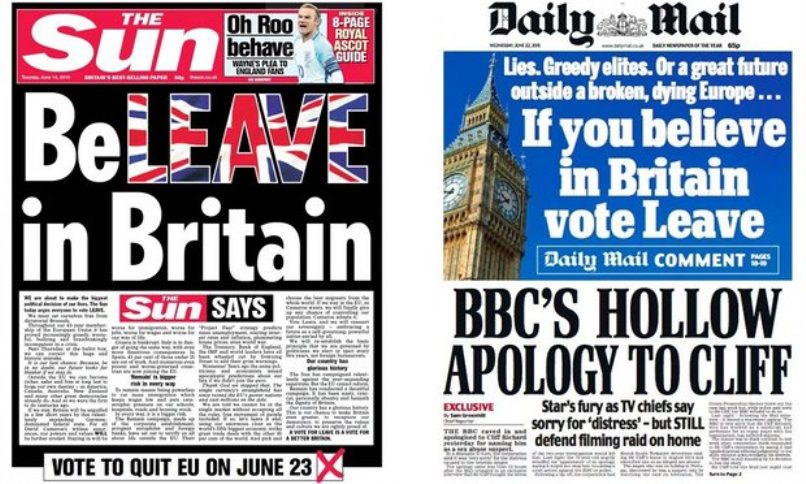
As Fletcher concluded: “It is often said that newspapers no longer matter. But they do matter when the contest is so close and shoppers see headlines like “BeLeave in Britain” emblazoned across the front pages of tabloids whenever they visit their supermarket. They matter if they have collectively and individually misled their readers for decades.”

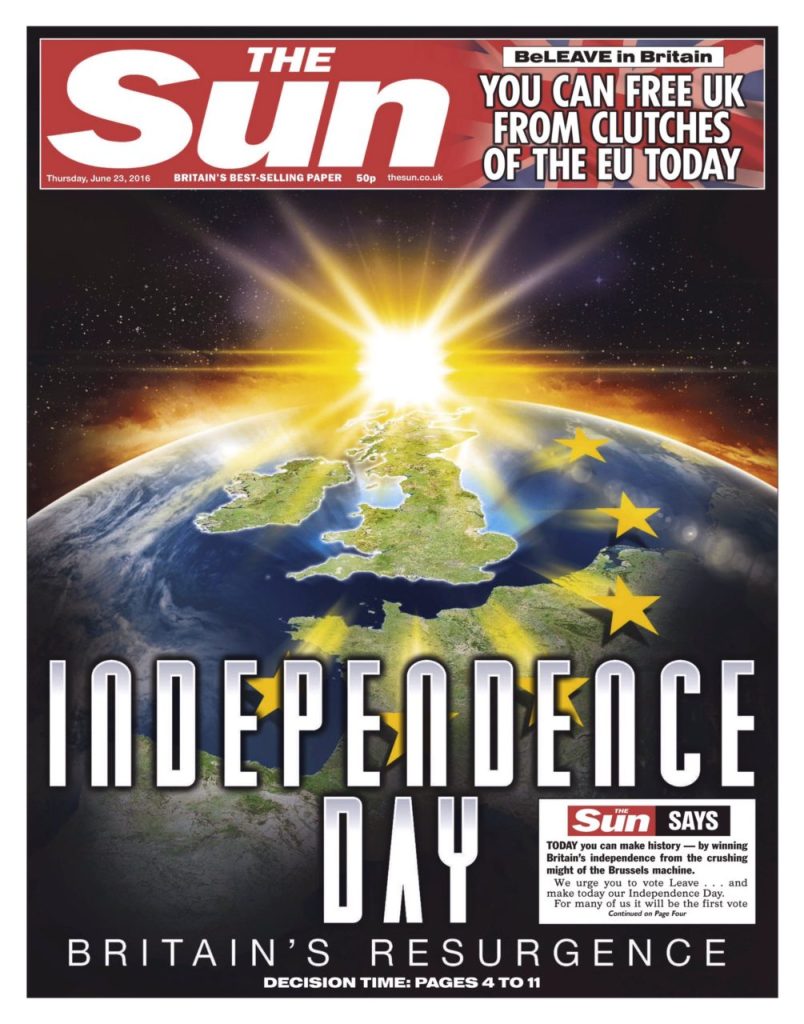
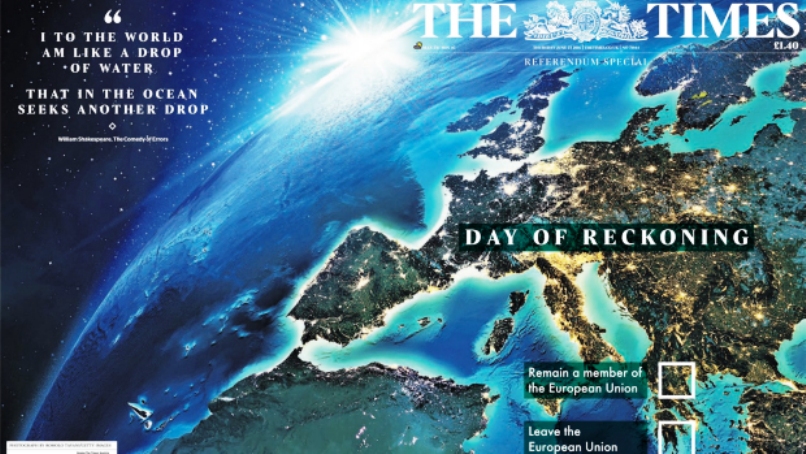
British newspaper front pages on 23 June 2016, day of the Referendum on EU membership (Brexit Vote)

බහුතරයක් ඡන්දදායකයන්ගේ තේරීමට හිස නැමීම ප්‍රජාතන්ත්‍රවාදයේ මූලික ලක්ෂණයක්. මැතිවරණයක් හෝ ජනමත විචාරණයක් වෙත යොමු වන පාලක පක්ෂයක් එහි තීරණය පිළිගැනීමට නීතියෙන් මෙන්ම සදාචාරාත්මකවද බැඳී සිටිනවා.

2016 ජුනි 23 වනදා බ්‍රිතාන්‍යයේ පැවැති ජනමත විචාරණය ලෝක අවධානයට යොමු වුණා. එරට යුරෝපා සංගමයේ (European Union, EU) සාමාජිකත්වයේ තව දුරටත් රැඳී සිටිය යුතුද නැත්නම් ඉවත්විය යුතුද යන්න ඡන්දදායකයන්ගෙන් විමසනු ලැබුවා.

ලියාපදිංචි ඡන්දදායකයන්ගෙන් 72.21%ක් ඡන්දය ප්‍රකාශ කළ මෙහි අවසන් ප්‍රතිඵලය වූයේ 51.89%ක් ඉවත්වීමට කැමැත්ත පළ කිරීමෙන්. රැඳී සිටීමට පක්ෂව ලැබුණේ ඡන්ද 48.11%යි. සමස්ත වලංගු ඡන්ද සංඛ්‍යාව 33,551,993ක් වූවා.

මේ ප්‍රතිඵලය එරට රජය, විපක්ෂය හා සමස්ත පාලන තන්ත්‍රයම දේශපාලන අර්බුදයකට පත් කොට තිබෙනවා.

පාලක කොන්සර්වෙටිව් පක්ෂය මෙන්ම ප්‍රධාන විපක්ෂය වන ලේබර් පක්ෂයත් මේ ප්‍රශ්නය හමුවේ දෙකට බෙදුණා. දෙපක්ෂයේම ප්‍රබලයන් පිරිසක් යුරෝපා සංගමයෙන් ඉවත්වීම උදෙසා ප්‍රබලව කැම්පේන් කළා.

කැම්පේන් විවාදයන් අතිශයින් උණුසුම් හා ආවේගශීලී වූයේ ‘පිටස්තරයින්’ බ්‍රිතාන්‍යයේ රැකියා කිරීමට, පදිංචියට හා සෞඛ්‍ය සේවා නොමිලයේ ලැබීමට දහස් ගණනින් පැමිණීම සම්බන්ධයෙන්.

මේ පිටස්තරයන් අතර මැද පෙරදිගින් එන සිරියානුවන් ප්‍රමුඛ සරණාගතයන් සිටියද වැඩිපුරම අවධානය යොමු වූයේ බහුතරයක් වූ සෙසු යුරෝපීයයන්ගේ පැමිණීම ගැනයි.

රාජ්‍යයන් 28ක් සාමාජිකත්වය දරන යුරෝපා සංගමයට සාපේක්ෂව මෑතදී බැඳුණු, ඉසුරුමත් බවින් අඩු (රුමේනියාව, බල්ගේරියාව, ස්ලොවාකියාව, ක්‍රොයේෂියාව, පෝලන්තය වැනි) නැගෙනහිර යුරෝපීය රටවල ජනයාට වීසාවලින් තොරව බ්‍රිතාන්‍යයට පැමිණීමට හා එරට පහසුකම් ලැබීමට හැකියි. රැකියා කිරීමටද හැකියි. (මේ හා සමාන වරප්‍රසාද එම රටවලට යන බ්‍රිතාන්‍ය ජාතිකයකුටද ලැබෙන නමුත් එබඳු රටවලට යන්නට කිසිවකුත් කැමති නැහැ.)

තමන්ගේ රැකියා අවස්ථා රෝහල් හා පාසල් පහසුකම් මේ විජාතිකයන් මහා පරිමාණයෙන් අත්පත් කර ගැනීම ගැන වැඩ කරන පන්තියේ බ්‍රිතාන්‍ය ජනයා අතර කලෙක සිට දැඩි අප්‍රසාදයක් පැවතුණා. මෙය පිටස්තර විරෝධී ආවේගයක් බවට කැම්පේන් කාලය තුළ මතුව ආවා.

මීට අමතරව යුරෝපා සංගමයේ අධික නිලධාරිවාදය ගැන ඔවුන් බ්‍රිතාන්‍යයේ ස්වාධීනත්වය අනිසි බලපෑම් කරනවාද යන්න ගැන මේ ජනමත විචාරණ කාලයේ බහුලව විවාද කරනු ලැබුවා.

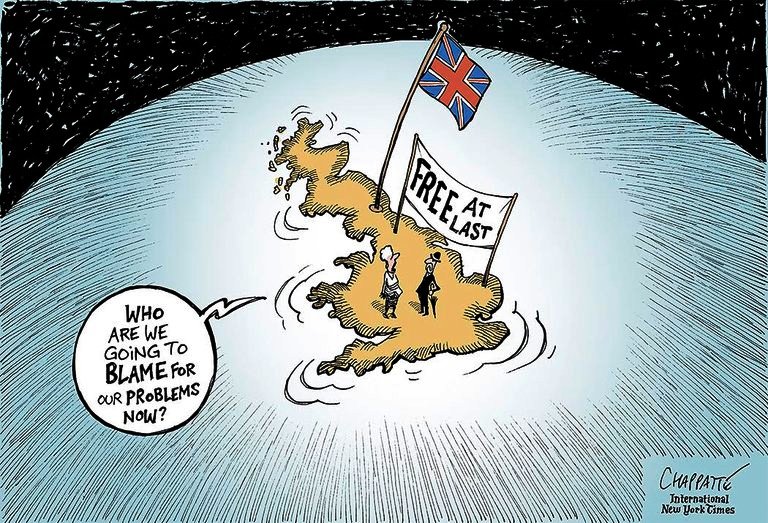
Cartoon by Patrick Chappatte, International New York Times

යුරෝපා සංගමයට බ්‍රිතාන්‍යය බැඳුණේ 1973දි. එවකට යුරෝපීය ආර්ථීක හවුල (European Economic Community, EEC) ලෙස හැඳින්වුණු එහි සාමාජිකත්වයේ දිගටම සිටිය යුතුද යන්න ගැන 1975දි එරට ජනමත විචාරණයක් පැවැත්වුණා.

එවර ඡන්දදායකයන්ගෙන් 67%ක් රැඳී සිටීමට පක්ෂව ඡන්දය ප්‍රකාශ කළා. වසර 41කට පසු ජනමතය සැලකිය යුතු අන්දමින් වෙනස්ව තිබෙනවා.

මෙයට සමාජ-ආර්ථීක හා දේශපාලන සාධක රැසක් බලපෑවා. එසේම එරට මාධ්‍ය මගින් ජනමතය හැසිරවීමට මෙවර ජනමත විචාරණයේ ප්‍රතිඵලවලට තීරණාත්මකව බලපාන ලද බව මාධ්‍ය විචාරකයන්ගේ මතයයි.

මෙවර ජනමත විචාරණයට දින දහයකට පෙර බ්‍රිතාන්‍යයට ගිය මා එම මැතිවරණ ක්‍රියාදාමය හමාර වන තුරුම එහි ගත කරමින් මාධ්‍යවල භූමිකාව සමීපව නිරීක්ෂණය කළා. බ්‍රිතාන්‍ය මාධ්‍යවේදීන්ට පර්යේෂකයන්ට කතා කළා. අද බෙදා ගන්නේ එයින් ලැබූ අදහස් හා විග්‍රහයන්ගේ සම්පිණ්ඩනයක්.

ලන්ඩනයේ ෆ්ලීට් වීදිය (Fleet Street) ඓතිහාසිකව මුද්‍රණ කර්මාන්තයට හා පුවත්පත් ප්‍රකාශනයට ප්‍රකටයි. 1702දි එරට මුල්ම දිනපතා පත්‍රය පටන් ගත්තේද එහි පිහිටි කාර්යාලයකින්. තව දුරටත් බ්‍රිතාන්‍ය පුවත්පත් එහි සංකේන්ද්‍රණය වී නැතත්, බ්‍රිතාන්‍ය පත්‍ර කර්මාන්තයට පොදු යෙදුමක් ලෙස ෆ්ලීට් වීදිය යන්න යෙදෙනවා.

සියවස් ගණනක් පැවැති ෆ්ලීට් වීදියේ බලපෑම් කිරීමේ හැකියාව ගෙවී ගිය වසර 25 තුළ සෑහෙන තරමට අඩු වෙලා. දැවැන්තයන්ව සිටි සමහර පුවත්පත් වැසී ගිහින්. පොදුවේ පුවත්පත් අලෙවිය අඩු වීම වාර්ෂිකව දිගින් දිගටම සිදු වනවා. අලුත් පරම්පරාව ඩිජිටල්/වෙබ් මාධ්‍ය හරහා ප්‍රවෘත්ති ලබා ගැනීමත්, බහුතරයක් බ්‍රිතාන්‍යයන් (තුනෙන් දෙකක්ම) ටෙලිවිෂන් තමන්ගේ ප්‍රමුඛ පුවත් මූලාශ්‍රය ලෙස සැලකීමත් මේ පසුබෑමට හේතුවී තිබෙනවා.

The Sun and Daily Mail were both strongly for Leaving the EU

එසේ තිබියදීත් මෙවර ජනමත විචාරණයේදී යුරෝපා සංගමයෙන් ඉවත්වීමට යයි ඡන්දදායකයන්ට දැඩි බලපෑම් කිරීමට සමහර පුවත්පත් සමත් වුණා.

ඕස්ටේලියාවේ ඉපිද දැන් ඇමරිකානු පුරවැසි බව දරන මාධ්‍ය ව්‍යාපාරික රූපට් මර්ඩොක්ගේ (Rupert Murdoch) හිමිකාරීත්වයෙන් යුතු පුවත්පත් මේ අතර කැපී පෙනුණා.

දැන් 85 හැවිරිදි මර්ඩොක් බ්‍රිතාන්‍ය පුවත්පත් කර්මාන්තයට පිවිසුනේ 1969දී. මුලින් ජනප්‍රිය රැල්ලේ ටැබ්ලොයිඩ් පත්‍ර (News of the World, The Sun) පටන් ගත් ඔහු ඓතිහාසිකව බ්‍රිතාන්‍ය පාලක පන්තියේ පත්‍රය වූ The Times 1981දී මිලට ගත්තා.

මර්ඩොක්ගේ පත්තර බ්‍රිතාන්‍යය යුරෝපා සංගමයෙන් ඉවත් විය යුතු යැයි තර්ක කිරීමට පටන් ගත්තේ 1990දි. ඒ කාලයේ The Sun පත්තරය දිනකට පිටපත් මිලියන 3.6ක් අලෙවි වුණා. දැන් අලෙවිය එයින් බාගයකටත් වඩා අඩුයි.

මර්ඩොක්ගේ මේ යුරෝපා විරෝධයට හේතුවක් ලෙස ඔහුගේ විරුද්ධවාදීන් දකින්නේ යුරෝපා දේශපාලකයන් අල්ලේ නැටවීමට ඔහුට නොහැකි වීමයි. (පත්තරවලට අමතරව ටෙලිවිෂන් නාලිකාද හිමි මර්ඩොක්ට බ්‍රිතානයේ හැම පක්ෂයකම දේශපාලකයෝ බියයි.)

මෙවර ජනමත විචාරණයේදී මර්ඩොක්ගේ The Sun පත්‍රය ප්‍රබල ලෙසම ඉවත්වීම වෙනුවෙන් කැම්පේන් කළා. ඡන්දදායකයන් බහුතරයක් අයත් වැඩ කරන පන්තියේ පාඨකයන් අතර මේ පත්‍රය තාමත් ජනප්‍රියයි.

The Sun front page, 23 June 2016

ජූනි 23දා The Sun පත්‍රයේ මුල්පිටුව මුළුමනින් පෙන්වූයේ (අලුතින් ආ හොලිවුඩ් චිත්‍රපටයක ප්‍රචාරක රූප තරමක් වෙනස් කරමින්) එදින බ්‍රිතාන්‍යයේ නිදහස් දිනය විය යුතු බවයි!

ඒ අතර මර්ඩොක්ගේම The Times පත්‍රය ඊට වඩා මැදහත් ලෙස දෙපාර්ශ්වයටම යම් ආවරණයක් ලබා දුන්නා. මෙය මර්ඩොක්ගේ සටකපට බව තහවුරු කරන බව සමහරුන් කියනවා.

යුරෝපා සංගමයෙන් ඉවත්වීමට යයි විවෘතවම කැම්පේන් කළ තවත් ප්‍රකට පත්තරයක් වූයේ ඩේලි මේල් Daily Mail. මර්ඩොක් ප්‍රකාශන මෙන්ම මෙයද අන්ත දක්ෂිණාංශික දේශපාලන මතවාදයන් වෙනුවෙන් පෙනී සිටිනවා.

මේ ගැන විග්‍රහයක් කළ ගාඩියන් (The Guardian) පත්‍රයේ සහාය කතුවර මාටින් කෙට්ල් කීවේ තම දේශපාලනික අරමුණු වෙනුවෙන් ඕනෑම දුරක් යාමට ඩේලි මේල් නොපැකිලෙන බවයි.

1924 ඔක්තෝබර් මහමැතිවරණයට දින හතරකට පෙර මුළුමනින්ම ගොතන ලද, අසත්‍ය ලියුමක් මේ පත්‍රය පළ කළ බව ඔහු සිහිපත් කළා. එවකට බලයේ සිටි වාමාංශික ලේබර් පක්ෂයේ අගමැති රැම්සේ මැක්ඩොනල්ඩ් වෙත යොමු කෙරුණු ලෙසින් ප්‍රබන්ධිත මේ ලියුමෙන් සෝවියට් කොමියුනිස්ට් පක්ෂ ප්‍රධානියකු ඉල්ලා සිටියේ බ්‍රිතාන්‍ය කම්කරුවන් බොල්ෂෙවික්කරණයට උදව් වන ලෙසයි.

1924 මැතිවරණයෙන් ලේබර් පරාජය වීමට මේ මාධ්‍ය ප්‍රෝඩාව ප්‍රබල හේතුවක් වූවා.

එදා මෙදාතුර වාමාංශික මෙන්ම සමහර දක්ෂිණාංශික (කොන්සර්වෙටිව්) රජයන්ද පෙරළා දැමීමට සූක්ෂ්ම අන්දමින් ඩේලි මේල් ක්‍රියා කොට ඇති සැටි ලේඛනගතයි.

මේවා රහස් නොවේ. එසේම තම දේශපාලන න්‍යාය පත්‍රයන් ක්‍රියාත්මක කිරීමට මාධ්‍ය කලාවේ ආචාර ධර්ම අමු අමුවේම උල්ලංඝනය කළ එකම පත්‍රයද ඔවුන් පමණක් නොවෙයි. මෙය බ්‍රිතාන්‍ය මාධ්‍ය ක්ෂේත්‍රයට වැළඳි බරපතළ ව්‍යාධියක් බව මාටින් කෙට්ල් කියනවා.

මාධ්‍ය ආචාරධර්මවලට ගරු කරන, බහුවිධ මතයන්ට ඉඩ සළසන ගාඩියන් හා ඔබ්සර්වර් (The Observer) පත්‍ර වෙනදා මෙන්ම මෙවරද වඩා තුලනාත්මක පුවත් ආවරණයකට හා කර්තෘ මණ්ඩල අදහස් දැක්වීමක නිරත වූවා. යුරෝපා සංගමයේ බ්‍රිතාන්‍යය දිගටම රැඳී සිටිමින් වඩාත් හිතකර කොන්දේසි සාකච්ඡා මගින් ලබාගත යුතු බව මේ පත්‍රවල මතය වූවා.

The Times on 23 Jun2 2016
The Times on 23 June 2016

එහෙත් මේ පත්‍ර දෙකට විශාල අලෙවියක් නැහැ. ඔවුන්ගේ ප්‍රමිතිගත හා සම්භාවනීය මාධ්‍යකරණය සමාජයේ ගෞරවයට පාත්‍ර වුවත් එම මාධ්‍ය සමාගම් පාඩු ලබමින් අමාරුවෙන් පවත්වා ගෙන යනවා. (හොඳ මාධ්‍යවලට වෙළඳපොළ ඉල්ලුම අඩු වීම ලොව බොහෝ රටවල දැකිය හැකියි.)

තවත් සම්භාව්‍ය, මැදහත් පුවත්පතක් වන ෆයිනෑන්ෂල් ටයිම්ස් (Financial Times) – පත්‍රයේ විග්‍රහයක් ලියූ මාණ්ඩලික ලේඛක ජෝන් ගැපර් මෙසේ කියා සිටියා. ‘දේශපාලනයට ප්‍රබල බලපෑම් කිරීමට බ්‍රිතාන්‍ය පුවත්පත් හිමියන් බොහෝ දෙනකුට වුවමනායි. එහෙත් පත්තර බහුතරයක අලෙවිය ක්ෂීණ වීම නිසා එම බලපෑම් කිරීමේ හැකියාව අඩුව ඇති බව ද ඔවුන් දන්නවා. මීට වසර 25කට පෙර බ්‍රිතාන්‍ය සමාජය සොලවන්න හා ආණ්ඩු පෙරළන්න සමහර පත්තරවලට බලයක් තිබුණා. දැන් ඒ පත්තර නංවන්නේ ඔවුන්ගේ අවසාන ගෙරවුම් නාදය විය හැකියි. තව වසර 25කින් ෆ්ලීට් වීදියේ බලපුළුවන්කාරයන් එක් අයකුවත් ඉතිරි වේදැයි සැක සහිතයි!’

ආවේගශීලී වාර්තාකරණයේ හා සීමාන්තික දේශපාලන මතවාද ප්‍රවර්ධනයේ යෙදුණු පත්‍රවල කතුවරුන් එය සාධාරණීකරණය කිරීමටද තැත් කළා.

Mail Online වෙබ් අඩවි ප්‍රකාශක මාටින් ක්ලාක් කීවේ ‘අපි ජනතාවගේ සිත් තුළ බිය සැක අළුතින් බිහි කරන්නේ නැහැ. අපි කරන්නේ පවතින එම ආවේගයන් පිළිබිඹු කරනවා පමණයි. ඇත්තටම යුරෝපා සංගමය ගැන අපේ සාමාන්‍ය ජනයාට ලොකු ගැටලු තිබෙනවා. දේශපාලන තන්ත්‍රය මේ ජන හඬට සංවේදී විය යුතුයි.’

මේ ජන ආවේගයන් උසි ගැන්වීමේ ආන්තික හා ඛේදජනක ප්‍රතිඵලයක් වූයේ විපක්ෂ ලේබර් පාක්ෂික තරුණ මන්ත්‍රීවරියක් වූ ජෝ කොක්ස් (Jo Cox) 2016 ජූනි 16දා මහ දවාලේ සාහසිකයකු විසින් ඝාතනය කිරීමයි.

2015දී පාර්ලිමේන්තුවට තේරී පත් වූ ප්‍රගතිශීලී හා ජනප්‍රිය මන්ත්‍රීවරියක් වූ ඇය සිරියානු සරණාගතයන් හා වෙනත් ගෝලීය මෙන්ම දේශය සමාජ සාධාරණත්වයන් සඳහා දිගටම පෙනී සිටි, කතා කළ කෙනෙක්.

ඇගේ ඝාතකයා ඇගේ ඡන්ද කොට්ඨාශයේම විසූ, මේ පරමාදර්ශී ප්‍රතිපත්ති බ්‍රිතාන්‍ය ස්වාධීනත්වය කෙළසනවා යයි විශ්වාස කළ අයෙක්. ඔහු මේ මානසිකත්වයට පත් කළේ අන්තවාදී දේශපාලකයෝද. නැත්නම් ජන ආවේග අවුස්සා අමු ගෝත්‍රිකත්වය මතු කළ ජනමාධ්‍යයද? මෙය ඉදිරි අධිකරණ ක්‍රියාදාමයේදී විමර්ශනයට ලක් වේවි.

ජෝ කොක්ස්ගේ ඝාතනය සමස්ත බ්‍රිතාන්‍යය දැඩි කම්පනයට ලක් කළා. ජනමත විචාරණ කැම්පේන් සියල්ල දින තුනකට නතර කරනු ලැබුවා. එහෙත් අවසානයේදී ජනමතය හැරුණේ ඇය පෙනී සිටි පැත්තට නොවෙයි. ආවේගශීලී පාර්ශවයන් පෙනී සිටි යුරෝපා සංගමය හැර යාමටයි.

මාධ්‍ය සදාචාරය ගැන විමර්ශනය කරන්නට 2011 ජූලි මාසයේ බ්‍රිතාන්‍ය අගමැති ඩේවිඩ් කැමරන්, ලෙවිසන් (Lord Leveson) නම් විනිසුරුවරයාගේ ප්‍රධානත්වයෙන් අධිකරණ ස්වරූපයේ විමර්ශනයක් ආරම්භ කළා. එය මාස ගණනක අදහස් විමසීම්වලින් හා විභාග කිරීම්වලින් පසු නිර්දේශ කළේ ස්වාධීන, අලුත් මාධ්‍ය පැමිණිලි කොමිසමක් අවශ්‍ය බවයි.

පුවත්පත් ප්‍රකාශකයන් හා කතුවරුන් පවත්වා ගෙන යන ස්වේච්ඡා පුවත්පත් පැමිණිලි කොමිසම නොසෑහෙන බවත්, එය අකාර්යක්ෂම බවත් පෙන්වා දෙනු ලැබුවා. එහෙත් අගමැති කැමරන් නව නීතියක් හරහා මාධ්‍ය පැමිණිලි කොමිසමක් පිහිටුවීමට මේ දක්වා ක්‍රියා කොට නැහැ. දැන් ජනමත විචාරණයෙන් පසු ඔහු තනතුර අත්හැර යාමට තීරණට කොට තිබෙනවා.

Financial Times (FT) cover - 25 - 26 June 2016
Financial Times (FT) cover – 25 – 26 June 2016

බ්‍රිතාන්‍ය සමාජය මාධ්‍ය නිදහස ඉහළින් අගය කරනවා. මාධ්‍යවලින් නිර්දය ලෙස විවේචනය කරනු ලබන දේශපාලකයන් පවා මාධ්‍ය නිදහස සීමා කිරීමට විරුද්ධයි.

 එහෙත් මාධ්‍ය නිදහස අවභාවිත කරමින් ජනයා නොමඟ යැවීමට, ප්‍රචණ්ඩකාරී ආවේගයන් උසි ගැන්වීමට හා අන්තවාදී දේශපාලන මතවාද ප්‍රවර්ධනයට සමහරක් බ්‍රිතාන්‍ය මාධ්‍ය යොමු වීම කලක සිට පෙනෙන ප්‍රවණතාවක්. මෙවර ජනමත විචාරණයේ එය පැහැදිලිව තහවුරු වුණා.

වැරදි තොරතුරු හා පක්ෂග්‍රාහී විග්‍රහයන් හරහා ජනමතය අයාලේ ගෙන යාමට මාධ්‍යවලට අසීමිත නිදහසක් තිබිය යුතුද? ප්‍රජාතන්ත්‍රවාදයේ මුර දෙවියකු වන ජනමාධ්‍ය, දේවාලයේ තක්කඩි කපුරාල බවට පත්වීම වළක්වා ගත හැකිද?

මහජන ඡන්දයෙන් පත්වන දේශපාලන නායකයන් ධුර කාලයට පෙර පැරදවීමට කිසිදු පත්‍ර හිමියකුට හෝ කතුවරයකුට හෝ ඉඩ තිබිය යුතුද? ව්‍යාපාරික හා දේශපාලන අරමුණු උදෙසා මාධ්‍ය වගකීම් හා ආචාර ධර්ම මඟහැර යාමට මාධ්‍යවලට දැනට තිබෙන නිදහස සාධාරණ ලෙස සීමාවකට නතු කළ හැකිද?

මේ ප්‍රශ්න වඩාත් උනන්දුවෙන් බ්‍රිතාන්‍ය සමාජය විවාද කරන්නට පටන් අරන්. මේ සංවාද ශ්‍රී ලංකාවේ මාධ්‍යවලට හා ලක් සමාජයටත් ඍජුවම අදාළයි.

See also:

The Guardian, 24 June 2016: Did the Mail and Sun help swing the UK towards Brexit?

[Op-ed] Major Reforms Needed to Rebuild Public Trust in Sri Lanka’s Media

Text of an op-ed essay published in the Sunday Observer on 10 July 2016:

Major Reforms Needed to Rebuild Public Trust

in Sri Lanka’s Media

 By Nalaka Gunawardene

Sri Lanka’s government and its media industry need to embark on wide-ranging media sector reforms, says a major new study released recently.

Such reforms are needed at different levels – in government policies, laws and regulations, as well as within the media industry and profession. Media educators and trainers also have a key role to play in raising professional standards in our media, the study says.

Recent political changes have opened a window of opportunity which needs to be seized urgently by everyone who desires a better media in Sri Lanka, urges the study report, titled Rebuilding Public Trust: An Assessment of the Media Industry and Profession in Sri Lanka.

Rebuilding Public Trust: An Assessment of the Media Industry and Profession in Sri Lanka (May 2016)

The report was released on World Press Freedom Day (May 3) at a Colombo meeting attended by the Prime Minister, Leader of the Opposition and Minister of Mass Media.

The report is the outcome of a 14-month-long research and consultative process. Facilitated by the Secretariat for Media Reforms, it engaged over 500 media professionals, owners, managers, academics, relevant government officials and members of various media associations and trade unions. It offers a timely analysis, accompanied by policy directions and practical recommendations. I served as is overall editor.

“The country stands at a crossroads where political change has paved the way for strengthening safeguards for freedom of expression (FOE) and media freedom while enhancing the media’s own professionalism and accountability,” the report notes.

Politicians present at the launch could only agree.

“The government is willing to do its part for media freedom and media reforms. But are you going to do yours?” he asked the dozens of editors, journalists and media managers present. There were no immediate answers.

Prime Minister Ranil Wickremesinghe speaks at the launch of 'Rebuilding Public Trust' report in Colombo, 3 May 2016 (Photo courtesy SLPI)
Prime Minister Ranil Wickremesinghe speaks at the launch of ‘Rebuilding Public Trust’ report in Colombo, 3 May 2016 (Photo courtesy SLPI)

Whither Media Professionalism?

The report acknowledges how, since January 2015, the new government has taken several positive steps. These include: reopening investigations into some past attacks on journalists; ending the arbitrary and illegal blocking of political websites done by the previous regime; and recognising access to information as a fundamental right in the 19th Amendment to the Constitution (after the report was released, the Right to Information Act has been passed by Parliament, which enables citizens to exercise this right).

These and other measures have helped improve Sri Lanka’s global ranking by 24 points in the World Press Freedom Index (https://rsf.org/en/ranking). It went up from a dismal 165 in 2015 index (which reflected conditions that prevailed in 2014) to a slightly better 141 in the latest index.

Compiled annually by Reporters Without Borders (RSF), a global media rights advocacy group, the Index reflects the degree of freedom that journalists, news organisations and netizens (citizens using the web) enjoy in a country, and the efforts made by its government to respect and nurture this freedom.

Sri Lanka, with a score of 44.96, has now become 141st out of 180 countries assessed. While we have moved a bit further away from the bottom, we are still in the company of Burma (143), Bangladesh (144) and South Sudan (140) – not exactly models of media freedom.

Clearly, much more needs be done to improve FOE and media freedom in Sri Lanka – and not just by the government. Media owners and managers also bear a major responsibility to create better working conditions for journalists and other media workers. For example, by paying better wages to journalists, and allowing trade union rights (currently denied in many private media groups, though enjoyed in all state media institutions).

Rebuilding Public Trust acknowledges these complexities and nuances: freedom from state interference is necessary, but not sufficient, for a better and pluralistic media.

It also points out that gradual improvement in media freedom must now to be matched by an overall upping of media’s standards and ethical conduct.

By saying so, the report turns the spotlight on the media itself — an uncommon practice in our media. It says that only a concerted effort by the entire media industry and all its personnel can raise professional standards and ethical conduct of Sri Lanka’s media.

A similar sentiment is expressed by Dr Ranga Kalansooriya, an experienced journalist turned media trainer who was part of the report’s editorial team (and has since become the Director General of the Department of Information). “Sri Lanka’s media freedom has gone up since January 2015, but can we honestly say there has been much (or any) improvement in our media’s level of professionalism?” he asks.

Media in Crisis

Tackling the dismally low professionalism on a priority basis is decisive for the survival of our media which points fingers at all other sections of society but rarely engages in self reflection.

Rebuilding Public Trust comes out at a time when Sri Lanka’s media industry and profession face many crises stemming from an overbearing state, unpredictable market forces and rapid technological advancements. Balancing the public interest and commercial viability is one of the media sector’s biggest challenges today.

The report says: “As the existing business models no longer generate sufficient income, some media have turned to peddling gossip and excessive sensationalism in the place of quality journalism. At another level, most journalists and other media workers are paid low wages which leaves them open to coercion and manipulation by persons of authority or power with an interest in swaying media coverage.”

Notwithstanding these negative trends, the report notes that there still are editors and journalists who produce professional content in the public interest while also abiding by media ethics.

Unfortunately, their good work is eclipsed by media content that is politically partisan and/or ethnically divisive.

For example, much of what passes for political commentary in national newspapers is nothing more than gossip. Indeed, some newspapers now openly brand content as such!

Similarly, research for this study found how most Sinhala and Tamil language newspapers cater to the nationalism of their respective readerships instead of promoting national integrity.

Such drum beating and peddling of cheap thrills might temporarily boost market share, but these practices ultimately erode public trust in the media as a whole. Surveys show fewer media consumers actually believing that they read, hear or watch.

One result: younger Lankans are increasingly turning to entirely web-based media products and social media platforms for obtaining their information as well as for speaking their minds. Newspaper circulations are known to be in decline, even though there are no independently audited figures.

If the mainstream media is to reverse these trends and salvage itself, a major overhaul of media’s professional standards and ethics is needed, and fast. Newspaper, radio and TV companies also need clarity and a sense of purpose on how to integrate digital platforms into their operations (and not as mere add-ons).

L to R - Lars Bestle of IMS, R Sampanthan, Ranil Wickremesinghe, Karu Paranawithana, Gayantha Karunathilake with copies of new study report on media reforms - Photo by Nalaka Gunawardene
L to R – Lars Bestle of IMS, R Sampanthan, Ranil Wickremesinghe, Karu Paranawithana, Gayantha Karunathilake with copies of new study report on media reforms – Photo by Nalaka Gunawardene

Recommendations for Reforms

The report offers a total of 101 specific recommendations, which are sorted under five categories. While many are meant for the government, a number of important recommendations are directed at media companies, journalists’ and publishers’ associations, universities, media training institutions, and development funding agencies.

“We need the full engagement of all stakeholders in building a truly free, independent and public interest minded pluralistic media system as a guarantor of a vibrant democracy in Sri Lanka,” says Wijayananda Jayaweera, a former director of UNESCO’s Communication Development Division, who served as overall advisor for our research and editorial process.

In fact, this assessment has used an internationally accepted framework developed by UNESCO, the United Nations Educational, Scientific and Cultural Organisation. Known as the Media Development Indicators (MDIs), this helps identify strengths and weaknesses, and propose evidence-based recommendations on how to enhance media freedom and media pluralism in a country. Already, two dozen countries have used this methodology.

The Sri Lanka study was coordinated by the Secretariat for Media Reforms, a multistakeholder alliance comprising the Ministry of Parliamentary Reforms and Mass Media; Department of Mass Media at University of Colombo; Sri Lanka Press Institute (SLPI); Strategic Alliance for Research and Development (SARD); and International Media Support (IMS) of Denmark.

We carried out a consultative process that began in March 2015. Activities included a rapid assessment discussed at the National Summit for Media Reforms in May 2015 (attended by over 200), interviews with over 40 key media stakeholders, a large sample survey, brainstorming sessions, and a peer review process that involved over 250 national stakeholders and several international experts.

Nalaka Gunawardene, Editor of Rebuilding Public Trust in Media Report, presents key findings at launch event in Colombo, 3 May 2016 - (Photo courtesy SLPI)
Nalaka Gunawardene, Editor of Rebuilding Public Trust in Media Report, presents key findings at launch event in Colombo, 3 May 2016 – (Photo courtesy SLPI)

Here is the summary of key recommendations:

  • Law review and revision: The government should review all existing laws which impose restrictions on freedom of expression with a view to amending them as necessary to ensure that they are fully consistent with international human rights laws and norms.
  • Right to Information (RTI): The RTI law should be implemented effectively, leading to greater transparency and openness in the public sector and reorienting how government works.
  • Media ownership: Adopt new regulations making it mandatory for media ownership details to be open, transparent and regularly disclosed to the public.
  • Media regulation: Repeal the Press Council Act 5 of 1973, and abolish the state’s Press Council. Instead, effective self-regulatory arrangements should be made ideally by the industry and covering both print and broadcast media.
  • Broadcast regulation: New laws are needed to ensure transparent broadcast licensing; more rational allocation of frequencies; a three-tier system of public, commercial and community broadcasters; and obligations on all broadcasters to be balanced and impartial in covering politics and elections. An independent Broadcasting Authority should be set up.
  • Digital broadcasting: The government should develop a clear plan and timeline for transitioning from analogue to digital broadcasting in television as soon as possible.
  • Restructuring state media: The three state broadcasters should be transformed into independent public service broadcasters with guaranteed editorial independence. State-owned Associated Newspapers of Ceylon Limited (Lake House) should be operated independently with editorial freedom.
  • Censorship: No prior censorship should be imposed on any media. Where necessary, courts may review media content for legality after publication. Laws and regulations that permit censorship should be reviewed and amended.
  • Blocking of websites: The state should not limit online content or social media activities in ways that contravene freedoms guaranteed by the Constitution and international conventions.
  • Privacy and surveillance: Privacy of all citizens and others should be respected by the state and the media. There should be strict limits to the state surveillance of private individuals and entities’ phone and other electronic communications.
  • Media education and literacy: Journalism and mass media education courses at tertiary level should be reviewed and updated to meet current industry needs and consumption patterns. A national policy is needed for improving media literacy and cyber literacy.

Full report in English is available at: https://goo.gl/5DYm9i

Sinhala and Tamil versions are under preparation and will be released shortly.

Science writer and media researcher Nalaka Gunawardene served as overall editor of the new study, and also headed one of the four working groups that guided the process. He tweets as: @NalakaG