Op-ed essay originally published by the Communications Initiative (CI) on 12 Dec 2013 and reprinted in Ceylon Today newspaper on 17 Dec 2013.
Image courtesy – ICTD Cape Town 2013 website
Nelson Mandela was not only an effective communicator, but also a champion of communication for development.
He spoke and wrote with conviction and empathy, which in turn enhanced his credibility and appeal. He changed history with his careful choice of words and images delivered with the right degree of passion. Social communicators can learn much from him.
However, his communications prowess extended beyond thoughtful prose and skillful oratory. He also understood the power of mass media in today’s information society — and used it well for nation building.
When they are in office, many political leaders of the majority world tend to overuse or misuse the media, for example by forcing public broadcasters to peddle ruling party propaganda. During his term as South Africa’s president, Mandela carefully avoided such excesses.
Instead, he strategically tapped the country’s pluralistic broadcast media to unify the divided nation. Clint Eastwood’s 2009 movie Invictus re-enacted a highlight of that approach.
As a policy maker, Mandela grasped the role of communication in development – both the concepts and delivery tools.
The International Telecommunications Union (ITU), the UN agency promoting and tracking the progress of information society, recently saluted Mandela for having been a firm supporter of ICTs as a catalyst for social change and economic development.
At the same time, Mandela’s vision went beyond mere gadgets and telecom networks. Speaking at the ITU Telecom World in Geneva in 1995, he underlined the importance of communication and access to information to human beings. He called for eliminating the divide between information-rich and information-poor countries.
Three years later, while hosting ITU Telecom Africa in Johannesburg, President Mandela said: “As the information revolution gathers yet more pace and strikes deeper roots, it is already redefining our understanding of the world. Indeed, the speed of technological innovation could bring the ideal of the global village sooner than we thought possible. For the developing world, this brings both opportunity and challenge.”
Lofty statements like these are common at policy gatherings. But Mandela went further – and believed that communication should be seen as a basic human need. That set him apart from many members in the development community who have long considered it a secondary need.
Although it has been discussed for centuries, there is no universally accepted definition of basic human needs. During the 1970s, basic needs emerged as a key topic in development debates. Various studies — catalysed by UN agencies and the Club of Rome – tried to define it.
In 1976, the International Labour Organisation (ILO) prepared a report that identified basic needs as food, clothing, housing, education and public transportation. It partially drew on ILO’s country reports on Columbia, Kenya and Sri Lanka.
Since then, different development agencies have adopted variations of the original ILO list. National planners have used the concept to benchmark economic growth.
The ground reality has changed drastically since those heady days. About a year ago, I asked Frank La Rue, the UN Special Rapporteur on Freedom of Opinion and Expression, if communication should be considered a basic human need. He welcomed the idea, especially in view of rapid evolution of information society.
I soon found that Mandela had thought of it years earlier. Perhaps because he had such limited access to communication during his long years in prison, he appreciated its central value to all human beings.
That remark, made while opening a mobile telecom network, was rather perceptive. At the time, less than 1 per cent of all Africans had access to a fixed phone, and there were only around one million mobile phones on the continent of 800 million.
Since then, mobile phones and other low-cost digital tools have spread phenomenally, transforming lives and livelihoods across the majority world. Sullivan calls it an external combustion engine: “a combination of forces that is sparking economic growth and lifting people out of poverty in countries long dominated by aid-dependent governments.”
While the market and society have marched ahead, many development professionals are still stuck in obsolete development paradigms. That is probably why some worry that there are more mobile phones than toilets in India. (So what? Mobiles are personal devices; toilets are a shared household amenity. Comparing their numbers is meaningless.)
It’s high time we revisited basic human needs and redefined them to suit current realities. The development community must finally catch up with Nelson Mandela.
Science journalist and development communicator Nalaka Gunawardene has been following social and cultural impacts of ICTs for over 20 years.
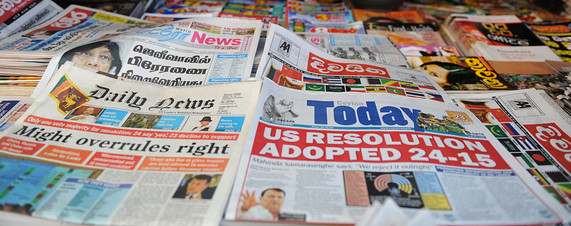
Can Development Community Catch up with Nelson Mandela – Ceylon Today, 17 Dec 2013
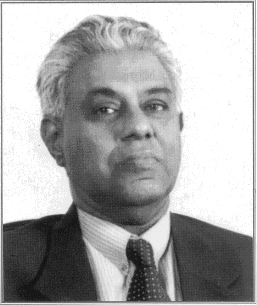
S M Banduseela is widely recognised as Sri Lanka’s foremost translator of science and science fiction. Beginning in 1970, when he translated into Sinhala language The Naked Ape by zoologist and ethologist Desmond Morris, Banduseela has introduced Sinhala readers to over two dozen world acclaimed titles.
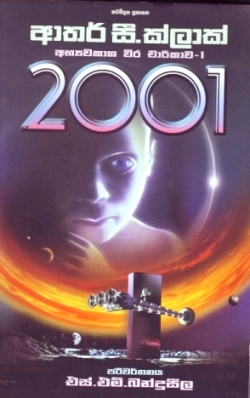
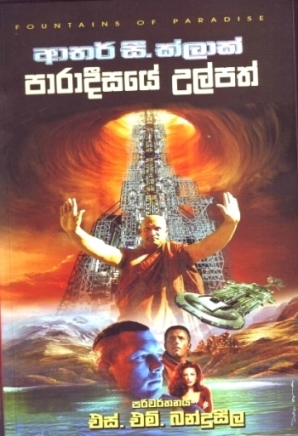
He is best known as Arthur C Clarke’s Lankan translator. In the mid 1970s, he translated Clarke’s landmark 1962 volume Profiles of the Future, which was well received. Encouraged, Banduseela took to translating Clarke’s key science fiction novels beginning with 2001: A Space Odyssey. Over the years, he rendered into Sinhala all four Odyssey novels, as well as other works like The Fountains of Paradise, Rendezvous with Rama and The Hammer of God.
In this wide ranging interview, published in the Sinhala Sunday newspaper Ravaya (24 Nov 2013), I discuss with Banduseela various aspects of science fiction in the Lankan context: the niche readership for this literary genre; its enduring appeal among Sinhala readers; and prospects of original science fiction in Sinhala. He also recalls the challenges he faced translating Clarke’s technically complex and philosophically perceptive novels. I ask him why Sinhala readers have yet to discover the rich worlds of science fiction written in countries like Russia, Japan, China and India.
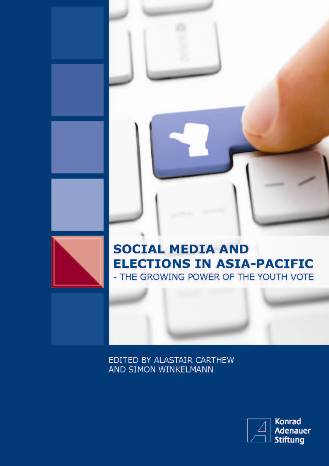
Did youth vote and social media make a difference in Colombo Municipal Council election in Sri Lanka held in October 2011?
This was the question that Chanuka Wattegama and I asked ourselves and set out to answer when invited to contribute a chapter to a regional book on how social media are influencing elections in Asia.
The book comprises 10 chapters covering 11 nations written by local contributors from Australia, Indonesia, Japan, Malaysia, New Zealand, Singapore, South Korea, Sri Lanka, the Philippines, Taiwan and Thailand.
It examines trends and outcomes surrounding recent elections in these countries — and how social media influenced election campaigning and voting, especially among young voters.
Topics include:
• Use of social media surrounding elections
• Digital electioneering
• How social media can make a difference
• How important is voting to young people?
• Detailed polling of political trends
Our summary for the Sri Lanka chapter:
The Colombo Municipal Council (CMC) is the local government body that administers Sri Lanka’s largest city and its commercial capital. Its last election, held in October 2011, saw the nationally ruling coalition losing this key municipality while winning all other municipalities as well as many of the smaller local government bodies.
What made CMC election outcome different? This election saw some apolitical activists and researchers engaging the mayoral candidates on social media, questioning and critiquing their election manifestos and trying to hold them accountable. Did these online activities influence voter behaviour? What lesson does this hold for other elections and the overall political landscape in Sri Lanka?
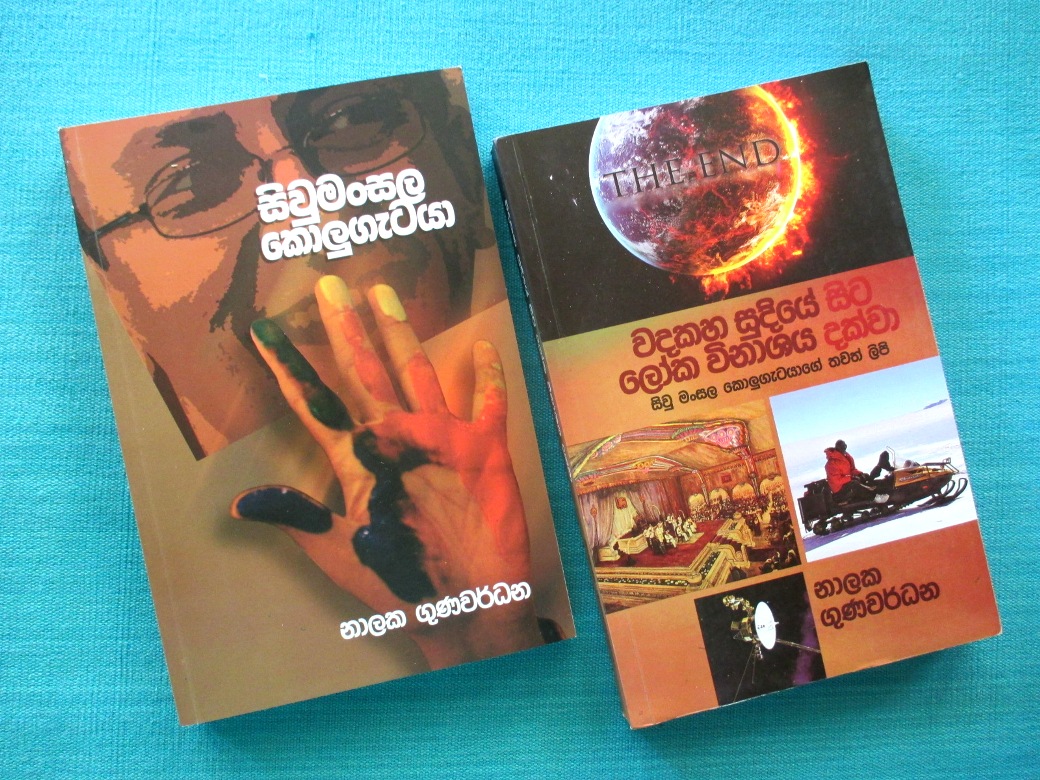
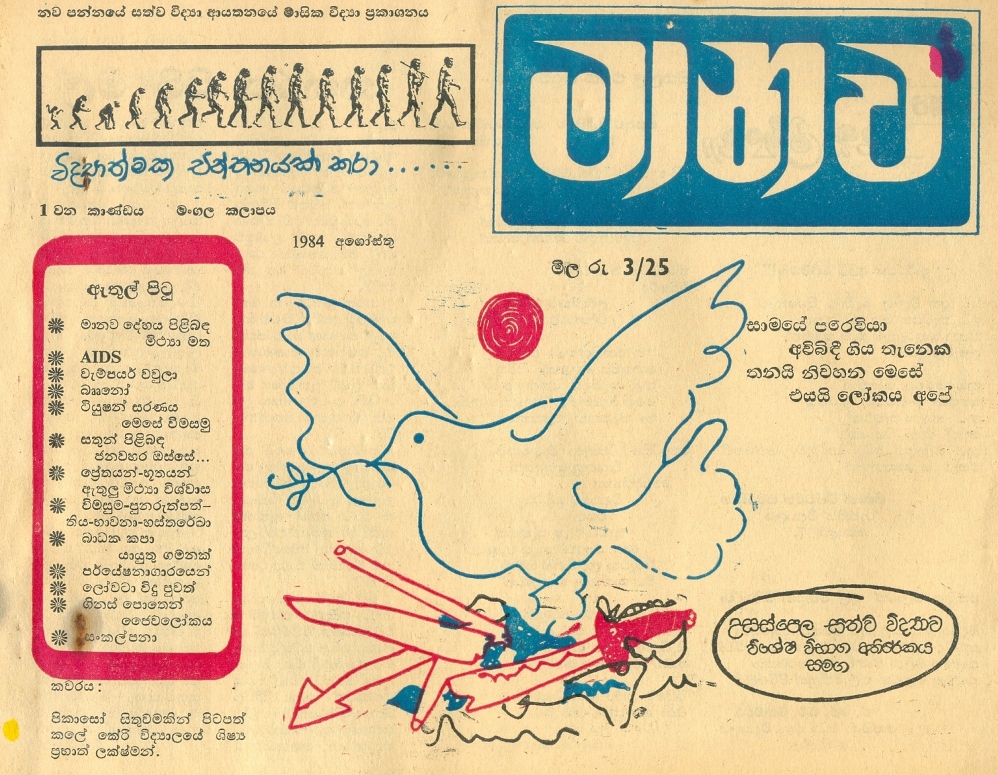
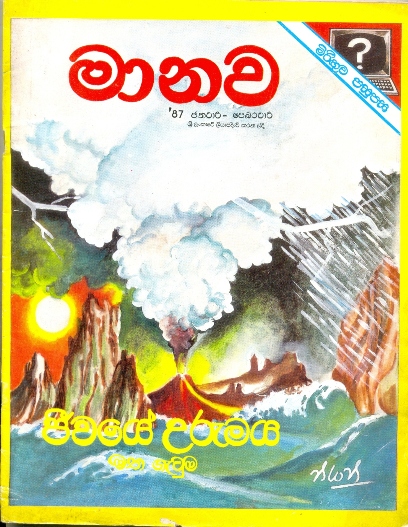
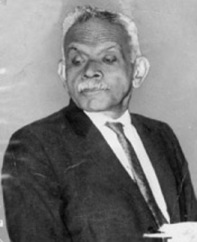
My latest book is dedicated to Asanga Abeysundara who was my zoology teacher 30 years ago, as well as my earliest editor-publisher. For several years in the 1980s, he edited and published (in properly printed form) a progressive science magazine in Sinhala named Maanawa (meaning ‘human’).
This non-profit publication, started in 1978 as a wall newspaper at the University of Colombo by its founder when he was an undergraduate there, evolved into a printed magazine in 1984 with a small circulation and loyal readership.
Maanawa Sinhala science magazine first print issue, Aug 1984
It was a platform for aspiring young writers – many of them in school or university at the time – to write about science, technology and their impact on society. As part of the editorial team, I remember we covered big issues like the origins of life, cost-benefits of space exploration, HIV/AIDS and human evolution.
Maanawa was entirely a labour of love: everybody, including the editor, worked for free. But printers and distributors charged for their services, which the limited sales couldn’t recover. So, despite passion and voluntary editorial inputs, the magazine stopped printing after sometime.
Yet, showing resilience and innovation, Maanawa became the first Sinhala publication to produce an Internet edition in 1996 — the year after commercial connectivity was introduced in Sri Lanka. The web edition, which played a pioneering role, is no longer online.
I have written this week’s Ravaya column (in Sinhala) about Maanawa.
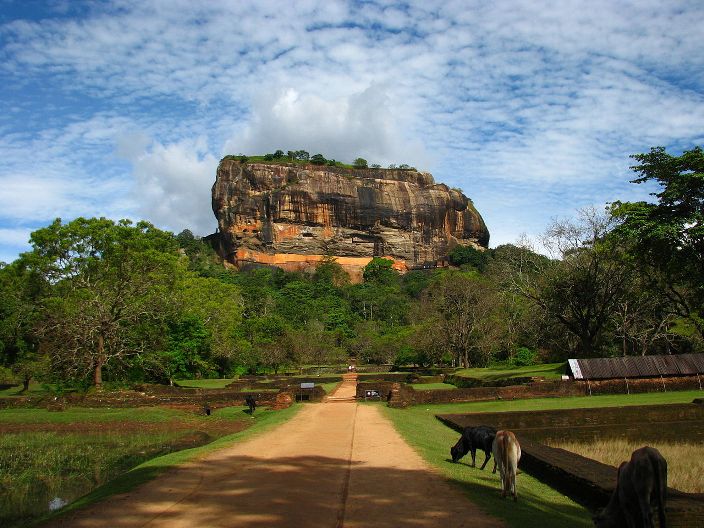
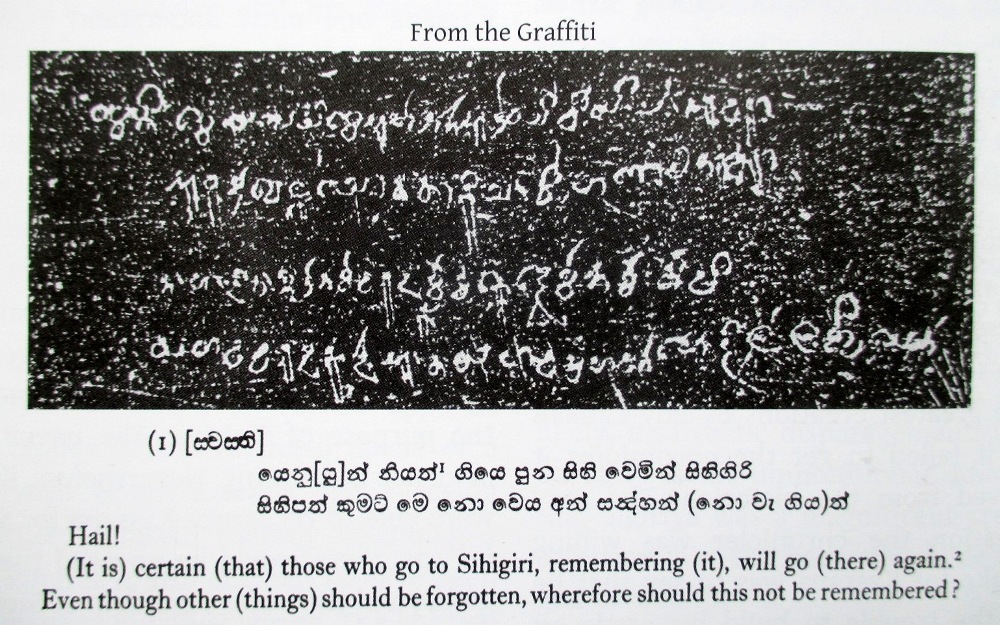
Who were the earliest citizen journalists in Sri Lanka? In this week’s Ravaya column (in Sinhala), I argue that ordinary people expressing themselves in a public space without gatekeepers — which fits the basic definition of citizen journalism — can be traced back to at least 6th century AD. That’s the earliest date for a visitor graffiti on the famous ‘mirror wall’ in Sigiriya, Sri Lanka’s “rock fortress in the sky” built by a maverick 5th century King Kasyapa (reign: 477 – 495 AD).
Who is a citizen journalist? Does everyone who blogs and tweets automatically become one? If not, who qualifies? Who judges this on what criteria? And what niche in media and public sphere do citizen journalists fill when compared with salaried journalists working for more institutionalised or mainstream media?
These have been debated for years, and there is no global consensus. They are belatedly being asked and discussed in Sri Lanka, and form the basis of my latest Ravaya column (in Sinhala).
My views were summed up sometime ago in this comment I left on a blog:“Just as journalism is too important to be left solely to full-time, salaried journalists, citizen journalism is too important to be left simply to irresponsible individuals with internet access who may have opinions (and spare time) without the substance or clarity to make those opinions count.”
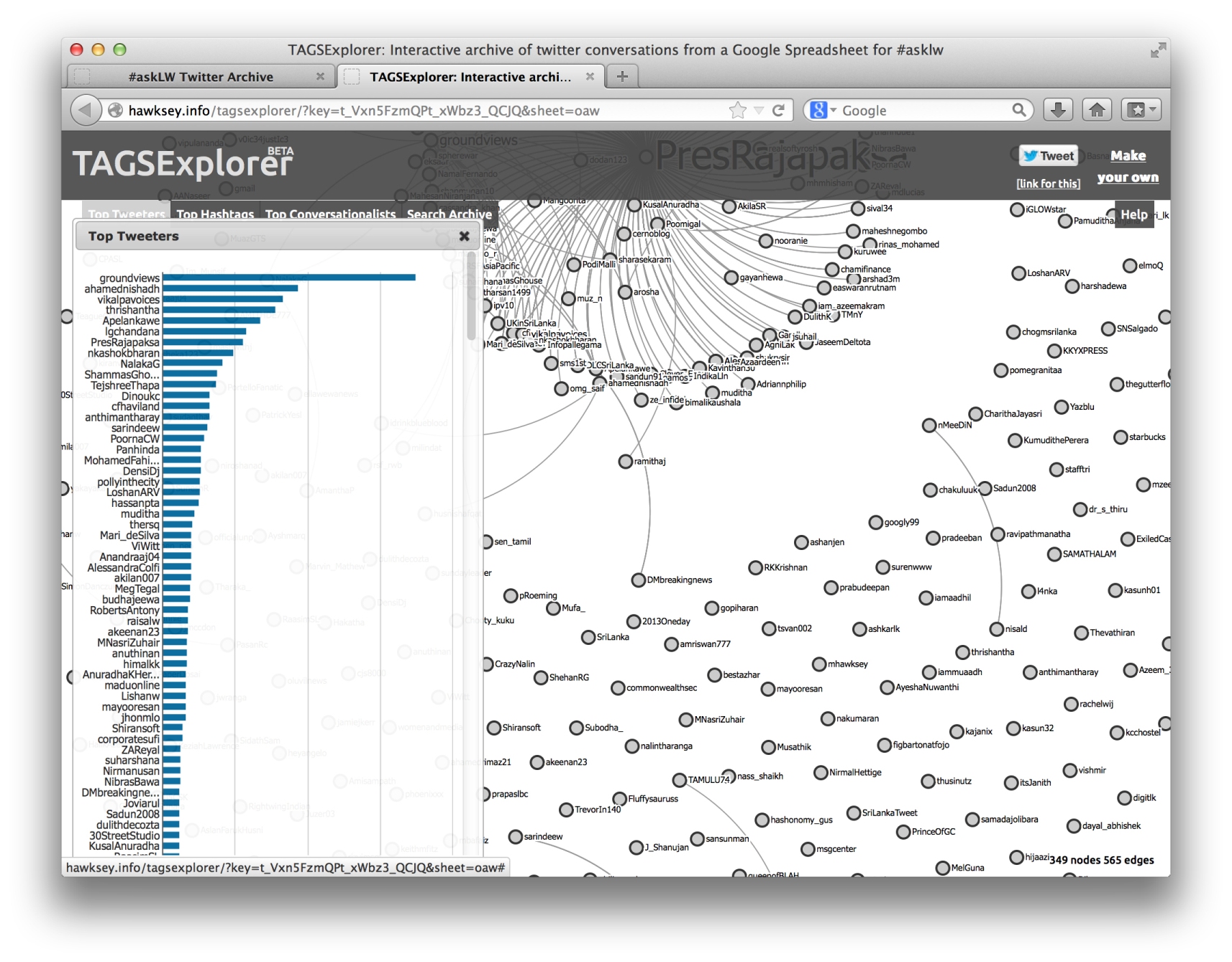
Screen Shot 2013-06-19 at 8.31.53 PM Courtesy Groundviews.org
Along with dozens of tweeps, I took part in an interesting Twitter Q&A session with Lalith Weeratunga, Secretary to the President of Sri Lanka, which unfolded from 14:30 to 16:00 Sri Lanka Time on 19 June 2013.
Our questions were posed using the hashtag #AskLW: they are all displayed on Twitter at https://twitter.com/search/realtime?q=%23askLW While most were in English, some came in the local languages of Sinhala and Tamil too.
Groundviews.org, the citizen journalism website, has archived online 2,680+ tweets related to this exchange. Of these, some 1,140 are original tweets (posted since 14 June 2013, when #askLW was first announced) while others are retweets.
As Groundviews.org noted, “There was no historical precedent for this kind of engagement over social media, especially for someone so high up in Government and in daily contact with the (Lankan) President.”
Commenting on the timing of this exchange, Groundviews editor Sanjana added: “Ironically, the announcement of the Twitter Q&A with Weeratunga came on the same day Gotabaya Rajapaksa, the President’s brother, in a spark of unrivalled genius, called social media no less than a national security threat in post-war Sri Lanka.”
Sanjana has done a quick and very good analysis of what was asked, which selected few among many were actually answered, and which topics gained traction among those participating – especially during the period the event was live.
Even more interesting is how contentious and controversial topics were completely ignored. To be sure, Weeratunga isn’t the first public official to do so, and some might even argue that he had the right to choose his questions. (That won’t have been so easy in a physical press conference.)
All the same, it is highly revealing that the top public servant in Sri Lanka chose not to respond to questions on Islamphobia, Buddhist extremism, hate speech, militarisation, human rights and other topics of great public interest in today’s Sri Lanka.
It’s remarkable that such questions were posed, in a public platform, which is more than what the mainstream media (MSM) of Sri Lanka regularly ask at official press conferences given by senior government officials. From all accounts, the monthly breakfast meetings that the President has with newspaper editors is also a lame affair where no critical questions are raised.
Yes, MSM and citizen journalists are not directly comparable. In the prevailing intolerant environment, it is telling that many social media users took cover under pseudonyms to pose questions to the top civil servant of Lanka (while the rest of us asked under our own names). There was even speculation among some tweeps about what might happen to those who ask pesky questions…
In this post, I want to collate and briefly annotate my own questions to Weeratunga – all of which he chose not to answer. I’m not surprised and certainly not sulky: these were admittedly not as easy as some others.
I posed a few questions in advance, and then some more during the live event. They were in one way or another related to the multiple positions that Weeratunga holds in the Lankan government.
One question stemmed from Weeratunga’s meaningful speech at the fifth National Conference on the Role of ICT in Reconciliation held at the Lakshman Kadirgamar Institute for International Relations and Strategic Studies (LKIIRSS) in Colombo in Nov 2012.
#AskLW: I read your speech on ICTs at LKIIRSS last Oct. How can #lka govt that doesn't tolerate any dissent really promote #reconciliation?
Commenting on the very different – sometimes contradictory – messages given out by senior elected and other public officials of the Lankan government on matters of domestic and global interest, I asked:
#AskLW#lka Govt publicly stated positions often remind us of 'Strange Case of Dr Jekyll and Mr Hyde'. Why this sharply split personality?
Weeratunga, who does not yet have his own Twitter account, gave his selected answers using the President’s official account, @PresRajapaksa. This was noted by others, and I replied to one:
Many tweeps asked him to comment on the Defence Secretary’s recent remark on social media. Having noted, only minutes earlier, that “Social Media is a powerful tool”, Weeratunga added later: “Sec/Defence has a point; since it has been used for destructive purposes elsewhere, he has said so.”
Some tweeps reacted to this observation among ourselves. My contribution:
@AmanthaP@PresRajapaksa Oh, knives, telephones, books, cars, even fists have been used 4 destructive purposes too! Intention matters #AskLW
Knowing well Lankans don’t like to be compared to Indians, who nevertheless hold many lessons for us in managing diversity and in balancing modernity with tradition, I asked:
Not answered. (Well, after all, this wasn’t Hard Talk!).
Prompted by @Groundviews, there was a brief exchange on Sri Lanka’s fully state owned budget airline Mihin, which has been losing billions of public funds from Day One. I reacted:
I’ve described myself as a hybrid journalist with ‘one foot in each grave’ — straddling the worlds of mainstream media and citizen journalism. In years of mainstream journalism — practised in Sri Lanka and across Asia — I have sharpened the art of asking pointed questions. I often ask more questions than I find answers for. So this is part of that process.
But I’m very glad all our questions are archived online — which is highly significant as part of the public record of our times. When Weeratunga next speaks about ICTs nationally or internationally, this digital record will be part of his legacy.
For now, many thanks to Weeratunga and @PresRajapaksa new media team for having organised this event. It’s a good start, and hopefully they will repeat this from time to time with improved capability at their end to cope with the info flood…
My last tweet in this exchange was a salute to the original cyber politician of Sri Lanka:
#AskLW scored around 3.5 on Moragoda Scale of #lka Cyber Engagement where @milindamoragoda set benchmark of 1 & high end is 10. Do u Agree?

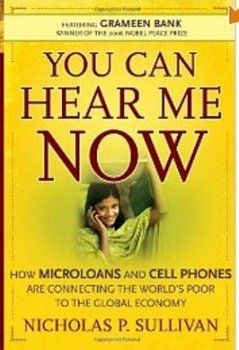 In a 2007 book titled You Can Hear Me Now: How Microloans and Cell Phones are Connecting the World’s Poor to the Global Economy, US writer Nicholas Sullivan quotes Mandela saying in a 1995 speech: “The desire to be in touch lies deep within us. It is a basic need.”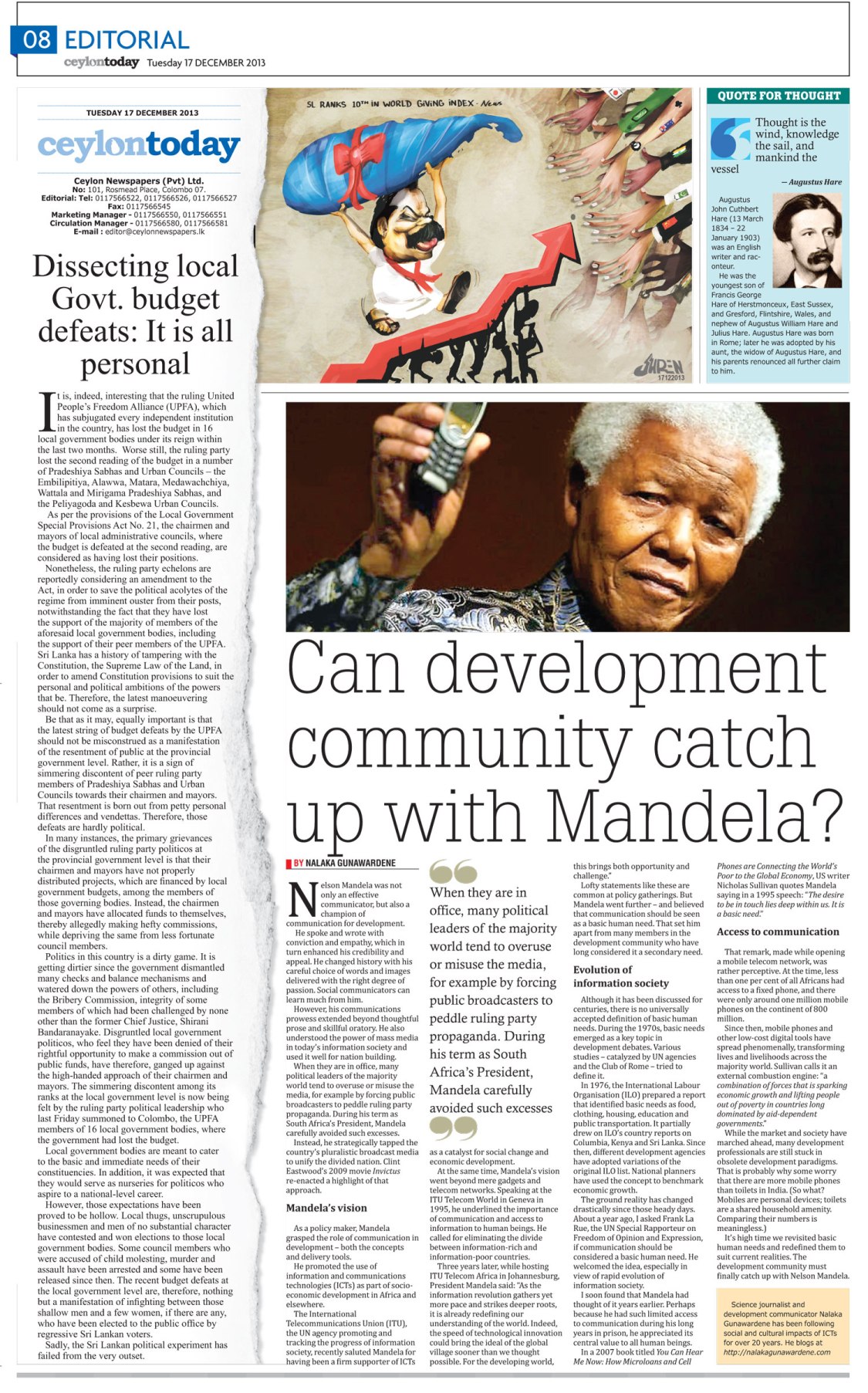







 Open Minds!