Asia’s Other Eclipse: The one that doesn’t make TV news!

This multiple exposure image shows the various stages of the total solar eclipse in Baihata village, 30 kms from Guwahati, the capital city of the northeastern state of Assam on July 22, 2009. The longest solar eclipse of the 21st century cast a shadow over much of Asia, plunging hundreds of millions into darkness across the giant land masses of India and China. AFP PHOTO/ Biju BORO

This century’s longest solar eclipsed moved across Asia on 22 July 2009, wowing scientists and the public alike. Asia’s multifarious media covered the solar eclipse with great enthusiasm and from myriad locations across the vast continent.

The path of the eclipse’s totality –- where the sun was completely obscured by the Moon for a few astounding minutes –- started in northern India. It then crossed through Nepal, Bangladesh, Bhutan, Myanmar and China, before heading out to the Pacific Ocean. Those who were lucky enough to be at the right place at the right time saw one of Nature’s most spectacular phenomena. It was certainly a sight to behold, capture on film, and cherish for a lifetime.

But many along the path missed this chance as clouds obscured the Sun. It’s the rainy season in much of Asia, where the delayed monsoon is finally delivering much-needed rain.
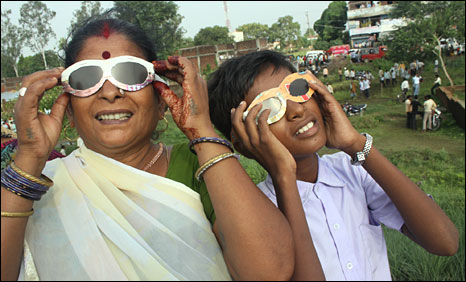
Eclipse watching in Taregna, Bihar, India - Photo: Prashant Ravi, BBC Online
That’s what happened in Taregna, in the eastern Indian state of Bihar. The media had dubbed it the ‘epicentre’ of the solar eclipse, and estimated totality to be visible for at least three minutes and 38 seconds. Thousands who flocked to the village were disappointed when the clouds refused to budge. Nature doesn’t follow our scripts.

That didn’t deter some affluent Indians -– if the eclipse won’t come to them, they just went after it. They chartered an airplane to fly above the rain clouds to catch the once-in-a-lifetime eclipse. Each seat cost US Dollars 1,650.

It’s rarely that totality crosses through countries with such high human numbers as China and India. This time around, millions of people and thousands of journalists took advantage.

Some travelled long distances hoping to get the best view from the 200-km wide path of totality. Others watched it one of Asia’s many and cacophonous 24/7 TV news channels. The event had all the elements of a perfect television story: mass anticipation, eager experts and enthusiasts, occasional superstitions, uncertainties of weather and, finally, a stunning display of Nature’s raw power.

‘Darkness at Dawn!’ screamed a popular headline, referring to the eclipse causing a sudden ‘nightfall’ after the day had begun. Other superlatives like ‘Spectacle of the century’ and ‘A sight never to be missed’ were also widely used.
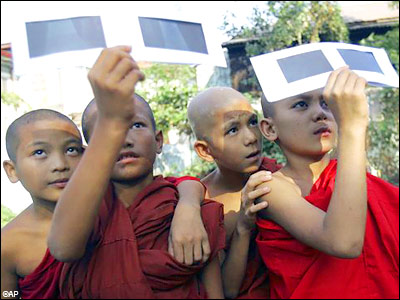
Myanmar Buddhist novices watch solar eclipse through the filters, in Yangon, Myanmar
Solar eclipses are indeed a marvel of Nature, and the media’s excitement was justified. For once, it was good to see them devoting a great deal of airtime and print/web space for something that was not violent, depressing or life-threatening.

How I wish Asia’s media took as much interest in another kind of ‘eclipse’ that surrounds and engulfs us! One that does not end in minutes, but lasts for years or decades, and condemns millions to lives of misery and squalor.

Stories of poverty, social disparity and economic marginalisation are increasingly ‘eclipsed’ in Asia by stories of the region’s growing economic and geopolitical might.

The mainstream media in Asia –- as well as many outlets in the West — never seem to tire of carrying reports of Asia rising. Indeed, that is a Big Story of our times: many Asian economies have been growing for years at impressive rates. Thanks to this, over 250 million Asians have moved out of poverty during this decade alone. According to the UN’s Asian arm ESCAP, this is the fastest poverty reduction progress in history.

We see evidence of increased prosperity and higher incomes in many parts of developing Asia. Gadgets and gizmos –- from MP3 to mobile phones — sell like hot cakes. More Asians are travelling for leisure than ever before, crowding our roads, trains and skies. Lifestyle industries never had it so good. Even the current recession hasn’t fully dampened this spending spree.
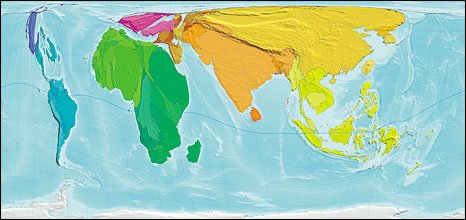
World map proportionate to number of poor people in each country/region - from Atlas of the Real World

But not everyone is invited to the party. Tens of millions of people are being left behind. Many others barely manage to keep up -– they must keep running fast just to stay in the same place.

National governments, anxious to impress their own voters and foreign investors, often gloss over these disparities. The poor don’t get more than a token nod in Davos. National statistical averages of our countries miss out on the deprivations of significant pockets of population.

For example, despite recent gains, over 640 million Asians were still living on less than one US Dollar a day in 2007 according to UN-ESCAP. Three quarters of the 1.9 billion people who lack safe sanitation are in Asia — that’s one huge waiting line for a toilet!

On the whole, the UN cautions that the Asia Pacific region is in danger of missing out the 2015 target date for most Millennium Development Goals – the time-bound and measurable targets for socio-economic advancement that national leaders committed to in 2000.

The plight of marginalised groups is ignored or under-reported by the cheer-leading media. For the most part, these stories remain forever eclipsed. Except, that is, when frustrations accumulate and blow up as social unrest, political violence or terrorism. Even then, the media’s coverage is largely confined to reporting the symptoms rather than the underlying social maladies.

Indonesian children look up through x-ray film sheets to watch a solar eclipse in the sky in Anyer Beach, Banten province, Indonesia
“Half the children in South Asia go to bed hungry every night, but the covers of our news magazines are about weight loss parlors,” says Kunda Dixit, Chief Editor of The Nepali Times.

As he noted in a recent essay: “Maternal mortality in parts of Nepal is nearly at sub-Saharan levels, but we are obsessed with politics. Hundreds of cotton farmers in India commit suicide every year because of indebtedness, but the media don’t want to cover it because depressing news puts off advertisers. Reading the region’s newspapers, you would be hard-pressed to find coverage of these slow emergencies.”

P N Vasanti, Director of the Delhi-based Centre for Media Studies which monitors the leading newspapers and news channels in India, laments how “development” issues such as health, agriculture and education are not even on the radar of popular news sources. Her conclusion is based on a content analysis of the six major Indian news channels during the run-up to the recent general election in India.

I have come across similar apathy in my travels across Asia trying to enhance television broadcasters’ coverage of development and poverty issues. As one Singaporean broadcast manager, running a news and entertainment channel in a developing country, told me: “I don’t ever want to show poor people on my channel.”

Don’t get me wrong. Trained as a science journalist, I can fully appreciate the awe and wonder of a solar eclipse. For years, I have cheered public-spirited scientists who join hands with the media to inform and educate the public on facts and fallacies surrounding these celestial events.

But there are more things in heaven and earth, than are dreamt of in our mainstream media’s breathless coverage of the march of capital. Journalists and their gate-keepers should look around harder for the many stories that stay eclipsed for too long.

* * * * * *

Shorter version of the above comment was published by Asia Media Forum on 23 July 2009

Full length version appeared on OneWorld.Net on 23 July 2009

Reprinted in The Nepali Times, 24 July 2009

Waiting for his long eclipse to end...

Teenage Affluenza: A viral video to stir our minds

I’m a bit anxious about impending teenhood. No, not my own, thank you, but my kid’s.

As a single parent raising a 12-year-old who will soon turn 13, I keep reading and hearing all kinds of advice these days on how best to cope with a teenager in the house — that phase in growing up that everyone predicts will involve some turbulence.

On top of all else that comes with hormones-on-legs, there’s now the worry of Teenage Affluenza. It’s a condition that affects millions of teenagers around the world. Most of them live in the developed countries, but in this topsy-turvey, globalised world, there’s no stopping the rapid spread of such conditions all over the majority world.

Look closely, and you can see the symptoms of TA
Look carefully, and you can see the symptoms of TA - image courtesy WorldVision Australia

I belatedly came across this campaign video called Teenage Affluenza, made by the charity WorldVision Australia in mid 2007. It was first made for a promotion kit for the 40 Hour Famine, to be used in Australian schools. World Vision media staff worked with Rohan Zerna Films, Melbourne, who had worked on previous spots for World Vision. The team decided to take the route of irony, providing a spoof feel. The budget wasn’t high. A family friend of the producer starred as the Melbourne teenager. The voice-over was donated by a regular with World Vision promotions. Overseas footage, already held by World Vision Australia, was spliced into the story.

Read news story in The Age newspaper, Australia, on 2 July 2007

Erin is a fifteen year old girl living deep in the South Eastern suburbs of Melbourne, Australia. She is at risk from teenage affluenza, like five million children and teenagers in her country. She still sleeps in the wooden colonial bed her parents bought her when she was ten. Although meals, travel and education are readily available to girls like Erin, many are forced to live on less than $40 pocket money each week. Erin’s iPod only holds 1 GB.

And so the satirical commentary continues. Juxtaposed with Erin’s ‘tragic life’ is the reality faced by children and teenagers in Vietnam, Sudan and other countries affected by famine and the long term impact of civil war. The video ends with the message “Do something else. Do something real. Do something.”

Teenage Affluenza is Spreading Fast: From WorldVision Australia

The video has attracted thousands of responses on YouTube’s online-comments section, including some honest self-analysis from teenagers, while others started a discussion about who is to blame – corrupt governments or first-world greed.

Meanwhile, WorldVision US has released another version of the video, slightly shorter and featuring American teeangers. If anything, the condition is more prevalent there.

Teenage Affluenza: from WorldVision United States


The message to parents is clear: we’re the ones who can prevent our teenagers from contracting Affluenza. All it takes is thoughtful and sustained action. When teens say gimme-gimme-gimme, we have to known when it’s really needed and when it’s wanted. Easier said than done. I know, because teenages seem to arrive in pre-teens these days.

We the parents would certainly welcome reinforcements from any sensible source. WorldVision Australia runs an interesting website called Stir, which tries to engage youth on issues of development and global justice. As a direct intervention charity, WorldVision doesn’t leave it to governments, but urges people to get involved — and do something.

Mixing oil and water: Media’s challenges in covering human security

Talking to the last drop: All streams flow to Istanbul?

The 5th World Water Forum opens in Istanbul, Turkey, today. It will be held in the historic city – a bridge between the east and west – from 16 to 22 March 2009.

Held every three years, the World Water Forum is the main water-related event in the world. It seeks to put water firmly on the international agenda with a view to fostering collaboration – not confrontation – in sharing and caring for the world’s finite supplies of the life-giving liquid. The forums bring together officials, researchers, activists and media to a few days in which they can drown in their own cacophony…well, almost.

I haven’t been to one of these mega-events – I almost did in 2003, when it was hosted by Kyoto, Japan. That forum was almost entirely eclipsed – as far as the media coverage was concerned – by the United States deciding to invade Iraq during the same week. This inspired me to write an op ed essay on oil, water and media which was syndicated by Panos Features and widely reproduced at the time in newspapers, magazines and even in a few activist and development publications. But six years later, it’s hard to locate it online, so I’m publishing it here, unedited, exactly as I wrote in that eventful week in mid March 2003:

Oil on water: will the media get this Big Story?

By Nalaka Gunawardene: 20 March 2003

“If the wars of this century were fought over oil, the wars of the next century will be fought over water.” Ismail Serageldin, an eminent Egyptian architect and planner, made this remark in 1995 when he was vice president for sustainable development at the World Bank.

Well, we are in that new century now, but old habits die hard. The war in Iraq has been fuelled by oil interests, and – starting at the time it did, on March 20 –effectively sidelined global talks to secure freshwater for all.

Clean water, anyone?
Even as the United States launched its attack on the country that sits on the world’s second largest oil reserve, the Third World Water Forum was in progress at the Japanese cities of Kyoto, Shiga and Osaka. The event, running from March 16 to 23, is this year’s biggest international conference on a sustainable development issue and involved hundreds of government and civil society representatives trying to resolve one of the major survival issues of our time: equitably sharing the world’s finite freshwater resources for our homes, farms and factories.

The two processes cannot be more different. One aims to use force while the other seeks to foster co-operation among nations to cope with water scarcity. The increasingly isolated United States has abandoned the United Nations process in its single-minded determination to disarm Iraq, a nation it considers a major threat to peace and security. Meanwhile in Kyoto, the nations of the world – including, but not led by, the United States – were discussing an issue that is far more central to humanity’s security. It has the full blessings of the UN, which has designated 2003 the International Year of Freshwater.

Yet the water forum seems hardly newsworthy to the major news organisations that are preoccupied with war. For months, the global television networks were gearing up for Iraq war coverage. The first Gulf War helped globalise CNN, and this time around, there are other international and regional channels competing for the eye balls. Locked in a battle for dominant market share, CNN International and BBC World are trying to outdo each other in covering the conflict exhaustively — and to the exclusion of everything else. In the do-or-die media marketplace, ‘soft issues’ such as water are easily edged over by conflict. As cynical news editors will confirm, if it bleeds, it leads.

The notions of national and global ‘security’ – on which the Iraq war is being waged – are relics of the Cold War that are completely out of sync with today’s global realities. Who says we have entered the 21st century?

In the closing decade of the last century, as the world grappled with one crisis after another – ranging from famine and drought to global warming and HIV/AIDS – the notion of ‘security’ was radically redefined to include ecological and social dimensions. What is now termed ‘human security’ is concerned not so much with weapons as with basic human dignity and survival. As first articulated in the UN Development Programme’s Human Development Report in 1994, human security includes safety from chronic threats such as hunger, disease and repression, as well as protection from sudden and harmful disruptions in the patterns of daily life.

Mahbub ul Haq
Mahbub ul Haq
The rationale for this was brilliantly summed up by the late Mahbub ul Haq, former Finance Minister of Pakistan and architect of the Human Development Index: “If people are sleeping on pavements, ministers have no business shopping for modern jets and howitzers. While children suffocate in windowless classrooms, generals go about in their air-conditioned jeeps. Nations might accumulate all the weaponry they want, but they have no strength when their people starve…”

A world in which four out of every ten people live in areas of water scarcity is not secure. And if urgent action is not taken, this will increase to two thirds of humanity by 2005. Ensuring water quality is as important as basic access: preventable diarrhoeal diseases – including cholera and dysentery — kill more than seven million children every year. That is 6,000 deaths every day.

James P Grant
James P Grant
James Grant, former executive director of UNICEF, once used a powerful metaphor to describe this scandalous situation: it was as if several jumbo jets full of children were crashing everyday – and nobody took any notice.

If the media are obsessed with death and destruction, why aren’t these numbers registering on their radars? Why is it that silent emergencies forever remain ignored or are only superficially covered? Even statistics don’t set the media agenda: for example, according to the UN, twice as many people are still dying from diarrhoeal diseases as from HIV/AIDS in China, India and Indonesia. But the international donors and media assign far more importance to HIV than to clean water.

No other factor can distort reality as oil. Oil comes on top of water both in the physical world, and in the murky world of global politics. Our collective dependence on petroleum immediately ensures the Iraq war a disproportionately high rank in public and media concerns.

It’s not just the United States that is addicted to oil – we all are. Addicts tend to lose sight of the cost of their dependence, as we have. On 24 March 1989, the oil tanker Exxon Valdez ran aground on in Prince William Sound in Alaska and a fifth of its 1.2 million barrels of oil spilled into the sea, causing massive damage to over 3,800 km of shoreline. Investigations implicated its captain for grossly neglecting duty. Shortly afterwards, Greenpeace ran a major advertising campaign with the headline: “It wasn’t his driving that caused the Alaskan oil spill. It was yours.”

Exxon Valdez: Drunken driving!
Greenpeace continued: “It would be easy to blame the Valdez oil spill on one man. Or one company. Or even one industry. Too easy. Because the truth is, the spill was caused by a nation drunk on oil. And a government asleep at the wheel.”

A nation drunk on oil is waging a war that has more to do with oil than anything else. Our news media are behaving just like cheer-leaders.

War is undoubtedly a big story. But so should be water. One in six humans does not have safe drinking water, and one third of humankind lacks adequate sanitation. We may be living on the Blue Planet, but the waters are muddy and life-threatening to billions.

For sure, a bunch of people huddling together in three Japanese cities won’t solve this crisis overnight. But unless knowledge and skills are shared, and a political commitment is secured, safe water for all will forever remain a pipe dream.

Will it take a full-scale war over water in one of the flashpoints around the world for the military-industrial-media complex take sufficient interest in this survival issue? (That might happen sooner than we suspect.)

It’s ironic that the World Water Forum was undermined by the Iraq war breaking out in the very same week. Washington has now poured oil over everybody’s water.

[Nalaka Gunawardene is an award-winning Sri Lankan science writer, journalist and columnist. He heads TVE Asia Pacific, a regional media organisation working on sustainable development issues, and is on the board of Panos South Asia. The views expressed here are his own.]

Missing Mothers: How acronyms and jargon can kill innocent women

iwd_5“This year alone, more than 500,000 women will die during pregnancy or childbirth. That’s one woman missing every minute of every day. We call these women ‘missing’ because their deaths could have been avoided. In fact, 80 per cent of maternal deaths could be averted if women had access to essential maternal health services.

“We know where and how these women are dying, and we have the resources to prevent these deaths. Yet, maternal mortality is still one of the most neglected problems internationally.”

This sobering message from Unicef is worth reflecting upon as we mark another International Women’s Day.

Unfortunately, critical issues like these often don’t make the news – or worse, are relegated to the background as inevitable. As Joseph Stalin said in a different context, one death is a tragedy; a million deaths a mere statistic.

The challenge to the development community is to go beyond simply counting deaths in cold, clinical terms. UNICEF has recently released a two minute video, “Missing Mothers” as a tool for international development professionals to use in raising awareness of the issue of mothers dying needlessly.

Having a baby is both a very natural process and a joyous occasion for the parents and extended family concerned. Yet having a baby still remains one of the biggest health risks for millions of women worldwide.

Time to make missing women count...
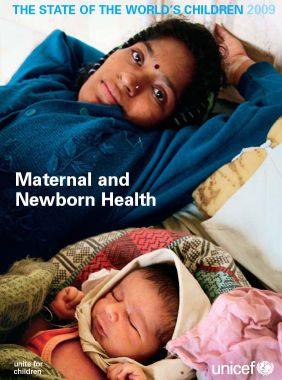
As Unicef’s 2009 State of the World’s Children report reminded us recently, 1,500 women die every day in the world due to complications arising during pregnancy and childbirth. The chances of a woman in developing countries dying before or during childbirth are 300 times greater than for a woman in an industrialised country like the United States. Such a gap does not exist in any other social indicator.

The largest number of maternal deaths in the world is in South Asia. In India alone, an estimated 141,000 women die each year during pregnancy or childbirth. Recently, my Indian journalist friend Kalpana Sharma wrote a perceptive column on this topic in The Hindu newspaper.

She noted: “The solution has been known for years. The problem is the will to make it work. We also know that the solution would benefit everyone, not just women. Yet, affordable and accessible health care, for instance, has not received the thrust that is needed.”

The Missing Women video suggests to activists and campaigners that action can start with five steps: 1. Educate girls, young women and yourself; 2. Respect their rights; 3. Empower them to participate; 4. Invest in maternal health; 5. Protect against violence and abuse. The Unicef website, meanwhile, lists 10 ways in which concerned individuals can make a difference.

All very commendable and necessary — but not sufficient. With all the good intentions in the world, Unicef’s experts and officials come across as, well, detached and geeky. They don’t connect well enough to the real world people whose needs and interests they are genuinely trying to serve. Their messages are lost somewhere in their precise terms, jargon and endless acronyms.

Just take, for example, the very phrase of maternal mortality itself. Precise but also very stiff and dry. Who outside the medical and development circles uses such terms in conversation? When I write or make films about the issue, I prefer to call it ‘mothers dying needlessly while having babies’. Yes, it’s more wordy and perhaps less exacting. But most ordinary people would get what I’m talking about.

If the jargon-ridden language reads dry in text, it completely puts off people when they watch such words being spoken on video. Such films may pander to the Narcissism of Unicef mandarins, but they completely flop in terms of public communication and engagement.

This is the same point I made in October 2008 when commenting on the Unicef-inspired first Global Handwashing Day: “Passion used to be the hallmark of UNICEF during the time of its legendary executive director James Grant, who strongly believed in communicating messages of child survival and well-being. He gave UNICEF a head start in working with the media, especially television.”

Jim Grant’s deputy, journalist Tarzie Vittachi, who came over to the UN children’s agency after a stint at the UN population fund, used to say: “Governments don’t have babies; people do”. We might extend that to: inter-governmental agencies don’t have babies; real women do. That may be why Unicef insists on delivering its life-saving messages so riddled in politically and scientifically correct, but so sterile language.

Unicef’s YouTube channel has a number of short videos related to what they insist on calling maternal mortality. Here’s an example where Unicef’s Chief of Health Dr. Peter Salama says it’s really an unconscionable number of deaths, and a human tragedy on a massive scale:


MDG5: Save Our Moms!
Reducing by three quarters the number of mothers dying needlessly while having babies is one of the Millennium Development Goals or MDGs, the holy grail in international development since the United Nations adopted these in 2000, setting 2015 as the target date.

We have now passed the half way mark, but progress has been patchy and unimpressive. And it will remain so as long as the UN agencies and other development players insist on peddling jargon and acronyms. Considering the issues of life and death involved here, we must view bad communication as a killer — joining the ranks of unsafe drinking water and violence against women and girls.

Writing an editorial for SciDev.Net in September 2005, I noted: “All development workers and UN officials should take a simple test: explain to the least technical person in your office the core message and relevance of your work. Many jargon-using, data-wielding, acronym-loving development workers would probably fail this test. But unless development-speak is translated into simpler language, the MDGs will remain a buzzword confined to development experts and activists.”

I don’t believe in ghosts, but it’s time to bring back the spirits of Jim Grant and Tarzie Vittachi to Unicef to again humanise the agency so mired in its own ‘geekspeak’. The intellectual rigours of evidence-based, scientific analysis must be balanced with clarity and accessibility. It’s fine to be informed by science, but learn to say it simply, clearly and concisely.

The lives of half a million women and millions of children depend on it.

How ‘Hole in the Wall’ ICT experiment inspired ‘Slumdog Millionaire’

21st Century, here we come...
With the 81st annual Academy Awards (Oscars) to be announced on February 22, all eyes are now on the nominated movies.

Updated on Oscar night: Slumdog wins 8 Oscars out of 10 nominations!

Few films in recent years have generated as much buzz as Slumdog Millionaire, the British-Indian film based in the slums of Mumbai. It has won five Critics’ Choice Awards, four Golden Globes and seven BAFTA Awards, and is nominated for ten Academy Awards, including Best Picture.

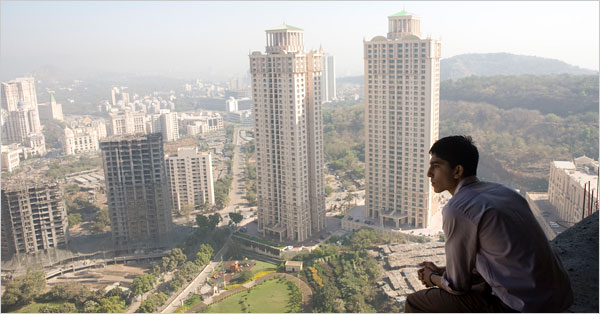
Much has been written about the movie’s depiction of India’s stark urban realities of poverty, organised crime and street children. But there is another face of India that the movie captures: how information and communication technologies (ICTs) are changing culture, economy and social relations in the world’s largest democracy.

I just called to ask...
Early on, film critic Ben Walters spotted this aspect. He asked in The Guardian on 9 December 2008: Is Slumdog Millionaire the first truly 21st-century film? Among his reasons: “Jamal works in a call centre decorated with London Underground paraphernalia and whose employees are kept up to date on EastEnders plotlines to improve their chances of successful small talk with their customers. Aptly enough, the customers are mobile phone users – another emblem of 21st-century connectivity – and a mobile plays a crucial part in the story’s climax.”

Indeed, the mobile phone combined with live broadcast television both feature in the story’s climax. The film was partly shot on the actual studio set used by Kaun Banega Croreparti (KBC), the Indian version of Who Wants to be a Millionaire. As I wrote earlier, the cerebral world of quizzing blends seamlessly with the rough world of Mumbai slums to produce an enthralling 120 minutes.

And now it turns out that a real life ICT experiment triggered the idea of the Slumdog story.

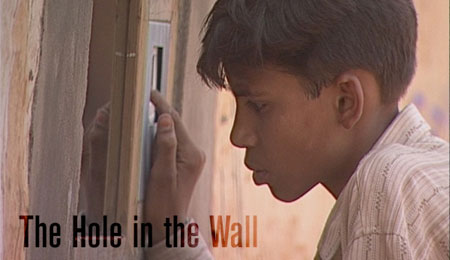
Indian author Vikas Swarup, on whose 2005 novel Q&A the movie is based, has recently revealed how he was inspired by the hole-in-the-wall project. This was an initiative by Dr. Sugata Mitra, chief scientist at NIIT, a leading computer software and training company in New Delhi. Mitra embedded a high-speed computer in a wall separating his firm’s headquarters from an adjacent slum, he discovered that slum children quickly taught themselves how to surf the net, read the news and download games and music. He then replicated the experiment in other locations. Each time the results were similar: within hours, and without instruction, the children began browsing the Internet.

Swarup told Indian Express in January 2009: “That got me fascinated and I realised that there’s an innate ability in everyone to do something extraordinary, provided they are given an opportunity. How else do you explain children with no education at all being able to learn to use the Internet. This shows knowledge is not just the preserve of the elite.”

Discover your world...
Dr Mitra’s project was the subject of a 2002 documentary film, called Hole in the Wall, made by the New York based production company GlobalVision.

The film was introduced as follows: A revolution in information technology is redefining poverty, as how much you know is becoming just as important as how much you own. “The Hole in the Wall” examines one possible solution to the growing technological gap between rich and poor — the so-called ‘digital divide’ — that threatens to consign millions to an “information underclass.”

The film was made by Rory O’Connor and Gil Rossellini. An 8-min version was broadcast by PBS in October 2002 in their program Frontline/World. A 60-min version was screened at the United Nations in New York City in December 2002. The film has been widely screened, and won several awards.

Initiator of the Hole in the Wall project carries on his mission to adapt ICTs to serve the unmet needs of India’s poor. Watch Dr Sugata Mitra talk about his work in this TED Video:

Bill Gates and mosquitoes: World’s top geek now works for its meek

More bugs from Gates...
Bill Gates can’t seem to get enough of bugs.

On 4 February 2009, he let loose a swarm of mosquitoes at the TED 2009 technology, entertainment and design conference in California to highlight the dangers of malaria.

“Malaria is spread by mosquitoes,” he reminded his audience of leading scientists, designers, researchers and entrepreneurs. Turning to an upturned jar on stage, he announced: “I brought some. Here…I’ll let them roam around. There is no reason only poor people should be infected.”

Luckily, the mosquitoes were not carrying the disease. But it had the intended effect. Wired editor Chris Anderson, curator of the show, suggested a headline: “Gates releases more bugs into the world”.

Watch Bill Gates’s mosquito moment:

Watch the full 20-minute video of Bill Gates at TED 2009

As stunts go, this one was pretty mild and harmless. There are many shocking ways in which the harsh daily realities of the world’s poor can be brought into gatherings of the rich and famous. They could be served glasses of the contaminated, sludgy (and often smelly) water that tens of millions drink everyday. Or all the toilets could be locked up and the keys thrown away – for good. Or electricity supply could be cut off, or frequent ‘black-outs’ or ‘brown-outs’ could be staged. You get the idea…

Of course, few event organisers would dare try any of these, if only for health and safety considerations. Reminds me of a rare exception: when he was director of information with the UN’s population agency (UNFPA), journalist-turned-UN official Tarzie Vittachi once hosted delegates of a high level meeting to lunch which consisted soley of a bread roll and a glass water. He told his guests: the meal was better more than what most poor people in the global South on any given day.

Bill to the rescue...
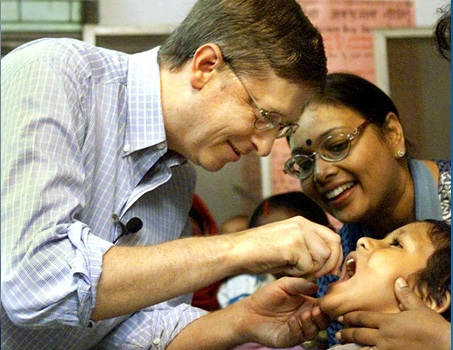
Meanwhile, billions of poor and needy – and not just those in the majority world – are glad that Bill Gates caught the ‘development bug’ and has switched his formidable creative energies (not to mention his billions) to address their survival issues. The Bill & Melinda Gates Foundation – which carefully manages the giving away of Gates wealth – operates on the belief that all lives have equal value. “We think all people deserve the chance to have healthy, productive lives”.

They have set priorities such as improving health and reducing extreme poverty in the developing world, and improving high school education in the United States.

The New York Times columnist Nicholas Kristof recently described it as a paradox: “In these brutal economic times, one of the leading advocates for the world’s poorest people is one of the richest.”

He noted: “Mr. Gates ended his full-time presence at Microsoft last July and since then has thrown himself into work at his foundation. He is now trying to do to malaria, AIDS, polio and lethal childhood diarrhea what he did to Netscape, and he just may succeed.”

In his TED talk, Bill Gates addressed two questions that occupy much of his time these days: How do we stop Malaria? How do you make a teacher great?

Look, no computers!
Look, no computers!
He said: “The market does not drive scientists, thinkers, or governments to do the right things. Only by paying attention and making people care can we make as much progress as we need to.”

He called for greater distribution of insect nets and other protective gear, and revealed that an anti-malaria vaccine funded by his foundation and currently in development would enter a more advanced testing phase in the coming months.

“I am an optimist; I think any tough problem can be solved,” he said. That’s the geek in him talking: marshall all information, analyse problems, respond strategically — and keep at it.

A friend who now works with the Gates Foundation confirms how the charity seeks evidence and rigour in all its social investments. This is no bleeding-heart do-gooding or ‘social work’ for its CSR value. The new wave of geeks lining up to serve the meek bring business acumen to the development sector long under-served by unimaginative aid agencies and self-serving UN organisations.

As Kristof wrote: “Gates ended his full-time presence at Microsoft last July and since then has thrown himself into work at his foundation. He is now trying to do to malaria, AIDS, polio and lethal childhood diarrhea what he did to Netscape, and he just may succeed.”

Gates has announced that despite the economic crisis the Gates Foundation will increase spending by US$500 million this year.

In late January 2009, the billionaire philanthropist released the first ‘Annual Letter from Bill Gates‘ where he discussed his work at the foundation and spoke candidly about what has gone well, what hasn’t.

He compared his earlier work at Microsoft with the challenges he now tackles at the charitable foundation. “What I’ve found now is that really those same key elements are there. The opportunity for big breakthroughs is absolutely just as great–now it’s vaccines, it’s seeds that have better yield, it’s ways of sharing teaching practices…they will take the same kind of patience that we had for software breakthroughs.”

Just ahead of the letter’s release, Nicholas Kristof talked with Bill Gates about why aid to developing countries is more important during the economic downturn and vaccine breakthroughs on the horizon. Watch the interview:

Read: Bill Gates’s Next Big Thing by Nicholas D Kristoff, published in the New York Times on 24 January 2009

From City of God to Slumdog Millionaire: Filming ‘underbelly’ of nations…

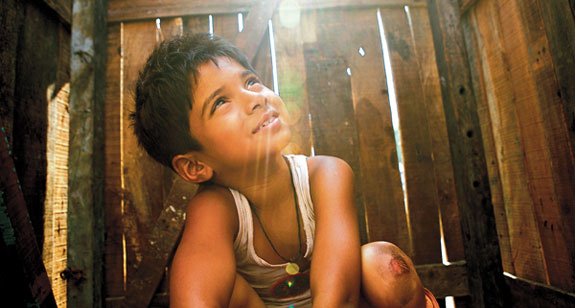
From 'Slumdog Millionaire'

“Can you help us to film a child’s leg being broken?”

In his long years of journalism in India, my friend Darryl D’Monte had faced all sorts of questions and situations. But this was one question that stunned and left him speechless for a while.

A visiting Canadian TV crew made this request in the 1970s, when Darryl was resident editor of The Times of
India
. He was giving them some insights on the extent of poverty in his city of Bombay, since renamed as Mumbai. The crew had heard of the deliberate maiming of street children, before being employed as beggars. A disabled child would evoke more sympathy, increasing the daily collection for gangsters operating them from behind the scenes.

Darryl wasn’t willing to be associated with this ‘staging’. “Well, it’s going to happen anyway,” was the film crew’s cynical answer.

Now, fast forward 30 years to the present. At one point in the British-Indian movie Slumdog Millionaire, we see a young girl being blinded by a gangster who shelters and feeds a small army of children — all unleashed on Mumbai on a daily basis to tug at the heart strings of its teeming millions.

The film’s protagonist Jamal escapes the same fate by making a mad dash for freedom with his brother, Salim. But years later, they cross the gangster’s path again, with devastating results – for him.

Look what I've started...
Vikas Swarup: Look what I've started...
Set and filmed in India, Slumdog Millionaire is the story of a young uneducated man from the slums of Mumbai who appears on the Indian TV’s version of Who Wants to Be a Millionaire? (Kaun Banega Crorepati) and does so well to reach the final question that the game show host and the police suspect him of cheating.

Some Indians feel their country’s ugly underbelly has been magnified by locating and filming part of the story in the slums of Mumbai. But director Danny Boyle, who sees his film as a Dickensian tale, says he shot in real, gritty locations “to show the beauty and ugliness and sheer unpredictability” of the city.

Indian diplomat Vikas Swarup, who wrote the 2005 novel Q and A on which the movie is based, has a similar view. “This isn’t social critique,” he told The Guardian in an interview. “It’s a novel written by someone who uses what he finds to tell a story. I don’t have firsthand experience of betting on cricket or rape or murder. I don’t know if it’s true that there are beggar masters who blind children to make them more effective when they beg on the streets. It may be an urban myth, but it’s useful to my story.”

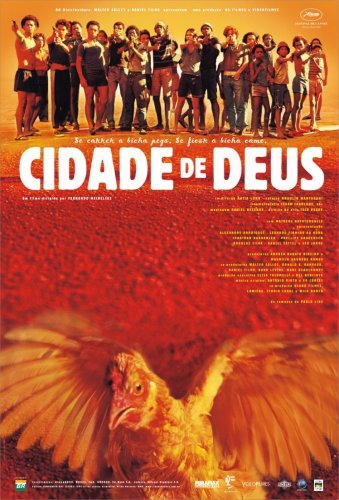
To me, Slumdog Millionaire feels like a cross between the acclaimed Brazilian slum movie City of God (Portuguese name: Cidade de Deus, 2002) and Quiz Show, the 1994 American historical drama film about TV quiz scandals in the 1950s.

City of God (2002) was filmed in the favelas of Rio de Janeiro

City of God is a Brazilian crime drama film directed by Fernando Meirelles and Kátia Lund, released in its home country in 2002 and worldwide in 2003. It was adapted by Bráulio Mantovani from the 1997 novel of the same name written by Paulo Lins.

The film’s depiction of narcotic drug rings, hold-ups, street violence and police corruption may not have been what the upper middle class Brazilians wanted to showcase to the rest of the world, but the film’s stark if grisly authenticity resonated with movie audiences around the world. Most of the actors were residents of favelas (slums) of Rio de Janeiro, such as Vidigal and the Cidade de Deus itself. City of God became one of the highest-grossing foreign films released in the United States up to that time.

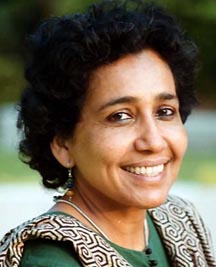
The makers of Slumdog Millionaire adopted a similar approach. Its co-director Loveleen Tandan says she likes to get as close to reality as possible. This drove her to the slums of East Bandra to look for young children who resembled the protagonists in the story.

As she recalled in a recent interview with Tehelka: “I was very keen to get real slum kids, which is why I convinced them (producers) to do one-third of the scenes in Hindi. I made a scratch tape with real street kids. The team was surprised that Hindi actually made it brighter and more alive.”

Indeed, Slumdog doesn’t feel like a ‘foreign film’ despite it having a fair number of English subtitles, which only enhance the overall cinematic experience.

But how realistic should films try to become, before the local realities are distorted or local sensibilities are affected? Where does documentary end and drama begin? These questions will continue to be debated across India and elsewhere while Slumdog enthralls millions on its first theatrical release.

Feature film makers can exercise their creative license far more than factual film makers. I doubt if the creators of authentic, close-to-the-ground movies like City of God and Slumdog Millionaire set out with any specific social agenda. They are in the business of entertainment, and just happen to find plenty of drama in real life in places like urban slums. We might argue that in the right hands, dramatised movies can draw mass attention to development issues and challenges far more effectively than the often dull and dreary documentaries.

Eyes wide open
Kalpana Sharma: Eyes wide open
“If through (the movie) the world gets a peek at an India inhabited by millions of people who continue to live their lives without clean water, sanitation or electricity, what is the problem?” asks another Indian friend and long-time Mumbai resident Kalpana Sharma.

In a perceptive essay titled Shantytowns of the Mind, written in The Indian Express in early January 2009 before she saw the film, Kalpana flagged important concerns: “Slumdog Millionaire’s success raises some deeper questions. How do we depict poverty as writers, filmmakers, journalists? Is it fair to expect us all the time to give a full, balanced, sensitive portrayal? Or is it inevitable that we write, film, for our audiences? And if, as a byproduct, people are sensitized, so be it. Also, if they are annoyed, so be it. If we are considered exploitative, so be it.”

Kalpana speaks with authority, and not just because she lives in the megacity of Mumbai (population: 13 million and rising) which, she points out, is half made up of slums. In 2000, she wrote a book titled Rediscovering Dharavi: Stories from Asia’s Largest Slum. Far from being a cold, clinical analysis of facts, figures and trends, it’s a book about the extraordinary people who live there, “many of whom have defied fate and an unhelpful State to prosper through a mix of backbreaking work, some luck and a great deal of ingenuity”.

Kalpana ends her essays with these words: “In the end you realise as a writer, a journalist or a filmmaker, that the best you can do is to shine a torch, a searchlight, on an entrenched problem. But the solution will not be found merely by that illumination. For that, there are many more steps to be taken.

Slumdog Millionaire has focused its lens on the children of India’s slums through a work of fiction. What we do to change their future is the non-fiction that has yet to be written.”

Read Shantytowns of the Mind by Kalpana Sharma, Indian Express, 14 January 2009

India rising...but not for all slumdogs?

Romulus Whitaker: Mixing films and conservation in India

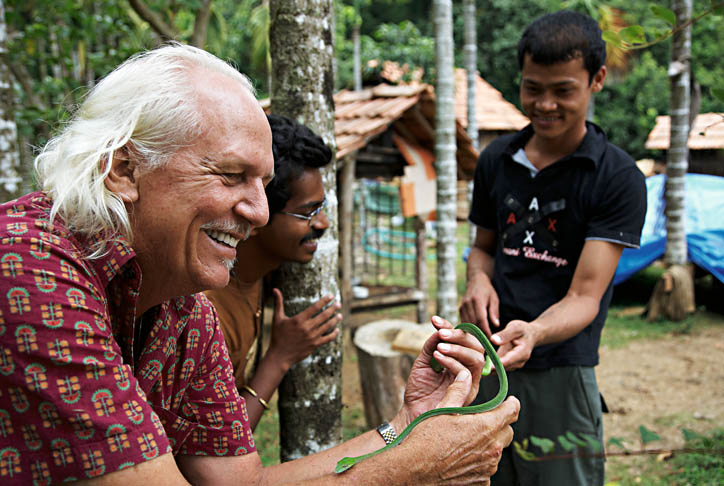
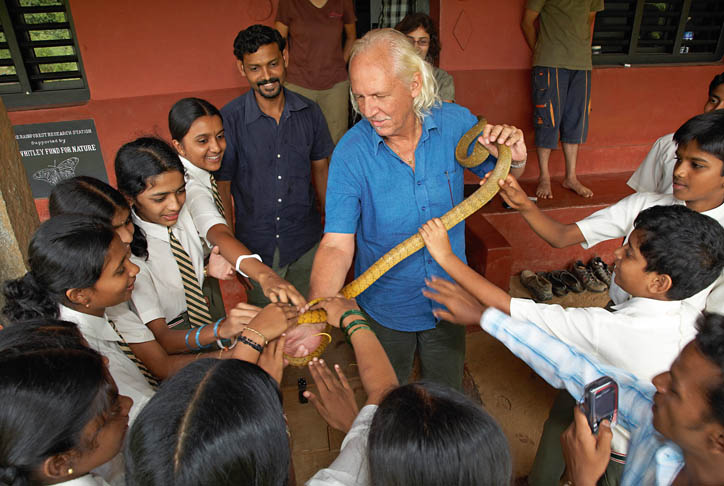
A young volunteer gets to know a snake at Agumbe research station - photo courtesy Rolex Awards
Romulus Whitaker introduces a young volunteer to a snake at Agumbe research station, Tamil Nadu, India – photo courtesy Rolex Awards

“I haven’t had to do a nine-to-five job ever in my life, and that is a very envious situation to be in if you like the wild. Life has been much like a river in that it picks you up and carries you along. I have got into things as they come towards me.”

That’s how Romulus Whitaker, reptile and amphibian specialist, conservationist and filmmaker sums up his long, eventful and illustrious career. At 65, he is full of zest for life, ready to take on new challenges in protecting India’s forests and wildlife.

His current ambition, for which he has just been selected as an Associate Laureate in the 2008 Rolex Awards for Enterprise, is to create a network of rainforest research stations throughout India.

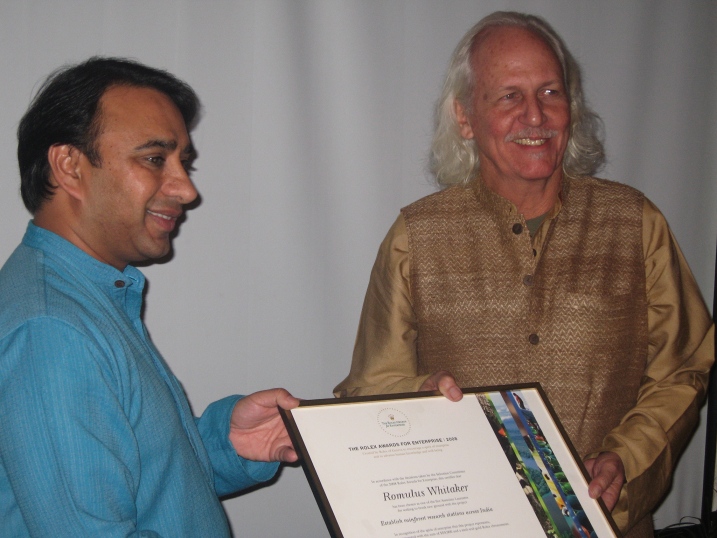
I caught up with this American-born, naturalised Indian citizen a few days ago when he and fellow Indian Moji Riba were presented with their Rolex awards at a ceremony in New Delhi.

Of course, I’d heard about Romulus (Rom) Whitaker for years and seen some of his natural history films. In some ways, his style was a bit like that of ‘The Crocodile Hunter’ Steve Irwin — putting himself in the picture, sometimes in daring encounters with potentially dangerous animals…all in the name of bringing nature a bit closer to us in our living rooms.

But such similarities go only so far. Rom takes a less dramatic and more philosophical approach to humans’ relationship with Nature. For him, television is only a means to an end. As Rolex award profile put it, “the combination of a foreign name, mildly Viking looks inherited from his Swedish mother, an unexpected fluency in local Indian dialects and a thoroughly irreverent attitude” makes him “a highly unconventional yet effective conservationist in a country far from his birthplace”.

To catch a glimpse of this remarkable man, watch this ‘Incredible India’ PSA featuring Romulus Whitaker:

Rom was the founder director of the Snake Park in Chennai. The park was established in 1972 ‘to preserve the endangered reptile species in the sub continent’.

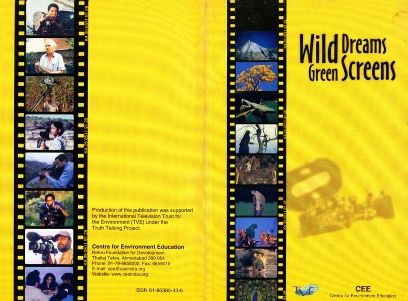
Rom’s career in film making was a byproduct of his life-long desire to bring people and Nature closer. He chronicled his venture into the world of television and film in a chapter he wrote for a book published by India’s Centre for Environment Education and TVE Asia Pacific in 2002. In that book, titled Wild Dreams, Green Screens, eight leading Indian film-makers shared insights about their careers, including how and when they decided to get involved in this field. They also talked about some of the exciting — and frustrating — experiences they have had while filming nature and wildlife.

From dreams to screen...
From dreams to screen…

In the early 1970s, Rom worked with a Russian film crew who turned up to do a sequence on snakes for a film based on the famous Kipling story, Rikki Tikki Tavi. “It was fun for me to help them figure out how to film a snake stealing an egg from a bird’s nest – and it took a whole week to do it. I was impressed by their patience and persistence,” Rom recalled in the book.

After that, every few months, some film crew would show up to do either a short news story on the Snake Park, or a short film on Indian snakes for foreign audiences. India’s stereotyped reputation as a land of snakes and snake-charmers partly fueled this interest.

Rom continues: “By the 1980s, I started thinking I knew something about making wildlife films – even though I didn’t have a TV, and there weren’t really very many such documentaries screened anywhere in India. I was aware that films could show and teach people about my beloved reptiles like nothing else. Surely the Snake Park with nearly a million visitors a year could make good use of such films, and I knew the visitors would go away with a new awareness of how beautiful, graceful and interesting reptiles are. A single broadcast on a TV channel and 20 million people would be able to see it all at once!”

Determined to do his own films, Rom teamed up with two school friends John and Louise Riber, and Shekar Dattatri, to make a film on India’s snakebite problem. They had a tiny budget (Indian Rupees 50,000, which is approximately US$ 1,000 today), an old Arri camera and ‘a lot of enthusiasm’.

One thing led to another. “‘Snakebite’ turned out to be a good little half-hour film which was translated into several Indian languages… Amazingly, this little film won a first prize at a festival in the United States, and was awarded the Golden Eagle by the American Movie and Television Federation. Lo and behold, I was a filmmaker!”

‘Snakebite’ (1985), made on 16 mm film, also launched the career of Shekar Dattatri, a multi-award winning Indian filmmaker who worked as an assistant director on this production. Coincidentally, Shekar was an Associate Laureate of the Rolex Award in 2004 for his ‘Wild India Project – Changing Hearts and Minds through Moving Images’.

Vikram Akula (left) presents Rolex Awards certificate to Romulus Whitaker in Delhi, 22 January 2009

We missed Shekar at the Delhi event – he couldn’t make it due to scheduling difficulties. But as Rom has written, the Whitaker-Dattatri partnership continued for several years while they struggled with ‘very crude equipment’ and tiny budgets. Films like ‘Seeds of Hope’ (on tree planting) and ‘A Cooperative for Snake Catchers’ followed.

Rom further writes in his chapter: “We worked hard on these films, learning as we went along month after month, working with really good people like the tree planters of Auroville and the Palni Hills Conservation Council, and, of course, the fantastic Irula tribals. We did have a few narrow escapes with snakes, but we always felt we were in much more danger driving down National Highway 45, than from any of our venomous subjects!”

Rom’s film making in the past two decades has taken him not only to the far corners of India, but to other biodiversity hotspots of the world – such as Indonesia. As the years passed, his enhanced reputation attracted big names in wildlife films, such as National Geographic, Discovery/Animal Planet and BBC Natural History. Combining his conservation knowledge with public education skills, Rom has also been presenter of several films.

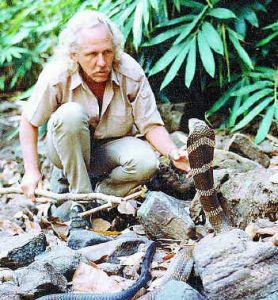
The King (Cobra) and I

These multiple involvements have earned him a string of awards – his documentary King Cobra made for National Geographic won him an Emmy award, considered the television equivalent of the Oscars.

Despite the rigorous demands of film making (and the occasional lure of television medium), Rom has remained active in conservation circles both within India and at global level. While many conservationists in India focus their attention on charismatic megafauna like tigers and elephants, Rom has stayed faithful to his chosen field of reptiles and amphibians. Years ago he realized that his beloved species cannot survive unless their natural habitats do. So, like many others, he evolved from naturalist to conservationist.

“A lot of us get wrapped up in our own little special animal and then we wake up and start thinking it has got to be habitat and it has to be eco-development that involves people and, now, in my case, it has crystallized into the whole idea of water resources,” he says.

Read his detailed CV for details on his conservation, publishing and film making accomplishments.

Rom’s colourful career has itself become a subject for other filmmakers. In 2007, he was featured in a critically-acclaimed documentary produced by PBS, under their “Nature” banner, on “super-sized” crocodiles and alligators, which was filmed in India, East Africa and Australia.

And in January 2009, Whitaker returned to the small screen in another “Nature” documentary on real-life reptiles such as Komodo dragons and Dracos that inspired tales of dragons.

Extract from The Dragon Chronicles, which premiered on PBS in January 2009:

Read the PBS/Dragon Chronicles interview with Rom Whitaker

The man who turned to moving images in the 1980s to move people’s minds towards conservation is still engaged in that business. He is a conservationist who puts a premium on public engagement, and especially on working with children and young people.

He says: “We are doing a lot of work with young people, bringing them to the forest and showing them what happens here and why it matters. It can be very difficult to change adult attitudes, but with the young, it is easier to get across the knowledge that what we are doing to the forests we are doing to ourselves.”

In Romulus Whitaker's hands, snakes become educational tools for children and icons of nature conservation. Photo courtesy Rolex Awards
In Romulus Whitaker\’s hands, snakes become educational tools for children and icons of nature conservation. Photo courtesy Rolex Awards

Remembering the Children of Tsunami, four years later…

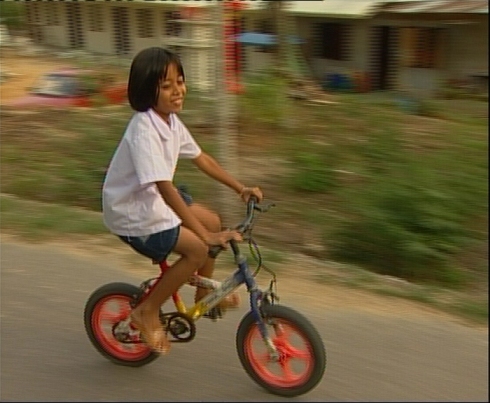
Jantakarn Thep-Chuay, known as Beam

For many weeks, Jantakarn Thep-Chuay — nicknamed Beam -– did not understand why her father was not coming home. The eight-year-old girl, in Takuapa in Thailand’s southern district of Phang Nga, had last seen him go to work on the morning of 26 December 2004.

“On that Sunday, the day there was a wave, my dad wore his tennis shoes,” she recalls as she gets into his pair of sandals. “My dad didn’t have to do much work — he just walked around looking after workers.”

Beam’s father Sukaroak –- a construction supervisor at a new beach resort in Khao Lak –- was one of thousands of Thais and foreign tourists killed when the Asian Tsunami hit without warning. His body was never found.

For months, Beam would draw pictures of her family. These, and family photos of happier times, helped her to slowly come to terms with what happened.

The first year was long and hard for the family Sukaroak left behind: Beam, her two-year-old brother Boom, and mother Sumontha, 28. The determined young widow struggled to keep home fires burning -– and to keep her troublesome in-laws at bay.

As if that were not enough, she also had to engage assorted bureaucracies: even obtaining an official death certificate for her late husband entailed much effort.

Just a few weeks after the disaster, the local authorities approached Sumontha suggesting that she gives away one or both her children for adoption. Apparently a foreigner was interested. She said a firm ‘No’.

“Her dad wanted Beam to become an architect. He was hoping for a day when he could build something she draws,” says Sumontha. “If I am still alive, I want to raise my own children. I am their mother. For better or worse, I want to raise them myself.”

The Tsunami destroyed Beam’s school, but she continued to attend a temporary school set up with local and foreign help. Before the year ended, she moved to a brand new ‘Tsunami School’ that the King of Thailand built to guarantee education for all children affected by the disaster.

Sumontha, Beam and Boom are three ordinary Asians who have shown extraordinary courage, resilience and resourcefulness as they coped with multiple challenges of rebuilding their lives after the Tsunami. Theirs is one of eight families that we followed throughout 2005, under our empathetic communication initiative called Children of Tsunami: Rebuilding the Future.

It was a multi-country, multi-media project that tracked how ordinary Asians rebuilt their lives, livelihoods and futures after one of the biggest disasters in recent years. We at TVE Asia Pacific documented on TV, video and web the personal recovery stories of eight affected families in India, Indonesia, Sri Lanka and Thailand for a year after the disaster. Our many media products — distributed on broadcast, narrowcast and online platforms -– inspired wide ranging public discussion on disaster relief, recovery and rehabilitation. In that process, we were also able to demonstrate that a more engaged, respectful kind of journalism was possible when covering post-disaster situations.

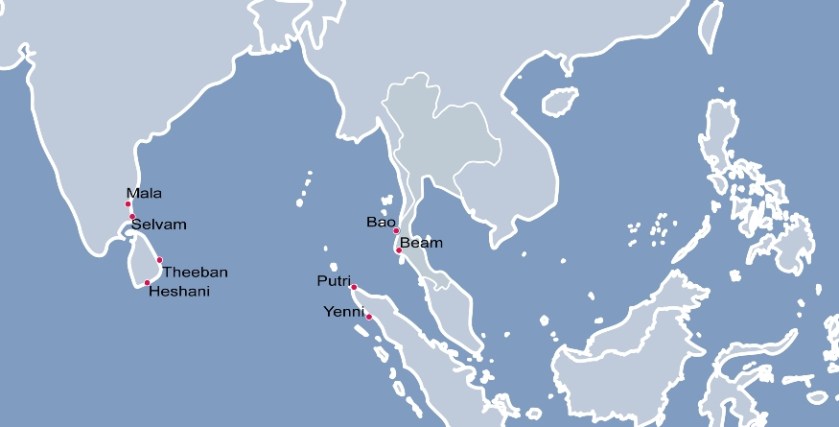
where Children of Tsunami stories were filmed for much of 2005
Four countries, eight locations: where Children of Tsunami stories were filmed for much of 2005

Meet the Children of Tsunami

They have never met each other. Yet they were united first in grief, then in survival. Five girls and three boys, between 8 to 16 years of age, living in eight coastal locations in four countries. Their families were impacted by the Asian Tsunami in different ways. Some lost one or both parents -– or other family members. Some had their homes or schools destroyed. Others found their parents thrown out of a job. During the year, these families faced many hardships and challenges in rebuilding their futures.

These remarkable children were our personal heroes for 2005:
Selvam, 13, Muzhukkuthurai, Tamil Nadu state, India
Mala, 11, Kottaikkadu, Tamil Nadu state, India
Putri, 8, Lampaya, Aceh province, Indonesia
Yenni, 15, Meulaboh, Aceh province, Indonesia
Heshani, 13, Suduwella, southern Sri Lanka
Theeban, 14, Karaitivu, eastern Sri Lanka
Bao, 16, Kuraburi, Phang Nga district, Thailand
Beam, 8, Takuapa, Phang Nga district, Thailand

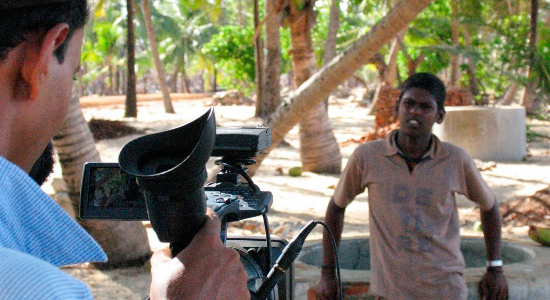
With their trust and cooperation, we captured their unfolding realities unscripted and unprompted.

Read and experience much more on the Children of Tsunami dedicated website

Filming with Theeban in eastern Sri Lanka...now only a memory

As I recalled in early 2007, when we tragically lost one of eight survivor children – Theeban – to Sri Lanka’s civil war: As journalists, we have been trained not to get too attached to the people or subjects we cover, lest they affect our judgment and dilute our objectivity. The four production teams involved in Children of Tsunami initially agreed to follow this norm when we met in Bangkok in early 2005 for our first (and only) planning meeting. We also resolved not to reward our participating families in cash or kind, as they were all participating voluntarily with informed consent.

“But the ground reality was different. 2005, Asia’s longest year, wore on. As survivors slowly patched their lives together again, our film teams found themselves becoming friends of families or playing Good Samaritan. Sometimes our teams would find a survivor family close to starvation and — acting purely as human beings, not journalists — they would buy dry rations or a cooked meal. At other times, finding the children restless or aimless, they would buy them a football, kite or some other inexpensive toy that would produce hours of joy and cheer.

“As commissioners and publishers of Children of Tsunami stories, we didn’t object to these acts of kindness. Journalism with empathy was far preferable to the cold detachment that textbooks recommend.

In 2007, my colleague Manori Wijesekera – who served as production manager of this challenging effort – and I wrote up our definitive account of the project for Communicating Disasters: An Asia Pacific Resource Book. That chapter can be read online here.

Children of Tsunami: The Journey Continues
(25mins) was the end-of-year film that captured the highlights and ‘lowlights’ of our families’ first year following the disaster. It can be viewed online at the Children of Tsunami website.

Children of Tsunami: No More Tears (25 mins) was the shorter version of the end-of-year film that captured the highlights and ‘lowlights’ of our families’ first year following the disaster. We co-produced it with the Singapore-based regional broadcaster Channel News Asia.

Watch the first few minutes on YouTube:

All images courtesy TVE Asia Pacific

Iodised Salt: How to make the world smarter, faster?

A miracle powder?
A miracle substance to get smarter?
One of the earliest video films I helped distribute at TVE Asia Pacific, soon after it was set up in 1996, was called Ending Hidden Hunger.

This 20 minute film, made in 1992 by Bedford Films of UK and narrated by Sir Peter Ustinov, described how the UN children’s agency UNICEF was working toward eliminating micronutrient deficiencies from iron, vitamin A and iodine in different parts of the developing world. Examples are taken from Africa and Asia to both illustrate the extent of the problem as well as steps being taken to reduce these deficiencies that cause mass-scale disability and death.

The main premise of the film was simple: those lacking micro-nutrients in their regular diet often don’t show immediate signs of starvation. This deprivation builds up over time and causes slow – sometimes irreparable – damage.

Nicholas Kristof
Nicholas Kristof
I was reminded of this film — and its still very relevant message — when reading an excellent essay by Nicholas Kristof in International Herald Tribune a few days ago. He is a columnist for the New York Times who travels the world reporting from the various frontlines of survival and struggle.

In Raising the World’s I.Q., dispatched from Rawalpindi, Pakistan, Kristof was talking about ‘a miracle substance that is cheap and actually makes people smarter’: iodised salt.

Here’s the context, as he put it:

“Almost one-third of the world’s people don’t get enough iodine from food and water. The result in extreme cases is large goiters that swell their necks, or other obvious impairments such as dwarfism or cretinism. But far more common is mental slowness.

“When a pregnant woman doesn’t have enough iodine in her body, her child may suffer irreversible brain damage and could have an I.Q. that is 10 to 15 points lower than it would otherwise be. An educated guess is that iodine deficiency results in a needless loss of more than 1 billion I.Q. points around the world.”

In nearly all countries, the best strategy to control iodine deficiency is iodisation of salt — one of the most cost-effective ways to contribute to economic and social development. Especially in these hard times, development professionals are looking for smart ways to get the biggest bang for their limited (and still shrinking) bucks. Investing in micronutrients – such as iodine – can provide some of the biggest bangs possible.

UNICEF Report 2008
UNICEF Report 2008
In June 2008, UNICEF published Sustainable elimination of iodine deficiency, a new report on progress since 1990 when the world’s governments set the target to eliminate iodine-deficiency disorders worldwide.

In October 2008, The Lancet, one of the world’s leading medical journals, published a report that noted: “Iodine deficiency is the most common cause of preventable mental impairment worldwide.”

The medical, public health and development communities have known and talked about iodine and other micronutrients for over 30 years. Significant progress has been made – for example, UNICEF says by 2006, more than 120 countries were implementing salt iodisation programmes, and 34 countries had managed to get rid of iodine deficiency among their people through this smart strategy.

But there still are major gaps — which continue to cause preventable damage to tens of millions of people including children.

Nicholas Kristof navigates through the heavy, jargon-ridden developmentspeak and churns out an eminently readable, accessible piece. It’s written in first person narrative from a part of the world where illiteracy, superstition – and their erstwhile companion, religious fanaticism – are trying to prevent people at risk from using iodised salt. This is science writing at its finest: anecdotal, personalised and purposeful.

And he’s absolutely right when he says iodised salt lacks glamour, doesn’t have too many stars or starlets singing its praise and (almost) no one writing about it despite its potential to improve lives for so many people.

I should know: one of the earliest topics I tackled as a young science reporter – getting started in the late 1980s – was salt iodisation. I struggled to put together a readable, engaging piece — which I then had to push through jaded editors who wondered what all this fuss was about.

I have only one (minor) bone to pick with Kristof. He pokes fun at Canada for hosting and supporting the Micronutrient Initiative, “an independent, not-for-profit organization committed to promoting simple cost-effective solutions for hidden hunger and developing innovative new solutions where needed.”

He calls Canada “earnest and dull, just like micronutrients themselves”. It’s a personal view – perhaps expressed with his tongue firmly in his cheek. Having travelled a fair amount in North America, and having good friends in both countries, I think that the nation north of the US-Canada border is a tad more civilised, certainly more caring and better engaged with the rest of the world.

But then, that too is a personal view. I’m darn lucky that I get enough iodine in my diet so that I can think for myself, keep asking lots of annoying questions…and occasionally even get some answers right.

Two billion people – almost a third of humanity – aren’t so lucky.

Read Raising the world’s I.Q. by Nicholas Kristof

Salt iodisation is not universally hailed. Read an alternative point of view that appeared in India’s Frontline magazine in 2006: Imposing iodine