In this week’s Ravaya column (in Sinhala), I write about an Indian friend of mine: Moji Riba, filmmaker and cultural anthropologist, who lives and works in India’s north-eastern Arunachal Pradesh.
It’s an isolated remote and sparsely populated part of the country that is home to 26 major tribal communities,. Each one has its own distinctive dialect, lifestyle, faith, traditional practices and social mores. They live side by side with about 30 smaller communities.
A combination of economic development, improved communications, the exodus of the young and the gradual renunciation of animist beliefs for mainstream religions threatens Arunachal’s colourful traditions. “It is not my place to denounce this change or to counter it,” says Moji. “But, as the older generation holds the last link to the storehouse of indigenous knowledge systems, we are at risk of losing out on an entire value system, and very soon.”
For the past 15 years, he has been documenting it on video and photos. Read my English blogposts about him in Nov 2008 and Jan 2009.
I caught up with him in Delhi last week, which inspired this column.
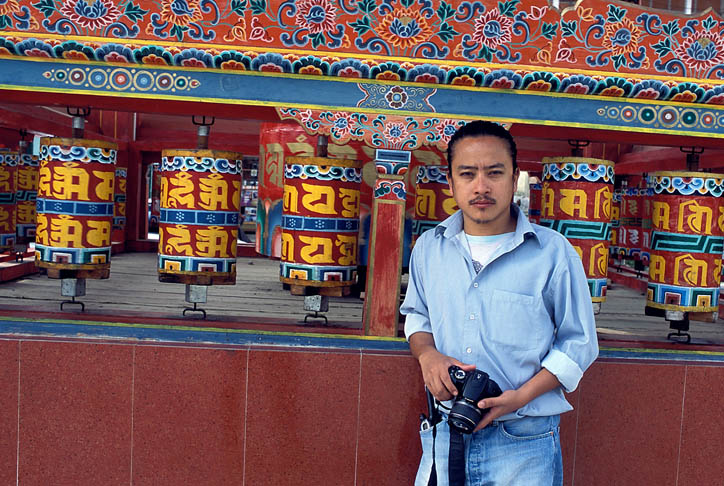
Moji Riba has been working since 1997 to document Arunachal Pradesh's rich cultural heritage. Image courtesy Rolex Awards
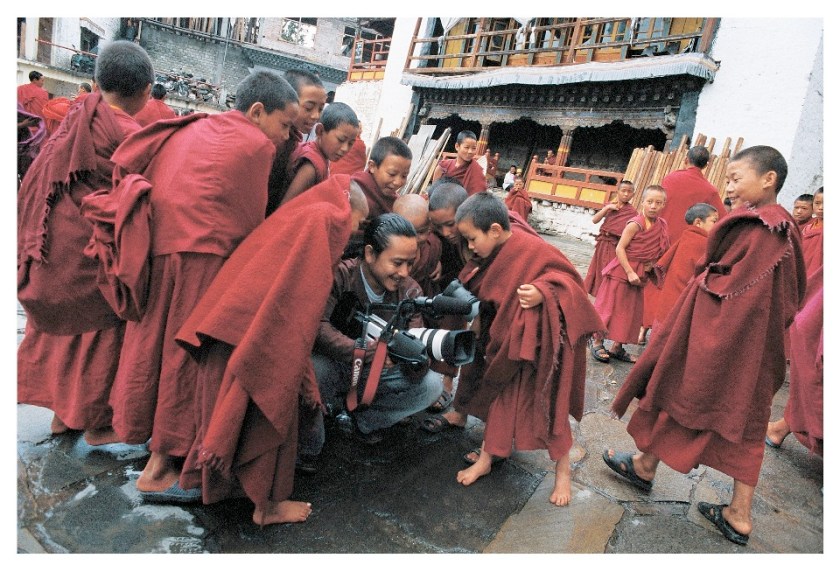
Surrounded by young monks, Moji Riba films rituals celebrating Buddha’s birth at Galden Namgyal Lhatse monastery. Tawang, Arunachal Pradesh, India, 2008 (Photo courtesy Rolex Awards)
සංස්කෘතික පර්යේෂණ හා ලේඛනගත කිරීමේ කේන්ද්රය (Centre for Cultural Research and Documentation, CCRD) අරඹමින් තවත් ඔහු වැනි ම කිහිප දෙනෙකු සමඟ ප්රාන්තයේ ජන සංස්කෘතිය ගැන වීඩියෝ වාර්තා චිත්රපට නිපදවීම ඇරඹුවා.
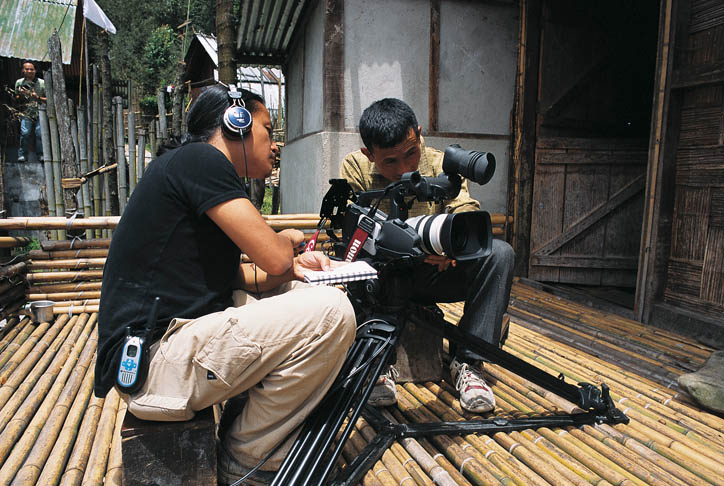
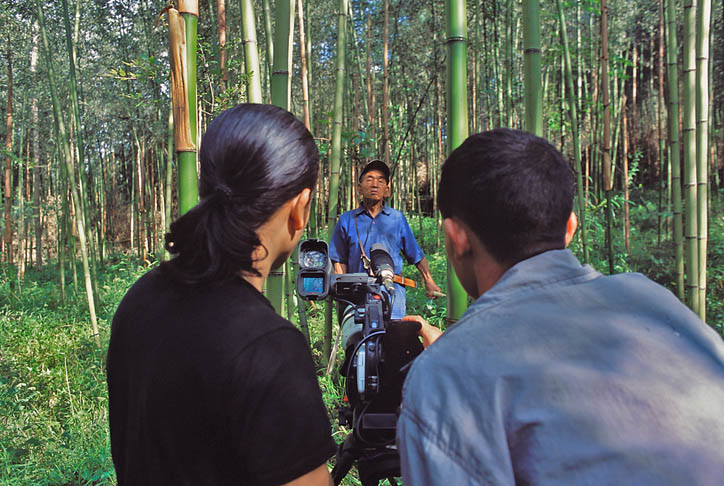
Riba teaches Hage Komo the basic camera skills that will allow the young Apatani to film an interview with his father and an animist priest, thus recording his tribe's oral history (Photo courtesy Rolex Awards)
Hage Komo gets video instructions from Moji Riba, who is enlisting local young people to capture the oral histories, languages and rituals of their tribes for his project. Komo films his father gathering bamboo in a grove outside Hari Village. (Photo courtesy Rolex Awards)
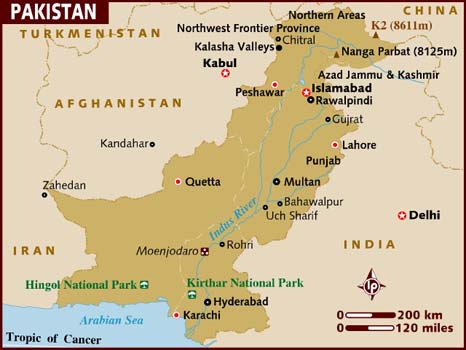
In this week’s Ravaya column (in Sinhala), I reflect on my recent visit to Pakistan, after 15 years.
When I last visited, in 1997, there were only state owned radio and TV channels. That changed in 2002 when private ownership was allowed. In a decade, private broadcasting has grown and expanded — especially in news and current affairs TV channels, which are now a dominant factor in Pakistan’s everyday life.
What does this mean for media pluralism, governance and social order in a country as complex as Pakistan? Are 24/7 news channels part of the problem or part of the solution? Since the genie cannot be sent back into the lamp, how best can its powers be harnessed for the public interest?
“ඇෆ්ගනිස්ථානයට යාබදව තිබෙන විකාර දේශය” හැටියට මගේ මිය ගිය පාකිස්ථානු මිතුරිය සනියා හුසේන් ඇගේ උපන් බිම හදුන්වා දෙන්නට පුරුදුව සිටියා. එය වඩාත් තිව්ර ලෙස දැනුනේ ඉංගී්රසියෙන් කී විටයි. ‘I live in Absurdistan, located next to Afghanistan!’
Malima (New Directions in Innovation) is a Sinhala language TV series on science, technology and innovation. This episode was produced and first broadcast by Sri Lanka’s Rupavahini TV channel on 27 September 2012.
Produced by Suminda Thilakasena and hosted by science writer Nalaka Gunawardene, this episode features the following items:
• An interview with inventor Nalaka Chandrawansa, who has developed an energy-efficient fan that can be fitted under a mosquito net. It consumes less than 20W to operate, compared with table fans (average 45W) and ceiling fans (average 70W), accumulating power savings. And because the compact fan provides a more targeted stream of air that cools the sleeper on the bed, it also does not stir dust elsewhere in the room that sometimes causes health problems. This innovation has been grated a Sri Lanka Patent, certified by Sri Lanka Sustainable Energy Authority and won a President’s Award in 2010. It is manufactured and marketed by the inventor himself. Details at: http://www.freshnight.net
• Introducing Sri Lanka’s indigenous technology: kedella karuwa, a simple tool for sweeping outdoors, which might have inspired the rake.
• A Japanese company has recently introduced the innovative ‘Grappa’ foldable shopping bag — which also doubles as a safety helmet in the case of a disaster. It is made of mesh fabric sides, much like a standard reusable shopping bag, but the bottom consists of hard plastic and expanded polystyrene (EPS), which is often found in safety helmets to absorb impact. More about this at: http://www.springwise.com/health_wellbeing/japanese-eco-friendly-shopping-bag-doubles-safety-helmet/
• An interview with schoolboy inventor Therusha Chethana Fernando, a student of De Mazenod College, Kandana, Sri Lanka. He has developed a portable water cooler that can chill water to 5 degrees C below outside temperature without using refrigeration technology or electricity. Instead, the simple device uses a permeable clay container and a battery-powered small fan. With 3 litres of water filled, the entire unit weighs 4 kg, easy enough to carry around.
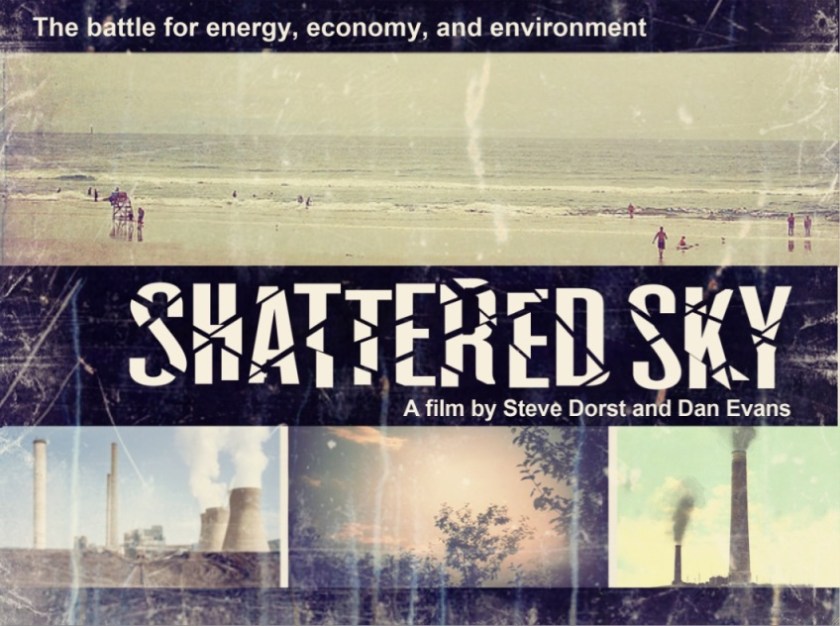
A film by Steve Dorst and Dan Evans.
An invisible compound threatens Earth’s life-support systems, with effects so pervasive that scientists sound the alarm, businesses must innovate, politicians are forced to take action—and American leadership is absolutely vital. Climate change? No…the hole in the ozone layer. For the first time in film, Shattered Sky tells the story of how—during geopolitical turmoil, a recession, and two consecutive Republican administrations— America led the world to solve the biggest environmental crisis ever seen. Today, will we dare to do the same on energy and climate?
A film by Steve Dorst and Dan Evans. The story of how America led the world to solve the biggest environmental crisis ever seen. Today, will we dare to do the same on energy and climate?
A new film looks at American leadership during the ozone crisis and compares it to the situation with global warming today. A good interview with the filmmaker.
On 16 September, the International Day for the Preservation of the Ozone Layer will be observed once again all over the world. This year’s theme is “Protecting our atmosphere for generations to come”.
Exactly 25 years ago, governments of the world came together at a historic conference in Montreal, Canada, to adopt the Montreal Protocol on Substances that Deplete the Ozone Layer.
In a quarter century, it has rallied governments and industries in both developed and developing countries to phase out, or substantially reduce, nearly 100 chemicals that damage the ozone layer in the upper atmosphere.
The Ozone Secretariat and UNEP OzonAction have jointly produced two 30-second videos mark the 25th anniversary of the Montreal Protocol (MP).
These Public Service Announcements (PSAs) hail the extraordinary achievements of this Multilateral Environmental Agreement over a quarter century. They also project the MP as a protector of our shared atmosphere for generations to come.
The first PSA briefly introduces the ozone layer depletion issue and highlights its recovery that was made possible when countries of the world joined hands for saving the ozone layer – a global action at its best.
The second PSA revolves around the multiple benefits of the Protocol: it is not just a treaty protecting the ozone layer, but has multiple benefits for our biodiversity, climate, human health and the global economy.
The third version of this PSA (below) is twice as long, gives more info and moves at a more leisurely pace.
These PSAs, made by friends in the UK are proof that even a highly esoteric and technical subject like ozone protection can be presented in engaging, human interest terms.
Growing up in an Ozone Safe World: that’s worth celebrating!
Malima (New Directions in Innovation) is a Sinhala language TV series on science, technology and innovation.
Produced by Suminda Thilakasena and hosted by science writer Nalaka Gunawardene, this episode was produced and first broadcast by Sri Lanka’s Rupavahini TV channel on 9 August 2012.
• An interview with Dinesh Katugampola, a textile engineer who has invented the world’s first Radius Metre that calculates the radius of a circle. The Radius Meter – which comprises measuring instruments as well as a software based calculator – instantly works out the radius an arch or sphere by measuring only small part of that arch or sphere. In practical terms, this helps plot major arches in mechanical engineering, road and building construction and in many other fields. This invention won a silver medal in mechanical designs category at ‘Inventions Geneva’ international exhibition in April 2012. More at: http://www.sundaytimes.lk/120429/BusinessTimes/bt25.html
• Introducing Sri Lanka’s indigenous technology: Dongaraya is a simple device used by farmers to make noise from the breeze that, in turn, scares birds away from paddy fields.
• A Japanese university research team has developed a machine that can measure brain waves and capture different moods. We have a news story on what this means for future of brain-machine interface.
• An interview with Nipun Kavishka Silva a Grade 9 student at De Mazenod College, Kandana, Sri Lanka, who — with his sister Pipunika Silva, has invented ‘NP System’: a computer operating system for blind and visually impaired people. It assists those who cannot see to use computers by providing voice instructions as they use a Braille keyboard and mouse or touchpad. They were winners at Intel International Science and Engineering Fair (ISEF) in Pittsburgh, USA, in May 2012. More info at: http://www.ft.lk/2012/05/24/sri-lankan-students-win-big-at-intel-isef-in-usa/
This is the (Sinhala) text of my Sunday column in Ravaya newspaper on 5 August 2012. This week, I trace the moving images coverage of the Olympics, from the early days of cinema to the modern instantaneous live coverage that makes the whole world watch the Games as they unfold.
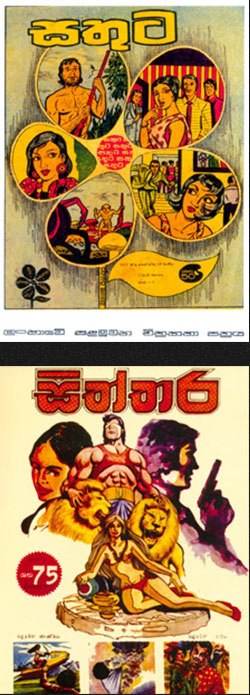
In this Sunday (15 July 2012) Ravaya column (in Sinhala), I briefly trace the history of comics in Sri Lanka in the Sinhala language and ask: what lessons can we derive from that experience on integrating a new media type or form to Lankan society?
Comics in Lankan newspapers started 60 years ago in October 1951 — and a vocal minority of cynics and puritans resisted it from the beginning. I argue that this misplaced resistance prevented Lankan media houses and society at large from harnessing this versatile medium for greater good – in both entertainment and educational terms.
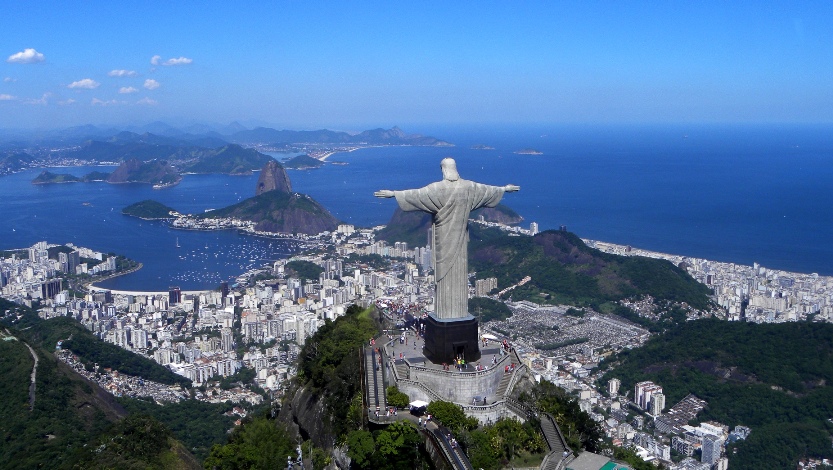
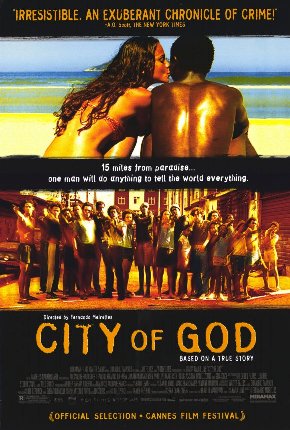
In this week’s Ravaya column (in Sinhala), I share my impressions and reflections of the city of Rio de Janeiro that just hosted the Rio+20 conference. But this piece is not about the event, but its venue — where the first world of affluence and third world of deprivation co-exist.
Statue of Christ te Redeemer looks down on Rio de Janeiro from Corcovado Mountain
තිරසාර සංවර්ධනය පිළිබඳ එක්සත් ජාතීන්ගේ සමුළුව (UN Conference on Sustainable Development, Rio+20) බ්රසීලයේ රියෝ ද ජනෙයිරෝ නුවර පැවැත්වුණා.




 Open Minds!