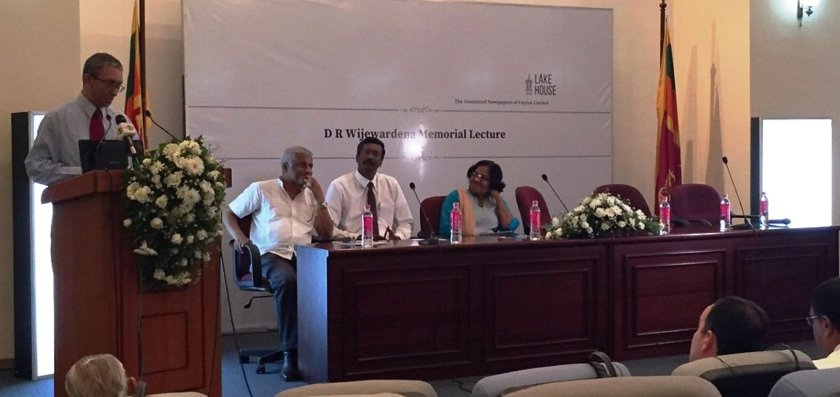
Nalaka Gunawardene speaks at D R Wijewardene memorial event on 26 February 2016 – Photo by Sam de Silva
This week, I was asked by Sri Lanka’s oldest newspaper publishing house — Associated Newspapers of Ceylon Limited, or Lake House — to chair a panel discussion on ‘Survival and Evolution of Newspapers in the Digital Age’.
The event marked the 130th birth anniversary of Lake House founder and Sri Lanka’s first press baron, D R Wijewardene (1886 – 1950). It was held at the Lakshman Kadirgamar Institute in Colombo.
My panel comprised: communications scholar and former telecom regulator Prof Rohan Samarajiva; senior journalist Hana Ibrahim; Sri Lanka Press Institute’s CEO Kumar Lopez, and political scientist Sumith Chaaminda of Verite Research.
We had a lively discussion exploring the challenges faced by print publishers everywhere, and what solutions are relevant, viable and affordable for a majority of small scale publishers without deep pockets.
Here is an excerpt from my opening remarks (full text to be published soon as an op-ed article):
In the absence of independently audited circulation figures, we cannot be certain how well – or poorly – our newspapers are selling today. But indications are not promising. I have been involved in a state of the media study for the past year (due to be released in May 2016), and there is evidence that market survival is a big struggle for many smaller publishers.
More and more Lankan newspapers are being kept alive not to make any profit, but for influence peddling and political purposes. And in at least one case, the co-operatively owned Ravaya, reader donations were actively solicited recently to keep the paper alive.
Worldwide, print journalism’s established business models are crumbling, with decades-old publications closing down or going entirely online (The Independent newspaper in the UK is the latest to do the latter). Advertisers usually follow where the eyeballs are moving.
So what would D R Wijewardene do if he confronted today’s realities of gradually declining print advertising share and readers migrating to online media consumption? How might he respond by going back to his founding goals of political action and social change through the 3 Ps – the Press, Parliament and Platform – as important instruments of political action?
My guess is that he would invest in radio and/or television, with a strong digital integration. He might even find a viable income stream from digital and online publishing without locking up public interest content behind pay-walls.
We can only speculate, of course. Perhaps the more pertinent question to ask is: where are the budding D R Wijewardenes of the 21st Century? What are their start-ups and how are their dreams unfolding? Are they trying to balance reasonable profits with public interest journalism?
In my view, the biggest decider of success or failure – today, as it was a century ago – is not the medium, but the message. To put it more bluntly, it’s credibility, stupid!
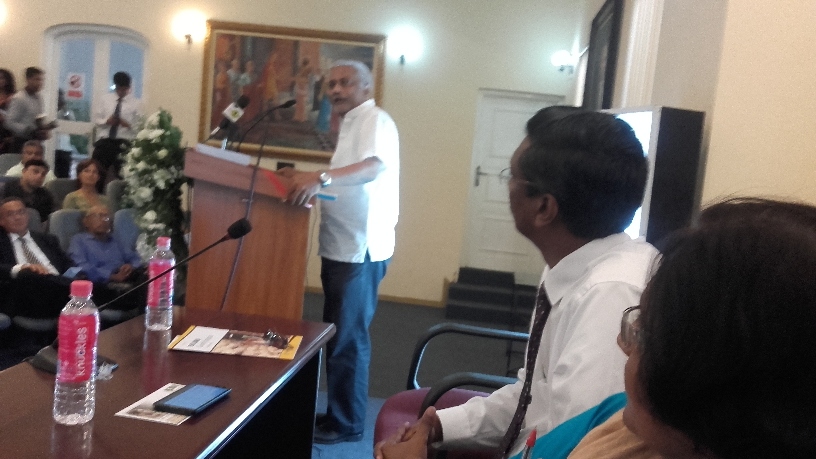
Prof Rohan Samarajiva speaks at D R Wijewardene memorial event, 26 Feb 2016
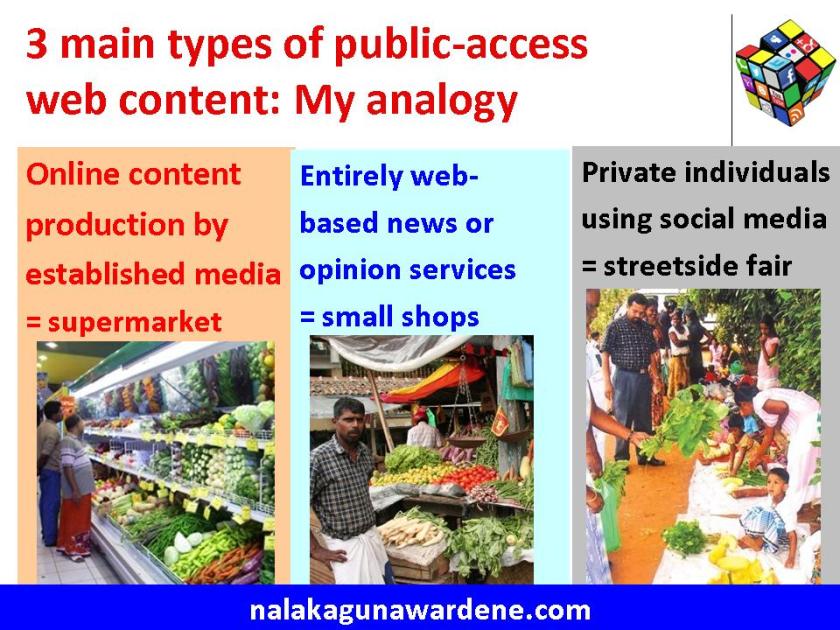
Social media bashing is a popular sport among media critics and others in Sri Lanka. Sadly, some have no clear idea what social media is (and isn’t), thus conflating this category of web content with others like news websitea and gossip websites.
In this week’s Ravaya column (appearing in issue of 21 February 2016), I try to explain this basic categorization along with a brief history of the web and web 2.0. I also reiterate the basic user precautions for social media users where the motto us: user beware!
The report draws on a survey of 1,743 randomly selected men and women, interviewed in Sinhala or Tamil language during June-July 2015. They were asked about mobile phone use and web access. The survey was conducted by Social Indicator, CPA’s survey research unit.
As the launch media release noted, “From the use of Facebook to smartphones, from news on TV to news via SMS, from how information read digitally is spread to others who are offline, the report offers insights into how content is produced, disseminated and discussed in Sri Lanka’s most densely populated province and home to the country’s administrative and business hubs.”
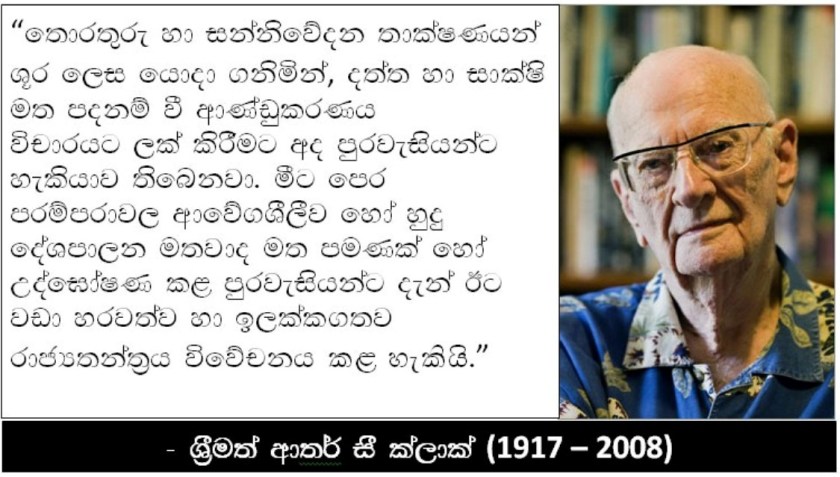
In this week’s Ravaya column (appearing in issue of 7 February 2016), I reflect on the value of independence of thought and critical thinking. It coincides with the 68th anniversary of Sri Lanka’s political independence from Britain observed on Feb 4.
I argue that for much of Sri Lanka’s recorded history, we had open frontiers that welcomed traders, scholars, pilgrims, artistes, missionaries and others from the East and West. This was the ‘ehi-passika‘ (meaning ‘come and see’) formula in Buddhism, which made our kings and courtiers open-minded.
Such engagement had their pros and cons, but on the whole, the island nation was richer for the free flow of genes, ideas and technologies. It was only during the last five centuries – out of 25 in recorded history – that the balance was lost due to European colonisation.
Indeed, the island’s fauna, flora and people would be radically different today if such influences and cross-fertilisation didn’t happen. Excepting our aboriginal veddahs, all other races are immigrants from elsewhere. All our religious faiths are also ‘imported’. Sri Lanka today is a result of endless assimilating and remixing.
Yet, today, many Lankans are highly apprehensive of the outside world.
They constantly warn of elaborate international plots to ‘undermine and destabilise’ Sri Lanka. The usual suspects include cocktail of acronyms – among them the CIA, MI5, RAW, the IMF (and its twin, the World Bank), certain UN agencies and an assortment of supposedly ‘evil’ multinational corporations.
Worryingly, an alarmingly high number of Lankans take these imaginary scenarios for real. High levels of literacy and schooling make little difference. Our media often peddle — and amplify – these for cheap thrills or higher ratings.
We will not be a free nation until and unless we can develop independent and critical thinking.
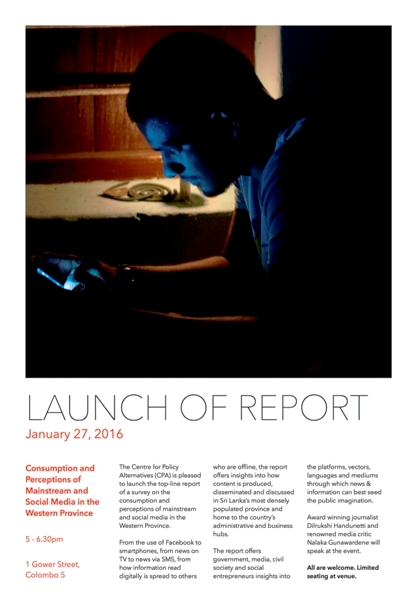
Launch of the top-line report of a survey on the consumption and perceptions of mainstream and social media in the Western Province of Sri Lanka, 27 Jan 2016
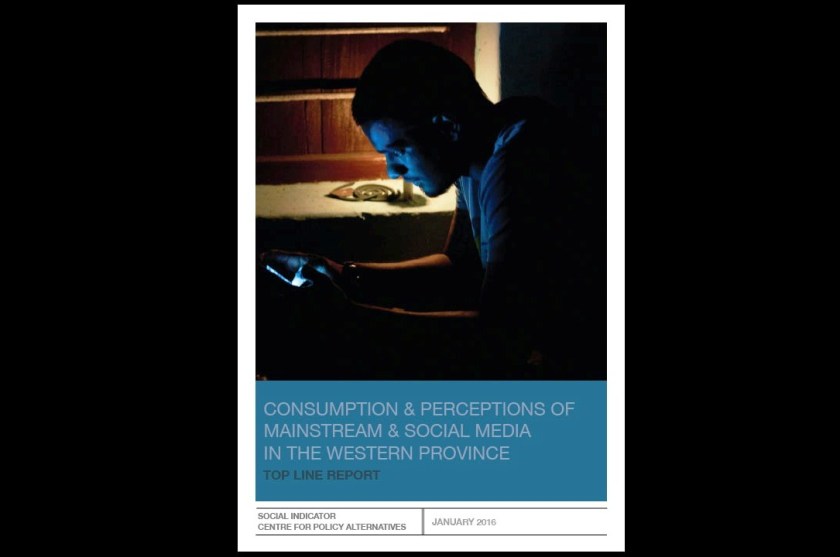
On 27 January 2016, the Centre for Policy Alternatives (CPA) launched the top-line report of a survey on the consumption and perceptions of mainstream and social media in the Western Province of Sri Lanka.
I was one of the launch speakers, and my presentation was titled: Information Society is Rising in Sri Lanka: ARE YOU READY?
The report draws on a survey of 1,743 randomly selected men and women, interviewed in Sinhala or Tamil language during June-July 2015. They were asked about mobile phone use and web access. The survey was conducted by Social Indicator, CPA’s survey research unit.
As the launch media release noted, “From the use of Facebook to smartphones, from news on TV to news via SMS, from how information read digitally is spread to others who are offline, the report offers insights into how content is produced, disseminated and discussed in Sri Lanka’s most densely populated province and home to the country’s administrative and business hubs.
It added: “The report offers government, media, civil society and social entrepreneurs insights into the platforms, vectors, languages and mediums through which news & information can best seed the public imagination.”
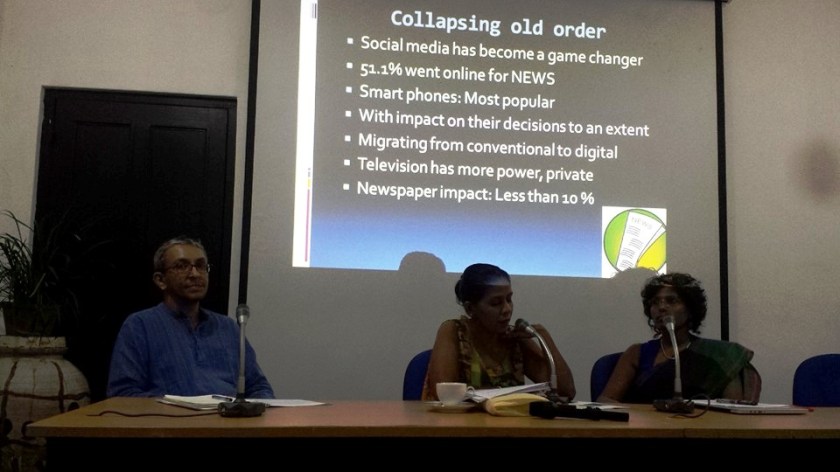
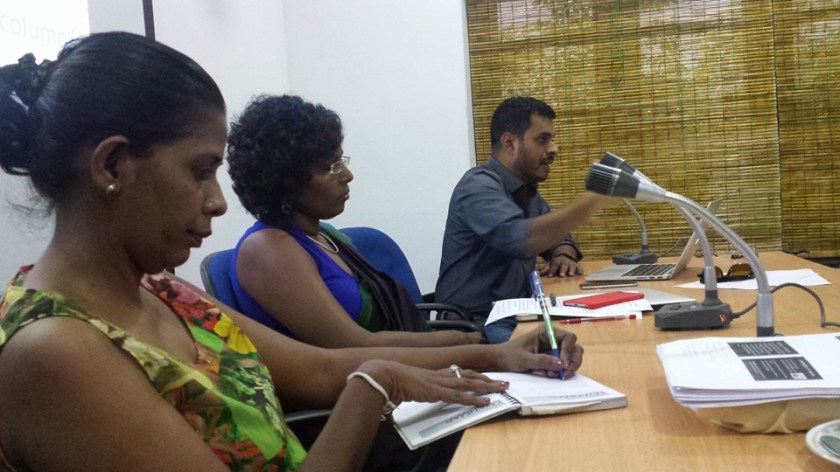
Dilrukshi Handunnetti (centre) speaks as Nalaka Gunawardene (left) and Iromi Perera listen at the launch on 27 Jan 2016 in Colombo – Photo by Sampath Samarakoon
In my remarks, I said it was vital to draw more insights on what I saw as ‘demand-side’ of media. But at the same time, I noted how a growing number of media consumers are no longer passively receiving, but also critiquing, repackaging and generating related (or new) content on their own.
I applauded the fact that this survey’s findings are shared in the public domain – in fact, Iromi Perera, head of Social Indicator, offered to share the full dataset with any interested person. This contrasts with similar surveys conducted by market research companies that are, by their very nature, not going to be made public.
Why do demand-side insights being available in the public domain matter so much? I cited four key reasons:
The new government is keen on media sector reforms at policy and regulatory levels: these should be based on evidence and sound analysis, not conjecture.
Media, telecom and digital industries are converging: everyone looking for ‘killer apps’ and biz opps (but only some find it).
Media companies are competing for a finite advertising budget: knowing more about media consumption can help improve production and delivery.
Advertisers want the biggest bang for their buck: Where are eyeballs? How to get to them? Independent studies can inform sound decision-making.
On this last point, I noted how Sri Lanka’s total ad spend up to and including 2014 does not show any significant money going into digital advertising. According to Neilsen Sri Lanka, ad-spending is dominated by broadcast TV, followed by radio an print. Experience elsewhere suggests this is going to change – but how soon, and what can guide new digital ad spending? Studies like this can help.
I also highlighted some interesting findings of this new study, such as:
Private TV is most popular source of news, followed by Facebook/web.
Across different age groups, smartphone is the device most used to access web
Online culture of sharing engenders TRUST: peer influence is becoming a key determinant in how fast and widely a given piece of content is consumed
None of this surprises me, and in fact confirms my own observations as a long-standing observer and commentator of the spread of ICTs in Sri Lanka.
Everyone – from government and political parties to civil society groups and corporates – who want to engage the Lankan public must take note of the changing media consumption and creation patterns indicated by this study, I argued.
I identified these big challenges particularly for civil society and others engaged in public interest communication (including mainstream and citizen journalists):
Acknowledge that we live in a media-rich information society (Get used to it!)
Appreciate that younger Lankans consume and process media content markedly differently from their elders and previous generations
Understand these differences (stop living in denial)
Leverage the emerging digital pathways and channels for social advocacy & public interest work
In my view, rising to this challenge is not a CHOICE, but an IMPERATIVE!
I ended reiterating my call for more research on information society issues, and with particular focus on mobile web content access which trend dominates user behaviour in Sri Lanka.
Award winning journalist Dilrukshi Handunnetti, and head of Social Indicator Iromi Perera were my fellow panelists at the launch, which was moderated by the study’s co-author and CPA senior researcher Sanjana Hattotuwa.
L to R – Dilrukshi Handunnetti, Iromi Perera, Sanjana Hattotuwa at CPA report launch, Colombo, 27 Jan 2016
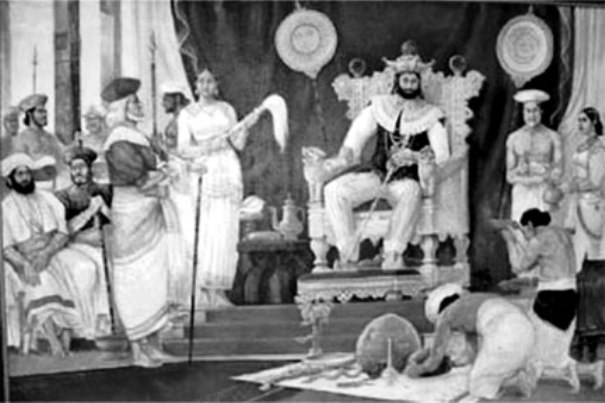
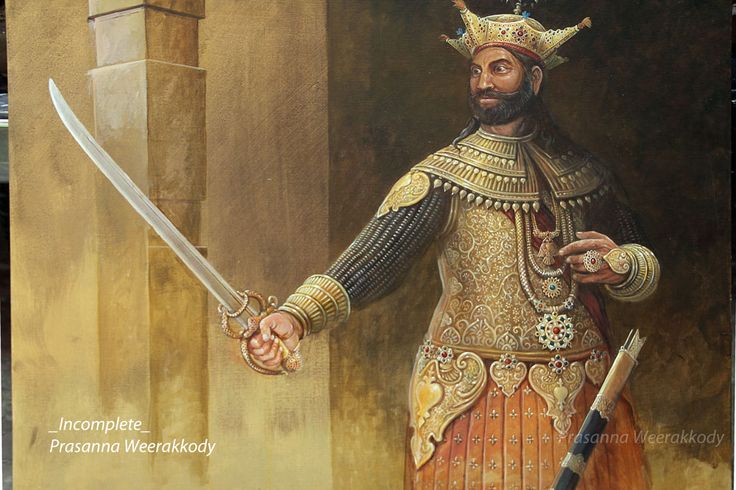
Last king of Ceylon, Sri Wickrama Rajasinghe’s court
In this week’s Ravaya column (appearing in issue of 24 January 2016), I wonder why some people in Sri Lanka – including educated ones – keep clamouring for a return to monarchy that ended 200 years ago.
The Lankan monarchy always remained absolute until it ended in 1815. There were no formal limits to the monarch’s powers, even though Dasa-Raja-Dhamma or the ‘Ten Royal Virtues’ in Buddhism were meant to moderate that power. In practice, many monarchs ignored it.
There was never a local equivalent of the Magna Carta, adopted in medieval England in 1215 as the first formal document stating that a King had to follow the laws of the land (‘Rule of Law’). It guaranteed the rights of individuals against the wishes of the King. This paved the way for trial by jury which means people are tried by their peers and guaranteed the civil rights of the individual.
This was never the case in Sri Lanka where all powerful and feudal king could – and often did – execute anyone who disagreed with him.
Those who clamour for the restoration of monarchy in Sri Lanka don’t know or overlook how feudal, unrestrained and unaccountable the monarchy was. And shrewd politicians use this misplaced desire to project themselves as modern-day monarchs, i.e. figures of veneration who by historical implication need to be treated as ‘above the law’, and custodian of all the state’s wealth. Hmm…
I also look at how Nepal abolished its monarchy in 2008 and Bhutan became a Constitutional Monarchy in recent years – steps towards modernity and democracy.
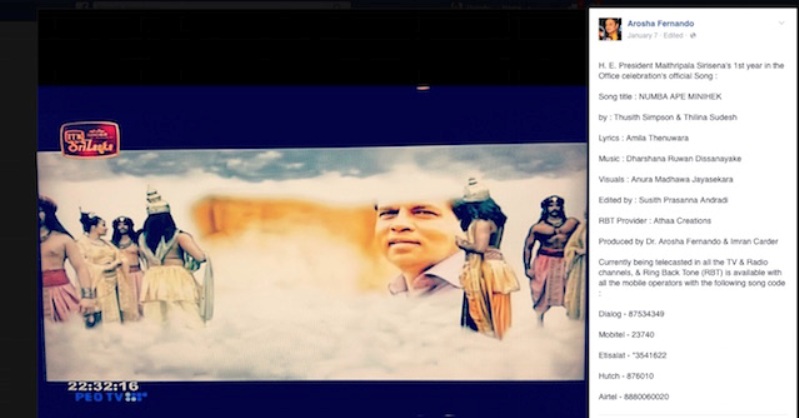
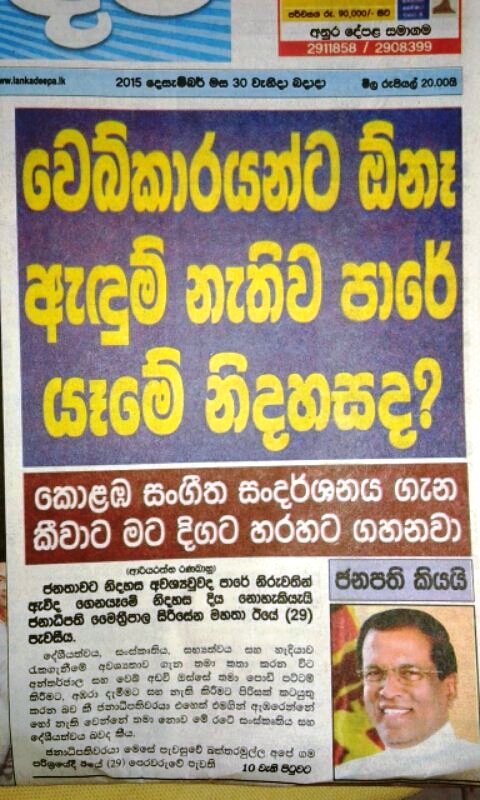
Controversial song to mark first anniversary of Maithripala Sirisena – later disowned by the Presidential Secretariat of Sri Lanka
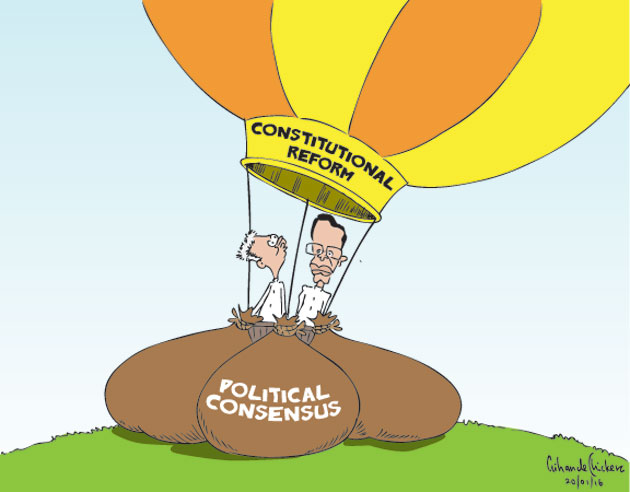
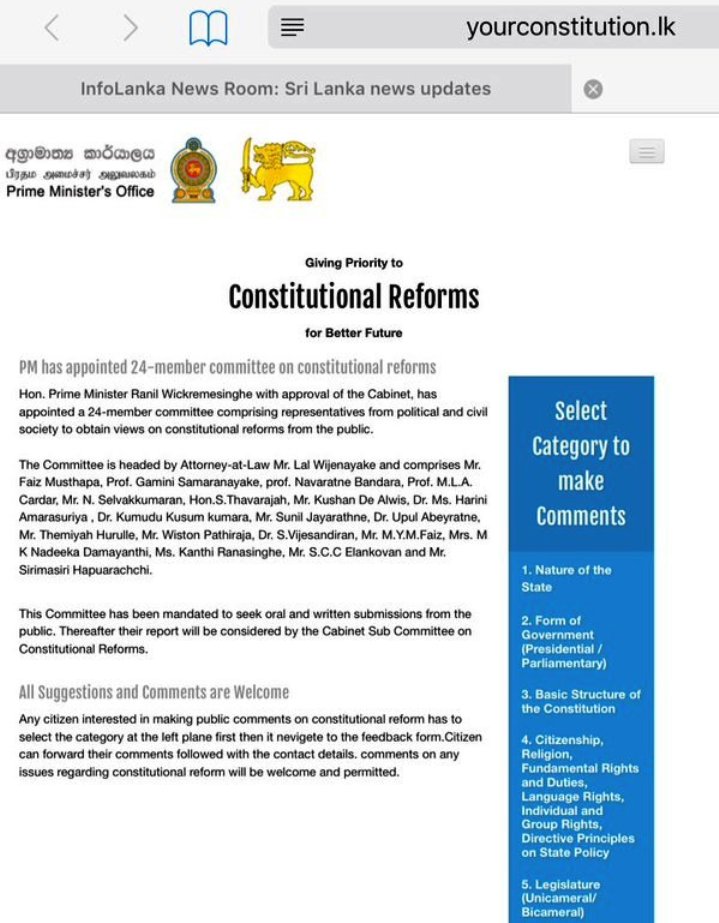
“Sri Lanka wants to make a new Constitution in a radically different way. It is poised to become the first developing country in the world to ‘crowd-source’ ideas for making the highest law of the land.
“That is all well and good – as long as the due process is followed, and that process has intellectual rigour, transparency and integrity. Therein lies the big challenge.”
So opens my latest op-ed essay, just published by Groundviews.org
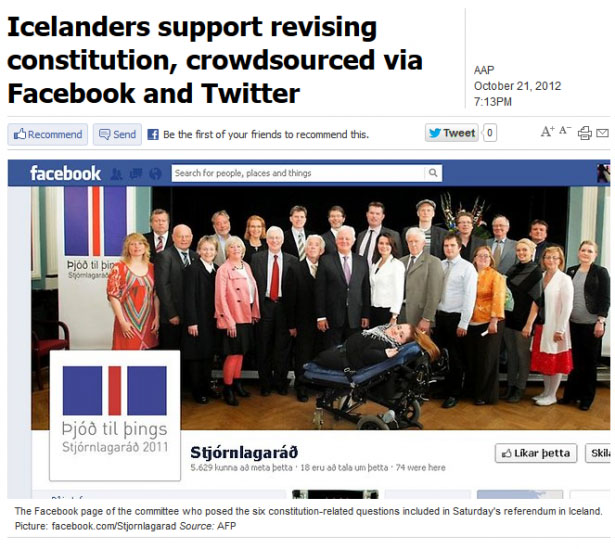
In it, I describe the experience of Iceland which was the world’s first country to ‘crowd-source’ a new Constitution. From 2011 to 2013, the European nation of 330,000 people engaged in an exercise of direct democracy to come up with a modern Constitution to replace the existing one adopted in 1944. That involved many public hearings as well as using social media and other communications platforms to gather public inputs and to ensure public scrutiny.
Facebook was used as part of a public consultation strategy to draft Iceland’s new Constitution in 2011-13
This is the path that Sri Lanka has now chosen: open and participatory Constitution making. To be sure, tropical Sri Lanka is vastly different. Its population of 21 million is 60 times larger than Iceland’s. But the Arctic nation’s generic lessons are well worth studying – both for inspiration and precaution.
I point out: “In doing so, it is important to ensure that public consultative process is not limited to the web and social media. Instead of dominating, technologies should only enable maximum participation.”
“The bottom-line: gathering public proposals is commendable, but not an end by itself. The government needs to adopt a systematic method to study, categorize and distil the essence of what is suggested. And that must happen across English, Sinhala and Tamil languages.”
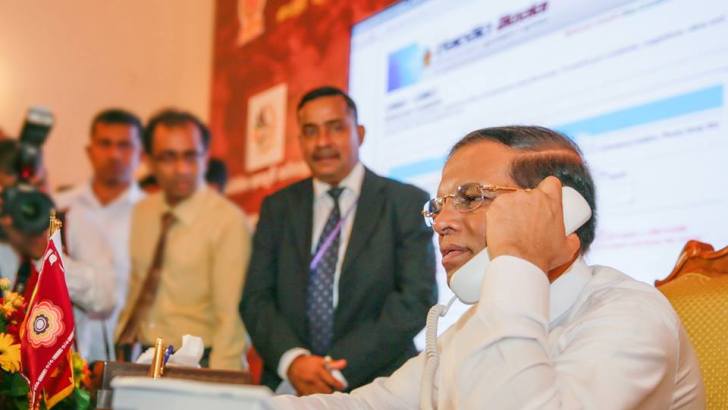
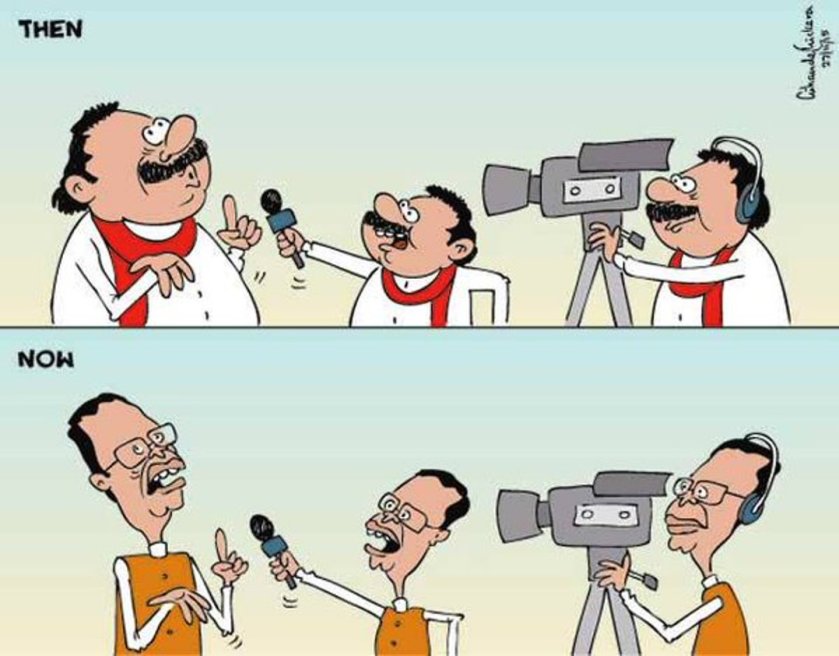
In this week’s Ravaya column (appearing in issue of 17 January 2016), I critique the public communications practices President Maithripala Sirisena of Sri Lanka – and call for better listening and more engagement by the head of state.
I point out that Sirisena is in danger of overexposure in the mainstream media, which I call the ‘Premadasa Syndrome’ (as this bad practice was started by President R Premadasa who was in office from 1988 to May 1993). I argue that citizens don’t need to be force-fed a daily dose of presidential activities on prime time news or in the next day’s newspapers. If public documentation is needed, use the official website.
Like other politicians in Sri Lanka, Sirisena uses key social media platforms like Facebook and Twitter to simply disseminate his speeches, messages and photos. But his official website has no space for citizens to comment. That is old school broadcasting, not engaging.
This apparent aloofness, and the fact that he has not done a single Twitter/Facebook Q&A session before or after the election, detracts from his image as a consultative political leader.
On the whole, I would far prefer to see a more engaged (yet far less preachy!) presidency. It would be great to have our First Citizen using mainstream media as well as new media platforms to have regular conversations with the rest of us citizens on matters of public interest. A growing number of modern democratic rulers prefer informal citizen engagement without protocol or pomposity. President Sirisena is not yet among them.
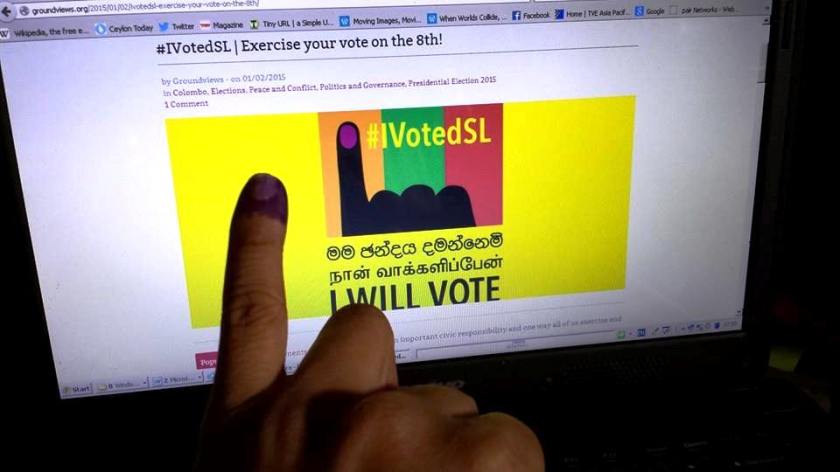
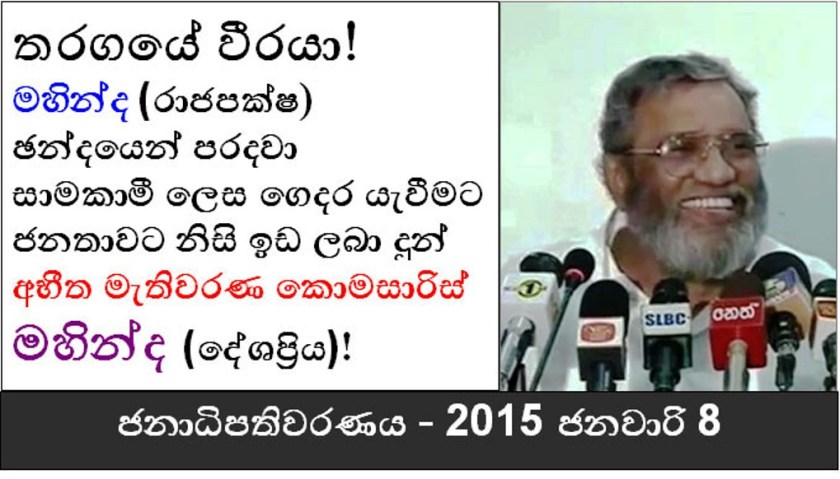
“For only the second time in my life, I voted for a winning candidate on 8 Jan 2015. I now keep insisting that Maithripala Sirisena delivers on his promises.” – Nalaka Gunwardene, blogger and tweep
It was also Sri Lanka’s first national level election where smartphones and social media played a key role and probably made a difference in the outcome. During the weeks running up to 8 January, hundreds of thousands of Lankans from all walks of life used social media to vent their frustrations, lampoon politicians, demand clarity on election manifestos, or simply share hopes for a better future.
As I documented shortly afterwards, most of us were not supporting any political party or candidate. We were just fed up with nearly a decade of mega-corruption, nepotism and malgovernance. Our scattered and disjointed protests – both online and offline – added up to just enough momentum to defeat the strongman Mahinda Rajapaksa. Just weeks earlier, he had appeared totally invincible.
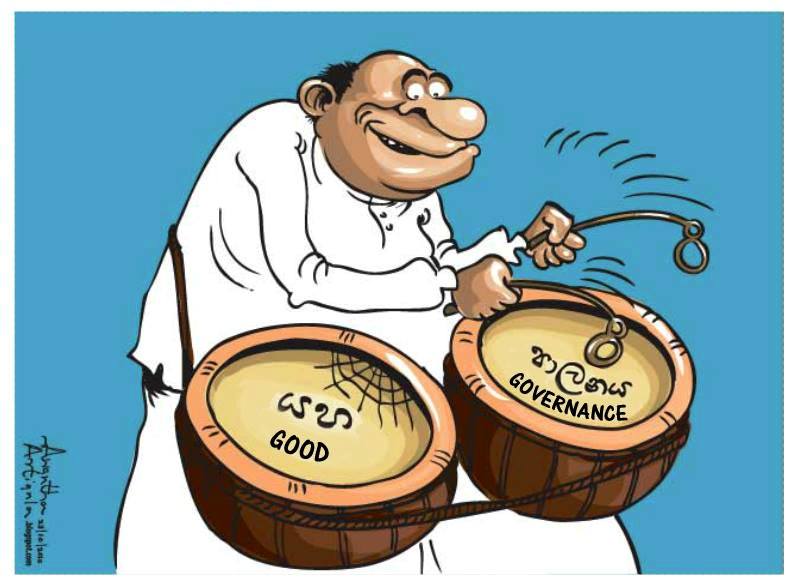
Thus began the era of yaha-palanaya or good governance.
In real life, democracy is a work in progress and good governance, an arduous journey. In this week’s Ravaya column (appearing in issue of 10 January 2016), I argue that voting in two key elections during 2015 (including Parliamtnary Election held on 17 August) was the easy part. We citizens now have to be vigilant and stay engaged with the government to ensure that our politicians actually walk their talk.
Here, we can strategically use social media among other advocacy methods and tools.
මැතිවරණඅතරතුරකාලයේදේශපාලනයහාආණ්ඩුකරණය(politics and governance) එමකාර්යයේපූර්ණකාලීනවනිරතවනදේශපාලකයන්පිරිසකටපවරාඅපේවැඩක්බලාගෙනඔහේඉන්නටඉඩක්අපටනැහැ. දශකගණනක්එසේකිරීමේබරපතලවිපාකඅපදැන්අත්විඳිනවා.
Here are my wishes for 2016, shared on Facebook and Twitter as home-made web memes.
I wish for a truly OPEN SOCIETY in Sri Lanka in 2016
where good ideas flow freely,
public debate is informed, wide-ranging and courteous
and there are no Sacred Cows!
Let’s make it so! The power is with each and every one of us.
On New Year’s eve, I shared this timeless quote of Mahatma Gandhi, which I felt was relevant for raging debates in Sri Lanka on what constitutes ‘our culture’ and how best to preserve it.
Mahatma Gandhi on the value of open, inclusive and multicultural societies
And here is how I rendered it into Sinhala language:
“මගේනිවසවටාසැමඅතින්පවුරුබැඳ,
එහිකවුළුසියල්ලවසාදමන්නටමාකොහෙත්මකැමතිනැහැ.
ලොවනොයෙකුත්සංස්කෘතීන්ගේආභාෂප්රවාහයන්
මනිවසේනිදහසේසංසරණයවීමමටඅවශ්යයි.
එහෙත්ඒකිසිවකින්මාපෙරළාදමන්නටනම්මාඉඩදෙන්නේනැහැ.”
Mahatma Gandhi on the value of open, inclusive and multicultural societies – translated by Nalaka Gunawardene





 Open Minds!