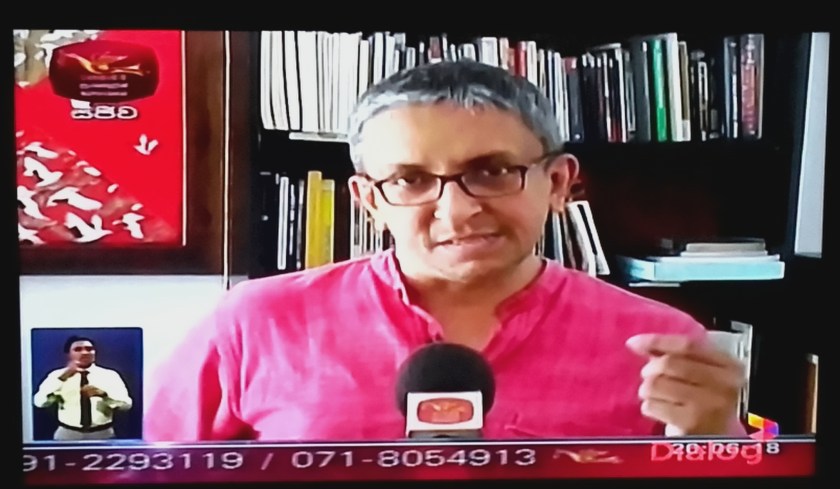
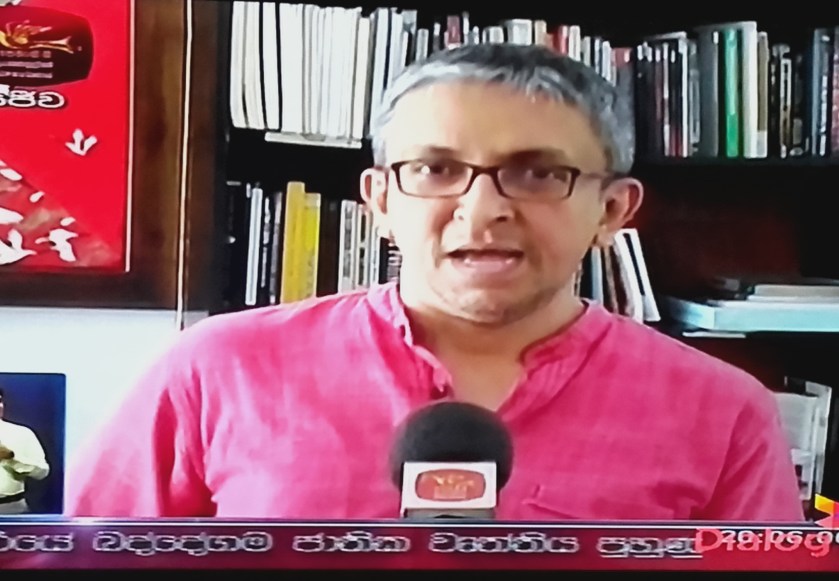
[Main points I made in a TV news interview with national broadcaster Rupavahini on 25 June 2016, within 24 hours of Sri Lanka’s Parliament passing the Right to Information law.]
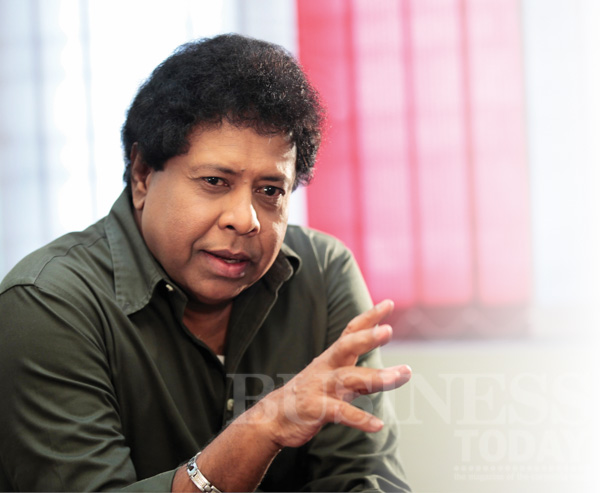
Nalaka Gunawardene in Rupavahini interview on Sri Lanka’s new Right to Information RTI Law, 25 June 2016
Sri Lanka’s Parliament is debating the Right to Information (RTI) Bill on June 23 – 24.
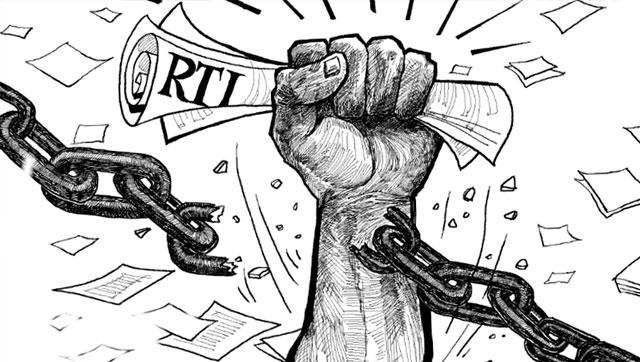
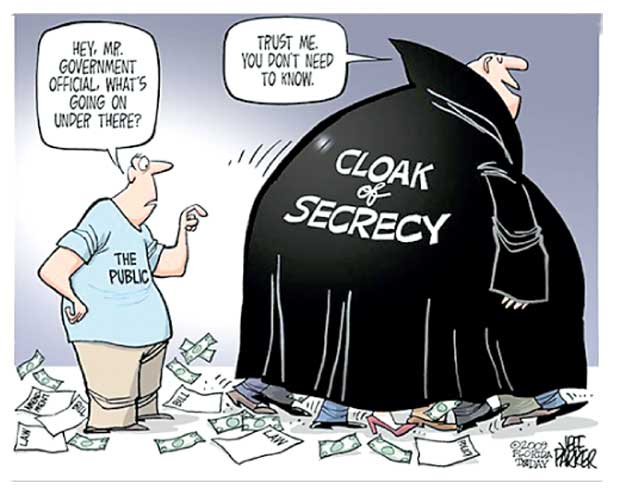
Over 15 years in the making, the RTI law represents a potential transformation across the whole government by opening up hitherto closed public information (with certain clearly specified exceptions related to national security, trade secrets, privacy and intellectual property, etc.).
While the media benefits from RTI, it is primarily a law for ordinary citizens to demand and receive information related to everyday governance (most of it at local levels). RTI changes the default mode of government from being classified to open.
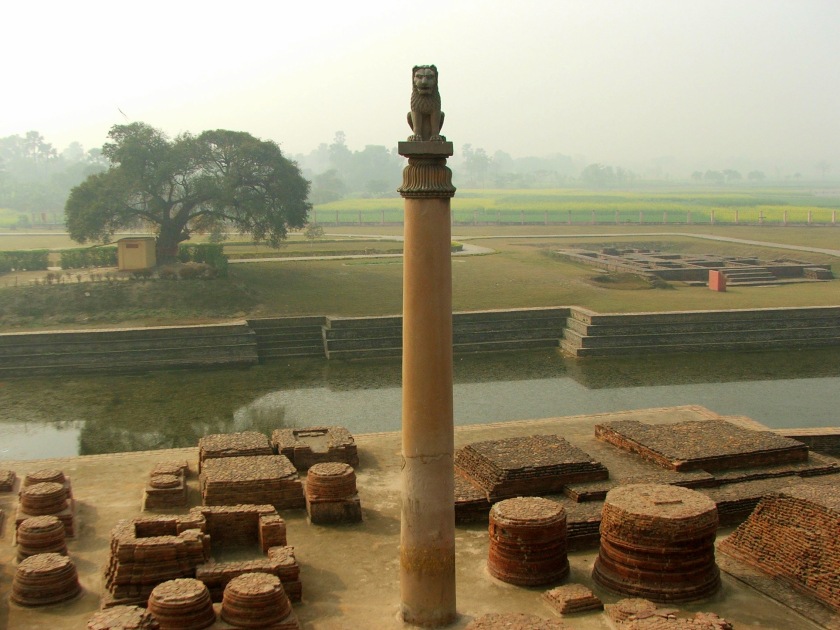
In this week’s Ravaya column (appearing in the print issue of 26 June 2016), I point out that although the modern-day concept of Right to Information (also known as Freedom of Information) arose in Europe in the 18th century, there are comparable precedents in the East that date back to over two millennia.
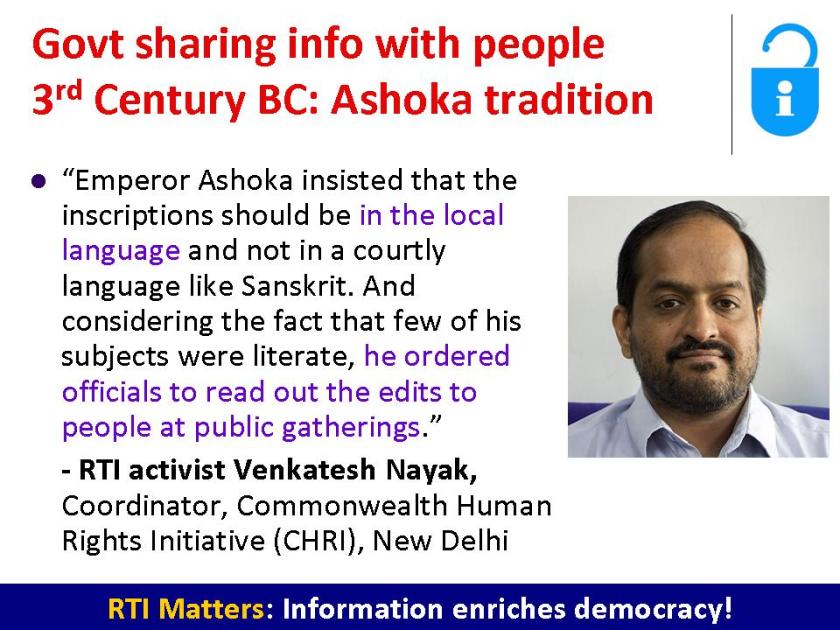
Indian Emperor Ashoka (who reigned from c. 268 to 232 Before Christ) was the first to grant his subjects the Right to Information (RTI), according to Indian RTI activist Venkatesh Nayak, Coordinator, Commonwealth Human Rights Initiative (CHRI).
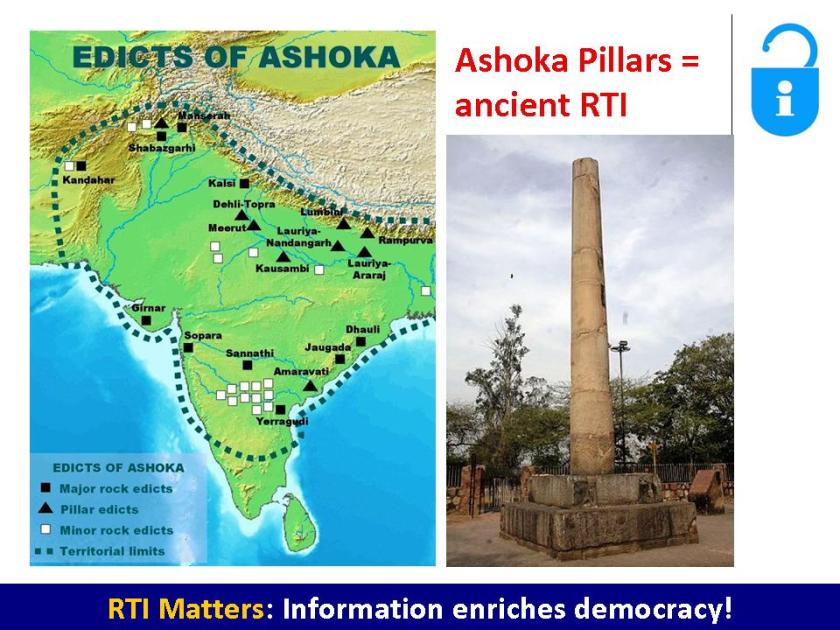
Speaking at a seminar on RTI in Colombo last month, Nayak said that Ashoka had inscribed on rocks all over the Indian subcontinent his government’s policies, development programmes and his ideas on various social, economic and political issues — including how religious co-existence.
“He insisted that the inscriptions should be in the local language and not in a courtly language like Sanskrit. And considering the fact that few of his subjects were literate, he enjoined officials to read out the edits to people at public gatherings,” Nayak added.
Therefore, adopting an RTI law signifies upholding a great Ashokan tradition in Sri Lanka. And implementing it would be a huge challenge – reorienting the entire public sector to change its mindset and practices to promote a culture of information sharing and transparent government.
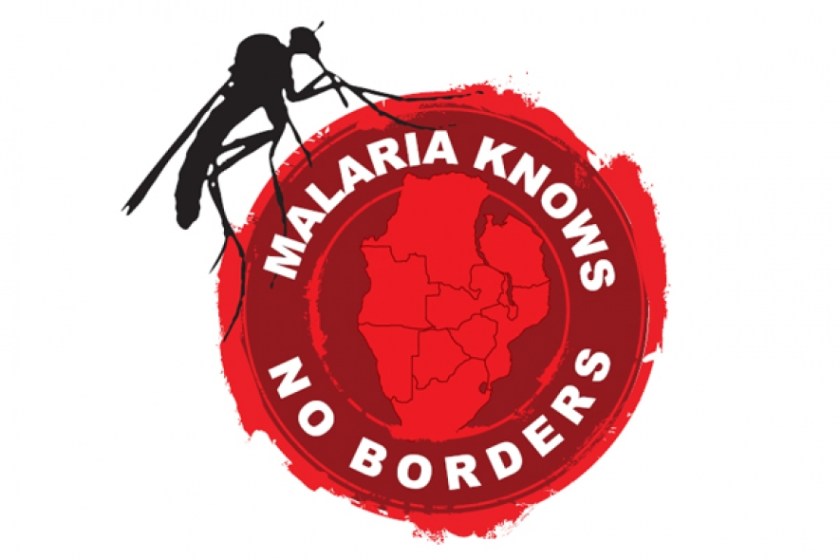
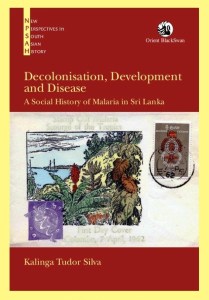
Half a century after narrowly missing the opportunity to eliminate malaria in the mid 1960s, Sri Lanka seems to have reached this significant public health goal.
“With no indigenous malaria cases being reported since October 2012, Sri Lanka is currently in the malaria elimination and prevention of re-introduction phase,” says the website of the Sri Lanka Anti-Malaria Campaign.
In this week’s Ravaya column (appearing in the print issue of 22 May 2016), I summarise how we reached here, and what challenges remain.
I point out that Malaria is an ancient enemy in Sri Lanka that has killed tens of thousands and affected millions over centuries. There is speculation that malaria contributed to the historical shifting of the seat of government (kingdom at the time) and majority of human settlements from the dry zone to the intermediate and wet zones.
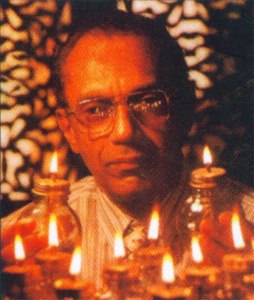
A severe epidemic in 1934-35 led to an estimated 5.5 million cases and 80,000 reported deaths – around 2 per cent of the total population of 5.3 million in the 1931 census. My father, now 83, is one of its survivors.
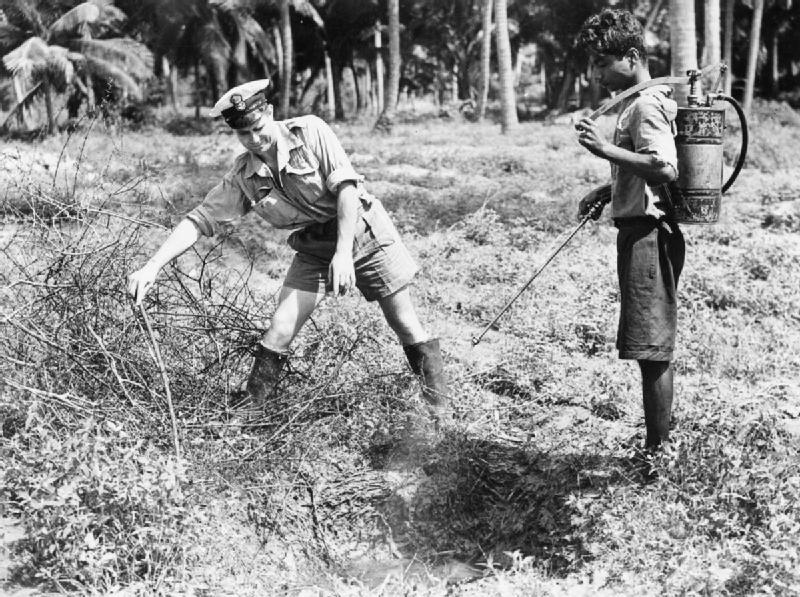
In the mid 1940s, Ceylon became the first Asian country to develop a scheme of indoor industrial spraying using DDT. In 1946, when spraying commenced in earnest, the island still had around 3 million malaria cases, high for a population of 6.6 million (1946 census). With widespread use of DDT and other measures, there was a drastic reduction: down to 7,300 cases in 1956 and just 17 in 1963.
Then there was a resurgence, which took over two decades to bring under control. As Dr Risintha Premaratne, Director of Sri Lanka’s anti-malaria campaign, told WHO, “Key components in the elimination efforts included enhanced malaria parasite screening in high transmission areas through active case detection using mobile malaria clinics; early diagnosis and prompt treatment effectively reducing the parasite reservoir and the potential for transmission; and strengthening the malaria mosquito surveillance leading to evidence based vector control.”
Malaria elimination in Sri Lanka has been achieved through a period overlapping with a 30-year separatist war in areas that were endemic for malaria. The challenge now entails sustaining a malaria-free country and preventing the reintroduction of malaria to Sri Lanka…in the context of rapid postwar developments in the country, say three Lankan leaders in this struggle writing in WHO South East Asia Journal of Public Health in Jan-March 2014.
Image courtesy – Health Education Bureau of Sri Lanka
In this week’s Ravaya column (in Sinhala, published in issue dated 15 May 2016),, I revisit a public health emergency that I have been writing about for several years: mass kidney failure for no known reason.
Beginning in the 1990s, thousands of people in Sri Lanka’s Dry Zone – heartland of its rice farming — developed kidney failure without having diabetes or high blood pressure, the common causative factors. Most affected were men aged 30 to 60 years, who worked as farmers. As numbers rose, puzzled doctors and other scientists started probing possible causes for what is now named Chronic Kidney Disease of unknown etiology (abbreviated as CKDu).
CKDu has become a fully fledged humanitarian emergency, affecting thousands of people and their families – most of them subsistence farmers.
Investigating causes of this ailment — still not pinned down to a specific cause or factor — has proven difficult. While scientists follow rigorous scientific methods, some ultra-nationalists and opportunistic politicians are trying to hijack the issue for their own agenda setting. Some journalists have added fuel to the fire with sensationalist reporting and unwarranted fear-mongering.
On 9 May 2016, I moderated High Level Media Dialogue on Chronic Kidney Disease of Unknown Aetiology (CKDu) and Public Health in Colombo. It was organised jointly by the Ministry of Health, Nutrition and Indigenous Medicine; Ministry of Parliamentary Reforms and Mass Media; and theCoordinating Secretariat for Science, Technology and Innovation (COSTI) of the Ministry of Science, Technology and Research.
Three experienced medical professionals joined our conversation: Dr Tilak Abeysekera, Consultant Nephrologist, Nephrology Dialysis and Transplant Unit, General Hospital, Kandy; Dr Palitha Mahipala, Director General, Health Services, Ministry of Health, Nutrition and Indigenous Medicine; and Dr Vinya Ariyaratne, General Secretary of Sarvodaya and consultant community physician.
In this column, I summarise some of the latest scientific analysis and humanitarian issues that were presented during the event.
See also my other writing on the subject (some early ones are updated in this latest Ravaya column):
Two teenaged girls being knocked down and killed by a moving train in Dehiwala on 25 April 2016 shocked the whole of Sri Lanka. This tragic accident could have been avoided if only there was greater safety consciousness in the two girls – and those accompanying them.
The latest tragedy highlights a deeper problem: our glaring lack of safety consciousness as a nation. Everyday, we take too many chances with our lives and limbs.
Many individuals and institutions don’t take simple precautions that can avert accidents and human tragedies. For example, how often do we see a helmet-wearing father riding a motorbike carrying his children without helmets? Or mothers walking their children on the road — with kids going on the side of vehicle movement?
Most of the time, we get away with careless reckless behaviour without repercussions. But sooner or later, luck runs out and tragedy befalls.
In post-war Sri Lanka, traumatic injuries are still the leading cause of public hospital admissions – and not just from road traffic accidents (whose numbers keep rising) or attempted suicides (whose numbers have come down).
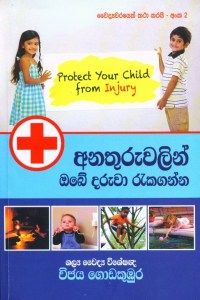
In this week’s Ravaya column (appearing in the print issue of 8 May 2016), I call for greater safety consciousness at home, in schools, on the roads and everywhere else.
In this week’s Ravaya column (appearing in the print issue of 1 May 2016), I return to the topic of Sri Lanka’s new Right to Information (RTI) law that has recently been tabled in Parliament.
Over 15 years in the making, the RTI law is to be debated in June and expected to be adopted with multi-party consensus. The law represents a transformation across government by opening up hitherto closed public information (with certain cleared specified exceptions).
While media can also benefit from RTI, it is primarily a law for ordinary citizens to demand and receive information related to everyday governance (most of it at local levels). For this, citizens need to understand the RTI process and potential benefits. Media can play a major role in explaining RTI law, and promoting its use in many different ways to promote the public interest and to nurture a culture of evidence-based advocacy for good governance and public accountability.
In this column, I look at how RTI can benefit citizens, and share examples from other South Asian countries where even school children are using RTI to solve local level problems that affect their family, school or local community.
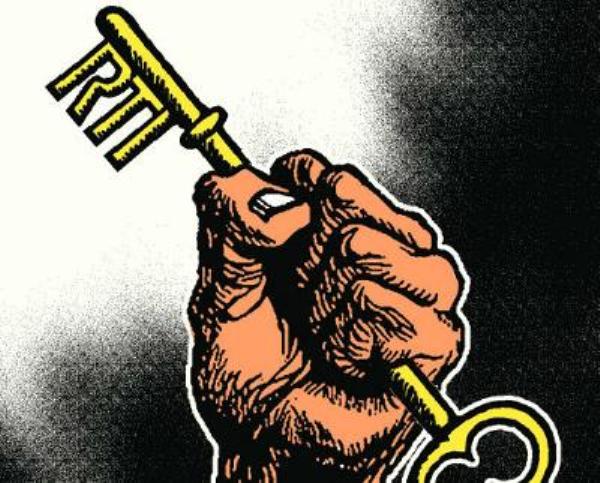
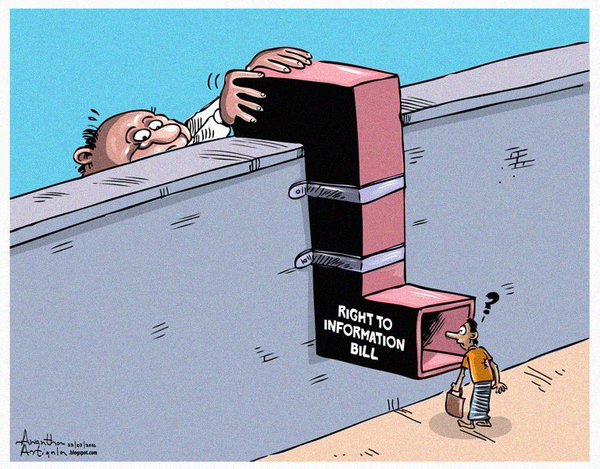
RTI Law is like a key that opens government information
A popular TV programme genre in Sri Lanka that is being mass produced on the cheap is tele-dramas or television serials. Therein lies a problem: the local tele-drama industry is trapped in a vicious circle of low budgets and low production values. An estimated 5,000 to 6,000 Lankans who earn their living from this industry – as actors, script writers, directors and technical crew – are desperately searching for ways to break free.
So far, many have opted for the protectionist path. The Tele Makers Guild (TeleMG, http://telenisasl.org), an industry alliance, has been lobbying for the taxing of imported tele-dramas. They claim these are flooding the local market and undercutting their business.
In this week’s Ravaya column (appearing in the print issue of 24 April 2016), I discuss problems and challenges facing the tele-drama production industry of Sri Lanka.
As a viewer, I am opposed to cultural protectionism because it reduces my choice. So when TeleMG invited me as keynote speaker at their annual meeting held in early April, I urged them pursue the path of professionalism instead. Their big challenge, I said, is to make better shows with the existing budgets. That requires lots of creativity and resourcefulness.
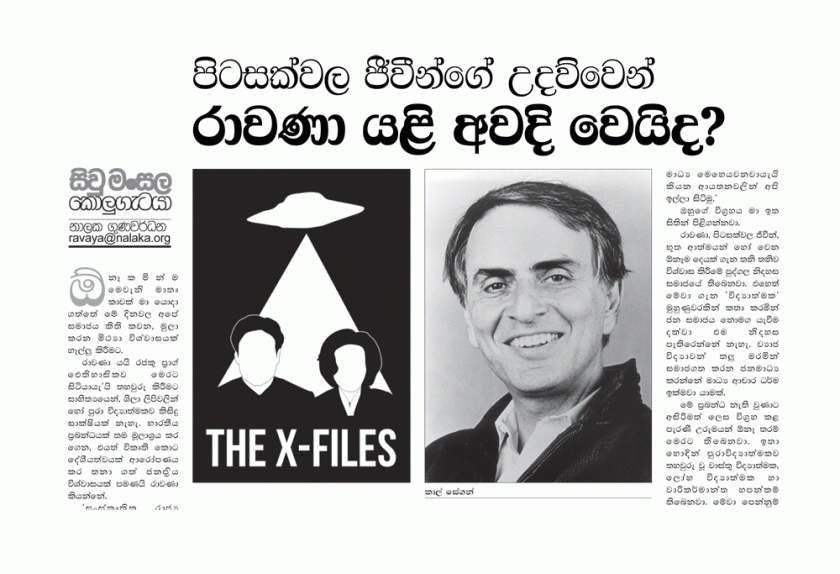
In this week’s Ravaya column (appearing in the print issue of 10 April 2016), I return to the topic of pseudoscience — a claim, belief, or practice presented as scientific, but which does not adhere to the scientific method.
Pseudoscience is often characterized by contradictory, exaggerated or unprovable claims; over-reliance on confirmation rather than rigorous attempts at refutation; lack of openness to evaluation by other experts in the field; and absence of systematic practices when rationally developing theories.
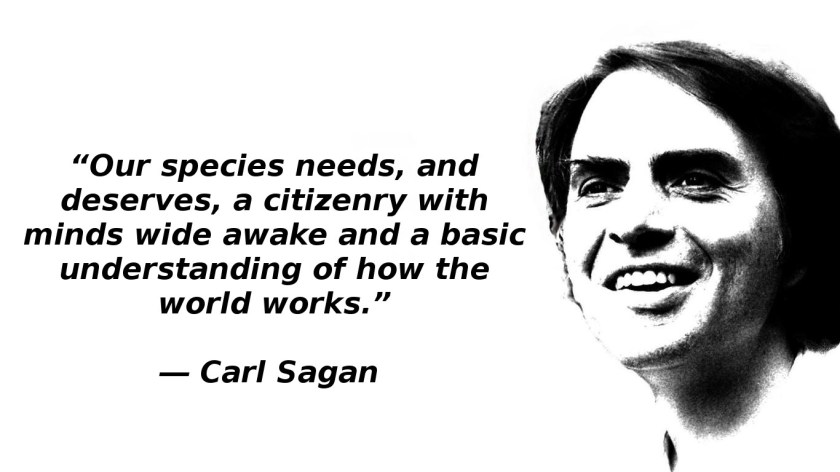
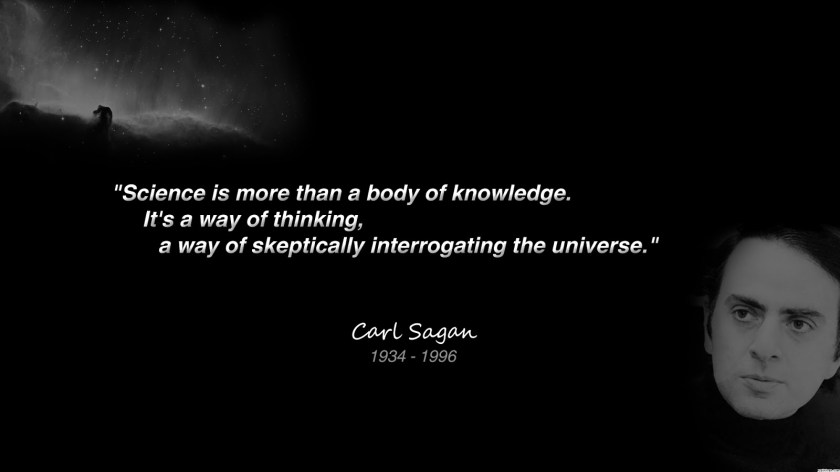
American astronomer Carl Sagan (1934 – 1996) was at the forefront in promoting science for its sense of wonder and also for countering pseudoscience. As he used to say, “Our species needs, and deserves, a citizenry with minds wide awake and a basic understanding of how the world works.”
Sri Lanka has its share of pseudoscience, sometimes dressed up in politically correct ‘clothes’ of indigenous knowledge. Even many educated persons uncritically believe in pseudoscientific claims and practices.
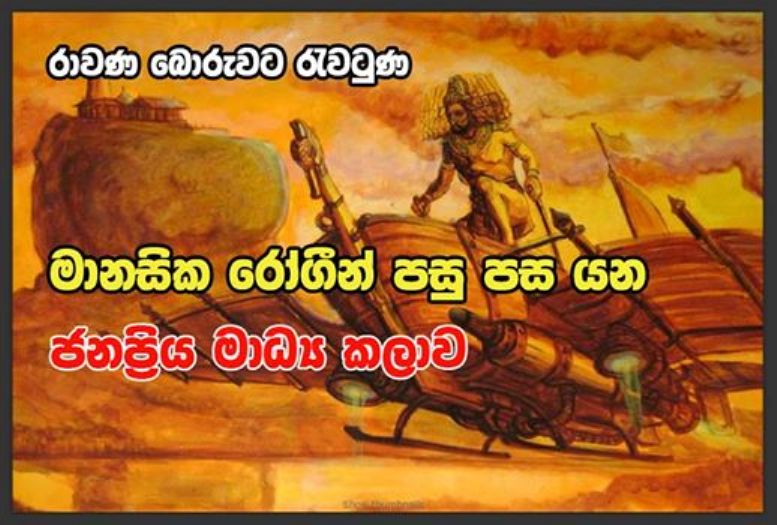
As an example, I cite a currently fashionable pursuit of the Sinhalese community: going in search of archaeological ‘evidence’ for a mythical king of Lanka named Ravana (who is only a character in the Indian epic, Ramayana – but some people take it literally).
I argue that believing in Ravana after reading Ramayana is akin to believing in alien abductions and other modern mysteries after watching X-Files TV series.
Beware of pseudoscience in Sri Lanka, says Nalaka Gunawardene
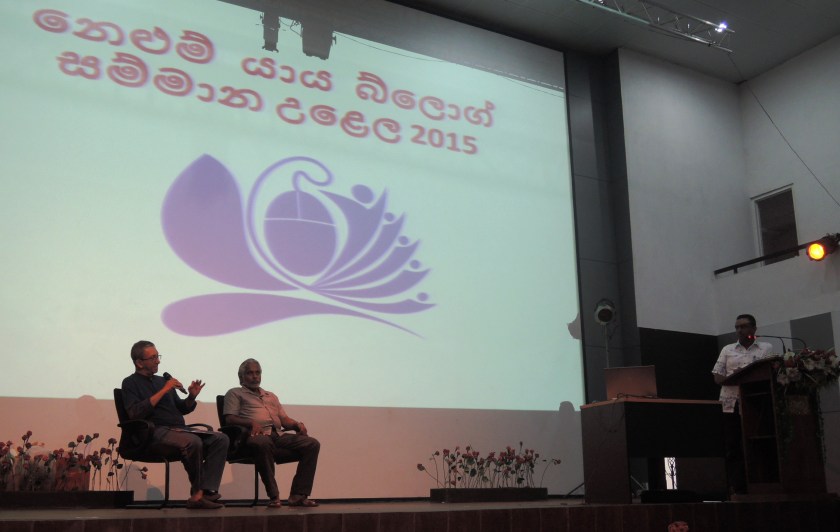
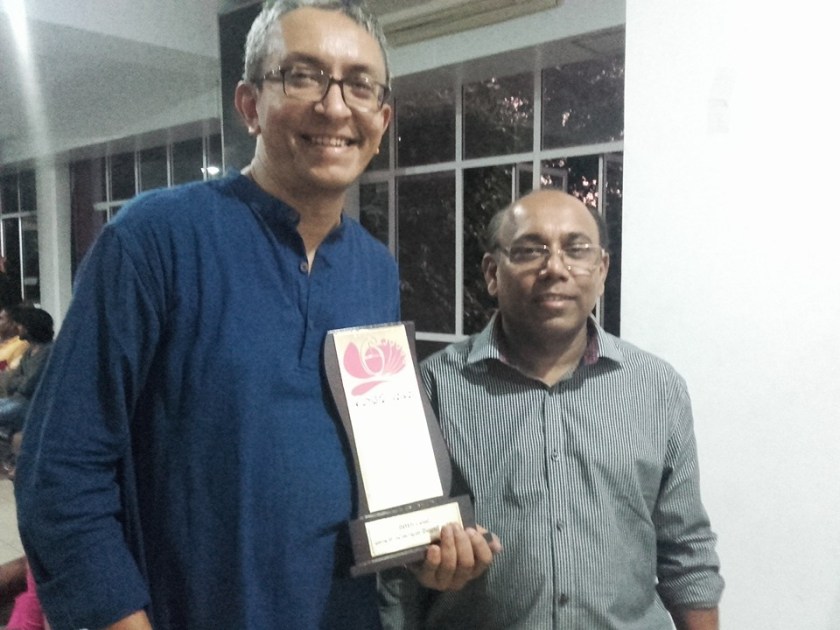
Nalaka Gunawardene (left) & Ajith Perakum Jayasinghe at Nelum Yaya Blog awards for 2015, held on 26 March 2016
In this week’s Ravaya column (appearing in the print issue of 3 April 2016), I probe why the blogosphere and other social media platforms are vital for public discourse in the Lankan context.
Sri Lanka’s mainstream media does not serve as an adequate platform for wide-ranging public discussion and debate. Besides being divided along ethnic and political lines, the media is also burdened by self-imposed restrictions where most don’t critique certain social institutions. Among the top-ranked ‘sacred cows’ are the armed forces and clergy (especially Buddhist clergy).
No such “no-go areas” for bloggers, tweeps and Facebookers. New media platforms have provided a space where irreverence can thrive: a healthy democracy badly needs such expression. I base this column partly on my remarks at the second Nelum Yaya Blog Awards ceremony held on 26 March 2016.
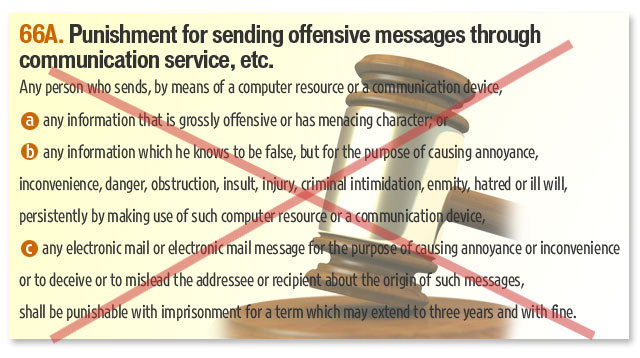
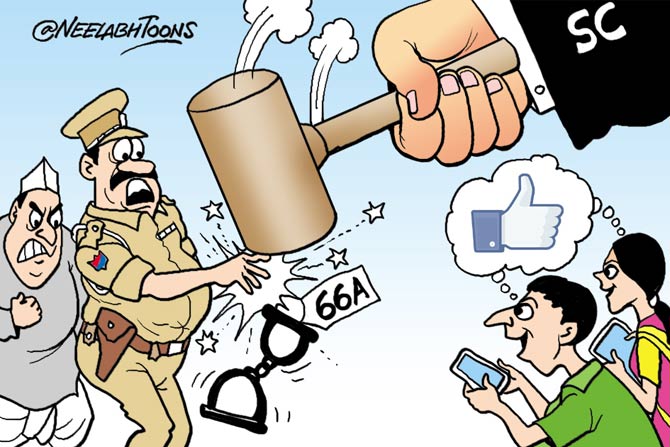
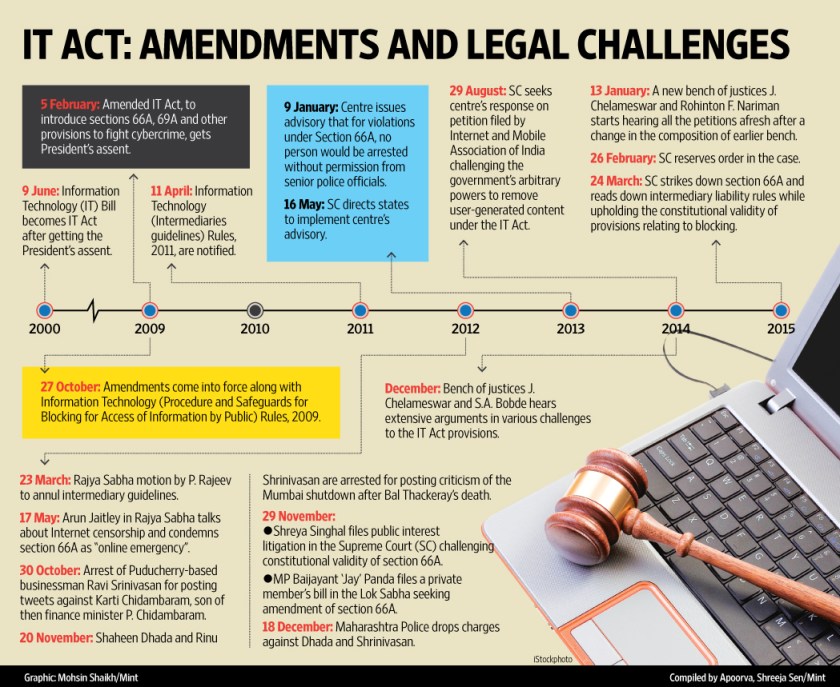
I also refer to a landmark ruling in March 2015, where the Supreme Court of India struck down a “draconian” law that allowed police to arrest people for comments on social media networks and other websites.
India’s apex court ruled that Section 66A of the Information Technology Act was unconstitutional in its entirety, and the definition of offences under the provision was “open-ended and undefined”.
The provision carried a punishment of up to three years in jail. Since its adoption in 2008, several people have been arrested for their comments on Facebook or Twitter. The law was challenged in a public interest litigation case by a law student after two young women were arrested in November 2012 in Mumbai for comments on Facebook following the death of a politician.
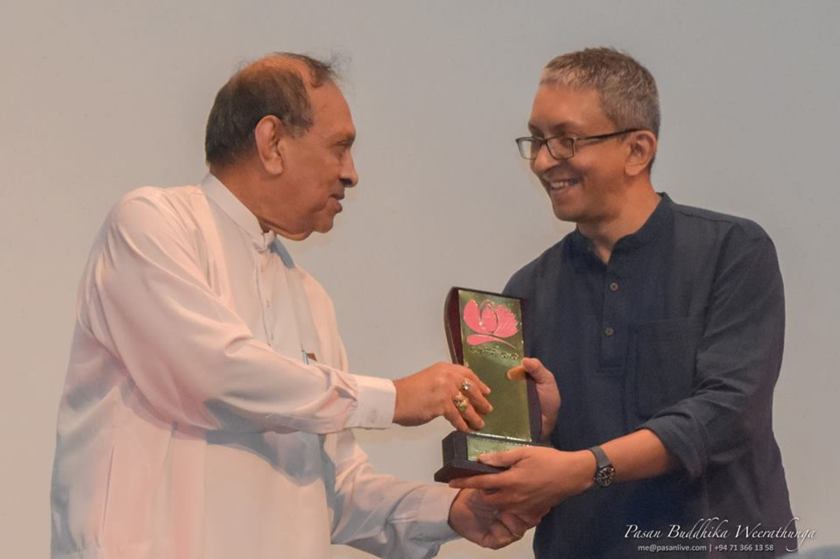
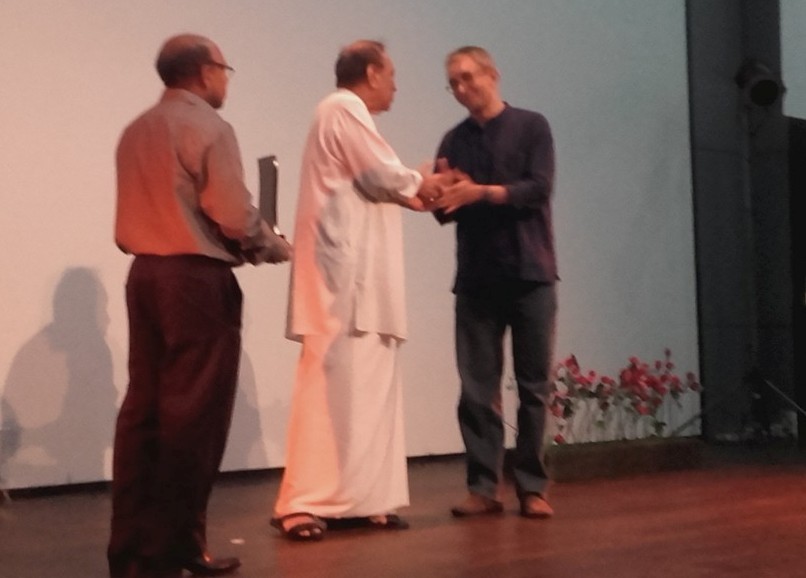
Speaker Karu Janasuriya presents Lifetime Award to Nalaka Gunawardene at Nelum Yaya Blog Awards on 26 March 2016 – Photo by Pasan B Weerasinghe
Nalaka Gunawardene (extreme right) received Lifetime Achievement Award for Blogging and New Media Promotion in Sri Lanka from Karu Jayasuriya, Speaker of Parliament, in Colombo 26 March 2016. Nelum Yaya Blog Awards organiser Ajith Dharmakeerthi looks on. Photo by Manori Wijesekera
At the second Nelum Yaya Blogger Awards ceremony held at the Media Ministry Hall last afternoon, the organisers presented me with a Lifetime Achievement Award in New Media.
The award was presented by Karu Jayasuriya, Speaker of the Lankan Parliament and a champion of the right to information. As he presented the trophy, he told me that he is a regular reader of mine!
The citation (in Sinhala, trying to obtain exact text) said that it was to recognise and salute my long-standing efforts to promote blogging and social media use in Sri Lanka.
I didn’t get to say any words of acceptance, so this is what I would like to have said…
Yashoda Sammani Premaratne (left), Sri Lanka’s Blogger of the Year 2015, with Nalaka Gunawardene who received a Lifetime Award at Nelum Yaya Blog Awards ceremony held in Colombo on 26 March 2016. Photo by Manori Wijesekera
It’s always nice to be recognised by peers — and I do count myself as part Sri Lanka’s diverse and informal blogging community.
However, to use a cricketing metaphor, I am more like a cricket commentator than a star cricketer. I do know the craft but my most useful contributions have been as a cheerleader and populariser of blogging and social media in Sri Lanka.
My own blogging, started in early 2007, was entirely in English for the first few years until I started republishing my weekly Sinhala columns (Sivu Mansala Kolu Getaya) written for Ravaya newspaper from 2011. That made my blog bilingual, albeit a low intensity one: I don’t get the kind of visitors or comments like leading Lankan bloggers do. But I’m contented with that.
Where I have contributed more, I believe, is in documenting, trend-spotting and demystifying the Lankan blogosphere in Sinhala and English (sadly, I don’t have Tamil proficiency to do the same). Over the years I’ve addressed many and varied audiences – from university dons/students and govt officials to civil society groups and journalists – on the public interest potential of social media including (but not limited to) blogging.
Parallel to this, and sometimes in collaboration with my friend Chanuka Wattegama, I’ve been a chronicler and commentator on the social, cultural and political impacts of new media in Sri Lanka. A simple Google search would bring up many of my op-ed articles, book chapters and speeches on Sri Lanka’s emerging information society.
I’m encouraged and honoured by this award, but I have no intention of quitting. Using my blog as well as Twitter and Facebook social media platforms, I will continue to ask inconvenient questions, express unpopular opinions and kick-ass when I need to.
One day, I hope, I’ll finally be able to figure out the demarcation between playing and working in this realm. Does it matter?
Nalaka Gunawardene (left) with Ajith Dharmakeerthi, chief organiser of Nelum Yaya Blog Awards Sri Lanka
* * * * *
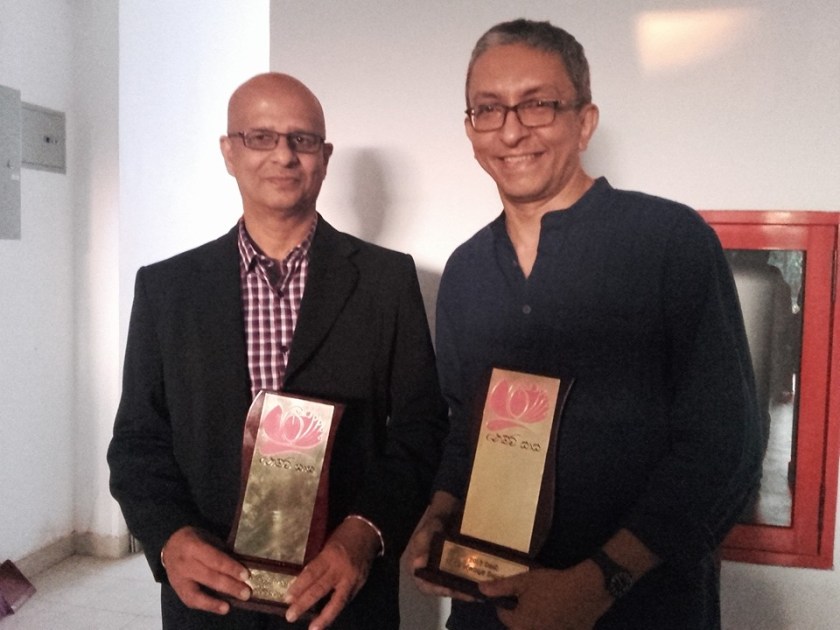
One other Lifetime Award was presented at yesterday’s event – to Rasika Suriyaarachchi, engineer turned blogger who has been a pioneering and popular personality in the Sinhala language blogosphere for many years.
Creative and perceptive young writer Yashoda Sammani Premaratne, who blogs as Bassi, was honoured as the Blogger of the Year 2015.
Over three dozen other category winners and commended bloggers were also saluted at the informal, privately organised blogging awards ceremony.
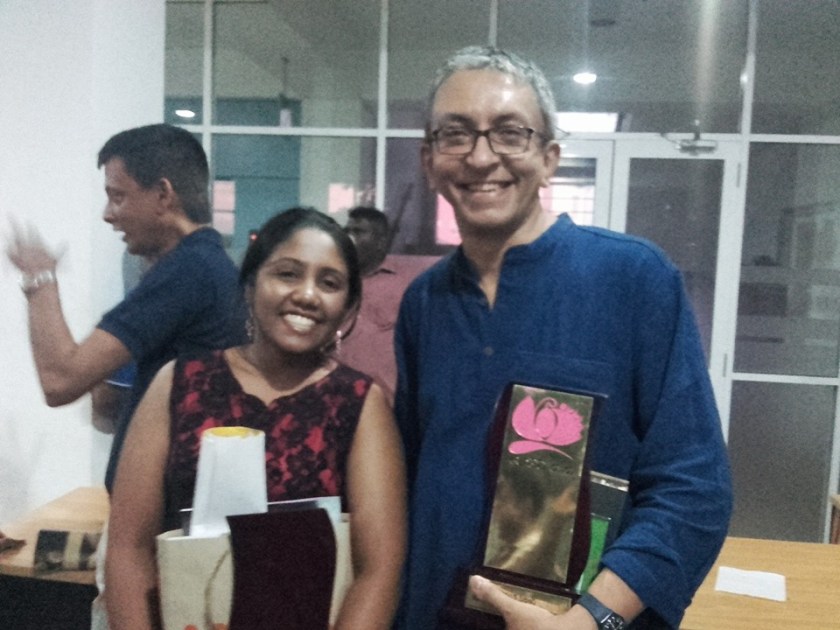
Rasika Suriyaarachchi (left) and Nalaka Gunawardene with their Lifetime Awards presented at Nelum Yaya Sri Lanka Blogging Awards ceremony in Colombo, 26 March 2016. Photo by Manori Wijesekera










 Open Minds!