සිවුමංසල කොලූගැටයා #31: 9/11 – ලොව සසල කළ මහ පුවතක මුල්පිටු මතකය

Text of my Sinhala column for Ravaya issue of 11 September 2011. In this one, I discuss how front pages of newspapers around the world reported 9/11 terrorist attacks, and how the dichotomy between reporting and editorialising blurred in some media outlets.
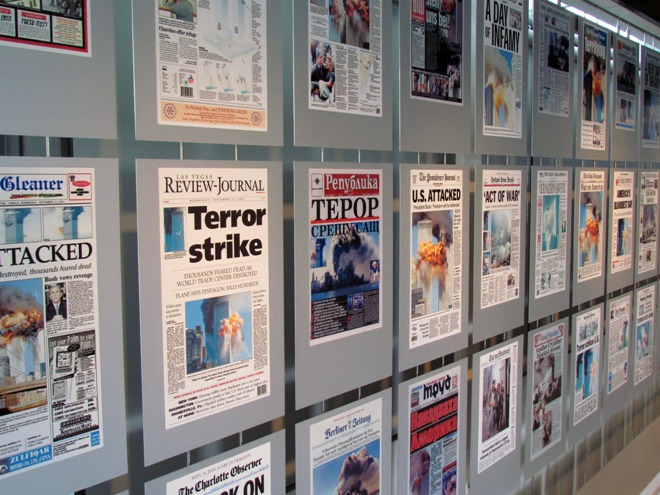
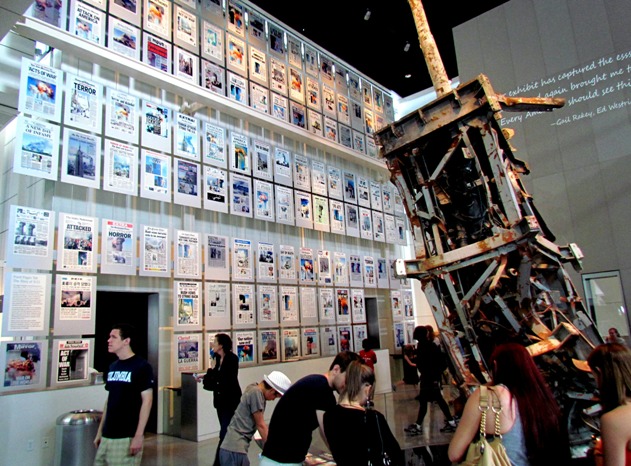
9-11 Frontpages at Newseum in Washington DC, photos by Nalaka Gunawardene
“පුවත්පත් කලාව යනු ඉතිහාසයේ මුල් කෙටුම්පතයි” (‘Journalism is the first rough draft of history.’)

මෙසේ කීවේ ඇමෙරිකාවේ වොෂිංටන් පෝස්ට් පත්‍රයේ ප්‍රකාශක ෆිලිප් ග්‍රහැම්. ඉතිහාසඥයන් මුහුණ නොදෙන අභියෝගයන්ට මාධ්‍යවේදීන් දිනපතා ප්‍රතිචාර දක්වනවා. දවසේ පැය 24 පුරා සජීව ලෙසින් ප්‍රවෘත්ති ආවරණය කැරෙන විද්්‍යුත් හා වෙබ් මාධ්‍ය බහුල අද කාලේ, හද සසල කරන මහා ප්‍රවෘත්තියක් අත්විදිමින් ම ඒ ගැන වාර්තා කරන්නට, විග්‍රහ කරන්නට ඔවුන්ට සිදුවනවා.

මෙය මාධ්‍ය ග්‍රාහකයන් හිතන තරම් ලෙහෙසි කාරියක් නොවෙයි. අපේ රටේ මෑත අවුරුදුවල මෙබදු මහා ප්‍රවෘත්ති අතරින් 2009 මැයි 18 වනදා මෙරට යුද්ධය අවස්න වීමත්, 2004 දෙසැම්බර් 26 වනදා සුනාමි ව්‍යසනයත් සිහිපත් වෙනවා. මේ සිදුවීම් දෙකේදී මාධ්‍ය ආවරණය සිදු වූ ආකාරය ගැන මාධ්‍ය පර්යේෂකයන් හා මාධ්‍යවේදීන් තවමත් වාද විවාද කරනවා. ඒ තරම් ම වාද විවාදයට ලක් වූ මහා ප්‍රවෘත්තියක් අදට හරියට වසර 10කට කලින් (2001) අමෙරිකාවේ නිව්යෝක් හා වොෂිංටන් නගරවල සිදු වුණා.

ඒ තමා අල්කයේඩා ත්‍රස්ත්‍රවාදීන් විසින් අමෙරිකාවේ වාණිජමය හා ආරක‍ෂක මර්මස්ථානවලට එල්ල කරන ලද සමෝධානිත ප්‍රහාරය. එදින උදේ මගී ගුවන්යානා 4ක් බලහත්කායෙන් අත්පත් කරගත් අල්කයේඩා පිරිසක් එයින් දෙකක් නිව්යෝක් නුවර ලෝක වෙළද මධ්‍යස්ථානය (World Trade Centre, WTC) නම් ගොඩනැගිලි සංකීර්ණයේ ගැටීමට පියාසර කළා. තවත් එකක් එරට ආරක‍ෂක අමාත්‍යාංශය පිහිටි වොෂිංටනයේ පෙන්ටගන් සංකීර්ණයට කඩා වැටෙන්නට සැළැස් වූ අතර සිවුවැනි යානය ඉලක්කයක් කරා යාමෙන් වැළකුණේ එහි සිටි මගීන් (ජීවිත පූජාවෙන්) ගුවන්යානාවේ කොල්ලකරුවන් සමග ගැටුණු නිසායි. එය පෙන්සිල්වේනියා ප්‍රාන්තයේ ෂැන්ක්ස්විල් ස්ථානයට කඩා වැටුණා.

පැය කිහිපයක් ඇතුළත රටවල් 70ක ජාතිකයන් 3,000ක් පමණ දෙනාට මරු කැදවූ මේ ත්‍රස්ත ප්‍රහාරය නිසා සමස්ත අමෙරිකාව පමණක් නොවෙයි මුළුමහත් ලෝකය ම භීතියෙන් ඇලලී ගියා. දරුණු කම්පාවට පත්වුණා. WTC ප්‍රහාරය මේ අතරින් වඩාත් බිහිසුණු වූ අතර, ඉන්ධන පිරවුණු ගුවන්යානා ගැටී ගිනි ගැනීම නිසා ඉතා සවිමත් සේ තැනුණු මහා ගොඩනැගිලි දෙක කෙටි කාලයක් තුළ දිය වී කඩා හැලූණා. එහිදී මියගිය 2,753 දෙනා අතරට උදවුවට එහි ගිය ගිනි නිවන භටයන් 343ක් හා පොලිස් නිලධාරීන් 60ක් ද සිටියා.

සැප්තැම්බර් 11 වනදා සිදු වූ නිසා මෙය කෙටියෙන් 9/11 ප්‍රහාරය කියා හදුන්වනවා. ස්ථාන ගණනක් පුරා විසිරුණු, පැය ගණනක් පුරා පැතිරුණු මෙබදු සිදුවීමක් ගැන මාධ්‍ය ආවරණය කරන්නේ කොහොමද? මේ අභියෝගයට අමෙරිකානු මාධ්‍යවේදීන් ප්‍රමුඛ ප්‍රවෘත්ති වාර්තාකරණයේ නියැලි ලොව පුරා මාධ්‍ය ආයතන එදා විවිධ ආකාරයෙන් මුහුණ දුන්නා. දශකයකට පසුව එම ප්‍රහාරය ගැන මෙනෙහි කරන අයට මතකයන් පණ ගන්වන්නට උපකාර වන්නේත් එදා සහ ඉනික්බිති එළඹුණු දින ගණනක් තිස්සේ මාධයවේදීන් වචනවලින්, රූපවලින් කළ ආවරණයන් හා විග්‍රහයන් තමයි.

අමෙරිකාවේ වාණිජමය වශයෙන් වඩා ම වැදගත් නගරය වන නිව්යෝක්හි බොහෝ මාධ්‍ය ආයතන මූලස්ථානගත වී හෝ ප්‍රමුඛපෙළේ කාර්යාල පිහිටුවා තිඛෙනවා. ලෝක ව්‍යාප්ත මාධ්‍ය ජාල රැසක් කාර්යාලත් එහි තිඛෙනවා. මේවායේ සේවයේ නියුතුව සිටි මාධ්‍යවේදීන්, තමන්ගේ ජීවිතාරක‍ෂාව ගැන නොබලා තම නගරයට එල්ල වූ ප්‍රහාරය විස්තරාත්මකව වාර්තා කළා. ලොව පුරා විසුරුණු බිලියනයකට අධික ටෙලිවිෂන් ප්‍රේක‍ෂකයන් සංඛ්‍යාවක් සජීව ලෙසින් මේ වාර්තාකරණය නැරඹුවා. තමන්ගේ නෑ හිතමිතුරන්ට අනතුරක් වී ඇත්දැයි දැන ගැනීමට පවා ඉස්පාසුවක් නැතිව තම ග්‍රාහකයන්ගේ තොරතුරු දැන ගැනීමේ අයිතිය වෙනුවෙන් සුවිශාල මෙහෙයක් ඉටු කළ හැම මාධ්‍යවේදියකුට ම 9/11 ප්‍රහාරය ජන මනසේ සනිටුහන් කිරීම ගැන ප්‍රනාමය හිමි වෙනවා.

ප්‍රහාරය නිසා ඇතැම් මාධ්‍ය ආයතනවලට ද හානි සිදු වුණා. The Wall Street Journal පුවත්පතේ කාර්යාලය තිබුණේ ඇද හැළුණු WTC කුළුණු අසලයි. හදිසියේ ම ඔවුන්ට කාර්යාලය අත්හැර දමා සැතපුම් 50ක් දුරින් පිහිටි තැනකට යාමට සිදු වුණා. එහෙත් මාධ්‍යවේදීන් එතැන සිට හෝ තම නිවෙස්වල සිට හෝ දිගට ම පුවත්පත පළ කළා. අධික පීඩනයක් යටතේ වුව මැදහත් හා විස්තරාත්මක වාර්තාකරණයක යෙදීම ගැන (පුවත්පත් කලාවේ නොඛෙල් ත්‍යාගය වැනි) පුලිට්සර් සම්මානයක් එම කාර්ය මණ්ඩලයට පසුව පිරිනමනු ලැබුවා.

9/11 ප්‍රහාරය අනුස්මරණය කිරීමේ විවිධ සාමයික, ශාස්තී්‍රය හා වෘත්තිමය අවස්ථා මේ දිනවල අමෙරිකාවේ පැවැත්වෙනවා. ඒ අතරින් මාධ්‍ය ආවරණය මෙනෙහි කරන හොද ම උත්සාහය හැටියට මා දකින්නේ වොෂිංටන් අගනුවර පිහිටි මාධ්‍ය හා සන්නිවේදන කෞතුකාගාරයේ (Newseum) තිඛෙන 9/11 මාධ්‍ය ස්මාරකයයි. එහි ප්‍රදර්ශන ශාලාවක් පුරා විහිදෙන මේ ස්මාරකය මැද තිඛෙන්නේ එදා ත්‍රස්ත ප්‍රහාරය නිසා ගිනි ගෙන කඩා වැටුණු WTC උතුරු කුළුණේ ඉහළ රදවා තිබූ විද්්‍යුත් මාධ්‍ය විකාශන ඇන්ටෙනාවේ අඩි 31ක කොටසක්. එය වට කර ගෙන ඇත්තේ 9/11 ප්‍රහාරය ගැන අමෙරිකාවේ හා ලෝකයේ ඇතැම් පුවත්පත් සිය මුල්පිටුවලින් වාර්තා කළ ආකාරයයි.

පුවත්පත් කලාව ඉතිහාසයේ මුල් කෙටුම්පත් ලියනවා නම්, එහි හද ගැස්ම වඩාත් ම හසු කර ගන්නේ මුල් පිටු ඔස්සේයි. මහා ප්‍රවෘත්තියක් ගැන විවිධ පුවත්පත් මුල්පිටු වාර්තා කළ හැටි මෙසේ එක් තැන් කිරීම හොද ප්‍රදර්ශන උපක්‍රමයක්. එයින් අපේ බුද්ධියට හා හැගීම්වලට කළ හැකි බලපෑම පසුගියදා ඒ ප්‍රදර්ශනය නැරඹීමෙන් මා හොදාකාර අත් වින්දා.

බහු විධ පැතිකඩ ඇති සිදුවීමක් විවිධ මාධ්‍ය ආයතන හා මාධ්‍යවේදීන් විවිධාකාරයෙන් වාර්තාකිරීම ස්වාභාවිකයි. එහිදී සිදුවීමට වඩාත් සමීප පුවත්පත් වඩා ආවේගශීලීව වාර්තාකරන සැටිත්, කිලෝමීටර් දහස් ගණනක් ඈත සිට වඩාත් මැදහත්ව වාර්තා කළ සැටිත් අපට තේරුම් ගත හැකියි. 9/11 සිදුවීම වාර්තා කළ පුවත්පත් 127ක මුල් පිටු මේ ප්‍රදර්ශනයට ඇතුළත්. (එයින් සමහරක් එදින ම සවස්වරුවේ නිකුත් කළ විශේෂ මුද්‍රණ. අනෙක්වා පසුවදා.) අමෙරිකාවේ විවිධ ප්‍රාන්ත හා නගරවල පළ කැරෙන පුවත්පත් 93කත්, වෙනත් රටවල් පුවත්පත් 34කත් මුල්පිටු මේ ප්‍රදර්ශනයට යොදා ගෙන තිඛෙනවා. (ආසියාවෙන් ඇත්තේ ජපන් හා කොරියානු පුවත්පත් තුනක් පමණයි.)

පුවත්පත් කලාවේ එක් මූලික ආචාර ධර්මයක් නම් ප්‍රවෘත්ති වාර්තාකරණයේ කරුණු නිවැරදි හා සමබර විය යුතු අතර, මත දැක්වීම නිදහස් බවයි. මෙය ඉංග්‍රීසියෙන් කියන්නේ ‘Facts are sacred, but comment is free’. සාමාන්‍යයෙන් මුල්පිටු යොමු වන්නේ අළුත් ම තොරතුරු කැටි කැරුණු පුවත් වාර්තා කරන්න. එහෙත් සුවිශේෂී අවස්ථාවල පුවත්පතේ කතුවැකිය මුල් පිටුවට යෙදීමට කතුවරුන් තීරණය කරනවා. එහිදීත් එය කතුවැකියක් බව හොදින් හුවා දක්වනවා.

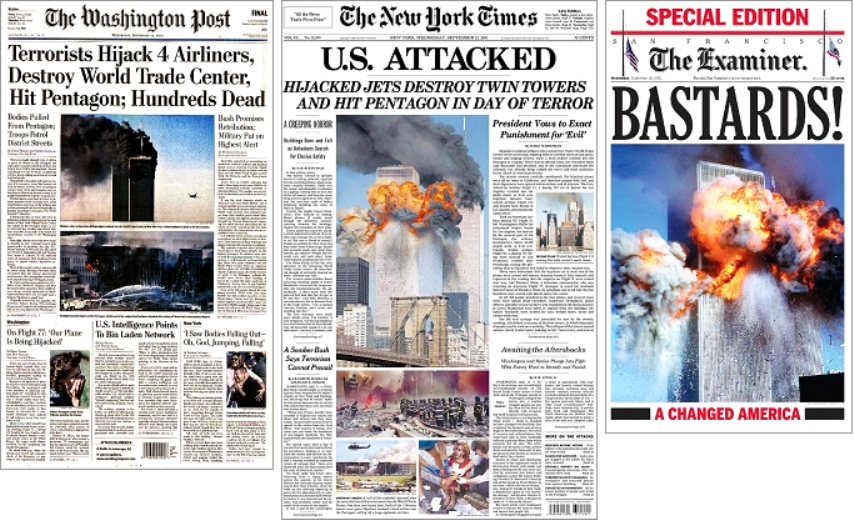
9/11 ප්‍රහාරය ගැන වාර්තා කිරීමේදී පුවත් හා මත දැක්වීම් අතර මේ ඛෙදීම ඇතැම් අමෙරිකානු පුවත්පත් අතින් ගිලිහී ගිය ආකාරය දැකිය හැකියි. ගිනි ගෙන දැවෙන හෝ කඩා වැටෙන උඔක‍ කුළුණුවල විශාල ප්‍රමාණයේ ඡායාරූප සමග ඇතැම් පුවත්පත් පොල්ගෙඩි අකුරින් හෙඩිම් පළ කළා. ‘Evil Acts!’ (අති දුෂ්ඨ ක්‍රියාවක්). ‘Bloody Terror!’ (ලේ හැලෙන භීතියක්). මුල්පිටු කිහිපයක හෙඩිම වූයේ ‘Act of War!’ හෙවත් යුද්ධමය ක්‍රියාවක් යන්නයි.

එවකට අමෙරිකානු ජනාධිපති ජෝර්ජ් ඩබ්ලිව් බුෂ් සැප්තැම්බර් 11 සවස ටෙලිවිෂනයෙන් ජාතිය අමතා කළ කථාවේ ඇතැම් යෙදුම් ද සමහර පුවත්පත් සිය ප්‍රධාන හෙඩිමට උධෘත ලෙසින් යොදා ගත්තා. වඩාත් ම ආවේගශීලී හෙඩිම ලෙස මා දකින්නේ සැන්ෆ්රැන්සිස්කෝ ඉක්සැමිනර් පත්‍රයේ පළ කළ ‘BASTARDS!’ එය ‘තක්කඩියො’ හැටියට අපට සිංහලෙන් අරුත් දිය හැකියි. මේ ප්‍රහාරයට වගකිව යුත්තේ කවුද යන්න ගැන එකහෙළා ම නම් කිරීමක් ජනාධිපතිවරයා නොකළත්, ඇතැම් මාධ්‍ය ඒ වන විටත් දොස් තැබීම පටන් ගෙන තිබුණා.

මේ ආවේගයන් අතරේ වඩා සන්සුන්ව තොරතුරු වාර්තා කළ හා විග්‍රහ කළ පුවත්පත් ද තිබුණා. ප්‍රහාරයේ මුව විට සිට ගෙනත් නිව්යෝක් ටයිම්ස් පුවත්පත කළ වාර්තාකරණය එයට කදිම නිදසුනක්. ප්‍රහාරයේ ස්වරූපය, එහි ප්‍රතිඵල, විපතට පත් වූවන්ට සහන සැළසීමේ පියවර, ජනාධිපතිගේ කථාව වැනි පුවත් කිහිපයක් කැටිකර ගත් ඒ මුල් පිටුව රැගත් සැප්තැම්බර් 12 වනදා නිව්යෝක් ටයිම්ස් කලාපයේ පිටපත් හාර ලක‍ෂයක් අලෙවි වුණා. ප්‍රහාරයට ලක් වූ අනෙක් නගරයේ ප්‍රධාන පුවත්පත වන වොෂිංටන් පෝස්ට් ද එයට සමාන සංයමයක්, සමබරතාවයක් පෙන්නුම් කළා. කෙතරම් විද්්‍යුත් මාධ්‍ය වාර්තාකරණයක් පැවතියත්, වඩාත් විස්තරාත්මක විග්‍රහයන් සදහා අමෙරිකාව පුරා ජනයා පත්තර මිළට ගත් සැටි මේ ප්‍රදර්ශනයේ පුවරුවලින් කියා පානවා.

One incident, three different takes

මේ අතර යුරෝපයේ, මැදපෙරදිග හා ආසියාවේ පුවත්පත් මේ ප්‍රවෘත්තිය විවිධාකාරයෙන් වාර්තා කළා. ඒ ගැන නෙතග බැල්මක් මුල්පිටු තුළින් අපට ලද හැකියි. පුවත්පත් 127 අතරින් මුල් පිටුවට කිසිදු ඡායාරූපයක් අඩංගු නොකළ එක ම පුවත්පත ලෙබනනයේ. අන් හැමෙකක් ම ප්‍රහාරයේ ත්‍රාසජනක අවස්ථා වර්ණ හෝ කළුසුදු හෝ ඡායාරූපවලින් පෙන්නුම් කළා. ඒ අතරින් මගේ නෙත් ගන්නේ ලන්ඩන් ටයිම්ස් පත්‍රයේ නිමාවයි. 2001 සැප්තැම්බර් 12 එහි සමස්ත මුල්පිටුව හා අවසන් පිටුව පුරා ඇත්තේ දැවැන්ත තනි ඡායාරූපයක් පමණය‘. ගිනිගෙන දැවෙන නිව්යෝක් දුර සිට හසු කරගත් මේ ඡායාරූපයට උඩින් “10.02 a.m. September 11 2001” යන්න පමණක් මුද්‍රිතයි. විස්තරාත්මක වාර්තාකරණය ඇත්තේ ඇතුළු පිටුවලයි.
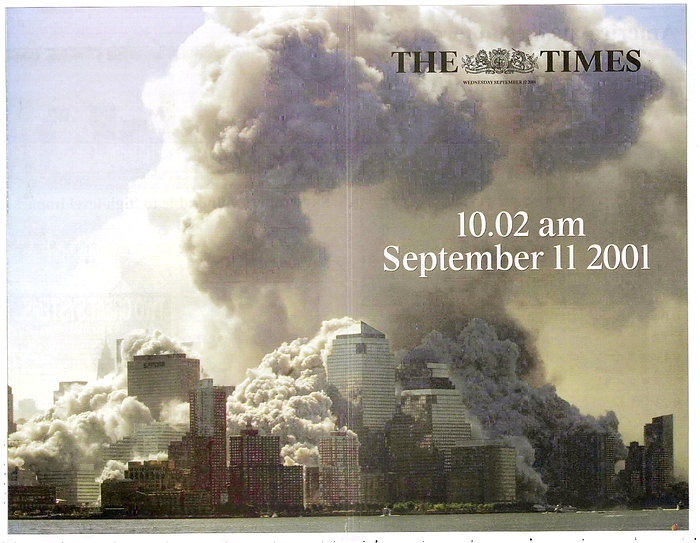
The Times London front page - 12 Sep 2001.jpg

මේ මට මුල්පිටුව හොදට මතකයි. ඒ දිනවල මා සිටියේ ලන්ඩන් නුවර. නිව්යෝක් නුවරට ත්‍රස්ත ප්‍රහාරය එල්ල වීම ගැන පුවත ලන්ඩනයට මුලින් ලැඛෙන විට එදින පස්වරු 1.30 පමණ වන්නට ඇති. ටික වේලාවකින් සියළු ප්‍රවෘත්ති සේවාවන් මේ සිදුවීම වාර්තාකරණයට කැප කෙරුණා. සමහරක් ලන්ඩන් පුවත්පත් එදින සවස නිකුත් කළ විශේෂ මුද්‍රණ මා තවමත් සුරැකිව තබා ගෙන සිටිනවා.

පුවත්පතක මුල් පිටුව සැකසීමත් සුවිශේෂ කලාවක්. ඉදහිට පත්තර ලෑල්ලකින් පිටපතක් මිළට ගන්නා අහඹු පාඨකයන් ඇද ගන්නා අතර ම, නිතිපතා කියවන පාඨකයන්ගේ තොරතුරු පිපාසය සංසිදවන්නටත් මුල්පිටුව සමත් විය යුතුයි. ඉතිහාසය තමන්ගේ තීරණ ගැන කුමන ආකාරයකින් විග්‍රහ කරාවි ද යන්න සිතන්නට මුල් පිටුව සකසන කතුවරුන්ට හා මුද්‍රණ තාක‍ෂණ ශිල්පීන්ට වෙලාවක් නැහැ. නමුත් මහා ප්‍රවෘත්ති වාර්තාකරණයේදී හුදෙක් ඒ මොහොතට පමණක් නොව ඉතිහාසයටත් තොරතුරු සංරක‍ෂණය කිරීමක් මුල් පිටු හරහා නිරායාසයෙන් ම ඉටු කැරෙනවා.

මා දන්නා තරමට මුල් පිටු මාධ්‍යයක් හැටියට යොදා ගෙන ලංකාවේ කැරෙන ආවර්ජන ඉතා සීමිතයි. මුල්පිටු ඇතුළු යටගිය දවස පුවත්පත් බලන්නට අප ලේඛනාගාරයට යා යුතුයි. තනි මාධ්‍ය ආයතන තම තමන්ගේ ප්‍රකාශනවල මුල් පිටු ඇතැම්විට ආවර්ජනා සදහා යොදා ගත්තත්, තනි සිදුවීමක් මෙරට සියළු ම පුවත්පත් මුල් පිටු හරහා වාර්තා කළ ආකාරය හසු කර ගෙන නැහැ.

Newseum කෞතුකාගාරයේ මා ගත කළ දෙදින තුළ දුටු එක ම ලාංකික පුවත්පත 2004 දෙසැම්බර් 27 වනදා Daily Mirror මුල් පිටුවයි. සුනාමි විපත ආසියාතික පුවත්පත් වාර්තා කළ ආකාරයට එක් උදාහරණයක් හැටියට. භේදයකින් තොරව මුළු රට ම කම්පා කළ සලිත කළ සුනාමිය ගැන කල් ගත වී හෝ මාධ්‍ය ස්මාරකයක් බිහි කළ හැකි නම්, මුල් පිටුවලින් කළ වාර්තාකරණය එහි මුල් තැනක් ගන්නවා සිකුරුයි!
සිවුමංසල කොලූගැටයා #30: නීතිය, සාමය, ජාතික ආරක‍ෂාව හා ඉන්ටර්නෙට්

Text of my weekly column, printed in Ravaya newspaper on 4 September 2011. This week I take off from the role of social media in fuelling, as well as countering the recent London riots – and discuss how governments, telecom operators and law enforcement authorities should respond to the always on, pervasive connectivity now enabled by mobile phones and other devices.

Tweeting while London burns?

2011 අගෝස්තු 6 සිට 11 වනදා අතර කාලයේ බ්‍රිතාන්‍යයේ ලන්ඩන් ඇතුළු නගර ගණනාවක වීදි කලහ කිරීම්, පොදු හා පෞද්ගලික දේපල ගිනි තැබීම් හා කොල්ලකෑම් සිදුවුණා. සාමාන්‍යයෙන් සාමකාමී රටක් ලෙස ප්‍රකට බ්‍රිතාන්‍යයේ මේ සිදුවීම් නිසා එරට පමණක් නොවෙයි මුළු ලෝකය ම කැළඹීමට පත් වුණා. මේ ගැන ප්‍රවෘත්ති වාර්තාකරණය දුර සිට බලා සිටි මගේ වැඩි අවධානය යොමු වුණේ ජංගම දුරකථන සේවා හා ඉන්ටර්නෙට් මාධ්‍යයන් මේ කලහයන්ට බද්ධ වූ ආකාරය ගැනයි.

ඇතැම් කලහකරුවන් තම ප්‍රචන්ඩ ක්‍රියා සම්බන්ධීකරණයට මේ සන්නිවේදන තාක‍ෂණයන් යොදා ගත් බව සනාථ වී තිඛෙනවා. එහෙත් ඊට වඩා අති විශාල සංඛ්‍යාවක් සාමකාමී ජනයා නීතිය හා සාමය රැකීමටත්, ප්‍රහාරයන්ට ගොදුරු වූ පොදු හා පෞද්ගලික ස්ථාන පිලිසකර කිරීමටත් එම සන්නිවේදන තාක‍ෂණයන් ම යොදා ගත් සැටි ද වාර්තාගතයි. හොදට නරකට දෙකට ම දායක විය හැකි තොරතුරු තාක‍ෂණයන් හා සන්නිවේදන සේවා ගැන අපේ ප්‍රතිචාරය විය යුත්තේ කුමක් ද? ඒවායේ නියාමනය කෙසේ විය යුතු ද?

නීතිය හා සාමය කඩ වූ අවස්ථා වල දැඩි ස්ථාවරයක සිටීමට ඕනෑ ම රටක රජයට සමාජයීය බලපෑම් එල්ල වනවා. ඇති වූ කලහකාරී තත්ත්වය ගැන බ්‍රිතාන්‍ය අගමැති ඩේවිඩ් කැමරන් අගෝස්තු 11 වනදා පාර්ලිමේන්තුවේ විශේෂ ප්‍රකාශයක් කළා. කලහකරුවන්ට එරෙහිව රටේ පවත්නා නීතිය දැඩි සේ ක්‍රියාත්මක කරන බවට ප්‍රතිඥා දෙමින් ඔහු කියා සිටියේ මේ ගිනි තැබීම්, කොල්ලකෑම්වලට තුඩු දුන් සමාජ හා ආර්ථීක සාධක ගැනත් ගැඹුරින් අධ්‍යයනයකට යොමු වන බවයි.

එම ප්‍රකාශයේදී මේ කලහකරුවන් සන්නිවේදන තාක‍ෂණ හා Facebook, Twitter වැනි වෙබ් මාධ්‍ය (social media) යොදා ගත් ආකාරය ගැනත් ඔහු සදහන් කළා. “කලහකරුවන් වෙබ් මාධ්‍ය භාවිතය හරහා කාර්යක‍ෂම ලෙසින් සංවිධානය වූ බවක් අපට පෙනී ගියා. නිදහසේ තොරතුරු ගලා යාම සමාජයට හිතකර බව ඇත්තයි. එහෙත් එම නිදහස ම සමාජයට එරෙහිවත් යොදා ගත හැකියි. සමාජ විරෝධී පුද්ගලයන් නීති විරෝධී ක්‍රියා සදහා වෙබ් මාධ්‍ය යොදා ගන්නා විට අප එය නතර කළ යුතුයි. ඒ නිසා පොලීසිය, බුද්ධි සේවා ගැන සන්නිවේදන සමාගම් සමග අප කථා කරනවා. ඉදිරියේදී මෙබදු අවස්ථාවල නීතිවිරෝධී ප්‍රචන්ඩ ක්‍රියා ස`දහා වෙබ් අඩවි, දුරකථන සේවා හෝ වෙනත් වෙබ් මාධ්‍ය තාක‍ෂණයන් යොදාගන්නා බව පෙනී ගිය හොත් එයට ඇති ඉඩකඩ නැති කළ හැකිද නැති කළ යුතු ද කියා.”

බ්‍රිතාන්‍යයේ මේ සිදුවීම් වන අතරේ ඊට කිලෝමීටර් දහස් ගණනක් දුර අමෙරිකාවේ සැන්ෆ්රැන්සිස්කෝ නගරයේ තවත් සිදුවීමක් වාර්තා වුණා. BART නමින් හදුන්වන එනුවර දුම්රිය සේවය අගෝස්තු 12 වනදා පැය තුනක් පුරා ජංගම දුරකථන සේවාවල සංඥා දුම්රිය තුළ ඛෙදාහැරීම නතර කළා. ඊට දින කිහිපයකට පෙර පොලීසිය විසින් දුම්රියක් මතට නැගි පුද්ගලයකුට වෙඩි තබා මරා දැමීමට එරෙහිව දුම්රිය මගීන් සාමකාමී විරෝධතාවයක් සැළසුම් කර තිබුණා. BART සේවයේ ප්‍රධාන දුම්රිය ස්ථානයට මහ පිරිසක් එකවර රැස් වුවහොත් සේවා අඩාල විය හැකි බවත්, නීතිය හා සාමය කඩවිය හැකි බවත් කියමින් දුම්රිය බලධාරීන් දුරකථන සංඥා මෙසේ ක්‍රියා විරහිත කළා. මෙයින් කුපිත වූ ඇතැම් මගීන් දිගින් දිගට දුම්රිය සේවයට එරෙහිව විරෝධතා දක්වන්නට පටන් ගත්තා. ඒ අතර නිර්නාමික (Anonymous) නමින් හදුන්වන පරිගණක කි්‍රයාකාරීන් පිරිසක් BART සේවයේ පරිගණකවලට අනවසරයෙන් පිවිසී (hack කොට) බලපෑම් කළා.

A call to arms? Or to heal?
මේ සිදුවීම් වලට ආසන්න ම හේතූන් කුමක් වූවත් මෙබදු අවස්ථාවල (උසාවි නියෝගයකින් තොරව) දුරකථන හෝ ඉන්ටර්නෙට් සේවා තාවකාලිකව නතර කිරීමේ අයිතිය පොලීසියට හෝ දුම්රිය පාලකයන්ට හෝ නැති බවට අමෙරිකාවේ ප්‍රකාශන අයිතිය පිළිබ`ද ක්‍රියාකාරිකයන් දැඩි ලෙස තර්ක කරනවා.

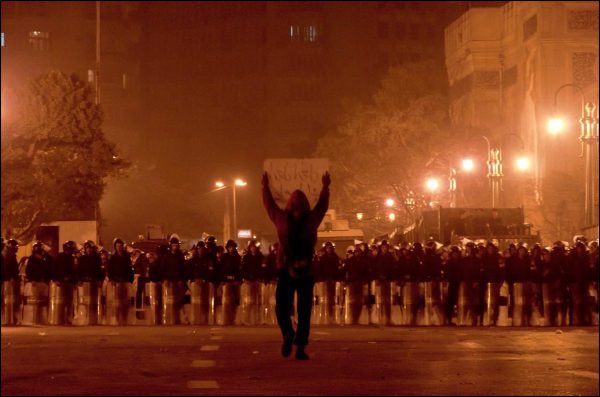
ප්‍රජාතන්ත්‍රවාදය උදෙසා උද්ඝෝෂණය කරමින් 2011 ජනවාරියේ ඊජිප්තු රටවැසියන් පෙළගැසෙන විට හිටපු ඒකාධිපති පාලක හොස්නි මුබාරක් එරට ඉන්ටර්නෙට්, දුරකථන හා මාධ්‍ය සේවා ක්‍රියා විරහිත කළා. එසේ කළේ සන්නිවේදන ජාලයන් හරහා ක්‍රියාකාරිකයන් මනා සේ සම්බන්ධීකරණය වීම වළක්වන්නටයි. එහෙත් එය අන්තිමේදී මුබාරක්ගේ වසර 30 ක පාලනයේ බිද වැටීම වඩාත් ඉක්මන් කළා. අමෙරිකාවේ එක් නගරයක සිදු වු ප්‍රවාහන සිදුවීම සමස්ත ඊජිප්තු රාජ්‍ය පෙරළිය සමග සැසදිය නොහැකි වුනත්, අවස්ථා දෙකේ ම මූලධර්මය එකයි.

නීතිය හා සාමය හෝ ජාතික ආරක‍ෂාව හෝ රැකීමට යයි කියමින් මහජන සන්නිවේදන සේවා අඩපණ කිරීමට නැතිනම් නතර කිරීමට බලධාරීන්ට නීතිමය හා සදාචාරාමය අයිතියක් ඇත් ද? ඒ අයිතිය ක්‍රියාත්මක කිරීමේදී පාලකයන් කුමන තුලනයන්ට හා අධීක‍ෂණයන්ට නතු විය යුතු ද? තොරතුරු සමාජයේ සීඝ්‍ර ප්‍රගමනය සමග මේ ප්‍රශ්න වඩාත් ප්‍රබල ලෙසින් මතුව එනවා. ලෝකයේ කිසිම රටක් මේ අභියෝගයන්ට මුහුණදීමේ සම්පූර්ණ ක්‍රමවේදයක් තවම සකසා ගෙන නැහැ. අද අවශ්‍ය වන්නේ ආවේගශීලී නොවී, අදාල සියළු පාර්ශවයන් මේ ගැන හොදින් වාද විවාද කිරීමයි. පරිනත ප්‍රජාතන්ත්‍රවාදයක් පවතින රටවල හා ශිෂ්ට සමාජවල ස්වභාවය එයයි. එහිදී රාජ්‍යයේ හෝ බලයේ සිටින රජයේ හෝ මතය පමණක් ක්‍රියාත්මක කිරීම සෑහෙන්නේ නැහැ.

බ්‍රිතාන්‍යයේ දැනට සිටින ජ්‍යෙෂ්ඨතම විද්‍යා කතුවරයකු වන ඩේවිඩ් ඩික්සන් (David Dickson) මේ ගැන ඉතා මැදහත් විග්‍රහයක් කරනවා. සන්නිවේදන තාක‍ෂණයේ බල මහිමය හා පොදු සමාජ යහපත තුලනය කර ගැනීමේ අභියෝගයට දියුණු රටවල් මෙන් ම දියුණු වන රටවල් ද එක සේ මුහුණ දෙන බව SciDev.Net වෙබ් අඩිවියේ අගෝස්තු 19 වනදා කතුවැකිය ලියමින් ඔහු පෙන්වා දෙනවා.

ඔහු කියන හැටියට:”ඉදහිට ඇතැම් දෙනකු සන්නිවේදන තාක‍ෂණයන් නීති විරෝධී වැඩකට යොදා ගත් පමණින් මුළු තාක‍ෂණයක් ම දෝෂාරෝපණයට ලක් කිරීම හෝ ඒවා සීමා කිරීමට උත්සාහ කිරීම හො`ද නැහැ. තොරතුරු ගලනයේ හා අදහස් ප්‍රකාශනයේ සීමා ඇති කිරීමට එබදු සිද්ධීන් යොදා ගැනීම පරිනත සමාජයකට ගැලපෙන ප්‍රතිචාරයක් නොවෙයි. නවීන සන්නිවේදන තාක‍ෂණයන්ගේ ඉමහත් බලය හ`දුනාගෙන, ඒවා වඩාත් වගකීම් සහිතව යොදා ගන්නේ කෙසේ ද යන්න තීරණය කළ යුතුයි.”

ඩේවිඩ්ගේ කතුවැකිය කියවන විට මට සිහිපත් වූයේ කලකට පෙර රාජ්‍යයට එරෙහිව අරගල කළ මෙරට උදවිය තැපැල් සේවය හා පුවත්පත්වල ලූහු`ඩු දැන්වීම් නිර්මාණශීලි ලෙස තමන්ගේ සන්නිවේදන ස`දහා යොදා ගත් ආකාරයයි.

අයහපත් පුවතක් රැගෙන එන පණිවුඩකරුට පහර දෙන්නට එපා (Don’t shoot the messenger!) යයි ප්‍රකට කියමනක් තිඛෙනවා. සමාජයේ විෂමතා හා අකටයුතුකම් ගැන මාධ්‍ය වාර්තා කරන විට එයින් අපහසුතාවයට පත් වන ඇතැම් අය මාධ්‍යවලට පහරදීම වැරදි ප්‍රතිචාරයක්. සන්නිවේදන තාක‍ෂණයන් හා ඒවා භාවිතා කරන අයගේ කි්‍රයා කලාපය යනු එකක් නොව දෙකක් බවටත්, සංඛ්‍යාත්මකව සුළුතරයක් අතින් සිදුවන තාක‍ෂණික නොපනත්කම් නිසා තොරතුරු සමාජයේ ඉදිරිගමනට වැටකඩුළු බාධක පැනවිය යුතු නැති බවටත් ඩේවිඩ් ඩික්සන් තර්ක කරනවා.

ඩේවිඩ් තවදුරටත් කියන හැටියට: “ලෝකයේ ඕනෑම තැනකට ක්ෂණිකව බද්ධවීමේ හැකියාව ලබා දෙන නූතන සන්නිවේදන තාක‍ෂණයන් අපට ලැබී ඇති දෙපැත්ත කැපෙන පිහියක් වගෙයි. සමාජ යහපතට පමණක් ඒවායේ හැකියාව යොදා ගන්නට අවශ්‍ය නීතිමය, සදාචාරමය හා අධ්‍යාපනික පසුබිම සකස් කිරීම අප කාගේත් ලොකු වගකීමක් වෙනවා. එහිදී ඉතා දැඩි (draconian) නීතිරීතිවලට වඩා අපට අවශ්‍ය වන්නේ නම්‍යශීලී, ප්‍රජාතන්ත්‍රවාදී හා සුමට ප්‍රතිචාරයක්. එමෙන් ම බ්‍රිතාන්‍යය, ඇමෙරිකාව වැනි ප්‍රජාතන්ත්‍රවාදී රටවල් නව සන්නිවේදන තාක‍ෂණයන් නියාමනය කරන්නේ කෙසේ ද යන්න ලෝකයේ සෙසු රටවල් ඉතා විමසිල්ලෙන් බලා සිටින බව ද අමතක නොකරන්න.”

විකිලීක්ස් වෙබ් අඩවිය හරහා තම තානාපති නිලධාරීන්ගේ රහස් වාර්තා හෙළිදරවු වන්නට ගත් විට ඇමෙරිකානු රජය මුහුණ දුන් අපහසුතාවයට සමාන තත්ත්වයකට ලන්ඩන් කලහයන්ගේ පසු බි්‍රතාන්‍ය රජය ද පත්ව සිටිනවා. අදහස් ප්‍රකාශනයේ හා තොරතුරු ගලනයේ මානව අයිතීන්ට දශක ගණනක් තිස්සේ සැබැවින් ම කැපවුණු එම රටවල වෙබ් මාධ්‍ය මතු කරන නව අභියෝගයන්ට මුහුණ දෙන්නේ කෙසේ ද යන්න ගැන ලොකු විවාදයක් සිදු වනවා.

පරිනත ප්‍රජාතන්ත්‍රවාදයක් පවතින බි්‍රතාන්‍ය වැනි රටවල හොඳ ලක්ෂණයක් නම් ඕනෑ ම නව ප්‍රතිපත්තියක් හෝ නීතියක් හෝ පුළුල් වශයෙන් ප්‍රසිද්ධ වාද විවාදයට ලක් වීම. අත්තනෝමතිකව කි්‍රයා කරන්නට බලයේ සිටින රජයට හෝ ආරක‍ෂක අංශවලට හැකියාවක් නැහැ. අගෝස්තු 24 වැනිදා ලන්ඩනයේ නගරාධිපති, පාලක කොන්සර්වේටිව් පාක‍ෂික බොරිස් ජොන්සන් වැදගත් ප්‍රකාශයක් කළා. අර්බුදකාරී අවස්ථාවල නව මාධ්‍යවල කි්‍රයාකාරීත්වය පාලනය කිරීමට හෝ තාවකාලිකව නතර කිරීමට හෝ වඩා සූක‍ෂම (smart) ප්‍රතිචාරය වන්නේ ඒවා හරහා සන්නිවේදනය වන තොරතුරු හා මතිමතාන්තර බුද්ධිසේවා මගින් අධ්‍යයනය කිරීම බව ඔහු කියනවා.

ඔහු තම ස්ථාවරය පැහැදිළි කළා: “ලන්ඩනයේ කළහකාරී කි්‍රයාවලට හේතු වූ බහුවිධ සාධක තිඛෙනවා. එමෙන්ම එයට සම්බන්ධ වූ අය විවිධ සන්නිවේදන ක්‍රම භාවිතා කළා. ලන්ඩන් පොලිස් අධිකාරීන් සමග මේ ගැන කථා කළ පසු මගේ අවබෝධය නම් අර්බුදකාරී අවස්ථාවක වෙබ් මාධ්‍ය හරහා හුවමාරු වන පණිවුඩ නීරීක‍ෂණය හා විශ්ලේෂණය වඩාත් ප්‍රයෝජනවත් බවයි. ඒ මාධ්‍ය තාවකාලිකව වසා දැමුවහොත් ඒවාට වඩා රහසිගත සන්නිවේදන ක්‍රමවලට කලහකරුවන් යොමු වන්නටත් හැකියි.”

අගෝස්තුවේ ප්‍රචණ්ඩ කි්‍රයා සිදුවන විට ම කලහකරුවන් හඳුනා ගැනීම සඳහා වෙබ් මාධ්‍ය යොදා ගන්නට ලන්ඩන් පොලීසිය උත්සුක වුණා. උදාහරණයක් හැටියට ප්‍රහාරයට ලක් වූ කඩ සාප්පු හා කාර්යාලවල සවිකර තිබූ ආවෘත පරිපථ වීඩියෝ කැමරා (CCTV) වලට හසු වූ ප්‍රහාරකයන්ගේ රූපරාමු පොලීසිය විසින් ත‍කසජනරගජදප නමැති ඡායාරූප හුවමාරු කර ගන්නා ජනපි්‍රය වෙබ් අඩවියේ ප්‍රසිද්ධ කරනු ලැබුවා. ප්‍රහාරකයන් හඳුනා ගන්නට මහජන උපකාර ඉල්ලා සිටියා.

නමුත් CCTV රූපරාමුවල හසු වී ඇති හැම කෙනකුගේ ම රූප කලහකරුවන්ගේ බව සැක හැර දැන ගන්නේ කෙසේ ද? ඒ මොහොතේ එතැන සිටි වික‍ෂිප්ත වූවත් ද රූපවලට හසු විය හැකියි නේද?

මෙබදු ප්‍රශ්නවලට තවමත් හරිහැටි පිළිතුරු නැහැ. නමුත් තොරතුරු සමාජයේ ප්‍රගමනයත් සමග අර්බුද අවස්ථාවල රජයන්, ආරක‍ෂක සේවාවන් හා තාක‍ෂණවේදීන් ක්‍රියා කරන ආකාරය ගැන තුලනාත්මකව හා ප්‍රවේශමෙන් සිතා බැලිය යුතු බව හා විවාද කළ යුතු බව නම් ඉතා පැහැදිලියි.

Revolution at the Bottom of the Pyramid: Egyptians want freedom – video

This short video is currently a high favourite online. Created by Tamer Shaaban. Another Egyptian who’s had enough.

Their blurb: “Violent clashes between police and demonstrators as over ten thousand gather on the streets of Cairo. The Egyptian people have endured a tyrant’s rule for far too long, millions struggle each day to find where their next meal is coming from. January 25th, 2011 marks the day when the people rise and take back what’s rightfully there’s. This isn’t the end, but hopefully the beginning to a long awaited regime change! Send to everyone and let them know.”

Song: “Into the Fire” – Thirteen Senses

Thanks to the following news sources for their footage
Daily News Egypt
The Guardian
CNN
New York Times
Al Masry Al Youm

The video was posted on reddit and has gained momentum!

#Facebook Link: Egypt’s Peaceful Revolution

Related blog post: Wanted: More courageous little ‘Mack’s to unsettle Yertle Kings of our times!

Revolution in the making...at the bottom of the pyramid

Wanted: More courageous little ‘Mack’s to unsettle Yertle Kings of our times!

Yertle the Turtle King: My mental image of a despotic ruler!

Related blog post on 7 Feb 2011: Of Dictators and Terrible Cockroaches: A Russian children’s story…from 1925!

January 2011 has been an eventful month for democratic reform in the Middle East. As People Power successfully toppled the deeply entrenched dictator Ben Ali in Tunisia, and the ordinary Egyptians intensified their pressure on own 30-year-long regime of Hosni Mubarak, commentators around the world have been trying to make sense of the rapidly unfolding developments. One of them, David Kravets, writing in Wired linked to a blog post of mine that talked about the experience of one of the earliest successful demonstrations of people power — in the Philippines, when they toppled a long-misruling dictator in 1986.

Amidst all this, and while following the developments on the web, I have been re-reading my Dr Seuss. In particular, the delightfully inspiring tale of Yertle the Turtle King. To me, that is the perfect example of People Power in action — cleverly disguised as children’s verse!

The story was first published in April 1958, in a picture book collection by Theodor Geisel, published under his more commonly-known pseudonym, Dr. Seuss. In 2001, Publishers Weekly listed it at No 125 on a list of the best-selling children’s books of all time.

For those poor Seuss-deprived readers, here’s a helpful summary I have adapted from Wikipedia:

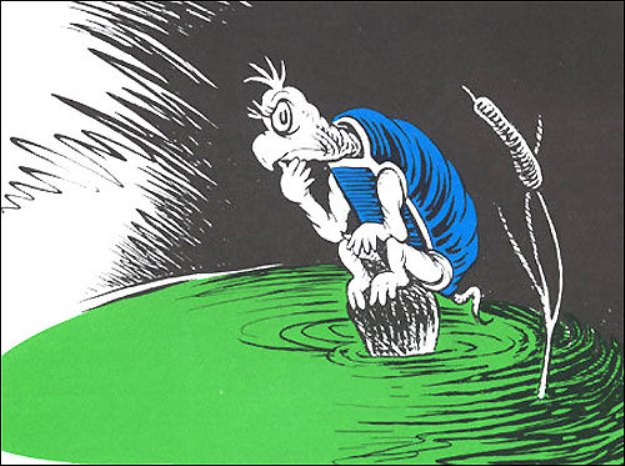
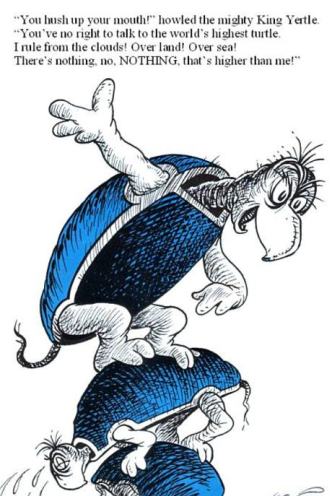
The story is about Yertle the Turtle, the king of the pond in the far-away island of Sala-ma-Sond. Unsatisfied with the stone that serves as his throne, he commands the other turtles to stack themselves beneath him so that he can see further and expand his kingdom (he considers himself the master of all he can see). However, the stacked turtles are in pain. Mack, a very ordinary little turtle at the very bottom of the pile, asks Yertle for a respite, but Yertle just tells him to shut up. Dissent is suppressed.

King Yertle is still not happy: he wants ‘to expand his kingdom’. So he commands more and more turtles to add to his throne. Mack again asks for a respite because the increased weight is now causing extreme pain to the turtles at the bottom. Again Yertle yells at Mack to shut up. At this point, little Mack decides he has had enough and decides to do something to vent his anger and frustration: he just burps. That simple action shakes up the entire stack of turtles, and the mighty king comes crashing down into the pond — and all turtles are freed at last!

Required reading for all despots?Years ago, when I first read the story to my then very young daughter, I could immediately see strong parallels between the vain, merciless Yertle the turtle king and the equally egotistic megalomaniacs in the world of human politics and governance. I would later learn that Dr Seuss meant Yertle to be Adolf Hitler: the turtle’s rule of the pond and takeover of the surrounding areas signified Hitler’s regime in Germany and invasion of surrounding Europe.

The ordinary but courageous Mack epitomises long-suffering Everyman and Everywoman in all countries where autocratic or dictatorial regimes rule, piling ever more burdens on their people. Like the turtles in the stack, the people can go on for years taking a great deal of suffering and sacrifice while the despots plunder and make merry. But there comes a day when a ‘Mack’ says enough is enough…and emits a humble ‘burp’ that shakes up everyone.

As Dr Seuss wrote (and this is my favourite part!):

But, as Yertle, the Turtle King, lifted his hand
And started to order and give the command,
That plain little turtle below in the stack,
That plain little turtle whose name was just Mack,
Decided he’d taken enough. And he had.
And that plain little lad got a bit mad.
And that plain little Mack did a plain little thing.
He burped!
And his burp shook the throne of the king!

And Yertle the Turtle, the king of the trees,
The king of the air and the birds and the bees,
The king of a house and a cow and a mule…
Well, that was the end of the Turtle King’s rule!
For Yertle, the King of all Sala-ma-Sond,
Fell off his high throne and fell Plunk! in the pond!

And today the great Yertle, that Marvelous he,
Is King of the Mud. That is all he can see.
And the turtles, of course… all the turtles are free
As turtles and, maybe, all creatures should be.

Read the text of Yertle the Turtle King

I don’t mean to oversimplify or belittle the enormous courage and resolve it takes for ordinary people to take on a brutal regime, but as pop-culture metaphors go, it’s hard to find a better one than Mack and his defiant burp. That little burp by a tiny turtle brought a vain king down, and its real-world equivalent is called people power: when long-oppressed ordinary people take to the streets to protest against the accumulated excesses of their rulers, demanding reform or regime change.

Not all such ‘burps’ bring all ‘Yertles’ down in the real world. The mighty Soviet Union crumbled in the late 1980s thanks to the courage and persistence of ordinary people who stood up and stepped out. It also worked twice in the Philippines: first against an outright dictator (Marcos) in 1986, and then against a renegade elected president (Estrada) in 2001. A variation of it happened in Nepal against the brutal King Gyanendra, who was dumped into the dustbin of history with the entire monarchy in 2006. Each case had its own history, dynamics and outcomes but shared the common feat of people power.

Sounds familiar? That's because it's all too common!
But elsewhere, as in Tiananmen Square of China (1989) Burma (2007) and Thailand (2010), people power failed to change regimes and led to much violence and bloodshed. What particular combination of social, political and technological factors make people power work is currently the subject of intense study and debate among scholars, diplomats and activists.

But there’s no doubt that recent history has been shaped and made by Macks who broke the silence and, figuratively speaking, burped. Some such burps were heard around the world, and some Macks went on to lead prolonged revolutions that ended with them becoming rulers themselves: Lech Walesa, Cory Aquino and Valclav Havel come to mind.

For every ‘Mack’ who succeeds, though, there are many who go unsung —or much worse. We still have no idea what happened to that much photographed and celebrated ‘Tank Man’ who stood up against the Red Army’s tanks on Tiananman Square one fateful day in June 1989. We don’t even know his name, but his defiance against such enormous odds still inspires assorted Macks all over the world.

For sure, our world is a tiny bit larger — and more complex — than that muddy pond in far away Sala-ma-Sond. And we have an abundance of Yertles, of various colours and hues, riding literally on the backs of their fellow people.

At least some of these tyrants must be following the recent developments in Tunisia and Egypt with growing anxiety. We can only hope that there will be a steady stream of courageous little ‘Macks’ in all such countries who will finally speak up and say: ‘Oi, Enough is enough!’

And then…BURP!

PS: Interesting footnote: Dr Seuss was the first to use the word “burp” in print. That apparently was cause for some concern before publication. According to him, the publishers at Random House, including the president, had to meet to decide whether or not they could use “burp” because “nobody had ever burped before on the pages of a children’s book”.


See also this interesting poem The Vain King, by American poet Henry Van Dyke (1852 – 1933)

Space Shuttle Challenger disaster, 25 years later: Communication Lessons

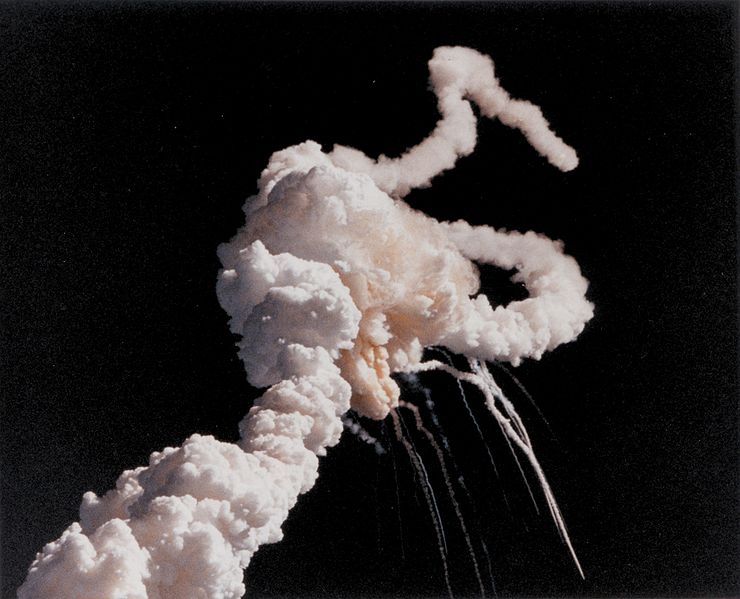
Space Shuttle Challenger's smoke plume after in-flight breakup that killed all seven crew members

Today marks the 25th anniversary of the Space Shuttle Challenger disaster. It was the worst accident in the history of manned space exploration up to that time. All seven crew members died in the disaster — among them was Christa McAuliffe, who was selected to be the first teacher in space, and the first strict civilian to go to space as part of the US space programme.

Challenger was destroyed as it broke up in mid-flight in the second minute of its 10th mission, on 28 January 1986 at 11:38:00 am Eastern Standard Time. The break-up was later found to have been due to the failure of an O-ring on its right solid-fuel rocket booster (SRB). The O-rings are used to seal the joints between the multiple segments of the SRBs.

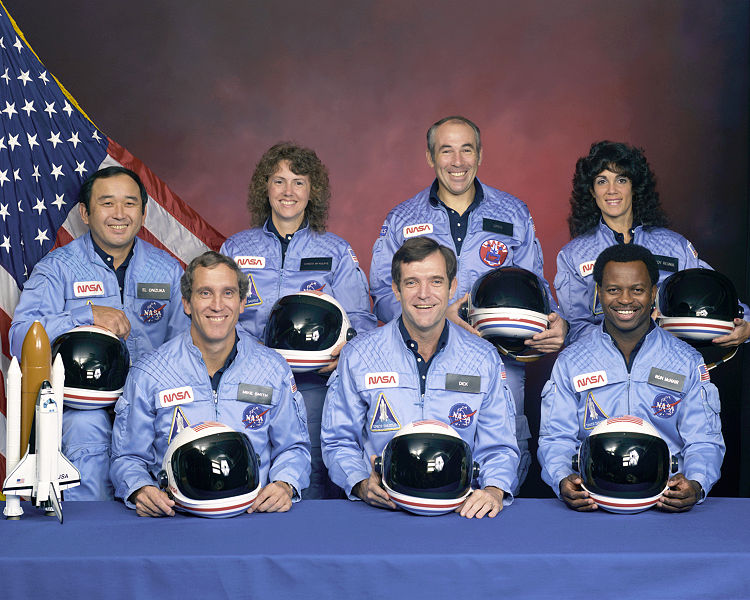
STS-51-L crew (front row) Michael J. Smith, Dick Scobee, Ronald McNair; (back row) Ellison Onizuka, Christa McAuliffe, Gregory Jarvis, Judith Resnik.

While the presence of Christa McAuliffe on the crew had provoked some media interest, shuttle launches had become commonplace by this time and there was little live broadcast coverage of the launch. The only live national TV coverage available publicly was provided by CNN.

Challenger Disaster Live on CNN

The accident was thoroughly investigated and has been well documented. What interests me are the communication lessons drawn from the incident – it continues to be cited as a case study in subjects as diverse as engineering safety, the ethics of whistle-blowing, effective communications, and the perils of group decision-making.

According to the Wikipedia, Roger Boisjoly, the engineer who had warned about the effect of cold weather on the O-rings, left his job at Morton Thiokol and became a speaker on workplace ethics. For his honesty and integrity leading up to and directly following the shuttle disaster, Roger Boisjoly was awarded the Prize for Scientific Freedom and Responsibility from the American Association for the Advancement of Science. Many colleges and universities have also used the accident in classes on the ethics of engineering.

Information designer Edward Tufte has used the Challenger accident as an example of the problems that can occur from the lack of clarity in the presentation of information. He argues that if Morton Thiokol engineers had more clearly presented the data that they had on the relationship between low temperatures and burn-through in the solid rocket booster joints, they might have succeeded in persuading NASA managers to cancel the launch.

To me, it was extraordinary how President Ronald Reagan handled the aftermath of the tragedy. On the night of the disaster, he was scheduled to give his annual State of the Union Address. He postponed it by a week and instead gave a national address on the Challenger disaster from the Oval Office. The speech, written by author Peggy Noonan who was the president’s primary speech writer, is a fine piece that combines grief, tribute and resolve in just the right proportions. No lofty intellectualisation or pontification. Just plain, short sentences that appeal to the hearts. Ably delivered by the Great Communicator, it remains an excellent study in how a national leader can counsel a nation in grief without descending into either despair or denial. Draw your own contrasts with other tragedies before and since.

Ronald Reagan’s speech to the nation after the Challenger Shuttle explosion

President Reagan spoke at 5 pm EST from the Oval Office at the White House. The address was broadcast live on nationwide radio and television. Here is the full text of his speech (emphasis is mine):


Address to the Nation on the Explosion of the Space Shuttle Challenger

January 28, 1986

Ladies and gentlemen, I’d planned to speak to you tonight to report on the state of the Union, but the events of earlier today have led me to change those plans. Today is a day for mourning and remembering. Nancy and I are pained to the core by the tragedy of the shuttle Challenger. We know we share this pain with all of the people of our country. This is truly a national loss.

Nineteen years ago, almost to the day, we lost three astronauts in a terrible accident on the ground. But we’ve never lost an astronaut in flight; we’ve never had a tragedy like this. And perhaps we’ve forgotten the courage it took for the crew of the shuttle. But they, the Challenger Seven, were aware of the dangers, but overcame them and did their jobs brilliantly. We mourn seven heroes: Michael Smith, Dick Scobee, Judith Resnik, Ronald McNair, Ellison Onizuka, Gregory Jarvis, and Christa McAuliffe. We mourn their loss as a nation together.

For the families of the seven, we cannot bear, as you do, the full impact of this tragedy. But we feel the loss, and we’re thinking about you so very much. Your loved ones were daring and brave, and they had that special grace, that special spirit that says, “Give me a challenge, and I’ll meet it with joy.” They had a hunger to explore the universe and discover its truths. They wished to serve, and they did. They served all of us. We’ve grown used to wonders in this century. It’s hard to dazzle us. But for 25 years the United States space program has been doing just that. We’ve grown used to the idea of space, and perhaps we forget that we’ve only just begun. We’re still pioneers. They, the members of the Challenger crew, were pioneers.

And I want to say something to the schoolchildren of America who were watching the live coverage of the shuttle’s takeoff. I know it is hard to understand, but sometimes painful things like this happen. It’s all part of the process of exploration and discovery. It’s all part of taking a chance and expanding man’s horizons. The future doesn’t belong to the fainthearted; it belongs to the brave. The Challenger crew was pulling us into the future, and we’ll continue to follow them.

I’ve always had great faith in and respect for our space program, and what happened today does nothing to diminish it. We don’t hide our space program. We don’t keep secrets and cover things up. We do it all up front and in public. That’s the way freedom is, and we wouldn’t change it for a minute. We’ll continue our quest in space. There will be more shuttle flights and more shuttle crews and, yes, more volunteers, more civilians, more teachers in space. Nothing ends here; our hopes and our journeys continue. I want to add that I wish I could talk to every man and woman who works for NASA or who worked on this mission and tell them: “Your dedication and professionalism have moved and impressed us for decades. And we know of your anguish. We share it.”

There’s a coincidence today. On this day 390 years ago, the great explorer Sir Francis Drake died aboard ship off the coast of Panama. In his lifetime the great frontiers were the oceans, and an historian later said, “He lived by the sea, died on it, and was buried in it.” Well, today we can say of the Challenger crew: Their dedication was, like Drake’s, complete.

The crew of the space shuttle Challenger honored us by the manner in which they lived their lives. We will never forget them, nor the last time we saw them, this morning, as they prepared for their journey and waved goodbye and “slipped the surly bonds of earth” to “touch the face of God.”

Living in the Global Glass House: An Open Letter to Sir Arthur C Clarke

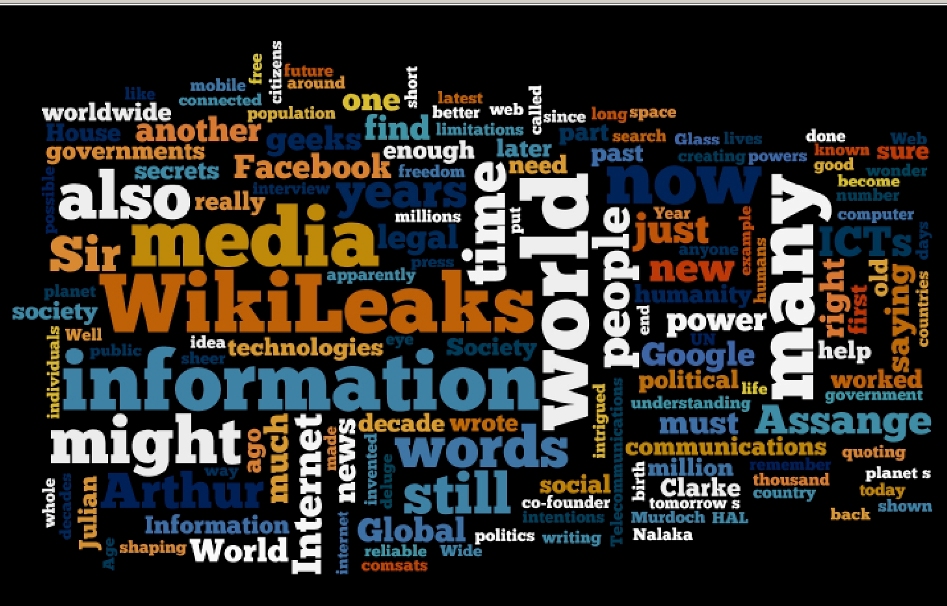
Word map created using http://www.wordle.net

“In the struggle for freedom of information, technology — not politics — will be the ultimate decider.”

These words, by Sir Arthur C Clarke, have been cited in recent days and weeks in many debates surrounding WikiLeaks, secrecy and the public’s right to know.

I invoke these words, and many related reflections by the late author and futurist, in a 2,250-word essay I have just written. Titled Living in the Global Glass House, it is presented in the form of an Open Letter to Sir Arthur C Clarke. It has just been published by Groundviews.org

This is my own attempt to make sense of the international controversy – and confusion – surrounding WikiLeaks. Taking off from the current concerns, I also look at what it means for individuals, corporations and governments to live in the Age of Transparency that has resulted from the Information Society we’ve been building for years.

Sir Arthur foresaw these developments year or decades ago, and wrote perceptively and sometimes in cautionary terms about how we can cope with these developments. As a research assistant and occasional co-author to Sir Arthur from 1987 to 2008, I had the rare privilege of sharing his views firsthand. In this essay, I distill some of the best and most timely for wider dissemination. The above Wordle graphic illustrates the keywords in my essay.

The essay was also prompted by recent experiences. Here’s that story behind the story:

By happy coincidence, I arrived in London on 28 November 2010, the very day the WikiLeaks Cablegate erupted all over the web, beginning to spill out what would eventually be over 250,000 secret international ‘cables’ within the US diplomatic corps.

The Guardian UK that day published an interactive map-based visualization of the leaks. By moving the mouse over the map, readers can find key stories and a selection of original documents by country, subject or people

During the week I spent in London, I experienced not only uncharacteristically early and intense snow storms, but a mounting international storm on the web over the leaked cables. WikiLeaks’ co-founder and chief editor Julian Assange was also somewhere in the UK, playing cat and mouse at the time with the Swedish police and Interpol. (He later turned himself in to the British authorities.)

Sir Arthur Clarke: The legacy continues...
On December 1, the British Interplanetary Society invited me to join their annual Christmas get-together where they were remembering their founder member and past chairman Arthur C Clarke. They talked mostly about the man’s contribution to space exploration, but listening to those fond memories against the wider backdrop of WikiLeaks very likely inspired me to write this essay.

Soon after I returned to Colombo, Transparency International Sri Lanka asked me to speak at a workshop on the right to information they had organised for journalists. Given my reputation as a geek-watcher and commentator on the Information Society, they asked to talk about what WikiLeaks means for investigative journalism. Two days later, the Ravaya newspaper did a lengthy interview with me on the same topic which they have just published in their issue for 19 December 2010.

All these elements and experiences combined in writing this essay. Being confined to home by a nasty cold and cough also helped! In fact, on 16 December when Sir Arthur’s 93rd Birth Anniversary was marked, I was too weak to even step out of the house to visit his gravesite. In the end, I finished writing this Open Letter to him on the evening of that day.

My daughter Dhara and I would normally have taken flowers to Sir Arthur’s grave on his birth anniversary. This year, instead, I offer him 2,250 words in his memory. The fine writer would surely appreciate this tribute from a small-time wordsmith.

Read Living in the Global Glass House: An Open Letter to Sir Arthur C Clarke


Compact version published in Daily Mirror, Sri Lanka, on 21 Dec 2010

FIFA World Cup 2010: Media Conquering Planet Football!

Most Earthlings have just spent a month on this!

“If you’re an alien planning to invade the Earth, choose July 11. Chances are that our planet will offer little or no resistance.

“Today, most members of the Earth’s dominant species – the nearly 7 billion humans – will be preoccupied with 22 able-bodied men chasing a little hollow sphere. It’s only a game, really, but what a game: the whole world holds its breath as the ‘titans of kick’ clash in the FIFA World Cup Final.

“Played across 10 venues in South Africa, this was much more than a sporting tournament. It’s the ultimate celebration of the world’s most popular sport, held once every four years. More popular than the Olympics, it demonstrates the sheer power of sports and media to bring together – momentarily, at least – the usually fragmented and squabbling humanity.”

This is the opening of my latest op ed essay, which appears in several print and online outlets this weekend. It’s timed for the finals of the FIFA World Cup 2010 – the most widely followed sporting event in the world, which will be played in Soccer City, Johannesburg, South Africa today, 11 July 2010. The Netherlands will meet Spain in this culmination of international football that has been distracting a good part of humanity for a month.

This sporting event is tipped to be the most-watched television event in history. Hundreds of broadcasters are transmitting the World Cup to a cumulative TV audience that FIFA estimates to reach more than 26 billion people. Some TV channels offer high definition (HD) or 3-D quality images to enhance the mass viewing experience.

The essay was written a few days ago, after the FIFA World Cup 2010 had reached the semi-finals stage. To be honest, I’m not an ardent football fan. But as an observer of popular culture, I’ve gladly allowed myself to be caught up in the current football frenzy. I just love to watch people who watch the game…

It’s a light piece written to suit the current global mood, but I acknowledge that the World Cup is really more than just a ball game. The basic thrust of my essay is to comment on the powerful mix of fooball and live coverage: “For the past month, the winning formula for unifying the Global Family seemed to be: international football + live broadcasts + live coverage via the web and mobile phones.”

The Times of India, 11 July 2010: Planet Football: Sports unites a fragmented humanity

The Sunday Times, Sri Lanka, 11 July 2010: Conquering Planet Football

Groundviews.org: Beam Me Up to Planet Football

United Colours of Football, courtesy FIFA
The essay builds on themes that I’ve already explored on this blog – for example, how President Nelson Mandela used the 1995 World Cup Rugby championship to unite his racially divided nation, as told in the movie Invictus.

I also touch on FIFA being a wielder of formidable soft power in the world today, arguably more influential than the United Nations.

Here’s my parting thought, on which I invite reader comment: “On second thoughts, those invading aliens don’t need to worry too much about the Earth’s political leaders or their armies. Without firing a single shot, the globalised media have quietly taken over our Global Village — and now it’s too late to resist! We can argue on its merits and demerits, but the facts are indisputable.”

Why are ‘Smart Mobs’ also very fickle? Looking for an antidote to fleeting activism

Smart but fleeting mobs?
‘Smart mobs’ is an interesting term for like-minded groups that behave intelligently (or just efficiently) because of their exponentially increasing network links.

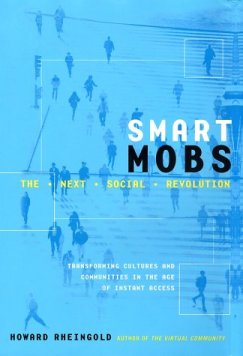
The idea was first proposed by author Howard Rheingold in his 2002 book, Smart Mobs: The Next Social Revolution. It deals with the social, economic and political changes implicated by developing information and communications technology. The topics range from text-messaging culture and wireless internet to the impact of the web on the marketplace.

In the eight years since the book first appeared, we’ve seen a proliferation and evolution of smart mobs, fuelled by the growth web 2.0 tools and, more recently, the many and varied social media. In fact, author Rheingold is credited with inventing the term virtual communities.

But the reality is that smart mobs can also be very fickle — their attention can be easily distracted. A smart mob can disperse just as fast as it forms, even while its original provocation remains.

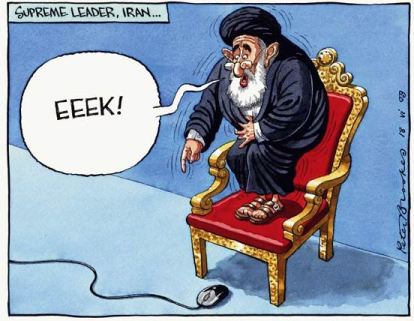
This was demonstrated in dramatic terms in June 2009. Following a hotly disputed presidential election in Iran, there was a surge of online support for pro-democracy activists there who launched a massive protest. A main point of convergence for online reporting and agitation was micro-blogging platform Twitter. Within a few days, mainstream media like TIME and Washington Post were all talking about this phenomenon in gushing terms.

'Rescued' by Michael Jackson?
Then something totally unexpected happened. On June 25, Michael Jackson’s sudden death in Los Angeles shocked the world. As the news spread around the world at the speed of light, it crashed some social networking sites and slowed down even the mighty Google. Online interest on Iran dipped — and never regained its former levels.

As I wrote at the time: “I have no idea if the Ayatollahs are closet fans of Michael Jackson. But they must surely have thanked the King of Pop for creating a much-needed diversion in cyberspace precisely when the theocracy in Tehran needed it most.”

Other recent experiences have demonstrated how online interest can both build up and dissipate very fast. Staying with a single issue or cause seems hard in a world where news is breaking 24/7.

Here’s a current example. Following the massive oil spill in the Gulf of Mexico that started on 20 April 2010, local communities and environmental activists deployed various social media tools to track the unfolding disaster. BP, the giant oil company implicated in the disaster, has also tried to use social media to communicate its positions, but not too successfully. On Twitter, it was not BP’s official account but the satirical @BPGlobalPR that was dominating the online conversation. As one commentator wrote: “It is an object lesson in how social media can shape and control a company’s message during a crisis.”

Beyond PR?
By early July 2010, however, there were already signs that online interest on the issue was already waning — even as the oil continued to leak from this largest offshore oil spill in US history. In a detailed analysis of main social media platforms’ coverage of the issue, Mashable noted last week: “An estimated 100 million gallons or more of oil have surged into the Gulf of Mexico…Yet on Twitter, Google, blogs and even YouTube, we’re already wrapping up our collective discussion of the oil spill and how to repair its damage.”

Riding the wave can be fun, but waves form and break quickly. Those who want to use social media tools for social activism still need to learn how to hitch a ride with the ocean current beneath the fickle waves.

How I wish I could get some practical advice on this from a certain ancient mariner named Sinbad.

Twitterless in Beijing: Talking aspirationally about social media…

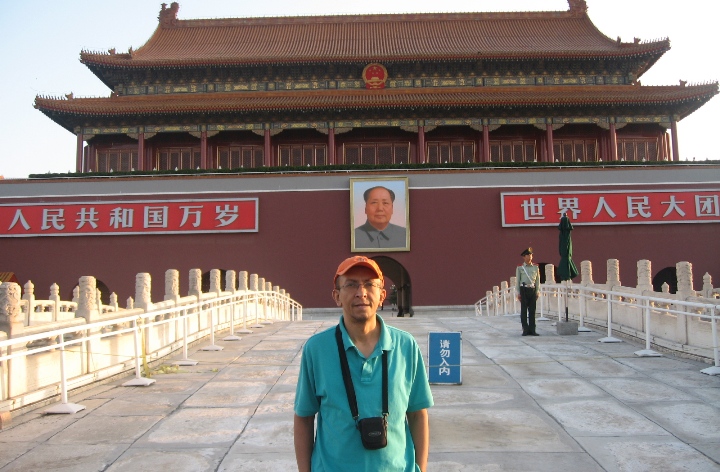
Under Chairman Mao's watchful eyes...

“Reading computer manuals without the hardware is as frustrating as reading sex manuals without the software!”

This is one of the less known, but more entertaining, dicta by Arthur C Clarke – he called it ‘Clarke’s 64th Law’, and I personally know he used to bring it up when meeting with particularly crusty or glum intellectuals. (Not all were amused.)

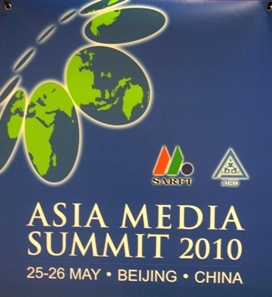
Clarke’s words kept turning in my mind as I moderated and spoke at a session on social media at Asia Media Summit 2010 held in Beijing China from 24 to 26 May 2010. The country with the world’s largest media market is not exactly the world’s most open or free – and certainly when it comes to social media, it’s a very different landscape to what we are used to…

These days, International visitors arriving in China discover quickly that access to YouTube, Twitter and Facebook is completely blocked. Apparently the brief ‘thaw’ in restrictions, seen before and during the 2008 Beijing Olympics, is now over — the current restrictions have been in place since the spring of 2009.

This doesn’t mean there is no social media in China. In fact, I heard from several Chinese friends and colleagues that there is a very large, dynamic and fast-evolving social media scene in China. For the most part, however, it’s not based on globally used and familiar platforms, and is happening in a digital universe of China’s own — under the watchful eye of the government.

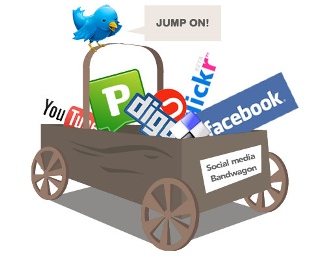
Jump in...but some conditions apply!
For example, I found from this March 2010 blog post by Merritt Colaizzi that:
* 221 million people have blogs, largely in a diary-style.
* 176 million Chinese connect via social networking system (SNS) with their “real” friends and online networks.
* 117 million connect anonymously via bulletin board system (BBS). These interactive online message boards are the heart of social media in China. They’re where people go to find topic-based communities and where consumers talk about products and services.

There are lots of other blogs, mainstream media reports and research commentary on social media in China — just Google and see (now that’s another thing with limited – and uneven – access in China: Google itself is available, but search results come with lots of links that simply aren’t accessible). Much or all of this interaction happens in Chinese, of course. It’s a significant part of the web and social media landscapes, but if you’re in China on a short visit and want to stay connected to your own social media networks, that’s not at all helpful.

And, of course, it undermines one of the key attributes of a globally integrated information society: the interoperability of systems and platforms.

Luckily for me, perhaps, I can survive a few days without my social media fix: I have an appalling record of updating my Facebook account: days pass without me even going there. For the moment, at least, I’m also taking a break from regular blogging (well, sort of). But I’m more regular in my micro-blogging on Twitter, and visit YouTube at least once a day, sometimes more often. I could do neither during the few days in Beijing – and that was frustrating.

So imagine having to talk about social media as a new media phenomenon in such a setting. That’s only a tiny bit better than reading computer manuals without the hardware…But this is just what I did, with all the eagerness that I typically bring into everything I do. I planned and moderated a 90-minute session on Social Media: Navigating choppy seas in search of Treasures?

The session was part of the Asia-Pacific Media Seminar on Ozone Protection and Climate Benefit, so our context was how to use the social media to raise public awareness and understanding on the somewhat technical topics of ozone layer depletion and climate change (two related but distinctive atmospheric phenomena).

With access to key global social media platforms denied, we visitors and Chinese colleagues in the audience could speak mostly generically, theoretically and aspirationally. I didn’t want to place my hosts and seminar organisers in difficulty by harping on what was missing. Instead, we focused on what is possible and happening: how development communicators are increasingly social media networks and platforms to get their messages out, and to create online communities and campaigns in the public interest.

The thrust of my own opening remarks to the session was this: In the brave new world of social media, we all have to be as daring as Sinbad. Like the legendary sailor of Baghdad, we have to take our chances and venture into unknown seas. Instead of maps or GPS or other tools, we have to rely on our ingenuity, intuition and imagination.

More about the session itself in future blog posts.

For now, I want to share this TED Talk by American watcher of the Internet Clay Shirky on how cellphones, Twitter, Facebook can make history. Shirky shows how Facebook, Twitter and TXTs help citizens in repressive regimes to report on real news, bypassing censors (however briefly). The end of top-down control of news is changing the nature of politics.

PS: All this holds more than an academic interest for me, because there have been media reports in recent weeks that the Sri Lankan government is working with Chinese experts in formulating strategies for censoring internet access from Sri Lanka.

Long Live Siribiris – and his creator Camillus Perera!

Nalaka Gunawardene (L) with cartoonist Camillus Perera - photo by Malaka Rodrigo

In January 2009, writing a tearful farewell to the slain newspaper editor and investigative journalist Lasantha Wickrematunga, I invoked the memory of Siribiris. I wrote: Goodbye, Lasantha – and long live Siribiris!

Last weekend, I finally met the ‘father of Siribiris’ and was delighted to salute him in public.

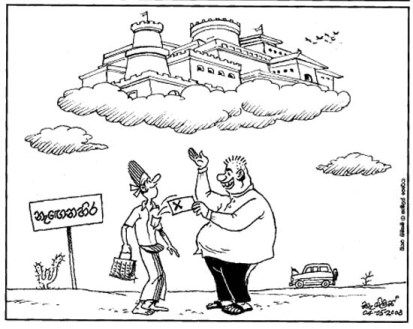
Let me explain. Siribiris is an iconic cartoon character well known to two generations of Lankan newspaper readers. He is a creation of Camillus Perera, a veteran Lankan political cartoonist who has been in this uncommon profession for nearly 45 years.

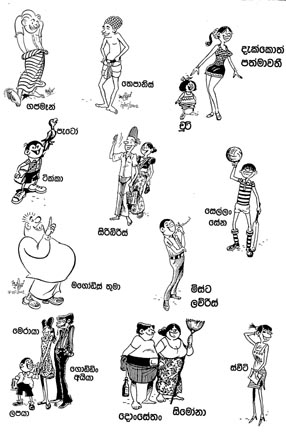
Camillus started drawing cartoons in newspapers in 1966 with the Observer newspaper and the film magazine of the same publishing group, Lake House (then privately owned and under state control since 1973). He draws pocket cartoons, political cartoons as well as satirical comic strips. His most enduring accomplishment has been the creation of a set of regular characters who have developed a loyal following over the years. Among them are the wily Siribiris, prankster Gajaman, fashionable young lady Dekkoth Pathmawathie, smart alec kid Tikka and sporty Sellan Sena.

These and other characters are very ordinary and very real, and they inhabit an undefined yet familiar place in the cartoon universe that most Lankan newspaper readers can easily relate to — it’s a bit like R K Narayan’s fictitious village of Malgudi.

puncturing egos for 40 years
Siribiris (left): puncturing egos for 40 years
My own favourite, Siribiris, is really Everyman personified: long-suffering, taken for granted by politicians, exploited by businessmen, hoodwinked by corrupt officials, and always struggling to simply stay alive. He is down but not yet out. The only way that poor, unempowered Siribiris can get back at all those who take advantage of him is to puncture their inflated egos and ridicule them at every turn. And boy, does he excel in that!

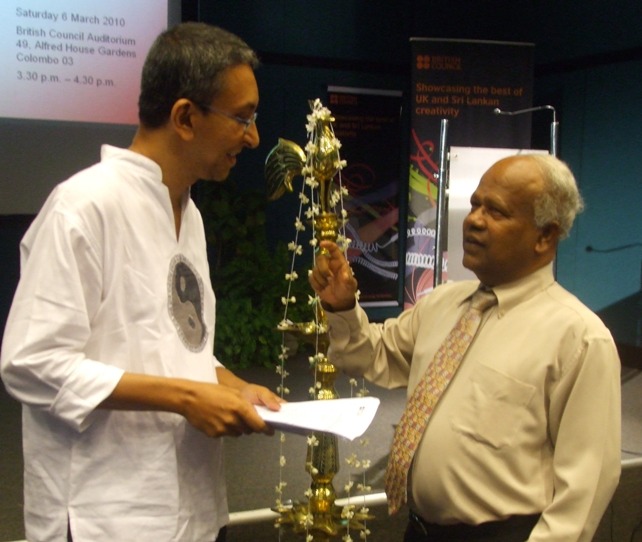
I grew up enjoying Camillus cartoons in various newspapers meant for children, youth and general readers. I had occasionally seen him being interviewed on TV. But I’d never seen or met him in person — until now. It happened when the British Council Sri Lanka invited Camillus as chief guest at their awards ceremony in the climate change cartoon contest they organised, which I helped judge with three others.

As the master of ceremonies, I announced: “It’s a great pleasure and honour for me to introduce Camillus Perera, the senior-most cartoonist in Sri Lanka who is still professionally active. Indeed, he has been drawing cartoons for as long as I have been alive — for he started his long innings in the same year I was born!”

Cartoon universe of Camillus Perera
Camillus, a small made and pleasant man, spoke briefly and thoughtfully. (As I keep saying, we writers just can’t beat cartoonists in the economy of words!). He recalled how he’d used the British Council Library for visual references for years before the web made it much easier to search. He congratulated all those who won prizes or commendations in the contest.

Many years ago, I privileged to count senior cartoonist W R Wijesoma as a senior colleague when we both worked for The Island newspaper. Now I have finally met Camillus Perera, another hero of mine still practising his craft and drawing regularly for Rivira Sunday newspaper, as well as The Catholic Messenger and Gnanartha Pradeepaya. My only regret is that I don’t follow any of these newspapers on a regular basis, even though I try hard to keep up with Siribiris on the web…

There is a bit more than childhood idol worship involved here. Satire is one of the last domains we are left with when freedom of expression comes under siege.

As I wrote in July 2009in a blog post on news wrapped up in laughter: “There is another dimension to satirising the news in immature democracies as well as in outright autocracies where media freedoms are suppressed or denied. When open dissent is akin to signing your own death warrant, and investigative journalists risk their lives on a daily basis, satire and comedy becomes an important, creative – and often the only – way to comment on matters of public interest. It’s how public-spirited journalists and their courageous publishers get around draconian laws, stifling regulations and trigger-happy goon squads. This is precisely what is happening right now in countries like Kenya and Sri Lanka, and it’s certainly no laughing matter.“

Taken in that light, Camillus Perera is not just a popular and entertaining cartoonist adorning Sri Lanka’s newspaper industry. He is a gentle giant in the world of journalism — a man of few words whose sharp wit and keystrokes are more piercing than any number of words that we writers and journalists can churn out. He is a living cultural treasure.

So long live both Siribiris — and Camillus Perera!