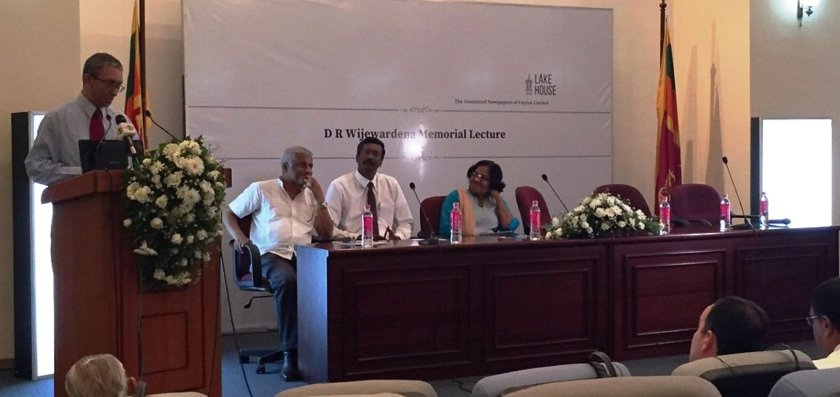
Nalaka Gunawardene speaks at D R Wijewardene memorial event on 26 February 2016 – Photo by Sam de Silva
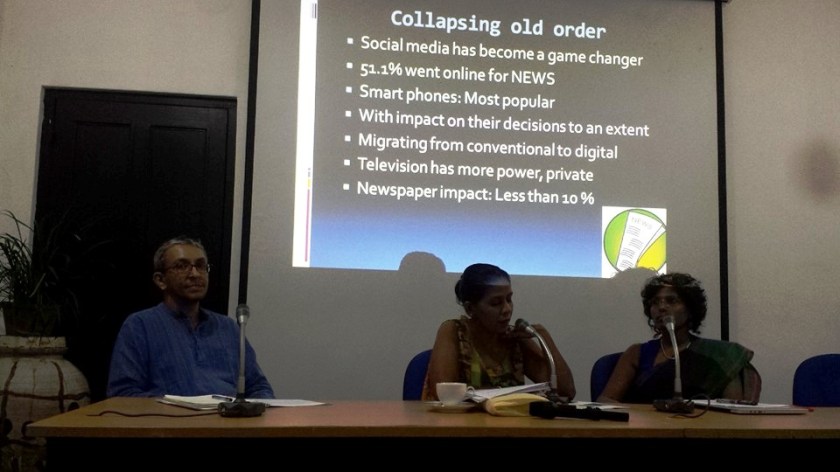
This week, I was asked by Sri Lanka’s oldest newspaper publishing house — Associated Newspapers of Ceylon Limited, or Lake House — to chair a panel discussion on ‘Survival and Evolution of Newspapers in the Digital Age’.
The event marked the 130th birth anniversary of Lake House founder and Sri Lanka’s first press baron, D R Wijewardene (1886 – 1950). It was held at the Lakshman Kadirgamar Institute in Colombo.
My panel comprised: communications scholar and former telecom regulator Prof Rohan Samarajiva; senior journalist Hana Ibrahim; Sri Lanka Press Institute’s CEO Kumar Lopez, and political scientist Sumith Chaaminda of Verite Research.
We had a lively discussion exploring the challenges faced by print publishers everywhere, and what solutions are relevant, viable and affordable for a majority of small scale publishers without deep pockets.
Here is an excerpt from my opening remarks (full text to be published soon as an op-ed article):
In the absence of independently audited circulation figures, we cannot be certain how well – or poorly – our newspapers are selling today. But indications are not promising. I have been involved in a state of the media study for the past year (due to be released in May 2016), and there is evidence that market survival is a big struggle for many smaller publishers.
More and more Lankan newspapers are being kept alive not to make any profit, but for influence peddling and political purposes. And in at least one case, the co-operatively owned Ravaya, reader donations were actively solicited recently to keep the paper alive.
Worldwide, print journalism’s established business models are crumbling, with decades-old publications closing down or going entirely online (The Independent newspaper in the UK is the latest to do the latter). Advertisers usually follow where the eyeballs are moving.
So what would D R Wijewardene do if he confronted today’s realities of gradually declining print advertising share and readers migrating to online media consumption? How might he respond by going back to his founding goals of political action and social change through the 3 Ps – the Press, Parliament and Platform – as important instruments of political action?
My guess is that he would invest in radio and/or television, with a strong digital integration. He might even find a viable income stream from digital and online publishing without locking up public interest content behind pay-walls.
We can only speculate, of course. Perhaps the more pertinent question to ask is: where are the budding D R Wijewardenes of the 21st Century? What are their start-ups and how are their dreams unfolding? Are they trying to balance reasonable profits with public interest journalism?
In my view, the biggest decider of success or failure – today, as it was a century ago – is not the medium, but the message. To put it more bluntly, it’s credibility, stupid!
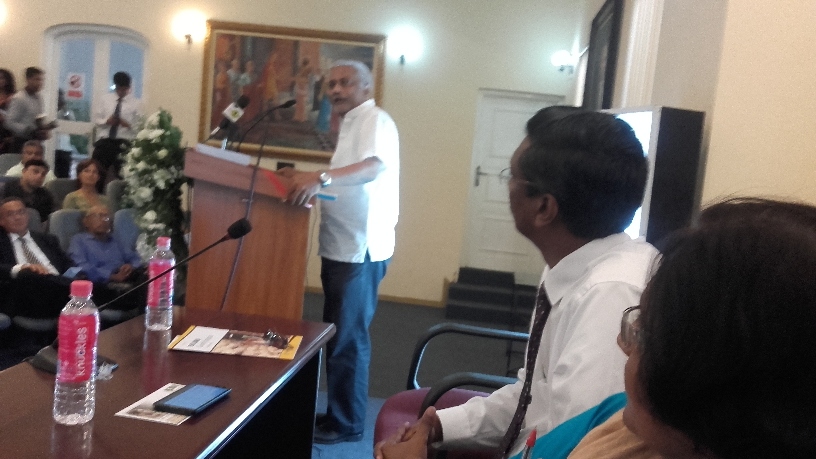
Prof Rohan Samarajiva speaks at D R Wijewardene memorial event, 26 Feb 2016
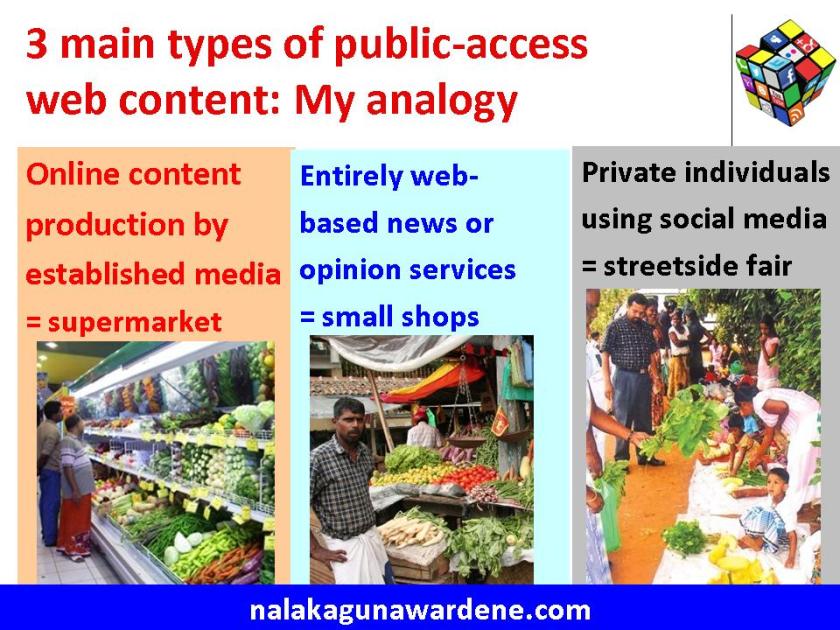
Social media bashing is a popular sport among media critics and others in Sri Lanka. Sadly, some have no clear idea what social media is (and isn’t), thus conflating this category of web content with others like news websitea and gossip websites.
In this week’s Ravaya column (appearing in issue of 21 February 2016), I try to explain this basic categorization along with a brief history of the web and web 2.0. I also reiterate the basic user precautions for social media users where the motto us: user beware!
In this week’s Ravaya column (appearing in issue of 7 February 2016), I reflect on the value of independence of thought and critical thinking. It coincides with the 68th anniversary of Sri Lanka’s political independence from Britain observed on Feb 4.
I argue that for much of Sri Lanka’s recorded history, we had open frontiers that welcomed traders, scholars, pilgrims, artistes, missionaries and others from the East and West. This was the ‘ehi-passika‘ (meaning ‘come and see’) formula in Buddhism, which made our kings and courtiers open-minded.
Such engagement had their pros and cons, but on the whole, the island nation was richer for the free flow of genes, ideas and technologies. It was only during the last five centuries – out of 25 in recorded history – that the balance was lost due to European colonisation.
Indeed, the island’s fauna, flora and people would be radically different today if such influences and cross-fertilisation didn’t happen. Excepting our aboriginal veddahs, all other races are immigrants from elsewhere. All our religious faiths are also ‘imported’. Sri Lanka today is a result of endless assimilating and remixing.
Yet, today, many Lankans are highly apprehensive of the outside world.
They constantly warn of elaborate international plots to ‘undermine and destabilise’ Sri Lanka. The usual suspects include cocktail of acronyms – among them the CIA, MI5, RAW, the IMF (and its twin, the World Bank), certain UN agencies and an assortment of supposedly ‘evil’ multinational corporations.
Worryingly, an alarmingly high number of Lankans take these imaginary scenarios for real. High levels of literacy and schooling make little difference. Our media often peddle — and amplify – these for cheap thrills or higher ratings.
We will not be a free nation until and unless we can develop independent and critical thinking.
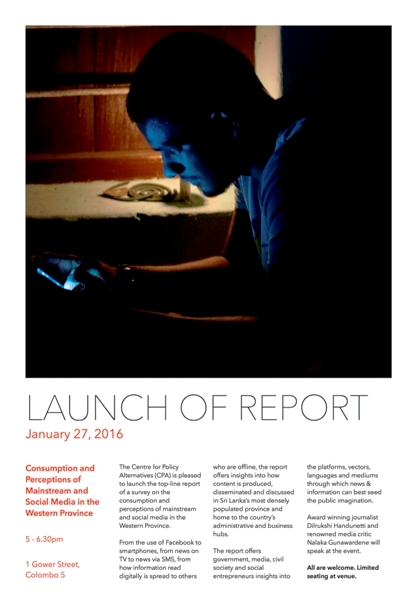
Launch of the top-line report of a survey on the consumption and perceptions of mainstream and social media in the Western Province of Sri Lanka, 27 Jan 2016
On 27 January 2016, the Centre for Policy Alternatives (CPA) launched the top-line report of a survey on the consumption and perceptions of mainstream and social media in the Western Province of Sri Lanka.
I was one of the launch speakers, and my presentation was titled: Information Society is Rising in Sri Lanka: ARE YOU READY?
The report draws on a survey of 1,743 randomly selected men and women, interviewed in Sinhala or Tamil language during June-July 2015. They were asked about mobile phone use and web access. The survey was conducted by Social Indicator, CPA’s survey research unit.
As the launch media release noted, “From the use of Facebook to smartphones, from news on TV to news via SMS, from how information read digitally is spread to others who are offline, the report offers insights into how content is produced, disseminated and discussed in Sri Lanka’s most densely populated province and home to the country’s administrative and business hubs.
It added: “The report offers government, media, civil society and social entrepreneurs insights into the platforms, vectors, languages and mediums through which news & information can best seed the public imagination.”
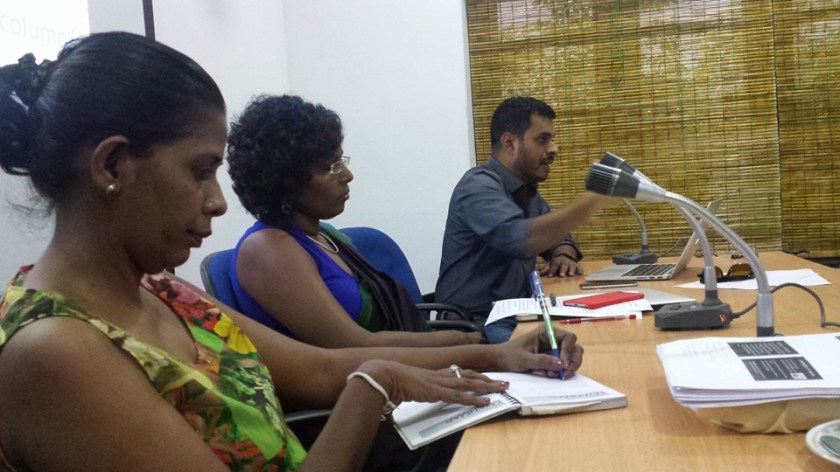
Dilrukshi Handunnetti (centre) speaks as Nalaka Gunawardene (left) and Iromi Perera listen at the launch on 27 Jan 2016 in Colombo – Photo by Sampath Samarakoon
In my remarks, I said it was vital to draw more insights on what I saw as ‘demand-side’ of media. But at the same time, I noted how a growing number of media consumers are no longer passively receiving, but also critiquing, repackaging and generating related (or new) content on their own.
I applauded the fact that this survey’s findings are shared in the public domain – in fact, Iromi Perera, head of Social Indicator, offered to share the full dataset with any interested person. This contrasts with similar surveys conducted by market research companies that are, by their very nature, not going to be made public.
Why do demand-side insights being available in the public domain matter so much? I cited four key reasons:
The new government is keen on media sector reforms at policy and regulatory levels: these should be based on evidence and sound analysis, not conjecture.
Media, telecom and digital industries are converging: everyone looking for ‘killer apps’ and biz opps (but only some find it).
Media companies are competing for a finite advertising budget: knowing more about media consumption can help improve production and delivery.
Advertisers want the biggest bang for their buck: Where are eyeballs? How to get to them? Independent studies can inform sound decision-making.
On this last point, I noted how Sri Lanka’s total ad spend up to and including 2014 does not show any significant money going into digital advertising. According to Neilsen Sri Lanka, ad-spending is dominated by broadcast TV, followed by radio an print. Experience elsewhere suggests this is going to change – but how soon, and what can guide new digital ad spending? Studies like this can help.
I also highlighted some interesting findings of this new study, such as:
Private TV is most popular source of news, followed by Facebook/web.
Across different age groups, smartphone is the device most used to access web
Online culture of sharing engenders TRUST: peer influence is becoming a key determinant in how fast and widely a given piece of content is consumed
None of this surprises me, and in fact confirms my own observations as a long-standing observer and commentator of the spread of ICTs in Sri Lanka.
Everyone – from government and political parties to civil society groups and corporates – who want to engage the Lankan public must take note of the changing media consumption and creation patterns indicated by this study, I argued.
I identified these big challenges particularly for civil society and others engaged in public interest communication (including mainstream and citizen journalists):
Acknowledge that we live in a media-rich information society (Get used to it!)
Appreciate that younger Lankans consume and process media content markedly differently from their elders and previous generations
Understand these differences (stop living in denial)
Leverage the emerging digital pathways and channels for social advocacy & public interest work
In my view, rising to this challenge is not a CHOICE, but an IMPERATIVE!
I ended reiterating my call for more research on information society issues, and with particular focus on mobile web content access which trend dominates user behaviour in Sri Lanka.
Award winning journalist Dilrukshi Handunnetti, and head of Social Indicator Iromi Perera were my fellow panelists at the launch, which was moderated by the study’s co-author and CPA senior researcher Sanjana Hattotuwa.
L to R – Dilrukshi Handunnetti, Iromi Perera, Sanjana Hattotuwa at CPA report launch, Colombo, 27 Jan 2016
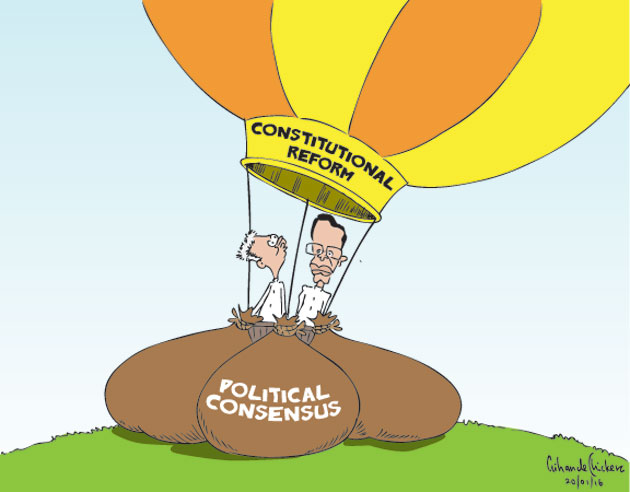
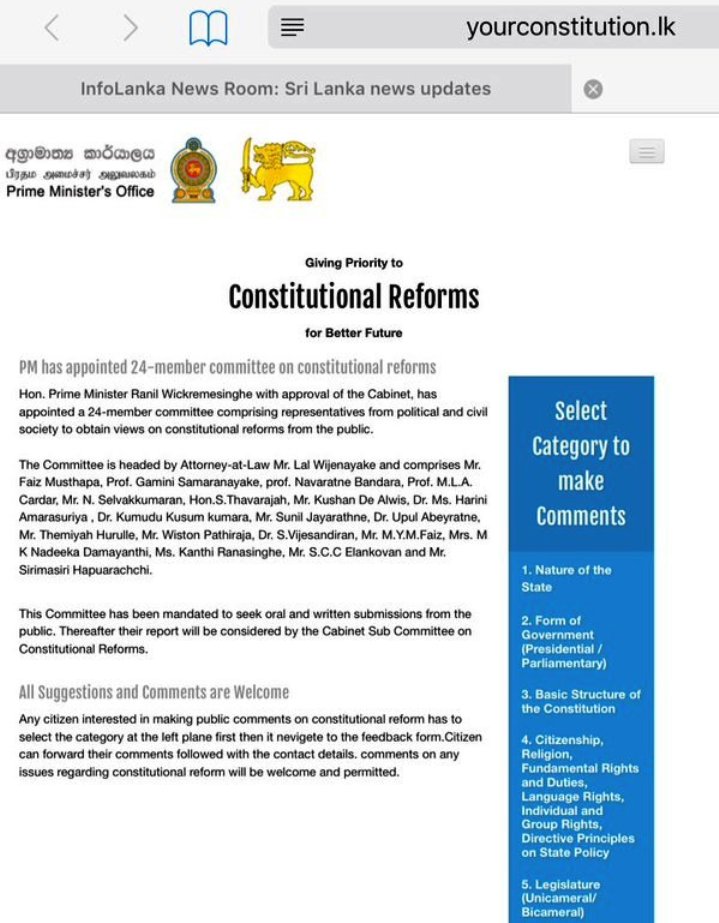
“Sri Lanka wants to make a new Constitution in a radically different way. It is poised to become the first developing country in the world to ‘crowd-source’ ideas for making the highest law of the land.
“That is all well and good – as long as the due process is followed, and that process has intellectual rigour, transparency and integrity. Therein lies the big challenge.”
So opens my latest op-ed essay, just published by Groundviews.org
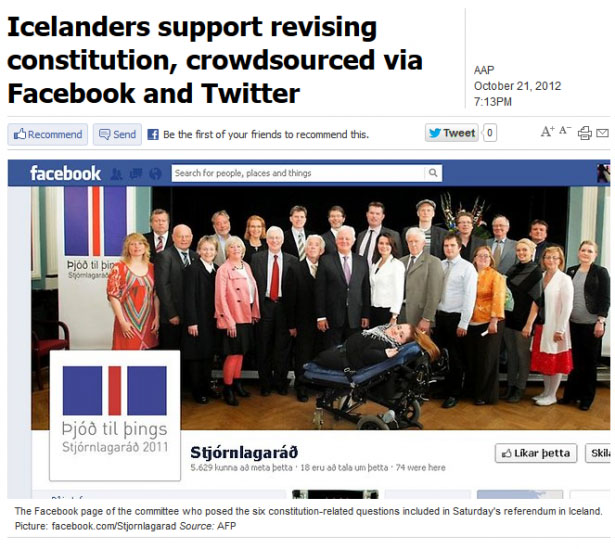
In it, I describe the experience of Iceland which was the world’s first country to ‘crowd-source’ a new Constitution. From 2011 to 2013, the European nation of 330,000 people engaged in an exercise of direct democracy to come up with a modern Constitution to replace the existing one adopted in 1944. That involved many public hearings as well as using social media and other communications platforms to gather public inputs and to ensure public scrutiny.
Facebook was used as part of a public consultation strategy to draft Iceland’s new Constitution in 2011-13
This is the path that Sri Lanka has now chosen: open and participatory Constitution making. To be sure, tropical Sri Lanka is vastly different. Its population of 21 million is 60 times larger than Iceland’s. But the Arctic nation’s generic lessons are well worth studying – both for inspiration and precaution.
I point out: “In doing so, it is important to ensure that public consultative process is not limited to the web and social media. Instead of dominating, technologies should only enable maximum participation.”
“The bottom-line: gathering public proposals is commendable, but not an end by itself. The government needs to adopt a systematic method to study, categorize and distil the essence of what is suggested. And that must happen across English, Sinhala and Tamil languages.”
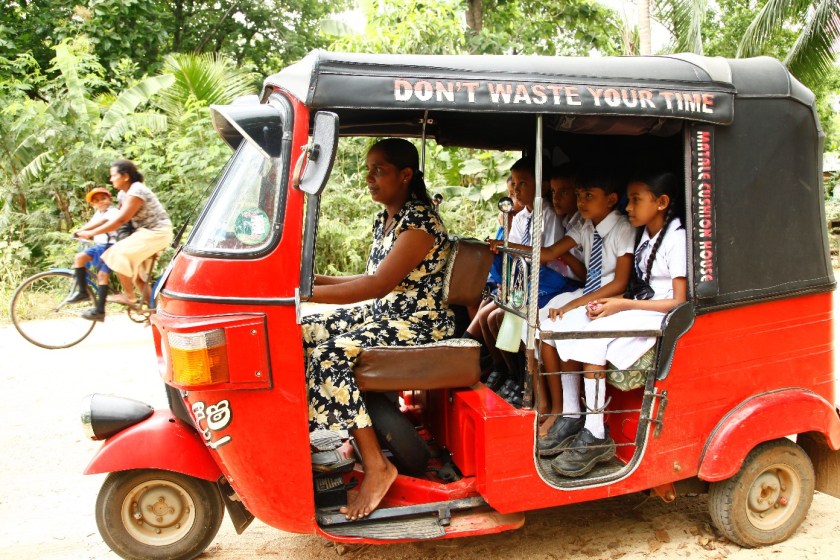
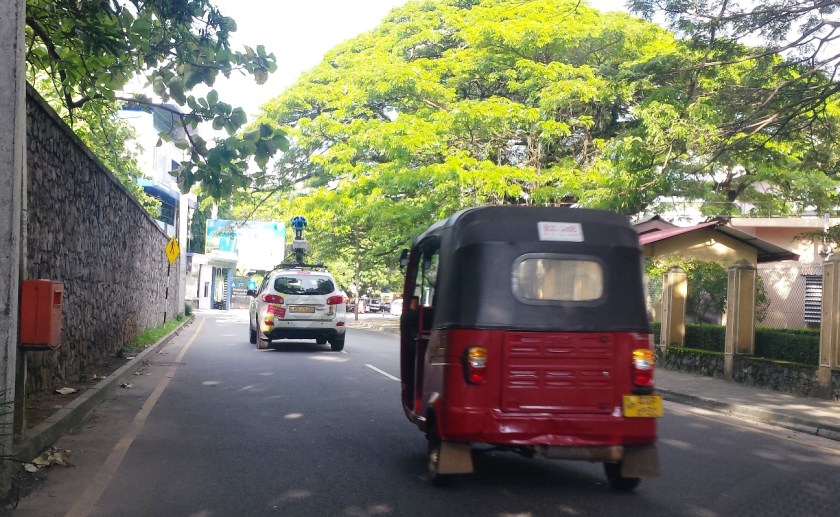
There are at least three post-1977 introductions that have transformed our society across all social and economic levels. They are: trishaws or three wheelers (came in 1978); broadcast television (started small in 1979 and went nationwide in 1982) and mobile telephony (1989).
According to government statistics, a total of 929,495 trishaws (officially called ‘motor tricycles’) were registered in Sri Lanka by end 2014. That makes it the second most common type of motorized transport (there were 2,988,612 motor cycles by end 2014). In comparison, there were 97,279 buses and 566,874 motor cars.
With 2015 additions to this fleet, we can say that one million trishaws are running on our roads. They have become the leading provider of informal public transport (IPT) services, carrying passengers as well as goods (sometimes well in excess of intended capacity).
An entirely a market driven phenomenon without any state subsidies, they are the lifeline of income to a very large number of families in Sri Lanka.
In in this week’s Ravaya column (appearing in issue of 6 Dec 2015), I look at the social, economic and cultural impacts of this vehicle in the Lankan context.
I ask: Can better regulation streamline the industry and improve the drivers’ social status?
Versatile three-wheelers or trishaws have become pervasive in Sri Lanka. Photo taken in Polonnaruwa by Anomaa Rajakaruna, in 2011
Findings of the survey by Yapa Mahinda Bandara of Moratuwa University based on sample of 342 three wheeler drivers in Western Province, Sri Lanka, 2015
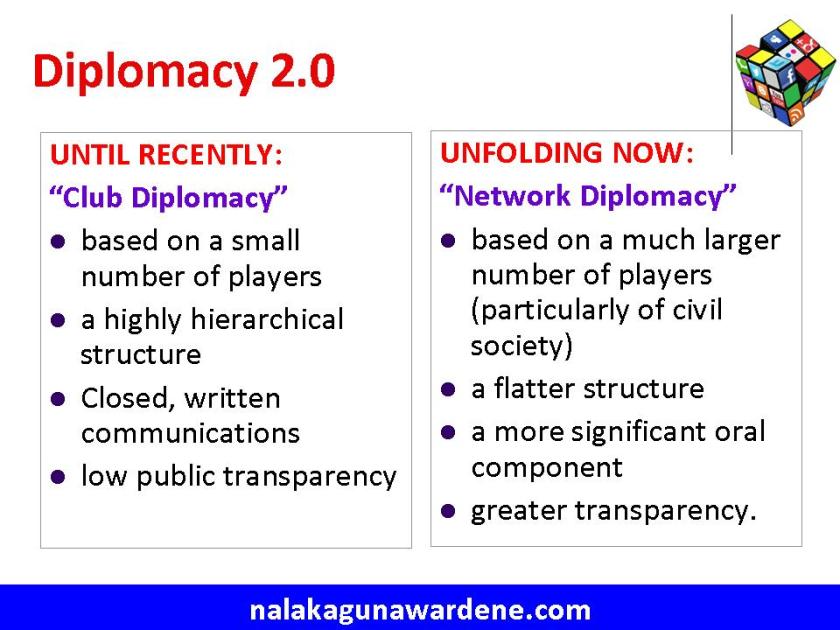
“The key to successful foreign policy in today’s world is networked diplomacy. Managing international crises requires mobilizing international networks of public and private actors,” says Anne-Marie Slaughter, an international lawyer and political scientist who is a former Princeton academic and ex-Director of Policy Planning at the US State Department under U.S. Secretary of StateHillary Clinton.
Diplomacy then…and now
The nature of this ‘networked diplomacy’ is still being documented and studied. Some governments are not even convinced of its value, but meanwhile, others are encouraging it perhaps as a way of ‘exploiting the inevitable’.
I am neither diplomat nor scholar, but sometimes dabble as a writer and researcher on how new media – including social media – impact our society, economy and governance. So I welcomed an opportunity to engage a group of mid-career professionals on the topic Diplomacy & Foreign Relations in the Social Media Age.
I made this presentation on 14 November 2015 as part of the Certificate Course in Creative Diplomacy, conducted by the Regional Centre for Strategic Studies (RCSS) in Colombo, Sri Lanka – a think tank on international relations.
In this, I introduce and briefly explore the new kind of real-time, public diplomacy that is being ushered in with the spreading of social media. I show how diplomats and other government officials can no longer ignore this mass medium, but at the same time their traditional ways of communications need to be reoriented to suit the realities of this new information ecosystem that is informal, irreverent and fleeting.
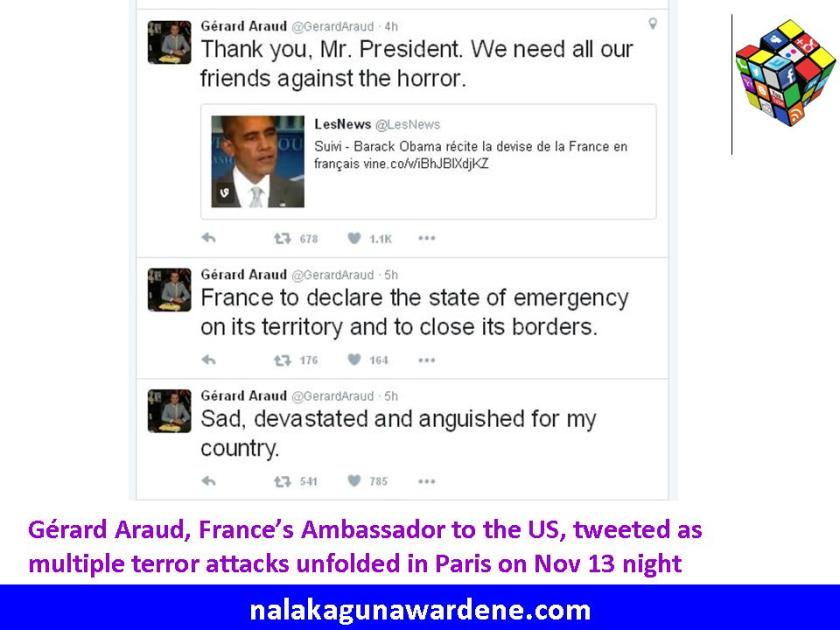
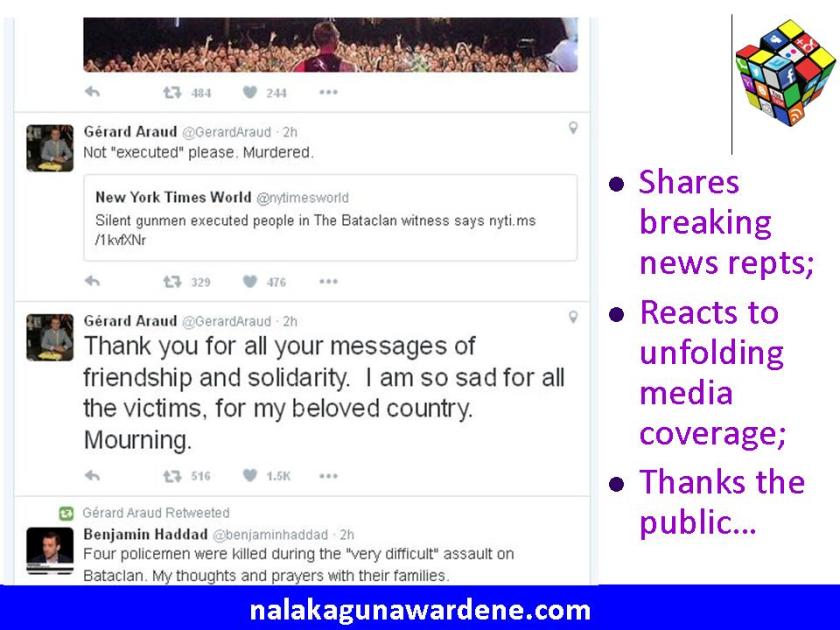
As I spoke on the day after the ISIS terrorist attacks in France, I used (among others) the latest examples of how Gérard Araud, France’s Ambassador to the US, tweeted live as multiple terror attacks unfolded in Paris on Nov 13 night.
Real time tweeting by French Ambassador to the US while Paris attack was underway on 13 Nov 2015…More tweets from Ambassador Gérard Araud on 13 Nov 2015…
To see the bigger picture, I’ve distilled some wisdom of key researchers in this area including: Anne-Marie Slaughter, former Princeton Academic and ex-Director of Policy Planning, US State Department; Philip Seib, Professor of Journalism and Public Diplomacy, University of Southern California; and Ramesh Thakur, Professor, Crawford School of Public Policy, Australian National University (ANU).
I also used the case study of Indian Ministry of External Affairs using social media for crisis management when 18,000 Indian nationals were stranded in Libya in Feb – March 2011 who had to be evacuated urgently.
As Ramesh Thakur has written, it is “a useful case study in the utility of social media tools in connecting the government with people who are normally well outside their range, but who can be a useful channel to send out time-urgent critical information and to receive equally valuable information from sources on the ground.”
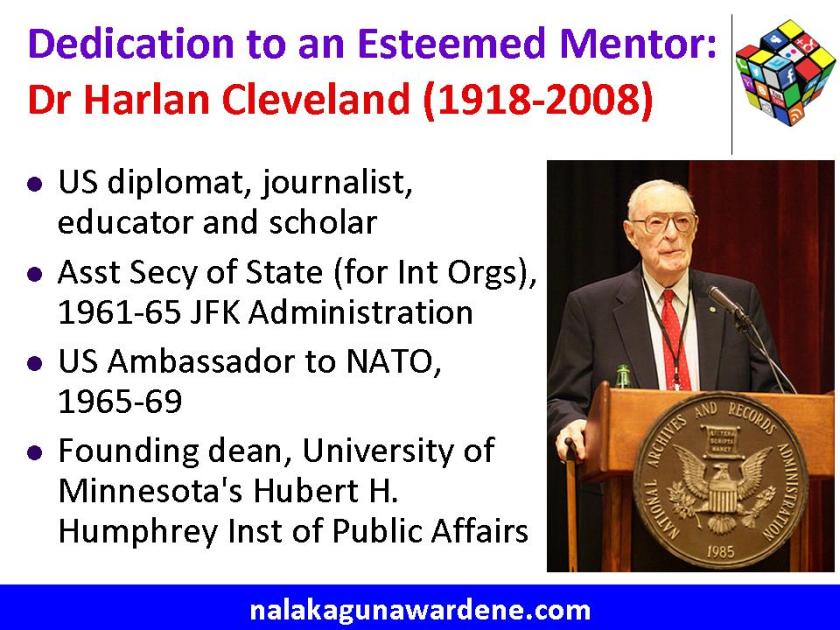
Dedication to a remarkable diplomat-scholar who spent a few days in the Summer of 1995 mentoring a group of youth leaders from around the world, including myself, who were brought to the UN Headquarters in New York…
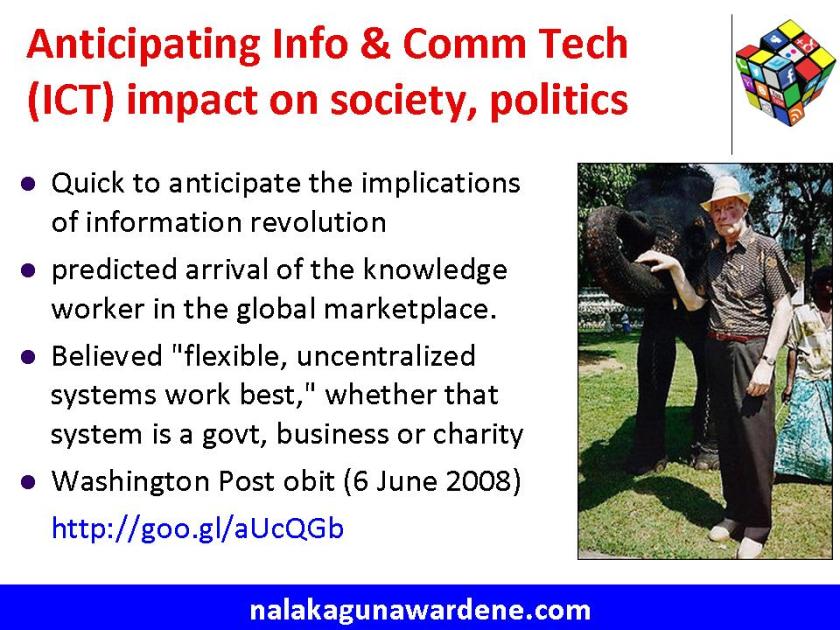
I dedicated this presentation to a diplomat and scholar whose mentoring I was privileged to receive 20 years ago: Dr Harlan Cleveland (1918 – 2008) who served as US Ambassador to NATO, 1965–1969 (Johnson Administration), and earlier as US Assistant Secretary of State for International Organization Affairs, 1961–1965 (Kennedy Administration).
Harlan Cleveland, among the first ‘philosophers’ of the Information Age
According to RCSS, their Course in Creative Diplomacy “provides theoretical and practical insights into the various facets of Creative Diplomacy. The course will expand participants’ understanding of the concept of diplomacy and expose them to new skills and alternative perspectives to engage with stakeholders. It is further envisioned that this post-disciplinary approach, which will be followed by the course, will explore a whole host of new mediums through which mediation, cooperation and negotiation can be carried out.”
Today, I gave the opening speech at an introductory seminar on ‘open data’ held at the Sri Lanka Press Institute, Colombo, on 15 Oct 2015.
Organised by InterNews and Transparency International Sri Lanka, the seminar explored the concepts of ‘open data’ and ‘big data’ and discussed that role civil society, media and technologists can play in advocating to government to open up its data, enabling a culture of transparency and open government.
An Open Dialogue on Open Data – 15 Oct 2015 Coloombo – L to R – Sriganesh Lokanathan, Nalaka Gunawardene, Sanjana Hattotuwa [Photo by Sam de Silva]My premise was that while the proliferation of digital tools and growth of web-based data storage (the cloud) opens up new possibilities for information generation and sharing, South Asian societies need to tackle institutional and cultural factors before democratised and digital data can really transform governance and development. Our countries must adopt more inclusive policies and practices for public sharing of scientific and other public data.
This resonates with a call by the United Nations for a ‘data revolution for development’. I cited the UN Secretary-General’s Independent Expert Advisory Group on a Data Revolution for Sustainable Development (IEAG) highlighted this in a report titled A World That Counts: Mobilising The Data Revolution for Sustainable Development (Nov 2014).
A World that Counts…
I also referred to the Sustainable Development Goals (SDGs) that were adopted by member states of the UN at a heads of state level summit in New York on 25-27 September 2015. Underpinning all 17 SDGs is an explicit recognition of the value of data for development — to better inform decisions, and to better monitor progress.
Sri Lanka’s President Maithripala Sirisena addressed the Summit, and officially committed Sri Lanka to the SDGs. I argue that implicit in that commitment is a recognition of data for development and open data policies. We now need to ask our government to introduce a government-wide policy on data collection, storage and sharing. In short, it must open up!
This was my open call to the President to open up:
Open Your Govt’s Data, Mr President! Hope you don’t give us HAL’s famous answer…
Sri Lanka has taken tentative steps towards open data. In 2013, the Open Data initiative of Government started making some official datasets freely available online. It focuses on machine-readable (well-structured and open) datasets.
I quoted from my own recent op-ed published in Daily Mirror broadsheet newspaper:
After many years of advocacy by civil society, Sri Lanka will soon adopt a law that guarantees citizens’ Right to Information (RTI). It has recently been added to the Constitution as a fundamental right.
Passing the RTI law is only a beginning — institutionalising it requires much effort, considerable funds, and continued vigilance on civil society’s part.
RTI is Coming: Are We Ready? My question to Lankan civil society and media
As champions of RTI, media and civil society must now switch roles, I said. While benefiting from RTI themselves, they can nurture the newly promised openness in every sphere, showing citizens how best to make use of it. Reorienting our public institutions to a new culture of openness and information sharing will be an essential step.
I looked at the larger news media industry in Sri Lanka to which provincial journalists supply ground level news, images and video materials. These are used on a discretionary basis by media companies mostly based in the capital Colombo (and some based in the northern provincial capital of Jaffna). Suppliers have no control over whether or how their material is processed. They work without employment benefits, are poorly paid, and also exposed to various pressures and coercion.
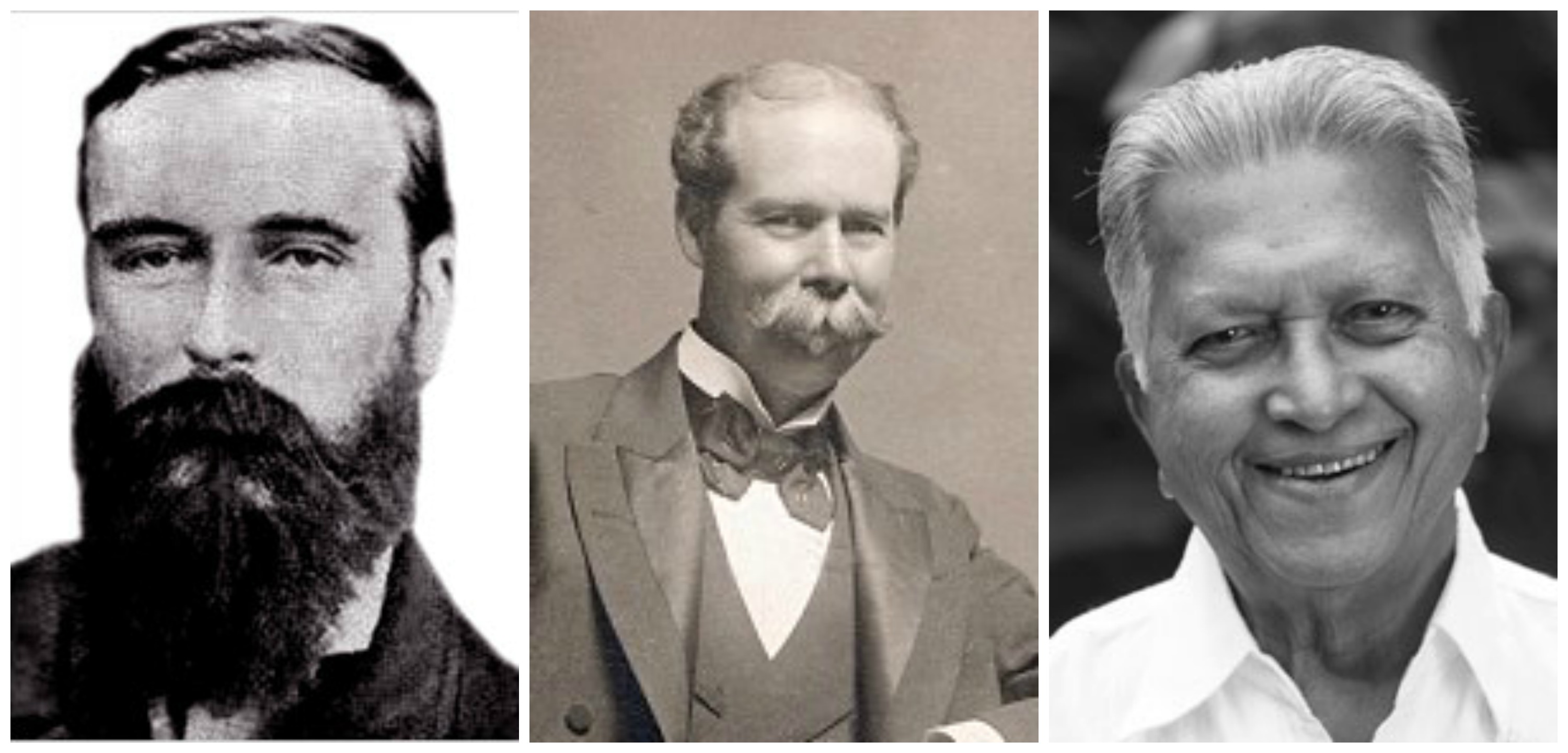
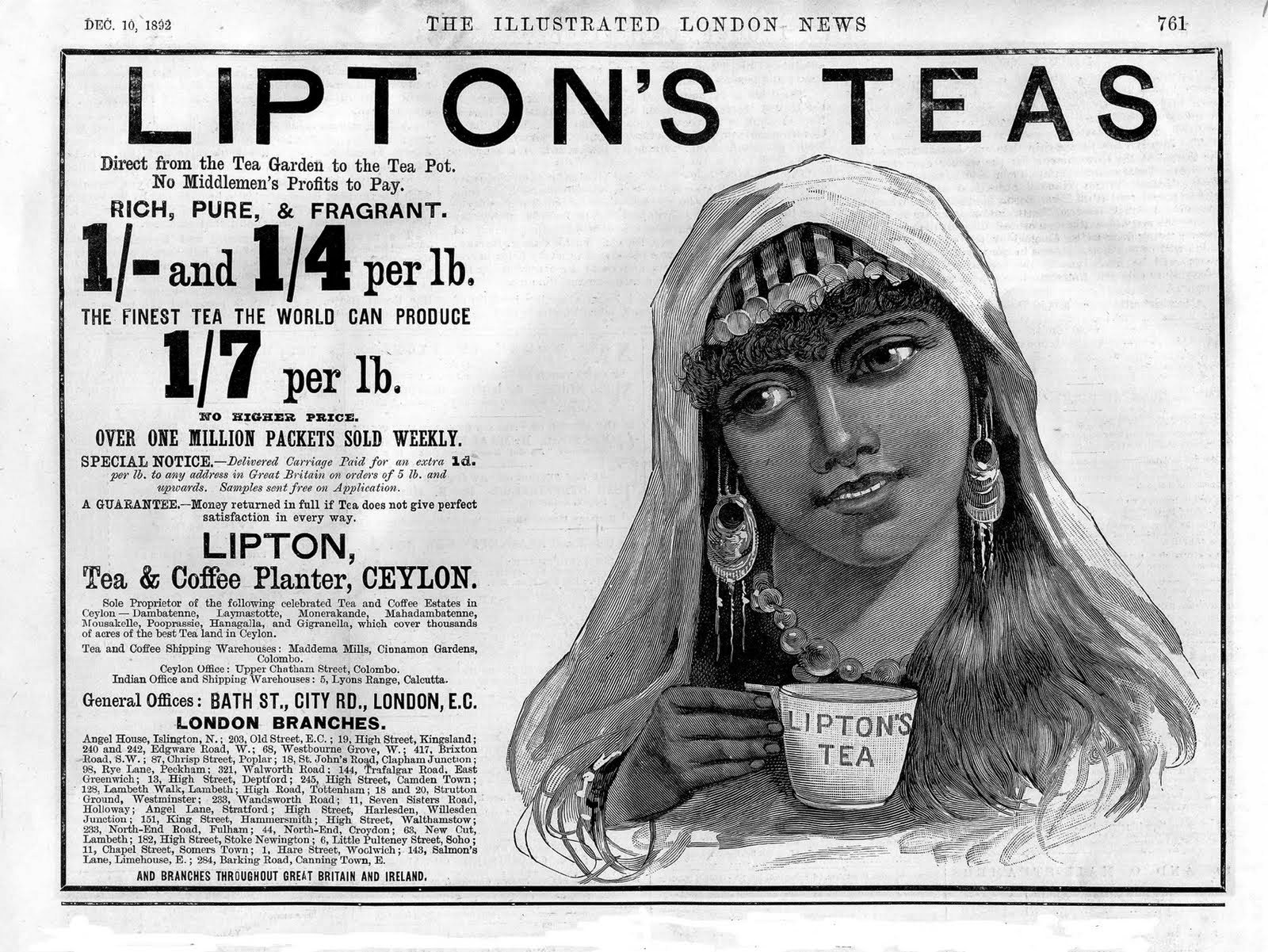
I drew an analogy with the nearly 150-year old Ceylon Tea industry, which in 2014 earned USD 1.67 billion through exports. For much of its history, Ceylon tea producers were supplying high quality tea leaves in bulk form to London based tea distributors and marketers like Lipton. Then, in the 1970s, a former tea taster called Merrill J Fernando established Dilmah brand – the first producer owned tea brand that did product innovation at source, and entered direct retail.
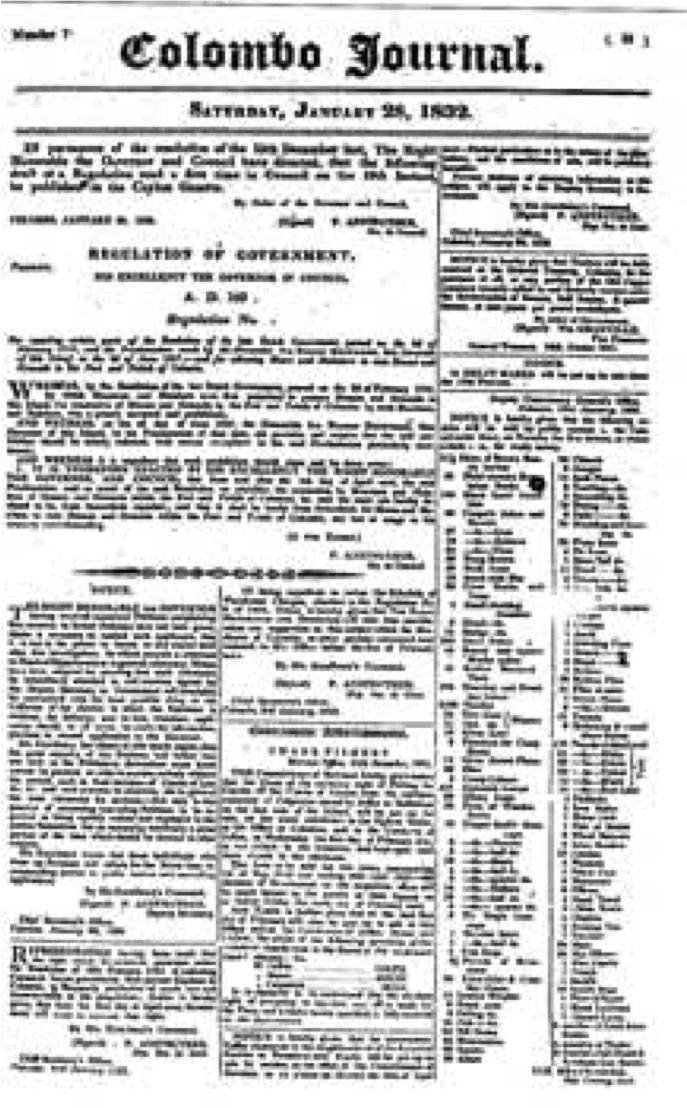
The media industry also started during British colonial times, and in fact dates back to 1832. But I questioned why, after 180+ years, our media industry broadly follows the same production model: material sourced is centrally processed and distributed, without much adaptation to new digital media realities.
In this week’s Ravaya column, (appearing in issue of 11 Oct 2015), I have adapted my talk into Sinhala.
Ceylon Tea industry pioneers and innovator: L to R – James Taylor, Thomas Lipton, Merrill Fernando
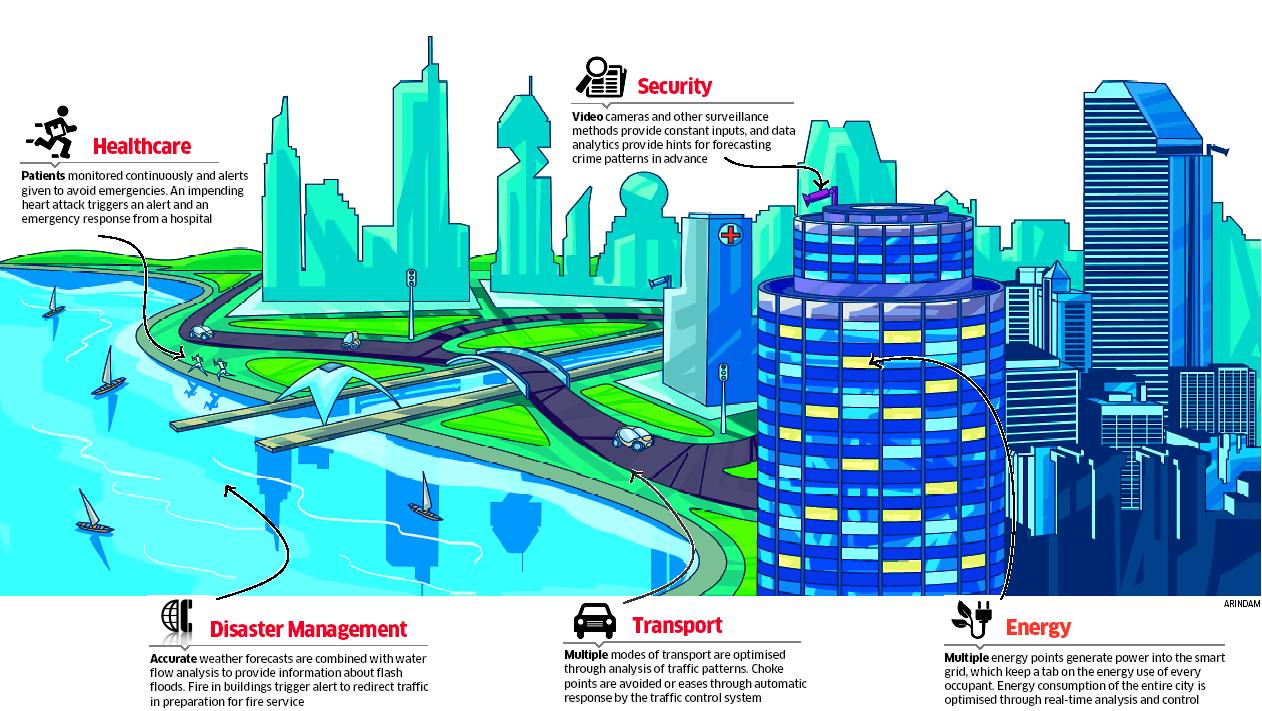
The term ‘smart city’ refers to urban systems, and not to the smartness of residents. In fact, there is no universal definition of smart cities: it can mean smart utilities, smart housing, smart mobility or smart design.
Smart cities use information and communications technologies (ICTs) as their principal infrastructure. These become the basis for improving the quality and performance of urban services, reducing costs and resource consumption, and for engaging citizens more effectively.
ICTs – ranging from automatic sensors to data centres — would create ‘feedback loops’ within the complex city systems. If processed properly, this flow of data in real time can vastly improve the design of “hard” physical environment and the provision of “soft” services to citizens.
In this week’s Ravaya column, (in Sinhala, appearing in issue of 4 Oct 2015), I explore the concept of smart cities, which the new government of Sri Lanka wants to develop.
It is a formidable task. India in 2014 announced an ambitious programme to create 100 smart cities. Under this, state capitals, as well as many tourist and heritage cities are to receive funding for upgrading their infrastructure. But Prime Minister Modi and his technocrats have been struggling since then to explain just what they mean by smart cities.
I argue that smart cities need empowered people and engaged city administrators. I have argued in earlier in this column, concrete and steel do not a city make. Likewise, ICT enabled smart infrastructure alone will not create smart cities – unless the human factor is well integrated.


![An Open Dialogue on Open Data - 15 Oct 2015 Coloombo - L to R - Sriganesh Lokanathan, Nalaka Gunawardene, Sanjana Hattotuwa [Photo by Sam de Silva]](https://nalakagunawardene.com/wp-content/uploads/2015/10/an-open-dialogue-on-open-data-15-oct-2015-coloombo-l-to-r-sriganesh-lokanathan-nalaka-gunawardene-sanjana-hattotuwa.jpg)







 Open Minds!