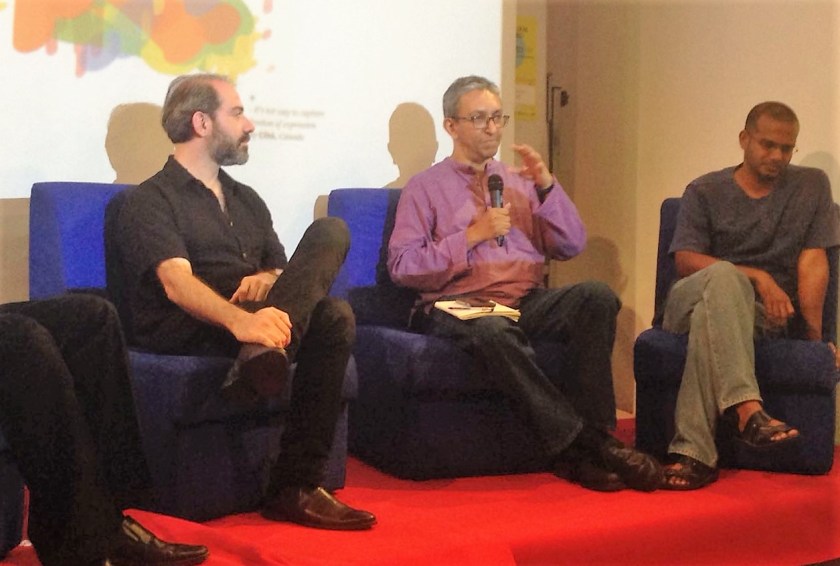
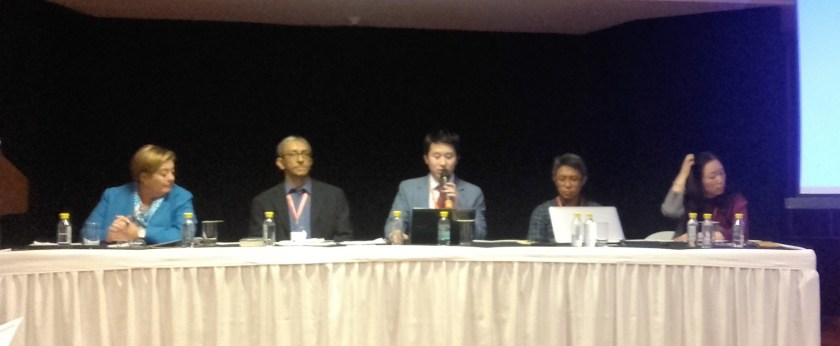
L to R – Kianoush Ramezani, Nalaka Gunawardene, Gihan de Chickera at Night of Ideas in Colombo, 26 January 2017
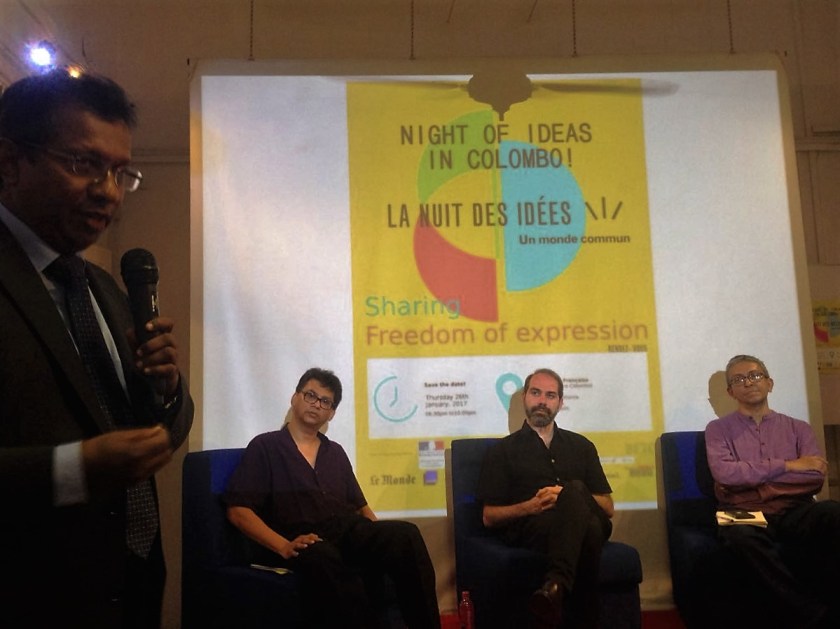
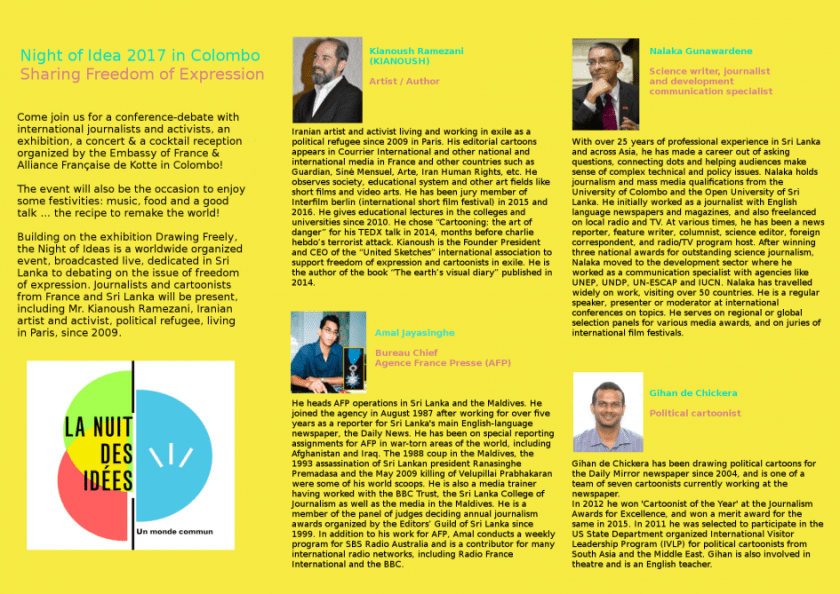
On 26 January 2017, the Alliance Française de Kotte with the Embassy of France in Sri Lanka presented the first ever “Night of Ideas” held in Colombo. During that event, participants were invited to engage in discussions on ‘‘A World in common – Freedom of Expression (FOE)” in the presence of French and Sri Lankan cartoonists, journalists and intellectuals.
I was part of the panel that also included: Kianoush Ramezani, Founder and President of United Sketches (Paris), an Iranian artist and activist living and working in Paris since 2009 as a political refugee; and Gihan de Chickera, Political cartoonist at the Daily Mirror newspaper in Sri Lanka. The panel was moderated by Amal Jayasinghe, bureau chief of Agence France Presse (AFP) news agency.
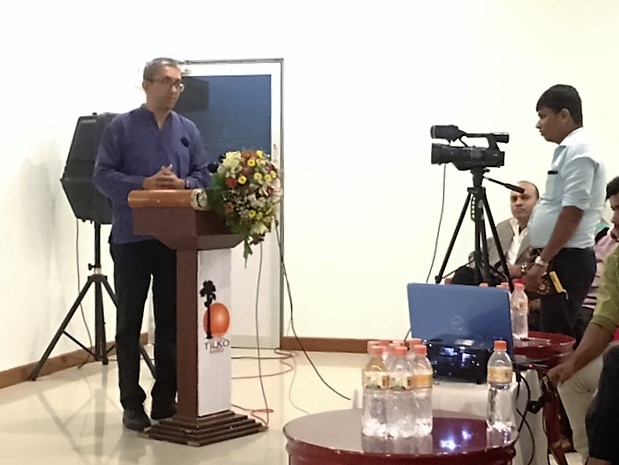
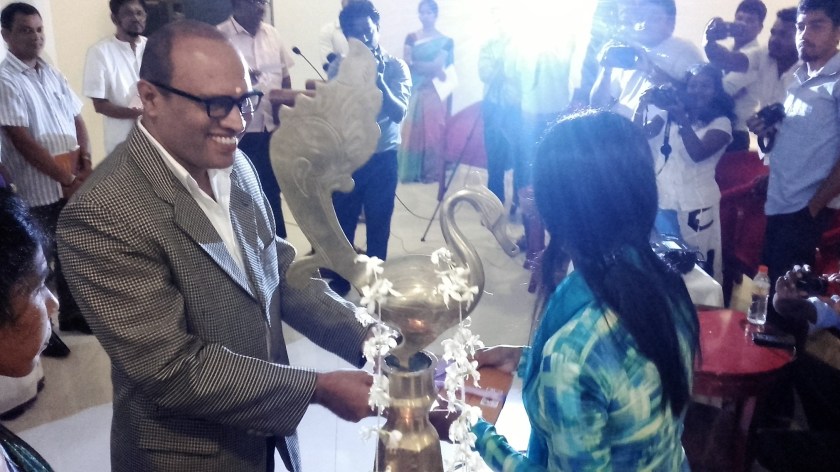
Human Rights Lawyer and activist J C Weliamuna opens the Night of Ideas in Colombo, 26 January 2017
In my opening remarks, I paid a special tribute to Sri Lanka’s cartoonists and satirists who provided a rare outlet for political expression during the Rajapaksa regime’s Decade of Darkness (2005-2014).
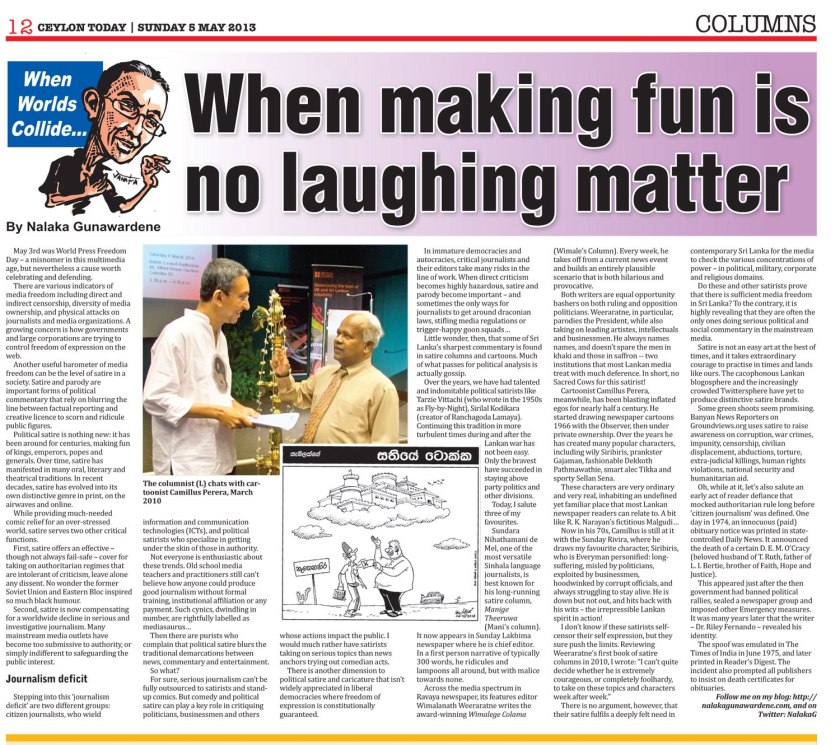
I referred to my 2010 essay, titled ‘When making fun is no laughing matter’ where I had highlighted this vital aspect of FOE. Here is the gist of it:
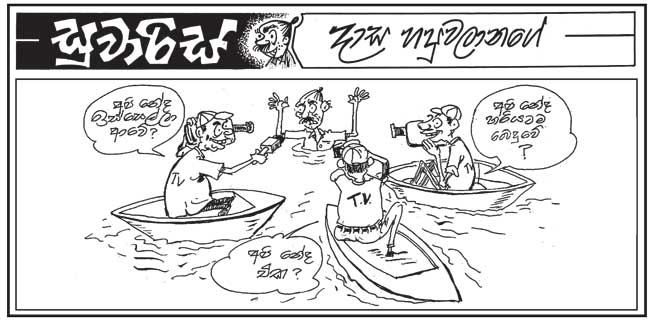
A useful barometer of FOE and media freedom in a given society is the level of satire that prevails. Satire and parody are important forms of political commentary that rely on blurring the line between factual reporting and creative license to scorn and ridicule public figures.
Political satire is nothing new: it has been around for centuries, making fun of kings, emperors, popes and generals. Over time, satire has manifested in many oral, literary and theatrical traditions. In recent decades, satire has evolved into its own distinctive genre in print, on the airwaves and online.
Satire offers an effective – though not always fail-safe – cover for taking on authoritarian regimes that are intolerant of criticism, leave alone any dissent. No wonder the former Soviet Union and Eastern Bloc inspired so much black humour.
This particular dimension to political satire and caricature that isn’t widely appreciated in liberal democracies where freedom of expression is constitutionally guaranteed.
In immature democracies and autocracies, critical journalists and their editors take many risks in the line of work. When direct criticism becomes highly hazardous, satire and parody become important — and sometimes the only – ways for journalists get around draconian laws, stifling media regulations or trigger-happy goon squads…
Little wonder, then, that some of Sri Lanka’s sharpest political commentary is found in satire columns and cartoons. Much of what passes for political analysis in the media is actually gossip.
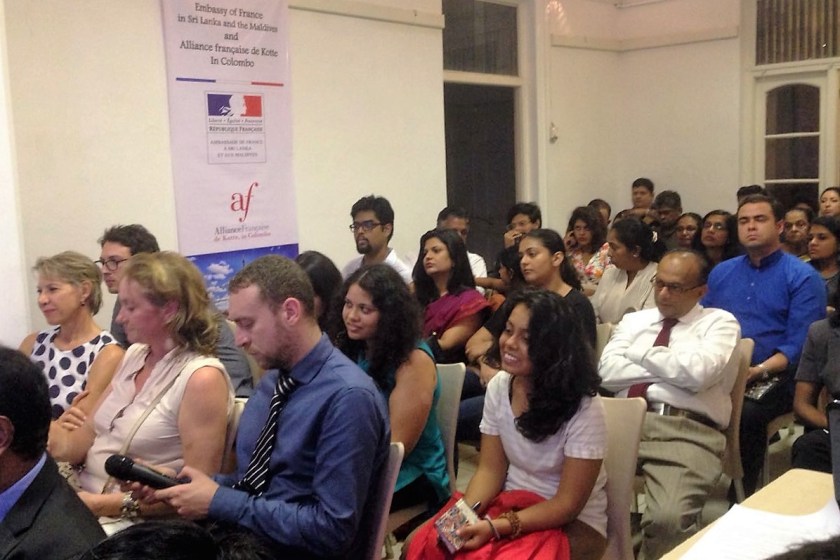
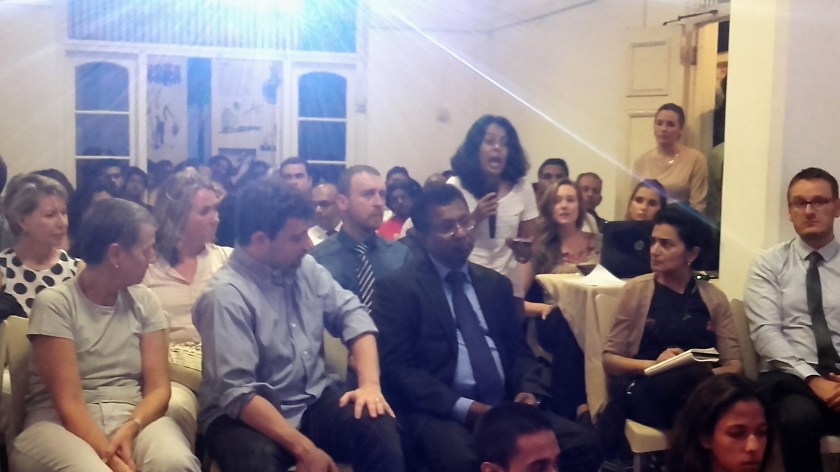
Part of the audience for Night of Ideas at Alliance Française de Kotte, 26 Jan 2017Audience engages the panel during Night of Ideas at Alliance Française de Kotte, 26 Jan 2017Night of Ideas in Colombo – promotional brochure
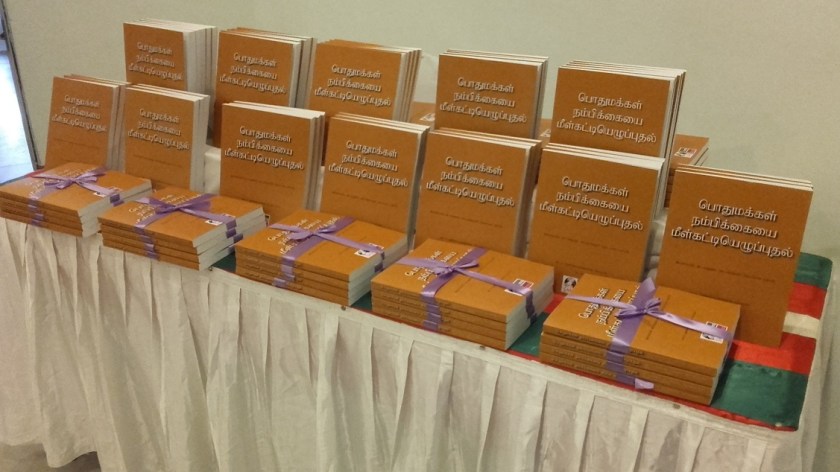
Rebuilding Public Trust: Tamil version copies displayed at the launch in Jaffna, 24 Jan 2017
Journalists, academics, politicians and civil society representatives joined the launch of Tamil language version of Sri Lanka’s Media Development Indicators (MDI) Report in Jaffna on 24 January 2017.
The report, for which I served as overall editor, is the outcome of a 14-month-long consultative process that involved media professionals, owners, managers, academics and relevant government officials. It offers a timely analysis, accompanied by policy directions and practical recommendations.
Students of Jaffna University Media Studies programme with its head, Dr S Raguram, at the launch of MDI Sri Lanka Tamil version, Jaffna, 24 January 2017
Reginald Cooray, Governor of the Northern Province, in a message said: “I am sure that the elected leaders and the policy makers of this government of Good governance will seize the opportunity to make a professionally ethical media environment in Sri Lanka which will strengthen the democracy and good governance.”
He added: “The research work should be studied, appreciated and utilised by the leaders and the policy makers. Everyone who was involved in the work should be greatly thanked for their research presentation with clarity.”
Lars Bestle of International Media Support (IMS) speaks at Sri Lanka MDI Report’s Tamil version launch in Jaffna, 24 January 2017
Speaking at the event, Sinnadurai Thavarajah, Leader of the Opposition of the Northern Provincial Council, urged journalists to separate facts from their opinions. “Media freedom is important, but so is unbiased and balanced reporting,” he said.
Lars Bestle, Head of Department for Asia and Latin America at International Media Support (IMS), which co-published the report, said: “Creating a healthy environment for the media that is inclusive of the whole country is an essential part of ensuring democratic transition.”
He added: “This assessment points the way forward. It is now up to the local actors – government, civil society, media, businesses and academia – with support from international community, to implement its recommendations.”
Nalaka Gunawardene, Consultant Editor of Sri Lanka Media Development Indicators (MDI) Report, speaks at the launch of Tamil version in Jaffna on 24 Jan 2017
I introduced the report’s key findings and recommendations. In doing so, I noted how the government has welcomed those recommendations applicable to state policies, laws and regulations and already embarked on law review and regulatory reforms. In sharp contrast, there has been no reaction whatsoever from the media owners and media gatekeepers (editors).
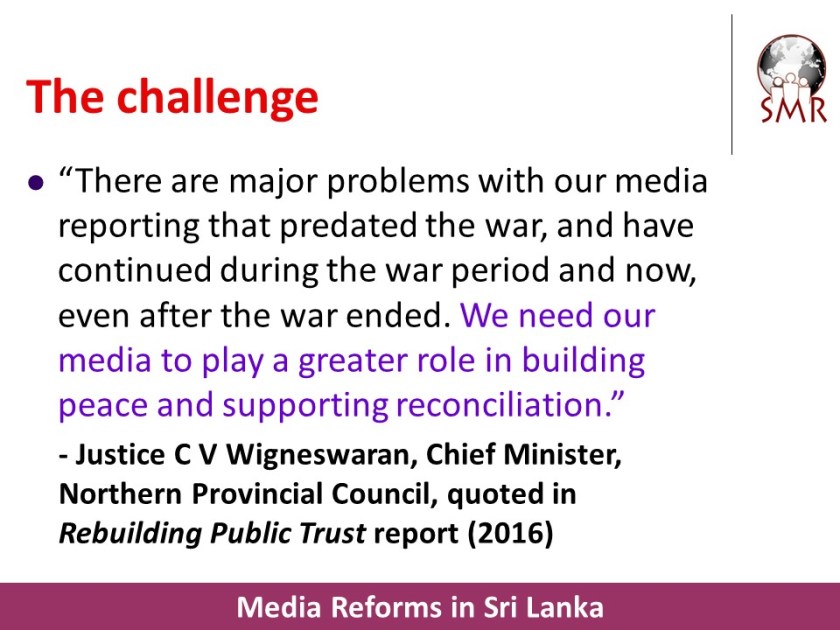
Quote from ‘Rebuilding Public Trust’ – State of Sri Lanka’s media report
Dr S Raguram, Head of Media Studies at the University of Jaffna (who edited the Tamil version) and Jaffna Press Club president Ratnam Thayaparan also spoke.
The report comes out at a time when the country’s media industry and profession face multiple crises stemming from an overbearing state, unpredictable market forces and rapid technological advancements.
Balancing the public interest and commercial viability is one of the media sector’s biggest challenges today. The report says: “As the existing business models no longer generate sufficient income, some media have turned to peddling gossip and excessive sensationalism in the place of quality journalism. At another level, most journalists and other media workers are paid low wages which leaves them open to coercion and manipulation by persons of authority or power with an interest in swaying media coverage.”
Notwithstanding these negative trends, the report notes that there still are editors and journalists who produce professional content in the public interest while also abiding by media ethics. Unfortunately, their work is eclipsed by media content that is politically partisan and/or ethnically divisive.
The result: public trust in media has been eroded, and younger Lankans are increasingly turning to entirely web-based media products and social media platforms for information and self-expression. A major overhaul of media’s professional standards and ethics is needed to reverse these trends.
MDI Sri Lanka – Tamil version being presented to stakeholders in Jaffna, 24 Jan 2017MDI Sri Lanka – Tamil version being presented to stakeholders in Jaffna, 24 Jan 2017
The Tamil report is available for free download at:
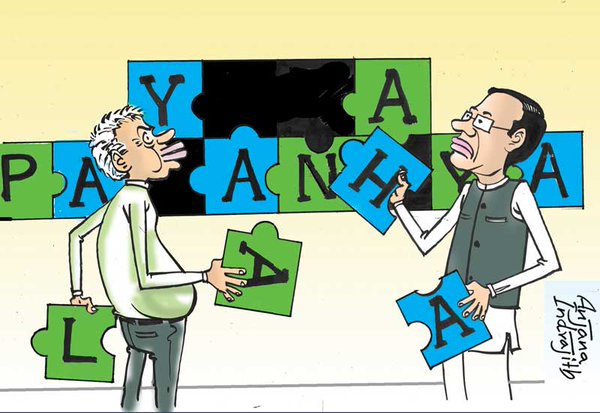
Now, as we enter 2017, civil society faces the twin challenges of holding the current government to account, and preventing yaha-palanaya ideal from being discredited by expedient politicians. At the same time, civil society must also become more professionalised and accountable.
‘Civil society’ is a basket term: it covers a variety of entities outside the government and corporate sectors. These include not only non-governmental organisations (NGOs) but also trade unions, student unions, professional associations (and federations), and community based or grassroots groups. Their specific mandates differ, but on the whole civil society strives for a better, safer and healthier society for everyone.
The path to such a society lies inevitably through a political process, which civil society cannot and should not avoid. Some argue that civil society’s role is limited to service delivery. In reality, worthy tasks like tree planting, vaccine promoting and microcredit distributing are all necessary, but not all sufficient if fundamentals are not in place. For lasting change to happen, civil society must engage with the core issues of governance, rights and social justice.
Ideally, however, civil society groups should not allow themselves to be used or subsumed by political parties. I would argue that responsible civil society groups now set the standards for our bickering and hesitant politicians to aspire to.
Take, for example, two progressive legal measures adopted during 2016: setting aside a 25% mandatory quota for women in local government elections, and legalising the Right to Information. Both these had long been advocated by enlightened civil society groups. They must now stay vigilant to ensure the laws are properly implemented.
Other ideals, like the March 12 Movement for ensuring clean candidates at all elections, need sustained advocacy. So Lankan civil society has plenty of unfinished business in 2017.
Nalaka Gunawardene writes on science, development and governance issues. He tweets from @NalakaG.
Note: Cartoons appearing here did not accompany the article published in The Sunday Leader.
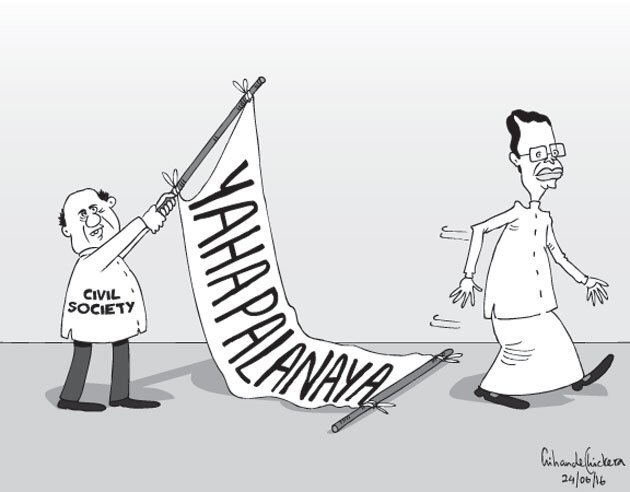
After 18 months in office, Sri Lanka’s President Maithripala Sirisena seems less keen on his electoral promises of good governance, which he had articulated with lots of help from civil society. Cartoon by Gihan de Chickera, Daily Mirror, 24 June 2016.
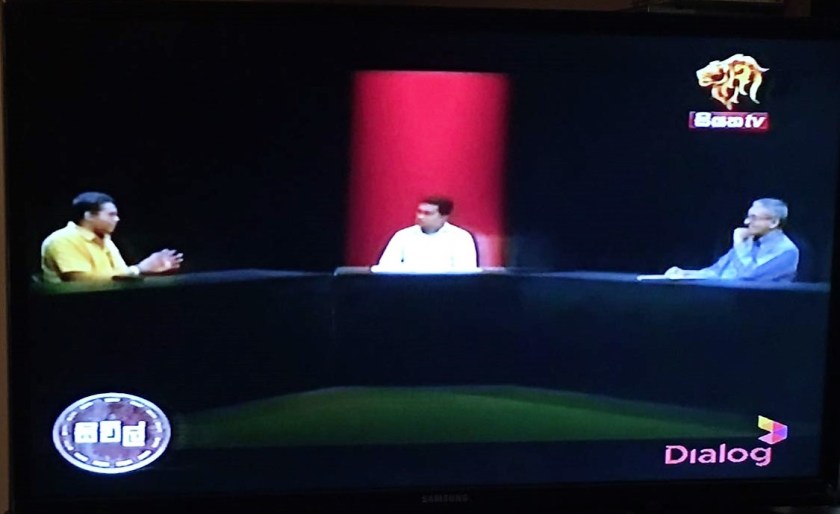
Siyatha TV CIVIL show: Dr Ranga Kalansooriya (left) and Nalaka Gunawardene (right) discuss Sri Lanka’s Right to Information law with host Prasanna Jayanththi: 27 Sep 2016
Back in 2009-2010, I used to host a half hour show on Siyatha TV, a private television channel in Sri Lanka, on inventions and innovation.
So it was good to return to Siyatha on 27 September 2016 — this time as a guest on their weekly talk show CIVIL, to talk about Sri Lanka’s new Right to Information (RTI) law.
Joining me was Dr Ranga Kalansooriya, experienced and versatile journalist who has recently become Director General of the Government Department of Information. Our amiable host was Prasanna Jayaneththi.
We discussed aspects of Sri Lanka’s Right to Information Act No 12 of 2016, adopted in late June 2016, with all political parties in Parliament supporting it. Certified by the Speaker on 4 August 2016, we are now in a preparatory period of six months during which all public institutions get ready for processing citizen request for information.
Dr Ranga Kalansooriya on Siyatha TV’s CIVIL talk show on right to information – 27 Sep 2016
Nalaka Gunawardene on Siyatha TV’s CIVIL talk show on right to information – 27 Sep 2016
Prasanna Jayaneththi hosts Siyatha TV’s CIVIL talk show on right to information – 27 Sep 2016
I emphasized on the vital DEMAND side of RTI: citizens and their various associations and groups need to know enough about their new right to demand and receive information from public officials — and then be motivated to exercise that right.
I argued that making RTI a fundamental right (through the 19th Amendment to the Constitution in April 2015), passing the RTI Act in June 2016 and re-orienting the entire public sector for information disclosure represent the SUPPLY side. It needs to be matched by inspiring and catalysing the DEMAND side, without which this people’s law cannot benefit people.
Sri Lankan Media Fellows on Poverty and Development with their mentors and CEPA coordinators at orientation workshop in Colombo, 24 Sep 2016
“For me as an editor, there is a compelling case for engaging with poverty. Increasing education and literacy is related to increasing the size of my readership. Our main audiences are indeed drawn from the middle classes, business and policymakers. But these groups cannot live in isolation. The welfare of the many is in the interests of the people who read the Daily Star.”
So says Mahfuz Anam, Editor and Publisher of The Daily Star newspaper in Bangladesh. I quoted him in my presentation to the orientation workshop for Media Fellows on Poverty and Development, held in Colombo on 24 September 2016.
Alas, many media gatekeepers in Sri Lanka and across South Asia don’t share Anam’s broad view. I can still remember talking to a Singaporean manager of one of Sri Lanka’s first private TV stations in the late 1990s. He was interested in international development related TV content, he told me, “but not depressing and miserable stuff about poverty – our viewers don’t want that!”
Most media, in Sri Lanka and elsewhere, have narrowly defined poverty negatively. Those media that occasionally allows some coverage of poverty mostly skim a few selected issues, doing fleeting reporting on obvious topics like street children, beggars or poverty reduction assistance from the government. The complexity of poverty and under-development is hardly investigated or captured in the media.
Even when an exceptional journalist ventures into exploring these issues in some depth and detail, their media products also often inadvertently contain society’s widespread stereotyping on poverty and inequality. For example:
Black and white images are used when colour is easily available (as if the poor live in B&W).
Focus is mostly or entirely on the rural poor (never mind many poor people now live in cities and towns).
The Centre for Poverty Analysis (CEPA), a non-profit think tank has launched the Media Fellowship Programme on Poverty and Development to inspire and support better media coverage of these issues. The programme is co-funded by UNESCO and CEPA.
Under this, 20 competitively selected journalists – drawn from print, broadcast and web media outlets in Sinhala, Tamil and English languages – are to be given a better understanding of the many dimensions of poverty.
These Media Fellows will have the opportunity to research and produce a story of their choice in depth and detail, but on the understanding that their media outlet will carry their story. Along the way, they will benefit from face-to-face interactions with senior journalists and development researchers, and also receive a grant to cover their field visit costs.
Nalaka Gunawardene speaks at orientation workshop for Media Fellows on Poverty and Development at CEPA, 24 Sep 2016
I am part of the five member expert panel guiding these Media Fellows. Others on the panel are senior journalist and political commentator Kusal Perera; Chief Editor of Daily Express newspaper Hana Ibrahim; Chief Editor of Echelon biz magazine Shamindra Kulamannage; and Consultant Editor of Sudar Oli newspaper, Arun Arokianathan.
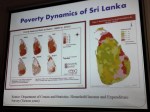
At the orientation workshop, Shamindra Kulamannage and I both made presentations on media coverage of poverty. Mine was a broad-sweep exploration of the topic, with many examples and insights from having been in media and development spheres for over 25 years.
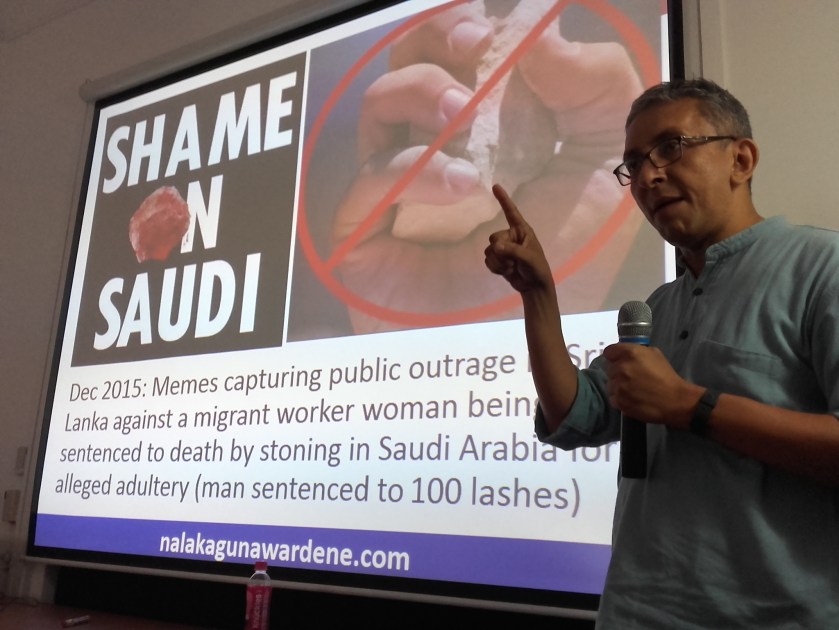
Here is my PPT:
More photos from the orientation workshop:
Nalaka Gunawardene speaks at orientation workshop for Media Fellows on Poverty and Development at CEPA, 24 Sep 2016
Workshop for Media Fellows on Poverty & Development, Colombo, 24 Sep 2016
Workshop for Media Fellows on Poverty & Development, Colombo, 24 Sep 2016
Workshop for Media Fellows on Poverty & Development, Colombo, 24 Sep 2016
Workshop for Media Fellows on Poverty & Development, Colombo, 24 Sep 2016
Shamindra Kulamannage at Workshop for Media Fellows on Poverty & Development, Colombo, 24 Sep 2016
Workshop for Media Fellows on Poverty & Development, Colombo, 24 Sep 2016
Workshop for Media Fellows on Poverty & Development, Colombo, 24 Sep 2016
Krishan Siriwardhana opens Workshop for Media Fellows on Poverty & Development, Colombo, 24 Sep 2016
Themed as ‘Uncovering Asia’ it is organized jointly by the Global Investigative Journalism Network (GIJN), Centre for Investigative Journalism in Nepal, and the German foundation Konrad-Adenauer-Stiftung (2016.uncoveringasia.org).
Founded in 2003, GIJN is the world’s leading international association of investigative reporters’ and their organizations. Its membership includes more than 100 non-profits and NGOs in 45 countries. They are committed to expanding and supporting quality investigative journalism worldwide. This is done through sponsoring global and regional conferences, including the every-two-year Global Investigative Journalism Conference. GIJN also does training, links journalists together worldwide, and promotes best practices in investigative and data journalism.
For three days in Kathmandu, reporters from across Asia and beyond – including several from Sri Lanka – will swap stories, cheer each other, and take stock of their particular craft.
It is true that all good journalism should be investigative as well as reflective. Journalism urges its practitioners to follow the money and power — two factors that often lead to excesses and abuses.
At the same time, investigative journalism (IJ) is actually a specialized genre of the profession of journalism. It is where reporters deeply investigate a single topic of public interest — such as serious crimes, political corruption, or corporate wrongdoing. In recent years, probing environmental crimes, human smuggling, and sporting match fixing have joined IJ’s traditional topics.
Investigative journalists may spend months or years researching and preparing a report (or documentary). They would consult eye witnesses, subject experts and lawyers to get their story exactly right. In some cases, they would also have to withstand extreme pressures exerted by the party being probed.
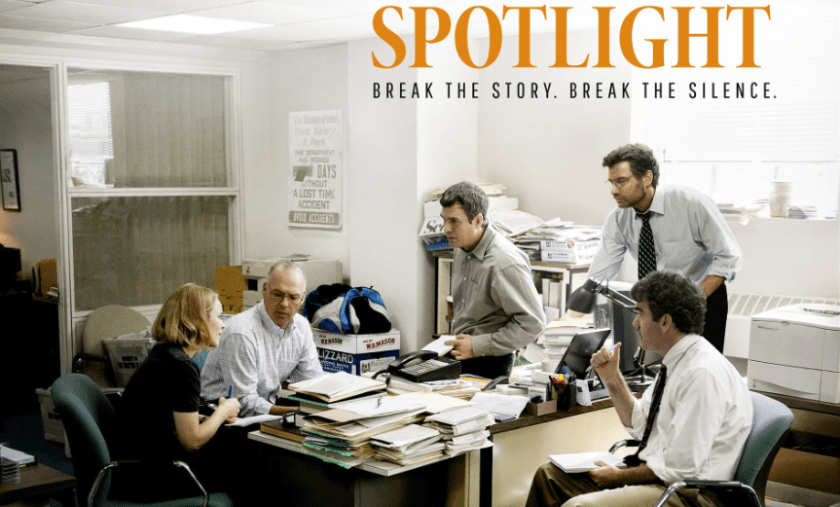
This process is illustrated in the Academy award winning Hollywood movie ‘Spotlight’ (2015). It is based on The Boston Globe‘s investigative coverage of sexual abuse in the Catholic Church. The movie reconstructs how a small team systematically amassed and analyzed evidence for months before going public.
Spotlight: investigative journalism at work
Nosing Not Easy
Investigative journalism is not for the faint-hearted. But it epitomizes, perhaps more than anything else, the public interest value of an independent media.
In mature democracies, freedom of expression and media freedoms are constitutionally guaranteed and respected in practice (well, most of the time). That creates an enabling environment for whistle-blowers and journalists to probe various stories in the public interest.
Many Asian investigative journalists don’t have that luxury. They persist amidst uncaring (or repressive) governments, intimidating wielders of authority, unpredictable judicial mechanisms and unsupportive publishers. They often risk their jobs, and sometimes life and limb, in going after investigative stories.
Yet, as participants and speakers in Delhi confirmed, and those converging in Kathmandu this week will no doubt demonstrate, investigative journalism prevails. It even thrives when indefatigable journalists are backed by exceptionally courageous publishers.
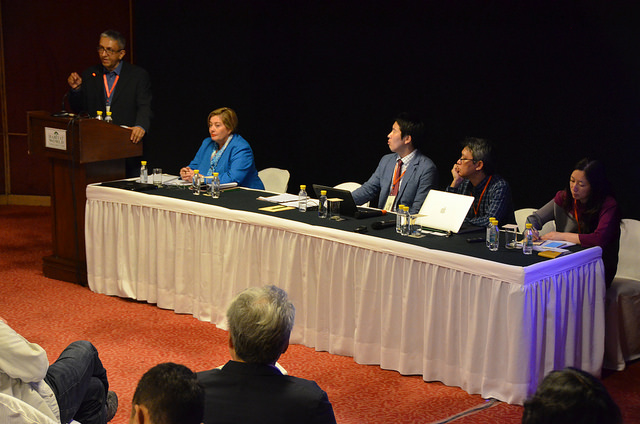
Delhi conference panel: investigative journalists share experiences on how they probed Panama Papers
Cross-border Probing
As capital and information flows have become globalized, so has investigative journalism. Today, illicit money, narcotics, exotic animals and illegal immigrants crisscross political borders all the time. Journalists following such stories simply have to step beyond their own territories to get the bigger picture.
Here, international networking helps like-nosed journalists. The Delhi conference showcased the Panama Papers experience as reaffirming the value of cross-border collaboration.
Panama Papers involved a giant “leak” of more than 11.5 million financial and legal records exposing an intricate system that enables crime, corruption and wrongdoing, all hidden behind secretive offshore companies.
This biggest act of whistle blowing in history contained information on some 214,488 offshore entities. The documents had all been created by Panamanian law firm and corporate service provider Mossack-Fonseca since the 1970s.
A German newspaper, Süddeutsche Zeitung, originally received the leaked data. Because of its massive volume, it turned to the International Consortium of Investigative Journalists (ICIJ), a Washington-anchored but globally distributed network of journalists from over 60 countries who collaborate in probing cross-border crimes, corruption and the accountability of power.
Coordinated by ICIJ, journalists from 107 media organizations in 80 countries analyzed the Panama Papers. They were sworn to secrecy and worked on a collective embargo. Within that framework, each one was free to pursue local angles on their own.
After more than one year of analysis and verifications, the news stories were first published on 3 April 2016 simultaneously in participating newspapers worldwide. At the same time, ICIJ also released on its website 150 documents themselves (the rest being released progressively).
Registering offshore business entities per se is not illegal in some countries. Yet, reporters sifting through the records found that some offshore companies have been used for illegal purposes like fraud, tax evasion and stashing away money looted by dictators and their cronies.
Strange Silence
In Delhi, reporters from India, Indonesia and Malaysia described how they went after Panama leaks information connected to their countries. For example, Ritu Sarin, Executive Editor (News and Investigation) of the Indian Express said she and two dozen colleagues worked for eight months before publishing a series of exposes linking some politicians and celebrities to offshore companies.
Listening to them, I once again wondered why ICIJ’s sole contact in Sri Lanka (and his respected newspaper) never carried a single word about Panama Leaks. That, despite nearly two dozen Lankan names coming to light.
Some of our other mainstream media splashed the Lankan names associated with Panama Papers (often mixing it up with earlier Offshore Leaks), but there has been little follow-up. In this vacuum, it was left to civic media platforms like Groundviews.org and data-savvy bloggers like Yudhanjaya Wijeratne (http://icaruswept.com) to do some intelligent probing. Their efforts are salutary but inadequate.
Now, Panama Leaks have just been followed up by Bahamas Leaks on September 22. The data is available online, for any nosy professional or citizen journalist to follow up. How many will go after it?
Given Sri Lanka’s alarming journalism deficit, investigative reporting can no longer be left to those trained in the craft and their outlets.
In May 2016, the major new study on the media sector I edited titled Rebuilding Public Trust:An Assessment of the Media Industry and Profession in Sri Lanka, noted:
“The new government faces the daunting task of healing the wounds of a civil war which lasted over a quarter of a century and left a deep rift in the Lankan media that is now highly polarised along ethnic, religious and political lines. At the same time, the country’s media industry and profession face their own internal crises arising from an overbearing state, unpredictable market forces, rapid technological advancements and a gradual erosion of public trust.”
The report quoted Dr Ranga Kalansooriya, who worked in the print media (Sinhala and English) and later served as Director General of Sri Lanka Press Institute, as saying:
“The ethnically non-diverse newsrooms of both sides have further fuelled the polarisation of society on ethnic lines, and this phenomenon has led the media in serving its own clientele with ‘what it wants to know’ than ‘what it needs to know’.”
This is precisely what the One Sri Lanka Journalism Fellowship Program (OSLJF) has addressed, in its own small way. An initiative of InterNews, an international media development organisation, OSLJF was a platform which has brought together Sinhala, Tamil and Muslim working journalists from across the country to conceptualize and produce stories that explored issues affecting all ordinary Lankans.
From December 2015 to September 2016, some 30 full-time or freelance journalists reporting for the country’s mainstream media were supported to engage in field-based, multi-sourced stories on social, economic and political topics of public interest. They worked in multi-ethnic teams, mentored by senior Lankan journalists drawn from the media industry who gave training sessions to strengthen the skills and broaden the horizons of this group of early and mid-career journalists.
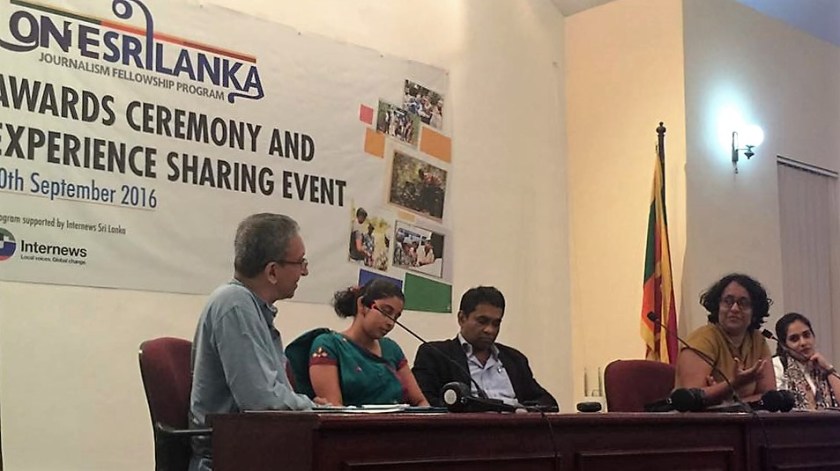
As the project ends, the participating journalists, mentors and administrators came together at an event in Colombo on 20 September 2016 to share experiences and impressions. This was more than a mere award ceremony – it also sought to explore how the learnings can be institutionalized within the country’s mainstream and new media outlets.
I was asked to host the event, and also to moderate a panel of key media stakeholders. As a former journalist who remains a columnist, blogger and media researcher, I was happy to accept this as I am committed to building a BETTER MEDIA in Sri Lanka.
Panel on Future of Sri Lankan Journalism in the Digital Age. L to R – Nalaka Gunawardene (moderator); Deepanjali Abeywardena; Dr Ranga Kalansooriya; Dr Harini Amarasuriya; and Gazala Anver
Here are my opening remarks for the panel:
“If you don’t like the news … go out and make some of your own!” So said Wes (‘Scoop’) Nisker, the US author, radio commentator and comedian who used that line as the title of a 1994 book.
Instead of just grumbling about imperfections in the media, more and more people are using digital technologies and the web to become their own reporters, commentators and publishers.
Rise of citizen journalism and digital media start-ups are evidence of this.
BUT we cannot ignore mainstream media (MSM) in our part of the world. MSM – especially and radio broadcasters — still have vast reach and they influence public perceptions and opinions. It is VITAL to improve their professionalism and ethical conduct.
In discussing the Future of Journalism in the Digital Age today, we want to look at BOTH the mainstream media AND new media initiatives using web/digital technologies.
BOTTOMLINE: How to uphold timeless values in journalism: Accuracy, Balance, Credibility and promotion of PUBLIC INTEREST?
I posed five broad questions to get our panelists thinking:
What can be done to revitalize declining quality and outreach of mainstream media?
Why do we have so little innovation in our media? What are the limiting factors?
What is the ideal mix and balance of mainstream and new media for Lanka?
Can media with accuracy, balance and ethics survive in our limited market? If so, how?
What can government, professionals and civil society to do to nurture a better media?
Panel on Future of Sri Lankan Journalism in the Digital Age. L to R – Nalaka Gunawardene (moderator); Deepanjali Abeywardena; Dr Ranga Kalansooriya; Dr Harini Amarasuriya; and Gazala Anver
On September 11, I took part in a breakout session that discussed media innovation in Asia and the United States. While my fellow panelists spoke mainly about digital media innovation of their media outlet or media sector, I opted to survey the bigger picture: what does innovation really mean when media is under siege, and how can the media sector switch from such ‘innovation under duress’ to regular market or product innovation?
Here are my remarks, cleaned up and somewhat expanded:
Nalaka Gunawardene speaks on media innovation under duress
Innovation has been going on in media from the beginning. Faced with major challenges from advancing technologies and changing demography, innovation is now an imperative for market survival.
We can discuss this at different levels: product innovation, process innovation and systemic innovation. I like to add another kind for our discussion: innovation for physical survival.
With forces social and market Darwinism constantly at work, you might ask, shouldn’t the most adaptable and nimble players survive – while others perish?
Yes and No. Sometimes the odds against independent and progressive media organisations are disproportionately high – they should not be left to fend for themselves. This is where media consumers and public spirited groups need to step in.
Let me explain with a couple of examples from South Asia.
They say necessity is the mother of invention or innovation. I would argue that tyranny – from the state and/or extremist groups – provides another strong impetus for innovation in the media.
In Nepal, all media came under strict control when King Gyanendra assumed total control in February 2005. Among other draconian measures, he suspended press freedom, imposing a blanket ban on private or community broadcasters carrying news, thus making it a monopoly of state broadcasters.
The army told broadcasters that the stations were free to carry music, but not news or current affairs. Soldiers were sent to radio and TV stations to ensure compliance.
When the king’s siege of democracy continued for weeks and months, some media started defying censorship – they joined human rights activists and civil society groups in a mass movement for political reforms, including the restoration of parliamentary democracy.
Some of Nepal’s many community radio stations found creative ways of defying censorship. One station started singing the news – after all, there was no state control over music and entertainment! Another one in central Nepal went outside their studio, set up an impromptu news desk on the roadside, and read the news to passers-by every evening at 6 pm.
Panel on Media innovation at East-West Center Media Conference, Delhi, 11 Sep 2016: L to R – Philippa McDonald, Nalaka Gunawardene, LEE Doo Won, Fernando (Jun) SEPE, Jr. and ZHONG Xin
The unwavering resolve of these and other media groups and pro-democracy activists led to the restoration of parliamentary democracy in April 2006 and the subsequent abolition of the Nepali monarchy.
My second example is from Sri Lanka where I live and work.
We are recovering from almost a decade of authoritarian rule that we ended in January 2015 by changing that government in an election. The years preceding that change were the darkest for freedom of expression and media freedom in Sri Lanka – the country, then nominally a democracy, was ranked 165th among 183 countries in the World Press Freedom Index for 2014.
In June 2012, Sri Lanka was one of 16 countries named by the UN Special Rapporteur on the promotion and protection of the right to freedom of opinion and expression for “attacks against journalists during coverage of street protests and demonstrations, such as arbitrary arrests and detention, verbal and physical attacks, confiscation or destruction of equipment, as well as killings.”
Threats of attacks and actual incidents of physical violence in recent years led to a climate of fear and widespread self-censorship among journalists in Sri Lanka. This is slowly changing now, but old habits die hard.
At the height of media repression by the former regime, we saw some of our media innovating simply for physical survival. One strategy was using satire and parody – which became important forms of political commentary, sometimes the only ones that were possible without evoking violent reprisals.
What I wrote then, while still in the thick of crackdown, is worth recalling:
“For sure, serious journalism can’t be fully outsourced to satirists and stand-up comics. But comedy and political satire can play a key role in critiquing politicians, businessmen and others whose actions impact the public.
“There is another dimension to political satire and caricature that isn’t widely appreciated in liberal democracies where freedom of expression is constitutionally guaranteed.
“In immature democracies and autocracies, critical journalists and their editors take many risks in the line of work. When direct criticism becomes highly hazardous, satire and parody become important — and sometimes the only – ways for journalists get around draconian laws, stifling media regulations or trigger-happy goon squads…
“Little wonder, then, that some of Sri Lanka’s sharpest commentary is found in satire columns and cartoons. Much of what passes for political analysis is actually gossip.”
For years, cartoonists and political satirists fulfilled a deeply felt need in Sri Lanka for the media to check the various concentrations of power — in political, military, corporate and religious domains.
They still continue to perform an important role, but there is more space today for journalists and editors to report things as they are, and to comment on the key stories of the day.
During the past decade, we have also seen the rise of citizen journalism and vibrant blogospheres in the local languages of Sinhala and Tamil. Their advantage during the dark years was that they were too numerous and scattered for the repressive state to go after each one (We do know, however, that electronic surveillance was attempted with Chinese technical assistance.)
Of course, Sri Lanka’s media still face formidable challenges that threaten their market survival.
Rebuilding Public Trust: An Assessment of the Media Industry and Profession in Sri Lanka (May 2016)
A new assessment of Sri Lanka’s media, which I edited earlier this year, noted: “The economic sustainability of media houses and businesses remains a major challenge. The mainstream media as a whole is struggling to retain its consumer base. Several factors have contributed to this. Many media houses have been slow in integrating digital tools and web-based platforms. As a result, there is a growing gulf between media’s production models and their audiences’ consumption patterns.”
Innovation and imagination are essential for our media to break out of 20th century mindsets and evolve new ways of content generation and consumption. There are some promising new initiatives to watch, even as much of the mainstream continues business as usual – albeit with diminishing circulations and shrinking audience shares.
Innovate or perish still applies to our media. We are glad, however, that we no longer have to innovate just to stay safe from goon squads.
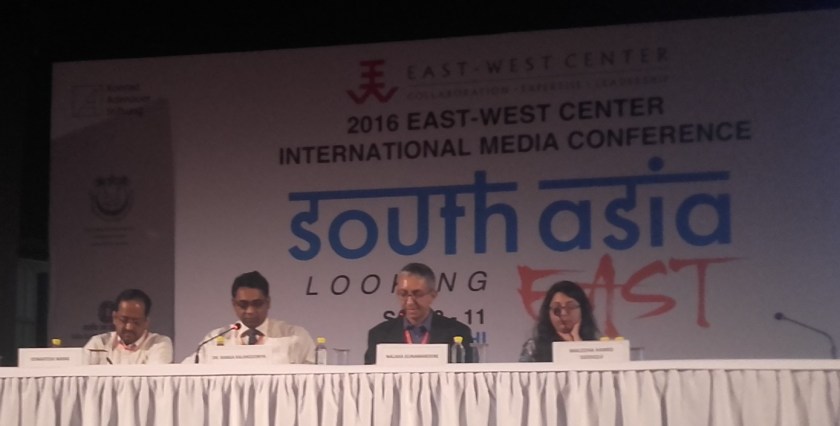
On September 11, I moderated a plenary session on Right to Information (RTI) in South Asia: Staying the Course on a Bumpy Road.
It tried to distill key lessons in RTI implementation from India and Pakistan, especially for the benefit of Sri Lanka that has recently adopted its RTI law. Such lessons could also benefit other countries currently advocating their own RTI laws.
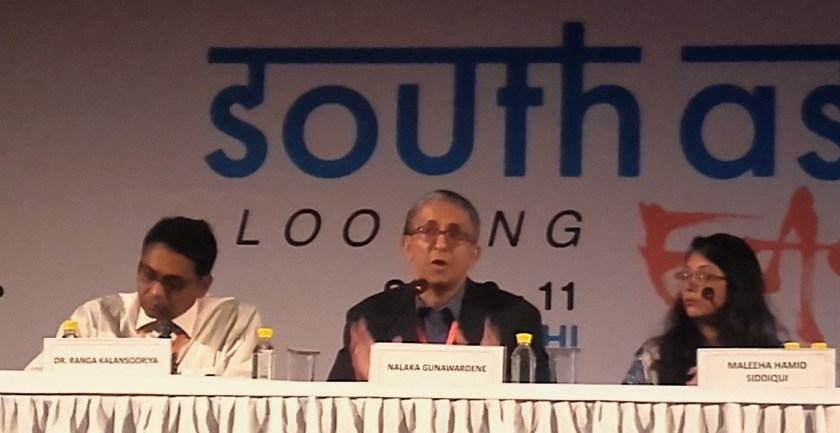
Panel on Right to Information in South Asia, 11 Sep 2016 in New Delhi. L to R – Venkatesh Nayak, Dr Ranga Kalansooriya, Nalaka Gunawardene & Maleeha Hamid Siddiqui
Here is the synopsis I wrote for the panel:
Right to Information (RTI) in South Asia:
Staying the Course on a Bumpy Road
In June 2016, Sri Lanka’s Parliament unanimously passed a Right to Information (RTI) Act, making the island nation the 108th country to have a RTI or freedom of information (FOI) law. That leaves only Bhutan in South Asia without such a law, according to the Commonwealth Human Rights Initiative (CHRI) in New Delhi.
Sri Lanka’s RTI law was preceded by over two decades of sustained advocacy by journalists, social activists and progressive lawyers. But the struggle is far from over. The island nation now faces the daunting task of ‘walking the talk’ on RTI, which involves a total reorientation of government and active engagement by citizens. As other South Asian countries know only too well, proper RTI implementation requires political will, administrative support and sufficient funds.
This panel is an attempt to address the following key questions:
How do India and Pakistan fare in terms of implementing their RTI laws?
What challenges did they face in the early days of RTI implementation?
What roles did government, civil society and media play in RTI process?
What key lessons and cautions can their experiences offer to Sri Lanka?
Can South Asia’s RTI experience offer hope for other countries pursuing RTI laws of their own?
In this session, experienced RTI activists from India and Pakistan will join a Sri Lankan policymaker in surveying the challenges of openness and transparency through RTI.
Panel:
Dr Ranga Kalansooriya, Director General, Department of Information, Ministry of Parliamentary Reforms and Mass Media, Government of Sri Lanka
Mr Venkatesh Nayak, RTI activist; Programme Coordinator, Commonwealth Human Rights Initiative (CHRI), New Delhi
Ms Maleeha Hamid SIDDIQUI, Senior Sub-Editor and Reporter, Dawn, Karachi, Pakistan
Moderator: Mr Nalaka Gunawardene, Science writer and media researcher who is secretary of the RTI Advisory Task Force of Ministry of Mass Media, Sri Lanka
L to R – Ranga Kalansooriya, Nalaka Gunawardene & Maleeha Hamid Siddiqui













 Open Minds!