On 16 September, the International Day for the Preservation of the Ozone Layer will be observed once again all over the world. This year’s theme is “Protecting our atmosphere for generations to come”.
Exactly 25 years ago, governments of the world came together at a historic conference in Montreal, Canada, to adopt the Montreal Protocol on Substances that Deplete the Ozone Layer.
In a quarter century, it has rallied governments and industries in both developed and developing countries to phase out, or substantially reduce, nearly 100 chemicals that damage the ozone layer in the upper atmosphere.
The Ozone Secretariat and UNEP OzonAction have jointly produced two 30-second videos mark the 25th anniversary of the Montreal Protocol (MP).
These Public Service Announcements (PSAs) hail the extraordinary achievements of this Multilateral Environmental Agreement over a quarter century. They also project the MP as a protector of our shared atmosphere for generations to come.
The first PSA briefly introduces the ozone layer depletion issue and highlights its recovery that was made possible when countries of the world joined hands for saving the ozone layer – a global action at its best.
The second PSA revolves around the multiple benefits of the Protocol: it is not just a treaty protecting the ozone layer, but has multiple benefits for our biodiversity, climate, human health and the global economy.
The third version of this PSA (below) is twice as long, gives more info and moves at a more leisurely pace.
These PSAs, made by friends in the UK are proof that even a highly esoteric and technical subject like ozone protection can be presented in engaging, human interest terms.
Growing up in an Ozone Safe World: that’s worth celebrating!
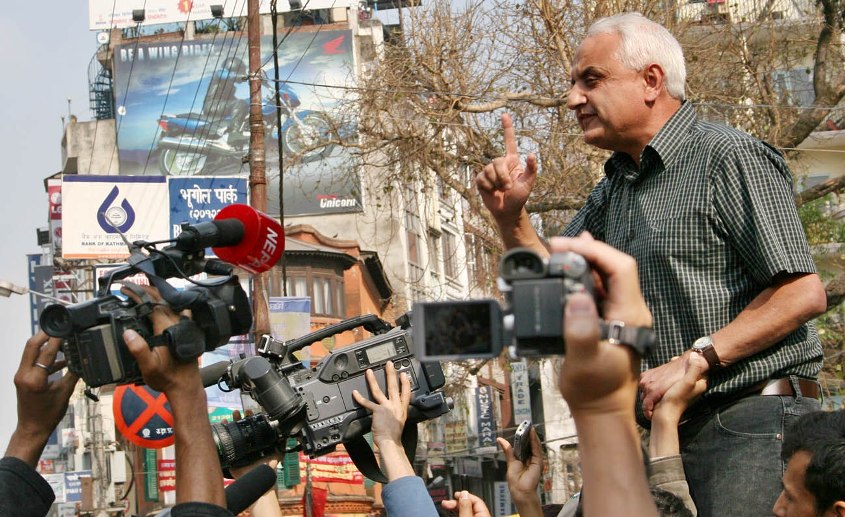
Journalist Kanak Dixit in a protesting rally in Kathmandu on 5 April 2006, Kathmandu. Photo by Shehab Uddin
Expanded from introductory remarks at Ceylon Newspapers Limited office in Colombo, Sri Lanka, on 2 Aug 2012:
There are many ways to introduce my good friend and partner in crime, Kanak Mani Dixit.
Aunty Google, as well as his own website (www.kanakmanidixit.com) can tell you the basic info about his education and career path, which I won’t repeat here. Instead, let me personalise what I know about this courageous man I’ve known and worked with for over 15 years.
Kanak is a journalist, editor and activist – all rolled into one. And if you think that journalists cannot become effective social or democracy activists, just watch him balance these seemingly daunting roles. Study how he juggles reporting, commentary writing, editing and social intervention.
Kanak came from a privileged family background, and could easily have spent his life in leisurely scholarship and endlessly doing the cocktail and conference circuits in South Asia and beyond. He CHOSE to be different.
Kanak spent a few years with the UN Department of Public Information in New York, and yet chucked up a promising international career to return to South Asia – a chaotic, unpredictable but also exhilarating part of the world that we call home. Another conscious choice.
Back home, Kanak could have watched over his beloved Kathmandu Valley and simply commented or satirised about the politics, economy and society of his impoverished land, one of 49 least developed countries in the world. He does that, too, but when needed he takes to the streets. As he did back in 2005/2006 when Nepalis rose against a tyrannical king…
He paid a price for his frontline activism. He was arrested – along with thousands of others – for defying a curfew and demanding democratic reform. He spent 19 days in a Kathmandu jail that he once pointed out to me from afar. As an influential publisher, he could have worked out some deal for a quicker release, but again, chose not to.
How many other South Asia editors or publishers do you know who won’t peddle influence for their personal gain or safety?
Some editors and publishers think of themselves as ‘king-makers’ in the political arena. This editor-publisher was literally a ‘king-dumper’: Nepal’s People Power forced autocratic King Gyanendra to restore Parliament in April 2006. Two years later, the whole monarchy was phased out.
Kanak has spoken truth to power, stared authority in the eye, and yet he has not allowed himself to be corrupted by the temptations of political, diplomatic or other positions. He continues to critique and needle those in public and elected office.
In fact, the very revolutionaries he too helped to bring into office – through elections – now don’t seem to like him much: he was recently dubbed ‘an Enemy of the People’.
He must be doing a few things right to be reviled by both monarchists and republicans!
But Kanak is much more than a media and political activist. He has too many involvements and interests to keep track of.
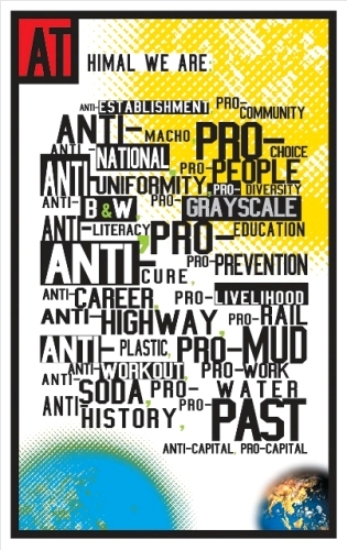
To cite but a few: What Himal is all about…• He is a great believer in the idea of South Asian integration, going well beyond the bureaucratic trappings of SAARC. (His Southasia, which he insists on spelling as one word, includes Tibet and Burma.)
• He founded Himal Southasian magazine in 1987, and sustained it for 25 years with great effort and dedication. It is the first and only regional news and analysis magazine in our region of 1.4 billion people.
• He promotes documentaries as a means of cultural self expression and exchange, and in 1997 founded Film South Asia, a biennial festival that brings the best of South Asian films.
• He nurtures social science research and scholarly exchange, and is endlessly incubating new ventures or institutions in the public interest.
• He supports spinal injury rehabilitation in Nepal, having realised the pitiful state of such care when he suffered serious spinal injury himself a few years ago after a mountain hiking accident.
Amidst all this, he finds time to write regular columns and op-eds – in both English AND Nepali – as well as occasional books.
For these and many other reasons, Kanak Dixit is one of my role models, and a constant source of inspiration. He is one of the few human beings that I’d like to CLONE if and when that becomes a real prospect.
We need many more Media Typhoons like him to drive change in South Asia.
In fact, I sometimes wonder if there is more than one Kanak Dixit already! But that’s only speculation. For now, my friends, meet the one and only Kanak Mani Dixit confirmed to exist…
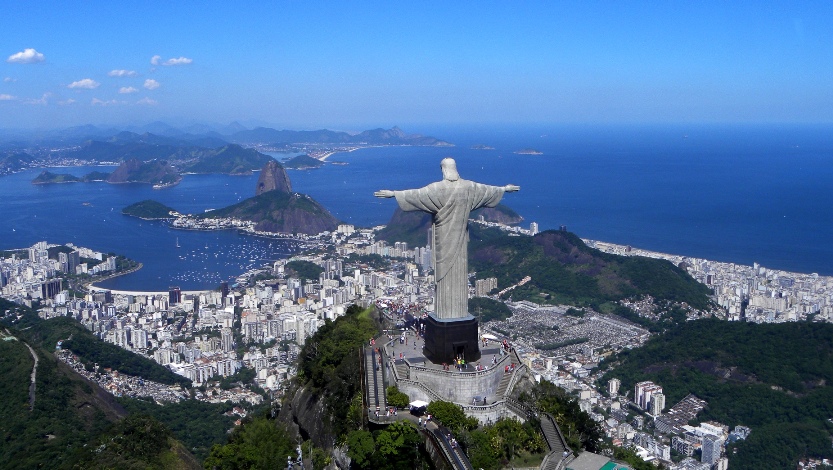
In this week’s Ravaya column (in Sinhala), I share my impressions and reflections of the city of Rio de Janeiro that just hosted the Rio+20 conference. But this piece is not about the event, but its venue — where the first world of affluence and third world of deprivation co-exist.
Statue of Christ te Redeemer looks down on Rio de Janeiro from Corcovado Mountain
තිරසාර සංවර්ධනය පිළිබඳ එක්සත් ජාතීන්ගේ සමුළුව (UN Conference on Sustainable Development, Rio+20) බ්රසීලයේ රියෝ ද ජනෙයිරෝ නුවර පැවැත්වුණා.
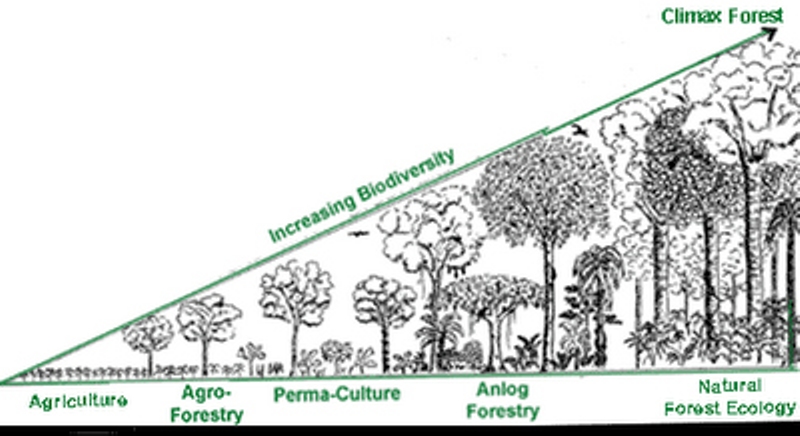
In this week’s Ravaya column (in Sinhala), I write about Analog Forestry, a Lankan innovation that is now adopted in many tropical countries in Africa, Asia and Latin America.
Analog Forestry is a system of planned, managed forests that are designed to mimic the function and ecology of the pre-existing climax vegetation for the area, and are also designed to provide economic benefits.
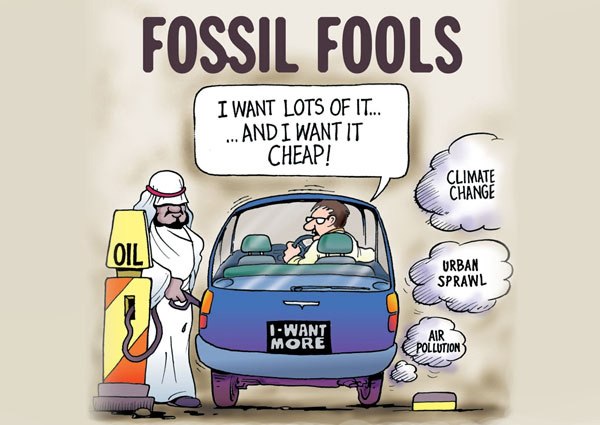
Cartoon courtesy Down to Earth magazine, CSE India
• To tackle enhanced global warming that leads to climate change, we need to better understand the global carbon cycle.
• Critical to this understanding is distinguishing between fossil carbon (coal and petroleum) and biotic carbon (photosynthetic biomass – living matter capable of absorbing atmospheric carbon).
• Biotic Carbon offers a ‘lifeboat’ to a world in search of solutions. Valuing biotic carbon can transform the role of farmers and rural communities currently sidelined in global climate change negotiations.
• Current methodologies of carbon trading have seriously warped both economics and ecology. What takes place today is more like carbon laundering.
These outspoken views are expressed in a new web video by Dr Ranil Senanayake, a globally experienced systems ecologist with four decades of experience across Asia, Africa and Latin America.
Asia's Titanic - NatGeo poster for 2009 filmHow and where do you begin to tell the story of the biggest peace-time disaster at sea in modern times — where only 24 people survived and more than 4,000 perished within an hour or two?
That was the challenge that my Filipino filmmaker friend Baby Ruth Villarama and her colleagues faced, when they made an hour-long documentary, Asia’s Titanic, which National Geographic TV broadcast in mid 2009.
Former television journalist and now an independent TV producer, Baby Ruth Villarama specialises in story research and documentary producing. Runs her own production company, Voyage Film, based in Manila but active across Asia.
Ruth was the researcher and assistant producer of Asia’s Titanic, directed by award-winning Filipino director Yam Laranas.
A few days ago, I asked Ruth for her own memories and reflections. This is what she shared with me, in her own words — the moving story behind the moving images creation:
With the Doña Paz story, sharing their memories was the most difficult part of covering it as the tragedy is something they’d rather not talk about – and, if possible, forget.
I spent a year ‘off-the-record’ understanding the holes in their memories. I felt I had to retrace the steps of these 4,000 souls and learn the relationship of man and the sea.
They’ve lost their children, parents and comrades on Christmas eve over a sea mishap – drowning and burning in the quiet water. We can only imagine the pain they went through.
The tragedy is the peak of memory they have left of their loved ones too, so every Christmas, some relatives of the dead gather together to live the lives their loved ones would have wanted to continue.
I joined that gathering for about three Christmases in between my research efforts. It was then that I began to understand the rabbit holes in each one of them — and the rabbit hole I had in me for not knowing my mother personally.
We started sharing pains and the “what-could-have-beens” of those lost memories. That was the connection they were looking for: to be able to speak of the pain to a stranger, or worst, to a group of filmmakers who would broadcast their story to millions of households around the globe.
This documentary was initiated not just to tell their story but to attempt to fill a hole of justice to the many casualties and their families.
It was through them that we were able to speak to the remaining living survivors. We became part of that annual gathering. Despite the requirements of the studio and my director to deliver deadlines, we tried my best to balance their readiness to speak. Good thing NatGeo was willing to wait 3 – 5 years in the timeline…
I remember visiting a survivor in his sleepy town in the province of Samar sometime in 2005. He owns a small sari-sari (convenient) store then. He said that it took him a year to speak again after the tragedy — and another year before he could eat properly because he couldn’t swallow soups and liquids right.
He never really set foot outside his island again – always fearing for fire and water, including the air as he vividly remembers how it added fume to the fire on that fateful night at sea.
After a while, he started talking about the details of that trip. He stopped, wept and couldn’t carry on anymore. He couldn’t breathe and seemingly battled against the air.
A huge part of me personally felt wrong seeing him again but I know that if we do not tell this story, no one will — and the world will just forget about this huge ‘mistake’ in navigational history.
I’d like to think that the impact of the story outside the Philippines is to remind the world fact that Titanic is not the worst maritime disaster — that somewhere in South East Asia, there was a small ship that killed more than 4,000 lives. It created maritime talks in international forums and the fact that accidents in this magnitude didn’t occur anymore — I think people are more careful now.
It’s a shame that Doña Paz was not as celebrated as the Titanic. One big difference between the Titanic and Doña Paz, aside from its route and technical specifications, is the status of passengers.
The Titanic carried a large number of wealthy westerners. Those who boarded the Doña Paz were mostly average Filipinos — no names, no status in society, even in their own country.
In December 2003, on the eve of the World Summit on the Information Society (WSIS), I did a wide-ranging interview with Sir Arthur Clarke on satellite TV, internet, censorship and other challenges of emerging information societies. It was published in One World South Asia on 5 December 2003.
I adapted into Sinhala parts of that interview for my Ravaya Sunday newspaper column last week (18 Dec 2011),making the point that much of what he said about satellite TV at the time is now equally relevant to the rapid spread of the Internet.
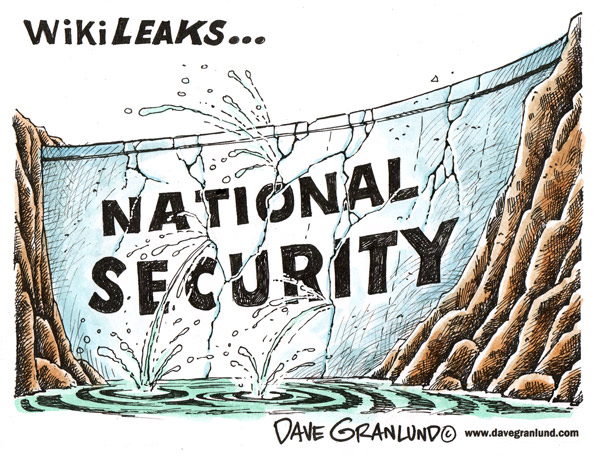
For this week’s column, appearing in the print edition for 25 Dec 2011, I have adapted more segments of that interview covering topics such as: violence in society and media’s role; educational potential of television; does satellie TV spread cultural imperialism; and how technology – not politicians or generals – now determine the free flow of information across borders. This cartoon, drawn by David Granlund a year ago, aptly captures that last point!
A welcome dam breach, this one! - cartoon by Dave Granlund
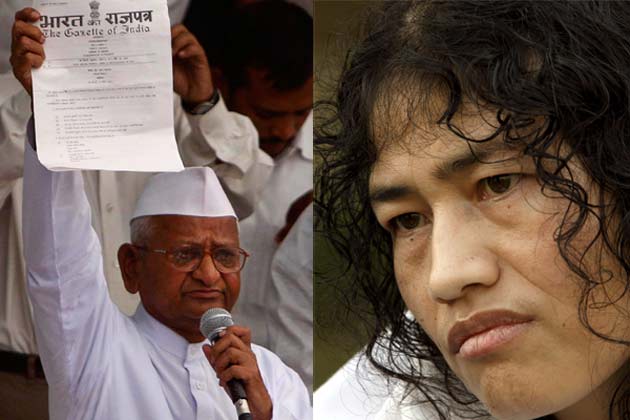
Fasting for a personal or public interest cause is a very old tradition in India. Today, social activists of all colours and hue resort to fasting — but not everyone evokes the same interest and coverage in the media. In a previous column, I looked at how and why the anti-corruption activist Anna Hazare has become the darling of the Indian media. In my latest Ravaya column published on 2 October 2011, I look at two other fasts: one by Swami Nigamananda, who died in June calling for a stop to sand-mining in the Ganges River, and woman activist Irom Sharmila in Manipur who is engaged in the longest fast in the world, 11 years and counting…
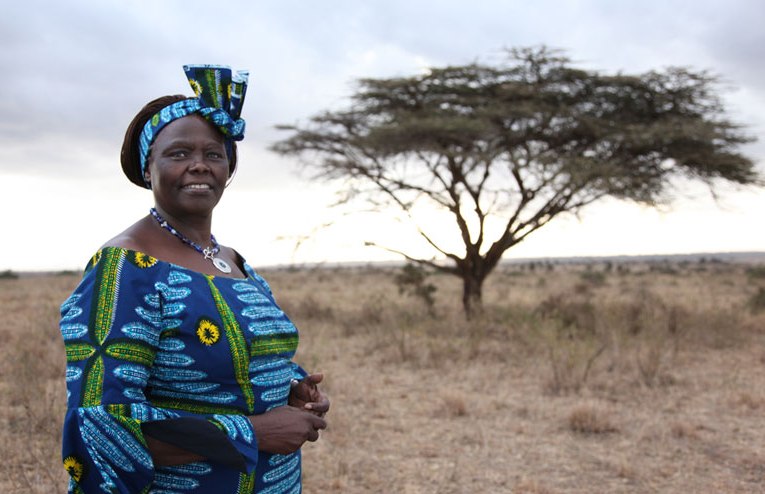
Wangari Muta Maathai (1 April 1940 – 25 September 2011)
“We are very fond of blaming the poor for destroying the environment. But often it is the powerful, including governments, that are responsible.”
That was a typical remark by Wangari Muta Maathai, the Kenyan environmental and political activist who has just died.
In the 1970s, Maathai founded the Green Belt Movement, an environmental non-governmental organisation focused on the planting of trees, environmental conservation, and women’s rights.
In 2004, she became the first African woman to receive the Nobel Peace Prize for “her contribution to sustainable development, democracy and peace.”
The Green Belt Movement in a profile about their founder counted the many roles she played: environmentalist; scientist; parliamentarian; founder of the Green Belt Movement; advocate for social justice, human rights, and democracy; elder; and Nobel Peace Laureate.
“”It is the people who must save the environment. It is the people who must make their leaders change. And we cannot be intimidated. So we must stand up for what we believe in,” Wangari Maathai kept saying.
As a tribute, I have assembled a few links to interesting online videos featuring her.
Taking Root, a long format documentary, tells the dramatic story of Wangari Maathai whose simple act of planting trees grew into a nationwide movement to safeguard the environment, protect human rights, and defend democracy—a movement for which this charismatic woman became an iconic inspiration.
TAKING ROOT: The Vision of Wangari Maathai Trailer on PBS YouTube channel:
Wangari Maathai & The Green Belt Movement, short film by StridesinDevelopment:
Riz Khan’s One on One: Wangari Maathai: Part 1
Interview with Al Jazeera English first broadcast on 19 Jan 2008
“I will be a hummingbird” – Wangari Maathai
Two more memorable quotes from her to inspire us all:
“I have always believed that, no matter how dark the cloud, there is always a thin, silver lining, and that is what we must look for.”
“We cannot tire or give up. We owe it to the present and future generations of all species to rise up and walk!”
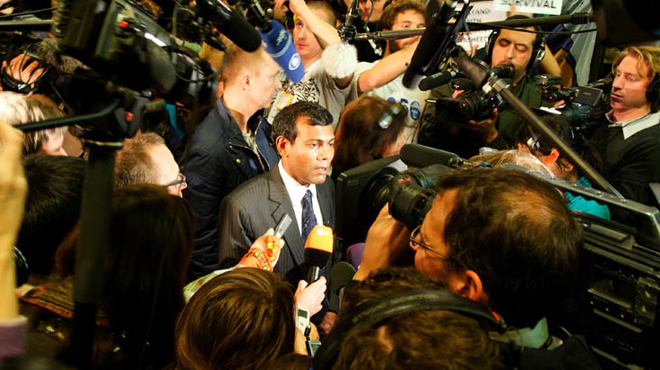
When it comes to climate change, we're all Maldivians!President Mohamed Nasheed of the Maldives is an articulate, passionate climate witness on behalf of his endangered island nation of 350,000 people. The technocratic and amiable President is one of the youngest heads of state in the world today. The one-time freelance journalist (who worked with and for various media when he was in political exile) remains very accessible to the international media. He knows the power of old and new media — and how to leverage it for his cause.
I admit to being a Nasheed fan. During the past couple of years, I have blogged about, interviewed and made a short film about President Nasheed. In the less than three years he has been in office, he has faced more than his fair share of economic and political challenges at home, but he has never lost sight of the long-term, bigger issue of climate change advocacy.
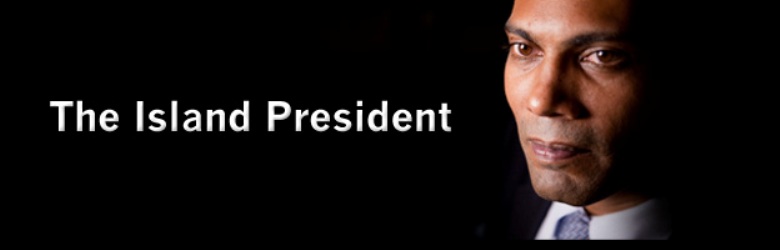
And now, his global status as the ‘rock star of climate change’ is enhanced by ‘The Island President’, a 90-minute, feature-style major documentary about him produced by a leading American production company, Actual Films. The film is to be released this summer at various film festivals. I can’t wait to catch it.
The Island President has been in the making for nearly two years. The film makers had exclusive access to the President both in his island nation and on his international travels.
The Island President: Official Trailer
The official Synopsis reads: “The Island President is a a dramatic feature documentary that lifts the issue of global warming out of the theoretical and into the personal. President Mohamed Nasheed is trying to save 385,000 people from drowning. His nation of 1,200 low-lying islands, the Maldives, is sinking into the Indian Ocean as sea levels rise due to global warming.
“With a young, charismatic South Asian leader updating a role once played by Jimmy Stewart, The Island President is like a non-fiction Mr. Smith Goes to Washington elevated to the world stage. Actual Films has secured exclusive access to follow President Nasheed as he prepares over the coming months for the 2009 Copenhagen Climate Summit in December. The terms of the 1997 Kyoto Treaty on Climate Change are about to expire, and leaders from around the world will converge on Copenhagen to hammer out a new treaty with renewed urgency. As the Danish Minister for Climate and Energy acknowledged, “the December days in Copenhagen in 2009 will be…a political thriller on an international scale.” The Summit will be an international showdown where President Nasheed will try to convince world leaders to finally take serious action against looming danger of climate change. The stakes couldn’t be higher-President Nasheed sees this as the last chance to save his homeland, and the world.”
The Island President is a co-production involving Actual Films, AFTERIMAGE PUBLIC MEDIA and the Independent Television Service (ITVS), with funding provided by the Corporation for Public Broadcasting (CPB).



 Open Minds!