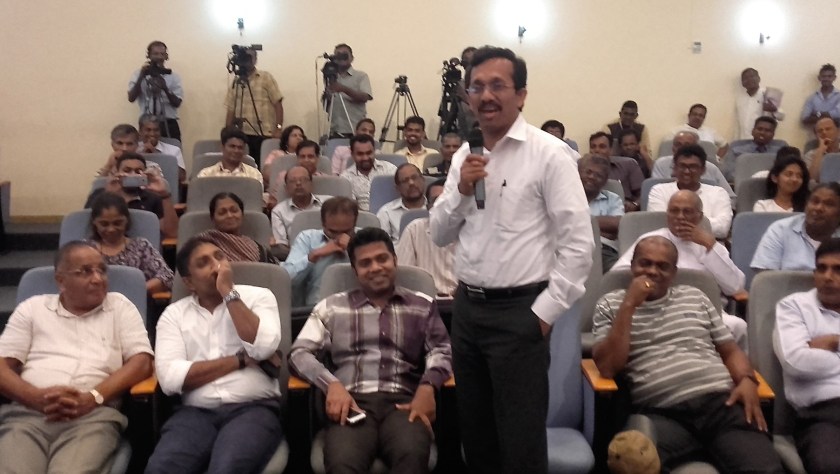
Nalaka Gunawardene speaks at public forum in Colombo on Sri Lanka’s newly operational RTI law. 15 February 2017 (Photo courtesy Lanka News Web)
Sri Lanka’s new Right to Information (RTI) law became operational on 3 February 2017. Marking the culmination of an advocacy effort sustained by social activists and journalists for over 20 years, the new law enables citizens to ask for, and be assured of information held in all government entities (as well as some private and non-profit entities).
The law being new, there still are apprehensions, misconceptions as well as skepticism on whether such transparency could work in a semi-feudal society like Sri Lanka’s.
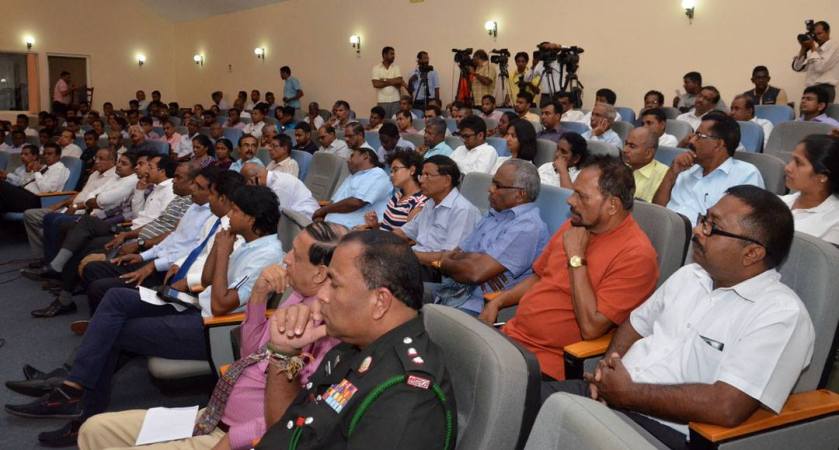
On 15 February 2017, I served as main speaker at a public forum in Colombo on Sri Lanka’s newly operational RTI law and its wider socio-cultural and political implications. The event, organized by the National Media Forum (NMF), was attended by a large number of journalists, social activists, lawyers, government officials and other citizens.
L to R – Nalaka Gunawardene, Mandana Ismail Abeywickrema, Priyantha Wedamulla and Narada Bakmeewewa (Photo courtesy Lanka News Web)
In my presentation, I said the right to ask questions from rulers is very new, and there is no historical precedent for it in Sri Lanka. Subjects had no rights whatsoever and could not ask any questions from the absolute monarchs of Lanka who ruled the island for 20 centuries. The Portuguese, Dutch and British did not grant that right in their colony of Ceylon, and neither did any of our own governments elected since independence in 1948.
Citizens are typically intimidated by politicians and officials, and unless we overcome this wide-spread subservience, we cannot derive benefits from RTI, I argued. The new law gives an unprecedented right to all 21 million Lankans – of all walks of life and of all ages – but to exercise it well we need a political vision, tenacity and imagination.
Nurturing these qualities is the big challenge on the DEMAND side of RTI in Sri Lanka, now that the government has done an appreciable amount of work on the SUPPLY side – by keeping its 2015 election pledge and giving us both the fundamental right to information (through the 19th Amendment to the Constitution) and the law that operationalises it (Right to Information Act No 12 of 2016).
I quoted Dr Rajesh Tandon, founder and head of the Society for Participatory Research in Asia (PRIA), a voluntary organisation providing support to grassroots initiatives in India on the Indian experience of RTI. Since the RTI law was introduced in 2005, India has seen a marked improvement in governance, dissemination of information and involvement of civil society in the governance process, he says.
At the same time, he points out that some challenges remain at the implementation level. Certain states in India have been more active in creating a culture of information sharing and open government. As Indians found out, it isn’t easy to shake off centuries of misplaced state secrecy and mistrust in the public. “Old rules and procedures continue to co-exist as new laws and methods are invented. Official Secrecy Act and Right to Information Act co-exist, just as written precedent and e-governance co-exist.” (Watch my full interview with Rajesh Tandon here: https://vimeo.com/118544161).
Sunil Handunnetti, JVP (opposition) Member of Parliament, speaks during RTI Forum in Colombo, 15 Feb 2017
I also summarized India’s RTI lessons shared with me recently by Shekhar Singh, Founder of India’s National Campaign for People’s Right to Information (NCPRI) and a former member of the State Council for RTI, New Delhi. Chief among them:
Be well aware of political realities and complexities when promoting RTI
Don’t get into ‘Us and Them’ style confrontation with govt (reality always more nuanced)
Work with progressive elements (MPs, officials, advisors) within govt who share RTI ideals
South Asian politicians know they can pass many laws and then ignore them: only sustained citizen pressure will make them implement RTI fully
Document how RTI has led to social justice and social development in other South Asian countries, and the positive uses of RTI in Sri Lanka from now onward; Share these widely with officials, politicians and civil society activists to inspire them.
RTI cuts across all sectors (education, health, child rights, labour rights, environment, etc.): NGOs, trade unions and other elements of civil society need to see value of RTI-generated info for their own work and the greater good
Civil society should not isolate RTI as a separate movement. Integrate RTI into all public interest work in all sectors.
Insist that ALL layers, arms and branches of govt obey the RTI law fully (and use appeal process when any public authority is not cooperating)
Image courtesy: Health Education Bureau, Ministry of Health, Sri Lanka
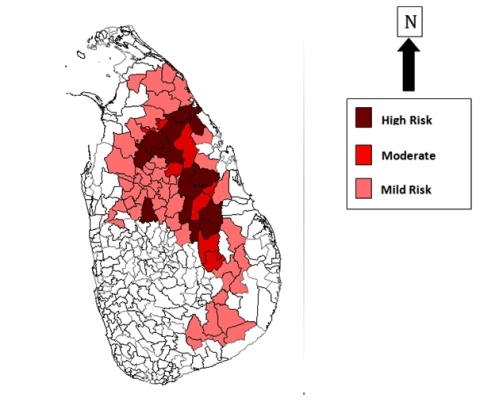
Beginning in the 1990s, thousands of people in Sri Lanka’s Dry Zone – heartland of its rice farming — developed kidney failure without having diabetes or high blood pressure, the common causative factors. Most affected were men aged 30 to 60 years, who worked as farmers. As numbers rose, puzzled doctors and other scientists started probing possible causes for what is now named Chronic Kidney Disease of unknown etiology (abbreviated as CKDu).
CKDu has become a fully-fledged public health crisis and humanitarian emergency, affecting thousands of people and their families – most of them subsistence farmers. Investigating causes of this ailment — still not pinned down to a specific cause or factor — has proven difficult. While scientists follow rigorous scientific methods, some ultra-nationalists and opportunistic politicians are trying to hijack the issue for their own agenda setting.
Sadly, some journalists and media outlets have added fuel to the fire with sensationalist reporting and unwarranted fear-mongering. For several years, I have documented the kind of misinformation, myths and pseudo-science uncritically peddled by Lankan media on CKDu.
In late 2012, speaking at an Asian science communication workshop held in Colombo, I first coined the phrase: Mass Media Failure is complicating Mass Kidney Failure. In December 2015, I revisited and updated this analysis, arguing that there are many reasons for systemic media failure in Sri Lanka that has allowed ultra-nationalists and certain environmental activists to pollute the public mind with half-truths and conspiracy theories. These need media industry level reform. Meanwhile, for improving the CKDu information flow in society, I proposed some short, medium and long term recommendations.
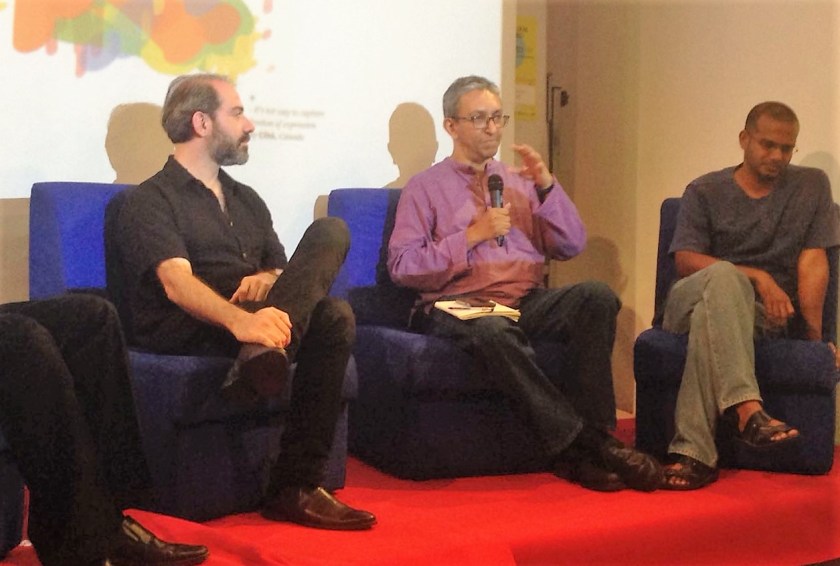
L to R – Kianoush Ramezani, Nalaka Gunawardene, Gihan de Chickera at Night of Ideas in Colombo, 26 January 2017
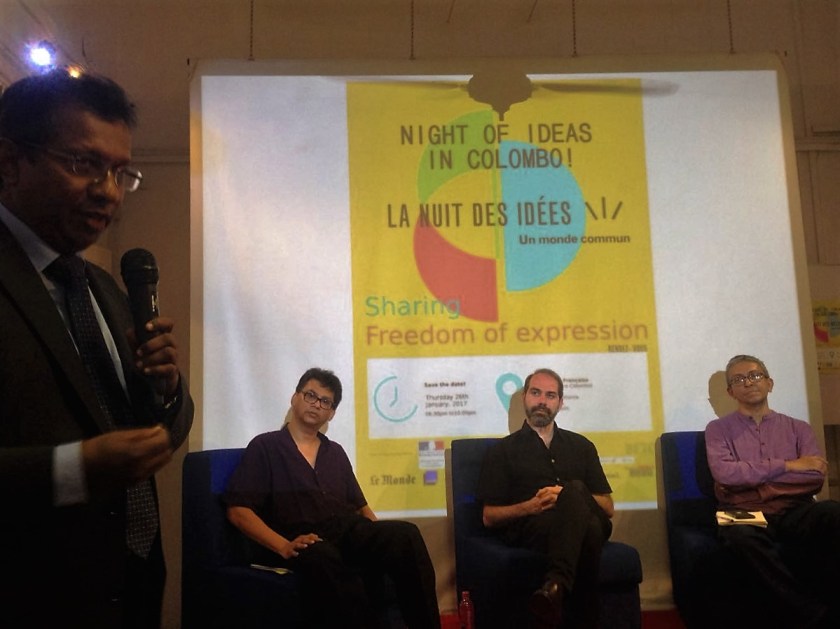
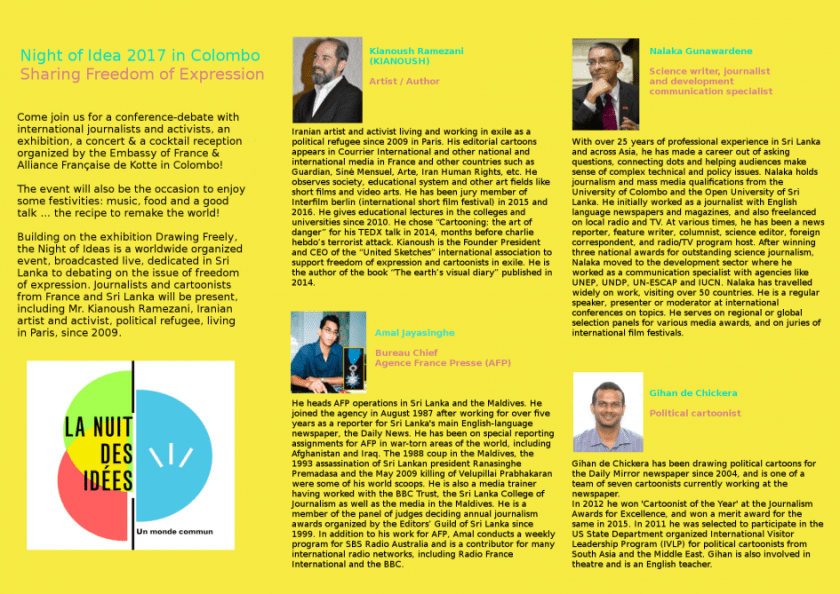
On 26 January 2017, the Alliance Française de Kotte with the Embassy of France in Sri Lanka presented the first ever “Night of Ideas” held in Colombo. During that event, participants were invited to engage in discussions on ‘‘A World in common – Freedom of Expression (FOE)” in the presence of French and Sri Lankan cartoonists, journalists and intellectuals.
I was part of the panel that also included: Kianoush Ramezani, Founder and President of United Sketches (Paris), an Iranian artist and activist living and working in Paris since 2009 as a political refugee; and Gihan de Chickera, Political cartoonist at the Daily Mirror newspaper in Sri Lanka. The panel was moderated by Amal Jayasinghe, bureau chief of Agence France Presse (AFP) news agency.
Human Rights Lawyer and activist J C Weliamuna opens the Night of Ideas in Colombo, 26 January 2017
In my opening remarks, I paid a special tribute to Sri Lanka’s cartoonists and satirists who provided a rare outlet for political expression during the Rajapaksa regime’s Decade of Darkness (2005-2014).
I referred to my 2010 essay, titled ‘When making fun is no laughing matter’ where I had highlighted this vital aspect of FOE. Here is the gist of it:
A useful barometer of FOE and media freedom in a given society is the level of satire that prevails. Satire and parody are important forms of political commentary that rely on blurring the line between factual reporting and creative license to scorn and ridicule public figures.
Political satire is nothing new: it has been around for centuries, making fun of kings, emperors, popes and generals. Over time, satire has manifested in many oral, literary and theatrical traditions. In recent decades, satire has evolved into its own distinctive genre in print, on the airwaves and online.
Satire offers an effective – though not always fail-safe – cover for taking on authoritarian regimes that are intolerant of criticism, leave alone any dissent. No wonder the former Soviet Union and Eastern Bloc inspired so much black humour.
This particular dimension to political satire and caricature that isn’t widely appreciated in liberal democracies where freedom of expression is constitutionally guaranteed.
In immature democracies and autocracies, critical journalists and their editors take many risks in the line of work. When direct criticism becomes highly hazardous, satire and parody become important — and sometimes the only – ways for journalists get around draconian laws, stifling media regulations or trigger-happy goon squads…
Little wonder, then, that some of Sri Lanka’s sharpest political commentary is found in satire columns and cartoons. Much of what passes for political analysis in the media is actually gossip.
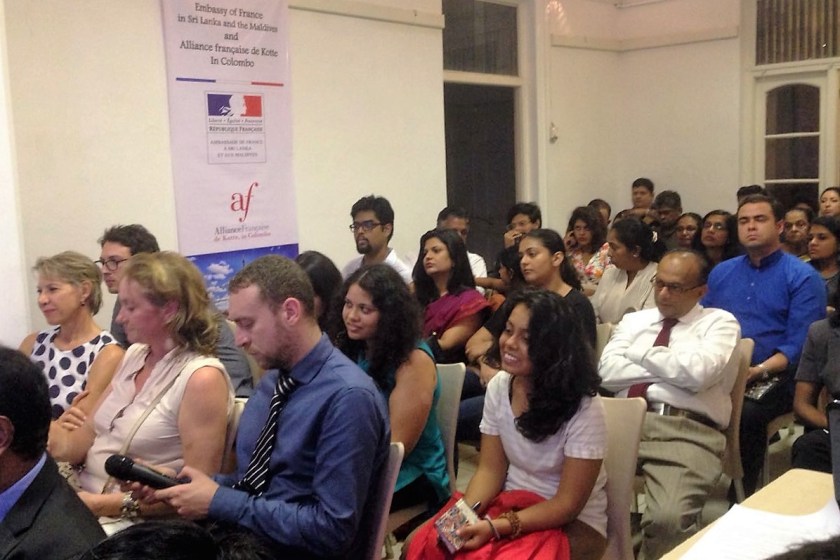
Part of the audience for Night of Ideas at Alliance Française de Kotte, 26 Jan 2017Audience engages the panel during Night of Ideas at Alliance Française de Kotte, 26 Jan 2017Night of Ideas in Colombo – promotional brochure
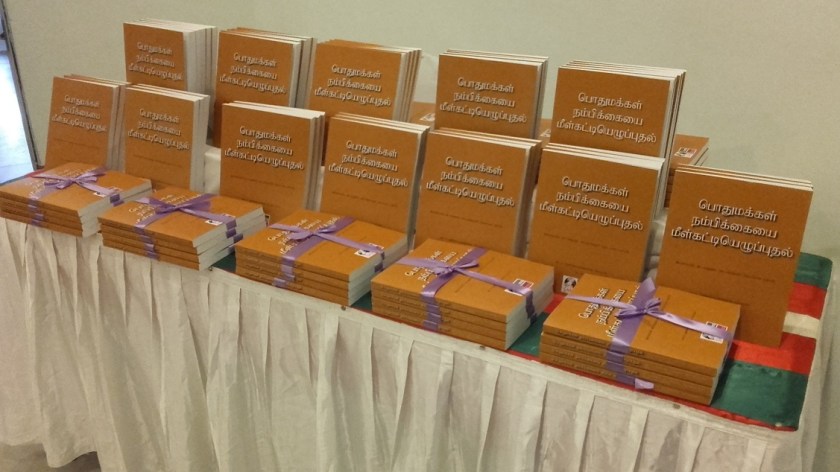
Rebuilding Public Trust: Tamil version copies displayed at the launch in Jaffna, 24 Jan 2017
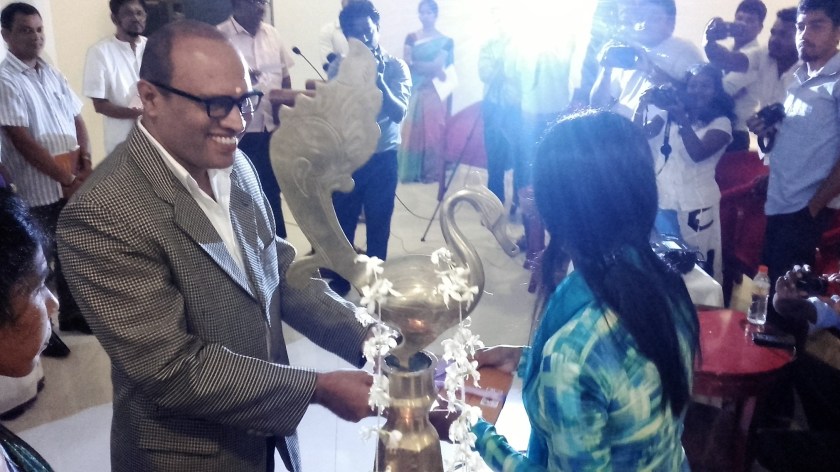
Journalists, academics, politicians and civil society representatives joined the launch of Tamil language version of Sri Lanka’s Media Development Indicators (MDI) Report in Jaffna on 24 January 2017.
The report, for which I served as overall editor, is the outcome of a 14-month-long consultative process that involved media professionals, owners, managers, academics and relevant government officials. It offers a timely analysis, accompanied by policy directions and practical recommendations.
Students of Jaffna University Media Studies programme with its head, Dr S Raguram, at the launch of MDI Sri Lanka Tamil version, Jaffna, 24 January 2017
Reginald Cooray, Governor of the Northern Province, in a message said: “I am sure that the elected leaders and the policy makers of this government of Good governance will seize the opportunity to make a professionally ethical media environment in Sri Lanka which will strengthen the democracy and good governance.”
He added: “The research work should be studied, appreciated and utilised by the leaders and the policy makers. Everyone who was involved in the work should be greatly thanked for their research presentation with clarity.”
Lars Bestle of International Media Support (IMS) speaks at Sri Lanka MDI Report’s Tamil version launch in Jaffna, 24 January 2017
Speaking at the event, Sinnadurai Thavarajah, Leader of the Opposition of the Northern Provincial Council, urged journalists to separate facts from their opinions. “Media freedom is important, but so is unbiased and balanced reporting,” he said.
Lars Bestle, Head of Department for Asia and Latin America at International Media Support (IMS), which co-published the report, said: “Creating a healthy environment for the media that is inclusive of the whole country is an essential part of ensuring democratic transition.”
He added: “This assessment points the way forward. It is now up to the local actors – government, civil society, media, businesses and academia – with support from international community, to implement its recommendations.”
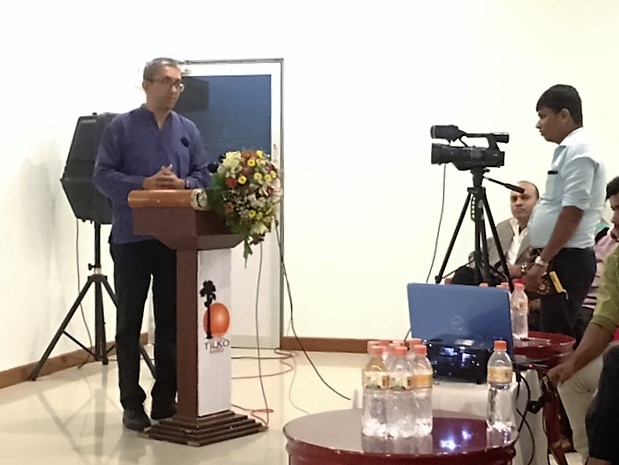
Nalaka Gunawardene, Consultant Editor of Sri Lanka Media Development Indicators (MDI) Report, speaks at the launch of Tamil version in Jaffna on 24 Jan 2017
I introduced the report’s key findings and recommendations. In doing so, I noted how the government has welcomed those recommendations applicable to state policies, laws and regulations and already embarked on law review and regulatory reforms. In sharp contrast, there has been no reaction whatsoever from the media owners and media gatekeepers (editors).
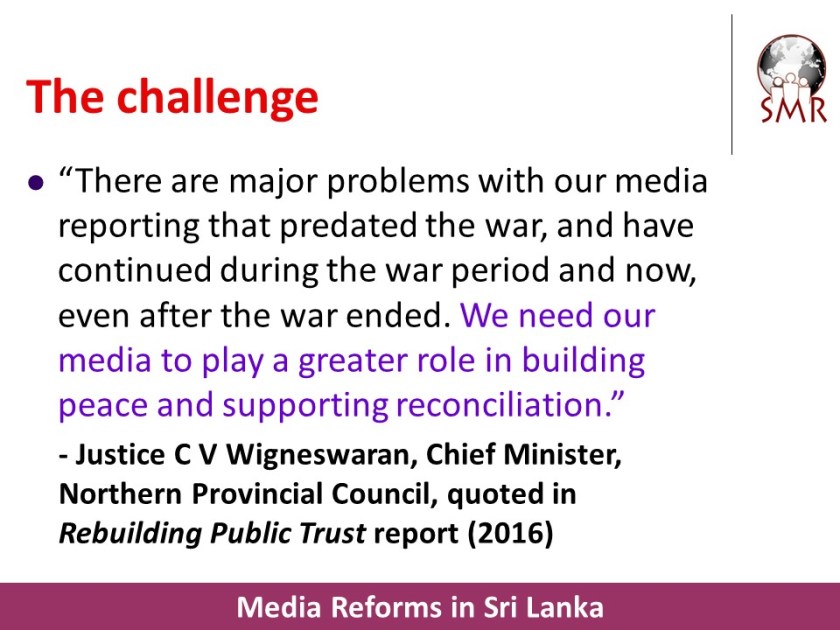
Quote from ‘Rebuilding Public Trust’ – State of Sri Lanka’s media report
Dr S Raguram, Head of Media Studies at the University of Jaffna (who edited the Tamil version) and Jaffna Press Club president Ratnam Thayaparan also spoke.
The report comes out at a time when the country’s media industry and profession face multiple crises stemming from an overbearing state, unpredictable market forces and rapid technological advancements.
Balancing the public interest and commercial viability is one of the media sector’s biggest challenges today. The report says: “As the existing business models no longer generate sufficient income, some media have turned to peddling gossip and excessive sensationalism in the place of quality journalism. At another level, most journalists and other media workers are paid low wages which leaves them open to coercion and manipulation by persons of authority or power with an interest in swaying media coverage.”
Notwithstanding these negative trends, the report notes that there still are editors and journalists who produce professional content in the public interest while also abiding by media ethics. Unfortunately, their work is eclipsed by media content that is politically partisan and/or ethnically divisive.
The result: public trust in media has been eroded, and younger Lankans are increasingly turning to entirely web-based media products and social media platforms for information and self-expression. A major overhaul of media’s professional standards and ethics is needed to reverse these trends.
MDI Sri Lanka – Tamil version being presented to stakeholders in Jaffna, 24 Jan 2017MDI Sri Lanka – Tamil version being presented to stakeholders in Jaffna, 24 Jan 2017
The Tamil report is available for free download at:
Brief comment provided to Daily Mirror newspaper, Sri Lanka, on 20 January 2017:
‘Eyes in the Sky’ need ethical and careful ‘pilots’
By Nalaka Gunawardene
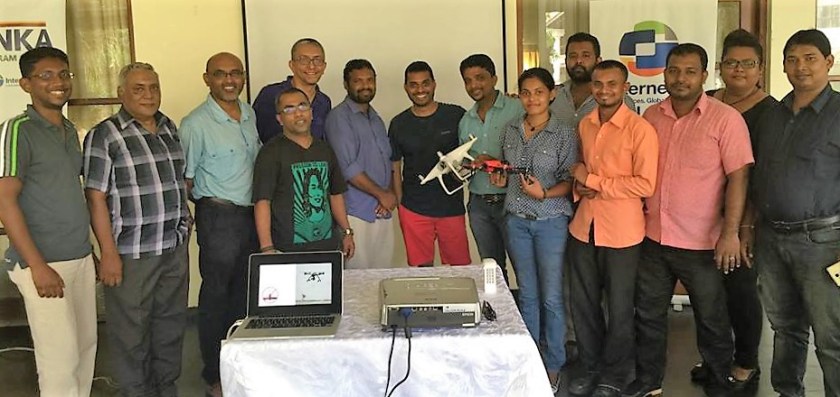
Bird’s eye view provides a new, useful perspective in journalistic story telling. Image courtesy InterNews Sri Lanka
For some, drones conjure images of death and destruction – military applications have been their most widely reported application. But unmanned aerial vehicles or UAVs are increasingly being used for many peaceful purposes. That poses a host of ethical and legal challenges we must confront to get the best of this new technology while minimizing potential harms.
In the past few years, the cost of drones came down (an entry level unit sells for around LKR 35,000 in Colombo) as their versatility increased. This spurred many uses from newsgathering and post-disaster assessments to goods delivery and smart farming.
In Sri Lanka, surveyors, photographers, TV journalists and political parties were among the early civilian users of drones. They all grasped the value of the ‘bigger picture’ perspective such aerial photos or videos can provide. Until recently, accessing that vantage point was possible only through helicopters or fixed wing aircraft – a facility few could afford.
Having the bird’s eye view helps journalists and their audiences to make sense of complex situations like climate change impacts, conflicts over resources or political agitations. We certainly need more field-based and investigative reporting that goes beyond press releases and press conferences. Drones are fast joining the journalists’ toolkit — but what matters is their imaginative and responsible use.
Participants and trainers at Sri Lanka’s first workshop on drone assisted journalism, Aug 2016 in Mt Lavinia
Here, we have both good news and bad news. On the positive side, over two dozen journalists and photojournalists have been trained in drone-assisted journalism during 2016 by drone journalism enthusiast (and drone pilot) Sanjana Hattotuwa and journalist Amantha Perera. Some trainees have since done good stories with drone-gathered images. Examples include probing the drought’s impacts in the dry zone, rising garbage crisis in Kattankudy on the east coast, and taking a close look at land use patterns in Hambantota.
Internews Sri Lanka: Drone gathered footage supporting journalism
The downside is that some news organisations are deploying drones without due regard for public safety or existing codes of media ethics. A drone hovered over the Colombo general cemetery as slain editor Lasantha Wickremetunge’s body was exhumed in September 2016. That disregarded a family request for privacy.
The end never justifies the means in good journalism. If some media groups continue to operate drones in such reckless manner, they risk discrediting the new technology and attracting excessive regulations.
Drones or any other new technologies need to be anchored in the basic ethics of journalism. Each new tool would also bring along its own layer of ethics. Where drone use is concerned, respecting privacy and considering the safety of others is far more important than, say, when using a handheld camera.
In February 2016, the Civil Aviation Authority of Sri Lanka (CAASL) published regulations for drone operation which apply to all users including journalists. This has been updated in January 2017. The Information Department, in a recent release, says it is working with CAASL to simplify these rules and streamline approval processes. That is a welcome move.
For now, Lankan journalists can follow the Code of Ethics for Drone Journalists already formulated by practitioners and researchers in the United States. It is available at: http://www.dronejournalism.org/code-of-ethics/
Nalaka Gunawardene is a columnist and independent media researcher. He tweets from @NalakaG
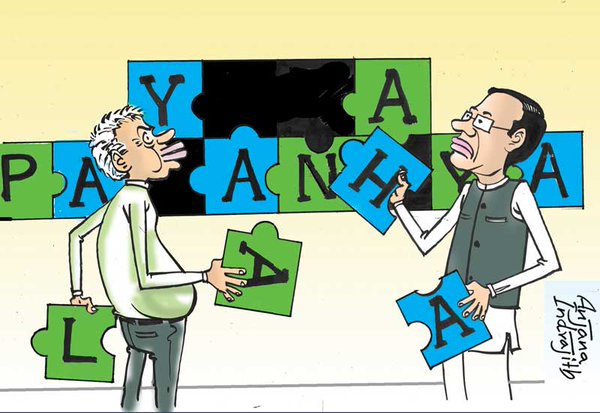
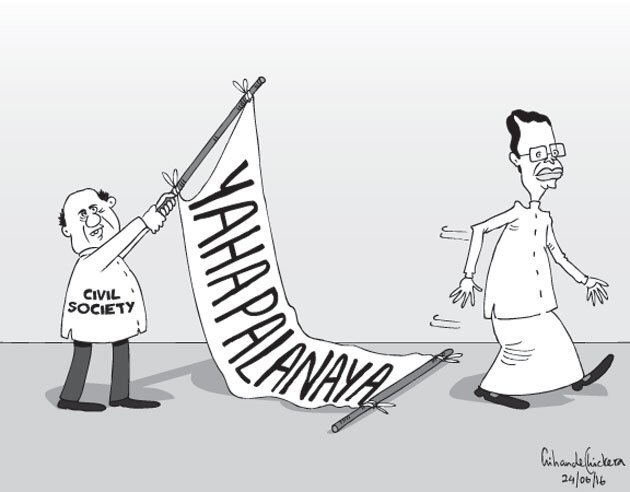
Now, as we enter 2017, civil society faces the twin challenges of holding the current government to account, and preventing yaha-palanaya ideal from being discredited by expedient politicians. At the same time, civil society must also become more professionalised and accountable.
‘Civil society’ is a basket term: it covers a variety of entities outside the government and corporate sectors. These include not only non-governmental organisations (NGOs) but also trade unions, student unions, professional associations (and federations), and community based or grassroots groups. Their specific mandates differ, but on the whole civil society strives for a better, safer and healthier society for everyone.
The path to such a society lies inevitably through a political process, which civil society cannot and should not avoid. Some argue that civil society’s role is limited to service delivery. In reality, worthy tasks like tree planting, vaccine promoting and microcredit distributing are all necessary, but not all sufficient if fundamentals are not in place. For lasting change to happen, civil society must engage with the core issues of governance, rights and social justice.
Ideally, however, civil society groups should not allow themselves to be used or subsumed by political parties. I would argue that responsible civil society groups now set the standards for our bickering and hesitant politicians to aspire to.
Take, for example, two progressive legal measures adopted during 2016: setting aside a 25% mandatory quota for women in local government elections, and legalising the Right to Information. Both these had long been advocated by enlightened civil society groups. They must now stay vigilant to ensure the laws are properly implemented.
Other ideals, like the March 12 Movement for ensuring clean candidates at all elections, need sustained advocacy. So Lankan civil society has plenty of unfinished business in 2017.
Nalaka Gunawardene writes on science, development and governance issues. He tweets from @NalakaG.
Note: Cartoons appearing here did not accompany the article published in The Sunday Leader.
After 18 months in office, Sri Lanka’s President Maithripala Sirisena seems less keen on his electoral promises of good governance, which he had articulated with lots of help from civil society. Cartoon by Gihan de Chickera, Daily Mirror, 24 June 2016.
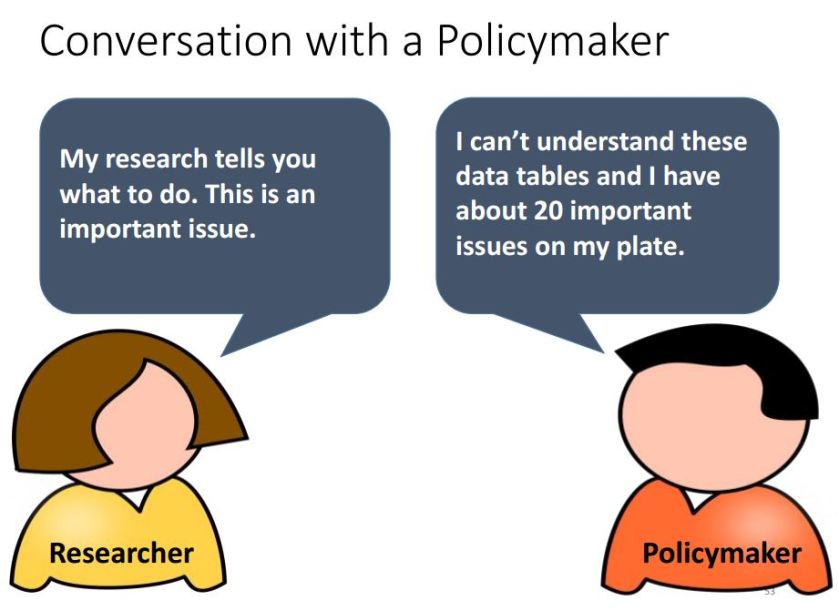
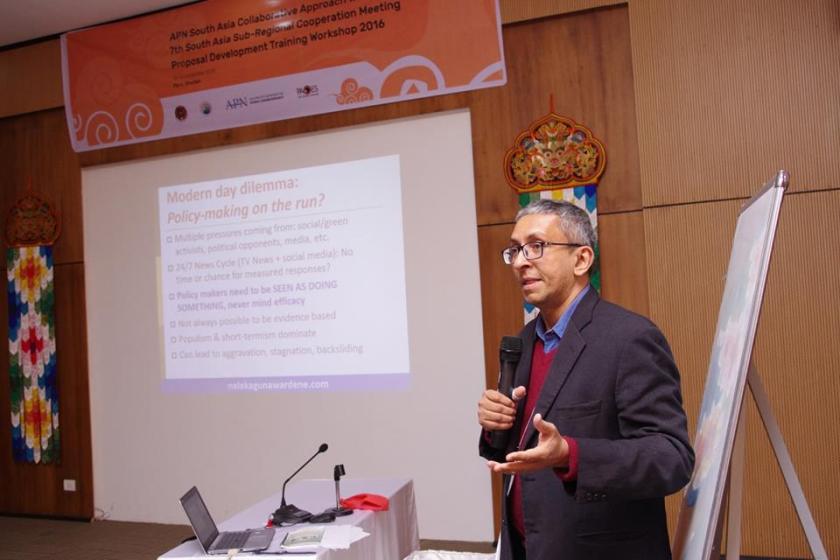
It’s a question without easy or simple answers. Policy makers come in different forms and types, and gaining their attention depends on many variables — such as a country’s political system, governance processes, level of bureaucracy and also timing.
I revisited this question this week when speaking to a group of young (early to mid-career) researchers from across South Asia who want to study many facets of global change. They were brought together at a regional workshop held in in Paro, Bhutan, by the Asia-Pacific Network for Global Change Research (APN) and the National Environment Commission of the Royal Government of Bhutan.
Nalaka Gunawardene speaks at APN South Asian Proposal Development Training Workshop in Paro, Bhutan, 14-16 Dec 2016. Photo Xiaojun Deng, APN
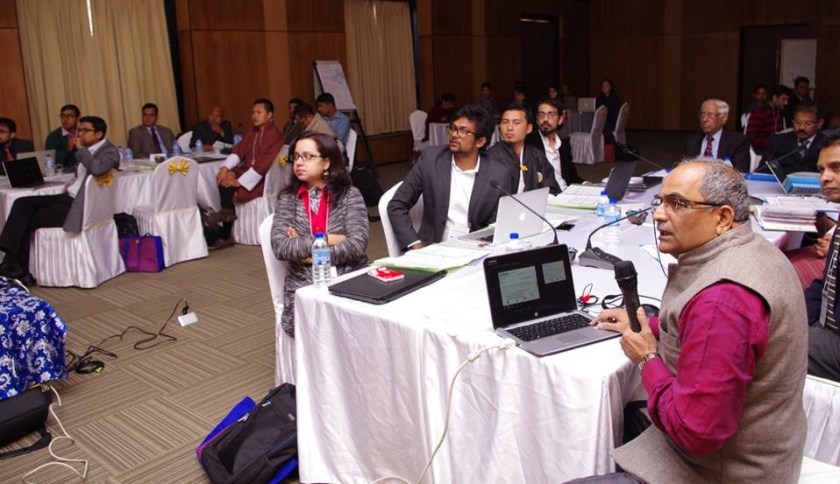
Titled as the ‘Proposal Development Training Workshop (PDTW)’ and held from 14 to 16 December 2016, PDTW aimed “to raise awareness of APN among early career scientists and practitioners, and to increase the capacity to develop competitive proposals for submission to APN”.
The workshop involved two dozen researchers and half a dozen mentors. I was the sole mentor covering the important aspect of communicating research.
I urged researchers to try and better understand the imperfect, often unpredictable conditions in which South Asia’s policy makers operate.
Researchers and activists who would like to influence various public policies. Everyone is looking for strategies and engagement methods. The policy cycle cannot run according to text book ideals when governments have to regularly cope with economic uncertainties, political upheavals and social unrest, etc.
Asia-Pacific Network for Global Change Research (APN): Proposal Development Training Workshop 2016 — in Paro, Bhutan. Photo by Xiaojun Deng, APN
Imagine what keeps your policy makers awake at night, I suggested. Are they worried about balance of payment, disaster responses or a Parliamentary majority? How can research findings, while being evidence based, help solve problems of economic development and governance?
I also suggested that researchers should map out the information behaviour of their policy makers: where do they get info to act on? Is there a way research findings can be channeled to policy makers through some of these sources – such as the media, professional bodies and international development partners?
I suggested two approaches to communicating research outcomes to policy makers: directly, using own publications and/or social media; and indirectly by working with and through the media.
Finally, I shared some key findings of a global study in 2012 by SciDev.Net (where I was an honorary trustee for nearly a decade) which looked at the different contextual settings within which policy makers, the private sector, NGOs, media organisations and the research community operate to better understand how to mainstream more science and technology evidence for development and poverty reduction purposes.
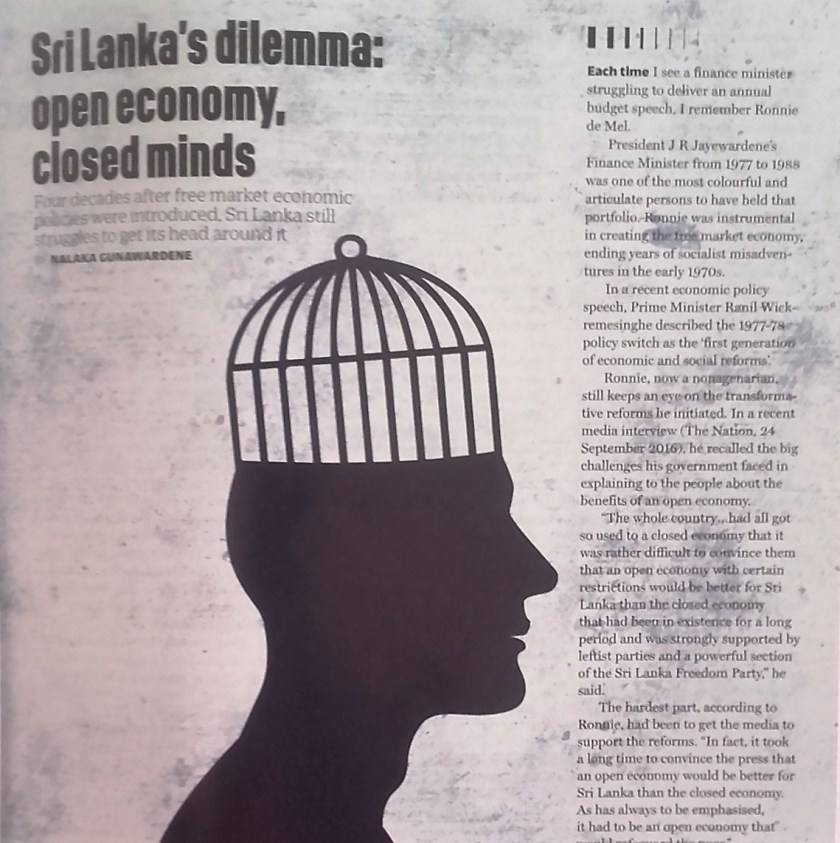
Echelon magazine, Dec 2016 issue – column by Nalaka Gunawardene
Sri Lanka’s Dilemma: Open Economy, Closed Minds
By Nalaka Gunawardene
Each time I see a Finance Minister struggling to deliver annual budget speeches, I remember Ronnie de Mel.
President J R Jayewardene’s Finance Minister from 1977 to 1988 was one of the most colourful and articulate persons to have held that portfolio. Ronnie was instrumental in creating the free market economy, ending years of socialist misadventures in the early 1970s.
In a recent economic policy speech, Prime Minister Ranil Wickremesinghe described the 1977-78 policy switch as the ‘first generation of economic and social reforms’.
Ronnie, now a nonagenarian, still keeps an eye on the transformative reforms he initiated. In a recent media interview (The Nation, 24 Sep 2016), he recalled the big challenges his government had faced in explaining to the people about the benefits of an open economy.
“The whole country…had all got so used to a closed economy that it was rather difficult to convince them that an open economy with certain restrictions would be better for Sri Lanka than the closed economy which had been in existence for a long period and was strongly supported by the leftist parties and by a powerful section of the Sri Lanka Freedom Party,” he said.
The hardest part, according to Ronnie, had been to get the media to support those reforms. “In fact, it took a long time to convince the press that the open economy would be better for Sri Lanka than the closed economy. As has always to be emphasized, it had to be an open economy which would safeguard the poor.”
Closed Minds
JR and Ronnie set in motion economic reforms that have since been sustained by successive governments, sometimes with minor modifications. We will soon be completing four full decades under free market policies.
Yet the market still seems a dirty word for some Lankans, especially those in their middle or advanced ages. Their mistrust of the country’s economic system occasionally rubs off on the younger generation too, as evidenced by university students’ political slogans.
There is a pervasive notion in our society that businesses are intrinsically damaging and exploitative. I attribute this to ‘residual socialism’: we have plenty of frustrated socialists who grudge the current system, even though they often benefit from it personally.
So we pursue free market economics only half-heartedly. We were never a communist state but we seem to be more ‘red’ than Marx, Lenin and Mao combined.
In other words, many among us have closed their minds about the open economy.
Yes, it’s a free country and everyone is entitled to own myths, beliefs and nostalgic fantasies. But collectively harking back to the bad old days – and romanticising them – does not help anyone, and can distort policy choices. Protectionism and monopolies can thrive in such a setting.
Anti-market attitudes also feed public apprehensions about entrepreneurship in general, and against certain economic sectors in particular.
Pervasive prejudices
Take, for example, the tourist industry. Half a century has passed since Sri Lanka adopted policies of tourism development and promotion, but large sections of society still harbour misgivings about it.
Never mind that nearly 320,000 persons had direct or indirect employment in the tourism sector in 2015, or how a large number of small and medium businesses depend on tourist income for survival. Certain ‘guardians of culture’ and a moralist media are obsessed with the sexual exploitation associated with (a relatively small number of) tourists.
A few years ago, I helped organise an environmental education programme for school children in the Negombo area. A leading hotel chain which originated from that city provided the venue and catering for free. Yet some accompanying teachers were rather uneasy over our venue choice: for them, all tourist hotels seemed to be ‘dens of vice’.
This perception, reinforced by prejudiced commentary in Sinhala language newspapers, extends to other sections of the leisure industry such as spas. I recently heard how a Lankan spa chain struggles to recruit female therapists. Because spas are demonised by media and society, few women apply despite the competitive salaries.
Societal prejudices might also be one reason why the country’s 12 industrial zones, administered by the Board of Investment (BOI), are struggling to fill some 200,000 vacancies from the domestic labour market. Many youth would much rather drive three-wheelers instead of working in factories. There are no sociological insights as yet on why they frown upon such work.
Media portrayal
To be sure, there are unscrupulous businessmen who cynically exploit our country’s poor governance and weak regulation. There are also some schemers and confidence tricksters. But our anti-biz media would make us believe that all entrepreneurs are corrupt and untrustworthy.
Study any Sinhala daily for about a week, and we are bound to find several headlines or news reports using the phrase Kotipathi Viyaparikaya (multi-millionaire businessman). In the peculiar worldview of Sinhala journalists, every businessman is a kotipathiya, and is usually presumed guilty until proven innocent! Often a Roomath Kanthawa (pretty woman) is linked to the businessman, suggesting some scandal.
Tele drama makers love to portray businessmen as villains. Newspaper editorials frequently highlight unethical biz practices, condemning all businesspersons in the process. Bankers and telecom operators get more than their fair share of bashing in letters to the editor.
And even our usually perceptive cartoonists caricaturise entrepreneurs almost always negatively – either as pot-bellied black market mudalalis, or as bulging men in black suits and dark glasses, complete with a sinister smile. These images influence how society thinks of business.
Lankan industrialists vs the country’s first environment minister Vincent Perera. Cartoon by W R Wijesoma, circa 1992
Rebuilding Trust
So what is to be done?
Teaching business and commerce in schools is useful — but totally insufficient to create a nation of entrepreneurs and a business friendly public. Corporate social responsibility (CSR) activities can help soften society’s harsh judgement of business and enterprise. But that too needs a careful balancing act, as a lot of CSR is self-serving or guilt-assuaging and not particularly addressing the real community needs.
More ethically driven businesses and less ostentatious biz conduct would go a long way in winning public trust. As would more sensitive and thoughtful brand promotion.
The biggest challenge now, as it was to Ronnie a generation ago, is to nurture a media that appreciates and critically cheers entrepreneurship.
Paradoxically, media’s own revenues rely critically on advertising from other businesses. No, we are not asking media to compromise their editorial independence under advertiser pressure. But simply toning down media’s rampant and ill-founded prejudices against entrepreneurship would be progress.
The open economy’s legacy must be rigorously debated, and the policy framework needs periodic review. Let’s hope that it can be done with more open minds.
One of my favourite cartoons on energy was drawn by Australian cartoonist Ron Tandberg. It shows two men standing on a bare land and looking intently at the ground. Says one to the other: “There must be a source of energy down there!”
Overhead, meanwhile, the sun looms large and blazes away…
For too long, despite living on a tropical island, most of us have looked everywhere for our energy needs — except skywards. Is that about to change? Is the government’s new solar power drive likely to be a game changer?
Plugging to the sun is not entirely new: Sri Lanka has taken an interest in solar photovoltaic (PV) technology for over 40 years. The earliest PVs – which can turn sunlight into electricity — were installed in the village of Pattiyapola, in the Southern Province, where the United Nations set up a rural energy demonstration centre in 1975.
Those early prototypes had many problems which were fixed within a few years. By the mid-1980s, small, stand-alone solar PV units came on the market. This time, it was private companies that promoted these while the government’s power utility (CEB) was mildly interested.
In the late 1980s, three entrepreneurs – Lalith Gunaratne, Viren Perera and Pradip Jayewardene – pioneered local assembling and marketing of solar PVs. Their company, initially called Power & Sun (Pvt) Ltd, offered simple, easy-to-use solar units for rural homes that were not yet connected to the grid.
Branded as SUNTEC, their basic solar unit could power five light bulbs plus a radio and a (black and white) TV set. The introductory price in 1988 was LKR 7,000 (bulbs and battery cost extra). At the time, two thirds of all households did not have electricity so this generated much interest.
Grassroots Revolution
Power & Sun not only sold domestic solar units, but also ran rural workshops that trained youth on the basics of solar energy and equipment maintenance. By reaching out to the grassroots through innovative marketing schemes and tech support, the SUNTEC team ushered in a quiet revolution.
They not only provided clean, safe and cheap energy to rural homes but in that process, also raised people’s aspirations. They were no longer beholden to politicians with promises of ‘gamata light’ (electricity for the village), a common but often unfulfilled promise. (Read full Suntec story at: http://tiny.cc/SunTec)
During the 1990s, other companies — and non-profits such as Sarvodaya and SoLanka — entered the domestic solar market. The World Bank came up with a credit mechanism for solar units through SEEDS, the economic arm of Sarvodaya. Thanks to these efforts, over 100,000 homes adopted solar PV within a dozen years.
“The establishment of community-based solar photovoltaic programmes by non-governmental organizations…has developed a novel approach to bridge the gap between this state-of-the-art technology and the remotely located end-users,” wrote Lalith Gunaratne, a pioneer in off-grid domestic solar power, in 1994.
But the early appeal of solar PV diminished as rural electrification intensified. In some areas, families who had taken loans for their solar PVs defaulted repayment after the grid reached them. Sarvodaya, for example, was left with lots of half-paid loans and second hand solar units.
Nonetheless, that first phase of solar energy promotion holds valuable lessons still relevant today. For example, it’s not simply a matter of promoting PV technology but providing a package of training, maintenance support and on-going engagement with solar consumers.
Illustration by Echelon magazine
Scaling up
While off-grid solar PV can still offer energy solutions to specific, isolated locations, a second solar revolution is urgently needed in cities and towns. It is the higher consuming homes, offices and other buildings that most drive the electricity demand which keeps rising by about 9% each year.
Bulk of the country’s electricity is generated using large scale hydro or thermal power plants (burning either oil or coal). The ratios vary from year to year according to data tracked by the regulator, the Public Utilities Commission of Sri Lanka (PUCSL). In a year of good rainfall, such as 2013, 50% of all electricity was generated using hydro, and another 9.85% through non-conventional renewables (NCR) like mini-hydro, wind, biomass and solar. Less than half came from thermal plants.
But in 2014, the last year for which PUCSL data has been released, hydro’s share dropped to 29.4% and NCR share remained about the same. The balance (over 60%) was generated by CEB’s oil or coal plants, complemented by private power producers burning oil.
The fuel bill weighs heavily on the country’s already overburdened budget. Low petroleum prices since 2014 have helped, but that is not a bankable option in the long term.
“Sri Lanka annually imports 2 MMT of crude oil, 4 MMT of refined petroleum products and 2.25 MMT of coal. This costs approximately 5 billion USD and covers 44% of the energy requirements. It also accounts to 25% of the import expenditure and almost 50% of the total export income,” wrote Chatura Rodrigo, research economist with the Institute of Policy Studies (IPS) in August 2015. (Petroleum also supports the transport sector that relies almost totally on this fuel source.)
Burning petroleum and coal also contributes to global warming and causes local air pollution – more reasons for phasing them down.
For all these reasons, scaling up NCR’s share of electricity generation mix is thus receiving more attention. This can happen at both power plant level (e.g. with wind power plants that could tap an estimated 400MW potential in Mannar), and also at household levels.
Decentralised solar power
Encouraging consumers to self-generate part of their electricity from renewables received a boost in 2009 with the introduction in net metering. This allows private individuals or companies to supply their surplus power – usually generated by solar panels — to the national grid, for which they receive ‘credits’ or rebates from the monthly bill. A two-way electricity meter enables this process.
During the past few years, hundreds of households and businesses have vastly reduced their electricity bills through this method. However, this made economic sense only to high end electricity users as the initial investment remained high.
“Soorya Bala Sangramaya” (Battle for Solar Energy) in Sri Lanka – image courtesy Ministry of Power and Renewable Energy
The new solar energy drive, announced in August 2016, intends to change this. Known as “Soorya Bala Sangramaya” (Battle for Solar Energy), it is expected to make at least 20% of electricity consumers to also generate electricity using solar panels – they will be able to sell their excess to the national grid under a guaranteed tariff.
The new scheme will introduce two new concepts, viz:
Net Accounting, where a consumer will get paid in money if her solar-generated power is greater than what is consumed from the grid. Tariff is set at LKR 22 per unit (1 kilo Watt hour) for the first 7 years, and at LKR 15.50 thereafter.
Net Plus, where there is no link between how much electricity the consumer users from the grid (for which billing will happen), and how much of solar-generated electricity is supplied to the grid (which will be paid in full at the above rates).
The government’s plan is to add 220 MW of clean power from NCR to the country’s energy grid by 2020, which is about 10% of the country’s current daily electricity demand. Another 1,000 MW is to be added by 2025.
The solar PV technology market will be left to multiple private sector suppliers. In a recent TV talk show, deputy minister of power Ajith C Perera said national standards would soon be set for solar panels and associated technology.
Balancing acts
Currently, installing 1 kWh of solar generation capacity costs around LKR 200,000. Investing this much upfront will only make sense for those consuming 200 kWh or more. Under the current, multi-tier tariff system, those consuming up to 30 units of electricity a month pay LKR 7.85 per unit while those above 180 units have to pay LKR 45 per unit.
How much and how fast Soorya Bala Sangramaya can energise the solar PV market remains to be seen. The Ministry of Power is talking to banks to encourage easy credit. PUCSL will need to monitor these trends to ensure consumers’ interests are safeguarded.
Promising as they are, renewables are not a panacea for all energy our needs. Some limitations apply, such as cloudy days that reduce sunshine and dips in wind blowing. Their contribution to the grid needs to be balanced by power from more conventional sources. At least until storage systems get better.
“Renewables have an important role in any developing country energy mix as a part of the national energy supply security strategies,” says Lalith Gunaratne. “Yet, thermal energy technologies like oil, coal and gas will not go away in a hurry. Most of them, unless we have large hydro, will provide base load power from large centralised stations for two or three more decades.”
The energy sector can become a sink for large volumes of public and private funds — unless there is an effective regulatory process.
Op-ed written for The Weekend Express broadsheet newspaper in Sri Lanka, 18 November 2016
The Big Unknown: Climate action under President Trump – By Nalaka Gunawardene, Weekend Express, 18 Nov 2016
What does Donald Trump’s election as the next President of the United States mean for action to contain climate change?
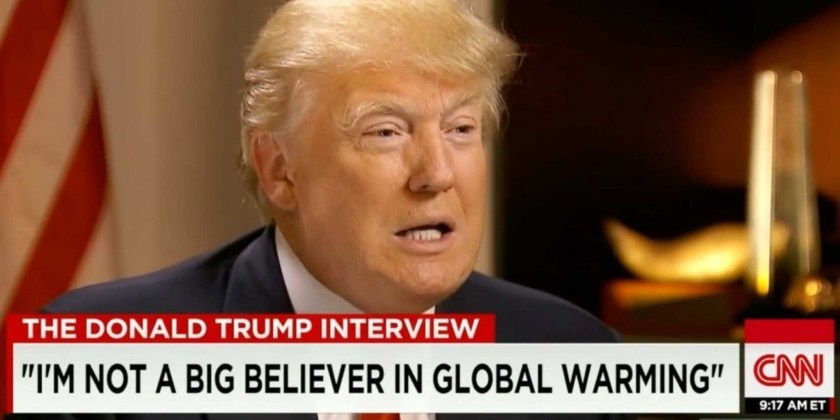
The billionaire non-politician — who lost the popular vote by more than a million votes but won the presidency on the basis of the electoral college — has long questioned the science underlying climate change.
He also sees political and other motives in climate action. For example, he tweeted on 6 November 2012: “The concept of global warming was created by and for the Chinese in order to make U.S. manufacturing non-competitive.”
Trump’s tweet on 6 November 2012 – What does it mean for his administration?
His vice president, Indiana governor Mike Pence, also does not believe that climate change is caused by human activity.
Does this spell doom for the world’s governments trying to avoid the worst case scenarios in global warming, now widely accepted by scientists as driven by human activity – especially the burning of petroleum and coal?
It is just too early to tell, but the early signs are not promising.
“Trump should drop his pantomime-villain act on climate change. If he does not, then, come January, he will be the only world leader who fails to acknowledge the threat for what it is: urgent, serious and demanding of mature and reasoned debate and action,” said the scientific journal Nature in an editorial on 16 November 2016.
It added: “The world has made its decision on climate change. Action is too slow and too weak, but momentum is building. Opportunities and fortunes are being made. Trump the businessman must realize that the logical response is not to cry hoax and turn his back. The politician in Trump should do what he promised: reject political orthodoxy and listen to the US people.”
It was only on 4 November 2016 that the Paris climate agreement came into force. This is the first time that nearly 200 governments have agreed on legally binding limits to emissions that cause global warming.
All governments that have ratified the accord — which includes the US, China, India and the EU — carry an obligation to contain global warming to no more than 2 degrees Centigrade above pre-industrial levels. Scientists regard that as the safe limit, beyond which climate change is likely to be both catastrophic and irreversible.
It has been a long and bumpy road to reach this point since the UN framework convention on climate change (UNFCCC) was adopted in 1992. UNFCCC provides the umbrella under which the Paris Agreement works.
High level officials and politicians from 197 countries that have ratified the UNFCCC are meeting in Marrakesh, Morocco, this month to iron out the operational details of the Paris Agreement.
Speaking at the Marrakesh meeting this week, China’s vice foreign minister, Liu Zhenmin, pointed out that it was in fact Trump’s Republican predecessors who launched climate negotiations almost three decades ago.
It was only three months ago that the world’s biggest greenhouse gas emitters – China and the US — agreed to ratify the Paris agreement during a meeting between the Chinese and US presidents.
Chandra Bhushan, Deputy Director General of the Centre for Science and Environment (CSE), an independent advocacy group in Delhi, has just shared his thoughts on the Trump impact on climate action.
“Will a Trump presidency revoke the ratification of the Paris Agreement? Even if he is not able to revoke it because of international pressure…he will dumb down the US action on climate change. Which means that international collaboration being built around the Paris Agreement will suffer,” he said in a video published on YouTube (see: https://goo.gl/r6KGip)
“If the US is not going to take ambitious actions on climate change, I don’t think India or Chine will take ambitious actions either. We are therefore looking at a presidency which is going to push climate action around the world down the barrel,” he added.
During his campaign, Trump advocated “energy independence” for the United States (which meant reducing or eliminating the reliance on Middle Eastern oil). But he has been critical of subsidies for solar and wind power, and threatened to end regulations that sought to end the expansion of petroleum and coal use. In other words, he would likely encourage dig more and more domestically for oil.
“Trump doesn’t believe that renewable energy is an important part of the energy future for the world,” says Chandra Bhushan. “He believes that climate change is a conspiracy against the United States…So we are going to deal with a US presidency which is extremely anti-climate.”
Bhushan says Trump can revoke far more easily domestic laws like the Clean Power Plan that President Obama initiated in 2015. It set a national limit on carbon pollution produced from power plants.
“Therefore, whatever (positive) action that we thought was going to happen in the US are in jeopardy. We just have to watch and ensure that, even when an anti-climate administration takes over, we do not allow things to slide down (at global level action),” Bhushan says.
Some science advocates caution against a rush to judgement about how the Trump administration will approach science in general, and climate action in particular.
Nature’s editorial noted: “There is a huge difference between campaigning and governing…It is impossible to know what direction the United States will take under Trump’s stewardship, not least because his campaign was inconsistent, contradictory and so full of falsehood and evasion.”
We can only hope that Trump’s business pragmatism would prevail over climate action. As the Anglo-French environmental activist Edward Goldsmith said years ago, there can be no trade on a dead planet.
















 Open Minds!