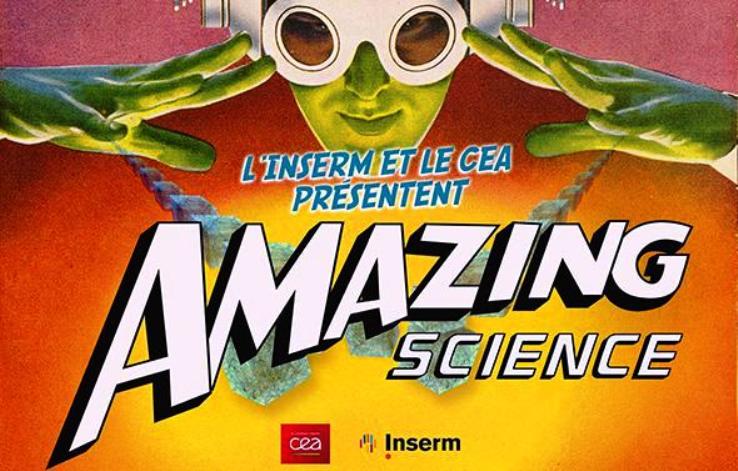
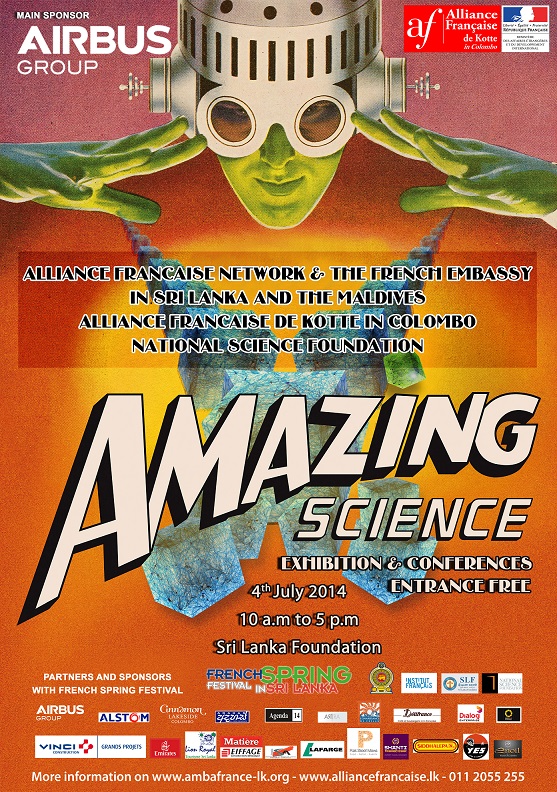
AMAZING SCIENCE comes to Colombo, Sri Lanka, on 4 July 2014 as part of the French Spring Festival organised by Alliance Française de Kotte in COLOMBO and its partners.
Here’s the day’s program, to be held at Sri Lanka Foundation Institute, Independence Avenue, Colombo. I’ll be speaking on “Long shadow of Pulp Science Fiction: Popular culture for promoting science and imagination” at 11 AM, and repeating it again at 1 PM.
Amazing Science in Colombo – Programme for 4 July 2014
Amazing Science is a travelling exhibit put together by French scientific institutes inspired by American ‘pulp’ science fiction magazines during the first half of the 20th century.
As the creators say, it “takes you on an exploratory journey into uncharted territory, on the frontiers of pulp culture, science fiction and scientific research”.
The exhibition revives the old “pulp” look through a blend of scientific research, creative writing and popular culture. From the infinitely small to the infinitely large, the most advanced areas of science are now the realm of unexpected encounters with the real and the imaginary worlds. Each of the exhibition panels features scientific visuals based on a specific research area.
Here’s the Abstract of our own talk:
Long shadow of Pulp Science Fiction: Popular culture for promoting science and imagination
by Nalaka Gunawardene, science writer
and S M Banduseela, science fiction translator
‘Pulp magazines’ is a generic term for inexpensive magazines published in the United States from 1896 to the 1950s. They provided popular entertainment, especially before broadcast television became well established, and carried illustrated short stories and serialized stories in categories like adventure, travel, detective and science fiction.
This illustrated presentation will look at the role pulp magazines played in promoting science fiction writing and reading as part of 20th century popular culture. Many who later became mainstream writers, such as Robert A Heinlein, Arthur C Clarke, Isaac Asimov and Ray Bradbury first established themselves by writing to such publications.
In this talk, we look at how pulp science fiction inspired scientific discovery and innovation in areas as diverse as space exploration, computer science, robotics, evolution and materials science.
In his last published short story, written only a few months before his death, Sir Arthur C Clarke envisioned a world without religions by the year 2500.
Yes, ALL organised, institutionalised religions (i.e. those with holy scripture, priests and places of worship) will gradually go into oblivion! No exceptions.
In it, Sir Arthur described the development of reliable psychological probes, using which any suspected individual could be ‘painlessly and accurately interrogated, by being asked to answer a series of questions’. While its original purpose is to keep the world safe from criminals and terrorists, the “Psi-probe” soon proves to be useful on another front: to weed out religious fanaticism – and all religions themselves – which is a greater threat to humanity.
A few weeks ago, with the concurrence of the Arthur C Clarke Estate, I invited S M Banduseela, the most prolific translator of Clarke’s work in Sri Lanka, to render this last story into Sinhala. Here it is, being published for the first time here:
This week’s Ravaya column (in Sinhala) is about the Meena Communication Initiative, which used animations and popular culture to discuss serious messages related to the girl child in South Asia.
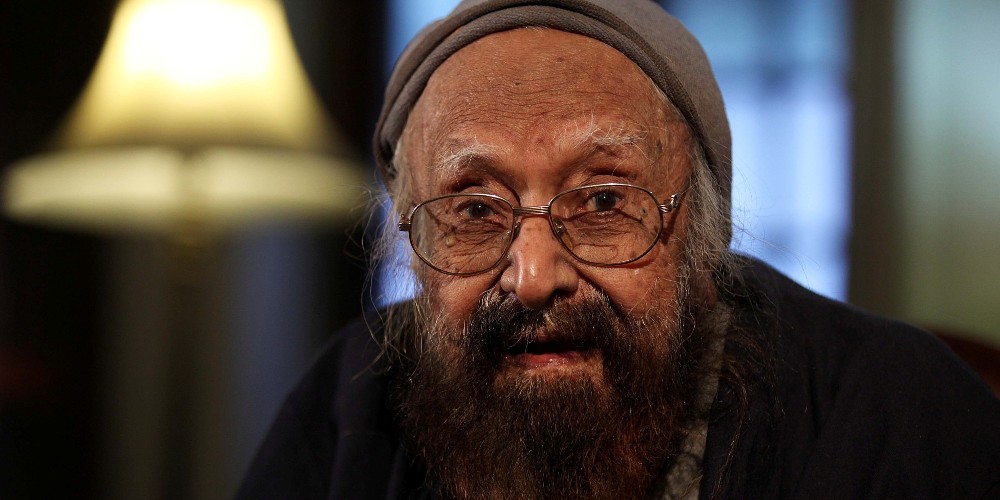
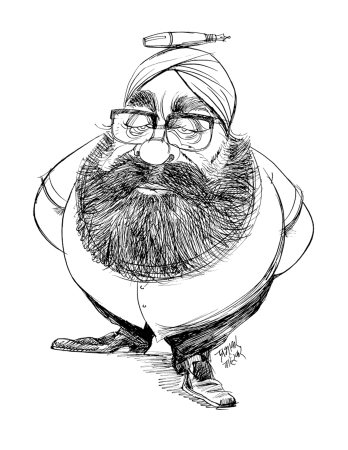
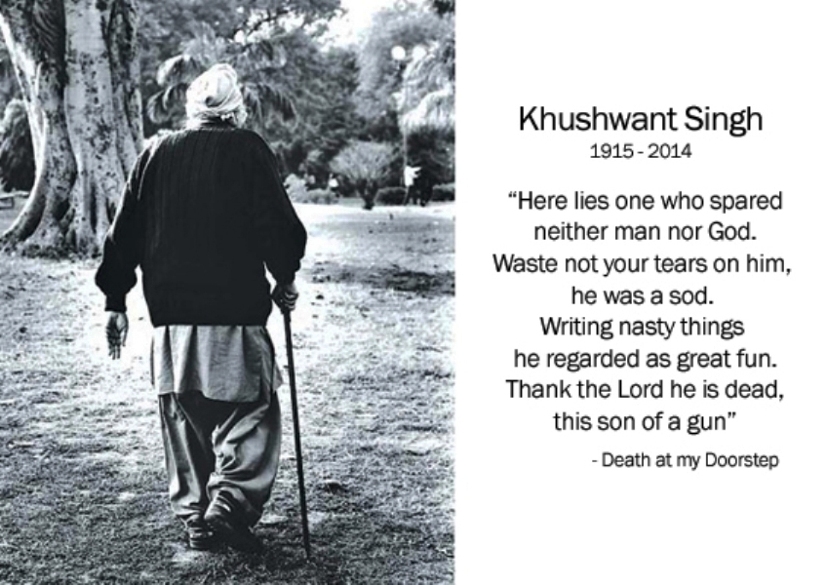
In this week’s Ravaya column (in Sinhala), I pay tribute to Khushwant Singh (1915-2014), writer and journalist who died on 20 March 2014 aged 99. He is best remembered for his satire, humour and trenchant secularism. I make special mention of his defiance of death threats from Sikh fundamentalists in the 1980s, and his vocal stand against all organised religions.
IBN TV’s tribute to Khushwant Singh played on the image of editor inside the light bulb – the graphic used by him when he edited Illustrated Weekly of India (1969-78)
Cartoon by Popa Matumula – Courtesy Cartoon Movement
“To garner public support for their causes, the development community must connect with rest of society using everyday phrases, metaphors and images. That is a far better strategy than expecting everyone to understand their gobbledygook.”
This is the central argument in my latest op-ed essay, just published on the Communication Initiative blog.
Titled Crossing the ‘Dev-Code’ Divide, I revisit a theme familiar to my regular readers: getting development pr0fessionals to communicate better.
Another excerpt:
“After working with technological ‘geeks’ and development workers for many years, I know they have at least one thing in common: their own peculiar languages that don’t make much sense to the rest of us.
“Talking in code is fine for peer-to-peer conversations. But it’s a nonstarter for engaging policy makers and the public.”
This essay is a tribute to my mentor and former colleague Robert Lamb (1952 – 2012), who was a grandmaster in communicating development to public and policy audiences using simple language and powerful imagery.
Working with Robert for 15 years, I saw how he brought seemingly dreary development issues alive on TV and video – dominant media of his time — through simple and sincere story telling. He mixed inter-governmental processes with stark ground level realities. In three decades he produced or commissioned hundreds of international TV documentaries exploring what sustainable development meant in the real world.
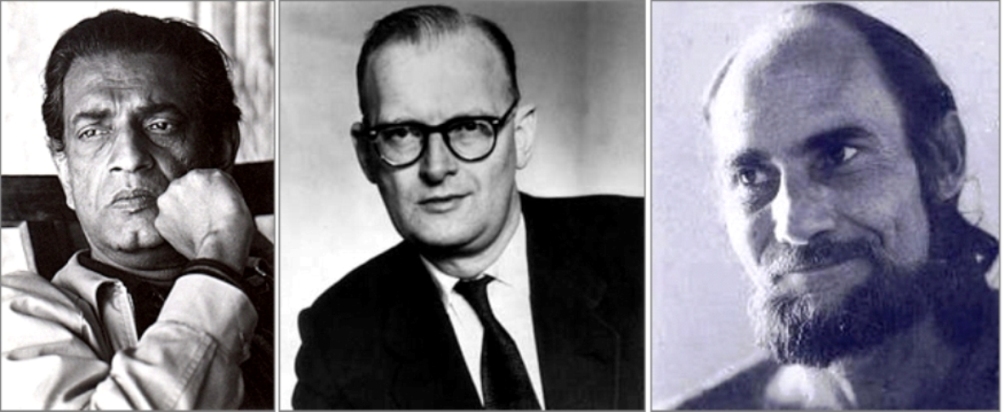
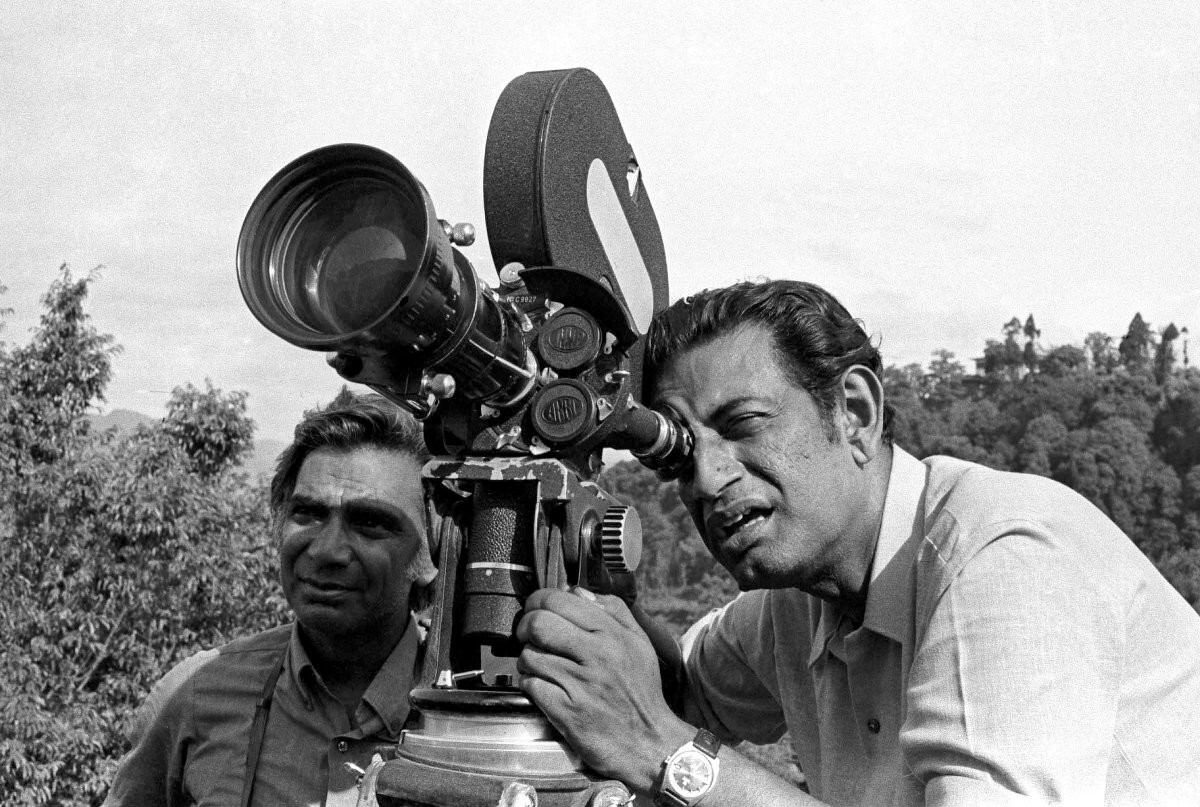
Indian filmmaker Satyajit Ray (1921-1992) was keen to make India’s first science fiction movie, and in 1967 wrote a script for a film to be called The Alien, based on his own short story “Bankubabur Bandhu” (“Banku Babu’s Friend”). The story was about an alien spaceship that landed in rural Bengal, carrying a highly intelligent and friendly alien being with magical powers.
Ray’s friend Arthur C Clarke recommended and introduced him to Hollywood, but the film never reached production. In this week’s Ravaya column (in Sinhala), I continue the story of what happened to The Alien.
Thanks to writer and film historian Richard Boyle for sharing excerpts from his as-yet unpublished manuscript on this topic, which is one of the greatest might-have-beens in the history of the cinema.
Renowned Indian filmmaker Satyajit Ray (1921-1992) directed 36 films, including feature films, documentaries and shorts. He was also a fiction writer, publisher, illustrator, calligrapher, graphic designer and film critic.
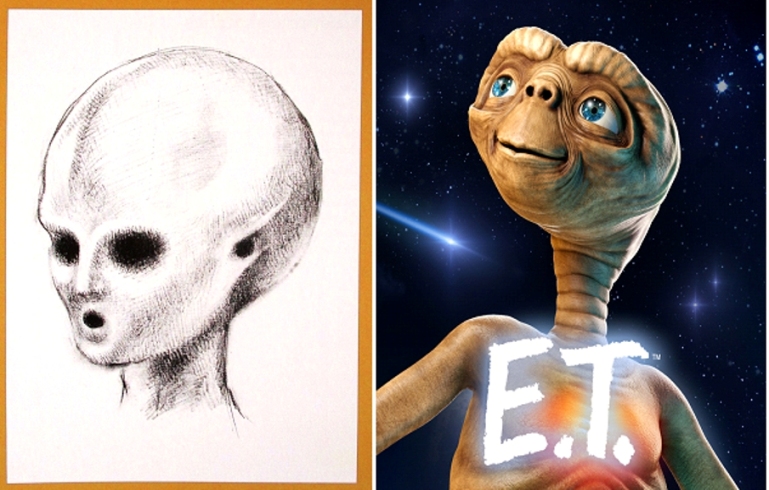
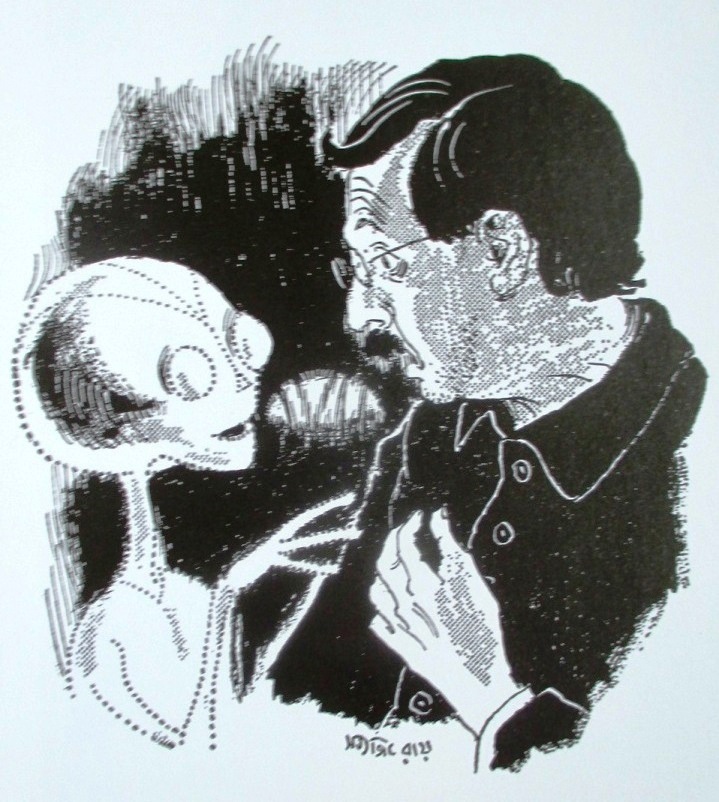
In 1967, Ray wrote a script for a film to be called The Alien, based on his own short story “Bankubabur Bandhu” (“Banku Babu’s Friend”) which had appeared in Sandesh, the Ray family magazine, in 1962. The story was about an alien spaceship that landed in a pond in rural Bengal, carrying a highly intelligent and friendly alien being with magical powers and best capable of interacting with children.
Ray was keen to collaborate with Hollywood for making this movie that required special effects and a higher budget than his other movies. His friend Arthur C Clarke recommended and introduced him to Hollywood, but the film never reached production. Years later, when Steven Spielberg made ET, Ray and his friends noticed remarkable similarities between the two stories. Coincidence?
In this week’s Ravaya column (in Sinhala), I relate the story behind the story of what happened to The Alien. This is reconstructed from Ray’s own published account, Ordeals of The Alien. I’m grateful to writer and film historian Richard Boyle for sharing excerpts from his as-yet unpublished manuscript on this topic, one of the greatest might-have-beens in the history of the cinema.
The Sunday Times (Sri Lanka) asked me to list the best book I’ve read in 2013 (and why); and also for the book I’d like to receive as a Christmas present.
Here’s my essay in full: it wasn’t easy to pick one good title in a year in which I read many enjoyable and mind-stretching books.
Word power amplifies political power…
Words that Saved the World
By Nalaka Gunawardene
Although it lasted only a thousand days, John F Kennedy’s presidency was eventful and memorable in many respects. His legacy has inspired an estimated 40,000 books and films. This year, which marked the 50th anniversary of his assassination, I read an exceptional addition to this (still rising) pile.
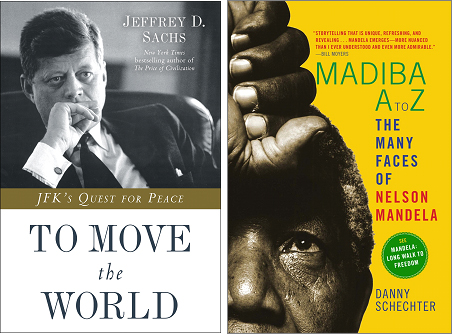
To Move the World: JFK’s Quest for Peace (Random House, 2013), by Columbia University economist Jeffrey Sachs, revisits the extraordinary days from October 1962 to September 1963. That was JFK’s Annus mirabilis (Year of wonders) when he marshalled the power of oratory and political skills to achieve more peaceful relations with the Soviet Union and a dramatic slowdown in the proliferation of nuclear weapons.
During that year, which started with momentous ‘13 days’ of the Cuban missile crisis, JFK he gave a series of speeches where he argued that peace with the Soviet Union was both possible and highly desirable. One delivered to the American University in Washington DC in June 1963 is generally referred to as his Peace Speech. Sachs shows why it was one of the most important foreign policy speeches of the 20th Century – ultimately more consequential than any other by JFK.
If Winston Churchill “mobilized the English language and sent it into battle” during World War II, Kennedy used his mastery of the same language to talk the US and Soviet Union down from the brink of a planetary nuclear war.
What I’d love to get for Christmas is Madiba A to Z: The Many Faces of Nelson Mandela (Seven Stories Press, 2013) just written by my journalist friend Danny Schechter. We can count on Danny, who has spent 40 years chronicling the story of Mandela and South Africa’s struggle for freedom and equality, to provide plenty of depth, nuance and analysis.
Nalaka Gunawardene is a science writer and blogger.
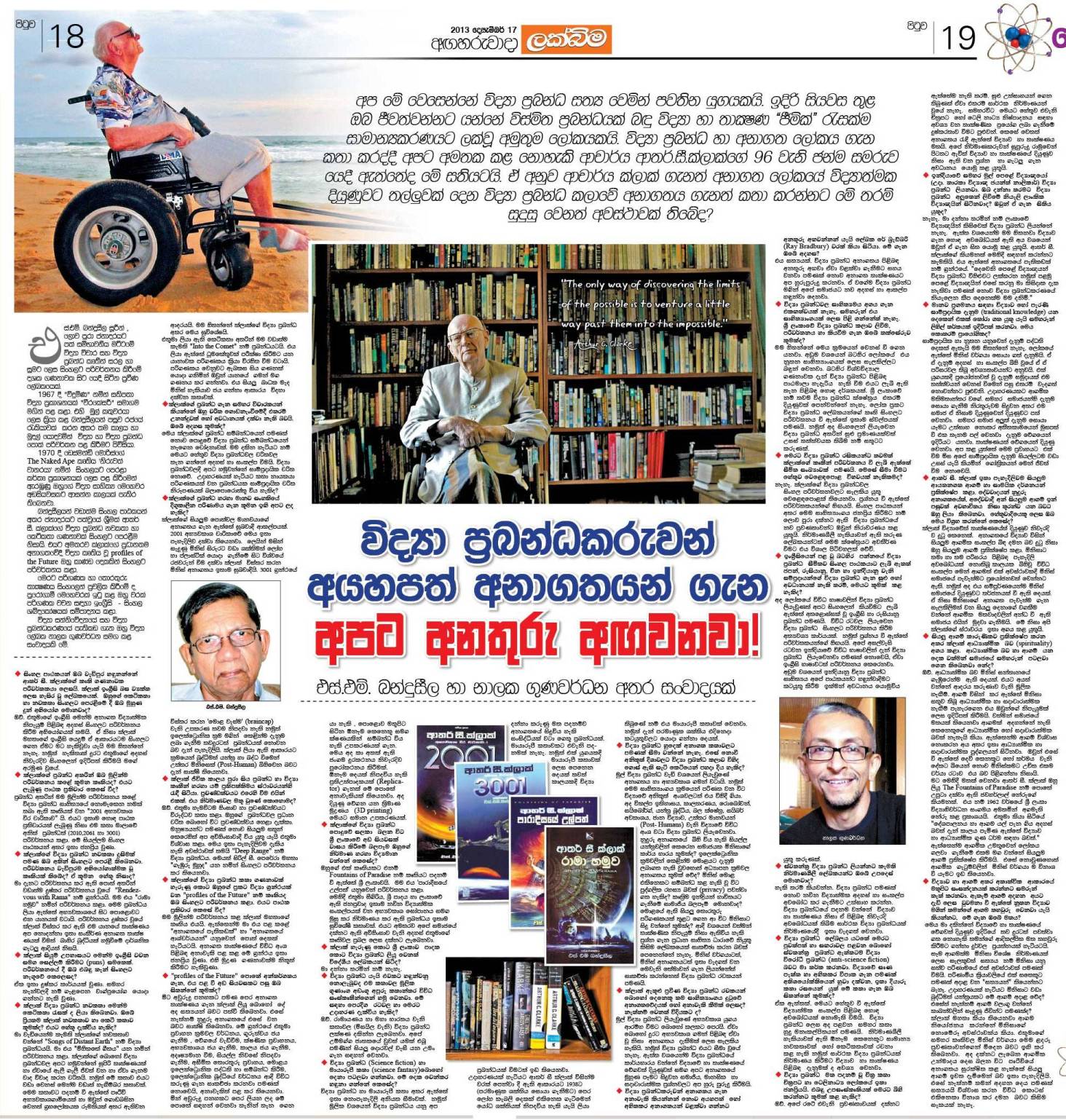
Lakbima Sinhala daily newspaper has just published my long interview with S M Banduseela who is widely recognised as Sri Lanka’s foremost translator of science and science fiction. He is best known as Arthur C Clarke’s Lankan translator.
Those segments are not repeated here. Lakbima has also carried my questions related to Clarke’s views on traditional knowledge, and on religion. Banduseela answers them in his capacity as a leading rationalist and free thinker in Sri Lanka.
As he often said: “One of the great tragedies of mankind is that morality has been hijacked by religion. So now people assume that religion and morality have a necessary connection. But the basis of morality is really very simple and doesn’t require religion at all. It’s this: “Don’t do unto anybody else what you wouldn’t like to be done to you.” It seems to me that that’s all there is to it.”
S M Banduseela is widely recognised as Sri Lanka’s foremost translator of science and science fiction. Beginning in 1970, when he translated into Sinhala language The Naked Ape by zoologist and ethologist Desmond Morris, Banduseela has introduced Sinhala readers to over two dozen world acclaimed titles.
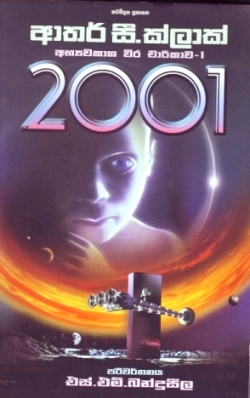
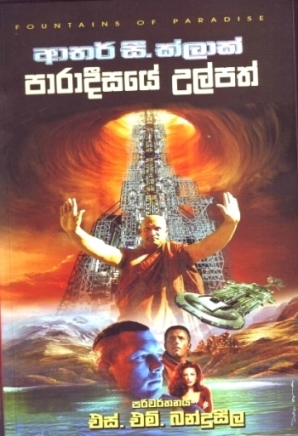
He is best known as Arthur C Clarke’s Lankan translator. In the mid 1970s, he translated Clarke’s landmark 1962 volume Profiles of the Future, which was well received. Encouraged, Banduseela took to translating Clarke’s key science fiction novels beginning with 2001: A Space Odyssey. Over the years, he rendered into Sinhala all four Odyssey novels, as well as other works like The Fountains of Paradise, Rendezvous with Rama and The Hammer of God.
In this wide ranging interview, published in the Sinhala Sunday newspaper Ravaya (24 Nov 2013), I discuss with Banduseela various aspects of science fiction in the Lankan context: the niche readership for this literary genre; its enduring appeal among Sinhala readers; and prospects of original science fiction in Sinhala. He also recalls the challenges he faced translating Clarke’s technically complex and philosophically perceptive novels. I ask him why Sinhala readers have yet to discover the rich worlds of science fiction written in countries like Russia, Japan, China and India.
















 Open Minds!