Echelon June 2015 column: Sri Lanka – Unclear on Nuclear

Text of my column written for Echelon monthly business magazine, Sri Lanka, June 2015 issue

Sri Lanka: Unclear on Nuclear

 By Nalaka Gunawardene
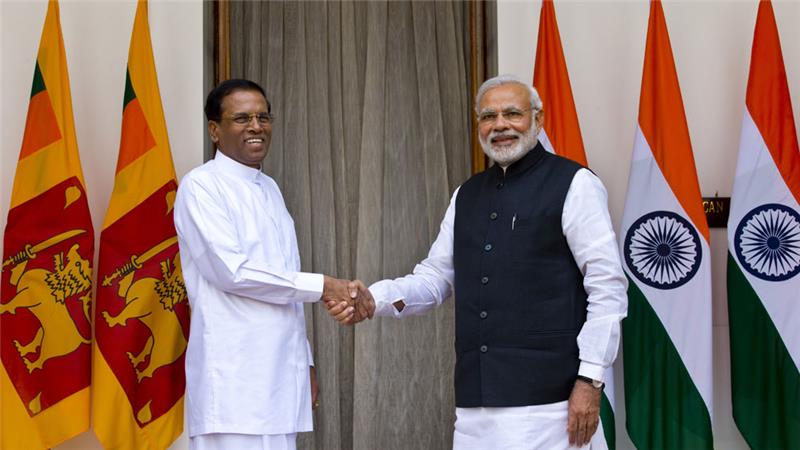
Sri Lanka's President Maithripala Sirisena meets Indian Prime Minister Narendra Modi in New Delhi, 16 Feb 2015
Sri Lanka’s President Maithripala Sirisena meets Indian Prime Minister Narendra Modi in New Delhi, 16 Feb 2015

Should Sri Lanka consider nuclear energy for its medium to meet its long term electricity generation needs?

This has been debated for years in scientific and policy circles. It has come into sharp focus again after Sri Lanka signed a bilateral agreement with India “to cooperate in peaceful uses of nuclear energy”.

Under the agreement, signed in New Delhi on 16 February 2015 during President Maithripala Sirisena’s first overseas visit, India will help Sri Lanka build its nuclear energy infrastructure, upgrade existing nuclear technologies and train specialised staff. The two countries will also collaborate in producing and using radioactive isotopes.

On the same day, a story filed from the Indian capital by the Reuters news agency said, “India could also sell light small-scale nuclear reactors to Sri Lanka which wants to establish 600 megawatts of nuclear capacity by 2030”.

This was neither confirmed nor denied by officials. The full text has not been made public, but a summary appeared on the website of Sri Lanka’s Atomic Energy Board. In it, AEB reassured the public that the deal does not allow India to “unload any radioactive wastes” in Sri Lanka, and that all joint activities will comply with standards and guidelines set by the International Atomic Energy Agency (IAEA), a UN body in which both governments are members.

According to AEB, Sri Lanka has also signed a memorandum of understanding on nuclear cooperation with Russia, while another is being worked out with Pakistan.

Beyond such generalities, no specific plans have been disclosed. We need more clarity, transparency and adequate public debate on such a vital issue with many economic, health and environmental implications. Yaha-paalanaya (good governance) demands nothing less.

Radiation_sign_cropped

 South Asia’s nuclear plans

The South Asian precedent is not encouraging. Our neighbouring countries with more advanced in nuclear programmes have long practised a high level of opacity and secrecy.

Two countries — India and Pakistan – already have functional nuclear power plants, which generate around 4% of electricity in each country. Both have ambitious expansion plans involving global leaders in the field like China, France, Russia and the United States. Bangladesh will soon join the nuclear club: it is building two Russian-supplied nuclear power reactors, the first of which will be operational by 2020.

India and Pakistan also possess home-built nuclear weapons, and have refused to sign the Treaty on the Non-Proliferation of Nuclear Weapons (NPT). Specifics of their arsenals remain unknown.

Both countries have historically treated their civilian and military nuclear establishments as ‘sacred cows’ beyond any public scrutiny. India’s Official Secrets Act of 1923 covers its nuclear energy programme which cannot be questioned by the public or media. Even senior Parliamentarians complain about the lack of specific information.

It is the same, if not worse, in Pakistan. Pakistani nuclear physicist Dr Pervez Hoodbhoy, an analyst on science and security, finds this unacceptable. “Our nuclear power programme is opaque since it was earlier connected to the weapons programme. Under secrecy, citizens have much essential information hidden from them both in terms of safety and costs.”

Safety of nuclear energy dominates the agenda more than four years after Japan’s Fukushima nuclear accident of March 2011. The memories of Chernobyl (April 1986) still linger. These concerns were flagged in a recent online debate on South Asia’s critical nuclear issues that I moderated for SciDev.Net. With five panellists drawn from across the opinion spectrum, the debate highlighted just how polarised positions are when it comes to anything nuclear in our part of the world.
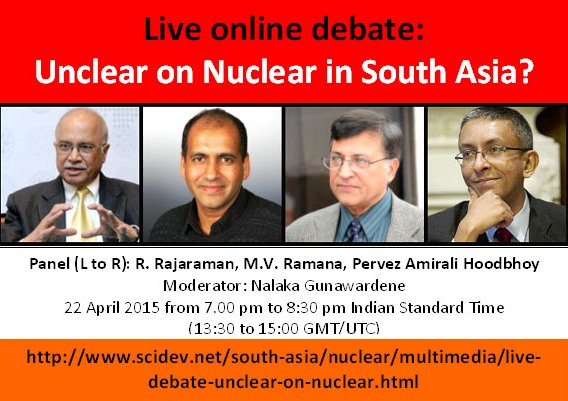
Nuclear debate promo

Bottomline

The bottomline: all South Asian countries need more electricity as their economies grow. Evidence suggests that increasing electricity consumption per capita enhance socio-economic development.

The World Bank says South Asia has around 500 million people living without electricity (most of them in India). Many who are connected to national grids have partial and uneven supply due to frequent power outages or scheduled power cuts.

The challenge is how to generate sufficient electricity, and fast enough, without high costs or high risks? What is the optimum mix of options: should nuclear be considered alongside hydro, thermal, solar and other sources?

In 2013, Sri Lanka’s total installed electricity generation capacity in the grid was 3,290 MegaWatts (MW). The system generated a total electricity volume of 12,019.6 GigWatt-hours (GWh) that year. The relative proportions contributed by hydro, thermal and new renewable energies (wind, solar and biomass) vary from year to year. (Details at: http://www.info.energy.gov.lk/)

In a year of good rainfall, (such as 2013), half of the electricity can still come from hydro – the cheapest kind to generate. But rainfall is unpredictable, and in any case, our hydro potential is almost fully tapped. For some years now, it is imported oil and coal that account for a lion’s share of our electricity. Their costs depend on international market prices and the USD/LKR exchange rate.
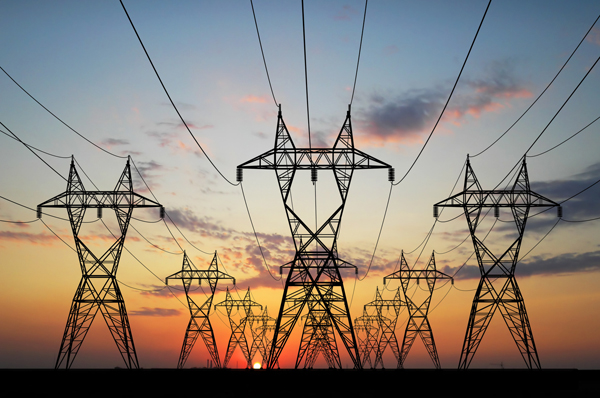
Image courtesy Ministry of Power and Energy, Sri Lanka, website

Should Sri Lanka phase in nuclear power at some point in the next two decades to meet demand that keeps rising with lifestyles and aspirations? Much more debate is needed before such a decision.

Nuclear isn’t a panacea. In 2003, a study by the Massachusetts Institute of Technology (MIT) on the future of nuclear power traced the “limited prospects for nuclear power” to four unresolved problems, i.e. costs, safety, waste and proliferation (http://web.mit.edu/nuclearpower/).

A dozen years on, the nuclear industry is in slow decline in most parts of the world says Dr M V Ramana, a physicist with the Program on Science and Global Security at Woodrow Wilson School of Public and International Affairs at Princeton University. “In 1996, nuclear power contributed about 17.6% to the world’s electricity. By 2013, it was been reduced to a little over 10%. A large factor in this decline has been the fact that it was unable to compete economically with other sources of power generation.”

Safety issues

Beyond capital and recurrent cost considerations, issues of public safety and operator liability dominate the nuclear debate.

Take, for example, Pakistan’s recent decision to install two Chinese-supplied 1,100 MW reactors near Karachi, a megacity that packs almost Sri Lanka’s population. When concerned citizens challenged this in court, the government pleaded “national security was at stake” and so the public could not be involved in the process.

Dr Hoodbhoy is unconvinced, and cautions that his country is treading on very dangerous ground. He worries about what can go wrong – including reactor design problems, terrorist attacks, and the poor safety culture in South Asia that can lead to operator error.

He says: “The reactors to be built in Karachi are a Chinese design that has not yet been built or tested anywhere, not even in China. They are to be sited in a city of 20 million which is also the world’s fastest growing and most chaotic megalopolis. Evacuating Karachi in the event of a Fukushima or Chernobyl-like disaster is inconceivable!”

Princeton’s Dr Ramana, who has researched about opacity of India’s nuclear programmes, found similar aloofness. “The claim about national security is a way to close off democratic debate rather than a serious expression of some concern. It should be the responsibility of authorities to explain exactly in what way national security is affected.”

See also: India’s Nuclear Enclave and Practice of Secrecy. By M V Ramana. Chapter in ‘South Asian Cultures of the Bomb’ (Itty Abraham, ed., Indiana University Press, 2009)

Construction of the Koodankulam Nuclear Power Plant in Tamil Nadu

 Nuclear Dilemmas

Putting the nuclear ‘genie’ back in the bottle may not be realistic. The World Nuclear Association, an industry network, says there were 435 commercial nuclear power reactors operating in 31 countries by end 2014. Another 70 are under construction.

Following Fukushima, public apprehensions on the safety of nuclear power plants have been heightened. Governments – at least in democracies – need to be sensitive to public protests while seeking to ensure long term energy security.

By end 2014, India had 21 nuclear reactors in operation in 7 nuclear power plants, with a total installed capacity of 5,780 MW. Plans to build more have elicited sustained protests from local residents in proposed sites, as well as from national level advocacy groups.

For example, the Kudankulam Nuclear Power Plant in Tamil Nadu, southern India — which started supplying to the national power grid in mid 2013 — has drawn protests for several years. Local people are worried about radiation safety in the event of an accident – a concern shared by Sri Lanka, which at its closest (Kalpitiya) is only 225 km away.

India’s Nuclear Liability Law of 2010 covers both domestic and trans-boundary concerns. But the anti-nuclear groups are sceptical. Praful Bidwai, one of India’s leading anti-nuclear activists, says the protests have tested his country’s democracy. He has been vocal about the violent police response to protestors.
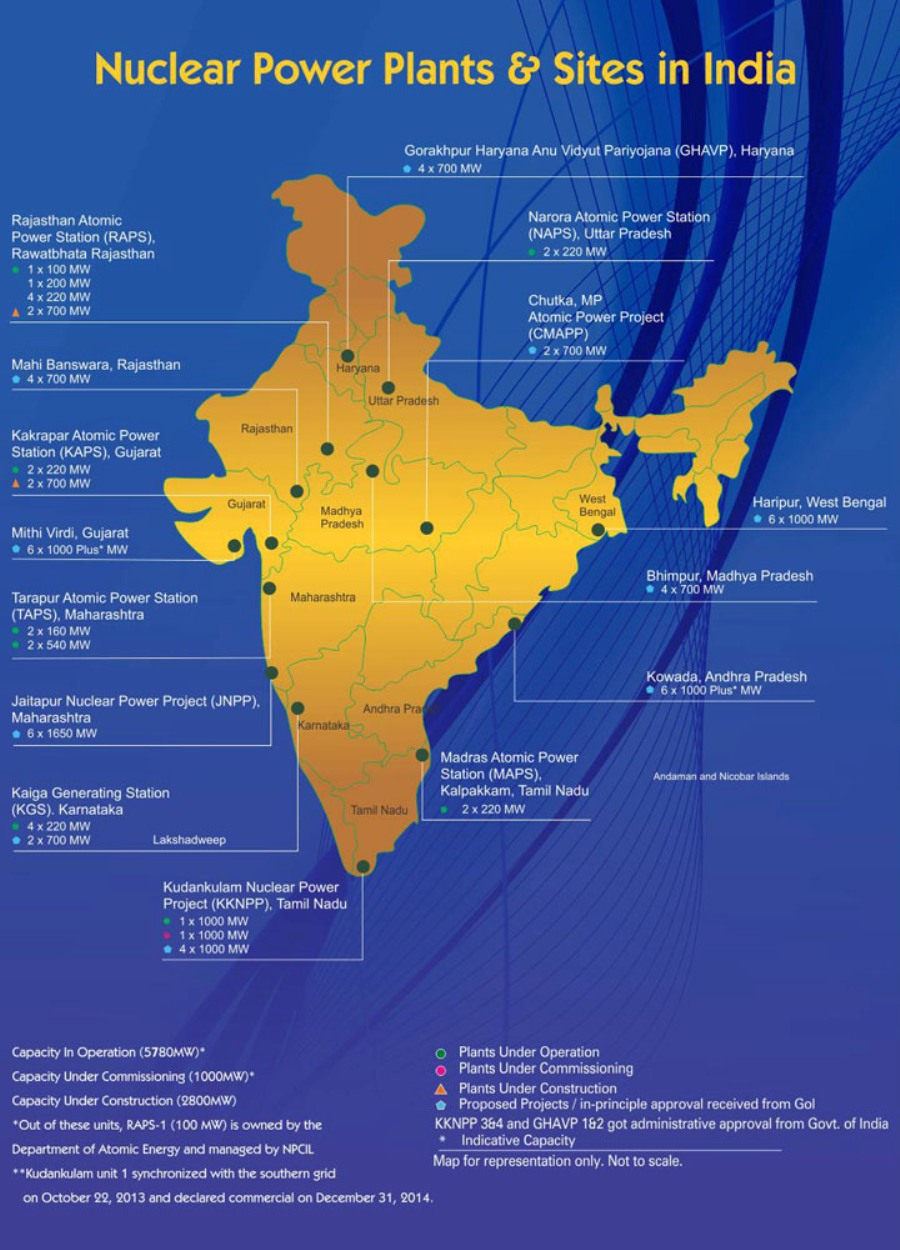
Nuclear Power Plants in India - official map 2014
Nuclear Power Plants in India – official map 2014

Meanwhile, advocates of a non-nuclear future for the region say future energy needs can be met by advances in solar and wind technologies as well as improved storage systems (batteries). India is active on this front as well: it wants to develop a solar capacity of 100,000 MW by 2022.

India’s thrust in renewables does not affect its nuclear plans. However, even pro-nuclear experts recognise the need for better governance. Dr R Rajaraman, an emeritus professor of physics at Jawaharlal Nehru University in New Delhi, wants India to retain the nuclear option — but with more transparency and accountability.

He said during our online debate: “We do need energy in India from every possible source. Nuclear energy, from all that I know, is one good source. Safety considerations are vital — but not enough to throw the baby out with the bathwater.”

Rajaraman argued that nuclear energy’s dangers need to be compared with the hazards faced by those without electricity – a development dilemma. He also urged for debate between those who promote and oppose nuclear energy, which is currently lacking.

Any discussion on nuclear energy is bound to generate more heat than light. Yet openness and evidence based discussion are essential for South Asian countries to decide whether and how nuclear power should figure in their energy mix.

In this, Sri Lanka must do better than its neighbours.

Full online debate archived at: http://www.scidev.net/south-asia/nuclear/multimedia/live-debate-unclear-on-nuclear.html

Science writer Nalaka Gunawardene is on Twitter @NalakaG and blogs at http://nalakagunawardene.com.
සිවුමංසල කොලූගැටයා #223: මෝහන්දාස් කේ. ගාන්ධි නම් වූ ජන සන්නිවේදකයා

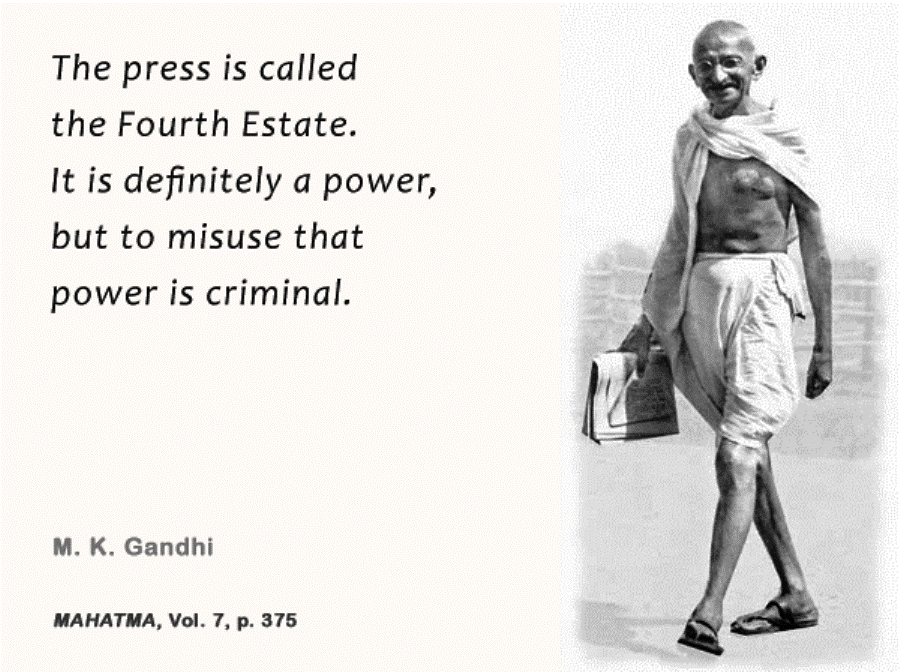
Gandhi quote on the press

“Journalism to be useful and serviceable to the country will take its definite place only when it becomes unselfish and when it devotes its best for the service of the country, and whatever happens to the editors or to the journal itself, editors would express the views of the country irrespective of consequences…”

Mahatma Gandhi said these words on 22 March 1925, when unveiling the portrait of S. Kasthuriranga Iyengar, the late Editor of The Hindu, at the newspaper’s Chennai office. These words summed up the basic tenets of true journalism that Gandhi believed in – and practised.

Besides being a political leader and social reformer, Gandhi was also a prolific writer, journalist and editor for much of his life. He was the editor of three English weeklies, namely Indian Opinion (in South Africa during 1903-1915), Young India (1919- 1931), and Harijan (1933-1942 and 1946-January 1948).

Indian Opinion was bi-lingual (English and Gujarati). For some time it had also Hindi and Tamil sections. Young India had a Gujarati edition – Navajivan. Harijan was printed in several Indian language editions. These journals, which he described as “viewspapers”, were means of political and social movements. But they were also printed, distributed and sold in the open market just like other journalistic products.

What can today’s journalists learn from Gandhi as a mass communicator and journalist/editor? I explore this in this week’s Ravaya column (published on 14 June 2015).

Part 2: සිවුමංසල කොලූගැටයා #224: මහත්මා ගාන්ධි: ඉතිහාසය වෙනස් කළ සඟරා කතුවරයා

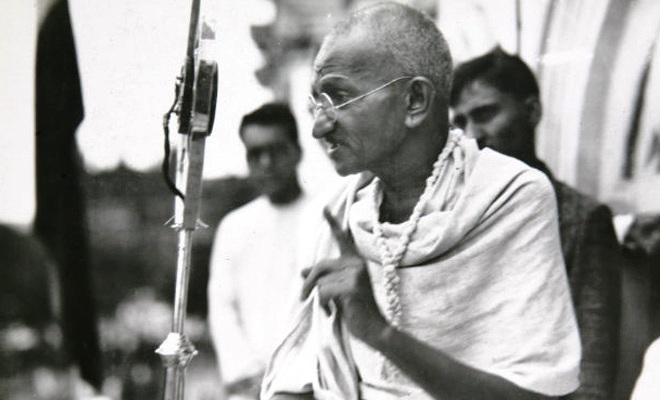
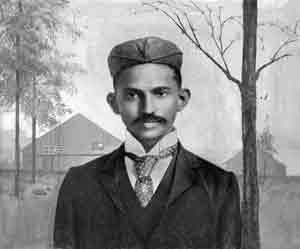
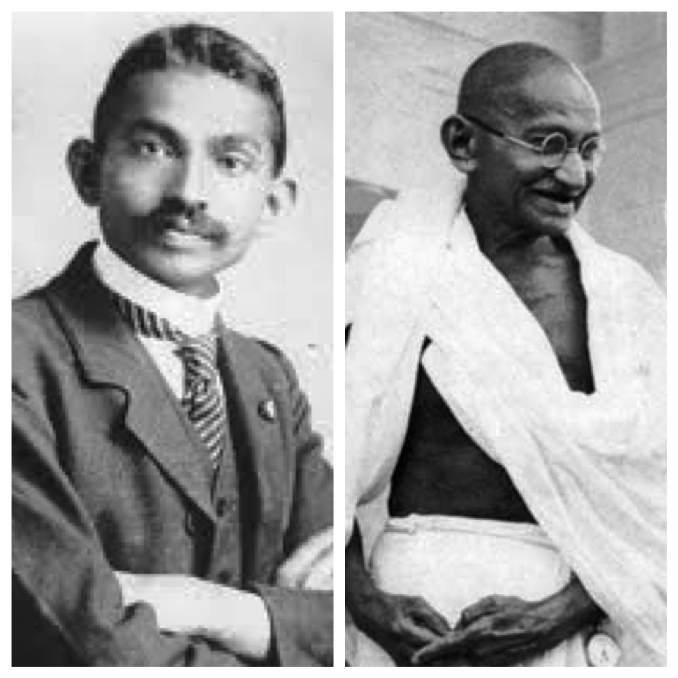
Younger and mature Mahatma Gandhi

ශ‍්‍රී ලංකාවේ ජනමාධ්‍ය ප‍්‍රතිසංවිධානය හා ප‍්‍රතිව්‍යුහකරණය ගැන සංවාද කැරෙන මේ දිනවල මාධ්‍ය බහුතරයක් ආචාර ධර්මීය නොවන ලෙසින් ක‍්‍රියා කිරීම ගැන කුමක් කළ හැකි ද යන්නත් සාකඡ්චා කැරෙනවා.

මාධ්‍ය ආචාර ධර්ම (media ethics) බටහිර රටවලින් අපේ වැනි රටවලට ආරෝපණය කරන තවත් බලපෑමක්ද? මේ ප‍්‍රශ්නය පසුගිය දිනෙක මගේ මාධ්‍යවේදී සිසුවකු අහිංසක ලෙසින් මතු කළා.

පුවත්පත් සඳහා ආචාර ධර්ම පද්ධතියක් මුල් වරට 1922දී ලේඛන ගත කළේ අමෙරිකානු පුවත්පත් කතුවරුන්ගේ සංගමය (American Society of News Editors, ASNE) බව ඓතිහාසික සත්‍යයක්. http://goo.gl/X6sS8o

පසු කලෙක එය ලොව පුරා රටවල් තමන්ට ගැලපෙන පරිදි අදාළ කර ගත්තා. හොඳ දෙයක් කොතැනින් මතු වුවත් එය අගය කළ යුතුයි. මේ ඔස්සේ තව දුරටත් කල්පනා කරන විට මට සිහි වූයේ 20 වන සියවසේ මෙන්ම මිනිස් ඉතිහාසයේම මහා පුරුෂයකු ලෙස සැලකෙන මහත්මා ගාන්ධිතුමාගේ පුවත්පත් ලේඛක හා කතුවර භූමිකාවයි.

20 වන සියවස මුලදී තරුණ ගාන්ධි තමන්ටම ආවේණික වූ ප‍්‍රතිපත්ති හා ආචාර ධර්ම රාමුවක් අනුගමනය කරමින් මාධ්‍ය හරහා සන්නිවේදනය කළා. ගාන්ධිගේ ජන සන්නිවේදන ශිල්ප ක‍්‍රම හා ආචාර ධර්ම විමසා බැලීමෙන් සියවසකට පසු අපට තවමත් ආදර්ශ ගත හැකියි.

මෝහන්දාස් කරම්චාන්ද් ගාන්ධි (1869 – 1948) අප හඳුනන්නේ අවිහිංසාවාදීව ඉතිහාසයේ විශාල වෙනසක් කළ අයකු ලෙසින්. ශ්‍රේෂ්ඨ ආත්මය යන අරුත ඇති ‘මහත්මා’ නම් ගරු නාමය ඔහුට ලැබුණේ ජීවිතයේ මැදි වියේදී.

බි‍්‍රතාන්‍යයන් පාලනය කරන ඉන්දියාවේ ඉපදී අධිරාජ්‍ය පාලකයන්ගේ ඉංග‍්‍රීසි බස මනාව උගෙන, ඔවුන්ගේ ආධිපත්‍යයට එරෙහිව අධිෂ්ඨානශීලීව හා නිරායුධව අභියෝග කළ මේ පුංචි මිනිසා ඉතිහාසයේ අතිශය කලාතුරකින් හමු වන ආකාරයේ අසාමාන්‍ය චරිතයක්.

ගාන්ධිගේ ජීවිත කතාව අධ්‍යයනය කළ බොහෝ දෙනකු ඔහුගේ අවංක බව, ප‍්‍රතිපත්ති ගරුක බව හා භේද නොතකා සියලූ දෙනාට එක දේ සැලකීමේ ගුණය අගය කරනවා.

ඔහු මිලියන සිය ගණනක සාමාන්‍ය ඉන්දියානු ජනයා නිදහස උදෙසා සාමකාමී ලෙසින් කුළු ගැන්වූයේ හා දශක ගණනක අරගලය පුරාම සංවරව පවත්වා ගත්තේ කෙසේද?

එයට ඔහුගේ තීක්ෂණ බුද්ධිය මෙන්ම උසස් සන්නිවේදන කුසලතාත් උපකාරී වූවා. ගාන්ධි නම් වූ විශිෂ්ඨ ජන සන්නිවේදකයා ගැන ඉන්දියාවේත්, ඉන් පිටතත් සන්නිවේදන පර්යේෂකයන් තවමත් අධ්‍යයනය කරන්නේ මේ නිසා. ඔහුගේ මාධ්‍ය කලාවේ පැතිකඩ කිහිපයක් විමසා බලමු.

Gandhi mobilised millions, but was never a great orator

19 හැවිරිදි තරුණයකු ලෙස 1888දී ගාන්ධි එංගලන්තයට ගියේ නීතිය උගෙන නීතීඥයකු වීමටයි. මධ්‍යම පාන්තික වෙළද පවුල් පසුබිමකින් ආ ඔහුට ඉංග‍්‍රීසි බස ආගන්තුක නොවූවත් එංගලන්තයේ වෙනස් සමාජ පසුබිමට හුරු වන්නට ටික කලක් ගත වුණා. නීති දේශනවලට යොමුවන්නටත් පෙර පටන් ඔහු එරට පුවත්පත් නිතිපතා කියැවීමට පටන් ගත්තා.

ඉන්දියාවේ සිටියදී පුවත්පත් නොකියවූ තරුණ ගාන්ධි බි‍්‍රතාන්‍ය පුවත්පත් අගය කළා. රටක දේශපාලන හා සමාජ තත්ත්වයන් ගැන අවබෝධයක් ලබන්නට පුරවැසියන්ට උදව් වන්නේ උසස් ගණයේ පුවත්පත් හා සඟරා පැවතීම බවත් නූතන සමාජයේ ජන මතය හසුරුවන්නට මේවාට ලොකු බලයක් ඇති බවත් ඔහු වටහා ගත්තා.

මුද්‍රිත ජන මාධ්‍ය ගැන ඔහු මෙසේ තරුණ වියේදී ඇතිකරගත් පැහැදීම හා විශ්වාසය ජීවිත කාලය පුරාම පැවතියා.

ගාන්ධිගේ සන්නිවේදන භූමිකාව අධ්‍යයනය කළ අහමදබාද්හි ගුජරාට් විද්‍යාපීඨ උපකුලපති සුදර්ශන් අයෙන්ගර් (Dr Sudarshan Iyengar) කියන්නේ මෙයයි. ‘‘ගාන්ධි ලිඛිත මාධ්‍යයට වඩා ළැදි වීමට තවත් හේතුවක් නම් ප‍්‍රසිද්ධ සභා අමතා කතා කිරීමට සහජයෙන් ඔහු තුළ තිබූ සබකෝලයයි. පරිණත වියේදී පවා ඔහු දක්ෂ කථිකයකු වූයේ නැහැ. කට වචනයෙන් සන්නිවේදනයට තමාගේ සීමා හඳුනා ගත් ඔහු ලිඛිත සන්නිවේදනයට හැකි තරම් කාලය හා ශ‍්‍රමය යෙදවූවා. සභා ඇමතීම බොහෝ විට කථිකත්වයෙන් තමාට වඩා දක්ෂයන්ට භාර කළා.’’

තම සබකෝලය ගැන ගාන්ධි සිය ආත්ම චරිතාපදානයේ (The Story of My Experiments with Truth, 1927) විවෘතව සාකච්ඡා කරනවා. පසු කලෙක වෘත්තීය නීතිඥයකු ලෙස උසාවි ඇමතීමට පෞරුෂය ගොඩ නගා ගත්තද ඔහු කිසි දිනෙක (නෙල්සන් මැන්ඩෙලා මෙන්) ජනකාන්ත වේදිකා කථිකයකු වූයේ නැහැ.

Gandhi was 24 when he arrived in Pretoria to work as a legal representative for the Muslim Indian Traders based there

‘‘මේ සබකෝලය හඳුනා ගත් මා එය කෙමෙන් සවියක් බවට පත් කර ගත්තා. හරි තැනට ඔබින විදිහට හිටිවනම කතා කිරීමට නොහැකි වීම ගැන මුල් යුගයේ මා පසුතැවිලි වූවත්, පසුව මා තේරුම් ගත්තේ එය වාසියක් ද වන බවයි. මගේ සිතිවිලි දැඩි සංයමයෙන් හසුරුවා ගන්නටත්, කියන්නට ඇති දේ හැකි තාක් කෙටියෙන් කියන්නටත් මා පුහුණු වුණා. මේ නිසා මගේ මුවින් වල්පල්, අතිශයෝක්ති, හරසුන් කිසිවක් පිට වන්නේ නැහැ. යමක් කතා කරන විට මෙන්ම ලියන විටත් හැකි තාක් සංක්ෂිප්තව, සරලව හා ඍජුව වචන ගලපන්නට මා සැම විටම තැත් කරනවා. එසේම නිහඬ විය යුතු තැන්හිදී නිහඬවීමට ද මා දන්නවා.’’

අයෙන්ගර්ගේ අදහසට අනුව ගාන්ධිගේ පුවත්පත් කලාව ඉහත කී ආචාර ධර්මීය හා විනයානුකූල රාමුව තුළම සිදු වුණා. ගාන්ධි ලොව තිබූ විශාලතම අධිරාජ්යයට එරෙහිව රතිපත්තිමය අරගලයක් ගෙන ගියේ දැඩි පීඩන හා හිරිහැර මැදයි. එහෙත් කෙතරම් දුෂ්කර අවස්ථාවකදීවත් ආවේගශීලී නොවන්නටත්, සීරුවෙන් හා ආචාරශීලීව භාෂිත හා ලිඛිත රකාශ හසුරු වන්නටත් ඔහු රවේශම් වුණා. ඔහු දූරදර්ශී ජන නායකයකු වීමට මේ සන්නිවේදන ගුණාංග දායක වූවා.

ගාන්ධිගේ චරිත කතාව මෙසේ කැටි කළ හැක්කක් නොවෙයි. අප මෙහිදී අවධානය යොමු කරන්නේ ඔහුගේ ජන සන්නිවේදන ක‍්‍රියා ගැන පමණයි.

තරුණ වියේදී ගාන්ධි ඉතා හොඳින් ඉංග‍්‍රීසි බස හසුරු වන්නටත් ඉංග‍්‍රීසියෙන් ටයිප් කරන්නටත් උගත්තා. මේ හැකියාවන් සමාජ හා දේශපාලන ක‍්‍රියාකාරිකයකු ලෙස ඔහුට ජීවිත කාලය පුරාම ප‍්‍රයෝජනවත් වුණා. සුද්දා සමග ගැටෙන්නට ඔහුගේ බස ඔහුටත් වඩා හොඳින් ප‍්‍රගුණ කිරීමේ අගය ගාන්ධි දැන සිටියා.

1891දී නීතිඥයකු ලෙස බි‍්‍රතාන්‍යයේ දිවුරුම් දුන් ගාන්ධි, සිය රට බලා ගියා. එහෙත් බොම්බායේ නීතිඥයකු ලෙස ක‍්‍රියා කිරීමට ඔහු ගත් උත්සාහය සාර්ථක නොවූයේ සාක්ෂිකරුවන් සමීපව ප‍්‍රශ්න කිරීමට ඔහු මැලි වූ නිසා යයි කියනවා.

1893දී ඔහු දකුණු අප‍්‍රිකාවේ වෙළෙදාම් කරමින් සිටි ඉන්දියානු මුස්ලිම් සමාගමක නීතීඥයා ලෙස එරටට ගියා. වසරක කොන්ත‍්‍රාත්තුවක් මත ගියත් අන්තිමේදී ගාන්ධි වසර 21ක් (1893 – 1914) එරට ගත කළා. ඔහුගේ දේශපාලන හා සන්නිවේදන කුසලතාවන් වඩාත් ඔප් නැංවී ආයේ මේ අත්දැකීම් හරහායි.

ගාන්ධිගේ මේ ජීවන වකවානුව දෙරටේම දේශපාලන ඉතිහාසය වෙනස් කිරීමට හේතු වුණා. දශක ගණනකට පසු ඉන්දියාවේ සංචාරය කරමින් ජනාධිපති නෙල්සන් මැන්ඩෙලා කීවේ: ‘‘භාරතය අප වෙත මොහන්දාස් ගාන්ධි දායාද කළා. අප ඔහුව ආපසු මවු රටට එව්වේ මහත්මා ගාන්ධි ලෙසින්!’’ (“You gave us Mohandas; we returned him to you as Mahatma Gandhi.”)

දකුණු අප‍්‍රිකාවේ ඉන්දියානු සම්භවය ඇති මිනිසුන්ගේ මානව අයිතීන් උදෙසා පෙනී සිටීමටත්, එවකට එරට පාලනය තළ බි‍්‍රතාන්‍ය අධිරාජ්‍යයේ නියෝජිතයන් සමග සාකච්ඡා කිරීමටත් ගාන්ධි සිය විවේක කාලය කැප කළා.

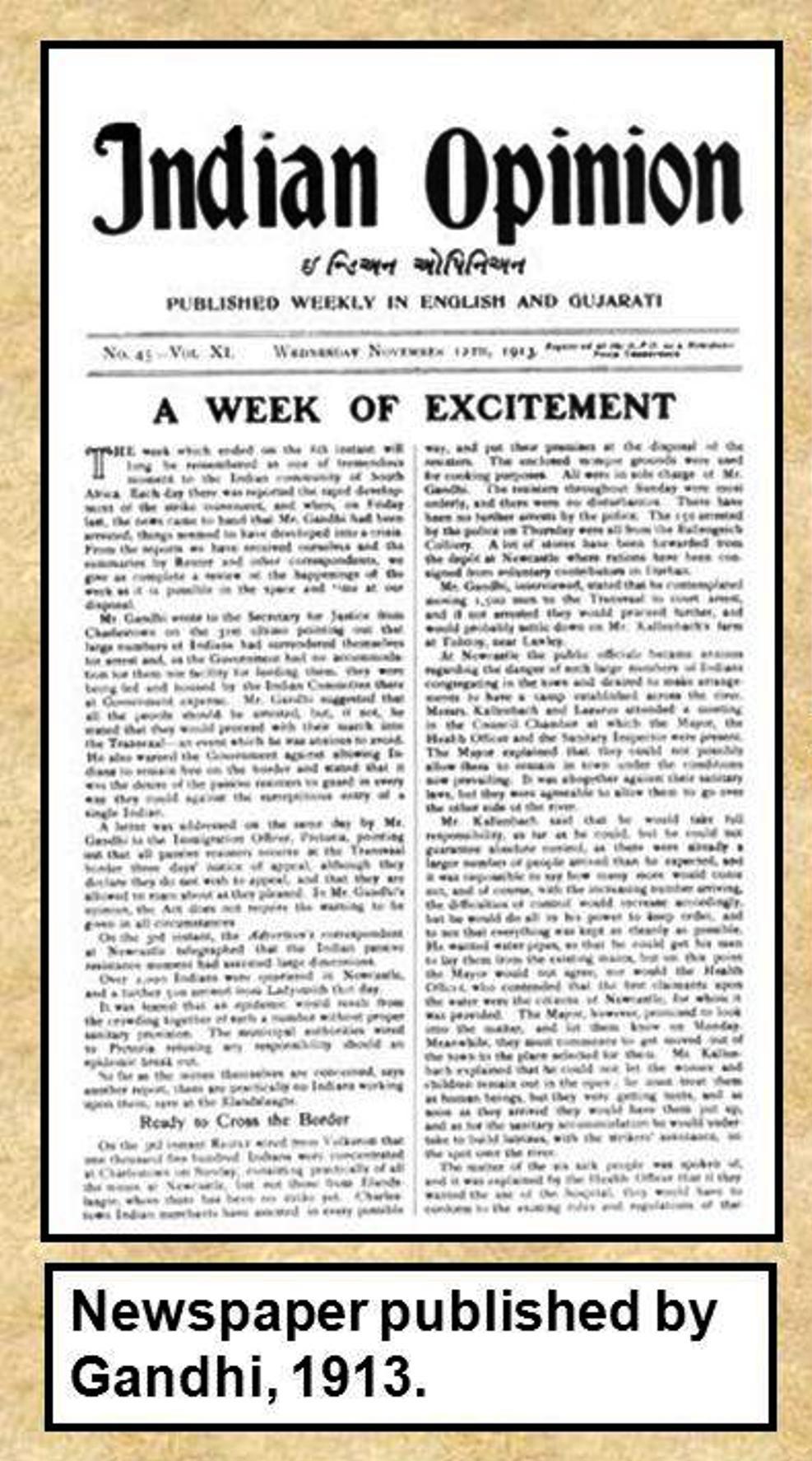
එවකට එරට පැවති දේශපාලන හා සමාජ තන්ත‍්‍රයේ විසමතා හා අසාධාරණකම්වලට එරෙහිව නිරායුධ වුත්, ප‍්‍රතිපත්තිමය වුත් අරගලයක් ඔහු දියත් කළාග ජනයා දැනුවත් කිරීම හරහා ඔවුන් බලාත්මක කිරීමේ ප‍්‍රධාන ක‍්‍රමෝපායක් ලෙස ඔහු Indian Opinion නම් සඟරාවක් 1904දී ඇරැඹුවා.

Indian Opinion in 1913

Indian Opinion සඟරා කතුවරයා මන්සුක්ලාල් නසාර් නමැත්තකු වුවත් එහි කර්තෘ මණ්ඩල වගකීම් වැඩි ප‍්‍රමාණයක් ඉසිලූවේ ගාන්ධියි. එවකට දකුණු අපි‍්‍රකානු දේශපාලන යථාර්ථය ගැන ඒ වන විට ලබා ගෙන තිබූ අවබෝධයත්, කලක් බි‍්‍රතාන්‍ය පුවත්පත් කියැවීමෙන් ලත් ආභාෂයත් ඔහුට උපකාර වුණා.

අමාරුවෙන් පවත්වාගෙන ගිය මේ සඟරාවට කර්තෘමය දායකත්වයට අමතරව ගාන්ධි නීතීඥයකු ලෙස ඉපැයූ ආදායමින් කොටසක් ද යෙදවූවා. එක් අවස්ථාවක ඔහුගේ ඉතිරි කිරීම් සියල්ල සඟරාවේ නඩත්තුවට යොමු කළ බවත්, ඒ ගැන කණගාටුවක් නැති බවත් ආත්ම චරිතාපදානයේ කියනවා.

‘‘Indian Opinion සඟරාවට මා මුළු විවේකයම හා නිර්මාණශීලීත්වයම කැප කළා. එම වකවානුවේ මගේ ජීවිතය හා සිතුම් පැතුම් පිළිබඳ හොඳ කැඩපතක් බවට එය පත්වුණා. 1904-14 කාලයේ ඉඳහිට මා සිරගත වූ විට හැරෙන්නට හැම කලාපයකම අඩු තරමින් මගේ එක් ලිපියක් හෝ අඩංගු වුණා. සංකීර්ණ වූ දේශපාලන හා සමාජයීය තත්ත්වයන් පිළිබඳව හරබරව හා තුලනාත්මකව විග‍්‍රහ කිරීමේ අසීරු කලාව මා ප‍්‍රගුණ කළේ මේ සඟරාවට ලිපි ලියූ හා අනෙක් ලිපි සංස්කරණය කළ කාලයේයි. එසේම පාඨකයන් හා කතුවරයා අතර මනා සබඳතාවක් ගොඩනංවා ගෙන පවත්වා ගන්නේ කෙසේද යන්නට මා හොඳ අත්දැකීම් ලැබුවා.’’

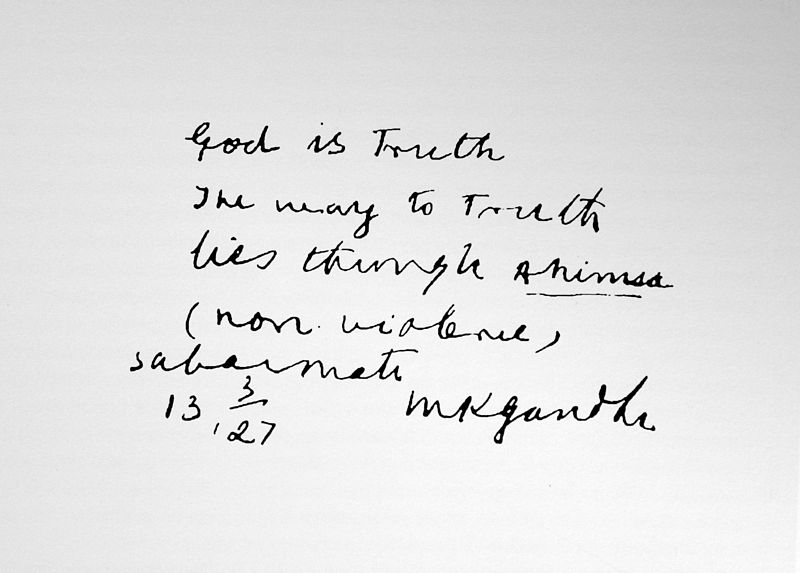
Gandhi's English hand writing, 1927
Gandhi’s English hand writing, 1927

මේ වකවානුව ගැන ආවර්ජනය කරමින් ගන්ධි මෙසේ ද ලියා තිබෙනවා. ‘‘Indian Opinion කර්තෘමය වගකීම් දැරූ මුල් මාසයේදීම මා හොඳ හැටි තේරුම් ගත්තේ පත‍්‍ර කලාවේ එකම අරමුණ විය යුත්තේ මහජන සේවය බවයි. පුවත්පතකට අති විශාල බලයක් තිබෙනවා. එය හොඳට මෙන්ම නරකටද යෙදවිය හැකියි. ජලය අපට අත්‍යවශ්‍ය සම්පතක් වුවද නිසි ලෙස පාලනය නොවූ ජල කඳක් නිසා ගම්බිම් හා කෙත්වතු වනසන ගංවතුරක් ඇති විය හැකියි. එසේම අසංවර වූ පෑනෙන් මහත් විනාශයක් කළ හැකියි. එනිසාවට එය සංවර කිරීමේ බලය පිටස්තර අධිකාරියකට භාර කළොත් (ප‍්‍රකාශන නිදහස නැති වී යන නිසා) එහි අහිතකර විපාක වැඩියි. අප කළ යුත්තේ පුවත්පත් කලාවේ ඉමහත් බලය අප විසින්ම සංවරයෙන් හා වගකීමෙන් යුතුව භාවිත කිරීමයි.’’

‘‘මේ අවශ්‍යතාව සපුරා ගන්නා පුවත්පත් හා සඟරා කීයක් ලොව තිබේද? ලොව හොඳ-නරක දෙකම හමු වනවා සේ පුවත්පත් කලාවේ ද හොඳ ප‍්‍රකාශන මෙන්ම නරක ප‍්‍රකාශන ද තිබෙනවා. මේ අතරින් හොඳ ප‍්‍රකාශන තෝරාබේරා ගැනීම බුද්ධිමත් පාඨකයන්ට බාරයි.’’

මාධ්‍ය වගකීම, මාධ්‍ය නිදහස හා මාධ්‍ය සාක්ෂරතාව ගැන කොතරම් වැදගත් විග‍්‍රහයක්ද?ගාන්ධි ආත්ම චරිතාපදානයේ සිවු වන කොටසේ 13 වන පර්ච්ෙඡ්දයේ මෙය හමු වනවා.

Part 2: සිවුමංසල කොලූගැටයා #224: මහත්මා ගාන්ධි: ඉතිහාසය වෙනස් කළ සඟරා කතුවරයා

Also read:

Journalist Gandhi: Selected Magazine Writings of Mahatma Gandhi

Gandhi as Journalist

Gandhi the Editor, By B. R. Nanda, Chairman, National Gandhi Museum

Mahatma Gandhi And Mass Media, by Prof V S Gupta


සිවුමංසල කොලූගැටයා #220: ශ‍්‍රී ලංකාවේ මාධ්‍ය ප‍්‍රතිසංස්කරණ කෙසේ විය යුතුද?

The National Summit for Media Reform in Sri Lanka was organised by the Ministry of Mass Media and Information, University of Colombo, Sri Lanka Press Institute (SLPI) and International Media Support (IMS) and held on 13 – 14 May 2015 at the Sri Lanka Foundation Institute, Colombo 7.

Its aim was “to maximise the contribution of all stakeholders in initiating and sustaining the process facilitating media structural reforms that will foster democracy, good governance and sustainable development in Sri Lanka”. It brought together high level reps from government, media industry, academia and civil society groups concerned with the state of our media.

Ahead of this, I was commissioned by the organisers to carry out a rapid assessment of the state of media in Sri Lanka using UNESCO’s Media Development Indicator framework – a globally used methodology adopted by the inter-governmental body in 2009. At the Summit opening plenary, I presented highlights of this study which was based on literature review and interviews.

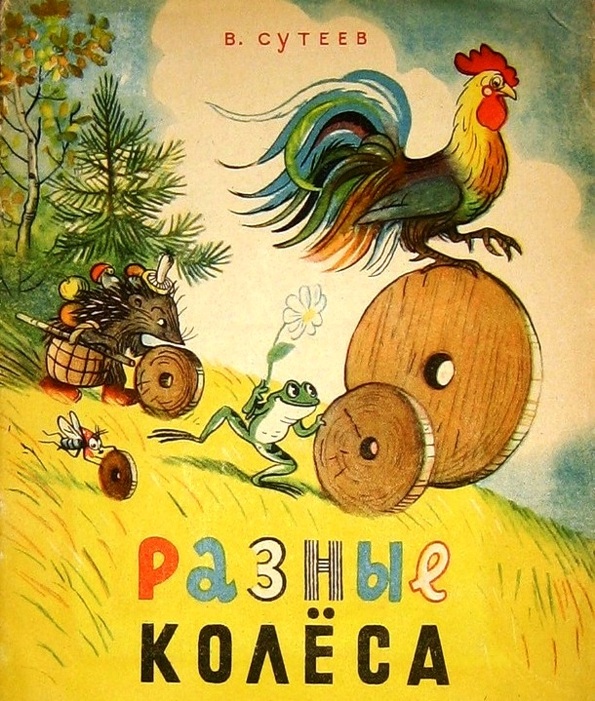
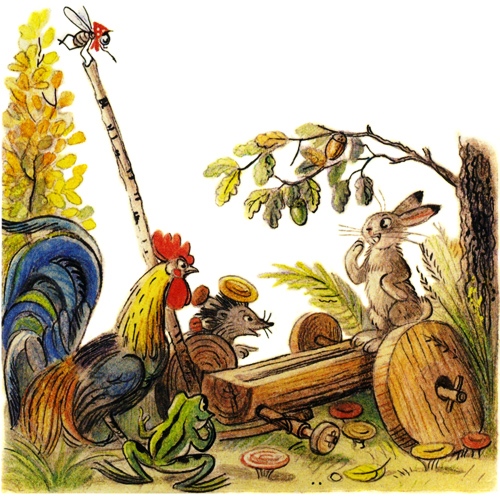
To capture the diversity and disparities in the media sector,I used a well-loved Russian children’s story that was known in Sinhala translation as නොගැලපෙන රෝද — the story of one vehicle with different sized wheels, and how animal friends tried to make it move and when it proved impossible, how they put each wheel to a unique use…

This week’s Ravaya column (published on 17 May 2015) captures some of these highlights. I plan to write another one, with specific focus on the broadcast sector, in the coming weeks.

නොගැලපෙන රෝද කතාව
නොගැලපෙන රෝද කතාව

ශ‍්‍රී ලංකාවේ නූතන ජනමාධ්‍ය ක්ෂේත‍්‍රය සියවස් දෙකක පමණ කාලයක් පුරා අනුක‍්‍රමයෙන් හා අවිධිමත්ව පරිනාමය වූවක්. එහි අඩුපාඩු හා දුර්වලතා රැසක් ඇති බව ක්ෂේත‍්‍රයේ බොහෝ දෙනකු පිළිගන්නවා.

දේශපාලන ප‍්‍රතිසංස්කරණ හා ව්‍යවස්ථා සංශෝධන ඉදිරියට ගෙන යන අතර හා අධිකරණ ස්වාධීනත්වය තහවුරු කරන අතර අපේ රටේ මාධ්‍ය ක්ෂේත‍්‍රයේ ද ප‍්‍රතිසංවිධාන කළ යුතුව තිබෙනවා. එහෙත් එය පාර්ලිමේන්තුවට හෝ බලයේ සිටින රජයේ විධායකයට හෝ පමණක් කිරීමට ඉඩ දීම ප‍්‍රකාශන නිදහසට හා මාධ්‍ය නිදහසට හානිකර විය හැකියි. එනිසා එය මාධ්‍ය ක්ෂේත‍්‍රයේ සියලූ පාර්ශ්වකරුවන්ගේ සහභාගීත්වයෙන් කළ යුතුයි.

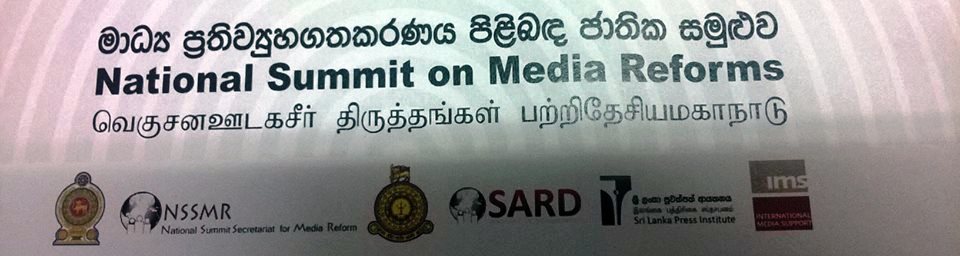
මාධ්‍ය ප‍්‍රතිසංවිධානයේ ප‍්‍රමුඛතා හඳුනා ගන්නටත්, ගත යුතු පියවර ගැන යම් මූලික එකඟත්වයකට එන්නටත් ජාතික මාධ්‍ය සමුළුවක් (National Summit on Media Reforms) මැයි 13-14 දෙදින තුළ කොළඹ දී පැවැත්වුණා. එය සංවිධානය කළේ ශ‍්‍රී ලංකා පුවත්පත් ආයතනය (SLPI), කොළඹ සරසවියේ මාධ්‍ය අධ්‍යයන අංශය හා ජනමාධ්‍ය අමාත්‍යාංශය විසින් මාධ්‍ය හිමිකරුවන්, වෘත්තිකයන්, පර්යේෂකයන් හා ග‍්‍රාහකයන් මෙන්ම මාධ්‍ය නිදහස පිළිබඳ ක‍්‍රියාකාරිකයන් ද මේ සමුළුවට සහභාගී වුණා.

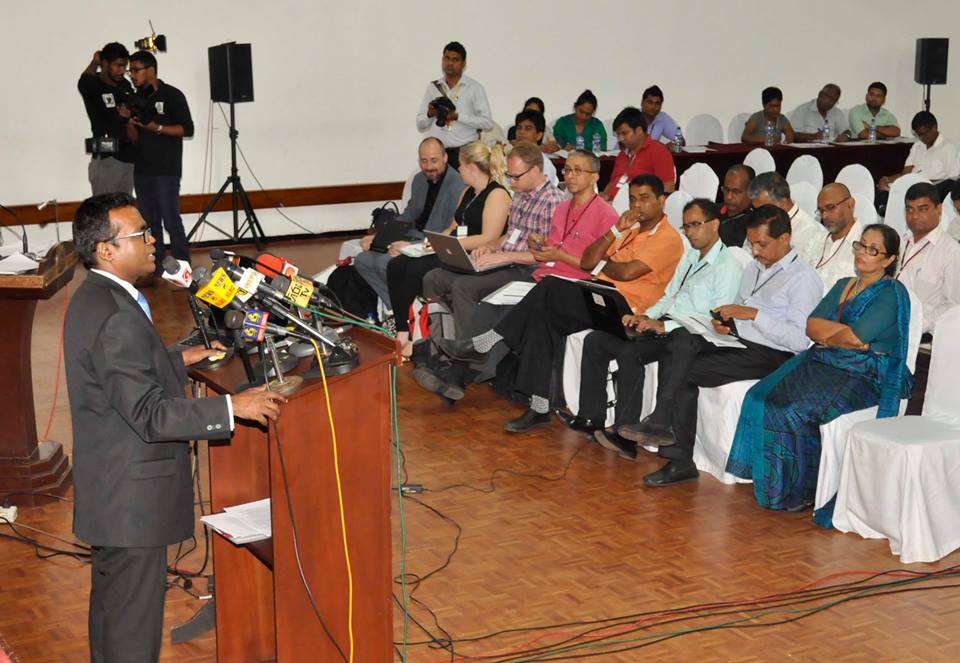
Karunaratne Paranavithana, Secretary to the Media Ministry of Sri Lanka, speaks during opening of National Media Summit in Colombo, 13 May 2015

මාධ්‍ය සමුළුවට විද්වත් දායකත්වයක් ලෙසින් මෙරට මාධ්‍ය ක්ෂේත‍්‍රය පිළිබඳ කඩිනම් ඇගැයීමක් සති 6ක කාලයක් තුළ කිරීමට මට ඇරැයුම් කර තිබුණා. එයට රාමුව ලෙස තෝරා ගැනුනේ 2009දී අන්තර්-රාජ්‍ය මට්ටමින් ලෝක ප‍්‍රජාව පිළි ගත් යුනෙස්කෝවේ මාධ්‍ය උන්නති දර්ශක ක‍්‍රමවේදයයි (UNESCO’s Media Development Indicator framework).

රටක මාධ්‍ය ක්ෂේත‍්‍රයේ වත්මන් තත්ත්වය ගැන නෛතික, ප‍්‍රතිපත්තිමය, වෘත්තිමය, ආර්ථික හා අධ්‍යාපනික කෝණයන්ගෙන් විග‍්‍රහ කිරීමට එය උදවු වනවා. එසේම ආවේගීලී නොවී හා මතවාදයන්ට සීමා නොවෙමින් සාක්ෂි මත පදනම්ව ක්ෂේත‍්‍රය ගැන විග‍්‍රහ කරන්නට හැකියාව ලැබෙනවා.

මැයි 13 වනදා සමුළුවට මා ඉදිරිපත් කළේ එවන් ඇගැයීමකින් මතු වූ ප‍්‍රධාන නිරීක්ෂණයි. එය කෙටුම්පත් වාර්තාවක් ලෙස එදින සහභාගීවූවන්ට බෙදා දෙනු ලැබුවා. සංවාදයට හා වැඩි දියුණු කිරීමට තවමත් විවෘත මේ විග‍්‍රහයේ සම්පිණ්ඩනයක් එතැන නොසිටි අයගේ අවධානය සඳහා මා අද ඉදිරිපත් කරනවා.

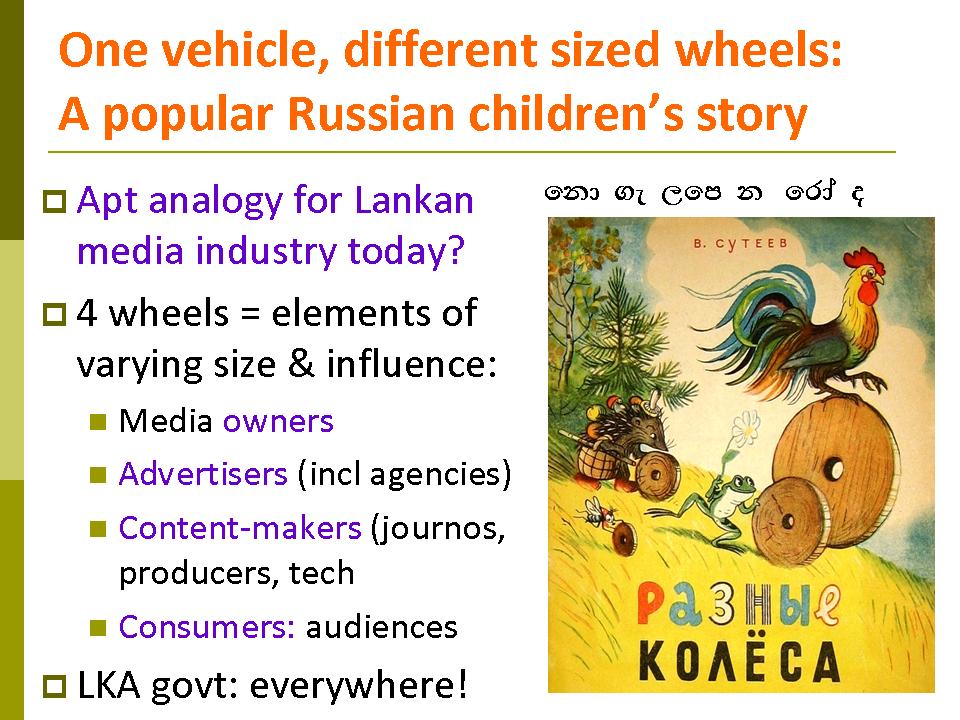
ශ‍්‍රී ලංකාවේ මාධ්‍ය ක්ෂේත‍්‍රය ගැන සරල උපමිතියක් (analogy) මට තිබෙනවා. අප කුඩා කාලයේ ආසාවෙන් කියැවූ රුසියානු ළමා කතාවක් වූයේ නොගැලපෙන රෝද කතාවයි. එකිනෙකට බෙහෙවින් වෙනස් ප‍්‍රමාණයෙන් යුතු රෝද හතරක් සහිත කරත්තයක් කැලේ සතුන් පිරිසකට හමු වනවා. ඔවුන් කෙතරම් තැත් කළත් මේ කරත්තය ඉදිරියට යන්නේ නැහැ.

අන්තිමේදී රෝද හතර ගලවා ගන්නා සතුන් එක් එක් රෝදවලින් වෙනත් ප‍්‍රයෝජන සඳහා ඒවා යොදා ගන්නවා. හැබැයි වාහනය මුලුමනින් කොට උඩ!

Stakeholders for media sector reforms in Sri Lanka...
Stakeholders for media sector reforms in Sri Lanka…

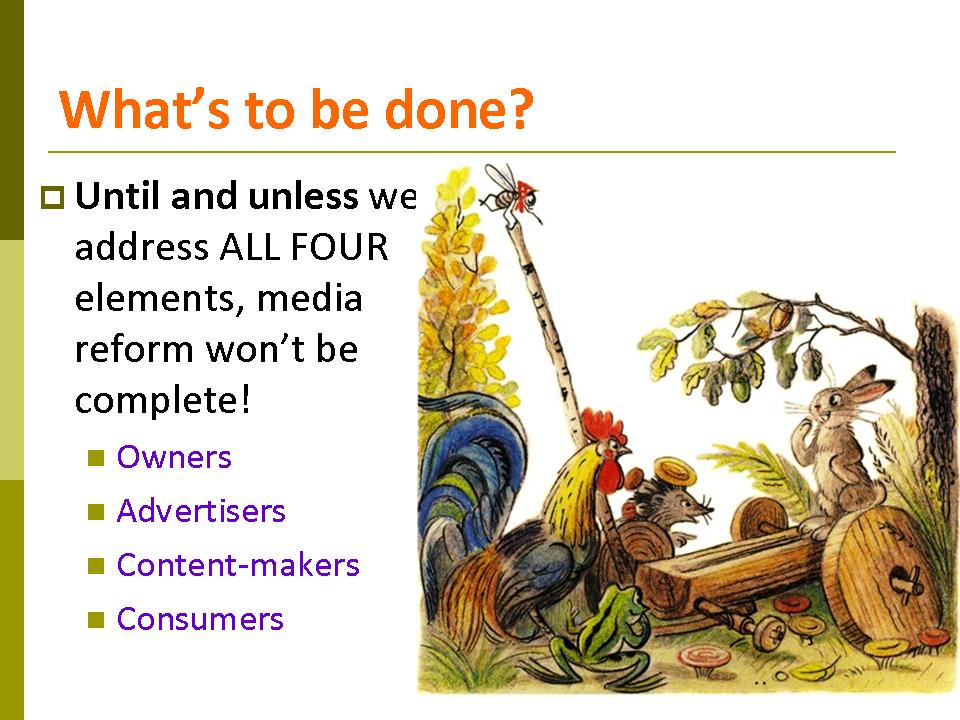
අපේ මාධ්‍ය ක්ෂේත‍්‍රය ඒ කරත්තයට මොහොතකට සම කළොත්, එහි ලොකුම “රෝදය” වන්නේ මාධ්‍ය ආයතන හිමිකරුවන්. පත්තර, රේඩියෝ, ටෙලිවිෂන් හා වෙබ් මාධ්‍ය හිමි ලක් රජයත් මෙරට ප්‍රධානතම මාධ්‍ය හිමිකරුවෙක්.

මීට සමාන්තරව පත්තර, ටෙලිවිෂන් හෝ රේඩියෝ ව්‍යාපාර ලෙස පවත්වා ගෙන යන සමාගම් ගණනාවක් තිබෙනවා. ඒ හරහා රටේ ජනමතයට හා දේශපාලනයට අඩුවැඩි වශයෙන් බලපෑම් කරන්නට හිමිකරුවන්ට හැකියි. දිනපතා අප මාධ්‍ය හරහා ඔවුන් නොදුටුවත්, හිමිකරුවන්ගේ සෙවනැල්ල ප‍්‍රබලව මුළු ක්ෂේත‍්‍රය පුරා වැටී තිබෙනවා.

සමහර හිමිකරුවන් සියුම්වත් තවත් අය එළිපිටත් කරන දේශපාලන හා වාණිජමය උපක්‍රම සමනය කිරීමට නියාමනයක් තිබිය යුතුයි. ප්‍රකාශන නිදහස සීමා නොකර මෙය කිරීම ලොකු අභියෝගයක්.

මාධ්‍ය කර්මාන්තය රටේ පවතින නීතිවලට අනුකූලව පවත්වා ගෙන යන ව්‍යාපාරයක්. අප පෞද්ගලිකව කැමති වුවත් නැතත් මාධ්‍ය ප‍්‍රතිසංස්කරණ සඳහා ඔවුන් සම්බන්ධ කර ගත යුතුමයි. (මාධ්‍ය ජනසතු කිරීම වැනි ගෙවී ගිය දශකවල කළ දේශපාලන මෝඩකම්වල විපාක තවමත් අප අත්විඳින නිසා එබන්දක් කිසිසේත් නැවත සලකා බැලිය යුතු නම් නැහැ.)

මාධ්‍ය ‘කරත්තයේ’ දෙවැනි ලොකු “රෝදය” නම් දැන්වීම්කරුවන්, අනුග‍්‍රාහකයන් හා දැන්වීම් ඒජන්සියි. අද වෙළඳපොළ යථාර්ථය වන්නේ මාධ්‍ය නිෂ්පාදන වියදම බොහෝ දුරට පියවා ගන්නේ දැන්වීම් ආදායමින් වීමයි. මේ හරහා දැන්වීම්කරුවන්ට ලොකු බලපෑමක් මාධ්‍යවලට එල්ල කළ හැකියි. දැන්වීම් නැතිව බැරි වුවත් දැන්වීම් නමැති “වල්ගය” විසින් මාධ්‍ය නම් “සුනඛයා” වැනීමේ අහිතකර ප‍්‍රවණතාව සමනය කර ගත යුතුව තිබෙනවා.

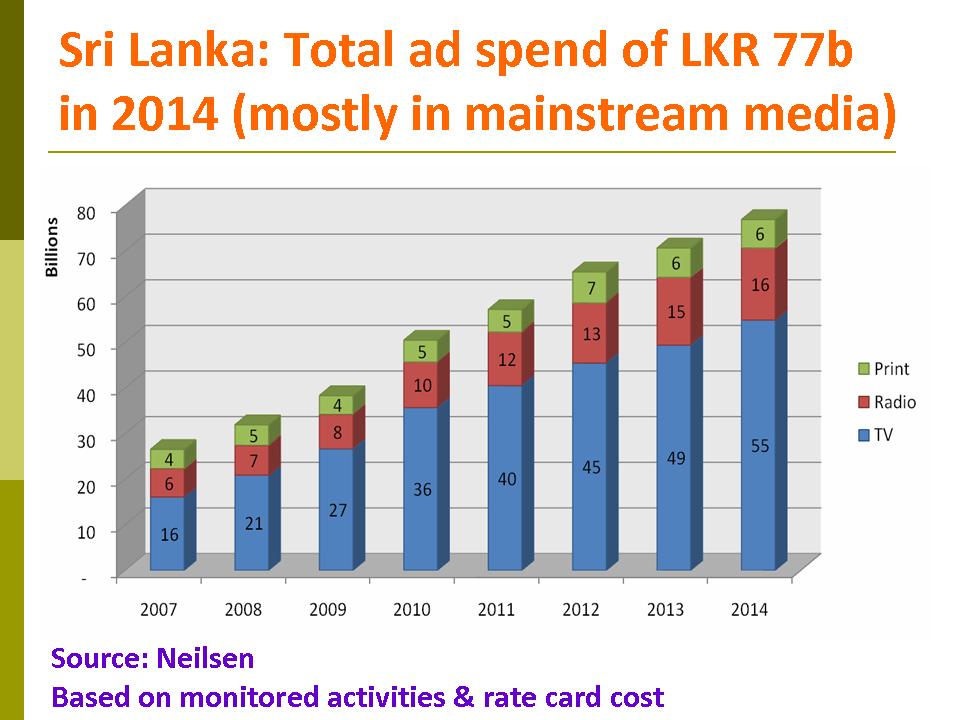
Sri Lanka’s total advertising spend on the media was estimated at approximately LKR 77 billion in 2014 (=USD 587.23 million at Dec 2014 exchange rate)

මාධ්‍ය වෙළඳපොළ අධ්‍යයනය කරන නීල්සන් සමාගම සම්පාදිත දත්තවලට අනුව මෙරට සමස්ත මාධ්‍යවලට 2014දී ලැබුණු දැන්වීම්වල වටිනාකම රුපියල් බිලියන 77ක් වුණා. (ටෙලිවිෂන් සඳහා බිලියන 55යි, රේඩියෝවලට බිලියන 16, මුද්‍රිත මාධ්‍යවලට බිලියන 6යි). දැන්වීම් ලබා දෙන සමාගම් සමහරක් තමන්ට අහිතකර ප‍්‍රවෘත්ති වළක්වන්නටත්, හිතකර ප‍්‍රවෘත්ති වඩා පුළුල්ව ප‍්‍රචාරණය කරන්නටත් තැත් කරන බවට උදාහරණ එමට තිබෙනවා.

අපේ රටේ සමස්ත දැන්වීම් කලාව සඳහා නීතිමය නියාමනයක් හෝ ආචාර ධර්ම පද්ධතියක් හෝ නැති නිසා මෙබඳු විසමතා හා අකටයුතුකම් පාලනය කිරීමට ක‍්‍රමයක් නැහැ. (දුම්කොළ, මත්පැන්, සමහර ආහාරපාන හා බෙහෙත් ප්‍රචාරණයට නම් නීතිමය සීමා තිබෙනවා.)

එසේම බිලියන 71ක් වටිනා ටෙලිවිෂන් හා රේඩියෝ දැන්වීම් බෙදී යාමට පදනම ලෙස දැන්වීම් ඒජන්සි භාවිතා කරන ජනප‍්‍රියතාව මැනීමේ ක‍්‍රමවේදය (television & radio ratings) ගැන විද්‍යුත් මාධ්‍ය කර්මාන්තය තුළම බරපතල ප‍්‍රශ්න මතු වී තිබෙනවා. (එය ගැන වෙනම කතා කළ යුතුයි.)

තුන්වන “රෝදය” ලෙස මා දකින්නේ මාධ්‍ය අන්තර්ගතය නිර්මාණය කරන පත‍්‍ර කලාවේදීන්, විද්‍යුත් මාධ්‍ය නිෂ්පාදකයන් හා ඔවුන්ගේ කතුවරුන්.

අභ්‍යන්තරයෙන් හා බාහිරින් එල්ල වන විවිධ බලපෑම් මැද අපේ රටේ මාධ්‍යවේදීන්ට කටයුතු කිරීමට සිදුව තිබෙනවා. මාධ්‍යවේදියා සමාජයේ ප‍්‍රතිරූපධාරී කෙනකු වුවත් ඔහු/ඇය බොහෝ විට වැඩ කරන පරිසරය හිතකර එකක් නොවෙයි. අඩු වැටුප්, සීමිත පහසුකම්, අධික වැඩ ප‍්‍රමාණයක් සමග පොර බදන අතර දේශපාලනික, වාණිජමය හා වෙනත් සමාජයීය ප‍්‍රවාහයන්ට නතු නොවී සිටීමට ලොකු වෙහෙසක් දැරිය යුතු වනවා.

හෘද සාක්ෂියට එකඟව, වෘත්තියේ ගරුත්වය රැක ගෙන ක‍්‍රියාකිරීමට මඟ පෙන්වන මාධ්‍ය ආචාර ධර්ම පද්ධතියක් තිබෙනවා. (www.pccsl.lk/content/editors-code). කර්තෘ මණ්ඩල සංසදය කෙටුම්පත් කළ මෙය අවසන් වරට 2014දී සංශෝධනය කෙරුණා. එයට අනුව කරුණු මත පදනම් වී, ගවේෂණාත්මකව, පක්ෂග‍්‍රාහී හෝ අගතිගාමී නොවී මාධ්‍යකරණයේ නියැලිය යුතු බව කියැවෙනවා.

Full text: www.pccsl.lk/content/editors-code
Full text: http://www.pccsl.lk/content/editors-code

එහෙත් අධික තරගකාරීත්වය හා අනිසි ලෙස දේශපාලනීකරණය යන සාධක නිසා මාධ්‍යවල වෘත්තීය මට්ටම හා විශ්වසනීයත්වය (credibility and professionalism) මෑත කාලයේ බෙහෙවින් පලූදු වී තිබෙනවා. දේශපාලකයන්ට බය නැති, හිමිකරුවන්ගේ පදයට නැටීමට සූදානම් නොවූ, තම සගයන්ගේ අයිතීන් වෙනුවෙන් පෙනී සිටි ඞී. බී. ධනපාල, ගුණදාස ලියනගේ, මර්වින් ද සිල්වා වැනි පෞරුෂයකින් හෙබි කතුවරුන් අද කාලයේ දුර්ලභයි.

මාධ්‍ය අන්තර්ගතය පිරිහීමට තුඩු දෙන හේතු සමීපව හඳුනා ගත යුතුයි. අද අපේ මාධ්‍යකරුවන් සන්නිවේදනය කරන්නේ පොදු උන්නතිය හා සමාජ වගකීම් ඉටු කරන්නට නොව පටු අරමුණු ප‍්‍රවර්ධනයට බව පෙනෙනවා. යුද්ධය පැවති කාලයේත්, ඉනික්බිතිවත් අපේ රටේ සිංහල හා දෙමළ පුවත්පත් බහුතරයක් වාර්තාකරණය හා විශ්ලේෂණය කරන්නේ ජාතිවාදී හෝ ජාතිකවාදී කෝණයකින්.

මෙය වැරදි බව දැන දැනත් සමහර කතුවරුන් උවමනාවෙන්ම එසේ කරන්නේ සමාජයේ තමන්ගේ ප‍්‍රතිරූපය ඒ හරහා තර කර ගැනීමට උවමනා නිසයි. (‘සංහිඳියාව ගැන ලියලා මම අපේ ගමේ යන්නේ කොහොමද’ යයි මෙරට එක් ප‍්‍රධාන පෙළේ සිංහල පුවත්පත් කතුවරයෙක් විවෘතව අසනවා.)

දේශපාලනය පසෙක තැබුවත්, වෙළඳපොළ ජයගැනීමට ඕනෑම බහුබූතයක්, ප‍්‍රලාපයක් හෝ අසැබි දේ පවා පොල්ගෙඩි අකුරින් යුත් හෙඩිම් සහිතව පළ කිරීම සමහර පත්තරවල සිරිතක් වී තිබෙනවා. හොල්මන්, භූත, අවතාර හා අනෙකුත් අසභ්‍ය කතා සත්‍ය වාර්තා මෙන් එක් පසෙකිනුත්, බොහෝ දුරට අතිශයෝක්ති හා ප‍්‍රබන්ධ මත පදනම් වූ ඉතිහාස වාර්තා තව පසෙකිනුත් මාධ්‍යවල නිතර පළ වනවා. ප්‍රමිතියක් හෝ චාරයක් නැහැ.

විද්‍යුත් මාධ්‍යවල ඔවුන්ට ආවේණික දුර්වලතා රැසක් පවතිනවා. අන් කවරදාටත් වඩා අද මාධ්‍ය අංග (චැනල්) සංඛ්‍යාව වැඩිවී ඇතත් ගුණාත්මක බැවින් නම් දශක ගණනක් අපේ මාධ්‍ය කලාව ආපස්සට ගොස් ඇති බව මගේ වැටහීමයි.

Media freedom under threat in Sri Lanka

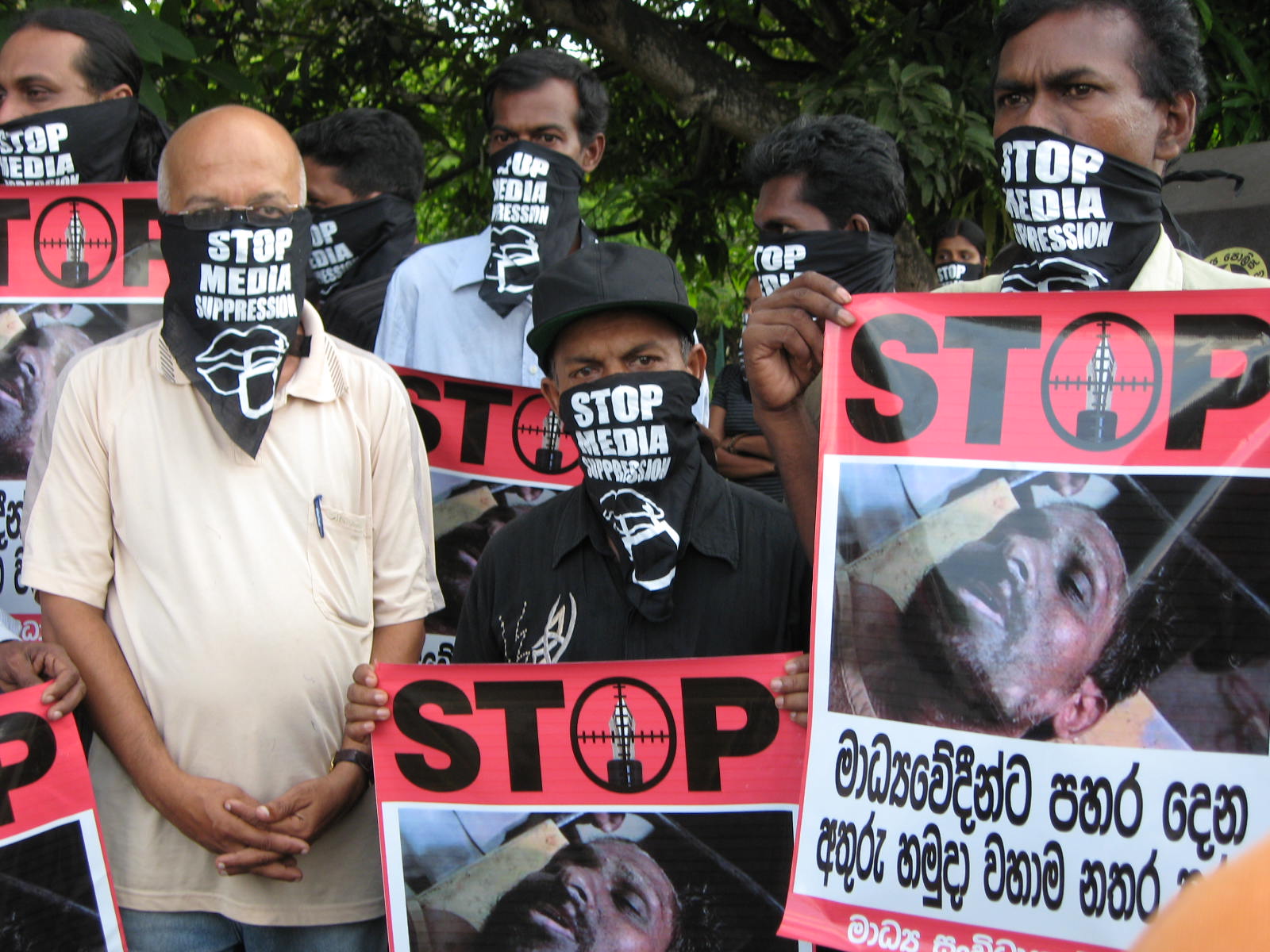
මාධ්යවේදීන්ට සිය වෘත්තිය නිදහසේ, බාධා හා පීඩාවලින් තොරව කිරීමට හිතකර වාතාවරණයක් තිබිය යුතු බවට විවාදයක් නැහැ. මෑත කාලයේ රාජ් නිල වාරණයක් නොතිබුණත් පුළුල් ලෙසින් ස්වයංවාරණයට රබල හේතු තිබුණා. මාධ්යවේදීන්ට හා මාධ් ආයතනවලට රචණ්ඩ රහාර මෙන්ම වාණිජ බලපෑම් රැසක් එල්ල වුණා.

සාපරාධී රියා විභාග කොට රහාරකයන්ට දඬුවම් කිරීම රජයේ වගකීමක්. එය මාධ් නිදහසට අවශ් සාධකයක්. එහෙත් එය රමාණවත් නැහැ (necessary, but not sufficient)

‘මාධ්‍යවලට අත නොතබනු’ යන උද්‍යොග පාඨයට ශිෂ්ඨ සමාජයේ බහුතරයක් දෙනා එකඟයි. මාධ්‍ය අන්තර්ගතය නියාමනයට රජය හෝ බාහිර පාර්ශ්වයන් මැදිහත් නොවිය යුතුයි. එහෙත් ආචාර ධර්මීය රාමුවක් තුළ වෘත්තිමය මට්ටම ඉහළ නැංවීමේ සැබෑ උනන්දුවක් මාධ්‍යවේදීන් තුළින් ම මතුවීම ද අවශ්‍යයි.

වෘත්තීය බවින් උසස් මාධ්‍යකරණයක් බිහි කර ගැනීම අද ප‍්‍රමුඛතාවක්. අර්ධ වැඩවසම්, ගතානුගතික ආකල්ප අපේ ප‍්‍රධාන ප‍්‍රවාහයේ මුද්‍රිත හා විද්‍යුත් මාධ්‍ය ආයතන තුළ මුල් බැසගෙන තිබෙනවා. ක්ෂේත‍්‍රයේ ජ්‍යෙෂ්ඨයන් සමහරුන් ඊළඟ පරපුරක් බිහි කරන්නේ නැහැ. මතු වන්නට ඉඩ දෙන්නේත් නැහැ.

හිමිකරුවන්ටත් වඩා මාධ් අන්තර්ගතය සීමා කරන්නේ මේ වෘත්තිය තුළම සිටින දොරටුපාලකයන් (media gatekeepers). හණමිටි අදහස් කරපින්නා ගත්, එහෙත් සූක්ෂ්ම ලෙස ඒවා දේශීයත්වයනම් කඩතුරාවෙන් වසා ගත් මේ උදවිය මාධ් රතිසංස්කරණ මාවතේ හමු වන මහා බාධක පර්වත වගෙයි.

හිමිකරුවන්ට, දේශපාලකයන්ට හා දැන්වීම්කරුවන්ට මෙන්ම මෙකී ජ්යෙෂ්ඨයන්ටද මාධ් ක්ෂේතරයේ අර්බුදය ගැන වගකීමේ ලොකු කොටසක් හිමි වනවා.

බහුවාර්ගික, බහු ආගමික හා බහු දේශපාලනික සමාජයක බහුවිධ මත ඉවසීම හා ඒවාට ඉඩදීම මාධ්‍යවලින් අප බලාපොරොත්තු වනවා. කර්මාන්තය විසින්ම ස්වයං නියාමනය කිරීමේ උත්සාහයක් නම් 2003දී පිහිටුවා ගත් පුවත්පත් පැමිණිලි කොමිසමයි (www.pccsl.lk). මෙහි තීරණ පිළිගැනීමට බහුතරයක් පුවත්පත් එකඟ වී සිටිනවා.

එහෙත් රටේ තිබෙන 50කට අධික රේඩියෝ නාලිකා හා 20කට අධික ටෙලිවිෂන් නාලිකාවල අන්තර්ගතය ගැන ස්වයං නියාමනයක් කිරීමට මෙබඳු ආයතනයක් නැහැ. එය හදිසි අවශ්‍යතාවක්. එසේම 1973දී පනතක් හරහා පිහිට වූ රජයට අයත් පුවත්පත් මණ්ඩලය (Press Council). බොහෝ මාධ්‍යවේදීන් දකින්නේ මර්දනකාරී ආයතනයක් ලෙසයි. නව රජය එහි අලූත් පාලක මණ්ඩලයක් පත් කොට නැහැ. එය මුළුමනින් වසා දමා එහි අදාළ නීතිය ද නීති පොතෙන් ඉවත් කළ යුතුයි.

මාධ්‍ය කර්මාන්තයේ හා කලාවේ ගුණාත්මක බව නැංවීමට මෙරට සරසවි හා මාධ්‍ය පුහුණු කිරීමේ ආයතනවලට ද ලොකු වගකීමක් තිබෙනවා. මාධ්‍ය කලාව මුළුමනින් පුහුණු කළ නොහැකි වූවත් මූලික ශිල්පීය ක‍්‍රම මෙන්ම ආචාරධර්ම ද සියලූ වෘත්තිකයන්ගේ මූලික සුදුසුකමක් විය යුතුයි.

මාධ්‍ය කරත්තයේ පුංචිම “රෝදය” හා බොහෝ මාධ්‍ය ප‍්‍රතිසංස්කරණ සංවාද අමතක කරන පාර්ශ්වය නම් මාධ්‍ය ග‍්‍රාහකයායි (පාඨකයා, ශ‍්‍රාවකයා, පේ‍්‍රක්ෂකයා). මාධ්‍යවලින් දෙන ඕනෑම දෙයක් මහජනයා ඔහේ බාර ගන්නා යුගය අවසන් කළ යුතුයි.

මාධ්‍ය කියන කරන දේ විචාරශීලීව ග‍්‍රහණය කළ හැකි වීමට නම් අපේ මාධ්‍ය සාක්ෂරතාව (media literacy) දියුණු කිරීම අවශ්‍යයි. අකුරු සාක්ෂරතාව හා අධ්‍යාපනික මට්ටම් උසස් අපේ සමාජයේ මාධ්‍ය සාක්ෂරතාව ප‍්‍රමාණවත් නැහැ. මේ නිසා මාධ්‍ය හරහා ජන මනස හැසිරවීමට හා නොමඟ යැවීමට නොයෙක් පිරිස්වලට හැකිව තිබෙනවා. වෙන කවරදාවත් නොවූ තරමට මිථ්‍යා, අවිද්‍යාත්මක මතවාද අපේ සමාජයේ ප‍්‍රචලිත කිරීමට හැකිව තිබෙන්නේ මේ නිසයි.

මාධ් රාහකයන්ට ගරු කරන, ඔවුන්ගේ අයිතීන් පිළි ගන්නා මාධ්යකරණයක් අපට අවශ්යයි. මෙනයින් බලන විට මාධ් රතිසංස්කරණ යනු විවිධ මට්ටම්වල වෙනස්කම් හරහා සිදු කළ යුතු රියාදාමයක්.

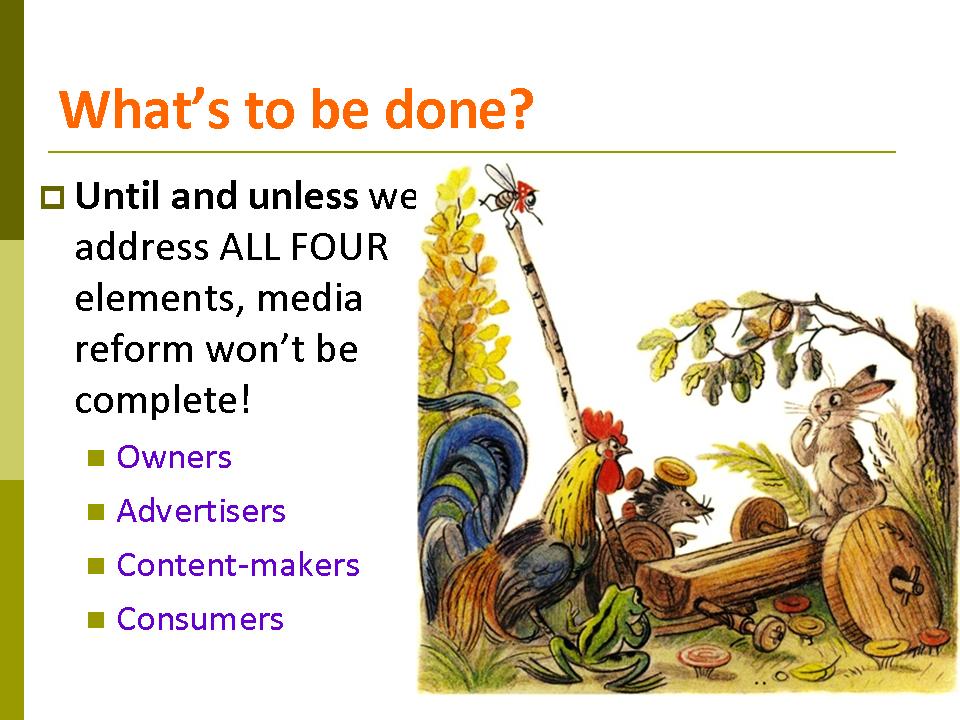
මගේ උපමිතියට අනුව මාධ්‍ය වාහනයේ රෝද හතරම එක ප‍්‍රමාණයට පත් කළ නොහැකි වූවත් පවතින විසමතා හා අසමතුලිතතා අඩු කිරීම හරහා දැනට ‘කොට උඩ’ තිබෙන වාහනය ටිකෙන් ටික හෝ හරි ඉදිරි දිශාවට ගමන් කිරීම ඇරඹිය හැකියි!

මාධ්‍ය ප‍්‍රතිසංවිධානයට ජාතික මාධ්‍ය සමුළුව (National Summit on Media Reforms) - 13 & 14 May 2015, Colombo, Sri Lanka
මාධ්‍ය ප‍්‍රතිසංවිධානයට ජාතික මාධ්‍ය සමුළුව (National Summit on Media Reforms) – 13 & 14 May 2015, Colombo, Sri Lanka


සිවුමංසල කොලූගැටයා #217: වසර 800කට පෙර යහපාලන අඩිතාලම දැමූ මැග්නා කාටාව

In this week’s Ravaya column (in Sinhala, published in issue of 3 May 2015), I talk about the Magna Carta, one of the most famous documents in the world. This years marks the 800th anniversary of its adoption in medieval England in 1215.

It was the first formal document stating that a King had to follow the laws of the land (‘Rule of Law’). It guaranteed the rights of individuals against the wishes of the King. This laid the way for trial by jury which means people are tried by their peers and guaranteed the civil rights of the individual.

The Magna Carta established the principle that the people of England, at this stage represented by the Barons, could limit the power of a King, if he was doing things that were not good for the country. It had far-reaching influence on both sides of the Atlantic over the centuries.

However, the Lankan monarchy always remained absolute until it ended in 1815. There were no formal limits to the monarch’s powers, even though Dasa-Raja-Dhamma or the ‘Ten Royal Virtues’ in Buddhism were meant to moderate that power. In practice, many monarchs ignored it.

Those who clamour for the restoration of monarchy in Sri Lanka don’t know — or overlook — just how feudal, unrestrained and unaccountable the monarchy was.

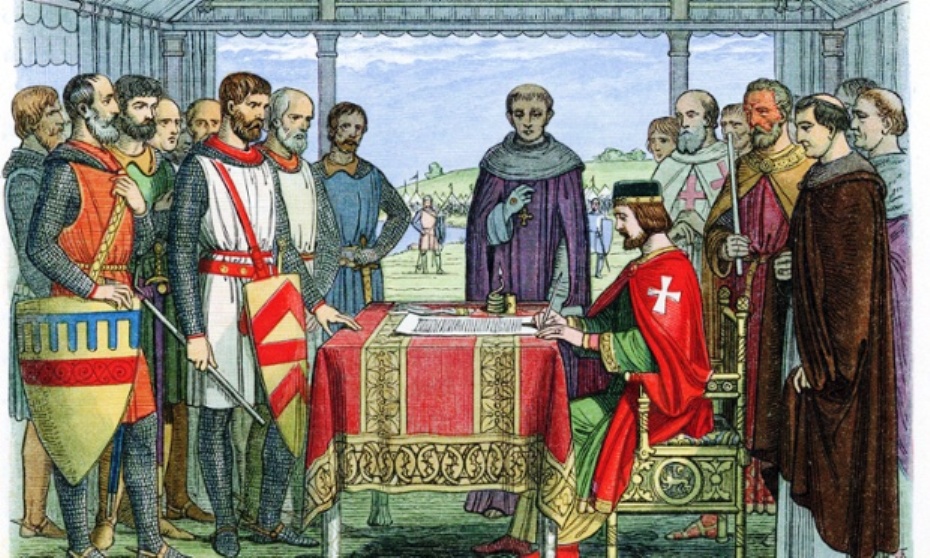
King John seals the Magna Carta on 15 June 1215. Photo by Universal History

මෙබඳු තත්ත්වයක් මොහොතකට පරිකල්පනය කරන්න.

යම් රටක සර්වබල සම්පන්න රජෙක් සිටිනවා. රාජ්‍ය ආරක්ෂාව හා රාජ්‍ය පාලනය ගැන වග කියනවාට අමතරව ඔහු රටේ සියලූ භූමියේ තනි හිමිකරුවායි. රටේ භාණ්ඩාගාරය ඔහුගේ පෞද්ගලික ධන සම්පත ලෙස සිත් සේ වියදම් කරනවා.

ඔහුට, රජ පවුලට හා ඔහුගේ සමීපතයන්ට රටේ අන් අයට බලපාන නීතිරීති අදාළ වන්නේ නැහැ. ඉහළට එන සියලූ නඩු අසන්නේත්, තීන්දු දෙන්නේත් රජු විසින්. එපමණක් නොවෙයි. රටේ ඕනෑම පුරවැසියකුගෙන් වේතනයක් නොගෙවා බලහත්කාරයෙන් වැඩ කරවා ගැනීමට රජ වාසලට හැකියි. එයට රාජකාරිය යයි කියනවා. රජුට හා ඔහුගේ පුත‍්‍රයන්ට රටේ ඕනෑම කාන්තාවක් හිතුමතයට අන්තඃපුරයට ගෙන යා හැකියි. එම කතුන් පුරවැසියකුගේ දියණියන් හෝ බිරිඳන් වීම ඔවුන්ට ප‍්‍රශ්නයක් නොවෙයි.

කොටින්ම කිවහොත් රටේ වැසියන්ට කිසිදු අයිතිවාසිකමක් නැහැ. මේ කිසිවක් ගැන ප‍්‍රශ්න කළොත් හෝ විවේචනය කළොත් හිරබත් කන්නට හෝ හිස ගසා දැමීමට ලක් වනවා. රජු යම් තරමකට හෝ සවන් දෙන්නේ ආගමික පූජකයන්ට පමණයි. මේ වරප‍්‍රසාදයෙන් පූජකයන් බොහෝ අනිසි ප‍්‍රයෝජන ගන්නවා.

සියලූ සැප සම්පත් හා බලතල ඇතත් රජු නිතරම සිටින්නේ කුමන්ත‍්‍රණ හා පරලොව ගැන බියෙන්…

ඉතිහාසයේ වැඩි කලක් තිස්සේ බොහෝ පාලකයන්ට සීමාරහිත බලතල හිමිව තිබුණා. මේ නිසා බලකාමයෙන් මත් වූ ඇතැම් පාලකයො අත්තනෝමතික හා අන්තවාදී ලෙස ක‍්‍රියා කළා. ඔවුන් නීතියට, සදාචාරයට ඉහළින් යන විට සමනය කර ගන්නට ක‍්‍රමවේදයක් තිබුණේ නැහැ.

පාරම්පරිකව හෝ කුමන්ත‍්‍රණයකින් හෝ යටත් කර ගැනීමකින් හෝ රටක බලයට පත් වන පාලකයා හිතුමතේ ක‍්‍රියා කිරීම ඉතිහාසයේ බොහෝ කලක් පැවතුණු සම්ප‍්‍රදායක්. (ශී‍්‍ර ලංකාවේ 1815න් අවසන් වූ රාජ වංශයටත් එය අදාළයි.)

අද රාජාණ්ඩු ලෝකයේ ඉතිරිව ඇත්තේ කිහිපයක් පමණක් වුවත් අසීමිත බලය අතට ගත් ජනාධිපතිවරුන්, අගමැතිවරුන් හෝ හමුදා පාලකයන් ගැන අපට විටින් විට අසන්නට ලැබෙනවා.

එහෙත් මෙය ශිෂ්ට සමාජවලට කිසිසේත් නොගැලපෙන බවත්, පාලකයා රටේ නීතියට යටත් විය යුතු බවත් අද ලෝක සම්මත පිළිගැනීමයි. දේශපාලන චින්තනය මෙතැනට ගෙන ඒමට තීරණාත්මකව වූ වැදගත් ලියවිල්ලකට 2015දී වසර 800ක් සපිරෙනවා.

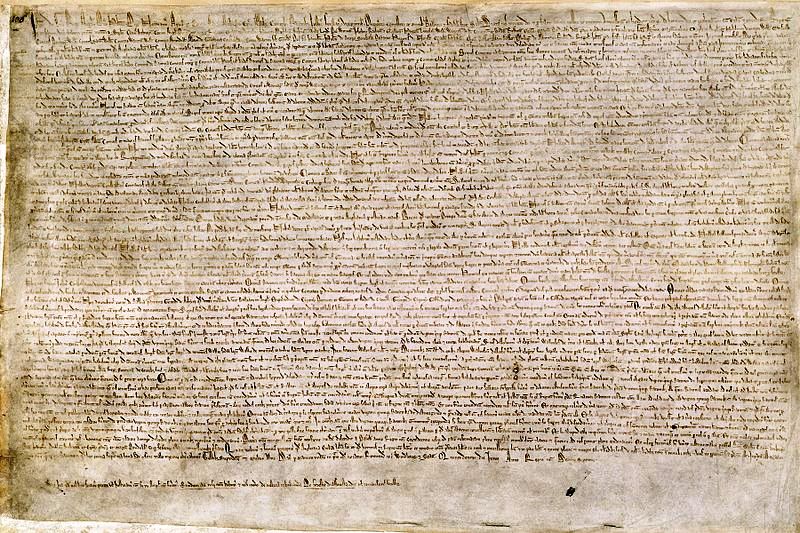
එය මැග්නා කාටා (Magna Carta) හෙවත් මහා ප‍්‍රඥප්තිය නමින් 1215දී මධ්‍යකාලීන එංගලන්තයේ සම්මත කරනු ලැබූවක්. පසු කලෙක එය ලෝකයටම බලපෑමක් කළා. මැග්නා කාටාව මානව ඉතිහාසයේ යුක්තිය, සාධාරණත්වය හා මූලික අයිතිවාසිකම් නිරවුල්ව පැහැදිලි කළ හා ප‍්‍රබලව ලේඛනගත කළ මුල්ම ලියවිල්ලයි.

The Magna Carta of 1215, written in iron gall ink on parchment in medieval Latin, using standard abbreviations of the period, authenticated with the Great Seal of King John (image courtesy Wikipedia)

පාර්ච්මන්ට් කඩදාසියේ මුළුමනින්ම ලතින් බසින් ලියැවුණු එය වචන 3,550ක් දිගයි. (එකල ගරු ගාම්භීර භාෂාව වූයේ ලතින්.) කෙටි පරිච්ෙඡ්ද 63කට එය බෙදා තිබෙනවා.

http://www.bl.uk/magna-carta

එංගලන්තයේ එවකට සිටි ජෝන් රජු 1215 ජූනි 15 වනදා තම රාජකීය මුද්‍රාව තබා එය නිල ලියවිල්ලක් බවට පත් කළා. එයට පසුබිම වූයේ ඔහුට එරෙහිව රටේ ප‍්‍රභූන් හා මහජනතාවගෙන් මතු වී ආ ප‍්‍රබල විරෝධයයි.

ප්‍රංශයේ නෝමැන්ඩියේදී ලද හමුදාමය පරාජයත්, රජු විසින් රට වැසියන්ට නිර්දය ලෙස සැලකීමත් නිසා දැඩි කලකිරීමට පත් බොහෝ දෙනා ඔහුට එරෙහිව කැරලි ගසන්නට ආසන්න වෙමින් තිබුණා. කිරුල හා පණ බේරා ගැනීම සඳහා යහපාලන ප‍්‍රතිඥා ගණනාවක් දීමට රජුට සිදු වුණා.

ජෝන් රජුගේ මේ පියවරෙන් වුවද ඔහුට රජකම රැක ගත හැකි වූයේ ටික කාලයකට පමණයි. 1216 ඔක්තෝබරයේ ඔහු මිය ගියා. ඔහුගේ අනුප‍්‍රාප්තික ලාබාල තුන්වන හෙන්රි රජු වඩාත් ප‍්‍රගතිශීලි මැග්නා කාටා සංශෝධනයක් සම්මත කළා. 1225දී යළිත් සංශෝධනය කරනු ලැබූ ලියවිල්ල තමයි දැන් ඓතිහාසිකව පිළි ගැනෙන්නේ.

මධ්‍ය කාලීන එංගලන්තයට වැදගත් වූ බොහෝ දේ එහි ඇතුළත් වුවද සදාතනික වටිනාකමක් ඇති ප‍්‍රධානතම සංකල්පය ලෙස එයින් මතු වූයේ නීතියේ ආධිපත්‍යයයි (Rule of Law). එනම් රජුට හිතුමතයට නීති හෝ බදු පැනවීමට නොහැකි බව හා අන් සෑම දෙනා මෙන්ම රජු හා ඔහුගේ පවුල, ඇමතීන් හා ප‍්‍රභූන් ද එක සේ රටේ නීතියට යටත් වන බව පැහැදිලිව පිළිගැනීමයි.

What is the Rule of Law? Simplified explanation

මෙය අද කාලේ ලෝක සම්මත ශිෂ්ට සම්ප‍්‍රදායක් ලෙස අප දැන සිටියත්, ඒ වන තුරු එය සිදු වූයේ නැහැ. රාජ්‍යය යනු තමාය (“I am the State!”) යන අතිශය උද්ධච්ච උපකල්පනය මත පිහිටා තමන් රිසි ඕනෑම දෙයක් කිරීමට රජුට බලය තිබුණා.

ඕනෑම කෙනකු අත්අඩංගුවට ගන්නට, දඬුවම් කරන්නට, මරා දමන්නට, අත්අඩංගුවට ගන්නට, දේපල සින්න කර ගැනීමට හා වෙනත් බලහත්කාරකම් කිරීමට කිසිදු නීතිමය සීමාවක් තිබුණේ නැහැ. කිසිදු හේතුවක් හෝ පදනමක් උවමනා වූයේත් නැහැග

මැග්නා කාටා ප‍්‍රඥප්තියේ 12 හා 14 වන පරිච්ෙඡ්ද මගින් රජුට රිසි පරිදි රටවැසියන්ගෙන් බදු අය කිරීම සීමාවන්ට යටත් කළා. එය යුක්ති යුක්ත විය යුතු බවත්, ජන සම්මත විය යුතු බවත් කියැවුණා.

ඊටත් වඩා වැදගත් වූයේ 39 වන පරිච්ෙඡ්දයයි. ‘රටේ සම්මත නීතියට හා එම නීති මත පදනම් වී කරන නඩු විභාගයකින් මිස වෙනත් කිසිම අයුරකින් මිනිසකු අත්අඩංගුවට ගැනීම, සිරිගත කිරීම, දේපල පවරා ගැනීම, පිටුවහල් කිරීම හෝ කිසි අයුරකින් විනාශ කිරීම නොකළ යුත්තේය.’ යැයි එහි කියැවුණා.

ඊළඟ 40 වන පරිච්ෙඡ්දයේ මෙසේ ප‍්‍රතිඥා දෙනු ලැබුවා. ‘‘මානව අයිතිවාසිකම් හා යුක්තිය කිසිවකුට පමා කිරීම, නොදී සිටීම හෝ මිලකට විකිණීම නොකළ යුත්තේය.’’

අද ලෝකයේ නීතියේ ආධිපත්යය හා මූලික මිනිස් අයිතිවාසිකම් පිළිබඳ මූලධර්ම බවට පත්ව ඇති මේ රතිඥා මීට වසර 800කට පෙර පැවති වැඩවසම් යථාර්තයට සාපේක්ෂව බෙහෙවින් රගතිශීලි වූවා.

එසේම මේ හරහා එංගලන්තයේ (පසු කලෙක සමස්ත බි‍්‍රතාන්‍යයේම) රජුගේ බලතල පැහැදිලිව නීතිවලට යටත් කරනු ලැබුවා. රජු නීතියට ඉහළින් හෝ බාහිරින් හෝ සිටීමට ඇති ඉඩකඩ අසුරනු ලැබුවා. මෙය එංගලන්තයට හා බි‍්‍රතාන්‍යයට පමණක් නොව සමස්ත ලෝකයටම ඉතා වැදගත් යහපාලන මූලධර්මයක් හඳුන්වා දුන්නා.

What is Magna Carta? Short animation by the British Library

පාලකයා රටේ නීතියට අනුකූල විය යුතු බව ඊටත් සියවස් ගණනකට පෙර පටන් යුරෝපයේ කෙමෙන් මතුව ආ සංකල්පයක්. පුරාණ රෝමයේත්, ඉන් පසුව ස්පාඤ්ඤය, හංගරිය හා ප‍්‍රංශයේත් විද්වතුන් මේ ස්ථාවරය ප‍්‍රවර්ධනය කළා.

එහෙත් බුද්ධිමය තර්කයක් වශයෙන් පමණක් පැවති එය නීති පොතකට නිල වශයෙන් එක් වූයේ මැග්නා කාර්ටාවේ. එය එතැන් පටන් වඩාත් ශිෂ්ට දේශපාලන හා නීති සම්ප‍්‍රදායක අඩිතාලම බවට පත් වුණා.

ඉනික්බිති එලැඹි සියවස්වල ඇතැම් රජවරුන් නීතියේ නොතකා ක්‍රියා කරන්න තැත් කළ විට ප්‍රභූන් හා විද්වතුන් උද්ඝෝෂන කළා. 17 සියවසේ පටන් බි‍්‍රතාන්‍යය යටත් කර ගත් රටවලට ද නීතියේ ආධිපත්‍යය හඳුන්වා දෙනු ලැබුවා. ආණ්ඩුකාරයාට අසීමිත බලතල තිබුනේ නැහැ. නීතියට යටත්ව හා අධිකරණ ක්‍රමයකට යටත්ව ඔහු යටත් විජිත පාලනය කළා.

1776දී අමෙරිකානු යටත් විජිත නිදහස ප්‍රකාශ කොට අමෙරිකන් එක්සත් ජනපදය පිහිටු වන විට එයට මුල් වූ ප්‍රාරම්භකයෝ නීතියේ ආධිපත්‍යයට සුවිශේෂ තැනක් දුන්නා. පාලකයන්ට වඩා නීතිය ඉහලින් තිබීම එරට මූලිකයි. වැරදි වැඩ කළ ජනාධිපති නික්සන්ට ඉල්ලා අස් වන්නට පවා සිදු වුණා.

1800 ගණන්වල පුවත්පත් නිදහස වෙනුවෙන් අරගල කරන බි‍්‍රතාන්‍ය කතුවරු හා ප්‍රකාශකයෝ මැග්නා කාටාව පදනම් කර ගනිමින් රජු හා රජ පවුල විවේචනය කිරීමේ අයිතිය තමන්ට ඇතැයි තර්ක කළා. සර්වජන ඡන්ද බලය ලබා ගැනීමේ දශක ගණනක ජන අරගලයේදීත් බොහෝ ක්‍රියාකාරිකයෝ මේ ලියවිල්ලේ බුද්ධිමය ආභාෂය ලබා ගත්තා.

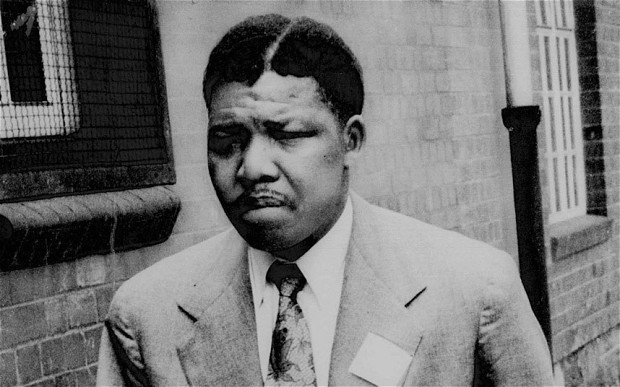
"It is a struggle for the right to live" - Nelson Mandela address from the dock as first accused at the Rivonia Trial
“It is a struggle for the right to live” – Nelson Mandela address from the dock as first accused at the Rivonia Trial

දකුණු අප්‍රිකාවේ වර්ණභේදවාදයට එරෙහිව අරගල කළ නෙල්සන් මැන්ඩෙලා ඇතුලු පිරිස තම රටටත් මැග්නා කාටාවේ ලෙසින් නීතිය කාටත් එක සමානව අදාල වන අනාගතයක් ගැන සිහින දුටුවා. රජයට එරෙහිව කැරලි ගසා බරපතල චෝදනා ලබා 1962-64 වකවානුවේ දීර්ඝ නඩු විභාගයකට ලක් වූ මැන්ඩෙලා එහිදී චෝදනා ප‍්‍රතික්ෂේප කරමින්, තමන් නිවැරදි බවත්, වරද ඇත්තේ අසාධාරණ රාජ්‍ය තන්ත‍්‍රයේ බවත් තර්ක කරන්නට මැග්නා කාටාව ගෙන හැර දැක්වූවා.

මෙසේ සියවස් අටක් ලොව විවිධ රටවල මානව අයිතීන් හා සාධාරණය උදෙසා මැග්නා කාටාව ප්‍රබෝධක ආවේගය ලබා දී තිබෙනවා.

අවාසනාවකට මෙවැනි බලය සීමා කිරීමක් අපේ රටේ රාජ ඉතිහාසයේ සිදු වුණේ නැහැ. රාජ පාලනය යටතේ අතිශයින් වැඩවසම් රමයක අන්ත අසරණ යටත් වැසියන් ලෙස ඉතිහාසයේ වැඩි කාලයක් අපේ මුතුන් මිත්තෝ ජීවත් වුණා.

මෙරට රාජාවලිය හා ඉතිහාසය දෙස බලන විට දසරාජ ධර්මයෙන්, දැහැමින් සෙමෙන් රජකම් කළ රජුන් සිටියේ කිහිප දෙනකු පමණයි. බහුතරයක් ඉවක් බවක් නොමැතිව බලකාමයෙන් රාජ පාලනය කළ අයයි.

මේ ඓතිහාසික ඇබ්බැහිය නිසාදෝ රජකු හා රාජාණ්ඩුවක් නැවත ලබා ගැනීමේ සිහින දකින සමහර ලාංකිකයන් තවමත් සිටිනවා. එසේම ඡන්දදායකයන් මුසපත් කිරීමේ හොඳ උපකරමයක් ලෙස තමන් කිරුළු නොපැළ රජකුලෙස පෙනී සිටීමට අපේ ඇතැම් දේශපාලකයන් දක්ෂයි

ජන ප්‍රවාදයෙන්ද මීට උඩගෙඩි ලැබෙනවා. 1815 මාර්තු 2 වනදා කන්ද උඩරට ගිවිසුම අත්සන් තැබීම සමග සමස්ත ලංකා දිවයින බි‍්‍රතාන්‍ය අධිරාජ්‍යයට යටත් වුණා. එයින් ටික දිනකට පසු කුංකුනාවේ හිමියන් බිම දිගේ සීරුවෙන් ඇදී යන කුහුඹු පෙළක් දැක ‘අනේ කූඹියනේ, තොපටත් රජෙක් ඉන්නේ’ නම් කව කී බව කියැවෙනවා.

ඔහු තව දුරටත් කීවේ මෙයයි:
‘රජෙක් ලැබුණෝතින්

එදා කිරිබත් කන්නේ

පෙරහැර කරන්නේ

සාදු නාදෙන් ගිගුම් දෙන්නේ’

Dr Nirmal Ranjith Dewasiri

මේ රාජ උන්මාදය වත්මන් සමාජයට උචිත වූවක් නොවෙයි. ඉතිහාසඥ ආචාර්ය නිර්මාල් රන්ජිත් දේවසිරි මෙයට අදාලව මෑතදී ඔහුගේ ෆේස්බුක් එකේ මෙසේ කියා තිබුණා:

“රජෙක් සදහා වන ෆැන්ටසිමය ආකර්ශනය මිනිස් විෂයේ සැකැස්ම සමග සම්බන්ධිත වූවකි. මෙම ෆැන්ටසිය නවීන ප්‍රජාතන්ත්‍රවාදී දේශපාලන පරිකල්පනය සමග ප්‍රතිවිරෝධී වේග කෙසේ වෙතත් දේශපාලන වශ‍ෙයන් ප්‍රජාතන්ත්‍රීකරණය මුහුකුරා ගිය සමාජවල මේ ගැටලුවට ප්‍රායෝගික විසදුමක් සොයාගෙන ඇත. ඒ රජෙක් හෝ රැජනක් සංකේතාත්මක වශයෙන් දේශපාලන ධූරාවලියේ ඉහලින් තබා ගැනීමෙනි. මේ මගින් පොදුජන දේශපාලන ෆැන්ටසිය සහ ප්‍රජාතන්ත්‍රීය ආණ්ඩුකරණය අතර ඇති විය හැකි ආතතිය සමනය කරගෙන ඇත. අරාබි ලොකය මේ ගැටලුව විසදා නොගැනීම පිළිබද වර්තමානයේ හොදම උදාහරණයයි. ජර්මනියේ හිට්ලර් පිළීබද උදාහරණයද එවැන්නකි. ලංකාවේ මහින්දවාදයද මේ ගැටලුව තුළ හිරවී ඇත. එය විසින් රජෙක් පිළිබද පොදුජන ෆැන්ටසිය හා දේශප්‍රෙමය පිළිබද ව්‍යාජ දෘෂ්ටිවාදී පිරිවැස්ම උපයෝගී කර ගෙන ප්‍රජාතන්ත්‍රවාදී ආණ්ඩුකරණය අඩස්සිගත කරනු ලැබ ඇත. මේ ප්‍රවණතාවය පරාජය කිරීම වර්තමානයේ ලංකාවේ ප්‍රමුඛ දේශපාලන අවශ්‍යතාවයයි.”

සියවස් අටකට පෙර මැග්නා කාටාවෙන් පටන් ගත් පුරවැසි පරමාධිපත්‍යයේ දිගු ගමන තවම හමාර නැහැ!


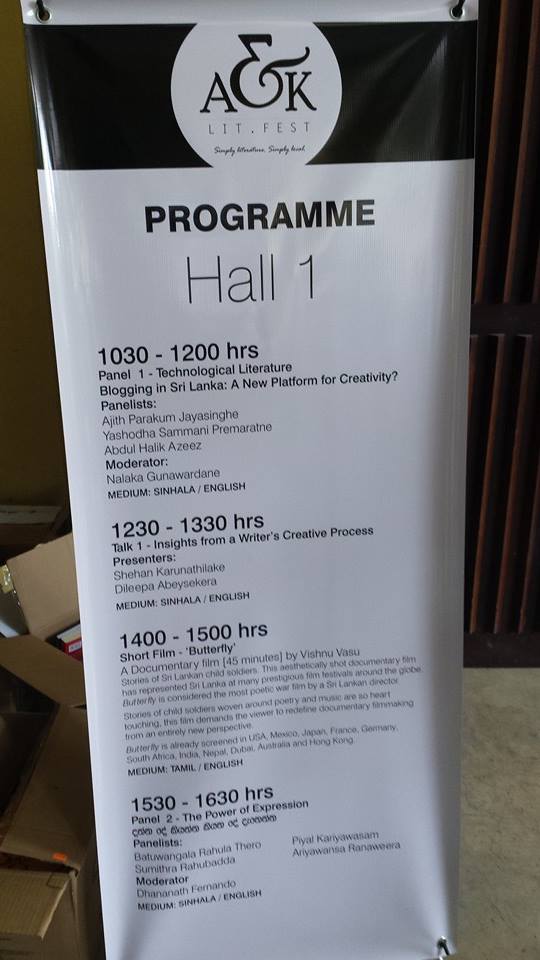
A & K Lit Fest Session on Blogging in Sri Lanka – A New Platform for Creativity?

Accessible, affordable and enjoyable: nothing official or snooty about it!

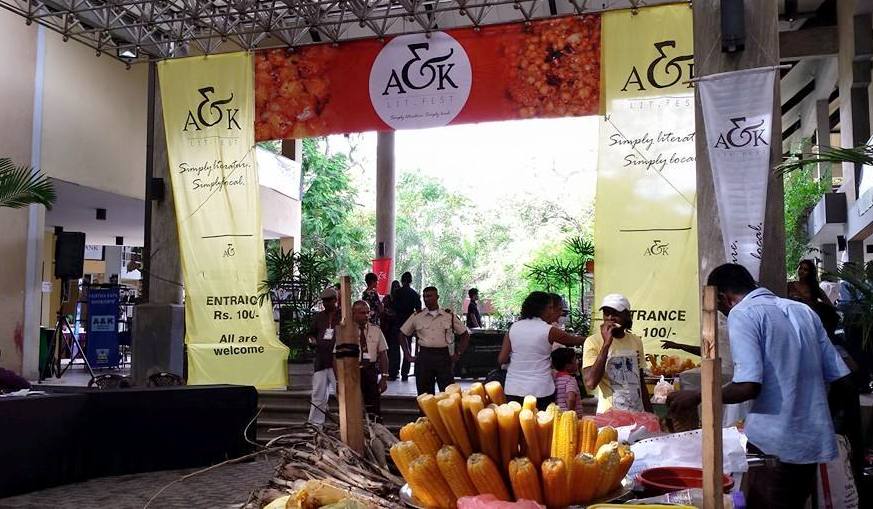
The Annasi & Kadalagotu Literary Festival (‘A&K Lit Fest’), held on 25 April 2015, brought together literary enthusiasts from across the country. It was a collaborative platform where those who share a passion for literature can come together, explore the way we write, the way we read and learn about the ways of Sri Lanka and its people – their expressions, cultures and perspectives.

I moderated a Session on “Blogging in Sri Lanka: A New Platform for Creativity?” which featured three leading bloggers in Sri Lanka.

A&K Lit Fest - Blogging panel promo

Here are my Opening Remarks, where I tried to place blogging in the current cultural, political and societal context of Sri Lanka.

 Session: Blogging in Sri Lanka: A New Platform for Creativity?

Opening Remarks by Nalaka Gunawardene, Moderator

Because we are discussing blogs at a lit fest, we will look explore Lankan blogging and blogospheres from a more creative and literary perspective – and not from any technical or technological angle.

Our session has been tagged with a subtitle “Technological Literature?”, which I consider to be a misnomer. Blogs are self-expressions that just happen to be made on the web, but they are not necessarily techie or geeky.

Not any more than, say, convention book writers have much or anything to do with printing and paper production!

The cyberspace is just the medium and the ecosystem in which blogs are written, shared, commented upon and – sometimes – being argued over.

This part of the web is called ‘blogosphere’ – and where Sri Lanka is concerned there are three overlapping such blogosphere in Sinhala, Tamil and English languages.

The web is increasingly attracting more writers, journalists and other creative people because:

  • It is cheaper and faster to publish online than in book format;
  • It is often easier than getting published in newspapers or magazines; and
  • The medium is far more interactive, so creators can get direct audience feedback.
Panel on Blogging in Sri Lanka - L to R - Ajith Perakum Jayasinghe, Yashodha Premaratne, Abdul Halik Azeez and Nalaka Gunawardene
Panel on Blogging in Sri Lanka – L to R – Ajith Perakum Jayasinghe, Yashodha Premaratne, Abdul Halik Azeez and Nalaka Gunawardene – Photo by Malaka Rodrigo

By coincidence, this weekend also marks the 20th anniversary of the advent of full Internet services in Sri Lanka. As my friend Chanuka Wattegama and I have written in short history of the subject:

“Internet access on a commercial basis became available in Sri Lanka on 26 April 1995, when Lanka Internet Services Limited (LISL) started operating a local Internet server (‘Sri Lanka Web Server’) through a local gateway. Their server was connected to a host in the US through a 64kbps dedicated transmission line leased from SLT. This gave Sri Lankan Internet users the opportunity of accessing the Internet simply by dialling a local phone number. Sri Lanka was thus the first country in South Asia to have unrestricted and commercial Internet access facilities…”

We have come a long way since those early days of dial-up, narrowband access. Not everyone is online yet, of course, but we have around 22 to 25% of our 21 million people regularly using the web now for a variety of purposes.

Blogging is one such purpose. At its most basic, blogging entails using web-based, free spaces to write and self-publish words, images, videos or multimedia content.

Bloggers have been active in Sri Lanka for at least a dozen years, if not a bit longer. We don’t know exactly who the first Lankan blogger was (that’s a research project for you!), but some pioneering work was done by English language bloggers like Indi Samarajiva. There are others.

Blogging became more popular after around 2003/4. This was the time broadband Internet started rolling out, giving us faster speeds and always-on facility (on a fixed monthly cost, without having to count the minutes we stay online).

Blogging in Sri Lanka picked up when more and more computer users realized that they didn’t need to have any programming or coding skills to do web pages. The early web was limited to webmasters wielding HTML and other specialized software skills. But the advent of Blogger (1999) and WordPress (2003) free platforms meant that guys like myself – not knowing a single line of coding – could put together my own content on the web.

As broadband services spread, and as local language font issues were finally resolved, more people started blogging in Sinhala and Tamil too. The Lankan blogosphere is diverse and vibrant today.

Blogging is being pursued by a few thousand people, and many thousands more participate as readers or discussants. Some blogs offer serious political and social commentary, while others have become platforms for nurturing new talent in prose, verse, photography, videography or graphic art.

The formats and topics are only limited by our own imagination and dedication. The latter is important, as blogging is unpaid work that can take up a good deal of time (especially if you become a widely read and commended upon).

Bloggers fit into a much larger new media ‘ecosystem’ called citizen journalism, which is also constantly evolving. Although not well studied by media researchers, this phenomenon is now a part of our public sphere.

Before I introduce the panel, let me pose and answer four questions.

Blogging Panel engages in showing and telling about Lankan blogs
Blogging Panel engages in showing and telling about Lankan blogs – Photo by Malaka Rodrigo


Who is a typical blogger in Sri Lanka?

There is no such profile. Besides having basic computer skill and Internet connectivity, there is little in common among our bloggers – among whom are students, teachers, professionals, retirees, housewives, househusbands and many others. Anyone with Internet access and some spare time can, in theory, become a blogger. And if not inclined to write, anyone can still become a reader and/or commentator of others’ blogs.

What do Lankan bloggers publish about?

Again, the interests and topics of blogs are as diverse as our people! There is every type of content generated by bloggers and their readers (sometimes comments are more interesting than the original post that provoked them). Bloggers variously address social, cultural, political, commercial and personal issues and topics.

If you’re new to this space, the best point to start exploring would be to look at blog aggregators that automatically list new blogposts being published by bloggers who have registered with them (for free). There are several aggregators to choose from, but none that is comprehensive:

What quality and creativity are found in Lankan blogs?

Again, this is like asking what quality and creativity can be found in all the books, newspapers and magazines published in our land. It all depends on where you look!

There is everything in our blogs, from the mundane and unremarkable (including angry rants) to very perceptive and even occasionally profound expressions. And much in between…

We find some news reporting, much commentary/opinion, some analysis and investigation, as well as short stories, poems, satire, cartoons and videos on blogs. The genres are now nearly as diverse as in the printed word, even though public awareness of this diversity is still lacking.

Finally, why have me moderate this panel, and why these panelists?

I have been a long-time observer and chronicler of the Internet in Sri Lanka from the very beginning, often partnering with my friend Chanuka Wattegama. I wish more of our social scientists and media researchers would take a closer look at what is going on in cyberspace and help us understand just how that is impacting our society, culture and politics.

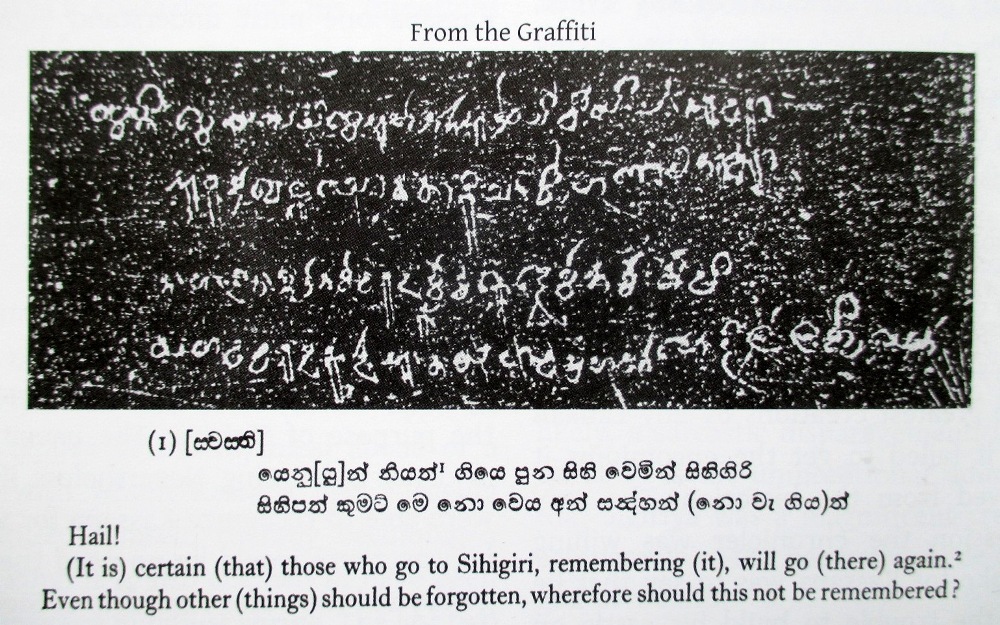
Sigiriya Graffiti image courtesy - Kassapa's Homage to Beauty by Siri Gunasinghe
Sigiriya Graffiti image courtesy – Kassapa’s Homage to Beauty by Siri Gunasinghe

A couple of years ago, I argued that some of the world’s earliest documented citizen journalists were in Sri Lanka: those who wrote Sigiriya graffiti beginning in the 7th Century and going up to around 13th Century. (See: 4 August 2013: සිවුමංසල කොලූගැටයා #128: සීගිරි කැටපත් පවුරෙන් ඇරැඹුණු පුරවැසි මාධ්‍යවේදය)

Those unknown ancestors met the basic criteria:

  • They wrote in a public space (mirror wall at Sigiriya)
  • They wrote without anyone’s permission (extremely rare in ancient Lanka)
  • They shared personal impressions and aspirations.

So today’s Lankan bloggers are heirs to a long and proud tradition!

BUT – don’t even think of writing anything on the Sigiriya mirror wall today. It is now a UNESCO World Heritage site, and protected under the Antiquities Ordinance. A young woman who wrote her lover’s name there was arrested and jailed recently for two years!

Blogging in Sri Lanka - panel at A&K Lit Fest, Colombo, 25 April 2015
Blogging in Sri Lanka – panel at A&K Lit Fest, Colombo, 25 April 2015

Blogging in cyberspace itself is sometimes frowned upon by those who don’t know — or have only a fleeting awareness of  — what blogs really are. Some confuse blogs with political  or gossip websites.

Sadly, many in our mainstream media are either ignorant or dismissive of  blogs (and some editors shamelessly reproduce them without acknowledgement!). The Secretary to the Media Ministry – himself an occasional blogger — told a blogging award ceremony last month that he has met chief editors of Lankan newspapers who had no clue what blogs were!

12 April 2015: සිවුමංසල කොලූගැටයා #215: සයිබර් කැඩපත් පවුරේ ලියන අපේ බ්ලොග් ලේඛකයෝ

During the past decade when freedom of expression and media freedom in Sri Lanka were seriously undermined, bloggers and citizen journalists partially filled the void created by mainstream media stepping up self-censorship. Indeed, I argue that some of our leading bloggers offer more refreshing and authentic analysis of current social and political issues than do many newspapers!

In their own ways, our three panelists have distinguished themselves in the Lankan blogospheres. We want to find out what motivates and inspires them, and what kind of dialogue they have with their readers.

Abdul Halik Azeez is a strategy consultant, independent researcher and citizen journalist. He blogged for some years at https://abdulhalik.wordpress.com. His recent interest in journalistic and conceptual photography has garnered a large following on Instagram where he is known as Colombedouin. http://instagram.com/colombedouin
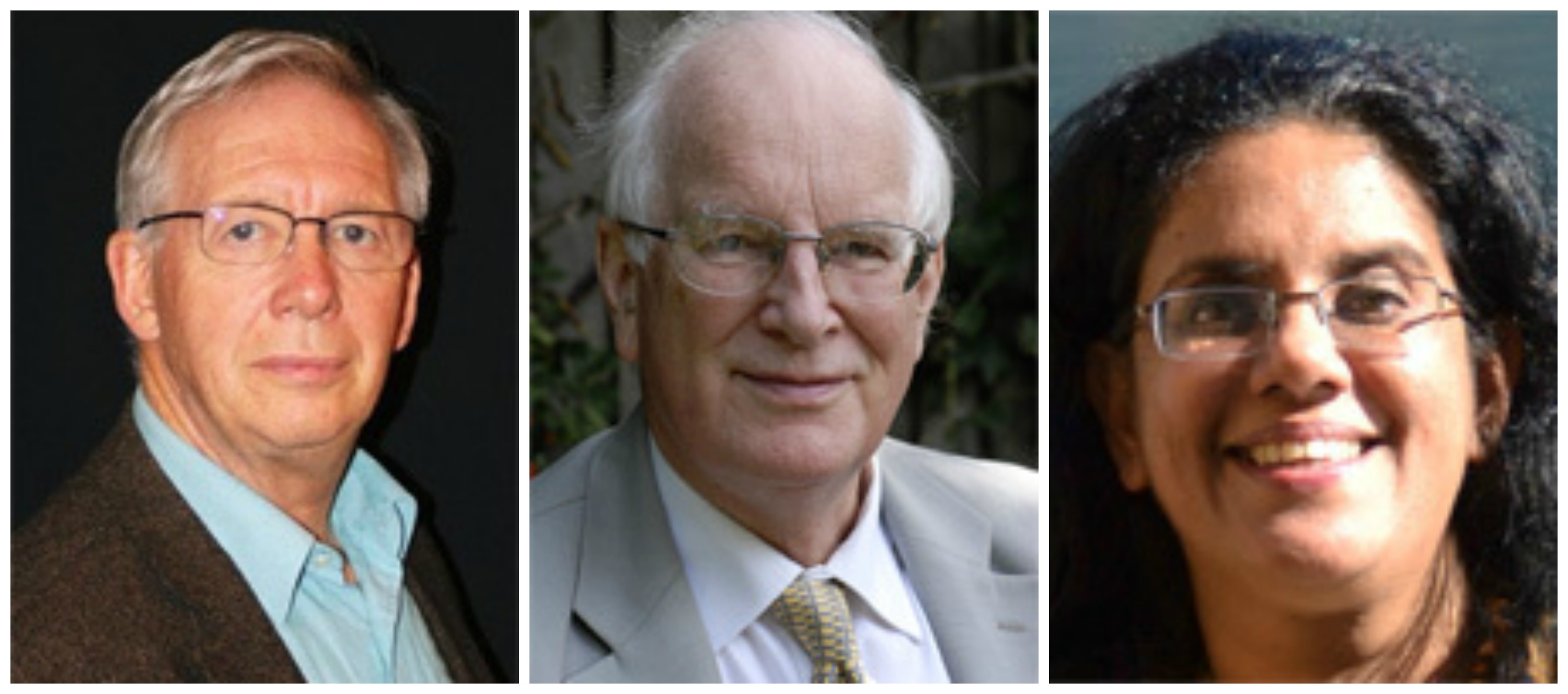
Ajith Perakum Jayasinghe (Blog: http://www.w3lanka.com) is a teacher by profession who is immensely engaged in writing, translating and blogging. He likes to identify himself as a political activist who is committed to change the order so as the life is better for the humans and nature.

Yashodha Sammani Premaratne who is known by her pen name “bassi” is a blogger as well as a microblogger. Her blog, “Bassige nawathana” (http://bassigenawathana.blogspot.co.uk) started in August, 2013 attracted the readers immediately due to her lucid style of writing. Her range of blog posts is highly diverse from simple humour to Politics, Science, Poetry and Fiction. ‘Bassige Nawathana’ has already won two awards for its creativity.

We also ask panelists to address larger questions such as:

  • How vibrant and diverse is blogging in Sri Lanka?
  • Is there a dedicated and growing audience for blogs?
  • Do bloggers influence public opinion, and how?
  • Is blogging in decline with the rise of micro-blogging (Twitter) and Facebook?
Audience engages with the blogging panel at A&K Lit Fest  in Colombo, 25 April 2015 - Photo by Malaka Rodrigo
Audience engages with the blogging panel at A&K Lit Fest in Colombo, 25 April 2015 – Photo by Malaka Rodrigo
Photo by Dhara Gunawardene

1531871_10152757743417217_7487420442686407330_n


Media Sector Reforms in Sri Lanka: Some ‘Big Picture’ Level Thoughts

නොගැලපෙන  රෝද - четыре колеса сказка
නොගැලපෙන රෝද – четыре колеса сказка

I’m a story teller at heart. I sometimes moonlight as a media researcher or commentator but have no pretensions of being academic. I always try to make my points as interesting as possible — using analogies, metaphors, examples, etc.

This is the approach I used when asked to talk to the working group on Sri Lanka Media Reforms, convened by the Media Ministry, Sri Lanka Press Institute, International Media Support (IMS) and the University of Colombo.

I used a well-loved Russian children’s story that was known in Sinhala translation as නොගැලපෙන රෝද — the story of one vehicle with different sized wheels, and how animal friends tried to make it move and when it proved impossible, how they put each wheel to a unique use…

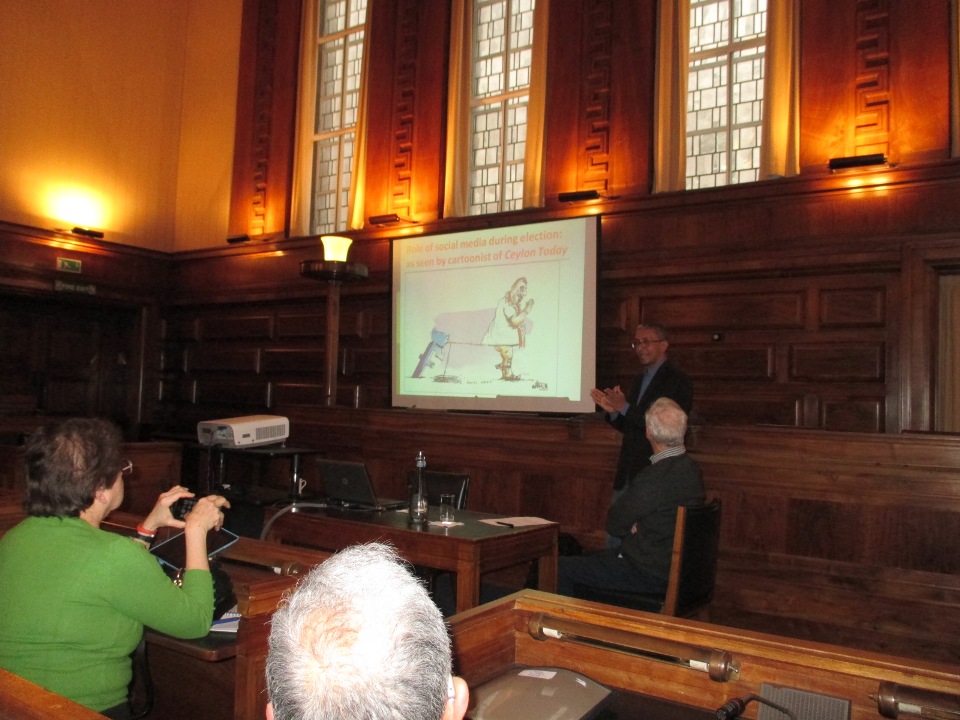
A framework for media reform in Sri Lanka...by Nalaka Gunawardene
A framework for media reform in Sri Lanka…by Nalaka Gunawardene
A framework for media reform in Sri Lanka...by Nalaka Gunawardene
A framework for media reform in Sri Lanka…by Nalaka Gunawardene

Well, in the case of media reforms, we can’t go off in different directions. We must make the vehicle work, somehow.

Full presentation here: http://www.slideshare.net/NalakaG/media-reforms-in-lanka-big-picture-ideas-by-nalaka-gunawardene

සිවුමංසල කොලූගැටයා #211: සැබෑ තොරතුරු සමාජයක් බිහි කිරීමට නිසි ඉදිරි දැක්මක්

In this week’s Ravaya column (in Sinhala, published in issue of 15 March 2015), I discuss what policy and regulatory measures can help promote information society in Sri Lanka. In that process, I critique the Telecommunications Regulatory Commission (TRCSL) and the ICT Agency (ICTA), two state institutions with relevant mandates that they have mismanaged, and sometimes squandered, during the past decade.

I argue that, for the most part, ICTA has been dabbling in ‘retail’ level (and politically driven) projects such as setting up rural tele-centres and designing government websites, while neglecting ‘wholesale’ level needs – such as resolving local font standardization, supporting ICT innovation, and being a facilitator of meaningful e-government. Similarly, TRC has been engaging in indiscriminate blocking of political websites critical of the former government, without creating an enabling environment in which pluralistic web content could thrive.

Info society icons

“තොරතුරු ගලා ගිය පමණට තොරතුරු හෝ දැනුම් සේවා දියුණු වූ පමණට හෝ රටක ප‍්‍රශ්න විසඳෙන්නේ නැහැ. නවීන ලෝකයේ රටක ඉදිරි ගමනට තොරතුරු හා සන්නිවේදන තාක්‍ෂණයන් අත්‍යවශ්‍ය බව සැබෑවක්. එහෙත් ඒවා නිසි දැක්මක්, සැළැස්මක් හා ප‍්‍රතිපත්ති රාමුවක් තුළ ප‍්‍රවර්ධනය වීම ඉතා වැදගත්. එසේ නැති විට වඳුරන් අතට පත් දැලිපිහිය වැනි අවදානමක් මතු විය හැකියි.”

තොරතුරු හා සන්නිවේදන ක්‍ෂෙත‍්‍රවල ප‍්‍රාඥයකු වූ ශී‍්‍රමත් ආතර් සී ක්ලාක් මේ අදහස පළ කළේ මීට දශක දෙකකට පමණ පෙරයි. එදාටත් වඩා මෙය අද ශී‍්‍ර ලංකාවට අදාල යයි මා සිතනවා.

තාක්‍ෂණයේ හා වෙළඳපොල ආර්ථිකයේ ඉදිරි ගමන නිසා තොරතුරු හා සන්නිවේදන සේවා රැසක සේවය ලැබී ඇති මේ යුගයේ පොදු උන්නතිය, ජාතික සංවර්ධනය හා සමාජ සමානාත්මතාවය උදෙසා අප කෙසේ නම් මේවා යොදා ගත යුතුද? එහිලා රජය, විද්වතුන්, පෞද්ගලික අංශය හා සිවිල් සමාජය සතු වගකීම් මොනවාද?

තොරතුරු තාක්‍ෂණයන් මෙරට ප‍්‍රචලිත වීම හරහා කෙමෙන් මෙරට තොරතුරු සමාජයක් (information society) ස්ථාපිත වීම දශක ගණනාවක් තිස්සේ සිදු වෙමින් පවතින සමාජයීය පරිනාමයක්. 1925දී රේඩියෝ විකාශයන් ඇරඹීම හා 1976දී පාදුක්කේ චන්දිකා සන්නිවේදන මධ්‍යස්ථානය පිහිටුවීම වැනි මංසළකුණු හරහා සෙමෙන් ඉදිරියට ආ එම ප‍්‍රවාහය වඩාත් වේගවත් වුයේ 1979දී ටෙලිවිෂන්, 1989දී ජංගම දුරකථන සේවා හා 1995දී ඉන්ටර්නෙට් ආගමනයෙන් පසුවයි.

මුලින් සීමිත පිරිසකට ග‍්‍රහණය වූ මේ සන්නිවේදන සේවා කල් යාමේදී වැඩි ජන සංඛ්‍යාවක් භාවිත කරන එදිනෙදා තොරතුරු සේවා බවට පත් වූවා. තාක්‍ෂණය ඉක්මවා යන සාංස්කෘතිකමය, සමාජයීය හා දේශපාලන බලපෑම් මේ හරහා ජනිත වී තිබෙනවා.

තොරතුරු තාක්‍ෂණ මෙවලම්වලට වඩා වැඩි අවධානයක් අප යොමු කළ යුත්තේ ඒ හරහා බිහි වන තොරතුරු සමාජය ගැනයි. එය හුදෙක් පරිගණක, ජංගම දුරකථන හා ඉන්ටර්නෙට්වලට වඩා පුළුල් සමාජීය සංසිද්ධියක්.

Planet Info

මෙය උපමිතියකින් පහදා දිය හැකියි. නාගරික හා අර්ධ නාගරික පෙදෙස්වල ජලය බෙදා හැරීමට ජලාශ, ටැංකි, විශාල නල හා කුඩා නල වශයෙන් ජලප‍්‍රවාහන පද්ධතියක් තිබෙනවා. ගංගාවලින් ලබා ගත් ජලය යම් පිරිසිදු කිරීමකින් පසු නිවෙස් වෙත ගලා එන්නේ මේ හරහායි.

තොරතුරු තාක්‍ෂණ ජාලයන් මීට වඩා බෙහෙවින් සංකීර්ණ බව සැබෑයි. එහෙත් මේ අවස්ථා දෙකෙහිදීම වඩා වැදගත් වන්නේ පද්ධතියේ භෞතික හෝ තාක්‍ෂණික කි‍්‍රයාකාරිත්වය නොව නොකඩවා ජලය/තොරතුරු ලැබේද හා එය භාවිතයට සුදුසු ද ආදී සාධකයි.

ජලප‍්‍රවාහන පද්ධති මෙන් නොව සන්නිවේදන පද්ධතිවල දෙපසටම තොරතුරු ගලනය සිදු වනවා. එසේම වාරණයක්, අවහිරයක් හෝ විකෘති කිරීමකින් තොරව තොරතුරු ලැබීමේ හා බෙදා ගැනීමේ මුලික අයිතිවාසිකම ප‍්‍රජාතන්ත‍්‍රවාදී සමාජවල සියලූ දෙනාට තිබෙනවා. මෙය සහතික කිරීම රජයන්ගේ වගකීමක්.

තොරතුරු සමාජ ප‍්‍රගමනයට රාජ්‍ය මට්ටමින් ගත යුතු ප‍්‍රතිපත්ති හා නියාමන කි‍්‍රයාමාර්ග තිබෙනවා. ආර්ථික උපමිතියකින් කිව හොත් තොරතුරු සමාජයේ ප‍්‍රගමනයට රජයක් විසින් ගත යුතු ප‍්‍රතිපත්ති හා නියාමන යනු ‘තොග මට්ටමේ’ මැදිහත්වීම් වැනියි.

‘සිල්ලර මට්ටමේ’ යයි කිව හැකි ටෙලිකොම් සේවා පවත්වා ගෙන යාම, සන්නිවේදන කේන්ද්‍ර (නැණසල හෝ ටෙලිසෙන්ටර්) පිහිටුවීම හා නඩත්තුව ආදිය වෙළඳපොලට භාර කළ යුතුයි. නිසි නියාමනයකින් යුතුව, දේශපාලන ඇගිලි ගැසීම්වලින් තොරව සන්නිවේදන තාක්‍ෂණයන් රටක පවතින විට පෞද්ගලික අංශය ආයෝජනය කිරීමට ඉදිරිපත් වනවා.

තොරතුරු සමාජයට අවශ්‍ය යටිතල පහසුකම් සම්පාදනය භෞතික ලොව මහාමාර්ග, ජලප‍්‍රවාහන පද්ධති ආදියට වඩා වෙනස්. රජයන් මෙහි සම්පුර්ණ බරපැන දරනවා වෙනුවට එය බොහෝ දුරට වෙළඳපොල ප‍්‍රවාහයන්ට භාර කැරෙනවා. 1990 දශකය මැදදී චන්ද්‍රිකා රජය යටතේ සිදු කළ දුරදක්නා ටෙලිකොම් නියාමන ප‍්‍රතිපත්ති තීරණ හා ප‍්‍රතිසංස්කරණ නිසා මෙරට දුරකථන හා තොරතුරු තාක්‍ෂණ ක්‍ෂෙත‍්‍රයන් විශාල වර්ධනයක් හා ජවයක් ලැබුවා.

එසේම පෞද්ගලික අංශයේ ආයෝජන හරහා වැඩිපුරම මේ ක්‍ෂෙත‍්‍රයේ වර්ධනය හා ව්‍යාප්තිය සිදු වූ අතර රජයට පැවරුණු ලොකු වගකීම වුයේ ක්‍ෂෙත‍්‍රය නිසි ලෙස නියාමනය කිරීමයි. තරගකාරිත්වය හරහා සාපේක්‍ෂව අඩු මුදලකට වැඩිපුර දුරකථන ඇමතුම් හා දත්ත (ඉන්ටර්නෙට්) සන්නිවේදන සේවා ලබා ගැනීමට හැකි වීම මේ නියාමනයේ තවමත් අප අත් විඳින ප‍්‍රතිඵලයක්.

නුතනත්වයට පිවිසි බොහෝ රටවල ආණ්ඩු තව දුරටත් (ස්ථාවර හෝ ජංගම) දුරකථන සේවා පවත්වා ගෙන යනවා වෙනුවට කරන්නේ නිසි නියාමනය හරහා පාරිභෝගිකයන් රැකීමයි. සැබැවින්ම සමාජයට අහිතකර පරිගණක වයිරස, සයිබර් ආක‍්‍රමණ ආදී ප‍්‍රවණතාවලට ඉක්මන් ප‍්‍රතිචාර දැක්වීමයි.

නිසි දැක්මක් හා නිරවුල් ප‍්‍රතිපත්ති රාමුවක් ඇති ආණ්ඩුවකින් තොරතුරු සමාජයේ ප‍්‍රගමනයට වැඩිපුරම අවශ්‍ය වන්නේ මේ ආකාරයේ ‘තොග’ මට්ටමේ දායකත්වයයි. නමුත් පසුගිය දශකය තුළ අදාල රාජ්‍ය ආයතන බොහෝ දුරට කර ඇත්තේ ‘සිල්ලර’ මට්ටමේ වැඩයි.

තොරතුරු තාක්‍ෂණ ඒජන්සිය හෙවත් ICTA ආයතනය මීට දශකයකට පමණ පෙර පිහිටුවනු ලැබුවේ මෙරට තොරතුරු සමාජය ප‍්‍රචලිත වීමට අවශ්‍ය මග පෙන්වීම හා ජවය ලබා දීමටයි. එහෙත් එ වෙනුවට ICTA ආයතනය හුදෙක් නැණසල පිහිටුවීම හා රාජ්‍ය වෙබ් අඩවි නඩත්තුව ආදි සංදර්ශනාත්මක මට්ටමේ වැඩවලට බොහෝ දුරට සීමා වී සිටිනවා. ‘සිල්ලර’ කි‍්‍රයාවලට මුල් තැන දෙමින් දේශපාලන ව්‍යාපෘතියකට පිවිසීම නිසා ICTA පිහිටුවීමේ අරමුණු සාක්‍ෂාත් කර ගෙන නැහැ.

උදාහරණයකට සිංහල හා දෙමළ භාෂාවලින් පරිගණක මෘදුකාංග හා ජංගම දුරකථන app තැනීමේදී මතු වන තාක්‍ෂණික ප‍්‍රමිතිකරණ ප‍්‍රශ්න ආදියට රාජ්‍ය මට්ටමින් විසදුම් දිය හැකිව තිබූ නමුත් ICTA එම වගකීම් ඉටු කොට නැහැ.

මේ නිසා එක්කො නිසි දැක්මක් හා වඩාත් පුලූල් වගකීම් හා ඉලක්ක සමඟ ICTA ආයතනය ප‍්‍රතිව්‍යුහකරණය කළ යුතුයි. නැතිනම් භාණ්ඩාගාරයේ මහජන මුදල් හා විදේශ ආධාර මුදල් කා දමන මේ අකාර්යක්‍ෂම ආයතනය වසා දැමිය යුතුයි.

විදුලිසංදේශ නියාමන කොමිසම (TRC) තොරතුරු සමාජය බිහි කිරීමට ඉතා ඉහළ වගකීමක් දරණ අනෙක් ආයතනයයිග එහි ද පසුගිය දශකයේ සිදුව ඇත්තේ තාක්ෂණික මූලධර්ම මත පදනම් වූ සුසාධ්‍ය කිරීම (facilitate) වෙනුවට හුදෙක් දේශපාලන සාධක හා තීරණ මත නව මාධ්‍ය හැසිරවීමට තැත් කිරීමයිග

නියාමනය සම්බන්ධයෙන් කළ යුතු හා නොකළ යුතු දේ තිබෙනවා. නියාමකයාගේ වගකීම තොරතුරු ප්‍රවාහන පද්ධතිය මනා සේ ක්‍රියා කරන බවට සහතික වීමයිග එසේ නැතිව තොරතුරු තාක්‍ෂණ පද්ධති හරහා ගලා යන අනේකවිධ තොරතුරු හා අදහස් අනිසි ලෙස අවේක්ෂණය (surveillance) කරමින් සෘජු හෝ වක‍්‍ර ලෙසින් එම ප‍්‍රවාහයන් වාරණය කිරීම නොවෙයි.

2007 සිට විදුලිසංදේශ නියාමන කොමිසම කිසිදු අධිකරණ නියෝගයක් නොමැතිව හිතුමතයට සමහර වෙබ් අඩවිවලට මෙරට තුළ සිට පිවිසීම අවහිර කිරීමට ටෙලිකොම් සමාගම්වලට නොනිල මට්ටමින් අණ දෙමින් සිටිනවා.

2007දී ටැමිල්නෙට් (TamilNet.com) අවහිර කිරීමේ ඇරැඹි මේ විපරීත කි‍්‍රයාදාමය පසුව දේශපාලන තොරතුරු හා විකල්ප අදහස් රැගත් වෙබ් අඩවි රැසක් අවහිර කිරීම දක්වා පැතිර ගියා. මෙරට දුරකථන හා දත්ත සන්නිවේදන සේවා සපයන ටෙලිකොම් සමාගම් තමන්ගේ බලපත‍්‍රය රැක ගැනීමේ බියෙන් කොමිසම වාචිකව දෙන නියෝග පවා කිසිදු ප‍්‍රශ්න කිරීමකින් තොරව කි‍්‍රයාත්මක කරනවා.

නව රජය මෙය නොකරන බව කියා ඇතත් ක්‍රමයේ වෙනසක් නොකරන තාක් කල් දේශපාලක හා නිලධාරි බලයට ටෙලිකොම් සමාගම් නතු වීමේ අවදානම දිගටම තිබෙනවා.

මේ නිසා ක්‍රමය වහාම වෙනස් විය යුතුයි. යුක්තියුක්ත සමහර අවස්ථාවල යම් වෙබ් අඩවි අවහිර කිරීමේ අභිමතය ආණ්ඩුවලට තිබෙනවා. එහෙත් ශිෂ්ඨ සමාජවල වෙබ් අඩවි වාරණය කරන්නේ අධිකරණ නියෝග හරහා පමණයි. එබදු රටවල තර්කානුකූල හේතුවක් නිසා පිවිසීම අවහිර කළ වෙබ් අඩවිවල නිල ලැයිස්තුවක් පවත්වා ගන්නවා.

එසේම ටෙලිකොම් බලපත‍්‍ර මෙන්ම ටෙලිවිෂන් හා රේඩියෝ විකාශ සඳහා බලපත‍්‍ර දීමේ පාරදෘශ්‍ය හා නිසි ක‍්‍රමවේදයක් ඇති කළ යුතුයි. එවිට හොර පාරෙන් දෙන අනියම් නියෝග නිලධාරින්ට බියේ කි‍්‍රයාත්මක කිරීමට ටෙලිකොම් සමාගම්වලට මෙතෙක් පැවැති දැවැන්ත පීඩනය සමනය වනවා. මෙය අත්‍යවශ්‍ය හදිසි පියවරක්.

රාජ්‍ය මට්ටමමේ (තොග මට්ටමේ) ප‍්‍රතිපත්ති හා නියාමන කටයුතු වලට තොරතුරු තාක්‍ෂණ ඒජන්සියත් විදුලි සංදේශ නියාමන කොමිසමත් සිය මැදිහත් වීම් සීමා කර ගැනීම හරහා ‘සිල්ලර’ මට්ටමේ කි‍්‍රයා වෙළඳ පොල ප‍්‍රවාහයන්ටත් පෞද්ගලික මට්ටමේ නවෝත්පාදනයටත් ඉතිරි වනවා. වෙනත් ආසියානු රටවල් තොරතුරු තාක්‍ෂණය හා තොරතුරු සමාජය සම්බන්ධයෙන් දියුණුවට පිය නැගුවේ මෙබදු රාමුවක් තුළයි.

අපේ රටේ ආණ්ඩු හැම දෙයම කිරීමේ යල් පැන ගිය හා අවදානම් සහගත සම්ප්‍රදාය නතර කළ යුතුයි!

Digital communications

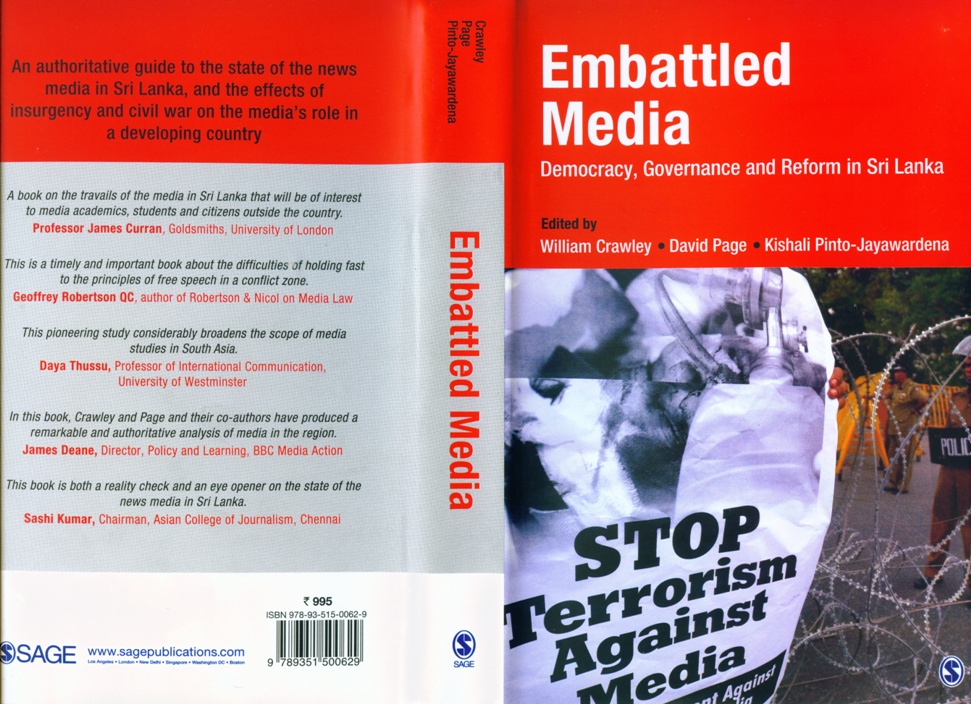
Embattled Media: New Book explores aspects of Democracy, Governance and Reform in Sri Lanka

Embattled Media - Democracy, Governance and Reform in Sri Lanka (Sage, Feb 2015; 416 pages)
Embattled Media – Democracy, Governance and Reform in Sri Lanka (Sage, Feb 2015; 416 pages)

A new multi-author book offers valuable insights into the importance of independent media for democratic governance in the wider South Asian region.

Titled Embattled Media: Democracy, Governance and Reform in Sri Lanka (Sage, Feb 2015; 416 pages), the book examines the role of the media in a state committed to democracy and the rule of law which had suffered extraordinary stresses as a result of ethnic strife, insurrection and civil war.

The book is co-edited by William Crawley and David Page, both fellows of Institute of Commonwealth Studies, University of London, UK, and Kishali Pinto-Jayawardena, a legal analyst on civil liberties and columnist with The Sunday Times newspaper in Sri Lanka.

According to its publishers, Sage Publications in India and the UK, the book is an ‘authoritative guide to the state of the news media in Sri Lanka, and the effects of insurgency and civil war on the media’s role in a developing country’.

This is the first book to look comprehensively at the evolution of news media in post-colonial Sri Lanka, with a focus on media policy, law and education. The book reviews the role of new media platforms in widening the scope for public debate.

Further, it provides a detailed analysis of the existing media laws and policies and of campaigns to reform them. It also focuses on the role of institutions in media education by providing a comprehensive analysis of existing media curricula and underlining the importance of improved media literacy and introduction of Right to Information Act for a healthy democracy.
The contributors to this volume, including leading journalists, broadcasters, practitioners in public law, media academics and analysts, write from extensive experience. Chapters have been written by: Sinha Ratnatunga, Ameen Izzadeen, Namini Wijedasa, Amal Jayasinghe, Tilak Jayaratne and Sarath Kellapotha, Nalaka Gunawardene, Kishali Pinto-Jayawardena and Gehan Gunatilleke, Jayantha de Almeida Guneratne, and S. Raguram.

The book is dedicated to the memory of the late Tilak Jayaratne (1943-2013), who ‘ably represented a generation of honourable and committed broadcasters’. Having contributed significantly to the book, he did not live to see its publication.

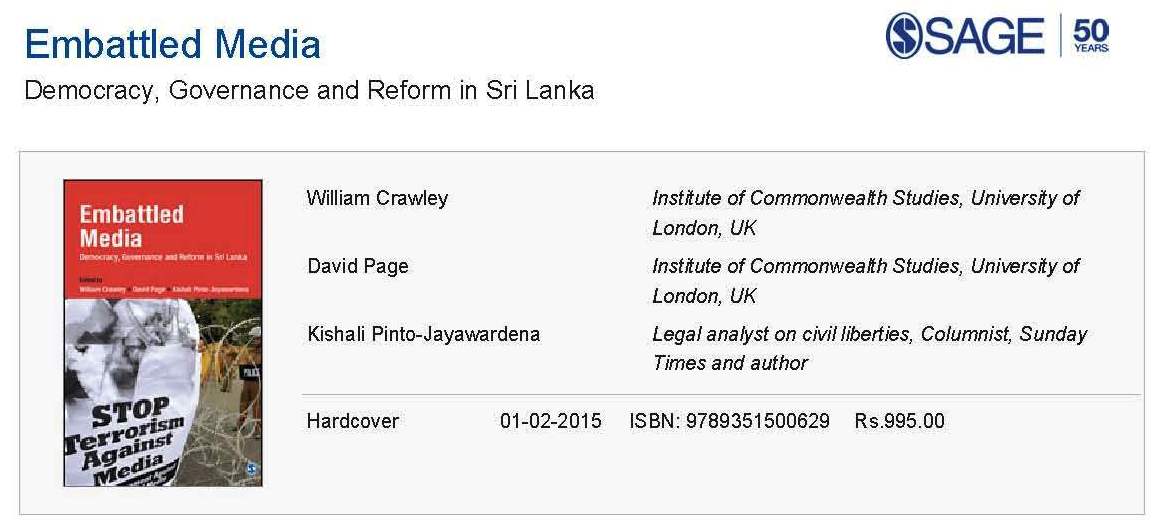
Embattled Media - Publishing Information
Embattled Media – Publishing Information

In their preface to the book, the co-editors write: “Media liberalisation from the 1990s onwards had extended the range of choice for viewers and listeners and created a more diverse media landscape. But the war in the north and insurrections in the south had taken their toll of media freedoms. The island had lived under a permanent state of emergency for nearly three decades. The balance of power between government, judiciary, the media and the public had been put under immense strain.

“In 2009, with the end of the war in the north, all this seemed about to change, increasing the relevance of our enquiries and raising hopes of media reform and greater freedom of expression. But progress towards a different sort of normality has been slow. The war and its aftermath have continued to cast a long shadow, which has limited the scope of our research…

“Over the past few years, universities have been closed for long periods. University teachers have been engaged in disputes with the government, which has affected their teaching and their research. The NGO sector has been heavily criticised by the government for pursuing foreign-funded agendas and finds itself under fire and on the defensive. Many media proprietors and journalists have maintained their long-established habit of self-censorship, for fear of inviting reprisals of one sort or another. Though not on the same scale as previously, there have been killings and disappearances of journalists since 2009 and the memory of past abuses still affects people’s thinking. All this has made the study more challenging.”

Co-editors of Embattled Media - (L to R) William Crawley, David Page and Kishali Pinto-Jayawardena (photos courtesy Sage Publications website)
Co-editors of Embattled Media – (L to R) William Crawley, David Page and Kishali Pinto-Jayawardena (photos courtesy Sage Publications website)

The book also contains a glossary of media related terms; a bibliography and an index.

The Indian edition is priced at INR 995. It is currently available from Sage Publications India: http://www.sagepub.in/books/Book244886?siteId=sage-india&prodTypes=any&q=Embattled+Media&fs=1

සිවුමංසල කොලූගැටයා #208: තොරතුරු අයිතිය තහවුරු කරන්නට තොරතුරු සාක්ෂරතාව අත්‍යවශ්‍යයි!

In this week’s Ravaya column (in Sinhala), I discuss the history and current state of play in relation to right to information (RTI). This is in the context of the new Lankan government planning to introduce an RTI law.

To review the work of government at all levels, citizens/voters need to access public sector information – about decisions, proceedings, budgets, expenditures, problems and performance. Close to 100 countries now have laws guaranteeing people’s RTI.

Sadly, Sri Lanka is lagging behind all other SAARC countries, five of which have already enacted RTI laws and two (Afghanistan and Bhutan) have draft bills under consideration. Attempts to introduce RTI in Sri Lanka were repeatedly thwarted by the previous government, which cited various excuses for avoding such a progressive law.

In this column, I also argue that RTI’s effectiveness depends on imagination, innovation and persistence on the part of all citizens. Its best results will accrue in a society and political culture where evidence and analysis are respected. Sri Lanka is not there yet.

RTI will be a significant milestone in a long journey that must continue.

ACT

තොරතුරු අයිතිය නීතිගත කෙරෙන කෙටුම්පතක් ළඟදීම පාර්ලිමේන්තුවට ඉදිරිපත් කැරෙනවා. මෙය නව රජයේ එක් යහපාලන ප‍්‍ර‍්‍රතිඥාවක් ඉටු කිරීමක්.

තොරතුරු දැන ගැනීමේ අයිතිය (Right to Information) ශිෂ්ට හා ප‍්‍රජාතන්තවාදී සමාජවල මුලික අංගයක් වී තිබෙනවා. ජාතික ආරක්‍ෂාවට බලපෑමක් කළ හැකි රහස්‍ය තොරතුරු හැර රාජ්‍ය පරිපාලනයට හා පලාත්පාලනයට සම්බන්ධ එදිනෙදා තොරතුරු පැහැදිලි ක‍්‍රමවේදයක් හරහා ඕනෑම පුරවැසියකුට ලබා ගත හැකි වීම මෙහි අරමුණයි.

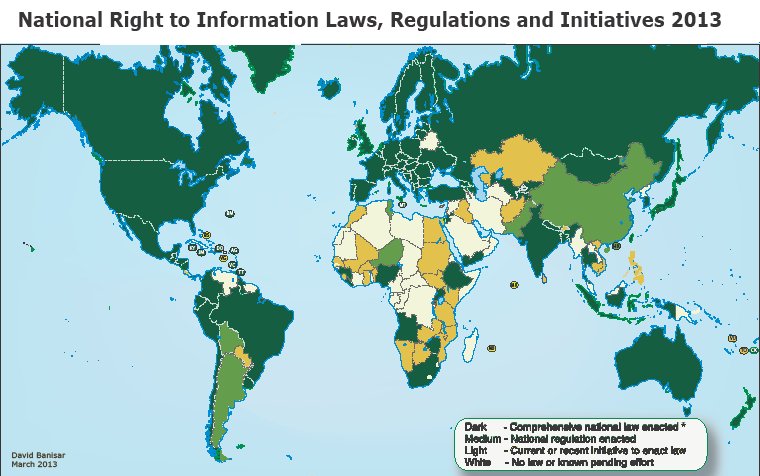
ලෝකයේ රටවල් සියයකට වැඩි සංඛ්‍යාවක් තොරතුරු නීති පනවා තිබෙනවා. දකුණු ආසියාවේ මේ සම්බන්ධයෙන් වඩාත් පසුගාමීව තිබෙන්නේ ශී‍්‍ර ලංකාවයි. සාක් රටවල් අටෙන් පහක (ඉන්දියාව, පකිස්ථානය, බංගලාදේශය, නේපාලය, මාලදිවයින) එම නීති සම්මත වී කි‍්‍රයාත්මක වන අතර රටවල් දෙකක (ඇෆ්ගනිස්තානය, භූතානය) නීති කෙටුම්පත් විවාද කරමින් සිටිනවා.

තොරතුරු අයිතිය හුදෙක් මාධ්‍යවලට හෝ සිවිල් සමාජ සංවිධානවලට හෝ සීමා වූවක් නොවෙයි. මිලියන 21ක් වන අප සියලූ දෙනාගේ අයිතියක්. ඒ නිසා එය හරිහැටි සාක්ෂාත් කර ගන්නේ කෙසේද යන්න මෙනෙහි කිරීම වැදගත්.

තොරතුරු ගලනය මා දකින්නේ ජල ගලනයට සමාන සංසිද්ධියක් ලෙසයි. වාරි ජලය රඳවා තබන ජලාශයක සොරොවු විවර කිරීමත් සමඟ ජලය යටිගංබලා ගලා යනවා. එවිට එයින් ප‍්‍රයෝජන ගන්නට නම් ඇළ මාර්ග හරිහැටි තිබීම හා සූදානමක් පැවතීම අවශ්‍යයි.

කලක් තිස්සේ නිලධාරිවාදී බැමි මඟින් අවුරා තිබූ මහජනයාට අදාළ තොරතුරු මේ නව නීතිය හරහා ගලා යාමට සැලැස්වූ විට එයින් හරිහැටි ප‍්‍රයෝජන ගන්නට ද නිසි සූදානමක් හා කුසලතා තිබිය යුතුයි. එසේ නැතිනම් තොරතුරු ප‍්‍රවාහය පොදු උන්නතියට යොදා ගන්නට බැරි වනවා.

National Right to Ino laws status - as of 2013 Source: http://home.broadpark.no/~wkeim/foi.htm
National Right to Ino laws status – as of 2013 Source: http://home.broadpark.no/~wkeim/foi.htm

තොරතුරු අයිතිය පිළිබඳ සංකල්පය මුලින්ම මතුව ආවේ 18 වන සියවසේ යුරෝපයේයි. එයට පදනම වැටුණේ පොදු ජනයාට රාජ්‍ය පාලනය විමසීමේ අයිතිය තහවුරු වීමත් සමගයි. ප‍්‍රභූවරුන්, උගතුන් හෝ වෙනත් වරප‍්‍රසාද ලත් පිරිස්වලට සීමා නොවී හැම පුරවැසියකුටම තම රට පාලනය කිරීම පිළිබඳව තොරතුරු දැන ගැනීමට හා ඒ ගැන විමර්ෂණයට අයිතියක් ඇතිබව ලිබරල් මතවාදී යුරෝපීයයන් පිළිගත්තා.

මේ අනුව ක‍්‍රියා කරමින් ලෝකයේ මුල්ම තොරතුරු දැනගැනීමේ නීතිය හඳුන්වා දුන්නේ 1766දී ස්වීඩනයේ. රාජාණ්ඩු මෙන්ම ප‍්‍රජාතන්ත‍්‍රික ආණ්ඩු පවතින යුරෝපීය රටවල මේ සංකල්පය පිළිගෙන නීතිගත කරනු ලැබුවා. එය ප‍්‍රජාතන්ත‍්‍රවාදයේ මූලික අංගයක් ලෙස ගෝලීයකරණය වූයේ 20 වන සියවස දෙවන භාගයේ.

එයට දායක වූ වැදගත් සිදුවීමක් නම් 1948දී මානව හිමිකම් පිළිබඳ විශ්ව ප‍්‍රඥප්තිය එක්සත් ජාතීන්ගේ සංවිධානයේදී සම්මත කරගනු ලැබීමයි. මේ වන විට ශ‍්‍රී ලංකාව ද ඇතුලූ ලෝකයේ අති බහුතරයක් රාජ්‍ය මේ ප‍්‍රඥප්තියේ මානව හිමිකම් දැක්ම හා මූලධර්ම නිල වශයෙන් පිළිගෙන තිබෙනවා. www.un.org/en/documents/udhr/

වගන්ති 30කින් සමන්විත සංක්ෂිප්ත ලේඛනයක් වන මෙහි 19 වන වගන්තිය කියන්නේ තමන් කැමති මතයක් දැරීමට හා එය ප‍්‍රකාශ කිරීමට හැම මානවයකුටම මූලික නිදහසක් ඇති බවයි. බලපෑමකින් තොරව එසේ මත දැරීමටත්, තොරතුරු ලබා ගැනීමට හා බෙදා හැරීමටත්, ඕනෑම මාධ්‍යයක් හරහා දේශසීමා ඉක්මවා ක‍්‍රියා කිරීමටත් මානව අයිතියක් තිබෙන බව එයින් පැහැදිලිව කියනවා.

Article 19 of Universal Declaration of Human Rights

අප මීට පෙර ද විග‍්‍රහ කළ පරිදි ආසියාවේ තොරතුරු අයිතිය පිළිගෙන නීතිගත කිරීමේ පෙරගමන්කරුවකු වූයේ ඉන්දියාවයි. එය දශකයකට වඩා සිවිල් සමාජ ක‍්‍රීයාකාරකයන්ගේ උද්ඝෝෂණවල ප‍්‍රතිඵලයක්.

ඇත්තටම මෙබඳු නීතියක ප‍්‍රායෝගික වැදගත්කම මුලින්ම හඳුනා ගත්තේ ඉන්දියාවේ බිම් මට්ටමේ සමාජ ක‍්‍රියාකාරිකයන් (නගරයේ සිටින ප‍්‍රතිපත්ති මට්ටමේ ක‍්‍රියාකාරිකයන් නොවේ). මහජන සුබසාධනය හා ග‍්‍රාමීය යටිතල පහසුකම් නඩත්තුවට වෙන් කැරෙන රාජ්‍ය මුදල් ප‍්‍රතිපාදන අකාර්යක්ෂම හා දුෂිත ලෙසින් භාවිත කිරීම 1980 දශකයේ හා 1990 දශකයේ එරට ප‍්‍රබල ප‍්‍රශ්නයක් වූවා.

ග‍්‍රාම හා ප‍්‍රාන්ත මට්ටමේ දේශපාලකයන් හා නිලධාරීන් කරන කියන දේ විමර්ෂණයට මහජනයාට බලය ලබා ගැනීමටයි තොරතුරු අයිතිය අවශ්‍ය වූයේ. එයට ප‍්‍රාන්ත මට්ටමින් නීති පැනවීම තමිල්නාඩුව (1997), ගෝව (1997), රාජස්ථානය (2000), දිල්ලිය (2001), මහාරාෂ්ට‍්‍රය (2002) සිදු වුණා. (ඉන්දියාවේ ප‍්‍රාන්ත බොහොමයක් ශ‍්‍රී ලංකාවට වඩා භූමියෙන් හා ජනගහනයෙන් විශාලයි.) ජාතික මට්ටමේ තොරතුරු නීතියක් සම්මත කර ගත්තේ 2005දී.

ඉන්දියානු තොරතුරු නීතිය යටතේ එරට ඕනෑම පුරවැසියකුට (මධ්‍යම, ප‍්‍රාන්ත හෝ පළාත්පාලන මට්ටමේ) රජයේ ආයතනයකින් තොරතුරු ඉල්ලා සිටිය හැකියි. එය දින 30ක් ඇතුළත ලබා දීමට එම ආයතන නීතියෙන් බැඳී සිටිනවා. එසේ නොවුවහොත් හෝ ලබා දුන් තොරතුරු ගැන සෑහීමකට පත් විය නොහැකි නම් හෝ පැමිණීලි කිරීමට මධ්‍යම තොරතුරු කොමිසමක්ද (Central Information Commission) පිහිටුවා තිබෙනවා.

රජයේ විධායකය, පාර්ලිමේන්තුව හා අධිකරණය යන අංග ත‍්‍රිත්වයේම තොරතුරු මේ නීතියට ආවරණය වනවා. එසේම රාජ්‍ය මුදල් ප‍්‍රතිපාදන ලබන අර්ධ රාජ්‍ය හා රාජ්‍ය නොවන සංවිධානවල තොරතුරුද පුරවැසියන්ට මේ හරහා ඉල්ලා සිටිය හැකියි.

තොරතුරු අයිතිය නීතිගත වීම හොඳ ආරම්භයක් පමණයි. තොරතුරු අයිතිය නීතිගත වීමෙන් පසු බිහි වන නව යථාර්ථයට අනුගත වීමට සමස්ත රාජ්‍ය තන්ත‍්‍රය ද අලූත් දිශානතියකට යොමු වීම අවශ්‍යයි. යටත් විජිත පාලන සමයේ සිට මහජනයාට කරුණු වසන් කිරීමේ අරමුණින් ක‍්‍රියාත්මක වූ රාජ්‍ය පරිපාලනය වඩාත් විවෘත හා පාරදෘශ්‍ය කිරීමට නීතිමය රාමුවක් පමණක් නොව ආකල්පමය වෙනසක් අත්‍යවශ්‍යයි.

RTI Activist bb

2005 තොරතුරු අයිතිය නීතිගත වීමත් සමඟ ඉන්දියාවේ සියලූ රාජ්‍ය ආයතන සිය තොරතුරු පරිගණක ගත කළ යුතු බවටත්, හැකි සෑම විටම එසේ ඩිජිටල්කරණය වූ තොරතුරු නිල වෙබ් අඩවි හරහා ඕනෑම කෙනකුට ලෙහෙසියෙන් බැලිය හැකි ලෙස ඉන්ටර්නෙට් ගත කළ යුතු බවත් තීරණය වුණා. මෙය ක‍්‍රියාත්මක වීම තොරතුරු ගලනයට මහත් සේ දායක වී තිබෙනවා.

එසේම පසුගිය සතියේ සම්මුඛ සාකච්ඡාවේදී ආචාර්ය රාජේෂ් ටැන්ඩන් කී පරිදි තොරතුරු ලද හැකි වීම හරහා යහපාලනයට දායක වීමේ ප‍්‍රායෝගික අවස්ථා හා විභවය ගැන පුරවැසියන්ට හා සිවිල් සංවිධානවලට නිසි දැක්මක්, පරිකල්පනයක් හා කැප වීමක් අවශ්‍යයි.

තොරතුරු සාක්ෂරතාව (information literacy) මෙහිදී වැදගත් හා තීරණාත්මක වෙනවා. තොරතුරු යටතේ බොහෝ දේ රාජ්‍ය තන්ත‍්‍රය තුළ තිබෙනවා. රැස්වීම් වාර්තා, ටෙන්ඩර් මණ්ඩල තොරතුරු, අයවැය ප‍්‍රතිපාදන, මූල්‍ය වියදම් වාර්තා, විගණන වාර්තා ආදිය පමණක් නොව විද්‍යාත්මකව රැස් කරන ලද දත්ත ද එයට ඇතුළත්.

මේ දෙවැනි කාණ්ඩයට ජන සංගණන හා අනෙකුත් රාජ්‍ය සමීක්ෂණවල සම්පූර්ණ තොරතුරු හා විශ්ලේෂණත්, අස්වනු සංඛ්‍යා ලේඛන, විදේශ වෙළදාම් (ආනායන- අපනයන) සංඛ්‍යා ලේඛන ආදියද අයත් වනවා.

නූතන තොරතුරු බොහොමයක ස්වභාවය නම් ඒවා තාක්ෂණික ස්වභාවයකින් යුක්ත වීමයි. සමහරක් තොරතුරු තේරුම් ගැනීමට විශේෂඥ දැනුමක් හා කුසලතා අවශ්‍යයි. මෑත වසරවල රාජ්‍ය අංශය පරිගණක භාවිතය වැඩිවීමත් සමඟ තොරතුරු ඩිජිටල් ආකාරයෙන් පවත්වා ගැනීම ඇරඹී තිබෙනවා. එහෙත් සමස්ත රාජ්‍ය ක්ෂේත‍්‍රයට බලපාන ඩිජිටල් දත්ත ප‍්‍රමිතීන් තවමත් දක්නට නැහැ.

මේ නිසා ඩිජිටල් දත්ත විවිධ තාක්ෂණික පරිමානයන් හා මෘදුකාංගයන් යටතේ පවතිනවා. මේවා ලබා ගන්නා සමාජ ක‍්‍රියාකාරිකයන් හෝ පර්යේෂකයන් ඒ දත්ත විශ්ලේෂණය කරන විට නොගැලපීම්වලට (data incompatibility) මුහුණ දෙනවා.

තොරතුරු අයිතිය නීතිගත වීමේ නිසි ඵල නෙලා ගන්නට නම් අප සැවොම අපේ තොරතුරු සාක්ෂරතාව දියුණු කර ගත යුතුයි. එසේ නොවුවහොත් තොරතුරු ප‍්‍රවාහයට හසු වී අප ගසා ගෙන යාමේ අවදානමක් තිබෙනවා.

තොරතුරු සාගතය ගැන කලක් තිස්සේ පැමිණීලි කරමින් සිටින අපේ සමාජ රියාකාරිකයන් හා මාධ්යවේදීන් තොරතුරු ගලනය උත්සන්න වූ විට එයට කෙසේ හැඩ ගැසේද?

හුදෙක් ආවේගයන් හෝ අනුමානයන් හෝ මත පදනම් නොවී සංඛ්‍යාලේඛන හා විශ්වාස කටයුතු මූලාශ‍්‍ර හරහා නිගමනවලට එළඹීම අද කාලේ අත්‍යවශ්‍ය කුසලතාවක්. අපේ සමහරුන් පිලූණු වූ දත්ත හෝ වැරදි නිරීක්ෂණ (පක්ෂග‍්‍රාහී) හෝ යොදා ගෙන යම් වැරදි ස්ථාවරයන්ට එළඹෙනු නිතර දත්නට ලැබෙනවා.

(සුලභ උදාහරණයක්: ශ‍්‍රී ලංකාව කෘෂිකාර්මික රටක් යැයි පුන පුනා කීවත් තව දුරටත් එය සංඛ්‍යා ලේඛනවලින් තහවුරු වන්නේ නැහැ. මහබැංකු වාර්ෂික වාර්තාවට අනුව 2013දී දළ ජාතික නිෂ්පාදනයට කෘෂිකර්මයේ දායකත්වය 10.6% පමණයි. ජන ලේඛන හා සංඛ්‍යාලේඛන දෙපාර්තමේන්තුවට අනුව 2013දී කෘෂිකර්මාන්තයට සම්බන්ධ ජීවිකාවක නියැලි මෙරට රැකියා නියුක්තිකයන්ගේ ප‍්‍රතිශතය 22.5%යි. මේ සංඛ්‍යා ලේඛන රහසිගත නොව විවෘතව ඒ ආයතනවල ප‍්‍රකාශනවල අඩංගුයි.)

තවත් උදාහරණයක්: ජංගම දුරකථන භාවිතය ජනගහණයෙන් 100කට ගිණුම් 105 දක්වා ඉහළ ගොස් තිබියදීත් තවමත් සමහරුන් කියන්නේ මෙය නාගරික හා වරප‍්‍රසාද ලත් අයගේ තාක්ෂණයක් බවයි.

මේ තොරතුරු මහජනයාට දැනටමත් විවෘතව තිබියදීත් ඒවා පරිශීලනය නොකරන උදවිය තොරතුරු අයිතියෙන් නිසි ප‍්‍රයෝජන ගනියිද?

Do we know how to cope with all this info?

තොරතුරු ගලනය විධිමත් වීමත් සමඟ එය ක‍්‍රම ක‍්‍රමයෙන් වඩාත් විවෘත වූත්, වගකීම් සහිත වූත් රාජ්‍ය පාලනයකට හැසිරවීම අප හමුවේ විශාල අභියෝගයක්.

සිල්ලර මට්ටමේ රාජ්‍ය තොරතුරු මෙන්ම තොග මට්ටමේ රාජ්‍ය තොරතුරු ද ඉලක්කගත ඉල්ලීම් හරහා ලබා ගෙන ඒවා සූක්ෂම ලෙස විමර්ෂණය කොට නොගැලපීම්, සැක කටයුතු තැන් හෝ අක‍්‍රමිකතා හඳුනා ගැනීමේ හැකියාව පුරවැසියන් හැටියට අප ප‍්‍රගුණ කළ යුතුයි.

වර්තමානයේ රාජ් ක්ෂෙතරයේ බොහෝ අකටයුතුකම් හා අකරමිකතා සිදු කැරෙන්නේත් සුක්ෂම හා සටකපට ලෙසින්. මේ නිසා ගවේෂණාත්මක මාධ්යකරුවන්ගේ හා රහස් පරීක්ෂකයන්ගේ කුසලතා ගොන්න වඩාත් අවශ් වනවා.

විද්වත් ස්වරූපයකින් පවතින සමහර රාජ්‍ය දත්ත ද විකෘති කොට කෙන්ද කන්ද කළ අවස්ථා පසුගිය දශකයක කාලයේ අප දුටුවා. ආර්ථික වර්ධනය ගැන මෑත වසරවල මහ බැංකුව මහත් උජාරුවෙන් හුවා දැක්වූ සමහර සංඛ්‍යා ලේඛන, සැබෑ තත්ත්වය වැඩිකොට පෙන්වීමක් බව දැන් තහවුරු වී තිබෙනවා. මෙබඳු අවස්ථාවල විද්වත් රාජ්‍ය තොරතුරු විචාරශීලීව කියැවීමේ හැකියාව මාධ්‍ය හා සිවිල් ක‍්‍රියාකාරිකයන්ට තිබිය යුතුයි.

අවසාන විනිශ්චයේදී විවෘත හා වගකීම් සහිත රාජ්‍යකරණයක් (open and accountable government) බිහි වීමට රාජ්‍ය නායකයාගේ අවංක ප‍්‍රතිඥා පමණක් සෑහෙන්නේ නැහැ. කලක් රහසිගතව හා ඇතැම් විට වංචනිකව පැවත ආ රාජ්‍ය පරිපාලනය විවෘත කර ගැනීමට පුරවැසි සැමගේ මැදිහත්වීම, සංශයවාදී බව හා තොරතුරු සාක්ෂරතාව අවශ්‍යයි.

දැන ගියොත් යහපාලනය. නොදැන ගියොත් අතරමඟ!


Emerging Digital Democracy? Social Media and Sri Lanka’s Presidential Election 2015

Nalaka Gunawardene talking at London University on 12 Feb 2015 on "Social Media and Sri Lanka's Presidential Election 2015"
Nalaka Gunawardene talking at London University on 12 Feb 2015 on “Social Media and Sri Lanka’s Presidential Election 2015” Photo by  Prasanna Ratnayake

Emerging Digital Democracy? Social Media and Sri Lanka’s Presidential Election 2015

This was the topic of a public talk I gave at the University of London on 12 Feb 2015.

It was organised and hosted by the Institute of Commonwealth Studies, University of London in collaboration with the Commonwealth Journalists’ Association (CJA).

They lined up the University’s Senate Room for the talk, which was attended by a South Asian audience who engaged me in a lively discussion.

Emerging Digital Democracy? Social Media and Sri Lanka's Presidential Election 2015
Emerging Digital Democracy?
Social Media and Sri Lanka’s Presidential Election 2015

Synopsis of the talk:

A record 81.5% of registered voters took part in Sri Lanka’s presidential election on 8 January 2015 in which incumbent Mahinda Rajapaksa was defeated by his former health minister Maithripala Sirisena. The peaceful regime change has been widely acclaimed as a triumph of democracy and a mandate for political reform, improved governance and national reconciliation.

The election saw unprecedented use of social media by both candidates as well as by politically charged yet unaffiliated youth. How much of this citizen awakening can be attributed to the fast spread of smartphones and broadband? Did it really influence how people voted? What does this mean for future politics and governance in Sri Lanka?

In this illustrated talk, science journalist and new media watcher (and practitioner) Nalaka Gunawardene shares his insights and views.

Who's afraid of social media? Many Lankan politicians, for sure...
Who’s afraid of social media? Many Lankan politicians, for sure…

My PowerPoint slides:


Key questions that need more research to answer:

This is why we need better research on new media and society in Sri Lanka!

Photos by Prasanna Ratnayake

William Crawley (right), Fellow of the Institute of Commonwealth Studies, introduces Nalaka Gunawardene
Nalaka Gunawardene on Social Media and Sri Lanka’s Presidential Election 2015 at University of London, 12 Feb 2015
A section of the audience at Senate Room, University of London, listening to Nalaka Gunawardene: 12 Feb 2015