From that day, the island nation’s 21 million citizens can exercise their legal right to public information held by various layers and arms of government.
One month is too soon to know how this law is changing a society that has never been able to question their rulers – monarchs, colonials or elected governments – for 25 centuries. But early signs are encouraging.
Sri Lanka’s 22-year advocacy for RTI was led by journalists, lawyers, civil society activists and a few progressive politicians. If it wasn’t a very grassroots campaign, ordinary citizens are beginning to seize the opportunity now.
RTI can be assessed from its ‘supply side’ as well as the ‘demand side’. States are primarily responsible for supplying it, i.e. ensuring that all public authorities are prepared and able to respond to information requests. The demand side is left for citizens, who may act as individuals or in groups.
In Sri Lanka, both these sides are getting into speed, but it still is a bumpy road.
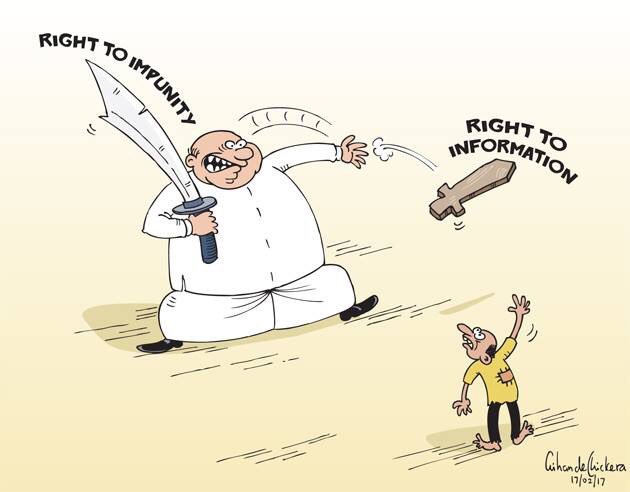
Cartoon by Gihan de Chickera, Daily Mirror
During February, we noticed uneven levels of RTI preparedness across the 52 government ministries, 82 departments, 386 state corporations and hundreds of other ‘public authorities’ covered by the RTI Act. After a six month preparatory phase, some institutions were ready to process citizen requests from Day One. But many were still confused, and a few even turned away early applicants.
Such teething problems are not surprising — turning the big ship of government takes time and effort. We can only hope that all public authorities, across central, provincial and local government, will soon be ready to deal with citizen information requests efficiently and courteously.
Some, like the independent Election Commission, have already set a standard for this by processing an early request for audited financial reports of all registered political parties for the past five years.
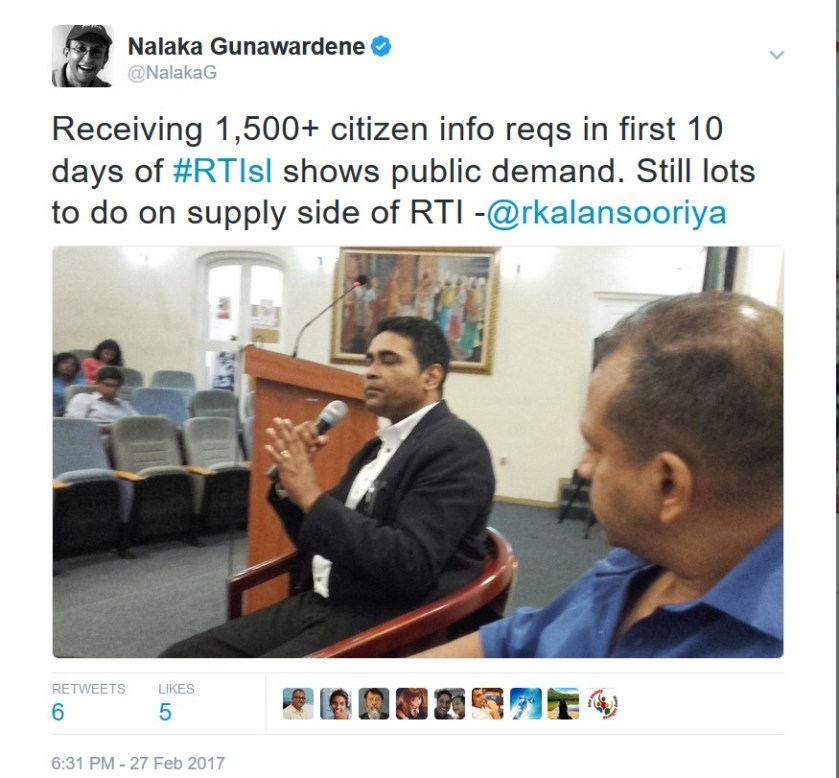
On the demand side, citizens from all walks of life have shown considerable enthusiasm. By late February, according to Dr Ranga Kalansooriya, Director General of the Department of Information, more than 1,500 citizen RTI requests had been received. How many of these requests will ultimately succeed, we have to wait and see.
Reports in the media and social media indicate that the early RTI requests cover a wide range of matters linked to private grievances or public interest.
Under the RTI law, public authorities can’t play hide and seek with citizens. They must provide written answers in 14 days, or seek an extension of another 21 days.
To improve their chances and avoid hassle, citizens should ask their questions as precisely as possible, and know the right public authority to lodge their requests. Civil society groups can train citizens on this, even as they file RTI requests of their own.
That too is happening, with trade unions, professional bodies and other NGOs making RTI requests in the public interest. Some of these ask inconvenient yet necessary questions, for example on key political leaders’ asset declarations, and an official assessment of the civil war’s human and property damage (done in 2013).
Politicians and officials are used to dodging such queries under various pretexts, but the right use of RTI law by determined citizens can press them to open up – or else.
The Right to Information Commission will play a decisive role in ensuring the law’s proper implementation. “These are early days for the Commission which is still operating in an interim capacity with a skeletal staff from temporary premises,” it said in a media statement on February 10.
The real proof of RTI – also a fundamental right added to Constitution in 2015 – will be in how much citizens use it to hold government accountable and to solve their pressing problems. Watch this space.
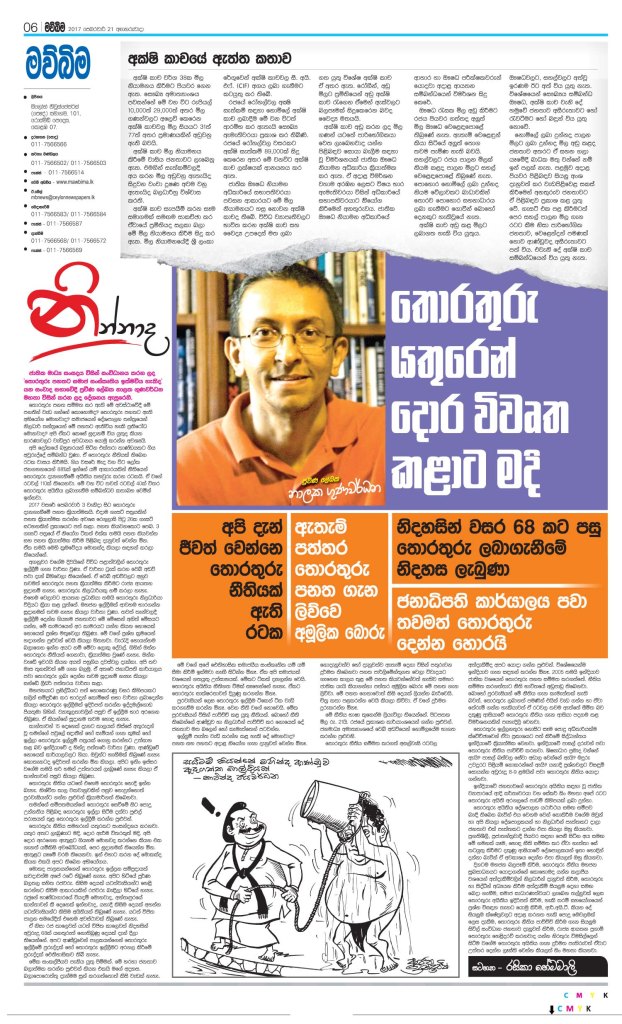
Science writer and media researcher Nalaka Gunawardene is active on Twitter as @NalakaG. Views in this post are his own.
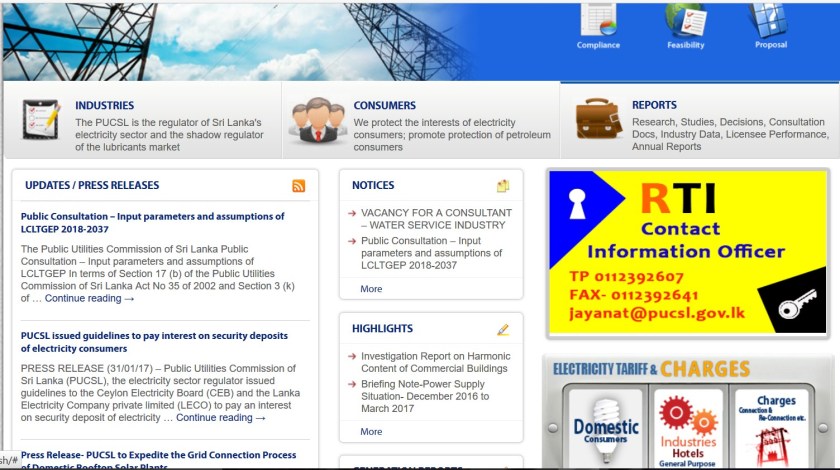
One by one, Sri Lanka public agencies are displaying their RTI officer details as required by law. Example: http://www.pucsl.gov.lk saved on 24 Feb 2017
Nurturing the demand side of Right to Information (RTI) in Sri Lanka: What can be done?What more can be done to promote RTI demand side in Sri Lanka – ideas by Nalaka Gunawardene
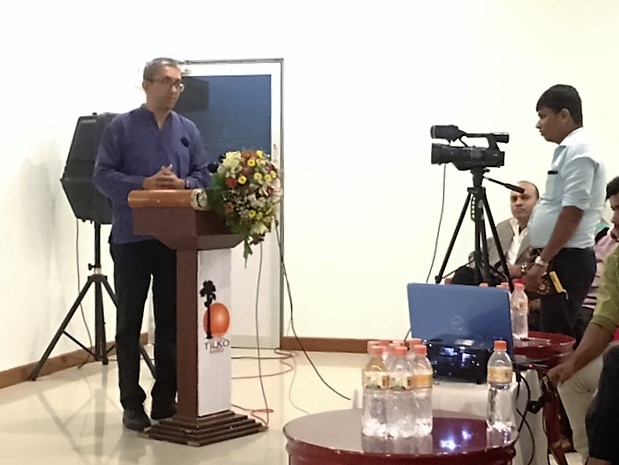
Nalaka Gunawardene speaks at public forum on Sri Lanka’s new Right to Information (RTI) law. Colombo, 15 Feb 2017
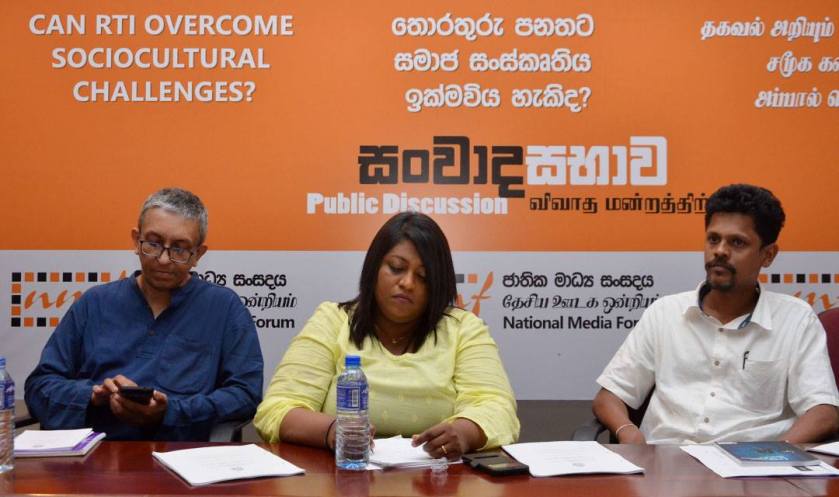
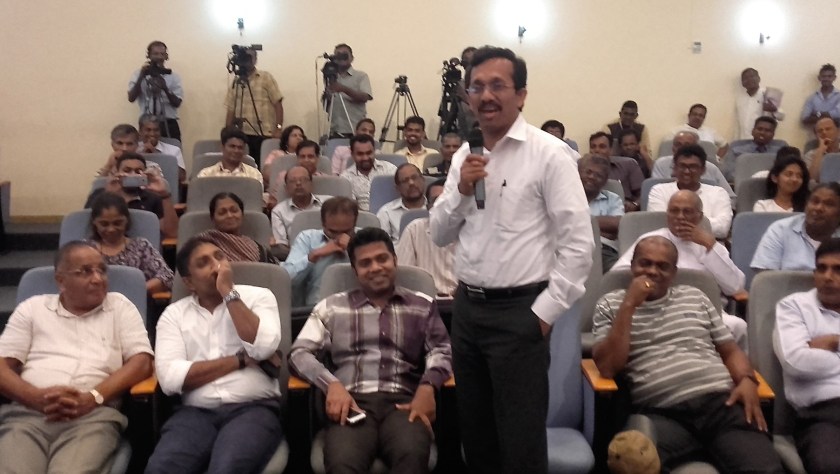
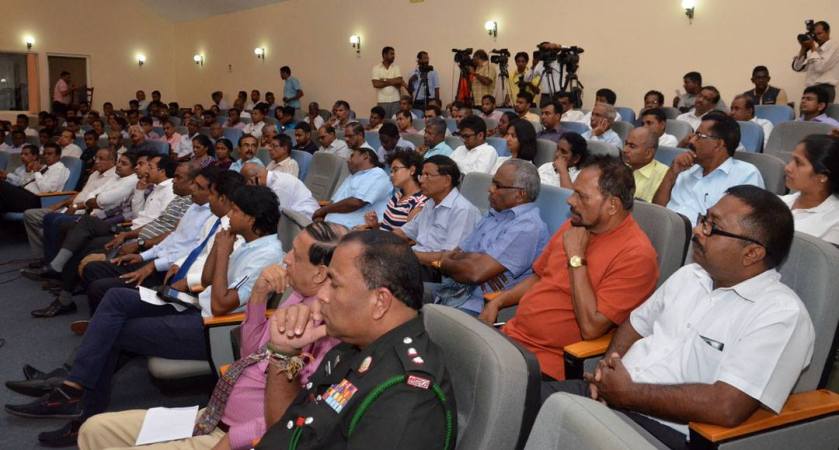
On 15 February 2017, I served as main speaker at a public forum in Colombo on Sri Lanka’s newly operational RTI law and its wider socio-cultural and political implications. The event, organized by the National Media Forum (NMF), was attended by a large number of journalists, social activists, lawyers, government officials and other citizens.
Nalaka Gunawardene speaks at public forum in Colombo on Sri Lanka’s newly operational RTI law. 15 February 2017 (Photo courtesy Lanka News Web)
Sri Lanka’s new Right to Information (RTI) law became operational on 3 February 2017. Marking the culmination of an advocacy effort sustained by social activists and journalists for over 20 years, the new law enables citizens to ask for, and be assured of information held in all government entities (as well as some private and non-profit entities).
The law being new, there still are apprehensions, misconceptions as well as skepticism on whether such transparency could work in a semi-feudal society like Sri Lanka’s.
On 15 February 2017, I served as main speaker at a public forum in Colombo on Sri Lanka’s newly operational RTI law and its wider socio-cultural and political implications. The event, organized by the National Media Forum (NMF), was attended by a large number of journalists, social activists, lawyers, government officials and other citizens.
L to R – Nalaka Gunawardene, Mandana Ismail Abeywickrema, Priyantha Wedamulla and Narada Bakmeewewa (Photo courtesy Lanka News Web)
In my presentation, I said the right to ask questions from rulers is very new, and there is no historical precedent for it in Sri Lanka. Subjects had no rights whatsoever and could not ask any questions from the absolute monarchs of Lanka who ruled the island for 20 centuries. The Portuguese, Dutch and British did not grant that right in their colony of Ceylon, and neither did any of our own governments elected since independence in 1948.
Citizens are typically intimidated by politicians and officials, and unless we overcome this wide-spread subservience, we cannot derive benefits from RTI, I argued. The new law gives an unprecedented right to all 21 million Lankans – of all walks of life and of all ages – but to exercise it well we need a political vision, tenacity and imagination.
Nurturing these qualities is the big challenge on the DEMAND side of RTI in Sri Lanka, now that the government has done an appreciable amount of work on the SUPPLY side – by keeping its 2015 election pledge and giving us both the fundamental right to information (through the 19th Amendment to the Constitution) and the law that operationalises it (Right to Information Act No 12 of 2016).
I quoted Dr Rajesh Tandon, founder and head of the Society for Participatory Research in Asia (PRIA), a voluntary organisation providing support to grassroots initiatives in India on the Indian experience of RTI. Since the RTI law was introduced in 2005, India has seen a marked improvement in governance, dissemination of information and involvement of civil society in the governance process, he says.
At the same time, he points out that some challenges remain at the implementation level. Certain states in India have been more active in creating a culture of information sharing and open government. As Indians found out, it isn’t easy to shake off centuries of misplaced state secrecy and mistrust in the public. “Old rules and procedures continue to co-exist as new laws and methods are invented. Official Secrecy Act and Right to Information Act co-exist, just as written precedent and e-governance co-exist.” (Watch my full interview with Rajesh Tandon here: https://vimeo.com/118544161).
Sunil Handunnetti, JVP (opposition) Member of Parliament, speaks during RTI Forum in Colombo, 15 Feb 2017
I also summarized India’s RTI lessons shared with me recently by Shekhar Singh, Founder of India’s National Campaign for People’s Right to Information (NCPRI) and a former member of the State Council for RTI, New Delhi. Chief among them:
Be well aware of political realities and complexities when promoting RTI
Don’t get into ‘Us and Them’ style confrontation with govt (reality always more nuanced)
Work with progressive elements (MPs, officials, advisors) within govt who share RTI ideals
South Asian politicians know they can pass many laws and then ignore them: only sustained citizen pressure will make them implement RTI fully
Document how RTI has led to social justice and social development in other South Asian countries, and the positive uses of RTI in Sri Lanka from now onward; Share these widely with officials, politicians and civil society activists to inspire them.
RTI cuts across all sectors (education, health, child rights, labour rights, environment, etc.): NGOs, trade unions and other elements of civil society need to see value of RTI-generated info for their own work and the greater good
Civil society should not isolate RTI as a separate movement. Integrate RTI into all public interest work in all sectors.
Insist that ALL layers, arms and branches of govt obey the RTI law fully (and use appeal process when any public authority is not cooperating)
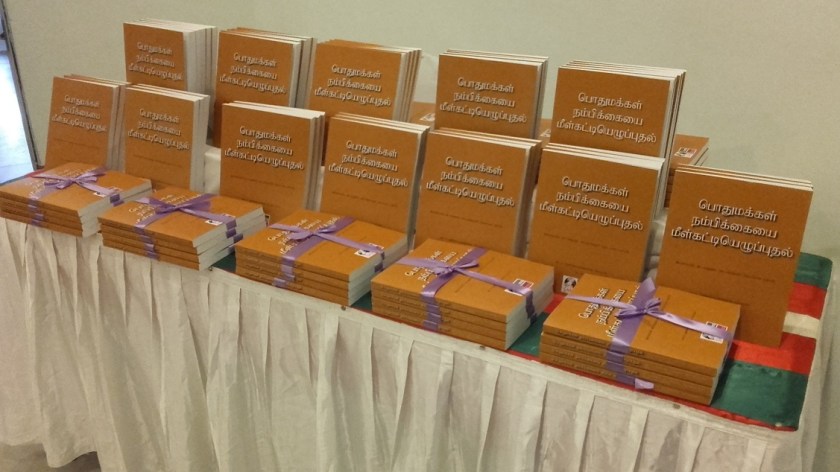
Rebuilding Public Trust: Tamil version copies displayed at the launch in Jaffna, 24 Jan 2017
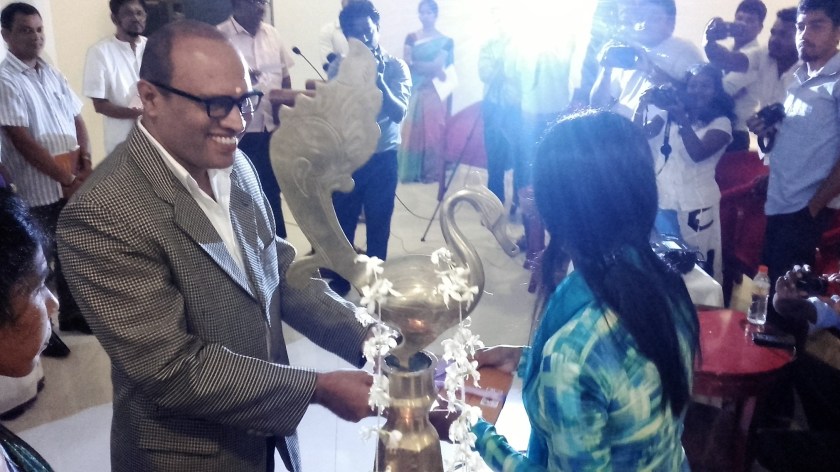
Journalists, academics, politicians and civil society representatives joined the launch of Tamil language version of Sri Lanka’s Media Development Indicators (MDI) Report in Jaffna on 24 January 2017.
The report, for which I served as overall editor, is the outcome of a 14-month-long consultative process that involved media professionals, owners, managers, academics and relevant government officials. It offers a timely analysis, accompanied by policy directions and practical recommendations.
Students of Jaffna University Media Studies programme with its head, Dr S Raguram, at the launch of MDI Sri Lanka Tamil version, Jaffna, 24 January 2017
Reginald Cooray, Governor of the Northern Province, in a message said: “I am sure that the elected leaders and the policy makers of this government of Good governance will seize the opportunity to make a professionally ethical media environment in Sri Lanka which will strengthen the democracy and good governance.”
He added: “The research work should be studied, appreciated and utilised by the leaders and the policy makers. Everyone who was involved in the work should be greatly thanked for their research presentation with clarity.”
Lars Bestle of International Media Support (IMS) speaks at Sri Lanka MDI Report’s Tamil version launch in Jaffna, 24 January 2017
Speaking at the event, Sinnadurai Thavarajah, Leader of the Opposition of the Northern Provincial Council, urged journalists to separate facts from their opinions. “Media freedom is important, but so is unbiased and balanced reporting,” he said.
Lars Bestle, Head of Department for Asia and Latin America at International Media Support (IMS), which co-published the report, said: “Creating a healthy environment for the media that is inclusive of the whole country is an essential part of ensuring democratic transition.”
He added: “This assessment points the way forward. It is now up to the local actors – government, civil society, media, businesses and academia – with support from international community, to implement its recommendations.”
Nalaka Gunawardene, Consultant Editor of Sri Lanka Media Development Indicators (MDI) Report, speaks at the launch of Tamil version in Jaffna on 24 Jan 2017
I introduced the report’s key findings and recommendations. In doing so, I noted how the government has welcomed those recommendations applicable to state policies, laws and regulations and already embarked on law review and regulatory reforms. In sharp contrast, there has been no reaction whatsoever from the media owners and media gatekeepers (editors).
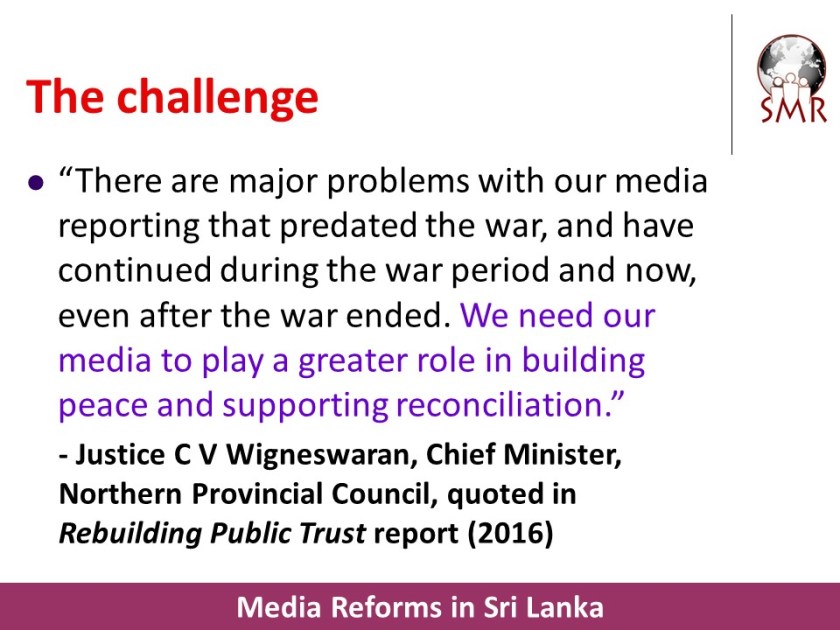
Quote from ‘Rebuilding Public Trust’ – State of Sri Lanka’s media report
Dr S Raguram, Head of Media Studies at the University of Jaffna (who edited the Tamil version) and Jaffna Press Club president Ratnam Thayaparan also spoke.
The report comes out at a time when the country’s media industry and profession face multiple crises stemming from an overbearing state, unpredictable market forces and rapid technological advancements.
Balancing the public interest and commercial viability is one of the media sector’s biggest challenges today. The report says: “As the existing business models no longer generate sufficient income, some media have turned to peddling gossip and excessive sensationalism in the place of quality journalism. At another level, most journalists and other media workers are paid low wages which leaves them open to coercion and manipulation by persons of authority or power with an interest in swaying media coverage.”
Notwithstanding these negative trends, the report notes that there still are editors and journalists who produce professional content in the public interest while also abiding by media ethics. Unfortunately, their work is eclipsed by media content that is politically partisan and/or ethnically divisive.
The result: public trust in media has been eroded, and younger Lankans are increasingly turning to entirely web-based media products and social media platforms for information and self-expression. A major overhaul of media’s professional standards and ethics is needed to reverse these trends.
MDI Sri Lanka – Tamil version being presented to stakeholders in Jaffna, 24 Jan 2017MDI Sri Lanka – Tamil version being presented to stakeholders in Jaffna, 24 Jan 2017
The Tamil report is available for free download at:
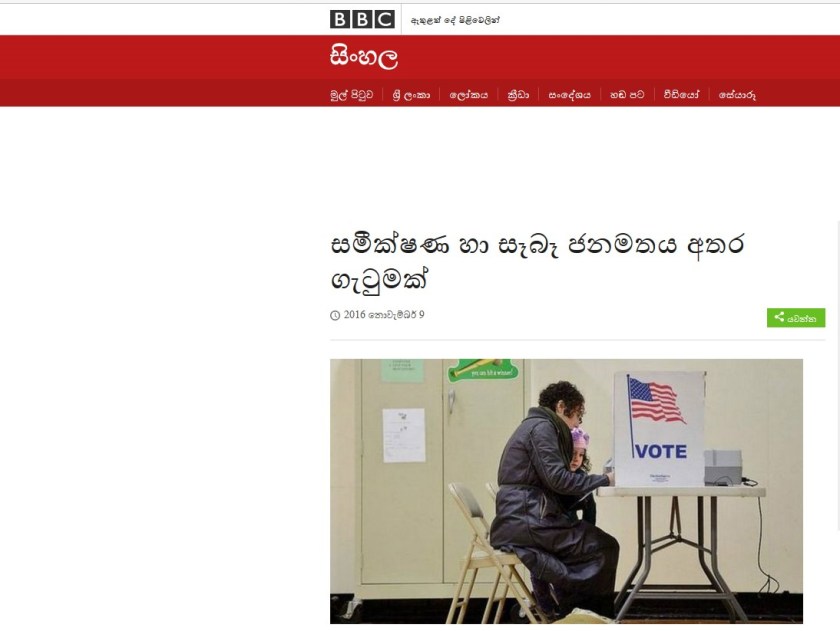
Within hours of the US Presidential Election’s results becoming known on 9 November 2016, I gave a telephone interview to BBC Sinhala service. They asked me how almost all the opinion polls did not see Donald Trump winning the election, even though many polls said it was going to be a close contest.
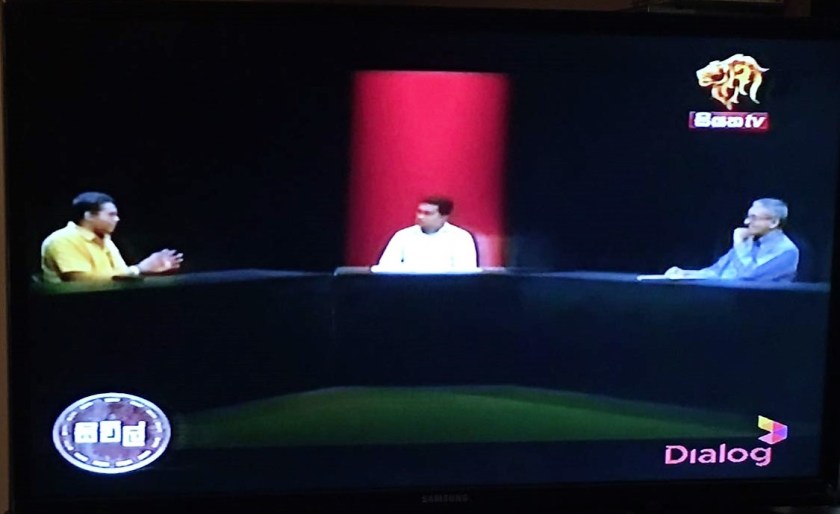
Siyatha TV CIVIL show: Dr Ranga Kalansooriya (left) and Nalaka Gunawardene (right) discuss Sri Lanka’s Right to Information law with host Prasanna Jayanththi: 27 Sep 2016
Back in 2009-2010, I used to host a half hour show on Siyatha TV, a private television channel in Sri Lanka, on inventions and innovation.
So it was good to return to Siyatha on 27 September 2016 — this time as a guest on their weekly talk show CIVIL, to talk about Sri Lanka’s new Right to Information (RTI) law.
Joining me was Dr Ranga Kalansooriya, experienced and versatile journalist who has recently become Director General of the Government Department of Information. Our amiable host was Prasanna Jayaneththi.
We discussed aspects of Sri Lanka’s Right to Information Act No 12 of 2016, adopted in late June 2016, with all political parties in Parliament supporting it. Certified by the Speaker on 4 August 2016, we are now in a preparatory period of six months during which all public institutions get ready for processing citizen request for information.
Dr Ranga Kalansooriya on Siyatha TV’s CIVIL talk show on right to information – 27 Sep 2016
Nalaka Gunawardene on Siyatha TV’s CIVIL talk show on right to information – 27 Sep 2016
Prasanna Jayaneththi hosts Siyatha TV’s CIVIL talk show on right to information – 27 Sep 2016
I emphasized on the vital DEMAND side of RTI: citizens and their various associations and groups need to know enough about their new right to demand and receive information from public officials — and then be motivated to exercise that right.
I argued that making RTI a fundamental right (through the 19th Amendment to the Constitution in April 2015), passing the RTI Act in June 2016 and re-orienting the entire public sector for information disclosure represent the SUPPLY side. It needs to be matched by inspiring and catalysing the DEMAND side, without which this people’s law cannot benefit people.
In May 2016, the major new study on the media sector I edited titled Rebuilding Public Trust:An Assessment of the Media Industry and Profession in Sri Lanka, noted:
“The new government faces the daunting task of healing the wounds of a civil war which lasted over a quarter of a century and left a deep rift in the Lankan media that is now highly polarised along ethnic, religious and political lines. At the same time, the country’s media industry and profession face their own internal crises arising from an overbearing state, unpredictable market forces, rapid technological advancements and a gradual erosion of public trust.”
The report quoted Dr Ranga Kalansooriya, who worked in the print media (Sinhala and English) and later served as Director General of Sri Lanka Press Institute, as saying:
“The ethnically non-diverse newsrooms of both sides have further fuelled the polarisation of society on ethnic lines, and this phenomenon has led the media in serving its own clientele with ‘what it wants to know’ than ‘what it needs to know’.”
This is precisely what the One Sri Lanka Journalism Fellowship Program (OSLJF) has addressed, in its own small way. An initiative of InterNews, an international media development organisation, OSLJF was a platform which has brought together Sinhala, Tamil and Muslim working journalists from across the country to conceptualize and produce stories that explored issues affecting all ordinary Lankans.
From December 2015 to September 2016, some 30 full-time or freelance journalists reporting for the country’s mainstream media were supported to engage in field-based, multi-sourced stories on social, economic and political topics of public interest. They worked in multi-ethnic teams, mentored by senior Lankan journalists drawn from the media industry who gave training sessions to strengthen the skills and broaden the horizons of this group of early and mid-career journalists.
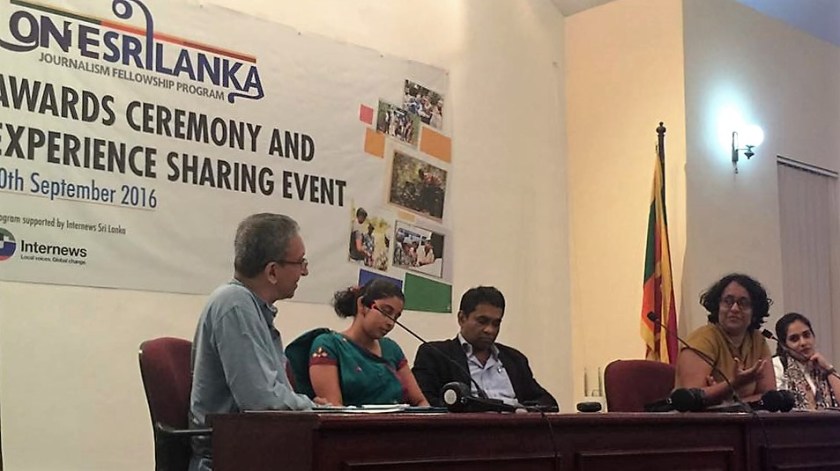
As the project ends, the participating journalists, mentors and administrators came together at an event in Colombo on 20 September 2016 to share experiences and impressions. This was more than a mere award ceremony – it also sought to explore how the learnings can be institutionalized within the country’s mainstream and new media outlets.
I was asked to host the event, and also to moderate a panel of key media stakeholders. As a former journalist who remains a columnist, blogger and media researcher, I was happy to accept this as I am committed to building a BETTER MEDIA in Sri Lanka.
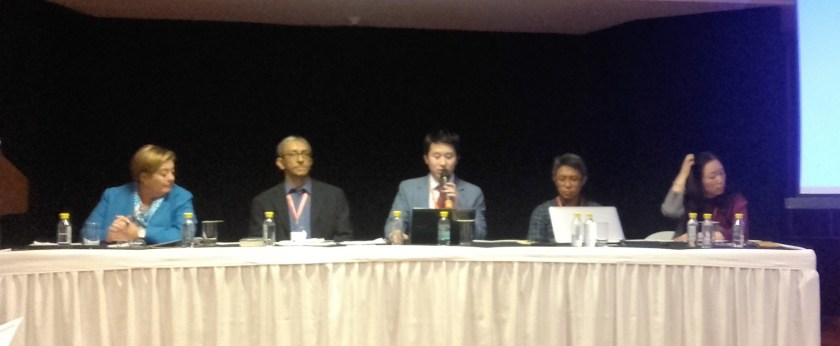
Panel on Future of Sri Lankan Journalism in the Digital Age. L to R – Nalaka Gunawardene (moderator); Deepanjali Abeywardena; Dr Ranga Kalansooriya; Dr Harini Amarasuriya; and Gazala Anver
Here are my opening remarks for the panel:
“If you don’t like the news … go out and make some of your own!” So said Wes (‘Scoop’) Nisker, the US author, radio commentator and comedian who used that line as the title of a 1994 book.
Instead of just grumbling about imperfections in the media, more and more people are using digital technologies and the web to become their own reporters, commentators and publishers.
Rise of citizen journalism and digital media start-ups are evidence of this.
BUT we cannot ignore mainstream media (MSM) in our part of the world. MSM – especially and radio broadcasters — still have vast reach and they influence public perceptions and opinions. It is VITAL to improve their professionalism and ethical conduct.
In discussing the Future of Journalism in the Digital Age today, we want to look at BOTH the mainstream media AND new media initiatives using web/digital technologies.
BOTTOMLINE: How to uphold timeless values in journalism: Accuracy, Balance, Credibility and promotion of PUBLIC INTEREST?
I posed five broad questions to get our panelists thinking:
What can be done to revitalize declining quality and outreach of mainstream media?
Why do we have so little innovation in our media? What are the limiting factors?
What is the ideal mix and balance of mainstream and new media for Lanka?
Can media with accuracy, balance and ethics survive in our limited market? If so, how?
What can government, professionals and civil society to do to nurture a better media?
Panel on Future of Sri Lankan Journalism in the Digital Age. L to R – Nalaka Gunawardene (moderator); Deepanjali Abeywardena; Dr Ranga Kalansooriya; Dr Harini Amarasuriya; and Gazala Anver
East-West Center 2016 International Media Conference in New Delhi, India, from September 8 to 11, 2016
In this week’s Ravaya column (in Sinhala, appearing in the print issue of 18 Sep 2016), I discuss new forms of media repression being practised by governments in South Asia.
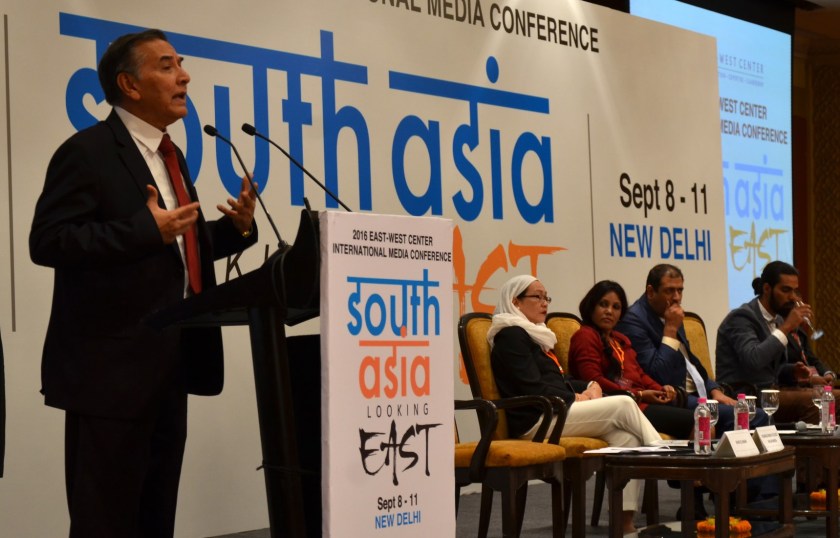
The inspiration comes from my participation in the Asia Media Conference organized by the Hawaii-based East-West Center in New Delhi, India, from September 8 to 11, 2016. Themed “South Asia Looking East”, it drew over 350 participants from across Asia and the United States.
Speeches and discussions showed how governments are more concerned about international media rights watch groups tracking the imprisonment and physical harassment of media and journalists. So their tactics of repression have changed to unleash bureaucratic and legal harassment on untamed and unbowed journalists. And also to pressurising advertisers to withdraw.
Basically this is governments trying to break the spirit and commercial viability of free media instead of breaking the bones of outspoken journalists. And it does have a chilling effect…
In this column, I focus on two glaring examples that were widely discussed at the Delhi conference.
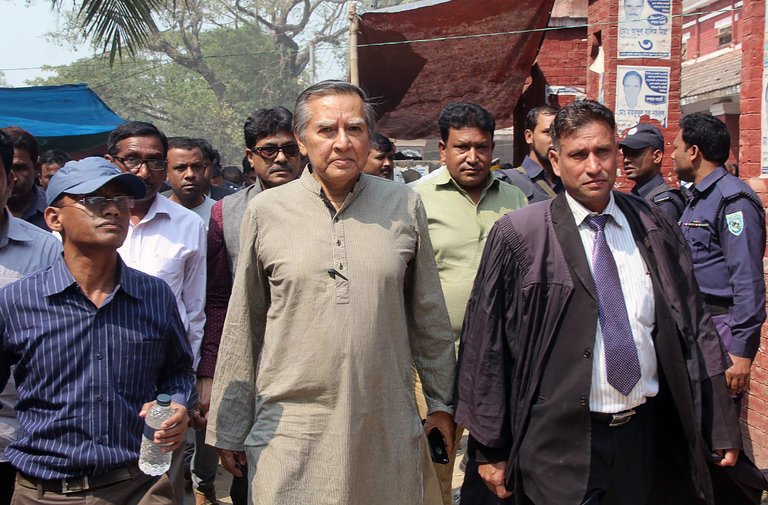
In recent months, leading Bangladeshi editor Mahfuz Anam has been sued simultaneously across the country in 68 cases of defamation and 18 cases of sedition – all by supporters of the ruling party. Anam was one of six exceptional journalists honoured during the Delhi conference “for their personal courage in the face of threats, violence and harassment”.
In August, an announcement was made on the impending suspension of regional publication of Himal Southasian, a pioneering magazine promoting ‘cross-border journalism’ in the South Asian region. The reason was given as “due to non-cooperation by regulatory state agencies in Nepal that has made it impossible to continue operations after 29 years of publication”.
Bureaucracy is pervasive across South Asia, and when they implement commands of their political masters, they become formidable threats to media freedom and freedom of expression. Media rights watch groups, please note.
On September 11, I took part in a breakout session that discussed media innovation in Asia and the United States. While my fellow panelists spoke mainly about digital media innovation of their media outlet or media sector, I opted to survey the bigger picture: what does innovation really mean when media is under siege, and how can the media sector switch from such ‘innovation under duress’ to regular market or product innovation?
Here are my remarks, cleaned up and somewhat expanded:
Nalaka Gunawardene speaks on media innovation under duress
Innovation has been going on in media from the beginning. Faced with major challenges from advancing technologies and changing demography, innovation is now an imperative for market survival.
We can discuss this at different levels: product innovation, process innovation and systemic innovation. I like to add another kind for our discussion: innovation for physical survival.
With forces social and market Darwinism constantly at work, you might ask, shouldn’t the most adaptable and nimble players survive – while others perish?
Yes and No. Sometimes the odds against independent and progressive media organisations are disproportionately high – they should not be left to fend for themselves. This is where media consumers and public spirited groups need to step in.
Let me explain with a couple of examples from South Asia.
They say necessity is the mother of invention or innovation. I would argue that tyranny – from the state and/or extremist groups – provides another strong impetus for innovation in the media.
In Nepal, all media came under strict control when King Gyanendra assumed total control in February 2005. Among other draconian measures, he suspended press freedom, imposing a blanket ban on private or community broadcasters carrying news, thus making it a monopoly of state broadcasters.
The army told broadcasters that the stations were free to carry music, but not news or current affairs. Soldiers were sent to radio and TV stations to ensure compliance.
When the king’s siege of democracy continued for weeks and months, some media started defying censorship – they joined human rights activists and civil society groups in a mass movement for political reforms, including the restoration of parliamentary democracy.
Some of Nepal’s many community radio stations found creative ways of defying censorship. One station started singing the news – after all, there was no state control over music and entertainment! Another one in central Nepal went outside their studio, set up an impromptu news desk on the roadside, and read the news to passers-by every evening at 6 pm.
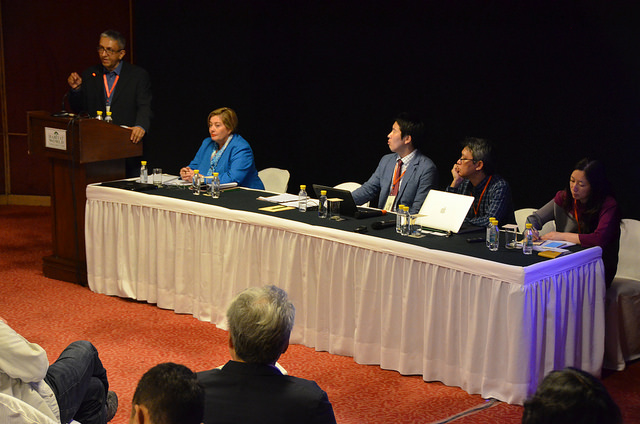
Panel on Media innovation at East-West Center Media Conference, Delhi, 11 Sep 2016: L to R – Philippa McDonald, Nalaka Gunawardene, LEE Doo Won, Fernando (Jun) SEPE, Jr. and ZHONG Xin
The unwavering resolve of these and other media groups and pro-democracy activists led to the restoration of parliamentary democracy in April 2006 and the subsequent abolition of the Nepali monarchy.
My second example is from Sri Lanka where I live and work.
We are recovering from almost a decade of authoritarian rule that we ended in January 2015 by changing that government in an election. The years preceding that change were the darkest for freedom of expression and media freedom in Sri Lanka – the country, then nominally a democracy, was ranked 165th among 183 countries in the World Press Freedom Index for 2014.
In June 2012, Sri Lanka was one of 16 countries named by the UN Special Rapporteur on the promotion and protection of the right to freedom of opinion and expression for “attacks against journalists during coverage of street protests and demonstrations, such as arbitrary arrests and detention, verbal and physical attacks, confiscation or destruction of equipment, as well as killings.”
Threats of attacks and actual incidents of physical violence in recent years led to a climate of fear and widespread self-censorship among journalists in Sri Lanka. This is slowly changing now, but old habits die hard.
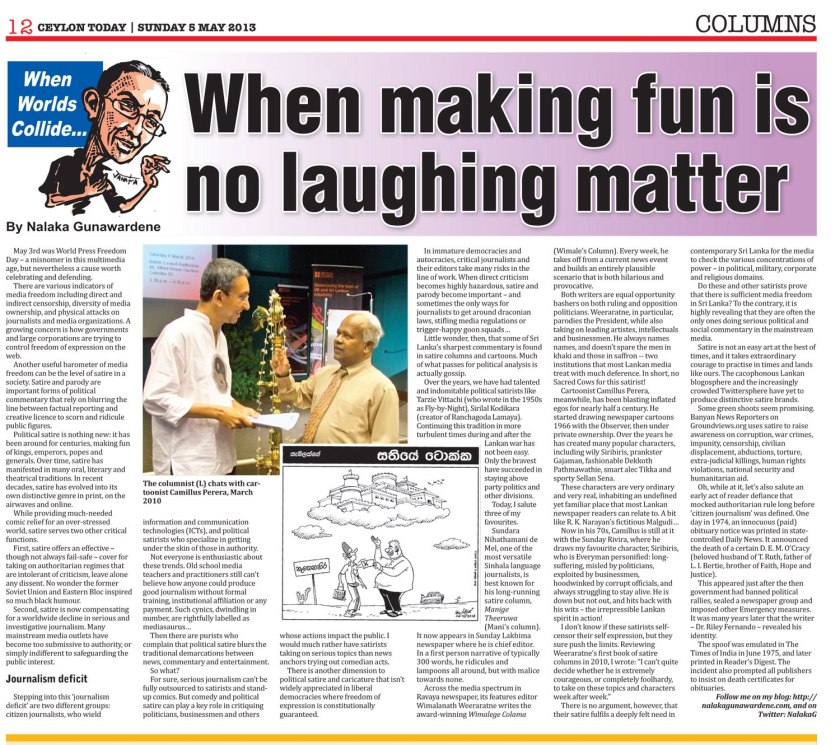
At the height of media repression by the former regime, we saw some of our media innovating simply for physical survival. One strategy was using satire and parody – which became important forms of political commentary, sometimes the only ones that were possible without evoking violent reprisals.
What I wrote then, while still in the thick of crackdown, is worth recalling:
“For sure, serious journalism can’t be fully outsourced to satirists and stand-up comics. But comedy and political satire can play a key role in critiquing politicians, businessmen and others whose actions impact the public.
“There is another dimension to political satire and caricature that isn’t widely appreciated in liberal democracies where freedom of expression is constitutionally guaranteed.
“In immature democracies and autocracies, critical journalists and their editors take many risks in the line of work. When direct criticism becomes highly hazardous, satire and parody become important — and sometimes the only – ways for journalists get around draconian laws, stifling media regulations or trigger-happy goon squads…
“Little wonder, then, that some of Sri Lanka’s sharpest commentary is found in satire columns and cartoons. Much of what passes for political analysis is actually gossip.”
For years, cartoonists and political satirists fulfilled a deeply felt need in Sri Lanka for the media to check the various concentrations of power — in political, military, corporate and religious domains.
They still continue to perform an important role, but there is more space today for journalists and editors to report things as they are, and to comment on the key stories of the day.
During the past decade, we have also seen the rise of citizen journalism and vibrant blogospheres in the local languages of Sinhala and Tamil. Their advantage during the dark years was that they were too numerous and scattered for the repressive state to go after each one (We do know, however, that electronic surveillance was attempted with Chinese technical assistance.)
Of course, Sri Lanka’s media still face formidable challenges that threaten their market survival.
Rebuilding Public Trust: An Assessment of the Media Industry and Profession in Sri Lanka (May 2016)
A new assessment of Sri Lanka’s media, which I edited earlier this year, noted: “The economic sustainability of media houses and businesses remains a major challenge. The mainstream media as a whole is struggling to retain its consumer base. Several factors have contributed to this. Many media houses have been slow in integrating digital tools and web-based platforms. As a result, there is a growing gulf between media’s production models and their audiences’ consumption patterns.”
Innovation and imagination are essential for our media to break out of 20th century mindsets and evolve new ways of content generation and consumption. There are some promising new initiatives to watch, even as much of the mainstream continues business as usual – albeit with diminishing circulations and shrinking audience shares.
Innovate or perish still applies to our media. We are glad, however, that we no longer have to innovate just to stay safe from goon squads.