[Op-ed] April Fools, All Year Round? A Call for Fact-Checking Our Media & Politics

Text of my op-ed article published in Weekend Express newspaper on 7 April 2017.

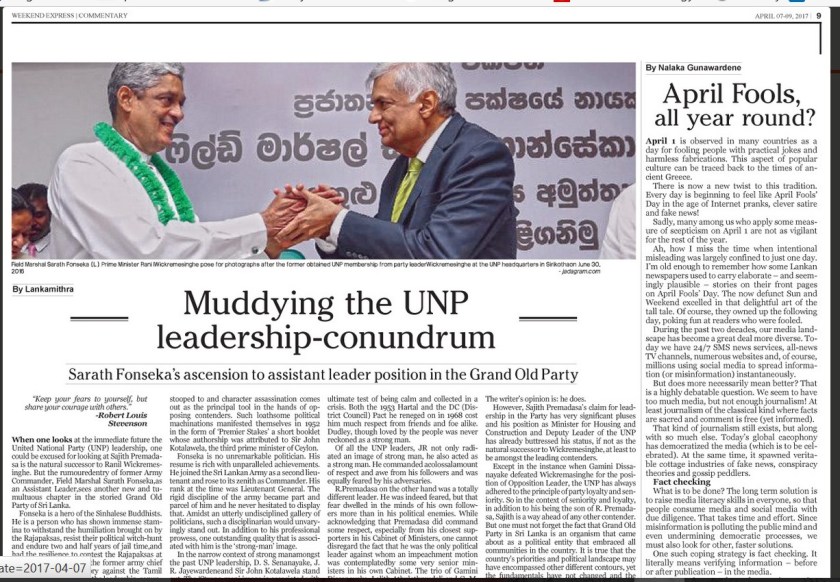
April Fools All Year Round? Op-ed by Nalaka Gunawardene, Weekend Express, 7 April 2017

April Fools, All Year Round?

By Nalaka Gunawardene

April 1 is observed in many countries as a day for fooling people with practical jokes and harmless fabrications. This aspect of popular culture can be traced back to the times of ancient Greece.

There is now a new twist to this tradition. Every day is beginning to feel like April Fools’ Day in the age of Internet pranks, clever satire and fake news!

Sadly, many among us who apply some measure of skepticism on April 1 are not as vigilant for the rest of the year.

Ah, how I miss the time when intentional misleading was largely confined to just one day. I’m old enough to remember how some Lankan newspapers used to carry elaborate – and seemingly plausible – stories on their front pages on April Fools’ day. The now defunct Sun and Weekend excelled in that delightful art of the tall tale. Of course, they owned up the following day, poking fun at readers who were fooled.

During the past two decades, our media landscape has become a great deal more diverse. Today we have 24/7 SMS news services, all-news TV channels, numerous websites and, of course, millions using social media to spread information (or misinformation) instantaneously.

But does more necessarily mean better? That is a highly debatable question. We seem to have too much media, but not enough journalism! At least journalism of the classical kind where facts are sacred and comment is free (yet informed).

That kind of journalism still exists, but along with so much else. Today’s global cacophony has democratized the media (which is to be celebrated). At the same time, it spawned veritable cottage industries of fake news, conspiracy theories and gossip peddlers.

Image source – American Journalism Review, 21 April 2015

Fact checking

What is to be done? The long term solution is to raise media literacy skills in everyone, so that people consume media and social media with due diligence.

That takes time and effort. Since misinformation is polluting the public mind and even undermining democratic processes, we must also look for other, faster solutions.

One such coping strategy is fact checking. It literally means verifying information – before or after publication – in the media.

In a growing number of countries, mainstream media outlets practise fact checking as an integral part of their commitment to professionalism. They seek to balance accuracy with speed, which has been made more challenging by the never-ending news cycle.

In other cases, independent researchers or civil society groups are keeping track of news media content after publication. In the United States, where the practice is well developed, several groups are devoted to such post-hoc fact checking. These include FactCheck, PolitiFact, and NewsTrust’s Truth Squad. They fact check the media as well as statements by politicians and other public figures.

In 2015, fact checking organisations formed a world network and this year, they observed the inaugural International Fact Checking Day.

Not coincidentally, the chosen date was April 2. (See details at: http://factcheckingday.com)

The initiative is a collaboration by fact checkers and journalism organisations from around the world, “with a goal to enlist the public in the fight against misinformation in all its forms.”

“International Fact Checking Day is not a single event but a rallying cry for more facts — and fact checking — in politics, journalism and everyday life,” says Alexios Mantzarlis, director of the International Fact-Checking Network at the Poynter Institute for Media Studies in the US.

Oops!

Pinocchios

One visual icon for the Fact-Checking Day is Pinocchio, the fictional puppet character whose nose grew long each time he uttered a lie.

We in Sri Lanka urgently need a professional, non-partisan fact checking service to save us from the alarming proliferation of Pinocchios in public life. Not just our politicians, but also many academics and activists who peddle outdated statistics, outlandish claims or outright conspiracy theories.

Take, for example, the recent claim by a retired professor of political science that 94 Members of Parliament had not even passed the GCE Ordinary Level exam. Apparently no one asked for his source at the press conference (maybe because it fed a preconceived notion). Later, when a (rare?) skeptical journalist checked with him, he said he’d “read it in a newspaper some time ago” — and couldn’t name the publication.

A simple Google search shows that an MP (Buddhika Pathirana) had cited this exact number in September 2014 – about the last Parliament!

Given the state of our media, which often takes down dictation rather than asks hard questions, fact checking is best done by a research group outside the media industry.

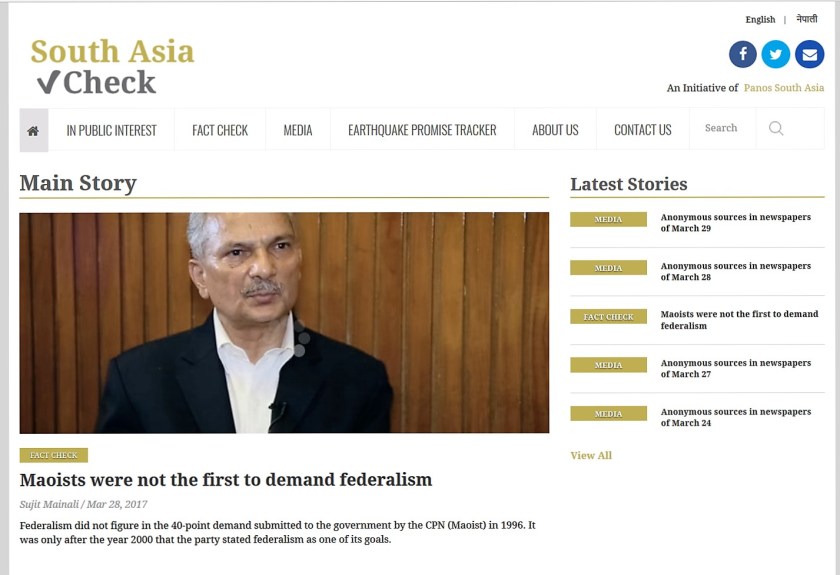
A useful model could be South Asia Check, an independent, non-partisan initiative by Panos South Asia anchored in Kathmandu. It “aims to promote accuracy and accountability in public debate” by examining statements and claims made by public figures in Nepal and occasionally, across South Asia (http://southasiacheck.org).

See also: Getting it Right: Fact-Checking in the Digital Age: American Journalism Review, 21 April 2015

South Asia Check – home page captured on 10 April 2017

Nalaka Gunawardene is a science writer and independent media researcher. He is active on Twitter as @NalakaG

[op-ed] Sri Lanka’s RTI Law: Will the Government ‘Walk the Talk’?

First published in International Federation of Journalists (IFJ) South Asia blog on 3 March 2017.

Sri Lanka’s RTI Law: Will the Government ‘Walk the Talk’?

by Nalaka Gunawardene

Taking stock of the first month of implementation of Sri Lanka's Right to Information (RTI) law - by Nalaka Gunawardene
Taking stock of the first month of implementation of Sri Lanka’s Right to Information (RTI) law – by Nalaka Gunawardene

Sri Lanka’s new Right to Information (RTI) Law, adopted through a rare Parliamentary consensus in June 2016, became fully operational on 3 February 2017.

From that day, the island nation’s 21 million citizens can exercise their legal right to public information held by various layers and arms of government.

One month is too soon to know how this law is changing a society that has never been able to question their rulers – monarchs, colonials or elected governments – for 25 centuries. But early signs are encouraging.

Sri Lanka’s 22-year advocacy for RTI was led by journalists, lawyers, civil society activists and a few progressive politicians. If it wasn’t a very grassroots campaign, ordinary citizens are beginning to seize the opportunity now.

RTI can be assessed from its ‘supply side’ as well as the ‘demand side’. States are primarily responsible for supplying it, i.e. ensuring that all public authorities are prepared and able to respond to information requests. The demand side is left for citizens, who may act as individuals or in groups.

In Sri Lanka, both these sides are getting into speed, but it still is a bumpy road.

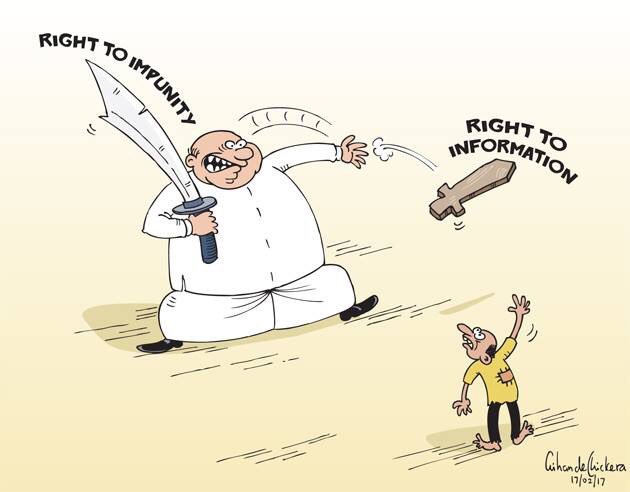
Cartoon by Gihan de Chickera, Daily Mirror

During February, we noticed uneven levels of RTI preparedness across the 52 government ministries, 82 departments, 386 state corporations and hundreds of other ‘public authorities’ covered by the RTI Act. After a six month preparatory phase, some institutions were ready to process citizen requests from Day One.  But many were still confused, and a few even turned away early applicants.

One such violator of the law was the Ministry of Health that refused to accept an RTI application for information on numbers affected by Chronic Kidney Disease and treatment being given.

Such teething problems are not surprising — turning the big ship of government takes time and effort. We can only hope that all public authorities, across central, provincial and local government, will soon be ready to deal with citizen information requests efficiently and courteously.

Some, like the independent Election Commission, have already set a standard for this by processing an early request for audited financial reports of all registered political parties for the past five years.

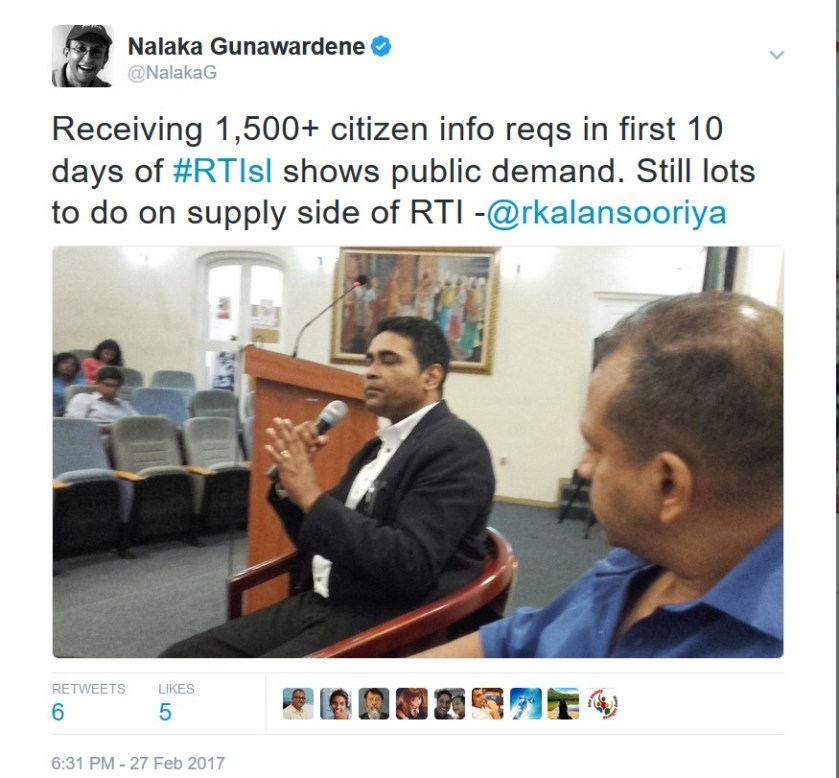
On the demand side, citizens from all walks of life have shown considerable enthusiasm. By late February, according to Dr Ranga Kalansooriya, Director General of the Department of Information, more than 1,500 citizen RTI requests had been received. How many of these requests will ultimately succeed, we have to wait and see.

https://twitter.com/NalakaG/status/836199548095602689

Reports in the media and social media indicate that the early RTI requests cover a wide range of matters linked to private grievances or public interest.

Citizens are turning to RTI law for answers that have eluded them for years. One request filed by a group of women in Batticaloa sought information on loved ones who disappeared during the 26-year-long civil war, a question shared by thousands of others. A youth group is helping people in the former conflict areas of the North to ask much land is still being occupied by the military, and how much of it is state-owned and privately-owned. Everywhere, poor people want clarity on how to access various state subsidies.

Under the RTI law, public authorities can’t play hide and seek with citizens. They must provide written answers in 14 days, or seek an extension of another 21 days.

To improve their chances and avoid hassle, citizens should ask their questions as precisely as possible, and know the right public authority to lodge their requests. Civil society groups can train citizens on this, even as they file RTI requests of their own.

That too is happening, with trade unions, professional bodies and other NGOs making RTI requests in the public interest. Some of these ask inconvenient yet necessary questions, for example on key political leaders’ asset declarations, and an official assessment of the civil war’s human and property damage (done in 2013).

Politicians and officials are used to dodging such queries under various pretexts, but the right use of RTI law by determined citizens can press them to open up – or else.

President Maithripala Sirisena was irked that a civil society group wanted to see his asset declaration. His government’s willingness to obey its own law will be a litmus test for yahapalana (good governance) pledges he made to voters in 2015.

The Right to Information Commission will play a decisive role in ensuring the law’s proper implementation. “These are early days for the Commission which is still operating in an interim capacity with a skeletal staff from temporary premises,” it said in a media statement on February 10.

The real proof of RTI – also a fundamental right added to Constitution in 2015 – will be in how much citizens use it to hold government accountable and to solve their pressing problems. Watch this space.

Science writer and media researcher Nalaka Gunawardene is active on Twitter as @NalakaG. Views in this post are his own.

One by one, Sri Lanka public agencies are displaying their RTI officer details as required by law. Example: http://www.pucsl.gov.lk saved on 24 Feb 2017

RTI Sri Lanka: තොරතුරු යතුරෙන් ‍දොර විවෘත කළාට මදි!

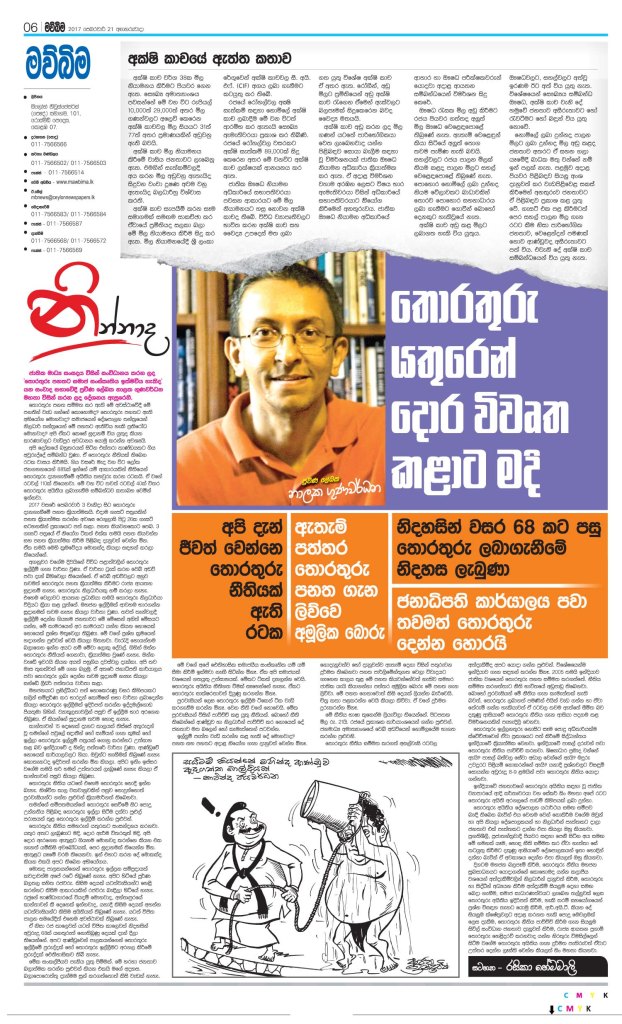
On 21 Feb 2017, Sinhala language broadsheet newspaper Mawbima carried an article based on my recent public talk on the Right to Information (RTI) in Sri Lanka.

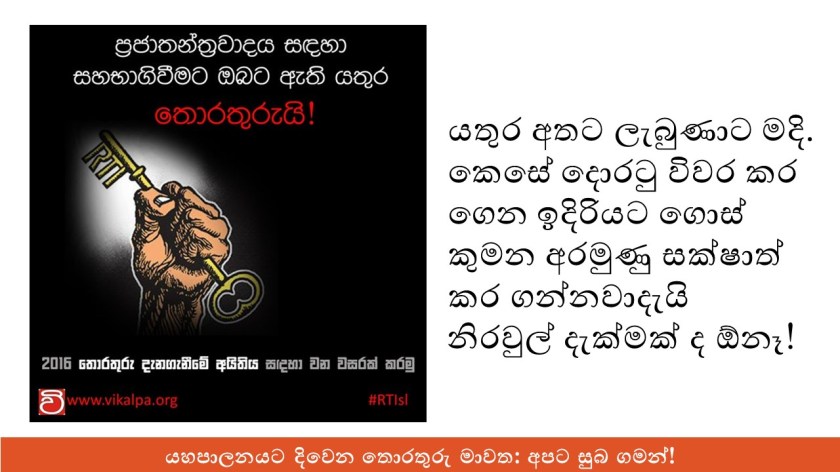
RTI is a key to open doors to public information. That's useful, but we must know what to do when we enter...
RTI is a key to open doors to public information. That’s useful, but we must know what to do when we enter…

ජාතික මාධ්‍ය සංසදය විසින් සංවිධානය කරන ලද ‘තොරතුරු පනතට සමාජ සංස්කෘතිය ඉක්මවිය හැකිද’ යන සංවාද සභාවේදී ප්‍රවීණ ලේඛක නාලක ගුණවර්ධන මහතා විසින් කරන ලද දේශනය ඇසුරෙනි.

තොරතුරු පනත සම්මත කර ඇති මේ අවස්ථාවේදී මේ පනතින් වැඩ ගන්නේ කොහොමද? තොරතුරු පනතට ඇති අභියෝග මොනවාද? සමාජයෙන් දේශපාලන තන්ත්‍රයෙන් නිලධාරි තන්ත්‍රයෙන් මේ පනතට ඇතිවිය හැකි ප්‍රතිරෝධ මොනවාද? අපි ඒකට කෙසේ සූදානම් විය යුතුද කියන කාරණාවලට වැඩිපුර අවධානය යොමු කරන්න අවශ්‍යයි.

අපි ලෝකයේ බහුතරයක් සිටින එක්තරා කාණ්ඩයකට ගිය අවුරුද්දේ සම්බන්ධ වුණා. ඒ තොරතුරු නීතියක් තිබෙන රටක වාසය කිරීමයි. ගිය වසරේ මැද වන විට ලෝක ජනගහනයෙන් 88%ක් ඉන්නේ යම් ආකාරයකින් නීතියෙන් තොරතුරු දැනගැනීමේ අයිතිය තහවුරු කරන රටකයි. ඒ වගේ රටවල් 110ක් තියෙනවා. මේ වන විට තවත් රටවල් 40ක් විතර තොරතුරු අයිතිය ලබාගැනීම සම්බන්ධව කතාබහ වෙමින් ඉන්නවා.

State of Right to Information (RTI ) World wide in 2016.

2017 වසරේ පෙබරවාරි 3 වැනිදා සිට තොරතුරු දැනගැනීමේ පනත ක්‍රියාත්මකයි. එදාම ගැසට් පත්‍රයකින් පනත ක්‍රියාත්මක කරන්න අවශ්‍ය රෙගුලාසි පිටු 26ක ගැසට් සටහනකින් ප්‍රකාශයට පත් කළා. පනත කියවනකොට පෙබ. 3 ගැසට් පත්‍රයේ ඒ නියෝග ටිකත් එක්ක තමයි පනත කියවන්න සහ පනත ක්‍රියාත්මක කිරීම පිළිබඳ දැනුවත් වෙන්න ඕන. ඒක තමයි මෙහි ක්‍රමවේදය මොකක්ද කියලා සඳහන් කරලා තියෙන්නේ.

අගනුවර වගේම දිවයිනේ විවිධ පළාත්වලින් තොරතුරු ඉල්ලීම් ගැන වාර්තා වුණා. ඒ වාර්තා ට්‍රැක් කරන වෙබ් අඩවි පවා දැන් බිහිවෙලා තියෙන්නේ. ඒ වෙබ් අඩවිවලට අනුව තවමත් තොරතුරු පනත ක්‍රියාත්මක කිරීමට රාජ්‍ය ආයතන සූදානම් නැහැ. තොරතුරු නිලධාරියකු නම් කරලා නැහැ. එහෙම වෙලාවට ආයතන ප්‍රධානියා තමයි තොරතුරු නිලධාරියා විදියට ක්‍රියා කළ යුත්තේ. මහජන ඉල්ලීමක් ආවහම භාරගන්න සූදානමක් තවම නැහැ කියලා වාර්තා වුණා. තවත් තැන්වලදී ඉල්ලීම් දෙන්න ගියහම ජනතාවට මේ මේසෙන් අනිත් මේසයට යන්න, මේ කාමරයෙන් අර කාමරයට යන්න කියන නොයෙක් නොයෙක් ප්‍රශ්න මතුවෙලා තිබුණා. මේ වගේ ප්‍රශ්න ක්‍රමයෙන් හදාගන්න පුළුවන් වෙයි කියලා හිතනවා. වැරැදි හොයන්නම බලාගෙන ඉන්න අයට නම් මේවා ලොකු දේවල්. ගිහින් ඔන්න තොරතුරු නීතියක් ගෙනාවා, ක්‍රියාත්මක වුණේ නැහැ. ඔන්න වැඩේ ඉවරයි කියන අයත් පහුගිය දවස්වල දැක්කා. අපි තව මාස තුනක්වත් මේ ගැන බලමු. ඒ අතරේ ජනාධිපති කාර්යාලය පවා තොරතුරු ලබා දෙන්න තවම සූදානම් නැහැ කියලා සන්ඩේ ලීඩර් පත්තරය වාර්තා කළා.

මහජනයාට ප්‍රසිද්ධියට පත් නොකෙරුණු වසර කිහිපයකට කලින් සම්පූර්ණ කර භාරදුන් කොමිෂන් සභා වාර්තා ලබාදෙන්න කියලා තොරතුරු ඉල්ලීමක් ඉදිරිපත් කරන්න ඉද්දමල්ගොඩ පියතුමා ගිහින්. ව්‍යාකූලතාවලින් පසුව ඒ ඉල්ලීම භාර අරගෙන තිබුණා. ඒ කියන්නේ සූදානම තවම හොඳ නැහැ.

කාන්තාවන් 15 දෙනෙක් දැනට කාලයක් තිස්සේ අතුරුදන් වූ තමන්ගේ පවුලේ ඥාතීන් හෝ සැමියන් ගැන කුමක් හෝ ඉල්ලා තොරතුරු ඉල්ලුම් පත්‍රයක් ගොනු කරන්නට උත්සාහ කළ බව ඉන්දියාවේ ද හින්දු පත්තරේ වාර්තා වුණා. ආණ්ඩුවේ නොයෙක් කාර්යාලවලට ගියා. ඔවුන්ට හැඟීමක් තිබුණේ නැහැ කොතැනටද ඉදිරිපත් කරන්න ඕන කියලා. අපිට ඉතිං ඉස්සර වගේම තමයි හරි හමන් උත්තරයක් ලැබුණේ නැහැ කියලා ඒ කාන්තාවන් පසුව කියලා තිබුණා.

තොරතුරු නීතිය යටතේ එහෙම තොරතුරු නොදී ඉන්න බැහැ. නිශ්චිත කාල වකවානුවකින් පසුව නොදුන්නොත් පුරවැසියන්ට ගන්න පුළුවන් ක්‍රියාමාර්ගත් තිබෙනවා.
තමන්ගේ සමීපතමයන්ගේ තොරතුරු සෙවීමේ සිට පොදු උන්නතිය පිළිබඳ තොරතුරු ඉල්ලා සිටීම දක්වා පුළුල් පරාසයක් තුළ තොරතුරු ඉල්ලීම් කරන්න පුළුවන්.

Right to Information in Sri Lanka - what to do next?
Right to Information in Sri Lanka – what to do next?

තොරතුරු නීතිය සමහරුන් යතුරකට සංසන්දනය කරනවා. යතුර අතට ලැබුණාට මදි. ‍ෙදාර ඇරීම විතරකුත් මදි. අපි ‍ෙදාර ඇරගෙන ඇතුළට ගියහම මොනවද කරන්නෙ කියන එක ගැනත් යම්කිසි අවබෝධයක්, පෙර සූදානමක් තියෙන්න ඕන. ඇතුළට යෑමේ වරම තියෙනවා. ඉන් එහාට කරන දේ මොකක්ද කියන එකයි අපට තිබෙන අභියෝගය.

මොකද පාලකයන්ගෙන් තොරතුරු ඉල්ලන සම්ප්‍රදායක් කවදාවත්ම අපේ රටේ තිබුණේ නැහැ. අපිට හිටියේ පූර්ණ බලතල සහිත රජවරු. කිසිම දෙයක් යටත්වැසියන්ට හෙළි කරන්නට කිසිම ආකාරයකින් රජවරු බැඳිලා හිටියේ නැහැ. රජුගේ භාණ්ඩාගාරයේ වියදම් මොනවාද, අන්ත–පුරයේ කාන්තාවන් කී දෙනෙක් ඉන්නවාද, යනාදී කිසිම දෙයක් අහන්න යටත්වැසියන්ට කිසිම අයිතියක් තිබුණේ නැහැ. යටත් විජිත පාලන සමයේදීත් එහෙම අවස්ථාවක් තිබුණේ නැහැ.

ඒ නිසා රජ කාලෙවත් යටත් විජිත කාලෙවත් නිදහසින් අවුරුදු 68ක් යනතුරුත් නොතිබුණු දෙයක් දැන් දීලා තියෙන්නේ. අපට ආණ්ඩුවෙන් පාලකයන්ගෙන් තොරතුරු ඉල්ලීමේ පුරුද්දක් හෝ තොරතුරු ඉල්ලීමට අරගල කිරීමේ පුරුද්දක් ඓතිහාසිකව තිබී නැහැ.

මේක සංකල්පීයව පැනිය යුතු පිම්මක්. මේ හරහා ජනතාව බලාත්මක කරන්න පුළුවන් කියන එකයි මගේ අදහස. බලාපොරොත්තු දැන්මම සුන් කරගත්තොත් කිසි වැඩක් නැහැ.

මේ වගේ අපේ ඓතිහාසික සමාජයීය සංස්කෘතික යම් යම් සීමා කිරීම් ඉක්මවා නැඟී සිටින්න ඕනෑ. ඒක අපි සමාජයක් වශයෙන් ගතයුතු උත්සාහයක්. මේකට ටිකක් දඟලන්න වෙයි. තොරතුරු අයිතිය නීතිගත වීමක් සෑහෙන්නේ නැහැ. ඒකට තොරතුරු සාක්ෂරතාවත් දියුණු කරගන්න ඕනෑ.

පුරවැසියන් ලෙස තොරතුරු ඉල්ලීම ටිකෙන් ටික වැඩි කරගැනීම කරන්න ඕනෑ. වෙන නීති වගේ නොවෙයි. මේක පුරවැසියන් විසින් පාවිච්චි කළ යුතු නීතියක්. බොහෝ නීති තිබෙන්නේ ආණ්ඩුව හා නිලධාරීන් පාවිච්චි කර නොයෙක් දේ ජනතාව මත බලෙන් හෝ කැමැත්තෙන් පටවන්න.

ඉල්ලුම් පැත්ත වැඩි කරන්න කළ හැකි දේ මොනවාද? පනත සහ පනතට අදාළ නියෝග ගැන දැනුවත් වෙන්න ඕනෑ. නොදැනුවත්ව හෝ දැනුවත්ව ඇතැම් දෙනා විසින් පතුරුවන දුර්මත තිබෙනවා පනත පාර්ලිමේන්තුගත වෙලා විවාදයට ගැනෙන කාලය තුළ මේ පනත කියවන්නේවත් නැතිව සමහර ජාතික යැයි කියාගන්නා පත්තර අමූලික බොරු මේ පනත ගැන ලිව්වා. මේ පනත ගෙනාවොත් කිසි දෙයක් ලියන්න බැරිවෙයි. චිත්‍ර කතා පළකරන්න වෙයි කියලා කිව්වා. ඒ වගේ දුර්මත දුරුකරන්න ඕනෑ.

මේ නීතිය භාෂා තුනෙන්ම ලියැවිලා තියෙන්නේ. පිටපතක මිල රු. 21යි. රජයේ ප්‍රකාශක කාර්යාංශයෙන් ගන්න පුළුවන්. ජනමාධ්‍ය අමාත්‍යාංශයේ වෙබ් අඩවියෙන් නොමිලයේම භාගත කරන්න පුළුවනි.

තොරතුරු නීතිය සම්මත කරගත් අසල්වැසි රටවල අත්දැකීම්ද අපට යොදා ගන්න පුළුවන්. විශේෂයෙන්ම ඉන්දියාව ගැන සඳහන් කරන්න ඕනෑ. 2005 තමයි ඉන්දියාව ජාතික වශයෙන් තොරතුරු පනත සම්මත කරගත්තේ. නීතිය සම්මත කරගත්තාට නීති භාවිතයේ අඩුපාඩු තිබෙනවා. බොහෝ පුරවැසියන් මේ නීතිය ගැන කැමැත්තක් නැති බවත්, තොරතුරු ලබාගත් පමණින් එයින් වැඩ ගන්න හා ඒවා තේරුම් ගන්න හැකියාවත් ඒ රටවල තවම ඇත්තේ සීමිත බව දකුණු ආසියාවේ තොරතුරු නීතිය ගැන ආසියා පදනම කළ විමර්ශනයකින් පැහැදිලි වෙනවා.

තොරතුරු ඉල්ලනතුරු නොසිට සෑම පොදු අධිකාරියක්ම ස්වේච්ඡාවෙන් ඒවා ප්‍රකාශයට පත් කිරීමේ සිද්ධාන්තය ඉන්දියාවේ ක්‍රියාත්මක වෙනවා.

ඉන්දියාවේ පාසල් දරුවන් පවා තොරතුරු නීතිය පාවිච්චි කරනවා. ශිෂ්‍යාධාර ප්‍රමාද වන්නේ ඇයි? පාසල් බස්වල සේවා අඩාල වෙන්නේ ඇයි? මදුරු උවදුරට පිළියම් නොකරන්නේ ඇයි? යනාදී ප්‍රශ්නවලට විසඳුම් සොයන්න අවුරුදු 8-9 ළමයින් පවා තොරතුරු නීතිය යොදා ගන්නවා.

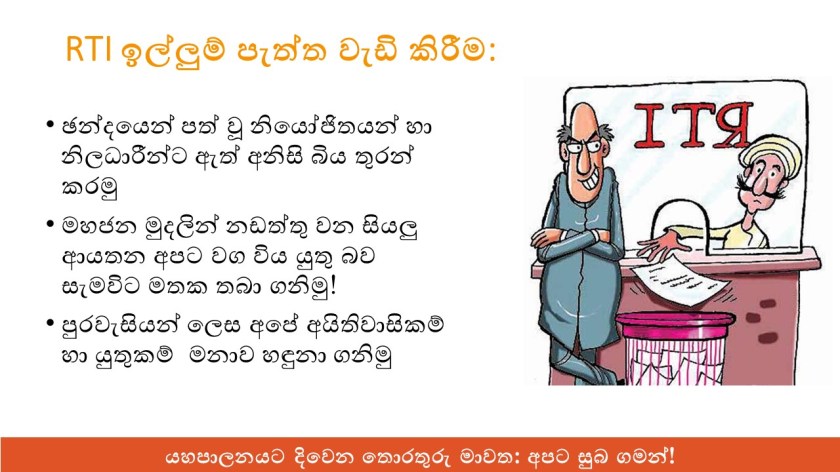
Nurturing the demand side of Right to Information (RTI) in Sri Lanka: What can be done?
What more can be done to promote RTI demand side in Sri Lanka - ideas by Nalaka Gunawardene
What more can be done to promote RTI demand side in Sri Lanka – ideas by Nalaka Gunawardene

ඉන්දියාවේ ජනතාවගේ තොරතුරු අයිතිය සඳහා වූ ජාතික ව්‍යාපාරයේ ආදි කර්තෘවරයා වන සේකර් සිං මහතා අපේ රටට තොරතුරු අයිති අරගලයේ පාඩම් කිහිපයක් ලබා දුන්නා.

තොරතුරු අයිතිය දේශපාලන යථාර්ථය සමඟ සමීපව බැඳී තිබෙන බැවින් එය වෙනම වෙන් නොකිරීම වගේම ඔවුන් හා අපි කියලා දේශපාලකයන් හා නිලධාරීන් පැත්තකට දාලා ජනතාව එක් පැත්තකට දාන්න එපා කියලා ඔහු කියනවා. ප්‍රගතිශීලී, ප්‍රජාතන්ත්‍රවාදී පියවර සඳහා පෙනී සිටින අය සමඟ මේ ගමනක් යෑම, හොඳ නීති සම්මත කර ඒවා නැත්තා සේ කටයුතු කිරීමට දකුණු ආසියාවේ දේශපාලකයන් ඉතා හොඳින් දන්නා බැවින් ඒ අවකාශය දෙන්න එපා කියලත් ඔහු කියනවා.

දිගටම මහජන බලපෑම් කිරීම, තොරතුරු නීතිය මහජන සුබසාධනයට යොදාගන්නේ කොහොමද යන්න කලාපීය වශයෙන් අත්දැකීම්වලින් නිලධාරීන් දැනුවත් කිරීම, තොරතුරු හා සිද්ධීන් අධ්‍යයන කිරීම අත්දැකීම් සියලුම දෙනා සමඟ බෙදා ගැනීම, සමාජ සාධාරණත්වයට ලැබෙන තල්ලුවක් ලෙස තොරතුරු අයිතිය ඉදිරිපත් කිරීම, හැකි තරම් සහයෝගයෙන් ප්‍රශ්න විසඳන තැනට යොමු කිරීම, ආර්.අයි.ටී. කියන දේ සියලුම ක්ෂේත්‍රවලට අදාළ කරගත හැකි පොදු මෙවලමක් ලෙස දැකීම, තොරතුරු නීතිය පාවිච්චි කිරීම ගැන සියලුම සිවිල් සංවිධාන ජනතාව දැනුවත් කිරීම, රාජ්‍ය ආයතන ප්‍රගාමි තොරතුරු හෙළිදරව් කරනවාද යන්න නිරතුරු විමසිල්ලෙන් සිටීම වගේම තොරතුරු අයිතිය ගැන දුර්මත පැතිරුවත් ඒවාට උත්තර දෙන්න ලෑස්ති වෙන්න කියලත් සිං මහතා කියනවා.

තොරතුරු යතුරෙන් ‍දොර විවෘත කළාට මදි! Nalaka Gunawardene on Right to Information (RTI) challenges in Sri Lanka: Mawbima newspaper. 21 Feb 2017

තොරතුරු අයිතිය සමාජ සාධාරණත්වය වෙනුවෙන් හොඳ ආරම්භයක් – නාලක ගුණවර්ධන

Nalaka Gunawardene speaks at public forum on Sri Lanka’s new Right to Information (RTI) law. Colombo, 15 Feb 2017

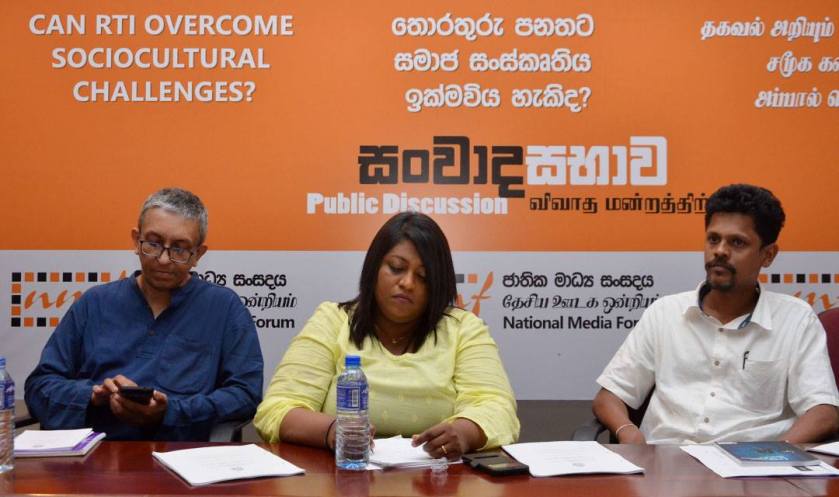
On 15 February 2017, I served as main speaker at a public forum in Colombo on Sri Lanka’s newly operational RTI law and its wider socio-cultural and political implications. The event, organized by the National Media Forum (NMF), was attended by a large number of journalists, social activists, lawyers, government officials and other citizens.

Here is one news report on the event, by Lanka News Web:

තොරතුරු අයිතිය සමාජ සාධාරණත්වය වෙනුවෙන් හොඳ ආරම්භයක් – නාලක ගුණවර්ධන

තොරතුරු දැන ගැනීමේ අයිතිය පිලිබඳ ඉදිරියේදී දුර්මත ගොඩනැගීමටත් දියාරු කිරීමටත් හැකියාව ඇති හෙයින් එම තත්ත්වයන්ට මුහුණ දීමට සූදානමින් සිටිය යුතු බව ප්‍රවීණ මාධ්‍යවේදී නාලක ගුණවර්ධන මහතා පැවසීය.

ඔහු මේ බව සඳහන් කළේ ඊයේ (15) පැවති ජාතික මාධ්‍ය සංසදය මඟින් සංවිධානය කර තිබූ “තොරතුරු පනතට සමාජ සංස්කෘතිය ඉක්මවිය හැකිද?” සංවාද සභාවේ මුඛ්‍ය දේශනය පවත්වමිනි.

පනතේ 20 වැනි වගන්තියට අනුව ප්‍රගාමී තොරතුරු දීම සම්බන්දයෙන් කර ඇති සඳහන ඉතා හොඳ ආරම්භයක් බවයි ගුණවර්ධන මහතා ප්‍රකාශ කළේ.පුරවැසියන් තොරතුරු ඉල්ලීමට ප්‍රථම ස්වෙච්ජාවෙන් ඒවා ලබා දිය යුතු බවට වන වගන්තිය පුරවැසියන්ගේ තොරතුරු අයිතිය තහවුරු කරන්නක් බව පෙන්වා දෙන හෙතෙම අවධාරණය කළේ කලාපයේ තොරතුරු නිතිය ක්‍රියාත්මක කිරීමේ අත්දැකීම් ඇති රටවල සහය අපටද ලබා ගත හැකි බවයි.මේ සඳහා පුරවැසියන්ගේ සක්‍රීය දායකත්වයද අවශ්‍ය බව හෙතෙම සඳහන් කළේය.

ඉන්දියානු සමාජයේ තොරතුරු අයිතිය දිනා ගැනීමේ ප්‍රබල අරගලයක් කළ සමාජ ක්‍රියාකාරිකයෙකු වන ෂෙකර් සිං සමාජ ගත කරමින් පවතින කාරණා පිළිබඳවද නාලක ගුණවර්ධන මහතා අදහස් පළ කළේය.ෂේකර් සිං මතු කරන ප්‍රධාන කාරණයක් වන මෙම අයිතිය දිනා ගැනීම වෙනුවෙන් ප්‍රජාතාන්ත්‍රීය, ප්‍රගතිශීලි හැමදෙනාම එක්ව ක්‍රියා කළ යුතු බව ගුණවර්ධන මහතා පෙන්වා දුන්නේය.

දේශපාලන අධිකාරිය හා නිලධාරීන් මේ සම්බන්ධයෙන් නිවැරදිව සක්‍රීයව මැදිහත් වන්නේ පුරවැසියන් ඊට දක්වන ප්‍රතිචාරය මත වන හෙයින් පුරවැසියා මේ පිලිබඳ බලගැන්වීම අවශ්‍ය කරුණක් බව හෙතෙම අවධාරණය කළේය.

L to R - Nalaka Gunawardene, Mandana Ismail Abeywickrema, Priyantha Wedamulla
L to R – Nalaka Gunawardene, Mandana Ismail Abeywickrema, Priyantha Wedamulla

සංවාද සභාව ඇමතූ ජාතික මාධ්‍ය සංසදයේ කැඳවුම්කරු මාධ්‍යවේදිනී මන්දනා ඉස්මයිල් අබේවික්‍රම මහත්මිය ප්‍රකාශ කළේ මෙතෙක් පැවති අත්දැකීම් අනුව තොරතුරු ලබාදීමට ආණ්ඩු සුදානම් නොමැති හෙයින් තොරතුරු පනත ක්‍රියාත්මක කරවාගැනීමට සිදුව ඇත්තේ වෙනසකට ලක් නොවුණු දේශපාලන සංස්කෘතික පසුබිමක හිදිමින් බවයි.පාර්ලිමේන්තු මන්ත්‍රී වරප්‍රසාද යටතේ පවා තොරතුරු ලබා ගැනීමට නොහැකි දේශපාලන පසුබිමක අපට කටයුතු කිරීමට සිදු වූ බව ඇය පෙන්වා දුන්නේය. එහෙත් මෙම තත්ත්වයන් අභියෝගයට ලක් කළ යුතු බවත් ඊට පුරවැසියා මැදිහත් විය යුතු බවත් ය වැඩිදුරටත් පැවසීය.

Here is the video of my full speech (in Sinhala):

Can Right to Information (RTI) Transform Lankan Society? Yes, but we have much to do…

Nalaka Gunawardene speaks at public forum in Colombo on Sri Lanka’s newly operational RTI law. 15 February 2017 (Photo courtesy Lanka News Web)

Sri Lanka’s new Right to Information (RTI) law became operational on 3 February 2017. Marking the culmination of an advocacy effort sustained by social activists and journalists for over 20 years, the new law enables citizens to ask for, and be assured of information held in all government entities (as well as some private and non-profit entities).

The law being new, there still are apprehensions, misconceptions as well as skepticism on whether such transparency could work in a semi-feudal society like Sri Lanka’s.

On 15 February 2017, I served as main speaker at a public forum in Colombo on Sri Lanka’s newly operational RTI law and its wider socio-cultural and political implications. The event, organized by the National Media Forum (NMF), was attended by a large number of journalists, social activists, lawyers, government officials and other citizens.

L to R - Nalaka Gunawardene, Mandana Ismail Abeywickrema, Priyantha Wedamulla and Narada Bakmeewewa
L to R – Nalaka Gunawardene, Mandana Ismail Abeywickrema, Priyantha Wedamulla and Narada Bakmeewewa  (Photo courtesy Lanka News Web)

In my presentation, I said the right to ask questions from rulers is very new, and there is no historical precedent for it in Sri Lanka. Subjects had no rights whatsoever and could not ask any questions from the absolute monarchs of Lanka who ruled the island for 20 centuries. The Portuguese, Dutch and British did not grant that right in their colony of Ceylon, and neither did any of our own governments elected since independence in 1948.

Citizens are typically intimidated by politicians and officials, and unless we overcome this wide-spread subservience, we cannot derive benefits from RTI, I argued. The new law gives an unprecedented right to all 21 million Lankans – of all walks of life and of all ages – but to exercise it well we need a political vision, tenacity and imagination.

Nurturing these qualities is the big challenge on the DEMAND side of RTI in Sri Lanka, now that the government has done an appreciable amount of work on the SUPPLY side – by keeping its 2015 election pledge and giving us both the fundamental right to information (through the 19th Amendment to the Constitution) and the law that operationalises it (Right to Information Act No 12 of 2016).

I quoted Dr Rajesh Tandon, founder and head of the Society for Participatory Research in Asia (PRIA), a voluntary organisation providing support to grassroots initiatives in India on the Indian experience of RTI. Since the RTI law was introduced in 2005, India has seen a marked improvement in governance, dissemination of information and involvement of civil society in the governance process, he says.

At the same time, he points out that some challenges remain at the implementation level. Certain states in India have been more active in creating a culture of information sharing and open government. As Indians found out, it isn’t easy to shake off centuries of misplaced state secrecy and mistrust in the public. “Old rules and procedures continue to co-exist as new laws and methods are invented. Official Secrecy Act and Right to Information Act co-exist, just as written precedent and e-governance co-exist.” (Watch my full interview with Rajesh Tandon here: https://vimeo.com/118544161).

Sunil Handunnetti, JVP (opposition) Member of Parliament, speaks during RTI Forum in Colombo, 15 Feb 2017

I also summarized India’s RTI lessons shared with me recently by Shekhar Singh, Founder of India’s National Campaign for People’s Right to Information (NCPRI) and a former member of the State Council for RTI, New Delhi. Chief among them:

  • Be well aware of political realities and complexities when promoting RTI
  • Don’t get into ‘Us and Them’ style confrontation with govt (reality always more nuanced)
  • Work with progressive elements (MPs, officials, advisors) within govt who share RTI ideals
  • South Asian politicians know they can pass many laws and then ignore them: only sustained citizen pressure will make them implement RTI fully
  • Document how RTI has led to social justice and social development in other South Asian countries, and the positive uses of RTI in Sri Lanka from now onward; Share these widely with officials, politicians and civil society activists to inspire them.
  • RTI cuts across all sectors (education, health, child rights, labour rights, environment, etc.): NGOs, trade unions and other elements of civil society need to see value of RTI-generated info for their own work and the greater good
  • Civil society should not isolate RTI as a separate movement. Integrate RTI into all public interest work in all sectors.
  • Insist that ALL layers, arms and branches of govt obey the RTI law fully (and use appeal process when any public authority is not cooperating)

Here is one news report on the event, by Lanka News Web (in Sinhala)

Here is the video of my full speech (in Sinhala):

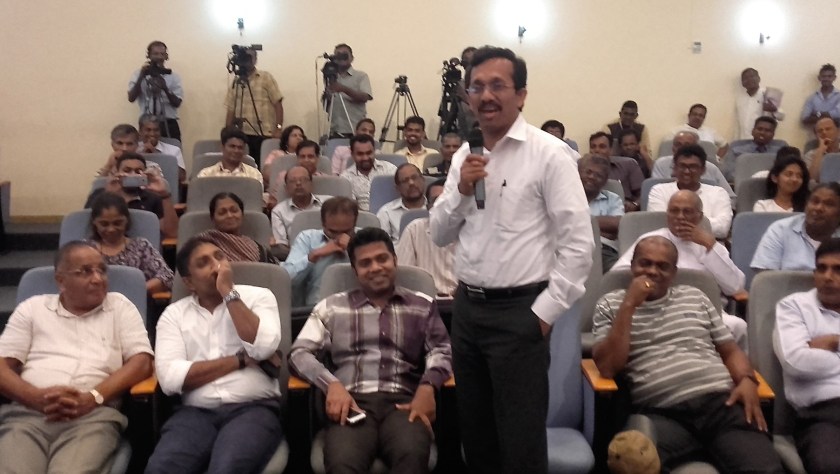
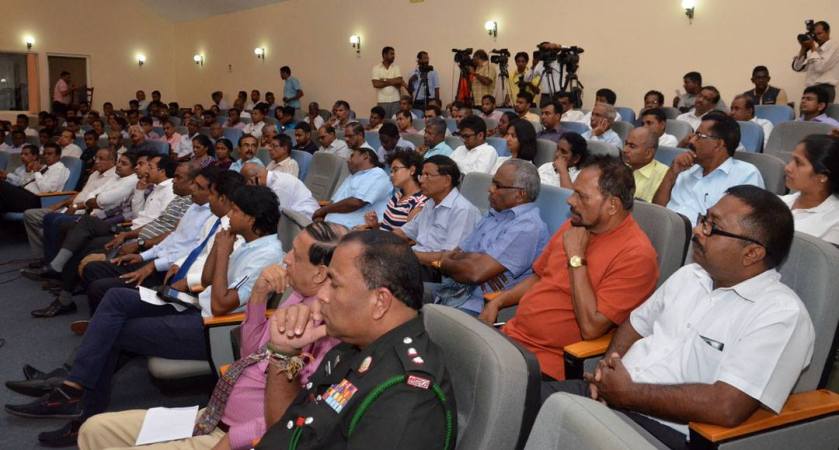
Part of audience at public forum on Sri Lanka's RTI Law, held in Colombo, 15 Feb 2017
Part of audience at public forum on Sri Lanka’s RTI Law, held in Colombo, 15 Feb 2017

Sri Lanka State of the Media Report’s Tamil version released in Jaffna

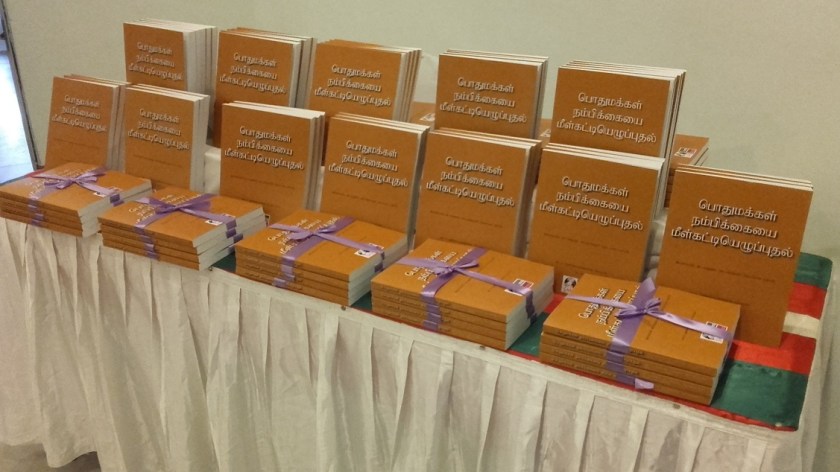
Rebuilding Public Trust: Tamil version copies displayed at the launch in Jaffna, 24 Jan 2017

Journalists, academics, politicians and civil society representatives joined the launch of Tamil language version of Sri Lanka’s Media Development Indicators (MDI) Report in Jaffna on 24 January 2017.

The report, titled Rebuilding Public Trust: An Assessment of the Media Industry and Profession in Sri Lanka, contains 101 recommendations for media sector reforms needed at different levels – in government policies, laws and regulations, as well as within the media industry, media profession and media teaching.

The report, for which I served as overall editor, is the outcome of a 14-month-long consultative process that involved media professionals, owners, managers, academics and relevant government officials. It offers a timely analysis, accompanied by policy directions and practical recommendations.

The original report was released on World Press Freedom Day (3 May 2016) at a Colombo meeting attended by the Prime Minister, Leader of the Opposition and Minister of Mass Media.

The Jaffna launch event was organised by the Department of Media Studies of the University of Jaffna, the Jaffna Press Club and the National Secretariat for Media Reforms (NSMR).

Students of Jaffna University Media Studies programme with its head, Dr S Raguram, at the launch of MDI Sri Lanka Tamil version, Jaffna, 24 January 2017

Reginald Cooray, Governor of the Northern Province, in a message said: “I am sure that the elected leaders and the policy makers of this government of Good governance will seize the opportunity to make a professionally ethical media environment in Sri Lanka which will strengthen the democracy and good governance.”

He added: “The research work should be studied, appreciated and utilised by the leaders and the policy makers. Everyone who was involved in the work should be greatly thanked for their research presentation with clarity.”

Lars Bestle of International Media Support (IMS) speaks at Sri Lanka MDI Report's Tamil version launch in Jaffna, 24 January 2017
Lars Bestle of International Media Support (IMS) speaks at Sri Lanka MDI Report’s Tamil version launch in Jaffna, 24 January 2017

Speaking at the event, Sinnadurai Thavarajah, Leader of the Opposition of the Northern Provincial Council, urged journalists to separate facts from their opinions. “Media freedom is important, but so is unbiased and balanced reporting,” he said.

Lars Bestle, Head of Department for Asia and Latin America at International Media Support (IMS), which co-published the report, said: “Creating a healthy environment for the media that is inclusive of the whole country is an essential part of ensuring democratic transition.”

He added: “This assessment points the way forward. It is now up to the local actors – government, civil society, media, businesses and academia – with support from international community, to implement its recommendations.”

Nalaka Gunawardene, Consultant Editor of Sri Lanka Media Development Indicators (MDI) Report, speaks at the launch of Tamil version in Jaffna on 24 Jan 2017

I introduced the report’s key findings and recommendations. In doing so, I noted how the government has welcomed those recommendations applicable to state policies, laws and regulations and already embarked on law review and regulatory reforms. In sharp contrast, there has been no reaction whatsoever from the media owners and media gatekeepers (editors).

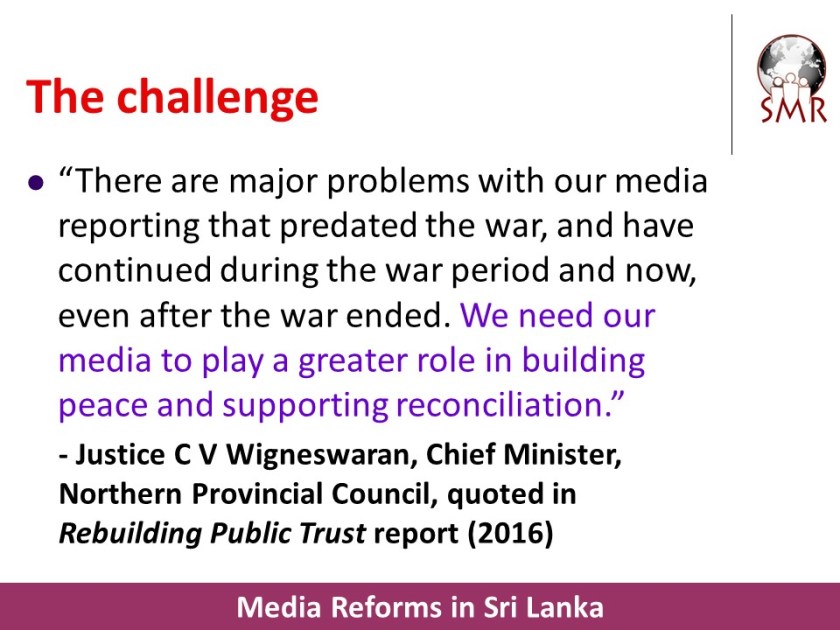
Quote from 'Rebuilding Public Trust' - State of Sri Lanka's media report
Quote from ‘Rebuilding Public Trust’ – State of Sri Lanka’s media report

Dr S Raguram, Head of Media Studies at the University of Jaffna (who edited the Tamil version) and Jaffna Press Club president Ratnam Thayaparan also spoke.

The report comes out at a time when the country’s media industry and profession face multiple crises stemming from an overbearing state, unpredictable market forces and rapid technological advancements.

Balancing the public interest and commercial viability is one of the media sector’s biggest challenges today. The report says: “As the existing business models no longer generate sufficient income, some media have turned to peddling gossip and excessive sensationalism in the place of quality journalism. At another level, most journalists and other media workers are paid low wages which leaves them open to coercion and manipulation by persons of authority or power with an interest in swaying media coverage.”

Notwithstanding these negative trends, the report notes that there still are editors and journalists who produce professional content in the public interest while also abiding by media ethics. Unfortunately, their work is eclipsed by media content that is politically partisan and/or ethnically divisive.

The result: public trust in media has been eroded, and younger Lankans are increasingly turning to entirely web-based media products and social media platforms for information and self-expression. A major overhaul of media’s professional standards and ethics is needed to reverse these trends.

MDI Sri Lanka - Tamil version being presented to stakeholders in Jaffna, 24 Jan 2017
MDI Sri Lanka – Tamil version being presented to stakeholders in Jaffna, 24 Jan 2017
MDI Sri Lanka - Tamil version being presented to stakeholders in Jaffna, 24 Jan 2017
MDI Sri Lanka – Tamil version being presented to stakeholders in Jaffna, 24 Jan 2017

The Tamil report is available for free download at:

https://www.mediasupport.org/publication/rebuilding-public-trust-media-assessment-sri-lanka-tamil-language-version/

The English original report is at:

https://www.mediasupport.org/publication/rebuilding-public-trust-assessment-media-industry-profession-sri-lanka/

Read my July 2010 op-ed: [Op-ed] Major Reforms Needed to Rebuild Public Trust in Sri Lanka’s Media

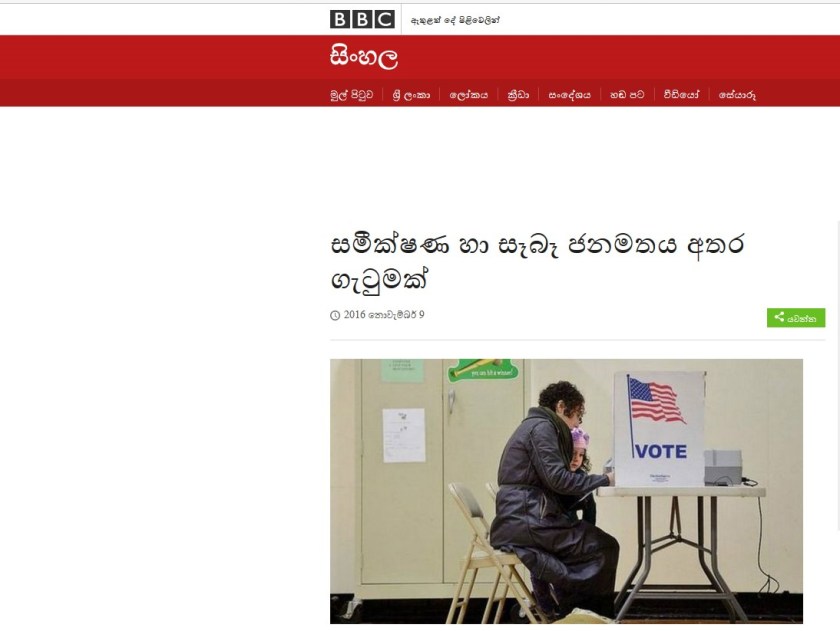
BBC Sinhala interview after US Presidential Election 2016: සමීක්ෂණ හා සෑබෑ ජනමතය අතර ගැටුමක්

Within hours of the US Presidential Election’s results becoming known on 9 November 2016, I gave a telephone interview to BBC Sinhala service. They asked me how almost all the opinion polls did not see Donald Trump winning the election, even though many polls said it was going to be a close contest.

http://www.bbc.com/sinhala/sri-lanka-37930295

සමීක්ෂණ හා සෑබෑ ජනමතය අතර ගැටුමක්

නොනවතින තොරතුරු ප්‍රවාහයක පිහිනීමට බටහිර රටවල් ඇතුළු ලොව බොහෝ රටවල ජනතාවට අවස්ථාව ලැබී තිබුණ ද, ඒ බොහෝ තොරතුරු ‘දූෂිත’ හෝ ‘විකෘති කරන ලද’ තොරතුරු වීම වර්තමාන සමාජය මුහුණදෙන අභියෝගයක් බව සමාජ මාධ්‍ය ජාල විශ්ලේෂක නාලක ගුණවර්ධන පවසයි.

දැනට වොෂින්ටනයේ සංචාරයක නිරතව සිටින නාලක ගුණවර්ධන ඒ අදහස් පළ කළේ අඟහරුවාදා (නොවැ. 08) පැවති ජනපතිවරණයේදී බොහෝ ජනමත සමීක්ෂණවල අනාවැකි බැහැර කරමින් ඩොනල්ඩ් ට්‍රම්ප් ජයග්‍රහණය ලැබීම පිළිබඳව බීබීසී සංදේශය සමග අදහස් දක්වමිනි.

වෙනත් ආයතනවල ජනමත සමීක්ෂණ ඇසුරින් බීබීසී සකස් කළ ජනමත සමීක්ෂණය අනුව ද අඟහරුවාදා මධ්‍යම රාත්‍රිය වනවිටත් හිලරි ක්ලින්ටන් ඒකක හතරකින් ඉදිරියෙන් සිටියාය.

“ඇත්තටම මේක අද ඇමෙරිකාව පුරා මාධ්‍ය ආයතන සහ ජනමත සමීක්ෂණ ආයතනවල ප්‍රධානම ප්‍රශ්නය බවට පත්වෙලා තියනවා,” නාලක ගුණවර්ධන පැවසීය.

“අදහගන්න බැහැ සියලුම ජනමත සමීක්ෂණ සැබෑ ජනමතයෙන් මෙතරම් දුරස් වුනේ කොහොමද කියල.” යැයි පැවසූ ඔහු ඒ සම්බන්ධයෙන් මේ අවස්ථාවේ කළ හැක්කේ අනුමාන පළකිරීම පමණක් බව කීය.

‘ජනමත සමීක්ෂණ සැබෑ ජනමතයෙන් මෙතරම් දුරස් වුනේ කොහොමද?’

ජනමත සමීක්ෂණ පිළිබඳව ඇමෙරිකානු ජනතාව කිසියම් කලකිරීමක් දැක්වීම හේතුවෙන් ඔවුන් සිය අවංක මතය හෙළි නොකළේය යන්න එවැනි එක් අනුමානයක් බව ද ඔහු සඳහන් කළේය.

පසුගියදා බ්‍රිතාන්‍යය යුරෝපා සංගමයෙන් ඉවත්වීම සම්බන්ධ ‘Brexit’ ජනමත විචාරණයේදීත් මේ හා සමානම තත්වයක් මතුවීම ජනමත විචාරණ ක්‍රමවේදයේ වරදක් දැයි විමසූ විට ඔහු කියා සිටියේ ක්‍රමවේදයේත් අසම්පූර්ණතා පවතින බව කලක් මුලුල්ලේම දැනසිටි බවය.

එමෙන්ම ජනතාව තවදුරටත් සිය අවංක මතය පළකිරීමට උනන්දුවක් නැති නම් සමස්ත ජනමත විචාරණ කර්මාන්තයම කඩාවැටීමේ අනතුරක් පවතින බව ද නාලක ගුණවර්ධන සඳහන් කළේය.

ඒ සියල්ලටම වඩා ඇමෙරිකානු මැතිවරණයෙන් මතු වූ බරපතලම අභියෝගය වූයේ ජනමාධ්‍ය සහ සමාජ මාධ්‍ය ජාල ඔස්සේ ගලා ගිය තොරතුරු අතුරින් ‘සැබෑව සහ මිත්‍යාව වෙන් කරගැනීම’ බව ඔහු පෙන්වා දුණි.

එක් අතෙකින් ඉතිහාසයේ අන් කවරදාකටත් වඩා ජනතාවට තොරතුරු ලබාගැනීමේ අවකාශයක් මතු වී තිබෙන අතරම ඒ තොරතුරු අතරින් සත්‍යය සහ සම්පූර්ණ තොරතුරු සොයා ගැනීම අභියෝගයක් මෙන්ම ඉතා පරස්පර සංසිද්ධියක් බව ද නාලක ගුණවර්ධන වැඩිදුරටත් පැවසීය.

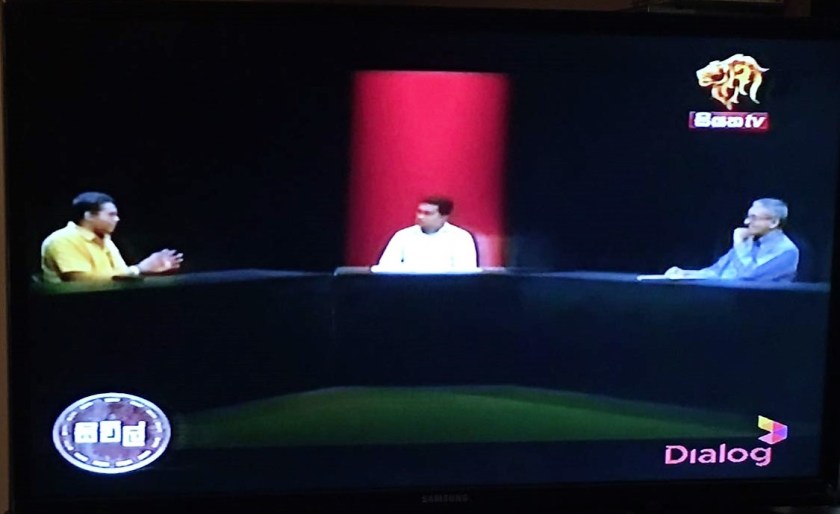
Siyatha TV CIVIL show: Discussing Sri Lanka’s Right to Information (RTI)

Siyatha TV CIVIL show: Dr Ranga Kalansooriya (left) and Nalaka Gunawardene (right) discuss Sri Lanka's Right to Information law with host Prasanna Jayanththi: 27 Sep 2016
Siyatha TV CIVIL show: Dr Ranga Kalansooriya (left) and Nalaka Gunawardene (right) discuss Sri Lanka’s Right to Information law with host Prasanna Jayanththi: 27 Sep 2016

Back in 2009-2010, I used to host a half hour show on Siyatha TV, a private television channel in Sri Lanka, on inventions and innovation.

So it was good to return to Siyatha on 27 September 2016 — this time as a guest on their weekly talk show CIVIL, to talk about  Sri Lanka’s new Right to Information (RTI) law.

Joining me was Dr Ranga Kalansooriya, experienced and versatile journalist who has recently become Director General of the Government Department of Information. Our amiable host was Prasanna Jayaneththi.

We discussed aspects of Sri Lanka’s Right to Information Act No 12 of 2016, adopted in late June 2016, with all political parties in Parliament supporting it. Certified by the Speaker on 4 August 2016, we are now in a preparatory period of six months during which all public institutions get ready for processing citizen request for information.

I emphasized on the vital DEMAND side of RTI: citizens and their various associations and groups need to know enough about their new right to demand and receive information from public officials — and then be motivated to exercise that right.

I argued that making RTI a fundamental right (through the 19th Amendment to the Constitution in April 2015), passing the RTI Act in June 2016 and re-orienting the entire public sector for information disclosure represent the SUPPLY side. It needs to be matched by inspiring and catalysing the DEMAND side, without which this people’s law cannot benefit people.

In the final part, Ranga and I also discussed aspects of Sri Lanka’s media sector reforms, which are stemming from a major new study that he and I were both associated with: Rebuilding Public Trust: An Assessment of the Media Industry and Profession in Sri Lanka (May 2016).


Part 1:


Part 2:


Part 3:

One Sri Lanka Journalism Fellowship: Rebuilding Lankan Media, one journalist at a time…

http://onesrilanka.net/

In May 2016, the major new study on the media sector I edited titled Rebuilding Public Trust: An Assessment of the Media Industry and Profession in Sri Lanka, noted:

“The new government faces the daunting task of healing the wounds of a civil war which lasted over a quarter of a century and left a deep rift in the Lankan media that is now highly polarised along ethnic, religious and political lines. At the same time, the country’s media industry and profession face their own internal crises arising from an overbearing state, unpredictable market forces, rapid technological advancements and a gradual erosion of public trust.”

The report quoted Dr Ranga Kalansooriya, who worked in the print media (Sinhala and English) and later served as Director General of Sri Lanka Press Institute, as saying:

“The ethnically non-diverse newsrooms of both sides have further fuelled the polarisation of society on ethnic lines, and this phenomenon has led the media in serving its own clientele with ‘what it wants to know’ than ‘what it needs to know’.”

This is precisely what the One Sri Lanka Journalism Fellowship Program (OSLJF) has addressed, in its own small way. An initiative of InterNews, an international media development organisation, OSLJF was a platform which has brought together Sinhala, Tamil and Muslim working journalists from across the country to conceptualize and produce stories that explored issues affecting all ordinary Lankans.

From December 2015 to September 2016, some 30 full-time or freelance journalists reporting for the country’s mainstream media were supported to engage in field-based, multi-sourced stories on social, economic and political topics of public interest. They worked in multi-ethnic teams, mentored by senior Lankan journalists drawn from the media industry who gave training sessions to strengthen the skills and broaden the horizons of this group of early and mid-career journalists.

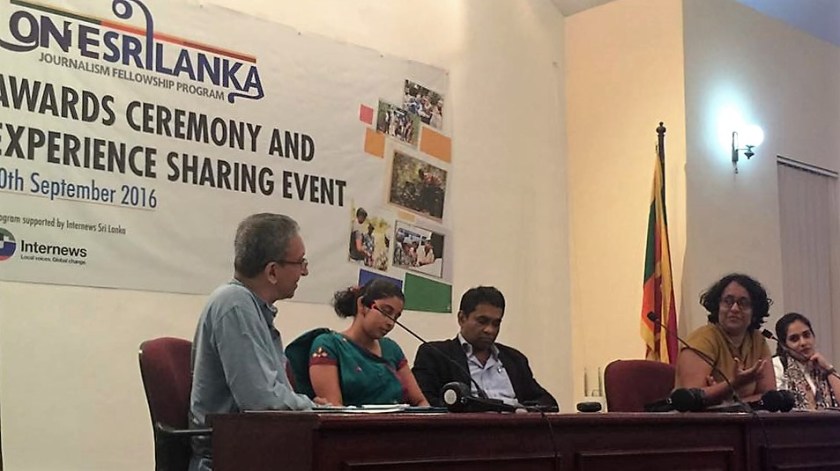
As the project ends, the participating journalists, mentors and administrators came together at an event in Colombo on 20 September 2016 to share experiences and impressions. This was more than a mere award ceremony – it also sought to explore how the learnings can be institutionalized within the country’s mainstream and new media outlets.

I was asked to host the event, and also to moderate a panel of key media stakeholders. As a former journalist who remains a columnist, blogger and media researcher, I was happy to accept this as I am committed to building a BETTER MEDIA in Sri Lanka.

Panel on Future of Sri Lankan Journalism in the Digital Age. L to R – Nalaka Gunawardene (moderator); Deepanjali Abeywardena; Dr Ranga Kalansooriya; Dr Harini Amarasuriya; and Gazala Anver

Here are my opening remarks for the panel:

“If you don’t like the news … go out and make some of your own!” So said Wes (‘Scoop’) Nisker, the US author, radio commentator and comedian who used that line as the title of a 1994 book.

Instead of just grumbling about imperfections in the media, more and more people are using digital technologies and the web to become their own reporters, commentators and publishers.

Rise of citizen journalism and digital media start-ups are evidence of this.

BUT we cannot ignore mainstream media (MSM) in our part of the world. MSM – especially and radio broadcasters — still have vast reach and they influence public perceptions and opinions. It is VITAL to improve their professionalism and ethical conduct.

In discussing the Future of Journalism in the Digital Age today, we want to look at BOTH the mainstream media AND new media initiatives using web/digital technologies.

BOTTOMLINE: How to uphold timeless values in journalism: Accuracy, Balance, Credibility and promotion of PUBLIC INTEREST?

I posed five broad questions to get our panelists thinking:

  • What can be done to revitalize declining quality and outreach of mainstream media?
  • Why do we have so little innovation in our media? What are the limiting factors?
  • What is the ideal mix and balance of mainstream and new media for Lanka?
  • Can media with accuracy, balance and ethics survive in our limited market? If so, how?
  • What can government, professionals and civil society to do to nurture a better media?

 The panel comprised:

  • Dr Harini Amarasuriya, Senior Lecturer, Social Studies Department, Open University
  • Deepanjali Abeywardena, Head of Information and Intelligence Services at Verité Research. Coordinator of Ethics Eye media monitoring project.
  • Dr Ranga Kalansooriya, Director General, Department of Information. Former Director General, Sri Lanka Press Institute (SLPI).
  • Gazala Anver, editor, Roar.lk a new media platform for all things Sri Lanka
Panel on Future of Sri Lankan Journalism in the Digital Age. L to R – Nalaka Gunawardene (moderator); Deepanjali Abeywardena; Dr Ranga Kalansooriya; Dr Harini Amarasuriya; and Gazala Anver

සිවුමංසල කොලුගැටයා #284: දකුණු ආසියානු රජයන්ගේ මාධ්‍ය මර්දනයේ සියුම් මුහුණුවර හඳුනා ගනිමු

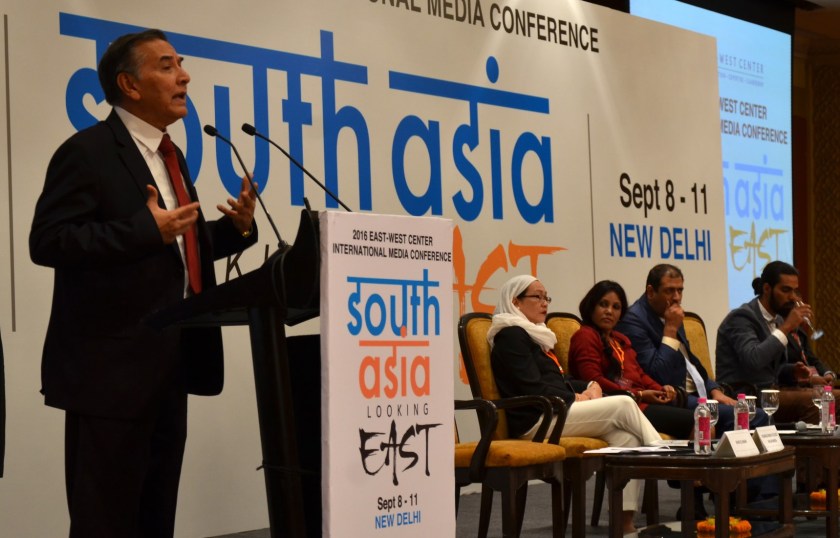
East-West Center 2016 International Media Conference in New Delhi, India, from September 8 to 11, 2016

In this week’s Ravaya column (in Sinhala, appearing in the print issue of 18 Sep 2016), I discuss new forms of media repression being practised by governments in South Asia.

The inspiration comes from my participation in the Asia Media Conference organized by the Hawaii-based East-West Center in New Delhi, India, from September 8 to 11, 2016. Themed “South Asia Looking East”, it drew over 350 participants from across Asia and the United States.

Speeches and discussions showed how governments are more concerned about international media rights watch groups tracking the imprisonment and physical harassment of media and journalists. So their tactics of repression have changed to unleash bureaucratic and legal harassment on untamed and unbowed journalists. And also to pressurising advertisers to withdraw.

Basically this is governments trying to break the spirit and commercial viability of free media instead of breaking the bones of outspoken journalists. And it does have a chilling effect…

In this column, I focus on two glaring examples that were widely discussed at the Delhi conference.

In recent months, leading Bangladeshi editor Mahfuz Anam has been sued simultaneously across the country in 68 cases of defamation and 18 cases of sedition – all by supporters of the ruling party. Anam was one of six exceptional journalists honoured during the Delhi conference “for their personal courage in the face of threats, violence and harassment”.

In August, an announcement was made on the impending suspension of regional publication of Himal Southasian, a pioneering magazine promoting ‘cross-border journalism’ in the South Asian region. The reason was given as “due to non-cooperation by regulatory state agencies in Nepal that has made it impossible to continue operations after 29 years of publication”.

Bureaucracy is pervasive across South Asia, and when they implement commands of their political masters, they become formidable threats to media freedom and freedom of expression. Media rights watch groups, please note.

”බලවත් රජයක් හා ස්වාධීන මාධ්‍ය අතර ගැටුමකදී නිරන්තරයෙන්ම පාහේ මුල් වට කිහිපය ජය ගන්නේ රජයයි. බලපෑම් හා පීඩන කළ හැකි යාන්ත්‍රණ රැසක් රජය සතු නිසා. එහෙත් අන්තිමේදී ස්වාධීන මාධ්‍ය ජය ලබනවා!”

”කියවන විට ලිවීම සිය මාධ්‍ය කලාව ලෙස නිර්වචනය කර ගත් කීකරු මාධ්‍යවලට නම් කිසිදු රටක රජයකින් හෝ වෙනත් බල කේන‍ද්‍රවලින් තාඩන පීඩන එල්ල වන්නේ නැහැ. එහෙත් එසේ නොකරන, පොදු උන්නතිය වෙනුවෙන් පෙනී සිටින මාධ්‍යවලට (free press) පන්න පන්නා හිරිහැර කරන සැටි දේශපාලකයන් මෙන්ම නිලධාරී තන්ත්‍රය හොඳහැටි දන්නවා. හීලෑ කර ගත නොහැකි මාධ්‍යවේදීන් හා කතුවරුන් හිරේ දැමීම, ඔවුන්ට පහරදීම හෝ මරා දැමීම බරපතළ ලෝක විවේචනයට ලක් වන නිසා ඊට වඩා සියුම් අන්දමින් මාධ්‍යවලට හිරිහැර කිරීමට දකුණු ආසියානු ආණ්ඩු දැන් නැඹුරු වී සිටිනවා, මාධ්‍ය නිදහසට එල්ල වන ප්‍රකට තර්ජන (භෞතික ප්‍රහාර හා නිල ප්‍රවෘත්ති පාලනයන්) ගැන ඇස යොමා ගෙන සිටින ජාත්‍යන්තර ආයතනවලට පවා මේවා හරිහැටි ග්‍රහණය වන්නේ නැහැ!”

මේ වටිනා විග්‍රහයන්ට මා සවන් දුන්නේ 2016 සැප්තැම්බර් 8-11 දින කිහිපය තුළ ඉන්දියාවේ නවදිල්ලියේ පැවති ජාත්‍යන්තර මාධ්‍ය සමුළුවකදී (East-West Center 2016 International Media Conference).  අමෙරිකාවේ හවායිහි පිහිටි ඊස්ට්-ටෙස්ට් කේන‍ද්‍රය තවත් කලාපීය හා ඉන්දීය පාර්ශ්වකරුවන් සමග සංවිධානය කළ මේ සමුළුවට රටවල් හතළිහකින් පමණ 350කට වැඩි මාධ්‍යවේදී පිරිසක් සහභාගි වුණා.

මා එහි ගියේ ආරාධිත කථීකයෙක් හා එක් සැසි වාරයක මෙහෙයවන්නා ලෙසින්.

තොරතුරු අයිතිය, විද්‍යුත් ආවේක්ෂණය, සමාජ මාධ්‍ය, ගවේෂණාත්මක මාධ්‍යකරණය, පාරිසරික වාර්තාකරණය ආදී විවිධ තේමා යටතේ සැසිවාර හා සාකච්ඡා රැසක් තිබුණත් වැඩිපුරම අවධානය යොමු වුණේ මාධ්‍ය නිදහසට එල්ල වන පීඩන හා තර්ජන ගැනයි.

මෙය දේශපාලන සංවාදයකට සීමා නොවී මාධ්‍යවල වෘත්තියභාවය, ආචාරධර්මීය ක්‍රියා කලාපය හා මාධ්‍ය-රජය තුලනය ආදී පැතිකඩද කතාබහ කෙරුණා.

Mahfuz Anam speaks at East West Center Media Conference in Delhi

සමුළුවේ ප්‍රධාන භූමිකාවන් රඟපෑවේ (සහ මාධ්‍ය නිදහස උදෙසා අරගල කිරීම සඳහා පිරිනැමුණු විශේෂ සම්මානයක් හිමි කර ගත්තේ) මෆූස් අනාම් (Mahfuz Anam) මාධ්‍යවේදියායි.ඔහු බංග්ලාදේශයේ අද සිටින ජ්‍යෙෂ්ඨතම එසේම ලොව පිළිගත් පුවත්පත් කතුවරයෙක්. කලක් යුනෙස්කෝ සංවිධානයේ තනතුරක් හෙබ වූ ඔහු සියරට ආවේ මාධ්‍ය ක්ෂේත්‍රයේ සක්‍රිය වීමටයි.

ඔහු එරට මුල්පෙළේ පුවත්පතක් වන Daily Star කතුවරයා මෙන්ම ප්‍රකාශකයාද වනවා. ඩේලි ස්ටාර් බංගල්දේශයේ වඩාත්ම අලෙවි වන ඉංග්‍රීසි පුවත්පතයි. එය මීට වසර 25කට පෙර අනාම් ඇරඹුවේ එරට මිලිටරි පාලනයකින් යළිත් ප්‍රජාතන්ත්‍රවාදී මාවතට පිවිසි පසුවයි.

ප්‍රජාතන්ත්‍රවාදය, පුරවැසි අයිතිවාසිකම්, විවෘත ආණ්ඩුකරණය හා රාජ්‍ය විනිවිදභාවය වැනි පරමාදර්ශයන් වෙනුවෙන් ඔහුත්, ඔහුගේ පුවත්පතත් කවදත් පෙනී සිටිනවා.

බංග්ලාදේශයේ අතිශයින් ධ්‍රැවීකරණය වී ඇති පක්ෂ දේශපාලනය ඔහු විවෘතවම විවේචනය කරනවා. මේ නිසා දේශපාලකයන් ඔහුට කැමති නැහැ. මීට පෙරද නොයෙක් පීඩනයන් එල්ල වුවත් ඔහුගේ මාධ්‍ය කලාවට ලොකුම තර්ජනය මතු වී ඇත්තේ ෂේක් හසීනා වත්මන් අගමැතිනියගේ රජයෙන්.

බලයේ සිටින ඕනෑම රජයක් සහේතුකව විවේචනය කිරීම අනාම්ගේ ප්‍රතිපත්තියයි. අධිපතිවාදී රාජ්‍ය පාලනයක් ගෙන යන හසීනා අගමැතිනියට මෙය කිසිසේත් රුස්සන්නේ නැහැ. ඇය, ඇගේ ආන්දෝලනාත්මක පුත්‍රයා හා දේශපාලන අනුගාමිකයන් ඩේලි ස්ටාර් පත්‍රයට හිරිහැර කිරීමට පටන් ගත්තේ මීට වසර 3කට පමණ පෙරයි.

එහෙත් එය උත්සන්න වූයේ 2016 පෙබරවාරියේ. එරට ටෙලිවිෂන් නාලිකාවක් සමඟ කළ සාකච්ඡාවකදී අනාම් එක්තරා පාපෝච්චාරණයක් කළා. වත්මන් අගමැතිනිය 2007දී විපක්ෂ නායිකාව ලෙස සිටියදී ඇයට එරෙහිව මතු වූ දුෂණ චෝදනා සිය පුවත්පතේ පළ කිරීම ගැන ඔහු කණගාටුව ප්‍රකාශ කළා.

එවකට එරට පාලනය කළේ හමුදාව විසින් පත් කළ,  ඡන්දයකින් නොතේරුණු රජයක්. එම රජය හසීනා අගමැතිනියට එරෙහිව මතු කළ දූෂණ චෝදනා, නිසි විමර්ශනයකින් තොරව සිය පත්‍රයේ පළ කිරීම කර්තෘ මණ්ඩල අභිමතය අනිසි ලෙස භාවිත කිරීමක් (poor editorial judgement) බව ඔහු ප්‍රසිද්ධියේ පිළිගත්තා.

එම දූෂණ චෝදනා එරට වෙනත් බොහෝ මාධ්‍යද එවකට පළ කරන ලද නමුත් මෙසේ කල් ගත වී හෝ ඒ ගැන පසුතැවීමක් සිදු කර ඇත්තේ ඩේලි ස්ටාර් කතුවරයා පමණයි.

කතුවරුන් යනු අංග සම්පූර්ණ මිනිසුන් නොවෙයි. ඔවුන් අතින් ද වැරදි සිදු වනවා. ඒවා පිළිගෙන සමාව අයැද සිටීම අගය කළ යුත්තක්.

එහෙත් මේ  පාපොච්චාරණයෙන් හසීනා පාක්ෂිකයෝ දැඩි කෝපයට පත් වූවා. මහජන ඡන්දයෙන් නොව බලහත්කාරයෙන් බලයේ සිටි රජයක් එකල විපක්ෂ නායිකාවට කළ චෝදනා පත්‍රයේ පළ කිරීම ඇය දේශපාලනයෙන් ඉවත් කිරීමට කළ කුමන්ත්‍රණයක කොටසක් බව ඔවුන් තර්ක කළා.

අනාම් මේ තර්කය ප්‍රතික්ෂේප කරනවා. 2007-8 හමුදාමය රජයට එරෙහිව තමන් කතුවැකි 203ක් ලියමින් ප්‍රජාතන්ත්‍රවාදය යළි ස්ථාපිත කරන මෙන් ඉල්ලා සිටි බව ඔහු මතක් කරනවා. එසේම දූෂණ චෝදනා මත හසීනා අත්අඩංගුවට ගත් විට එයට එරෙහිව ප්‍රබල විරෝධතා මතු කළේත් තම පත්‍රය බව ඔහු කියනවා. (2008දී හසීනාගේ අවාමි ලීගය යළි බලයට පත් වූ විට එම චෝදනා සියල්ල කිසිදු  විභාග කිරීමකින් තොරව අත්හැර දමනු ලැබුවා.)

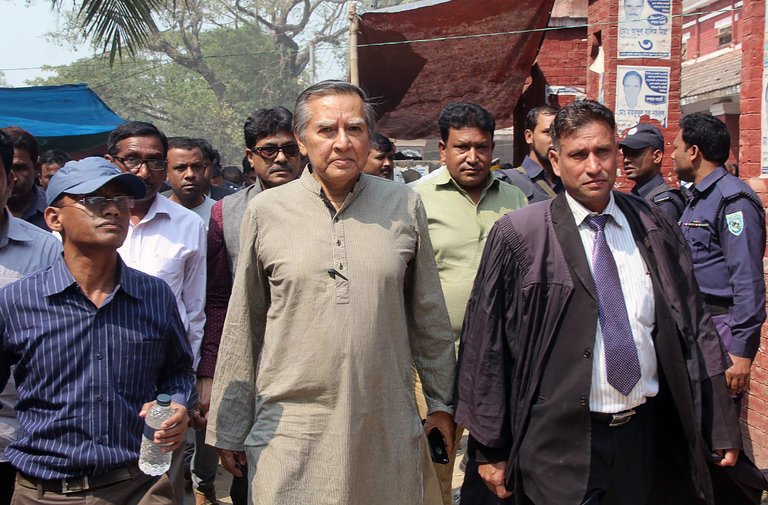
Mahfuz Anam, center, the editor of The Daily Star, Bangladesh’s most popular English-language newspaper, outside a court in Rangpur District, March 2016
Mahfuz Anam, center, the editor of The Daily Star, Bangladesh’s most popular English-language newspaper, outside a court in Rangpur District, March 2016 [Photo courtesy The New York Times]
පෙබරවාරි ටෙලිවිෂන් සාකච්ඡාවෙන් පසු සති කිහිපයක් තුළ රටේ විවිධ ප්‍රදේශවල උසාවිවල අනාම්ට එරෙහිව අපහාස නඩු හා රාජ්‍ය ද්‍රෝහිත්වය (sedition) අරභයා නඩු දුසිම් ගණනක් ගොනු කරනු ලැබුවා. මේ එකම නඩුවකටවත් බංග්ලාදේශ රජය සෘජුව සම්බන්ධ නැහැ. නඩු පැමිණිලිකරුවන් වන්නේ හසීනාගේ පාක්ෂිකයෝ.

මේ වන විට අපහාස නඩු 68ක් හා රාජ්‍ය ද්‍රෝහිත්වයට එරෙහි  නඩු 18ක් විභාග වෙමින් තිබෙනවා. මේවාට පෙනී සිටීමට රට වටේ යාමටත් වග උත්තර බැඳීමටත් ඔහුට සිදුව තිබෙනවා.

නඩු පැවරීමට අමතරව වෙනත් උපක්‍රම හරහාද තම පත්‍රයට හිරිහැර කරන බව අනාම් හෙළි කළා. පත්‍රයට නිතිපතා දැන්වීම් ලබා දෙන ප්‍රධාන පෙළේ සමාගම් රැසක් රාජ්‍ය බලපෑම් හමුවේ නොකැමැත්තෙන් වුවත් එය නතරකොට තිබෙනවා. මේ නිසා ඩේලිස්ටාර් දැන්වීම් ආදායම 40%කින් පහත වැටිලා.

”එහෙත් මධ්‍යම හා කුඩා පරිමානයේ දැන්වීම්කරුවන් දිගටම අපට දැන්වීම් දෙන බවට ප්‍රතිඥා දී තිබෙනවා. මේ ව්‍යාපාරිකයන්ගේ කැපවීම අගය කළ යුතුයි. ආණ්ඩු බලයට නතු නොවී, බිය නොවී, ස්වාධීන මාධ්‍යවලට අනුග්‍රහය දක්වන ව්‍යාපාර ඉතිරිව තිබීම අපට ලොකු සවියක්” අනාම් ප්‍රකාශ කළා.

කුඩා හා මධ්‍යම පරිමාන දැන්වීම් කරුවන්ට අමතරව බංගලාදේශයේ වෘත්තිකයන්, බුද්ධිමතුන් හා කලාකරුවන්ද ඩේලිස්ටාර් හා එහි කතුවරයා වෙනුවෙන් කථා කරනවා. සෙසු (තරඟකාරී) මාධ්‍ය කෙසේ වෙනත් මහජනයා මෙසේ ස්වාධීන මාධ්‍යවල නිදහස වෙනුවෙන් කථා කිරීම ඉතා වැදගත්.

මාධ්‍ය නිදහස රැකීමට වීදි උද්ඝෝෂණ කළාට පමණක් මදි. අන්තවාදීන්ගේ හා මර්දනකාරී ආණ්ඩුවල පීඩනයට ලක් වන මාධ්‍ය ආයතනවලට ප්‍රසිද්ධියේ සහාය දැක්වීම ද අවශ්‍යයි.

නවදිල්ලි සමුළුවේ අවධානයට ලක් වූ තවත් මාධ්‍ය මර්දනයක් නම් නේපාලයේ කත්මණ්ඩු අගනුවරින් පළ කැරෙන හිමාල් (Himal) සඟරාවේ අර්බුදයයි.

Kanak Mani Dixit (left) and Kunda Dixit struggling to save Himal South Asian magazine

හිමාලයට සාමුහිකව හිමිකම් කියන භූතානය, ඉන්දියාව, නේපාලය, ටිබෙටය, පකිස්ථානය හා චීනය යන රටවල් කෙරෙහි මුලින් අවධානය යොමු කළ මේ ඉංග්‍රීසි සඟරාව, වසර කිහිපයකින් සමස්ත දකුණු ආසියාවම ආවරණය කැරෙන පරිදි Himal Southasian නමින් යළි නම් කළා.

සාක් කලාපයේ රටවල (විශේෂයෙන් ඉන්දියාවේ) හොඳ කාලීන පුවත් සඟරා ඇතත් දකුණු ආසියාව ගැන පොදුවේ කථා කරන එකම වාරික ප්‍රකාශනය මෙයයි. ජාතික දේශසීමාවලින් ඔබ්බට ගොස් සංසන්දනාත්මකව හා තුලනාත්මකව සමාජ, ආර්ථීක, දේශපාලනික හා සංස්කෘතික ප්‍රශ්න ගවේෂණය කිරීම දශක තුනක් තිස්සේ හිමාල් සඟරාව ඉතා හොඳින් සිදු කරනවා.

2016 අගෝස්තු 24 වනදා හිමාල් සඟරාවේ ප්‍රකාශකයන් වන දකුණු ආසියානු භාරය (Southasia Trust) විශේෂ නිවේදනයක් නිකුත් කරමින් කියා සිටියේ නේපාල රජයේ ආයතනවලින් දිගින් දිගටම මතුව ඇති බාධක හා අවහිර කිරීම් නිසා කණගාටුවෙන් නමුත් සඟරාව පළ කිරීම නතර කරන බවයි.

”හිමාල් නිහඬ කරනු ලබන්නේ නිල මාධ්‍ය වාරණයකින් හෝ සෘජු භෞතික පහරදීමකින් හෝ නොවෙයි. නිලධාරිවාදයේ දැඩි හස්තයෙන් අපට හිරිහැර කිරීමෙන්. කිසිදු දැනුම් දීමකින් හෝ චෝදනාවකින් තොරව අපට ලැබෙන ආධාර සියල්ල අප කරා ළඟා වීම වළක්වා තිබෙනවා. අපේ සියලු ගිණුම් වාර්තා ඉහළ මට්ටමක ඇති බවත්, සියලු කටයුතු නීත්‍යනුකූල බවත් රාජ්‍ය ආයතන සහතික කළත්, අපට එල්ල වන පරිපාලනමය බාධක අඩු වී හෝ නතර වී නැහැ” එම නිවේදනයේ සඳහන් වුණා.

වෘත්තීය කර්තෘ මණ්ඩලයක් මඟින් සංස්කරණය කැරෙන, ලිපි ලියන ලේඛකයන්ට ගරුසරු ඇතුව ගෙවීම් කරන, දැන්වීම් ඉතා සීමිත මේ සඟරාවේ නඩත්තු වියදම පියවා ගත්තේ දෙස් විදෙස් දානපති ආධාරවලින්. සඟරාවට ආධාර ළඟා වීම වැළැක්වීම හරහා එය හුස්ම හිරකර මරා දැමීම එහි විරද්ධවාදීන්ගේ උපක්‍රමයයි.

මෙසේ කරන්නේ ඇයි? හිමාල් සඟරාවේ ආරම්භකයා හා අද දක්වාත් සභාපතිවරයා නේපාල ක්‍රියාකාරීක හා මගේ දිගු කාලීන මිත්‍ර කනක් මානි ඩික්සිත් (Kanak Mani Dixit). 2012 අගෝස්තු 12 මගේ තීරු ලිපියෙන් සිංහල පාඨකයන්ට ඔහුගේ ප්‍රතිපත්තිමය අරගලයන් මා හඳුන්වා දුන්නා.

සිවුමංසල කොලූගැටයා #78: කනක් මානි ඩික්සිත් – හිමාල කඳු සොළවන පුංචි වැඩකාරයා

කනක්ගේ මාධ්‍ය විවේචන හමුවේ දැඩි ලෙසි උරණ වී ඔහුට නිලබලයෙන් පහර දීමට මූලිකව සිටින්නේ නේපාලයේ බලය අයථා ලෙස භාවිත කිරීම විමර්ශනය කරන රාජ්‍ය කොමිසමේ ප්‍රධානියා වන ලෝක්මාන් සිං කාර්කි.

2013 දී කාර්කි මේ තනතුරට පත් කරන විට ඔහු එයට නොසුදුසු බව කනක් ප්‍රසිද්ධියේ පෙන්වා දුන්නා. එහෙත් දේශපාලකයන් පත්වීම ස්ථීර කළ අතර එතැන් පටන් මේ නිලධාරීයා නිල බලය අයථා ලෙස යොදා ගනිමින් සිය විවේචකයන්ට හිරිහැර කිරීම ඇරඹුවා.

2016 අප්‍රේල් මාසයේ දූෂණ චෝදනා මත කනක් ඩික්සින් අත් අඩංගුවට ගෙන ටික දිනක් රඳවා තැබුණා. මේ ගැන එරට හා විදෙස් මාධ්‍ය හා මානව හිමිකම් සංවිධාන දැඩි විරෝධය පළ කළා. අන්තිමේදී කනක් සියලු චෝදනාවලට නිදොස් කොට නිදහස් කරනු ලැබුවේ නේපාල ශ්‍රේෂ්ඨාධිකරණය විසින්.

කනක්ට සෘජුව හිරිහැර කිරීම ඉන් පසු අඩු වූවත් ඔහු සම්බන්ධ මාධ්‍ය ප්‍රකාශන, ස්වේච්ඡා ආයතන හා සිවිල් සමාජ සංවිධානවලට නොයෙක් බලපෑම් කිරීම දිගටම සිදු වනවා.

හිමාල් සඟරාවට හා දකුණු ආසියාව භාරයට හිරිහැර කිරීම මේ ප්‍රහාරයන්ගේ එක් පියවරක්. මේ අත්තනෝමතික නිලධාරියාට දේශපාලන බලයද ඇති නිසා අන් නිලධාරීන්  ඔහුට එරෙහි වීමට බියයි.

රාජ්‍ය තන්ත්‍රයේ මුළු බලය යොදා ගෙන පුංචි (එහෙත් නොනැමෙන) සඟරාවකට හිරිහැර කරන විට එයට එරෙහිව හඬක් නැගීමට බොහෝ නේපාල මාධ්‍ය ආයතන  පැකිලෙනවා. එයට හේතුව මර්දකයා තමන් පසුපස ද එනු ඇතැයි බියයි. මේ අතින් නේපාල තත්ත්වය බංග්ලාදේශයට වෙනස්.

පොදු උන්නතිය වෙනුවෙන් නිර්ව්‍යාජව පෙනී සිටින මාධ්‍ය ආයතනයක් හා කතුවරයෙක් මර්දනයට ලක් වූ විට ඔවුන් වෙනුවෙන් හඬ නැගීම ශිෂ්ඨ සමාජයක කාගේත් වගකීමක්. හිමාල් සඟරාව හා කනක් ඩික්සින් වෙනුවෙන් මේ හඬ වැඩිපුරම මතුව ආයේ ඔහුගේ මෙහෙවර අගයන සෙසු දකුණු ආසියාතික රටවලින්.

මේ ලිපිය ආරම්භයේ මා උපුටා දැක්වූ පලමු උධෘතය මෆූස් අනාම්ගේ. ඊළඟ උධෘතය කනක්ගේ  සොහොයුරු කුන්ඩා ඩික්සිත්ගේ. මෆූස්, කනක් හා කුන්ඩා වැනි කතුවරුන්ට සහයෝගිතාව දැක්වීම නවදිල්ලි සමුළුව පුරාම දැකිය හැකි වුණා.

අවසානයේ මාධ්‍ය ජය ගන්නා තුරු මර්දනයට ලක් වන මාධ්‍ය ආයතන හා මාධ්‍යවේදීන් සමඟ සහයෝගයෙන් සිටීම ඉතා වැදගත්.