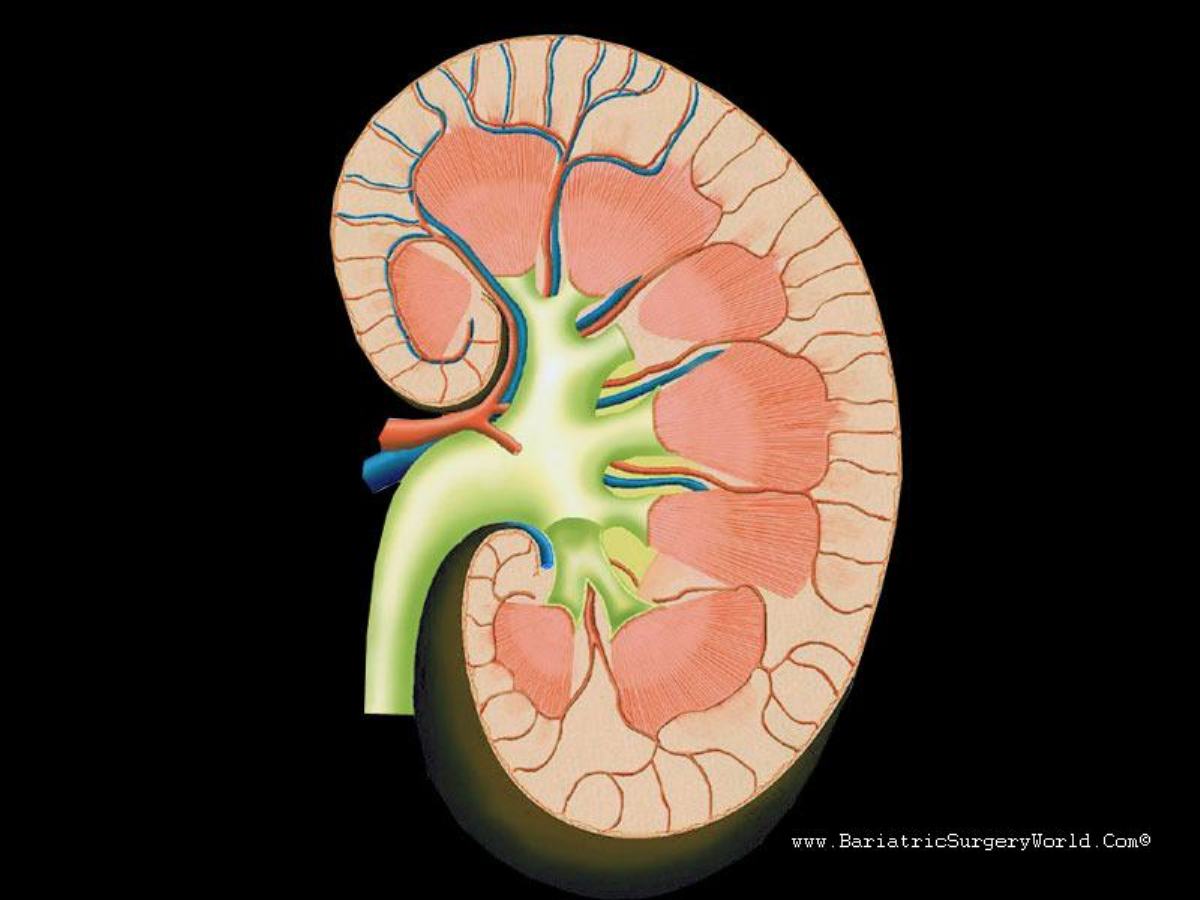
The kidneys are vital organs in our body that help keep the blood clean and chemically balanced through filtering. Healthy kidneys separate waste and excess water.
Similarly, a healthy and vibrant media helps separate fact from fiction, and provides clarity and context vital for an open, pluralistic society to function.
In Sri Lanka, mass kidney failure during the past two decades has been followed by what I see as a mass media failure to understand, analyse and report adequately on this public health emergency. Instead of helping affected people and policy makers to work out solutions, some journalists have become mere amplifiers of extreme activist positions.
As health officials and policy makers struggle with the prolonged humanitarian crisis, partisan media coverage has added to public confusion, suspicion and fear. As a science writer and journalist, I have watched this with growing concern.
I just gave a talk on this to the Science Communication Leadership Workshop which was part of the First General Assembly of Association of Academies and Societies of Sciences in Asia (AASSA) held in Colombo, Sri Lanka, on 17 October 2012.
Despite the recent International Year of Chemistry (2011), chemicals don’t get good press in Sri Lanka. If at all they make it to the news, or become a current affairs topic, that is usually as a bad story: a chemical spill, water contamination or suspected pesticide residues in our food.
All these happen, and we should be concerned. But chemicals are everywhere in our modern lives — reducing drudgery, protecting us from disease and overall improving the quality of life. It’s all a question of balancing risks with benefits. Also discerning what we really need as opposed to what we want.
Focusing on bad news is the media’s typical approach, and demonising science and technology is common in many sections of our print and broadcast media. Such posturing also fits well into the prevailing narrative of the ‘whole world being out to undermine, destabilise and destroy us’. So chemical industries must be part of that ‘conspiracy’, no?
Many of Lanka’s environmental activists don’t allow facts and analysis to get in the way of a good scare story. Uncritical journalists and their editors often peddle their half-baked arguments and conspiracy theories unsupported by any evidence. Very few scientists speak out for science and reason.
So when the Centre for Environmental Justice (CEJ), a moderate advocacy group, invited me to talk to a group of journalists and broadcasters at a media workshop, I welcomed the opportunity.
I based my talk on five scientists each of who took on once-revered chemicals and formidable industry interests, all in the public interest. By showcasing these champions of public science, I wanted to show that there are honest, diligent scientists who engage in evidence-based advocacy. Not all scientists are part of some global conspiracy to poison us…
The five are those who worked tirelessly and left their mark in their discipline, and in how we look at chemical and environmental management: Rachel Carson (1907 – 1964) Alice Hamilton (1869 – 1970) Sherwood Rowland (1927 – 2012) Theo Colborn (1927 – ) Anil Agarwal (1947 – 2002)
I ended by urging journalists to look for credible and moderate scientists who are led by evidence, not conjecture or prejudice. Amplifying their voices is something we in the media are well positioned to do, but don’t do nearly enough.
Presentation to Media workshop on scientific reporting on chemical issues, organised by Centre for Environmental Justice in Colombo, 25 September 2012:
This is the text of my (Sinhala language) column in Ravaya newspaper of 23 September 2012. I review two new books, both of much public interest, and written by two senior professionals who have been passionately committed to public safety for decades.
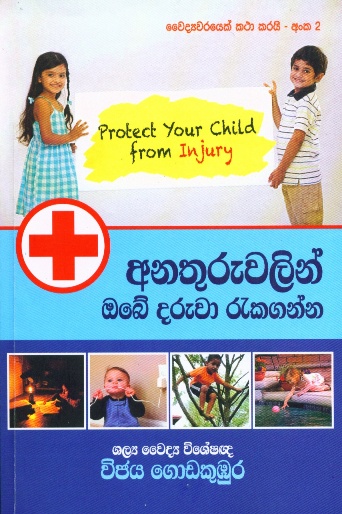
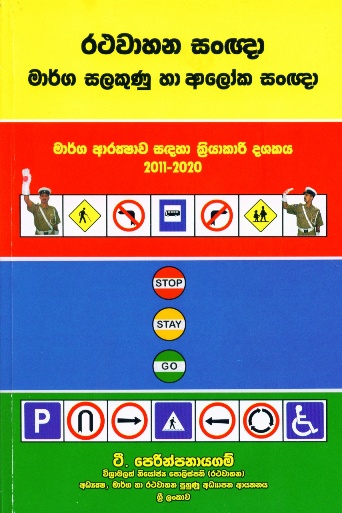
Protect Your Child from Injury (in Sinhala) is written by Dr Wijaya Godakumbura, while Traffic Signs, Road Markings and Traffic Signals is authored by T Perinpanayagam, a retired senior police officer.
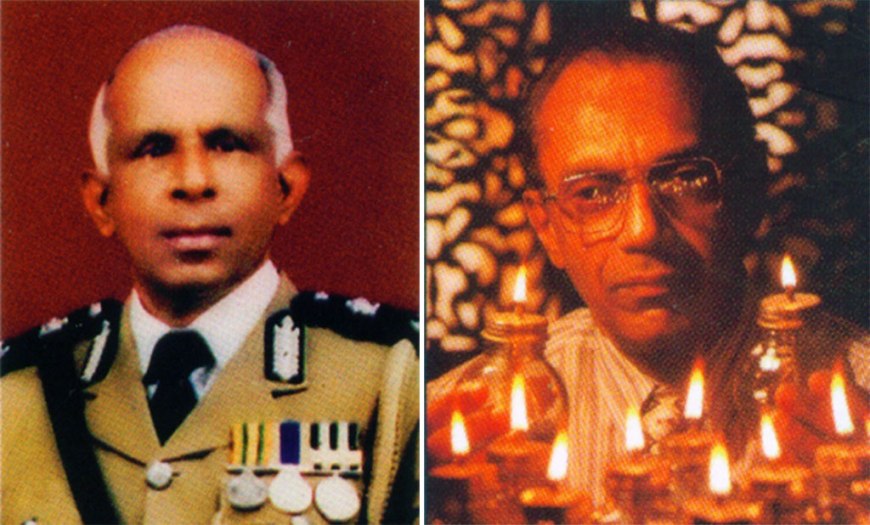
T Perinpanayagam (left) and Dr Wijaya Godakumbura: Life-long commitment to safety
මේ සාහිත්ය මාසයයි. කොළඹ පොත් ප්රදර්ශනය පැවැත්වෙන සතියයි. මේ නිසා මෑතදී මට හමුවූ පොත් දෙකක් ගැන අද කථා කරනවා.
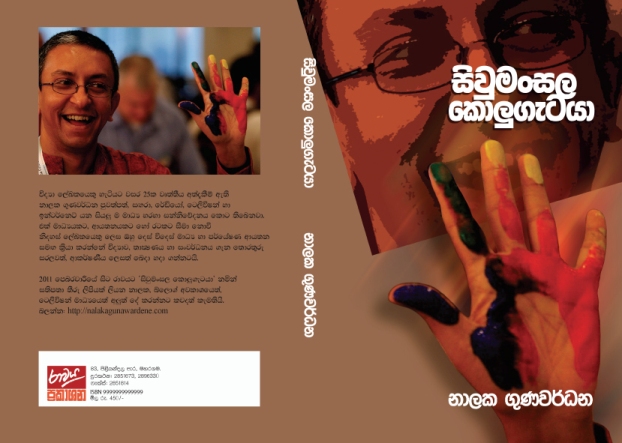
Sivu Mansala Kolu Getaya book cover: A Ravaya Publication
PROMOTIONAL NOTE FOR MY NEW BOOK IN SINHALA:
Colombo, Sri Lanka; 18 September 2012:
Science writer Nalaka Gunawardene’s new Sinhala book, Sivu Mansala Kolu Getaya (සිවුමංසල කොලූ ගැටයා), is being launched at the Colombo International Book Fair that runs from 18 to 26 September 2012.
A Ravaya Publication, the book is an edited collection of his weekly Sinhala columns by the same name, contributed to the Ravaya Sunday broadsheet newspaper in Sri Lanka during 2011.
Beginning in February 2011, Nalaka has sustained a column that touches on many and varied topics related to popular science, human development, mass media and information society. The book compiles 44 of these columns.
“The title is of my column is derived from its particular scope and angle. I stand at the intersection (or confluence) of science, development, media and culture. Once there, I often play the role of that cheeky lad who asked difficult questions, and once pointed out the Emperor(s) had nothing on when all others were either too polite or too scared to say so,” Nalaka says.
He calls the book a personalised exploration of how Sri Lanka can cope with many challenges of globalisation and modernisation. Nalaka writes in conversational Sinhala, rich in metaphor and analogy, and drawing on his own wide experiences as a journalist, filmmaker and development communicator. He often mixes the big picture level analysis (bird’s eye view) with ground level reality checks (toad’s eye view).
“I like to ‘zoom in’ and ‘zoom out’ when discussing topics as diverse as coping with HIV/AIDS, nurturing innovation, regulating the Internet, tackling climate change or farming without costing the Earth,” he says. “I do so with an open mind and sense of wonder. I have no particular ideology to promote and no sacred cows to protect!”
He adds: “As a journalist, I was trained to look for what’s New, True and Interesting (‘NTI Test’). Early on in my career, I went beyond simply reporting events, and probed the underlying causes and processes. With those insights, I can now offer my readers perspectives and seasoned opinion. These are much needed today as we swim through massive volumes of information, trying to stay afloat and make sense of it all.”
The book marks Nalaka’s return to Sinhala writing after an absence of two decades during which he communicated mostly in English to various international audiences. “In a sense, with this column I have come back home. The last time I wrote in Sinhala was in another century, and in what now feels like another country!” he says.
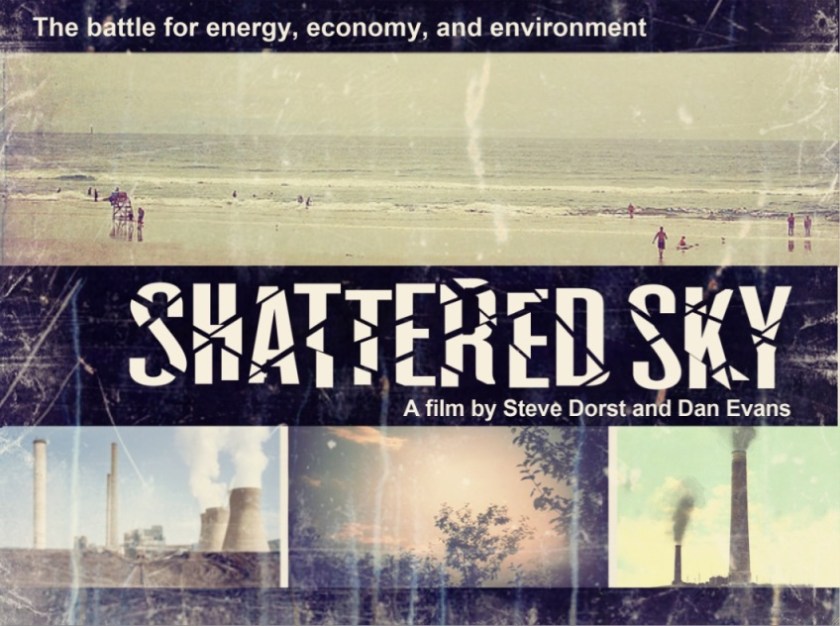
A film by Steve Dorst and Dan Evans.
An invisible compound threatens Earth’s life-support systems, with effects so pervasive that scientists sound the alarm, businesses must innovate, politicians are forced to take action—and American leadership is absolutely vital. Climate change? No…the hole in the ozone layer. For the first time in film, Shattered Sky tells the story of how—during geopolitical turmoil, a recession, and two consecutive Republican administrations— America led the world to solve the biggest environmental crisis ever seen. Today, will we dare to do the same on energy and climate?
A film by Steve Dorst and Dan Evans. The story of how America led the world to solve the biggest environmental crisis ever seen. Today, will we dare to do the same on energy and climate?
A new film looks at American leadership during the ozone crisis and compares it to the situation with global warming today. A good interview with the filmmaker.
On 16 September, the International Day for the Preservation of the Ozone Layer will be observed once again all over the world. This year’s theme is “Protecting our atmosphere for generations to come”.
Exactly 25 years ago, governments of the world came together at a historic conference in Montreal, Canada, to adopt the Montreal Protocol on Substances that Deplete the Ozone Layer.
In a quarter century, it has rallied governments and industries in both developed and developing countries to phase out, or substantially reduce, nearly 100 chemicals that damage the ozone layer in the upper atmosphere.
The Ozone Secretariat and UNEP OzonAction have jointly produced two 30-second videos mark the 25th anniversary of the Montreal Protocol (MP).
These Public Service Announcements (PSAs) hail the extraordinary achievements of this Multilateral Environmental Agreement over a quarter century. They also project the MP as a protector of our shared atmosphere for generations to come.
The first PSA briefly introduces the ozone layer depletion issue and highlights its recovery that was made possible when countries of the world joined hands for saving the ozone layer – a global action at its best.
The second PSA revolves around the multiple benefits of the Protocol: it is not just a treaty protecting the ozone layer, but has multiple benefits for our biodiversity, climate, human health and the global economy.
The third version of this PSA (below) is twice as long, gives more info and moves at a more leisurely pace.
These PSAs, made by friends in the UK are proof that even a highly esoteric and technical subject like ozone protection can be presented in engaging, human interest terms.
Growing up in an Ozone Safe World: that’s worth celebrating!
CKDu was first reported in the early 1990s from a single Province in our heartland of farming, but it has now spread across approximately 17,000 sq km (a quarter of the island), which is home to around 2.5 million people. Several thousand have already died; the exact number is not clear. Over 15,000 people are kept alive with regular kidney dialysis.
Investigating causes of this ailment — still not pinned down to a particular cause or factor — has been contentious with scientists, nationalists and politicians trying to hijack the issue for their own agenda setting. Some journalists have added fuel to the fire with sensationalist reporting and fear-mongering. In this column, I ask everyone to focus on the prolonged suffering of those already affected and their families.
Phoning each other during personal or shared emergencies is one of the commonest human impulses. Until recently, technology and costs stood in the way. No longer.
We now have practically all grown-ups (and some young people too) in many Asian countries carrying around phones or having easy, regular access to them. For example, Sri Lanka’s tele-density now stands at 106.1 phones 100 people (2011 figures).
What does this mean in times of crisis caused by disasters or other calamities? This is explored in a short video I just made for LIRNEasia:
Synopsis:
With the spread of affordable telecom services, most Asians now use their own phones to stay connected. Can talking on the phone help those responding to emergencies to be better organised? How can voice be used more efficiently in alerting and reporting about disasters? Where can computer technology make a difference in crisis management?
These questions were investigated in an action research project by LIRNEasia in partnership with Sarvodaya, Sri Lanka’s largest development organisation. Experimenting with Sahana disaster management software and Freedom Fone interactive voice response system, it probed how voice-based reporting can fit into globally accepted standards for sharing emergency data. It found that while the technology isn’t perfect yet, there is much potential.
But in this digital age, most scientists can use online platforms and simple digital tools to communicate directly with the public and/or policy makers. At least some scientists try to tap this potential — and we are grateful.
The World Resources Institute (WRI), a respected non-profit research and advocacy group, is currently trying to understand “how recent climate science discoveries can best be communicated via video”.
With support from Google, and with the help of three climate scientists, WRI has recently produced 3 different video types in order to test which works best. They are currently on display on their website, with a request for readers to vote and comment:
1. “A webcam talk” uses a self-recorded video of the scientist discussing his findings
2. “A conversation” uses a slideshow with a voiceover of the scientist discussing his findings
3. “A whiteboard talk” is a professionally shot video of the scientist in front of whiteboard discussing his findings
Here is the comment I submitted: the challenges WRI face are common and widely shared. And I do have some experience covering climate and other complex science and environmental stories across Asia for the visual and print media.
First, thanks for asking — and for exploring best public engagement method, which most technical experts and their organisations don’t bother to do.
Second, Andy Dessler comes across as an eager expert — not all scientists are! Some are visibly condescending and disdainful in doing ‘public’ talks that they immediately put off non-technical audiences.
Third, the options you’ve presented above are NOT mutually exclusive. For best results, you can mix them.
Webcam method is helpful, but people don’t want to see any talking head for more than a few seconds at a time. They want to see WHO is talking, and also WHAT is being talked about. The images in Conversation method come in here.
I realise webcams are usually set up inside buildings, but visually speaking the more interesting backdrops are in the open. In this case, if Andy Dessler were to record his remarks outdoors, on a clear and sunny day with some clouds in the far background sky, that would have been great!
I’m personally less convinced about Whiteboard Talk: many in your audience probably don’t want to be lectured to, or be reminded of college days. I would avoid that.
 Open Minds!