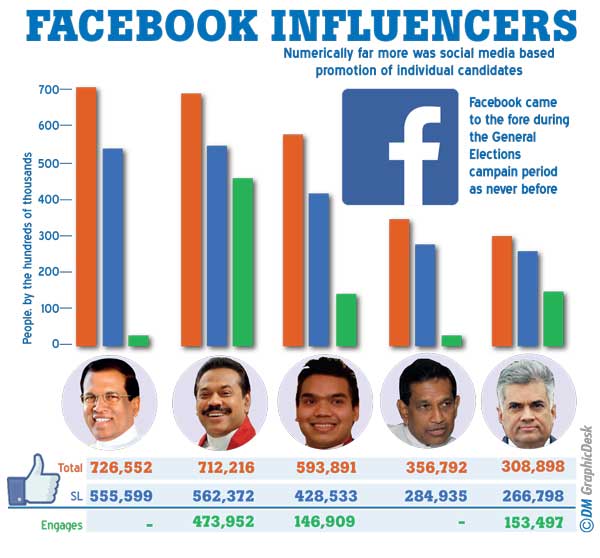
“What role (if any) did social media play in the recently concluded General Election on 17 August 2015?
“Many are asking this question – and coming up with different answers. That is characteristic of the cyber realm: there is no single right answer when it comes to a multi-faceted and fast-evolving phenomenon like social media.
“Shortly after the Presidential Election of 8 January 2015 ended, I called it Sri Lanka’s first cyber election. That was based on my insights from over 20 years of watching and chronicling the gradual spread of information and communications technologies (ICTs) in Sri Lanka and the resulting rise of an information society.
“That was not the first time social media had figured in Lankan election campaigns. The trend started slowly some years ago, with a few tech-aware politicians and advertising agencies using websites, Facebook pages and twitter accounts for political outreach. However, such uses did not reach a ‘critical mass’ in the general and presidential elections held in 2010, or in the provincial and local government elections held thereafter.
“By late 2014, that changed significantly but this time the frontrunners were politically charged and digitally empowered citizens, not politicians or their support teams.”
The above is an extract from an op-ed I have just written and published in Daily Mirror broadsheet national newspaper in Sri Lanka (3 Sep 2015).
“Privacy and Surveillance: The state should respect and protect the privacy of all citizens. There should be strict limits to the state surveillance of private individuals’ and entities’ telephone conversations and electronic communications. In exceptional situations, such surveillance should only be permitted with judicial oversight and according to a clear set of guidelines.”
In this week’s Ravaya column, (in Sinhala, appearing in issue of 2 August 2015), I have expanded on this by exploring the extent of state electronic surveillance in Sri Lanka.
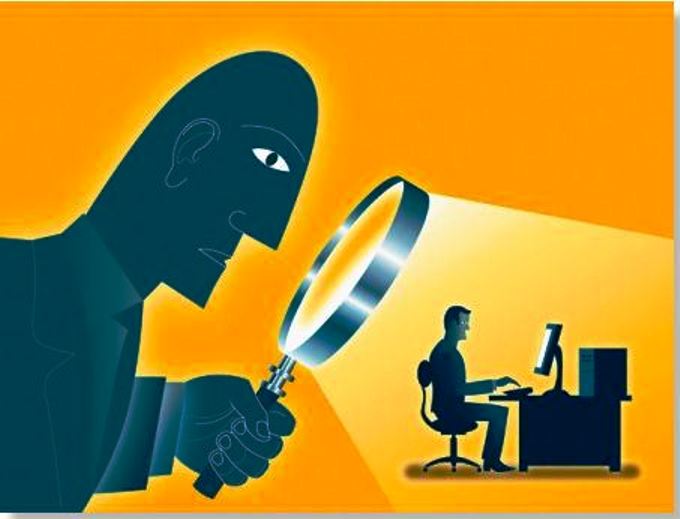
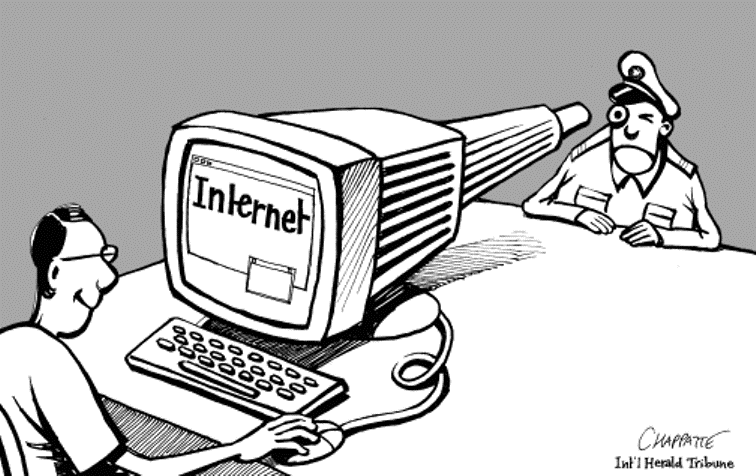
I also look at the legal provisions for surveillance and gaps in legal protection for privacy in Sri Lanka. All this points out to an overbearing state that spies on private citizens as and when it pleases, all on the pretext of national security. We need clearer guidelines and judicial oversight to restrain the state from turning into Big Brother.
Are we being watched by our government without our knowledge or consent? Is it legal?
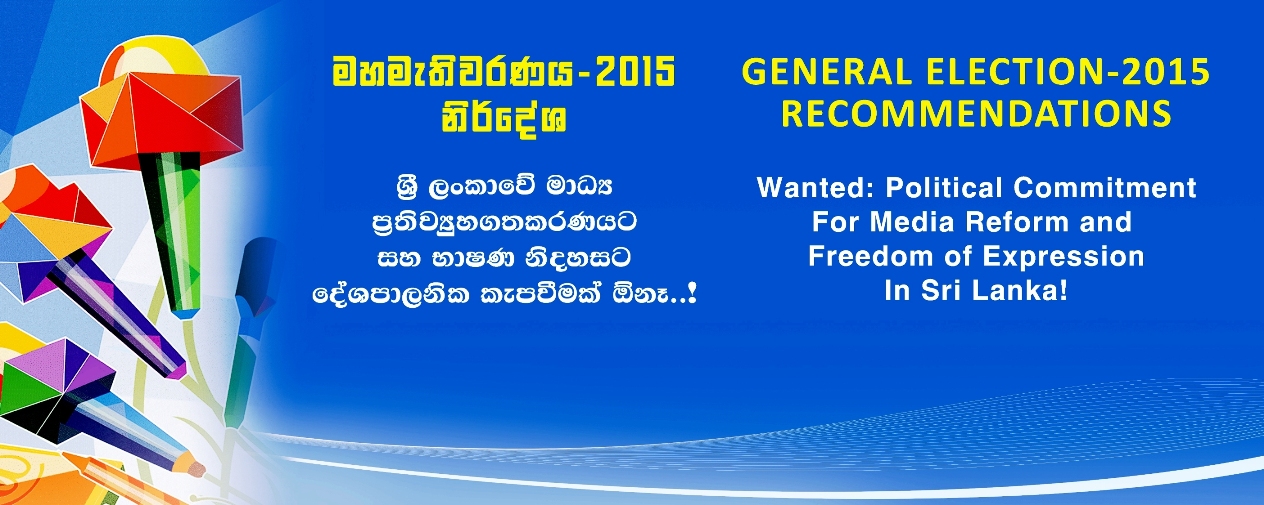
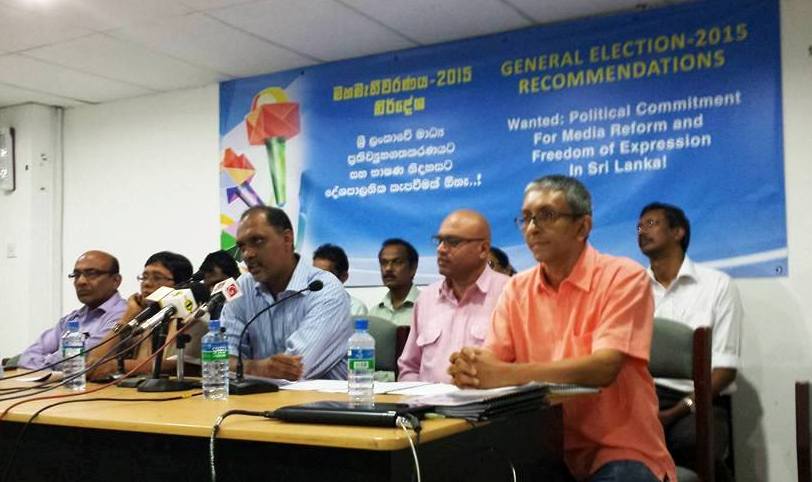
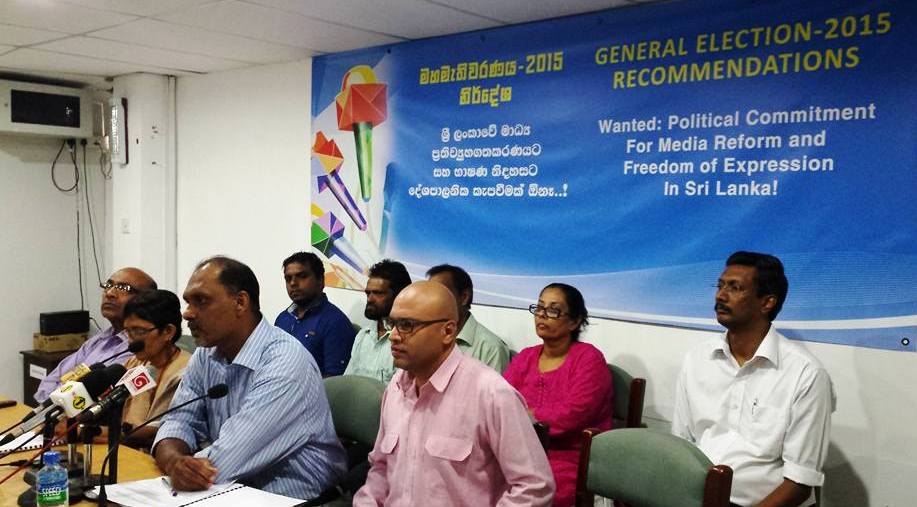
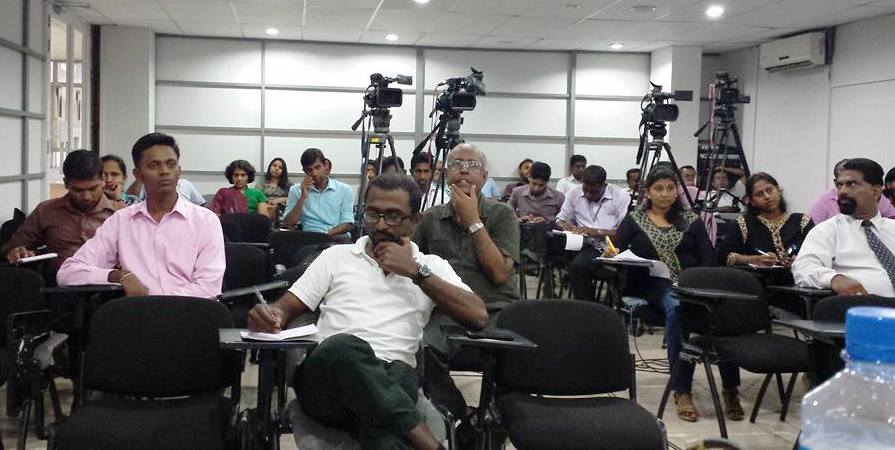
Media Reform Recommendations for Political Party Commitment prior to Sri Lanka General Election 2015. Press Conference at Sri Lanka Press Institute, 21 July 2015
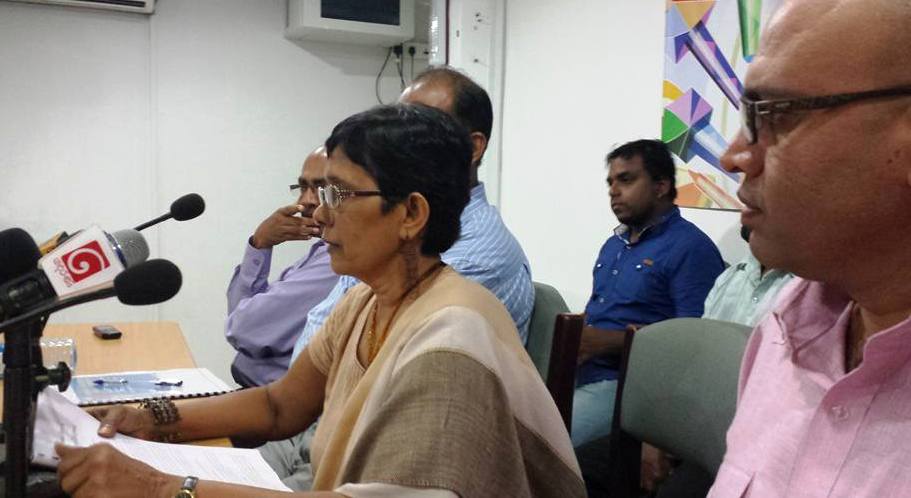
Seetha Ranjanee, Convenor of Free Media Movement of Sri Lanka, speaks at press conference on media reforms: Sri Lanka Press Institute, Colombo. 21 July 2015
Text of my column written for Echelon monthly business magazine, Sri Lanka, May 2015 issue
Black Swans, White Lies and the Rise of ‘Info-Doers’
By Nalaka Gunawardene
They are rare, but whey they arrive, bring Bad News…
The Global Village is a pretty noisy place. In today’s networked society, information can spread at the speed of light. Fabrications, half-truths and myriad interpretations compete with evidence-based analyses and official positions. Trust is being redefined.
How can the formal structures of power – whether government, academic, military or corporate – engage in public communication in effective ways? Should they ignore what I call the Global Cacophony and limit themselves to formal statements made at their own bureaucratic pace?
Consider a recent scenario. A controversy erupts over how the Central Bank of Sri Lanka handles the latest Treasury Bond issue, but the government takes several days to respond. The Prime Minister makes a detailed statement in Parliament on March 17, which he opens saying: “I felt my first statement with regard to the so-called controversy over Treasury bonds should be made to this House.”
He offers a characteristically good analysis. But in the meantime, many speculations had circulated, some questioning the new administration’s commitment to transparency and accountability. Political detractors had had a field day.
Could it have been handled differently? Should government spokespersons have turned defensive or combative? Is maintaining a stoic silence until full clarity emerges realistic when governments no longer have a monopoly over information dissemination? What then happens to public trust in governments?
Black Swans
Some information managers still invoke an old adage: this too shall pass. The digitally empowered citizens may descend on an issue with gusto, they contend, but attention spans are short. ‘Smart-mobs’ tend to move on to the next breaking topic within days if not hours…
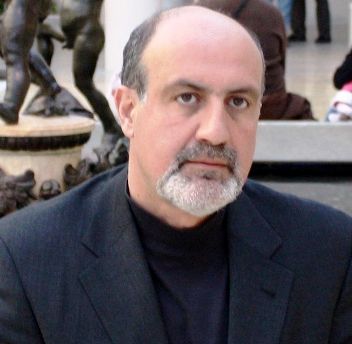
Nassim Nicholas Taleb – image from Wikipedia
But how reliable is that as a strategy? And what happens when, once in a while, ‘Black Swan events’ occur disrupting everything?
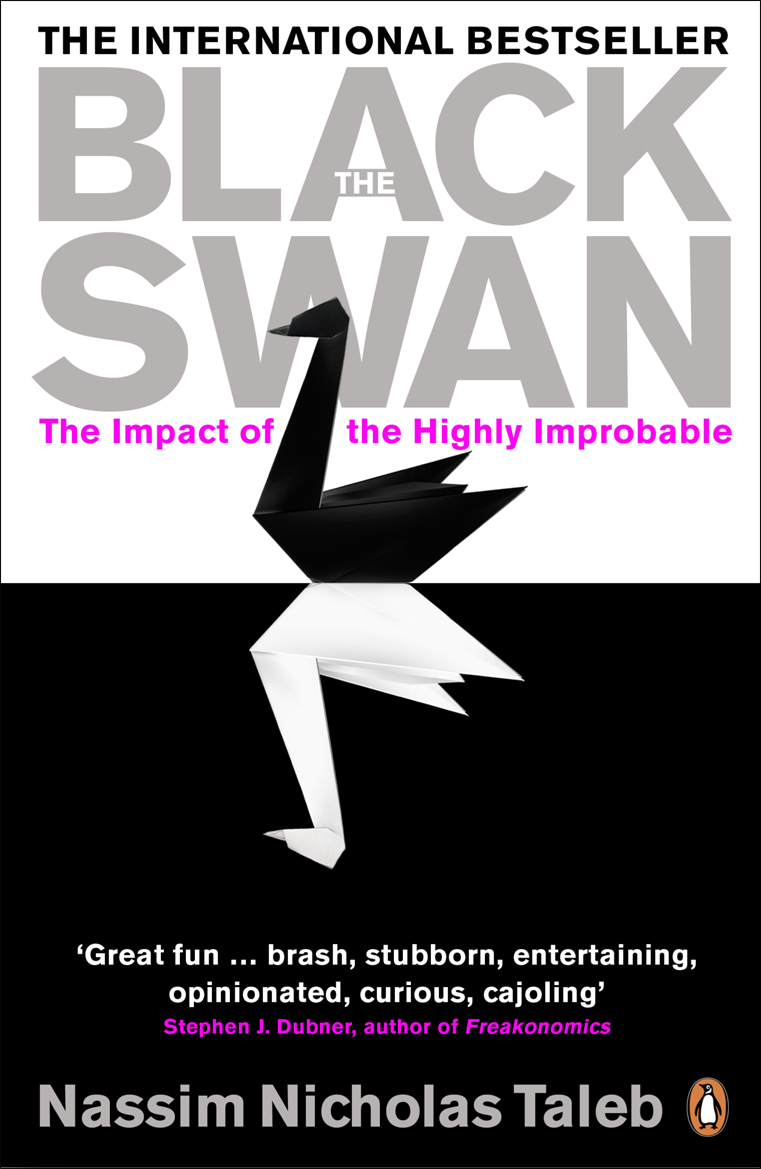
It was the Lebanese-American scholar, statistician and risk analyst Nassim Nicholas Taleb who proposed the theory of Black Swan events. He used it as a metaphor to describe an event that comes as a surprise, has a major effect, and is often inappropriately rationalised afterwards with the benefit of hindsight.
The idea, first introduced in his 2001 book Fooled By Randomness, was initially limited to financial events. In a follow-up book The Black Swan (2007), he extended it to other events as well.
According to Taleb, almost all major scientific discoveries, historical events and artistic accomplishments are “Black Swans” — undirected and unpredicted. Examples include the rise of the Internet, the personal computer, World War I, dissolution of the Soviet Union and the attack on the World Trade Centre in New York on 11 September 2001.
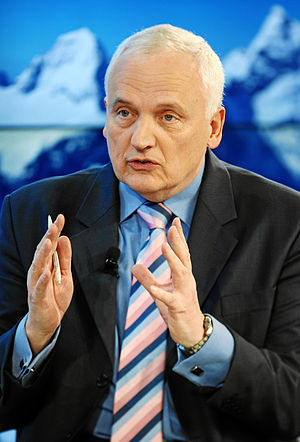
Nik Gowing at World Economic Forum Annual Meeting 2012 – image via Wikipedia
I recently had a fascinating conversation with its author Nik Gowing, a senior British television journalist with 40 years of experience in news and current affairs. Before he stepped down in 2014, he was main anchor for much of BBC’s coverage of major international events including Kosovo in 1999, the Iraq war in 2003, the global financial meltdown of 2007 and Mumbai attack in 2008. On 9/11, he was on air for six hours leading the coverage.
“In a moment of major and unexpected crisis, the institutions of power – whether political, governmental, military or corporate – face a new, acute vulnerability of both their influence and effectiveness,” Nik says summing up the study’s findings.
He analysed the new fragility and brittleness of those institutions, and the profound impact upon them from a fast proliferating and almost ubiquitous breed of what he calls ‘information doers’.
Info-doers
‘Info-doer’ seems more inclusive than the contested term ‘citizen journalist’. Such ‘info-doers’ are empowered by cheap, lightweight, go-anywhere technologies. That trend, already evident in 2009, has gained further momentum since.
“They have an unprecedented mass ability to bear witness. The result is a matrix of real-time information flows that challenges the inadequacy of the structures of power to respond both with effective impact and in a timely way,” the study says.
Nik adds: “Increasingly routinely, a cheap, ‘go-anywhere’ camera or mobile phone challenges the credibility of the massive human and financial resources of a government or corporation in an acute crisis. The long-held conventional wisdom of a gulf in time and quality between the news that signals an event and the whole truth eventually emerging is fast being eliminated.”
He describes how, in the most remote and hostile locations of the globe, hundreds of millions of electronic eyes and ears are creating a capacity for scrutiny and new demands for accountability. “It is way beyond the assumed power and influence of the traditional media. This global electronic reach catches institutions unaware and surprises with what it reveals.”
The phenomenon is globalised. Info-doers, with a range of motivations, are everywhere from the financial capitals like London and New York to crisis locations in Iraq, China’s Tibet plateau, Burma, the flooded heart of New Orleans or the mountains of Afghanistan. Censorship and crackdowns can’t stop them.
How to respond?
So what is to be done?
The instinct of many authorities is still to deny inconvenient truths and blame “the damn media” in times of crisis. This no longer works (if it ever did).
“Too often, the knee-jerk institutional response continues to be one of denial as if this new broader, fragmented, redefined media landscape does not exist. Yet within minutes the new, almost infinite media dynamic of images, video, texts and social media mean the public rapidly has vivid, accurate impressions of what is unravelling.”
For example, during Burma’s ill-fated Saffron Revolution of September 2007, video footage and images of protests rapidly spread online and through mainstream broadcast media. Most had been captured using mobile phones and sent out through internet cafes despite attempts to block their flow. The junta later dismissed such coverage as a “skyful of lies”, convincing no one.
The immediate policy challenge is to enter the information space with self-confidence and assertiveness as the media do, however incomplete the official understanding of the enormity of what is unfolding.
After a major crisis hits, both the mainstream media and policy makers face what Nik Gowing defines as the F3 dilemma. The F3 options are:
Should they be the first to enter the info-space?
How fast should they do it?
But how flawed might their remarks and first positions turn out to be in ways that could undermine public perceptions and institutional credibility?
Using many examples, the study has analysed the typical institutional response: to hesitate and lose initiative. This is because wielders of power still don’t appreciate dramatic changes in the real-time new media environment. Nik has included a few enlightened policy responses – “too few to suggest any sign of a fundamental shift in understanding and attitudes”.
The study ends with recommendations for how various institutions of political and corporate power can respond to the new challenges.
“The new real-time media realities are harsh. But once understood, embraced and acted upon, the proposed solutions are compelling. They represent a path to institutional effectiveness and credibility when these are currently lacking.”
Accessible, affordable and enjoyable: nothing official or snooty about it!
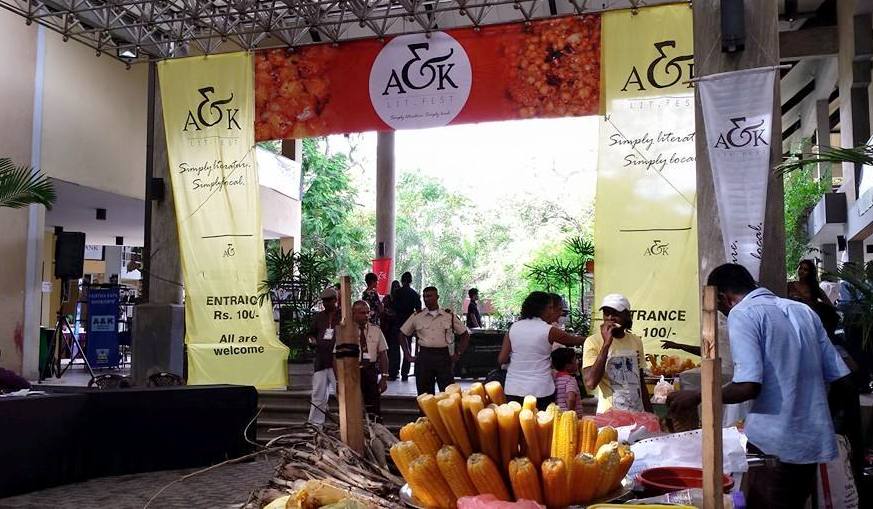
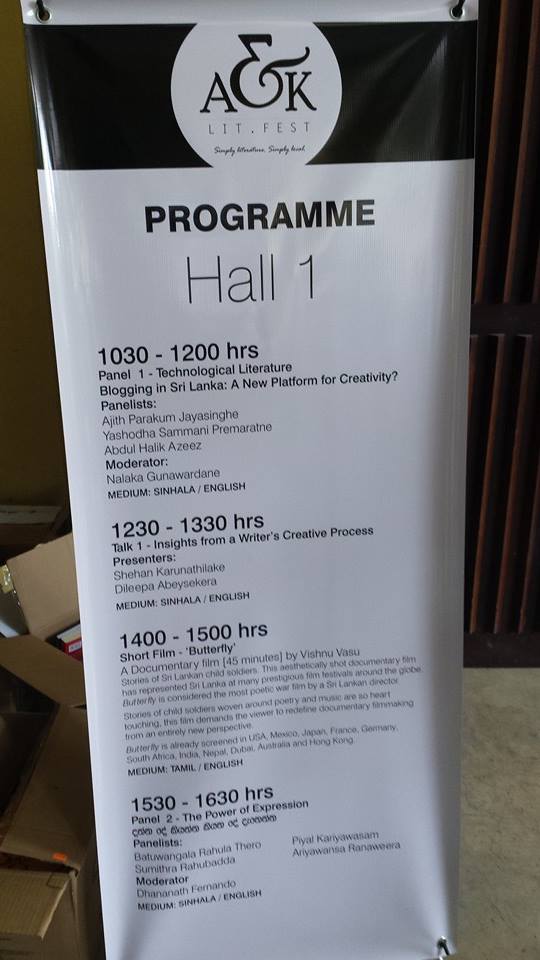
The Annasi & Kadalagotu Literary Festival (‘A&K Lit Fest’), held on 25 April 2015, brought together literary enthusiasts from across the country. It was a collaborative platform where those who share a passion for literature can come together, explore the way we write, the way we read and learn about the ways of Sri Lanka and its people – their expressions, cultures and perspectives.
I moderated a Session on “Blogging in Sri Lanka: A New Platform for Creativity?” which featured three leading bloggers in Sri Lanka.
Here are my Opening Remarks, where I tried to place blogging in the current cultural, political and societal context of Sri Lanka.
Session: Blogging in Sri Lanka: A New Platform for Creativity?
Opening Remarks by Nalaka Gunawardene, Moderator
Because we are discussing blogs at a lit fest, we will look explore Lankan blogging and blogospheres from a more creative and literary perspective – and not from any technical or technological angle.
Our session has been tagged with a subtitle “Technological Literature?”, which I consider to be a misnomer. Blogs are self-expressions that just happen to be made on the web, but they are not necessarily techie or geeky.
Not any more than, say, convention book writers have much or anything to do with printing and paper production!
The cyberspace is just the medium and the ecosystem in which blogs are written, shared, commented upon and – sometimes – being argued over.
This part of the web is called ‘blogosphere’ – and where Sri Lanka is concerned there are three overlapping such blogosphere in Sinhala, Tamil and English languages.
The web is increasingly attracting more writers, journalists and other creative people because:
It is cheaper and faster to publish online than in book format;
It is often easier than getting published in newspapers or magazines; and
The medium is far more interactive, so creators can get direct audience feedback.
Panel on Blogging in Sri Lanka – L to R – Ajith Perakum Jayasinghe, Yashodha Premaratne, Abdul Halik Azeez and Nalaka Gunawardene – Photo by Malaka Rodrigo
“Internet access on a commercial basis became available in Sri Lanka on 26 April 1995, when Lanka Internet Services Limited (LISL) started operating a local Internet server (‘Sri Lanka Web Server’) through a local gateway. Their server was connected to a host in the US through a 64kbps dedicated transmission line leased from SLT. This gave Sri Lankan Internet users the opportunity of accessing the Internet simply by dialling a local phone number. Sri Lanka was thus the first country in South Asia to have unrestricted and commercial Internet access facilities…”
We have come a long way since those early days of dial-up, narrowband access. Not everyone is online yet, of course, but we have around 22 to 25% of our 21 million people regularly using the web now for a variety of purposes.
Blogging is one such purpose. At its most basic, blogging entails using web-based, free spaces to write and self-publish words, images, videos or multimedia content.
Bloggers have been active in Sri Lanka for at least a dozen years, if not a bit longer. We don’t know exactly who the first Lankan blogger was (that’s a research project for you!), but some pioneering work was done by English language bloggers like Indi Samarajiva. There are others.
Blogging became more popular after around 2003/4. This was the time broadband Internet started rolling out, giving us faster speeds and always-on facility (on a fixed monthly cost, without having to count the minutes we stay online).
Blogging in Sri Lanka picked up when more and more computer users realized that they didn’t need to have any programming or coding skills to do web pages. The early web was limited to webmasters wielding HTML and other specialized software skills. But the advent of Blogger (1999) and WordPress (2003) free platforms meant that guys like myself – not knowing a single line of coding – could put together my own content on the web.
As broadband services spread, and as local language font issues were finally resolved, more people started blogging in Sinhala and Tamil too. The Lankan blogosphere is diverse and vibrant today.
Blogging is being pursued by a few thousand people, and many thousands more participate as readers or discussants. Some blogs offer serious political and social commentary, while others have become platforms for nurturing new talent in prose, verse, photography, videography or graphic art.
The formats and topics are only limited by our own imagination and dedication. The latter is important, as blogging is unpaid work that can take up a good deal of time (especially if you become a widely read and commended upon).
Bloggers fit into a much larger new media ‘ecosystem’ called citizen journalism, which is also constantly evolving. Although not well studied by media researchers, this phenomenon is now a part of our public sphere.
Before I introduce the panel, let me pose and answer four questions.
Blogging Panel engages in showing and telling about Lankan blogs – Photo by Malaka Rodrigo
Who is a typical blogger in Sri Lanka?
There is no such profile. Besides having basic computer skill and Internet connectivity, there is little in common among our bloggers – among whom are students, teachers, professionals, retirees, housewives, househusbands and many others. Anyone with Internet access and some spare time can, in theory, become a blogger. And if not inclined to write, anyone can still become a reader and/or commentator of others’ blogs.
What do Lankan bloggers publish about?
Again, the interests and topics of blogs are as diverse as our people! There is every type of content generated by bloggers and their readers (sometimes comments are more interesting than the original post that provoked them). Bloggers variously address social, cultural, political, commercial and personal issues and topics.
If you’re new to this space, the best point to start exploring would be to look at blog aggregators that automatically list new blogposts being published by bloggers who have registered with them (for free). There are several aggregators to choose from, but none that is comprehensive:
Kottu.org is the oldest, which just completed 10 years
What quality and creativity are found in Lankan blogs?
Again, this is like asking what quality and creativity can be found in all the books, newspapers and magazines published in our land. It all depends on where you look!
There is everything in our blogs, from the mundane and unremarkable (including angry rants) to very perceptive and even occasionally profound expressions. And much in between…
We find some news reporting, much commentary/opinion, some analysis and investigation, as well as short stories, poems, satire, cartoons and videos on blogs. The genres are now nearly as diverse as in the printed word, even though public awareness of this diversity is still lacking.
Finally, why have me moderate this panel, and why these panelists?
I have been a long-time observer and chronicler of the Internet in Sri Lanka from the very beginning, often partnering with my friend Chanuka Wattegama. I wish more of our social scientists and media researchers would take a closer look at what is going on in cyberspace and help us understand just how that is impacting our society, culture and politics.
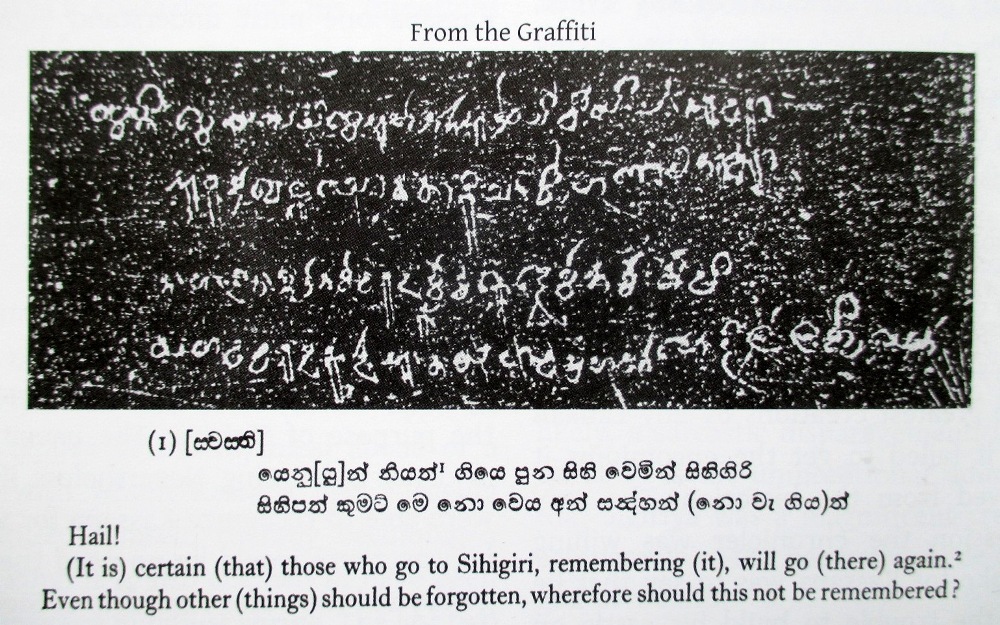
Sigiriya Graffiti image courtesy – Kassapa’s Homage to Beauty by Siri Gunasinghe
Blogging in Sri Lanka – panel at A&K Lit Fest, Colombo, 25 April 2015
Blogging in cyberspace itself is sometimes frowned upon by those who don’t know — or have only a fleeting awareness of — what blogs really are. Some confuse blogs with political or gossip websites.
Sadly, many in our mainstream media are either ignorant or dismissive of blogs (and some editors shamelessly reproduce them without acknowledgement!). The Secretary to the Media Ministry – himself an occasional blogger — told a blogging award ceremony last month that he has met chief editors of Lankan newspapers who had no clue what blogs were!
During the past decade when freedom of expression and media freedom in Sri Lanka were seriously undermined, bloggers and citizen journalists partially filled the void created by mainstream media stepping up self-censorship. Indeed, I argue that some of our leading bloggers offer more refreshing and authentic analysis of current social and political issues than do many newspapers!
In their own ways, our three panelists have distinguished themselves in the Lankan blogospheres. We want to find out what motivates and inspires them, and what kind of dialogue they have with their readers.
Abdul Halik Azeez is a strategy consultant, independent researcher and citizen journalist. He blogged for some years at https://abdulhalik.wordpress.com. His recent interest in journalistic and conceptual photography has garnered a large following on Instagram where he is known as Colombedouin. http://instagram.com/colombedouin
Ajith Perakum Jayasinghe (Blog: http://www.w3lanka.com) is a teacher by profession who is immensely engaged in writing, translating and blogging. He likes to identify himself as a political activist who is committed to change the order so as the life is better for the humans and nature.
Yashodha Sammani Premaratne who is known by her pen name “bassi” is a blogger as well as a microblogger. Her blog, “Bassige nawathana” (http://bassigenawathana.blogspot.co.uk) started in August, 2013 attracted the readers immediately due to her lucid style of writing. Her range of blog posts is highly diverse from simple humour to Politics, Science, Poetry and Fiction. ‘Bassige Nawathana’ has already won two awards for its creativity.
We also ask panelists to address larger questions such as:
How vibrant and diverse is blogging in Sri Lanka?
Is there a dedicated and growing audience for blogs?
Do bloggers influence public opinion, and how?
Is blogging in decline with the rise of micro-blogging (Twitter) and Facebook?
Audience engages with the blogging panel at A&K Lit Fest in Colombo, 25 April 2015 – Photo by Malaka RodrigoPhoto by Dhara Gunawardene
In this week’s Ravaya column (in Sinhala, published in issue of 26 April 2015), I question the wisdom of a new project by the Lankan government’s Information and Communication Technology Agency (ICTA) on “ICT for Citizen’s Journalism”.
ICTA’s CEO was recently quoted in the media as saying: “For this programme, what we are planning to show people is that every person can become a journalist and contribute towards media organisations. First, taking photographs and videos and sending it to a reporter which will enable him/her to have more information in order to analyse an incident further and report on it…”
If he has been quoted correction (no denial so far), the apex ICT institution of the Lankan government shows a shocking ignorance in its limited understanding of citizen journalism: must they be limited to gatherers of raw material for mainstream media? What about bearing witness, self-publication and countervailing functions of citizen media?
In today’s column, I call it particularly shocking as ICTA now comes under the purview of Ministry of Foreign Affairs — whose deputy minister, Ajith P Perera, was an active blogger for some years and became the first blogger to be elected to Lankan Parliament in 2010. If only this technical agency were to ask its own minister for some clarity before formulating such misguided national programmes…
Yaha-paalanaya (good governance) is not just ensuring a clean and efficient government but also having clarity of purpose and making well reasoned and evidence based interventions to societal needs. ICTA fails once again on this count.
Blogging — as an activity of self-expression using the web – is being pursued by a few thousand people, and many thousands more participate as readers or discussants. Some blogs offer serious political and social commentary, while others have become platforms for nurturing new talent in prose, verse, photography, videography or graphic art. Bloggers fit into a larger new media ‘ecosystem’ called citizen journalism, which is constantly evolving. Although not well studied by media researchers, this phenomenon is now a part of our public sphere.
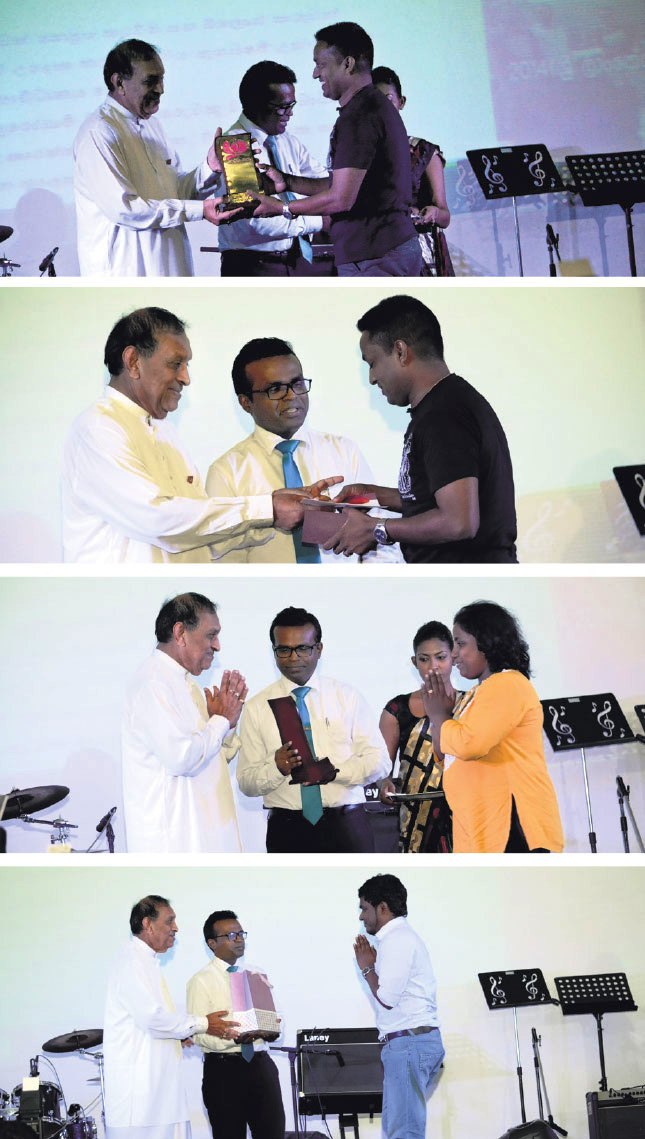
In this week’s Ravaya column (in Sinhala, published in issue of 12 April 2015), I report on the winners and speeches of the recently held Nelum Yaya blog awards ceremony that recognized outstanding Sinhala language bloggers of 2014.
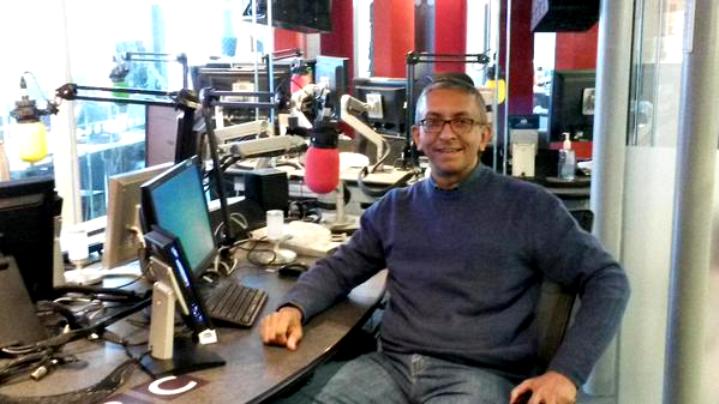
On 13 Feb 2015, while briefly in London, I visited BBC’s new Media Centre and recorded brief interviews with BBC Sinhala and BBC Tamil services (radio) on the role of social media during the Sri Lanka Presidential Election 2015 – the topic of my talk at University of London the previous day.
BBC Sinhala published the story online on 22 Feb 2015, along with an edited down audio track.
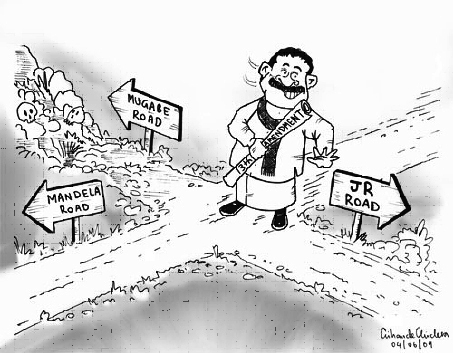
Which road to take, ponders Mahinda Rajapaksa after war victory – Cartoon by Gihan de Chickera, published in Daily Mirror, 4 June 2009 (2 weeks after Sri Lanka’s civil war ended)
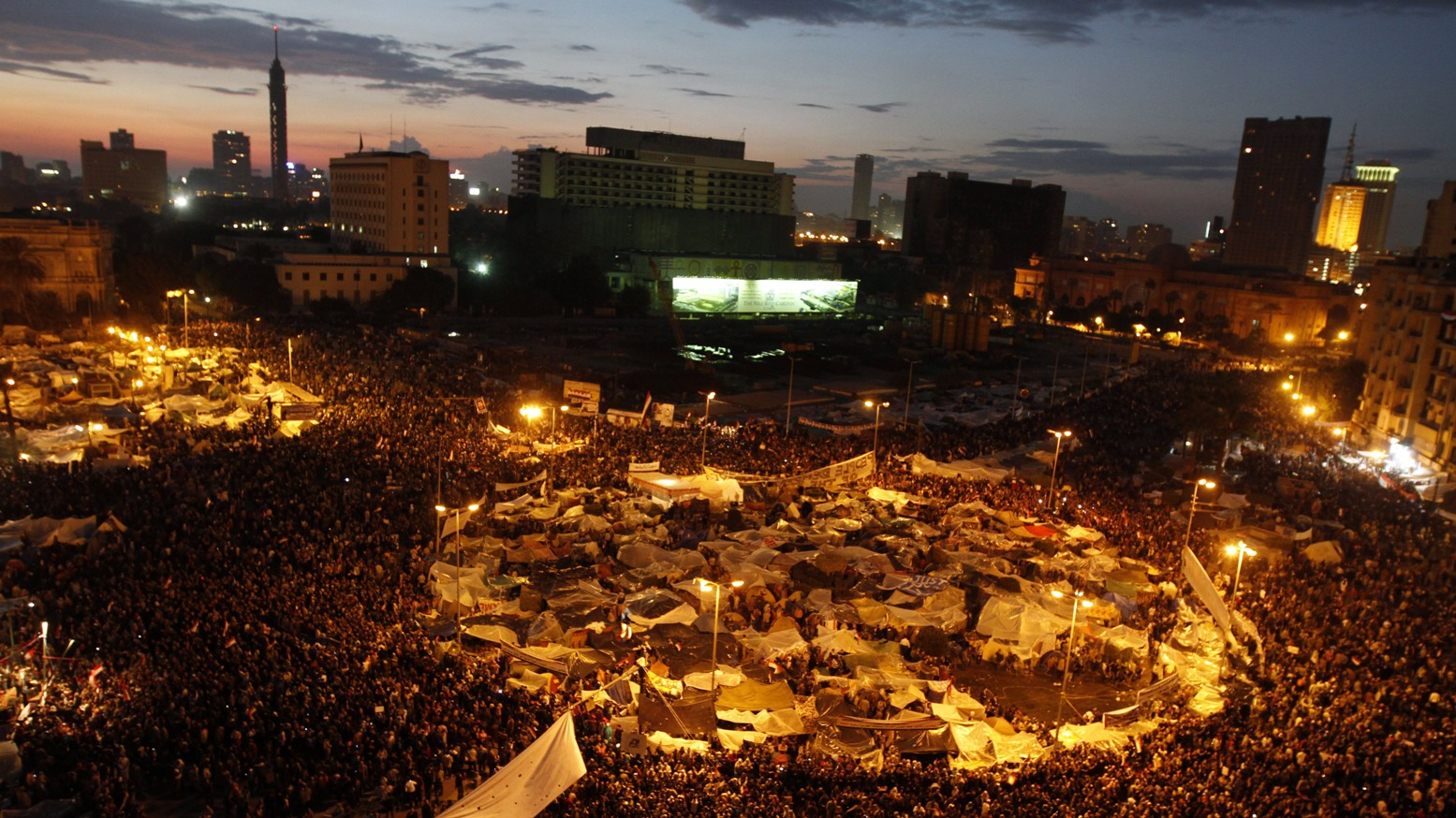
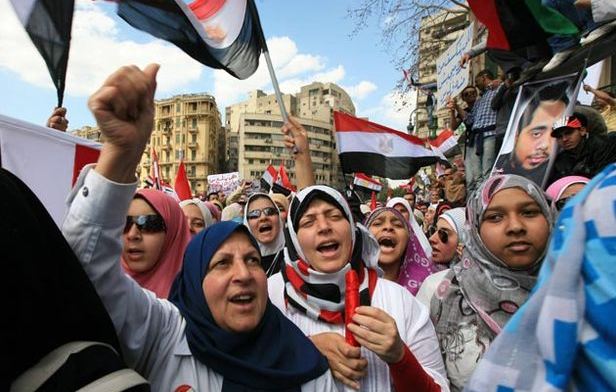
Anti-government demonstrators crowd Cairo’s Tahrir Square in February 2011
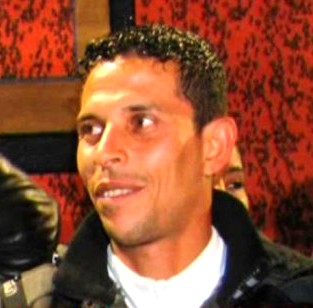
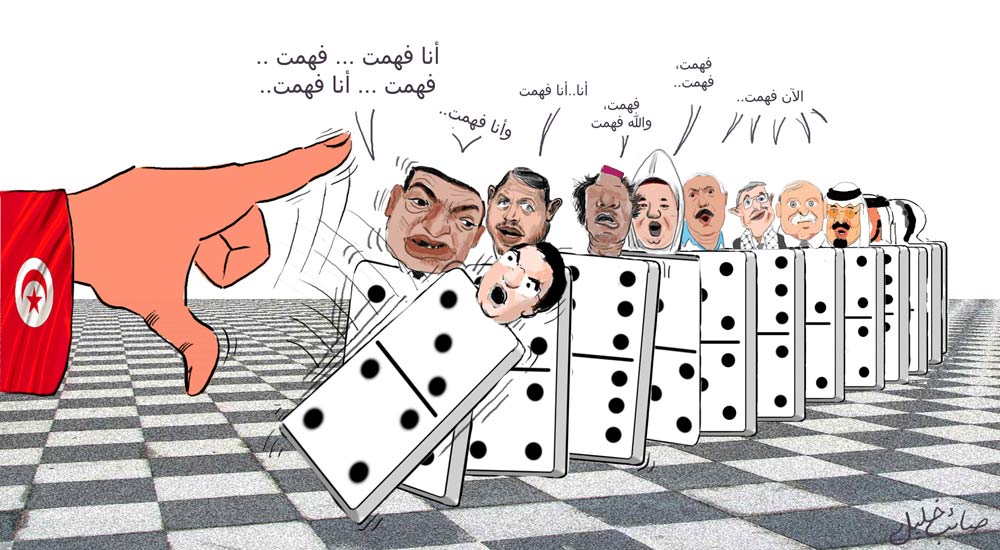
In this week’s Ravaya column (in Sinhala), published in the issue dated 4 January 2015, I pose a topical question: are there necessary and sufficient conditions for a spontaneous people’s uprising in Sri Lanka similar to what happened in the collective phenomenon known as the Arab Spring?
I address this because both the ruling party and opposition politicians in Sri Lanka have been loosely referring to Arab Spring during their current campaigns running up to the Presidential Election scheduled for 8 January 2015.
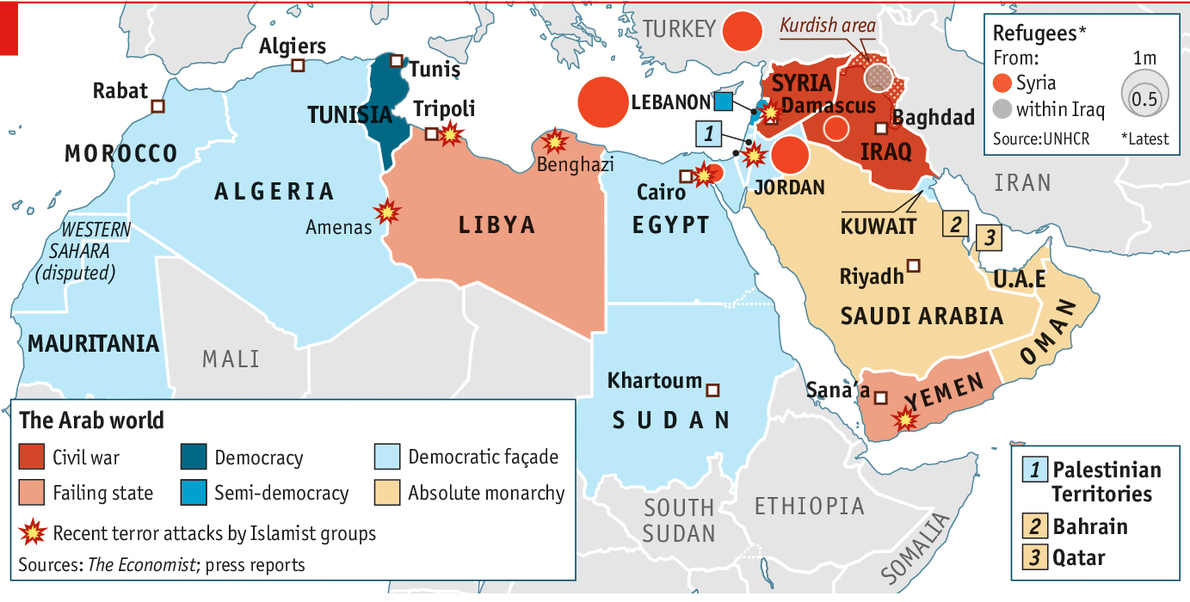
In this column, I briefly chronicle what happened in the Middle East and North Africa during 2010-11, and then explore the many factors that triggered or sustained the complex series of events. I discern three key factors: demographics (especially a low median age with large youthful populations); democracy deficit; and proliferation of information and communications technologies ranging from easy access to trans-boundary satellite television broadcasts, mobile phones and Internet.
I argue that while Sri Lanka of today has achieved the ICT factor in good measure, the other two factors fall short. With a median age of 31 years (in 2012), ours is no longer a youthful population and the demographic impetus for uprisings has passed. And while there are serious concerns about governance, the country’s democratic deficit is only partially present.
Thus, it is very unlikely that an Arab Spring style uprising could happen in Sri Lanka. So both the ruling coalition and opposition parties relax — and should let go of this much-hyped prospect.
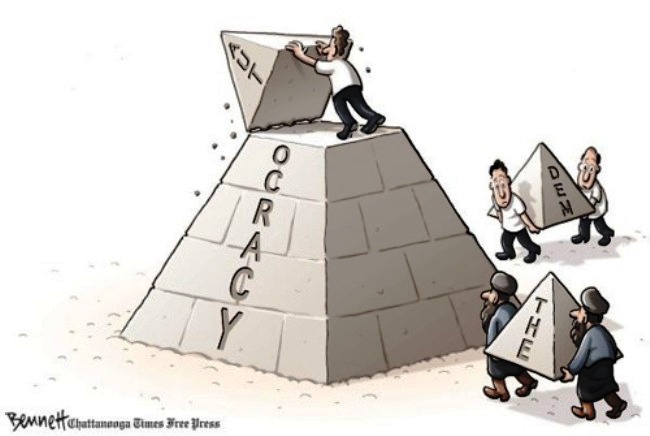
Replace autocracy with democracy or theocracy? Changing the top isn’t that easy! Cartoon by Clay Bennett on 1 February 2011. Cartoon courtesy timesfreepress.com
















 Open Minds!