I’m a story teller at heart. I sometimes moonlight as a media researcher or commentator but have no pretensions of being academic. I always try to make my points as interesting as possible — using analogies, metaphors, examples, etc.
This is the approach I used when asked to talk to the working group on Sri Lanka Media Reforms, convened by the Media Ministry, Sri Lanka Press Institute, International Media Support (IMS) and the University of Colombo.
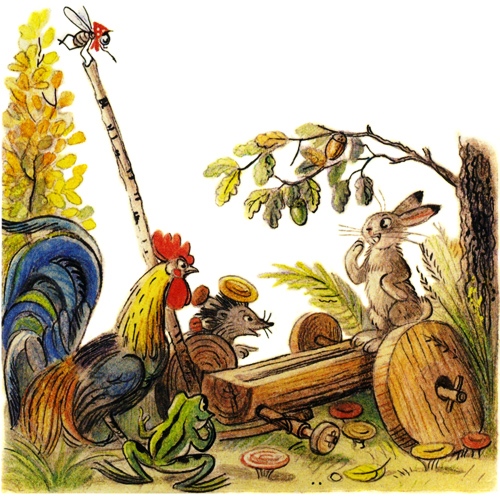
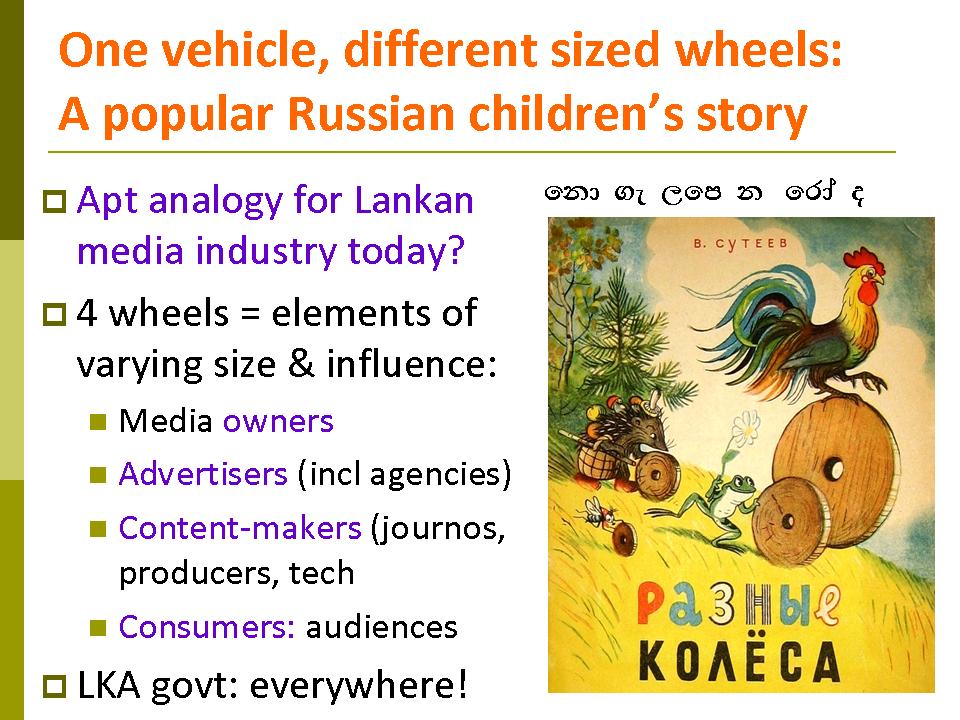
I used a well-loved Russian children’s story that was known in Sinhala translation as නොගැලපෙන රෝද — the story of one vehicle with different sized wheels, and how animal friends tried to make it move and when it proved impossible, how they put each wheel to a unique use…
A framework for media reform in Sri Lanka…by Nalaka GunawardeneA framework for media reform in Sri Lanka…by Nalaka Gunawardene
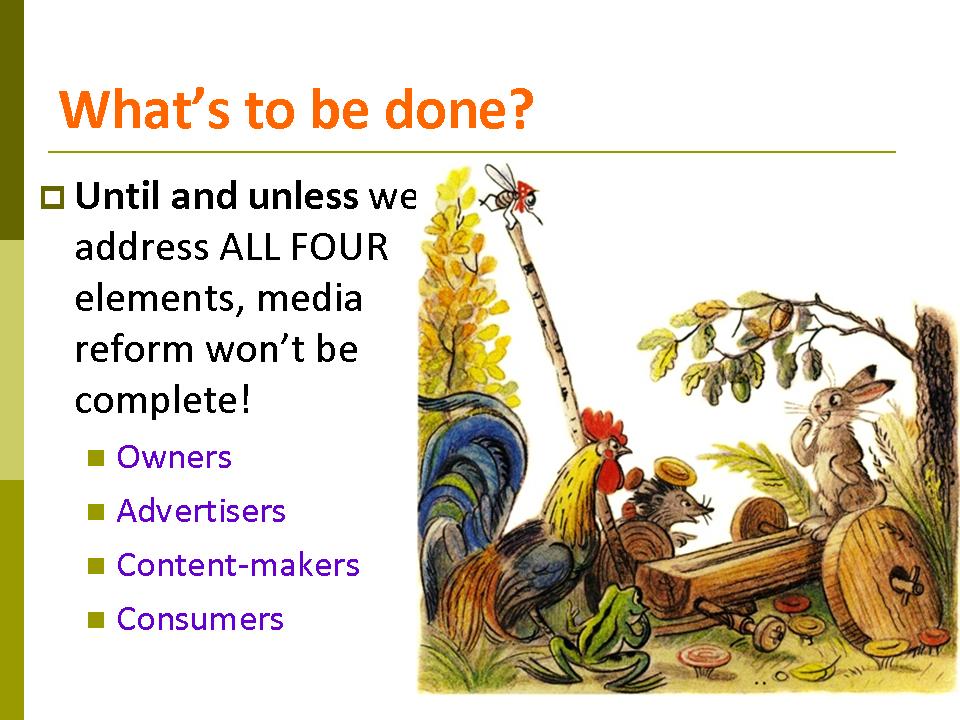
Well, in the case of media reforms, we can’t go off in different directions. We must make the vehicle work, somehow.
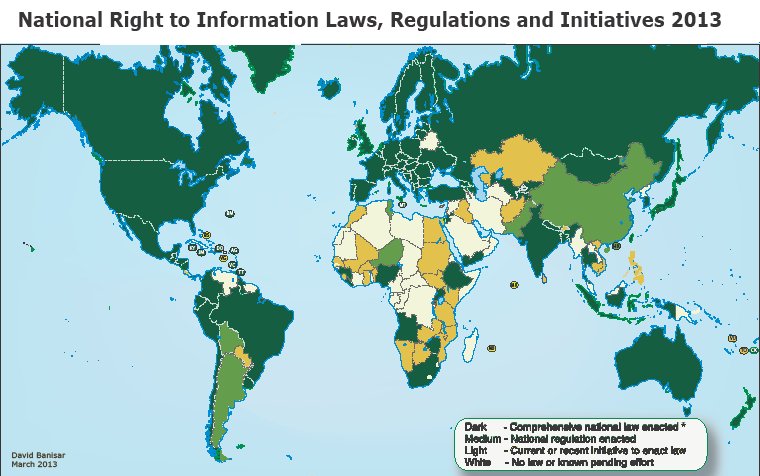
After many years of advocacy by civil society, Sri Lanka is set to adopt a law that guarantees citizens’ Right to Information (RTI). With that, we will at last catch up with nearly 100 countries that have introduced such progressive laws.
Better late than never — but passing the law is only a beginning. Institutionalising it requires effort and funds. Continued vigilance is needed on civil society’s part to guard against the process becoming mired in red tape.
RTI signifies unleashing a new potential. To draw an analogy from water management, opening a ‘sluice’ does not by itself mean much unless the downstream systems are in place. In both cases, the recipients need to know how to make the best use of what comes through.
Journey so far
Why is RTI such a big deal?
Its basis is that in democracies, the public have every right to know what is being done in their name by those entrusted with governance.
RTI is the right to access and obtain information from public officials. This right serves several purposes: improve public participation in policy making; promote transparency and accountability in government; and minimise wastage and corruption of state resources by public officials.
RTI and freedom of information are used interchangeably, but there is an important distinction between the two.
According to lawyer Gehan Gunatilleke, who recently wrote a book on the subject (published by Sri Lanka Press Institute, 2014), freedom of information implies a citizen’s freedom to access and receive public information on request. In such a situation, the government should not violate that freedom by restricting access. RTI goes further, and implies that information is an inherent right of the people. Governments are duty-bound to provide such information.
The Universal Declaration of Human Rights, adopted at the United Nations in 1948, recognised the right to seek, impart and receive information as part the fundamental right to freedom of speech and expression (Article 19).
Article 19 of Universal Declaration of Human Rights
RTI does not mean opening up everything. Sensitive information – related to national security, for example – is excluded. The challenge is to strike a healthy balance between full transparency and a few justified exemptions.
Indian experience
In Asia, India was a frontrunner in developing RTI laws. The campaign for RTI started in the 1990s with a grassroots movement driven by social activists and rural groups. They saw its clear value to counter the growing misuse of authority and public funds by local officials.
State level RTI laws were adopted in Tamil Nadu (1997), Goa (1997), Rajasthan (2000), Delhi (2001) and Maharashtra (2002). The national law came into effect in October 2005 after a decade of agitation.
Under the Indian law, citizens can request information from any ‘public authority’ within 30 days. It covers all branches of government — executive, legislature and judiciary – as well as institutions and statutory bodies set up by an act of national Parliament or a state legislature. Even non-governmental organisations, if they receive significant amounts of government funds, are covered.
The act required all public authorities to appoint a public information officer (PIO) to handle RTI requests. It also mandated computerizing of public records so that certain categories of information are proactively published online, enabling interested citizens to just look it up.
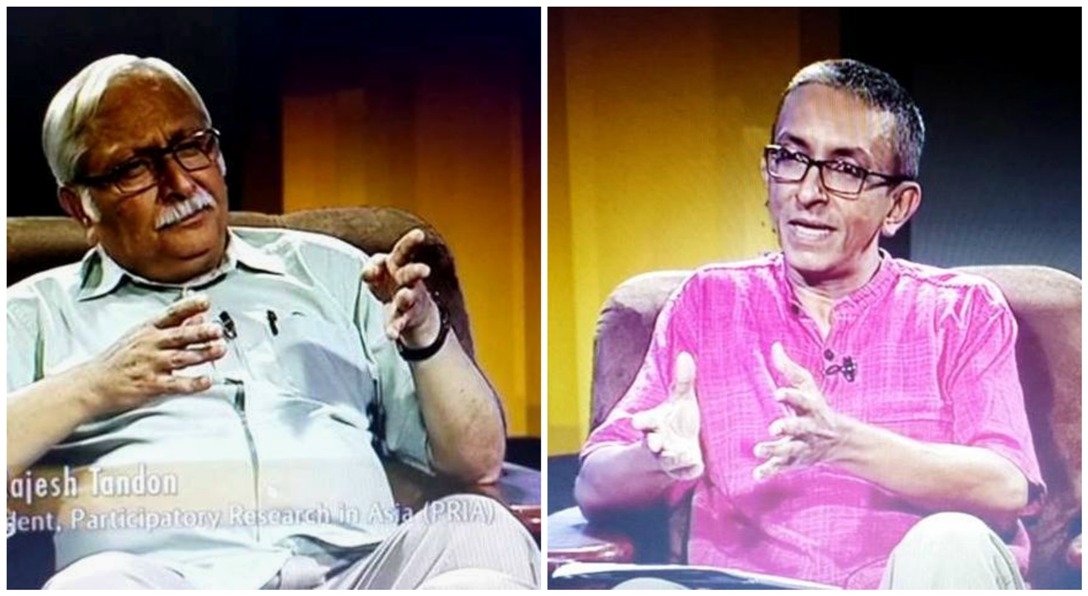
Since the RTI law was introduced, India has seen an improvement in governance, dissemination of information and involvement of civil society in the governance process, says Dr Rajesh Tandon, founder and head of the Society for Participatory Research in Asia (PRIA), a voluntary organisation providing support to grassroots initiatives.
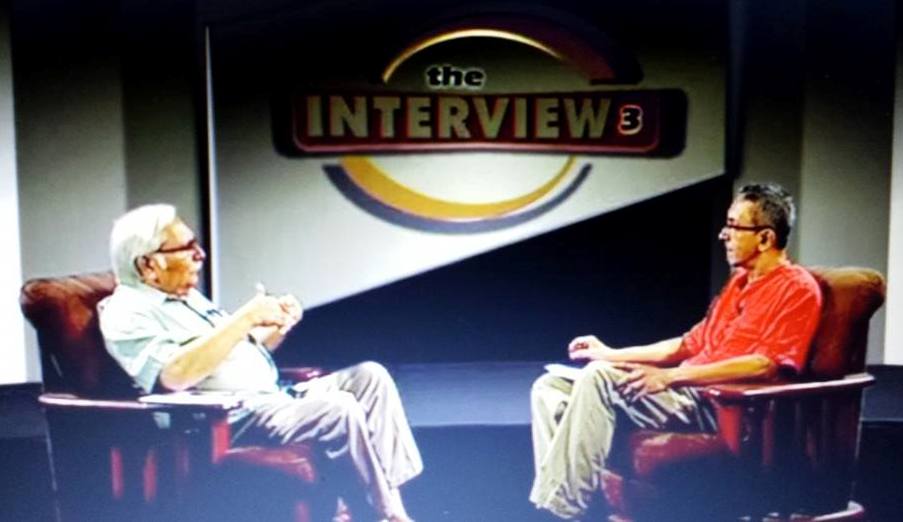
At the same time, Tandon points out that some challenges remain at implementation level. Certain states in India have been more active in creating a culture of information sharing and open government, he told me in a television interview in mid 2014.
As Indians found out, it isn’t easy to shake off centuries of misplaced state secrecy and mistrust in the public. “Old rules and procedures continue to co-exist as new laws and methods are invented. Official Secrecy Act and Right to Information Act co-exist, just as written precedent and e-governance co-exist,” says Tandon (watch our full interview: https://vimeo.com/118544161).
New challenges
In Sri Lanka, civil society groups and journalists’ organisations were at the forefront advocating RTI. Groups like Transparency International and Sri Lanka Press Institute (SLPI) have been lobbying, training and raising awareness on the societal value of this right.
However, RTI is not only for journalists or social activists. It is a right for all citizens living in modern societies where their well-being – sometimes even survival – depends on knowing critical information. Ignorance may have been bliss once upon a time, but it is not recommended for the 21st century.
Reorienting the public institutions to a new culture of openness and sharing will be an essential step. Undoing decades of habits will take effort.
Asanga Welikala, a legal scholar now with the Edinburgh Law School, said in a tweet that we need a moratorium of ‘at least two years’ before RTI law comes into force – so as to train officials and make all government procedures compliant.
He also says the Information Commission must have a proper budget for promotion and public awareness of the new Act, rights and procedures. For example, how to ensure citizen information requests can be accommodated equally in both official languages and the link language?
As champions of RTI, media and civil society must now switch roles. While benefiting from it themselves, they can nurture the newly promised openness in every sphere, showing citizens how best to make use of it.
Public information can exist in many forms today – ranging from minutes of meetings, budget allocation and expense records, and scientifically gathered information such as census data, or trade statistics. These may be stored on paper, tape or – increasingly – in digital formats.
In recent years, with digital technologies the volume of specialised data held by governments has risen phenomenally. Both the data custodians and public today need higher levels of information literacy to navigate through this torrent.
The good news: the web makes it easier to store and share information. ‘Open Data’ means that certain data should be freely available to everyone to use and republish as they wish, without restrictions from copyright, patents or other mechanisms of control.
The open data approach is especially applied to scientific data and government data. But the debate is far from settled: while there are many strong arguments for opening up, some are concerned about potential misuses. Guidelines are still evolving.
A key attribute of open data is its usability. Each country needs to adopt information gathering and data storage standards, so as to minimize users facing problems that arise with the use of different devices, systems and measuring systems.
Some public data custodians in South Asia still release vast amounts of data in hard copy (paper-based) form. For example, India’s Marine Fisherfolk Census of 2010 had results running into thousands of pages of data tables – they were only released on paper. That made further analysis impossible. Undaunted, a fishers’ collective mobilised some tech-savvy volunteers to create computerised spreadsheet databases.
Like many other elements of good governance, RTI’s effectiveness depends on imagination, innovation and persistence on the part of citizens. Its best results will accrue in a society and political culture where evidence and analysis are trusted. Sri Lanka is not there yet.
In this week’s Ravaya column (in Sinhala), I discuss the history and current state of play in relation to right to information (RTI). This is in the context of the new Lankan government planning to introduce an RTI law.
To review the work of government at all levels, citizens/voters need to access public sector information – about decisions, proceedings, budgets, expenditures, problems and performance. Close to 100 countries now have laws guaranteeing people’s RTI.
Sadly, Sri Lanka is lagging behind all other SAARC countries, five of which have already enacted RTI laws and two (Afghanistan and Bhutan) have draft bills under consideration. Attempts to introduce RTI in Sri Lanka were repeatedly thwarted by the previous government, which cited various excuses for avoding such a progressive law.
In this column, I also argue that RTI’s effectiveness depends on imagination, innovation and persistence on the part of all citizens. Its best results will accrue in a society and political culture where evidence and analysis are respected. Sri Lanka is not there yet.
RTI will be a significant milestone in a long journey that must continue.
In this week’s Ravaya column (in Sinhala), I continue the Sinhala adaptation of my June 2014 TV interview with Dr Rajesh Tandon of India, an internationally acclaimed leader and practitioner of participatory research and development.
Last week, we discussed the civil space and political space available for advocacy and activism – and how far civil society activists have been able to engage the formal political process in India.
Today, we discuss how anti-corruption movement evolved into the Aam Aadmi Party, AAP, and the relevance of India’s experiences to Sri Lanka. We also discuss India’s Right to Information Act and how that has empowered citizens to seek a more open and accountable government at national, state and local levels. Dr Tandon ends by emphasizing that democracy is a work in progress that needs constant engagement and vigilance.
තොරතුරුදැනගැනීමේඅයිතිය(Right to Information Act) නීතියෙන්තහවුරුවීඉන්දියාවේදැන්දශකයක්පමණකල්ගතවීතිබෙනවා. පුරවැසිහාසිවිල්සමාජක්රියාකාරීත්වයටහායහපාලනයටමෙයදායකවීඇත්තේකෙසේද?
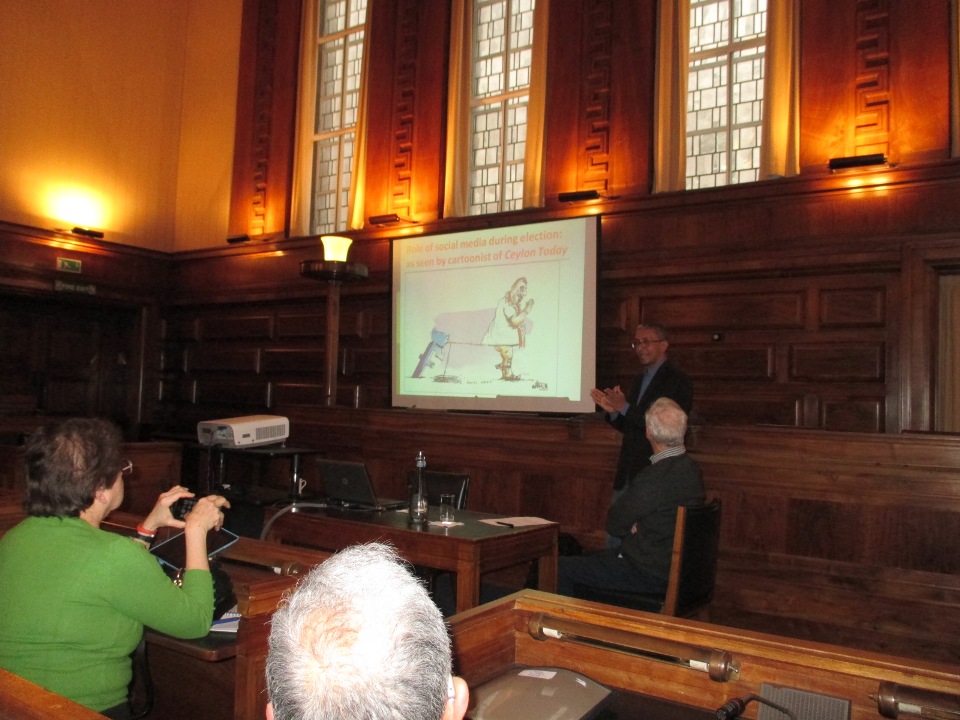
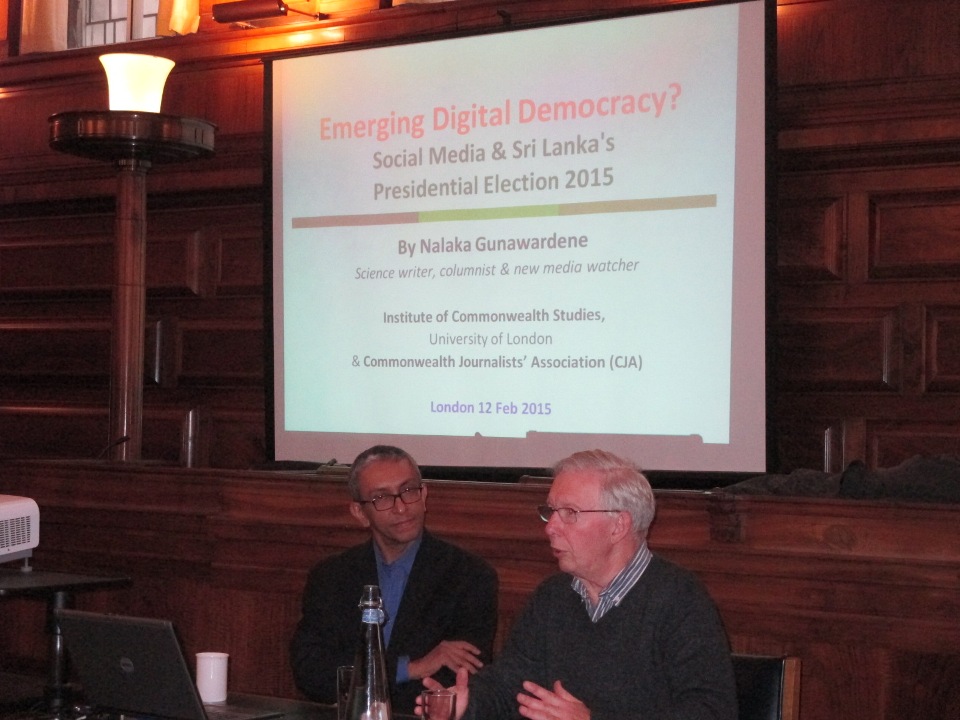
Nalaka Gunawardene talking at London University on 12 Feb 2015 on “Social Media and Sri Lanka’s Presidential Election 2015” Photo by Prasanna Ratnayake
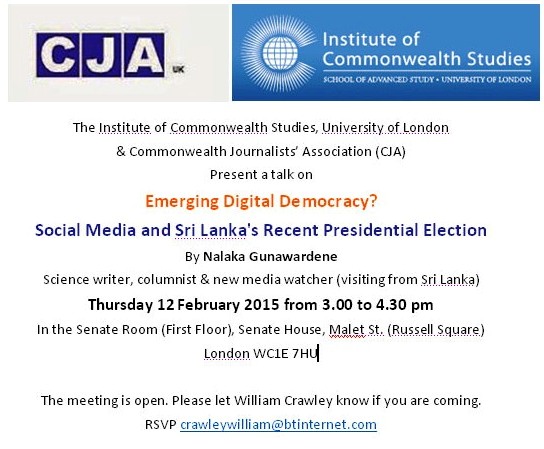
Emerging Digital Democracy? Social Media and Sri Lanka’s Presidential Election 2015
This was the topic of a public talk I gave at the University of London on 12 Feb 2015.
It was organised and hosted by the Institute of Commonwealth Studies, University of London in collaboration with the Commonwealth Journalists’ Association (CJA).
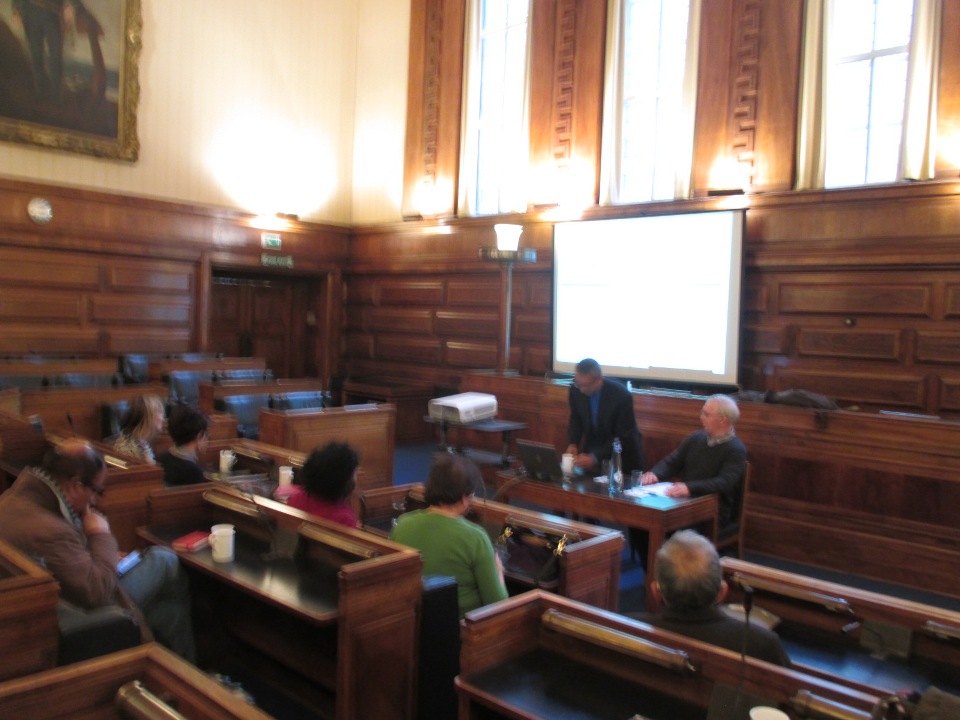
They lined up the University’s Senate Room for the talk, which was attended by a South Asian audience who engaged me in a lively discussion.
Emerging Digital Democracy? Social Media and Sri Lanka’s Presidential Election 2015
Synopsis of the talk:
A record 81.5% of registered voters took part in Sri Lanka’s presidential election on 8 January 2015 in which incumbent Mahinda Rajapaksa was defeated by his former health minister Maithripala Sirisena. The peaceful regime change has been widely acclaimed as a triumph of democracy and a mandate for political reform, improved governance and national reconciliation.
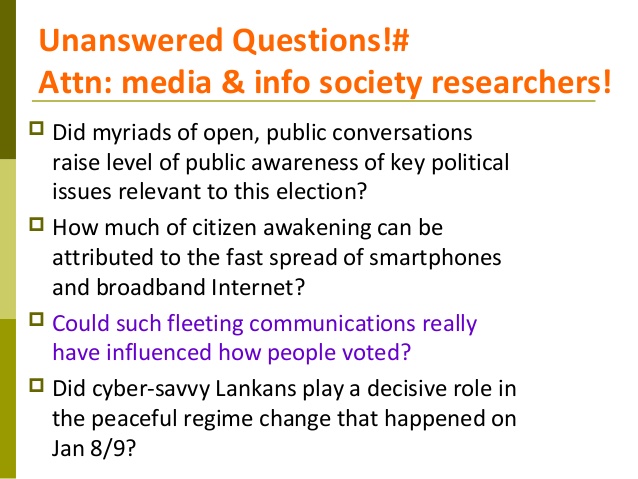
The election saw unprecedented use of social media by both candidates as well as by politically charged yet unaffiliated youth. How much of this citizen awakening can be attributed to the fast spread of smartphones and broadband? Did it really influence how people voted? What does this mean for future politics and governance in Sri Lanka?
In this illustrated talk, science journalist and new media watcher (and practitioner) Nalaka Gunawardene shares his insights and views.
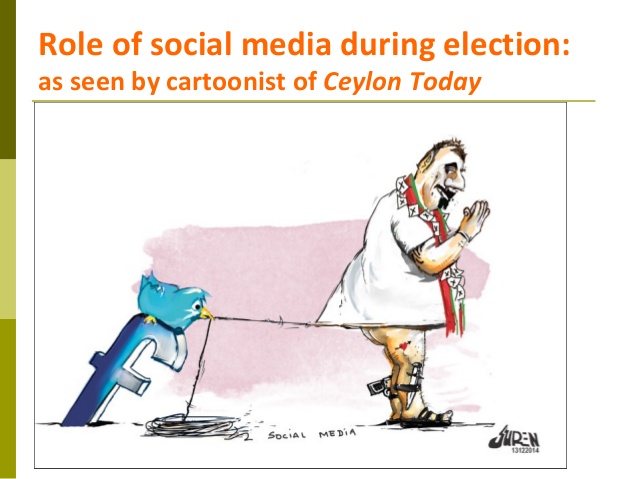
Who’s afraid of social media? Many Lankan politicians, for sure…
My PowerPoint slides:
Key questions that need more research to answer:
This is why we need better research on new media and society in Sri Lanka!
Photos by Prasanna Ratnayake
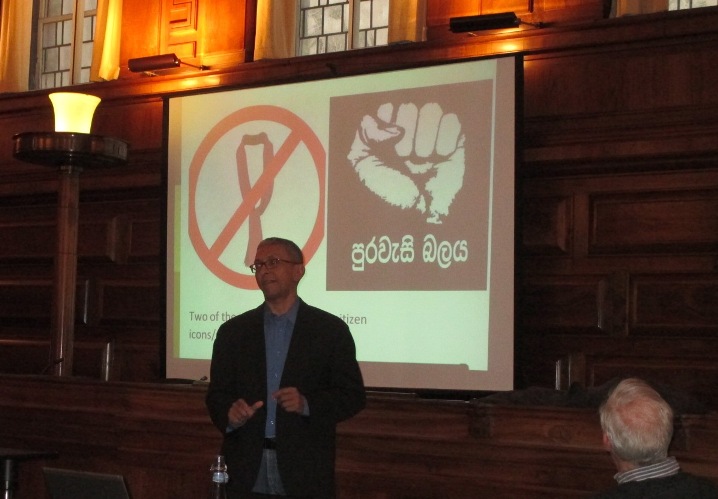
William Crawley (right), Fellow of the Institute of Commonwealth Studies, introduces Nalaka GunawardeneNalaka Gunawardene on Social Media and Sri Lanka’s Presidential Election 2015 at University of London, 12 Feb 2015A section of the audience at Senate Room, University of London, listening to Nalaka Gunawardene: 12 Feb 2015
I am not a public health or environmental expert, but have long covered related topics as a science journalist.
Among my long-standing interests are the downstream health and environmental effects agrochemicals – both chemical fertilizers and farm chemicals applied against pests and weeds. Parallel to this, I have also been covering chronic kidney disease of uncertain aetiology (CKDu), a mysterious illness that has been affecting thousands of Lankan farmers for nearly 25 years.
A link between agrochemicals and CKDu is suspected, but not yet scientifically proven (even though environmentalists ask us to believe so). It is a current yet contentious topic, which I chose for my presentation to an international workshop on “Pesticides and Global Health: Research, Collaboration and Impact” held at the Department of Anthropology, University of Durham, UK, on 10 – 11 February 2015.
In my presentation, I explore the topic from the angle of public perceptions, which are largely shaped by what appears in the media. This has been problematic since mass kidney failure in Sri Lanka has been compounded by what I call a ‘mass media failure’.
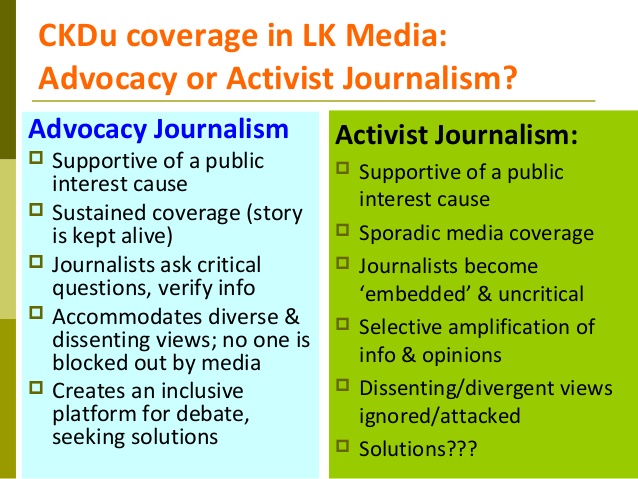
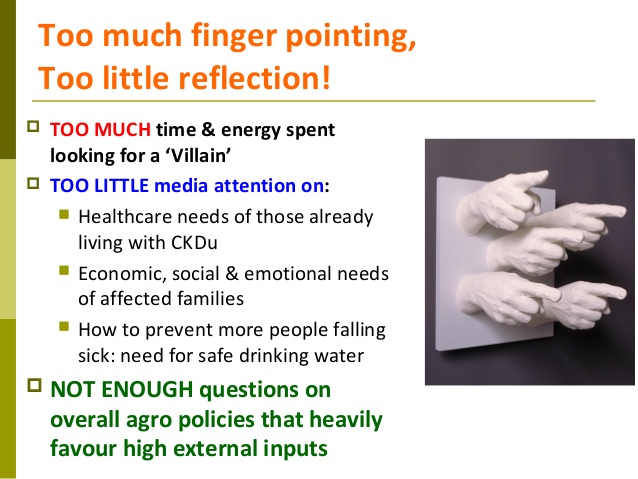
Most of our media have failed to understand, analyse and report adequately on this public health emergency. Instead of helping affected people and policy makers to work out solutions, some journalists have become amplifiers of extreme activist positions. This has led to alarmism and policy confusion.
What is to be done? There are no short-cuts to the scientific investigation process which must follow – that means further research is needed to find definitive evidence for causative factors. That could take a while, given how people are exposed to multiple environmental, lifestyle and genetic factors.
But meanwhile, the welfare of those already affected by the disease and their families needs to receive greater public support. Environmentalists trying to score points from this tragedy overlook this vital humanitarian aspect.
A few excerpts from the presentation below. See full presentation above.
Advocacy journalism is fine; activist journalism is questionableWe need Lankan media to be more reflective, less accusatorySpare a thought for today’s policy-makers who must think and act on the run…
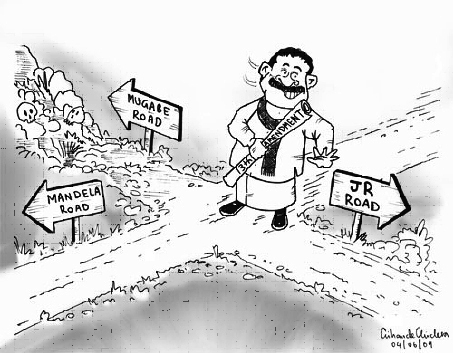
Which road to take, ponders Mahinda Rajapaksa after war victory – Cartoon by Gihan de Chickera, published in Daily Mirror, 4 June 2009 (2 weeks after Sri Lanka’s civil war ended)
In this week’s Ravaya column (in Sinhala), published in the issue dated 11 January 2015, I offer an initial analysis of media-based political campaign communications during the run-up to Sri Lanka’s 7th Presidential Election on 8 January 2015. The column was written on 5 January, as physical campaigning (meetings and outdoor promotion) came to an end. The Ravaya issue carrying this hit the newsstands on election day.
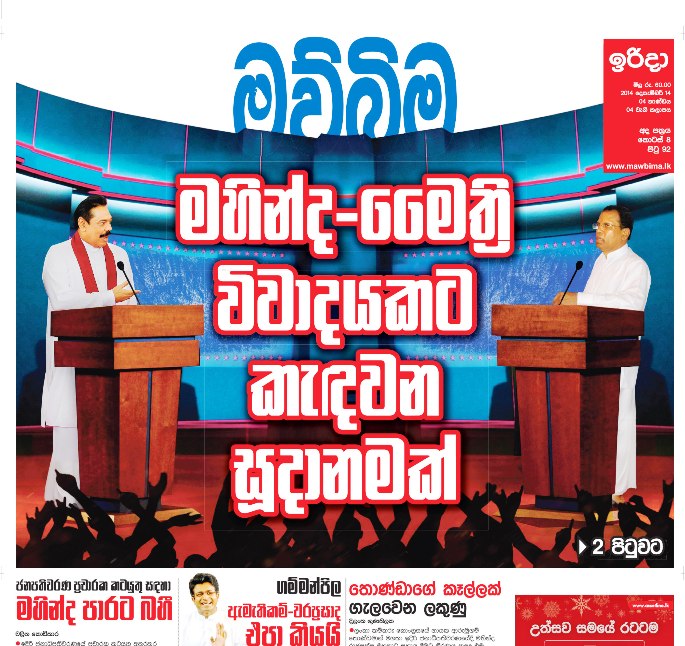
In this, I pay particular attention to the use of social media by political parties as well as independent citizens and civil society groups. I also discuss the missed opportunity of holding a televised live debate between the two main candidates – to which opposition’s common candidate Maithripala Sirisena agreed, but was declined by incumbent president Mahinda Rajapaksa.
See also my recent other columns on elections, digital democracy and social media:
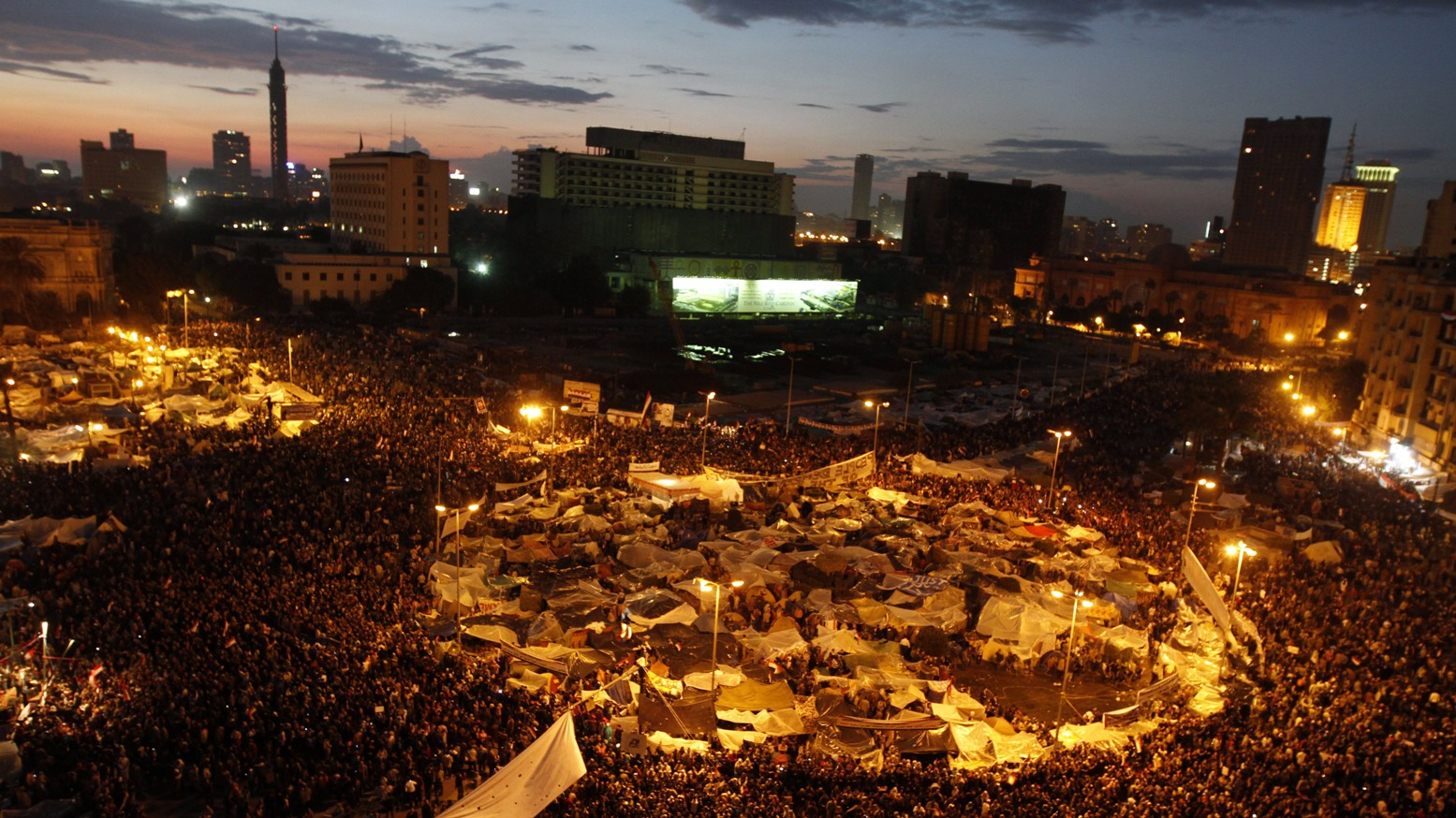
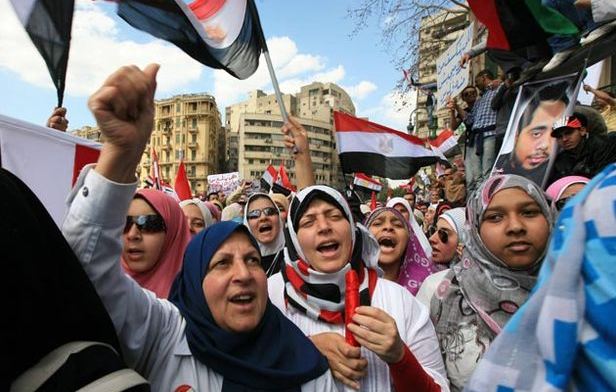
Anti-government demonstrators crowd Cairo’s Tahrir Square in February 2011
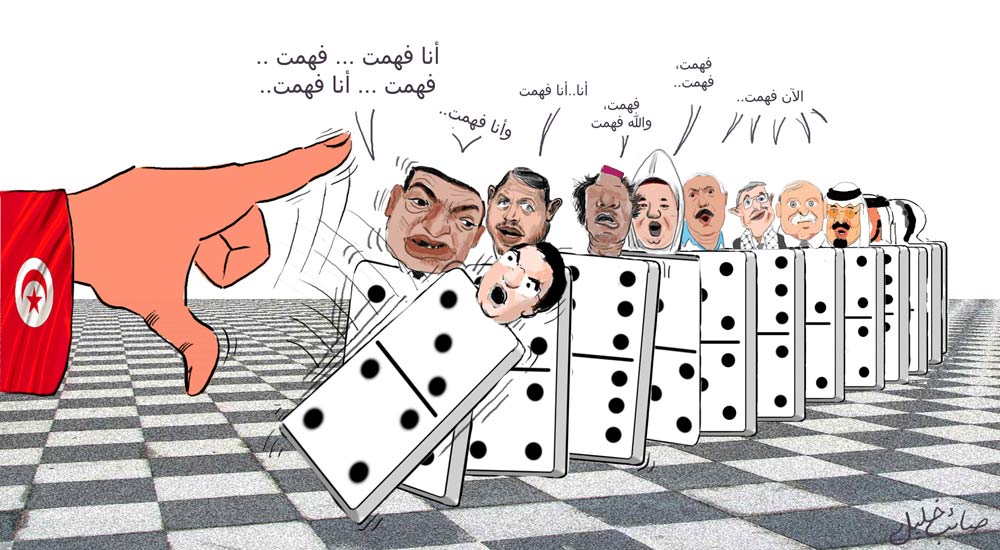
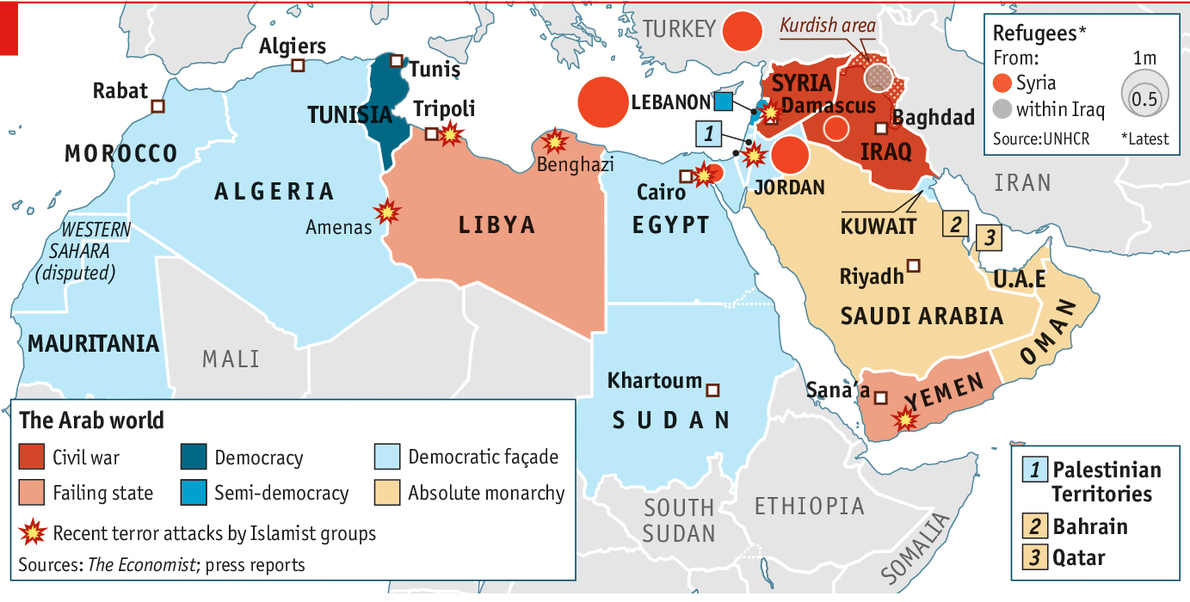
In this week’s Ravaya column (in Sinhala), published in the issue dated 4 January 2015, I pose a topical question: are there necessary and sufficient conditions for a spontaneous people’s uprising in Sri Lanka similar to what happened in the collective phenomenon known as the Arab Spring?
I address this because both the ruling party and opposition politicians in Sri Lanka have been loosely referring to Arab Spring during their current campaigns running up to the Presidential Election scheduled for 8 January 2015.
In this column, I briefly chronicle what happened in the Middle East and North Africa during 2010-11, and then explore the many factors that triggered or sustained the complex series of events. I discern three key factors: demographics (especially a low median age with large youthful populations); democracy deficit; and proliferation of information and communications technologies ranging from easy access to trans-boundary satellite television broadcasts, mobile phones and Internet.
I argue that while Sri Lanka of today has achieved the ICT factor in good measure, the other two factors fall short. With a median age of 31 years (in 2012), ours is no longer a youthful population and the demographic impetus for uprisings has passed. And while there are serious concerns about governance, the country’s democratic deficit is only partially present.
Thus, it is very unlikely that an Arab Spring style uprising could happen in Sri Lanka. So both the ruling coalition and opposition parties relax — and should let go of this much-hyped prospect.
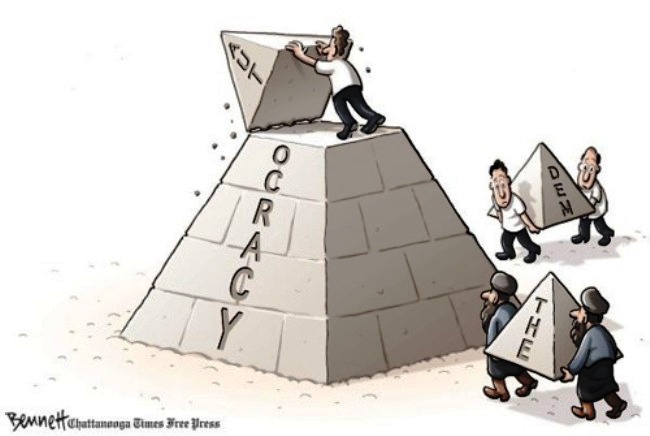
Replace autocracy with democracy or theocracy? Changing the top isn’t that easy! Cartoon by Clay Bennett on 1 February 2011. Cartoon courtesy timesfreepress.com
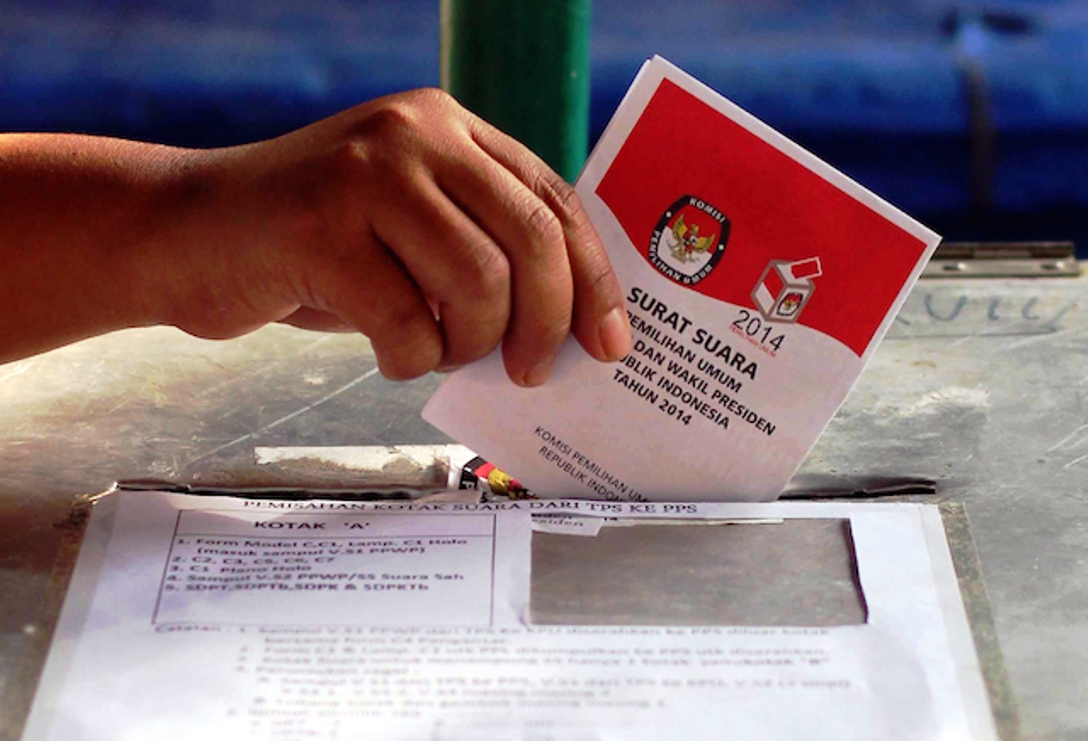
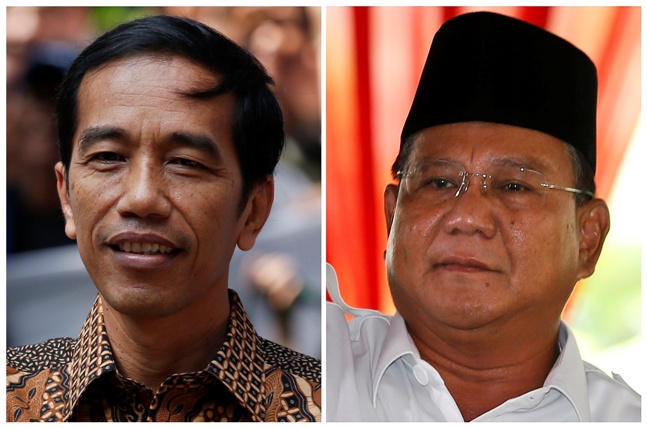
In this week’s Ravaya column (in Sinhala), published on 28 December 2014, I explore the nexus between social media, digital technologies and elections by taking the example of the Indonesian presidential election held on 9 July 2014.
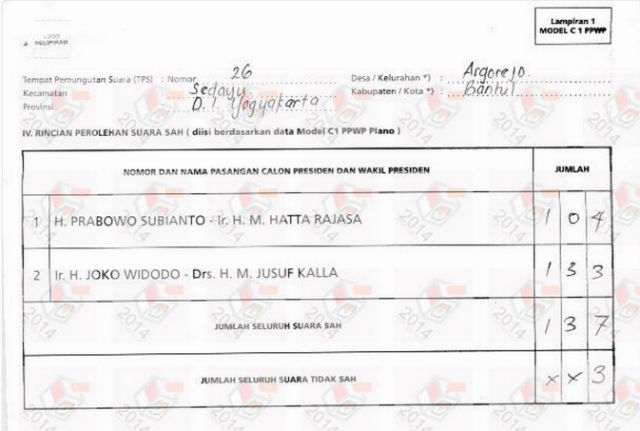
BAD MATH. This screenshot of a C1 tabulation form from Yogyakarta in Indonesia allegedly shows 100 votes added to presidential ticket Prabowo Subianto and Hatta Rajasa. Screenshot taken from c1yanganeh.tumblr.com








 Open Minds!