A science writer by training, I've worked as a journalist and communication specialist across Asia for 30+ years. During this time, I have variously been a news reporter, feature writer, radio presenter, TV quizmaster, documentary film producer, foreign correspondent and journalist trainer. I continue to juggle some of these roles, while also tweeting and column writing.
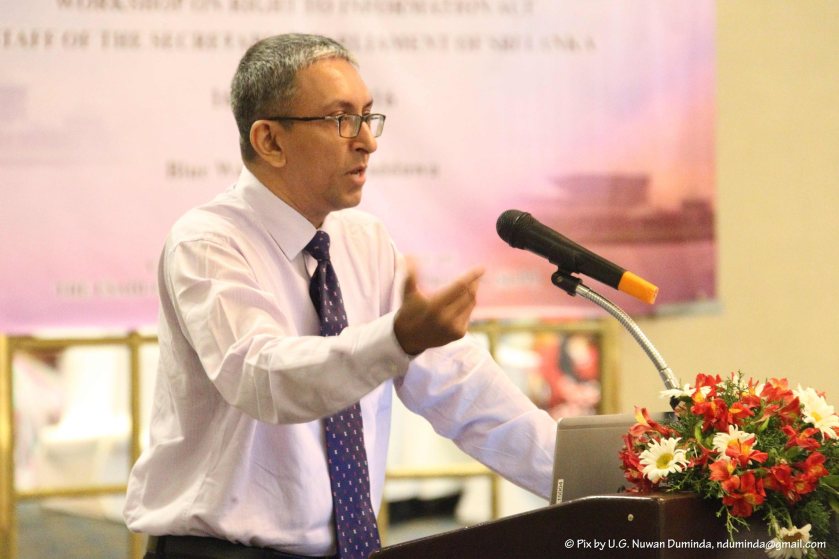
Nalaka Gunawardene speaks at RTI Seminar for Sri Lanka Parliament staff, 16 Aug 2016
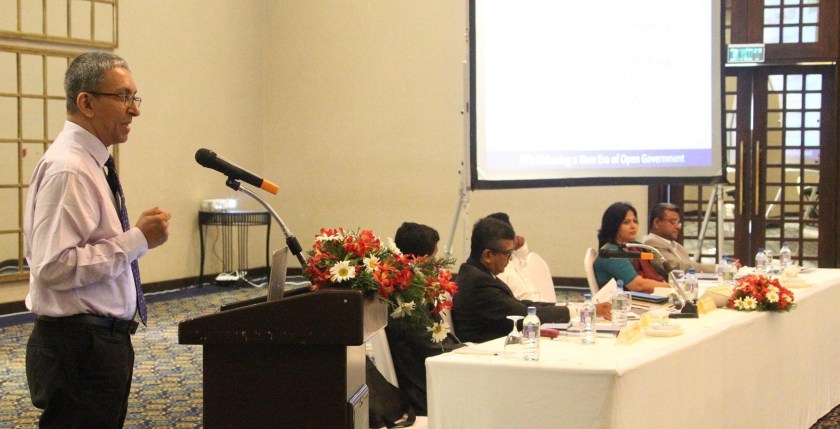
On 16 August 2016, I was invited to speak to the entire senior staff of the Parliament of Sri Lanka on Right to Information (RTI) – South Asian experiences.
Sri Lanka’s Parliament passed the Right to Information (RTI) law on 24 June 2016. Over 15 years in the making, the RTI law represents a potential transformation across the whole government by opening up hitherto closed public information (with certain clearly specified exceptions related to national security, trade secrets, privacy and intellectual property, etc.).
This presentation introduces the concept of citizens’ right to demand and access public information held by the government, and traces the evolution of the concept from historical time. In fact, Indian Emperor Ashoka (who reigned from c. 268 to 232 Before Christ) was the first to grant his subjects the Right to Information, according to Indian RTI activist Venkatesh Nayak, Coordinator, Commonwealth Human Rights Initiative (CHRI). Ashoka had inscribed on rocks all over the Indian subcontinent his government’s policies, development programmes and his ideas on various social, economic and political issues — including how religious co-existence.
Nalaka Gunawardene speaks at RTI Seminar for Parliament staff, Sri Lanka – 16 Aug 2016
Therefore, adopting an RTI law signifies upholding a great Ashokan tradition in Sri Lanka. The presentation looks at RTI good practices and implementation experiences in India, Nepal, Bangladesh, Pakistan and Maldives – all these South Asian countries passed an RTI law before Sri Lanka, and there is much that Sri Lanka can learn from them.
The presentation ends acknowledging the big challenges in implementing RTI in Sri Lanka – reorienting the entire public sector to change its mindset and practices to promote a culture of information sharing and transparent government.
This column originally appeared in Echelon business magazine, March 2014 issue. It is being republished here (without change) as part of a process to archive all my recent writing in one place – on this blog.
Image courtesy Echelon magazine
Balancing Broadband and Narrow Minds
By Nalaka Gunawardene
Are we cyber-stunted?
I posed this question some weeks ago at Sri Lanka Innovation Summit 2013 organised by Echelon and News 1st. We were talking about how to harness the web’s potential for spurring innovation.
We cannot innovate much as a society when our broadband is stymied by narrow minds. How many among the (at least) 3.5 million Lankans who regularly access the web have the right mindset for making the best use of the medium, I asked.
We didn’t get to discuss it much there, but this bothers me. Sri Lanka has now had 19 years of commercial Internet connectivity (the first ISP, Lanka Internet Services, started in April 1995). That’s a long time online: we have gone past toddler years and childhood (remember dial-up, anyone?) and been through turbulent ‘teen years’ as well.
Technology and regulation have moved on, imperfect though the latter maybe. But psychologically, as a nation we have yet to find our comfort level with the not-so-new medium.
There are various indicators for this. Consider, for example, the widespread societal apprehensions about social media, frequent web-bashing by editorialists in the mainstream media, and the apparent lack of public trust in e-commerce services. These and other trends are worth further study by social scientists and anthropologists.
Another barometer of cyber maturity is how we engage each other online, i.e. the tone of comments and interactions. This phenomenon is increasingly common on news and commentary websites; it forms the very basis of social media.
Agree to disagree?
‘Facts are sacred, comment is free’ is a cherished tenet in journalism and public debates. But expressing unfashionable opinions or questioning the status quo in Lankan cyber discussions can attract unpleasant reactions. Agreeing to disagree rarely seems an option.
Over the years, I have had my share of online engagement – some rewarding, others neutral and a few decidedly depressing. These have come mostly at the multi-author opinion platforms where I contribute, but sometimes also through my own blogs and twitterfeed.
One trend seems clear. In many discussions, the ‘singer’ is probed more than the ‘song’. I have been called unkind names, my credentials and patriotism questioned, my publishers’ bona fides doubted, and my (usually moderate) positions attributed to personality disorders or genetic defects! There have been a few threats too (“You just wait – we’ll deal with traitors soon!”).
I know those who comment on mainstream political issues receive far more invective. Most of this is done under the cover of anonymity or pseudonymity. These useful web facilities – which protect those criticising the state or other powerful interests – are widely abused in Lankan cyberspace to malign individuals expressing uncommon views.
There are some practical reasons, too, why our readers may misunderstand what we write, or take offence needlessly.
Poor English comprehension must account for a good share of web arguments. Many fail to grasp (or appreciate) subtlety, intentional rhetoric and certain metaphors. Increasingly, readers react to a few key words or phrases in longer piece — without absorbing its totality.
A recent example is my reflective essay ‘Who Really Killed Mel Gunasekera?’. I wrote it in early February shortly after a highly respected journalist friend was murdered in her suburban home by a burglar.
I argued that we were all responsible, collectively, for this and other rising incidents of violence. I saw it as the residual product of Lankan society’s brutalisation during war years, made worse by economic marginalisation. Rather than barricading ourselves and living in constant fear, we should tackle the root causes of this decay, I urged.
The plea resonated well beyond Mel’s many friends and admirers. But some readers were more than miffed. They (wrongly) reduced my 1,100 words to a mere comparison of crime statistics among nations.
I aim to write clearly, and also probe beyond headlines and statistics. But is such nuance a lost art when many online readers merely scan or speed-read what we labour on? In today’s fast-tracked world, can reflective writing draw discerning readers and thoughtful engagement any longer? I wonder.
Too serious
Then there is the humour factor – or the lack of it. Many among us don’t get textual satire, as Groundviews.org discovered with its sub-brand called Banyan News Reporters (BNR). Their mock news items and spoofs were frequently taken literally – and roundly condemned.
The web is a noisy place, but some stand out in that cacophony because of their one-tracked minds. They are those who perceive and react to everything through a pet topic or peeve. That ‘lens’ may be girls vs boys, or lions vs tigers, or capitalism vs socialism or something else. No matter what the topic, such people will always sing same old tune!
Tribal divisions are among the most entrenched positions, and questioning matters of faith assures a backlash. It seems impossible to discuss secularism in Sri Lanka without seemingly offending all competing brands of salvation! (The last time I tried, they were bickering among themselves long after I quietly left the platform…)
Oh sure, everybody is entitled to a bee or two in her bonnet. But what to do with those harbouring an entire bee colony — which they unleash at the slightest provocation?
I just let them be (well, most of the time). I used to get affected by online abuse from cloaked detractors but have learnt to take it with equanimity. This is what economist and public intellectual W A Wijewardena also recommends.
“You must treat commentators as your own teachers; some make even the most stupid comment in the eyes of an intelligent person, but that comment teaches us more than anything else,” he wrote in a recent Facebook discussion.
He added: “Individual wisdom and opinions are varied and one cannot expect the same type of intervention by all. I always respect even the most damaging comment made by some on what I have written!”
Moderating extreme comments is a thankless and challenging job for those operating opinion platforms. If they are too strict or cautious, they risk diluting worthwhile public debates for which space is shrinking in the mainstream media. At the same time, hate speech peddlers cannot be allowed free license in the name of free speech.
Where to draw the line? Each publisher must evolve own guidelines.
Groundviews.org, whose vision is to “enable civil, progressive and inclusive discussions on democracy, rights, governance and peace in Sri Lanka” encourages “a collegial, non-insulting tone” in all contributors. It also reminds readers that “comments containing hate speech, obscenity and personal attacks will not be approved.”
Colombo Telegraph, another popular opinion and reporting website, “offers a right to reply for any individual or organisation who feels they have been misreported”. Sadly, this courtesy is not available in many online news and commentary websites carrying Lankan content.
In the end, even the most discerning publishers and editors can do only so much. As more Lankans get online and cyber chatter increases, we have to evolve more tolerant and pluralistic ways of engagement.
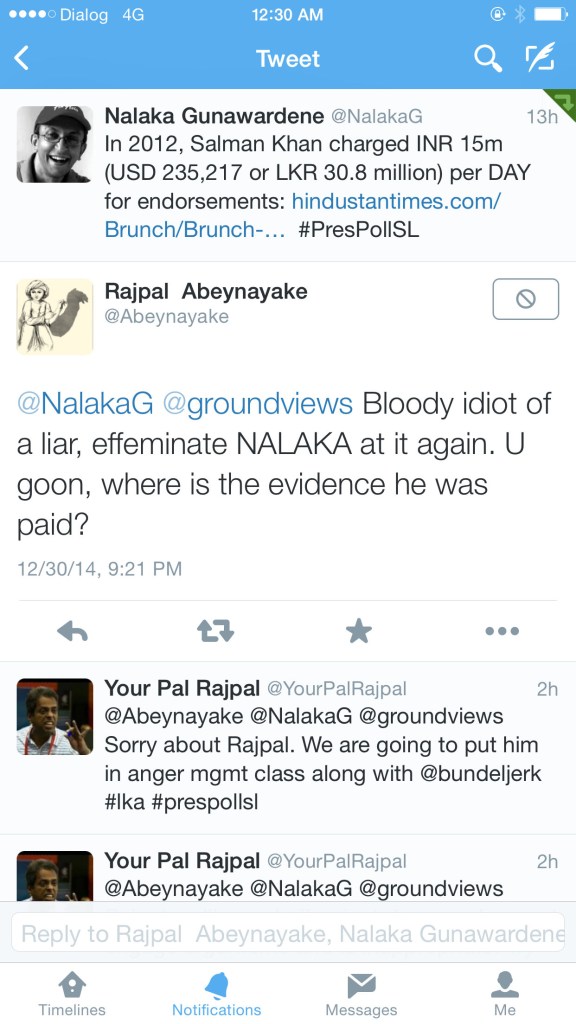
An example of cyber intolerance and name-calling from December 2014, during the campaign for Sri Lanka’s Presidential Election (when Bollywood’s Salman Khan was brought to Sri Lanka to promote then incumbent Mahinda Rajapalksa’s election campaign)
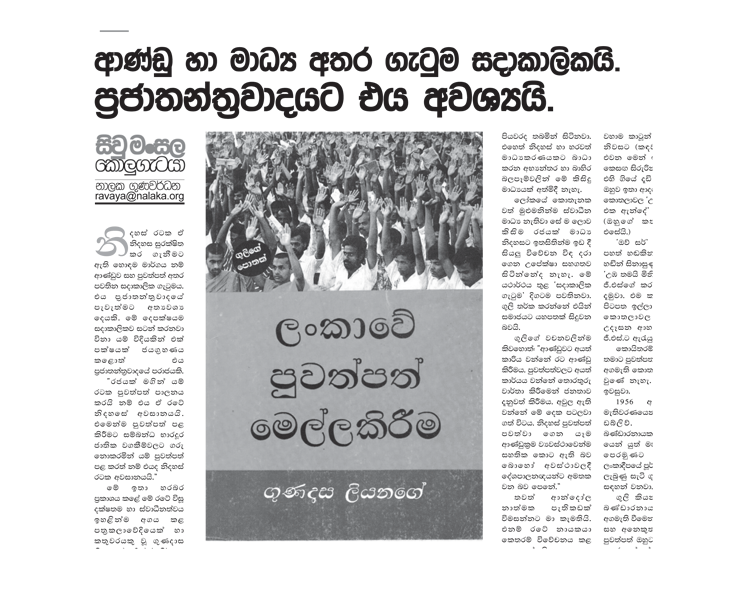
Sivu Mansala Kolu Getaya column by Nalaka Gunawardene, Ravaya 14 Aug 2016
In this week’s Ravaya column (appearing in the print issue of 14 August 2016), I take a close look at the perennial tension between governments and the media.
I open with an extract from late Gunadasa Liyanage (1930-1997), one of Sri Lanka’s most accomplished and respected editors of the 20th century. In his 1993 book on ‘Taming the Press in Sri Lanka’ (in Sinhala), he argued that the never-ending confrontation between the government and media is, in fact, a protection for democratic freedoms. If either party wins, it is a set back for democracy.
“If a government controls the media that marks the end of human freedoms in that country. On the other hand, if the media behaves without any responsibility, that too threatens freedoms in society,” he wrote.
So the tension between these two continues in 21st century Sri Lanka, even as we recover from a Decade of Darkness (2005-2014) under the authoritarian rule of Mahinda Rajapaksa. As the government elected in 2015 tries to balance media freedoms with economic growth and political reforms, it faces some familiar challenges.
How much can or should the government allow ultra-nationalists and other political opportunists to exploit media freedom? What are the sane and safe limits to which media houses should accommodate partisan agendas and vitriolic messages emanating from sections of the (serving and retired) military, clergy and electorally defeated political parties?
This column also quotes Vijitha Yapa, one of Sri Lanka’s most senior journalists who was founder editor of The Island, The Sunday Island and the (revived) Sunday Times – all of which positions he quit when he could no longer operate with editorial independence.
I also raise a related point: how far can the President and Prime Minister be criticized in the media?
‘ලංකාවේ පුවත්පත් මෙල්ල කිරීම’ – Taming the Press in Sri Lanka, by Gunadasa Liyanage (1993)
In this week’s Ravaya column (appearing in the print issue of 7 August 2016), I discuss the history of Chinese space programme through the life story of its most important founder.
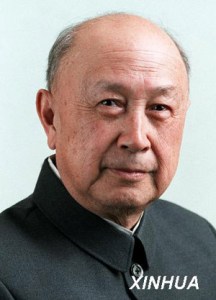
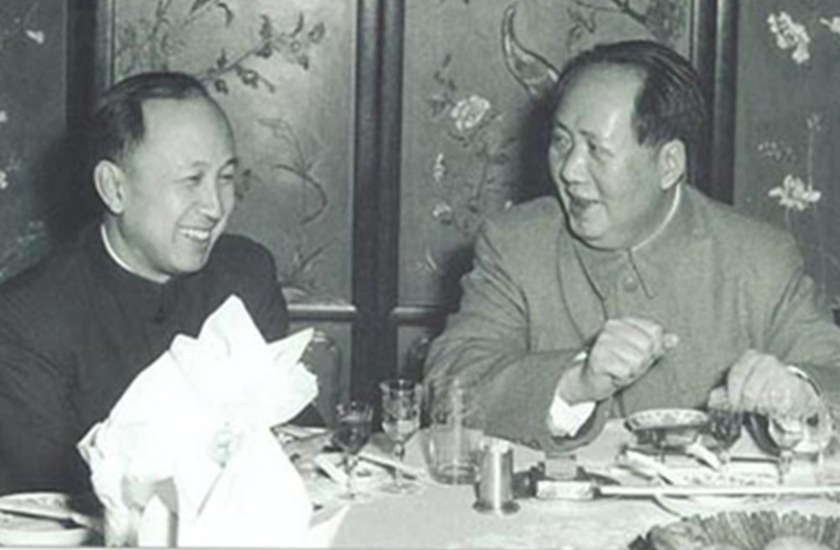
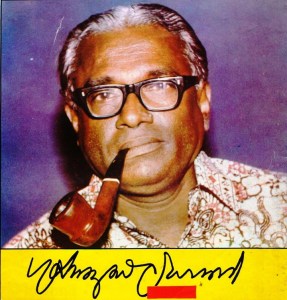
Qian Xuesen (1911 – 2009) was one of the greatest Chinese scientists of the modern era and is widely regarded as the father of China’s space and strategic rocket programme.
One of twentieth century’s most brilliant engineers, Qian was widely honoured in China for his “eminent contributions to science”. He was credited with leading China to produce and launch weather and reconnaissance satellites, as well as its own intercontinental ballistic missiles and anti-ship missiles.
His pioneering efforts also helped China to send a human to Earth orbit in 2003 using its own rockets – the third nation to do so after the (former) Soviet Union and the United States.
In 2008, China Central Television (CCTV) named Qian as one of the eleven most inspiring people in China. He died on 31 October 2009, aged 97, having seen China become one of the world’s leading space-faring nations.
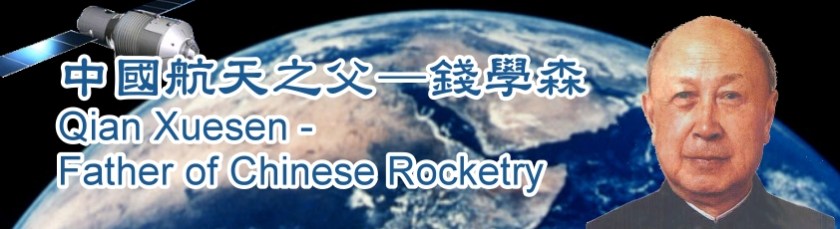
Qian Xuesen – Father of China’s space and strategic rocket programme [image courtesy CCTV]සමාජ මාධ්යවල මා කරන ප්රකාශ මත පදනම් වී සමහරුන් අසන්නේ මා උග්ර චීන විරෝධියකු ද කියායි.
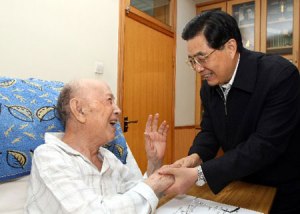
Chinese President Hu Jintao (R) visits renowned scientist and founder of China’s space technology Qian Xuesen in Beijing, January 19, 2008. (Xinhua Photo by Lan Hongguang)
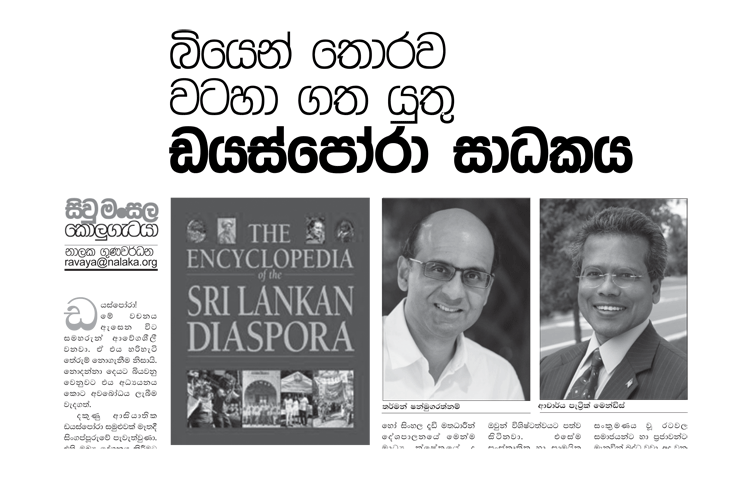
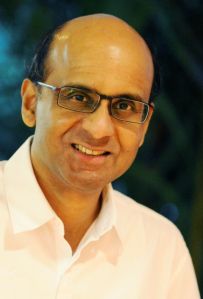
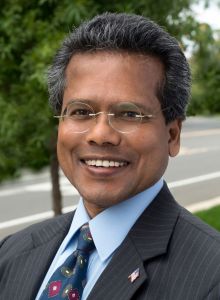
In this week’s Ravaya column (appearing in the print issue of 31 July 2016), I explore the many faceted phenomenon called the Sri Lankan diaspora.
I emphasize why it is very important for everyone in Sri Lanka to understand the diaspora factor in all its nuances and complexity. Simplistic perceptions have dominated public discourse for too long, and we owe ourselves a more informed approach to this topic
Most media outlets narrowly and negatively interpret the term ‘diaspora’ mean only a section of oversease Lankans of Tamil ethnicity who supported terrorism. This is not merely a case of semantics, as diaspora engagement for national reconciliation is hampered by these persistent misconceptions.
I point out that sympathisers of Tamil Eelam were/are only a small part of the spectrum that includes people of ALL ethnicities, social backgrounds and professional skills originating from Sri Lanka who have spread to different parts of the world for over 150 years.
The latter report’s opening para says: “With nearly three million Sri Lankans living across the world (approximately fourteen percent of the country’s population) Sri Lanka’s diaspora-to-population ratio is known as one of the highest in the South Asian region. This ratio is the product of different waves of migrations that are mainly attributed to: post-colonial developments, the need for better economic prospects, political instability – including the JVP insurrection and the 30-year civil war, and education opportunities. As such, the Sri Lankan diaspora is by nature not considered to be homogenous as it represents the many social, political, ethnic and religious ideologies and experiences that exists in Sri Lanka.”
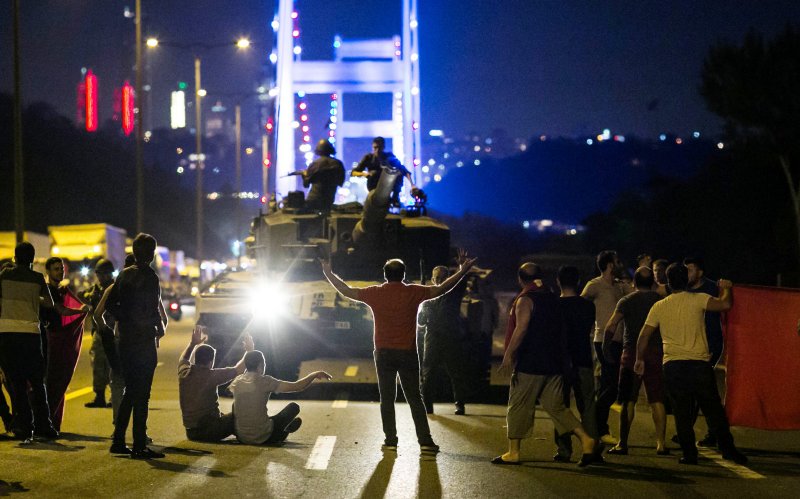
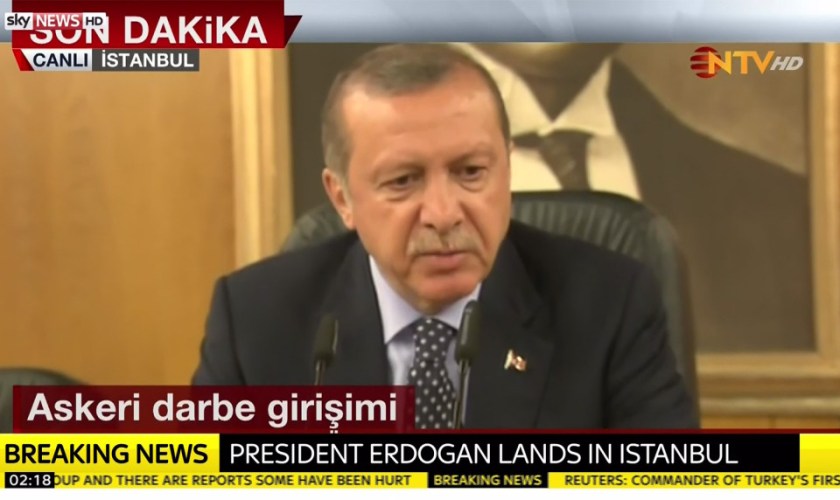
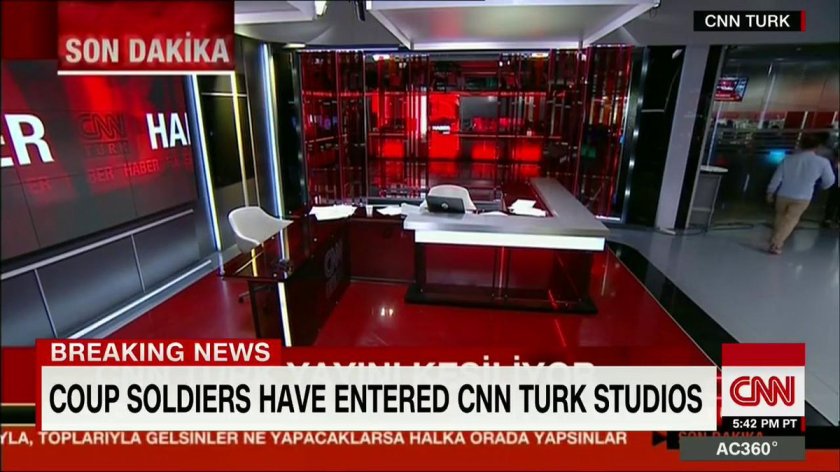
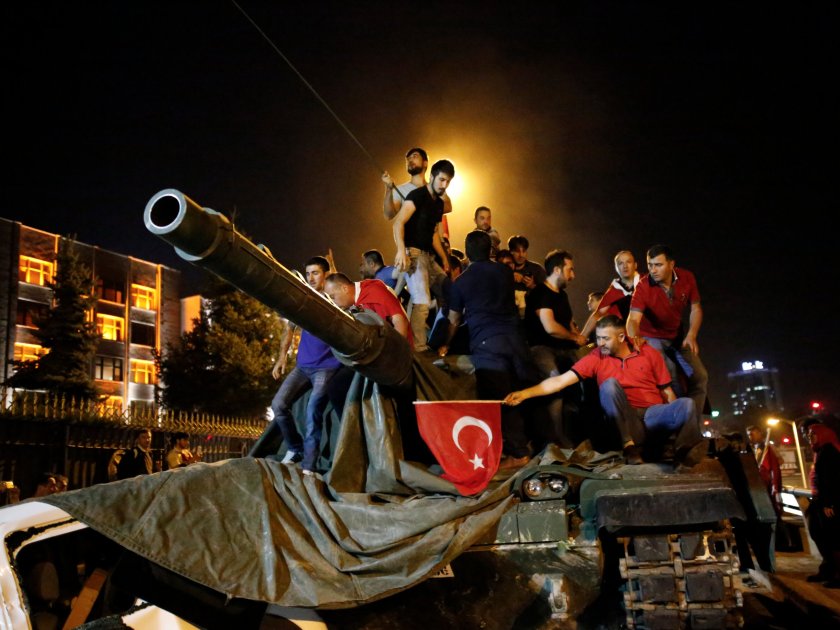
Citizen resistance to Turkey coup on 16 July 2016 – wire service photos
As Zeynep Tufekci, an assistant professor at the University of North Carolina School of Information and Library Science, described in a New York Times op-ed on 20 July 2016: “In the confusing hours after the coup attempt began, the country had heard from President Recep Tayyip Erdogan — and even learned that he was alive — when he called a television station via FaceTime, an easy-to-use video chat app. As the camera focused on the iPhone in the anchor’s hand, the president called on the people of Turkey to take to the streets and guard the airports. But this couldn’t happen by itself. People would need WhatsApp, Twitter and other tools on their phones to mobilize. The president also tweeted out the call to his more than eight million followers to resist the coup.”
She added: “The journalist Erhan Celik later tweeted that the public’s response had deterred potential coup supporters, especially within the military, from taking a side…Meanwhile, the immediacy of the president’s on-air appeal via FaceTime was an impetus for people to take to the streets. The video link protected the government from charges that it was using fraud or doctoring — both common in the Turkish news media — to assure the public that the president was safe. A phone call would not have worked the same way.”
I discuss the irony of a leader like Erdogan, who has been cracking down on independent media practitioners and social media users, had to rely on these very outlets in his crucial hour of need.
I echo the views of Zeynep Tufekci for not just Turkey but other countries where autocratic rulers are trying to censor the web and control the media: “The role of internet and press freedoms in defeating the coup presents a significant opportunity. Rather than further polarization and painting of all dissent as illegitimate, the government should embrace real reforms and reverse its censorship policies.”
In this week’s Ravaya column (appearing in the print issue of 17 July 2016), I discuss Sri Lanka govermment’s recently announced plans to introduce an electronic National Identity Card (e-NIC) replacing the current, mandatory NIC based on a system that was launched in 1971.
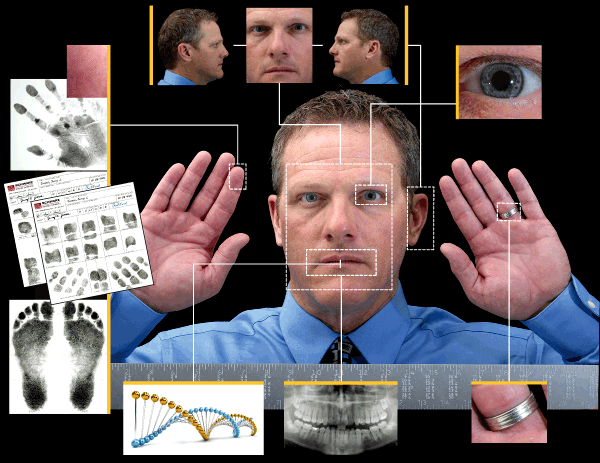
The Department of Registration of Persons (the ID card office) is to start collecting fingerprints to issue 16.5 million electronic identity cards (eNICs) in 2016 that will contain biometric security features such as fingerprints. According to media reports, fingerprints are to be collected manually at 331 district and divisional level units and scanned and entered into a national register.
But we should be asking some critical questions about this initiative that collects biometric data of all citizens. Is the government capable of ensuring data security of this massive database? Can it be misused for citizen surveillance in the hands of an authoritarian regime?
Deploying modern technology is fine, but that must be accompanied by adequate human rights safeguards and a political culture that treats citizen data with respect. And there needs to be judicial oversight.
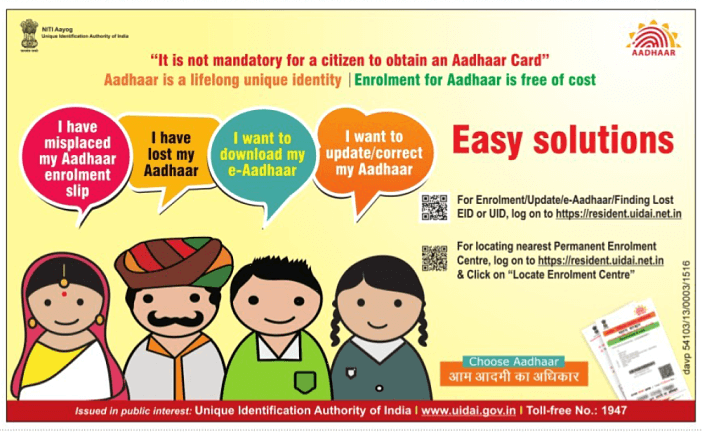
What about a similar, but much larger scale, biometrics-driven ID project in neighbouring India? In recent years, India’s unique identification number project (Aadhaar) has been criticised by privacy activists for its inadequate safeguards. Considered to be the world’s largest national identification number project, it aims to collect biometric and demographic data of all residents, store them in a centralised database and issue a 12-digit unique number.
As SciDev.Net reported on 3 June 2016: “Aadhaar…received statutory backing in March 2016 after five years of political wrangling. Finally the present government moved it as a money bill to prevent it being stopped in the Rajya Sabha (upper house of parliament). Opposition leaders have challenged the move as unconstitutional in the Supreme Court.
“The court’s existing view on Aadhaar is that biometric identification should be voluntary. On 23 September 2013, the court ordered that ‘no person should suffer for not getting Aadhaar’. Yet, since introduction, Aadhaar has been creeping up on India’s 1.3 billion population with service after service being made unavailable to citizens who are not enrolled.”
SciDev.Net added that the main objections to Aadhaar are no different from objections that have come up in other countries and they have to do with privacy. In the UK, plans to issue biometric national identity cards were dropped in January 2011 and there has been opposition enough in the US to slow down implementation of the ‘Real ID’ scheme.
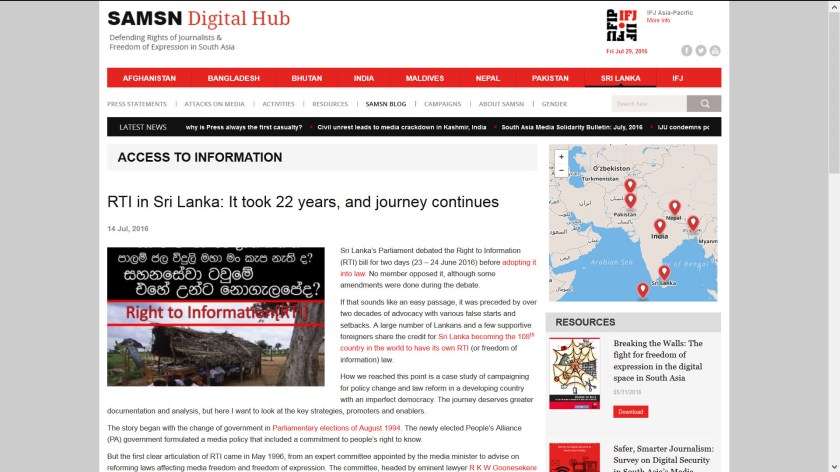
RTI in Sri Lanka – Nalaka Gunawardene op-ed published in IFJ South Asia blog, 14 July 2016
RTI in Sri Lanka:
It took 22 years, and journey continues
By Nalaka Gunawardene
Sri Lanka’s Parliament debated the Right to Information (RTI) bill for two days (23 – 24 June 2016) before adopting it into law. No member opposed it, although some amendments were done during the debate.
If that sounds like an easy passage, it was preceded by over two decades of advocacy with various false starts and setbacks. A large number of Lankans and a few supportive foreigners share the credit for Sri Lanka becoming the 108th country in the world to have its own RTI (or freedom of information) law.
How we reached this point is a case study of campaigning for policy change and law reform in a developing country with an imperfect democracy. The journey deserves greater documentation and analysis, but here I want to look at the key strategies, promoters and enablers.
The story began with the change of government in Parliamentary elections of August 1994. The newly elected People’s Alliance (PA) government formulated a media policy that included a commitment to people’s right to know.
But the first clear articulation of RTI came in May 1996, from an expert committee appointed by the media minister to advise on reforming laws affecting media freedom and freedom of expression. The committee, headed by eminent lawyer R K W Goonesekere (and thus known as the Goonesekere Committee) recommended many reforms – including a constitutional guarantee of RTI.
Sadly, that government soon lost its zeal for reforms, but some ideas in that report caught on. Chief among them was RTI, which soon attracted the advocacy of some journalists, academics and lawyers. And even a few progressive politicians.
Different players approached the RTI advocacy challenge in their own ways — there was no single campaign or coordinated action. Some spread the idea through media and civil society networks, inspiring the ‘demand side’ of RTI. Others lobbied legislators and helped draft laws — hoping to trigger the ‘supply side’. A few public intellectuals helpfully cheered from the sidelines.
Typical policy development in Sri Lanka is neither consultative nor transparent. In such a setting, all that RTI promoters could do was to keep raising it at every available opportunity, so it slowly gathered momentum.
For example, the Colombo Declaration on Media Freedom and Social Responsibility – issued by the country’s leading media organisations in 1998 – made a clear and strong case for RTI. It said, “The Official Secrets Act which defines official secrets vaguely and broadly should be repealed and a Freedom of Information Act be enacted where disclosure of information will be the norm and secrecy the exception.”
That almost happened in 2002-3, when a collaboratively drafted RTI law received Cabinet approval. But an expedient President dissolved Parliament prematurely, and the pro-RTI government did not win the ensuing election.
RTI had no chance whatsoever during the authoritarian rule of Mahinda Rajapaksa from 2005 to 2014. Separate attempts to introduce RTI laws by a Minister of Justice and an opposition Parliamentarian (now Speaker of Parliament) were shot down. If anyone wanted information, the former President once told newspaper editors, they could just ask him…
His unexpected election defeat in January 2015 finally paved the way for RTI, which was an election pledge of the common opposition. Four months later, the new government added RTI to the Constitution’s fundamental rights. The new RTI Act now creates a mechanism for citizens to exercise that right.
Meanwhile, there is a convergence of related ideas like open government (Sri Lanka became first South Asian country to join Open Government Partnership in 2015) and open data – the proactive disclosure of public data in digital formats.
These new advocacy fronts can learn from how a few dozen public spirited individuals kept the RTI flames alive, sometimes through bleak periods. Some pioneers did not live to see their aspiration become reality.
Our RTI challenges are far from over. We now face the daunting task of implementing the new law. RTI calls for a complete reorientation of government. Proper implementation requires political will, administrative support and sufficient funds. We also need vigilance by civil society and the media to guard against the whole process becoming mired in too much red tape.
RTI is a continuing journey. We have just passed a key milestone.
Science writer and columnist Nalaka Gunawardene has long chronicled Sri Lanka’s information society and media development issues. He tweets at @NalakaG.
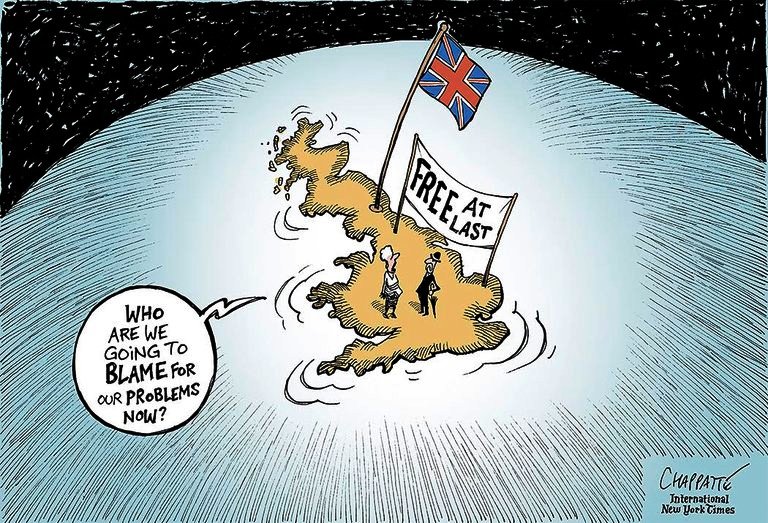
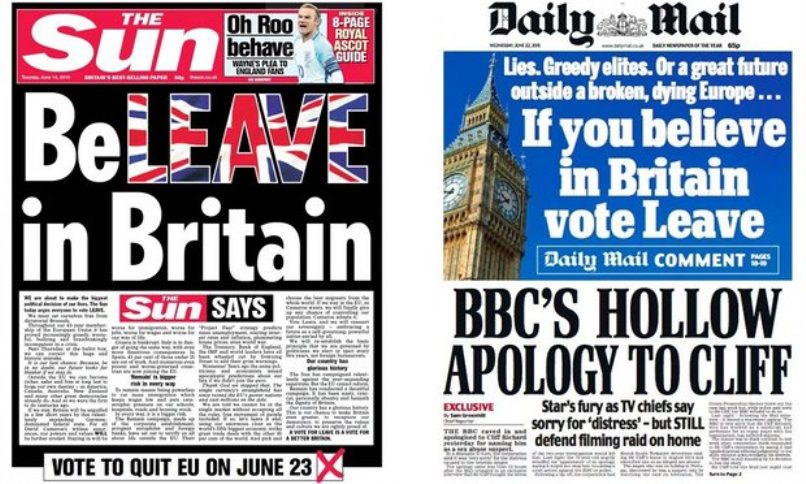
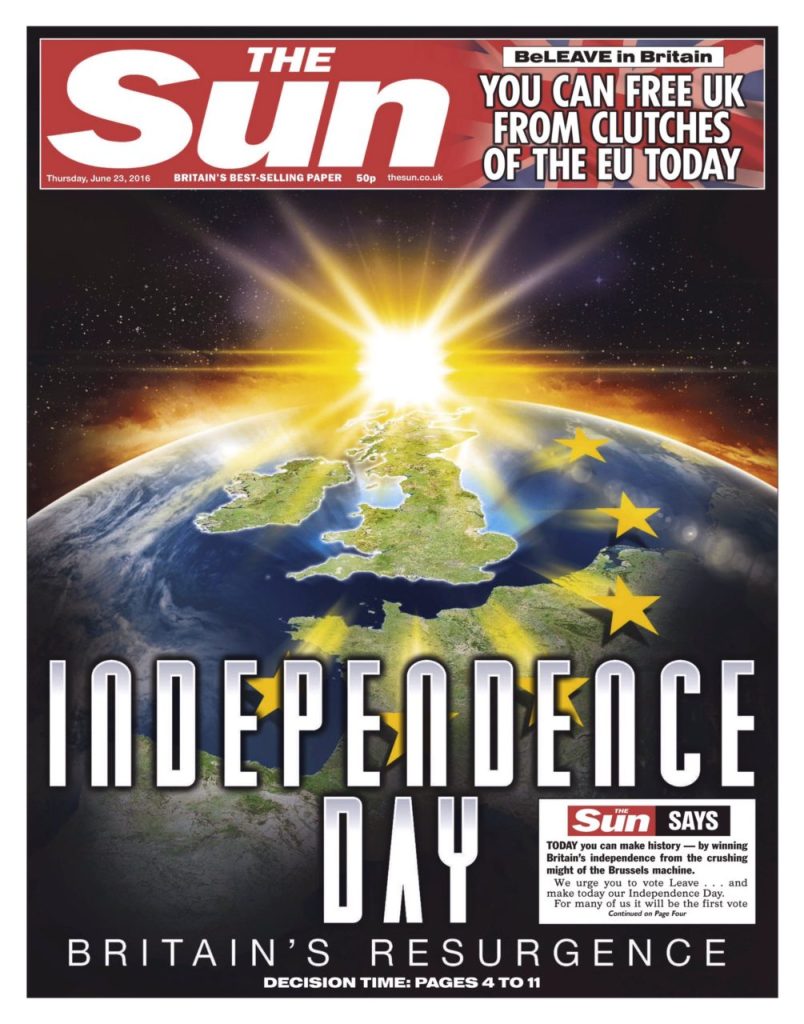
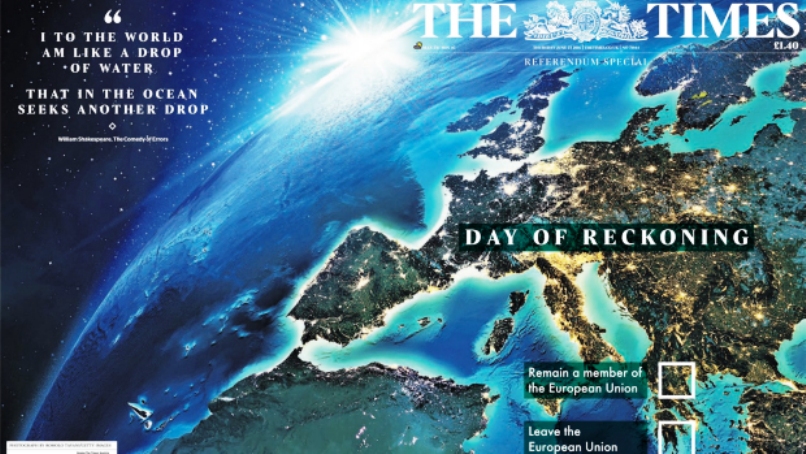
In this week’s Ravaya column (appearing in the print issue of 10 July 2016), I explore the role played by newspapers in the UK’s referendum on continuing membership in the European Union, held on 23 June 2016.
This column is based on first hand impressions – I spent 10 days in the UK just prior to the referendum, commonly known as the Brexit Vote, meeting journalists, academics and activists.
As the New York Timessaid in an op-ed article on 20 June 2016, “For decades, British newspapers have offered their readers an endless stream of biased, misleading and downright fallacious stories about Brussels.”
Written by Martin Fletcher, a former foreign and associate editor of The Times of London, the articke added: “British newspapers’ portrayal of the European Union in the lead-up to the referendum on June 23 has likewise been negative. The Financial Times and The Guardian have backed the Remain campaign, but they have relatively small circulations and preach largely to the converted. The Times has been evenhanded, though it finally declared on June 18 that it favored staying in the European Union. But the biggest broadsheet (The Telegraph), the biggest midmarket paper (The Daily Mail) and the biggest tabloid (The Sun) have thrown themselves shamelessly behind Brexit.
“They have peddled the myths that Britain pays 350 million pounds a week (about $500 million) to the European Union; that millions of Turks will invade Britain because Turkey is about to be offered European Union membership; that immigrants are destroying our social services; and that post-Brexit, Britain will enjoy continued access to Europe’s single market without automatically allowing in European Union workers.”
As Fletcher concluded: “It is often said that newspapers no longer matter. But they do matter when the contest is so close and shoppers see headlines like “BeLeave in Britain” emblazoned across the front pages of tabloids whenever they visit their supermarket. They matter if they have collectively and individually misled their readers for decades.”
British newspaper front pages on 23 June 2016, day of the Referendum on EU membership (Brexit Vote)
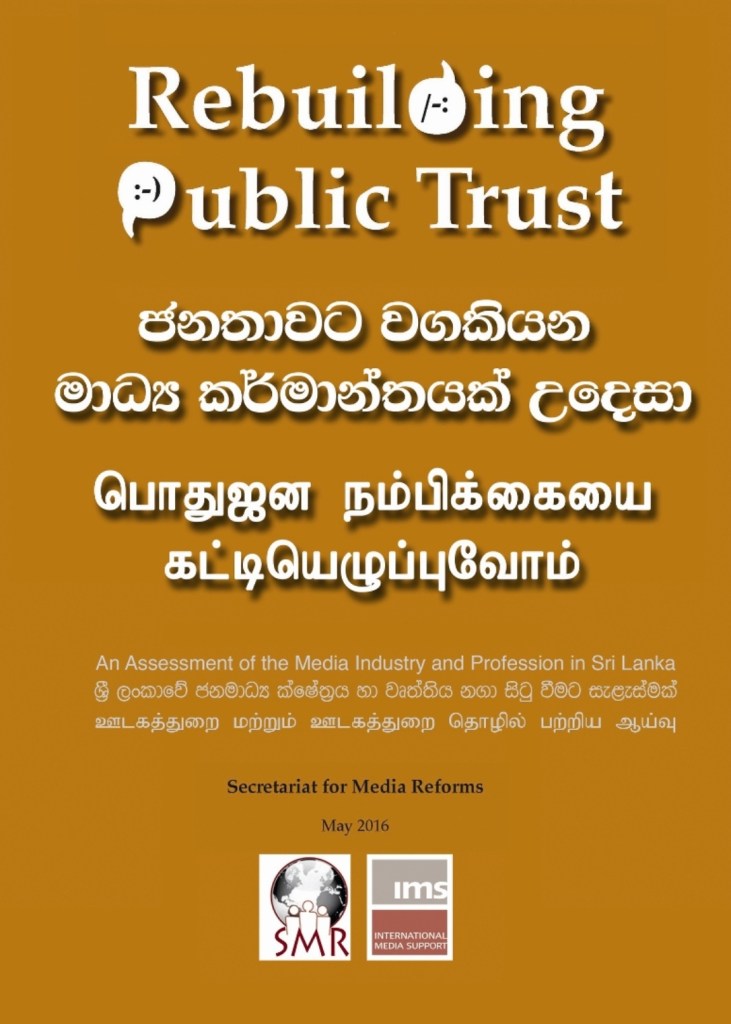
Sri Lanka’s government and its media industry need to embark on wide-ranging media sector reforms, says a major new study released recently.
Such reforms are needed at different levels – in government policies, laws and regulations, as well as within the media industry and profession. Media educators and trainers also have a key role to play in raising professional standards in our media, the study says.
The report is the outcome of a 14-month-long research and consultative process. Facilitated by the Secretariat for Media Reforms, it engaged over 500 media professionals, owners, managers, academics, relevant government officials and members of various media associations and trade unions. It offers a timely analysis, accompanied by policy directions and practical recommendations. I served as is overall editor.
“The country stands at a crossroads where political change has paved the way for strengthening safeguards for freedom of expression (FOE) and media freedom while enhancing the media’s own professionalism and accountability,” the report notes.
Politicians present at the launch could only agree.
“The government is willing to do its part for media freedom and media reforms. But are you going to do yours?” he asked the dozens of editors, journalists and media managers present. There were no immediate answers.
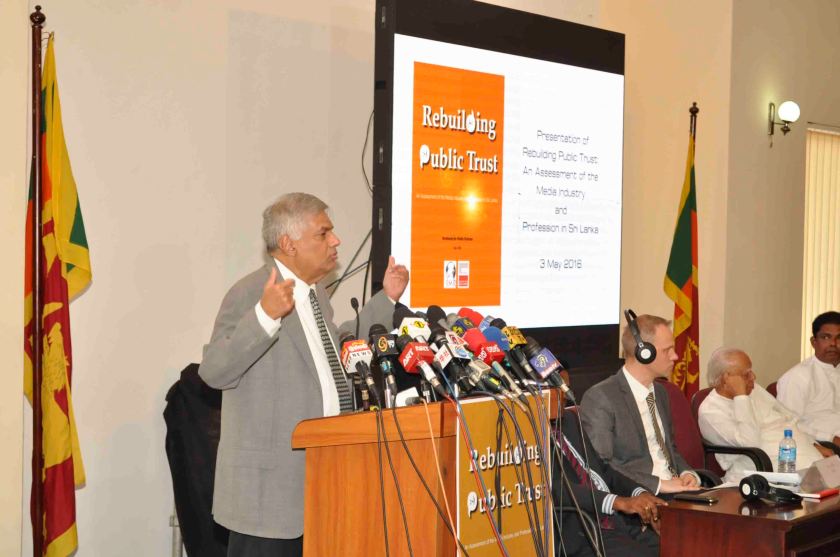
Prime Minister Ranil Wickremesinghe speaks at the launch of ‘Rebuilding Public Trust’ report in Colombo, 3 May 2016 (Photo courtesy SLPI)
Whither Media Professionalism?
The report acknowledges how, since January 2015, the new government has taken several positive steps. These include: reopening investigations into some past attacks on journalists; ending the arbitrary and illegal blocking of political websites done by the previous regime; and recognising access to information as a fundamental right in the 19th Amendment to the Constitution (after the report was released, the Right to Information Act has been passed by Parliament, which enables citizens to exercise this right).
These and other measures have helped improve Sri Lanka’s global ranking by 24 points in the World Press Freedom Index (https://rsf.org/en/ranking). It went up from a dismal 165 in 2015 index (which reflected conditions that prevailed in 2014) to a slightly better 141 in the latest index.
Compiled annually by Reporters Without Borders (RSF), a global media rights advocacy group, the Index reflects the degree of freedom that journalists, news organisations and netizens (citizens using the web) enjoy in a country, and the efforts made by its government to respect and nurture this freedom.
Sri Lanka, with a score of 44.96, has now become 141st out of 180 countries assessed. While we have moved a bit further away from the bottom, we are still in the company of Burma (143), Bangladesh (144) and South Sudan (140) – not exactly models of media freedom.
Clearly, much more needs be done to improve FOE and media freedom in Sri Lanka – and not just by the government. Media owners and managers also bear a major responsibility to create better working conditions for journalists and other media workers. For example, by paying better wages to journalists, and allowing trade union rights (currently denied in many private media groups, though enjoyed in all state media institutions).
Rebuilding Public Trust acknowledges these complexities and nuances: freedom from state interference is necessary, but not sufficient, for a better and pluralistic media.
It also points out that gradual improvement in media freedom must now to be matched by an overall upping of media’s standards and ethical conduct.
By saying so, the report turns the spotlight on the media itself — an uncommon practice in our media. It says that only a concerted effort by the entire media industry and all its personnel can raise professional standards and ethical conduct of Sri Lanka’s media.
A similar sentiment is expressed by Dr Ranga Kalansooriya, an experienced journalist turned media trainer who was part of the report’s editorial team (and has since become the Director General of the Department of Information). “Sri Lanka’s media freedom has gone up since January 2015, but can we honestly say there has been much (or any) improvement in our media’s level of professionalism?” he asks.
Media in Crisis
Tackling the dismally low professionalism on a priority basis is decisive for the survival of our media which points fingers at all other sections of society but rarely engages in self reflection.
Rebuilding Public Trust comes out at a time when Sri Lanka’s media industry and profession face many crises stemming from an overbearing state, unpredictable market forces and rapid technological advancements. Balancing the public interest and commercial viability is one of the media sector’s biggest challenges today.
The report says: “As the existing business models no longer generate sufficient income, some media have turned to peddling gossip and excessive sensationalism in the place of quality journalism. At another level, most journalists and other media workers are paid low wages which leaves them open to coercion and manipulation by persons of authority or power with an interest in swaying media coverage.”
Notwithstanding these negative trends, the report notes that there still are editors and journalists who produce professional content in the public interest while also abiding by media ethics.
Unfortunately, their good work is eclipsed by media content that is politically partisan and/or ethnically divisive.
For example, much of what passes for political commentary in national newspapers is nothing more than gossip. Indeed, some newspapers now openly brand content as such!
Similarly, research for this study found how most Sinhala and Tamil language newspapers cater to the nationalism of their respective readerships instead of promoting national integrity.
Such drum beating and peddling of cheap thrills might temporarily boost market share, but these practices ultimately erode public trust in the media as a whole. Surveys show fewer media consumers actually believing that they read, hear or watch.
One result: younger Lankans are increasingly turning to entirely web-based media products and social media platforms for obtaining their information as well as for speaking their minds. Newspaper circulations are known to be in decline, even though there are no independently audited figures.
If the mainstream media is to reverse these trends and salvage itself, a major overhaul of media’s professional standards and ethics is needed, and fast. Newspaper, radio and TV companies also need clarity and a sense of purpose on how to integrate digital platforms into their operations (and not as mere add-ons).
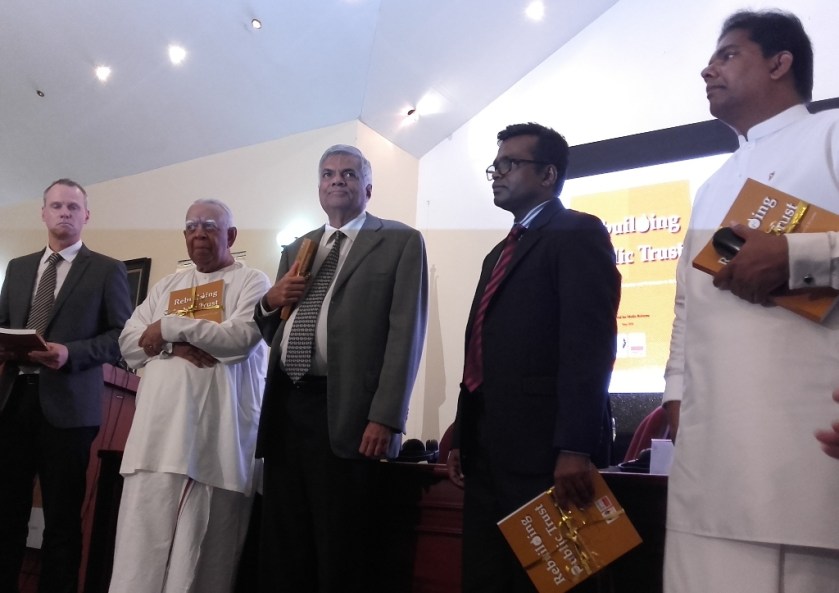
L to R – Lars Bestle of IMS, R Sampanthan, Ranil Wickremesinghe, Karu Paranawithana, Gayantha Karunathilake with copies of new study report on media reforms – Photo by Nalaka Gunawardene
Recommendations for Reforms
The report offers a total of 101 specific recommendations, which are sorted under five categories. While many are meant for the government, a number of important recommendations are directed at media companies, journalists’ and publishers’ associations, universities, media training institutions, and development funding agencies.
“We need the full engagement of all stakeholders in building a truly free, independent and public interest minded pluralistic media system as a guarantor of a vibrant democracy in Sri Lanka,” says Wijayananda Jayaweera, a former director of UNESCO’s Communication Development Division, who served as overall advisor for our research and editorial process.
In fact, this assessment has used an internationally accepted framework developed by UNESCO, the United Nations Educational, Scientific and Cultural Organisation. Known as the Media Development Indicators (MDIs), this helps identify strengths and weaknesses, and propose evidence-based recommendations on how to enhance media freedom and media pluralism in a country. Already, two dozen countries have used this methodology.
The Sri Lanka study was coordinated by the Secretariat for Media Reforms, a multistakeholder alliance comprising the Ministry of Parliamentary Reforms and Mass Media; Department of Mass Media at University of Colombo; Sri Lanka Press Institute (SLPI); Strategic Alliance for Research and Development (SARD); and International Media Support (IMS) of Denmark.
We carried out a consultative process that began in March 2015. Activities included a rapid assessment discussed at the National Summit for Media Reforms in May 2015 (attended by over 200), interviews with over 40 key media stakeholders, a large sample survey, brainstorming sessions, and a peer review process that involved over 250 national stakeholders and several international experts.
Nalaka Gunawardene, Editor of Rebuilding Public Trust in Media Report, presents key findings at launch event in Colombo, 3 May 2016 – (Photo courtesy SLPI)
Here is the summary of key recommendations:
Law review and revision: The government should review all existing laws which impose restrictions on freedom of expression with a view to amending them as necessary to ensure that they are fully consistent with international human rights laws and norms.
Right to Information (RTI): The RTI law should be implemented effectively, leading to greater transparency and openness in the public sector and reorienting how government works.
Media ownership: Adopt new regulations making it mandatory for media ownership details to be open, transparent and regularly disclosed to the public.
Media regulation: Repeal the Press Council Act 5 of 1973, and abolish the state’s Press Council. Instead, effective self-regulatory arrangements should be made ideally by the industry and covering both print and broadcast media.
Broadcast regulation: New laws are needed to ensure transparent broadcast licensing; more rational allocation of frequencies; a three-tier system of public, commercial and community broadcasters; and obligations on all broadcasters to be balanced and impartial in covering politics and elections. An independent Broadcasting Authority should be set up.
Digital broadcasting: The government should develop a clear plan and timeline for transitioning from analogue to digital broadcasting in television as soon as possible.
Restructuring state media: The three state broadcasters should be transformed into independent public service broadcasters with guaranteed editorial independence. State-owned Associated Newspapers of Ceylon Limited (Lake House) should be operated independently with editorial freedom.
Censorship: No prior censorship should be imposed on any media. Where necessary, courts may review media content for legality after publication. Laws and regulations that permit censorship should be reviewed and amended.
Blocking of websites: The state should not limit online content or social media activities in ways that contravene freedoms guaranteed by the Constitution and international conventions.
Privacy and surveillance: Privacy of all citizens and others should be respected by the state and the media. There should be strict limits to the state surveillance of private individuals and entities’ phone and other electronic communications.
Media education and literacy: Journalism and mass media education courses at tertiary level should be reviewed and updated to meet current industry needs and consumption patterns. A national policy is needed for improving media literacy and cyber literacy.
Sinhala and Tamil versions are under preparation and will be released shortly.
Science writer and media researcher Nalaka Gunawardene served as overall editor of the new study, and also headed one of the four working groups that guided the process. He tweets as: @NalakaG




![Qian Xuesen - Father of China's space and strategic rocket programme [image courtesy CCTV]](https://nalakagunawardene.com/wp-content/uploads/2016/09/qian-xuesen-image-courtesy-cctv.jpg?w=840)