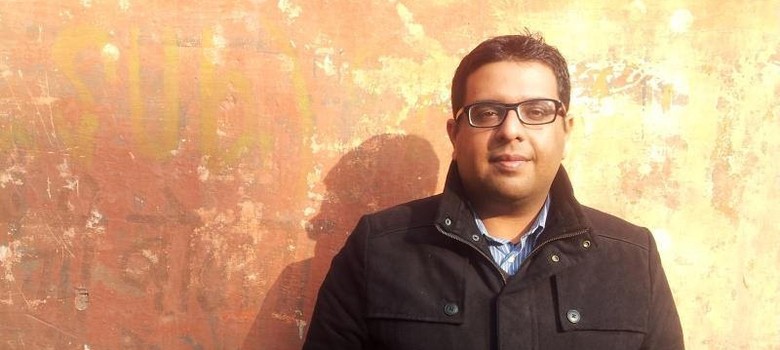
Nikhil Pahwa, journalist, digital activist and founder of Medianama.com
Nikhil Pahwa is an Indian journalist, digital rights activist, and founder of MediaNama, a mobile and digital news portal. He has been a key commentator on stories and debates around Indian digital media companies, censorship and Internet and mobile regulation in India.
On the even of India’s general election 2019, Nalaka Gunawardene spoke to him in an email interview to find out how disinformation spread on social media and chat app platforms figures in election campaigning. Excerpts of this interview were quoted in Nalaka’s #OnlineOffline column in the Sunday Morning newspaper of Sri Lanka on 7 April 2019.
Nalaka: What social media and chat app platforms are most widely used for spreading mis and disinformation in the current election campaign in India?
Nikhil: In India, it’s as if we’ve been in campaigning mode ever since the 2014 elections got over: the political party in power, the BJP, which leveraged social media extensively in 2014 to get elected has continued to build its base on various platforms and has been campaigning either directly or, allegedly, through affiliates, ever since. They’re using online advertising, chat apps, videos, live streaming, and Twitter and Facebook to campaign. Much of the campaigning happens on WhatsApp in India, and messages move from person to person and group to group. Last elections we saw a fair about of humour: jokes were used as a campaigning tool, but there was a fair amount of misinformation then, as there has been ever since.
Are platforms sufficiently aware of these many misuses — and are they doing enough (besides issuing lofty statements) to tackle the problem?
Platforms are aware of the misuse: a WhatsApp video was used to incite a riot as far back as 2013. India has the highest number of internet shutdowns in the world: 134 last year, as per sflc.in. much of this is attributable to internet shutdowns, and the inability of local administration to deal with the spread of misinformation.
Platforms are trying to do what they can. WhatsApp has, so far, reduced the ability to forward messages to more than 5 people at a time. Earlier it was 256 people. Now people are able to control whether they can be added to a group without consent or not. Forwarded messages are marked as forwarded, so people know that the sender hasn’t created the message. Facebook has taken down groups for inauthentic behavior, robbing some parties of a reach of over 240,000 fans, for some pages. Google and Facebook are monitoring election advertising and reporting expenditure to the Election Commission. They are also supporting training of journalists in fact checking, and funding fact checking and research on fake news. These are all steps in the right direction, but given the scale of the usage of these platforms and how organised parties are, they can only mitigate some of the impact.
Does the Elections Commission have powers and capacity to effectively address this problem?
Incorrect speech isn’t illegal. The Election Commission has a series of measures announced, including a code of conduct from platforms, approvals for political advertising, take down of inauthentic content. I’m not sure of what else they can do, because they also have to prevent misinformation without censoring legitimate campaigning and legitimate political speech.
What more can and must be done to minimise the misleading of voters through online content?
I wish I knew! There’s no silver bullet here, and it will always be an arms race versus misinformation. There is great political incentive for political parties to create misinformation, and very little from platforms to control it.
WhatsApp 2019 commercial against Fake News in India
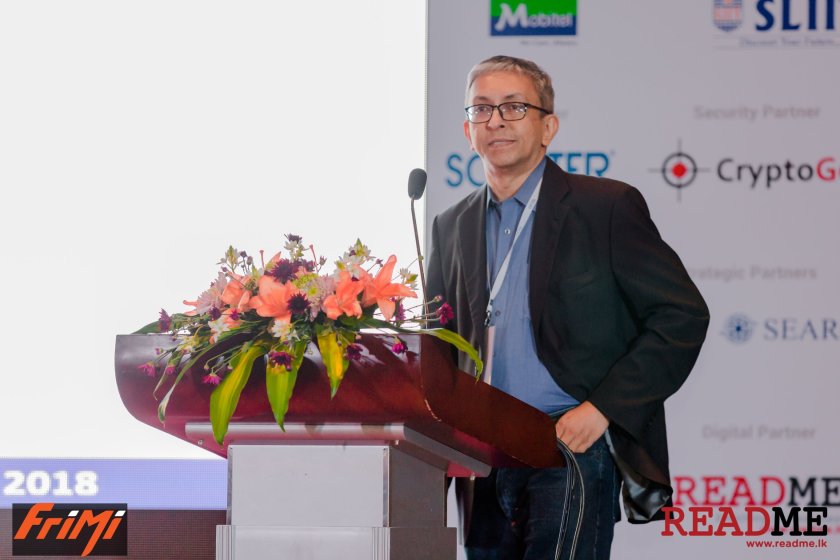
Keynote speech delivered by science writer and digital media analyst Nalaka Gunawardene at the Sri Lanka National IT Conference held in Colombo from 2 to 4 October 2018.
Nalaka Gunawardene speaking at National IT Conference 2018 in Colombo, Sri Lanka. Photo by ReadMe.lk
Here is a summary of what I covered (PPT embedded below):
With around a third of Sri Lanka’s 21 million people using at least one type of social media, the phenomenon is no longer limited to cities or English speakers. But as social media users increase and diversify, so do various excesses and abuses on these platforms: hate speech, fake news, identity theft, cyber bullying/harassment, and privacy violations among them.
Public discourse in Sri Lanka has been focused heavily on social media abuses by a relatively small number of users. In a balanced stock taking of the overall phenomenon, the multitude of substantial benefits should also be counted. Social media has allowed ordinary Lankans to share information, collaborate around common goals, pursue entrepreneurship and mobilise communities in times of elections or disasters. In a country where the mainstream media has been captured by political and business interests, social media remains the ‘last frontier’ for citizens to discuss issues of public interest. The economic, educational, cultural benefits of social media for the Lankan society have not been scientifically quantified as yet but they are significant – and keep growing by the year.
Whether or not Sri Lanka needs to regulate social media, and if so in what manner, requires the widest possible public debate involving all stakeholders. The executive branch of government and the defence establishment should NOT be deciding unilaterally on this – as was done in March 2018, when Facebook and Instagram were blocked for 8 days and WhatsApp and Viber were restricted (to text only) owing to concerns that a few individuals had used these services to instigate violence against Muslims in the Eastern and Central Provinces.
In this talk, I caution that social media regulation in the name of curbing excesses could easily be extended to crack down on political criticism and minority views that do not conform to majority orthodoxy. An increasingly insular and unpopular government – now in its last 18 months of its 5-year term – probably fears citizen expressions on social media.
Yet the current Lankan government’s democratic claims and credentials will be tested in how they respond to social media challenges: will that be done in ways that are entirely consistent with the country’s obligations under international human rights laws that have safeguards for the right to Freedom of Expression (FOE)? This is the crucial question.
Already, calls for social media regulation (in unspecified ways) are being made by certain religious groups as well as the military. At a recent closed-door symposium convened by the Lankan defence ministry’s think tank, the military was reported to have said “Misinformation directed at the military is a national security concern” and urged: “Regulation is needed on misinformation in the public domain.”
How will the usually opaque and unpredictable public policy making process in Sri Lanka respond to such partisan and strident advocacy? Might the democratic, societal and economic benefits of social media be sacrificed for political expediency and claims of national security?
To keep overbearing state regulation at bay, social media users and global platforms can step up arrangements for self-regulation, i.e. where the community of users and the platform administrators work together to monitor, determine and remove content that violates pre-agreed norms or standards. However, the presentation acknowledges that this approach is fraught with practical difficulties given the hundreds of languages involved and the tens of millions of new content items being published every day.
What is to be done to balance the competing interests within a democratic framework?
I quote the views of David Kaye, the UN Special Rapporteur on the promotion and protection of the right to freedom of opinion and expression from his June 2018 report to the UN Human Rights Council about online content regulation. He cautioned against the criminalising of online criticism of governments, religion or other public institutions. He also expressed concerns about some recent national laws making global social media companies responsible, at the risk of steep financial penalties, to assess what is illegal online, without the kind of public accountability that such decisions require (e.g. judicial oversight).
Kaye recommends that States ensure an enabling environment for online freedom of expression and that companies apply human rights standards at all stages of their operations. Human rights law gives companies the tools to articulate their positions in ways that respect democratic norms and
counter authoritarian demands. At a minimum, he says, global SM companies and States should pursue radically improved transparency, from rule-making to enforcement of the rules, to ensure user autonomy as individuals increasingly exercise fundamental rights online.
We can shape the new cyber frontier to be safer and more inclusive. But a safer web experience would lose its meaning if the heavy hand of government tries to make it a sanitized, lame or sycophantic environment. Sri Lanka has suffered for decades from having a nanny state, and in the twenty first century it does not need to evolve into a cyber nanny state.
Today, I was interviewed on video for BBC Sinhala service for my views on hate speech and fake news. Given below is my remarks in Sinhala, excerpts from which are to be used.
In summary, I said these phenomena predate social media and the web itself, but cyber space has enabled easier and faster dissemination of falsehoods and hatred. Additionally, anonymity and pseudonymity — fundamental qualities of the web – seem to embolden some to behave badly without revealing their identities.
The societal and state responses must be measured, proportionate and cautious, so as not to restrict everybody’s freedom of expression for the misdeeds of a numerical minority of web users. I urged a multi-pronged response including:
– adopting clear legal definitions of hate speech and fake news;
– enforcing the existing laws, without fear or favour, against those peddling hatred and falsehoods;
– mobilising the community of web users to voluntarily monitor and report misuses online; and
– promoting digital literacy at all levels in society, to nurture responsible web use and social media use.
Fake News is not new. The phenomenon has been around, in one form or another, for decades! Many of us in the global South have grown up amidst intentionally fake news stories in our media, some of it coming from governments, no less.
Fake News is merely a symptom of a wider and deeper crisis.It is a crisis of public trust in journalism and media that has been building up over the years in many countries. Fake News fills a vacuum of credibility.
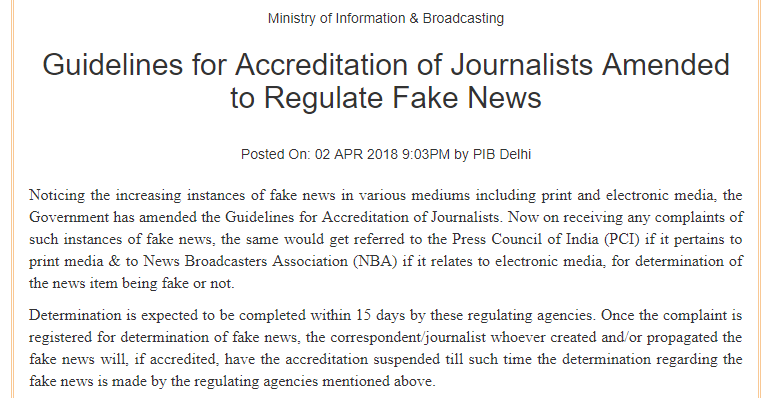
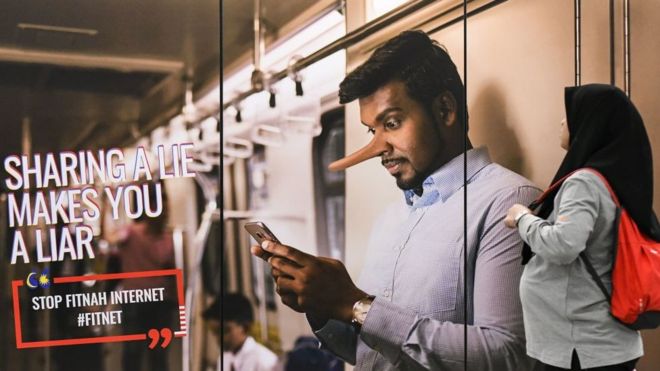
In my latest Ravaya column (in Sinhala), published on 24 June 2018, I revisit the topic of Fake News to discuss if and how legal regulation can help counter Fake News. I argue that any new laws should be introduced very carefully, so as not to allow governments to restrict freedom of expression. I look at the botched Indian attempt to penalise journalists over Fake News, and the new Anti-Fake News Law in Malaysia (April 2018) that has been widely criticised for overbroad definitions and regulatory overreach.
In the end, I conclude: even the best laws can be a partial solution to the Fake News crisis. A healthy dose of scepticism can filter out a good deal of disinformation surrounding us. We also have to build media literacy as a modern-day survival skill, and nurture independent fact checking services.
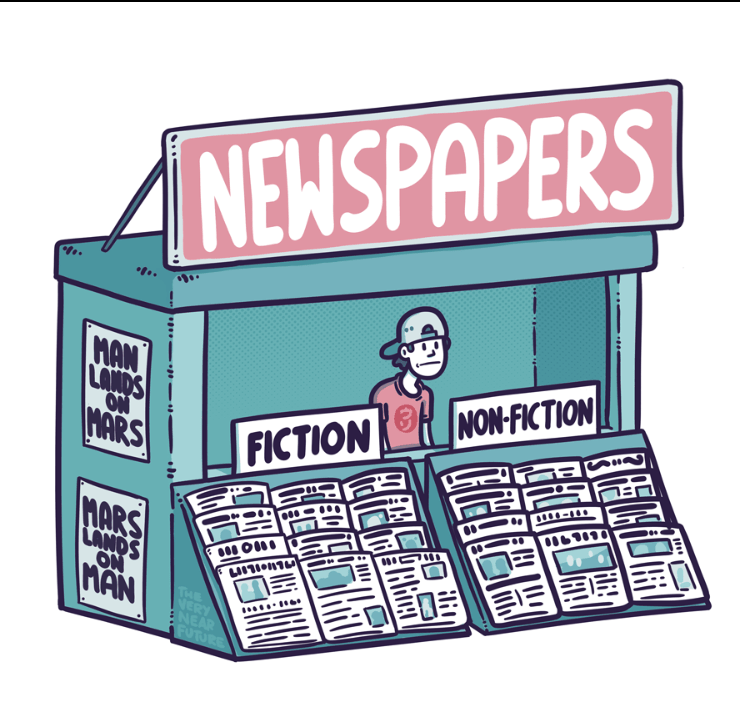
Sri Lanka’s mainstream media have been peddling disinformation for decades. Readers have devised their own filters to discern fake from real, but it’s not always easy!
I discuss Facebook’s Community Standards and the complaints mechanism currently in place, and the difficulties that non-English language content poses for Facebook’s designated monitors looking out for violations of these standards. Hate speech and other objectionable content produced in local languages like Sinhala sometimes pass through FB’s scrutiny. This indicates more needs to be done both by the platform’s administrators, as well as by concerned FB users who spot such content.
But I sound a caution about introducing new Sri Lankan laws to regulate social media, as that can easily stifle citizens’ right to freedom of expression to question, challenge and criticise politicians and officials. Of course, FoE can have reasonable and proportionate limits, and our challenge is to have a public dialogue on what these limits are for online speech and self-expression that social media enables.
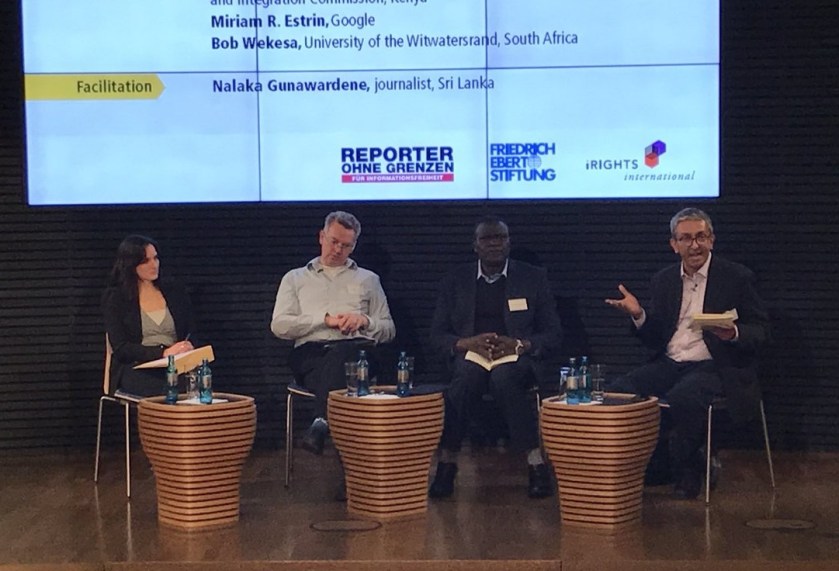
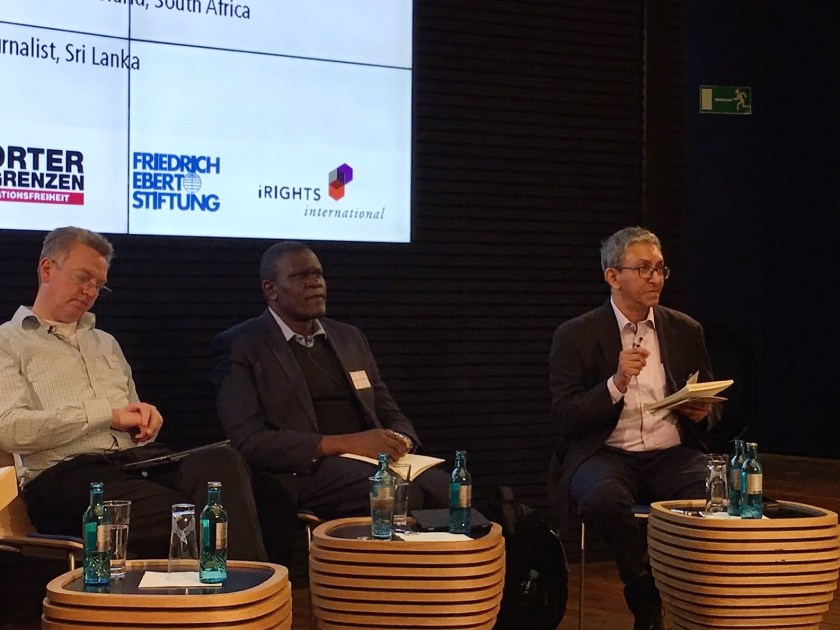
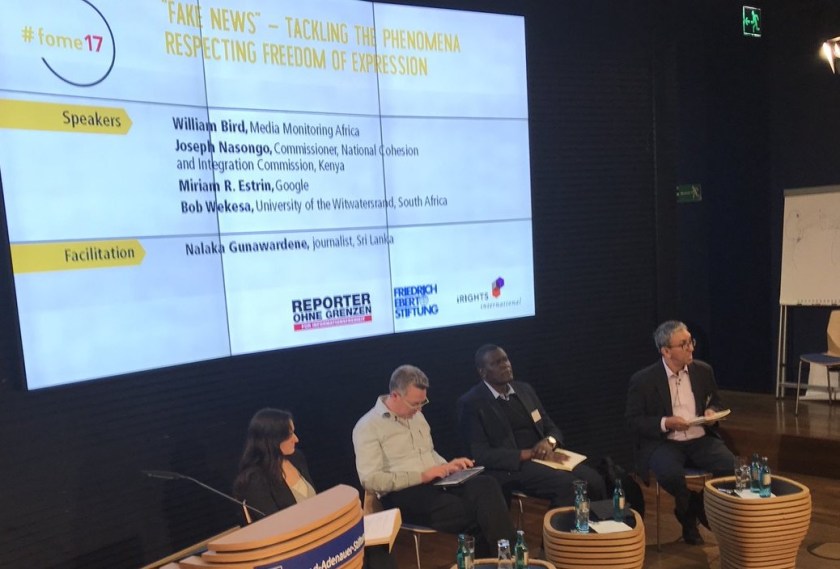
Nalaka Gunawardene (extreme right) moderates FoME 2017 session on “Fake News: Tackling the phenomenon while respecting freedom of expression”, Berlin, 17 Nov 2017
The German “Forum on Media and Development” (Forum Medien und Entwicklung, FOME) is a network of institutions and individuals active in the field of media development cooperation. I was invited to participate in, and moderate a panel at FoME Symposium 2017 held in Berlin on 16 – 17 November 2017.
This year’s symposium theme was Power Shifts – Media Freedom and the Internet. It explored how Internet governance issues are becoming more and more important for those who want to develop media (both mainstream media and social media) as democratic platforms.
On 17 November 2017, I moderated an international panel on Fake News: Tackling the phenomena respecting freedom of expression. It brought together representatives from government, civil society and a global media platform to discuss their roles and how they can interact to tackle the issue – all within the framework of Freedom of Expression (FOE).
Miriam Estrin, Public Policy Manager for Europe, Middle East and Africa, Google
Nalaka Gunawardene speaks on Fake News and Freedom of Expression at FoME 2017 Symposium in Berlin, 17 Nov 2017 – Photo courtesy Helani Galpaya
Here are my opening remarks that set the context for our discussion:
Just as there are many definitions of Fake News, there can also be many perspectives on the topic. We all recognise Fake News as a problem, so let’s focus on how it can be countered. What are the local, national and global level strategies? What alliances, tools and resources are needed for such countering? What cautions and alarms can we raise?
To respond to any problem, we need to understand its contours.
Fake News is not new. The phenomenon has been around, in one form or another, for decades! Many of us in the global South have grown up amidst intentionally fake news stories in our media, some of it coming from governments, no less. And the developing world governments don’t have a monopoly over Fake News either: for over half a century, the erstwhile Soviet Union and Eastern Bloc countries manufactured a vast amount of disinformation (i.e. deliberately wrong information) that was fed to their own citizens and spread overseas in sustained propaganda efforts.
Sitting here, within a few kilometres from where the Berlin Wall once stood, we need to acknowledge that veritable factory of lies that operated on the other side!
So what’s new? During the past decade, as broadband Internet spread worldwide, fake news peddlers found an easy and fast medium online. From websites to social media accounts (many hiding behind pseudonyms), the web has provided a globalised playing field where dubious content could go ‘viral’.
Yesterday at this Symposium, Mark Nelson from CIMA said “We live in a world where lies are very cheap, and much easier to disseminate than the truth.”
Which reminded me of one of my favourite quotes: ““A lie can travel halfway around the world while the truth is putting on its shoes!”
Variations of this quote have been attributed to several persons including Jonathan Swift and Mark Twain. Whoever said it first, these words neatly sum up a long standing challenge to modern societies: how to cope with the spread of deliberate falsehoods.
As Mark Nelson asked us yesterday, how can we “make the Internet a place where truth is valued and spread – instead of disinformation?” This is the crux of our challenge.
So what is to be done? Among the options available, which ones are most desirable?
In searching for solutions to the Fake News crisis, we must recognise it is a nuanced, complex and variable phenomenon. There cannot be one global solution or quick fix.
Indeed, any ‘medicine’ prescribed for the malady of Fake News should not be worse than the ailment itself! We must proceed with caution, safeguarding the principles of Freedom of Expression and applying its reasonable limitations.
As human rights defenders caution, there is a danger that governments in their zeal to counter fake news could impose direct or indirect censorships, suppress critical thinking, or take other steps that violate international human rights law. This is NOT the way to deal with Fake News.
In my view, Fake News is a symptom of a wider and deeper crisis. It is a crisis of public trust in journalism and the media that has been building up over the years in many countries. Some call this a ‘Journalism Deficit’, or a gulf between what journalism ought be, and what it has (mostly) become today.
In my view, a free press is not an automatic guarantee against Fake News. In other words, media freedom is necessary — but not sufficient — to ensure that media content is trusted by the public. We need to better measure public trust in media and what the current trust levels mean for those producing media content professionally.
I would argue that the medium to long term response to Fake News is to narrow and bridge the Journalism Deficit by nurturing quality journalism and critical consumption of media. If you agree with this premise, what specific measures can we recommend and advocate?
Let us explore how media development can counter Fake News by exposing it, undermining it, and equipping media consumers with the knowledge and skills to spot it – and not spread it inadvertently.
For this, we need everyone’s cooperation.
We need global social media platforms and digital gatekeepers like Google to join with all their might (and what might!).
We need governments to be thoughtfully, carefully evaluate the optimum responses.
We need civil society to go beyond mere hand waving and finger pointing to help enhance media and information literacy.
We need researchers to keep studying and discerning trends that can influence policy and regulation (where appropriate).
We are not going to solve the problem in an hour. But we can at least ask the right questions, and clarify the issues in our minds. Onward!
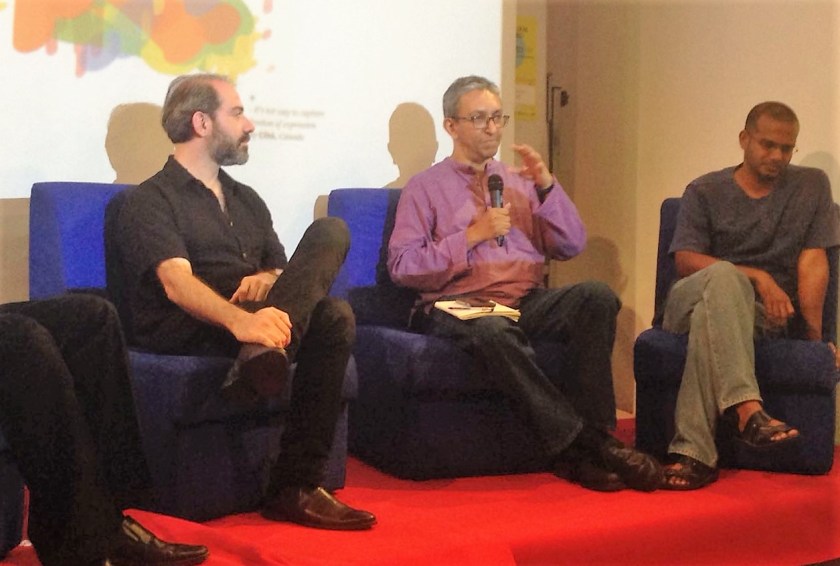
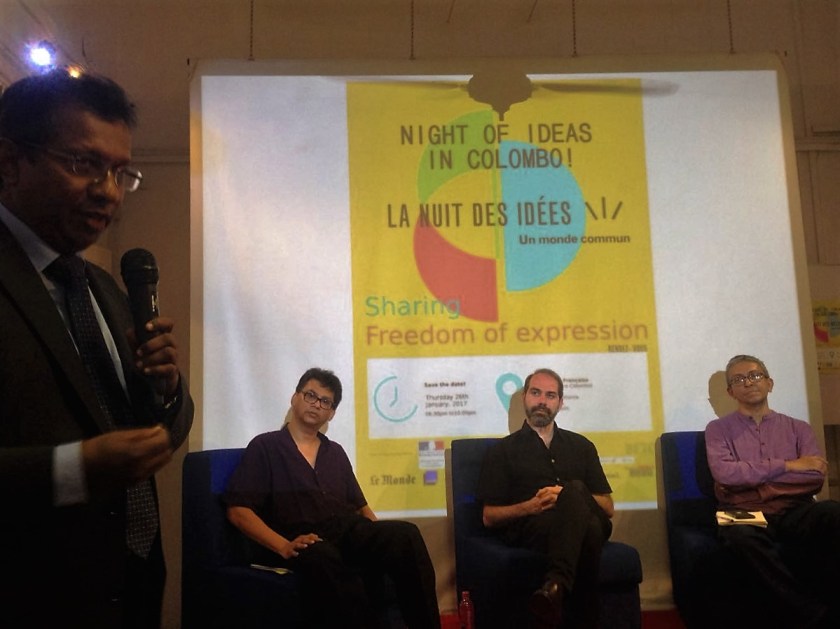
L to R – Kianoush Ramezani, Nalaka Gunawardene, Gihan de Chickera at Night of Ideas in Colombo, 26 January 2017
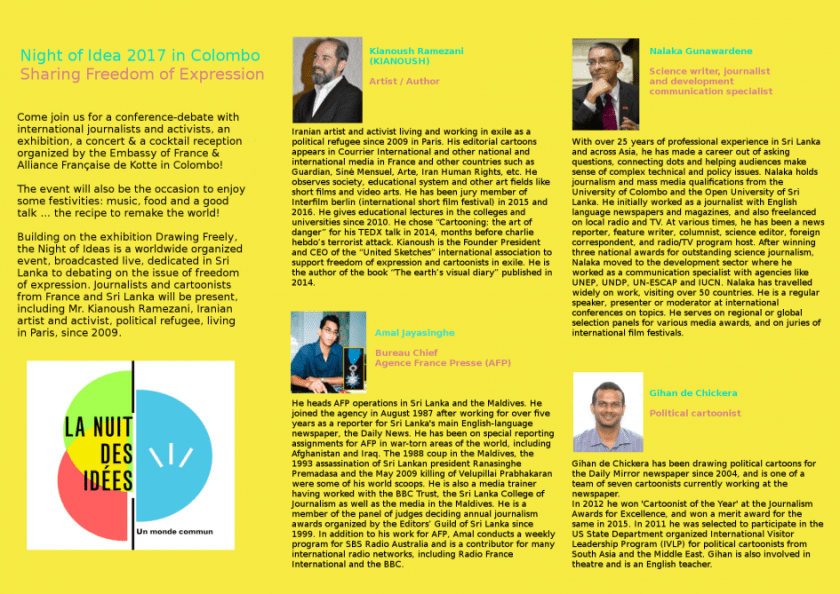
On 26 January 2017, the Alliance Française de Kotte with the Embassy of France in Sri Lanka presented the first ever “Night of Ideas” held in Colombo. During that event, participants were invited to engage in discussions on ‘‘A World in common – Freedom of Expression (FOE)” in the presence of French and Sri Lankan cartoonists, journalists and intellectuals.
I was part of the panel that also included: Kianoush Ramezani, Founder and President of United Sketches (Paris), an Iranian artist and activist living and working in Paris since 2009 as a political refugee; and Gihan de Chickera, Political cartoonist at the Daily Mirror newspaper in Sri Lanka. The panel was moderated by Amal Jayasinghe, bureau chief of Agence France Presse (AFP) news agency.
Human Rights Lawyer and activist J C Weliamuna opens the Night of Ideas in Colombo, 26 January 2017
In my opening remarks, I paid a special tribute to Sri Lanka’s cartoonists and satirists who provided a rare outlet for political expression during the Rajapaksa regime’s Decade of Darkness (2005-2014).
I referred to my 2010 essay, titled ‘When making fun is no laughing matter’ where I had highlighted this vital aspect of FOE. Here is the gist of it:
A useful barometer of FOE and media freedom in a given society is the level of satire that prevails. Satire and parody are important forms of political commentary that rely on blurring the line between factual reporting and creative license to scorn and ridicule public figures.
Political satire is nothing new: it has been around for centuries, making fun of kings, emperors, popes and generals. Over time, satire has manifested in many oral, literary and theatrical traditions. In recent decades, satire has evolved into its own distinctive genre in print, on the airwaves and online.
Satire offers an effective – though not always fail-safe – cover for taking on authoritarian regimes that are intolerant of criticism, leave alone any dissent. No wonder the former Soviet Union and Eastern Bloc inspired so much black humour.
This particular dimension to political satire and caricature that isn’t widely appreciated in liberal democracies where freedom of expression is constitutionally guaranteed.
In immature democracies and autocracies, critical journalists and their editors take many risks in the line of work. When direct criticism becomes highly hazardous, satire and parody become important — and sometimes the only – ways for journalists get around draconian laws, stifling media regulations or trigger-happy goon squads…
Little wonder, then, that some of Sri Lanka’s sharpest political commentary is found in satire columns and cartoons. Much of what passes for political analysis in the media is actually gossip.
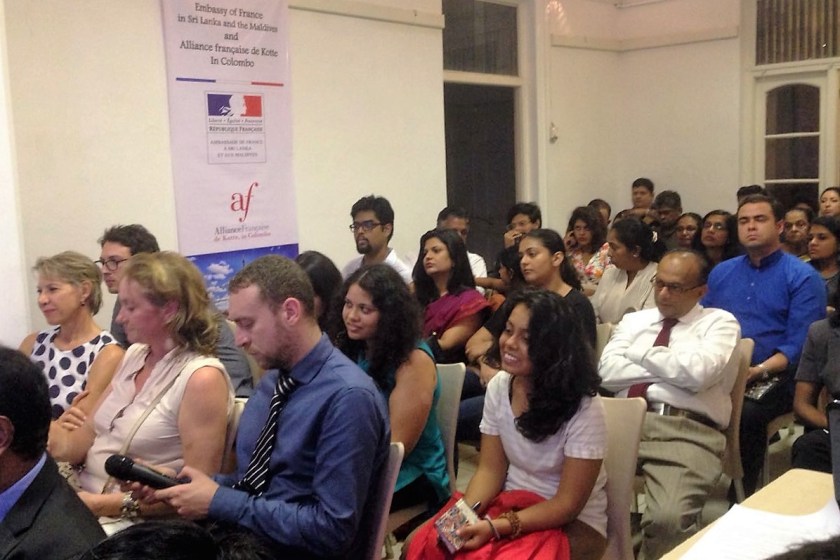
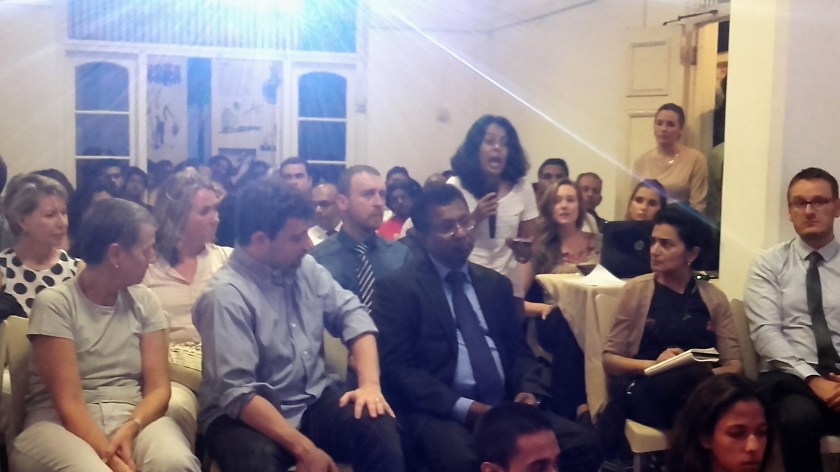
Part of the audience for Night of Ideas at Alliance Française de Kotte, 26 Jan 2017Audience engages the panel during Night of Ideas at Alliance Française de Kotte, 26 Jan 2017Night of Ideas in Colombo – promotional brochure
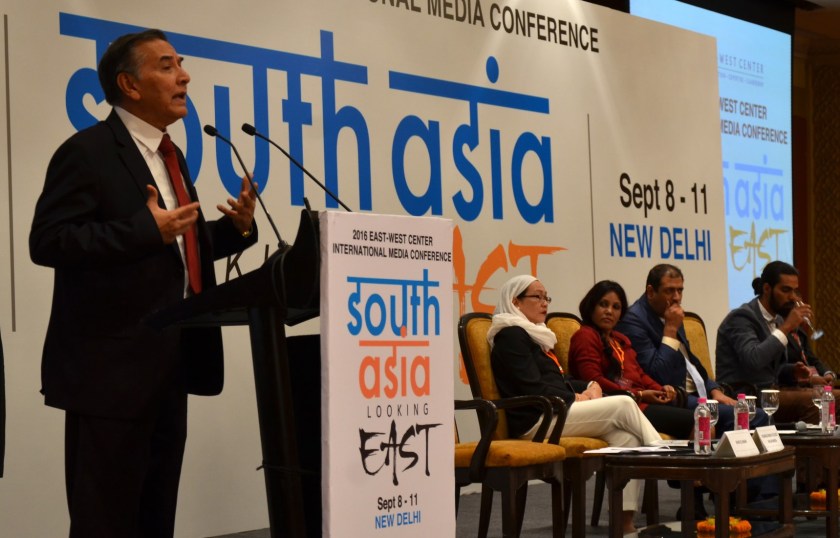
East-West Center 2016 International Media Conference in New Delhi, India, from September 8 to 11, 2016
In this week’s Ravaya column (in Sinhala, appearing in the print issue of 18 Sep 2016), I discuss new forms of media repression being practised by governments in South Asia.
The inspiration comes from my participation in the Asia Media Conference organized by the Hawaii-based East-West Center in New Delhi, India, from September 8 to 11, 2016. Themed “South Asia Looking East”, it drew over 350 participants from across Asia and the United States.
Speeches and discussions showed how governments are more concerned about international media rights watch groups tracking the imprisonment and physical harassment of media and journalists. So their tactics of repression have changed to unleash bureaucratic and legal harassment on untamed and unbowed journalists. And also to pressurising advertisers to withdraw.
Basically this is governments trying to break the spirit and commercial viability of free media instead of breaking the bones of outspoken journalists. And it does have a chilling effect…
In this column, I focus on two glaring examples that were widely discussed at the Delhi conference.
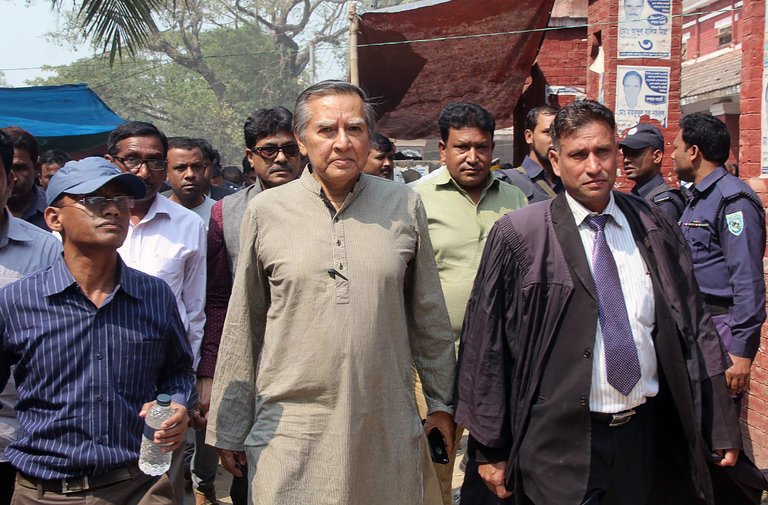
In recent months, leading Bangladeshi editor Mahfuz Anam has been sued simultaneously across the country in 68 cases of defamation and 18 cases of sedition – all by supporters of the ruling party. Anam was one of six exceptional journalists honoured during the Delhi conference “for their personal courage in the face of threats, violence and harassment”.
In August, an announcement was made on the impending suspension of regional publication of Himal Southasian, a pioneering magazine promoting ‘cross-border journalism’ in the South Asian region. The reason was given as “due to non-cooperation by regulatory state agencies in Nepal that has made it impossible to continue operations after 29 years of publication”.
Bureaucracy is pervasive across South Asia, and when they implement commands of their political masters, they become formidable threats to media freedom and freedom of expression. Media rights watch groups, please note.
Drawing from my recent interactions with the IGF Academy, as well as several academic and civil society groups, I position the current public debates on web’s socio-cultural impacts in the context of freedom of expression.
With 30 per cent of our population now using the Internet, it is no longer a peripheral pursuit. Neither is it limited to cities or rich people. So we urgently need more accurate insights into how society and economy are being transformed by these modern tools.
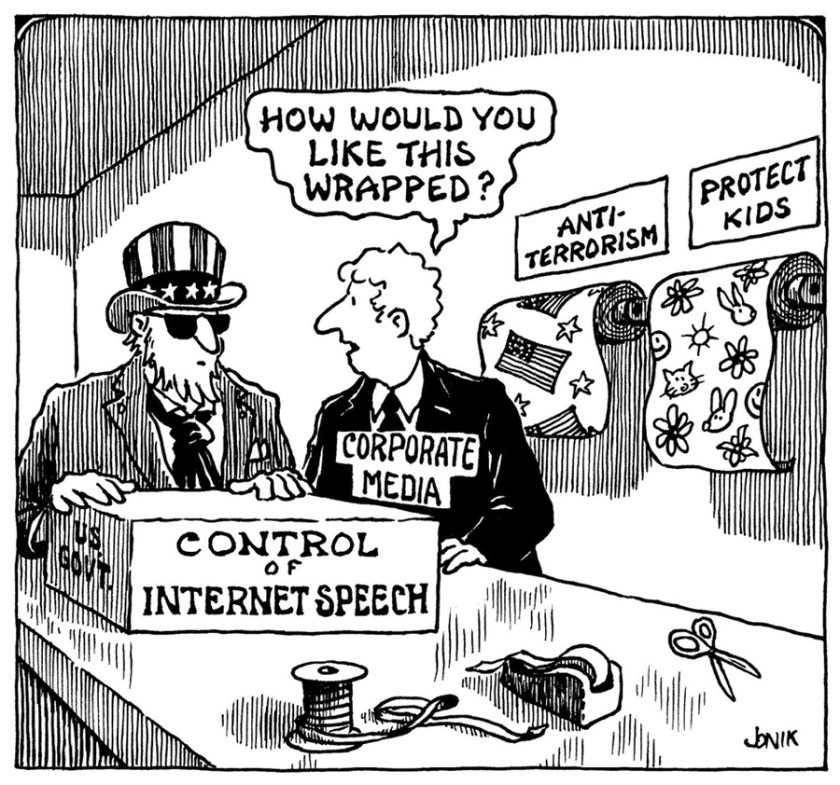
My basic premise: many well-meaning persons who urge for greater regulation of the web and social media overlook that governments in Sri Lanka have a terrible track record in stifling dissent in the name of safeguarding the public.
Cartoon by John Jonik
I argue: “As a democracy recovering from a decade of authoritarianism, we need to be especially careful how public sentiments based on fear or populism can push policymakers to restrict freedom of expression online. The web has become the last frontier for free speech when it is under pressure elsewhere.
“When our politicians look up to academics and researchers for policy guidance, the advice they often get is control or block these new media. Instead, what we need is more study, deeper reflection and – after that, if really required – some light-touch regulation.”
I acknowledge that there indeed are problems arising from these new technologies – some predictable, and others not. They include cyber-bullying, hate speech, identity theft through account hijacking, trolling (deliberately offensive or provocative online postings) and sexting (sending and receiving sexually explicit messages, primarily via mobile phones).
I cite some research findings from the work done by non-profit groups or media activists. These findings are not pretty, and some of them outright damning. But bans, blocks and penalties alone cannot deal with these or other abuses, I argue.
I end with these words: “We can and must shape the new cyber frontier to be safer and more inclusive. But a safer web experience would lose its meaning if the heavy hand of government or social orthodoxy tries to make it a sanitized, lame or sycophantic environment at the same time. We sure don’t need a cyber nanny state.”
RTI in Sri Lanka – Nalaka Gunawardene op-ed published in IFJ South Asia blog, 14 July 2016
RTI in Sri Lanka:
It took 22 years, and journey continues
By Nalaka Gunawardene
Sri Lanka’s Parliament debated the Right to Information (RTI) bill for two days (23 – 24 June 2016) before adopting it into law. No member opposed it, although some amendments were done during the debate.
If that sounds like an easy passage, it was preceded by over two decades of advocacy with various false starts and setbacks. A large number of Lankans and a few supportive foreigners share the credit for Sri Lanka becoming the 108th country in the world to have its own RTI (or freedom of information) law.
How we reached this point is a case study of campaigning for policy change and law reform in a developing country with an imperfect democracy. The journey deserves greater documentation and analysis, but here I want to look at the key strategies, promoters and enablers.
The story began with the change of government in Parliamentary elections of August 1994. The newly elected People’s Alliance (PA) government formulated a media policy that included a commitment to people’s right to know.
But the first clear articulation of RTI came in May 1996, from an expert committee appointed by the media minister to advise on reforming laws affecting media freedom and freedom of expression. The committee, headed by eminent lawyer R K W Goonesekere (and thus known as the Goonesekere Committee) recommended many reforms – including a constitutional guarantee of RTI.
Sadly, that government soon lost its zeal for reforms, but some ideas in that report caught on. Chief among them was RTI, which soon attracted the advocacy of some journalists, academics and lawyers. And even a few progressive politicians.
Different players approached the RTI advocacy challenge in their own ways — there was no single campaign or coordinated action. Some spread the idea through media and civil society networks, inspiring the ‘demand side’ of RTI. Others lobbied legislators and helped draft laws — hoping to trigger the ‘supply side’. A few public intellectuals helpfully cheered from the sidelines.
Typical policy development in Sri Lanka is neither consultative nor transparent. In such a setting, all that RTI promoters could do was to keep raising it at every available opportunity, so it slowly gathered momentum.
For example, the Colombo Declaration on Media Freedom and Social Responsibility – issued by the country’s leading media organisations in 1998 – made a clear and strong case for RTI. It said, “The Official Secrets Act which defines official secrets vaguely and broadly should be repealed and a Freedom of Information Act be enacted where disclosure of information will be the norm and secrecy the exception.”
That almost happened in 2002-3, when a collaboratively drafted RTI law received Cabinet approval. But an expedient President dissolved Parliament prematurely, and the pro-RTI government did not win the ensuing election.
RTI had no chance whatsoever during the authoritarian rule of Mahinda Rajapaksa from 2005 to 2014. Separate attempts to introduce RTI laws by a Minister of Justice and an opposition Parliamentarian (now Speaker of Parliament) were shot down. If anyone wanted information, the former President once told newspaper editors, they could just ask him…
His unexpected election defeat in January 2015 finally paved the way for RTI, which was an election pledge of the common opposition. Four months later, the new government added RTI to the Constitution’s fundamental rights. The new RTI Act now creates a mechanism for citizens to exercise that right.
Meanwhile, there is a convergence of related ideas like open government (Sri Lanka became first South Asian country to join Open Government Partnership in 2015) and open data – the proactive disclosure of public data in digital formats.
These new advocacy fronts can learn from how a few dozen public spirited individuals kept the RTI flames alive, sometimes through bleak periods. Some pioneers did not live to see their aspiration become reality.
Our RTI challenges are far from over. We now face the daunting task of implementing the new law. RTI calls for a complete reorientation of government. Proper implementation requires political will, administrative support and sufficient funds. We also need vigilance by civil society and the media to guard against the whole process becoming mired in too much red tape.
RTI is a continuing journey. We have just passed a key milestone.
Science writer and columnist Nalaka Gunawardene has long chronicled Sri Lanka’s information society and media development issues. He tweets at @NalakaG.


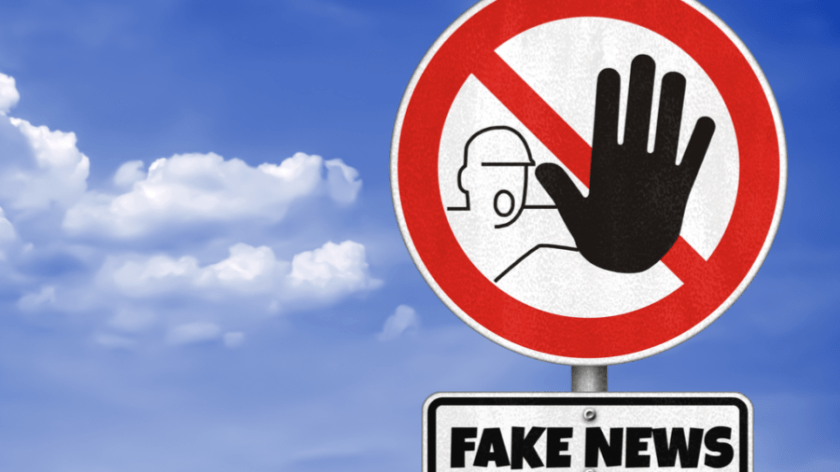
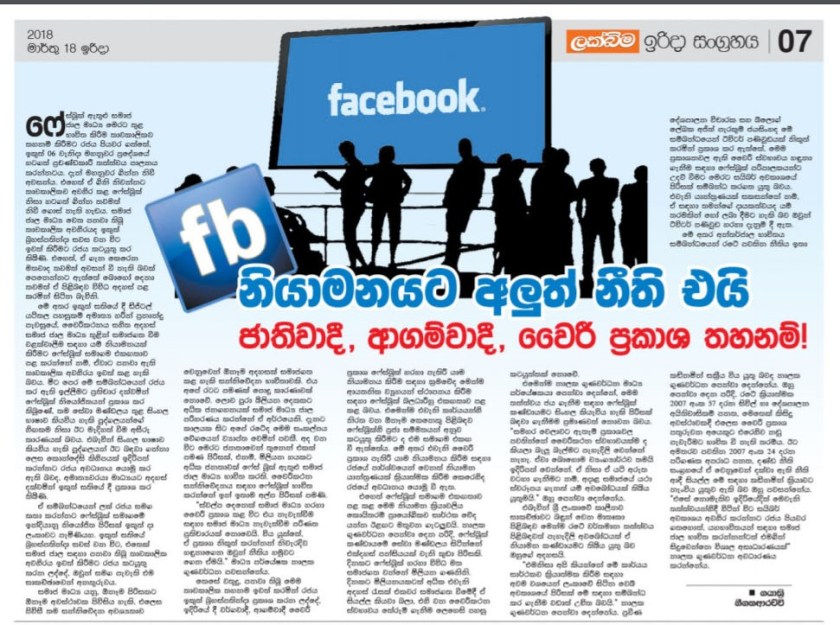
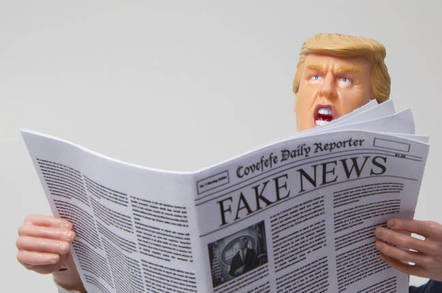 අමෙරිකානු ජනාධිපති ඩොනල්ඩ් ට්රම්ප්, තමන්ට හිතකර නොවන පුවත් හෝ විවේචනාත්මක මාධ්ය විග්රහයන් සියල්ල ගෙඩි පිටින් හෙළා දැකීමට Fake News යෙදුම අවමන් සහගතව නිතර යොදා ගන්නවා.


 Open Minds!