My Sunday (Sinhala) column in Ravaya this week was on impressions of the National Media Summit 2012 held at the University of Kelaniya, Sri Lanka, on 24-25 May 2012. My own talk at the Summit, during a session New Media policies for Sri Lanka, was titled New Media, Old Minds: A Bridge Too Far?.
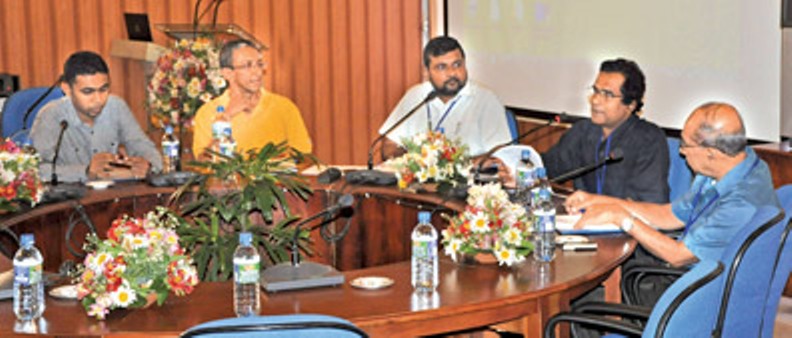
National Media Summit 2012 at University of Kelaniya, 25 May 2012 New Media, Old Minds: A Bridge Too Far?
This was the title of a presentation I made at National Media Summit 2012, at University of Kelaniya, Sri Lanka, this morning. I was asked to talk about New Media and policies for Sri Lanka.
In my audience were academics and researchers on journalism and mass communication drawn from several universities of Sri Lanka. I was told the biennial event is to help frame new research frameworks and projects.
Now, I’m not a researcher in the conventional sense of that term, and am fond of saying I don’t have a single academic bone in my body. Despite this, occasionally, universities and research institutes invite me to join their events as speaker, panelist or moderator.
University of Kelaniya, a state university in Sri Lanka, has the island’s oldest mass communication department, started in the late 1960s.
Perhaps inertia and traditions weigh down such places — while I had a patient hearing, I found our ensuing discussion disappointing. The historical analogies, policy dilemmas and coping strategies I touched on in my presentation didn’t get much comment or questions.
Instead, rather predictably, the ill-moderated discussion meandered on about the adverse social and cultural impacts of Internet and mobile phones and the need to ‘control’ everything in the public interest (where have I heard that before?).
And much time was wasted on debating on what exactly was new media and how to define and categorise it (I’d argued: it all depends on who answers the question!).
Part of the confusion arose from many conflating private, closed communications online (e.g. Facebook) with the open, more public interest online content (e.g. news websites). Similarly, the critical need for common technical standards (to ensure inter-operability) was mistaken by some as the need for dull and dreary orthodoxy in content!
Concepts like Citizen Journalism, user-generated content, privacy, right to information were all bandied around — but without clarity, focus or depth. Admittedly we couldn’t cover everything under the Sun. But we didn’t even discuss what options and choices policy makers have when confronted with rapidly evolving new media types.
Half anticipating this, I had included a line in my talk that said: “Academics must research, analyse & advise (policy makers). But are Lankan academics thought-leaders in ICT?”
I was being a polite guest by not explicitly answering my own question (but as a helpful hint, I mentioned dinosaurs a few times!). In the end, my audience provided a clear (and sadly, negative) answer: far from being path-finders or thought-leaders, they are mostly laggards who don’t even realise how much they have to catch up!
And some of them are framing Lankan media policy and/or advising government on information society issues. HELP!
Don’t take my word for it. Just try to find ANY online mention of National Media Summit 2012 that just ended a few hour ago. Google indexes content pretty fast these days — but there is NONE that I can find on Google as May 25 draws to an end (except my own PPT on SlideShare!).
Phoning each other during personal or shared emergencies is one of the commonest human impulses. Until recently, technology and costs stood in the way. No longer.
We now have practically all grown-ups (and some young people too) in many Asian countries carrying around phones or having easy, regular access to them. For example, Sri Lanka’s tele-density now stands at 106.1 phones 100 people (2011 figures).
What does this mean in times of crisis caused by disasters or other calamities? This is explored in a short video I just made for LIRNEasia:
Synopsis:
With the spread of affordable telecom services, most Asians now use their own phones to stay connected. Can talking on the phone help those responding to emergencies to be better organised? How can voice be used more efficiently in alerting and reporting about disasters? Where can computer technology make a difference in crisis management?
These questions were investigated in an action research project by LIRNEasia in partnership with Sarvodaya, Sri Lanka’s largest development organisation. Experimenting with Sahana disaster management software and Freedom Fone interactive voice response system, it probed how voice-based reporting can fit into globally accepted standards for sharing emergency data. It found that while the technology isn’t perfect yet, there is much potential.
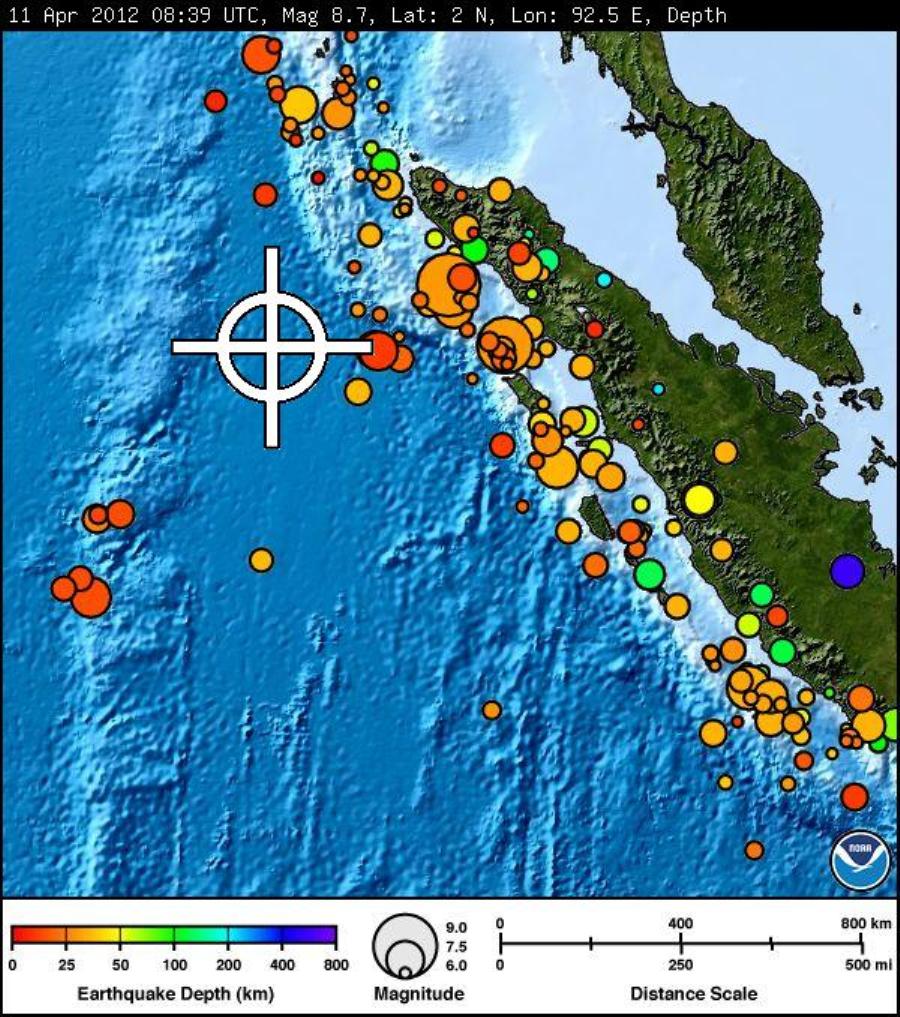
In this week’s Ravaya Sunday column (in Sinhala) appearing on 29 April 2012, I reflect on the Indian Ocean undersea quake on 11 April 2012, and the tsunami watch that followed.
Taking Sri Lanka as the example, I raise some basic concerns that go beyond the individual incident, and address fundamentals of disaster early warning and information management in the Internet age.
I ask: Was the tsunami warning and coastal evacuation on April 11 justified in Sri Lanka? I argue that this needs careful, dispassionate analysis in the coming weeks. ‘Better safe than sorry’ might work the first few times, but let us remember the cry-wolf syndrome. False alarms and evacuation orders can reduce public trust and cooperation over time.
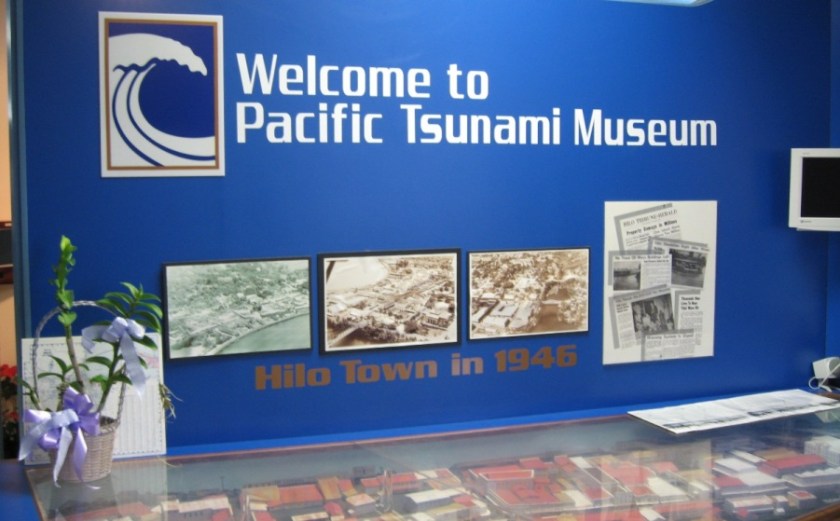
Entrance to Pacific Tsunami Museum in Hilo, Hawaii, photo by Nalaka Gunawardene, Jan 2007
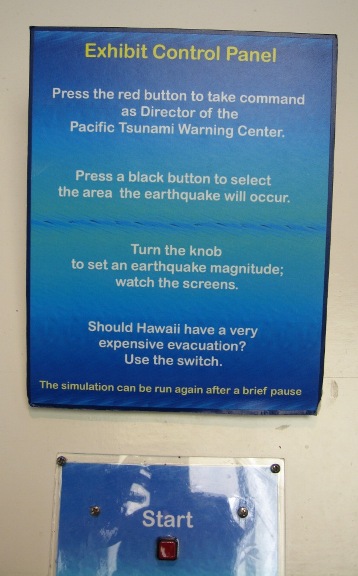
Five years ago, on a visit to the Pacific Tsunami Museum in Hilo, Hawaii, I played an interesting simulation game: setting off an undersea earthquake and deciding whether or not to issue a tsunami warning to the many countries in and around the Pacific.
The volunteer-run museum, based in ‘the tsunami capital of the world’, engages visitors on the science, history and sociology of tsunamis. The exhibits are mostly mechanical or use basic electronic displays, but the messages are carefully thought out.
The game allowed me to imagine being Director of the Pacific Tsunami Warning Centre (PTWC), a US government scientific facility in Ewa Beach, Hawaii, where geophysicists monitor seismic activity round the clock. When the magnitude exceeds 7.5, its epicentre is located and a tsunami watch is set up. Then, combining the seismic, sea level and historical data, PTWC decides if it should be upped to a warning.
Tsunami simulation game - low tech, high lessonThe museum game allows players to choose one of three locations where an earthquake happens — Alaska, Chile or Japan — and also decide on its magnitude from 6.0 to 8.5 on the Richter Scale.
This is an instance where scientists must quickly process large volumes of information and add their own judgement to the mix. With rapid onset hazards like tsunamis, every second counts. Delays or inaction can be costly — but false alarms don’t come cheap either.
I played the game thrice, and erring on the side of caution, issued a local (Hawaiian) evacuation every time. If it were for real, that would have caused chaos and cost the islanders a lot of money.
In fact, those who make decisions on tsunami alerts or warnings have to take many factors into account – including safety, economic impact and even political fall-out.
After playing the simulation game, I can better appreciate the predicament government officials who shoulder this responsibility. They walk a tight rope, balancing short-term public safety and long term public trust in the entire early warning system.
Taking Sri Lanka as the example, but sometimes referring to how other Indian Ocean rim countries reacted to the same situation, I raise some basic concerns that go beyond this individual incident, and address fundamentals of disaster early warning and information management in the Internet age.
Another except: “So was the tsunami warning and coastal evacuation on April 11 justified? This needs careful, dispassionate analysis in the coming weeks. ‘Better safe than sorry’ might work the first few times, but let us remember the cry-wolf syndrome. False alarms and evacuation orders can reduce public trust and cooperation over time.”
In particular, I focus on nurturing public trust — which I call the ‘lubricant’ that can help move the wheels of law and order, as well as public safety, in the right direction.
This is my weekly Sinhala language column published in Ravaya Sunday newspaper dated 26 Feb 2012. In this, I explore some of the many fascinating insights into how Lankans live and work, as revealed by the Household Income and Expenditure Survey 2009/10 conducted by the Department of Census and Statistics, Sri Lanka. It was based on a large, countrywide sample of 22,500 households and conducted over a 12-month period in 2009-2010.
As I have often said on this blog, Television used to be the favourite whipping boy of those who love to criticise communication technologies and consumer gadgets — until the Internet and mobile phones came along.
When it finally arrived in Asia in 1991, direct TV broadcasting by satellite scared the daylights out of many Asian governments and self-appointed guardians of culture and public morals. How can the unexposed (i.e. ‘unspoilt’) hundreds of millions of Asians cope with massive volumes of information and entertainment beaming down from the skies, they asked. Their real concern was the loss of control over what the public watched, which governments and ruling elites had tightly controlled for decades since radio and TV emerged as mass media.
So, for much of that decade, we witnessed howls of protests from them — but their worst fears never materialised. Satellite TV found its niche alongside terrestrial transmissions, and Asian broadcasters soon mastered the medium. Today, global broadcasters like CNN, BBC and Al Jazeera compete with hundreds of Asian satellite TV channels and the audiences have a far greater choice.
As I wrote in September 2008: “In 1990, most Asian viewers had access to an average of 2.4 TV channels, all of them state owned. This has changed dramatically — first with the advent of satellite television over Asia in 1991, and then through the gradual (albeit partial) broadcast liberalisation during the 1990s. Asian audiences, at last freed from the unimaginative, propaganda-laden state channels, exercised their new-found choice and quickly migrated to privately owned, commercially operated channels.”
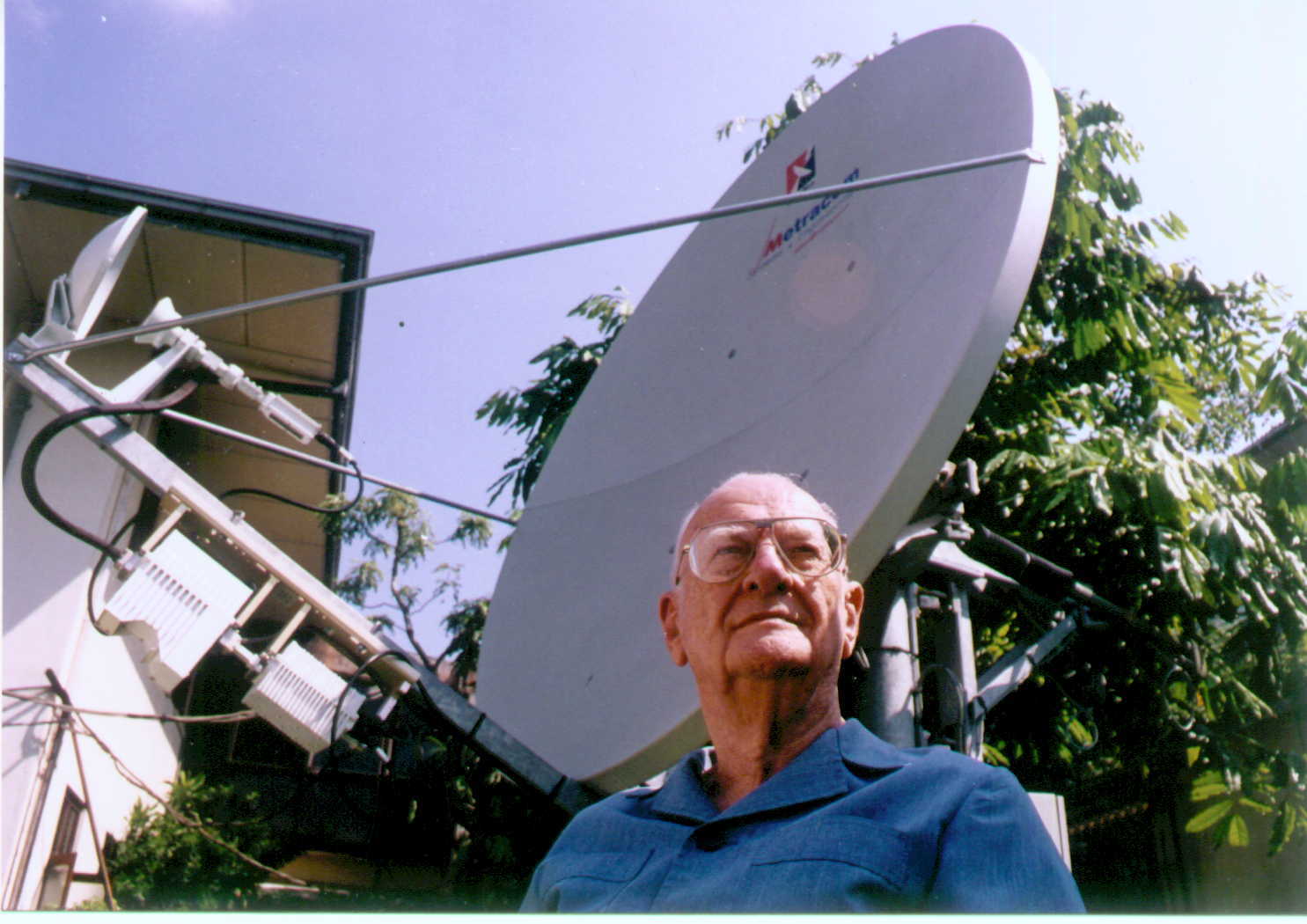
Sir Arthur Clarke was the man who triggered this satellite communication revolution. In 1945, while still in his late 20s, he was the first to propose the concept of using a network of satellites in the geo-synchronous orbit for television and telecommunications. His vision became a reality in the mid 1960s, and within a generation, humankind has come to rely critically on the network of comsats placed, in what is now called the Clarke Orbit, some 22,300 miles above the earth.
In December 2003, on the eve of the World Summit on the Information Society (WSIS) and days before his 86th birthday, I did a wide-ranging interview with Sir Arthur Clarke on satellite TV, internet, censorship and other challenges of information societies. It was published in One World South Asia on 5 December 2003.
For my Ravaya column this week (18 Dec 2011), I have adapted parts of that interview into Sinhala, making the point that much of what he said about satellite TV at the time is now equally relevant to the rapid spread of the Internet. It’s also a nice way to mark his 94th birth anniversary this week.
Sir Arthur C Clarke: Opened up the heavens as part of information superhighway...
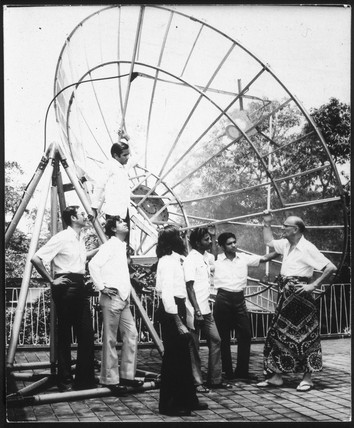
Arthur C Clare (extreme right) with Indian ISRO engineers who installed satellite antenna at his Colombo home, in 1975හොඳම උදාහරණය ලැඛෙන්නේ දකුණු අප්රිකාවෙන්. 1960 දශකය වන විට ලෝකයේ ඉසුරුබර රාජ්යයන් අතුරෙන් ටෙලිවිෂන් සේවාවක් අරඹා නොතිබූ එක ම රට වූයේ දකුණු අපිකාවයි. එවකට එහි පැවති සුදු පාලකයන්ගේ රජයේ සන්නිවේදන අමාත්යවරයා එරට ටෙලිවිෂන් සේවාවක් ඇරඹීමට කිසිසේත් එකග වූයේ නැහැ. ‘ටෙලිවිෂන් තමයි අප්රිකාවේ සුදු මිනිසාගේ පාලනය හමාර කරන්නේ’ යයි ඔහු කළ ප්රකාශයෙහි ලොකු අරුතක් ගැබ් වී තිබුණා. ^‘Television will mean the end of the white man in Africa.’)
This is the Sinhala text of my weekly column in Ravaya newspaper of 20 Nov 2011. This week, I continue our discussion on Internet freedom: what can – and must – be regulated online, and how regulation is fundamentally different from control and censorship. I insist that conceptual clarity is as important as technical understanding of how the Internet works.
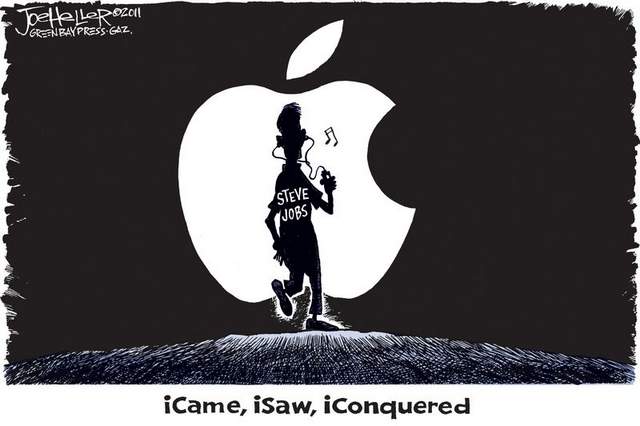
We might admire – even revere – genius mavericks like Steve Jobs from afar, but few Asians have any idea where mavericks come from, or how best to deal with them. Our conformist and hierarchical societies don’t nurture mavericks. Our cultures tend to suppress odd-balls and iconoclasts. That’s probably why we don’t have enough of our own Steve Jobses.
This is the crux of my argument in my latest Sinhala column published in Ravaya newspaper on 16 Oct 2011. For a longer discussion of the same topic, see my English essay Goodbye, Steve Jobs; Long Live Mavericks!



 Open Minds!