What’s new – or just round the corner? Join me on Malima to find out!
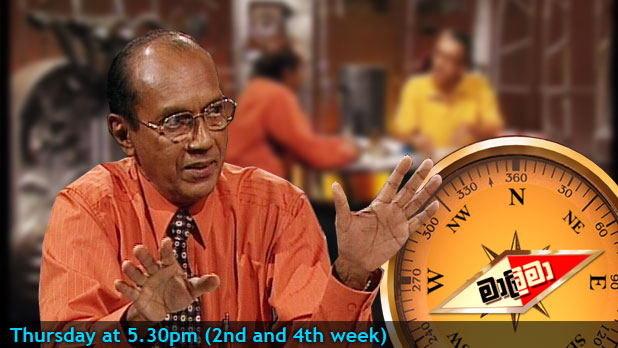
Malima is the Sinhala term for a compass. Malima is also the name of a new TV series on science, technology innovation that I am hosting from this month on Rupavahini, Sri Lanka’s national TV channel.
Produced by Suminda Thilakasena, the show premiered on 12 January 2012. It will be broadcast every other Thursday at 17:30 (5.30 pm) Sri Lanka time.
Malima is a half-hour show in magazine style. Each episode will have several short segments:
– compact interviews introducing accomplished Lankan inventors (with patents, awards, etc.)
– profiles of school children and/or youth who have come up with innovative devices or concepts
– interviews with leading scientists and engineers on frontiers of technology
– vignettes on traditional knowledge and Lankan technological heritage
– news from other countries on interesting new innovations or scientific insights
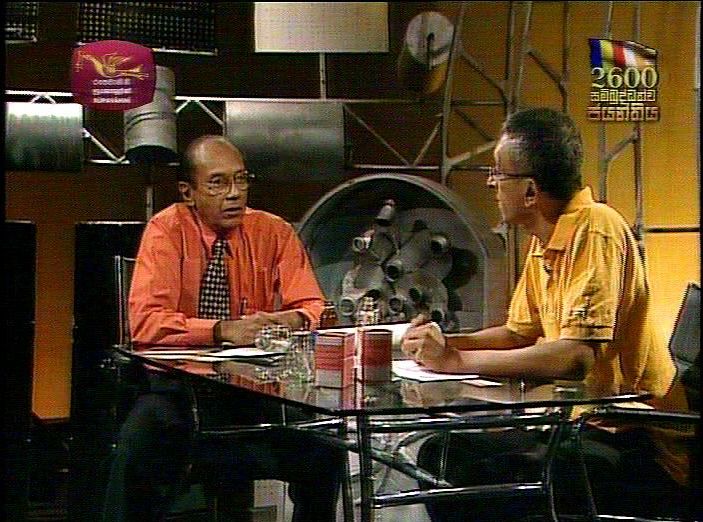
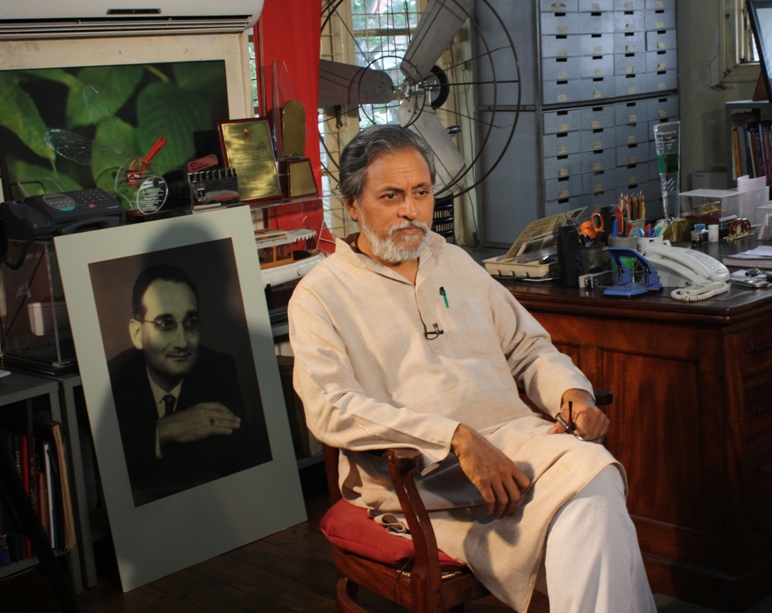
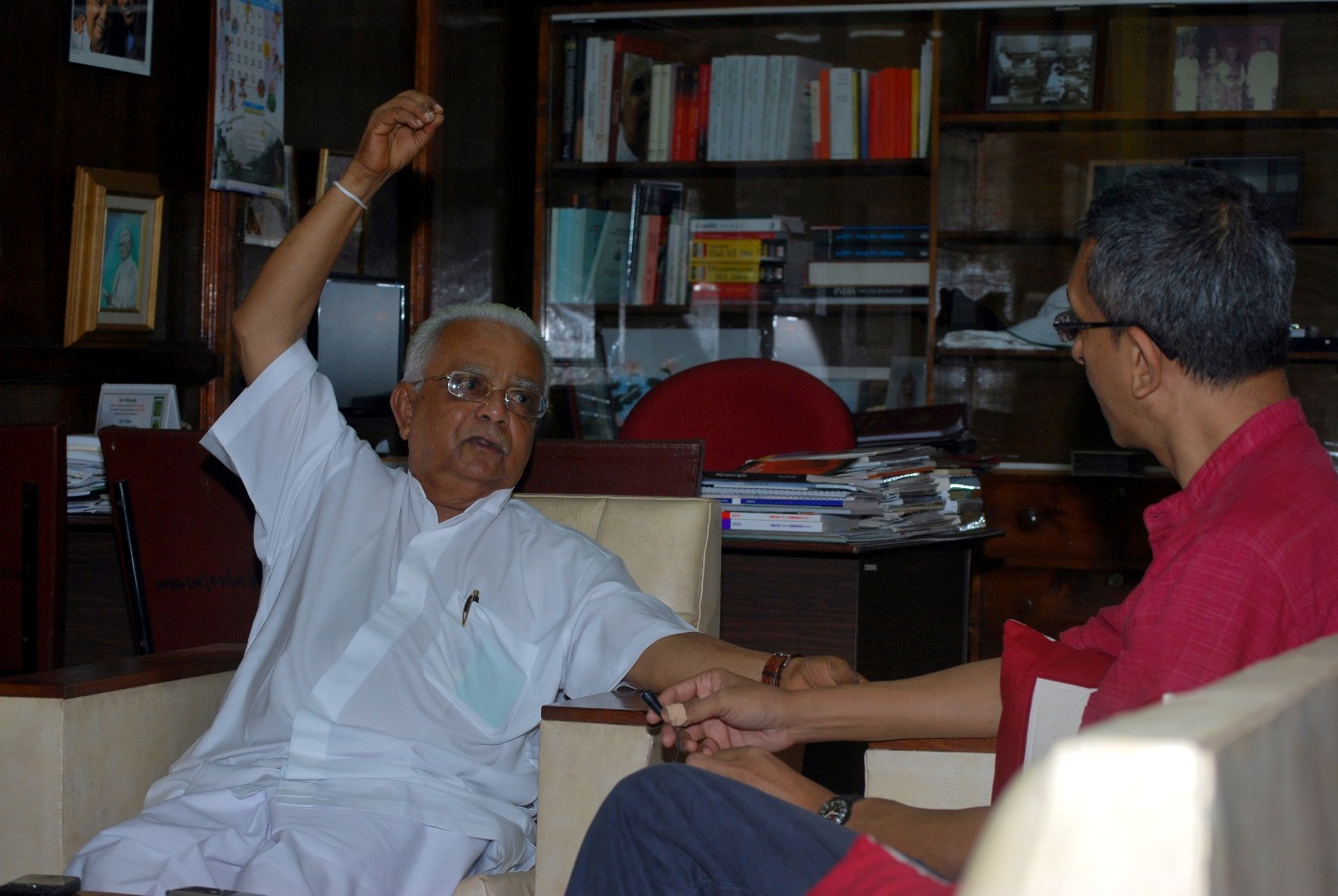
Dr Wijaya Godakumbura being interviewed by Nalaka Gunawardene on Malima
The first episode features:
• An interview with Dr Wijaya Godakumbura, inventor and promoter of the multi award winning Sudeepa safe bottle lamp that saves hundreds of lives
• German aircraft company e-volo has built the world’s first electric multicopter, a new kind of flying machine
• Ancient Lankan technology of extracting medicinal essence from plant products
• Interview with child inventor Sajini Jayanetti, 15, about two of her inventions: Automatic Fixed Amount Liquid Chemical Adder; and a new method to prevent drunken driving
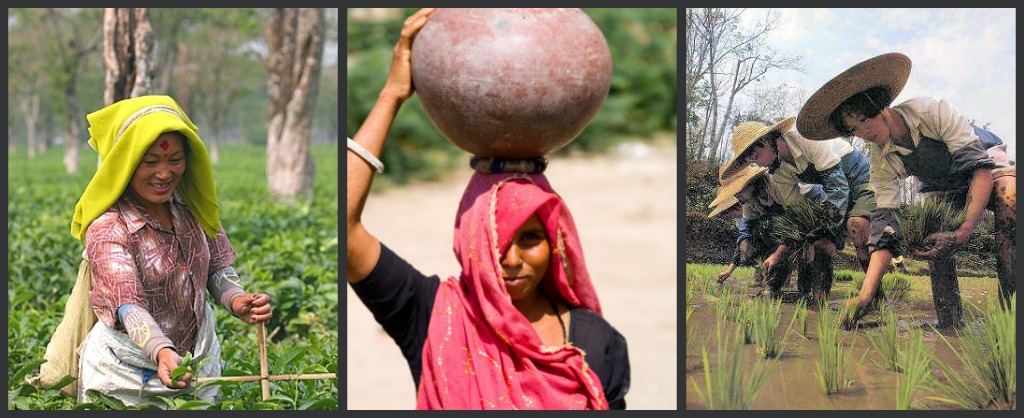
In our age of technology, hundreds of millions of people — most of them poor, and women — are still toiling away in tasks where simple machines or devices could reduce their daily drudgery. Few inventors have bothered with these — probably because the beneficiaries are on the margins of society. Their needs are not a priority for most research institutes or high tech laboratories.
This is the theme of my Ravaya column (in Sinhala) published on 8 Jan 2012, reproduced in full below.It was inspired by, and mostly based on the inaugural Ray Wijewardene memorial lecture delivered by Dr Anil Kumar Gupta, India’s top innovation-spotter, in Colombo on 13 December 2011. He spoke on “Grassroots Innovation for Inclusive Development: From Rhetoric to Reality”
Prof Anil Gupta sits in the Colombo study of late Dr Ray Wijewardene - photo by Anisha Gooneratne
What does an inventor look like?
A nerdy kid in glasses and a white coat, tinkering perilously in a lab? Or a tightly-focused technician toiling away in a greasy workshop?
Perhaps. But most innovators are ordinary people moving among us. For the most part, they are unnoticed and unsung as they try to crack problems that have engaged their attention — or frustrated them for too long.
At one level, many of us improvise everyday for personal gain — to save money, lighten our workload or boost yields. Only a few take it to a higher level. They are unhappy with the status quo. They probe how things work and speculate how it can improve. They tackle problems that daunt most.
Spotting them isn’t easy. Such innovators may come from any social, educational or cultural background but they all march to the beat of a different drum. While education and training help, some of the most successful inventors in history were entirely self-taught.
The late Ray Wijewardene was one quintessential ‘tinkerer’ who led a life-long quest to solve practical problems and improve the quality of life – for himself, those around him, and society at large. He left his mark in agriculture, engineering design, renewable energy, transport and aviation. Just as importantly, he nurtured other innovators to go after nagging problems. A firm believer in trial and error, he encouraged constant experimentation.
Ray’s spirit of enquiry and enterprise was rekindled this week when one of the world’s leading innovation-spotters delivered the inaugural Ray Wijewardene Memorial Lecture in Colombo.
With inspiring examples and illustrations, Gupta emphasized that grassroots innovations can provide a new ray of hope – if we let them grow.
Speaking of his own country’s experience, he said: “Outside of India’s major cities, unsung heroes of the country are solving, or trying to solve, local problems in spite of the structures that have bypassed them so far. Creativity, compassion and collaboration are the key characteristics of these voices from grassroots. Let’s listen to them and resonate with them!”
And it isn’t just an Indian phenomenon. At the outset, Gupta listed a dozen recent innovations made by Lankans. Some, like the safe kerosene bottle lamp, are widely known but most remain obscure. Yet, all have been authenticated, and many granted patents.
Home-grown inventions
Few among the packed Colombo audience of over 200 seemed to recognise these home-grown innovations — just the point the professor was making.
“You get innovators all over Sri Lanka, but most are not known or recognised even in their own communities,” he said.
To make matters more challenging, most innovators tend to be loners: they are day-dreamers who don’t follow the pack.
“They don’t come to meetings or speak up much. We have to reach out to them, make them feel comfortable and valued,” Gupta added.
His suggestion: Sri Lanka should launch a national effort to discover its own innovators — both technological and social. The media can play a big role in spotting and promoting innovators, as can schools, universities and state agencies with relevant mandates.
But Gupta also had a strong word of caution: “Whatever we do, we must never try to convert these precious ‘odd-balls’ into conformists.”
Ray would surely have applauded. He was an accomplished non-conformist, or maverick, who didn’t fit into the stereotyped academic or engineering circles. Now the Ray Wijewardene Charitable Trust (RWCT), set up to promote his legacy, wants to nurture innovation in Sri Lanka.
The Trust made an auspicious start by inviting Anil Gupta to deliver the first lecture in Ray’s memory. Gupta and Wijewardene were kindred spirits who stayed in touch over the years across the Palk Strait.
Gupta himself defies the standard notion of an academic. He is an unusual professor who walks his talk — and walks through the villages and slums of India in search of innovation. His mission for the past two decades has been to ensure that grassroots innovators receive due recognition, respect and reward for their bright ideas. He also seeks to embed an innovative ethic in educational policy and institutions.
The man doesn’t sit in his campus; he goes innovator-scouting all over India. “In our walks, we move from village to village spotting grassroots innovations and honouring them. We have come across very simple modifications make life easier for people, and also help save natural resources,” Gupta said.
A simple example: at a rural location, he found someone had fitted six tapes on to the outlet of a single water pump. It allowed that many to draw water at the same time, and also reduced pumped up water going waste.
The bicycle is another invention that has been adapted for multiple purposes across India. Genius improvisers are using it for moving on land (and water), generating electricity, helping with the cooking, and even in washing clothes.
The popular Hindi film 3 Idiots featured a pedal-powered washing machine, which was inspired by the invention of a 20-year-old woman from Kerala, Remya Jose. It has since been showcased on Discovery Channel as part of the ‘Indian Innovators’ series of short films.
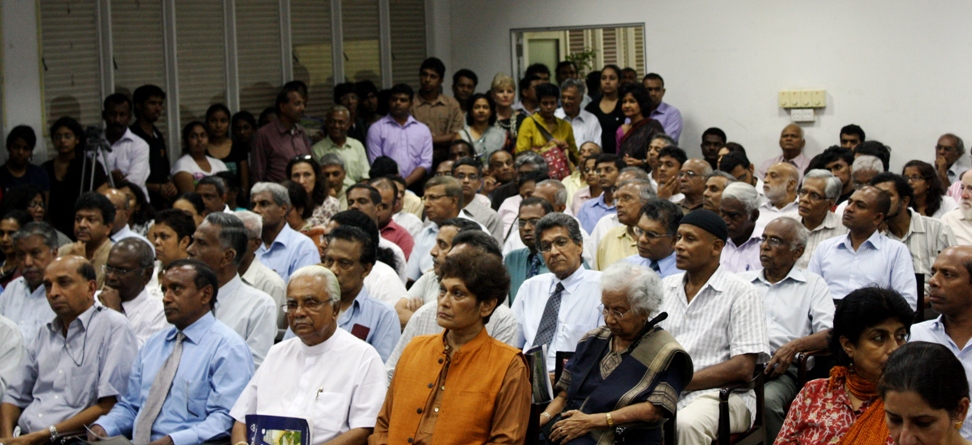
Part of audience at Ray Wijewardene Memorial Lecture in Colombo, 13 Dec 2011 - photo by Anisha Gooneratne
Benefit sharing
One defining characteristic of such grassroots innovation is that those tinkering are also immediate benefits of any improvements. As Gupta puts it: “From agricultural innovations to the gas-powered iron or pressure-cooker-driven coffee maker, we find that solutions developed by producers who are also users reflect the concerns of both the production and consumption environments.”
Not all inventions need to be earth-shattering. In fact, many aren’t – and that is perfectly fine, says Gupta.
“Even basic improvements in a water pump, for example, can make life easier for millions of people. When we look for design improvements, we should consider not only the benefits to humans, but even to domesticated animals.”
How can society ensure that grassroots innovators not just receive accolades but also get paid for their creative ideas?
Much of innovation related knowledge is ‘open source’ – meaning it has been developed by a number of people collaboratively and non-secretively. But that doesn’t mean their knowledge rights should be trampled with.
Taking out patents is one way to ensure such rights. The Honey Bee network has successfully obtained over 550 patents for grassroots innovations – more than some well-funded laboratories in India! This was made possible by mobilising pro bono lawyers and other volunteers.
The spirit of volunteerism common in Asian cultures can do much to nurture innovation and safeguard intellectual property rights at the same time, Gupta said.
His hope: “The Ray Wijewardene Trust should be able to find public-spirited lawyers in Sri Lanka to emulate the Indian experience.”
And what about glaring gaps that often exist between inventive minds and the ruthless market?
Don’t try to turn every innovator into businessman, Gupta said. “Most innovators are not good entrepreneurs because they are incorrigible improvisers. In many cases, we try to persuade and counsel innovators to work on their products. There are some who do very well, while others take time.”
Instead of trying to turn every inventor into an entrepreneur, we have to create institutions, schemes and networks that bring these two types together – the one who tinker and those who market.
We have to find ways to link innovation with investment and enterprise. Together, these three elements form what Gupta calls the ‘golden triangle’ for grassroots creativity.
Science writer Nalaka Gunawardene is a trustee of the Ray Wijewardene Charitable Trust, and has been profiling Lankan innovators for 25 years.
As I have often said on this blog, Television used to be the favourite whipping boy of those who love to criticise communication technologies and consumer gadgets — until the Internet and mobile phones came along.
When it finally arrived in Asia in 1991, direct TV broadcasting by satellite scared the daylights out of many Asian governments and self-appointed guardians of culture and public morals. How can the unexposed (i.e. ‘unspoilt’) hundreds of millions of Asians cope with massive volumes of information and entertainment beaming down from the skies, they asked. Their real concern was the loss of control over what the public watched, which governments and ruling elites had tightly controlled for decades since radio and TV emerged as mass media.
So, for much of that decade, we witnessed howls of protests from them — but their worst fears never materialised. Satellite TV found its niche alongside terrestrial transmissions, and Asian broadcasters soon mastered the medium. Today, global broadcasters like CNN, BBC and Al Jazeera compete with hundreds of Asian satellite TV channels and the audiences have a far greater choice.
As I wrote in September 2008: “In 1990, most Asian viewers had access to an average of 2.4 TV channels, all of them state owned. This has changed dramatically — first with the advent of satellite television over Asia in 1991, and then through the gradual (albeit partial) broadcast liberalisation during the 1990s. Asian audiences, at last freed from the unimaginative, propaganda-laden state channels, exercised their new-found choice and quickly migrated to privately owned, commercially operated channels.”
Sir Arthur Clarke was the man who triggered this satellite communication revolution. In 1945, while still in his late 20s, he was the first to propose the concept of using a network of satellites in the geo-synchronous orbit for television and telecommunications. His vision became a reality in the mid 1960s, and within a generation, humankind has come to rely critically on the network of comsats placed, in what is now called the Clarke Orbit, some 22,300 miles above the earth.
In December 2003, on the eve of the World Summit on the Information Society (WSIS) and days before his 86th birthday, I did a wide-ranging interview with Sir Arthur Clarke on satellite TV, internet, censorship and other challenges of information societies. It was published in One World South Asia on 5 December 2003.
For my Ravaya column this week (18 Dec 2011), I have adapted parts of that interview into Sinhala, making the point that much of what he said about satellite TV at the time is now equally relevant to the rapid spread of the Internet. It’s also a nice way to mark his 94th birth anniversary this week.
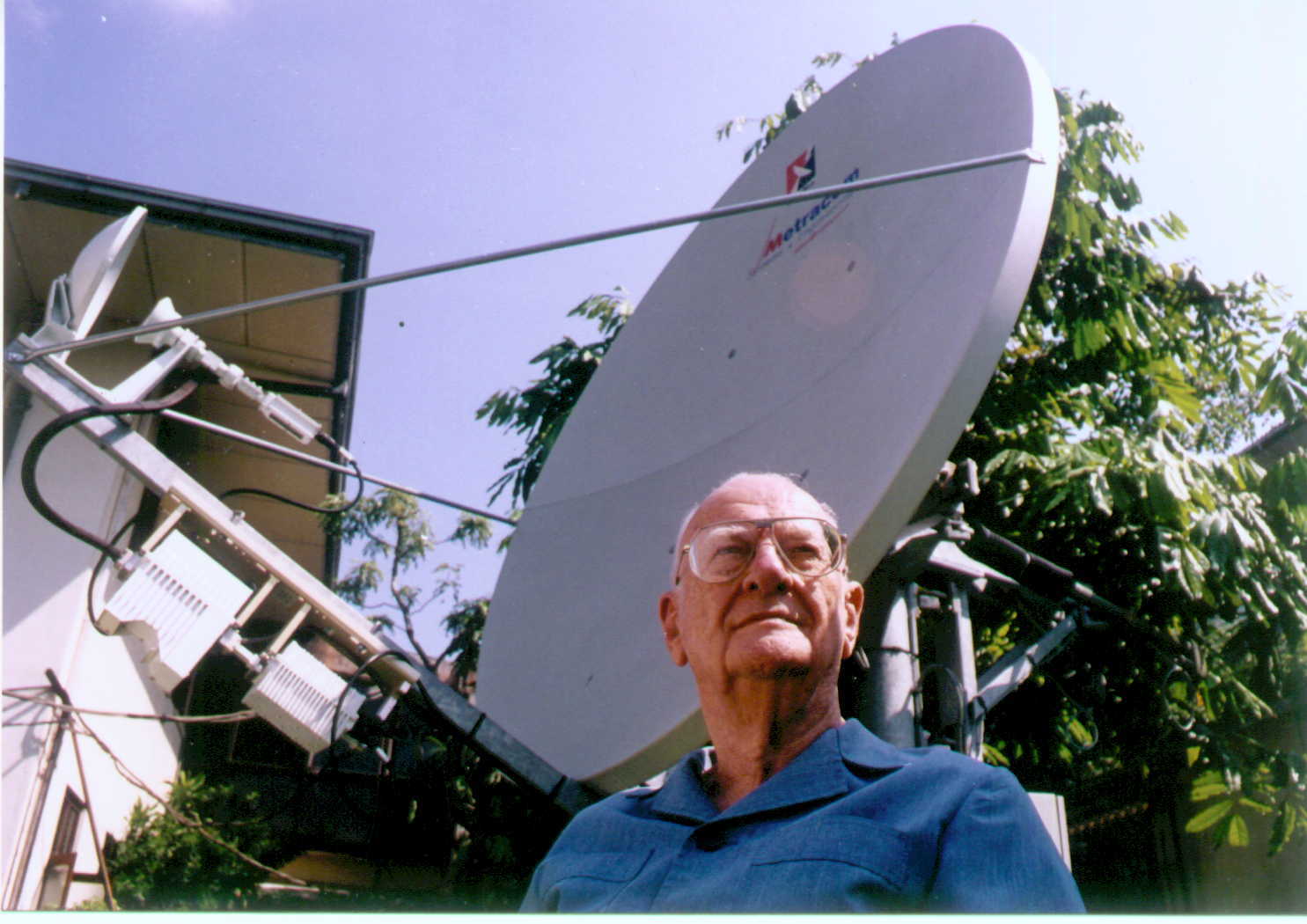
Sir Arthur C Clarke: Opened up the heavens as part of information superhighway...
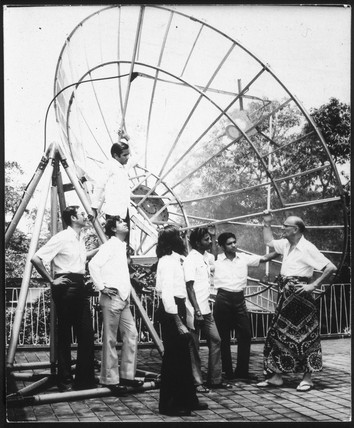
Arthur C Clare (extreme right) with Indian ISRO engineers who installed satellite antenna at his Colombo home, in 1975හොඳම උදාහරණය ලැඛෙන්නේ දකුණු අප්රිකාවෙන්. 1960 දශකය වන විට ලෝකයේ ඉසුරුබර රාජ්යයන් අතුරෙන් ටෙලිවිෂන් සේවාවක් අරඹා නොතිබූ එක ම රට වූයේ දකුණු අපිකාවයි. එවකට එහි පැවති සුදු පාලකයන්ගේ රජයේ සන්නිවේදන අමාත්යවරයා එරට ටෙලිවිෂන් සේවාවක් ඇරඹීමට කිසිසේත් එකග වූයේ නැහැ. ‘ටෙලිවිෂන් තමයි අප්රිකාවේ සුදු මිනිසාගේ පාලනය හමාර කරන්නේ’ යයි ඔහු කළ ප්රකාශයෙහි ලොකු අරුතක් ගැබ් වී තිබුණා. ^‘Television will mean the end of the white man in Africa.’)
Prof Anil K Gupta lights oil lamp in front of Ray Wijewardene photo before delivering Inaugural Ray Lecture in Colombo, 13 Dec 2011 - photo by Ruveen Mandawala
“Ray Wijewardene was a man well ahead of his time, which might explain why he was not better understood and appreciated. He was also a systemic thinker who went to the root of problems and looked for elegant and efficient ways of solving them. He was not mesmerised by technology alone.”
Dr Anil Kumar Gupta, a Professor at the Indian Institute of Management (IIM) in Ahmedabad, India, and Founder of the Honey Bee Network, spoke on “Grassroots Innovation for Inclusive Development: From Rhetoric to Reality” at the Institution of Engineers Sri Lanka (IESL) on 13 December 2011.
The IESL auditorium was packed to capacity, with more people standing and spilling over to the corridor. Anil Gupta gave an engaging talk that makes him the subcontinent’s foremost innovation-spotter. With inspiring examples and illustrations, he emphasized that grassroots innovations can provide a new ray of hope — provided we let them grow.
The lecture was organised by IESL and the Ray Wijewardene Charitable Trust (RWCT), set up to promote Ray’s legacy, and committed to nurturing innovation in Sri Lanka.
The Trust made an auspicious start by inviting Anil Gupta to deliver the first lecture in Ray’s memory. Gupta and Wijewardene were kindred spirits who stayed in touch over the years across the Palk Strait.
“It is a privilege for me and the Honey Bee Network to be invited for a lecture in honour of such an illustrious innovator, social change activist and thought leader of our sub-continent, and indeed the entire developing world,” Professor Gupta said when I first reached out to him a few months ago to invite for the lecture.
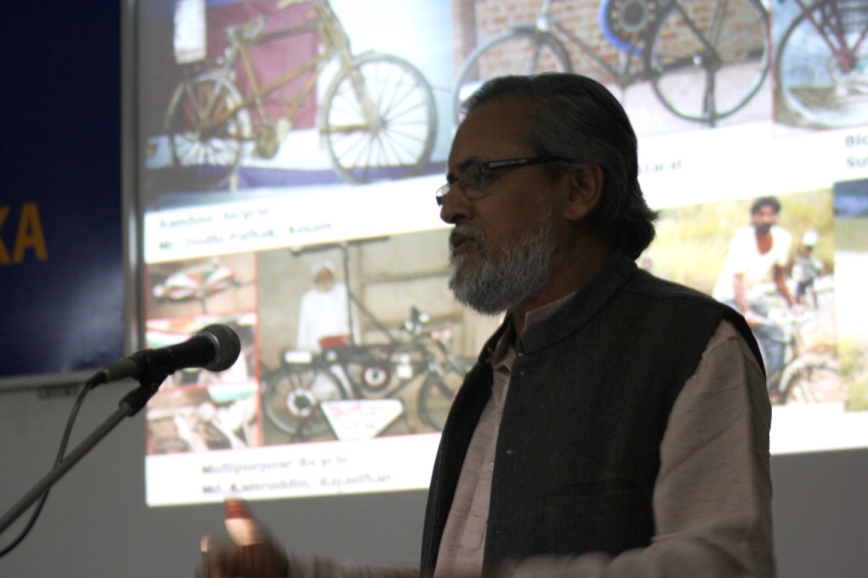
Prof Anil Gupta delivers inaugural Ray Wijewardene memorial lecture in Colombo, 13 Dec 2011 - Photo by Ruveen Mandawala
Anil K Gupta is an unusual professor who walks the talk — and walks through the villages and slums of India in search of innovation. His mission is to ensure that grassroots innovators receive due recognition, respect and reward for their bright ideas. He also seeks to embed an innovative ethic in educational policy and institutions.
All three entities are partners of the National Innovation Foundation (NIF India), an autonomous body under the Department of Science and Technology in India. Since 2000, NIF has mobilized more than 160,000 innovations and traditional knowledge practices from all over India, and now holds the largest database of its kind in the world. Professor Gupta is Executive Vice Chair of the NIF, and is also a member of the National Innovation Council of India.
HIV communication needs media partnership - image courtesy Panos South Asia
On this blog, I have written regularly about challenges in communicating on HIV/AIDS through media and non-media methods. To mark World AIDS Day 2011, and 30 years since the discovery of AIDS, I have devoted this week’s (Sinhala) Sunday column in Ravaya newspaper to the topic of HIV/AIDS coverage in the Lankan mass media. I have drawn heavily from a 1999 handbook on HIV/AIDS communication written by my good friend Dr Vinya Ariyaratne, a specialist in community medicine, but the opinions are all mine.
This is the Sinhala text of my weekly column in Ravaya newspaper of 20 Nov 2011. This week, I continue our discussion on Internet freedom: what can – and must – be regulated online, and how regulation is fundamentally different from control and censorship. I insist that conceptual clarity is as important as technical understanding of how the Internet works.
Ari is also our elder statesman of inclusive development. For over half a century, he and Sarvodaya have advocated a nuanced approach to overcoming poverty, illiteracy and various social exclusions. Unlike some die-hard activists, Ari doesn’t ask us to denounce materialism or revert to pre-industrial lifestyles. Instead, he seeks a world without extreme poverty or extreme affluence.
Suddenly, his quest for social justice and equality is resonating all over the world. In fact, Ari has been speaking out for the 99 per cent of less privileged people decades before a movement by that name emerged in the West. In a sense, those occupying Wall Street and other centres of affluence are all children of Sarvodaya.
While Ari shares their moral outrage, his own strategy has been quite different. He didn’t occupy physical spaces in his struggle; he went straight to the fount of all injustice – our minds.
In this 2,400-word essay, I salute a hero of mine who continues to speak truth to power, and makes a difference to millions of people in his land and elsewhere. For doing this, he has been ridiculed, harassed and vilified by small minds and the state. He continues undaunted, and shows no sign of slowing down after turning 80.
Here’s another excerpt:
“In Ari, we find elements of Mahatma Gandhi (non-violent pursuit of the greater good); the Dalai Lama (interpreting Buddhist philosophy for the modern world); Martin Luther King, Jr. (struggling for the rights and dignity of marginalised people); Nelson Mandela (nurturing democracy and healing society); and Jimmy Carter (globalism with a humanitarian agenda).
“Yet Ari is more than the sum of these noble parts; he is his own unique visionary. And an adroit ‘remixer’ who constantly blends the best of East and West. He adapts our civilisational heritage to tackle the Twenty First Century’s anxieties and uncertainties. Thankfully, though, he doesn’t peddle simplistic solutions to today’s complex problems.”
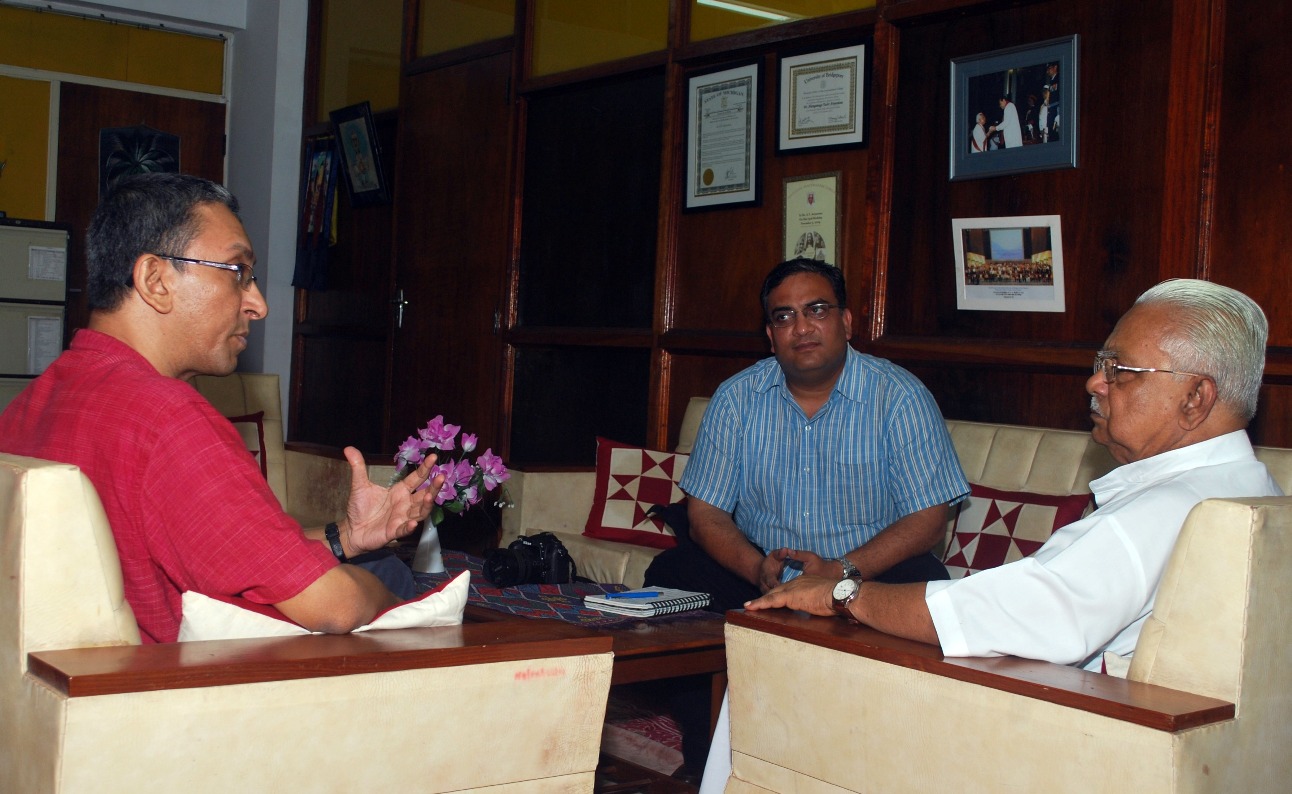
I also recall my first encounter with Ari, in early 1991, when a tyrant leader of Sri Lanka had virtually declared ‘war’ on this unarmed, non-violent small man. I have interviewed him several times since then – the most recent was in March 2011, when I accompanied my journalist friend Aditya Batra from India to talk to Ari (photo, below).
This is the Sinhala text of my Ravaya column published on 13 Nov 2011, where I continue my discussion on the future of newspapers. I look at the last newspaper boom currently on in Asia, and caution that good times won’t last for long: take advantage of it to prepare for the coming (and assured) turbulence in the mainstream media!
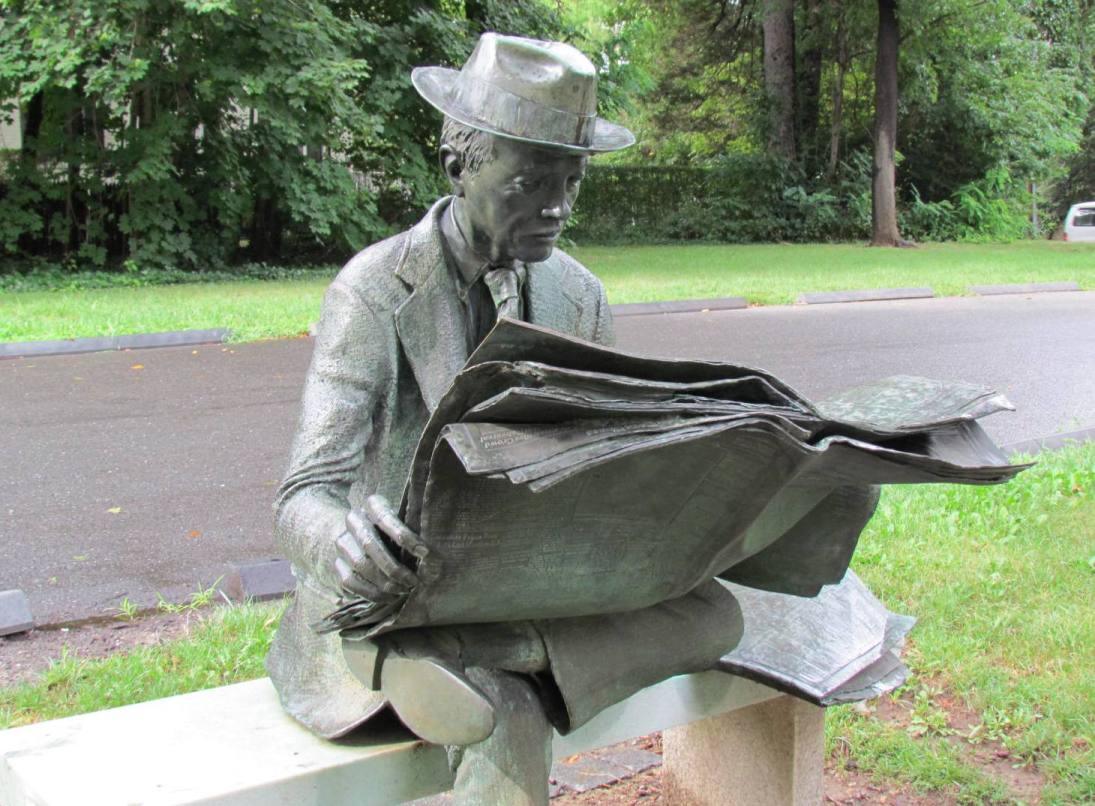
J Seward Johnson's statue of Newspaper Reader - at Princeton University garden





 Open Minds!