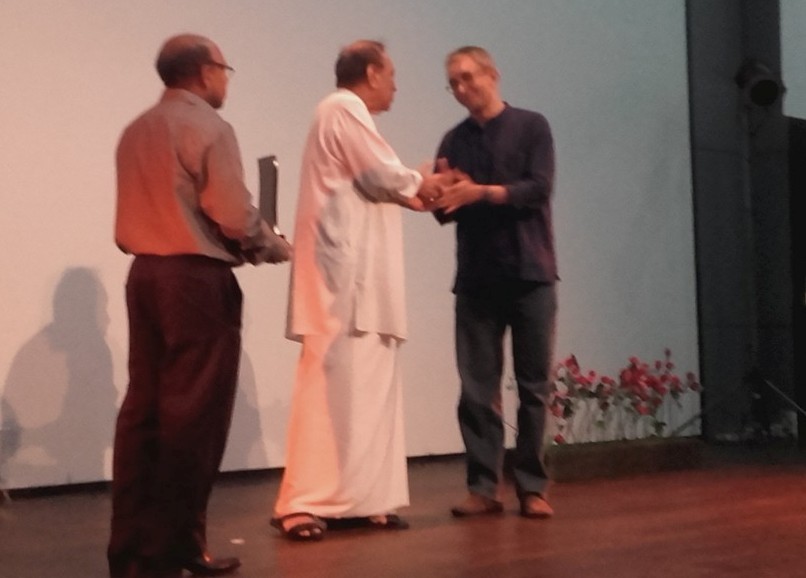
Nalaka Gunawardene (extreme right) received Lifetime Achievement Award for Blogging and New Media Promotion in Sri Lanka from Karu Jayasuriya, Speaker of Parliament, in Colombo 26 March 2016. Nelum Yaya Blog Awards organiser Ajith Dharmakeerthi looks on. Photo by Manori Wijesekera
At the second Nelum Yaya Blogger Awards ceremony held at the Media Ministry Hall last afternoon, the organisers presented me with a Lifetime Achievement Award in New Media.
The award was presented by Karu Jayasuriya, Speaker of the Lankan Parliament and a champion of the right to information. As he presented the trophy, he told me that he is a regular reader of mine!
The citation (in Sinhala, trying to obtain exact text) said that it was to recognise and salute my long-standing efforts to promote blogging and social media use in Sri Lanka.
I didn’t get to say any words of acceptance, so this is what I would like to have said…
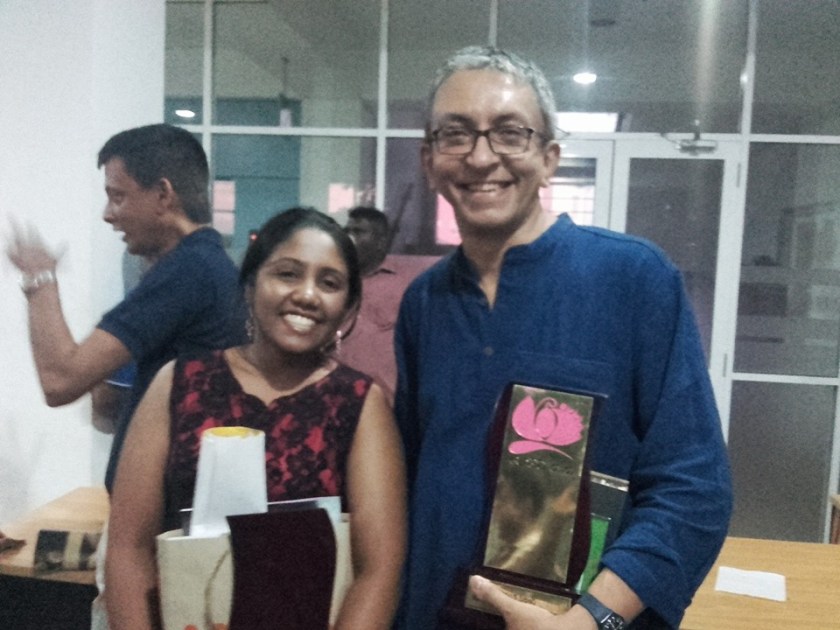
Yashoda Sammani Premaratne (left), Sri Lanka’s Blogger of the Year 2015, with Nalaka Gunawardene who received a Lifetime Award at Nelum Yaya Blog Awards ceremony held in Colombo on 26 March 2016. Photo by Manori Wijesekera
It’s always nice to be recognised by peers — and I do count myself as part Sri Lanka’s diverse and informal blogging community.
However, to use a cricketing metaphor, I am more like a cricket commentator than a star cricketer. I do know the craft but my most useful contributions have been as a cheerleader and populariser of blogging and social media in Sri Lanka.
My own blogging, started in early 2007, was entirely in English for the first few years until I started republishing my weekly Sinhala columns (Sivu Mansala Kolu Getaya) written for Ravaya newspaper from 2011. That made my blog bilingual, albeit a low intensity one: I don’t get the kind of visitors or comments like leading Lankan bloggers do. But I’m contented with that.
Where I have contributed more, I believe, is in documenting, trend-spotting and demystifying the Lankan blogosphere in Sinhala and English (sadly, I don’t have Tamil proficiency to do the same). Over the years I’ve addressed many and varied audiences – from university dons/students and govt officials to civil society groups and journalists – on the public interest potential of social media including (but not limited to) blogging.
Parallel to this, and sometimes in collaboration with my friend Chanuka Wattegama, I’ve been a chronicler and commentator on the social, cultural and political impacts of new media in Sri Lanka. A simple Google search would bring up many of my op-ed articles, book chapters and speeches on Sri Lanka’s emerging information society.
I’m encouraged and honoured by this award, but I have no intention of quitting. Using my blog as well as Twitter and Facebook social media platforms, I will continue to ask inconvenient questions, express unpopular opinions and kick-ass when I need to.
One day, I hope, I’ll finally be able to figure out the demarcation between playing and working in this realm. Does it matter?
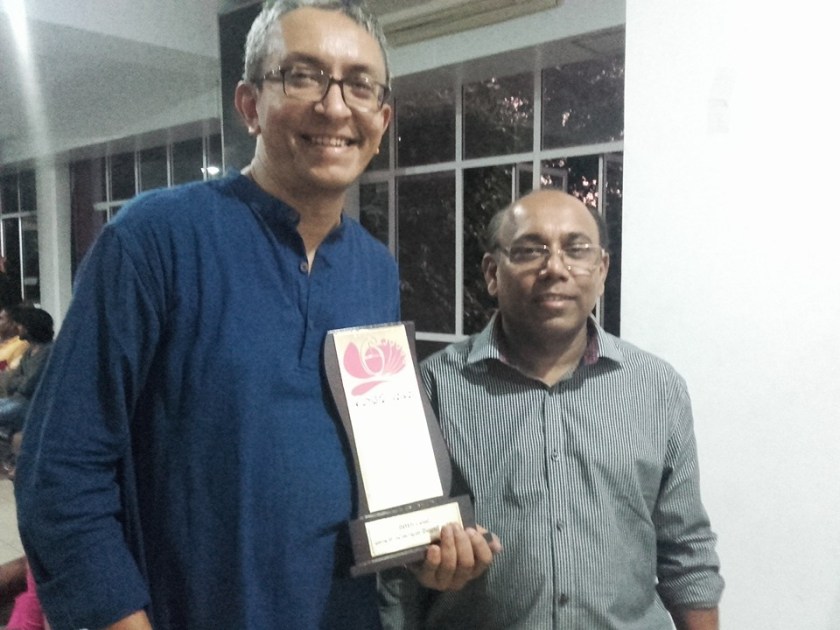
Nalaka Gunawardene (left) with Ajith Dharmakeerthi, chief organiser of Nelum Yaya Blog Awards Sri Lanka
* * * * *
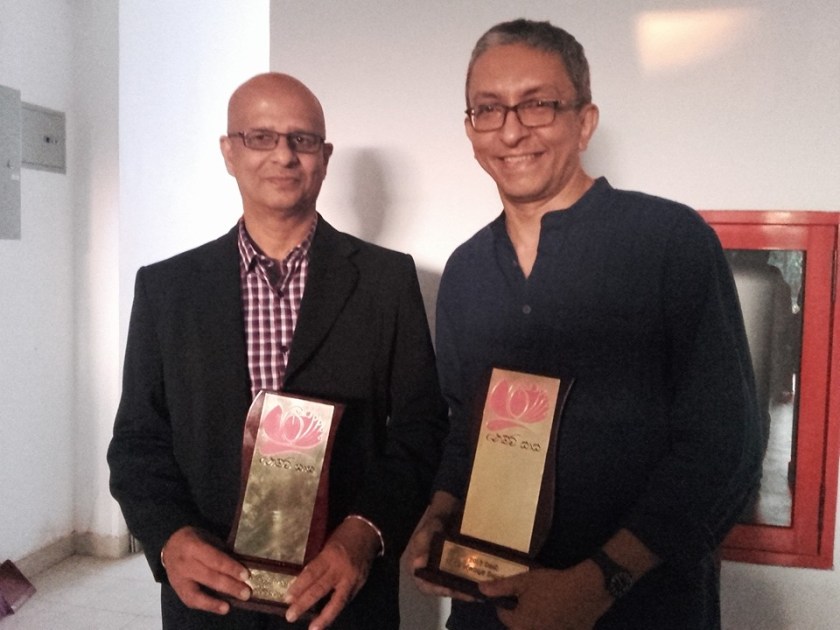
One other Lifetime Award was presented at yesterday’s event – to Rasika Suriyaarachchi, engineer turned blogger who has been a pioneering and popular personality in the Sinhala language blogosphere for many years.
Creative and perceptive young writer Yashoda Sammani Premaratne, who blogs as Bassi, was honoured as the Blogger of the Year 2015.
Over three dozen other category winners and commended bloggers were also saluted at the informal, privately organised blogging awards ceremony.
Rasika Suriyaarachchi (left) and Nalaka Gunawardene with their Lifetime Awards presented at Nelum Yaya Sri Lanka Blogging Awards ceremony in Colombo, 26 March 2016. Photo by Manori Wijesekera
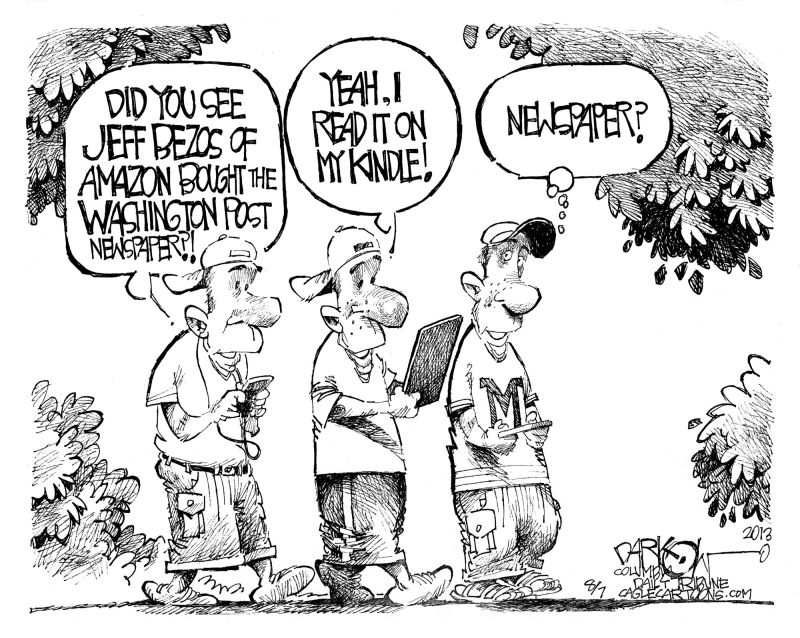
Can newspapers survive the challenge from digital and online media?
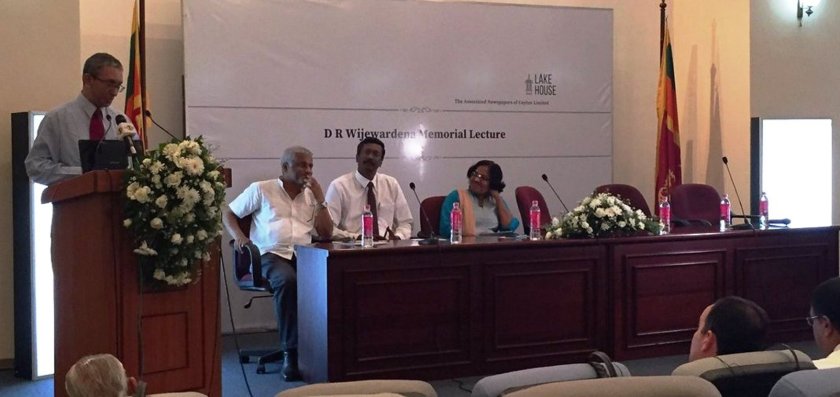
Plenty of printer’s ink has been spent reflecting on this question. I once again addressed it when moderating a panel at the D R Wijewardene commemorative event held on 26 February 2016 at Lakshman Kadirgamar Institute, Colombo.
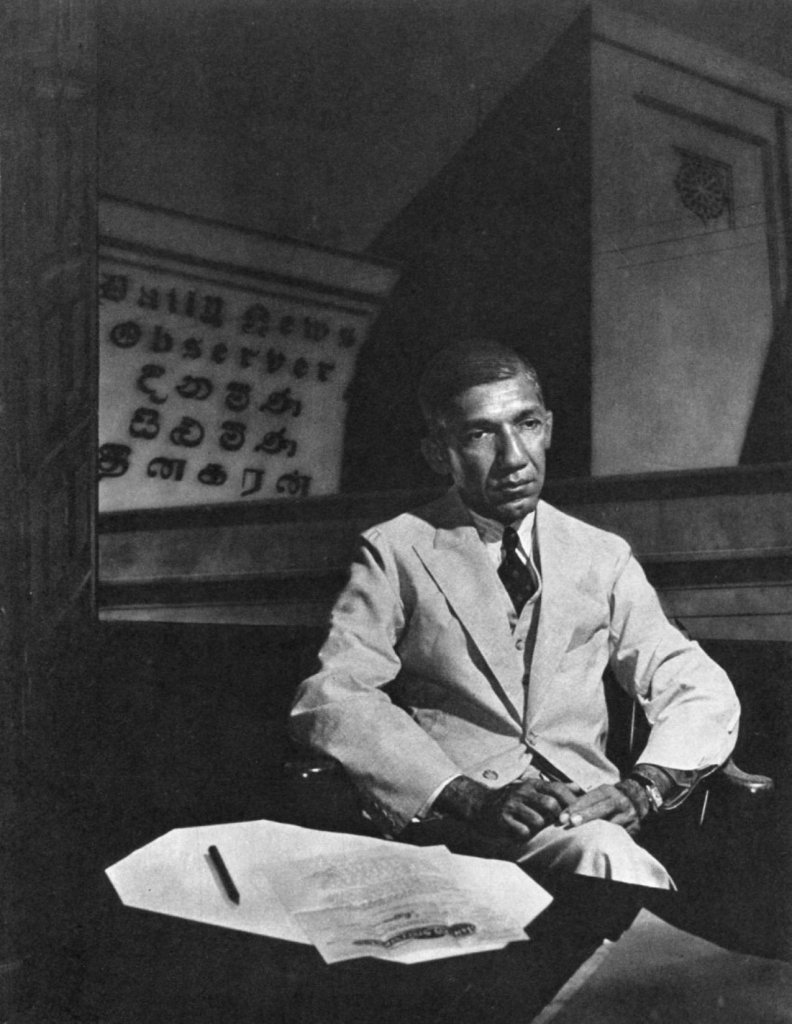
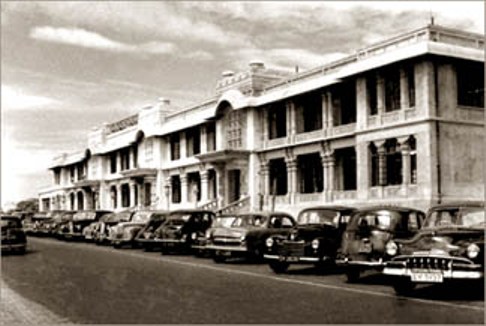
Wijewardene was Sri Lanka’s first Press Baron. About a century ago, he laid the foundation for his publishing house, Associated Newspapers of Ceylon Limited, which still remains a dominant player.
Many like me, of a certain age and above, seem to have a nostalgic attachment to newspapers. One key question for the print industry: beyond tapping such sentimental appeal (which diminishes over time), can newspapers stay relevant and viable? How can they adapt and evolve to keep serving the public interest?
Perhaps the more pertinent question to ask is: where are the budding D R Wijewardenes of the 21st Century? What are their start-ups and how are their dreams unfolding? Are they trying to balance reasonable profits with public interest journalism?
I discuss these in my Ravaya column (appearing in the print issue of 13 March 2016).
Sri Lanka’s broadcast sector, which was a state monopoly for decades, was finally opened up for private sector participation in 1992. However, it has been an ad hoc process ever since – with no clear rules nor any independent enforcement or regulatory mechanism. The broadcast licensing process remains undefined, opaque and discretionary on the part of politicians and officials in charge of media.
This has led to a squandering of the electromagnetic spectrum, a public property: private sector participation in broadcasting has been open only to business confidantes of various ruling parties that have been in office since 1990.
In this Ravaya column (appearing in issue of 6 March 2016), I further discuss the highly problematic broadcast ‘liberalisation’ in Sri Lanka and the resulting complications. I quote from an expert analysis titled Political economy of the electronic media in Sri Lanka by Tilak Jayaratne and Sarath Kellapotha (2012). I also discuss potential ways of resolving the current chaos by regularizing the broadcast licensing process, setting up an independent broadcast regulator, and belatedly bringing transparency and accountability to the sector.
Finally, I clarify that media regulation is not the control of media content or messages, but merely creating a level playing field for all participant companies including the state broadcasters in ways that would best serve the interest of audiences who are the public.
Broadcasting uses the electro-magnetic spectrum, a public resource. It is also a finite resource: there is only so much of the spectrum available for broadcasting and other uses such as telecommunications, emergency communications and military uses. And because it is a scarce resource, it is valuable.
In a landmark 1995 judgment, the Supreme Court of India held that the airwaves or frequencies in the electro-magnetic spectrum are a public property. Thus, their use had to be controlled and regulated by a public authority in the interests of the public and to prevent the invasion of their rights. Since the broadcast media involves the use of the airwaves, this factor creates an inbuilt restriction on its use, as in the case of any other public property.
Sri Lanka’s broadcast sector, which was a state monopoly for decades, was finally opened up for private sector participation in 1992. However, this decision was not accompanied by any specific laws or regulations; it has been an ad hoc process ever since. There are no clear rules nor any independent enforcement or regulatory mechanism. The broadcast licensing process remains undefined, opaque and discretionary on the part of the minister and officials in charge of media.
There are no published guidelines or criteria. In their absence, there is no legal provision to support public service media or community media through licensing. Licence issuing practices so far do not indicate any such interest. The private sector participation in broadcasting has been open only to business confidantes of various ruling parties that have been in office since 1990.
In this week’s Ravaya column (appearing in issue of 28 February 2016), I discuss the plundering of the electromagnetic spectrum in Sri Lanka and the resulting chaos in the broadcast sector. I quote former Media Ministry secretary Dr Charitha Herath and Colombo University mass media academic Dr Pradeep Nishantha Weerasinghe whose masters degree thesis analysed the early years of broadcast sector ‘liberalization’ in Sri Lanka during the 1990s.
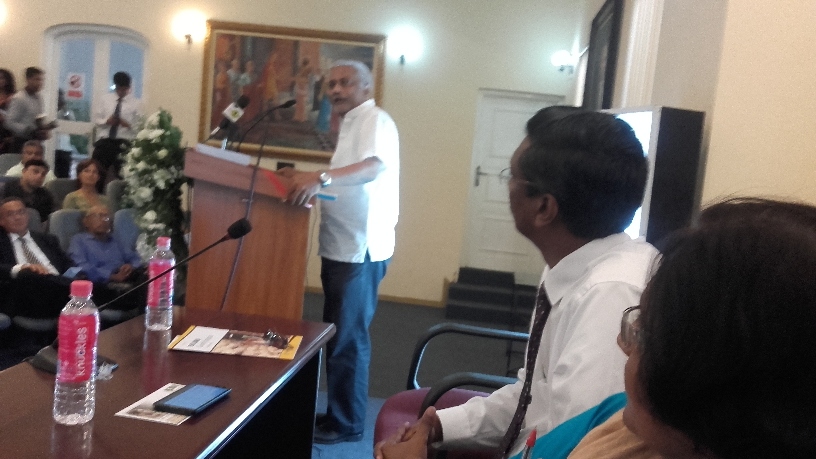
Nalaka Gunawardene speaks at D R Wijewardene memorial event on 26 February 2016 – Photo by Sam de Silva
This week, I was asked by Sri Lanka’s oldest newspaper publishing house — Associated Newspapers of Ceylon Limited, or Lake House — to chair a panel discussion on ‘Survival and Evolution of Newspapers in the Digital Age’.
The event marked the 130th birth anniversary of Lake House founder and Sri Lanka’s first press baron, D R Wijewardene (1886 – 1950). It was held at the Lakshman Kadirgamar Institute in Colombo.
My panel comprised: communications scholar and former telecom regulator Prof Rohan Samarajiva; senior journalist Hana Ibrahim; Sri Lanka Press Institute’s CEO Kumar Lopez, and political scientist Sumith Chaaminda of Verite Research.
We had a lively discussion exploring the challenges faced by print publishers everywhere, and what solutions are relevant, viable and affordable for a majority of small scale publishers without deep pockets.
Here is an excerpt from my opening remarks (full text to be published soon as an op-ed article):
In the absence of independently audited circulation figures, we cannot be certain how well – or poorly – our newspapers are selling today. But indications are not promising. I have been involved in a state of the media study for the past year (due to be released in May 2016), and there is evidence that market survival is a big struggle for many smaller publishers.
More and more Lankan newspapers are being kept alive not to make any profit, but for influence peddling and political purposes. And in at least one case, the co-operatively owned Ravaya, reader donations were actively solicited recently to keep the paper alive.
Worldwide, print journalism’s established business models are crumbling, with decades-old publications closing down or going entirely online (The Independent newspaper in the UK is the latest to do the latter). Advertisers usually follow where the eyeballs are moving.
So what would D R Wijewardene do if he confronted today’s realities of gradually declining print advertising share and readers migrating to online media consumption? How might he respond by going back to his founding goals of political action and social change through the 3 Ps – the Press, Parliament and Platform – as important instruments of political action?
My guess is that he would invest in radio and/or television, with a strong digital integration. He might even find a viable income stream from digital and online publishing without locking up public interest content behind pay-walls.
We can only speculate, of course. Perhaps the more pertinent question to ask is: where are the budding D R Wijewardenes of the 21st Century? What are their start-ups and how are their dreams unfolding? Are they trying to balance reasonable profits with public interest journalism?
In my view, the biggest decider of success or failure – today, as it was a century ago – is not the medium, but the message. To put it more bluntly, it’s credibility, stupid!
Prof Rohan Samarajiva speaks at D R Wijewardene memorial event, 26 Feb 2016
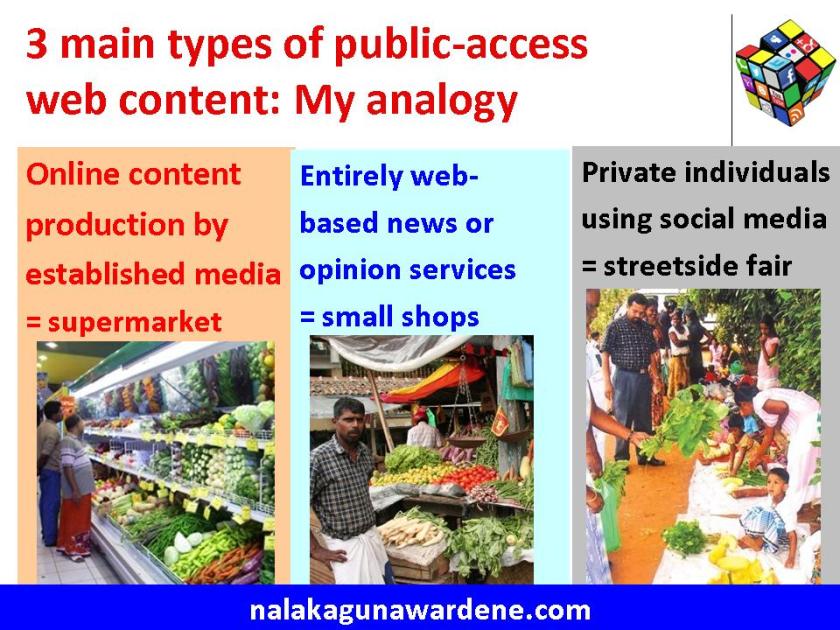
Social media bashing is a popular sport among media critics and others in Sri Lanka. Sadly, some have no clear idea what social media is (and isn’t), thus conflating this category of web content with others like news websitea and gossip websites.
In this week’s Ravaya column (appearing in issue of 21 February 2016), I try to explain this basic categorization along with a brief history of the web and web 2.0. I also reiterate the basic user precautions for social media users where the motto us: user beware!
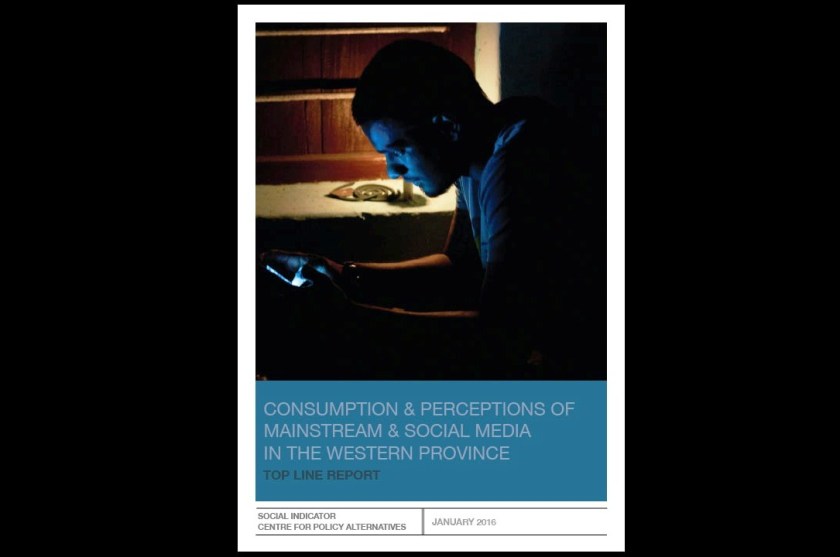
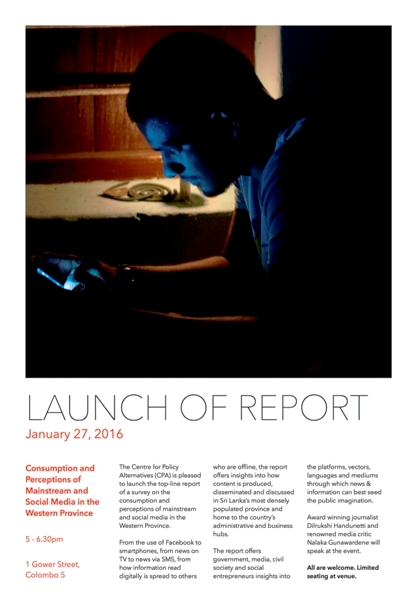
The report draws on a survey of 1,743 randomly selected men and women, interviewed in Sinhala or Tamil language during June-July 2015. They were asked about mobile phone use and web access. The survey was conducted by Social Indicator, CPA’s survey research unit.
As the launch media release noted, “From the use of Facebook to smartphones, from news on TV to news via SMS, from how information read digitally is spread to others who are offline, the report offers insights into how content is produced, disseminated and discussed in Sri Lanka’s most densely populated province and home to the country’s administrative and business hubs.”
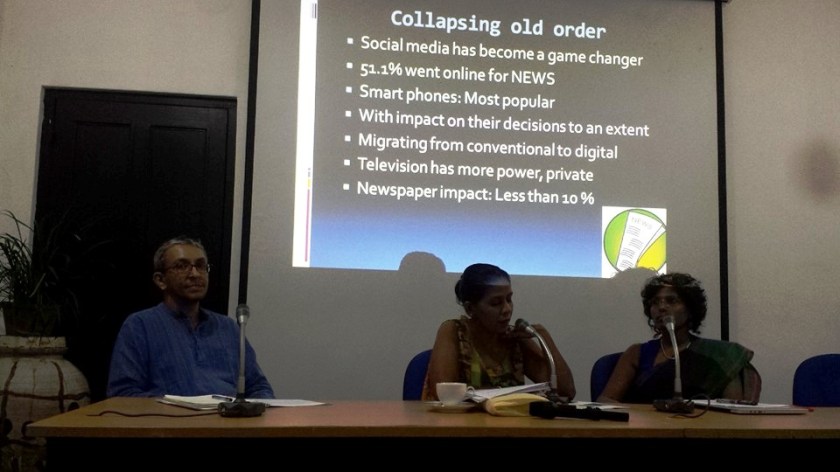
Launch of the top-line report of a survey on the consumption and perceptions of mainstream and social media in the Western Province of Sri Lanka, 27 Jan 2016
On 27 January 2016, the Centre for Policy Alternatives (CPA) launched the top-line report of a survey on the consumption and perceptions of mainstream and social media in the Western Province of Sri Lanka.
I was one of the launch speakers, and my presentation was titled: Information Society is Rising in Sri Lanka: ARE YOU READY?
The report draws on a survey of 1,743 randomly selected men and women, interviewed in Sinhala or Tamil language during June-July 2015. They were asked about mobile phone use and web access. The survey was conducted by Social Indicator, CPA’s survey research unit.
As the launch media release noted, “From the use of Facebook to smartphones, from news on TV to news via SMS, from how information read digitally is spread to others who are offline, the report offers insights into how content is produced, disseminated and discussed in Sri Lanka’s most densely populated province and home to the country’s administrative and business hubs.
It added: “The report offers government, media, civil society and social entrepreneurs insights into the platforms, vectors, languages and mediums through which news & information can best seed the public imagination.”
Dilrukshi Handunnetti (centre) speaks as Nalaka Gunawardene (left) and Iromi Perera listen at the launch on 27 Jan 2016 in Colombo – Photo by Sampath Samarakoon
In my remarks, I said it was vital to draw more insights on what I saw as ‘demand-side’ of media. But at the same time, I noted how a growing number of media consumers are no longer passively receiving, but also critiquing, repackaging and generating related (or new) content on their own.
I applauded the fact that this survey’s findings are shared in the public domain – in fact, Iromi Perera, head of Social Indicator, offered to share the full dataset with any interested person. This contrasts with similar surveys conducted by market research companies that are, by their very nature, not going to be made public.
Why do demand-side insights being available in the public domain matter so much? I cited four key reasons:
The new government is keen on media sector reforms at policy and regulatory levels: these should be based on evidence and sound analysis, not conjecture.
Media, telecom and digital industries are converging: everyone looking for ‘killer apps’ and biz opps (but only some find it).
Media companies are competing for a finite advertising budget: knowing more about media consumption can help improve production and delivery.
Advertisers want the biggest bang for their buck: Where are eyeballs? How to get to them? Independent studies can inform sound decision-making.
On this last point, I noted how Sri Lanka’s total ad spend up to and including 2014 does not show any significant money going into digital advertising. According to Neilsen Sri Lanka, ad-spending is dominated by broadcast TV, followed by radio an print. Experience elsewhere suggests this is going to change – but how soon, and what can guide new digital ad spending? Studies like this can help.
I also highlighted some interesting findings of this new study, such as:
Private TV is most popular source of news, followed by Facebook/web.
Across different age groups, smartphone is the device most used to access web
Online culture of sharing engenders TRUST: peer influence is becoming a key determinant in how fast and widely a given piece of content is consumed
None of this surprises me, and in fact confirms my own observations as a long-standing observer and commentator of the spread of ICTs in Sri Lanka.
Everyone – from government and political parties to civil society groups and corporates – who want to engage the Lankan public must take note of the changing media consumption and creation patterns indicated by this study, I argued.
I identified these big challenges particularly for civil society and others engaged in public interest communication (including mainstream and citizen journalists):
Acknowledge that we live in a media-rich information society (Get used to it!)
Appreciate that younger Lankans consume and process media content markedly differently from their elders and previous generations
Understand these differences (stop living in denial)
Leverage the emerging digital pathways and channels for social advocacy & public interest work
In my view, rising to this challenge is not a CHOICE, but an IMPERATIVE!
I ended reiterating my call for more research on information society issues, and with particular focus on mobile web content access which trend dominates user behaviour in Sri Lanka.
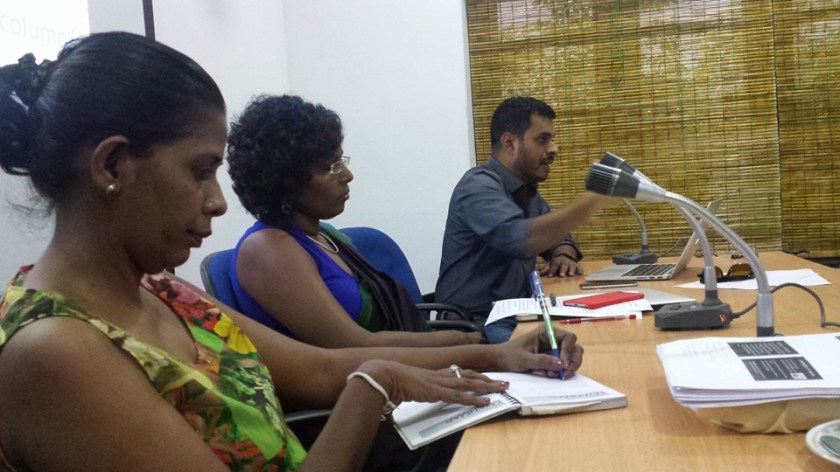
Award winning journalist Dilrukshi Handunnetti, and head of Social Indicator Iromi Perera were my fellow panelists at the launch, which was moderated by the study’s co-author and CPA senior researcher Sanjana Hattotuwa.
L to R – Dilrukshi Handunnetti, Iromi Perera, Sanjana Hattotuwa at CPA report launch, Colombo, 27 Jan 2016
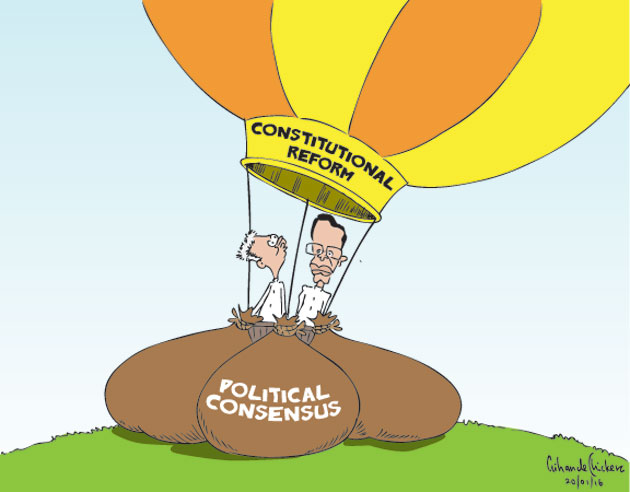
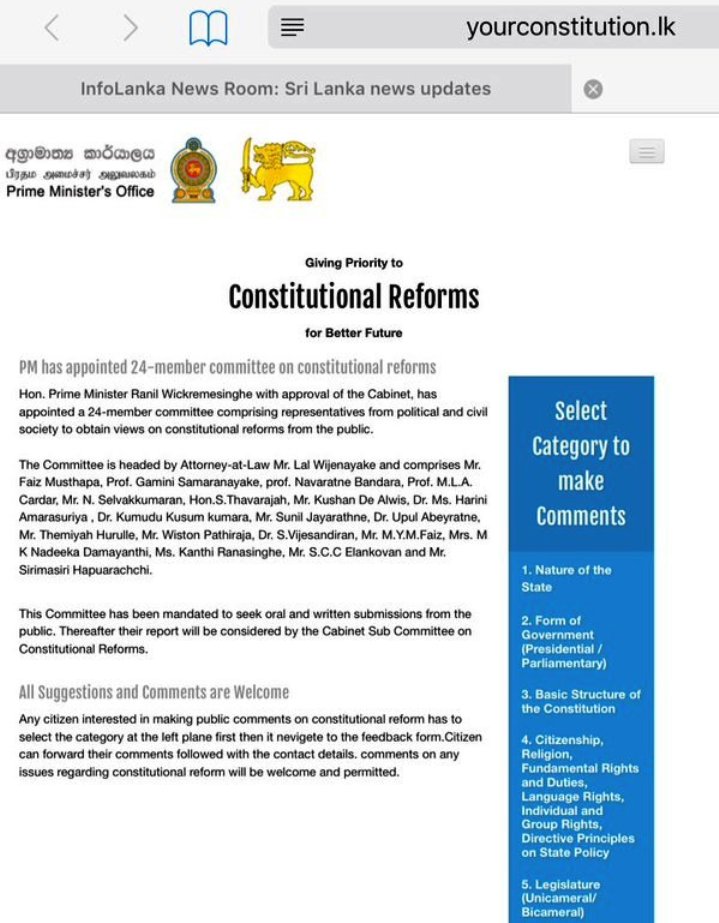
“Sri Lanka wants to make a new Constitution in a radically different way. It is poised to become the first developing country in the world to ‘crowd-source’ ideas for making the highest law of the land.
“That is all well and good – as long as the due process is followed, and that process has intellectual rigour, transparency and integrity. Therein lies the big challenge.”
So opens my latest op-ed essay, just published by Groundviews.org
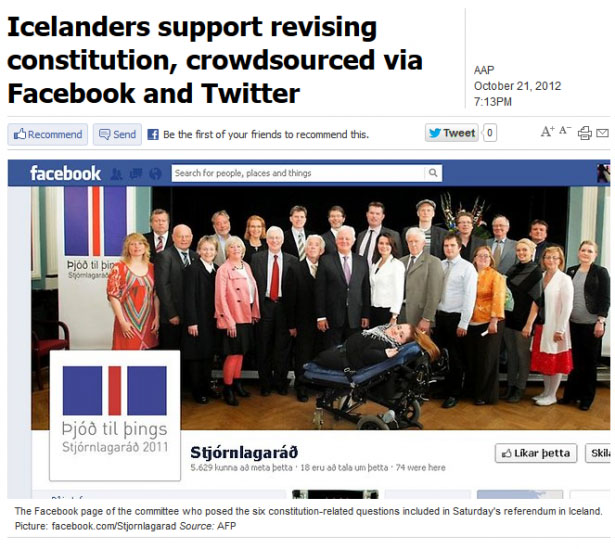
In it, I describe the experience of Iceland which was the world’s first country to ‘crowd-source’ a new Constitution. From 2011 to 2013, the European nation of 330,000 people engaged in an exercise of direct democracy to come up with a modern Constitution to replace the existing one adopted in 1944. That involved many public hearings as well as using social media and other communications platforms to gather public inputs and to ensure public scrutiny.
Facebook was used as part of a public consultation strategy to draft Iceland’s new Constitution in 2011-13
This is the path that Sri Lanka has now chosen: open and participatory Constitution making. To be sure, tropical Sri Lanka is vastly different. Its population of 21 million is 60 times larger than Iceland’s. But the Arctic nation’s generic lessons are well worth studying – both for inspiration and precaution.
I point out: “In doing so, it is important to ensure that public consultative process is not limited to the web and social media. Instead of dominating, technologies should only enable maximum participation.”
“The bottom-line: gathering public proposals is commendable, but not an end by itself. The government needs to adopt a systematic method to study, categorize and distil the essence of what is suggested. And that must happen across English, Sinhala and Tamil languages.”
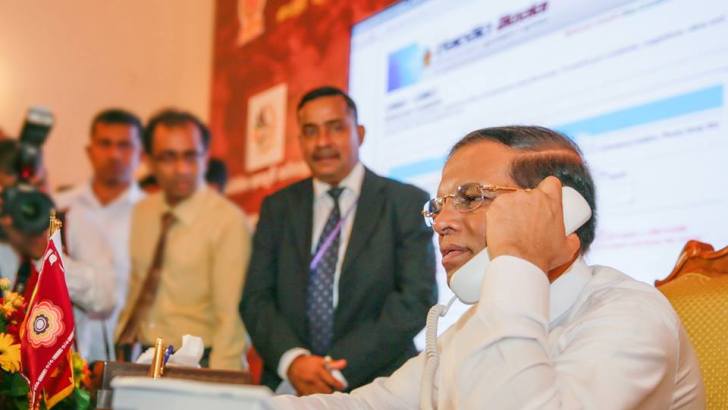
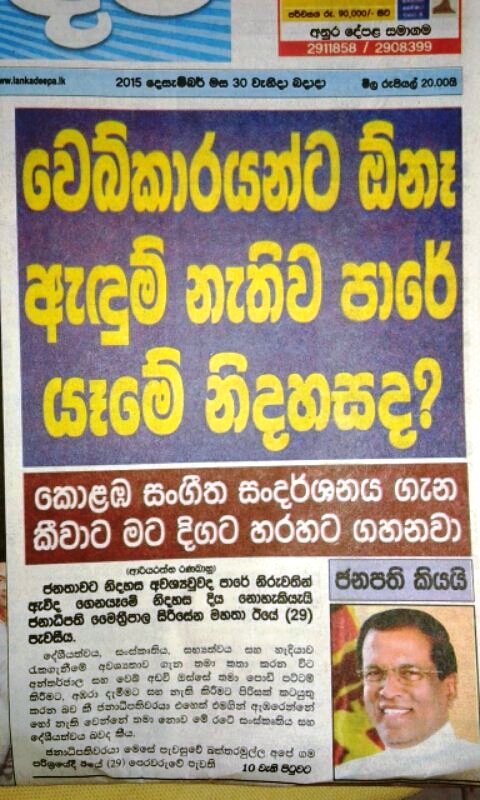
In this week’s Ravaya column (appearing in issue of 17 January 2016), I critique the public communications practices President Maithripala Sirisena of Sri Lanka – and call for better listening and more engagement by the head of state.
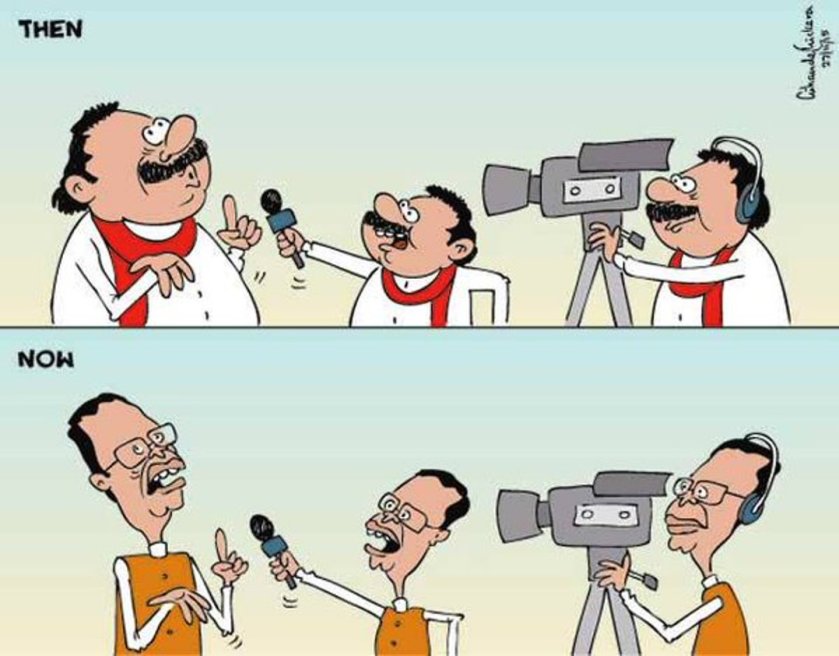
I point out that Sirisena is in danger of overexposure in the mainstream media, which I call the ‘Premadasa Syndrome’ (as this bad practice was started by President R Premadasa who was in office from 1988 to May 1993). I argue that citizens don’t need to be force-fed a daily dose of presidential activities on prime time news or in the next day’s newspapers. If public documentation is needed, use the official website.
Like other politicians in Sri Lanka, Sirisena uses key social media platforms like Facebook and Twitter to simply disseminate his speeches, messages and photos. But his official website has no space for citizens to comment. That is old school broadcasting, not engaging.
This apparent aloofness, and the fact that he has not done a single Twitter/Facebook Q&A session before or after the election, detracts from his image as a consultative political leader.
On the whole, I would far prefer to see a more engaged (yet far less preachy!) presidency. It would be great to have our First Citizen using mainstream media as well as new media platforms to have regular conversations with the rest of us citizens on matters of public interest. A growing number of modern democratic rulers prefer informal citizen engagement without protocol or pomposity. President Sirisena is not yet among them.







 Open Minds!