Here are my wishes for 2016, shared on Facebook and Twitter as home-made web memes.
I wish for a truly OPEN SOCIETY in Sri Lanka in 2016
where good ideas flow freely,
public debate is informed, wide-ranging and courteous
and there are no Sacred Cows!
Let’s make it so! The power is with each and every one of us.
On New Year’s eve, I shared this timeless quote of Mahatma Gandhi, which I felt was relevant for raging debates in Sri Lanka on what constitutes ‘our culture’ and how best to preserve it.
Mahatma Gandhi on the value of open, inclusive and multicultural societies
And here is how I rendered it into Sinhala language:
“මගේනිවසවටාසැමඅතින්පවුරුබැඳ,
එහිකවුළුසියල්ලවසාදමන්නටමාකොහෙත්මකැමතිනැහැ.
ලොවනොයෙකුත්සංස්කෘතීන්ගේආභාෂප්රවාහයන්
මනිවසේනිදහසේසංසරණයවීමමටඅවශ්යයි.
එහෙත්ඒකිසිවකින්මාපෙරළාදමන්නටනම්මාඉඩදෙන්නේනැහැ.”
Mahatma Gandhi on the value of open, inclusive and multicultural societies – translated by Nalaka Gunawardene
Managing disaster early warnings is both a science and an art. When done well, it literally saves lives — but only if the word quickly reaches all those at risk, and they know how to react.
We have come a long way since the devastating Boxing Day tsunami of December 2004 caught Indian Ocean countries by surprise. Many of the over 230,000 people killed that day could have been saved by timely coastal evacuations.
Early warnings work best when adequate technological capability is combined with streamlined decision-making, multiple dissemination systems and well prepared communities.
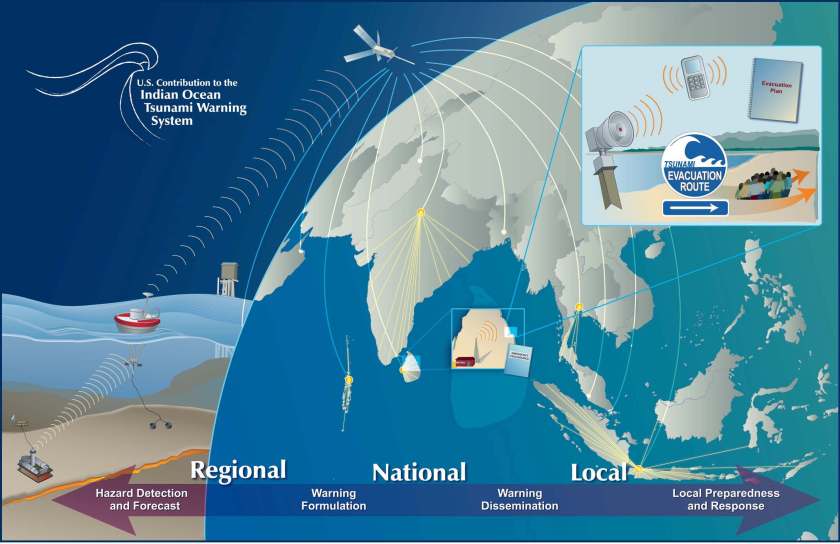
Rapid onset disasters — such as tsunamis and flash floods — allow only a tight window from detection to impact, typically 15 to 90 minutes. When it comes to tsunamis, it is a real race against time. Effective tsunami warnings require very rapid evaluation of undersea earthquakes and resulting sea level changes, followed by equally rapid dissemination of that assessment.
Following the 2004 disaster, the Indian Ocean Tsunami Warning and Mitigation System (IOTWS) was set up in 2005 under UNESCO’s Intergovernmental Oceanographic Commission. It is a regional collaboration that brings together three regional tsunami service providers – scientific facilities operated by the governments of Australia, India and Indonesia — and over a dozen national tsunami centres. The latter are state agencies designated by governments to handle in-country warnings and other mitigation activities.
Sri Lanka’s new government has committed to drafting a new Constitution to replace the current one adopted in 1978.
According to the Cabinet spokesperson, “for the first time [in Sri Lanka], a Constitution is going to be framed with the consultation of people.” Though the country has adopted Constitutions twice after independence — in 1972 and 1978 — public participation was negligible on both occasions.
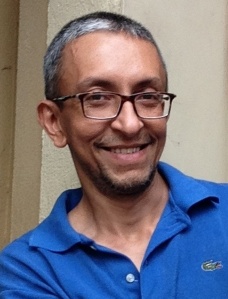
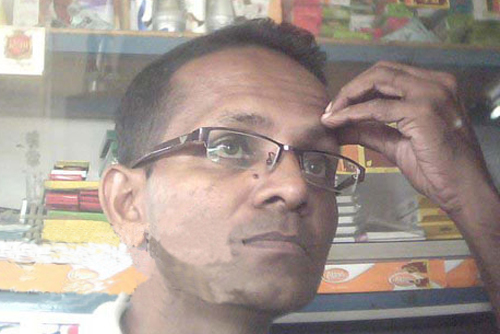
Nalaka Gunawardene in a serious pose
This is well and good, but it is still not clear what consultation mechanisms would be used, and how genuinely consultative the process is going to be. Our politicians and officials lack imagination and courage to try out new methods of public participation in governance. For example, they barely use the potential of new information and communications technologies (ICTs).
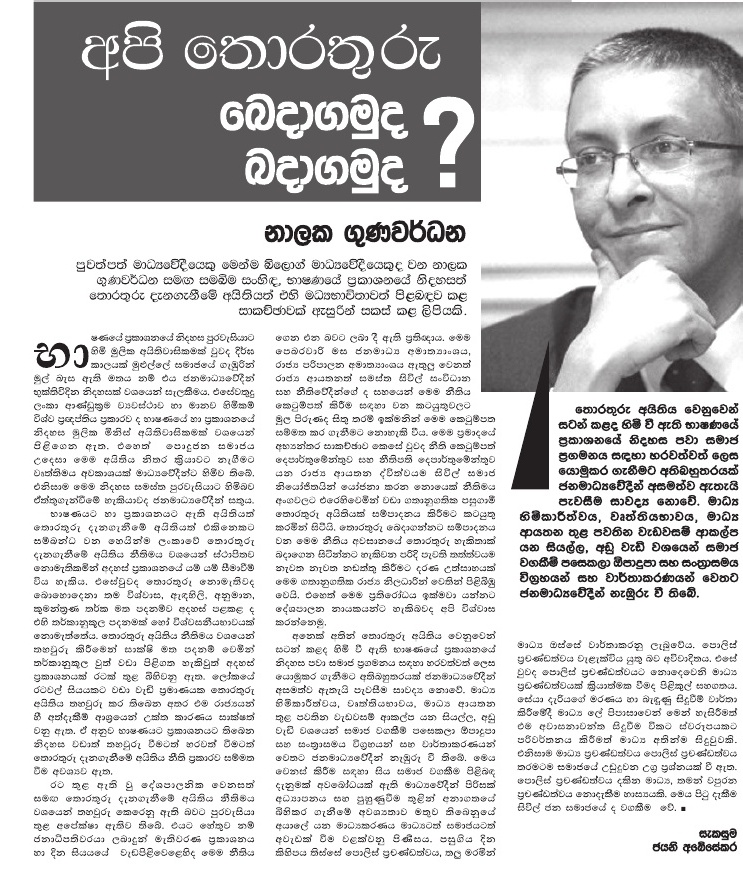
In an interview with Prasad Nirosha Bandara of Ravaya independent broadsheet newspaper, published on 20 December 2015, I make an earnest case for the new Constitution drafting process to be more open, more participatory and more consultative by using all available methods – tried and tested old-fashioned ones, as well as new potential opened up by the spread of the web, mobile phones and social media.
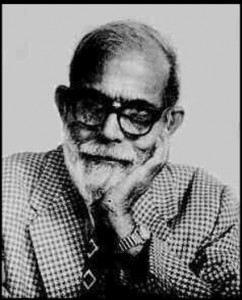
I also draw attention to a historically important memorandum was sent by the Ceylon Rationalist Association on 25 September 1970 to Dr Colvin R De Silva, then Minister of Constitutional Affairs, who was heading the group tasked with drafting what eventually became the country’s first Republican Constitution of 1972. Written by the Association’s Founder President Dr Abraham Thomas Kovoor, it captured the broad, idealistic vision that members of that voluntary group of free thinkers had advocated since its inception in 1960. Among other principles, it advocated – in point 6 – that “the best protection for freedom of conscience is a Secular State”.
I located the memo two years ago and published it online on Groundviews.org so that it becomes widely available. In this interview, I urge the new Constitution drafters of 2016 not to make the same mistakes that Colvin R de Silva did in 1972 by ignoring these ideas of public intellectuals.
Samabima monthly magazine, published by Rights Now human rights advocacy group in Sri Lanka, has carried an interview with me in its December 2015 issue.
In this, I discuss the societal implications of a Right to Information law, which is to be adopted by Sri Lanka’s Parliament in early 2016. I reiterate that we need to see the new law as only the beginning of a long journey. Proper implementation will require adequate political will, administrative support and sufficient public funds. We would also need sustained monitoring by civil society groups and media to guard against the whole process becoming mired in too much red tape.
I also touch on serious inadequacies in our mainstream media that often fail to serve the public interest because of incompetence, arrogance or indifference. In this interview, I coin a phrase ‘Mass Media Brutality’ meted out to victims of crime or discrimination in Sri Lanka — when the media pack descends on an individual or family and unethical, sensational coverage follows.
Nalaka Gunawardene interview in Samabima magazine, Dec 2015 issue
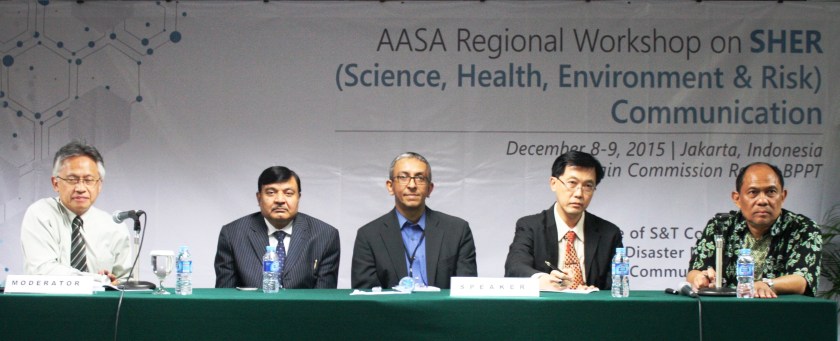
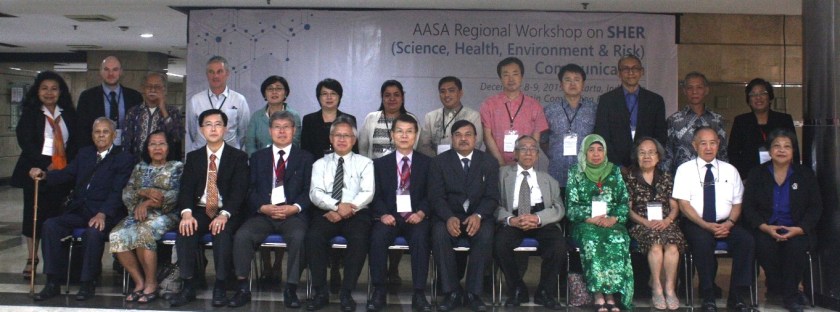
Participants of SHER (Science, Health, Environment & Risk) Communication – Role of S&T Communication in Disaster Management and Community Preparedness held in Jakarta, Indonesia, on 8-9 Dec 2015
It was organised by the Association of Academies and Societies of Sciences in Asia (AASSA) in collaboration with the Indonesian Academy of Sciences (AIPI), Korean Academy of Science and Technology (KAST) and the Agency for Assessment and Application of Technology (BPPT) in Indonesia.
The workshop brought together around 25 participants, most of them scientists researching or engaged in publication communication of science, technology and health related topics. I was one of two journalists in that gathering, having been nominated by the National Academy of Sciences of Sri Lanka (NAASL).
I drew on over 25 years of journalistic and science communication experience, during which time I have worked with disaster managers and researchers, and also co-edited a book, Communicating Disasters: An Asian Regional Handbook (2007).
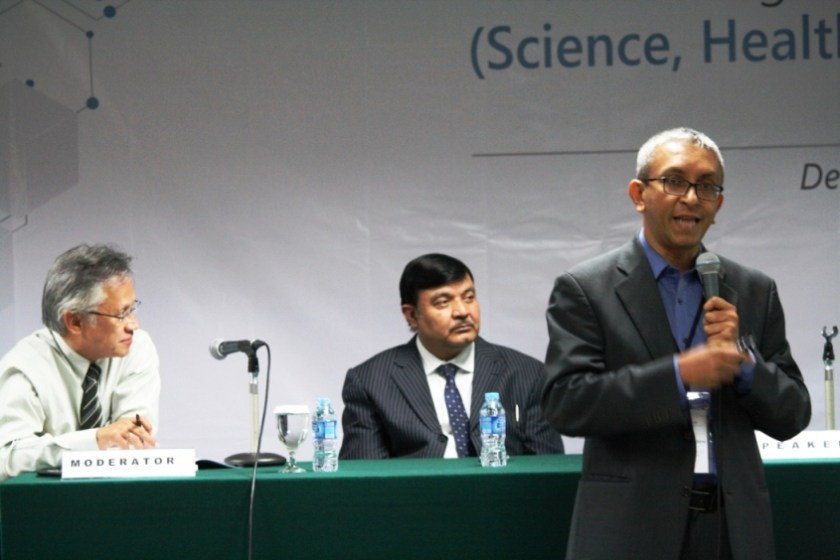
Nalaka Gunawardene speaking at Science, Health, Environment & Risk Communication Asian regional workshop held in Jakarta, Indonesia, 8-9 Dec 2015
The challenge in disaster early warnings is to make the best possible decisions quickly using imperfect information. With lives and livelihoods at stake, there is much pressure to get it right. But one can’t be timely and perfectly accurate at the same time.
We have come a long way since the devastating Boxing Day tsunami of December 2004 caught Indian Ocean countries by surprise. Many of the over 230,000 people killed that day could have been saved by timely coastal evacuations.
The good news is that advances in science and communications technology, greater international cooperation, and revamped national systems have vastly improved tsunami early warnings during the past decade. However, some critical gaps and challenges remain.
The Indian Ocean Tsunami Warning and Mitigation System (IOTWS) was set up in 2005 under UNESCO’s Intergovernmental Oceanographic Commission. Over USD 400 million has been invested in state of the art equipment for rapid detection and assessment. However, the system’s overall effectiveness is limited by poor local infrastructure and lack of preparedness. Some countries also lack efficient decision-making for issuing national level warnings based on regionally provided rapid assessments.
Warnings must reach communities at risk early enough for action. False warnings can cause major economic losses and reduce compliance with future evacuation orders. Only governments can balance these factors. It is important that there be clearer protocols within governments to consider the best available information and make the necessary decisions quickly.
Now, the proliferation of information and communication technologies (ICTs) is making this delicate balance even more difficult. To remain effective in the always-connected and chattering Global Village, disaster managers have to rethink their engagement strategies.
Controlled release of information is no longer an option for governments. In the age of 24/7 news channels and social media, many people will learn of breaking disasters independently of official sources. Some social media users will also express their views instantly – and not always accurately.
How can this multiplicity of information sources and peddlers be harnessed in the best public interest? What are the policy options for governments, and responsibilities for technical experts? How to nurture public trust, the ‘lubricant’ that helps move the wheels of law and order – as well as public safety – in the right direction?
As a case study, I looked at what happened on 11 April 2012, when an 8.6-magnitude quake occurred beneath the ocean floor southwest of Banda Aceh, Indonesia. Several Asian countries issued quick warnings and some also ordered coastal evacuations. For example, Thai authorities shut down the Phuket International Airport, while Chennai port in southern India was closed for a few hours. In Sri Lanka, panic and chaos ensued.
In the end, the quake did not generate a tsunami (not all such quakes do) – but it highlighted weaknesses in the covering the ‘last mile’ in disseminating early warnings clearly and efficiently.
Speakers on ‘ICT Applications for Disaster Prevention and Treatment’ in Jakarta, Indonesia, 8-9 Dec 2015
I concluded: Unless governments communicate in a timely and authoritative manner during crises, that vacuum will be filled by multiple voices. Some of these may be speculative, or mischievously false, causing confusion and panic.
After many years of advocacy by civil society groups and journalists, Sri Lanka is set to soon adopt a law guaranteeing citizens’ Right to Information (RTI, also known as freedom of information laws in some countries). With that, we will join over 100 other countries that have introduced such progressive laws.
The first step is already taken. The 19th Amendment to the Constitution, passed in Parliament in April 2015, made the right to information a fundamental right. The Right to Information Act is meant to institutionalize the arrangement – i.e. put in place the administrative arrangement where a citizen can seek and receive public information.
RTI signifies unleashing a new potential, and a major change in status quo. First, we need to shake off a long historical legacy of governments not being open or accountable to citizens.
In this week’s Ravaya column, (appearing in issue of 22 Nov 2015), I explore how RTI can gradually lead to open government. I also introduce the 9 key principles of RTI.
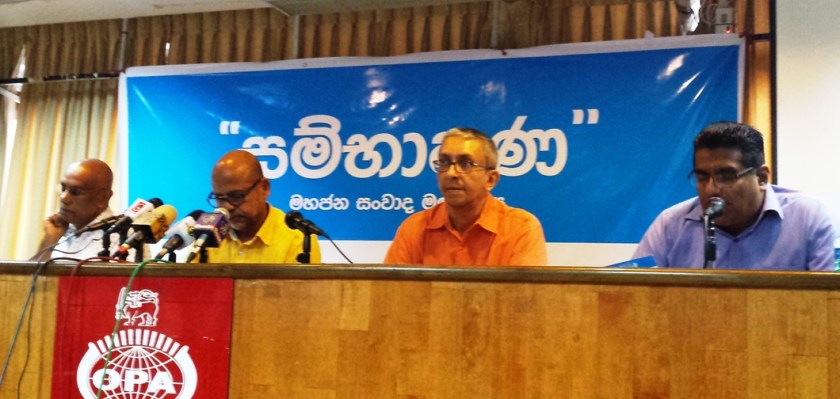
L to R – Wijayananda Jayaweera, Gamini Viyangoda, Nalaka Gunawardene, Shan Wijetunge. At Right to Information public forum on 17 Nov 2015 in Colombo. Photo by Sampath Samarakoon
“The key to successful foreign policy in today’s world is networked diplomacy. Managing international crises requires mobilizing international networks of public and private actors,” says Anne-Marie Slaughter, an international lawyer and political scientist who is a former Princeton academic and ex-Director of Policy Planning at the US State Department under U.S. Secretary of StateHillary Clinton.
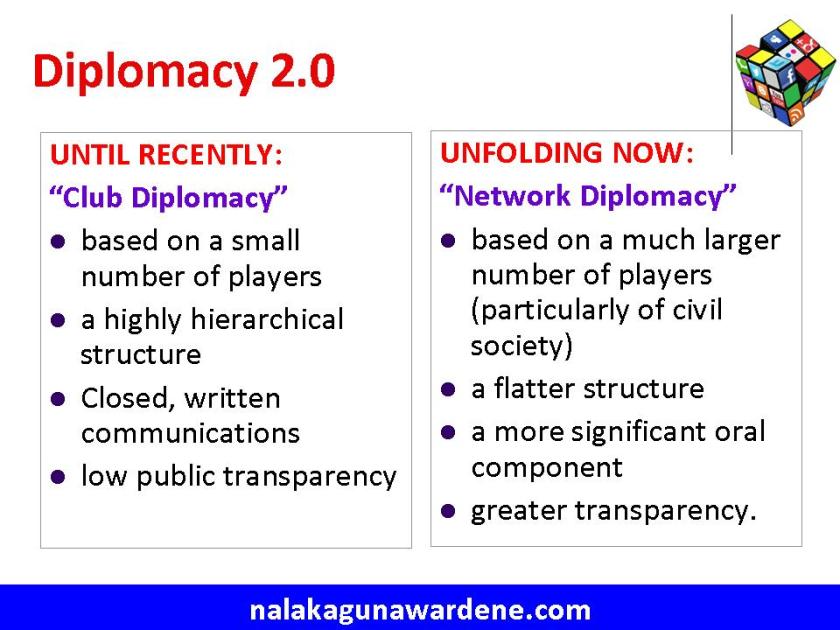
Diplomacy then…and now
The nature of this ‘networked diplomacy’ is still being documented and studied. Some governments are not even convinced of its value, but meanwhile, others are encouraging it perhaps as a way of ‘exploiting the inevitable’.
I am neither diplomat nor scholar, but sometimes dabble as a writer and researcher on how new media – including social media – impact our society, economy and governance. So I welcomed an opportunity to engage a group of mid-career professionals on the topic Diplomacy & Foreign Relations in the Social Media Age.
I made this presentation on 14 November 2015 as part of the Certificate Course in Creative Diplomacy, conducted by the Regional Centre for Strategic Studies (RCSS) in Colombo, Sri Lanka – a think tank on international relations.
In this, I introduce and briefly explore the new kind of real-time, public diplomacy that is being ushered in with the spreading of social media. I show how diplomats and other government officials can no longer ignore this mass medium, but at the same time their traditional ways of communications need to be reoriented to suit the realities of this new information ecosystem that is informal, irreverent and fleeting.
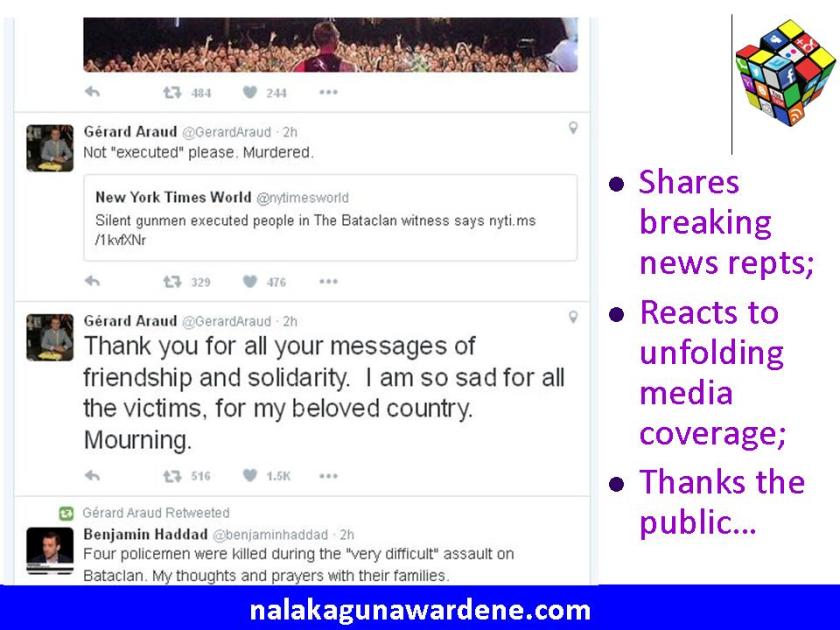
As I spoke on the day after the ISIS terrorist attacks in France, I used (among others) the latest examples of how Gérard Araud, France’s Ambassador to the US, tweeted live as multiple terror attacks unfolded in Paris on Nov 13 night.
Real time tweeting by French Ambassador to the US while Paris attack was underway on 13 Nov 2015…More tweets from Ambassador Gérard Araud on 13 Nov 2015…
To see the bigger picture, I’ve distilled some wisdom of key researchers in this area including: Anne-Marie Slaughter, former Princeton Academic and ex-Director of Policy Planning, US State Department; Philip Seib, Professor of Journalism and Public Diplomacy, University of Southern California; and Ramesh Thakur, Professor, Crawford School of Public Policy, Australian National University (ANU).
I also used the case study of Indian Ministry of External Affairs using social media for crisis management when 18,000 Indian nationals were stranded in Libya in Feb – March 2011 who had to be evacuated urgently.
As Ramesh Thakur has written, it is “a useful case study in the utility of social media tools in connecting the government with people who are normally well outside their range, but who can be a useful channel to send out time-urgent critical information and to receive equally valuable information from sources on the ground.”
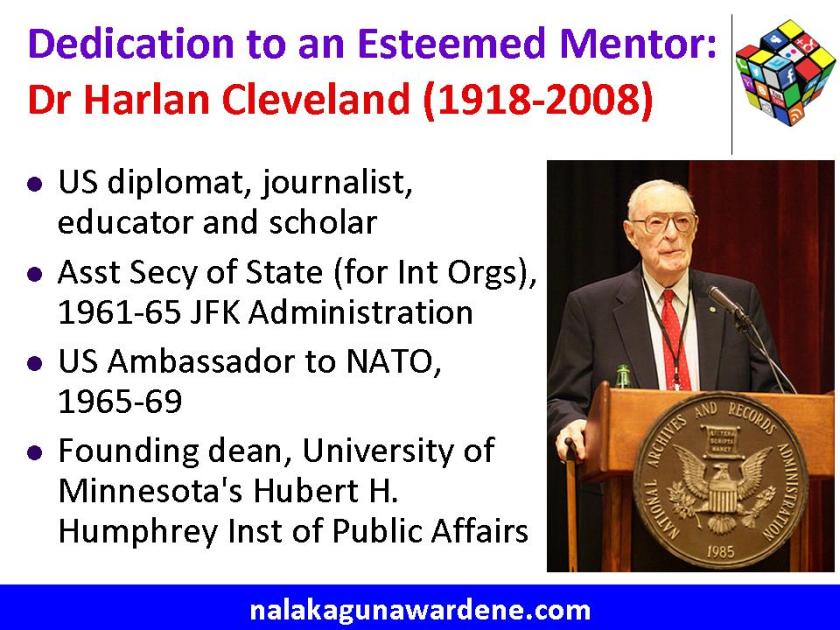
Dedication to a remarkable diplomat-scholar who spent a few days in the Summer of 1995 mentoring a group of youth leaders from around the world, including myself, who were brought to the UN Headquarters in New York…
I dedicated this presentation to a diplomat and scholar whose mentoring I was privileged to receive 20 years ago: Dr Harlan Cleveland (1918 – 2008) who served as US Ambassador to NATO, 1965–1969 (Johnson Administration), and earlier as US Assistant Secretary of State for International Organization Affairs, 1961–1965 (Kennedy Administration).
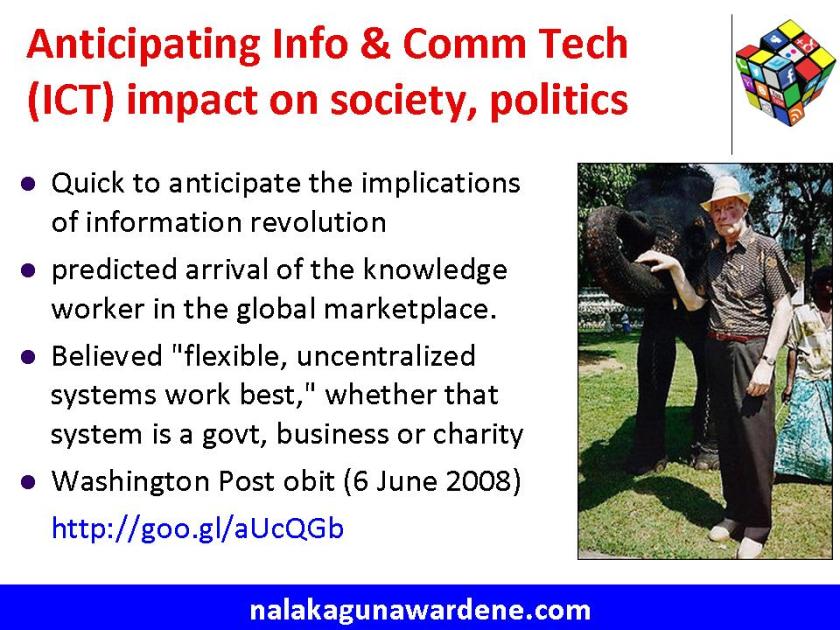
Harlan Cleveland, among the first ‘philosophers’ of the Information Age
According to RCSS, their Course in Creative Diplomacy “provides theoretical and practical insights into the various facets of Creative Diplomacy. The course will expand participants’ understanding of the concept of diplomacy and expose them to new skills and alternative perspectives to engage with stakeholders. It is further envisioned that this post-disciplinary approach, which will be followed by the course, will explore a whole host of new mediums through which mediation, cooperation and negotiation can be carried out.”
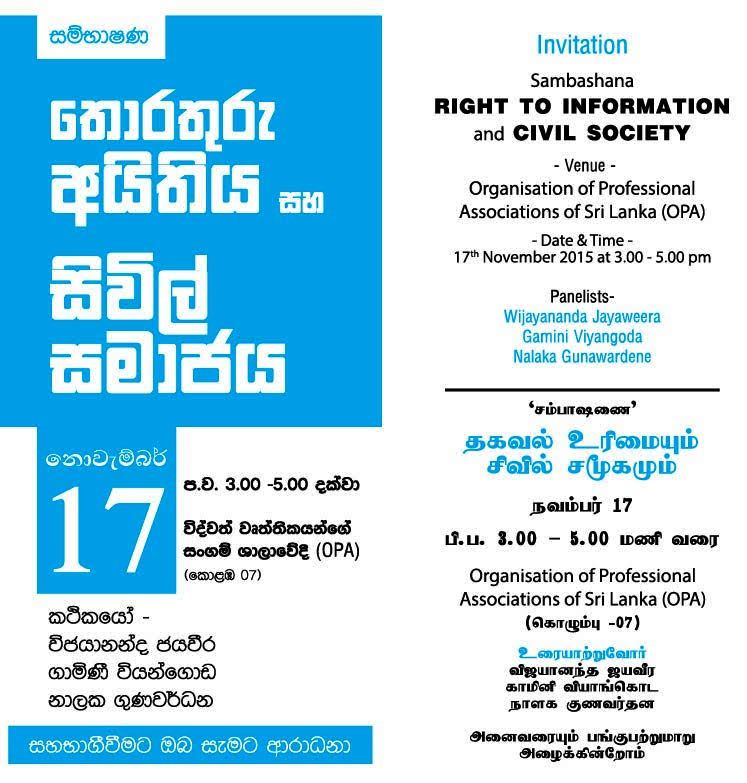
Transparency International Sri Lanka (TISL) held a Public Forum on the Right to Information in Colombo on 17 November 2015. I was one of three panelists, along with Wijayananda Jayaweera and Gamini Viyangoda. The panel was moderated by TISL’s Shan Wijetunge.
RTI Public Forum on 17 Nov 2015
The meeting was conducted in Sinhala. After the event, a journalist from an English language newspaper asked for a summary of my remarks in English, so I wrote this up.
L to R – Wijayananda Jayaweera, Gamini Viyangoda, Nalaka Gunawardene, Shan Wijetunge. At Right to Information public forum on 17 Nov 2015 in Colombo. Photo by Sampath Samarakoon
Summary of remarks made at Right to Information Public Forum held in Colombo on 17 Nov 2015
By Nalaka Gunawardene
Science writer, columnist and new media researcher
After many years of advocacy by civil society groups and journalists, Sri Lanka is set to soon adopt a law guaranteeing citizens’ Right to Information (RTI, also known as freedom of information laws in some countries). With that, we will join over 100 other countries that have introduced such progressive laws.
The first step is already taken. The 19th Amendment to the Constitution, passed in Parliament in April 2015, made the right to information a fundamental right.
The Right to Information Act is meant to institutionalize the arrangement – i.e. put in place the administrative arrangement where a citizen can seek and receive public information.
Some have been critical of the current draft of the RTI Bill as it falls short of the ideal. But in my view, adopting even an imperfect RTI law would be progress.
But we need to see the law’s adoption as only the beginning of a long journey. Proper implementation will require adequate political will, administrative support and sufficient public funds. We would also need sustained monitoring by civil society groups and media to guard against the whole process becoming mired in too much red tape.
RTI signifies unleashing a new potential, and a major change in status quo. First, we need to shake off a long historical legacy of governments not being open or accountable to citizens.
For over 2,000 years of monarchy, over 400 years of colonial rule and 67 years of self-rule since independence, all our governments have restricted public information – even mundane ones unrelated to any security or sensitive issues.
Thus, the ‘default setting’ in most government agencies seems to be to deny and restrict information. When this finally changes, both public servants and citizens will need to adjust.
Information custodians can no longer release selectively, or demand petty bribes for doing so. Citizens, on their part, must find purpose and focus in information they can demand and receive. RTI is not a mere political slogan.
To draw an analogy from water management, opening sluice gates of a water reservoir can benefit only if the downstream systems are in place and the users are ready. With both water and information, recipients need to know how to make the best use of what comes through.
As long-standing champions of RTI, Lankan media and civil society must now switch roles. While benefiting from RTI themselves, they can nurture the newly promised openness in every sphere of public life. They can show, inspire and equip other citizens how best to make use of it.
However, RTI is not just a piece of law or changing how governments share public information. At its most basic, RTI is a collective state of mind. With its adoption, a society can start moving along a more open, informed and inquisitive pathway.
Better management of public information – which covers its proper gathering, storing, analysing and disseminating – should come into sharper focus with RTI.
In a related development, Sri Lanka has just joined an international, multilateral initiative called the Open Government Partnership (OGP). It is the first country in South Asia to do so.
OGP is a global effort “to make governments better”. It aims to secure firm commitments from governments to promote transparency, empower citizens, fight corruption, and harness new technologies to strengthen governance. OGP was launched in September 2011, and since then, the partnership has grown to 69 countries representing over a third of the world’s population.
To join OGP, a country must meet minimum eligibility criteria. These cover the timely publication of essential budget documents forms the basic building blocks of budget accountability; RTI guaranteed by law; rules that require public disclosure of income and assets for elected and senior public officials; and openness to citizen participation and engagement in policymaking and governance, including basic protections for civil liberties.
With its impending RTI law, Sri Lanka became eligible to join OGP. Its membership was confirmed at the recent OGP Conference held in Mexico City in late October 2015, where Sri Lanka endorsed the Open Government Declaration committing “to foster a global culture of open government that empowers and delivers for citizens, and advances the ideals of open and participatory 21st century government.”
In his speech in Mexico City, Minister Wijeyadasa Rajapakshe said: “Our people have proven that citizens will and should be at the heart of the destiny of any country. Importantly, the events this year reaffirm the resilience of our democracy and make it apparent that it is the people that demand an ‘open government’ for my country.”
Now the Yahapalana Government must walk this lofty talk.
OGP member countries are required to prepare a National Action Plan (NAP) which should be done collaboratively by the government and civil society. Such plans should cover a two-year period and consist of a set of commitments that advance transparency, accountability, participation and/or technological innovation.
The bottomline with Right to Information is this. RTI is not simply a legal or technocratic solution. It is not a quick fix to all problems that affect our society. But it heralds a new way of thinking – a paradigm shift, if you like – that would make our government more open, and our society more focused on using information and data to make our lives better.
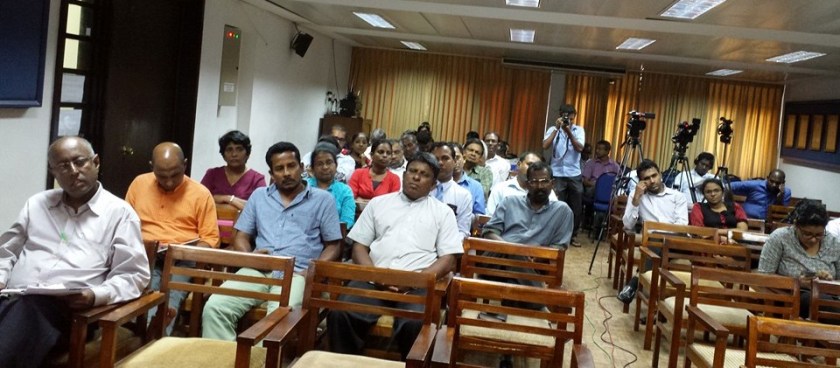
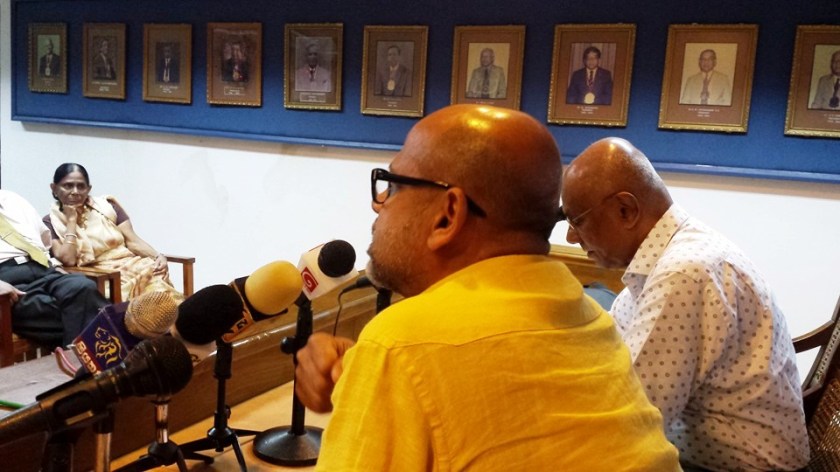
Part of the audience at RTI Public Forum on 17 Nov 2015 in ColomboWriter and activist Gamini Viyangoda speaks at RTI Public Forum on 17 Nov 2015
Today, I gave the opening speech at an introductory seminar on ‘open data’ held at the Sri Lanka Press Institute, Colombo, on 15 Oct 2015.
Organised by InterNews and Transparency International Sri Lanka, the seminar explored the concepts of ‘open data’ and ‘big data’ and discussed that role civil society, media and technologists can play in advocating to government to open up its data, enabling a culture of transparency and open government.
An Open Dialogue on Open Data – 15 Oct 2015 Coloombo – L to R – Sriganesh Lokanathan, Nalaka Gunawardene, Sanjana Hattotuwa [Photo by Sam de Silva]My premise was that while the proliferation of digital tools and growth of web-based data storage (the cloud) opens up new possibilities for information generation and sharing, South Asian societies need to tackle institutional and cultural factors before democratised and digital data can really transform governance and development. Our countries must adopt more inclusive policies and practices for public sharing of scientific and other public data.
This resonates with a call by the United Nations for a ‘data revolution for development’. I cited the UN Secretary-General’s Independent Expert Advisory Group on a Data Revolution for Sustainable Development (IEAG) highlighted this in a report titled A World That Counts: Mobilising The Data Revolution for Sustainable Development (Nov 2014).
A World that Counts…
I also referred to the Sustainable Development Goals (SDGs) that were adopted by member states of the UN at a heads of state level summit in New York on 25-27 September 2015. Underpinning all 17 SDGs is an explicit recognition of the value of data for development — to better inform decisions, and to better monitor progress.
Sri Lanka’s President Maithripala Sirisena addressed the Summit, and officially committed Sri Lanka to the SDGs. I argue that implicit in that commitment is a recognition of data for development and open data policies. We now need to ask our government to introduce a government-wide policy on data collection, storage and sharing. In short, it must open up!
This was my open call to the President to open up:
Open Your Govt’s Data, Mr President! Hope you don’t give us HAL’s famous answer…
Sri Lanka has taken tentative steps towards open data. In 2013, the Open Data initiative of Government started making some official datasets freely available online. It focuses on machine-readable (well-structured and open) datasets.
I quoted from my own recent op-ed published in Daily Mirror broadsheet newspaper:
After many years of advocacy by civil society, Sri Lanka will soon adopt a law that guarantees citizens’ Right to Information (RTI). It has recently been added to the Constitution as a fundamental right.
Passing the RTI law is only a beginning — institutionalising it requires much effort, considerable funds, and continued vigilance on civil society’s part.
RTI is Coming: Are We Ready? My question to Lankan civil society and media
As champions of RTI, media and civil society must now switch roles, I said. While benefiting from RTI themselves, they can nurture the newly promised openness in every sphere, showing citizens how best to make use of it. Reorienting our public institutions to a new culture of openness and information sharing will be an essential step.
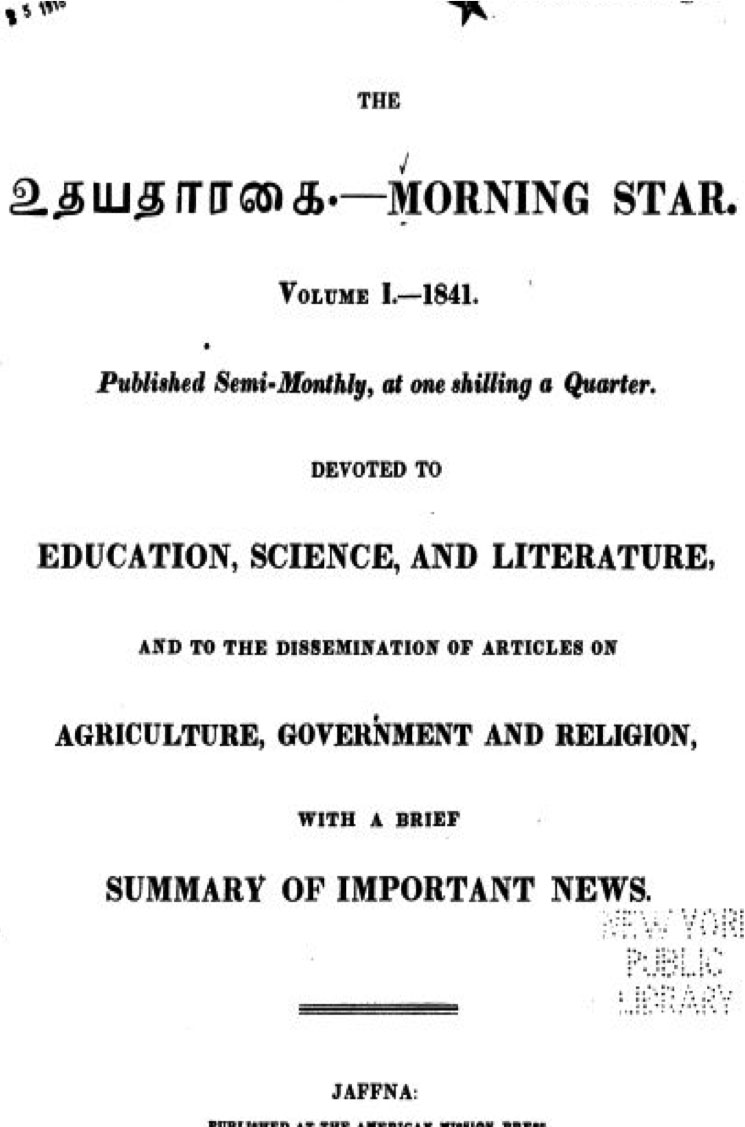
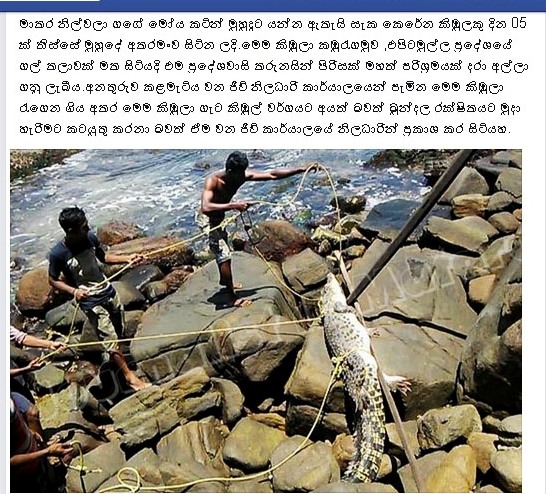
I looked at the larger news media industry in Sri Lanka to which provincial journalists supply ground level news, images and video materials. These are used on a discretionary basis by media companies mostly based in the capital Colombo (and some based in the northern provincial capital of Jaffna). Suppliers have no control over whether or how their material is processed. They work without employment benefits, are poorly paid, and also exposed to various pressures and coercion.
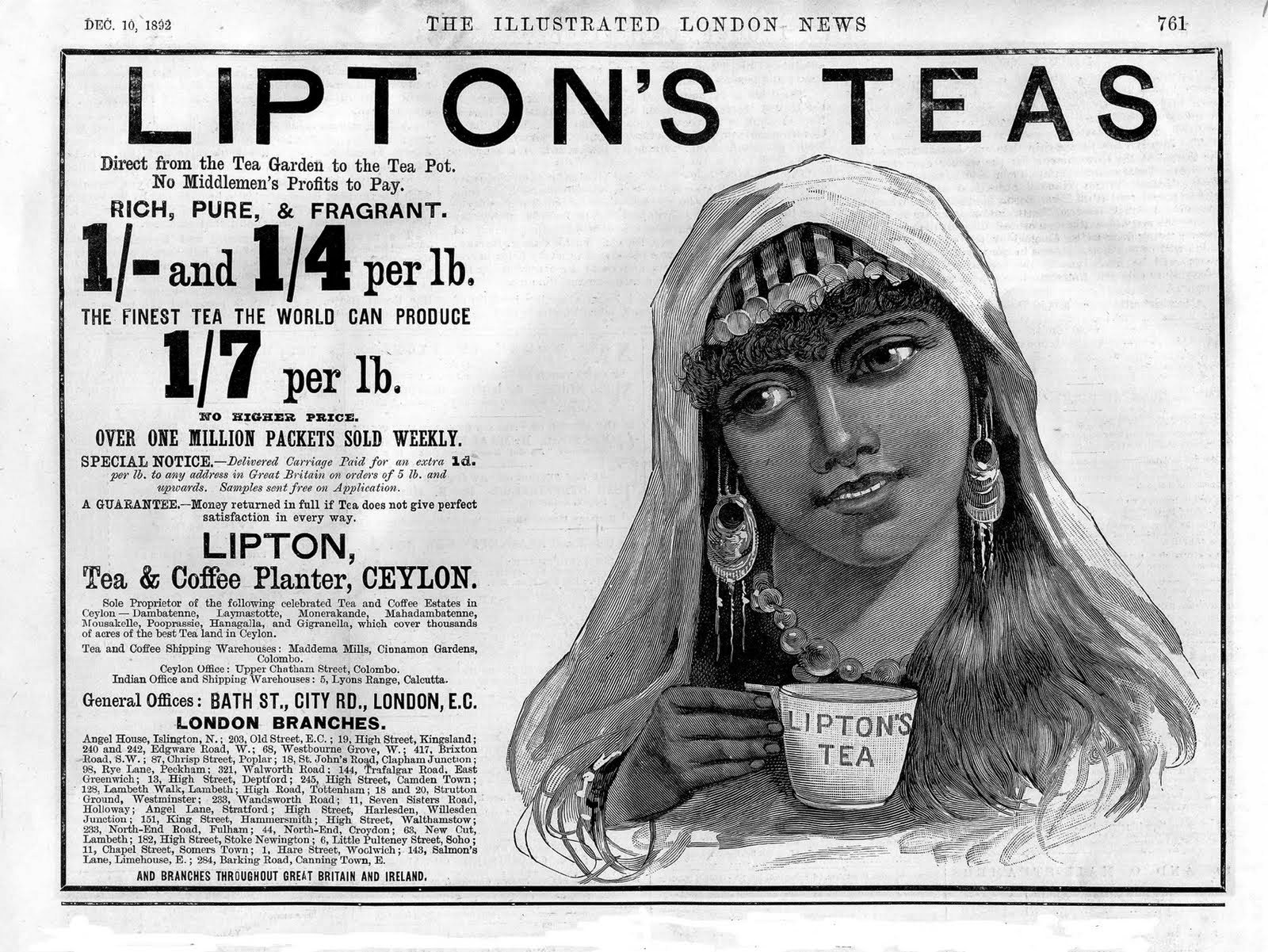
I drew an analogy with the nearly 150-year old Ceylon Tea industry, which in 2014 earned USD 1.67 billion through exports. For much of its history, Ceylon tea producers were supplying high quality tea leaves in bulk form to London based tea distributors and marketers like Lipton. Then, in the 1970s, a former tea taster called Merrill J Fernando established Dilmah brand – the first producer owned tea brand that did product innovation at source, and entered direct retail.
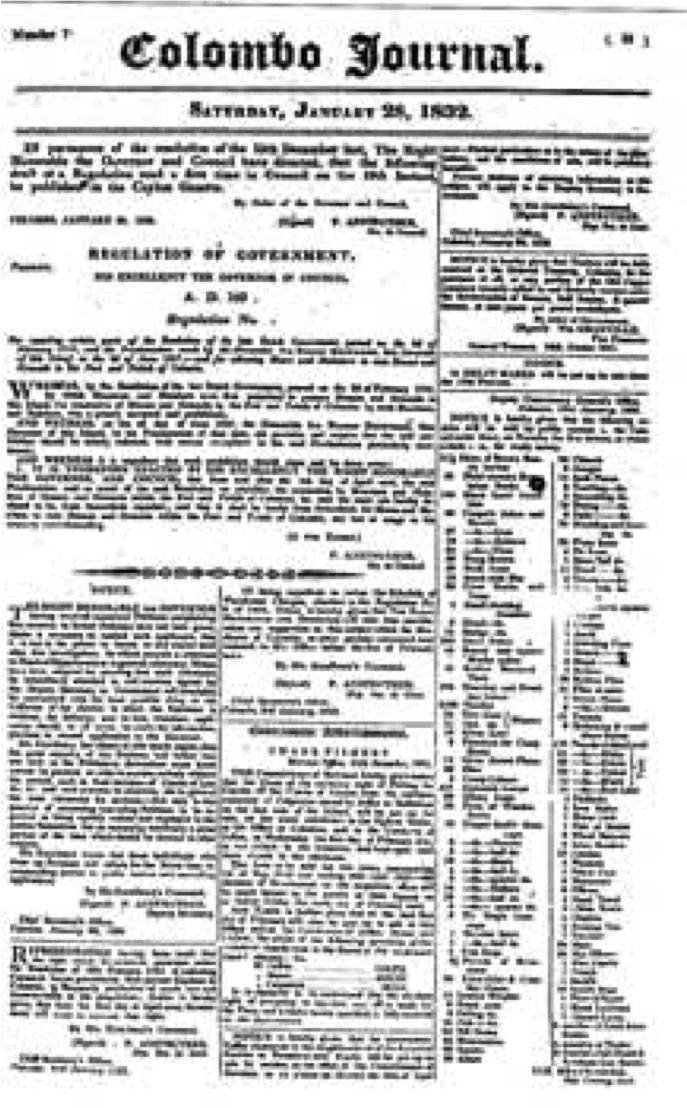
The media industry also started during British colonial times, and in fact dates back to 1832. But I questioned why, after 180+ years, our media industry broadly follows the same production model: material sourced is centrally processed and distributed, without much adaptation to new digital media realities.
In this week’s Ravaya column, (appearing in issue of 11 Oct 2015), I have adapted my talk into Sinhala.
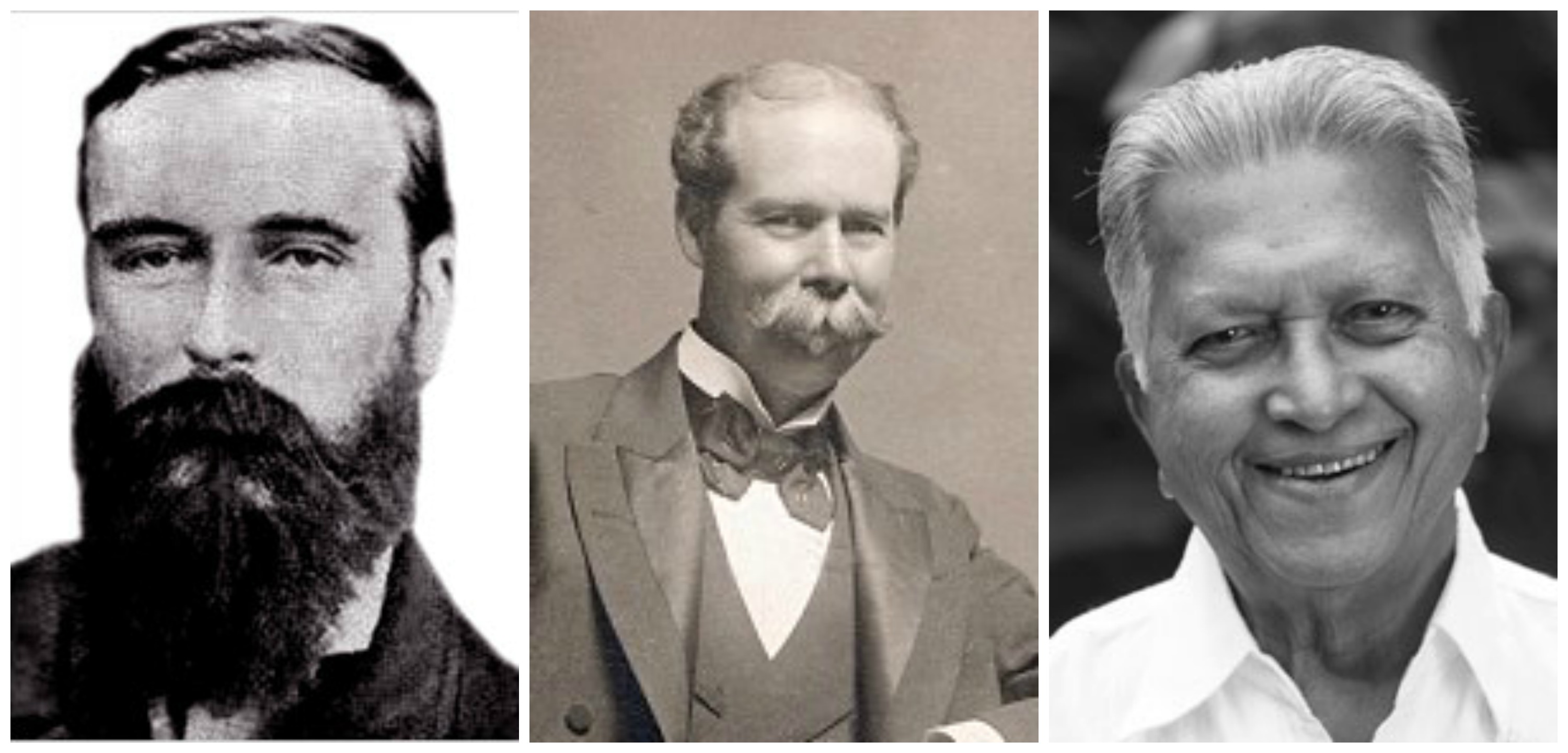
Ceylon Tea industry pioneers and innovator: L to R – James Taylor, Thomas Lipton, Merrill Fernando







![An Open Dialogue on Open Data - 15 Oct 2015 Coloombo - L to R - Sriganesh Lokanathan, Nalaka Gunawardene, Sanjana Hattotuwa [Photo by Sam de Silva]](https://nalakagunawardene.com/wp-content/uploads/2015/10/an-open-dialogue-on-open-data-15-oct-2015-coloombo-l-to-r-sriganesh-lokanathan-nalaka-gunawardene-sanjana-hattotuwa.jpg)




 Open Minds!