Nollywood rising: Low cost, high volume film industry entertains Africa

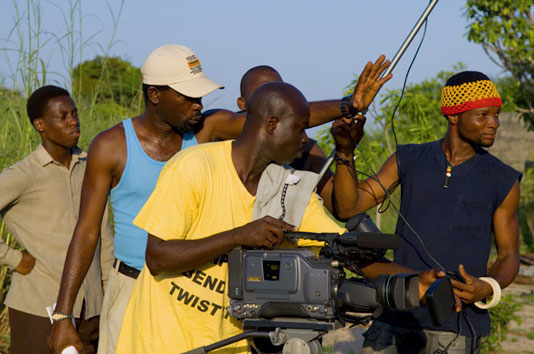
Lights, camera...budget action! Image courtesy 'This Is Nollywood'
Here’s a general knowledge question: Everyone knows India’s Bollywood is the world’s largest producer of movies (by number). Which country’s movie industry comes second?

If you said Hollywood, that’s a dated answer. America’s movie industry used to be the second largest in the world — until an unlikely contender turned up from…Nigeria!

India remains the world’s leading film producer but Nigeria is closing the gap after overtaking the United States for second place, according to a global cinema survey conducted by the UNESCO Institute for Statistics (UIS).

Bollywood produced 1,091 feature-length films in 2006 compared to 872 productions (in video format) from Nigeria’s film industry, commonly referred to as Nollywood. In contrast, the United States produced 485 major films.

The three heavyweights were followed by eight countries that produced more than 100 films: Japan (417), China (330), France (203), Germany (174), Spain (150), Italy (116), South Korea (110) and the United Kingdom (104).

Nigerian filmmakers rely on video instead of film to reduce production costs. And as the survey points out, Nigeria has virtually no formal cinemas. About 99% of screenings occur in informal settings, such as “home theatre”.
This is Nollywood
This is Nollywood
The UNESCO survey reveals another key element of the Nigerian success story: multilingualism. About 56% of Nollywood films are produced in Nigeria’s local languages, namely Yoruba (31%), Hausa (24%) and Igbo (1%). English remains a prominent language, accounting for 44%, which may contribute to Nigeria’s success in exporting its films.

Nollywood’s rising has been chronicled in a 2007 documentary by Franco Sacchi and Robert Caputo. Called This is Nollywood, it tells the story of the Nigerian film industry – a revolution enabling Africans with few resources to tell African stories to African audiences. Despite all odds, Nigerian directors produce between 500 and 1,000 movies a year. The disks sell wildly all over the continent – Nollywood actors have become stars from Ghana to Zambia.

Says Zambia-born director Franco Sacchi: “When I first read about Nigerian directors producing hundreds of feature-length films with digital cameras, a week, and a few thousand dollars, I found the subject irresistible. Here was not only a rare positive story about Africa, but one that embodied the egalitarian promise of digital technology—anybody can make a movie. And Nollywood was virtually unknown.”

This is Nollywood takes us behind the sets and scenes in one Nigerian movie being made on the cheap — and fast. Acclaimed director Bond Emeruwa sets out to make a feature-length action film in just nine days. Armed only with a digital camera, two lights, and about $20,000, Bond faces challenges unimaginable in Hollywood and Bollywood.

Emeruwa says: “We are telling our own stories in our own way, our Nigerian way, African way. I cannot tell the white man’s story. I don’t know what his story is all about. He tells me his story in his movies. I want him to see my stories too.”

Watch This is Nollywood: Movie Trailer

I then came across this TED Talk by Franco Sacchi, where he takes us through Nollywood (at the time he gave his talk, the world’s third largest and now second only to Bollywood). He talks about ‘guerrilla film-making’ and brilliance under pressure from crews that can shoot a full-length feature in a week.

Welcome to Nollywood is another 2007 documentary film, directed by Jamie Meltzer, that looked at the Nigerian film industry. Its findings were similar to those of This is Nollywood. Traveling to the country’s chaotic capitol, Lagos, Meltzer spent ten weeks following three of Nigeria’s hottest directors, each different in personality and style, as they shot their films about love, betrayal, war, and the supernatural.

At around US$250 million per year (and rising), Nollywood’s capital outlay is far below that of Hollywood and Bollywood. For perspective, that’s a bit less than what it cost to make Spiderman 3 in 2007 (budget: US$ 258 million) — the second most expensive film made. See list of most expensive Hollywood films.
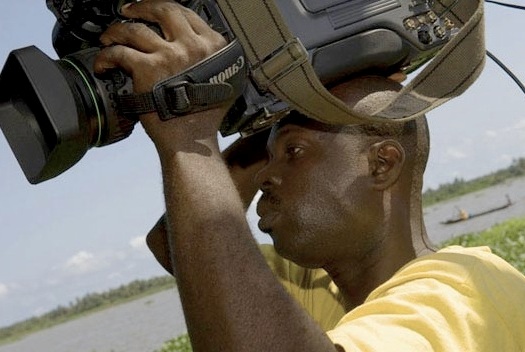
Telling their own stories....
But what it lacks in capital, Nollywood more than makes up in numbers and mass appeal. As the Wikipedia notes, Nigerian directors adopt new technologies as soon as they become affordable. Bulky videotape cameras gave way to their digital descendents, which are now being replaced by HD cameras. Editing, music, and other post-production work is done with common computer-based systems.

As Colin Freeman wrote in the Daily Telegraph, UK: “While the likes of Serpent in Paradise and Evil Finger may not be as slick as their Hollywood counterparts, they offer one thing that the likes of George Clooney and Brad Pitt can never provide: characters and stories with which an African audience can identify.”

And according to The Economist, it all started in 1992, when Kenneth Nnebue, a Nigerian trader based in Onitsha, was trying to sell a large stock of blank videocassettes he had bought from Taiwan. He decided that they would sell better with something recorded on them, so he shot a film called “Living in Bondage” about a man who achieves power and wealth by killing his wife in a ritualistic murder, only to repent later when she haunts him. The film sold more than 750,000 copies, and prompted legions of imitators.

The rest, as they say, is now Nollywood history.

Read my August 2007 blog post: “If we don’t tell our stories, no one else will”

Communicating disasters on film: Experts, please don’t cross this line!

Global Platform bannerExperts should let film-makers produce professional films in simple terms that are more appropriate for public audiences, instead of trying to produce films that have little chance of being broadcast or distributed in other ways. There is a role for technical experts – but that’s not in the crafting and directing of films, but in providing the knowledge, clarifications and guidance to film-makers and journalists who are professionals in communicating complex issues to non-specialist publics.

Self-evident as it may be, these home truths are well worth reiterating every now and then — especially to experts and officials who keep forgetting them (sometimes with disastrous and expensive results!). So I was very glad to read that these points were emphatically made at a ‘film debate’ held in Geneva last week.

The occasion was a panel discussion, ambitiously titled ‘The role of film-makers in promoting climate change adaptation and disaster risk reduction stories’. It was held on 17 June 2009 as part of the Second Session of the Global Platform for Disaster Risk Reduction in Geneva.

Moderated by the well known journalist, writer and producer Edward Girardet, from Media21, Geneva, it involved five panelists drawn from media/communication sector and the disaster/humanitarian sectors. Among the panelists was my colleague Robert Lamb, director of One Planet Pictures, UK, and consultant producer with dev.tv, Switzerland.

The debate’s premise was simple: So far much of the thrust of the film industry, NGOs, UN organizations and media in portraying disasters and climate change has focused on outcome – which is more visually stimulating – rather than showcasing vital prevention and adaptation solutions. This is necessary, but not sufficient. What can be done to improve the interaction between the film/news industry and leading organizations dealing with disaster risk management and climate change adaptation on a daily basis?

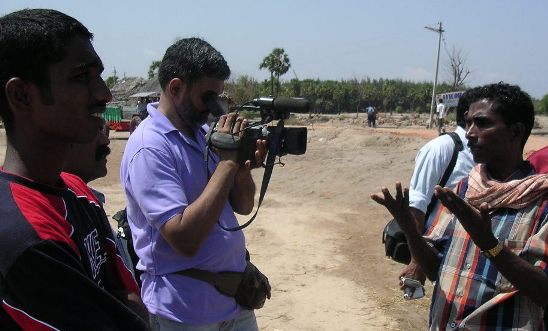
Interviewing tsunami survivor in Tamil Nadu, India - image from TVEAP
This was similar to the approach we had in TVE Asia Pacific’s Communicating Disasters project in Asia (2006-2007). We too explored the common ground for these two sectors, with their distinctive needs, and asked how the two can support each other without stepping on each others’ toes.

The same discussion continued in Geneva. I’ve limited information on what actually transpired during the debate, and am hoping someone will soon write it up. For now, here’s a summary adapted from UN-ISDR daily coverage (the official language is theirs, not mine):

“More than 150 participants attended a thought-provoking film debate. The five panelists discussed how to enhance the interaction between the film/news industry and leading organizations dealing with climate change adaptation (CCA) and disaster management to increase CCA visibility which is very limited today in film productions.

“Eight short films were presented during the session, among them a short trailer of ‘An Inconvenient Truth’ and a CCA film shot in Burkina Faso produced by Christian Aid. After identifying a number of challenges due to their formats and audiences, film-makers and experts agreed it was important to work more closely to make more films on the solutions offered by CCA.

“Film-makers suggested that experts should let them produce professional films in simple terms that are more appropriate to their audiences and focus on bringing expert knowledge to enrich the content of their current productions instead of producing films that have little chance to be broadcast or distributed.”

All this reminds me of a discussion we had around an earlier blog post where I asked: Anyone can make video film, right? So why do we need professionals?

Tiananmen + 20: Tribute to Tank Man, or the Unknown Rebel

One man vs. the mighty Red Army
One man vs. the mighty Red Army - photo by Jeff Widener for Associated Press

This is of the most famous photos of modern times. The official caption, given by Associated Press, reads: “An anti-government protester stands in front of artillery tanks in Beijing’s Tiananmen Square on June 5, 1989, at the height of the pro-democracy protests.”

It’s a moment deeply etched in the consciousness of our media-saturated world. The solitary, unarmed man was standing up against not just a brute of a tank, but the might of the entire Chinese Red Army, which had just cracked down ruthlessly on pro-democracy student protests.

It was on the morning of June 5 that the Tank Man appeared from nowhere. A line of 18 tanks were pulling out of Tiananmen Square and driving east along the Avenue of Eternal Peace. The previous day, the square had been cleared of students and much blood had been spilled. The streets were now empty except for soldiers.

Suddenly a man in a white shirt and black trousers, with a shopping bag in each hand, steps out on to the road and stands waiting as the tanks approach. The lead vehicle halts, assessing its options.

It moves right to go around him. The man waves the shopping bag in his right hand then dances a few steps to the left to block the tank again. The tank swerves back left to avoid him. The man waves the bag again and stepps to the right. Then both stop. The tank even turned off its engine.

Then more things happened.
Watch a video montage of this breathtaking standoff, captured by western journalists filming from a safe distance:

Watch first few minutes of the 2006 PBS documentary on the Tank Man incident and aftermath:

Twenty years on, the identify of the Tank Man remains a mystery. There are conflicting reports on who he was, and what happened to him after that single, defining act of defiance. Practically all we know is that he wasn’t run down by the tanks, and was instead arrested a few minutes later by the Chinese authorities. Naturally, there are few official comments on the incident or the Tank Man.

But during those few minutes, when individual soldiers hesitated and refrained from running him over, the Unknown Rebel secured his worldwide fame. He probably wasn’t doing it for any notion of posterity – in all likelihood, he was horrified bystander who’d seen the carnage in the preceding days and felt, as we do from time to time, that enough was enough.

And unlike most of us, he decided to risk his life to register his protest. In April 1998, Time magazine included the “Unknown Rebel” in its feature entitled Time 100: The Most Important People of the Century.

Charlie Cole, a Newsweek photographer who captured the moment, says: “Personally I think the government most likely executed him. It would have been in the government’s interest to produce him to silence the outcry from most of the world. But, they never could. People were executed at that time for far less than what he did.”

He adds: “I think his action captured people’s hearts everywhere, and when the moment came his character defined the moment rather than the moment defining him. He made the image, I just took the picture. I felt honoured to be there.” Read the full account by Charlie Cole

Read the recollections of the four photojournalists who captured this historic moment

A ground level view of Tank Man preparing for his showdown with tanks - photo by Terril Jones In early June 2009, a fifth photographer shared his own image of the incident – disclosing photos that had never before been circulated. Associated Press reporter Terril Jones revealed a photo he took showing the Tank Man from ground level, a different angle than all of the other known photos. (Tank Man is the second from left, in the background.) Jones initially didn’t realise what he had captured until a month later when printing his photos from that momentous week.

As we celebrate the memory of the Tank Man – and his defiance of brutal, oppressive use of state power to crush dissent – we must also salute the courage and resourcefulness of photojournalists and TV reporters who risked their own lives to capture this moment for posterity. Tank Man became iconic only because his act was frozen in time by those bearing witness. All too often, states – from Burma to Zimbabwe, and others in between – ensure that there is no one to bear such witness when they unleash the full force of police, armies and weapons on their own people.

There can be no doubt that Tank Man was not the first of his kind, nor would he be the last. Other ordinary men and women have found uncommon courage to stand up against injustice and state brutality wielded in the name of national security, law and order or anti-terrorist crackdown. But in the absence of witnesses – whether professional journalists or citizen journalists – the rest of the world will never know.

Pete Seeger turns 90 on World Press Freedom Day: Thank you for the protest music!

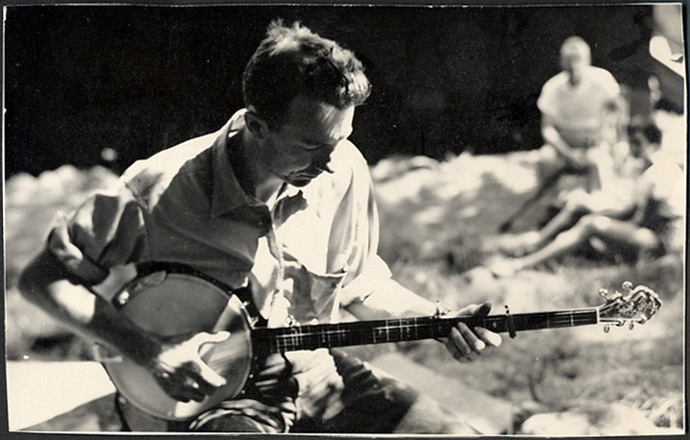
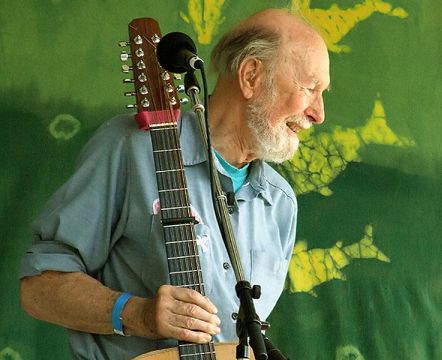
Pete Seeger: Still singing protest at 90...

Today, 3 May, is once again World Press Freedom Day. It is recognised by the UN, and observed by media professionals and media activists worldwide to ‘draw attention to the role of independent news and information in society, and how it is under attack’.

By happy coincidence, today also marks the 90th birthday of Pete Seeger, American folk singer and a pioneer of protest music. Since media freedom is inseparable from the democratic rights to dissent and protest, I will devote this blog post to salute Pete and his many decades of music for worthy causes — ranging from the American civil rights movement and opposing the Vietnam war to saving the environment and nuclear disarmament.

I won’t go over the basic biographical or career information, which is easily found online. Wikipedia has a good entry, and PBS shows a career timeline which has covered some of the most momentous events of the past century. There are approximately 200 songs (music and lyrics) that Pete wrote or with which he is associated – including “Guantanamera,” “Where Have All The Flowers Gone,” “If I Had A Hammer,” “Turn Turn Turn,” “Wimoweh,” “We Shall Overcome”.

Pete is a hero for at least three generations of music lovers and freedom lovers around the world who believe in human rights, human dignity and democratic freedoms. Armed with nothing more than his banjo and melodious voice, and driven by the courage of his conviction, this small, gentle man has stood up to mighty leaders, generals and officials.

Never underestimate the power of one determined man...
Pete is celebrated as much for his artistic and cultural achievements as for standing resolutely for his political beliefs and for lending his voice and music in support of causes be believed in. In 1955, he was called before the now infamous House Un-American Activities Committee, but refused to name personal and political associations on the grounds that this would violate his First Amendment rights. He said: “”I am not going to answer any questions as to my association, my philosophical or religious beliefs or my political beliefs, or how I voted in any election, or any of these private affairs. I think these are very improper questions for any American to be asked, especially under such compulsion as this.”

This defiance resulted in sustained harassment, persecution and professional isolation. As his recent PBS biography noted, “Standing strong for deeply-held beliefs, Seeger went from the top of the pop charts to the top of the blacklist and was banned from American commercial television for more than 17 years. This determined singer/songwriter made his voice heard and encouraged the people of the world to sing out along with him.”

‘If you love your country, you’ll find ways to somehow to speak out, to do what you think is right,” Pete says in this powerful documentary looking back at over half a century of activist singing and music.


Watch opening segment of PBS AMERICAN MASTERS series: Pete Seeger: The Power of Song, directed by Jim Brown and first aired in February 2008

Watch more PBS interviews with Pete Seeger and some of his archived performances from yesteryear

Having pleaded under the First Amendment during the communist witch days of the 1950s, Pete repeatedly paid tribute to the far-sighted American pioneers who introduced the First Amendment guaranteeing the freedom of speech.

“As some judge said, if there is any fixed star in our firmament, that is the First Amendment,” he says in a talk-cum-performance at the Ford Hall Forum. In this audio-only piece, he talks the privilege of living under the First Amendment. He recalls his experience being questioned by the House Unamerican Activities Committee, encounters with censorship, and his relationship with fellow singer Woody Guthrie. It runs for nearly an hour, but is worth every second.

For someone like Pete Seeger who sang alongside Dr Martin Luther King, Jr., and other civil rights movement leaders and activists, it must have been deeply moving to be able to sing at the concert to mark President Barack Obama’s inauguration on 20 January 2009 at the Lincoln Memorial.

Watch Bruce Springsteen sing along with Pete Seeger on Woody Guthrie’s “This Land Is Your Land”. As he often does, Pete invites the euphoric audience to sing along!

One of my favourite Pete Seeger songs is “Turn! Turn! Turn! (to Everything There is a Season)”, often abbreviated to “Turn! Turn! Turn!”. It’s a song adapted entirely from the the Book of Ecclesiastes in the Bible (with the exception of the last line) and composed to music by Pete Seeger in 1959. Seeger waited until 1962 to record it,

Pete Seeger tells how he came to write “Turn Turn Turn.”

I have always believed that we have to get creative and resourceful when the basic freedoms of conscience and freedom of expression are under siege from despotic rulers and fanatical extremists. When we are not allowed to express in factual prose, we must turn to creative prose. And when prose fails, we still have verse, lyrics, satire and drama — the possibilities are only limited by our imagination. This is why I celebrate activist artistes like Pete Seeger, and invoke the memory of activist-poets like Adrian Mitchell and Ken Saro-wiwa. When the barbarians are at our gates and we feel surrounded by the unrelenting forces of hatred, intolerance and tribalism, they remind us that Another World is Possible — but we have to believe in it, stay the course and find ways to sing, dance and laugh our way out of gloom.

And here’s Pete singing another one of my personal favourites, a song that powered the civil rights movement and has since inspired and sustained struggles for social justice around the world: We Shall Overcome.


New York Times editorial appreciation on 5 May 2009: Still Singing

Somali pirates: Part of the story mainstream media hasn’t told us!

Do they have a story to tell? Who is listening?
Piracy has a chequered history, and even the Wikipedia offers a carefully qualified definition. One person’s pirate can be another person’s defender. There’s an argument that the European colonial powers rode on the backs of their pirates or buccaneers. And I’m writing this in English language possibly because the English were more successful in their overseas piracy than other nations!

Piracy is all over the news again, due to increased activity off Somalia. But in the past few weeks, we’ve started hearing another side of the Somali piracy story — one that the mainstream media didn’t tell us.

Johann Hari, a columnist for the London Independent, posted an op ed in Huffington Post on 13 April 2009 that took a different look at Somali pirates. His main argument: “In 1991, the government of Somalia – in the Horn of Africa – collapsed. Its nine million people have been teetering on starvation ever since – and many of the ugliest forces in the Western world have seen this as a great opportunity to steal the country’s food supply and dump our nuclear waste in their seas.”

In recent days, two interesting short videos have been posted by two activist groups to support the same point of view. I haven’t investigated this story myself, but am intrigued by their take on a widely reported topic…especially because it’s an angle that we don’t read or see in the mainstream media!

The Media Is Lying to You About Pirates

The IFC Media Project’s “News Junkie” deconstructs the mainstream media’s half-baked coverage of Somali Pirates.


Are They Really “Pirates”?

This film from Awareness Unfolds highlights the fact that the media is lying about the so called “pirates” of Somolia. According to the blurb: “They (media) choose not to tell you about the toxic waste dumping going on by American, European, and Asian countries that have lead to the death of many Somolian citizens.”

As Johann Hari says at the end of his article: “The story of the 2009 war on piracy was best summarised by another pirate, who lived and died in the fourth century BC. He was captured and brought to Alexander the Great, who demanded to know “what he meant by keeping possession of the sea.” The pirate smiled, and responded: “What you mean by seizing the whole earth; but because I do it with a petty ship, I am called a robber, while you, who do it with a great fleet, are called emperor.” Once again, our great imperial fleets sail in today – but who is the robber?”

Johann Hari has reported from Iraq, Israel/Palestine, the Congo, the Central African Republic, Venezuela, Peru and the US, and his journalism has appeared in publications all over the world. In 2007 Amnesty International named him Newspaper Journalist of the Year. In 2008 he became the youngest person ever to win Britain’s leading award for political writing, the Orwell Prize.

‘Chief Seattle speech’: Global environmental legend, or pervasive myth?

Our thought for Earth Day 2009

“All things are connected. Whatever befalls the earth befalls the sons of the earth. Man does not weave the web of life; he is merely a strand of it. Whatever he does to the web, he does to himself.


“What is man without the beasts? If all the beasts were gone, man would die from a great loneliness of the spirit. For whatever happens to the beasts, soon happens to man. All things are connected.”

These words resonate very well in the environmental community, and are in fact considered to be something like a gospel of the greens. They are part of a moving speech that native American Chief Seattle is said to have given in January 1854. Read the full text here.

So these would be just the right sentiments to invoke on another Earth Day, right? Yes — except that Chief Seattle never uttered those words. They were, in fact, written by a screen writer in 1971 for a film about pollution and the plight of the Earth, called Home.

Tell that to thousands of die-hard greens who swear by Chief Seattle. By now, a couple of generations of people have been moved by the “speech.” Chief Seattle societies have formed in Europe. The supposed remarks have been reprinted widely and authoritatively cited in serious books on environmental issues, and quoted in high level speeches. Hundreds of teachers use extracts in environmental courses.

The man was real; the speech wasn't his

There’s absolutely no doubt that the words pack a great deal of traditional wisdom, poetic expression and what researchers like to call ‘indigenous knowledge’. This is how it ends: “Continue to contaminate your bed and you will one night suffocate in your own waste. When the buffalo are all slaughtered, the wild horses all tamed, the secret corners of the forest heavy with the scent of many men, and the view of the ripe hills blotted by talking wires. Where is the thicket? Gone. Where is the eagle? Gone. And what is to say good-bye to the swift and the hunt; the end of living and the beginning of survival.

The value, modern-day relevance and power of the speech are not in doubt. But the problem is in its attribution: the wrong man is being credited worldwide for coming up with these oh-so-quotable words. And the misconception originated with a film script, where creative liberties are allowed and often exercised!

Conservationist, writer and analyst Andy Kerr has traced the evolution of a modern myth in his column:

“Yes, Chief Seattle (more correctly Seathl) did give a speech in 1854 to Isaac Stevens, Pacific Northwest Commissioner of Indian Affairs. Dr. Henry Smith translated the speech from the original Lushotseed. Smith knew it to be special and that much was lost in his first oral translation. He supposedly visited the Chief many times in the following decades to get the words right in English. He published his translation in 1887 in the Seattle Sunday Star. According to Smith, the Chief spoke of his sadness about the grave injustice being visited upon the Indians by the European invaders and the absurdity, in the Chief’s view, of claiming land as one’s own and of not respecting ancestral ground.

“It was in the Victorian oratorical style of the time, and was soon forgotten. Professor William Arrowsmith, who taught classic literature at the University of Texas, came across the Smith version and modernized it in Arion in 1969. He changed it to reflect the protest-style of the 1960s. On the first Earth Day in 1970, Arrowsmith read his modified text before a large crowd.

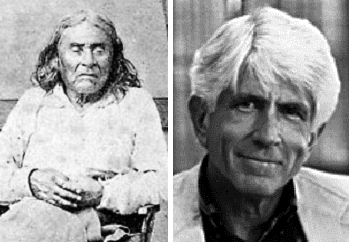
Chief Seattle (left) and actual speech writer Ted Perry

“In that crowd was Ted Perry, a professor of film, who had been retained by the Southern Baptist Television Commission to draft a script for a film about pollution and the plight of the Earth, called Home. In a third execution of literary license, Smith turned it into a speech about poisoning the planet and human indifference to it. Perry’s concept was to transport Chief Seattle into the modern world and imagine what he would say.”

The documentary film on ecology, scripted by Ted Perry, was produced by the Southern Baptist Radio and Television Commission, and later ran on network television. But not before the original script was edited for being more Christian, and some references to God were added.

John Scull, specialising in eco-psychology, has traced the evolution of the Seattle myth in an interesting essay. He notes: “The Perry speech, in spite of its Christian editing and its many historical inaccuracies, anachronisms and inconsistencies, was widely distributed and was seen as authentic by many…The text’s lack of authenticity was finally described in 1987, and documented in articles in both Omni and Newsweek in 1992.”

In April 1991, the New York Times ran a front-page expose of the Chief Seattle myth, saying: “A number of historians say Chief Seattle never said most of what he is supposed to have said.”

NYT quoted historian David Buerge as saying: “Chief Seattle is probably our greatest manufactured prophet,” and described him as ‘one of the scholars frustrated that their work has failed to stop the myth from spreading around the world.’

In his analysis, John Scull poses the query: Why are environmentalists so eager to continue to attribute these words to Chief Seattle instead of to their author, Ted Perry?

Perry, now a professor of film studies at Middlebury University, has tried repeatedly to set the record straight. Moreover, he thinks that the myth is pernicious. “Why are we so willing to accept a text like this if it’s attributed to a Native American?” he asks. “It’s another case of placing Native Americans up on a pedestal and not taking responsibility for our own actions.”

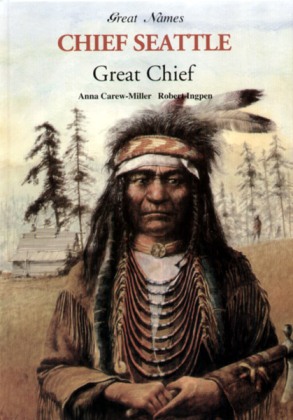
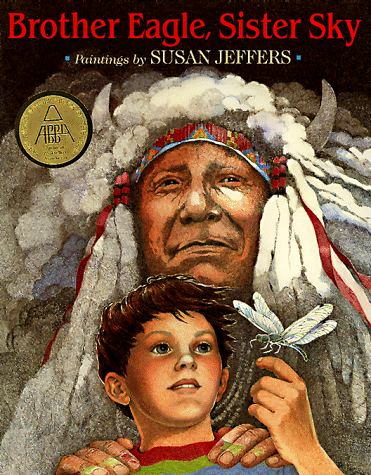
This 1991 book built on the Chief Seattle fable

The myth of Seattle’s speech has been so pervasive that the Washington State Library issued a pamphlet in 1993 stating the facts. “The most important fact to note is that there is NO VERBATIM TRANSCRIPT IN EXISTENCE. All known texts are second-hand,” Nancy Zussy, State Librarian, said in that note.

That note listed four different versions of the speech. The most widely known of all, it said, was written by Texas professor Ted Perry as part of a film script. “The makers of the film took a little literary license, further changing the speech and making it into a letter to President Franklin Pierce, which has been frequently reprinted. No such letter was ever written by or for Chief Seattle.”

So is there anything authentic left of poor Chief Seattle? There’s no doubt the man cared deeply for his people and the environment, even if he was nowhere near as eloquent as modern-day environmentalists want us to believe. Sadly, we don’t even know what the old boy really looked like.

According to a story by Malcolm Jones Jr. and Ray Sawhill, appearing in Newsweek of 4 May 1992: “Even the one known photograph of him has been doctored repeatedly. In the original, his eyes were closed. Subsequent version were retouched so that his eyes looked open. In some versions, he carries a cane, but not always. And in the most revisionist makeover, his head has been grafted onto the body of another man.”

So is it just historical accuracy at stake here, in our setting the record straight about Seattle as scripted by Perry? Does it really matter whether or not the Indian chief actually said it as long as his alleged words continue to inspire environmental commitment?

I share Dr John Scull’s views when he says: “The world is in an environmental crisis and needs help, but a mythical Indian chief from the last century is not going to ride over the hill and save it from the industrial cavalry in some reversal of the Hollywood western — all of us are going to have to work together to save it ourselves. Recognizing that at least some of the answers lie within mainstream contemporary culture might be a good place to start.”

Read The Little Green Lie, by Mary Murray, Reader’s Digest, May 1994

Untold story behind the story: “Barack Obama: People’s President”

A film to reveal what the old media didn't show...
When Barack Obama and his running made Joe Biden won the US Presidential Election held on 4 November 2008, they not only beat the Republican duo McCain-Palin but also a host of other also-rans. It’s too soon to tell, but that date might also mark the beginning of the end for the old media, also called the mediasaurus, who have been dominating the public’s access to news, information and commentary for over a century.

But how did it all happen? Who can tell us the real story as it happened, and why, without filters and biases so rampant among the mediasaurus?

On this blog, we have watched with deep interest and some fascination the rise of Barack Obama from relative obscurity to become the President of the United States. On 6 November 2008, soon after the election results were confirmed, we noted how Obama had just been elected ‘President of the New Media world’. I explained: “Obama’s rise has epitomised change in many ways. Among other things, he is the first elected leader of a major democracy who shows understanding and mastery over the New Media World, which is radically different from the old media order.”

On 20 January 2009, when he was inaugurated, we wrote: “For four or eight years, Obama’s every move, word and gesture will be captured, dissected and debated to exhaustion by admirers and detractors alike. And his administration will be under scrutiny by thousands of citizen journalists who don’t share much except the digital platforms and social networks on which they post their impressions. Welcome to the New Media Presidency. The hard work – and real fun – begin now!”

And now, one of the world’s leading new media activists, Danny Schechter, is about to release a new documentary on how the Obama campaign rode the new media wave to the White House — and more importantly, how the same new media can help the American public to keep Obama Administration accountable.

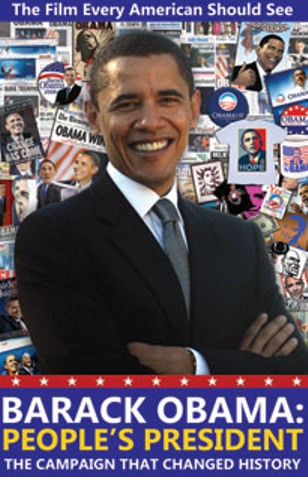
The film “Barack Obama, People’s President”, (slated for DVD release later this month by ChoiceMedia.net), documents the online and on the ground techniques that were used to win the highest office in the land.

As the film’s advance promo blurb says: The one story that most TV outlets didn’t tell in the 2008 election was the most important one -how did a young and relatively unknown candidate become President? If you voted for Barack Obama or not, this is a story you will want to know because it shows how the face of presidential politics changed forever. Barack Obama used techniques never seen before in a nationwide election — his grassroots mobilization and use of the internet was unprecedented, inspiring and effective. You have seen the rest of the coverage — now see the real story.

The film goes inside the official and unofficial campaign to show how Barack Obama was turned into a political brand to appeal to young first time voters. It shows how social networking on the internet — blogs, Facebook, texting and other techniques — were used carry the message to the masses and to raise tens of millions of dollars for the campaign. Popular online videos such as “Obama Girl”, along with those created by regular yet passionate supporters to engage their own communities, became one of the most important tools in the campaign’s success.

Watch the trailer of “Barack Obama, People’s President” directed by Danny Schechter:

Emmy award winning film-maker Danny Schechter, who is also blogger-in-chief at MediaChannel.org that keeps a critical eye on the media, just wrote this explaining why he made this film:

“It is hard to remember that two years earlier Obama was barely known, registering on the radar screen for just 10% of voters. He was also hardly a brand name as a first term Senator who spent more time in state politics in Illinois than on the national stage. Moreover, he was young and a man of color — not qualities that usually prevail in a presidential arena which tends to draw far older, far whiter, and far more centrist candidates. The thought that he would beat frontrunner Hillary Clinton in the primaries was, quite frankly, unthinkable to most of the elite.

“And yet he prevailed, as he used a phrase appropriated from labor organizer and Latino legend Caesar Chavez. Obama turned the farm workers Spanish language slogan “Si Se Puede” into “Yes We Can.” Rather than focus on specific political issues, he built a campaign on the promise of “Hope.” Rather than just rely on traditional fundraising — although by the end, he was plush with it — he reached out over the internet for smaller donations from millions of donors.

Perils of the New Media Generation...
“Few in the major media gave him a chance, but he was not discouraged because he had created his own grassroots media operation using sophisticated organizing and social networking techniques to build a bottom-up movement, not the usual top-down apparatus. While his campaign ran the show, he encouraged independent initiatives including citizen-generated media, music videos, personalized websites, twittering and texting, etc..

“This is the new direction our politics has taken. It is a story that may be somewhat threatening to old media – and older activists – who prefer a one to many approach to communication, as opposed to forging a more interactive empowering platform. There is no question that young people — especially those mobilized by Obama — prefer online media and that choice is making it harder and harder for traditional outlets to sustain their influence and, in some cases, even their organizations. Old media may be on the way out.

“This is why our film is, in my mind, so important, not just as a record of how Obama won and what happened in 2008, but in what will happen, can happen, and is happening in the future. This is why I believe its critical for Americans to see it — and others in the world as well — to recognize how Obama represents more than just another politician, but a whole new approach to politics. That old adage is worth remembering: “It’s not the ship that makes the wave, it’s the motion of the ocean.”

“Obama, for all his shortcomings, which are becoming more obvious by the day, has pioneered the way change must be won — not by people on the top, but by all of us. It remains for “us” to hold him accountable. We live in a culture of amnesia – it is important to learn the lessons of the recent past.”

Read the full comment: New Film Tells Unreported Story of Obama’s Election on MediaChannel.org

Mekong: A river to watch as climate change impacts Asia’s water tower

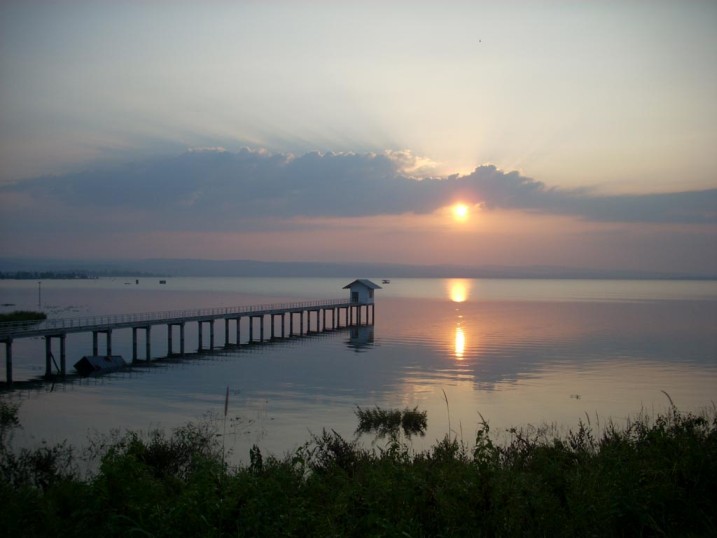
Calm now, turbulent tomorrow? View of Upper Mun Reservoir on the Mekong in northern Thailand: image courtesy TVE Asia Pacific
The Greater Himalaya region is known as the water tower of Asia: the continent’s nine largest rivers emerging from its ice-capped mountains provide 1.5 billion people with water and 3 billion people with their food and power.

With more ice stored here than anywhere outside the Arctic and Antarctic, the region has even been called the earth’s third pole. But the ice fields of the Himalayas are melting, and at a faster pace than anywhere else on the planet.

A river that is going to be affected is the Mekong – one of Asia’s major rivers, and the twelfth longest in the world. TVE Asia Pacific has just produced a short film looking at how current and anticipated environmental changes could impact water users in the six countries of Southeast Asia which share its waters. We released it online this week, just in time for World Water Day 2009, March 22.

Mekong: Watch that River!

Along its journey of nearly 5,000 kilometres (3,000 miles), the Mekong nurtures a great deal of life in its waters – and in the wetlands, forests, towns and villages along its path. Starting in the Tibetan highlands, it flows through China’s Yunan province, and then across Myanmar, Thailand, Laos and Cambodia…before entering the sea from southern Vietnam.

The Mekong River Basin is the land surrounding all the streams and rivers that flow into it. This covers a vast area roughly the size of France and Germany combined. The basin supports more than 65 million people who share Mekong waters for drinking, farming, fishing and industry. Along the way, the river also generates electricity for South East Asia’s emerging economies.

The Mekong has sustained life for thousands of years. But growing human demands are slowly building up environmental pressures on the river. A new study, commissioned by the UN Environment Programme (UNEP), cautions that climate change could add to this in the coming years.

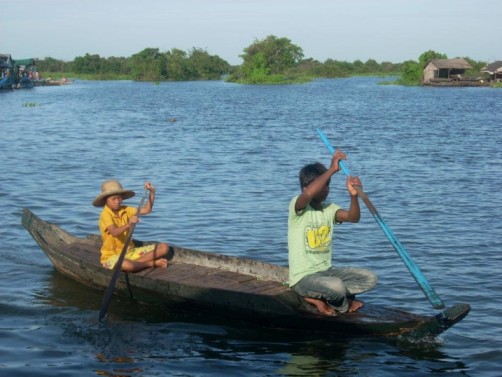
Fishing on the Tonle Sap lake in Cambodia: An 'ecological hot spot' on the Mekong
The study, carried out under a project named “Vulnerability Assessment of Freshwater Resources”, was headed by Dr Mukand Babel at the Asian Institute of Technology (AIT) in Bangkok. It probed how climate change can impact the river from the highlands to the delta….affecting the survival and prosperity of millions.

Dr Babel says on the film: “Climate change would affect…the amount of rainfall which is received. Under climate change conditions, we expect less rainfall to be observed and that would bring less flows in the river which would affect the water users in the downstream areas.”

He adds: “At the same time, the sea level rise which is an associated impact of climate change, would bring more sea water intrusion into the river systems and groundwater systems in the delta in Vietnam.”

Salt water could go upstream by 60 to 70 kilometres, degrading the land and water in the Mekong delta. This would add to pressures already coming from growing human numbers, expanding economies and disappearing forests.

So the Mekong will be affected at both ends, by different processes that are triggered by climate change.

To find out how these changes could affect the Mekong’s millions, my colleagues filmed in two
‘ecological hot spots’ in the river basin identified by the study: the Upper Mun River, a tributary of the Mekong, and the Tonlé Sap lake in Cambodia.

The UNEP-AIT study recommends Mekong river countries to improve how they manage their water and land. This needs better policies, institutions and systems.

Dr. Young-Woo Park, Regional Director, UNEP, says on the film: “Countries sharing the Mekong river…have to act together and they have to develop the policies on how to conserve and how to conserve the Mekong river and also how to properly manage the Mekong river.”

The study found the Mekong river basin ‘moderately vulnerable’ to environmental changes. There aren’t any major water shortages in this river basin as yet. For now, the Mekong is holding up despite many pressures.
But all this can change if less water is flowing down the river and the demand for water keeps growing.

That’s why we named this film ‘Mekong: Watch that River!’

Channel News Asia at 10: Making of a pan-Asian news channel

Asian voice in a global village
“We’re the messenger for all the stories that might not have been told…that’s our job,” says Glenda Chong, the Shanghai-based China correspondent (and former anchor) of Channel NewsAsia (CNA), the Singapore-based Asian regional news broadcaster that just turned 10.

For a decade, CNA has covered Asia for Asians and the rest of the world. It has uncovered stories missed – or ignored – by other, global news channels. Just as important, it has also found the Asian voices and angles in mega stories originating from Asia that gripped the world’s attention — such as the outbreak of SARS, Indian Ocean tsunami, earthquakes in Sichuan and Kashmir.

Started on 1 March 1999 and owned by Singapore’s MediaCorp, CNA is now a major Asian news broadcaster with programmes telecast to more than 20 Asian countries and territories. Visit CNA’s 10th anniversary website for a look back…and forward.

“In the early days, when we talked about a news channel from Singapore, you could cut the cynicism with a knife,” said Woon Tai Ho, managing director of MediaCorp News.

That was inevitable for any media venture anchored in Singapore, ranked currently at 144 out of 173 countries in the World Press Freedom Index. But CNA has shown that geography need not be destiny.

Asians telling their own story
In 10 years, it has emerged as a primary source of news in Asia, and along the way, has picked up a plethora of high-profile awards — including two silver medals at the New York Festivals 2009 and three awards at Asia Television Awards 2008.

Channel News Asia turns 10 – article in Today newspaper, Singapore: 2 March 2009

Started as a business news channel at the tail end of the Asian financial crisis of 1997, CNA later evolved into a fully-fledged news and current affairs channel covering all facets, aspects and territories of Asia – the world’s largest region, home to half of humanity. Map showing CNA geographical coverage

Ironically, CNA enters double-digits chronicling the region once again in the midst of a financial crisis, this time of global proportions and repercussions.

Unlike Al Jazeera English (AJE), the global news channel launched from Qatar in November 2006, CNA has relied on Asian talent for anchoring and reporting. While AJE has shamelessly and desperately tried to ape the BBC, CNA has forged its own identity in offering a world class product.

Whereas AJE tries so hard to please its audiences in Europe and North America (is it so anxious for western acceptance?), CNA has focused its energies in telling the myriad stories of emerging Asia primarily for Asia’s upwardly mobile, burgeoning middle classes.

For example, when an interviewee gives his/her views in a language other than English, Channel NewsAsia does not voice-over the original audio with an anglo-saxon voice like other major news channels do. Instead, an English subtitle appears, preserving and complementing the original audio.

At TVE Asia Pacific, we have had a positive experience of engaging this regional broadcaster. In late 2005, we were looking for a broadcast partner to co-produce a documentary looking back at the first year after the Indian Ocean tsunami through the eyes of eight survivor families – in India, Indonesia, Sri Lanka and Thailand – that we had tracked on video under the Children of Tsunami project. We had a mass of professionally and ethically filmed material, and a unique collection of stories we were keen to be amplified to the world.

When we approached Channel NewsAsia through a friend, they immediately welcomed the collaboration. They invested their time, resources and talent to edit Children of Tsunami: No More Tears, a half hour that distilled some of the stories that we had painstakingly captured for a year. No money changed hands. Legalities were kept to a minimum. CNA saw we had a story that was relevant and important for their viewers. They found the story authentic, as captured by local crews who spoke the language in each country and who lived through the traumas of the tsunami themselves (no ‘parachute film crews’ were involved). So CNA just did it — with none of the airs of pomposity and self importance that so characterise the BBC in any collaboration.

CNA producer Joanne Teoh Kheng Yau shared her experience in telling this story at a regional event we organised in December 2006. The full experience is now documented in a chapter in our book, Communicating Disasters: An Asia Pacific Resource Book.

Children of Tsunami: No More Tears was first broadcast globally on Channel NewsAsia in the last week of December 2005 to mark the tsunami’s first anniversary with this intro: “Young survivors of the Asian tsunami let us into their lives to personalise the mass of statistics, aid pledges and recovery plans. ‘Children of Tsunami’ is a tapestry of intimate stories, woven by voices of individual and collective resilience, heroism and recovery.”

Children of Tsunami: No More Tears Part 1:

‘The Final Inch’: Real ‘Oscar’ would be polio’s global eradication!

Not longer just a drop in the ocean...
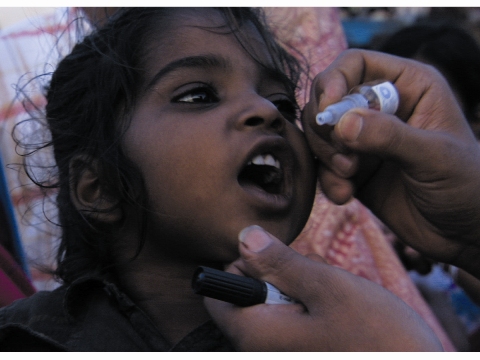
No longer just a drop in the ocean..?
The Final Inch didn’t win the Oscar for the best short documentary film made in 2008. But the nomination has given a boost to the film and its cause: even before its official release in April 2009, it is already raising global awareness on the major public health challenge of banishing polio from the planet.

The Final Inch is a testament of the health workers around the world laboring to make polio the second globally eliminated disease behind small pox, says director Irene Taylor Brodsky.

The 37-minute film, due to air on HBO on 1 April 2009, looks at the “the final stages of a 20 year initiative” to eradicate polio. It focuses the polio vaccine efforts in India and Pakistan, which are among the last four countries where polio is still endemic (the other two being Afghanistan and Nigeria).

Watch the trailer for The Final Inch:

The campaign to eradicate polio is now 21 years old. World Health Organisation (WHO), UNICEF and Rotary Foundation embarked on this campaign in earnest in 1988, and as a young (and equally earnest) science journalist, I remember writing about its early strategies, goals and targets. But the virus has proven to be a lot more stubborn than originally expected.

Well, the campaign has scored remarkable victories, and a little over 1,600 people in the world were stricken by polio in 2008. (AIDS and malaria, in contrast, killed more than three million people.) Compare that with 350,000 cases per year when the global onslaught started, and we see there has indeed been progress.

But the virus – and the crippling disease it causes – persists in several poor, densely populated countries in Asia and Africa. Updates are available from Global Polio Eradication Initiative.

Thus it’s the ‘last inch’ – or last mile, if you like – that’s proving the hardest to traverse. In a perceptive essay published in Newsweek in January 2009, Fred Guterl noted: “It’s not easy to wipe a disease off the face of the planet—especially one like polio, which spreads easily and quickly through contact and occasionally through contaminated food and water. Only one in 200 children who contract the virus shows symptoms (usually paralysis), which makes the other 199 silent carriers.”

It’s not just biology that polio eradicators are up against. Indeed, human superstition and religious dogma have made the final inch particularly contentious and treacherous for public health workers.

In 2005, TVE Asia Pacific started distributing a global documentary on immunisation called Fragile Lives: Immunization at Risk. It showed how at least 2 million children die every year from diseases that that vaccination could easily prevent.

Foot soldiers of the largest non-military army in history engaged in its final battle
At one point, the film takes us to Uttar Pradesh, in northern India, to show how polio, eradicated in most of the world, stubbornly persists in a few countries. This very poor state with its 272 million inhabitants had two thirds of the world’s polio. We talk to the glamorous young cricketer, Mohamed Kaif, who helps publicise a massive campaign to get every single child to the vaccination booths. The film discovers the strange reason behind why so many Muslim parents refuse to have their children vaccinated.

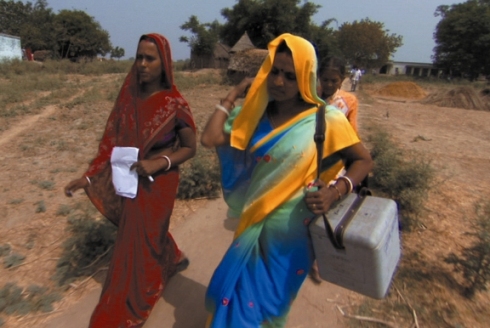
The Final Inch features the heroic efforts of Munzareen Fatima, a field worker in Meerut, Uttar Pradesh, who is a part of UNICEF’s Social Mobilisation Network for ensuring vaccination coverage. She reaches out to her target group through personal and public intervention programmes.

As she told IANS: “It has been a tough journey for me over the last five years to convince 470 families at Dufferin block in Khairnagar to administer polio drops to their children. I met with resistance from the families, who initially refused to immunise their children. The conservative community also belittled me for stepping out of home to campaign against polio.”

India is not alone. If anything, misplaced resistance to polio vaccination has been stronger in Pakistan. As IPS reported in August 2006, the country’s drive against polio was hit by both rumours and litigation.

The news story, filed by Ashfaq Yusufzai in Peshawar, noted: “The reliability and safety of oral polio vaccine (OPV) has been put under scrutiny in Pakistan after wild rumours that it causes impotency snowballed into a writ petition in a high court.”

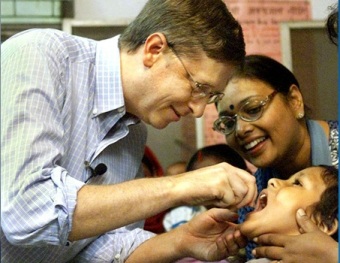
Bill Gates: geek power and bucks to battle polio...
Religion-inspired superstitions have often stood in the way of achieving sufficient vaccination coverage, leaving room for viruses to spread again. Religious leaders sometimes strengthen the hand of those making pseudoscientific claims, says South African science writer George Claassen. Writing in SciDev.Net in April 2008, he noted: “Attempts to eliminate polio in Nigeria, for example, ran into problems when Datti Ahmed, the chair of the Supreme Council for Sharia in Kano state, referred to the Global Polio Eradication Initiative as ‘modern-day Hitlers… who have deliberately adulterated the oral polio vaccines with antifertility drugs and contaminated them with certain viruses which are known to cause HIV and AIDS.'”

This brings up an interesting scenario of virus vs. virus. Richard Dawkins, the well known British evolutionary biologist and writer, has called religion the most malevolent form of a ‘mind virus’. According to Dawkins, faith − belief that is not based on evidence − is one of the world’s great evils. He claims it to be analogous to the smallpox virus, though more difficult to eradicate.

Of course, the mistrust of vaccines is not just limited to the developing world, nor is it always inspired by religion or superstition. Sometimes over-protective moms can be just as irrational. Fragile Lives, for example, took us to Dublin, Ireland, where there have been two serious outbreaks of measles – largely due to mothers rejecting vaccination because of the MMR controversy. In some parts of Ireland only 60% instead of the necessary 95%, have been vaccinated.