Love that Bug: Spinal Beetle completes charity run across South Asia

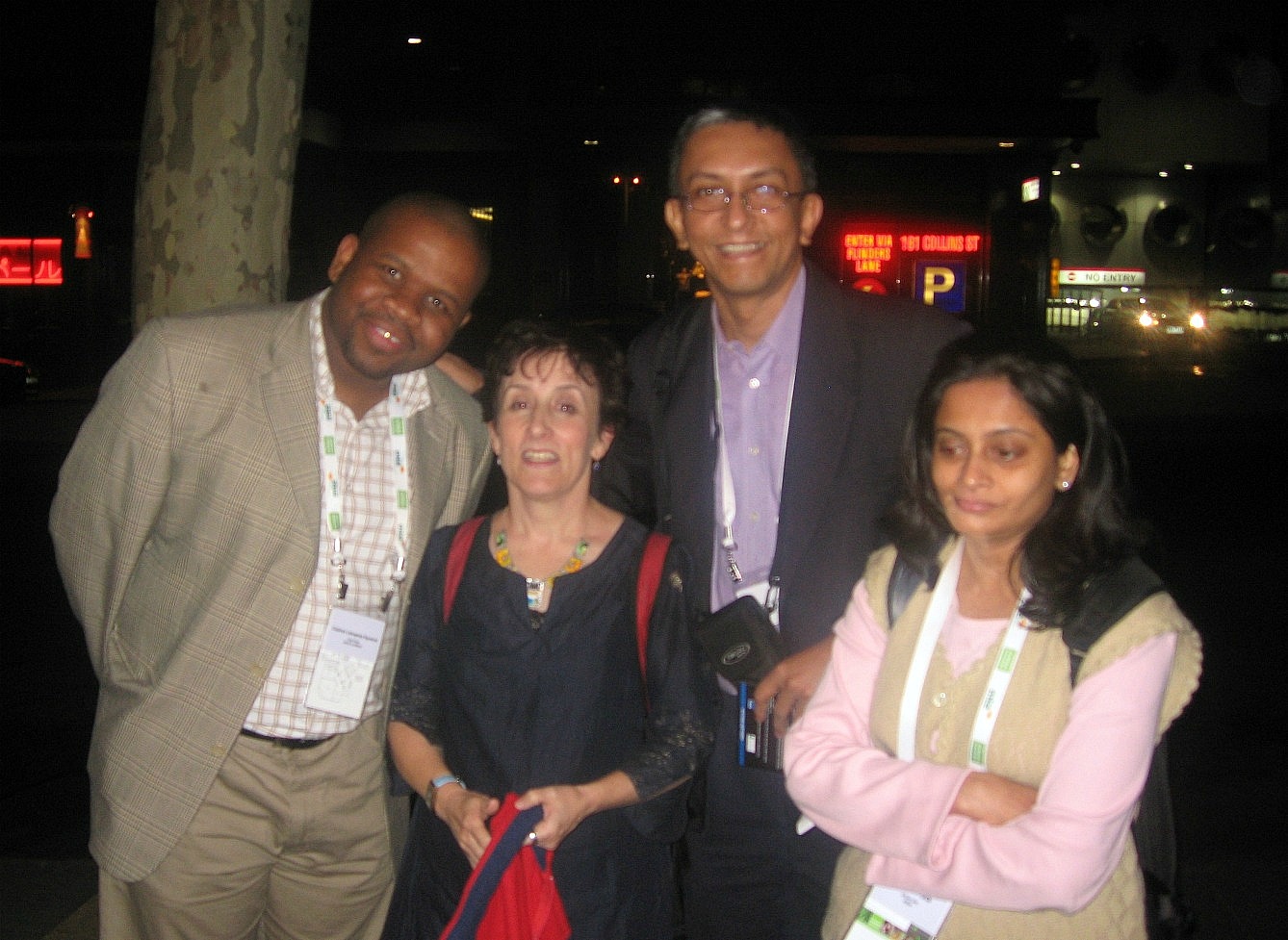
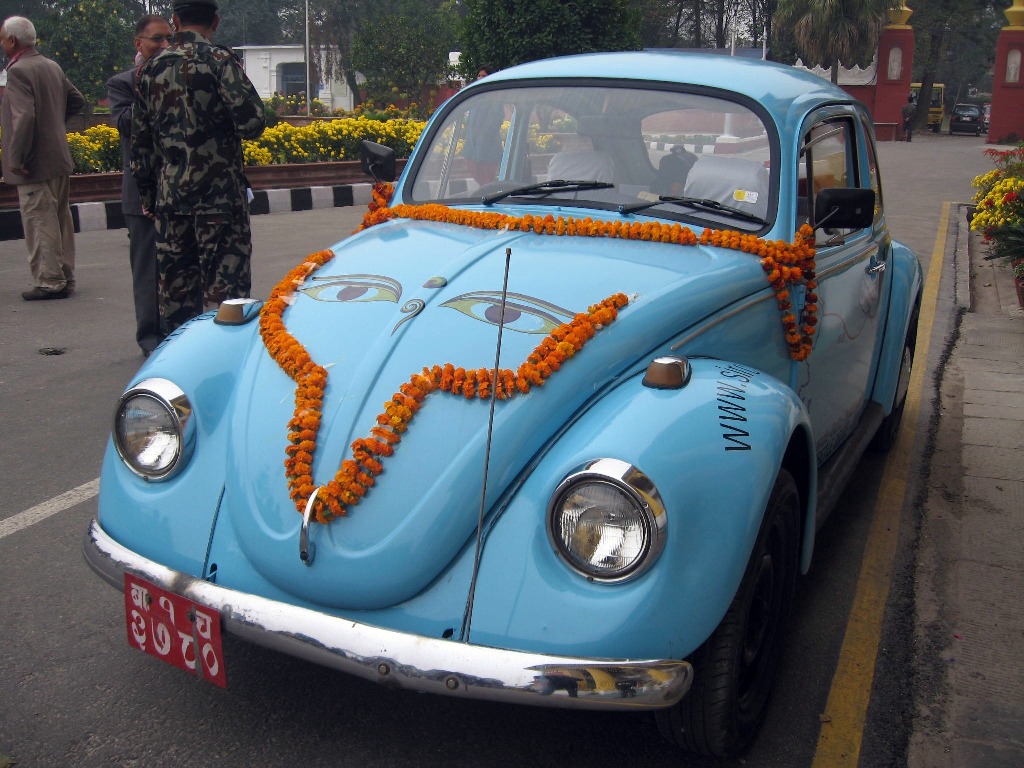
Here's looking at you, people! The Love Bug had only two eyes, but the Spinal Beetle has four. Photo by Nalaka Gunawardene

Deep down in our hearts, we are all Volkswagen Beetle fans: some of us have owned one (my first car was a red bug!), others dream of doing so. The world’s most enduringly popular car design has a particular appeal in South Asia.

And now, South Asian VW Beetle fans have a adorable new mascot. Move over, Disney’s Love Bug (thanks for tons of fun); welcome, Spinal Beetle!

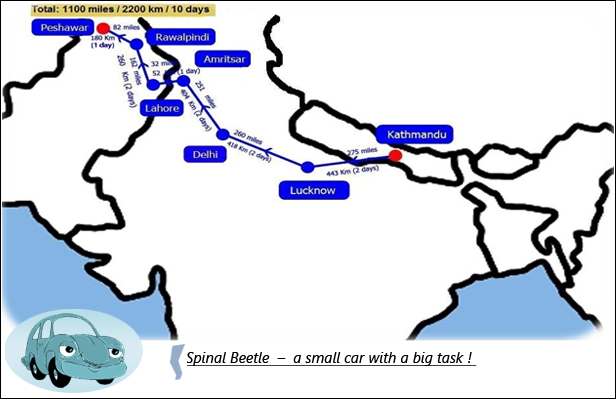
My friend – and hero – Kanak Mani Dixit and his wife Shanta have just completed a 2,200 km (1,100 mile) journey in their nearly 40-year-old Beetle that took them from Kathmandu in Nepal to Peshawar in Pakistan. It was a 12-day, 3-country drive that was to raise funds for spinal injury treatment in Nepal.

By happy coincidence, I was in Kathmandu on 4 Nov 2011 when the President of Nepal waved off Kanak and Shanta on their journey from the President’s House. It was an informal gathering of friends and well-wishers — with none of the pomposity usually associated with heads of state.

So the photos in this post are all mine. The text that follows is from Kanak and his media team:
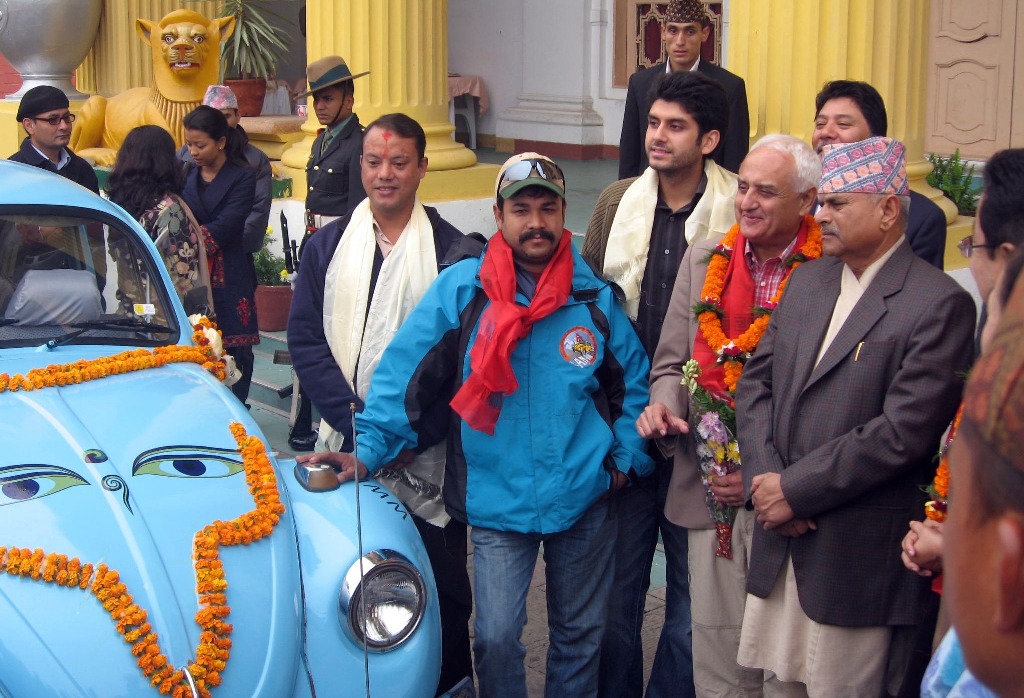
President Ram Baran Yadav about to send off Kanak Mani Dixit and Shanta Dixit on 12-day journey in Spinal Beetle - Photo by Nalaka Gunawardene

The ‘Great Nepal-India-Pakistan Spinal Beetle Drive’ arrived in Peshawar on 16 November, ending a 1100-mile odyssey that took the 1973 VW Beetle from Kathmandu through Lucknow, Agra, Delhi, Amritsar, Lahore, Islamabad and Rawalpindi.

“It was an exhilarating journey across the friendly landmass of Southasia, and I hope a pointer towards easy land-crossings for people from all our countries,” said Dixit. “Most of our journey was along the Grand Trunk Road, built originally by Sher Shah Suri in the 16th century. The 21st century demands that we open this highway for the people, commerce and ideas to flow.”

The journey of the sky-blue Beetle was conducted with three goals of promoting ‘land connectivity’ in Southasia, developing links between spinal injury institutions across the Subcontinent, and raising funds for the Spinal Injury Rehabilitation Centre in Nepal.

“The matter of land connectivity is important because airline links can never provide the mass-level contact that our people and economies deserve. One would want to see the same cacophony at the Atari-Wagah border as at the Nepal-India border of Bhairahawa-Sunauli,” said Dixit.

The trip was helpful in developing linkages between organisations such as the Spinal Centre in Nepal, the Indian Spinal Injuries Centre in Delhi (ISIC), the Mayo Hospital in Lahore, the National Institute for Rehabilitation Medicine in Islamabad, the Armed Forces Institute for Rehabilitation Medicine in Rawalpindi, and the Paraplegic Centre in Peshawar.

As for the goal of raising emergency funds for the Spinal Centre-Nepal in order to cope with sudden rise in demand for its services, Dixit said that a little over half of the USD 110,000 goal had been raised. “We hope to complete our goal through a retroactive campaign because the spinally injured of Nepal badly need support,” he said.

Dixit is a civil rights activist, writer and journalist who injured his spine in a trekking accident a decade ago. The Spinal Centre was started in 2002 and inaugurated by the late Sir Edmund Hillary.
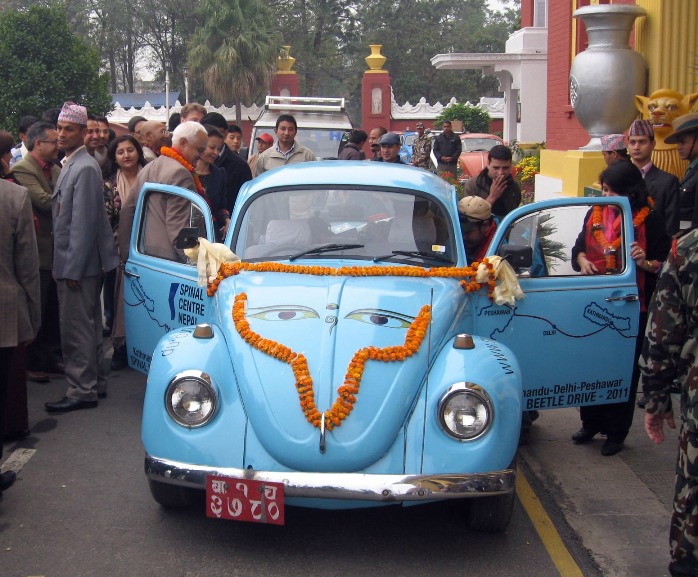
Kanak and Shanta Dixit setting off on their long journey in Spinal Beetle from Sheetal Niwas on 4 Nov 2011 morning - Photo by Nalaka Gunawardene

In the ‘Spinal Beetle’ driven by Dixit, he was accompanied by Shanta Dixit, educator and founding member of the Spinal Centre-Nepal. The back-up car, a Mahindra Bolero, included VW Beetle specialist Naresh Nakarmi, Spinal Centre staff member Suman Khadka and Eelum Dixit, doing videography and photography. Social worker Meera Jyoti is chair of the Spinal Centre-Nepal.

The Spinal Beetle drive was flagged off on 4 November by President Ram Baran Yadav of Nepal. In New Delhi, it was received by Maj. H.P.S. Ahluwalia, founder of ISIC, as well as journalist Kuldip Nayar and actor Om Puri. The physicist and peace activist A.H. Nayyar received the Spinal Beetle at the Wagah-Atari border. Throughout the Southasian drive, the team was graciously hosted by members of the Pakistan-India People’s Forum for Peace and Democracy and other organisations, such as the Indian Doctors for Peace and Development in Agra, and Asha for Education in Lucknow.

Among the many interesting aspects of the trip, from the emotional to the historical, Dixit includes the following:

• The Spinal Beetle team responded to the request of 96-year-old Barkat Singh ‘Pahalwan’ of Jalandhar (Indian Punjab) that some earth be collected from his childhood village of Fatehgarh near Sialkot (Pakistani Punjab). Taking a detour from the GT Road, the team found the place, which had now become an urban suburb of Sialkot, and collected a jarful of agricultural earth for Barkat Singh. (for a picture of Barkat Singh and other images, go to ‘Selected Photographs’ on http://www.sirc.org.np)

• The memory of Sher Shah Suri, the Afghan sultan from present-day Bihar who ruled from Agra, followed the team through much of the route, which he had regularised in the mid-16th century as an administrative and commercial artery. His memory was revived by the ‘kos’ markers along the Delhi-Chandigarh stretch, a neglected postal station outside Wazirabad, the great roadside banyans providing shade to travellers then and now, and the Rohtas Fort on the approach to Rawalpindi.
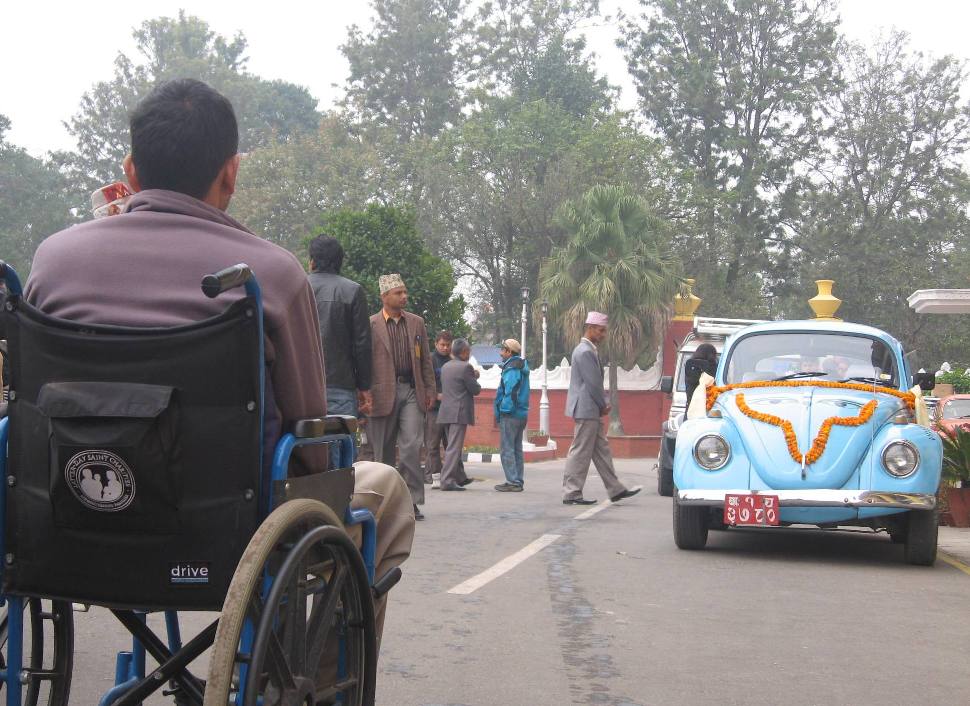
A Nepali on wheelchair watches Spinal Beetle about to depart on a long journey to raise funds for people like him - Photo by Nalaka Gunawardene

• Having started in the Lumbini region of Nepal, where the Buddha was born more than 2,500 years ago, the Spinal Beetle ended its journey in the Gandhar region around Peshawar, a vast centre for Buddhist learning, art and architecture where the Sakyamuni was first etched in human form a few centuries later. In the Potohar Plateau near Islamabad, the Spinal Beetle visited the gigantic Buddhist stupa at the village of Manikyal.

• Arriving in Agra, the Spinal Beetle visited the Taj Mahal on the day of Eid ul-Azha. It arrived in Amritsar and visited Harminder Saheb (the Golden Temple) on the Guru Nanak’s birthday. Passing Gorkha District of Nepal (named after the Gorakhnath temple situated there), the Spinal Beetle traversed Gorakhpur, the base of the Nath sect, and ended its journey in Peshawar where the team visited the Gorakhnath Temple there, opened only a month ago after 60 years of closure. The Delhi-Amritsar leg of the journey was started with a visit to the dargah of Nizamuddin Aulia.

• After watching the mock-militarist show at the Wagah-Atari border between the Indian and Pakistani goose-stepping men in khaki, that very evening the team attended a play on Bhagat Singh and his fight for independence, put on by the Ajoka Theatre of Lahore.

• The Bharatpur government hospital in Chitwan District of Nepal was the first stop of the Spinal Beetle out of Kathmandu. The Bharatpur hospital sought help for setting up a spinal injury rehabilitation unit, which is in line with the Spinal Centre’s belief in decentralising rehabilitation. As a gesture of goodwill for the Nepal-India-Pakistan drive, the hospital committee donated NRs 50,000, which was gratefully received.

• In New Delhi, Maj. H.P.S. Ahluwalia of ISIC suggested that Dixit work to set up a Southasian network for spinal injury rehabilitation, given the specificity of the need. There was an enthusiastic response to this idea throughout the rest of the trip all the way to the Paraplegic Centre in Peshawar.

• At the Mayo Hospital in Lahore, the Medical Superintendent Dr. Zahid Pervaiz and Head of Rehabilitation Medicine Dr. Waseem Iqbal provided information on spinal injury and trauma response that had been developed in Pakistan. They graciously offered four-year full fellowships for two doctors to be sent by the Spinal Centre-Nepal.
Only a Nepali team and a German Bug could get past border babus like this!

• In Islamabad, the Nepal team got specific information on the response to the 2005 earthquake which hit Kashmir and the Hazara division. The team invited Pakistani specialists to Kathmandu to share information on the medical, rescue, social work and humanitarian aspects, so that Nepal would be better able to tackle the mega-tremor that is projected to hit Kathmandu Valley and surrounding areas before long.

• In Islamabad, activist and politician Nafisa Khattak introduced the team to the Melody Theatre, which had served as a staging ground for the sudden rush of victims from the 2005 earthquake. Poignantly, this only cinema hall of the city had been set to torch by a radical mob some years earlier.

• In Agra, members of the Indian Doctors for Peace and Development reminded the team that while there were 8-9 neurosurgeons in the city, there was no rehabilitation centre.

• The Volkswagen Club of Pakistan (VCP) took the Spinal Beetle under its wings in Islamabad and made sure that the car was made ship-shape after the climb up from the Punjab plains. Discussion was started with the club members about organising a VW Beetle rally from Islamabad all the way to Dhaka through India and via Kathmandu, as an exemplary means to develop people-to-people contact in the Subcontinent. This would require cooperation between the VCP, the Association of Nepal’s Beetle Users (ANBUG), the Volkswagen Club of Bangladesh and the Volkswagen Beetle community in India.

• At a meeting organised by the Pakistan-India People’s Forum for Peace and Democracy and the Islamabad Cultural Forum, Dixit spoke on the theme of ‘land connectivity’ in Southasia. “If on an old VW Beetle can do the Kathmandu-to-Peshawar trip with ease, imagine how easy it will be for everyone else.” At this time of geopolitical rapprochement between India, Pakistan and Bangladesh, a special push must be made for land connectivity, he added. “Let a hundred thousand networks bloom across Southasia, in the spectrum from spinal injury to VW Beetles and beyond, to bring the people together.”

More on the Spinal Beetle drive: The sudden rise of the number of patients over the last year has forced the Spinal Centre-Nepal to raise its service from 39 beds to 51. We seek to raise USD 110,000 from the 1,100 mile journey of the Spinal Beetle, at the ‘rate’ of USD 100 per mile from friends and supporters worldwide. By the time the Spinal Beetle arrived at Peshawar on 16 November, a little over half that amount had been raised. The Spinal Beetle Rally is also an effort to raise awareness of spinal injury prevention, rescue, care and rehabilitation in the Subcontinent.

The Spinal Beetle has done the Kathmandu-Dhaka stretch twice, in 2002 and 2005, and touched base at the Centre for the Rehabilitation of the Paralysed (CRP) in Bangladesh. The CRP would be a key institution in the networking of spinal injury rehabilitation institutions that is proposed.

The Spinal Beetle will carry their hopes and dreams across three countries, driven by that small man standing behind - Photo by Nalaka Gunawardene

Sarvodaya Leader A T Ariyaratne at 80: Conscience of a Bruised Nation

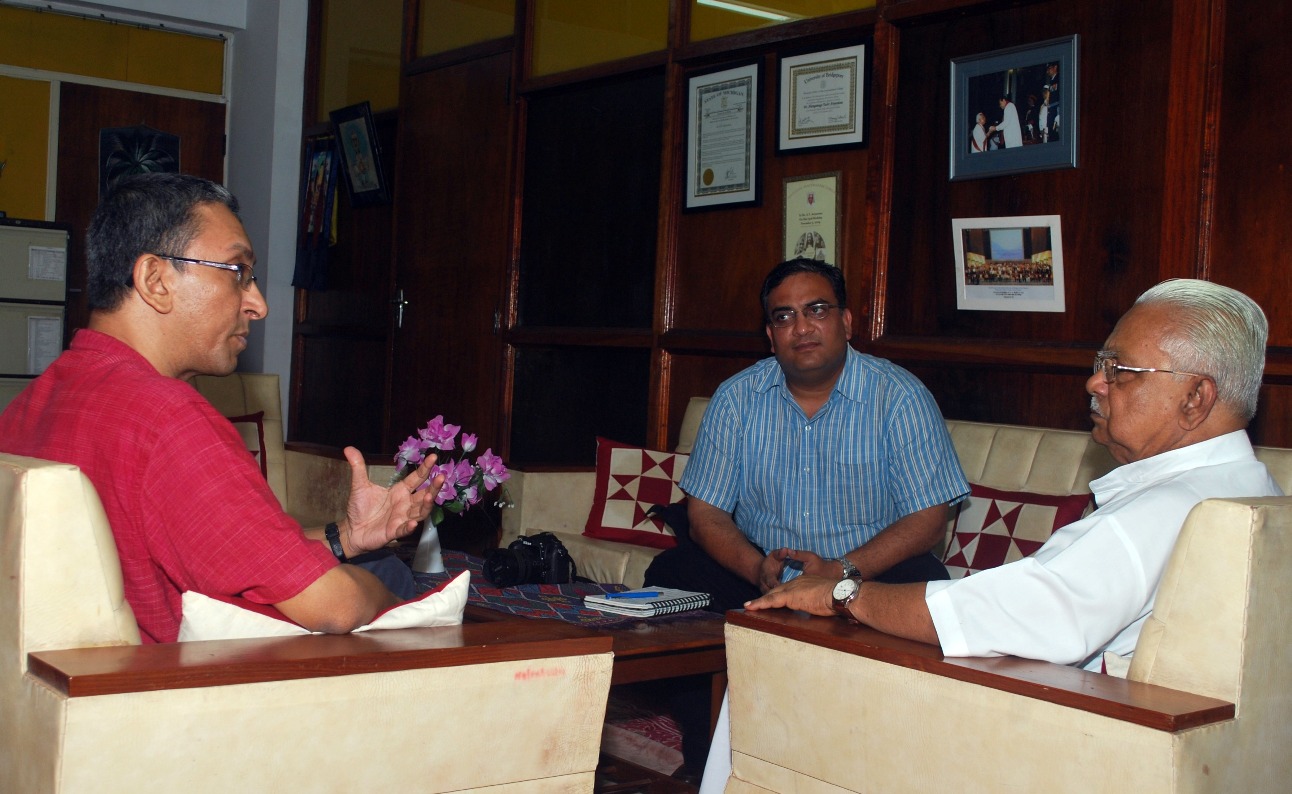
Dr A T Ariyaratne (left) in an expressive moment with Nalaka Gunawardene

When Dr A T Ariyaratne, founder and president of the Sarvodaya Shramadana Movement of Sri Lanka, turned 80 years on 5 November 2011, felicitations poured in from all over the world. This spontaneous act was an indication — if any were needed — of how much and how widely he has touched the lives of millions.

Ari is also our elder statesman of inclusive development. For over half a century, he and Sarvodaya have advocated a nuanced approach to overcoming poverty, illiteracy and various social exclusions. Unlike some die-hard activists, Ari doesn’t ask us to denounce materialism or revert to pre-industrial lifestyles. Instead, he seeks a world without extreme poverty or extreme affluence.

Suddenly, his quest for social justice and equality is resonating all over the world. In fact, Ari has been speaking out for the 99 per cent of less privileged people decades before a movement by that name emerged in the West. In a sense, those occupying Wall Street and other centres of affluence are all children of Sarvodaya.

While Ari shares their moral outrage, his own strategy has been quite different. He didn’t occupy physical spaces in his struggle; he went straight to the fount of all injustice – our minds.

* * * * *

Thus opens my personalised tribute, published on Groundviews.org as Ari of Sarvodaya: Conscience of a Bruised Nation.

In this 2,400-word essay, I salute a hero of mine who continues to speak truth to power, and makes a difference to millions of people in his land and elsewhere. For doing this, he has been ridiculed, harassed and vilified by small minds and the state. He continues undaunted, and shows no sign of slowing down after turning 80.

Here’s another excerpt:

In Ari, we find elements of Mahatma Gandhi (non-violent pursuit of the greater good); the Dalai Lama (interpreting Buddhist philosophy for the modern world); Martin Luther King, Jr. (struggling for the rights and dignity of marginalised people); Nelson Mandela (nurturing democracy and healing society); and Jimmy Carter (globalism with a humanitarian agenda).

“Yet Ari is more than the sum of these noble parts; he is his own unique visionary. And an adroit ‘remixer’ who constantly blends the best of East and West. He adapts our civilisational heritage to tackle the Twenty First Century’s anxieties and uncertainties. Thankfully, though, he doesn’t peddle simplistic solutions to today’s complex problems.

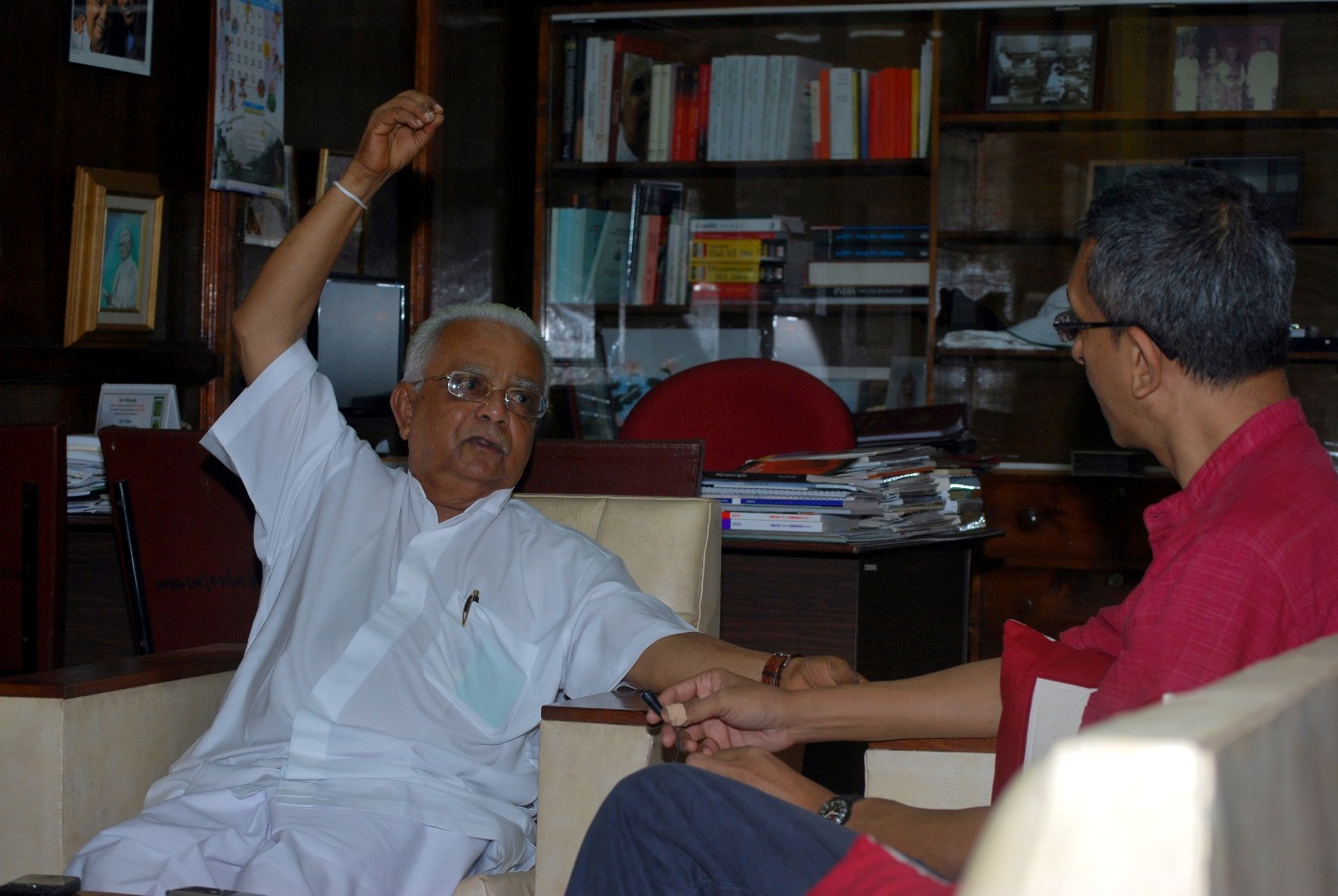
I also recall my first encounter with Ari, in early 1991, when a tyrant leader of Sri Lanka had virtually declared ‘war’ on this unarmed, non-violent small man. I have interviewed him several times since then – the most recent was in March 2011, when I accompanied my journalist friend Aditya Batra from India to talk to Ari (photo, below).

Read the full essay on Groundviews.org: Ari of Sarvodaya: Conscience of a Bruised Nation

Read a compact version of the essay on Light Millennium website (New York)

Read a compact version on Down to Earth magazine (New Delhi): Sri Lanka’s Gandhi Turns 80

L to R - Nalaka Gunawardene, Aditya Batra & Dr A T Ariyaratne of Sarvodaya, March 2011

සිවුමංසල කොලූගැටයා #40: පුවත්පතේ අනාගතේ 2 – ළඟ ළඟ එන මහා මාරුතය

This is the Sinhala text of my Ravaya column published on 13 Nov 2011, where I continue my discussion on the future of newspapers. I look at the last newspaper boom currently on in Asia, and caution that good times won’t last for long: take advantage of it to prepare for the coming (and assured) turbulence in the mainstream media!

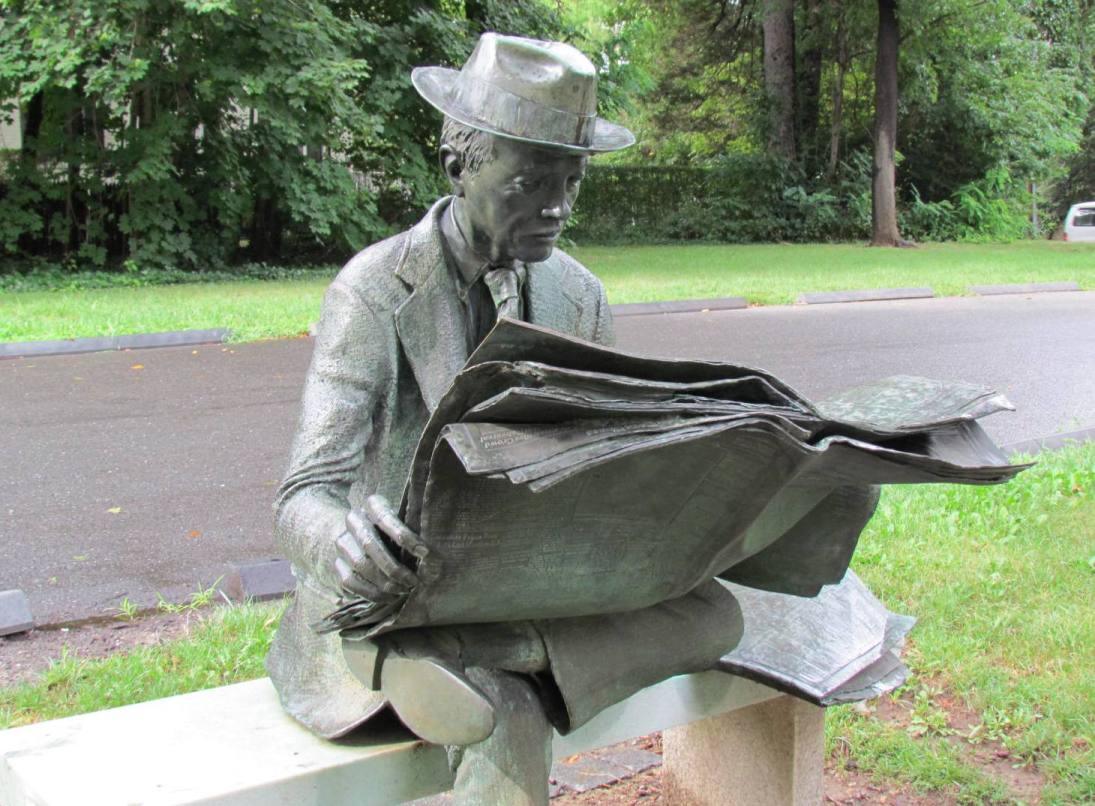
J Seward Johnson's statue of Newspaper Reader - at Princeton University garden

අප දන්නා විදියේ පුවත්පත්වලට වසර 400කට වැඩි ඉතිහාසයක් තිඛෙනවා. ලංකාවේ පුවත්පත් කලා ඉතිහාසයත් වසර 180ක් පමණ පැරණියි. තවමත් නිතිපතා ජනතාව අතරට යන පැරණිතම ජනමාධ්‍ය වන පුවත්පත්, 21 වන සියවසේ තාක‍ෂණික හා ආර්ථීක අභියෝග ජය ගනියි ද? අප විවිධ පැතිකඩවලින් විග්‍රහ කරන ප්‍රශ්නය මෙයයි.

පුවත්පත් කර්මාන්තය සසල කරමින් ලොව බොහෝ රටවල මේ දිනවල පැතිර යන මාරුතය ගැන අප ගිය සතියේ කථා කළා. බටහිර රටවල පුවත්පත් සහ සගරා මිළදී ගැනීම සැළකිය යුතු අන්දමින් අඩු වී තිඛෙනවා. එයට වෙනස් ප්‍රවණතාවක් ආසියාවේ දක්නට ඇති බවත් සදහන් කළා. කුමක් ද මේ වෙනස?

2000 දශකය අවසන් වන විට ආසියාවේ පුවත්පත් සදහා වෙළදපොල ඉල්ලූම වැඩිවෙමින් තිබුණා. ලෝක පුවත්පත් සංගමය (World Association of Newspapers, WAN) එකතු කළ දත්තවලට අනුව, ලොව වැඩිපුර ම අලෙවි වන පුවත්පත් 10න් 9ක් ම ඇත්තේ ආසියාවේ – එනම් ජපානයේ හා චීනයේ. පත්තර ලෑලි හරහා හෝ දායකත්වය හරහා හෝ විකිණෙන පුවත්පත්වල (නොමිළයේ දෙන පුවත්පත් නොවෙයි) සමස්ත අලෙවිය සළකන විට අද ලෝකයේ විශාලතම පුවත්පත් වෙළදපොලවල් ඇත්තේ චීනය, ඉන්දියාව හා ජපානය යන රටවල් තුනේයි. සිවු වැනි තැනට එන්නේ අමෙරිකාවයි. (බලන්න: http://tiny.cc/Circ)

ලෝකයේ වෙනත් කලාපවල පාඨකයන් පුවත්පත් මිළදී ගැනීම අඩු කරන අතර ආසියාවේ එය වැඩි වෙමින් පවතින බව WAN සංඛ්‍යා ලේඛන පෙන්නුම් කරනවා. උදාහරණයකට 2008 වසරේ ඉන්දියානුවන් මිලියන 11.5ක් දෙනා ප්‍රථම වතාවට පුවත්පත් කියවන්නට පටන් ගත්තා. මේ ඇයි?

ආසියාවේ ආර්ථීක වර්ධනයත් සමග මධ්‍යම ජාතිකයන් සංඛ්‍යාව සීඝ්‍රයෙන් වැඩි වෙමින් පවතිනවා. ඉහළ යන ආදායම් මට්ටම් හා සාක‍ෂරතා/අධ්‍යාපනික මට්ටම් සමග පුවත්පත් සදහා ඉල්ලූම වැඩි වනවා. එමෙන්ම පත්තරයක් දිනපතා මිළට ගැනීම යම් අන්දමකින් සමාජ තත්ත්වයක් පෙන්නුම් කරන බවට පිළිගැනීමක් ඉන්දියාව, ඉන්දුනීසියාව, තායිලන්තය වැනි රටවල තිඛෙනවා.

ජනගහනයට සාපේක‍ෂව වැඩිපුර ම පුවත්පත් මිළදී ගන්නා රට ජපානයයි. ලෝකයේ සියළුම රටවල සියළුම භාෂාවලින් පළ කැරෙන පුවත්පත් අතර වැඩිපුර ම අලෙවි වන පුවත්පත් 5 හමුවන්නේ ජපානයේ. පත්තර කියවීම ජපන් ජාතිකයන් අතර ඉතා හොදින් මුල් බැස ගත් පුරුද්දක්. ලංකාවේ පුවත්පත් අලෙවිය පිළිබද නිවැරදි හා පැහැදිලි තොරතුරු සොයා ගැනීම අසීරුයි. කිසිදු පුවත්පත් සමාගමක් තම අලෙවි සංඛ්‍යා හෙළි කරන්නේ නැහැ. ඇතැම් රටවල මෙන් අපක‍ෂපාතව මුද්‍රිත මාධ්‍ය ෙක‍ෂත්‍රයේ දත්ත විග්‍රහ කරන පර්යේෂණායතන ඇත්තේ ද නැහැ.%

අප ආසියාවේ දැන් අත් විදින්නේ පුවත්පත් ප්‍රකාශන ලෝකයේ දැකිය හැකි වන අවසාන සරු කාලය (world’s last newspaper boom) බව ඇතැම් පර්යේෂකයන්ගේ මතයයි. පුවත්පත් පමණක් නොව ජන මාධ්‍ය හැමෙකක් ම පාහේ වැඩිපුරම පරිශීලනය වන්නේ ප්‍රචලිත වී ඇත්තේ ආසියාවේයි. එයට හේතුව (නොබෝදා බිලියන් 7 ඉක්මවා ගිය) ලෝක ජනගහනයෙන් සියයට 60ක් වෙසෙන්නේ ආසියාවේ වීමයි. තවත් හේතුවක් නම් පසුගිය දශක දෙක තුළ එතෙක් සංවෘතව තිබූ මාධ්‍ය වෙළදපොලවල් විවෘත වීම නිසා දෙස් විදෙස් ආයෝජන මාධ්‍ය ෙක‍ෂත්‍රයට වැඩියෙන් ගලා ඒමයි.

මේ වත්මන් ප්‍රවණතා දෙස බලන විට අප නිගමනය කළ යුත්තේ සෙසු ලෝකයේ දැනට සිදුවන මාධ්‍ය වෙළදපොල ගරාවැටීම ආසියාවට නොඑන බව ද? වෙළදපොල පරිනාමීය ප්‍රවාහයන්ට ඔරොත්තු දිය හැකි තරම් ආසියානු මාධ්‍ය ආයතන ශක්තිමත් බව ද?

ගෝලීයකරණය වූ තොරතුරු සමාජය තුළ ලෝක ව්‍යාප්තව පැතිර යන සැඩ සුළංවලින් ආසියාවේ අපට මුළුමනින් ම ආරක‍ෂා වී සිටිය හැකි යයි සිතීම ස්වයං මුලාවක්. 2009 අගදී මෙරට පුවත්පත් හිමිකරුවන්, කතුවරුන් හා ජ්‍යෙෂ්ඨ මාධ්‍යවේදීන් සිටි සභාවක් අමතමින් මා කියා සිටියේ ලෝක මට්ටමින් සිදු වන සන්නිවේදන ප්‍රවණතා මෙරටට පැමිණෙන්නට යම් තරමක ප්‍රමාදයක් ඇති බවයි.

උදහරණයකට ලෝකයේ ටෙලිවිෂන් විකාශයන් 1929දී (අමෙරිකාවේ) ඇරඹුණත් එය ලංකාවේ පටන් ගත්තේ 1979දී – එනම් වසර 50කට පසුව. එහෙත් වාණිජ මට්ටමේ ජංගම දුරකථන සේවා මුල්වරට (ජපානයේ) 1979දී ඇරැඹි දස වසක ඇවෑමෙන් 1989දී මෙරට මුල් ම ජංගම දුරකථන ජාලය ක්‍රියාත්මක වුණා. වාණිජ මට්ටමේ ඉන්ටර්නෙට් සේවා 1980 දශකය අගදී ලොව දියුණු රටවල ඇරැඹුණු අතර 1995දී ලංකාවත් සයිබර් අවකාශයට සම්බන්ධ වුණා.

මේ කාලාන්තරය එන්න එන්න ම කෙටි වීම අද තොරතුරුක සමාජයේ ගති සොබාවයි. එය ප්‍රවණතාවක් හැටියට ගතහොත් හොදට හෝ නරකට හෝ මාධ්‍ය හා තොරතුරු තාක‍ෂණ ෙක‍ෂත්‍රයේ ලොව ඇති වන නව රැලි නොබෝ දිනකින් ම අපේ දූපතටත් ළගා වනවා.

ලොව පුරා හමා යන මාධ්‍ය වෙළදපොල සැඩ සුළංවලින් අපව සුරැකෙන්නේ නැහැ. එයට තව වසර කිහිපයක් තුළ අපට ද මුහුණ දෙන්න සිදු වනවා. එහෙත් අපට උපක්‍රමශීලීව මේ ප්‍රමාදයෙන් ප්‍රයෝජන ගත හැකියි. වෙනත් දියුණු හා දියුණු වන රටවල මාධ්‍ය ආයතන මේ අභියෝගයට මුහුණ දෙන සැටි හා හැඩ ගැසෙන සැටි අප හොදින් අධ්‍යයනය කළ යුතුයි. ළග එන මාරුතයට මුහුණදීමට අපේ මාධ්‍ය පෙළ ගැසීම අවශ්‍යයි.

පුවත්පත් යනු කර්මාන්තයක් වුවත් එය අනෙකුත් වාණිජමය ව්‍යාපාරවලට වඩා සංකල්පමය හා ප්‍රායෝගික අතින් වෙනස්. පුවත්පතක අන්තර්ගතය නිර්මාණය වන්නේ පූර්ණකාලීන හා නිදහස් මාධ්‍යවේදීන් ගණනාවකගේ දායකත්වයෙන්. ප්‍රවෘත්ති, විචිත්‍රාංග, ඡායාරූප හා විද්වත් ලිපි ආදිය පුවත්පත් කාර්යාලයක් ඇතුළතින් මෙන් ම පිටතින් ද ජනනය වනවා. මේ සියල්ල සමානුපාතික කොට, නිසි පිටු සැළසුමක් සහිතව කලට වේලාවට මුද්‍රණය කරන්නටත්, එම පිටපත් රට පුරා කාර්යක‍ෂමව ඛෙදා හරින්නටත් මනා සම්බන්ධීකරණයක් තිබිය යුතුයි. එමෙන්ම පුවත්පත් ආදායමට සම්මාදම් වන වෙළද දැන්වීම්කරුවන් සමග නිති සබදතා පවත්වා ගත යුතුයි.

වෙනත් භාණ්ඩ මෙන් නිපදවා ගබඩා කර ගැනීමේ හැකියාවක් පුවත්පත්වලට නැහැ. වඩාත්ම අළුත් පුවත් හා විග්‍රහයන් හැකි ඉක්මනින් පාඨකයන් අතට පත් කිරීමේ අභියෝගයට ලොව පුරා පුවත්පත් කාර්්‍යාලවල කර්තෘ මණ්ඩල මෙන්ම මුද්‍රණ හා ඛෙදා හැරීමේ සේවකයන්ද දිවා රෑ මුහුණ දෙනවා. කාලය සමග කරන මේ තරග දීවීමට සමාන්තරව ඔවුන් තමන්ගේ තාරගකාරී පුවත්පත් ගැන අවධානය යොමු කළ යුතුයි.

රටේ බල පවත්නා නීති, සදාචාරමය රීතිවලට ගරු කරමින් ඒ සම්මත රාමුව තුළ නැවුම් වූත්, සිත් ඇද ගන්නා වූත් පුවත්පතක් දිනපතා හෝ සතිපතා නිකුත් කළ යුතුයි. ඔබ මේ කියවන පත්තර පිටපත ඔබ අතට එන්නට බොහෝ දෙනකු නන් අයුරින් දායක වී තිඛෙනවා. බලා ගෙන ගියා ම පත්තරයක් කියන්නේ සුළුපටු ප්‍රයත්නයක් නොවෙයි!

එමෙන්ම පුවත්පත් යනු හුදෙක් මුද්‍රිත කොළ කෑලි සමූහයක් නොවෙයි. ප්‍රකාශන ඉතිහාසය මුළුල්ලේ දියුණු වී ආ සම්ප්‍රදායයන් හා ආචාරධර්ම රැසක් නූතන පුවත්පත් කලාවට තිඛෙනවා. ලෝකයේ හැම පුවත්පතක් ම එක හා සමාන අයුරින් මේවාට අනුගත වන්නේ නැහැ. එහෙත් පුළුල්ව පිළි ගැනෙන ‘පොදු සාධකයක්’ නම් පුවත්පත් නියෝජනය කරන්නේ හිමිකරුවන් හා දැන්වීම්කරුවන්ට වඩා පාඨකයන් ඇතුළු ජන සමාජය බවයි. මේ පොදු උන්නතිය (public interest) වෙනුවෙන් පෙනී සිටීම නිසා මාධ්‍ය ආයතනවලට හා ඒවාට අනුයුක්ත මාධ්‍යවේදීන්ට සමාජයේ සුවිශේෂ තැනක් ලැඛෙනවා.

මහජනයාට තොරතුරු දැන ගැනීමේ අයිතිය හා අදහස් ප්‍රකාශ කිරීමේ අයිතිය නියෝජනය කරන පුවත්පත් රැක ගැනීමට සිවිල් සමාජයේ නැඹුරුවක් තිඛෙනවා. සාමාන්‍ය මුද්‍රණාලයකට තබා පොත් මුද්‍රණය කරන ප්‍රකාශන සමාගමකටවත් නැති තරමේ ගෞරවයක් පුවත්පත් ආයතනවලට තවමත් ලැඛෙනවා. නමුත් මේ ඓතිහාසික සබැදියාව පලූදු වන ආකාරයේ බාල අන්තර්ගතයන් ඛෙදන්නට පටන් ගත් විට පාඨකයන් එබදු පුවත්පත් මිළට ගන්නට (හෝ නිකම් දුන්නත් කියවන්නට) කැමැති වන්නේ නැහැ.

අමෙරිකානු මාධ්‍ය ආයතනවල අනාගතය ගැන 1993දී ප්‍රකට ලේඛකයකු කළ අනාවැකියක් ගැන අප ගිය සතියේ සදහන් කළා. පාඨක විශ්වාසය ගරා වැටෙන බව දැන ගත් ඇතැම් මාධ්‍ය ආයතන තමන්ගේ ප්‍රකාශන කියවීමට විවිධාකාර ත්‍යාග පවා දීමට පටන්ගෙන තිඛෙනවා. මේ ආකාරයේ ‘අල්ලස්’ හා ‘සීනිබෝල’වලින් බහුතර පාඨකයන් රවටන්නට අමාරුයි. මොන උපක්‍රම යොදා ගත්තත් පාඨකයන්ගේ විශ්වාසය නොමැතිව වැඩි කල් පවතින්නට කිසිදු පුවත්පතකට බැහැ.

පත්තරයක් කියන්නේ මහජන මනාපය දිනපතා ම හෝ සති අගදී හෝ නිරතුරුව පතන හා ලබන ප්‍රකාශනයක්. මේ මනාපය දිගින් දිගට පවත්වා ගැනීමේ අභියෝගයක් තිඛෙනවා. එය තරගකාරී වෙනත් පුවත්පත් සමග පමණක් ඇති තරග දිවීමක් නොවෙයි. පත්තරවලට වඩා ඉක්මනින් ප්‍රවෘත්ති රටට දීමේ හැකියාව රේඩියෝ, ටෙලිවිෂන් හා ඉන්ටර්නෙට් මාධ්‍යයන්ට තිඛෙනවා. ඒ විද්යුත් මාධ්‍යවල ව්‍යප්තියත් සමග තමන්ගේ අන්තර්තය හා මුහුණුවර වෙනස් කරන්නට බොහෝ පුවත්පත්වලට පසුගිය දශක දෙක තුළ සිදුවුණා.

විද්යුත් මාධ්‍ය ඉක්මන් වූවත් යමක් ගැඹුරින් විග්‍රහ කිරීමේ ඉඩකඩ සීමිතයි. මේ නිසා ලොව පුරා පුවත්පත් තනිකර ප්‍රවෘත්ති ආවරණයට වඩා අද උත්සාහ කරන්නේ ප්‍රවෘත්ති විග්‍රහ කිරීමටයි. ප්‍රවෘත්ති බවට පත් වන සිදුවීම් සමාජයේ විවිධාකාර ප්‍රවාහයන්ගෙන් මතු වන නිසා පිටුපසින් ඇති සාධක හා ප්‍රවණතා මනා සේ හදුනාගැනීම සංකීර්ණ සමාජයක වෙසෙන අප කාටත් වැදගත්. මේ ප්‍රවාහයන් ගැන පර්යේෂකයන්, සමාජ සේවකයන් හා විද්වතුන් කරන විග්‍රහවලට දැන් පුවත්පත් හා පුවත් සඟරාවල වැඩි තැනක් ලැඛෙනවා. අද බටහිර ඇතැම් පුවත්පත් Newspaper යන නමට සමාන්තරව Viewspaper යන නම ද තමන් හැදින්වීමට යොදා ගන්නවා.

මෙකී නොකී සියල්ල මා දකින්නේ පරිනාමීය හැඩ ගැසීම් හැටියටයි. වඩාත් සවිමත් උචිත වූ ජීවීන් ඉතිරි කරමින් දුර්වලයන් වඳ කර දමන ජෛවීය පරිනාමය මෙන් ම තොරතුරු සමාජයේ ද පරිනාමීය බලවේග ක්‍රියාත්මක වනවා. එහෙත් ජෛව පරිනාමයට වඩා එය සියුම් හා බුද්ධිගෝචරයි. මාධ්‍ය ග්‍රාහකයන්ට හරවත්, ප්‍රයෝජනවත් දෙයක් සිත් කාවදින අයුරින් ඉදිරිපත් කරන පුවත්පතකට අද මහා තොරතුරු ප්‍රවාහයේ නොගිලී පවතින්නට ඉඩක් ඇතැයි මා විශ්වාස කරනවා.

බලන්න: http://tiny.cc/DigImi

Christina Scott (1961 – 2011): Passionate science journalist, interrupted mid-sentence…

Christina Scott: A funny story always got funnier when she related it...

I was travelling in the Himalayan Republic of Nepal when I heard the sad news: Christina Scott, a pioneering science journalist from South Africa, has just been killed in a road accident. She would have turned 50 on November 20.

As Mike Shanahan, whose tweet broke the sad news of Christina’s hasty departure, wrote: there is one star less in Africa.

Christina’s tragic and abrupt departure elicited an outpouring of grief, memories and tributes from science journalists, scientists and others who knew and admired her. I’m late to join that, I know, but here’s the slightly expanded version of what I just posted on SciDev.Net as a reader comment:

“Short, stroppy reporter with a funny accent. Likes to eat sushi. No head for alcohol and caffeine addiction.” That’s how Canadian-born Christina chose to introduce herself. Everyone has an anecdote about her, reminding us of the colourful and highly talented person she was.

Christina was passionate, articulate and had a clear vision of how science, technology and innovation could make a difference to millions of people in Africa, Asia and Latin America. She made science fun. She was also great fun to work with.

Christina and I didn’t meet that often, separated as we are by time zones and the Indian Ocean. But our few encounters — usually at professional gatherings of science journalists — left a deep impression.

We first met at the Fifth World Conference of Science Journalists in Melbourne in April 2007, where we were both speakers.

She and I were part of a memorable plenary session on ‘Reporting Science in Emerging Economies’ that was put together by SciDev.Net and produced by Julie Clayton. It had science journalists or editors from Brazil, China, India, Sri Lanka and Zambia.

It was Christina who came up with a novel idea to dim the meeting hall lights just as we started. In the semi-darkness, she lit a single cigarette lighter to symbolise how science journalists in the developing world struggled daily with power outages, poor literacy, unsympathetic editors and uncaring governments.

Earlier in that conference, Christina compared some of her professional tribe to extremophile bacteria: hardy enough to survive in very harsh environments. The broad conclusion from our session was that, just as life finds a way against many odds, so does science journalism. In conditions far from ideal, science journalism happens — and even thrives — thanks to the resilience, resourcefulness and commitment of its practitioners.

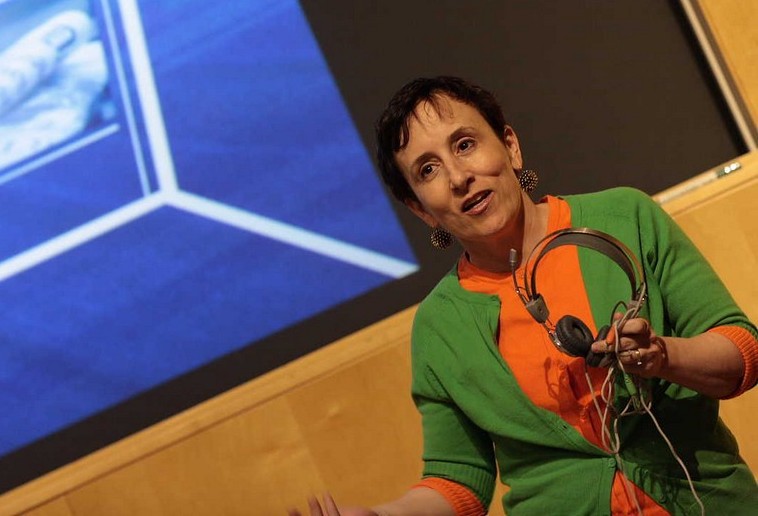
Christina Scott (left) making a point. Photo courtesy WFSJ

Christina excelled in communicating science through print, web and broadcast media. She switched easily between written and spoken words, and could hold an audience in any medium. Such multimedia journalists are rare.

But she didn’t allow the technology ‘tail’ to wag the journalism ‘dog’. In 2007, she was still wondering if Internet, computes and online communications could make much headway in reaching out a majority of South Africans. It wasn’t a lack of connectivity and computers any longer, but a more basic absence of electricity in many remote areas.

To her, old fashioned radio was still the most cost-effective way to reach more people quickly. That was also her favourite medium, one in which she did some of most memorable coverage.

Christina had a fine sense of theatrical performance to engage a live audience. She knew just how to shook and hook them. She had no time or patience for political correctness or euphemisms; she just spoke truth to power.

I learnt much by being in her audience, or sharing a platform with her. It was exhilarating to see how she engaged audiences full of jaded and sceptical journalists.

Once, during a panel discussing HIV/AIDS, she asked her audience how many were aged over 50 years. A few hands went up. “In South African terms, chances are you’re already dead,” she declared.

She didn’t have comforting words for those below 35 either: “You’re probably infected with HIV, and don’t know it yet — and go around giving it to others!”
That’s how she summed up the stark realities of South Africa, which has one of the highest HIV infection rates in the world. She then personalized, with a wish was that her daughter, then 15, would get through college without contracting HIV.

Christina Scott was a supernova who shone bright and fiery. Her trail would continue to blaze for a long time. But we won’t hear that spirited voice, in that funny accent, always ready to tell an interesting story.

Here are links to some tributes found online:

Christina Scott: Editorial by SciDev.Net editor David Dickson

ResearchResearh.com: Christina Scott, doyenne of African science journalism, dies
by Ehsan Masood

Mail & Guardian: Christina Scott: Farewell to ‘short, stroppy’ giant
by Adele Baleta

Mike Shanahan blog: One less star in Africa tonight

WFSJ Website: Tribute to Christina Scott RIP

Africa STI: Christina Scott, Africa’s Foremost Science Journalist, dies

Facebook Page: Remembering Christina Scott

In Melbourne, April 2007: L to R - To be identified, Christina Scott, Nalaka Gunawardene and T V Padma

සිවුමංසල කොලූගැටයා #39: පුවත්පතේ අනාගතේ ඩයිනසෝර් මාවත ද?

This is the Sinhala text of my weekend column in Ravaya, published on 6 Nov 2011. To mark the newspapers’s 25th anniversary that falls this month, I begin some reflections on the future of newspapers. In this first piece, I discuss how science fiction and thriller writer Michael Crichton (1942-2008) once foresaw the fate of what he called ‘Mediasaurus’.

Who succeeds mediasaurus?

රාවයට වසර 25ක් සපිරෙන්නේ 2011 නොවැම්බර් මාසයේ. මගේ මාධ්‍ය හා සන්නිවේදන ජීවිතයට වසර 25ක් පිරුණේ 2011 සැප්තැම්බරයේ. මේ පිය සටහන් දෙක නිමිති කර ගෙන එක්කෝ මට යටගිය දවස් ගැන ආවර්ණය කළ හැකියි. නොඑසේ නම් මේ සංධිස්ථානයේ කෙටි විරාමයක් ගනිමින් ගනිමින් ඉදිරිය ගැන මෙනෙහි කළ හැකියි. මා කවදත් අනාගතය දෙස එබී බලන්නට කැමැති නිසා පුවත්පත් කලාවේ හා මාධ්‍ය කර්මාන්තයේ හෙට දවස ගැන කථා කරමු.

අද ලොව බහුවිධ ජනමාධ්‍ය අතරින් සංවිධානාත්මකව පවතින පැරණිතම ජන මාධ්‍යය පුවත්පත හෙවත් මුද්‍රිත මාධ්‍යයයි. මුද්‍රණ යන්ත්‍ර මගින් පිටපත් මුද්‍රණය කොට අලෙවි කළ, කාලීන තොරතුරු රැගත් වාරික ප්‍රකාශනයක් ලෙස දැනට හදුනාගෙන ඇති පැරණිතම පුවත්පත මුල් වරට එළි දැක්කේ 1605දී ජර්මනියේ. මේ අනුව වසර 400කට වැඩි ඉතිහාසයක් පුවත්පත්වලට තිඛෙනවා. මේ සියවස් හතරක කාලය තුළ සිනමාව, රේඩියෝව, ටෙලිවිෂනය හා ඉන්ටර්නෙට් මාධ්‍යවල බිහි වීමත් සමග නව අභියෝගවලට මුහුණ දෙමින් පරිනාමය වී ආ පුවත්පතේ ඉතිහාසය විචිත්‍රයි.

21 වන සියවසේ නූතන තොරතුරු සමාජයේ ප්‍රවණතා හා ග්‍රාහක බලාපොරොත්තුවලට ප්‍රතිචාර දක්වමින් හැඩ ගැසෙන්නට පුවත්පත් කලාවට හා කර්මාන්තයට හැකි ද? නැත්නම් ඉදිරි වසර හෝ දශක කිහිපය තුළ පුවත්පත් වද වී යාමේ තර්ජනයක් ඇත් ද?

මුද්‍රිත මාධ්‍යයේ අනාගතය ගැන සුභවාදීව මෙන්ම අසුභවාදීව කැරෙන විග්‍රහයන් තිඛෙනවා. පත්තර කියවමින් හැදී වැඩී, පත්තරවලට දැඩි ඇල්මකින් යුතුව මාධ්‍ය ලෝකයට පිවිසී, කලක් පත්තරවල වැඩ කළ මට මේ ෙක‍ෂත්‍රය ගැන ලෙන්ගතුකමක් හා බැදීමක් තිඛෙනවා. එහෙත් ඒ බැදීම්වලින් මදකට දුරස් වී තුලනාත්මකව හා යථාර්ථවාදීව පුවත්පතේ අනාගතේ දෙස බැලීමට මා උත්සාහ කරනවා.

සොබා දහමේ නොනවතින පරිනාමීය කි්‍රයාදාමයක් පවතින බව (evolutionary process) අප දන්නවා. ඒ පරිනාමයේදී වඩාත් සවිමත්, උපක්‍රමශීලී හා ආක්‍රමණශීලී ජීවීන් ඉතිරි වන අතර අනෙක් ජීවීන් මුළු ගැන්වී, ව`ද වී යනවා. මෙයට සමාන ප්‍රවාහයන් මානව සමාජය හා වෙළ`දපොල ආර්ථීකය තුළත් ක්‍රියාත්මක වනවා. කාලානුරූපව හැඩ ගැසෙන්නට නොහැකි හෝ නොකැමැති හෝ කර්මාන්ත, ආයතන හා සම්ප්‍රදායයන් කල් පවතින්නේ නැහැ. ජනමාධ්‍ය ෙක‍ෂත්‍රයටත් මෙය අදාලයි.

මේ බව ප්‍රබලව අපට කියා දුන් එක් අයකු වූයේ අමෙරිකානු විද්‍යා ප්‍රබන්ධ හා ත්‍රාසජනක කථා රචක මයිකල් ක්‍රයිටන් (Michael Crichton). වෘත්තියෙන් වෛද්‍යවරයකු වූ ඔහු ජුරාසික් පාක් (Jurassic Park) පොත් පෙළ ලිවීම නිසා ලෝප්‍රකට වුණා. ජෛවීය ඉතිහාසයේ වසර මිලියන් 165ක පමණ කාලයක් තිස්සේ මහ පොළවේ ප්‍රබලතම සත්ත්ව කොට්ඨාශය වූ ඩයිනසෝරයන් (dinosaurs) නැවත බිහි කිරීමේ භයානක විද්‍යාත්මක අත්හදා බැලීමක් පාදක කර ගත් ඒ කථා, ස්ටීවන් ස්පිල්බර්ග් විසින් ජනප්‍රිය චිත්‍රපට මාලාවක් බවටත් පත් කළා.

ඩයිනෝසරයන් වද වී යාමට හේතු ගැන විද්‍යාඥයන් තවමත් තර්ක විතර්ක කරනවා. ඩයනසෝරයන් පමණක් නොවෙයි වෙනත් සත්ත්ව කොට්ඨාශයනුත් කලින් කලට වද වී යාම ජෛව පරිනාමයේ හොදින් දන්නා, පාෂාණභූත සාක‍ෂීන්ගෙන් ද ඔප්පු වන සත්‍යයක්.

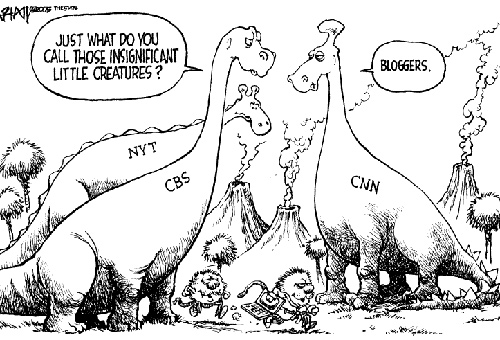
1993 සැප්තැම්බර් මාසයේ Wired ගරාවේ කලාපයට මයිකල් ක්‍රයිටන් ‘Mediasaurus’ නමින් අනාගතවේදී ලිපියක් ලිව්වා. එහි මුඛ්‍ය අදහස වුණේ එදා ඩයිනසෝරයන් මෙන් ම ප්‍රධාන ප්‍රවාහයේ ජනමාධ්‍ය ද පරිනාමීයව හැඩ ගැසීමට නොහැකි වීම නිසා නුදුරු අනාගතයේදී වද වී යනු ඇති බවයි.

එහි එක් තැනෙක ඔහු මෙසේ කීවා: “මෑත සමීක‍ෂණ කිහිපයකින් හෙළි වූ පරිදි අමෙරිකානු මාධ්‍ය බහුතරයක් මහජනයාට සැබැවින් ම අදාල හා වැදගත් කරුණු ගැන වාර්තා කිරීම හා ගවේෂණය වෙනුවට වල්පල් හා ඕපාදූපවලට වැඩි අවධානයක් යොමු කරනවා. රටේ ප්‍රශ්න ගැන විග්‍රහ කරනවා වෙනුවට අපේ මාධ්‍ය කරන්නේ ඒ දැවෙන ප්‍රශ්නවලට තව ටිකක් ඉන්ධන එකතු කිරීමයි. තමන්ගේ ලොකුකම ගැන අධිතක්සේරුවක් හා ස්වයංරාගයක් ((Narcissistic) ඇති මාධ්‍යවේදීන් හා දේශපාලකයන් දෙපසකට වී කරන ක්‍රීඩා තරගයක් බදු මේ විකාරය දෙස මාධ්‍ය ග්‍රාහකයන් බලා සිටින්නේ පිළිකුලෙන් හා කලකිරීමෙන් යුතුවයි. මේ තත්වය දිගට ම පවතින්නට බැහැ!”

ක්‍රයිටන් සැබෑ ලෝකයෙන් දුරස්ථ වූ දවල් හීන බලන්නකු නොවෙයි. වෙළදපොල ආර්ථීකය තුළ තමන්ගේ පැවැත්ම සදහා මාධ්‍ය ආයතන තරගකාරීව නිරන්තර අරගලයක යෙදෙන බව ඔහු පිළි ගත්තා. (මාධ්‍යවල සමාජ වගකීම ගැන සරසවි දේශනාගාර හා විසිත්ත කාමරවල සිට බණ කියන පර්යේෂකයන්ට හසු නොවන යථාර්ථයත් එයයි.)

ඔහු තව දුරටත් මෙසේ තර්ක කළා: “වර්තමානයේ මාධ්‍ය යනු කර්මාන්තයක්. ඒ කර්මාන්තය සමාජයට සපයන නිෂ්පාදනය නම් තොරතුරුයි (information). බාල බඩු නිපදවන හා අලෙවි කරන සමාගම් පාරිභෝගිකයන් විසින් ප්‍රතිෙක‍ෂප කරනවා. අපේ මාධ්‍ය කර්මාන්තය මෑතක පටන් නොවැදගත්, වැරදි සහගත, විකෘති වූ හා වෙනත් අන්දමින් බාල මට්ටමේ තොරතුරු අපට අලෙවි කරනවා. සරුව පිත්තල දවටනවල අසුරා තිබුණත් බය නැතිව පාවිච්චි කළ නොහැකි තරමට අපේ මාධ්‍ය අපට දෙන තොරතුරුවල ප්‍රමිතියක් නැහැ. මේ නිසා ටිකෙන් ටික පාරිභෝගිකයන් මේ ‘බාල බඩු’ මිළට ගැනීම අඩු කරනවා. නොබෝ කලෙකින් අමෙරිකානු මාධ්‍ය කර්මාන්තයට ඇති තරම් පාරිභෝගිකයන් සොයා ගන්නට බැරි වේවි. එවිට ඒ මාධ්‍ය, වෙළදපොල ප්‍රවාහයන් විසින් ගසා ගෙන ගොස් අතුරුදහන් වෙනු ඇති.”

ඔහු කීවේ නිව්යෝක් ටයිම්ස් පත්‍රය වැනි මුද්‍රිත ලෝකයේ මහා බලකණු මෙන් ම ABC, NBC සහ CBS වැනි අමෙරිකානු ටෙලිවිෂන් නාලිකා ද දශකයක් ඇතුළත වෙළ`දපොලෙන් ඉවතට විසි වීල වද වී යනු ඇති බවයි.

මේ අතර සියළු මාධ්‍යයන් යටිකුරු කරන නව තාක‍ෂණයක් ද මතුව ඇති බව ක්‍රයිටන් සිය ලිපියේ සදහන් කළා. ඒ තමා ඉන්ටර්නෙට්. 1993දී ඉන්ටර්නෙට් මාධ්‍යය දියුණු රටවල පවා එතරම් ප්‍රචලිත වී තිබුණේ නැහැ. එහෙත් තොරතුරු ගලනයට එයින් ඇති කළ හැකි ප්‍රබල බලපෑම ක්‍රයිටන් කල් තබා දුටුවා.

ක්‍රයිටන්ගේ විද්‍යාත්මක චින්තනය හා පරිකල්පන ශක්තිය ගැන ලොකු පිළිගැනීමක් පැවති නිසා ඔහුගේ ලිපිය මාධ්‍ය ආයතන හා පර්යේෂකයන් අතර වාද විවාද ඇති කළා. එතැන් පටන් ගෙවී ගිය දශකය (1993-2003) කාලයේ ඉන්ටර්නෙට් මාධ්‍යයේ සීඝ්‍ර ප්‍රගමනයක් සිදු වුණා. 1995දී ලොව පුරා ඉන්ටර්නෙට් පරිහරණය කළේ මිලියන 16යි. එය 2003 අගදී මිලියන් 719 දක්වා ඉහළ ගියා. (2011 මැද වන විට මේ සංඛ්‍යාව මිලියන් 2ල110 යි) ඉන්ටර්නෙට් ප්‍රචලිත වීම සම කළ හැක්කේ 1447 දී යොහාන් ගුටන්බර්ග් විසින් මුද්‍රණ ශිල්පයේ වර්තමාන තාක‍ෂණ සම්ප්‍රදාය ඇරඹීමටයි. ඒ දක්වා ඉතා සීමිතව කෙරුණු තොරතුරු හුවමාරුවට හා දැනුම ඛෙදා හැරීමට විශාල ඉදිරි පිම්මක් පනින්නට මුද්‍රණ ශිල්පය ඉඩ සැළැස්වූවා. (ඒ දක්වා සිදු වූයේ පොත් හා වෙනත් ලේඛනවල පිටපත් තනි තනිව අතින් පිටපත් කිරීමයි.)

Mediasaurus - courtesy Slate
ඉන්ටර්නෙට් ප්‍රචලිත වීම සමග ඒ නව මාධ්‍යයට බද්ධවීමේ ක්‍රම සොයන්නට පුවත්පත්, සගරා, රේඩියෝ හා ටෙලිවිෂන් ආයතනවලට සිදු වුණා. 2003 වන විට ප්‍රධාන පෙළේ මාධ්‍ය ආයතන තමන්ගේ වෙබ් අඩවි අරඹා සයිබර් අවකාශයේ තම ලකුණ යම් තරමකට සටහන් කර තිබුණා. ක්‍රයිටන්ගේ අනාවැකියට දශකයක් පිරෙන්නට ආසන්න වන විට අමෙරිකාවේ Slate නම් වෙබ් අඩවියේ මාධ්‍යවේදියෙක් ඒ ගැන ඔහුගෙන් විමසුවා. ඒ වන විටත් මාධ්‍ය ආයතන බරපතල ගරා වැටීමකට ලක් වී තිබුණේ නැහැ. ඔහුගේ උත්තරය: “අනාගතය පිළිබදව ඉලක්කගතව අනාවැකි කියන්නට කාටවත් බැහැ. මා අනතුරු ඇග වූ මාධ්‍ය ගරා වැටීම සිදු විය හැකි බව මා තවමත් විශ්වාස කරනවා. එහෙත් එයට දශකයකට වැඩි කාලයක් ගත වන හැඩයි!”

2000 දශකය තුළ අමෙරිකාව, කැනඩාව සහ යුරෝපයේ රටවල් ගණනාවක මුද්‍රිත මාධ්‍යය විශාල වෙළදපොල අර්බුදයකට ලක් වුණා. 2008 නොවැම්බර් 4 වනදා ක්‍රයිටන් මිය යන විට ඔහු අනතුරු ඇග වූ තත්ත්වය සැබෑවට ම ඉස්මතු වෙමින් තිබුණා. බටහිර රටවල පුවත්පත් සහ සගරා මිළදී ගැනීම සැළකිය යුතු අන්දමින් අඩු වී තිඛෙනවා. අලෙවි වන පිටපත් ගණන අඩු වූ විට දැන්වීම් ලැබීම ද පහත වැටෙනවා. පත්තර හා ස`ගරා කර්මාන්තය පදනම් වී ඇත්තේ දැන්වීම් ආදායමින් තම නිෂ්පාදන වියදමෙන් වැඩි කොටසක් පියවා ගන්නා අතර ඉතිරි ආදායම පිටපත් අලෙවියෙන් ලබා ගැනීමේ ආකෘතිය තුළයි. (දැන්වීම්වලට අප පෞද්ගලිකව කැමති වූවත් නැතත් මාධ්‍ය කර්මාන්තයට ඒවා නැතුව ම බැහැ. සරල උදාහරණයක් ගත්තොත් රු. 50කට විකිණෙන පත්තර පිටපතක නිෂ්පාදන වියදම එමෙන් දෙතුන් ගුණයක් වෙනවා. මේ වෙනස පියවා ගන්නේ දැන්වීම්වලින් ලැඛෙන ආදායමින්.)

බටහිර රටවල පත්තර සගරා පමණක් නොවෙයි. ප්‍රධාන පෙළේ ටෙලිවිෂන් හා රේඩියෝ සමාගම් ද අද වන විට දැඩි ආර්ථීක කුණාටුවකට හසු වී සිටිනවා. එයට හේතු වූ සාධක ගැන පොදු එකගතාවයක් නැහැ. ඇතැම් විචාරකයන් කියන්නේ ලොව පුරා 2008 සිට පැතිර ගිය ආර්ථීක අවපාතය එයට දායක වූ බවයි.
එහෙත් තවත් පර්යේෂකයන් පෙන්වා දෙන්නේ වාණිජමය මාධ්‍ය ෙක‍ෂත්‍රයේ – විශේෂයෙන්ම පත්තර හා සගරාවල – පිරිහීම 2008 පෙර පටන් ම ඇරඹී තිබුණු බවත්, එයට එම ෙක‍ෂත්‍රය තුළින් ම මතු වූ සාධක වැඩියෙන් හේතු වූ බවත්. මයිකල් ක්‍රයිටන්ගේ 1993 විග්‍රහය සිහිපත් කරමින් ඔවුන් කියන්නේ පාරිභෝගික සමාජය විසින් මාධ්‍ය ප්‍රතිෙක‍ෂප කිරීමට වගකිව යුත්තේ මාධ්‍ය ආයතන හා මාධ්‍යවේදීන් ම බවයි.

මීට අමතරව ඉන්ටර්නෙට් මාධ්‍යයේ ව්‍යාප්ත වීම නිසා තනිකර ම ඉන්ටර්නෙට් හරහා එසැනින් ප්‍රවෘත්ති ඛෙදාහරින නව මාධ්‍ය සේවා බිහි වුණා. ඒවාත් සමග තරග කිරීම සාම්ප්‍රදායික පුවත්පත්වලට හෝ එම පුවත්පත්වල වෙබ් අඩවිවලට ලෙහෙසි වූයේ නැහැ. පත්තර කර්මාන්තයේ පසුබෑමට මේ සාධක සියල්ල අඩු වැඩි පමණින් දායක වී තිඛෙනවා. නමුත් මේ ගෝලීය ප්‍රවණතාවයට වෙනස් තත්ත්වයක් ආසියාවේ රටවල දක්නට තිඛෙනවා.

පාඨක විශ්වාසය රැක ගනිමින්, නව තාක‍ෂණයන්ගේ අභියෝගවලට මුහුණ දෙමින් වාණිජමය වශයෙන් සාර්ථක පුවත්පත් හා සගරා පවත්වා ගත හැකි ද? එසේ නැතිනම් සහනාධාර ලබන හෝ විකල්ප ආදායම් මත යැපෙන ආර්ථීක මොඩලයකට මාරු වීමට ලොව පුරා පුවත්පත්වලට ළගදී ම සිදු වෙයි ද? පුරවැසි මාධ්‍යවේදීන් හා වැටුප් ලබන මාධ්‍යවේදීන් අතර පරතරය අඩු වී යන විට මාධ්‍ය ලෝකයේ කුමන විපර්යාස සිදු වේද? මේ ප්‍රශ්නවලට අපි එළඹෙන සතිවල පිළිතුරු සොයා යමු!

The Day of 7 Billion Humans is here…and we keep counting!

Now playing on a planet dear to you: 7 Billion People...and counting

When I was born in the mid 1960s, the world’s combined human population was around three and a half billion (having passed the 3 billion mark in 1960). In my life time of 45 years, this number has doubled.

We can never pinpoint it exactly, but the world’s demographers have agreed to count 31 October 2011 as the Day of Seven Billion. Sometime today, our human numbers will add up to 7 billion…and keep rising.

That’s 7,000,000,000 living and breathing people — all of who will need to be fed, clothed, sheltered and cared for in many other ways. And they will have higher aspirations in the 21st Century than ever before in history.

If I was too young to remember the day of 4 billion, which was sometime in 1974, I can well remember the last two billion marks.

In 1987 — the year I entered journalism — human numbers passed five billion. A dozen years later, in 1999, the six billion was reached. By then, I too had added my contribution of one co-produced human being (and stopped there).

Of course, it’s not just a numbers game. It’s far more complex, nuanced and dynamic than simply counting people. And as Einstein so wisely remarked, “Everything that can be counted does not necessarily count; everything that counts cannot necessarily be counted.”

During this year, National Geographic magazine is publishing a 7-part series examining specific challenges and solutions to the issues we face. The magazine introduces the series with its January cover story “7 Billion,” offering a broad overview of demographic trends that got us to today and will impact us all tomorrow. The first in-depth story will appear in the March issue, focusing on humans’ impact on the planet’s geology. Other stories will follow throughout 2011.

As I first highlighted in January blog post, this video accompanies the in-depth coverage:

Correction added by NatGeo editors: in 2050, 70% of the population will be living in “urban areas,” not “megacities” as stated in an earlier version of this video.

The Face of 7 Billion is another interactive feature on NGS website. Zoom in on this graphic in which the world’s 7 billion population is depicted by 7,000 human figures, each representing a million people.

A world party of 7 Billion?
In another short video on National Geographic website, Nigel Holmes imagines how much space we would need to host a world party for 7 billion people in 2011.

I don’t like the word population: it sounds cold, clinical and detached. Zoologists can talk about ant populations or elephant populations, but when demographers (and others, including journalists) refer to our the counting of species as human population, I somehow feel it’s too impersonal. Aren’t we more than mere numbers? So in my own writing and TV scripts, I use the phrase ‘human numbers’.

Can you visualise 7 billion?
Semantics apart, our rising numbers are indeed a cause for concern. We didn’t quite see the ‘population bomb’ go off the way we were warned about – thank the secular Force – but we still face formidable challenges.

Our planet’s natural systems are over-stretched not only by our sheer numbers, but also by our technologies and consumption. The many signs of planetary stress include accelerated loss of species, fast spreading deserts, and declining air and water quality. To cap it all, scientists now confirm that human activity is changing our climate.

On the New York Times Dot Earth blog, science writer Andrew C. Revkin regularly examines efforts to balance human affairs with the planet’s limits.

සිවුමංසල කොලූගැටයා #38: පණ්ඩිතයන්ගෙන් ළදරු රූපවාහිනිය බේරා ගත් ටයි මාමා

In this column, which appears in Ravaya newspaper on 30 October 2011, I pay tribute to the late film and TV professional Titus Thotawatte. I recall how he founded and headed the effort to ‘localise’ foreign-produced programmes during the formative years of Sri Lanka’s national TV, Rupavahini, launched in 1982. In particular, I describe how Titus resisted attempts by intellectuals and civil servants to turn the new medium into a dull and dreary lecture room, and insisted on retaining quality entertainment as national TV’s core value.

See also my English tribute Titus Thotawatte (1929 – 2011): The Final Cut. However, this is a different take; I NEVER translate even my own writing.

Bugs Bunny, Dr Dolittle and Top Cat. - all localised by Titus T

ටයිටස් තොටවත්ත සූරීන් අඩ සියවසක් පුරා රූප, නාද හා වචනවලින් හපන්කම් රැසක් කළා. සිංහල සිනමාවේ තාක‍ෂණික වශයෙන් අති දක‍ෂ සංස්කාරකයකු හා චිත්‍රපට අධ්‍යක‍ෂවරයකු හැටියට ඔහු කළ නිර්මාණ වඩාත් මතක ඇත්තේ අපේ දෙමවුපියන්ගේ පරම්පරාවට. ලංකාවේ පළමුවන ටෙලිවිෂන් පරම්පරාවට අයිති මා වැනි අයට තොටවත්තයන් සමීප වූයේ ටෙලිවිෂන් මාධ්‍යයෙන් නව මං සොයා යාම නිසයි. මේ නිසා ඇතැම් දෙනකුට ටයි මහත්තයා වූ ඔහු, මගේ පරපුරේ අයට ‘ටයි මාමා’. ටෙලිවිෂන් තිරය මතුපිට මෙන් ම එය පිටුපසත් මෙතරම් විවිධ දස්කම් පෙන්වූවන් අපේ ටෙලිවිෂන් ඉතිහාසයේ දුර්ලභයි. ටයි මාමාගේ ටෙලිවිෂන් දායාදය ගැන ටිකක් කථා කරන්නේ ඒ නිසයි.

ලෝකයේ ඕනෑ ම සංස්කෘතියක ඇති හොඳ දෙයක් සොයා ගෙන එය අපට දිරවා ගත හැකි, අපට ගැලපෙන ආකාරයෙන් ප්‍රතිනිර්මාණය කිරීමට දේශීයකරණය කියා කියනවා. මා වඩා කැමති යෙදුම ‘අපේකරණයයි’. අපේ ටයි මාමා අපේකරණයට ගජ හපනෙක්!

1982 වසරේ රූපවාහිනී සංස්ථාව අරඹා මාස කිහිපයක් ඇතුළත එයට එක් වූ ටයි මාමා, ලංකාවට නැවුම් හා ආගන්තුක වූ මේ නව මාධ්‍යය අපේකරණයට විවිධ අත්හදා බැලීම් කළා. පුරෝගාමී ටෙලි නාට්‍ය කිහිපයක් මෙන් ම වාර්තා වැඩසටහන් ගණනාවක් ද ඒ අතර තිබුණත් අපට වඩාත් ම සිහිපත් වන්නේ ඔහු කළ හඩ කැවීම් හා උපශීර්ෂ යෙදීම් ගැනයි.

රූපවාහිනී සංස්ථාවේ හඩ කැවීම් හා උපශීර්ෂ සේවාව ඇරඹුවේ 1984දී. එයට දිගු කල් දැක්මක් හා තාක‍ෂණික අඩිතාලමක් ලබා දුන්නේ ටයි මාමායි. අළුත ඇරැඹුණු නව මාධ්‍යයෙන් විකාශය කරන්නට අවශ්‍ය තරම් දේශීය වැඩසටහන් නොතිබුණු, එමෙන්ම දේශීය නිර්මාණ එක්වර විශාල පරිමානයෙන් කරන්නට නොහැකි වුණු පසුබිමක් තුළ තෝරා ගත් විදෙස් වැඩසටහන් මෙරට භාෂාවලට පෙරළා ගැනීම ටෙලිවිෂන් මුල් දශකයේ එක් උපක්‍රමයක් වුණා.

මේ අනුව සම්භාව්‍ය මට්ටමේ විදෙස් වාර්තා චිත්‍රපට, නාට්‍ය හා කාටුන් කථා සිංහලයට හඩ කැවීම හෝ උපශීර්ෂ යෙදීම ටයි මාමාගේ නායකත්වයෙන් ඇරඹුණා. මුල් කාලයේ තාක‍ෂණික පහසුකම් සීමිත වුණත් නිර්මාණශීලීව ඒ අඩුපාඩුකම් මකා ගෙන ඔවුන් ඉතා වෙහෙස මහන්සිව වැඩ කළා. විදෙස් කෘතීන්ගේ කථා රසය නොනසා, අපේ බස ද නොමරා හොඳ හඩ කැවීම් හා උපශීර්ෂ යෙදීම් කරන සැටි පෙන්වා දුන්නා. මේ ගැන මනා විස්තරයක් නුවන් නයනජිත් කුමාර 2009 දී ලියූ ‘සොඳුරු අදියුරු සකසුවාණෝ’ නමැති තොටවත්ත අපදානයේ හතරවැනි පරිච්ඡේදයේ හමු වනවා.

එහි එක් තැනෙක ටයි මාමා ආවර්ජනය කළ පරිදි: “හැම ප්‍රේක‍ෂකයකු විසින් ම රස විඳිය යුතු ඉතා උසස් ගණයේ ඉංග්‍රීසි වැඩසටහන් බොහොමයක් තිඛෙන වග වැටහුණේ රූපවාහිනියට බැඳුණාට පසුවයි. ඒත් අපේ රටේ කීයෙන් කී දෙනාට ද ඉංග්‍රීසි භාෂාව තේරුම් ගන්නට පුළුවන්. උපසිරැසි යොදා හෝ හකවා හෝ එම චිත්‍රපට වැඩසටහන් විකාශය කිරීමට මා උනන්දු වුණේ ඒ නිසා…ඒවාහි අපට ඉගෙන ගත හැකි ආදර්ශවත් දෑ කොතෙකුත් තිඛෙනවා. කාටුන් වැඩසටහන්වලට පුංචි එවුන් පමණක් නොවෙයි, වැඩිහිටි අපිත් කැමැතියි. මා උත්සාහ කරන්නේ ඒ හඩ කැවීම් වුණත් අපේ දේශීයත්වයට හා රුචිකත්වයට අනුකූලව සකස් කරන්නයි. එහිදී මා යොදා ගන්නා දෙබස් හා උපසිරස්තල අපේ සංස්කෘතියට සමීප ව්‍යවහාරයේ පවතින දේයි.”

හාන්ස් ක්‍රිස්ටියන් ඇන්ඩර්සන්ගේ කථා ඇසුරෙන් නිර්මිත ඉංග්‍රීසි වැඩසටහනක් ‘අහල පහල’ හා ‘ලොකු බාස් – පොඩි බාස්’ නමින් සිංහලට හ~ කවා මුල් වරට විකාශය කළේ 1985 පෙබරවාරි 15 වනදා. එතැනින් පටන් ගත් විදෙස් වැඩසටහන් අපේකරණය විවිධාකාර වූත් විචිත්‍ර වූත් මුල් කෘතීන් රාශියක් මෙරට ටෙලිවිෂන් ප්‍රේක‍ෂයන්ට දායාද කළා. මේ අතරින් ඉතා ජනාදරයට පත් වූයේ ලෝක ප්‍රකට කාටුන් වැඩසටහන්. (ටයි මාමාගේ යෙදුම වූයේ ‘ඇසිදිසි සැකිලි රූ’.)

Titus Thotawatte saved young Rupavahini from over-zealous intellectuals

උදාහරණයකට ‘දොස්තර හොඳ හිත’ කථා මාලාව ගනිමු. එහි මුල් කෘතිය Dr Dolittle නම් ලෝක ප්‍රකට ළමා කථාවයි. හියු ලොෆ්ටිං (Hugh Lofting) නම් බ්‍රිතාන්‍ය ලේඛකයා 1920 සිට 1952 කාලය තුළ දොස්තර ජෝන් ඩූලිට්ල් චරිතය වටා ගෙතුණු කථා පොත් 12ක් ලියා පළ කළා. සතුන්ට කථා කළ හැකි, කරුණාවන්ත හා උපක්‍රමශීලි වෛද්‍යවරයකු වන ඔහු මිනිසුන් හා සතුන්ගෙන් සැදුම් ලත් මිතුරු පිරිසක් සමඟ නැවකින් ගමන් කරනවා. ඔහුට එදිරිවන මුහුදු කොල්ලකරුවන් පිරිසක් — ‘දිය රකුස්’ සහ ඔහුගේ සගයෝ — සිටිනවා. මේ පොත් පාදක කර ගෙන වෘතාන්ත චිත්‍රපට ගණනාවක්, වේදිකා නාට්‍ය හා රේඩියෝ වැඩසටහන් නිපදවී තිඛෙනවා. 1970-71 කාලයේ අමෙරිකාවේ NBC ටෙලිවිෂන් නාලිකාව විකාශය කළ Doctor Dolittle නම් කාටුන් කථා මාලාව තමයි ටයි මාමා ඇතුළු පිරිස දොස්තර හොඳ හිත නමින් සිංහලට හඩ කැවූයේ.

බ්‍රිතාන්‍ය ලේඛකයකුගේ කථා, අමෙරිකානු ශිල්පීන් අතින් ඇසිදිසි කථා බවට පත්ව මෙහි ආ විට එය අපේ කථාවක් කිරීමේ අභියෝගයට ටයි මාමා සාර්ථකව මුහුණ දුන්නා. එහිදී ප්‍රේමකීර්ති ද අල්විස් ලියූ රසවත් හා හරවත් ගීත අපේකරණය වඩාත් ඔප් නැංවුවා. කථා රසය රැක ගන්නා අතර ම සිංහලට ආවේනික වචන, යෙදුම්, ප්‍රස්තාපිරුළු හා ආප්තෝපදේශවලින් දෙබස් උද්දීපනය කළා.

මෙය ලෙහෙසි කාරියක් නොවෙයි. විදෙස් කාටූනයක් හඩ කවද්දී එහි පින්තූරවල වෙනසක් කරන්නේ නැහැ. මුල් කෘතියේ ධාවන වේගය හා සමස්ත ධාවන කාලය එලෙස ම පවත්වා ගත යුතුයි. එහිදි ඉංග්‍රීසි දෙබස්වලට ආදේශ කරන සිංහල දෙබස් එම තත්පර ගණන තුළ ම කියැවී හමාර විය යුතුයි. මේ තුලනය පවත්වා ගන්නට බස හොඳින් හැසිර වීම මෙන් ම විනෝදාස්වාදය නොනැසෙන ලෙස අපේකරණය කිරීමත් අත්‍යවශ්‍යයි.

ටයි මාමා සාර්ථක ලෙස අපේකරණය කළ කාටුන් කථා මාලා රැසක් තිඛෙනවා. 1944දී වෝනර් බ්‍රදර්ස් සමාගම නිපදවීම පටන් ගත්, දශක ගණනක් තිස්සේ ලෝ පුරා ප්‍රේක‍ෂකයන් කුල්මත් කළ Bugs Bunny කාටුන් චරිතයට ඔහු ‘හා හා හරි හාවා’ නම දුන්නා. එයට ආභාෂය ලැබුවේ කුමාරතුංග මුනිදාස සූරීන්ගේ ‘හාවාගේ වග’ ළමා කවි පෙළින්. 1961-62 කාලයේ මුල් වරට අමෙරිකාවේ විකාශය වූ, හැනා-බාබරා කාටුන් සමාගමේ නිර්මාණයක් වූ Top Cat කථා මාලාව, ටයි මාමා සහ පිරිස ‘පිස්සු පූසා’ බවට පත් කළා. මෙබඳු කථාවල අපේකරණය කෙතරම් සූක‍ෂම ලෙස සිදු වූවා ද කිවහොත් ඒවා විදෙස් කෘතීන්ගේ හ~ කැවීම් බව බොහෝ ප්‍රේක‍ෂයන්ට දැනුනේත් නැති තරම්.

ටයි මාමා අපේකරණය කළේ බටහිර රටවල නිෂ්පාදිත කාටූන් පමණක් නොවෙයි. ලෝකයේ විවිධ රටවලින් ලැබුණු උසස් ටෙලිවිෂන් නිර්මාණ සිංහල ප්‍රේක‍ෂකයන්ට ප්‍රතිනිර්මාණය කළා. මේ තොරතුරු නුවන් නයනජිත් කුමාරගේ පොතෙහි අග ලැයිස්තුගත කර තිඛෙනවා. රොබින් හුඩ් හා ටාසන් වැනි ත්‍රාසජනක කථා, මනුතාපය හා සිටුවර මොන්ත ක්‍රිස්තෝ වැනි විශ්ව සාහිත්‍යයේ සම්භාව්‍ය කථා, මල්ගුඩි දවසැ, ඔෂින් වැනි පෙරදිග කථා ආදිය එයට ඇතුළත්.

මෙසේ අපේකරණයට පත් කළ විදෙස් නිර්මාණවලට අමතරව ස්වතන්ත්‍ර ටෙලි නිර්මාණ රැසකට ද ටයි මාමා මුල් වූ බව සඳහන් කළ යුතුයි. එමෙන්ම ටෙලිවිෂන් සාමූහික ක්‍රියාදාමයක් නිසා ටයි මාමා නඩේ ගුරා ලෙස හපන්කම් කළේ දැඩි කැපවීමක් තිබූ, කුසලතාපූර්ණ ගෝල පිරිසක් සමඟ බවත් සිහිපත් කරන්න ඕනෑ. ප්‍රධාන ගෝලයා වූ අතුල රන්සිරිලාල් අදටත් ඒ මෙඟහි යනවා.

ටයි මාමාගේ සිනමා හා ටෙලිවිෂන් හපන්කම් ගැන ඇගැයීම් පසුගිය දින කිහිපය පුරා අපට අසන්නට ලැබුණා. මා ඔහු දකින්නේ අඩ සියවසක් පුරා පාලම් සමූහයක් තැනූ දැවැන්තයකු හැටියටයි. පාලමක් කරන්නේ වෙන් වූ දෙපසක් යා කිරීමයි. ටයි මාමා කිසි දිනෙක දූපත් මානසිකත්වයකට කොටු වුනේ නැහැ. ඔහු පෙරදිග හා අපරදිග හැම තැනින්ම හොඳ දේ සොයා ගෙන, ඒ නිර්මාණ අපේ ප්‍රේක‍ෂකයන්ට ග්‍රහණය කළ හැකි ලෙස අපේකරණය කළා. එමෙන්ම සිනමාව හා ටෙලිවිෂන් මාධ්‍යය අතර හැම රටක ම පාහේ මතුවන තරගකාරී ආතතිය වෙනුවට මාධ්‍ය දෙකට එකිනෙකින් පෝෂණය විය හැකි අන්දමේ සබඳතාවන් ඇති කළා. වැඩිහිටියන් හා ළමයින් වශයෙන් ප්‍රේක‍ෂකයන් ඛෙදා වෙන් කිරීමේ පටු මානසිකත්වය වෙනුවට අප කාටත් එක සේ රසවිඳිය හැකි ඇසිදිසි නිර්මාණ කළ හැකි බව අපේකරණය කළ වැඩසටහන් මෙන් ම ස්වතන්ත්‍ර වැඩසටහන් හරහා ද ඔප්පු කළා. ඔහුගේ පරම්පරාව හා මගේ පරම්පරාව අතර පරතරය පියවන්නත් ටයි මාමා දායක වුණා.

ටයි මාමා පාදා දුන් මෙඟහි ඉදිරියට ගිය දක‍ෂයකු වූ පාලිත ලක‍ෂ්මන් ද සිල්වා ගැන කථා කරමින් (2011 ජූනි 26 වනදා) මා කීවේ ටෙලිවිෂන් මාධ්‍යයේ අධ්‍යාපනික විභවය මුල් යුගයේ මෙරට ඒ මාධ්‍යය හැසිර වූ අය ඉතා පටු ලෙසින් විග්‍රහ කළ බවයි. ඒ අයගේ තර්කය වුණේ හරවත් දේ රසවත්ව කීමට බැරි බවයි. ඔවුන්ගේ පණ්ඩිතකම වෙනුවට ටයි මාමා අපට ලබා දුන්නේ හාස්‍යය, උපහාසය, රසාස්වාදය මනා සේ මුසු කළ එහෙත් හරවත් ටෙලිවිෂන් නිර්මාණයි. උවමනාවට වඩා ශාස්ත්‍රීය, ගාම්භීර හා ‘ප්‍රබුද්ධ’ විදියට නව මාධ්‍යය ගාල් කරන්නට උත්සාහ කළ සරසවි ඇදුරන්ට හා සිවිල් සේවකයන්ට ටයි මාමාගෙන් වැදුණේ අතුල් පහරක්.

උදාහරණයකට සිංහල ජනවහරේ හමු වන ‘උඹ’ හා ‘මූ’ වැනි වචන ළමා ළපටින් නරඹන ටෙලිවිෂන් කථාවලට උචිතදැයි සමහර සංස්කෘතික බහිරවයන් ටයි මාමා සමඟ තර්ක කර තිඛෙනවා. ටෙලිවිෂන් එකෙන් එබඳු වචන ඇසුවත් නැතත් සැබෑ ලෝකයේ එබඳු යෙදුම් එමට භාවිත වන බව ටයි මාමාගේ මතය වුණා. මෙසේ දැඩි ස්ථාවරයෙන් සිටීමට ඔහුට හැකි වුණේ ඇසිදිසි මාධ්‍ය ගැන මෙන්ම සිංහල බස ගැනත් බොහෝ සේ ඇසූ පිරූ කෙනකු නිසායි.

ඔහු කළ ලොකු ම සංස්කෘතික විප්ලවය නම් ළදරු රූපවාහිනී සංස්ථාවේ වැඩසටහන් පෙළගැස්ම අනවශ්‍ය ලෙසින් ‘පණ්ඩිත’ වන්නට ඉඩ නොදී, එයට සැහැල්ලූ, සිනහබර ශෛලියක් එකතු කිරීමයි. කට වහර හා ජන විඥානය මුල් කර ගත් ටයි මාමාගේ කතන්දර කීමේ කලාව නිසා රූපවාහිනිය යන්තම් බේරුණා. එසේ නැත්නම් සැළලිහිනියා පැස්බරකු වීමේ සැබෑ අවදානමක් පැවතුණා.

ලොව හැම තැනෙක ම බහුතරයක් දෙනා ටෙලිවිෂන් බලන්නේ රටේ ලෝකයේ අළුත් තොරතුරු (ප්‍රවෘත්ති) දැන ගන්නට හා සරල වින්දනයක් ලබන්නට. ටෙලිවිෂනය හරහා අධ්‍යාපනික හා සාංස්කෘතික වශයෙන් හරවත් දේ කළ හැකි වුවත් එය හීන් සීරුවේ කළ යුතු වැඩක්. හරියට ඛෙහෙත් පෙතිවලට පිටතින් සීනි ආලේප ගල්වනවා වගෙයි. එසේ නැතිව තිත්ත ඛෙහෙත් අමු අමුවේ දෙන්නට ගියොත් වැඩි දෙනෙකු කරන්නේ චැනලය මාරු කිරීමයි.

ටෙලිවිෂන් මාධ්‍යයේ නියම ‘ලොක්කා’ දුරස්ථ පාලකය අතැZති ප්‍රේක‍ෂකයා මිස නාලිකා ප්‍රධානීන්, වැඩසටහන් පාලකයන් හෝ නිෂ්පාදකයන් නොවෙයි. නාලිකා දෙකක් පමණක් පැවති 1980 දශකයේ දී වුවත් මේ සත්‍යය හොඳාකාර වටහා ගත් ටයි මාමා, අප හිනස්සන අතරේ අපට නොදැනී ම හොඳ දේ ඛෙදන ක්‍රමවේදයක් ප්‍රගුණ කළා. ටයි පාරේ ගියොත් ටෙලිවිෂන් කලාවට වරදින්නට බැහැ!

විශේෂ ස්තුතිය: නුවන් නයනජිත් කුමාර

Happy 70th Birthday, Dumbo: vive la différence!

Dumbo at 70: Have large ears, will fly -- forever!

It’s hard to believe, but good old Dumbo is 70 this week!

The adorable baby elephant (whose real name is Jumbo, Jr.) has been flapping his extra-large ears and flying into our hearts for seven full decades. Read more at IMDB

Released theatrically on 23 October 1941, Dumbo was Walt Disney’s fourth animated film. And at just 64 minutes, the movie was also the shortest and least expensive produced by the Studio.

Read the synopsis on Rotten Tomatoes

Dumbo is the only Disney animated feature film that has a title character who doesn’t speak — he really is a creature of few words, or none!

Dumbo not only turned a profit, but charmed critics as well. The movie won the 1941 Academy Award® for Original Musical Score, was nominated for another the Academy Award for Best Song for “Baby Mine”, and took the Best Animation Design award at the 1947 Cannes Film Festival.

Since its release, Dumbo has stolen the hearts of generation after generation, and can today be found on countless consumer products and the ever-popular Dumbo the Flying Elephant attraction at Disney parks around the world. And in celebration of the beloved classic’s 70th anniversary, Walt Disney Studios Home Entertainment has released Dumbo for the first time on Blu-ray.

Read the story about digital restoration of Dumbo

Here’s the most famous song from Dumbo, Baby Mine, which Dumbo’s mommy sings to him. This is one of the all time favourite Disney movie moments that has made millions cry for 70 years. It is sung by actor and singer Elizabeth “Betty” Noyes.

Baby Mine From “Dumbo”

Music and lyrics by Frank Churchill and Ned Washington

Baby mine, don’t you cry
Baby mine, dry your eyes
Rest your head close to my heart
Never to part
Baby of mine

Little one when you play
Pay no heed to what they say
Let your eyes sparkle and shine
Never a tear
Baby of mine

If they knew all about you
They’d end up loving you too
All those same people who scold you
What they’d give just for the right to hold you

From your head down to your toes
You’re not much, goodness knows
But you’re so precious to me
Sweet as can be
Baby of mine

සිවුමංසල කොලූගැටයා #37: අලි-මිනිස් සංහිදියාවේ අළුත් පිටුවක්

This is my latest Sinhala column published in Ravaya newspaper on 23 October 2011, which is about human-elephant interactions in Sri Lanka, which has the highest density of Asian elephants in the world. I have covered much of the same ground in English in another recent essay, Chandani: Riding a Jumbo Where No Woman Has Gone Before…


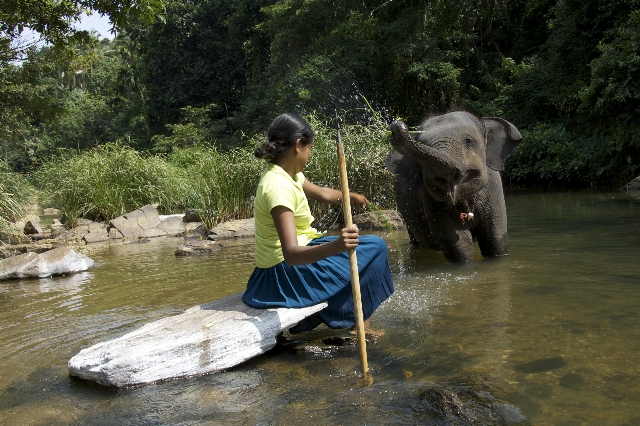
ඔක්තෝබර් මුල සතියේ කොළඹින් ඇරඹුණු, ගාල්ල මහනුවර හා යාපනය නගරවලට ද යන්නට නියමිත යුරෝපීය චිත්‍රපට උළෙලේ ප්‍රදර්ශනය කළ එක් චිත්‍රපටයකට මගේ විශේෂ අවධානය යොමු වුණා. ජර්මන් චිත්‍රපට කණ්ඩායමක් ලංකාවේ රූපගත කොට 2010දී නිර්මාණය කළ එය, Chandani: The Daughter of the Elephant Whisperer නම් වාර්තා චිත්‍රපටයක්. සිංහලෙන් ‘චාන්දනී – ඇත්ගොව්වාගේ දියණිය’ සේ අරුත් දිය හැකියි. අපේ රටේ ඈත අතීතයට දිව යන අලි – මිනිස් සබදතාවන්ගේ අළුත් පැතිකඩක්, කථාවක ස්වරූපයෙන් කියන නිර්මාණයක් හැටියට මේ චිත්‍රපටය මා දකිනවා.

අලි ඇතුන් ගැන චිත්‍රපට නිපදවන්නට සිනමාවේ මෙන් ම ටෙලිවිෂන් කර්මාන්තයේත් බොහෝ දෙනා කැමතියි. ගොඩබිම වෙසෙන විශාල ම ජීවීන් හැටියටත්, සමාජශීලි හා බුද්ධිමත් සත්ත්ව විශේෂයක් හැටියටත්, අලි ඇතුන්ගේ සුවිශේෂ බවක් තිඛෙනවා. බටහිර චිත්‍රපට කණ්ඩායම් වැඩි අවධානයක් යොමු කරන්නේ අප්‍රිකානු අලියාටයි. ආසියානු අලි ඇතුන් ගැන චිත්‍රපට රූපගත කරන්නට වුවත් ඔවුන් තෝරා ගන්නේ ලංකාවට වඩා ඉන්දියාව, තායිලන්තය වැනි රටවල්. මා මීට පෙර වතාවක (2011 මාර්තු 13) පෙන්වා දුන් පරිදි සොබාදහම ගැන චිත්‍රපට නිපදවන විදේශීය කණ්ඩායම් මෙරටට ඇද ගන්නට අප තවමත් එතරම් උත්සාහයක් ගන්නේ නැහැ. ඉදහිට හෝ මෙහි එන විදෙස් චිත්‍රපට නිෂ්පාදකයන්ට හසු කර ගන්නට හැකි විසිතුරු සැබෑ කථා විශාල ප්‍රමාණයක් අප සතුව තිඛෙනවා. චාන්දනී චිත්‍රපටය එයට තවත් උදාහරණයක්.

මේ චිත්‍රපටය වනජීවීන් හෝ පරිසරය හෝ ගැන කථාවක් නොවෙයි. එය අවධානය යොමු කරන්නේ හීලෑ අලි ඇතුන් හා මිනිසුන් අතර සබදතාවයටයි. වාර්තා චිත්‍රපටයකට වඩා නාට්‍යමය හා රියැලිටි ස්වරූපයෙන් නිර්මිත මෙහි මිනිස් ‘චරිත’ තුනක් හමුවනවා.

කථා නායිකාව 16 හැවිරිදි චාන්දනී රේණුකා රත්නායක. ඇය පින්නවෙල අලි අනාථාගාරයේ ප්‍රධාන ඇත්ගොව්වා වන සුමනබණ්ඩාගේ දෙටු දියුණිය. සිට පිය පරම්පරාවේ සාම්ප්‍රදායිකව කර ගෙන ආ අලි ඇතුන් හීලෑ කර රැක බලා ගැනීමේ කාරියට අත තබන්නට ඇයට ලොකු ඕනෑකමක් තිඛෙනවා. පවුලේ පිරිමි දරුවකු නැති පසුබිම තුළ සුමනබණ්ඩා එයට එක`ග වී පරම්පරාගත දැනුම හා ශිල්පක්‍රම ටිකෙන් ටික චාන්දනීට උගන් වනවා. මේ සදහා කණ්ඩුල නම් අලි පැටවකු සොයා ගෙන එන ඔහු කණ්ඩුලගේ වගකීම් සමුදාය ක්‍රම ක්‍රමයෙන් චාන්දනීට පවරනවා.

ලංකාවේ අලි ඇතුන් පිළිබදව 1995දී පොතක් ලියූ ජයන්ත ජයවර්ධන කියන හැටියට අලින් හීලෑ කිරීමේ වසර තුන් දහසකට වඩා පැරණි සම්ප්‍රදායක් අපට තිඛෙනවා. වනගත අලින් අල්ලා, මෙල්ල කොට පුහුණු කළ හැකි වූවත් බල්ලන්, පූසන් වැනි ගෘහස්ත සතුන්ගේ මට්ටමට අලින් හීලෑ නොවන බවත් ඔහු කියනවා.

“ර්‍ගොඩබිම වෙසෙන දැවැන්ත ම සත්ත්වයා වන අලියාට විශාල ශරීර ශක්තියක් තිඛෙන නිසා ඔවුන් හැසිරවීම ප්‍රවේශමෙන්, සීරුවෙන් කළ යුක්තක්. අලි පුහුණුවට ආවේනික වූ වචන දුසිමක් පමණ යොදාගෙන මේ දැවැන්තයන්ට අණ දීමේ කලාවක් අපේ ඇත්ගොව්වන්ට තිඛෙනවා. එහිදී ඇත්ගොව්වා සහ අලියා අතර ඇතිවන සබදතාවය ඉතා වැදගත්.”

එම සම්ප්‍රදාය පිළිබද ඉගි කිහිපයක් අප චාන්දනී චිත්‍රපටයේ දකිනවා. අලි හසුරු වන බස් වහර, අලියාගේ සිරුරේ මර්මස්ථාන හා අලින්ගේ ලෙඩට දුකට ප්‍රතිකාර කිරීමට කැප වූ දේශීය සත්ත්ව වෙදකම් ආදීය එයට ඇතුළත්. අලි පුහුණු කිරීම හා මෙහෙයවීම ක්‍රමවේදයන් ගණනාවක සංකලනයක්. එයට දැනුම, ශික‍ෂණය, කැපවීම යන සියල්ල අවශ්‍යයි. චාන්දනීට මේ අභියෝග ජය ගත හැකිද යන්න පිරිමි ඇත්ගොව්වන්ට මෙන් ම ඇගේ අසල්වාසීන්ට ද ප්‍රශ්නයක්. කථාව දිග හැරෙන්නේ එයට චාන්දනී හා ඇගේ පියා ඉවසිලිවන්තව හා අධිෂ්ඨානයෙන් මුහුණ දෙන ආකාරය ගැනයි.

මෙහි දී චාන්දනීගේ මග පෙන්වීමට වනජීවී ෙක‍ෂත්‍ර නිලධාරියකු වන මොහමඩ් රහීම් ඉදිරිපත් වනවා. මොහොමඩ් සමග උඩවලවේ ජාතික වනෝද්‍යානය හා ඒ අවට ගම්මානවල සංචාරය කරන චාන්දනී, වනගත අලි ඇතුන් මුහුණ දෙන ඉඩකඩ, ආහාර හා ජලය පිළිබද දැවෙන ප්‍රශ්න දැක ගන්නවා.

තදබද වූ මේ දූපතේ, සීමිත බිම් ප්‍රමාණයක් සදහා මිනිසුන් හා අලින් අතර පවතින නිරතුරු අරගලයෙන් වසරක් පාසා අලි 150ක් පමණත්, මිනිසුන් 50 දෙනකු පමණත් මිය යනවා. මේ අලි-මිනිස් ගැටුමට ඓතිහාසික, සාමාජයීය හා ආර්ථීක සාධක ගණනාවක් ඇතත් ඒවා විග්‍රහ කිරීමට මේ චිත්‍රපටය උත්සාහ කරන්නේ නැහැ. එබදු දැඩි අර්බුදයක් පසුබිමේ ඇති බව ප්‍රේක‍ෂකයාට සිහිපත් කළත් එයට සරල පැලැස්තර විසදුම් ඉදිරිපත් කරන්නේත් නැහැ.

මේ චිත්‍රපටයේ මා දකින එක් ගුණයක් නම් මිනිසුන්ට වඩා අලි ඇතුන්ගේ ජීවිත වටිනා බව තර්ක කරන අන්තවාදී පරිසරවේදීන්ට එහි කිසිදු තැනක් නොදීමයි. ඒ වෙනුවට මිනිස් සමාජයට පිවිස යම් තරමකට හීලෑ බවක් ලැබූ අලි ඇතුන් සමග සානුකම්පිකව ගනුදෙනු කරන මානවයන් ද ලක් සමාජයේ සිටින බව මේ චිත්‍රපටය හීන්සීරුවේ ලෝකයට කියනවා. අවිහිංසාවාදය හා සාංස්කෘතික සාරධර්ම ගැන දේශනා කිරීමකින් තොරව එය ප්‍රායෝගිකව මේ දූපතේ සිදු වන හැටි රූපානුසාරයෙන් හා කථානුසාරයෙන් පෙන්වා දෙනවා.

අලින් හා මිනිසුන් අතර මිතුදම වෘතාන්ත චිත්‍රපට ගණනාවක ම තේමාව ලෙස මින් පෙරත් යොදා ගෙන තිඛෙනවා. සිනමාවේ මුල් යුගයේ උදාහරණයක් නම් 1937දී නිර්මාණය වූ Elephant Boy රුඩ්යාඩ් කිප්ලිංගේ ඔදදප්ස කථාව පදනම් කරගෙන තැනූ ඒ චිත්‍රපටයෙන් කියවුණේ කැලයේ අලින් සමග මිතුරු වන දරුවකු ගැනයි. හීලෑ කළ අලි ඇතුන් හා දරුවන් ගැනත් සිනමා සිත්තම් බිහි වී තිඛෙනවා. ජපන් ජාතික චිත්‍රපට අධ්‍යක‍ෂක ෂුන්සාකු කවාකේ 2005දී නිර්මාණය කළ Hoshi ni natta shonen (Shining Boy and Little Randy) චිත්‍රපටයෙන් කියැවුණේ ඇත්ගොව්වකු වීමේ ආශාවෙන් තායිලන්තයට ගිය ජපන් දරුවකුගේ සැබෑ කථාවයි.

බොහෝ විට මෙබදු චිත්‍රපටවල ප්‍රධාන මිනිස් චරිතය වන්නේ පිරිමි ළමයෙක්. චාන්දනී වැනි දැරියක් මෙබදු කාරියකට ඉදිරිපත් වීම සැබෑ ලෝකයේ කොතැනක වූවත් අසාමාන්‍ය වීම මෙයට හේතුව විය හැකියි. ඉතිහාසය පුරා ම පිරිමින් පමණක් සිදු කළ වගකීමක් කාන්තාවකට පැවරීම හරහා සුමනබණ්ඩා සියුම් සමාජ විප්ලවයකටත් දායක වනවා. එහෙත් චාන්දනී චිත්‍රපටයේ අරමුණ එබදු මහා පණිවුඩ සන්නිවේදනය නොවෙයි. එය දැරියක හා අලි පැටවකු අතර ඇතිවන මිතුරුකම වටා ගෙතුණු විසිතුරු කථාන්තරයක්.

ලංකාවේ අලි ඇතුන් කණ්ඩායම් දෙකකට ඛෙදිය හැකියි. වනගත (වල්) අලි හා හීලෑ කළ අලි හැටියට. 2011 අගෝස්තුවේ පැවැත්වූ මුල් ම අලි ඇත් සංගණනයෙන් සොයා ගත්තේ වනගත අලි ඇතුන් 7,339ක් මෙරට සිටින බවයි. (රක‍ෂිත ප්‍රදේශවල හෝ ඒවා ආසන්නයේ 5,879කුත් අනෙකුත් ප්‍රදේශවල තවත් 1,500කුත් වශයෙන්.) ඇතැම් පරිසරවේදීන් මේ සංගණනයේ ක්‍රමවේදය විවේචනය කළා. එහෙත් පරිපූර්ණ දත්තවලට වඩා කුමන හෝ දත්ත සමුදායක් ලබාගැනීම හරහා අලි සංරක‍ෂණයට රුකුලක් ලැඛෙන බව සිතිය හැකියි.

අපේ රටේ හීලෑ අලි ඇතුන් සිය ගණනක් ද සිටිනවා. එමෙන්ම මේ දෙකොටසට අතරමැදි සංක්‍රමනීය තත්ත්වයේ අලි ඇතුන් ද සිටිනවා. ස්වාභාවික පරිසරයේ විවිධ හේතු නිසා මවු සෙනෙහස අහිමි වූ ලාබාල අලි පැටවුන්ට රැකවරණය දෙමින් ඔවුන් ලොකු මහත් කිරීමට පින්නවෙල අලි අනාථාගාරය ඇරඹුවේ 1975දී. මේ වන විට සියයකට ආසන්න අලි ඇතුන් සංඛ්‍යාවක් එහි නේවාසිකව සිටිනවා. දෙස් විදෙස් සංචාරකයන් අතර ජනප්‍රිය ආකර්ශනයක් බවට පත්ව ඇති මේ අනාථාගාරයේ, පශ= වෛද්‍යවරුන් හා සත්ත්ව විද්‍යාඥයන්ගේ අනුදැනුම ඇතිව අලි ඇතුන් බෝ කිරීමේ වැඩපිළිවෙලක් ද 1982 සිට ක්‍රියාත්මක වනවා. මීට අමතරව උඩවලවේ වනෝද්‍යානයට බද්ධිතව ඇත් අතුරු සෙවන නම් තවත් තැනක් ද පිහිටුවා තිඛෙනවා.

ලංකාවේ වෘතාන්ත චිත්‍රපටයක් නිපදවීමට සාමාන්‍යයෙන් යොද වන තරමේ මුදල් හා තාක‍ෂණික ආයෝජනයක් මේ වාර්තා චිත්‍රපටයට වැය කරන්නට ඇතැයි අනුමාන කළ හැකියි. එහෙත් මේ ආයෝජනයේ උපරිම ඵල නෙළා ගන්නට එහි සංස්කරණය (editing) මීට වඩා කල්පනාකාරී හා නිර්දය ලෙස සිදු කළා නම් හැකි වන බව චිත්‍රපට මාධ්‍යයේ ශිල්පීය ක්‍රම දත් මගේ ඇතැම් මිතුරන්ගේ අදහසයි.

ආසියානු අලි ඇතුන් වනගතව හමුවන රටවල් අතරින් වැඩි ම අලි ඝනත්වය (highest Asian elephant density) ඇත්තේ ලංකාවේයි. මේ දූපතේ බිම් හා සොබා සම්පත්, මිලියන් 20කට වැඩි ජන සංඛ්‍යාවක් හා හත් දහසකට අධික අලි ඇතුන් ගණනක් අතර තුලනය කර ගන්නේ කෙසේද යන්න අප මුහුණ දෙන ප්‍රබල සංරක‍ෂණ අභියෝගයක්. අලි ඇතුන් ගැන කථා කරන විට පරිසරවේදීන් බහුතරයක් ආවේගශීලී වනු දැකිය හැකියි. මෙරට ඉතිරිව ඇති වනාන්තර, තණබිම් හා විල්ලූ ප්‍රදේශවලට ස්වාභාවිකව දරා ගත හැකි අලි ඇතුන් සංඛ්‍යාව කොපමණ ද? ඒ සංඛ්‍යාව ඉක්මවා අලි ගහණයක් ඇති බව විද්‍යාත්මකව සොයා ගතහොත් අතිරික්තය ගැන කුමක් කළ හැකි ද – කළ යුතු ද? වනගත අලින්ට සමාන්තරව හීලෑ අලින් මනා සේ රැක බලා ගැනීම ඔස්සේ අලින් වද වී යාමේ තර්ජනය පාලනය කළ හැකි ද? මේ සියල්ල සංකීර්ණ ප්‍රශ්නයි.

ඒවාට පිළිතුරු සොයන්නට විද්‍යාත්මක ක්‍රමවේදයන් මෙන් ම අපේ සාරධර්ම ද යොදා ගත හැකියි. විසදුම් සොයා යන අතර අලි – මිනිස් සබදතාවයේ පැතිකඩ ගැන නිවැරදි, නිරවුල් සන්නිවේදනයක් දේශීයව මෙන් ම ජාත්‍යන්තරව ද කළ යුතුයි. ‘මිනී මරන අලි’ හා ‘අලි මරන මිනිසුන්’ ගැන සරල ත්‍රාසජනක වාර්තාවලින් ඔබ්බට යන තුලනාත්මක කථාබහකට අප යොමු විය යුතුයි. එමෙන් ම අලි – දිවි – වලසුන්ට සීමා නොවූ අතිශයින් විවිධ හා විචිත්‍ර ජීවි විශේෂ රාශියක් මේ දූපතේ අපත් සමග වෙසෙන බවත් අමතක නොකරන්න!

Titus Thotawatte (1929 – 2011): The Final Cut

Also published on Groundviews.org on 20 Oct 2011

Titus Thotawatte: The Magician

Emmanuel Titus de Silva, who was better known as Titus Thotawatte, was the finest editor in the six decades of the Lankan cinema. He was also a great assimilator and remixer – a ‘builder of bridges’ across cultures, media genres and generations.
Titus straddled the distinctive spheres of cinema and television with a technical dexterity and creativity rarely seen in either one. Both spheres involve playing with sound and pictures, but at different levels of scale, texture and ambition. Having excelled in the craft of making movies in the 1960s and 1970s, Titus successfully switched to television in the 1980s and 1990s. There, he again blaze his own innovative trail in Sri Lanka’s nascent television industry. As a result, my generation remembers him for his television legacy whereas my patents’ generation recall more of his cinematic accomplishments.

Titus left an indelible mark in the history of moving images. The unifying thread that continued from 16mm and 35mm formats in the cine world to U-matic and Betacam of the TV world was his formidable genius for story telling.

Titus de Silva, as he was then known, was a member of the ‘three musketeers’ who left the Government Film Unit (GFU) in the mid 1950s to take their chances in making their own films. The other two were director Lester James Peries and cinematographer Willie Blake. Lester recalls Titus as “an extraordinarily talented but refreshingly undisciplined character” who had been shunned from department to department at GFU “as he was by nature a somewhat disruptive force”!

The trio would go on to make Rekava (Line of Destiny, 1956) – and make history. In his biography by A J Gunawardana, Lester recalls how they were full of self-confidence, “cocky as hell” and determined to overcome the artificiality of studio sets. “We were revolutionaries, shooting our enemies with the camera, and set on changing the course of Sinhala film. In our ignorance, we were blissfully unaware of the hazards ahead – seemingly insurmountable problems we had to face, problems that no book on film-making can ever tell you about!”

In the star-obsessed world of cinema, the technical craftsmen who do the real magic behind the cameras rarely get the credit or recognition they deserve. Editors, in particular, must perform a very difficult balancing task – between the director, with his own vision of how a story should be told, and the audience that fully expects to be lulled into suspending their disbelief. Good editors distinguish themselves as much for what they include (and how) as for what they leave on the ‘cutting room floor’.

The tango between Lester and Titus worked well, both in the documentaries they made while at GFU, and the two feature films they did afterward: Rekava was followed by Sandeshaya (The Message, 1960).

They also became close friends. At his own expense, Titus also accompanied Lester to London where they re-edited and sub-titled Rekava (into French) for screening at the Cannes festival of 1957. As Lester recalls, “Titus was a great source of moral and technical strength to me; his presence was invaluable during sub-titling of the film”.

Titus Thotawatte - photo courtesy biography by Nuwan Nayanajith Kumara

In all, Titus edited a total of 25 Lankan feature films, nine of which he also directed. The cinematic trail that started with Rekava in 1956 continued till Handaya in 1979. While most were in black and white, typical of the era, Titus also edited the first full length colour feature film made in Sri Lanka: Ran Muthu Duwa (1962).

His dexterity and versatility in editing and making films were such that his creations are incomparable among themselves. In the popular consciousness, perhaps, Titus will be remembered the most for his last feature film Handaya – which he both directed and edited. Ostensibly labelled as a children’s film, it reached out and touched the child in all of us (from 8 to 80, as the film’s promotional line said). It was an upbeat story of a group of children and a pony – powerful visual metaphors for the human spirit triumphing in a harsh urban reality that has been exacerbated in the three decades since the film’s creation.

Handaya swept the local film awards at the Saravaviya, OCIC and Presidential film awards for 1979/1980. It also won the Grand Prix at the International Children and Youth Film Festival in Giffoni, Italy, in 1980. That a black and white, low-budget film outcompeted colour films from around the world was impressive enough, but the festival jury watched the film without any English subtitles was testimony to Titus’s ability to create cine-magic that transcended language.

Despite the accolades from near and far, a sequel to Handaya was scripted but never made: the award-winning director just couldn’t raise the money! This and other might-have-beens are revealed in the insightful Thotawatte biography written by journalist Nuwan Nayanajith Kumara. Had he been born in a country with a more advanced film industry with greater access to capital, the biographer speculates, Titus could have been another Steven Spielberg or Walt Disney.

Titus Thotawatte was indeed the closest we had to a Disney. As the pioneer in language versioning at Rupavahini from its early days in 1982, he not only voice dubbed some of the world’s most popular cartoons and classical dramas, but localised them so cleverly that some stories felt better than the originals! Working long hours with basic facilities but abundant talent, Titus once again sprinkled his ‘pixie dust’ in the formative years of national television.

In May 2002, when veteran broadcaster (and good friend) H M Gunasekera passed away, I called him the personification of the famous cartoon character Tintin. I never associated Titus personally, but having grown up in the indigenised cartoon universe that he created on our television, I feel as if I have known him for long. Therefore, Therefore, I hope Titus won’t mind my looking for a cartoon analogy for himself.

I don’t have to look very far. According to his loyal colleagues (and his biographer), Titus was a good-hearted and jovial man with a quick temper and scathing vocabulary. It wasn’t easy working with him. That sounds a bit like the inimitable Captain Haddock, the retired merchant sailor who was Tintin’s most dependable human companion. Haddock had a unique collection of expletives and insults, providing some counterbalance to the exceedingly polite Tintin. Yet beneath the veneer of gruffness, Haddock was a kind and generous man. It was their complementarity that livened up the globally popular stories, now a Hollywood movie by Steven Spielberg awaiting December release.

Perhaps that’s too simplistic an analogy for Titus. From all accounts, he was a brilliantly creative and multi-layered personality who embodied parts of Dr Dolittle (Dosthara Honda Hitha), Top Cat (Pissu Poosa), Bugs Bunny (Haa Haa Hari Haawa) and a myriad other characters that he rendered so well into Sinhala that some of my peers in Sri Lanka’s first television generation had no idea of their ‘foreign’ origins…

Titus was also a true ‘Gulliver’ whose restlessly imaginative mind traversed space and time — even after he was confined to one place during the last dozen years of his life.

A pity he spent too much time in Lilliput…