Brief comment provided to Daily Mirror newspaper, Sri Lanka, on 20 January 2017:
‘Eyes in the Sky’ need ethical and careful ‘pilots’
By Nalaka Gunawardene
Bird’s eye view provides a new, useful perspective in journalistic story telling. Image courtesy InterNews Sri Lanka
For some, drones conjure images of death and destruction – military applications have been their most widely reported application. But unmanned aerial vehicles or UAVs are increasingly being used for many peaceful purposes. That poses a host of ethical and legal challenges we must confront to get the best of this new technology while minimizing potential harms.
In the past few years, the cost of drones came down (an entry level unit sells for around LKR 35,000 in Colombo) as their versatility increased. This spurred many uses from newsgathering and post-disaster assessments to goods delivery and smart farming.
In Sri Lanka, surveyors, photographers, TV journalists and political parties were among the early civilian users of drones. They all grasped the value of the ‘bigger picture’ perspective such aerial photos or videos can provide. Until recently, accessing that vantage point was possible only through helicopters or fixed wing aircraft – a facility few could afford.
Having the bird’s eye view helps journalists and their audiences to make sense of complex situations like climate change impacts, conflicts over resources or political agitations. We certainly need more field-based and investigative reporting that goes beyond press releases and press conferences. Drones are fast joining the journalists’ toolkit — but what matters is their imaginative and responsible use.
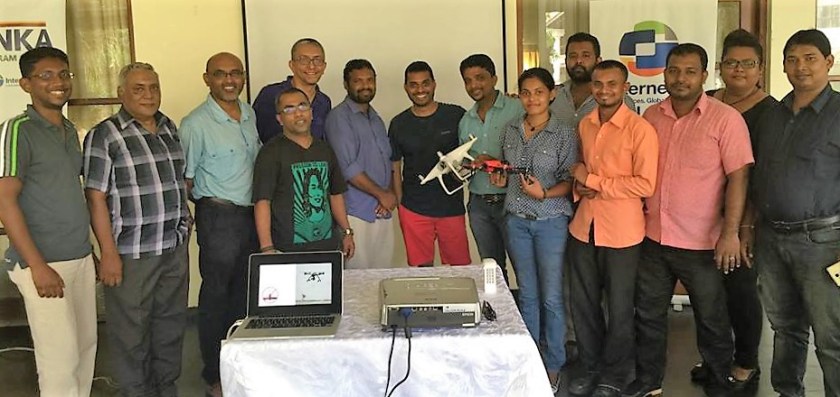
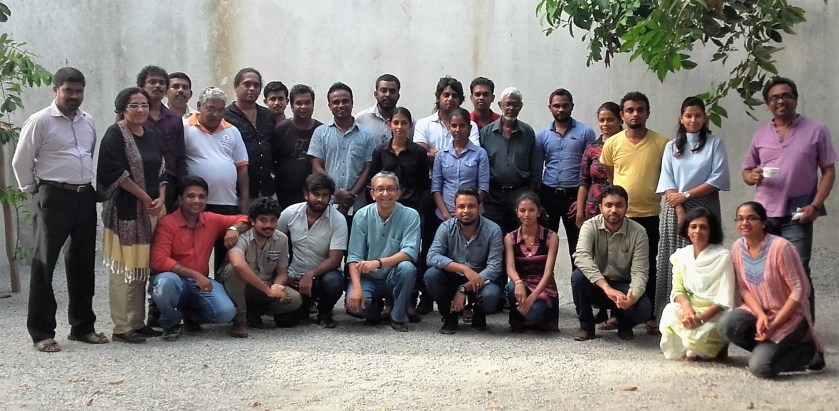
Participants and trainers at Sri Lanka’s first workshop on drone assisted journalism, Aug 2016 in Mt Lavinia
Here, we have both good news and bad news. On the positive side, over two dozen journalists and photojournalists have been trained in drone-assisted journalism during 2016 by drone journalism enthusiast (and drone pilot) Sanjana Hattotuwa and journalist Amantha Perera. Some trainees have since done good stories with drone-gathered images. Examples include probing the drought’s impacts in the dry zone, rising garbage crisis in Kattankudy on the east coast, and taking a close look at land use patterns in Hambantota.
Internews Sri Lanka: Drone gathered footage supporting journalism
The downside is that some news organisations are deploying drones without due regard for public safety or existing codes of media ethics. A drone hovered over the Colombo general cemetery as slain editor Lasantha Wickremetunge’s body was exhumed in September 2016. That disregarded a family request for privacy.
The end never justifies the means in good journalism. If some media groups continue to operate drones in such reckless manner, they risk discrediting the new technology and attracting excessive regulations.
Drones or any other new technologies need to be anchored in the basic ethics of journalism. Each new tool would also bring along its own layer of ethics. Where drone use is concerned, respecting privacy and considering the safety of others is far more important than, say, when using a handheld camera.
In February 2016, the Civil Aviation Authority of Sri Lanka (CAASL) published regulations for drone operation which apply to all users including journalists. This has been updated in January 2017. The Information Department, in a recent release, says it is working with CAASL to simplify these rules and streamline approval processes. That is a welcome move.
For now, Lankan journalists can follow the Code of Ethics for Drone Journalists already formulated by practitioners and researchers in the United States. It is available at: http://www.dronejournalism.org/code-of-ethics/
Nalaka Gunawardene is a columnist and independent media researcher. He tweets from @NalakaG
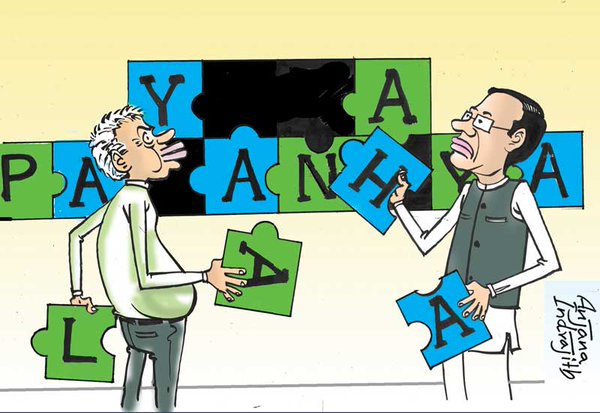
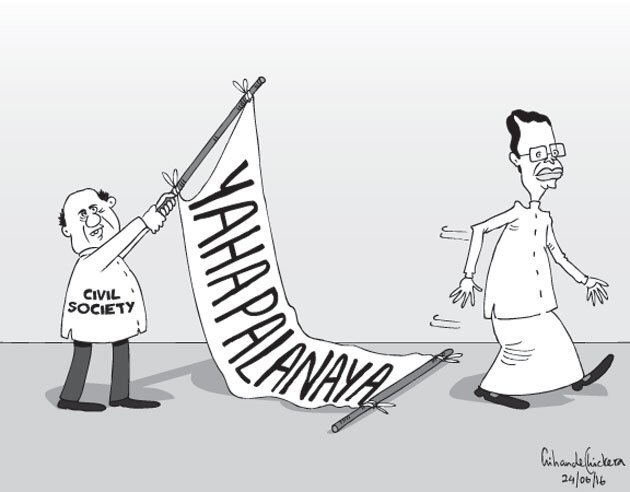
Now, as we enter 2017, civil society faces the twin challenges of holding the current government to account, and preventing yaha-palanaya ideal from being discredited by expedient politicians. At the same time, civil society must also become more professionalised and accountable.
‘Civil society’ is a basket term: it covers a variety of entities outside the government and corporate sectors. These include not only non-governmental organisations (NGOs) but also trade unions, student unions, professional associations (and federations), and community based or grassroots groups. Their specific mandates differ, but on the whole civil society strives for a better, safer and healthier society for everyone.
The path to such a society lies inevitably through a political process, which civil society cannot and should not avoid. Some argue that civil society’s role is limited to service delivery. In reality, worthy tasks like tree planting, vaccine promoting and microcredit distributing are all necessary, but not all sufficient if fundamentals are not in place. For lasting change to happen, civil society must engage with the core issues of governance, rights and social justice.
Ideally, however, civil society groups should not allow themselves to be used or subsumed by political parties. I would argue that responsible civil society groups now set the standards for our bickering and hesitant politicians to aspire to.
Take, for example, two progressive legal measures adopted during 2016: setting aside a 25% mandatory quota for women in local government elections, and legalising the Right to Information. Both these had long been advocated by enlightened civil society groups. They must now stay vigilant to ensure the laws are properly implemented.
Other ideals, like the March 12 Movement for ensuring clean candidates at all elections, need sustained advocacy. So Lankan civil society has plenty of unfinished business in 2017.
Nalaka Gunawardene writes on science, development and governance issues. He tweets from @NalakaG.
Note: Cartoons appearing here did not accompany the article published in The Sunday Leader.
After 18 months in office, Sri Lanka’s President Maithripala Sirisena seems less keen on his electoral promises of good governance, which he had articulated with lots of help from civil society. Cartoon by Gihan de Chickera, Daily Mirror, 24 June 2016.
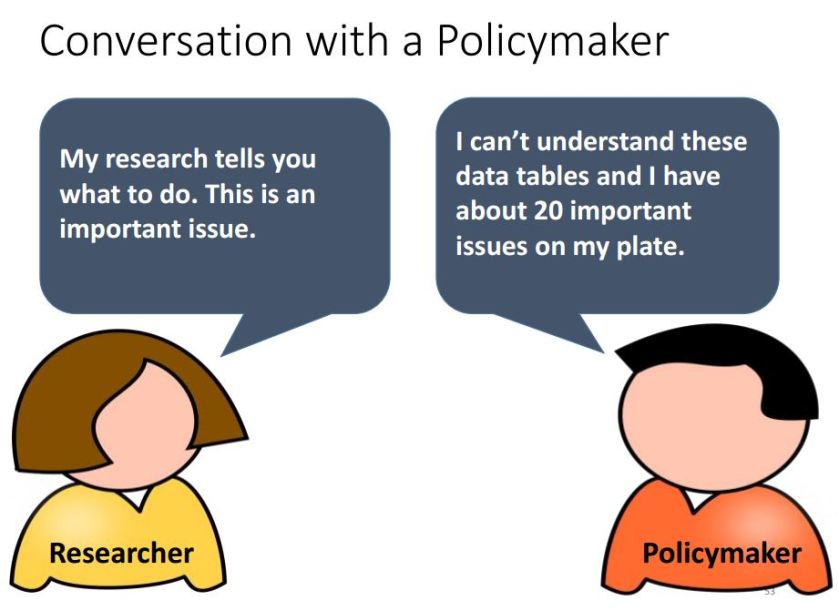
It’s a question without easy or simple answers. Policy makers come in different forms and types, and gaining their attention depends on many variables — such as a country’s political system, governance processes, level of bureaucracy and also timing.
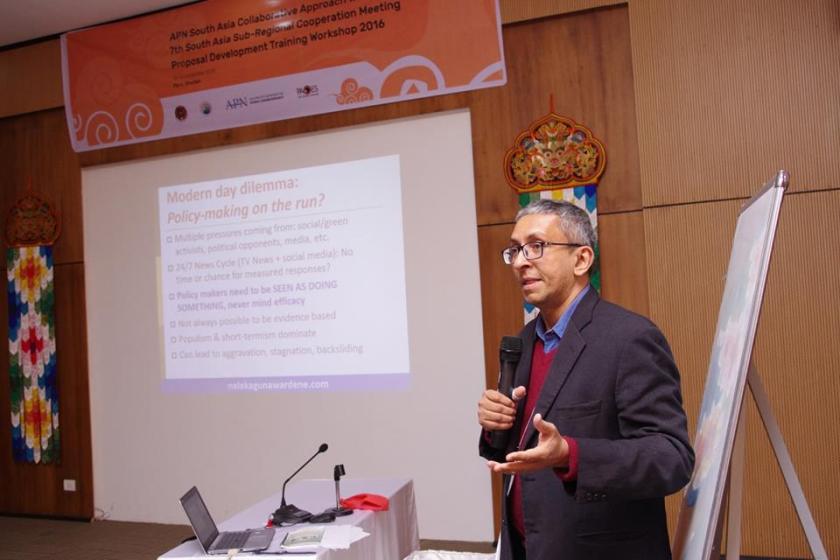
I revisited this question this week when speaking to a group of young (early to mid-career) researchers from across South Asia who want to study many facets of global change. They were brought together at a regional workshop held in in Paro, Bhutan, by the Asia-Pacific Network for Global Change Research (APN) and the National Environment Commission of the Royal Government of Bhutan.
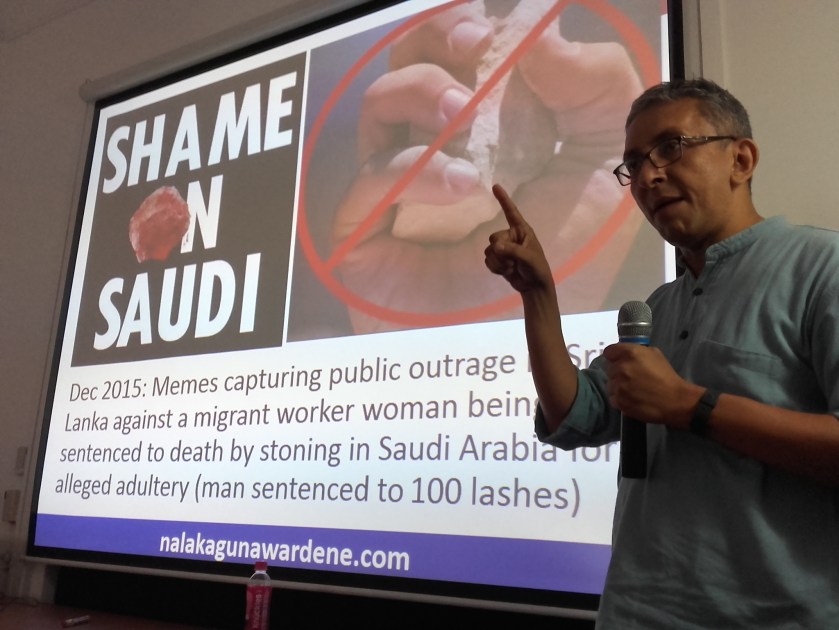
Nalaka Gunawardene speaks at APN South Asian Proposal Development Training Workshop in Paro, Bhutan, 14-16 Dec 2016. Photo Xiaojun Deng, APN
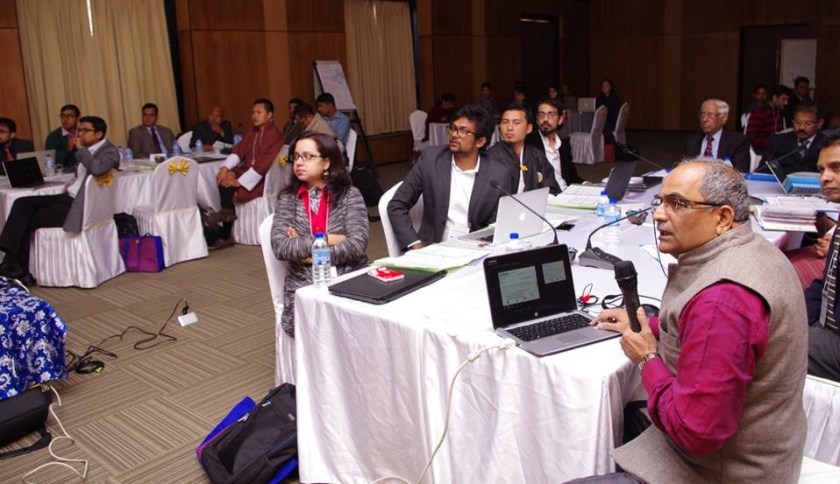
Titled as the ‘Proposal Development Training Workshop (PDTW)’ and held from 14 to 16 December 2016, PDTW aimed “to raise awareness of APN among early career scientists and practitioners, and to increase the capacity to develop competitive proposals for submission to APN”.
The workshop involved two dozen researchers and half a dozen mentors. I was the sole mentor covering the important aspect of communicating research.
I urged researchers to try and better understand the imperfect, often unpredictable conditions in which South Asia’s policy makers operate.
Researchers and activists who would like to influence various public policies. Everyone is looking for strategies and engagement methods. The policy cycle cannot run according to text book ideals when governments have to regularly cope with economic uncertainties, political upheavals and social unrest, etc.
Asia-Pacific Network for Global Change Research (APN): Proposal Development Training Workshop 2016 — in Paro, Bhutan. Photo by Xiaojun Deng, APN
Imagine what keeps your policy makers awake at night, I suggested. Are they worried about balance of payment, disaster responses or a Parliamentary majority? How can research findings, while being evidence based, help solve problems of economic development and governance?
I also suggested that researchers should map out the information behaviour of their policy makers: where do they get info to act on? Is there a way research findings can be channeled to policy makers through some of these sources – such as the media, professional bodies and international development partners?
I suggested two approaches to communicating research outcomes to policy makers: directly, using own publications and/or social media; and indirectly by working with and through the media.
Finally, I shared some key findings of a global study in 2012 by SciDev.Net (where I was an honorary trustee for nearly a decade) which looked at the different contextual settings within which policy makers, the private sector, NGOs, media organisations and the research community operate to better understand how to mainstream more science and technology evidence for development and poverty reduction purposes.
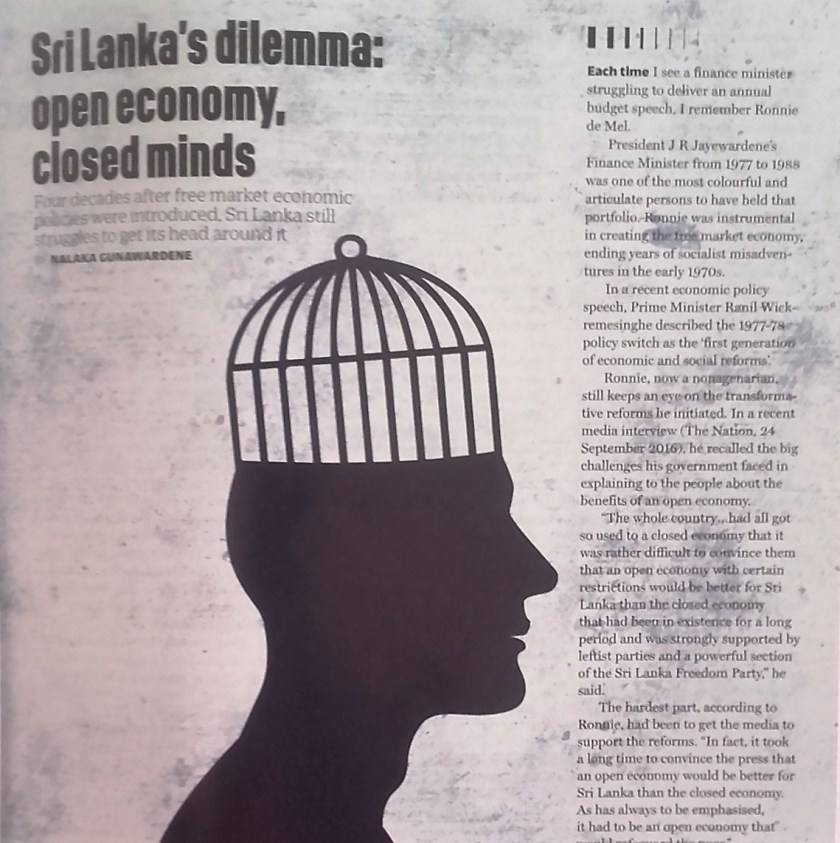
Echelon magazine, Dec 2016 issue – column by Nalaka Gunawardene
Sri Lanka’s Dilemma: Open Economy, Closed Minds
By Nalaka Gunawardene
Each time I see a Finance Minister struggling to deliver annual budget speeches, I remember Ronnie de Mel.
President J R Jayewardene’s Finance Minister from 1977 to 1988 was one of the most colourful and articulate persons to have held that portfolio. Ronnie was instrumental in creating the free market economy, ending years of socialist misadventures in the early 1970s.
In a recent economic policy speech, Prime Minister Ranil Wickremesinghe described the 1977-78 policy switch as the ‘first generation of economic and social reforms’.
Ronnie, now a nonagenarian, still keeps an eye on the transformative reforms he initiated. In a recent media interview (The Nation, 24 Sep 2016), he recalled the big challenges his government had faced in explaining to the people about the benefits of an open economy.
“The whole country…had all got so used to a closed economy that it was rather difficult to convince them that an open economy with certain restrictions would be better for Sri Lanka than the closed economy which had been in existence for a long period and was strongly supported by the leftist parties and by a powerful section of the Sri Lanka Freedom Party,” he said.
The hardest part, according to Ronnie, had been to get the media to support those reforms. “In fact, it took a long time to convince the press that the open economy would be better for Sri Lanka than the closed economy. As has always to be emphasized, it had to be an open economy which would safeguard the poor.”
Closed Minds
JR and Ronnie set in motion economic reforms that have since been sustained by successive governments, sometimes with minor modifications. We will soon be completing four full decades under free market policies.
Yet the market still seems a dirty word for some Lankans, especially those in their middle or advanced ages. Their mistrust of the country’s economic system occasionally rubs off on the younger generation too, as evidenced by university students’ political slogans.
There is a pervasive notion in our society that businesses are intrinsically damaging and exploitative. I attribute this to ‘residual socialism’: we have plenty of frustrated socialists who grudge the current system, even though they often benefit from it personally.
So we pursue free market economics only half-heartedly. We were never a communist state but we seem to be more ‘red’ than Marx, Lenin and Mao combined.
In other words, many among us have closed their minds about the open economy.
Yes, it’s a free country and everyone is entitled to own myths, beliefs and nostalgic fantasies. But collectively harking back to the bad old days – and romanticising them – does not help anyone, and can distort policy choices. Protectionism and monopolies can thrive in such a setting.
Anti-market attitudes also feed public apprehensions about entrepreneurship in general, and against certain economic sectors in particular.
Pervasive prejudices
Take, for example, the tourist industry. Half a century has passed since Sri Lanka adopted policies of tourism development and promotion, but large sections of society still harbour misgivings about it.
Never mind that nearly 320,000 persons had direct or indirect employment in the tourism sector in 2015, or how a large number of small and medium businesses depend on tourist income for survival. Certain ‘guardians of culture’ and a moralist media are obsessed with the sexual exploitation associated with (a relatively small number of) tourists.
A few years ago, I helped organise an environmental education programme for school children in the Negombo area. A leading hotel chain which originated from that city provided the venue and catering for free. Yet some accompanying teachers were rather uneasy over our venue choice: for them, all tourist hotels seemed to be ‘dens of vice’.
This perception, reinforced by prejudiced commentary in Sinhala language newspapers, extends to other sections of the leisure industry such as spas. I recently heard how a Lankan spa chain struggles to recruit female therapists. Because spas are demonised by media and society, few women apply despite the competitive salaries.
Societal prejudices might also be one reason why the country’s 12 industrial zones, administered by the Board of Investment (BOI), are struggling to fill some 200,000 vacancies from the domestic labour market. Many youth would much rather drive three-wheelers instead of working in factories. There are no sociological insights as yet on why they frown upon such work.
Media portrayal
To be sure, there are unscrupulous businessmen who cynically exploit our country’s poor governance and weak regulation. There are also some schemers and confidence tricksters. But our anti-biz media would make us believe that all entrepreneurs are corrupt and untrustworthy.
Study any Sinhala daily for about a week, and we are bound to find several headlines or news reports using the phrase Kotipathi Viyaparikaya (multi-millionaire businessman). In the peculiar worldview of Sinhala journalists, every businessman is a kotipathiya, and is usually presumed guilty until proven innocent! Often a Roomath Kanthawa (pretty woman) is linked to the businessman, suggesting some scandal.
Tele drama makers love to portray businessmen as villains. Newspaper editorials frequently highlight unethical biz practices, condemning all businesspersons in the process. Bankers and telecom operators get more than their fair share of bashing in letters to the editor.
And even our usually perceptive cartoonists caricaturise entrepreneurs almost always negatively – either as pot-bellied black market mudalalis, or as bulging men in black suits and dark glasses, complete with a sinister smile. These images influence how society thinks of business.
Lankan industrialists vs the country’s first environment minister Vincent Perera. Cartoon by W R Wijesoma, circa 1992
Rebuilding Trust
So what is to be done?
Teaching business and commerce in schools is useful — but totally insufficient to create a nation of entrepreneurs and a business friendly public. Corporate social responsibility (CSR) activities can help soften society’s harsh judgement of business and enterprise. But that too needs a careful balancing act, as a lot of CSR is self-serving or guilt-assuaging and not particularly addressing the real community needs.
More ethically driven businesses and less ostentatious biz conduct would go a long way in winning public trust. As would more sensitive and thoughtful brand promotion.
The biggest challenge now, as it was to Ronnie a generation ago, is to nurture a media that appreciates and critically cheers entrepreneurship.
Paradoxically, media’s own revenues rely critically on advertising from other businesses. No, we are not asking media to compromise their editorial independence under advertiser pressure. But simply toning down media’s rampant and ill-founded prejudices against entrepreneurship would be progress.
The open economy’s legacy must be rigorously debated, and the policy framework needs periodic review. Let’s hope that it can be done with more open minds.
One of my favourite cartoons on energy was drawn by Australian cartoonist Ron Tandberg. It shows two men standing on a bare land and looking intently at the ground. Says one to the other: “There must be a source of energy down there!”
Overhead, meanwhile, the sun looms large and blazes away…
For too long, despite living on a tropical island, most of us have looked everywhere for our energy needs — except skywards. Is that about to change? Is the government’s new solar power drive likely to be a game changer?
Plugging to the sun is not entirely new: Sri Lanka has taken an interest in solar photovoltaic (PV) technology for over 40 years. The earliest PVs – which can turn sunlight into electricity — were installed in the village of Pattiyapola, in the Southern Province, where the United Nations set up a rural energy demonstration centre in 1975.
Those early prototypes had many problems which were fixed within a few years. By the mid-1980s, small, stand-alone solar PV units came on the market. This time, it was private companies that promoted these while the government’s power utility (CEB) was mildly interested.
In the late 1980s, three entrepreneurs – Lalith Gunaratne, Viren Perera and Pradip Jayewardene – pioneered local assembling and marketing of solar PVs. Their company, initially called Power & Sun (Pvt) Ltd, offered simple, easy-to-use solar units for rural homes that were not yet connected to the grid.
Branded as SUNTEC, their basic solar unit could power five light bulbs plus a radio and a (black and white) TV set. The introductory price in 1988 was LKR 7,000 (bulbs and battery cost extra). At the time, two thirds of all households did not have electricity so this generated much interest.
Grassroots Revolution
Power & Sun not only sold domestic solar units, but also ran rural workshops that trained youth on the basics of solar energy and equipment maintenance. By reaching out to the grassroots through innovative marketing schemes and tech support, the SUNTEC team ushered in a quiet revolution.
They not only provided clean, safe and cheap energy to rural homes but in that process, also raised people’s aspirations. They were no longer beholden to politicians with promises of ‘gamata light’ (electricity for the village), a common but often unfulfilled promise. (Read full Suntec story at: http://tiny.cc/SunTec)
During the 1990s, other companies — and non-profits such as Sarvodaya and SoLanka — entered the domestic solar market. The World Bank came up with a credit mechanism for solar units through SEEDS, the economic arm of Sarvodaya. Thanks to these efforts, over 100,000 homes adopted solar PV within a dozen years.
“The establishment of community-based solar photovoltaic programmes by non-governmental organizations…has developed a novel approach to bridge the gap between this state-of-the-art technology and the remotely located end-users,” wrote Lalith Gunaratne, a pioneer in off-grid domestic solar power, in 1994.
But the early appeal of solar PV diminished as rural electrification intensified. In some areas, families who had taken loans for their solar PVs defaulted repayment after the grid reached them. Sarvodaya, for example, was left with lots of half-paid loans and second hand solar units.
Nonetheless, that first phase of solar energy promotion holds valuable lessons still relevant today. For example, it’s not simply a matter of promoting PV technology but providing a package of training, maintenance support and on-going engagement with solar consumers.
Illustration by Echelon magazine
Scaling up
While off-grid solar PV can still offer energy solutions to specific, isolated locations, a second solar revolution is urgently needed in cities and towns. It is the higher consuming homes, offices and other buildings that most drive the electricity demand which keeps rising by about 9% each year.
Bulk of the country’s electricity is generated using large scale hydro or thermal power plants (burning either oil or coal). The ratios vary from year to year according to data tracked by the regulator, the Public Utilities Commission of Sri Lanka (PUCSL). In a year of good rainfall, such as 2013, 50% of all electricity was generated using hydro, and another 9.85% through non-conventional renewables (NCR) like mini-hydro, wind, biomass and solar. Less than half came from thermal plants.
But in 2014, the last year for which PUCSL data has been released, hydro’s share dropped to 29.4% and NCR share remained about the same. The balance (over 60%) was generated by CEB’s oil or coal plants, complemented by private power producers burning oil.
The fuel bill weighs heavily on the country’s already overburdened budget. Low petroleum prices since 2014 have helped, but that is not a bankable option in the long term.
“Sri Lanka annually imports 2 MMT of crude oil, 4 MMT of refined petroleum products and 2.25 MMT of coal. This costs approximately 5 billion USD and covers 44% of the energy requirements. It also accounts to 25% of the import expenditure and almost 50% of the total export income,” wrote Chatura Rodrigo, research economist with the Institute of Policy Studies (IPS) in August 2015. (Petroleum also supports the transport sector that relies almost totally on this fuel source.)
Burning petroleum and coal also contributes to global warming and causes local air pollution – more reasons for phasing them down.
For all these reasons, scaling up NCR’s share of electricity generation mix is thus receiving more attention. This can happen at both power plant level (e.g. with wind power plants that could tap an estimated 400MW potential in Mannar), and also at household levels.
Decentralised solar power
Encouraging consumers to self-generate part of their electricity from renewables received a boost in 2009 with the introduction in net metering. This allows private individuals or companies to supply their surplus power – usually generated by solar panels — to the national grid, for which they receive ‘credits’ or rebates from the monthly bill. A two-way electricity meter enables this process.
During the past few years, hundreds of households and businesses have vastly reduced their electricity bills through this method. However, this made economic sense only to high end electricity users as the initial investment remained high.
“Soorya Bala Sangramaya” (Battle for Solar Energy) in Sri Lanka – image courtesy Ministry of Power and Renewable Energy
The new solar energy drive, announced in August 2016, intends to change this. Known as “Soorya Bala Sangramaya” (Battle for Solar Energy), it is expected to make at least 20% of electricity consumers to also generate electricity using solar panels – they will be able to sell their excess to the national grid under a guaranteed tariff.
The new scheme will introduce two new concepts, viz:
Net Accounting, where a consumer will get paid in money if her solar-generated power is greater than what is consumed from the grid. Tariff is set at LKR 22 per unit (1 kilo Watt hour) for the first 7 years, and at LKR 15.50 thereafter.
Net Plus, where there is no link between how much electricity the consumer users from the grid (for which billing will happen), and how much of solar-generated electricity is supplied to the grid (which will be paid in full at the above rates).
The government’s plan is to add 220 MW of clean power from NCR to the country’s energy grid by 2020, which is about 10% of the country’s current daily electricity demand. Another 1,000 MW is to be added by 2025.
The solar PV technology market will be left to multiple private sector suppliers. In a recent TV talk show, deputy minister of power Ajith C Perera said national standards would soon be set for solar panels and associated technology.
Balancing acts
Currently, installing 1 kWh of solar generation capacity costs around LKR 200,000. Investing this much upfront will only make sense for those consuming 200 kWh or more. Under the current, multi-tier tariff system, those consuming up to 30 units of electricity a month pay LKR 7.85 per unit while those above 180 units have to pay LKR 45 per unit.
How much and how fast Soorya Bala Sangramaya can energise the solar PV market remains to be seen. The Ministry of Power is talking to banks to encourage easy credit. PUCSL will need to monitor these trends to ensure consumers’ interests are safeguarded.
Promising as they are, renewables are not a panacea for all energy our needs. Some limitations apply, such as cloudy days that reduce sunshine and dips in wind blowing. Their contribution to the grid needs to be balanced by power from more conventional sources. At least until storage systems get better.
“Renewables have an important role in any developing country energy mix as a part of the national energy supply security strategies,” says Lalith Gunaratne. “Yet, thermal energy technologies like oil, coal and gas will not go away in a hurry. Most of them, unless we have large hydro, will provide base load power from large centralised stations for two or three more decades.”
The energy sector can become a sink for large volumes of public and private funds — unless there is an effective regulatory process.
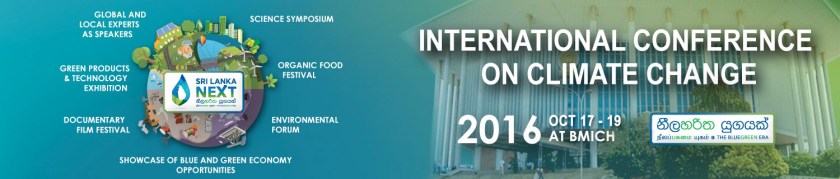
On 19 October 2016, I spoke on climate change communications to a group of Asian journalists and other communicators at a workshop organized by Sri Lanka Youth Climate Action Network (SLYCAN). It was held at BMICH, Colombo’s leading conventions venue.
I recalled what I had written in April 2014, “As climate change impacts are felt more widely, the imperative for action is greater than ever. Telling the climate story in accurate and accessible ways should be an essential part of climate response. That response is currently organised around two ‘planks’: mitigation and adaptation. Climate communication can be the ‘third plank’ that strengthens the first two.”
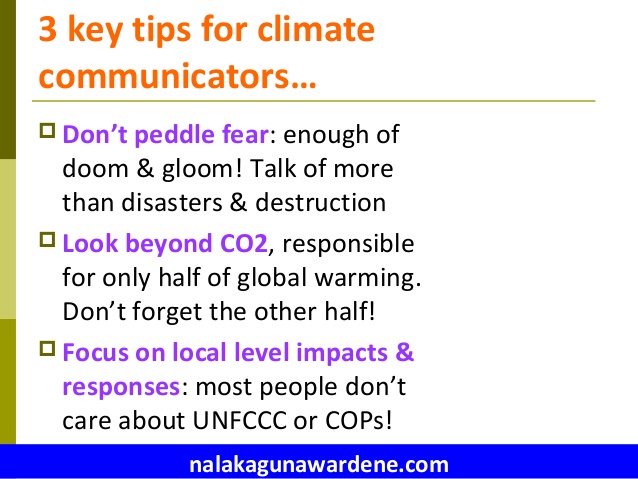
3 broad tips for climate communications – from Nalaka Gunawardene
I argued that we must move away from disaster-driven climate communications of doom and gloom. Instead, focus on climate resilience and practical solutions to achieving it.
We also need to link climate action to what matters most to the average person:
Cheaper energy (economic benefits)
Cleaner air (health benefits)
Staying alive (public safety benefits)
I offered three broad tips for climate communicators and journalists:
Don’t peddle fear: We’ve had enough of doom & gloom! Talk of more than just disasters and destruction.
Look beyond CO2, which is responsible for only about half of global warming. Don’t forget the other half – which includes some shortlived climate pollutants which are easier to tackle such action is less contentious than CO2.
Focus on local level impacts & responses: most people don’t care about UNFCCC or COPs or other acronyms at global level!
Global climate negotiations – good to keep an eye on them, but real stories are elsewhere!
Finally, I shared my own triple-S formula for covering climate related stories:
Informed by credible Science (but not immersed in it!)
Tell authentic and compelling journalistic Stories…
…in Simple (but not simplistic) ways (using a mix of non-technical words, images, infographics, audio, video, interactive media)
Poor venue logistics at BMICH prevented me from sharing the presentation I had prepared. So here it is:
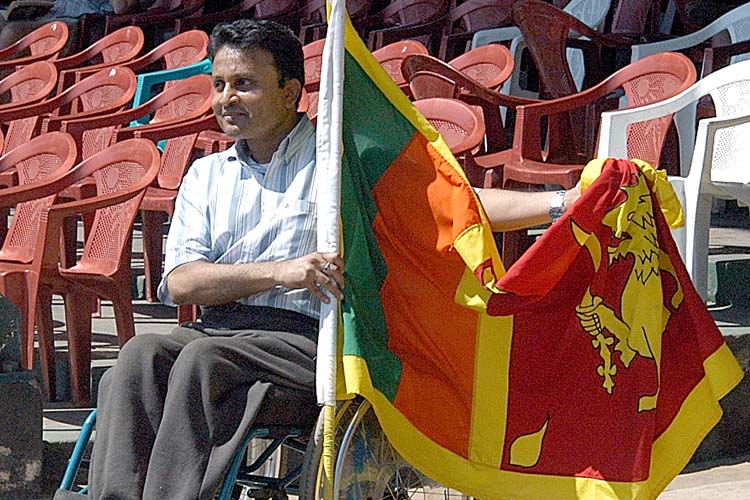
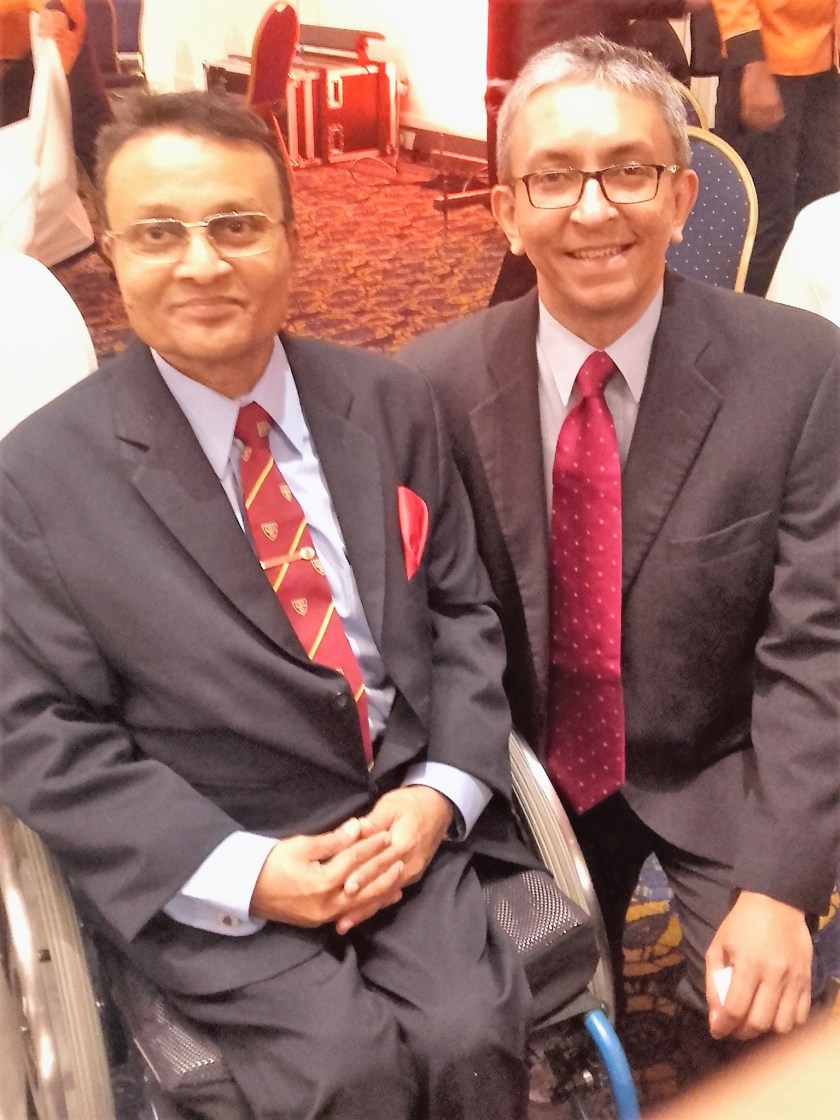
In this week’s Ravaya column (in Sinhala, appearing in the print issue of 9 Oct 2016), I profile and salute Dr Ajith C S Perera, a leading champion for accessibility rights in Sri Lanka.
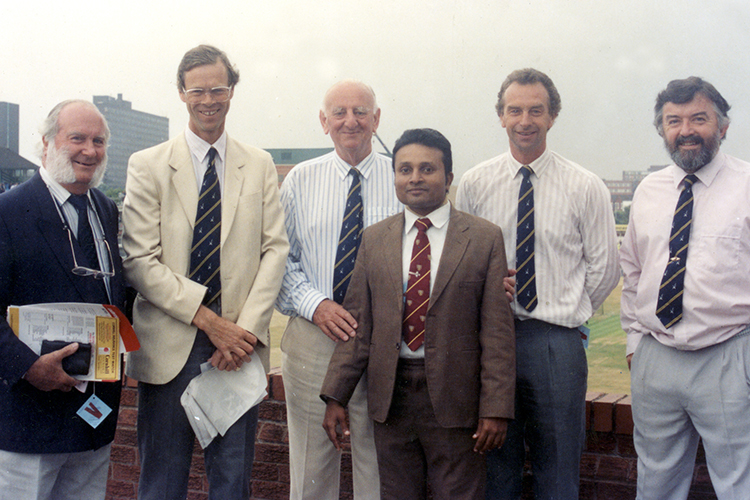
A chartered chemist by profession, a former senior manager in industry, a qualified training instructor, also a former test-match-panel cricket umpire, his life changed when an accident left him a paraplegic. Today he is a writer, speaker, author, a disability rights activist and accessibility adviser-accessor.
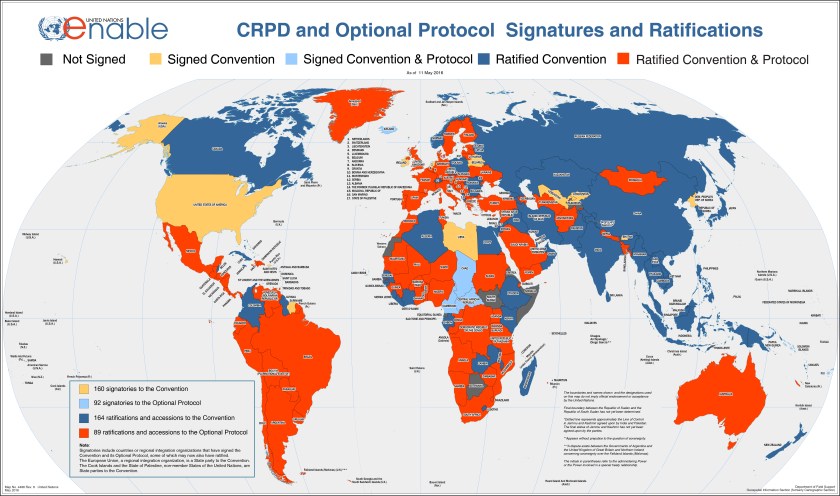
He is the founder and holds the honorary position of Chief Executive and Secretary-General of Idiriya, a registered, not-for-profit humanitarian service organisation in Sri Lanka. He has petitioned Supreme Court seeking and successfully obtaining rulings on mandatory accessibility provisions in all newly built public buildings. Sadly, however, many such premises blantatly ignore this ruling.
Wisden Cricket noted in a profile, “Society tends to have a myopic view when it comes to the disabled: people, by and large, sympathise when they ought to empathise. Perera, despite his years of experience, can’t even become a third umpire because stadiums in Sri Lanka are not fully wheelchair-accessible.”
Jurors Nalaka Gunawardene & Dian Gomez presenting Sri Lankan of the Year – Unsung Hero award to Dr Ajith C S Perera [Photo courtesy Pulse/Derana Media]දෙරණ මාධ්ය ආයතනය සංවිධානය කළ විශිෂ්ඨතම ශ්රී ලාංකිකයන්ට (Sri Lankans of the Year 2016) ප්රණාම පුද කිරීමේ සත් කාර්යයට ස්වාධීන ජූරි සභාවේ සාමාජිකයකු ලෙස මා ද සම්බන්ධ වුණා.
Sir Arthur Clarke on his custom-made dune roller at Hikkaduwa beach, southern Sri Lanka, circa 2004 [Photo by Rohan de Silva]බැංකු, තරු හෝටල්, කලාගාර, සිනමා හා නාට්ය ශාලා, සුපිරි වෙළඳ සංකීර්ණ ආදී බොහොමයක පඩි නොනැග, රෝද පුටුවක් ගෙන ගිය හැකි ramp තිබුණේ කලාතුරකින් බව ඔහු දුටුවා.
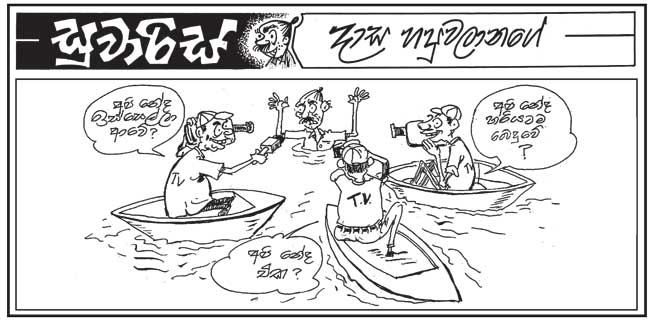
The question has come up again after Dr Ranga Kalansooriya, Director General of the Lankan government’s Department of Information, wanted the media to give preeminence to its watchdog function and pull back from supplying relief in the aftermath of disasters.
As Dr Rohan Samarajiva, who was present at the event, noted, “Some of his comments could even be interpreted as suggestive of a need to prohibit aid caravans being organized by the media. But I do not think this will happen. The risks of being seen as stifling the natural charitable urges of the people and delaying supplies to those who need help are too high…”
Ranga raised a valid concern. In the aftermath of recent disasters in Sri Lanka, private broadcast media houses have been competing with each other to raise and deliver disaster relief. All well and good – except that coverage for their own relief work often eclipsed the journalistic coverage of the disaster response in general. In such a situation, where does corporate social responsibility and charity work end and opportunistic brand promotion begin?
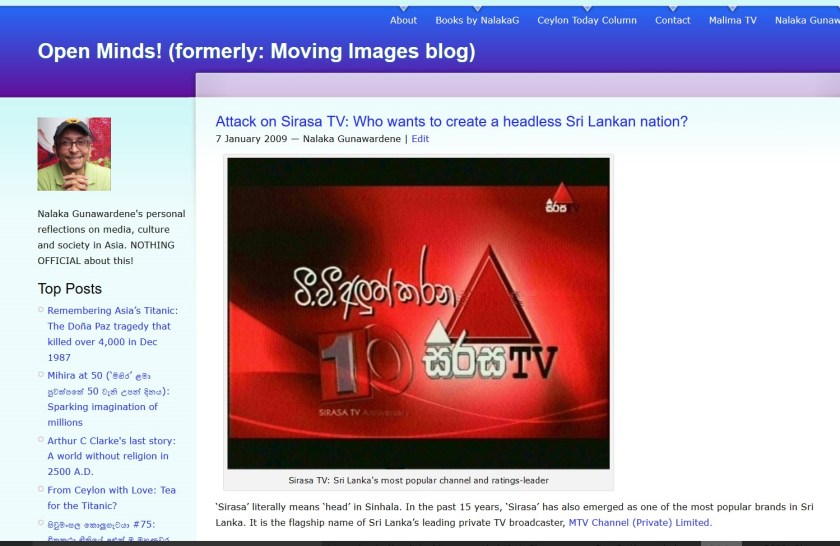
For simply raising this concern in public, some broadcast houses have started attacking Ranga personally. In my latest Ravaya column (in Sinhala, appearing in the print issue of 2 October 2016), I discuss the role and priorities of media at times of disaster. I also remind Sirasa TV (the most vocal critic of Ranga Kalansooriya) that ‘shooting the messenger’ carrying unpalatable truths is not in anybody’s interest.
Dr Ranga Kalansooriya, journalist turned government official, still speaks his mind
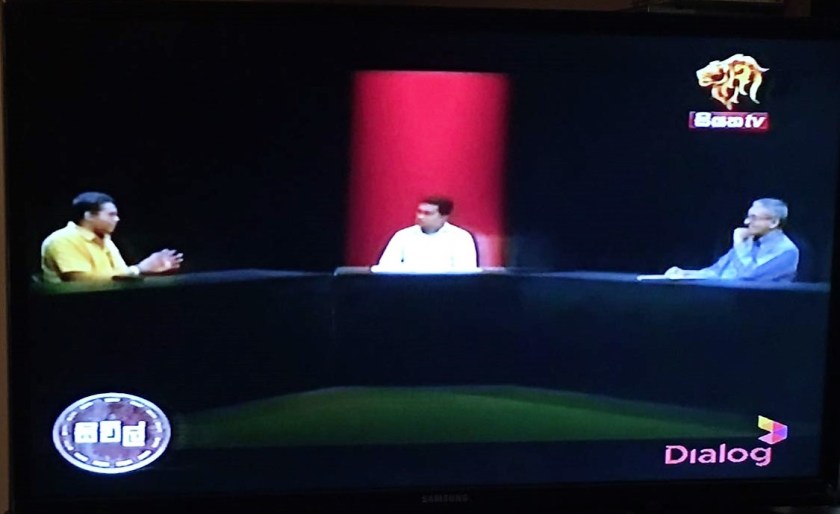
Siyatha TV CIVIL show: Dr Ranga Kalansooriya (left) and Nalaka Gunawardene (right) discuss Sri Lanka’s Right to Information law with host Prasanna Jayanththi: 27 Sep 2016
Back in 2009-2010, I used to host a half hour show on Siyatha TV, a private television channel in Sri Lanka, on inventions and innovation.
So it was good to return to Siyatha on 27 September 2016 — this time as a guest on their weekly talk show CIVIL, to talk about Sri Lanka’s new Right to Information (RTI) law.
Joining me was Dr Ranga Kalansooriya, experienced and versatile journalist who has recently become Director General of the Government Department of Information. Our amiable host was Prasanna Jayaneththi.
We discussed aspects of Sri Lanka’s Right to Information Act No 12 of 2016, adopted in late June 2016, with all political parties in Parliament supporting it. Certified by the Speaker on 4 August 2016, we are now in a preparatory period of six months during which all public institutions get ready for processing citizen request for information.
Dr Ranga Kalansooriya on Siyatha TV’s CIVIL talk show on right to information – 27 Sep 2016
Nalaka Gunawardene on Siyatha TV’s CIVIL talk show on right to information – 27 Sep 2016
Prasanna Jayaneththi hosts Siyatha TV’s CIVIL talk show on right to information – 27 Sep 2016
I emphasized on the vital DEMAND side of RTI: citizens and their various associations and groups need to know enough about their new right to demand and receive information from public officials — and then be motivated to exercise that right.
I argued that making RTI a fundamental right (through the 19th Amendment to the Constitution in April 2015), passing the RTI Act in June 2016 and re-orienting the entire public sector for information disclosure represent the SUPPLY side. It needs to be matched by inspiring and catalysing the DEMAND side, without which this people’s law cannot benefit people.
Sri Lankan Media Fellows on Poverty and Development with their mentors and CEPA coordinators at orientation workshop in Colombo, 24 Sep 2016
“For me as an editor, there is a compelling case for engaging with poverty. Increasing education and literacy is related to increasing the size of my readership. Our main audiences are indeed drawn from the middle classes, business and policymakers. But these groups cannot live in isolation. The welfare of the many is in the interests of the people who read the Daily Star.”
So says Mahfuz Anam, Editor and Publisher of The Daily Star newspaper in Bangladesh. I quoted him in my presentation to the orientation workshop for Media Fellows on Poverty and Development, held in Colombo on 24 September 2016.
Alas, many media gatekeepers in Sri Lanka and across South Asia don’t share Anam’s broad view. I can still remember talking to a Singaporean manager of one of Sri Lanka’s first private TV stations in the late 1990s. He was interested in international development related TV content, he told me, “but not depressing and miserable stuff about poverty – our viewers don’t want that!”
Most media, in Sri Lanka and elsewhere, have narrowly defined poverty negatively. Those media that occasionally allows some coverage of poverty mostly skim a few selected issues, doing fleeting reporting on obvious topics like street children, beggars or poverty reduction assistance from the government. The complexity of poverty and under-development is hardly investigated or captured in the media.
Even when an exceptional journalist ventures into exploring these issues in some depth and detail, their media products also often inadvertently contain society’s widespread stereotyping on poverty and inequality. For example:
Black and white images are used when colour is easily available (as if the poor live in B&W).
Focus is mostly or entirely on the rural poor (never mind many poor people now live in cities and towns).
The Centre for Poverty Analysis (CEPA), a non-profit think tank has launched the Media Fellowship Programme on Poverty and Development to inspire and support better media coverage of these issues. The programme is co-funded by UNESCO and CEPA.
Under this, 20 competitively selected journalists – drawn from print, broadcast and web media outlets in Sinhala, Tamil and English languages – are to be given a better understanding of the many dimensions of poverty.
These Media Fellows will have the opportunity to research and produce a story of their choice in depth and detail, but on the understanding that their media outlet will carry their story. Along the way, they will benefit from face-to-face interactions with senior journalists and development researchers, and also receive a grant to cover their field visit costs.
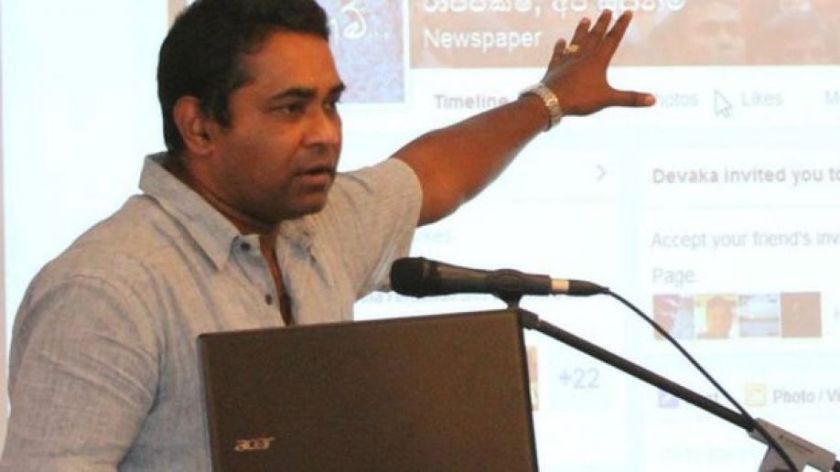
Nalaka Gunawardene speaks at orientation workshop for Media Fellows on Poverty and Development at CEPA, 24 Sep 2016
I am part of the five member expert panel guiding these Media Fellows. Others on the panel are senior journalist and political commentator Kusal Perera; Chief Editor of Daily Express newspaper Hana Ibrahim; Chief Editor of Echelon biz magazine Shamindra Kulamannage; and Consultant Editor of Sudar Oli newspaper, Arun Arokianathan.
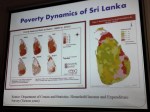
At the orientation workshop, Shamindra Kulamannage and I both made presentations on media coverage of poverty. Mine was a broad-sweep exploration of the topic, with many examples and insights from having been in media and development spheres for over 25 years.
Here is my PPT:
More photos from the orientation workshop:
Nalaka Gunawardene speaks at orientation workshop for Media Fellows on Poverty and Development at CEPA, 24 Sep 2016
Workshop for Media Fellows on Poverty & Development, Colombo, 24 Sep 2016
Workshop for Media Fellows on Poverty & Development, Colombo, 24 Sep 2016
Workshop for Media Fellows on Poverty & Development, Colombo, 24 Sep 2016
Workshop for Media Fellows on Poverty & Development, Colombo, 24 Sep 2016
Shamindra Kulamannage at Workshop for Media Fellows on Poverty & Development, Colombo, 24 Sep 2016
Workshop for Media Fellows on Poverty & Development, Colombo, 24 Sep 2016
Workshop for Media Fellows on Poverty & Development, Colombo, 24 Sep 2016
Krishan Siriwardhana opens Workshop for Media Fellows on Poverty & Development, Colombo, 24 Sep 2016







![Jurors Nalaka Gunawardene & Dian Gomez presenting Sri Lankan of the Year - Unsung Hero award to Dr Ajith C S Perera [Photo courtesy Derana Media]](https://nalakagunawardene.com/wp-content/uploads/2017/01/jurors-nalaka-gunawardene-dian-gomez-presenting-sri-lankan-of-the-year-unsung-hero-award-to-dr-ajith-c-s-perera.jpg?w=840)
![Sir Arthur Clarke on dune roller at Hikkaduwa beach [Photo by Rohan de Silva]](https://nalakagunawardene.com/wp-content/uploads/2017/01/sir-arthur-clarke-on-dune-roller-at-hikkaduwa-beach.jpg?w=840)








 Open Minds!