Missing Mothers: How acronyms and jargon can kill innocent women

iwd_5“This year alone, more than 500,000 women will die during pregnancy or childbirth. That’s one woman missing every minute of every day. We call these women ‘missing’ because their deaths could have been avoided. In fact, 80 per cent of maternal deaths could be averted if women had access to essential maternal health services.

“We know where and how these women are dying, and we have the resources to prevent these deaths. Yet, maternal mortality is still one of the most neglected problems internationally.”

This sobering message from Unicef is worth reflecting upon as we mark another International Women’s Day.

Unfortunately, critical issues like these often don’t make the news – or worse, are relegated to the background as inevitable. As Joseph Stalin said in a different context, one death is a tragedy; a million deaths a mere statistic.

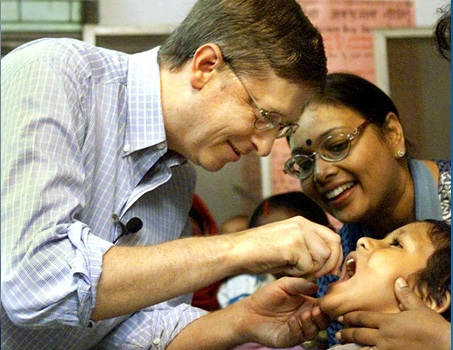
The challenge to the development community is to go beyond simply counting deaths in cold, clinical terms. UNICEF has recently released a two minute video, “Missing Mothers” as a tool for international development professionals to use in raising awareness of the issue of mothers dying needlessly.

Having a baby is both a very natural process and a joyous occasion for the parents and extended family concerned. Yet having a baby still remains one of the biggest health risks for millions of women worldwide.
Time to make missing women count...
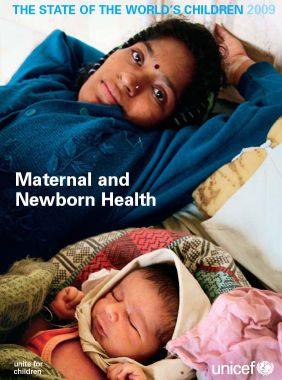
As Unicef’s 2009 State of the World’s Children report reminded us recently, 1,500 women die every day in the world due to complications arising during pregnancy and childbirth. The chances of a woman in developing countries dying before or during childbirth are 300 times greater than for a woman in an industrialised country like the United States. Such a gap does not exist in any other social indicator.

The largest number of maternal deaths in the world is in South Asia. In India alone, an estimated 141,000 women die each year during pregnancy or childbirth. Recently, my Indian journalist friend Kalpana Sharma wrote a perceptive column on this topic in The Hindu newspaper.

She noted: “The solution has been known for years. The problem is the will to make it work. We also know that the solution would benefit everyone, not just women. Yet, affordable and accessible health care, for instance, has not received the thrust that is needed.”

The Missing Women video suggests to activists and campaigners that action can start with five steps: 1. Educate girls, young women and yourself; 2. Respect their rights; 3. Empower them to participate; 4. Invest in maternal health; 5. Protect against violence and abuse. The Unicef website, meanwhile, lists 10 ways in which concerned individuals can make a difference.

All very commendable and necessary — but not sufficient. With all the good intentions in the world, Unicef’s experts and officials come across as, well, detached and geeky. They don’t connect well enough to the real world people whose needs and interests they are genuinely trying to serve. Their messages are lost somewhere in their precise terms, jargon and endless acronyms.

Just take, for example, the very phrase of maternal mortality itself. Precise but also very stiff and dry. Who outside the medical and development circles uses such terms in conversation? When I write or make films about the issue, I prefer to call it ‘mothers dying needlessly while having babies’. Yes, it’s more wordy and perhaps less exacting. But most ordinary people would get what I’m talking about.

If the jargon-ridden language reads dry in text, it completely puts off people when they watch such words being spoken on video. Such films may pander to the Narcissism of Unicef mandarins, but they completely flop in terms of public communication and engagement.

This is the same point I made in October 2008 when commenting on the Unicef-inspired first Global Handwashing Day: “Passion used to be the hallmark of UNICEF during the time of its legendary executive director James Grant, who strongly believed in communicating messages of child survival and well-being. He gave UNICEF a head start in working with the media, especially television.”

Jim Grant’s deputy, journalist Tarzie Vittachi, who came over to the UN children’s agency after a stint at the UN population fund, used to say: “Governments don’t have babies; people do”. We might extend that to: inter-governmental agencies don’t have babies; real women do. That may be why Unicef insists on delivering its life-saving messages so riddled in politically and scientifically correct, but so sterile language.

Unicef’s YouTube channel has a number of short videos related to what they insist on calling maternal mortality. Here’s an example where Unicef’s Chief of Health Dr. Peter Salama says it’s really an unconscionable number of deaths, and a human tragedy on a massive scale:



MDG5: Save Our Moms!
Reducing by three quarters the number of mothers dying needlessly while having babies is one of the Millennium Development Goals or MDGs, the holy grail in international development since the United Nations adopted these in 2000, setting 2015 as the target date.

We have now passed the half way mark, but progress has been patchy and unimpressive. And it will remain so as long as the UN agencies and other development players insist on peddling jargon and acronyms. Considering the issues of life and death involved here, we must view bad communication as a killer — joining the ranks of unsafe drinking water and violence against women and girls.

Writing an editorial for SciDev.Net in September 2005, I noted: “All development workers and UN officials should take a simple test: explain to the least technical person in your office the core message and relevance of your work. Many jargon-using, data-wielding, acronym-loving development workers would probably fail this test. But unless development-speak is translated into simpler language, the MDGs will remain a buzzword confined to development experts and activists.”

I don’t believe in ghosts, but it’s time to bring back the spirits of Jim Grant and Tarzie Vittachi to Unicef to again humanise the agency so mired in its own ‘geekspeak’. The intellectual rigours of evidence-based, scientific analysis must be balanced with clarity and accessibility. It’s fine to be informed by science, but learn to say it simply, clearly and concisely.

The lives of half a million women and millions of children depend on it.

Bill Gates and mosquitoes: World’s top geek now works for its meek

More bugs from Gates...
Bill Gates can’t seem to get enough of bugs.

On 4 February 2009, he let loose a swarm of mosquitoes at the TED 2009 technology, entertainment and design conference in California to highlight the dangers of malaria.

“Malaria is spread by mosquitoes,” he reminded his audience of leading scientists, designers, researchers and entrepreneurs. Turning to an upturned jar on stage, he announced: “I brought some. Here…I’ll let them roam around. There is no reason only poor people should be infected.”

Luckily, the mosquitoes were not carrying the disease. But it had the intended effect. Wired editor Chris Anderson, curator of the show, suggested a headline: “Gates releases more bugs into the world”.

Watch Bill Gates’s mosquito moment:

Watch the full 20-minute video of Bill Gates at TED 2009

As stunts go, this one was pretty mild and harmless. There are many shocking ways in which the harsh daily realities of the world’s poor can be brought into gatherings of the rich and famous. They could be served glasses of the contaminated, sludgy (and often smelly) water that tens of millions drink everyday. Or all the toilets could be locked up and the keys thrown away – for good. Or electricity supply could be cut off, or frequent ‘black-outs’ or ‘brown-outs’ could be staged. You get the idea…

Of course, few event organisers would dare try any of these, if only for health and safety considerations. Reminds me of a rare exception: when he was director of information with the UN’s population agency (UNFPA), journalist-turned-UN official Tarzie Vittachi once hosted delegates of a high level meeting to lunch which consisted soley of a bread roll and a glass water. He told his guests: the meal was better more than what most poor people in the global South on any given day.

Bill to the rescue...
Meanwhile, billions of poor and needy – and not just those in the majority world – are glad that Bill Gates caught the ‘development bug’ and has switched his formidable creative energies (not to mention his billions) to address their survival issues. The Bill & Melinda Gates Foundation – which carefully manages the giving away of Gates wealth – operates on the belief that all lives have equal value. “We think all people deserve the chance to have healthy, productive lives”.

They have set priorities such as improving health and reducing extreme poverty in the developing world, and improving high school education in the United States.

The New York Times columnist Nicholas Kristof recently described it as a paradox: “In these brutal economic times, one of the leading advocates for the world’s poorest people is one of the richest.”

He noted: “Mr. Gates ended his full-time presence at Microsoft last July and since then has thrown himself into work at his foundation. He is now trying to do to malaria, AIDS, polio and lethal childhood diarrhea what he did to Netscape, and he just may succeed.”

In his TED talk, Bill Gates addressed two questions that occupy much of his time these days: How do we stop Malaria? How do you make a teacher great?

Look, no computers!
Look, no computers!
He said: “The market does not drive scientists, thinkers, or governments to do the right things. Only by paying attention and making people care can we make as much progress as we need to.”

He called for greater distribution of insect nets and other protective gear, and revealed that an anti-malaria vaccine funded by his foundation and currently in development would enter a more advanced testing phase in the coming months.

“I am an optimist; I think any tough problem can be solved,” he said. That’s the geek in him talking: marshall all information, analyse problems, respond strategically — and keep at it.

A friend who now works with the Gates Foundation confirms how the charity seeks evidence and rigour in all its social investments. This is no bleeding-heart do-gooding or ‘social work’ for its CSR value. The new wave of geeks lining up to serve the meek bring business acumen to the development sector long under-served by unimaginative aid agencies and self-serving UN organisations.

As Kristof wrote: “Gates ended his full-time presence at Microsoft last July and since then has thrown himself into work at his foundation. He is now trying to do to malaria, AIDS, polio and lethal childhood diarrhea what he did to Netscape, and he just may succeed.”

Gates has announced that despite the economic crisis the Gates Foundation will increase spending by US$500 million this year.

In late January 2009, the billionaire philanthropist released the first ‘Annual Letter from Bill Gates‘ where he discussed his work at the foundation and spoke candidly about what has gone well, what hasn’t.

He compared his earlier work at Microsoft with the challenges he now tackles at the charitable foundation. “What I’ve found now is that really those same key elements are there. The opportunity for big breakthroughs is absolutely just as great–now it’s vaccines, it’s seeds that have better yield, it’s ways of sharing teaching practices…they will take the same kind of patience that we had for software breakthroughs.”

Just ahead of the letter’s release, Nicholas Kristof talked with Bill Gates about why aid to developing countries is more important during the economic downturn and vaccine breakthroughs on the horizon. Watch the interview:

Read: Bill Gates’s Next Big Thing by Nicholas D Kristoff, published in the New York Times on 24 January 2009

“It’s an immensely exciting time for people working with video!” – Sam Gregory

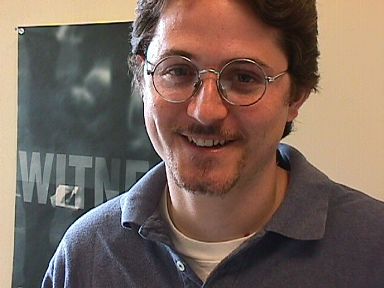
Sam Gregory
Sam Gregory
“It’s an immensely exciting time for people working with video. More and more people creating and using video, more places to share it, more ways to place it in front of people who can make a difference.

“It raises challenges too: saturation of images and compassion-fatigue, finding your place to be heard, and the safety and security and consent issues that arise when many more people are filming each other.

“But overall I think we’re seeing a really powerful moment for individual expression but also collective accountability being supported via image-making.”

So says Sam Gregory programme director of Witness, a human rights organisation which uses video and online technologies to open the eyes of the world to human rights violations. The New York-anchored organisation works around the world to ’empower people to transform personal stories of abuse into powerful tools for justice, promoting public engagement and policy change’.

Sam is a video producer, trainer and human rights advocate who knows and taps into the power of moving images to move people. He was speaking with Indian journalist and cyber activist Frederick Noronha in an interview just published at the Info Activism website.

www.witness.org
http://www.witness.org
Sam recalls how he was once making films and also involved in activism, and ‘frustrated at how the two didn’t fit together’.

He adds: “In the traditional TV documentary world, the advocacy purpose of film was under-utilized. The fact that you got 500,000 viewers for a TV broadcast told you nothing about whether that turned into action. So I started looking for ways to really make the video fit as a tool for real advocacy and change-making, and came upon WITNESS.”

Read full interview on InfoActivism website

We at TVE Asia Pacific worked closely with Sam in 2002-2004, when we implemented a collaborative Asian regional project called Truth Talking where Witness was a partner. It was through Witness that I met courageous info activists like Joey R B Lozano.

From City of God to Slumdog Millionaire: Filming ‘underbelly’ of nations…

From 'Slumdog Millionaire'

“Can you help us to film a child’s leg being broken?”

In his long years of journalism in India, my friend Darryl D’Monte had faced all sorts of questions and situations. But this was one question that stunned and left him speechless for a while.

A visiting Canadian TV crew made this request in the 1970s, when Darryl was resident editor of The Times of
India
. He was giving them some insights on the extent of poverty in his city of Bombay, since renamed as Mumbai. The crew had heard of the deliberate maiming of street children, before being employed as beggars. A disabled child would evoke more sympathy, increasing the daily collection for gangsters operating them from behind the scenes.

Darryl wasn’t willing to be associated with this ‘staging’. “Well, it’s going to happen anyway,” was the film crew’s cynical answer.

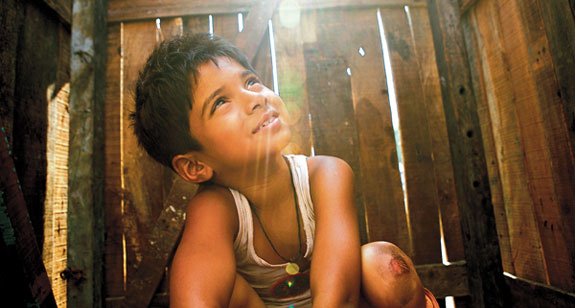
Now, fast forward 30 years to the present. At one point in the British-Indian movie Slumdog Millionaire, we see a young girl being blinded by a gangster who shelters and feeds a small army of children — all unleashed on Mumbai on a daily basis to tug at the heart strings of its teeming millions.

The film’s protagonist Jamal escapes the same fate by making a mad dash for freedom with his brother, Salim. But years later, they cross the gangster’s path again, with devastating results – for him.

Look what I've started...
Vikas Swarup: Look what I've started...
Set and filmed in India, Slumdog Millionaire is the story of a young uneducated man from the slums of Mumbai who appears on the Indian TV’s version of Who Wants to Be a Millionaire? (Kaun Banega Crorepati) and does so well to reach the final question that the game show host and the police suspect him of cheating.

Some Indians feel their country’s ugly underbelly has been magnified by locating and filming part of the story in the slums of Mumbai. But director Danny Boyle, who sees his film as a Dickensian tale, says he shot in real, gritty locations “to show the beauty and ugliness and sheer unpredictability” of the city.

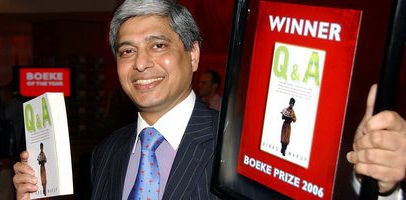
Indian diplomat Vikas Swarup, who wrote the 2005 novel Q and A on which the movie is based, has a similar view. “This isn’t social critique,” he told The Guardian in an interview. “It’s a novel written by someone who uses what he finds to tell a story. I don’t have firsthand experience of betting on cricket or rape or murder. I don’t know if it’s true that there are beggar masters who blind children to make them more effective when they beg on the streets. It may be an urban myth, but it’s useful to my story.”

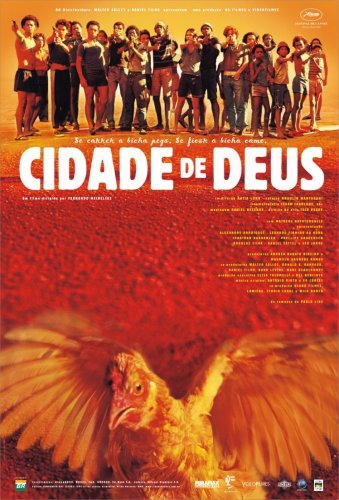
To me, Slumdog Millionaire feels like a cross between the acclaimed Brazilian slum movie City of God (Portuguese name: Cidade de Deus, 2002) and Quiz Show, the 1994 American historical drama film about TV quiz scandals in the 1950s.

City of God (2002) was filmed in the favelas of Rio de Janeiro

City of God is a Brazilian crime drama film directed by Fernando Meirelles and Kátia Lund, released in its home country in 2002 and worldwide in 2003. It was adapted by Bráulio Mantovani from the 1997 novel of the same name written by Paulo Lins.

The film’s depiction of narcotic drug rings, hold-ups, street violence and police corruption may not have been what the upper middle class Brazilians wanted to showcase to the rest of the world, but the film’s stark if grisly authenticity resonated with movie audiences around the world. Most of the actors were residents of favelas (slums) of Rio de Janeiro, such as Vidigal and the Cidade de Deus itself. City of God became one of the highest-grossing foreign films released in the United States up to that time.

The makers of Slumdog Millionaire adopted a similar approach. Its co-director Loveleen Tandan says she likes to get as close to reality as possible. This drove her to the slums of East Bandra to look for young children who resembled the protagonists in the story.

As she recalled in a recent interview with Tehelka: “I was very keen to get real slum kids, which is why I convinced them (producers) to do one-third of the scenes in Hindi. I made a scratch tape with real street kids. The team was surprised that Hindi actually made it brighter and more alive.”

Indeed, Slumdog doesn’t feel like a ‘foreign film’ despite it having a fair number of English subtitles, which only enhance the overall cinematic experience.

But how realistic should films try to become, before the local realities are distorted or local sensibilities are affected? Where does documentary end and drama begin? These questions will continue to be debated across India and elsewhere while Slumdog enthralls millions on its first theatrical release.

Feature film makers can exercise their creative license far more than factual film makers. I doubt if the creators of authentic, close-to-the-ground movies like City of God and Slumdog Millionaire set out with any specific social agenda. They are in the business of entertainment, and just happen to find plenty of drama in real life in places like urban slums. We might argue that in the right hands, dramatised movies can draw mass attention to development issues and challenges far more effectively than the often dull and dreary documentaries.

Eyes wide open
Kalpana Sharma: Eyes wide open
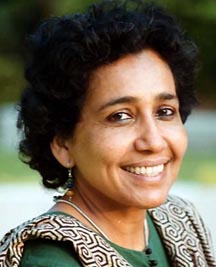
“If through (the movie) the world gets a peek at an India inhabited by millions of people who continue to live their lives without clean water, sanitation or electricity, what is the problem?” asks another Indian friend and long-time Mumbai resident Kalpana Sharma.

In a perceptive essay titled Shantytowns of the Mind, written in The Indian Express in early January 2009 before she saw the film, Kalpana flagged important concerns: “Slumdog Millionaire’s success raises some deeper questions. How do we depict poverty as writers, filmmakers, journalists? Is it fair to expect us all the time to give a full, balanced, sensitive portrayal? Or is it inevitable that we write, film, for our audiences? And if, as a byproduct, people are sensitized, so be it. Also, if they are annoyed, so be it. If we are considered exploitative, so be it.”

Kalpana speaks with authority, and not just because she lives in the megacity of Mumbai (population: 13 million and rising) which, she points out, is half made up of slums. In 2000, she wrote a book titled Rediscovering Dharavi: Stories from Asia’s Largest Slum. Far from being a cold, clinical analysis of facts, figures and trends, it’s a book about the extraordinary people who live there, “many of whom have defied fate and an unhelpful State to prosper through a mix of backbreaking work, some luck and a great deal of ingenuity”.

Kalpana ends her essays with these words: “In the end you realise as a writer, a journalist or a filmmaker, that the best you can do is to shine a torch, a searchlight, on an entrenched problem. But the solution will not be found merely by that illumination. For that, there are many more steps to be taken.

Slumdog Millionaire has focused its lens on the children of India’s slums through a work of fiction. What we do to change their future is the non-fiction that has yet to be written.”

Read Shantytowns of the Mind by Kalpana Sharma, Indian Express, 14 January 2009

India rising...but not for all slumdogs?

To Whom It May Concern, a.k.a. Tell Me Lies: In memory of Adrian Mitchell (1932-2008)

I was run over by the truth one day.
Ever since the accident I’ve walked this way
So stick my legs in plaster
Tell me lies about Vietnam…

With these lines opened the bitterly sarcastic reaction to the televised horrors of the Vietnam War by British poet, playwright and performer Adrian Mitchell.

He first read his best-known poem, called To Whom It May Concern (also known as Tell Me Lies), to thousands of anti-war protesters who flocked into London’s Trafalgar Square on the afternoon of Easter Monday 1964. As Mitchell delivered his lines from the pavement above in front of the National Gallery, angry demonstrators in the square below scuffled with police.

Adrian Mitchell (1932 - 2008)
Mitchell, who died on 20 December 2008 aged 76, occasionally updated the poem to take into account the subsequent wars and resulting tragedies in places as far apart as Iraq, Burma, Afghanistan and Israel/Palestine.

“It is about Vietnam, But it is still relevant,” Mitchell said in 2001. “It’s about sitting faithfully in England while thousands of miles away terrible atrocities are being committed in our name.”

As Michael Kustow wrote in an obituary in The Guardian: “Mitchell’s original plays and stage adaptations, performed on mainstream national stages and fringe venues, on boats and in nature, add up to a musical, epic and comic form of theatre, a poet’s drama worthy of Aristophanes and Lorca. Across the spectrum of his prolific output, through wars, oppressions and deceptive victories, he remained a beacon of hope in darkening times. He was a natural pacifist, a playful, deeply serious peacemonger and an instinctive democrat.”

The one time journalist and television critic was fired by The Sunday Times (UK) for reviewing Peter Watkins’ 1965 anti-nuclear TV film The War Game. Its depiction of the impact of Soviet nuclear attack on Britain had caused such dismay within the BBC and British government that the public broadcaster cancelled its scheduled transmission on 6 August 1966 (the 21 anniversary of the Hiroshima attack). It was finally broadcast in 1985, with the corporation stating that “the effect of the film has been judged by the BBC to be too horrifying for the medium of broadcasting”.

But Auntie Beeb and the rest of the Establishment couldn’t stop Mitchell, whose satirical poems continued to demolish myths emanating from the propaganda mills of the military-industrial complex and their allies in the mainstream media.

As Kustow recalled: “To Whom It May Concern, a riveting poem against bombs and cenotaphs and the Vietnam war, with which he stirred a capacity audience in Mike Horovitz’s pioneering Poetry Olympics at the Albert Hall in 1965, has lasted through the too many wars since: a durable counting-rhyme to a rhythm and blues beat.”

Watch Adrian Mitchell recite/sing his poem in 1965 (black and white film):

As Jan Woolf wrote in another tribute: “To watch Adrian Mitchell…prepare his body for a performance of To Whom It May Concern – chin cupped in hand, eyes focused, back tense, ‘I got run over by the truth one day…’ – was to see a great poet steadying himself with all the focus and tension of a warrior. When those blue suede shoes got moving, the poem came alive. He breathed it, lived it, became it. It was as if he were dancing with language to get at the truth.”

Woolf recalls that Mitchell’s reading of Tell Me Lies at a City Hall benefit just before the 2003 invasion of Iraq was electrifying. “Of course, he couldn’t stop that war, but he performed as if he could.”

Watch Mitchell read what he called the 21st-century remix of his protest poem ‘To Whom It May Concern (Tell me lies about Vietnam)’.

The 21st century re-mix ends with these words:

“You put your bombers in, you put your conscience out
You take the human being, and you twist it all about
So scrub my skin with women
So chain my tongue with whisky
Stuff my nose with garlic
Coat my eyes with butter
Fill my ears with silver
Stick my legs in plaster
Tell me lies about –
Iraq
Burma
Afghanistan
BAE Systems
Israel
Iran

Tell me lies Mr Bush
Tell me lies Mr Blairbrowncameron

Tell me lies about Vietnam

For some strange reason that has nothing to do with Adrian Mitchell’s recent departure, these words and the whole poem keep turning in my mind over and over again.

Danny Schechter: Moving Images Person of the Year 2008

Moving Images Person of the Year 2008
Danny Schechter: Moving Images Person of the Year 2008

As 2008 – clearly an Annus horribilis for tens of millions around the world – draws to an end, we announce the Moving Images Person of the Year 2008: Danny Schechter.

Nicknamed “The News Dissector,” Danny is a television producer, independent filmmaker, blogger and media critic who writes and lectures frequently about the media in the United States and worldwide.

He has worked in print, radio, local news, cable news (CNN and CNBC), network news magazines (ABC) and as an independent filmmaker and TV producer with the award-winning independent company Globalvision. He is a blogger and editor of Mediachannel.org, a web and blog site that watches and critiques the print and broadcast media.

Another way to introduce Danny is to recall the scary headlines and TV news images that have dominated 2008 – of reputed banks going bust, leading stock markets crashing and these events triggering a global financial meltdown that, for now, has been slowed but not completely averted by unprecedented governmental intervention…by the very governments of the industrialised countries who should have kept a sharper eye on what was going on in their free market economies.

As the carnage on Wall Street and other global financial centres continued, some hard questions were asked: Did anyone see this coming? If so, why weren’t they listened to? What is the real cause of all this chaos? Where was the news media and why weren’t they doing their job of sounding the alarm?

Well, one man who saw it coming and tried very hard to raise the alarm was Danny Schechter. In 2006, as part of this effort, he made a documentary film called In Debt We Trust. In this, he was the first to expose Wall Street’s connection to subprime loans and predicted the global economic crisis.

This hard-hitting documentary investigated why so many Americans – college and high school students in particular – were being strangled by debt. Zeroing in on how the mall has replaced the factory as America’s dominant economic engine, Emmy Award-winning former ABC News and CNN producer Danny Schechter showed how college students were being forced to pay higher interest on loans while graduating, on average, with more than $20,000 in consumer debt.

An inconvenient truth that America ignored for too long...

The film empowers as it enrages, delivering an accessible and fascinating introduction to what former Reagan advisor Kevin Phillips has called “Financialization” — or the “powerful emergence of a debt-and-credit industrial complex.”

Danny and his film have done for global financial meltdown what Al Gore did for global warming with his own film: investigate rigorously, gather and present the evidence of a gathering storm, sound the alarm — and keep badgering until the warnings were heard. In both cases, the inconvenient truths they presented were ignored for too long — and we are paying the massive price for such indifference.

Watch the Trailer of In Debt We Trust:

Deborah Emin, writing in OpEdNews in October 2008, noted: “In Debt We Trust…brought Schechter a lot of grief. Rather than being seen as a prophet of doom, which in and of itself was not so terrible, he should have been lauded for sounding the alarm when it would have been in time. It is truly an amazing fact of American life that the powers that be can so disastrously determine what information we are able to see based on their subjective judgment of what is too negative or too harsh a view of a specific topic. From this perspective, we should judge all these gatekeepers as those on the Titanic who did not want to alarm the passengers that the ship was going down.”

Watch an extract from In Debt We Trust: How did we get into this mess?


Watch In Debt We Trust in full on Google Video

So here’s the trillion-dollar question: if this film was made in 2006, and has since been running to packed houses scaring a lot of thinking and caring people, why was its message not heard in the corridors of power in Washington DC — and elsewhere in the G8 countries’ capitals?

The short answer could be that there have been no thinking and caring people running the American government for the past eight years.

Read all about it!
Read all about it!
The long answer is found in a book that Danny published in mid 2008. Titled Plunder: Investigating Our Economic Calamity and the Subprime Scandal, it’s an outgrowth of – and update on – his 2006 film. It documents with shocking evidence how debt has restructured the American economy and put Americans under a burden that many will never overcome.

Plunder also offers an analysis based on current events, going behind the scenes, identifying the key players and culprits, challenging the financial industry, government deregulation — and the financial and most sections of the mainstream media who have been cheer-leading the financiers as the latter took ever larger risks. Danny also argues that this has been a criminal enterprise — a point only touched on in most media coverage — and of global significance, given the globalization of markets.

Read my Sep 2008 blog post: Financial Meltdown: Putting pieces together of a gigantic whodunnit


On a personal note, I have been a great admirer of Danny Schechter and his work since I first met him 13 years ago. In the Fall of 1995, he gave an inspiring and provocative talk to a group of journalists and producers from the developing world who were on a UN-organised media fellowship in New York. As part of our tour of media and development agencies in the US East Coast, we visited Danny’s GlobalVision productions.

Danny introduced himself as a ‘network refugee’ — one who had worked for the mainstream network television in the US and had left in disgust. From outside, he was trying to find alternative ways of speaking truth to power — the original mandate of the mass media which many corporatised media companies had abandoned, knowingly or otherwise.

In that pre-Internet era, Danny engaged in his media activism through independent filmmaking, through which he supported and often participated in struggles for social justice in his native United States as well as in places like apartheid-ridden South Africa and strife-torn Palestine.

www.newsdissector.com
http://www.newsdissector.com
Danny was one of the early media activists to take advantage of the web. In 2000, he co-founded with Rory O’Connor MediaChannel.org, the first media and democracy supersite on web. Operating on shoe-string budgets, it has sustained critical spotlight on the mainstream media (MSM) for 8 years in which the MSM landscape has been completely transformed. While its scrutiny and chronicling of the political economy of the media is more crucial than ever, and veterans like Walter Cronkite whole-heartedly endorse the effort, the non-profit effort struggles for survival.

Now in his 60s, Danny is simply indefatigable. Besides running MediaChannel and GlobalVision, he blogs every few hours, writes a regular column on Huffington Post, lectures on media, writes books and still has time to make investigative films. He is extremely well informed, witty, funny and completely irreverent. He writes and speaks with justified outrage but no malice. That’s a tough balance to maintain.

Danny visits Wall Street on 20 September 2007 – typical of his funny, incisive reporting:

I was delighted to catch up with Danny in May 2008 when we both participated in Asia Media Summit in Kuala Lumpur. He and I were in a small minority of participants who were familiar with the inner works of the mainstream media and transformational potential of the new media. In characteristic style, Danny stirred things up, livening the usually staid proceedings, and I did my best to back him up from the audience. We both enjoyed asking irritating – if not outright annoying – questions from the 400+ media mandarins and press barons who’d come together for the Summit.

One evening, Danny and I had a drink with Malaysiakini’s CEO and leading new media activist Prem Chandran where we talked about the slow but inevitable decline of the mainstream media dinosaurs — or what Michael Crichton called Mediasaurus. The trouble with mediasaurus, we agreed, was that they are taking a long time going extinct and for now, they still command significant numbers of eyeballs and the dollars that follow.

After Prem left, Danny and I continued our chat into the evening. Over a spicy Indian meal, Danny gave me a crash course on subprime crisis (or sub-crime as he calls it) and how that was going to have a domino effect on markets everywhere. I listened with growing comprehension — and deep admiration for the man’s ability to communicate complexities without oversimplification.

Events in the weeks and months that followed have shown how remarkably prescient Danny Schechter was. And what a monumental, global scale mistake it was not to have heeded this man’s cautions in his blogs, films, columns and elsewhere.

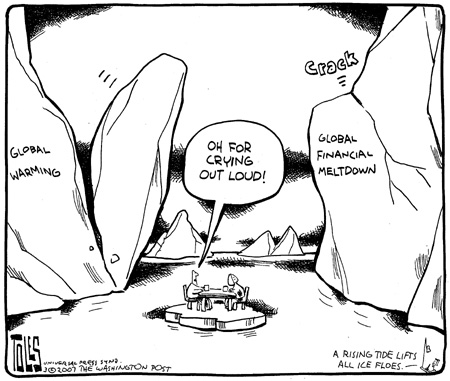
We end 2008 with my cartoon of the year. As I said in a blog post in September 2008: “This cartoon by Pulitzer prize winning Tom Toles first appeared in the Washington Post in 2007 – it brilliantly anticipated the global financial meltdown that we’re now experiencing. Coming in the wake of confirmed global warming, it is a double whammy.

Meltdown 2
Meltdown 2

Thai audiences in the dark about ‘Children of the Dark’

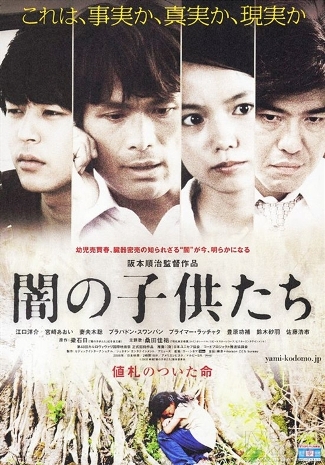
Yami no kodomotachi (Children of the Dark) movie poster

Human trafficking – peddling and trading of human beings for slavery, sexual exploitation and servitude – has grown to alarming proportions in recent years. It’s among the top five illicit trades in the world, whose net annual worth is believed to be between 9 billion and 42 billion US dollars. The truth is, nobody knows exactly how big it is, but human rights activists and development agencies agree the problem is pervasive.

Of the estimated 2.5 million persons trafficked worldwide, more than half are in the Asia Pacific. At the UN General Assembly for Children in August 2007, it was reported that about 1.8 million children became victims of commercial sex trade in 2000. About one million children in Southeast Asia are said to be involved – Thailand is one centre of this shady trade, drawing on misery in its rural hinterlands as well as poorer neighbouring countries like Burma, Cambodia and Laos.

So what happens when someone goes to the trouble of studying the issue in depth, and then pools talent and resources to make a feature film that exposes international connections that sustain the child sex industry in Thailand? Instead of being welcomed as part of the effort to counter this scourge, the film gets banned.

Yami no kodomotachi (Children of the Dark, 138 mins, original Japanese) is a Japanese-Thai film made in 2008 about child sex slavery. It has been banned in Thailand on the grounds that it was ‘inappropriate’ and touched on a ‘sensitive’ issue.

Watch the official trailer of the film (Japanese soundtrack, Thai captions):

I haven’t seen the film, but according to one reviewer who did, Junji Sakamoto‘s film is based on a novel by Yan Sogil and scripted by Sakamoto himself, shows, with a documentary-like directness, how children caught in the web of a Thai prostitution ring are exploited, abused and, in some cases, murdered when they are no longer sexually salable.

Mark Schilling, writing in The Japan Times in August 2008, noted: “…In being so visually graphic — particularly in the sex scenes in the Thai brothel — Sakamoto treads a dangerous line between hard-hitting social drama and stomach-turning exploitation. He takes care never to show his young actors (whose average age looks to be about 10) and their adult ‘clients’ in the same explicit shot, but he films them engaged in sexual acts or their aftermath. Sakamoto may defend these scenes in the name of realism, but could he have filmed similar ones in Japan, using Japanese children? The short answer is “no.”

The Thai ban prevented ‘Children of the Dark’ from being screened at the Bangkok International Film Festival, held in the Thai capital from 23 – 30 September 2008.

“The ban puts under the spotlight the country’s – or at least its higher-ups’ – seeming unwillingness to let go of the Film Act of 1930, when Thailand was still under absolute monarchy. That law gave a Board of Censors the power to impose cuts or to ban a film it deems inappropriate,” writes my friend and colleague Lynette Lee Corporal in an article just published on Asia Media Forum.

Thailand in denial about its Children of the Dark
She quotes my Thai colleague and documentary filmmaker Pipope Panitchpakdi as saying: “Authorities always think that viewers need to be protected and shielded from real issues. They still have that kind of sentiment that the media should function as a gatekeeper. That is, let the good stories in and the bad ones out. It’s okay in certain circumstances but not when talking about real, serious issues.”

Pipope adds: “This country has no problem with hypocrisy; we don’t see anything wrong with double standards. We have sex workers in corners of the city, but we can’t watch people kissing.”

A Bangkok-based journalist who calls himself Wise Kwai, writing in his blog, asks: “When will they (Thai authorities) learn that when they ban or censor a film, the ensuing stink that’s raised causes more problems than if the film had been allowed to quietly unspool? Perhaps if people had seen it, they might criticise it, but they’d also talk about the problems in society that allow children to be exploited.”

Read the full article: Film Censorship Leaves Viewers in the Dark by Lynette Lee Corporal

My Sep 2007 post: MTV Exit: Entertainment TV takes on human trafficking

Remembering Anita Roddick, a year after her hasty departure

September 10 marked a year since Anita Roddick left us in hurry, with so much unfinished business.

At the end of our last encounter in the summer of 2003, she autographed for me a copy of her latest book with these words: “Remember me!”.

She remains one of the most remarkable people I have met. Especially in the past year, which has been eventful and tumultuous for me, I have often thought of Anita’s long and colourful journey from working class mom to one of the most successful entrepreneurs of our time….and onward to become an outspoken and passionate activist for social justice, human rights and the environment.

As she has written, it was not an easy ride to do well in the male-dominated world of business, nor was it any easier to do good in the greed-dominated world at large. But she not only did it, but had great fun doing so.

What would Anita do? I find myself asking this question every now and then when I seem to be struggling against enormous odds (which is increasingly often). I don’t always find the answers I’m looking for, but it’s always a useful reflection.

I now find that others have been asking this question. Visiting Anita Roddick’s official website this week, I read a moving post by Brooke Shelby Biggs, who worked with Anita for 8 years. She writes:
“I’ve lived most of this past year having conversations with Anita in my mind. What would she say when I told her about considering a move back to magazine journalism? How should I handle my role in the Free the Angola 3 movement? How would she get on with my new romantic interest? Should I move back to my parents’ home town to help care for my ailing mother? I’ve tried to spend this time living according to the philosophy of What Would Anita Do (WWAD?). It was a lot easier when I could ask her myself. But some part of me knows she gave me a lot of tools to figure the hard stuff out on my own. Sometimes I just wish I had her courage.”

website inspired by Anita Roddick
I am an activist: website inspired by Anita Roddick

Brooke links to a website called I am an Activist that draws information and inspiration from Anita’s many and varied struggles in support of various local and global causes. Prominently displayed on the home page are Anita’s now famous words: “This is no dress rehearsal. You’ve got one life, so just lead it and try and be remarkable.”

Well, we can honestly say that she’s one person who practised what she preached.

‘I am an Activist’ is also the sub-title of a DVD that celebrates the life of Dame Anita Roddick, which is available for sale and/or download from Anita Roddick.com. It compiles footage gathered on 23 October 2007, when thousands of thinkers, artists, activists, and other heroic saboteurs of the status quo gathered to celebrate the remarkable life and legacy of Anita Roddick. According to the blurb, it features key people from groups like Amnesty International, Greenpeace, Reprieve, The Body Shop, as well as family and close friends, as they laugh and cry and ultimately take to the streets to launch.

Anita’s daughter Sam is quoted as saying in her tribute: “My mother treated life like each day was her last, and this gave her the permission for incredible bravery. … Tonight I am personally pledging that I Am An Activist, and within that, I also will have a lot of fun, and I also will be silly. I will not be polite and I will never, ever, ask for permission.”

In the weeks and months since Anita’s death, more video material featuring her public talks and interviews have been shared on YouTube by individuals and organisations. I have this week watched several of them, and felt there still isn’t sufficiently good moving images about her. In her time she must have done hundreds or thousands of interviews for broadcast television, corporate audiences as well as community groups. At least some of these must have been recorded and archived. But we still don’t see enough out there, at least in easily accessible public video platforms like YouTube.

Here are two that I did find which are interesting:

Anita speaks on the lessons she learnt from running her own home business, which she started in 1976 to augment her family income. She talks about how she had absolutely no business training, faced many odds and put up with male sarcasm:

From University of California Television comes this video of Anita delivering the Nuclear Peace Age’s third annual Frank K. Kelly Lecture on Humanity’s Future in Feb 2004.

Alexandr Solzhenitsyn (1918 – 2008): Writer as a second government

image courtesy New York Times
Alexandr Solzhenitsyn: image courtesy New York Times


“For a country to have a great writer … is like having a second government. That’s why no régime has ever loved great writers, only minor ones.”

The great Russian writer Aleksandr Solzhenitsyn, who died 3 August 2008 aged 89, made this remark 40 years ago, in The First Circle (written in the early 1960s, and first published in the West in 1968).

The mighty man, who stood up to one of the most tyrannical states in history – and outlived it by almost 20 years – was buried this week at the Donskoy Monastery, Moscow, as he had wished. That was a far more dignified and respectable departure than what the late, unlamented Soviet Union received when it disintegrated in 1989-90.

From the time his death was reported, post-Soviet Russia, and the rest of the reading and caring world, stood in solemn, grateful silence in awe of the living legend that Solzhenitsyn had become in his own life time. As a small-time writer of no consequence, I join them in my own personal salute.

As every writer – major and minor – who has ever heeded his or her conscience knows, standing up to governments is an extremely hazardous business, especially in a world where might often emerges as right, at least in the short term. In the twenty first century, governments may adopt more subtle methods of suppressing dissent, but their final effect is no less sinister than those brutal ones that Soviet Union followed at the height of the Cold War in the 1950s and 1960s.

I must admit here and now that I haven’t read any of Solzhenitsyn’s celebrated works. But that doesn’t diminish my admiration for him as one of the world’s best known writer-dissidents. Any man who stands up to Big Bad Governments defies all odds, and a man who employs only ideas and words in such a struggle is a greater hero in my mind than anyone else.

A high school teacher of mine, who was a great fan of Solzhenitsyn, once told us: “Never underestimate the power of well written and sincere words.” That was in the mid 1980s, when the writer was living in exile in the United States and the Soviet Union still seemed unshakable. But subsequent events have proved how prophetic those words were.

In a sense, many of us will never quite discover the true Solzhenitsyn. Unless we learn Russian at this stage in life, we can only read Solzhenitsyn through English translations — and as I have discovered this week by browsing widely online for writing by and about him, the quality of these translations vary considerably.

One of the more insightful, short autobiographical pieces is on the Nobel Prize website, where he talks about how he finally came to publish his writing:

“During all the years until 1961, not only was I convinced that I should never see a single line of mine in print in my lifetime, but, also, I scarcely dared allow any of my close acquaintances to read anything I had written because I feared that this would become known. Finally, at the age of 42, this secret authorship began to wear me down. The most difficult thing of all to bear was that I could not get my works judged by people with literary training. In 1961, after the 22nd Congress of the U.S.S.R. Communist Party and Tvardovsky’s speech at this, I decided to emerge and to offer One Day in the Life of Ivan Denisovich.

“Such an emergence seemed, then, to me, and not without reason, to be very risky because it might lead to the loss of my manuscripts, and to my own destruction. But, on that occasion, things turned out successfully, and after protracted efforts, A.T. Tvardovsky was able to print my novel one year later. The printing of my work was, however, stopped almost immediately and the authorities stopped both my plays and (in 1964) the novel, The First Circle, which, in 1965, was seized together with my papers from the past years. During these months it seemed to me that I had committed an unpardonable mistake by revealing my work prematurely and that because of this I should not be able to carry it to a conclusion.”

Thus, the 1960s was the turning point when hitherto obscure Solzhenitsyn burst into the literary landscape of his native country, and his uncompromising stand against the suffering of his people brought him worldwide attention.

Solzhenitsyn’s open letter to the Fourth Soviet Writers’ Congress, on 16 May 1967, was particularly outspoken and expressive of his views of the social responsibility of writers and artistes:
“Literature that is not the breath of contemporary society, that dares not transmit the pains and fears of that society, that does not warn in time against threatening moral and social dangers — such literature does not deserve the name of literature; it is only a façade. Such literature loses the confidence of its own people, and its published works are used as wastepaper instead of being read.”

By then under siege by the entire might of the USSR, and having only his formidable guts and wits as his defence, he already had a strong sense of destiny. In the same open letter, he added: “I am of course confident that I will fulfill my tasks as a writer in all circumstances — from my grave even more successfully and more irrefutably than in my lifetime. No one can bar the road to truth, and to advance its cause I am prepared to accept even death. But may it be that repeated lessons will finally teach us not to stop the writer’s pen during his lifetime? At no time has this ennobled our history.”

Solzhenitsyn’s global stature in the world of letters was reaffirmed in 1970 when he was awarded the Nobel Prize in Literature. But he could not receive the prize personally in Stockholm – he was afraid he would not be allowed back into the Soviet Union. He finally collected his prize only at the 1974 Nobel ceremony after he had been deported from the Soviet Union.

In his Nobel Prize Lecture (delivered to the Swedish Academy but never actually given as a lecture), I came across these words which epitomise the man and his views:
“Woe to that nation whose literature is disturbed by the intervention of power. Because that is not just a violation against ‘freedom of print’, it is the closing down of the heart of the nation, a slashing to pieces of its memory. The nation ceases to be mindful of itself, it is deprived of its spiritual unity, and despite a supposedly common language, compatriots suddenly cease to understand one another. Silent generations grow old and die without ever having talked about themselves, either to each other or to their descendants. When writers such as Achmatova and Zamjatin – interred alive throughout their lives – are condemned to create in silence until they die, never hearing the echo of their written words, then that is not only their personal tragedy, but a sorrow to the whole nation, a danger to the whole nation.”

Solzhenitsyn’s writing is studded with such gems that I’ve resolved to discover even if belatedly. After all, I’m now at the exact age (42) when he finally decided to start publishing his work — a monumental personal decision that has left its mark on history.

For now, my favourite Solzhenitsyn quote is one that resonates so well with my own current turmoils in life: “If one is forever cautious, can one remain a human being?

I think I know the answer.

Arthur C Clarke on the Future of Food: We need a smarter and kinder world

The leading Indian newspaper The Hindu has just published (on 4 May 2008) my article on the future of food, based on the views of Sir Arthur C Clarke. It can be found here.

I originally wrote this article in mid 2000, based on an interview with the late Sir Arthur Clarke. It was produced at the request of the UN Food and Agriculture Organisation (FAO), which included it in an information pack to mark World Food Day in October that year. No doubt they circulated it among the charmed development circle, but as far as I know (or Google can find), it never appeared in a public media outlet – until now.

I came across this in the weeks following Sir Arthur’s death on March 19, when I was going through manuscripts of our collaborative essays and my interviews with him over the years. The Hindu‘s Sunday Magazine, which earlier printed my essay on Sir Arthur’s views on nuclear weapons in South Asia, agreed to publish it, which they did on 4 May 2008.

The essay, written in Sir Arthur’s first person narrative, makes a number of points that are very relevant to discussions on today’s global food crisis. In fact, these points are more valid today than when they were first made eight years ago.

An extract:

“Meeting everybody’s basic nutritional needs requires a combined approach of the mind and heart – of intellect and compassion. How can we explain the fact that one sixth of humanity goes to bed hungry every night, when the world already produces enough food for all?

“The short answer is that there are serious anomalies in the distribution of food. Capricious and uncaring market forces prevent millions of people from having at least one decent meal a day, while others have an abundance. For the first time in history, the number of severely malnourished persons now equals the number suffering from over-consumption: about a billion each!

“To adapt a remark that my late friend Buckminster Fuller once made about energy: there is no shortage of food on this planet; there is, however, a serious shortage of intelligence. And, I might add, compassion.

Sir Arthur then runs up his famous ‘crystal ball’ to gaze at the near and far future on how humanity can feed itself without damaging the planet. He offers some useful lateral thinking and suggests some unlikely new sources of food.

But all these are short term solutions, he says, because “eventually, the matter will be resolved when we are able to synthesise all the food we ever need, thus no longer depending on other animals to satisfy our hunger.”

Towards the end of the essay, he takes the big picture view:

“Improved communications and the free flow of information will not, by themselves, eradicate either hunger or poverty — but they can be instrumental in the struggle to create a world without these. And when the world’s collective conscience finally succeeds in mobilising sufficient political will and resources to banish those twin scourges, we will be left with another, far more insatiable but far less destructive substitute — the hunger for knowledge and wisdom.”

Read the full essay: The future of food – Arthur C Clarke talks to Nalaka Gunawardene