Science fiction writer and futurist Sir Arthur C Clarke knew how closed economies and restrictive cultures stifled innovation. He once said the only memorable invention to emerge from Soviet-dominated Eastern Europe was the Rubik’s Cube!
Rubik’s Cube is a 3D mechanical puzzle invented in 1974 by Hungarian sculptor and professor of architecture, Ernő Rubik. Since then, its huge worldwide success has led to several variations.
I just came across an interesting suggestion for an enhanced Rubik’s Cube, by Arthur Clarke himself, while re-reading his 1990 novel The Ghost from the Grand Banks.
It was an ocean-based thriller set in the (then) near future. It revolved around British-American and Japanese teams competing to raise the Titanic‘s wreck in time for the centenary in April 2012.
In the novel, Sir Arthur talks about the Rubik’s Cube making a comeback 30 years after its first appearance — and in a far more deadly mutation.
As he describes: “Because it was a purely mechanical device, the original Cube had one weakness, for which its addicts were sincerely thankful. Unlike all their neighbours, the six centre squares on each face was fixed. The other forty-eight squares could orbit around them, to create a possible 43,252,003,274,489,856,000 distinct patterns.
“The Mark II had no such limitations; all the fifty-four squares were capable of movement, so there were no fixed centres to give reference to its maddened manipulators. Only the development of microchips and liquid crystal displays had made such a prodigy possible; nothing really moved, but the multicoloured squares could be dragged around the face of the Cube merely by touching them with a fingertip”.
A quick check on the official Rubik website, and a Google search, shows no such device being on the market.
In December 2003, on the eve of the World Summit on the Information Society (WSIS), I did a wide-ranging interview with Sir Arthur Clarke on satellite TV, internet, censorship and other challenges of emerging information societies. It was published in One World South Asia on 5 December 2003.
I adapted into Sinhala parts of that interview for my Ravaya Sunday newspaper column last week (18 Dec 2011),making the point that much of what he said about satellite TV at the time is now equally relevant to the rapid spread of the Internet.
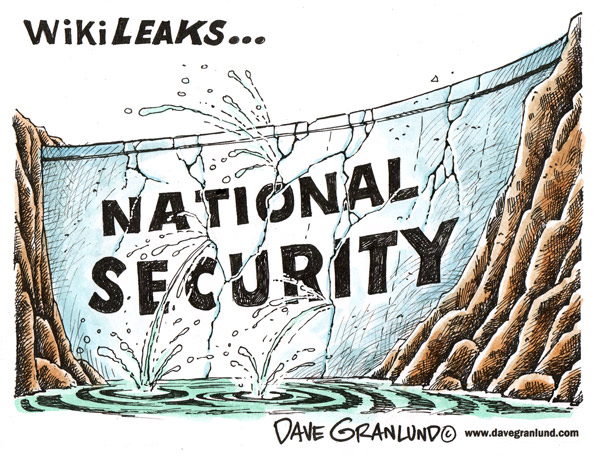
For this week’s column, appearing in the print edition for 25 Dec 2011, I have adapted more segments of that interview covering topics such as: violence in society and media’s role; educational potential of television; does satellie TV spread cultural imperialism; and how technology – not politicians or generals – now determine the free flow of information across borders. This cartoon, drawn by David Granlund a year ago, aptly captures that last point!
A welcome dam breach, this one! - cartoon by Dave Granlund
As I have often said on this blog, Television used to be the favourite whipping boy of those who love to criticise communication technologies and consumer gadgets — until the Internet and mobile phones came along.
When it finally arrived in Asia in 1991, direct TV broadcasting by satellite scared the daylights out of many Asian governments and self-appointed guardians of culture and public morals. How can the unexposed (i.e. ‘unspoilt’) hundreds of millions of Asians cope with massive volumes of information and entertainment beaming down from the skies, they asked. Their real concern was the loss of control over what the public watched, which governments and ruling elites had tightly controlled for decades since radio and TV emerged as mass media.
So, for much of that decade, we witnessed howls of protests from them — but their worst fears never materialised. Satellite TV found its niche alongside terrestrial transmissions, and Asian broadcasters soon mastered the medium. Today, global broadcasters like CNN, BBC and Al Jazeera compete with hundreds of Asian satellite TV channels and the audiences have a far greater choice.
As I wrote in September 2008: “In 1990, most Asian viewers had access to an average of 2.4 TV channels, all of them state owned. This has changed dramatically — first with the advent of satellite television over Asia in 1991, and then through the gradual (albeit partial) broadcast liberalisation during the 1990s. Asian audiences, at last freed from the unimaginative, propaganda-laden state channels, exercised their new-found choice and quickly migrated to privately owned, commercially operated channels.”
Sir Arthur Clarke was the man who triggered this satellite communication revolution. In 1945, while still in his late 20s, he was the first to propose the concept of using a network of satellites in the geo-synchronous orbit for television and telecommunications. His vision became a reality in the mid 1960s, and within a generation, humankind has come to rely critically on the network of comsats placed, in what is now called the Clarke Orbit, some 22,300 miles above the earth.
In December 2003, on the eve of the World Summit on the Information Society (WSIS) and days before his 86th birthday, I did a wide-ranging interview with Sir Arthur Clarke on satellite TV, internet, censorship and other challenges of information societies. It was published in One World South Asia on 5 December 2003.
For my Ravaya column this week (18 Dec 2011), I have adapted parts of that interview into Sinhala, making the point that much of what he said about satellite TV at the time is now equally relevant to the rapid spread of the Internet. It’s also a nice way to mark his 94th birth anniversary this week.
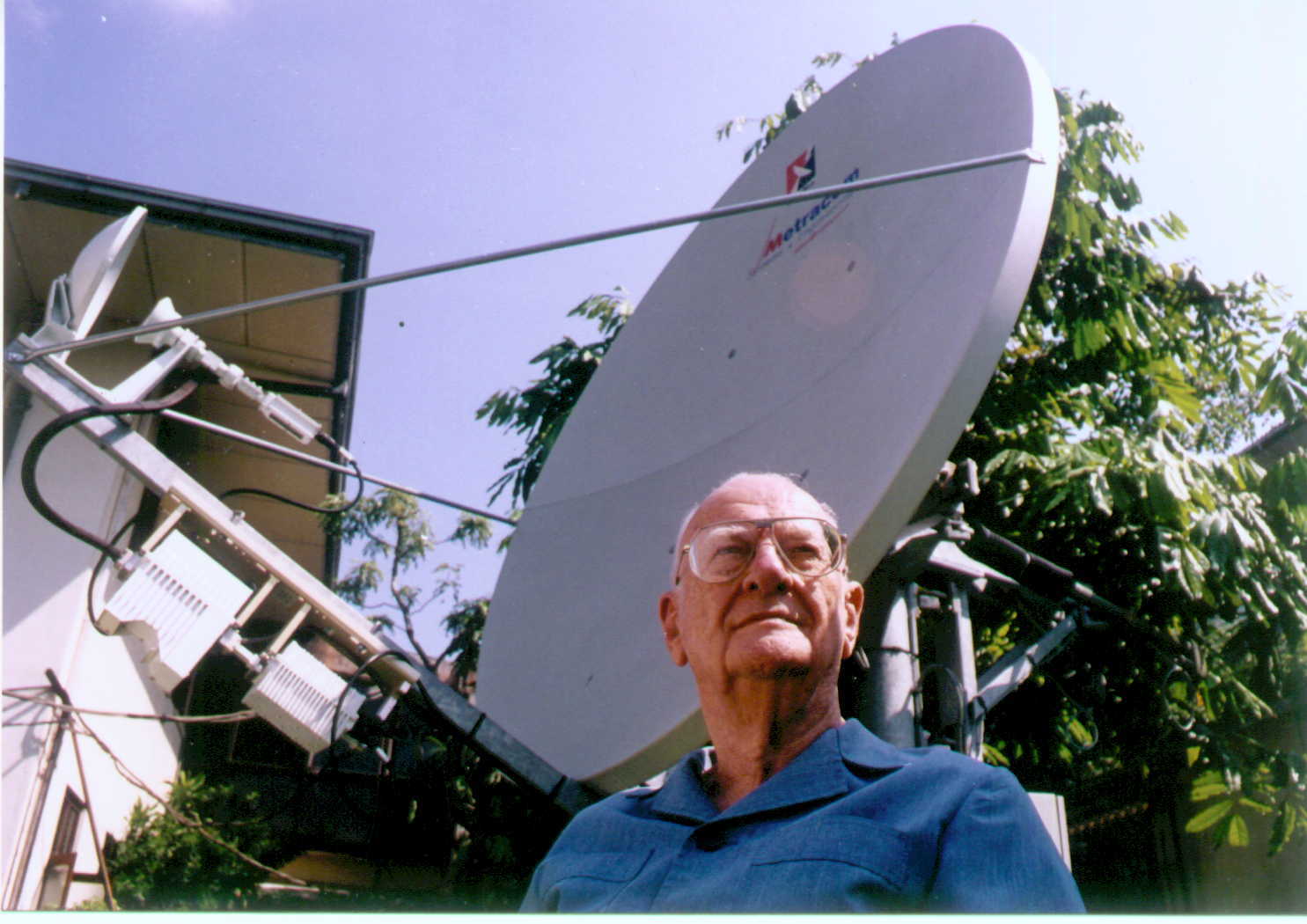
Sir Arthur C Clarke: Opened up the heavens as part of information superhighway...
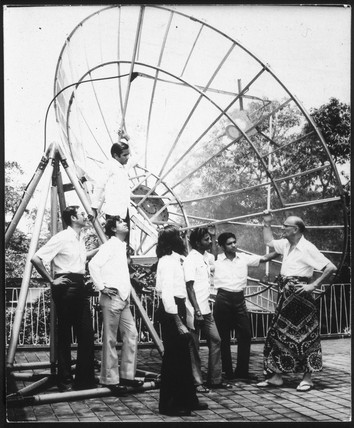
Arthur C Clare (extreme right) with Indian ISRO engineers who installed satellite antenna at his Colombo home, in 1975හොඳම උදාහරණය ලැඛෙන්නේ දකුණු අප්රිකාවෙන්. 1960 දශකය වන විට ලෝකයේ ඉසුරුබර රාජ්යයන් අතුරෙන් ටෙලිවිෂන් සේවාවක් අරඹා නොතිබූ එක ම රට වූයේ දකුණු අපිකාවයි. එවකට එහි පැවති සුදු පාලකයන්ගේ රජයේ සන්නිවේදන අමාත්යවරයා එරට ටෙලිවිෂන් සේවාවක් ඇරඹීමට කිසිසේත් එකග වූයේ නැහැ. ‘ටෙලිවිෂන් තමයි අප්රිකාවේ සුදු මිනිසාගේ පාලනය හමාර කරන්නේ’ යයි ඔහු කළ ප්රකාශයෙහි ලොකු අරුතක් ගැබ් වී තිබුණා. ^‘Television will mean the end of the white man in Africa.’)
Who’s Afraid of Online Journalists? This was the provocative title of my presentation to a national media conference on media self-regulation in Colombo in September 2011, organised by Sri Lanka Press Institute. Speaking in the session devoted to online media, I argued that SLPI was ill-equipped to tackle online news content when it lacked even full representation of the mainstream print media in Sri Lanka, and had no representation whatsoever from the radio and TV broadcasters whose outreach far outstrips that of print.
This is the Sinhala text of my weekly column in Ravaya newspaper of 20 Nov 2011. This week, I continue our discussion on Internet freedom: what can – and must – be regulated online, and how regulation is fundamentally different from control and censorship. I insist that conceptual clarity is as important as technical understanding of how the Internet works.
This is the Sinhala text of my Ravaya column published on 13 Nov 2011, where I continue my discussion on the future of newspapers. I look at the last newspaper boom currently on in Asia, and caution that good times won’t last for long: take advantage of it to prepare for the coming (and assured) turbulence in the mainstream media!
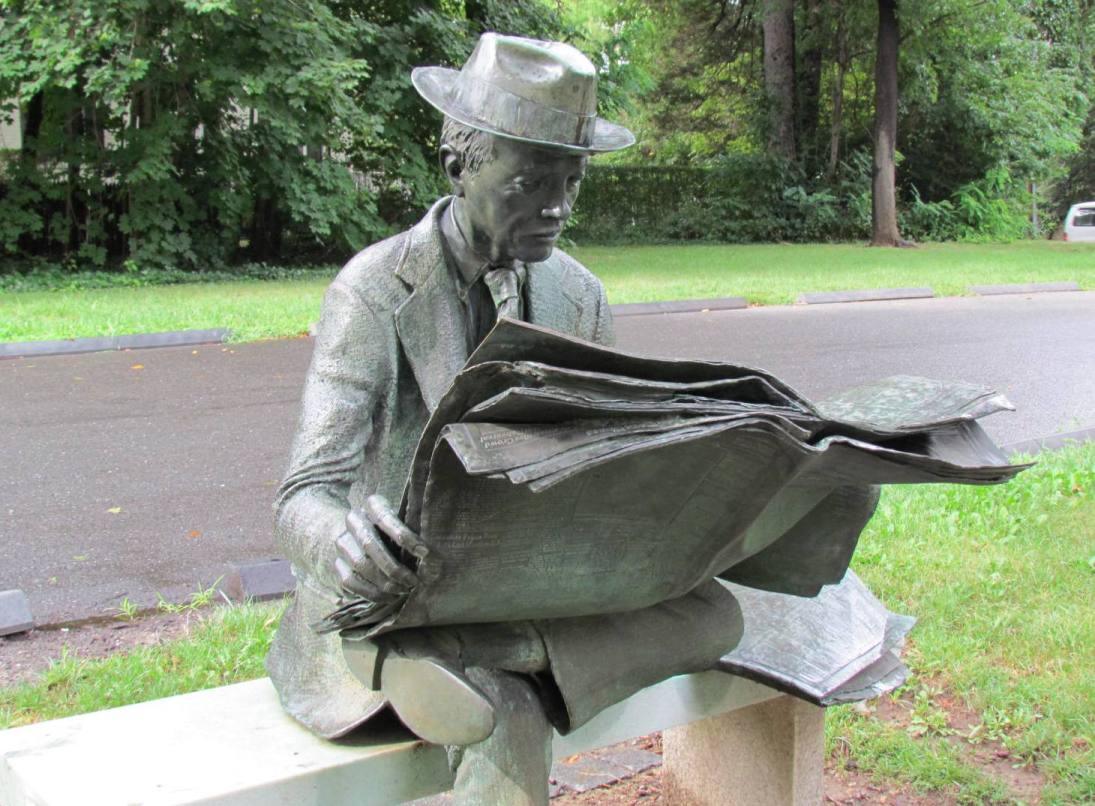
J Seward Johnson's statue of Newspaper Reader - at Princeton University garden
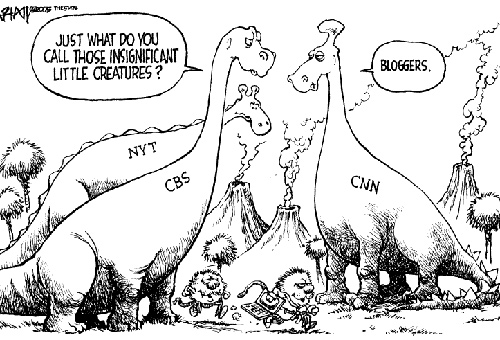
This is the Sinhala text of my weekend column in Ravaya, published on 6 Nov 2011. To mark the newspapers’s 25th anniversary that falls this month, I begin some reflections on the future of newspapers. In this first piece, I discuss how science fiction and thriller writer Michael Crichton (1942-2008) once foresaw the fate of what he called ‘Mediasaurus’.
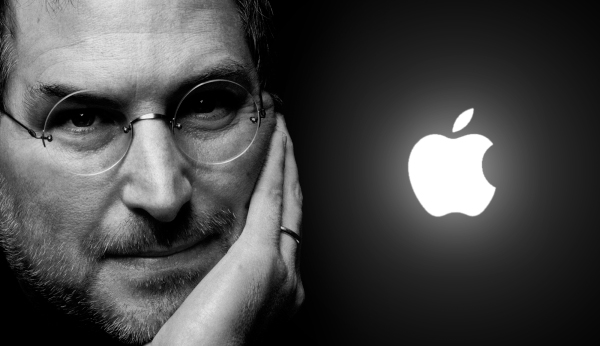
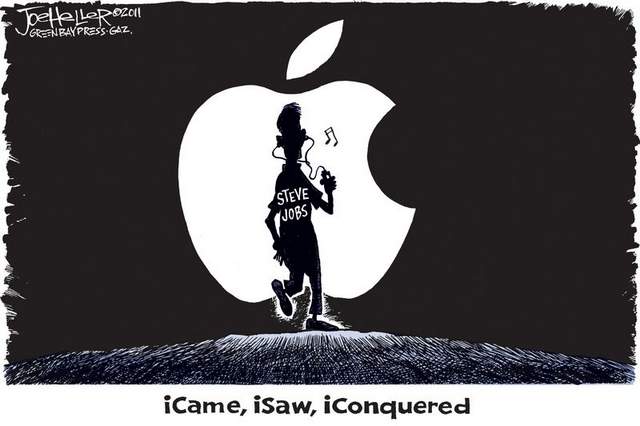
We might admire – even revere – genius mavericks like Steve Jobs from afar, but few Asians have any idea where mavericks come from, or how best to deal with them. Our conformist and hierarchical societies don’t nurture mavericks. Our cultures tend to suppress odd-balls and iconoclasts. That’s probably why we don’t have enough of our own Steve Jobses.
This is the crux of my argument in my latest Sinhala column published in Ravaya newspaper on 16 Oct 2011. For a longer discussion of the same topic, see my English essay Goodbye, Steve Jobs; Long Live Mavericks!
Have smartphone, will travel...Just how many Internet users are there in Sri Lanka?
Looks like a simple question, but there’s no simple answer. Trust me, I’ve been looking.
Oh sure, it’s not possible to calculate such numbers precisely because there always are more users than are subscribers. But official and industry sources usually have a good idea. In Sri Lanka’s case, their figures vary considerably.
The Telecommunications Regulatory Commission of Sri Lanka (TRCSL) is the official data collector. It used to publish a quarterly compendium of telecom industry related statistics.
The last such report, for December 2010, cites these cumulative figures for the whole of Sri Lanka by end 2010:
• Mobile phone subscribers: 17,359,312
• Fixed phone subscribers: 3,578,463
• Internet & Email Subscribers – fixed: : 280,000 (provisional figure)
• Mobile Broadband Subscribers: 294,000 (provisional figure)
Although for the same point in time (Dec 2010), it doesn’t tally. TRCSL’s own data, when we add up fixed and mobile subscribers of Internet, comes to 574,000.
Both these state entities seem to be hooked on “email users” — a throw-back to the early dial-up days when some subscribers simply signed up for email facility and didn’t want web browsing as the latter was more costly. As far as I know, that demarcation disappeared years ago. But I may be wrong.
Even if we take the highest case scenario, of a total 574,000 Internet subscribers (fixed and mobile), it still comes to less than 3 per cent of Sri Lanka’s total population of 20 million (exactly how many people live on the island will be known after the latest census is taken in December 2011).
That’s the number of subscribers. The number of users is usually higher. Assuming an average 3 users per subscription, we can imagine around 1.72 million (approx 8 per cent of population) getting online. This calculation brings us closer to the number given for Sri Lanka in the Internet World Stats website. It lists for Sri Lanka: “1,776,200 Internet users as of Jun/10, 8.3% penetration, per ITU.”
The ITU focal point in Sri Lanka is the TRCSL, whose own published data is mentioned above. What am I missing here?
A researcher friend who had access to Wireless Intelligence, a subscription only service containing well over 5 million individual data points on 940 operators (across 2,200 networks) and 55 groups in 225 countries, found yet another statistic.
According to WI, Sri Lanka by end 2010 had:
• 1,971,018 mobile broadband subscribers
• 213,000 fixed broadband subscribers
This produced a total of 2,184,018 — which takes the percentage of population to almost 11%. And if we apply the same average number of 3 users, it could give us 30% of population accessing and using the Internet. But is that assumption of 3 users per subscription equally applicable to mobile devices? I’m not sure. I’ll wait for industry experts to clarify.
In fact, neither industry sources and researchers have a reliable figure of how many smartphones are in use in Sri Lanka. Because a significant number comes in through private channels (via returning travellers or Lankan expatriates), the looking simply at the import figures could be misleading. A conservative estimate is that at least one million smartphones with Internet access capability are in use. The number keeps growing.
Exactly how many such smartphone users go online on a regular basis? What kind of info do they look up? How long on average do they stay online per session?
If you know the answers, or have reflected on these, please share.
Let’s hope more reliable data would emerge from the 2011 countrywide census of population. An early report (July 2010) said: “Information will also be collected for the first time on people’s communication methods.”
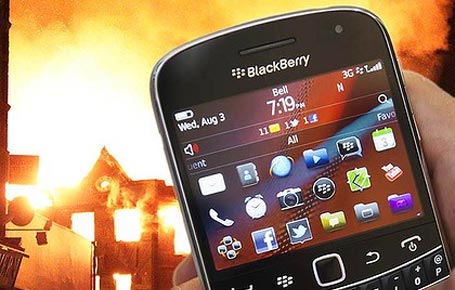
Text of my weekly column, printed in Ravaya newspaper on 4 September 2011. This week I take off from the role of social media in fuelling, as well as countering the recent London riots – and discuss how governments, telecom operators and law enforcement authorities should respond to the always on, pervasive connectivity now enabled by mobile phones and other devices.




 Open Minds!