SL General Election 2015: Statement on Freedom of Expression and Media Freedom

Statement on Freedom of Expression and Media Freedom

For the attention of political parties contesting in Sri Lanka General Election 2015

Issued at a press conference held at Sri Lanka Press Institute (SLPI) in Colombo on 21 July 2015

Sinhala version: 2015 මහ මැතිවරණය: භාෂණයේ නිදහස හා මාධ්‍ය නිදහස පිළිබඳ ප්‍රකාශය

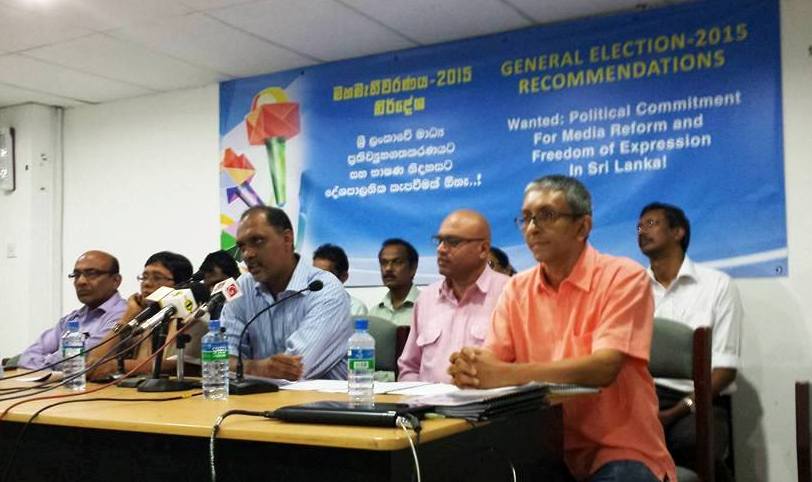
Lasantha Ruhunage, President of Sri Lanka Working Journalists’ Association, speaks at press conference at SLPI, Colombo, 21 July 2015

Since the Presidential Election on 8 January 2015, some progress has been made with regards to freedom of expression (FOE) and media freedom in Sri Lanka.

These include: steps being taken to end threats against and pressure on media organisations and journalists; the unblocking of political websites that were arbitrarily blocked; the 19th Amendment to the Constitution recognizing the right of access to information as a fundamental right; and the government extending an open invitation to exiled journalists to return to Sri Lanka.

But much more remains to be done to improve FOE and media freedom situation in Sri Lanka, and to ensure a more conducive environment for the media. Such policy, legal and structural reforms would require the political will of all political parties in the next Parliament of Sri Lanka.

In view of this, we urge the political parties contesting in the General Election to be held on 17 August 2015 to give a firm commitment to the following specific measures for meaningful media freedom and reforms.

These are not listed in any order of priority.

  1. Right to Information: A right to information law, which gives individuals the right to access information held by public authorities, should be adopted. The new Parliament should pass, on a priority basis, the Right to Information Bill that was finalised in May 2015 with inputs from media stakeholders.


  1. Media Self-Regulation: The Press Council Act 5 of 1973 should be repealed, and the government-controlled Press Council should be abolished. The self-regulatory body established in 2003 by the media industry, known as the Press Complaints Commission of Sri Lanka (PCCSL), should be strengthened and ideally its scope should be expanded to cover the broadcast media as well.


  1. Law Review and Revision: Civil and criminal laws that pose various restrictions on media freedom should be reviewed and revised to bring them into line with international standards regarding freedom of expression. Such laws include the Prevention of Terrorism Act, the Official Secrets Act, sedition laws, and the rules on contempt of court and Parliamentary privileges.


  1. Crimes Against Journalists: An independent Commission of Inquiry should be created with a mandate and adequate powers to investigate past killings of, threats to, disappearances of and other attacks on journalists, media workers and media outlets, with a view to ensuring that those responsible are prosecuted and that appropriate compensation is paid to the victims and their families.


  1. Broadcast Regulation: Comprehensive legislation on broadcasting should be adopted in line with international guarantees of freedom of expression. This should provide for, among other things, proper planning in relation to the frequencies allocated to broadcasting, including through the digital transition, a three-tier system of broadcasting which recognises public, commercial and community broadcasters, and obligations on broadcasters to be balanced and impartial in their coverage of politics and other matters of public concern. An independent Broadcasting Authority should be set up to regulate the entire broadcasting sector in the public interest. This regulator should ensure a fair, pluralistic and efficient broadcasting system.
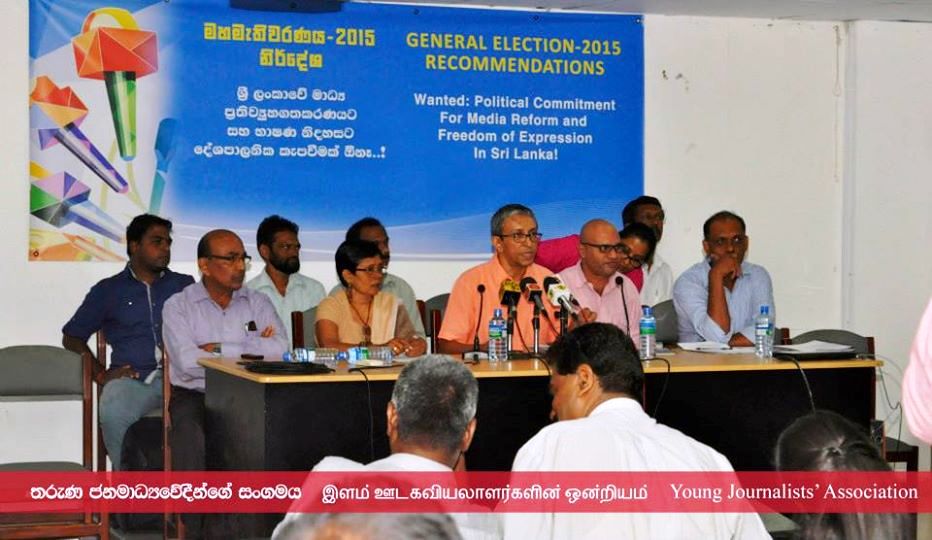
 

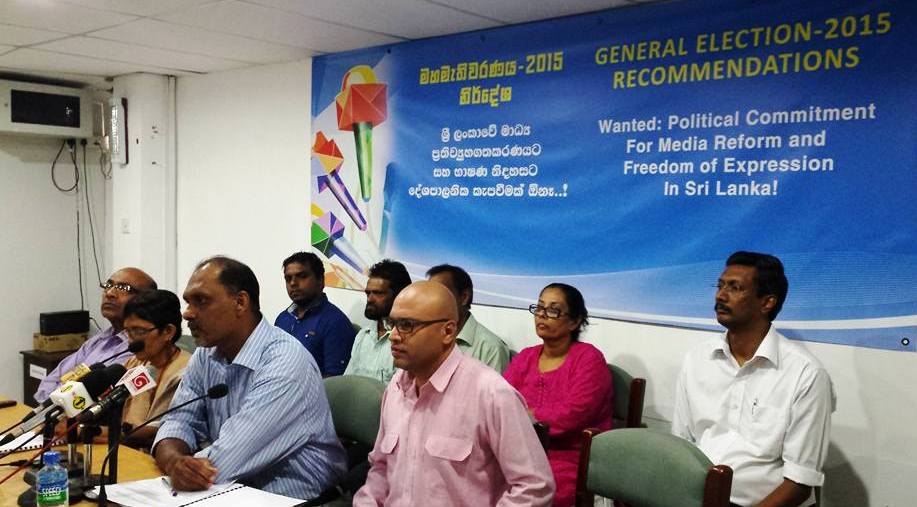
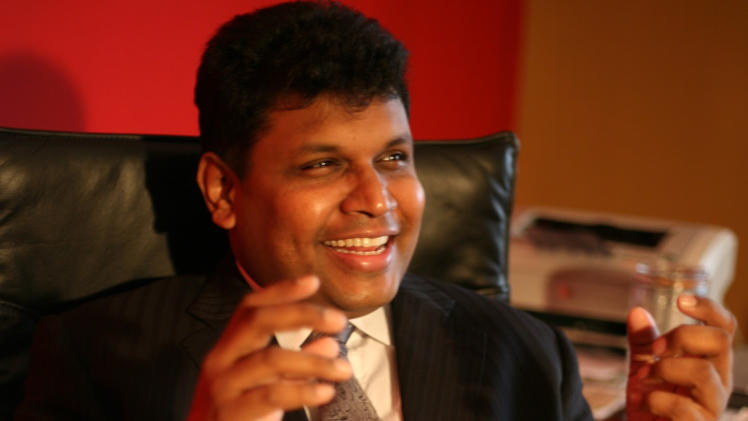
Nalaka Gunawardene, Consultant to the Secretariat for Sri Lanka Media Reforms,  speaks at the press conference at SLPI, Colombo, 21 July 2015
Nalaka Gunawardene, Consultant to the Secretariat for Sri Lanka Media Reforms, speaks at the press conference at SLPI, Colombo, 21 July 2015
  1. Community Broadcasting: The broadcasting regulation to be introduced should support the development of community broadcasting services owned and operated by communities through clear definitions of what constitutes a community broadcaster, a tailored licensing process, and lower fees for frequency allocation and other concessions.


  1. Restructuring State Media: The three State broadcasters – the Sri Lanka Rupavahini Corporation (SLRC), the Sri Lanka Broadcasting Corporation (SLBC) and the Independent Television Network (ITN) – should be transformed into independent public service broadcasters which enjoy editorial independence, have a clear mandate to serve the public and benefit from public funding which does not compromise their independence. Measures should also be taken to ensure that Associated Newspapers of Ceylon Limited (ANCL or Lake House) can operate independently of government and enjoy editorial freedom. A public consultation should determine the most appropriate way forward.
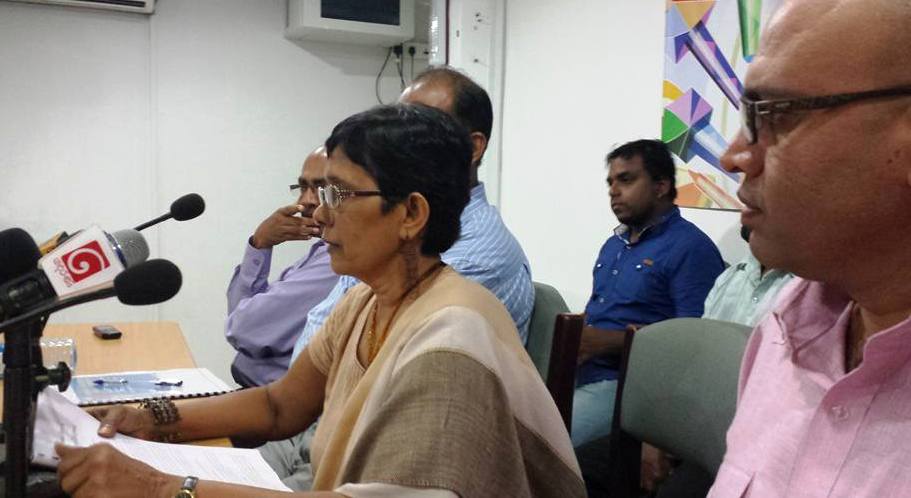
Seetha Ranjanee, Convenor of Free Media Movement of Sri Lanka, speaks at press conference on media reforms: Sri Lanka Press Institute, Colombo. 21 July 2015


  1. Preventing Censorship: No prior censorship should be imposed on the media. Where necessary, courts can review media content for legality after publication on an urgent basis. Laws and regulations that permit censorship – including the Public Performance Ordinance – should be reviewed and amended to bring them into line with international standards.


  1. No Blocking Political Websites: There should be no attempts to limit online content or social media activities contravening fundamental freedoms guaranteed by the Constitution and international conventions. Restrictions on illegal content may be imposed only through an independent judicial process which ensures that fundamental rights to access information and freedom of expression are not hindered.


  1. Privacy and Surveillance: The state should respect and protect the privacy of all citizens. There should be strict limits to the state surveillance of private individuals’ and entities’ telephone conversations and electronic communications. In exceptional situations, such surveillance should only be permitted with judicial oversight and according to a clear set of guidelines.
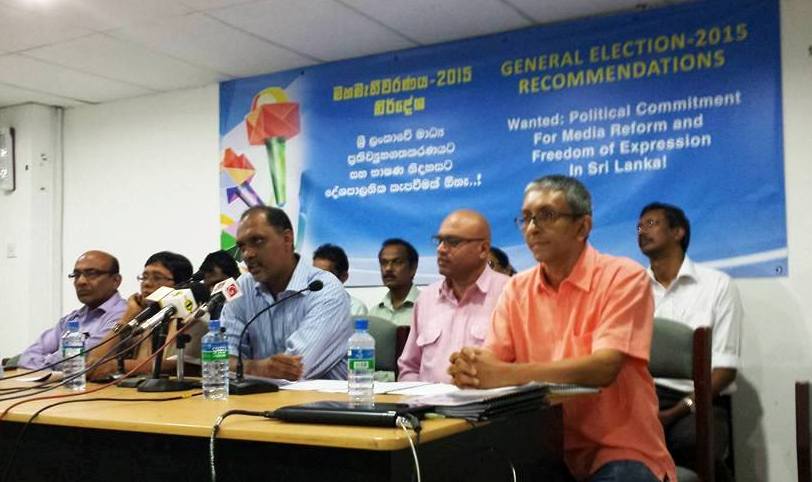
 

Media Reform Agenda for Lankan Political Parties - 21 July 2015
Media Reform Agenda for Lankan Political Parties – 21 July 2015


2015 මහ මැතිවරණය: භාෂණයේ නිදහස හා මාධ්‍ය නිදහස පිළිබඳ ප්‍රකාශය

2015 මහ මැතිවරණය සඳහා ඉදිරිපත් වන

සියලු දේශපාලන පක්ෂවල අවධානය සඳහා…

භාෂණයේ නිදහස හා

මාධ්‍ය නිදහස පිළිබඳ ප්‍රකාශය

2015 ජූලි 21

English version: SL General Election 2015: Statement on Freedom of Expression and Media Freedom

Media Reform Agenda for Lankan Political Parties - 21 July 2015
Media Reform Agenda for Lankan Political Parties – 21 July 2015

භාෂණයේ නිදහස, මාධ්‍ය නිදහස හා මාධ්‍ය උන්නතිය පිළිබද දේශපාලන පක්ෂවල සැබෑ කැපවීම පෙන්වන තෙක් ඡන්දදායක රටවැසියන් මහත් අපේක්ෂාවෙන් පසු වේ.

  • ජනමාධ්‍ය ප්‍රතිව්‍යුහගතකරණය පිළිබඳ සමුළු ලේකම් කාර්යාලය
  • ශ්‍රී ලංකා පුවත්පත් ආයතනය (SLPI)
  • නිදහස් මාධ්‍ය ව්‍යාපාරය (FMM)
  • ශ්‍රී ලංකා වෘත්තීය ජනමාධ්‍යවේදීන්ගේ සංගමය
  • ශ්‍රී ලංකා පත්‍රකලාවේදීන්ගේ සංගමය
  • ප්‍රාදේශීය මාධ්‍යවේදීන්ගේ ජාතික සංධානය
  • ප්‍රජා ගුවන්විදුලි මාධ්‍යවේදීන්ගේ ජාතික කමිටුව
  • තරුණ ජනමාධ්‍යවේදීන්ගේ සමාජය
  • ශ්‍රී ලංකා මුස්ලිම් ජනමාධ්‍යවේදීන්ගේ සංගමය
  • යාපනය ජනමාධ්‍යවේදීන්ගේ සංගමය (Jaffna Press Club)

එක්ව කරන ප්‍රකාශනයකි.

Media Reform Recommendations for Political Party Commitment prior to Sri Lanka General Election 2015. Press Conference at Sri Lanka Press Institute, 21 July 2015

2015 ජනවාරි 8 ජනාධිපතිවරණයෙන් පසු ශ්‍රී ලංකාව භාෂණයේ හා මාධ්‍ය නිදහස පිළිබඳව යම් මට්ටමක සාධනීය තත්ත්වයක් ඇති කර ගැනීමට සමත් වූ බව පෙනෙන්නට තිබේ.

මාධ්‍ය ආයතන හා මාධ්‍යවේදීන් වෙත එල්ල වූ බලපෑම් හා තර්ජන වැලැක්වීමට ගත් ක්‍රියා මාර්ග, පදනම් විරහිත ලෙස අවහිර කරන ලද දේශපාලනික වෙබ් අඩවි නැවත නිදහස් කිරීම, තොරතුරු දැන ගැනීමේ අයිතිය 19 වන ව්‍යවස්ථා සංශෝධනයේදී මුලික අයිතිවාසිකමක් ලෙස පිළි ගැනීම, දේශපාලනික හේතුන් මත රට හැර ගොස් සිටින ජනමාධ්‍යවේදීන්ට නැවත ශ්‍රී ලංකාවට පැමිණෙන ලෙසට රජය විසින් කරනු ලබන විවෘත ආරාධනා, වැනි පියවර මේ බවට මූලික නිමිති සපයයි.

කෙසේ වෙතත් භාෂණයේ නිදහස හා මාධ්‍ය නිදහස වර්ධනය කිරීම සඳහා තවත් කටයුතු රාශියක් ඉතිරි වී ඇති බව අපගේ අදහසයි. ඉදිරි මහ මැතිවරණයෙන් පසු තේරී පත් වන නව පාර්ලිමේන්තුව නියෝජනය කරන සියලුම දේශපාලන පක්ෂ මෙම ප්‍රතිපත්තිමය, නීතිමය, ව්‍යුහාත්මක වෙනස්කම් සඳහා අවශ්‍ය වන දේශපාලනික කැපවීම ප්‍රදර්ශනය කරනු ඇතැයි යන්න අපගේ අපේක්ෂාවයි.

මේ කරුණු සැලකිල්ලට ගනිමින් ජනමාධ්‍ය නිදහස වර්ධනය කිරීමට හා එහි සාධනීය ව්‍යුහාත්මක වෙනසක් ඇති කීරීම පිළිබඳ පහත සඳහන් නිශ්චිත නිර්දේශ කෙරෙහි සිය කැපවීම ප්‍රකාශ කරන මෙන් 2015 අගෝස්තු 17 වන දින මහා මැතිවරණයට ඉදිරිපත් වන සියලු දේශපාලන පක්ෂවලින් අපි ඉල්ලා සිටිමු.

(මෙම කරුණු පෙළගැස්වීම එහි ප්‍රමුඛතාවය අනුව නොවන බව සලකන්න)

1. තොරතුරු දැනගැනීමේ අයිතිය: පුරවැසියන්ට රජය හා රජයේ ආයතන සතු තොරතුරු ලබා ගැනීමේ අයිතිය නීතියෙන් සම්මත කළ යුතුය. සියලුම මාධ්‍ය පාර්ශවකරුවන්ගේ දායකත්වය සහිතව 2015 මැයි මස සකස් කොට අවසන් කරන ලද තොරතුරු දැන ගැනීමේ අයිතිය පිළිබඳ පනත් කෙටුම්පත නව පාර්ලිමේන්තුව විසින් හැකි තාක් ඉක්මනින් හා දියාරු නොකොට සම්මත කර ගත යුතුය.

2. මාධ්‍ය ස්වයං නියාමනය: 1973 අංක 5 දරණ පුවත්පත් කොමිසම පනත ඉවත් කළ යුතු අතර රජය විසින් පාලනය කරන පුවත්පත් මණ්ඩලය මුළුමනින්ම අහෝසි කළ යුතුය. ඒ වෙනුවට මාධ්‍ය කර්මාන්තය විසින්ම 2003 වසරේ ස්ථාපිත කරන ලද ශ්‍රී ලංකා පුවත්පත් පැමිණිලි කොමිසම ශක්තිමත් කොට සියලු මුද්‍රිත හා විද්‍යුත් මාධ්‍ය ආවරණය වන පරිදි පුළුල් කිරීමෙන් වඩාත් සවිමත් හා සක්‍රිය ස්වයං නියාමන ව්‍යුහයක් ස්ථාපිත කළ යුතුය.

3. නීති විමර්ශනය හා සංශෝධනය: මාධ්‍ය නිදහස කෙරෙහි ප්‍රායෝගිකව යම් යම් සීමා පන වන සිවිල් හා අපරාධ නීති තවමත් මෙරට නීති පොත්වල ඉතිරිව පවතී. ත්‍රස්තවාදය වැලැක්වීමේ පනත, රාජ්‍ය ද්‍රෝහිත්වය පිළිබඳ නීති, අධිකරණයට අපහස කිරීමේ හා පාර්ලිමේන්තු වරප්‍රසාද කඩ කිරීම පිළිබඳ නීති මෙයට ඇතුලත්ය. මේවා විමර්ශනය කොට භාෂණයේ නිදහස හා මාධ්‍ය නිදහස පිළිබඳ ජාත්‍යන්තර ප්‍රමිතීන්ට අනුකූල වන අයුරින් සංශෝධනය කළ යුතුය.

4. ජනමාධ්‍යවේදීන්ට එරහි අපරාධ විමර්ශනය: ඝාතනය කරන ලද, පහරදීම්වලට ලක් වූ, තර්ජනයට ලක් කරන ලද, අතුරුදන් කරන ලද හෝ වෙනත් අයුරකින් හිරිහැරයට ලක් වූ මාධ්‍යවේදීන් හා ජනමාධ්‍ය ආයතන පිළිබඳව අපක්ෂපාතීව විමර්ශනය කොට, වරදකරුවන් නීතිය ඉදිරියට ගෙන ඒමටත්, අගතියට පත් පාර්ශව සඳහා වන්දි ලබා දීමටත් වගකීම දරන ඉහළ මට්ටමේ ස්වාධීන කොමිසමක් පත් කළ යුතුය.

Seetha Ranjanee, Convenor of Free Media Movement of Sri Lanka, speaks at press conference on media reforms: Sri Lanka Press Institute, Colombo. 21 July 2015

5. විද්‍යුත් මාධ්‍ය ක්ෂේත්‍රය නියාමනය: භාෂණයේ නිදහස තහවුරු කරන ජාත්‍යන්තර නීති රීති වලට අනුගත වෙමින් ශ්‍රී ලංකාව තුල විද්‍යුත් මාධ්‍ය විකාශන නියාමනය කළ යුතුය. එසේ කිරීම මගින් රේඩියෝ සහ ටෙලිවිෂන් සඳහා විකාශන සංඛ්‍යාත වෙන් කිරීම විධිමත් ලෙස සැලසුම්කරණය කළ යුතුය. එසේම මහජන සේවා, වාණිජ හා ප්‍රජා යන තල තුන තුළම සේවා සැපයීම සඳහා අවස්ථා සැලසිය යුතුය. එමගින් දේශපාලනික හා වෙනත් පොදු උන්නතියට අදාල තොරතුරු ආවරණය වඩාත් සමබරව හා අපක්ෂපාතීව ගෙන ඒමට විද්‍යුත් මාධ්‍ය ආයතනවලට ඇති වගකීම ඉටු කිරීමට නියාමන බලපෑමක් කළ හැකි වනු ඇත. මහජන අභිලාෂයන් මුදුන්පත් වන අයුරුන් සමස්ත නියාමනය සිදු කළ හැකි පරිදි ස්වාධීන විකාශන අධිකාරියක් ස්ථාපනය කළ යුතුය.

6. ප්‍රජා විද්‍යුත් මාධ්‍ය: විද්‍යුත් මාධ්‍ය ක්ෂේත්‍රය නියාමනය මගින් ප්‍රජා විකාශන සේවා (community broadcasting) උනන්දු කල යුතුය. ජාත්‍යන්තර අර්ථ දැක්වීම් වලට අනුව ප්‍රජා විකාශනයන්හි හිමිකාරිත්වය හා මෙහෙයවීම ප්‍රජාව සතු විය යුතු අතර ඒවාට වඩාත් උචිත හා දරාගත හැකි ලෙස සකස් කරන ලද බලපත්‍ර ක්‍රමවේදයක් හඳුන්වා දිය යුතුය.

7. රාජ්‍ය මාධ්‍ය ප්‍රතිව්‍යුහගතකරණය: මහජනයා සතු රාජ්‍ය මාධ්‍ය ආයතන, බලයේ සිටින පක්ෂයේ ප්‍රචාරක වැඩට යොදා ගන්නා අශීලාචාර සම්ප්‍රදායෙන් දැන්වත් අත්මිදිය යුතුය. රාජ්‍ය විද්‍යුත් මාධ්‍ය ආයතන තුන වන ශ්‍රී ලංකා රූපවාහිනී සංස්ථාව (SLRC), ශ්‍රී ලංකා ගුවන්විදුලි සංස්ථාව (SLBC) ස්වාධීන රුපවාහිනී සේවය (ITN) ස්වාධීන මහජන සේවා ආයතන බවට පත් කළ යුතුය. එමගින් කර්තෘ නිදහස ආරක්ෂා කරන මහජන සේවා සපයන්නෙකු බවට මේ ආයතන කෙමෙන් පරිවර්තනය කළ යුතුය. මෙම ආයතනවලට දේශපාලන බලපෑම් කිරීමට ඉඩක් නැති පරිදි ස්වාධීන ලෙස මුදල් ප්‍රතිපාදන ලැබෙන ක්‍රමවේදයක් සකස් කළ යුතුය. එම ක්‍රියාමාර්ග මගින් එම ආයතනයන්හි මෙතෙක් කිසිදා නොපැවති ස්වාධීනත්වය ටිකෙන් ටික තහවුරු කර ගත හැකිය. ලේක්හවුස් ආයතනයටද (Associated Newspapers Ceylon Limited, ANCL) රාජ්‍ය බලපෑමෙන් ස්වාධීනව කර්තෘ නිදහස භුක්ති විඳීම සඳහා ක්‍රියාදාමයක් සකස් කල යුතුය. ඒ සඳහා සුදුසු ක්‍රියාමාර්ග පිළිබඳ මහජන අදහස් විමසීමක් කළ යුතුය.

Lasantha Ruhunage, President of Sri Lanka Working Journalists’ Association, speaks at press conference at SLPI, Colombo, 21 July 2015

8. මාධ්‍ය වාරණය වැලැක්වීම: කිසිදු මාධ්‍යයක් කිසිවක් ප්‍රකාශනයට පෙර බලධාරීන්ගෙන් අවසර පතන වාරණ ක්‍රම සියල්ල ඉවත් කළ යුතුය. ප්‍රකාශනයෙන් හෝ විකාශයෙන් පසුව කිසිවකුට අගතියක් වේ නම් උසාවියක් මගින් මාධ්‍ය අන්තර්ගතය පරික්ෂා කිරීම සඳහා අවශ්‍ය පියවර ගත හැකිය. (ප්‍රසිද්ධ රැගුම් පාලන පනතද ඇතුළු) වාරණ නීති හා රෙකුලාසි නැවත සලක බැලිය යුතු අතර භාෂණයේ නිදහස හා මාධ්‍ය නිදහස පිළිබඳ ජාත්‍යන්තර ප්‍රමිතීන්ට අනුකූල වන අයුරින් සංස්කරණය කළ යුතුය.

9. දේශපාලන වෙබ් අඩවි සඳහා සීමා ඉවත් කිරීම: ව්‍යවස්ථාවෙන් හා ජාත්‍යන්තර සම්මුතීන් මගින් සහතික කරන ලද භාෂණයේ නිදහස උල්ලංගනය කරන පරිදි සමාජ ජාල හා අන්තර්ජාල අන්තර්ගතය පාලනය නොකළ යුතුය. රට තුළ සිට කියැවීමට නොහැකි වන සේ දේශපාලන වෙබ් අඩවි අවහිර කිරීම කිසිසේත්ම නොකළ යුතුය. රටේ නීතියට නිශ්චිතවම එරෙහි වන (අසැබි රූප ආදිය ඇතුළත්) වෙබ් අඩවි පාලනය කිරීම පිළිබඳ සීමා පැන වීමේදී එය සැම විටම අධිකරණ අධීක්ෂළය යටතේ පමණක් කළ යුතු අතර එමගින් මහජනයාගේ තොරතුරු ලබා ගැනීමේ නිදහසට හා භාෂණයේ නිදහස සඳහා වන මූලික මානව අයිතිවාසිකම්වලට කිසිදු බාධාවක් ඇති නොවිය යුතුය.

10. අවේක්ෂණය වැලැක්වීම: තොරතුරු සමාජයේ ප්‍රගමනය සමග නූතන සන්නිවේදන තාක්ෂනයන් භාවිතය පුළුල් වෙයි. රජය විසින් සියලු පුරවැසියන්ගේ පෞද්ගලිකත්වය ගරු කොට ආරක්ෂා කළ යුතුය. පෞද්ගලික පුරවැසියන්ගේ හා ආයතනවල දුරකථන සංවාද හා විද්‍යුත් සන්නිවේදන අවේක්ෂණය කිරීම (surveillance) රජය විසින් කිසි විටෙකත් දේශපාලන වාසි පිනිස නොකළ යුතුය. අපරාධ විමර්ශනය වැනි විශේෂිත අවස්ථාවන්හිදී පමණක් එවැනි අවේක්ෂණය සඳහා අවසර දිය යුත්තේ අධිකරණ අධීක්ෂණය යටතේ හා නිශ්චිත සීමාවලට යටත් වන පරිදිය.

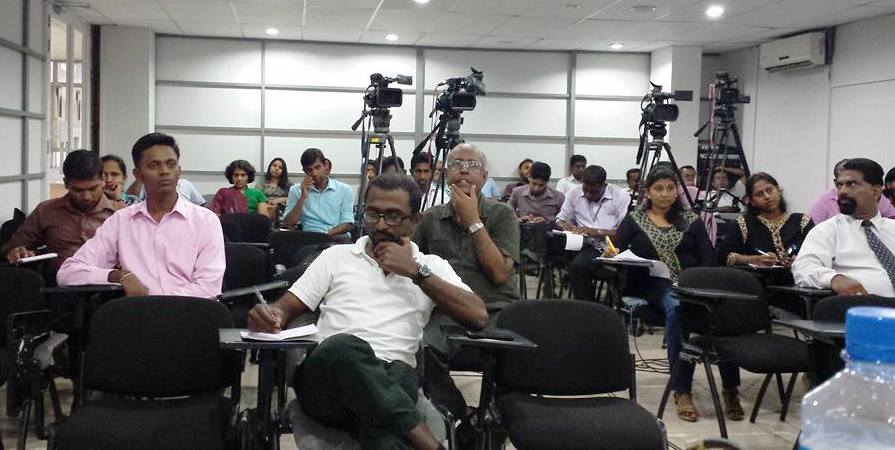
Covering the Press Conference at SLPI, 21 July 2015


Op-ed Essay: The Price of Silence in Social Media Age

This op-ed essay of mine was published in Daily FT newspaper, Sri Lanka, on 16 July 2015.

The Price of Silence in Social Media Age

By Nalaka Gunawardene

Just when we began to worry that our recently elected head of state had lost his tongue, he broke his silence.

On July 14 evening, President Maithripala Sirisena finally addressed the nation. He spoke calmly and clearly. He was resolute — but with none of the pomp and bravado that characterised his predecessor Mahinda Rajapaksa.

Speech of the President Maithripala Sirisena – 14 July 2015 (in Sinhala)

Sirisena’s speech outlined his key actions and accomplishments since being elected less than 200 days ago in one of the biggest election surprises in Lankan political history. He was mildly defensive of his low-key style of governance, which includes extended periods of silence.

I’ll leave it for political scientists and activists to analyse the substance of the President’s Bastille Day speech. My concern here is why he waited this long.

If a week is a long time in politics, 10 days is close to an eon in today’s information society driven by 24/7 broadcast news and social media. An issue can evolve fast, and a person can get judged and written off in half that time.

For sure, there is a time to keep silence, and a time to speak – and the President must have had some good reasons keep mum. But in this instance, he paid a heavy price for it: he was questioned, ridiculed and maligned by many of us who had heartily cheered him only six months ago. (Full disclosure: I joined this chorus, creating several easy-to-share ‘memes’ and introducing an unkind twitter hashtag: #අයියෝසිරිසේන.)

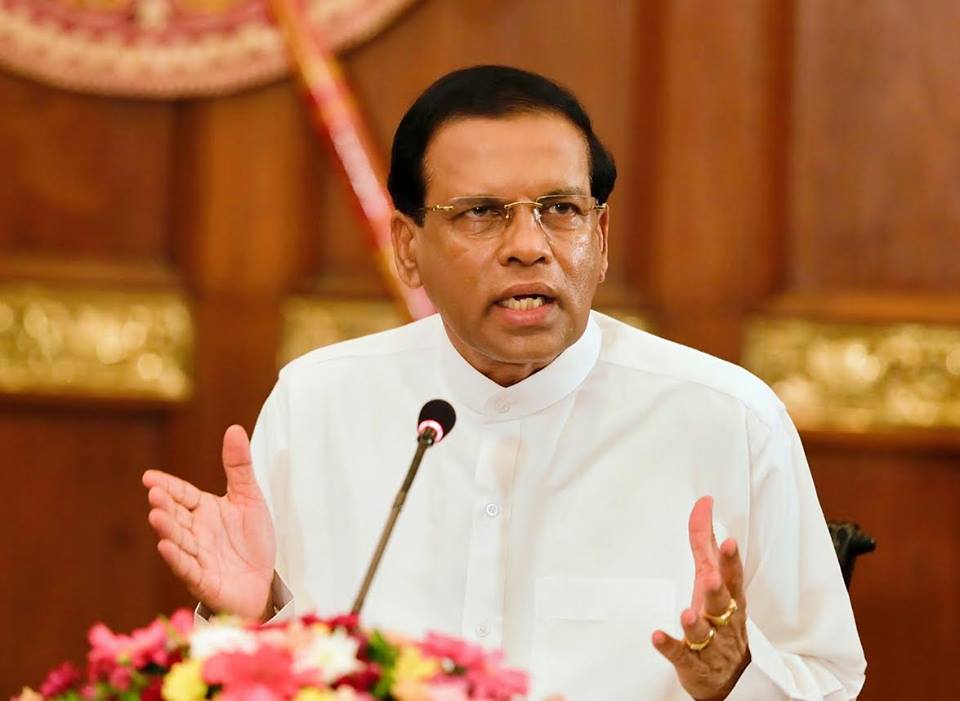
President Maithripala Sirisena

Sri Lanka’s democratic recovery can’t afford too much of this uncertainty and distraction created by strategic presidential silences. Zen-like long pauses don’t sit well with impatient citizen expectations.
And the President himself must reconsider this strategy (if it is indeed one) — his political opponents are hyperactive in both mainstream and social media, spinning an endless array of stories that discredit him.

Until a generation ago, we used to say that a lie can travel half way around the world while the truth is still putting on its shoes. In today’s networked society, when information travels at the speed of light, fabrications and half-truths spread faster than ever.

Public trust in leaders and institutions is also being redefined. Transparent governance needs political leaders to keep talking with their citizens, ideally in ways that enrich public conversations.

President Sirisena is not the only Lankan leader who needs to catch up with this new communications reality. When a controversy erupted over how the Central Bank of Sri Lanka handled Treasury Bond issue on February 27, the government took more than two weeks to respond properly.

On March 17, Prime Minister Ranil Wickremesinghe made a detailed statement in Parliament, which he opened with the words: “I felt my first statement with regard to the so-called controversy over Treasury bonds should be made to this House…”

In a strict legalistic or technocratic sense, Wickremesinghe was probably right (as he usually is). But in the meantime, too many speculations had circulated, some questioning the new administration’s commitment to transparency and accountability. Political detractors had had a field day.

Could it have been handled differently? Should the government spokespersons have turned more defensive or even combative?

More generically, is maintaining a stoic silence until full clarity emerges realistic when governments no longer have a monopoly over information dissemination? Is it ever wise, in today’s context, to stay quiet hoping things would eventually blow away? How does this lack of engagement affect public trust in governments and governance?

These are serious questions that modern day politicians and elected officials must address. In my view, we need a President and Prime Minister who are engaged with citizens — so that we are not left guessing wildly or speculating endlessly on what is going on.

No, this is not a call for political propaganda, which has also been sidelined by the increasingly vocal social media voices and debates.

What we need is what I outlined in an open letter to President Sirisena in January: “As head of state, we expect you to strive for accuracy, balance and credibility in all communications. The last government relied so heavily on spin doctors and costly lobbyists both at home and abroad. Instead, we want you to be honest with us and the outside world. Please don’t airbrush the truth.”


Science writer Nalaka Gunawardene has been chronicling and analysing the rise of new media in Sri Lanka since the early 1990s. He is active on Twitter @NalakaG and blogs at http://nalakagunawardene.com

සිවුමංසල කොලූගැටයා #221: ගෝලීය නැණ සේවා වෙළෙඳපොළට ලාංකික බුද්ධිමය ශ‍්‍රමය

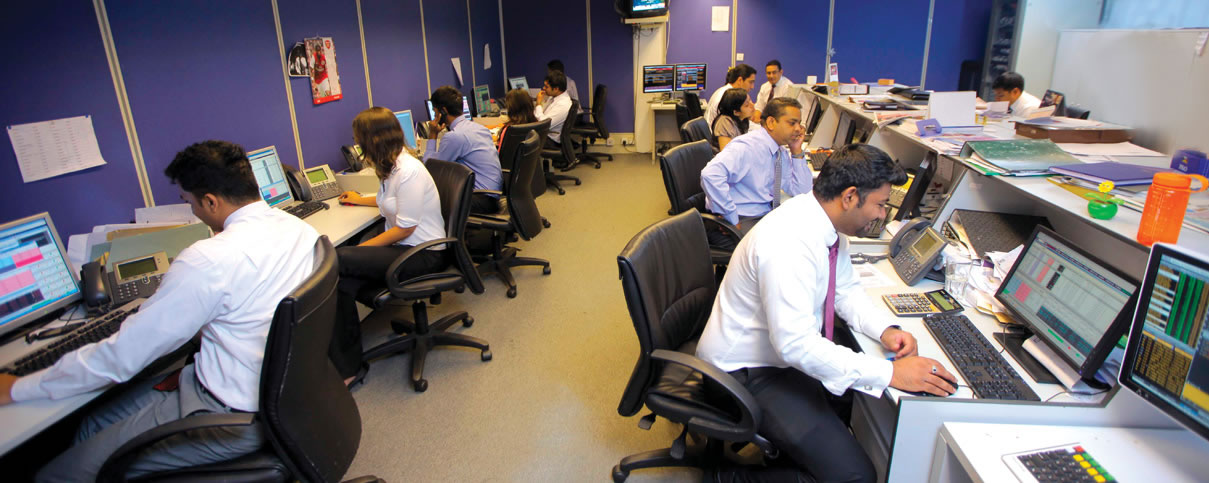
Sri Lanka is emerging as an important global destination for Information Technology supported Business process outsourcing (IT-BPO).

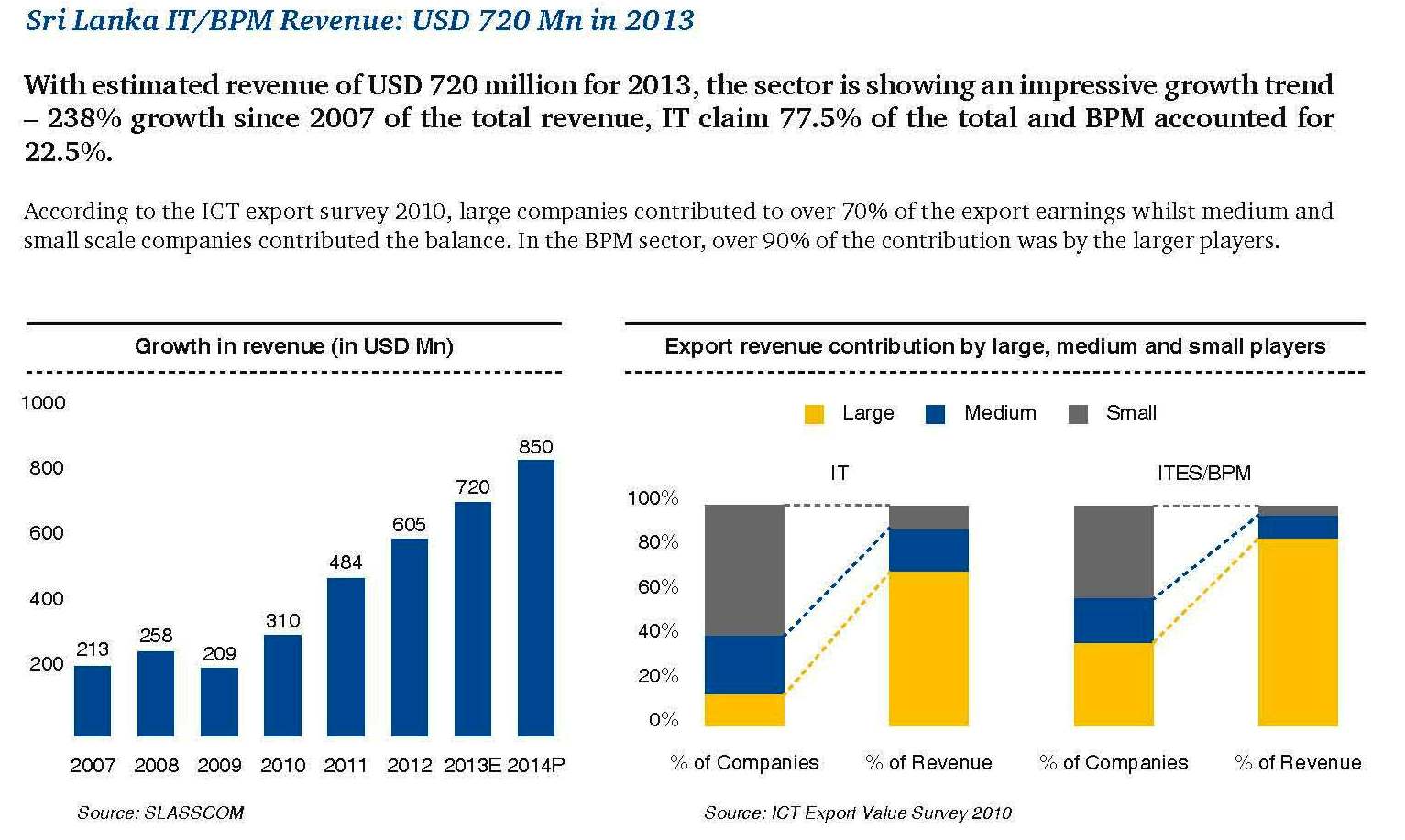
This knowledge service industry is one of many benefits of improving telecommunications services and IT capability in the country. It is creating many well-paid jobs, and generating growing volumes of foreign exchange for Sri Lanka’s economy (USD 720 million in 2013).

According to the industry’s trade lobby/chamber Sri Lanka Association of Software and Services Companies (SLASSCOM): “The growing IT-BPO industry…offers a unique advantage for Small and Medium Enterprises (SME) to enjoy premium access to a high quality talent pool, which is becoming increasingly challenging in large established destinations such as India and China. The environment is also highly conducive for establishing high-in-demand niche competency centers out of competition for even larger global services companies.”

In this week’s Ravaya column (published on 31 May 2015) I look at the current status, benefits and challenges of Sri Lanka’s BPO/BPM industry, and highlight its potential to create high-end jobs for educated and skilled professionals, thus containing – if not reversing – brain drain.

Image courtesy Keells.com website

නව සන්නිවේදන තාක්ෂණ හා ජාලයන් හරහා නව ආදායම් මාර්ග විවර වී තිබෙනවා.

මේ අවස්ථා ස්වයංරැකියා බවට පත් කර ගෙන, රටට බරක් නොවී, සාම්ප‍්‍රදායික රැකියා සොයමින් ලත නොවී හොඳ ආදායම් ලබන දක්ෂ තරුණ තරුණියන් දහස් ගණනක් දැනටමත් මෙරට සිටිනවා.

ඔවුන් නැණසේවා ආර්ථිකයේ (knowledge economy) පෙරගමන්කරුවන්.

තොරතුරු සන්නිවේදන හා තාක්‍ෂණ සේවා (ICT) රටේ ආර්ථිකයකට කරන දායකත්වය මෑත වසර කිහිපයේ ඉහළ ගොස් තිබෙනවා. දියුණු රටවල අවශ්‍යතා සඳහා පරිගණක මෘදුකාංග නිෂ්පාදනය, දත්ත සේවා සැපයීම හා තොරතුරු තාක්‍ෂණ උපදේශක සේවා ලබා දීම ආදී නව ව්‍යාපාර අවස්ථා රැසක් සන්නිවේදන තාක්‍ෂණයන් හරහා උදා වී තිබෙනවා.

ඉංගි‍්‍රසියෙන් outsourcing යයි කියන මේ කි‍්‍රයාවට සිංහලෙන් බහිස්සේවාර්ථනය යයි කියනවා. සරල අරුත තම අවශ්‍යතාවයක් පිටරටකට යවා නිසි ප‍්‍රමිතියට එහෙත් සාපේක්‍ෂව අඩු වියදමකින් කර ගැනීමයි. තොරතුරු තාක්‍ෂණ outsourcing ව්‍යාපාරවලට පණ්ඩිත වදන් වෙනුවට අපට “බාහිර නැණසේවා සම්පාදනය” යයි කිව හැකියි (මේ යෙදුම යෝජනා කළේ අජිත් පැරකුම් ජයසිංහ).

මුල් යුගයෙ හුදෙක් දත්ත ඇතුලුකිරීම (data entry) හා ටයිප් කිරීම වැනි සරල මට්ටමේ සේවාවලට සීමා වී තිබූ මේ කර්මාන්තය දැන් ඉතා දියුනුයි.

දියුණු රටවල සමාගම්, සරසවි, මාධ්‍ය ආයතන හා රාජ්‍ය ආයතන පවා තම නැණ සේවා සඳහා ඉන්දියාව, පකිස්ථානය, පිලිපීනය වැනි (ඉංගී‍්‍රසි හා තාක්‍ෂණික හැකියාව පවතින) රටවල සමාගම් හා පුද්ගලයන් වෙත එනවා. මේ සේවාලාභීන් (clients) හා සේවා දායකයන් (service providers) කිලෝමීටර් දහස් ගණනක් දුර සිටියත් ඔවුන් යා කැරෙන්නේ ඉන්ටර්නෙට් හරහායි.

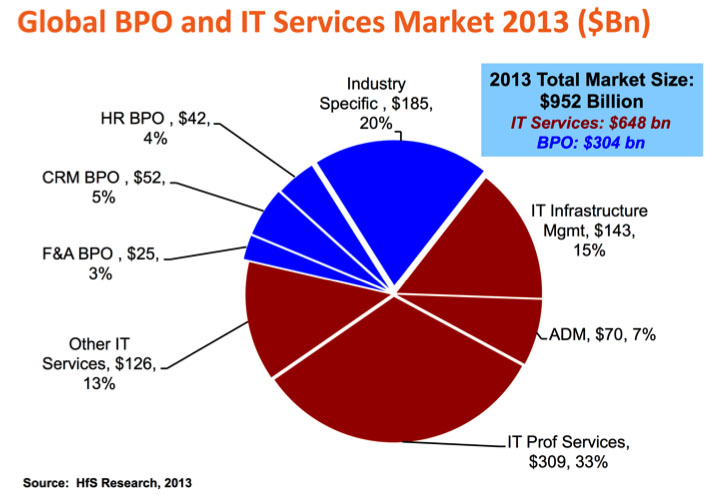
Global BPO market 2013 - image courtesy - brand-taxi.com
Global BPO market 2013 – image courtesy – brand-taxi.com

තොරතුරු තාක්‍ෂණ ව්‍යාපාර හරහා ආදායම වැඩි කර ගන්නට අවශ්‍ය ශ‍්‍රම බලකාය හා කළමණාකාරිත්වය අප රටට තිබෙනවා. දැනටමත් අපේ ලොකු හා මධ්‍යම පරිමානයේ දත්ත සේවා සමාගම් මෙන්ම කුඩා පරිමානයේ තනි තාක්‍ෂණවේදින් ද ලෝක තොරතුරු වෙළඳපොලට තම සේවා අලෙවි කරනවා.

මේ ව්‍යාපාර සඳහා අඛණ්ඩ හා ප‍්‍රමිතිගත විදුලි සැපයුමත්, ඉහළ වේග සහිත පුළුල් කලාප ඉන්ටර්නෙට් (broadband internet) සබඳතාත් අත්‍යවශ්‍යයි. රජයට කළ හැක්කේ මේ අයට නිසි යටිතල පහසුකම් සහතික කිරීමත්, ව්‍යාපාරික බදු සහන හා අනුමැතියන් ආදිය ලෙහෙසියෙන් ලබා දීමත්.

බාහිර නැණසේවා 2013දී මෙරටට අමෙරිකානු ඩොලර් මිලියන් 720ක් (රුපියල් බිලියන් 95ක්) උපයා දුන්නා. 2016 වන විට වාර්ෂිකව ඩොලර් බිලියන් 1ක් (රුපියල් බිලියන් 133ක්) තරම් ඉහළ ආදායමක් ඉපයිය හැකි බවට ගණන් බලා තිබෙනවා.

ඒ. ටී. කීර්නි (A T Kearney) නම් ජාත්‍යන්තර අධ්‍යාපන සමාගම 2013දී කළ සංසන්දනාත්මක ඇගැයීමකට අනුව මෙම නැණ සේවා කර්මාන්තයට පිවිස සිටින රටවලින් ප‍්‍රමුඛයන් 25 අතර ශ‍්‍රී ලංකාව ද සිටිනවා.

විදේශීය වෙළෙඳපොළ වෙනුවෙන්ම බාහිර නැණසේවා සම්පාදනය කරන දේශීය සමාගම් සිය ගණනක් තිබෙනවා. මේවායෙන් බහුතරයක් එක් වී තමන්ගේ කර්මාන්තය තවත් ව්‍යාප්ත කරන්නට තොරතුරු තාක්ෂණ වෙළෙඳ මණ්ඩලයක් Sri Lanka Association of Software and Services Companies (SLASSCOM) පිහිටුවා ගෙන තිබෙනවා.

තනි සමාගම් තම සේවා ප‍්‍රචාරණය කරනු වෙනුවට ශ‍්‍රී ලංකාව විශිෂ්ට ගණයේ සේවා සපයන රටක් ලෙස සාමූහිකව ප‍්‍රවර්ධනය ඔවුන්ගේ අරමුණයි. එය සම කළ හැක්කේ දහස් ගණනින් මෙරට සංචාරක සේවා සමාගම් හා ආයතන තිබෙන අතර සංචාරක ගමනාන්තයක් හා අත්දැකීමක් ලෙස පොදුවේ ශ‍්‍රී ලංකාව ප‍්‍රවර්ධනය කිරීමට. සංචාරක කර්මාන්තයේ මේ භූමිකාව සංචාරක මණ්ඩලය හරහා රජය කළත් තොරතුරු තාක්ෂණ ක්ෂේත‍්‍රයේ එබන්දක් උවමනා නැහැ.

හුදෙක් ප‍්‍රතිපත්ති හා නීති මට්ටමේ සහයෝගය පමණක් රජයෙන් ලබා ගනිමින්, අවම රාජ්‍ය මැදිහත්වීමක් තුළ තමන්ගේ කර්මාන්තය ලෝක මට්ටමෙන් දියුණු කිරීමට අපේ සමාගම් සමත්. මේ ක්ෂේත‍්‍රයේ ගෝලීය දැවැන්තයකුව සිටින ඉන්දියාව අනුගමනය කළේ ද මේ ආකෘතියමයි.

මේ ක්ෂේත‍්‍රයේ ශ‍්‍රී ලංකා සමාගම්වල සාමූහික ප‍්‍රගතිය සමාලෝචනය කරන 2014 විග‍්‍රහයක් SLASSCOM පළ කොට තිබෙනවා. එයට පෙරවදනක් ලියන එහි සභාපති හා තොරතුරු තාක්ෂණ ව්‍යාපාරික මධු රත්නායක කියන්නේ 2007දී ඇමරිකානු ඩොලර් මිලියන් 213ක් විදේශ විනිමය රටට උපයා දුන් මෙම කර්මාන්තය 2013 වන විට එය ඩොලර් මිලියන් 720ක් දක්වා ශීඝ‍්‍රයෙන් වර්ධනය වූ බවයි.

Sri Lanka's IT and BPM Sector Revenues - from SLASSCOM's Report, Sri Lankan IT-BPM Industry Review 2014
Sri Lanka’s IT and BPM Sector Revenues – from SLASSCOM’s Report, Sri Lankan IT-BPM Industry Review 2014

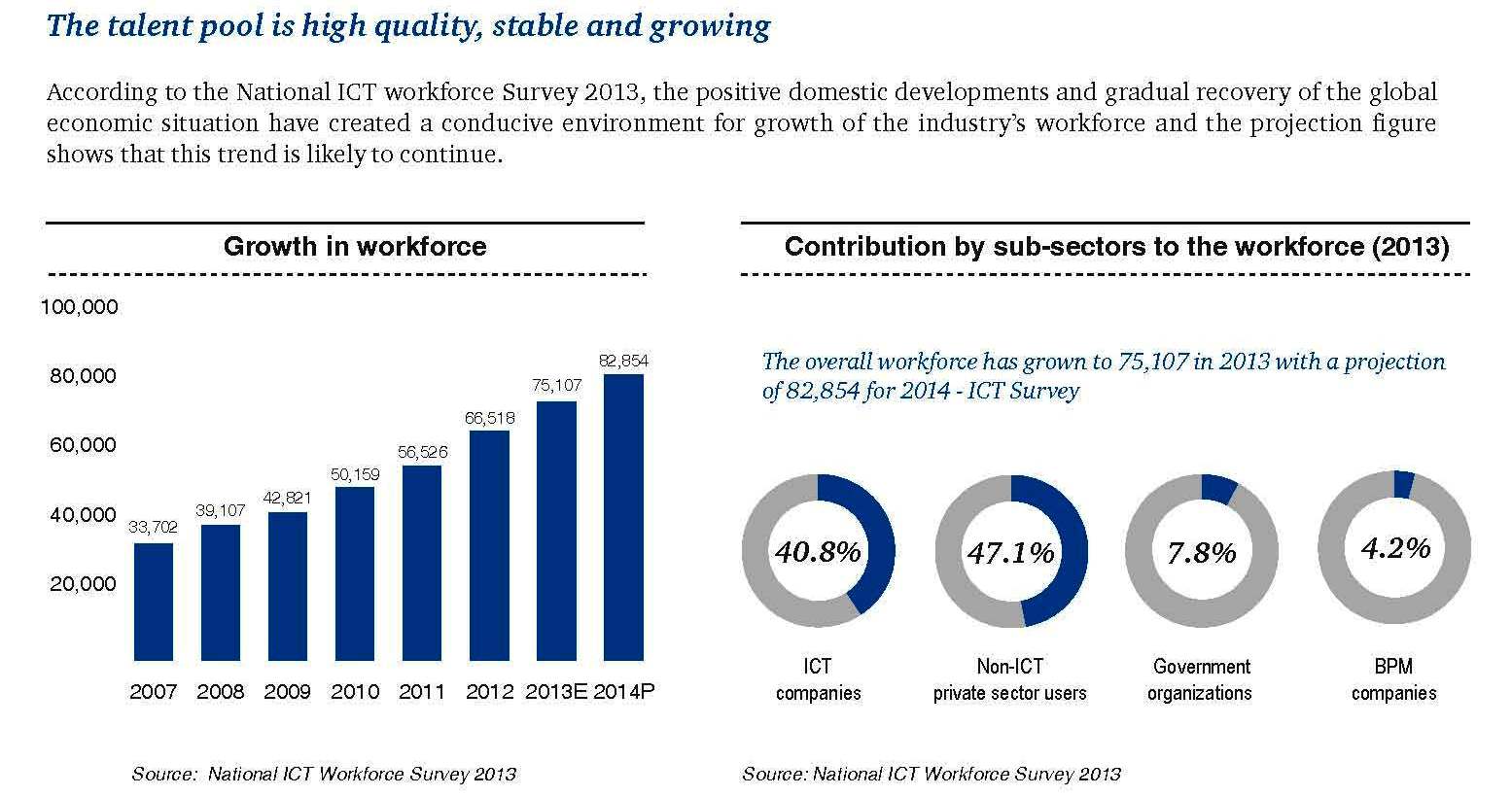
එසේම 2007දී රැකියා අවස්ථා 33,700ක් ජනනය කළ මේ කර්මාන්තය 2013 වන විට 75, 100 දෙනකුට ඍජු රැකියා ලබා දුන් බවත් ඔහු කියනවා. 2007-2013 කාලය තුළ විදෙස් වෙළෙඳපොළ සඳහා තොරතුරු තාක්ෂණ සේවා මෙරට සිය සපයන ලාංකික සමාගම් ගණන 170 සිට 220 දක්වා ඉහළ ගියා.

මේ සමාගම් වැඩිපුර ලබා දෙන නැණසේවා මොනවාද?

එක් ප‍්‍රධාන කාණ්ඩයක් නම් මූල්‍ය හා ගිණුම්කරණ ක්ෂේත‍්‍රයයි. බොහෝ බටහිර හා ඈතපෙරදිග සමාගම් තමන්ට විශ්වාස කළ හැකි හා නිසි ශිල්පීය හැකියාව ඇති දකුණු ආසියාතික සමාගම් හරහා තමන්ගේ ඇතැම් මූල්‍යමය විශ්ලේෂණ සේවා ඉටුකර ගන්නවා. තොරතුරු තාක්ෂණ මෙවලම් හා ඉන්ටර්නෙට් සබඳතා මෙහිදී හුදෙක් ව්‍යාපාරික මාධ්‍යයක් පමණයි. වඩා වැදගත් වන්නේ සියුම් මූල්‍යමය විශ්ලේෂණ කිරීමට අවශ්‍ය විශේෂඥ දැනුම හා අත්දැකීම්.

තවත් එක් ප‍්‍රධාන සේවා කාණ්ඩයක් Product Engineering යයි කියනවා. මෙය සරල තේරුම නම් වෙළෙඳපොළ රුචි අරුචිකම් විස්තරාත්මකව අධ්‍යයනය කරමින් යම් භාණ්ඩයක් හෝ සේවාවක් වැඩි දියුණු කිරීමයි. නූතන පාරිභෝගික සමාජය හා ගෝලීය වෙළෙඳපොළ ප‍්‍රවණතා ගැන මනා අවබෝධයක් තිබීමත්, සැලසුම් නිර්මාණ (design) හැකියාවත් මෙයට අවශ්‍යයි.

මීට අමතරව විවිධාංගීකරණය හරහා (diversification) මේ කර්මාන්තය තුළ නව විභවයන් සොයා යන්නට අපේ සමහර සමාගම් සමත්ව සිටිනවා. නීති ලේඛන සම්පාදනය, වාස්තු විද්‍යාත්මක ගෘහ සැලසුම් කිරීම, වෛද්‍ය විද්‍යා ක්ෂේත‍්‍රයේ ලේඛන අවශ්‍යතා ඉටු කර දීම, මේ සේවා පරාසයට අයත්.

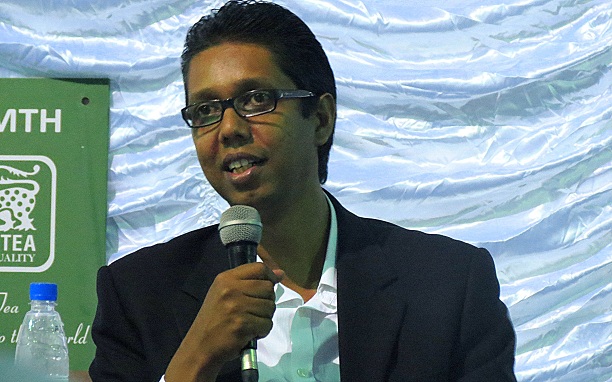
Madu Ratnayake, Chairman of SLASSCOM - image courtesy ReadMe.lk
Madu Ratnayake, Chairman of SLASSCOM – image courtesy ReadMe.lk

මෙම නැණ සේවා සපයන ලාංකික සමාගම්වලට තව බොහෝ දුර යෑමට හා ව්‍යාපාර පුළුල් කිරීමට විභවයක් ඇතැ’යි රත්නායක කියනවා. ‘‘රජය තොරතුරු තාක්ෂණ කර්මාන්තය හා පර්යේෂකයන් යන පාර්ශ්ව තුනම සහයෝගයෙන් ලාංකික නැණ සේවා සඳහා ආවේණික වූ ජාත්‍යන්තර වෙළෙඳපොළ අවකාශයන් (niche) සොයා යා යුතුයි. ඉහළ උගත්කම් හා දස්කම් ඇති ශ‍්‍රම බලකායක් අප රට සිටීම එහිදී අපට වාසියක්. එසේම නවීන ලෝකයේ ඉක්මනින් වෙනස්වන පාරිභෝගික චර්යා හා සමාජ ප‍්‍රවණතා මනා සේ තේරුම් ගැනීමද වැදගත්. මේ සුවිශේෂී නැණ සේවාවන් නිසි ප‍්‍රමිතීන්ට යටත්ව තරගකාරී මිලකට අපේ සේවාලාභීන්ට සැපයිය යුතුයි.’’

SLASSCOMහි ඉලක්කය නම් 2022 වන විට වාර්ෂිකව නැණසේවා ක්ෂේත‍්‍රය හරහා විදෙස් සේවාලාභීන් වෙතින් ඩොලර් බිලියන 5ක් ආදායම් මෙරටට උපයාදීමටයි.

දැනටත් මේ කර්මාන්තය රටට විදේශ විනිමය උපයාදීම අතින් 6 වන තැනට පත්ව සිටිනවා. සංසන්දනය සඳහා දැනට වැඩිපුරම විදේශ විනිමය උපයන්නේ විදෙස්ගතව සිටින ලාංකික ශ‍්‍රමිකයන්. නොපුහුණු, පුහුණු හෝ විශේෂඥ ක්ෂේත‍්‍රවල රැකියා හරහා ඔවුන් 2013දී මෙරටට එවූ සමස්ත උපයා ගැනීම්වල එකතුව ඩොලර් බිලියන 6 ඉක්ම වූවා.

Sri Lanka IT Workforce - from SLASSCOM's Report, Sri Lankan IT-BPM Industry Review 2014
Sri Lanka IT Workforce – from SLASSCOM’s Report, Sri Lankan IT-BPM Industry Review 2014

බොහෝ කොටම ශ‍්‍රම වෙළෙඳපොළේ පහත ස්ථරයන්හි සේවා ලබා දෙමින් අපේ ජනයා මිලියන් දෙකක් පමණ දෙනා විදෙස්ගත වී උපයන මේ මුදල්වලින් තමයි හැම රජයක්ම එදිනෙදා වියදම් පිරිමසා ගන්නේ.

2022 වන විට ඩොලර් බිලියන 5 ආදායම් ඉලක්කය හඹා යන්නට නම් ශ‍්‍රී ලංකාවේ තොරතුරු තාක්ෂණ යටිතල පහසුකම් ප‍්‍රශස්ත මට්ටමක පැවතිය යුතුයි. දකුණු ආසියාවේ අන් රටවලට සසඳන විට දවසේ පැය 24 පුරා අඛණ්ඩ විදුලිබල සැපයුමක් මෙරට පවතින බවත්, ජාත්‍යන්තර විදුලි සංදේශ කේබල් සබඳතා තුනක් හරහා මෙරට ගෝලීය දත්ත ජාලවලට නිතිපතා සම්බන්ධව ඇති බවත්, මීට අමතරව චන්ද්‍රිකා සබඳතා ද ගණනාවක් ඇති බවත් SLASSCOM සිය වෙබ් අඩවියේ කියනවා.

එහෙත් ප‍්‍රශ්න හා අභියෝග ද තිබෙනවා. තොරතුරු තාක්ෂණ ප‍්‍රතිපත්ති විශේෂඥ මහාචාර්ය රොහාන් සමරජීව මෑතදී පැවති විද්වත් සංවාදයකදී මෙයින් කිහිපයක් මතු කළා. Broadband ඉන්ටර්ටේ සේවාවල දත්ත ගලා යන වේගය ප‍්‍රමිතියකින් තොරව අඩු වැඩි වීම එයින් එකක්. එසේම ඉන්ටර්නෙට් හරහා සංඥා යවා ප‍්‍රතිචාර ලබා ගෙන එක් හුවමාරුවක් සම්පූර්ණ කරන්නට ගත වන (latency නමින් හඳුන්වන) කාලය ජාත්‍යන්තර ප‍්‍රමිතියට වඩා වැඩි වීම තවත් ගැටලූවක්. මේ නිසා සජීව දත්ත විශ්ලේෂණවලට බාධා පැමිණෙනවා.

මෙරට සිට ගෝලීය වෙළෙඳපොළට නැණසේවා සපයන ලාංකික තාක්ෂණවේදීන් ගණනද ඉහළ යමින් පවතිනවා. ඔවුන් පුද්ගල මට්ටමින් විවිධ නැණසේවා ව්‍යාපෘති භාර ගෙන ඉටුකර දී ගෙවීමක් ලබනවා.

තනි පුද්ගල මට්ටමේ දැනුම් සේවා සපයන්නන්ට විදෙස් රටවල සිට ගෙවීම් ලද හැකි සරල ක‍්‍රමයක් වන්නේ PayPal. මේ හරහා ගෙවීම් ලැබීමට තවමත් මෙරට නියාමන අනුමැතිය මහබැංකුව ලබා දී නැහැ. මෙය හදිසි අවශ්‍යතාවක් බව වෘත්තිකයන් වසර ගණනක් සිට මුදල් අමාත්‍යාංශයට හා මහ බැංකුවට කියනවා. යහපාලනය යටතේත් වැඬේ කල් යනවා. නව තාක්ෂණ ක්ෂේත‍්‍ර හරහා ආදායම්, විදේශ විනිමය හා රැකියා අවස්ථා ජනය කිරීම ගැන ගතානුගතික පරිපාලන නිලධාරීන්ට වැටහීමක් නැතිවා විය යුතුයි.

පරම්පරාවකට පෙර අපේ රටේ දක්ෂතම හා ඉහළින්ම උගත් තරුණ තරුණියෝ විදෙස් රටවල ඉහළ වැටුප් ගෙවන රැකියා වෙත ඇදී ගියා. තනි පුද්ගල මට්ටමේ එම තීරණවලට දොස් කියන්නට බැහැ. නැණ සේවා කර්මාන්තය නිසා මෙය ටිකෙන් ටික වෙනස් වනවා.

ලෝක මට්ටමේ වැටුප් නොවූවත් මෙරට මට්ටමින් ඉහළ වැටුප් ලබන අතර මෙරටම සිටීමේ අවස්ථාව දැන් ඔවුන්ට තිබෙනවා.

මේ නිසා බුද්ධි ගලනය සීමා වනවාට අමතරව රටට අභිමානවත්, බුද්ධිමත් ශ‍්‍රම වෙළෙඳපොළක් ලෝක මට්ටමින් ගොඩ නැගෙනවා. ගෘහ සේවිකාවන්, කම්කරුවන්, රියදුරන් ලෙසින් මෙරට ශ‍්‍රමය පිටරට යනවාට අමතරව, වෘත්තිකයන්ට හා තාක්ෂණවේදීන්ට මෙරට සිටම ලොව නන් දෙස විසිරී සේවාලාභීන්ට නැණ සේවා ලබා දිය හැකියි.

See also:

Baseline Sector Analysis of the Business Process Outsourcing industry of Sri Lanka (LIRNEasia & ICTA, 2006)

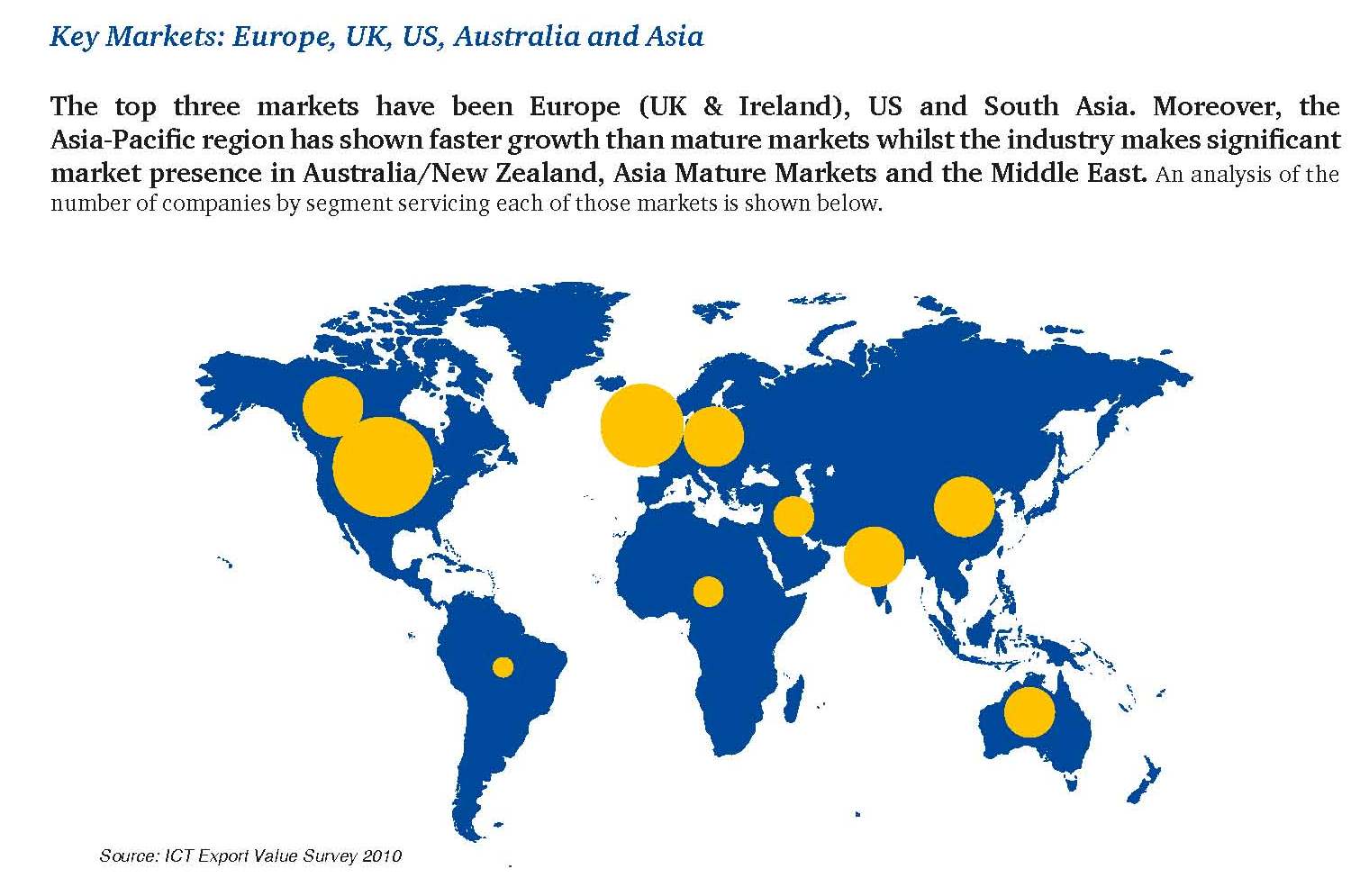
Key markets for Sri Lanka IT and BPM industries - From SLASSCOM's Report, Sri Lankan IT-BPM Industry Review 2014
Key markets for Sri Lanka IT and BPM industries – From SLASSCOM’s Report, Sri Lankan IT-BPM Industry Review 2014


Echelon May 2015 column: Black Swans, White Lies and the Rise of ‘Info-Doers’

Text of my column written for Echelon monthly business magazine, Sri Lanka, May 2015 issue

Black Swans, White Lies and the Rise of ‘Info-Doers’

By Nalaka Gunawardene

They are rare, but whey they arrive, bring Bad News...
They are rare, but whey they arrive, bring Bad News…

The Global Village is a pretty noisy place. In today’s networked society, information can spread at the speed of light. Fabrications, half-truths and myriad interpretations compete with evidence-based analyses and official positions. Trust is being redefined.

How can the formal structures of power – whether government, academic, military or corporate – engage in public communication in effective ways? Should they ignore what I call the Global Cacophony and limit themselves to formal statements made at their own bureaucratic pace?

Consider a recent scenario. A controversy erupts over how the Central Bank of Sri Lanka handles the latest Treasury Bond issue, but the government takes several days to respond. The Prime Minister makes a detailed statement in Parliament on March 17, which he opens saying: “I felt my first statement with regard to the so-called controversy over Treasury bonds should be made to this House.”

He offers a characteristically good analysis. But in the meantime, many speculations had circulated, some questioning the new administration’s commitment to transparency and accountability. Political detractors had had a field day.

Could it have been handled differently? Should government spokespersons have turned defensive or combative? Is maintaining a stoic silence until full clarity emerges realistic when governments no longer have a monopoly over information dissemination? What then happens to public trust in governments?

Black Swans

Some information managers still invoke an old adage: this too shall pass. The digitally empowered citizens may descend on an issue with gusto, they contend, but attention spans are short. ‘Smart-mobs’ tend to move on to the next breaking topic within days if not hours…

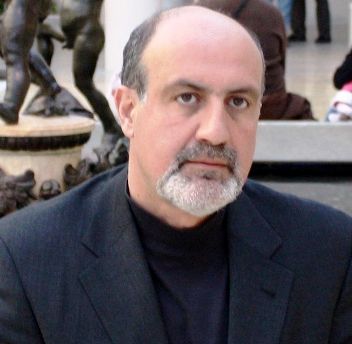
Nassim Nicholas Taleb - image from Wikipedia
Nassim Nicholas Taleb – image from Wikipedia

But how reliable is that as a strategy? And what happens when, once in a while, ‘Black Swan events’ occur disrupting everything?

It was the Lebanese-American scholar, statistician and risk analyst Nassim Nicholas Taleb who proposed the theory of Black Swan events. He used it as a metaphor to describe an event that comes as a surprise, has a major effect, and is often inappropriately rationalised afterwards with the benefit of hindsight.

The idea, first introduced in his 2001 book Fooled By Randomness, was initially limited to financial events. In a follow-up book The Black Swan (2007), he extended it to other events as well.

According to Taleb, almost all major scientific discoveries, historical events and artistic accomplishments are “Black Swans” — undirected and unpredicted. Examples include the rise of the Internet, the personal computer, World War I, dissolution of the Soviet Union and the attack on the World Trade Centre in New York on 11 September 2001.

The nexus between Black Swan events and information management has been explored in depth in a 2009 study titled ‘The Skyful of Lies & Black Swans: The new tyranny of shifting information power in crises’ that came out from the Reuters Institute for the Study of Journalism at Oxford University.

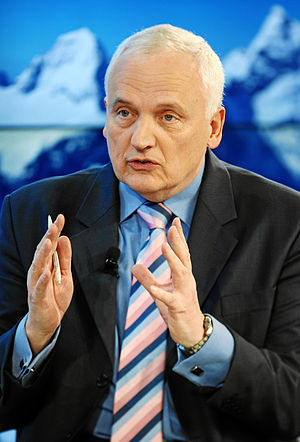
Nik Gowing at World Economic Forum Annual Meeting 2012 - image via Wikipedia
Nik Gowing at World Economic Forum Annual Meeting 2012 – image via Wikipedia

I recently had a fascinating conversation with its author Nik Gowing, a senior British television journalist with 40 years of experience in news and current affairs. Before he stepped down in 2014, he was main anchor for much of BBC’s coverage of major international events including Kosovo in 1999, the Iraq war in 2003, the global financial meltdown of 2007 and Mumbai attack in 2008. On 9/11, he was on air for six hours leading the coverage.

“In a moment of major and unexpected crisis, the institutions of power – whether political, governmental, military or corporate – face a new, acute vulnerability of both their influence and effectiveness,” Nik says summing up the study’s findings.

He analysed the new fragility and brittleness of those institutions, and the profound impact upon them from a fast proliferating and almost ubiquitous breed of what he calls ‘information doers’.

Info-doers

‘Info-doer’ seems more inclusive than the contested term ‘citizen journalist’. Such ‘info-doers’ are empowered by cheap, lightweight, go-anywhere technologies. That trend, already evident in 2009, has gained further momentum since.

“They have an unprecedented mass ability to bear witness. The result is a matrix of real-time information flows that challenges the inadequacy of the structures of power to respond both with effective impact and in a timely way,” the study says.

Nik adds: “Increasingly routinely, a cheap, ‘go-anywhere’ camera or mobile phone challenges the credibility of the massive human and financial resources of a government or corporation in an acute crisis. The long-held conventional wisdom of a gulf in time and quality between the news that signals an event and the whole truth eventually emerging is fast being eliminated.”

He describes how, in the most remote and hostile locations of the globe, hundreds of millions of electronic eyes and ears are creating a capacity for scrutiny and new demands for accountability. “It is way beyond the assumed power and influence of the traditional media. This global electronic reach catches institutions unaware and surprises with what it reveals.”

The phenomenon is globalised. Info-doers, with a range of motivations, are everywhere from the financial capitals like London and New York to crisis locations in Iraq, China’s Tibet plateau, Burma, the flooded heart of New Orleans or the mountains of Afghanistan. Censorship and crackdowns can’t stop them.

How to respond?

So what is to be done?

The instinct of many authorities is still to deny inconvenient truths and blame “the damn media” in times of crisis. This no longer works (if it ever did).

“Too often, the knee-jerk institutional response continues to be one of denial as if this new broader, fragmented, redefined media landscape does not exist. Yet within minutes the new, almost infinite media dynamic of images, video, texts and social media mean the public rapidly has vivid, accurate impressions of what is unravelling.”

For example, during Burma’s ill-fated Saffron Revolution of September 2007, video footage and images of protests rapidly spread online and through mainstream broadcast media. Most had been captured using mobile phones and sent out through internet cafes despite attempts to block their flow. The junta later dismissed such coverage as a “skyful of lies”, convincing no one.

The immediate policy challenge is to enter the information space with self-confidence and assertiveness as the media do, however incomplete the official understanding of the enormity of what is unfolding.

After a major crisis hits, both the mainstream media and policy makers face what Nik Gowing defines as the F3 dilemma. The F3 options are:

  • Should they be the first to enter the info-space?
  • How fast should they do it?
  • But how flawed might their remarks and first positions turn out to be in ways that could undermine public perceptions and institutional credibility?

Using many examples, the study has analysed the typical institutional response: to hesitate and lose initiative. This is because wielders of power still don’t appreciate dramatic changes in the real-time new media environment. Nik has included a few enlightened policy responses – “too few to suggest any sign of a fundamental shift in understanding and attitudes”.

The study ends with recommendations for how various institutions of political and corporate power can respond to the new challenges.

“The new real-time media realities are harsh. But once understood, embraced and acted upon, the proposed solutions are compelling. They represent a path to institutional effectiveness and credibility when these are currently lacking.”

Full study is online at: http://reutersinstitute.politics.ox.ac.uk/publication/skyful-lies-black-swans

Beware of Black Swans: but can we really prepare for them?

Science writer Nalaka Gunawardene is on Twitter @NalakaG and blogs at http://nalakagunawardene.com.

A & K Lit Fest Session on Blogging in Sri Lanka – A New Platform for Creativity?

Accessible, affordable and enjoyable: nothing official or snooty about it!

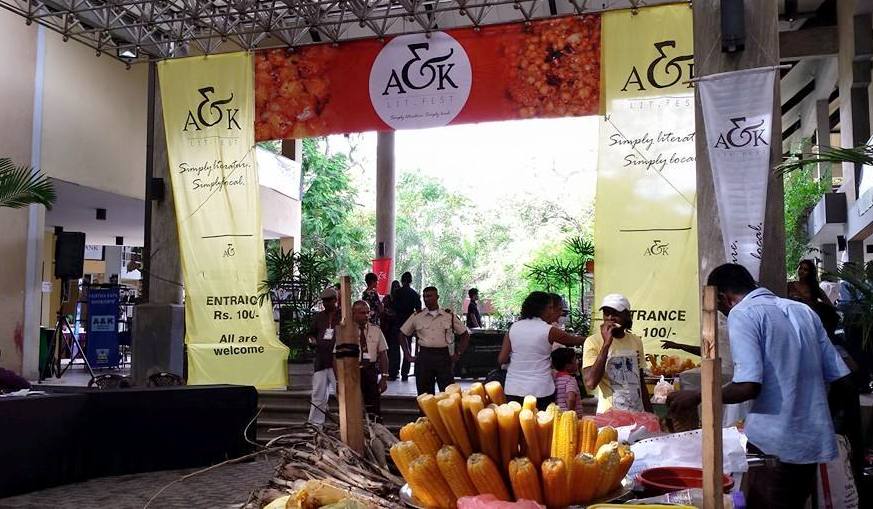
The Annasi & Kadalagotu Literary Festival (‘A&K Lit Fest’), held on 25 April 2015, brought together literary enthusiasts from across the country. It was a collaborative platform where those who share a passion for literature can come together, explore the way we write, the way we read and learn about the ways of Sri Lanka and its people – their expressions, cultures and perspectives.

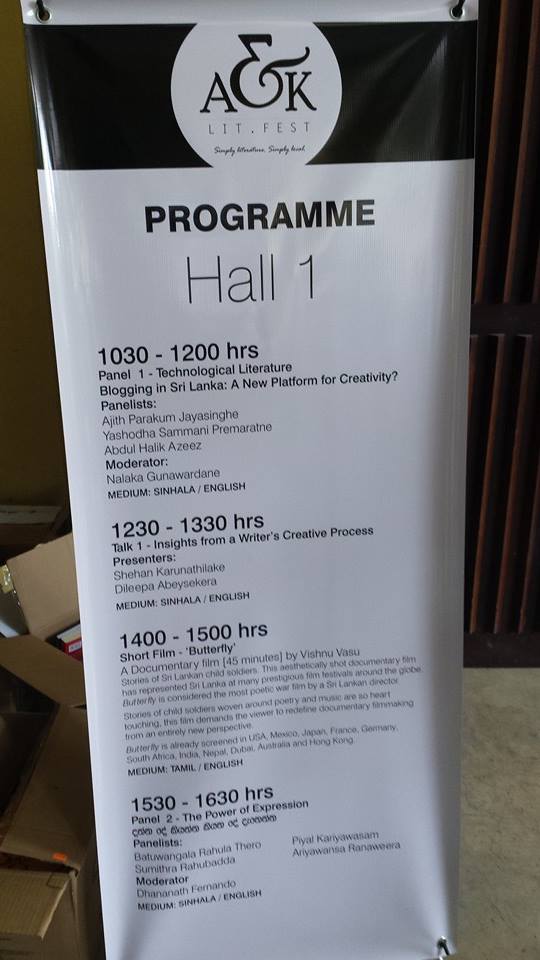
I moderated a Session on “Blogging in Sri Lanka: A New Platform for Creativity?” which featured three leading bloggers in Sri Lanka.

A&K Lit Fest - Blogging panel promo

Here are my Opening Remarks, where I tried to place blogging in the current cultural, political and societal context of Sri Lanka.

 Session: Blogging in Sri Lanka: A New Platform for Creativity?

Opening Remarks by Nalaka Gunawardene, Moderator

Because we are discussing blogs at a lit fest, we will look explore Lankan blogging and blogospheres from a more creative and literary perspective – and not from any technical or technological angle.

Our session has been tagged with a subtitle “Technological Literature?”, which I consider to be a misnomer. Blogs are self-expressions that just happen to be made on the web, but they are not necessarily techie or geeky.

Not any more than, say, convention book writers have much or anything to do with printing and paper production!

The cyberspace is just the medium and the ecosystem in which blogs are written, shared, commented upon and – sometimes – being argued over.

This part of the web is called ‘blogosphere’ – and where Sri Lanka is concerned there are three overlapping such blogosphere in Sinhala, Tamil and English languages.

The web is increasingly attracting more writers, journalists and other creative people because:

  • It is cheaper and faster to publish online than in book format;
  • It is often easier than getting published in newspapers or magazines; and
  • The medium is far more interactive, so creators can get direct audience feedback.
Panel on Blogging in Sri Lanka - L to R - Ajith Perakum Jayasinghe, Yashodha Premaratne, Abdul Halik Azeez and Nalaka Gunawardene
Panel on Blogging in Sri Lanka – L to R – Ajith Perakum Jayasinghe, Yashodha Premaratne, Abdul Halik Azeez and Nalaka Gunawardene – Photo by Malaka Rodrigo

By coincidence, this weekend also marks the 20th anniversary of the advent of full Internet services in Sri Lanka. As my friend Chanuka Wattegama and I have written in short history of the subject:

“Internet access on a commercial basis became available in Sri Lanka on 26 April 1995, when Lanka Internet Services Limited (LISL) started operating a local Internet server (‘Sri Lanka Web Server’) through a local gateway. Their server was connected to a host in the US through a 64kbps dedicated transmission line leased from SLT. This gave Sri Lankan Internet users the opportunity of accessing the Internet simply by dialling a local phone number. Sri Lanka was thus the first country in South Asia to have unrestricted and commercial Internet access facilities…”

We have come a long way since those early days of dial-up, narrowband access. Not everyone is online yet, of course, but we have around 22 to 25% of our 21 million people regularly using the web now for a variety of purposes.

Blogging is one such purpose. At its most basic, blogging entails using web-based, free spaces to write and self-publish words, images, videos or multimedia content.

Bloggers have been active in Sri Lanka for at least a dozen years, if not a bit longer. We don’t know exactly who the first Lankan blogger was (that’s a research project for you!), but some pioneering work was done by English language bloggers like Indi Samarajiva. There are others.

Blogging became more popular after around 2003/4. This was the time broadband Internet started rolling out, giving us faster speeds and always-on facility (on a fixed monthly cost, without having to count the minutes we stay online).

Blogging in Sri Lanka picked up when more and more computer users realized that they didn’t need to have any programming or coding skills to do web pages. The early web was limited to webmasters wielding HTML and other specialized software skills. But the advent of Blogger (1999) and WordPress (2003) free platforms meant that guys like myself – not knowing a single line of coding – could put together my own content on the web.

As broadband services spread, and as local language font issues were finally resolved, more people started blogging in Sinhala and Tamil too. The Lankan blogosphere is diverse and vibrant today.

Blogging is being pursued by a few thousand people, and many thousands more participate as readers or discussants. Some blogs offer serious political and social commentary, while others have become platforms for nurturing new talent in prose, verse, photography, videography or graphic art.

The formats and topics are only limited by our own imagination and dedication. The latter is important, as blogging is unpaid work that can take up a good deal of time (especially if you become a widely read and commended upon).

Bloggers fit into a much larger new media ‘ecosystem’ called citizen journalism, which is also constantly evolving. Although not well studied by media researchers, this phenomenon is now a part of our public sphere.

Before I introduce the panel, let me pose and answer four questions.

Blogging Panel engages in showing and telling about Lankan blogs
Blogging Panel engages in showing and telling about Lankan blogs – Photo by Malaka Rodrigo


Who is a typical blogger in Sri Lanka?

There is no such profile. Besides having basic computer skill and Internet connectivity, there is little in common among our bloggers – among whom are students, teachers, professionals, retirees, housewives, househusbands and many others. Anyone with Internet access and some spare time can, in theory, become a blogger. And if not inclined to write, anyone can still become a reader and/or commentator of others’ blogs.

What do Lankan bloggers publish about?

Again, the interests and topics of blogs are as diverse as our people! There is every type of content generated by bloggers and their readers (sometimes comments are more interesting than the original post that provoked them). Bloggers variously address social, cultural, political, commercial and personal issues and topics.

If you’re new to this space, the best point to start exploring would be to look at blog aggregators that automatically list new blogposts being published by bloggers who have registered with them (for free). There are several aggregators to choose from, but none that is comprehensive:

What quality and creativity are found in Lankan blogs?

Again, this is like asking what quality and creativity can be found in all the books, newspapers and magazines published in our land. It all depends on where you look!

There is everything in our blogs, from the mundane and unremarkable (including angry rants) to very perceptive and even occasionally profound expressions. And much in between…

We find some news reporting, much commentary/opinion, some analysis and investigation, as well as short stories, poems, satire, cartoons and videos on blogs. The genres are now nearly as diverse as in the printed word, even though public awareness of this diversity is still lacking.

Finally, why have me moderate this panel, and why these panelists?

I have been a long-time observer and chronicler of the Internet in Sri Lanka from the very beginning, often partnering with my friend Chanuka Wattegama. I wish more of our social scientists and media researchers would take a closer look at what is going on in cyberspace and help us understand just how that is impacting our society, culture and politics.

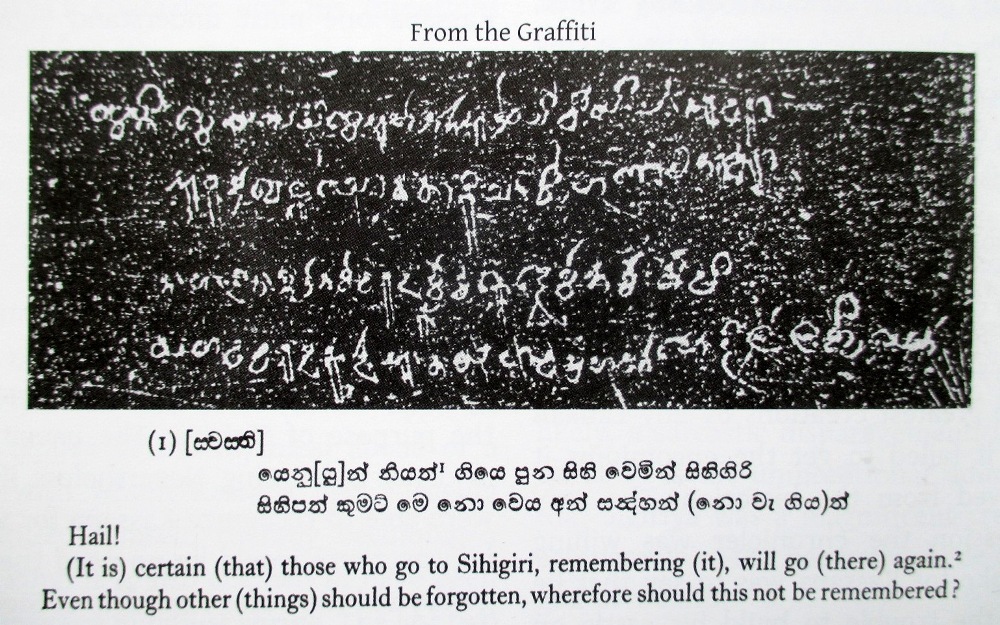
Sigiriya Graffiti image courtesy - Kassapa's Homage to Beauty by Siri Gunasinghe
Sigiriya Graffiti image courtesy – Kassapa’s Homage to Beauty by Siri Gunasinghe

A couple of years ago, I argued that some of the world’s earliest documented citizen journalists were in Sri Lanka: those who wrote Sigiriya graffiti beginning in the 7th Century and going up to around 13th Century. (See: 4 August 2013: සිවුමංසල කොලූගැටයා #128: සීගිරි කැටපත් පවුරෙන් ඇරැඹුණු පුරවැසි මාධ්‍යවේදය)

Those unknown ancestors met the basic criteria:

  • They wrote in a public space (mirror wall at Sigiriya)
  • They wrote without anyone’s permission (extremely rare in ancient Lanka)
  • They shared personal impressions and aspirations.

So today’s Lankan bloggers are heirs to a long and proud tradition!

BUT – don’t even think of writing anything on the Sigiriya mirror wall today. It is now a UNESCO World Heritage site, and protected under the Antiquities Ordinance. A young woman who wrote her lover’s name there was arrested and jailed recently for two years!

Blogging in Sri Lanka - panel at A&K Lit Fest, Colombo, 25 April 2015
Blogging in Sri Lanka – panel at A&K Lit Fest, Colombo, 25 April 2015

Blogging in cyberspace itself is sometimes frowned upon by those who don’t know — or have only a fleeting awareness of  — what blogs really are. Some confuse blogs with political  or gossip websites.

Sadly, many in our mainstream media are either ignorant or dismissive of  blogs (and some editors shamelessly reproduce them without acknowledgement!). The Secretary to the Media Ministry – himself an occasional blogger — told a blogging award ceremony last month that he has met chief editors of Lankan newspapers who had no clue what blogs were!

12 April 2015: සිවුමංසල කොලූගැටයා #215: සයිබර් කැඩපත් පවුරේ ලියන අපේ බ්ලොග් ලේඛකයෝ

During the past decade when freedom of expression and media freedom in Sri Lanka were seriously undermined, bloggers and citizen journalists partially filled the void created by mainstream media stepping up self-censorship. Indeed, I argue that some of our leading bloggers offer more refreshing and authentic analysis of current social and political issues than do many newspapers!

In their own ways, our three panelists have distinguished themselves in the Lankan blogospheres. We want to find out what motivates and inspires them, and what kind of dialogue they have with their readers.

Abdul Halik Azeez is a strategy consultant, independent researcher and citizen journalist. He blogged for some years at https://abdulhalik.wordpress.com. His recent interest in journalistic and conceptual photography has garnered a large following on Instagram where he is known as Colombedouin. http://instagram.com/colombedouin

Ajith Perakum Jayasinghe (Blog: http://www.w3lanka.com) is a teacher by profession who is immensely engaged in writing, translating and blogging. He likes to identify himself as a political activist who is committed to change the order so as the life is better for the humans and nature.

Yashodha Sammani Premaratne who is known by her pen name “bassi” is a blogger as well as a microblogger. Her blog, “Bassige nawathana” (http://bassigenawathana.blogspot.co.uk) started in August, 2013 attracted the readers immediately due to her lucid style of writing. Her range of blog posts is highly diverse from simple humour to Politics, Science, Poetry and Fiction. ‘Bassige Nawathana’ has already won two awards for its creativity.

We also ask panelists to address larger questions such as:

  • How vibrant and diverse is blogging in Sri Lanka?
  • Is there a dedicated and growing audience for blogs?
  • Do bloggers influence public opinion, and how?
  • Is blogging in decline with the rise of micro-blogging (Twitter) and Facebook?
Audience engages with the blogging panel at A&K Lit Fest  in Colombo, 25 April 2015 - Photo by Malaka Rodrigo
Audience engages with the blogging panel at A&K Lit Fest in Colombo, 25 April 2015 – Photo by Malaka Rodrigo
Photo by Dhara Gunawardene

1531871_10152757743417217_7487420442686407330_n


සිවුමංසල කොලූගැටයා #216: ලොවම හිනස්සන ලක් රජයේ සන්නිවේදන විහිළු

In this week’s Ravaya column (in Sinhala, published in issue of 26 April 2015), I question the wisdom of a new project by the Lankan government’s Information and Communication Technology Agency (ICTA) on “ICT for Citizen’s Journalism”.

ICTA’s CEO was recently quoted in the media as saying: “For this programme, what we are planning to show people is that every person can become a journalist and contribute towards media organisations. First, taking photographs and videos and sending it to a reporter which will enable him/her to have more information in order to analyse an incident further and report on it…”

If he has been quoted correction (no denial so far), the apex ICT institution of the Lankan government shows a shocking ignorance in its limited understanding of citizen journalism: must they be limited to gatherers of raw material for mainstream media? What about bearing witness, self-publication and countervailing functions of citizen media?

In today’s column, I call it particularly shocking as ICTA now comes under the purview of Ministry of Foreign Affairs — whose deputy minister, Ajith P Perera, was an active blogger for some years and became the first blogger to be elected to Lankan Parliament in 2010. If only this technical agency were to ask its own minister for some clarity before formulating such misguided national programmes…

I place ICTA’s imminent blunder in the wider context of other governmental agencies making a mockery of ICTs and public communication – for example, the state broadcaster SLBC running so-called community radio.

Yaha-paalanaya (good governance) is not just ensuring a clean and efficient government but also having clarity of purpose and making well reasoned and evidence based interventions to societal needs. ICTA fails once again on this count.

ICTA - ඉබාගාතේ යන, මහජන මුදල් නාස්ති කරමින් ලෝකයාගේ විහිලූවට ලක් වන රජයේ ආයතනය
ICTA – ඉබාගාතේ යන, මහජන මුදල් නාස්ති කරමින් ලෝකයාගේ විහිලූවට ලක් වන රජයේ ආයතනය

1990 දශකය මුලදී පේ‍්‍රමදාස ජනාධිපතිවරයා ඇඟලූම් කම්හල් 200 ව්‍යාපෘතිය යටතේ කම්හලක් පිහිට වූ හැම තැනෙකම ආසන්න මංසන්ධියක අදාල සමාගමේ වියදමින් ඔරලෝසු කණුවක් ඉදි කිරීමට නියෝග කළා. 20 වන සියවස මුලදී අත් ඔරලෝසු හෝ (වේලාව බලා ගත හැකි) ජංගම දුරකථන නොතිබි නිසා මහජනයාට එබඳු පහසුකමක් ප‍්‍රයෝජනවත් වූවත් 20 වන සියවස අවසන් දශකය එළඹෙන විට මේ යථාර්ථය මුළුමනින්ම වෙනස් වී තිබුණා.

එහෙත් පේ‍්‍රමදාස ජනාධිපතිවරයාට තිබූ දැඩි බිය නිසාදෝ ඔරලෝසු කණු පිහිටුවීම යල් පැන ගිය බොරු වැඩක් බව කියන්නට නිලධාරීන් හා ව්‍යාපාරිකයන් පැකිලෙන්නට ඇති. ටික දිනෙකින්ම අකර්මන්‍ය වූ ඔරලෝසු කණු ජනතාව අතර උපහාසයට ලක් වූවා.

රජයක්, රාජ්‍ය සංස්ථාවක් හෝ ඒජන්සියක් දැක්මකින් තොරව සංදර්ශනාත්මක වැඩකට අත තබන්නට යන විට එය කල් තබා විවේචනය කර ඇස් ඇරවා ගැනීමට පුරවැසියන් ලෙස අප තැත් කළ යුතුයි.

යහපාලනය යනු හුදෙක් ප‍්‍රජාතන්ත‍්‍රවාදීව, ජනතාවට වග කියමින්, දූෂණයෙන් හා නාස්තියෙන් තොරව රාජ්‍ය පාලනය කිරීම පමණක් නොවෙයි. නිසි දැක්මක්, අවබෝධයක් හා කාර්යක්ෂමතාවකින් යුතුව ‘ස්මාට්’ ලෙස රාජ්‍ය තන්ත‍්‍රය කර ගෙන යාමත් යහපාලනයෙ තවත් මූලික අංගයක්.

අපේ රටේ ඕනෑ දෙයටත් හැම තැනෙකම හැම කාරියකටම රාජ්‍ය තන්ත‍්‍රය මැදිහත් වීම කලක් තිස්සේ පැවතෙන ජාතික ඇබ්බැහියක්. රාජ්‍ය-කේන්ද්‍රීය (state-centred) මානසිකත්වයක් දශක ගණනක් තිස්සේ ස්ථාපිත වීම නිසා උගතුන් ද ඇතුලූ අපේ බොහෝ දෙනකු මෙහි වරදක් දකින්නේ නැහැ.

හැම දෙයක්ම රජය විසින් සම්පාදනය කර දෙන තුරු බලා සිටින අපේ ඇත්තන්ම අනෙක් පසෙකට හැරී ජන ජීවිතයේ හැම පැතිකඩක්ම අනවශ්‍ය ලෙස දේශපාලනීකරණය වීම ගැන මැසිවිලි ද නගනවා!

විවෘත වෙළඳපොළ හා ජනමාධ්‍ය යන ක්ෂේත‍්‍ර දෙකේම මේ විසමතාව තිබෙනවා. පුරවැසියන්ගේ අයිතිවාසිකම් සුරකිමින් ව්‍යවසායකයන් ද දිරි ගන්වමින් වෙළඳපොළ නිසි නියාමනය කිරීම රජයක මූලික හා ප්‍රධානතම වගකීමයි. එසේම ප‍්‍රතිපත්ති හා රෙගුලාසි මට්ටමින් අවශ්‍ය මැදිහත්වීම් කරමින් ඵලදායීව හා පොදු උන්නතිය ප‍්‍රවර්ධනය කිරීම ද අප රජයෙන් බලාපොරොත්තු වනවා.

රජයන්ට පමණක් කළ හැකි මේ වගකීම් හරිහැටි ඉටු කරනවා වෙනුවට හැම වැඩේම බදා ගෙන කිරීමට යාම අපේ රටේ ආණ්ඩුවල කලක සිට ඇති දුසිරිතක්. උදාහරණ ලෙස ගොවිතැන් කරන්නට, වෙළදාම් කරන්නට, මාධ් රකාශනයේ යෙදෙන්නට රී ලංකාවේ රජයන් හැම එකක්ම පාහේ කලක සිටම බොහෝ සෙයින් නැඹුරු වී සිටිනවා.

තොරතුරු හා සන්නිවේදන ක්ෂේත‍්‍රය ගනිමු. සමාජවාදී යයි කියූ සංවෘත ආර්ථිකය 1977දී විවෘත කොට වසර 38ක් ගත වීත්, රාජ්‍ය ඒකාධිකාරත්වය තිබූ විද්‍යුත් මාධ්‍ය ක්ෂේත‍්‍රය 1992දී විවෘත කොට වසර 23ක් ගත වීත් අපේ ආණ්ඩු තවමත් පත්තර සමාගමක් (ලේක්හවුස්) පාඩු පිට පවත්වා ගෙන යනවා. රේඩියෝ හා ටෙලිවිෂන් ආයතන ද මහජන මුදලින් විශාල වියදම් දරා නඩත්තු කරනවා. ඒ මදිවාට රජය බහුතර හිමිකාරීත්වය (51%) දරණ ටෙලිකොම් සමාගමක් ද තිබෙනවා.

මේ අස්සේ ලොවම හිනස්සන ප්‍රෝඩාකාරී විහිළු ද කරනවා. 100%ක් රජයට අයත්, රාජ්‍ය නිලධාරීන් මුළුමනින් පාලනය කරන ශ‍්‍රී ලංකා ගුවන් විදුලි සංස්ථාව 1980 පටන් ප‍්‍රජා රේඩියෝ (community radio) යයි කියා ගන්නා ග‍්‍රාමීය විකාශයන් පවත්වා ගෙන යනවා.

ප‍්‍රජා රේඩියෝවට ලොව පිළිගත් නිර්වචනයට අනුව එය ප‍්‍රජාවට අයිති වූ, ප‍්‍රජාව නඩත්තු කරන හා ප‍්‍රජාවම අන්තර්ගතය තීරණය කරන ජනතා මාධ්‍යයක්. මේ ගුණාංග කිසිත් නැති කොත්මලේ හා ඌව වැනි “ප්‍රජා” යයි කියා ගන්නා රේඩියෝ මෙරට තිබෙනවා. සැබෑ තත්ත්වය නොදත් හෝ නිරවුල් අවබෝධයක් නැති හෝ මාධ්‍ය ශිෂ්‍යයන් මෙන්ම සමහර විදේශිකයන් ද මේ රැවටීමට ලක් වනවා.

7 June 2007: Lions and community radio: part of Sri Lanka’s mythical lore

22 Oct 2003: Radio suffers as Colombo bosses call the shots. By Nalaka Gunawardene. Panos Features, London.

fullමුළුමනින්ම වාණිජ අරමුණු ඇති වෙළඳ සමගම්වලට FM රේඩියෝ විකාශනයන් අරඹන්නට බලපත‍්‍ර රැසක් නිකුත් කර ඇතත් එදා මෙදා තුර කිසිදු සිවිල් සමාජ සංවිධානයකට, පර්යේෂණායතනයකට හෝ පුරවැසියන් පිරිසකට සැබෑ ප්‍රජා රේඩියෝ අරඹන්නට එබඳු බලපත‍්‍රයක් ලබා දී නැහැ. මේ ඇයි?

මේ ගැන මීට වසර ගණනාවකට පෙර නේපාලයේ කත්මණ්ඩු නුවර පැවති දකුණු ආසියාතික මාධ්‍ය වැඩමුළුවකදී එවකට සිටි ජනමාධ්‍ය අමාත්‍යංශයේ ලේකම් කුමාර් අබේසිංහගෙන් විමසනු ලැබුවා. එවිට ඔහු කීවේ සැබෑ ප‍්‍රජා රේඩියෝ සඳහා මෙරට අවසර දීමට තරම් (එවකට රජයට) සිවිල් සංවිධාන හා පුරවැසි කණ්ඩායම් ගැන විශ්වාසයක් නොතිබූ බවයි.

මෙයට අභියෝග කෙරුණු විට ඔහු උදාහරණයකට ගත්තේ දැන් සියවසක් පැරණි සමූපකාර ව්‍යාපාරයයි. උතුම් අරමුණු පෙරදැරි කර ගත් සමූපකාර සංකල්පය අයාලේ ගොස් විනාශ වූයේ දේශපාලනය එයට පිවිසීම නිසා බවත්, ප‍්‍රජා සංවිධානවලට රේඩියෝ බලපත් දුන් විට දේශපාලන පක්ෂ එය ප‍්‍රචාරණ මෙවලමක් බවට පත් කර ගැනීමේ අවදානමක් ඇති බවත් ඔහු තර්ක කළා.

විද්‍යුත් මාධ්‍ය දේශපාලනීකරණය වී ඇති බව ඇත්තයි. රාජ්‍ය මාධ්‍ය පවතින රජයට අසීමිත ලෙස ප‍්‍රචාරක හොරණෑ බවට පත් වන අතර පෞද්ගලික මාධ්‍ය ද ඒවායේ හිමිකරුවන්ගේ දේශපාලන ව්‍යාපෘතීන්ට විවෘතවම පෙනී සිටිනවා. මෙය මෑත වසරවල ඉතා හොඳින් අප අත්දුටු යථාර්ථයක්.

කුමාර් අබේසිංහ රජා සංවිධාන විද්යුත් මාධ් ක්ෂේතරයට පිවිසීම වැළැක්වීම යුක්ති යුක්ත කිරීමට මතු කළ අවදානම පෞද්ගලික රේඩියෝ නාලිකා හරහා දැනටමත් හොඳටම සිදු වී තිබෙනවා.

මෙනයින් බලන කොට සන්නිවේදන හා තොරතුරු තාක්ෂණ ක්ෂේත‍්‍රවල නිසි දැක්මක් හා නිශ්චිත ප‍්‍රතිපත්ති නැති කමින් අපේ රට දශක ගණනක් තිස්සේ වැරදි මාර්ගවල යනවා. රෑ වැටුණු වළේ දවාලෙත් යළි යළිත් වැටෙනවා. එසේ වූවාට පසුතැවීමක් හෝ වැරදි හදා ගැනීමක් ද එතරම් පෙනෙන්නට නැහැ.

ICTA = Ignorant on Communications and Technology agency of Lankan government?

තොරතුරු තාක්ෂණ හා සන්නිවේදන ඒජන්සිය හෙවත් ICTA නම් රජයේ ආයතනය ගැන මීට පෙර 2015 මාර්තු 15දා කොලමින් ද අපි කතා කළා. 2003 පටන් මහජන මුදලින් හා විදේශාධාරවලින් නඩත්තු කරන මේ ආයතනයේ ඵලදායීතාව ගැන බරපතල ප‍්‍රශ්න තිබෙනවා.

15 March 2015: සිවුමංසල කොලූගැටයා #211: සැබෑ තොරතුරු සමාජයක් බිහි කිරීමට නිසි ඉදිරි දැක්මක්

2015 අපේ‍්‍රල් 12 වනදා සන්ඬේ ටයිම්ස් පුවත්පත ICTAහි අලූත් ප‍්‍රධාන විධායක නිලධාරී මුහුන්තන් කනගේ සමග සාකච්ඡාවකින් ලියූ වාර්තාවක් පළ කළා. එහි වැඩි කොටසක් වෙන්කර තිබුණේ මෑතදී ඇරැඹූ, ප‍්‍රසිද්ධ ස්ථානවල නොමිලයේ රැහැන් රහිත ඉන්ටර්නෙට් සේවා (free public WiFi) ලබා දීම ගැන කතා කරන්නයි.

මෛත‍්‍රීපාල සිරිසේන මැතිවරණ ප‍්‍රකාශනයෙහි මෙසේ නොමිලයේ WiFi ලබා දීමට පැහැදිලිව ප‍්‍රතිඥා දී තිබුණා. ටෙලිකොම් සමාගම් හරහා මේ පොරොන්දුව ඉටු කිරීම ICTA ආයතනය මගින් සම්බන්ධීකරණය කිරීමේ කිසිදු වරදක් නැහැ.

එහෙත් මෙබඳු සන්දර්ශනාත්මක මට්ටමේ වැඩවලින් ඔබ්බට දිවෙන රතිපත්තිමය හා දිගුකාලීන පියවර ගැනීමට ICTA රමුඛත්වය දිය යුතුයි. ගෙවී ගිය දශකයේ ICTA නොකළේ එයයි.

The Sunday Times, 12 April 2015: ICTA steps into its next project, ‘ICT for Citizen Journalism’

Muhunthan Canagey - image courtesy ReadMe.lk
Muhunthan Canagey – image courtesy ReadMe.lk

සන්ඬේ ටයිම්ස් වාර්තාවේ අවසානයේ කනගේ කියන්නේ ICTA ආයතනයේ ඊළඟ ව්‍යාපෘතිය ‘තොරතුරු තාක්ෂණය හරහා පුරවැසි මාධ්‍යවේදය’ බවයි. මෑතකදී එයට පාලක මණ්ඩල අනුමැතිය ලද බවත් ඔහු කියනවා.

සන්ඬේ ටයිම්ස් වාර්තාකරු නිවැරදිව ඔහුට උපුටා දක්වා ඇතැයි උපකල්පනය කරමු. එවිට මේ ව්‍යාපෘතිය ඉලක්ක කරන්නේ නව සන්නිවේදන තාක්ෂණ මෙවලම් හරහා පුරවැසියන් හසු කර ගන්නා ඡායාරූප හෝ වීඩියෝ ප‍්‍රධාන ප‍්‍රවාහයේ මාධ්‍යවලට යැවීම ගැන ජනතාව දැනුවත් කොට එයට අවශ්‍ය හැකියාව ලබා දීමලු. මේ හරහා පුරවැසියන් 100,000ක් සම්බන්ධ කර ගන්නට ICTA අදහස් කරනවාලූ.

පුරවැසි මාධ්‍යකරණය ගැන අප මේ කොලමින් විස්තරාත්මකව විටින් විට විග‍්‍රහ කොට තිබෙනවා. ඒ සැම විටම අප අවධාරණය කළේ නවීන සන්නිවේදන තාක්ෂණයන් නිසා අද ඕනැම කෙනකුට තමාගේම තොරතුරු, රූප, වීඩියෝ හා අදහස් එසැනින් සමාජමාධ්‍යගත කළ හැකි බවයි.

බ්ලොග්කරුවන්, සමාජ මාධ්‍ය ජාල භාවිතා කරන්නන් නිතිපතා කරන්නේ මෙයයි. මෙය අලූත් දෙයක් නොවෙයි. සමාජ මාධ්‍ය හා බ්ලොග් භාවිතයේ දශකයකට වැඩි අත්දැකීම් මෙරට දැන් තිබෙනවා.

පුරවැසි මාධ්‍යවලට වඩා බෙහෙවින් ගතානුගතික, පසුගාමී හා වැඩවසම් මානසිකත්වයකින් යුතු මෙරට ප‍්‍රධාන ප‍්‍රවාහයේ මුද්‍රිත හා විද්‍යුත් මාධ්‍ය ද මෑතක පටන් තමන්ගේ පුවත් සම්පාදනයට පුරවැසි දායකත්වය ලබා ගන්නට තැත් කරනවා. News 1st කරන U-Report (http://ureport.lk/) උදාහරණයක්. මේ ස්වේච්ඡා පුරවැසි මාධ්‍ය ජාලයට දැන් 18,000කට වැඩි සංඛ්‍යාවක් බැඳී සිටිනවා.

එහෙත් පුරවැසි මාධ්‍යකරණය (citizen journalism) යනු ප‍්‍රධාන ධාරාවේ මාධ්‍ය ආයතනවලට (සලකා බලා කැමති පරිදි භාවිතයට) බිම් මට්ටමෙන් අමුද්‍රව්‍ය සැපයීම නොව එම අධිපති මාධ්‍යවලට සමාන්තරව තමන්ගේම විකල්ප මාධ්‍ය පවත්වා ගැනීමයි. අධිපති මාධ්‍යවල දොරටු පාලකයා හරහා යන්නට සිදු වූ විට ස්වයං ප‍්‍රකාශක අයිතිය පුරවැසියන්ට අහිමිවනවා පමණක් නෙවෙයි. එම ආයතනවල රුචි අරුචිකම්වලට අනුගත වීමට ද සිදු වනවා.

හැම පුරවැසියකුටම තමන් කැමති අධිපති මාධ් ජාලයකට තොරතුරු හා රූප සැපයීමට අයිතියක් තිබෙනවා. එහෙත් රජයේ ආයතන තොරතුරු සමාජයේ ඉදිරි ගමන රවර්ධනය කළ යුත්තේ ස්වයං රකාශනය හා විකල්ප මාධ් බිහි වීමට අනුබල දීම හරහායි. එසේ නැතිව අධිපති මාධ්යවලට මුක්කු ගැසීමෙන් නොවෙයි.

මේ තරම් මූලික මට්ටමේ නිරවුල් බවක් හා දැක්මක්වත් ICTA ප‍්‍රධානීන්ට නැති හැඩයි.

Ajith P Perera, first Lankan blogger to be elected a Member of Parliament

මෙහි තවත් ඛේදජනක පැතිකඩක් තිබෙනවා. නව රජය යටතේ ශ‍්‍රී ලංකා ටෙලිකොම් සමාගමත්, ICTA ආයතනයත් අනුයුක්ත කොට තිබෙන්නේ විදේශ කටයුතු අමාත්‍යංශයටයි. නියෝජ්‍ය විදේශ අමාත්‍ය අජිත් පී. පෙරේරා මෙරට පාර්ලිමේන්තුවට ඡන්දයෙන් තේරී පත් වූ මුල්ම බ්ලොග් ලේඛකයායි.

2010 අපේ‍්‍රල් මහ මැතිවරණයෙන් කලූතර දිස්ත‍්‍රික් මන්ත‍්‍රීවරයකු බවට පත් වන තුරු ඔහු වසර කිහිපයක් ‘බණ්ඩාරගම’  නමින් බ්ලොග් අඩවියක් පවත්වා ගෙන ගියා. එය ඉනික්බිති නතර වූවත් දැනටත් ඔහුට ක්ෂුද්‍ර බ්ලොග් වේදිකාවක් වන ට්විටර්හි ගිණුමක් තිබෙනවා. @ajithpperera_p

ICTA ආයතනය අයාලේ යන්නේ පුරවැසි මාධ්‍යකරණ අත්දැකීම් සතු මෙබඳු දේශපාලනඥයකුගේ අධීක්ෂණය යටතේයි!

ICTA වසර 12ක පමණ කාලයක් රජයන් කිහිපයක් යටතේ ක‍්‍රියාත්මක වුවත් තොරතුරු සමාජය ප‍්‍රවර්ධනය සඳහා ප‍්‍රතිපත්තිමය හා දිගු කාලීන වශයෙන් ගත හැකි පියවර ගැන නිසි දැක්මක් ඇති බවක් පෙනෙන්නට නැහැ. මුල පටන් එහි ක‍්‍රියාකාරීත්වය ගැන විචාරශීලීව බලා සිටින මට එය සාක්ෂි සහිතව කිව හැකියි.

Chanuka Wattegama
Chanuka Wattegama

2003-4 වකවානුවේ ඊ-ජර්නලිස්ට්ලා යයි පිරිසක් බිහි කරන්නට මෙම ආයතනය තැත් කළ සැටි මට මතකයි. ඒ ගැන විජය පරිගණක සඟරාවේ 2004 ජනවාරි කලාපයේ කතුවැකියක් ලියමින් එහි ආරම්භක සංස්කාරක මා මිත‍්‍ර චානුක වත්තේගම කීවේ මෙයයි.

‘‘අනෙක් අතට ICTA ඒජන්සියට ශ‍්‍රී ලංකාවේ තොරතුරු හා සන්නිවේදන තාක්ෂණය ප‍්‍රචලිත කිරීමට සැබෑ අවශ්‍යතාවක් තිබේ නම් එයට මාධ්‍ය සම්මානදීම හෝ ඊ-ජර්නලිස්ට්ලා යයි කියමින් රජයේ මාධ්‍ය ආයතනවල තාක්ෂණ නිලධරයන් පිරිසකට පුහුණු වැඩසටහන් පැවැත්වීම වැනි සෝබන වැඩ කරනවාට අමතරව තමන් කළ යුතු කාර්යයන් රාශියක් තිබේ. එහෙත් මේ කිසිදු කටයුත්තකට වඩා ඉක්මනින් කළ යුතු එකක් ලෙස ඒජන්සියේ අවධානය යොමු වී ඇත්තේ විශාල ප‍්‍රචාරයක් සේම තමනට හිතවත් මාධ්‍යවේදීන් ද උපයා ගත හැකි මාධ්‍ය සම්මාන වැඩපිළිවෙළ දෙසටවත්ද?’’

යහපාලන රජය යටතේ ICTA පාලක මණ්ඩලයට මෑතදී පත්ව සිටින චානුක වත්තේගම මැදිහත් වී හෝ ඉබාගාතේ යන, මහජන මුදල් නාස්ති කරමින් ලෝකයාගේ විහිලූවට ලක් වන මේ රජයේ ආයතනය බේරා ගනු ඇතැයි අපි උදක්ම පතමු.


Media Sector Reforms in Sri Lanka: Some ‘Big Picture’ Level Thoughts

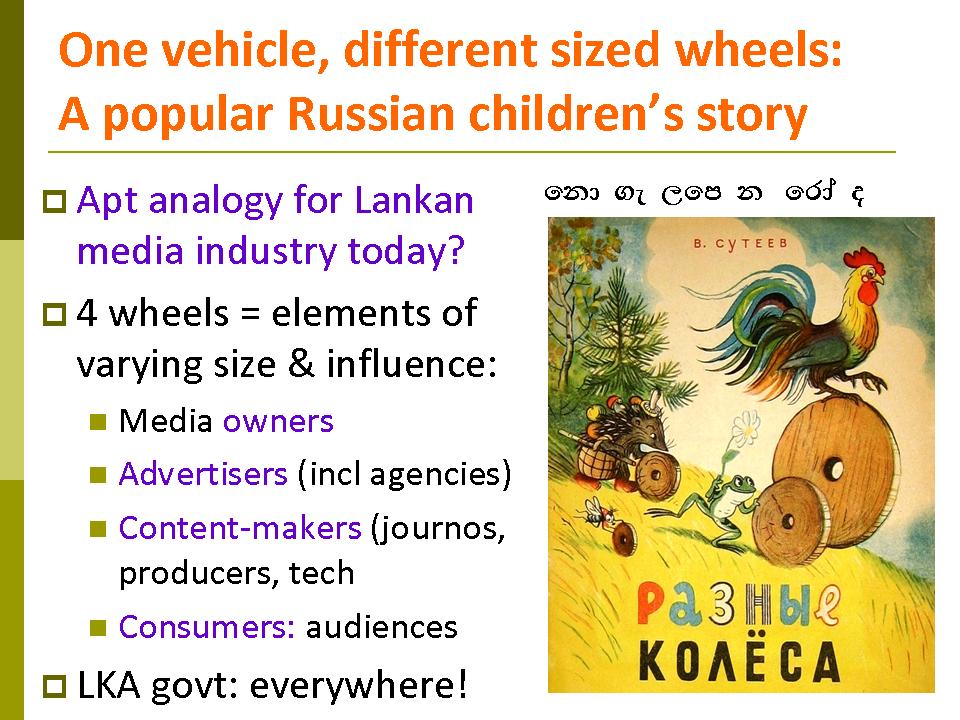
නොගැලපෙන  රෝද - четыре колеса сказка
නොගැලපෙන රෝද – четыре колеса сказка

I’m a story teller at heart. I sometimes moonlight as a media researcher or commentator but have no pretensions of being academic. I always try to make my points as interesting as possible — using analogies, metaphors, examples, etc.

This is the approach I used when asked to talk to the working group on Sri Lanka Media Reforms, convened by the Media Ministry, Sri Lanka Press Institute, International Media Support (IMS) and the University of Colombo.

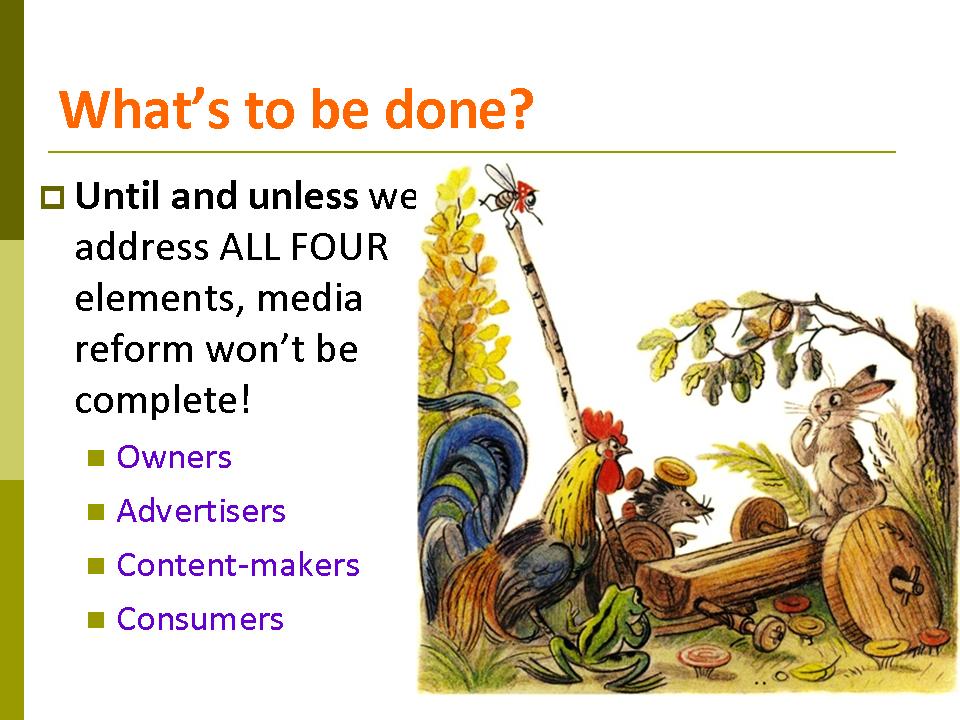
I used a well-loved Russian children’s story that was known in Sinhala translation as නොගැලපෙන රෝද — the story of one vehicle with different sized wheels, and how animal friends tried to make it move and when it proved impossible, how they put each wheel to a unique use…

A framework for media reform in Sri Lanka...by Nalaka Gunawardene
A framework for media reform in Sri Lanka…by Nalaka Gunawardene
A framework for media reform in Sri Lanka...by Nalaka Gunawardene
A framework for media reform in Sri Lanka…by Nalaka Gunawardene

Well, in the case of media reforms, we can’t go off in different directions. We must make the vehicle work, somehow.

Full presentation here: http://www.slideshare.net/NalakaG/media-reforms-in-lanka-big-picture-ideas-by-nalaka-gunawardene

සිවුමංසල කොලූගැටයා #211: සැබෑ තොරතුරු සමාජයක් බිහි කිරීමට නිසි ඉදිරි දැක්මක්

In this week’s Ravaya column (in Sinhala, published in issue of 15 March 2015), I discuss what policy and regulatory measures can help promote information society in Sri Lanka. In that process, I critique the Telecommunications Regulatory Commission (TRCSL) and the ICT Agency (ICTA), two state institutions with relevant mandates that they have mismanaged, and sometimes squandered, during the past decade.

I argue that, for the most part, ICTA has been dabbling in ‘retail’ level (and politically driven) projects such as setting up rural tele-centres and designing government websites, while neglecting ‘wholesale’ level needs – such as resolving local font standardization, supporting ICT innovation, and being a facilitator of meaningful e-government. Similarly, TRC has been engaging in indiscriminate blocking of political websites critical of the former government, without creating an enabling environment in which pluralistic web content could thrive.

Info society icons

“තොරතුරු ගලා ගිය පමණට තොරතුරු හෝ දැනුම් සේවා දියුණු වූ පමණට හෝ රටක ප‍්‍රශ්න විසඳෙන්නේ නැහැ. නවීන ලෝකයේ රටක ඉදිරි ගමනට තොරතුරු හා සන්නිවේදන තාක්‍ෂණයන් අත්‍යවශ්‍ය බව සැබෑවක්. එහෙත් ඒවා නිසි දැක්මක්, සැළැස්මක් හා ප‍්‍රතිපත්ති රාමුවක් තුළ ප‍්‍රවර්ධනය වීම ඉතා වැදගත්. එසේ නැති විට වඳුරන් අතට පත් දැලිපිහිය වැනි අවදානමක් මතු විය හැකියි.”

තොරතුරු හා සන්නිවේදන ක්‍ෂෙත‍්‍රවල ප‍්‍රාඥයකු වූ ශී‍්‍රමත් ආතර් සී ක්ලාක් මේ අදහස පළ කළේ මීට දශක දෙකකට පමණ පෙරයි. එදාටත් වඩා මෙය අද ශී‍්‍ර ලංකාවට අදාල යයි මා සිතනවා.

තාක්‍ෂණයේ හා වෙළඳපොල ආර්ථිකයේ ඉදිරි ගමන නිසා තොරතුරු හා සන්නිවේදන සේවා රැසක සේවය ලැබී ඇති මේ යුගයේ පොදු උන්නතිය, ජාතික සංවර්ධනය හා සමාජ සමානාත්මතාවය උදෙසා අප කෙසේ නම් මේවා යොදා ගත යුතුද? එහිලා රජය, විද්වතුන්, පෞද්ගලික අංශය හා සිවිල් සමාජය සතු වගකීම් මොනවාද?

තොරතුරු තාක්‍ෂණයන් මෙරට ප‍්‍රචලිත වීම හරහා කෙමෙන් මෙරට තොරතුරු සමාජයක් (information society) ස්ථාපිත වීම දශක ගණනාවක් තිස්සේ සිදු වෙමින් පවතින සමාජයීය පරිනාමයක්. 1925දී රේඩියෝ විකාශයන් ඇරඹීම හා 1976දී පාදුක්කේ චන්දිකා සන්නිවේදන මධ්‍යස්ථානය පිහිටුවීම වැනි මංසළකුණු හරහා සෙමෙන් ඉදිරියට ආ එම ප‍්‍රවාහය වඩාත් වේගවත් වුයේ 1979දී ටෙලිවිෂන්, 1989දී ජංගම දුරකථන සේවා හා 1995දී ඉන්ටර්නෙට් ආගමනයෙන් පසුවයි.

මුලින් සීමිත පිරිසකට ග‍්‍රහණය වූ මේ සන්නිවේදන සේවා කල් යාමේදී වැඩි ජන සංඛ්‍යාවක් භාවිත කරන එදිනෙදා තොරතුරු සේවා බවට පත් වූවා. තාක්‍ෂණය ඉක්මවා යන සාංස්කෘතිකමය, සමාජයීය හා දේශපාලන බලපෑම් මේ හරහා ජනිත වී තිබෙනවා.

තොරතුරු තාක්‍ෂණ මෙවලම්වලට වඩා වැඩි අවධානයක් අප යොමු කළ යුත්තේ ඒ හරහා බිහි වන තොරතුරු සමාජය ගැනයි. එය හුදෙක් පරිගණක, ජංගම දුරකථන හා ඉන්ටර්නෙට්වලට වඩා පුළුල් සමාජීය සංසිද්ධියක්.

Planet Info

මෙය උපමිතියකින් පහදා දිය හැකියි. නාගරික හා අර්ධ නාගරික පෙදෙස්වල ජලය බෙදා හැරීමට ජලාශ, ටැංකි, විශාල නල හා කුඩා නල වශයෙන් ජලප‍්‍රවාහන පද්ධතියක් තිබෙනවා. ගංගාවලින් ලබා ගත් ජලය යම් පිරිසිදු කිරීමකින් පසු නිවෙස් වෙත ගලා එන්නේ මේ හරහායි.

තොරතුරු තාක්‍ෂණ ජාලයන් මීට වඩා බෙහෙවින් සංකීර්ණ බව සැබෑයි. එහෙත් මේ අවස්ථා දෙකෙහිදීම වඩා වැදගත් වන්නේ පද්ධතියේ භෞතික හෝ තාක්‍ෂණික කි‍්‍රයාකාරිත්වය නොව නොකඩවා ජලය/තොරතුරු ලැබේද හා එය භාවිතයට සුදුසු ද ආදී සාධකයි.

ජලප‍්‍රවාහන පද්ධති මෙන් නොව සන්නිවේදන පද්ධතිවල දෙපසටම තොරතුරු ගලනය සිදු වනවා. එසේම වාරණයක්, අවහිරයක් හෝ විකෘති කිරීමකින් තොරව තොරතුරු ලැබීමේ හා බෙදා ගැනීමේ මුලික අයිතිවාසිකම ප‍්‍රජාතන්ත‍්‍රවාදී සමාජවල සියලූ දෙනාට තිබෙනවා. මෙය සහතික කිරීම රජයන්ගේ වගකීමක්.

තොරතුරු සමාජ ප‍්‍රගමනයට රාජ්‍ය මට්ටමින් ගත යුතු ප‍්‍රතිපත්ති හා නියාමන කි‍්‍රයාමාර්ග තිබෙනවා. ආර්ථික උපමිතියකින් කිව හොත් තොරතුරු සමාජයේ ප‍්‍රගමනයට රජයක් විසින් ගත යුතු ප‍්‍රතිපත්ති හා නියාමන යනු ‘තොග මට්ටමේ’ මැදිහත්වීම් වැනියි.

‘සිල්ලර මට්ටමේ’ යයි කිව හැකි ටෙලිකොම් සේවා පවත්වා ගෙන යාම, සන්නිවේදන කේන්ද්‍ර (නැණසල හෝ ටෙලිසෙන්ටර්) පිහිටුවීම හා නඩත්තුව ආදිය වෙළඳපොලට භාර කළ යුතුයි. නිසි නියාමනයකින් යුතුව, දේශපාලන ඇගිලි ගැසීම්වලින් තොරව සන්නිවේදන තාක්‍ෂණයන් රටක පවතින විට පෞද්ගලික අංශය ආයෝජනය කිරීමට ඉදිරිපත් වනවා.

තොරතුරු සමාජයට අවශ්‍ය යටිතල පහසුකම් සම්පාදනය භෞතික ලොව මහාමාර්ග, ජලප‍්‍රවාහන පද්ධති ආදියට වඩා වෙනස්. රජයන් මෙහි සම්පුර්ණ බරපැන දරනවා වෙනුවට එය බොහෝ දුරට වෙළඳපොල ප‍්‍රවාහයන්ට භාර කැරෙනවා. 1990 දශකය මැදදී චන්ද්‍රිකා රජය යටතේ සිදු කළ දුරදක්නා ටෙලිකොම් නියාමන ප‍්‍රතිපත්ති තීරණ හා ප‍්‍රතිසංස්කරණ නිසා මෙරට දුරකථන හා තොරතුරු තාක්‍ෂණ ක්‍ෂෙත‍්‍රයන් විශාල වර්ධනයක් හා ජවයක් ලැබුවා.

එසේම පෞද්ගලික අංශයේ ආයෝජන හරහා වැඩිපුරම මේ ක්‍ෂෙත‍්‍රයේ වර්ධනය හා ව්‍යාප්තිය සිදු වූ අතර රජයට පැවරුණු ලොකු වගකීම වුයේ ක්‍ෂෙත‍්‍රය නිසි ලෙස නියාමනය කිරීමයි. තරගකාරිත්වය හරහා සාපේක්‍ෂව අඩු මුදලකට වැඩිපුර දුරකථන ඇමතුම් හා දත්ත (ඉන්ටර්නෙට්) සන්නිවේදන සේවා ලබා ගැනීමට හැකි වීම මේ නියාමනයේ තවමත් අප අත් විඳින ප‍්‍රතිඵලයක්.

නුතනත්වයට පිවිසි බොහෝ රටවල ආණ්ඩු තව දුරටත් (ස්ථාවර හෝ ජංගම) දුරකථන සේවා පවත්වා ගෙන යනවා වෙනුවට කරන්නේ නිසි නියාමනය හරහා පාරිභෝගිකයන් රැකීමයි. සැබැවින්ම සමාජයට අහිතකර පරිගණක වයිරස, සයිබර් ආක‍්‍රමණ ආදී ප‍්‍රවණතාවලට ඉක්මන් ප‍්‍රතිචාර දැක්වීමයි.

නිසි දැක්මක් හා නිරවුල් ප‍්‍රතිපත්ති රාමුවක් ඇති ආණ්ඩුවකින් තොරතුරු සමාජයේ ප‍්‍රගමනයට වැඩිපුරම අවශ්‍ය වන්නේ මේ ආකාරයේ ‘තොග’ මට්ටමේ දායකත්වයයි. නමුත් පසුගිය දශකය තුළ අදාල රාජ්‍ය ආයතන බොහෝ දුරට කර ඇත්තේ ‘සිල්ලර’ මට්ටමේ වැඩයි.

තොරතුරු තාක්‍ෂණ ඒජන්සිය හෙවත් ICTA ආයතනය මීට දශකයකට පමණ පෙර පිහිටුවනු ලැබුවේ මෙරට තොරතුරු සමාජය ප‍්‍රචලිත වීමට අවශ්‍ය මග පෙන්වීම හා ජවය ලබා දීමටයි. එහෙත් එ වෙනුවට ICTA ආයතනය හුදෙක් නැණසල පිහිටුවීම හා රාජ්‍ය වෙබ් අඩවි නඩත්තුව ආදි සංදර්ශනාත්මක මට්ටමේ වැඩවලට බොහෝ දුරට සීමා වී සිටිනවා. ‘සිල්ලර’ කි‍්‍රයාවලට මුල් තැන දෙමින් දේශපාලන ව්‍යාපෘතියකට පිවිසීම නිසා ICTA පිහිටුවීමේ අරමුණු සාක්‍ෂාත් කර ගෙන නැහැ.

උදාහරණයකට සිංහල හා දෙමළ භාෂාවලින් පරිගණක මෘදුකාංග හා ජංගම දුරකථන app තැනීමේදී මතු වන තාක්‍ෂණික ප‍්‍රමිතිකරණ ප‍්‍රශ්න ආදියට රාජ්‍ය මට්ටමින් විසදුම් දිය හැකිව තිබූ නමුත් ICTA එම වගකීම් ඉටු කොට නැහැ.

මේ නිසා එක්කො නිසි දැක්මක් හා වඩාත් පුලූල් වගකීම් හා ඉලක්ක සමඟ ICTA ආයතනය ප‍්‍රතිව්‍යුහකරණය කළ යුතුයි. නැතිනම් භාණ්ඩාගාරයේ මහජන මුදල් හා විදේශ ආධාර මුදල් කා දමන මේ අකාර්යක්‍ෂම ආයතනය වසා දැමිය යුතුයි.

විදුලිසංදේශ නියාමන කොමිසම (TRC) තොරතුරු සමාජය බිහි කිරීමට ඉතා ඉහළ වගකීමක් දරණ අනෙක් ආයතනයයිග එහි ද පසුගිය දශකයේ සිදුව ඇත්තේ තාක්ෂණික මූලධර්ම මත පදනම් වූ සුසාධ්‍ය කිරීම (facilitate) වෙනුවට හුදෙක් දේශපාලන සාධක හා තීරණ මත නව මාධ්‍ය හැසිරවීමට තැත් කිරීමයිග

නියාමනය සම්බන්ධයෙන් කළ යුතු හා නොකළ යුතු දේ තිබෙනවා. නියාමකයාගේ වගකීම තොරතුරු ප්‍රවාහන පද්ධතිය මනා සේ ක්‍රියා කරන බවට සහතික වීමයිග එසේ නැතිව තොරතුරු තාක්‍ෂණ පද්ධති හරහා ගලා යන අනේකවිධ තොරතුරු හා අදහස් අනිසි ලෙස අවේක්ෂණය (surveillance) කරමින් සෘජු හෝ වක‍්‍ර ලෙසින් එම ප‍්‍රවාහයන් වාරණය කිරීම නොවෙයි.

2007 සිට විදුලිසංදේශ නියාමන කොමිසම කිසිදු අධිකරණ නියෝගයක් නොමැතිව හිතුමතයට සමහර වෙබ් අඩවිවලට මෙරට තුළ සිට පිවිසීම අවහිර කිරීමට ටෙලිකොම් සමාගම්වලට නොනිල මට්ටමින් අණ දෙමින් සිටිනවා.

2007දී ටැමිල්නෙට් (TamilNet.com) අවහිර කිරීමේ ඇරැඹි මේ විපරීත කි‍්‍රයාදාමය පසුව දේශපාලන තොරතුරු හා විකල්ප අදහස් රැගත් වෙබ් අඩවි රැසක් අවහිර කිරීම දක්වා පැතිර ගියා. මෙරට දුරකථන හා දත්ත සන්නිවේදන සේවා සපයන ටෙලිකොම් සමාගම් තමන්ගේ බලපත‍්‍රය රැක ගැනීමේ බියෙන් කොමිසම වාචිකව දෙන නියෝග පවා කිසිදු ප‍්‍රශ්න කිරීමකින් තොරව කි‍්‍රයාත්මක කරනවා.

නව රජය මෙය නොකරන බව කියා ඇතත් ක්‍රමයේ වෙනසක් නොකරන තාක් කල් දේශපාලක හා නිලධාරි බලයට ටෙලිකොම් සමාගම් නතු වීමේ අවදානම දිගටම තිබෙනවා.

මේ නිසා ක්‍රමය වහාම වෙනස් විය යුතුයි. යුක්තියුක්ත සමහර අවස්ථාවල යම් වෙබ් අඩවි අවහිර කිරීමේ අභිමතය ආණ්ඩුවලට තිබෙනවා. එහෙත් ශිෂ්ඨ සමාජවල වෙබ් අඩවි වාරණය කරන්නේ අධිකරණ නියෝග හරහා පමණයි. එබදු රටවල තර්කානුකූල හේතුවක් නිසා පිවිසීම අවහිර කළ වෙබ් අඩවිවල නිල ලැයිස්තුවක් පවත්වා ගන්නවා.

එසේම ටෙලිකොම් බලපත‍්‍ර මෙන්ම ටෙලිවිෂන් හා රේඩියෝ විකාශ සඳහා බලපත‍්‍ර දීමේ පාරදෘශ්‍ය හා නිසි ක‍්‍රමවේදයක් ඇති කළ යුතුයි. එවිට හොර පාරෙන් දෙන අනියම් නියෝග නිලධාරින්ට බියේ කි‍්‍රයාත්මක කිරීමට ටෙලිකොම් සමාගම්වලට මෙතෙක් පැවැති දැවැන්ත පීඩනය සමනය වනවා. මෙය අත්‍යවශ්‍ය හදිසි පියවරක්.

රාජ්‍ය මට්ටමමේ (තොග මට්ටමේ) ප‍්‍රතිපත්ති හා නියාමන කටයුතු වලට තොරතුරු තාක්‍ෂණ ඒජන්සියත් විදුලි සංදේශ නියාමන කොමිසමත් සිය මැදිහත් වීම් සීමා කර ගැනීම හරහා ‘සිල්ලර’ මට්ටමේ කි‍්‍රයා වෙළඳ පොල ප‍්‍රවාහයන්ටත් පෞද්ගලික මට්ටමේ නවෝත්පාදනයටත් ඉතිරි වනවා. වෙනත් ආසියානු රටවල් තොරතුරු තාක්‍ෂණය හා තොරතුරු සමාජය සම්බන්ධයෙන් දියුණුවට පිය නැගුවේ මෙබදු රාමුවක් තුළයි.

අපේ රටේ ආණ්ඩු හැම දෙයම කිරීමේ යල් පැන ගිය හා අවදානම් සහගත සම්ප්‍රදාය නතර කළ යුතුයි!

Digital communications

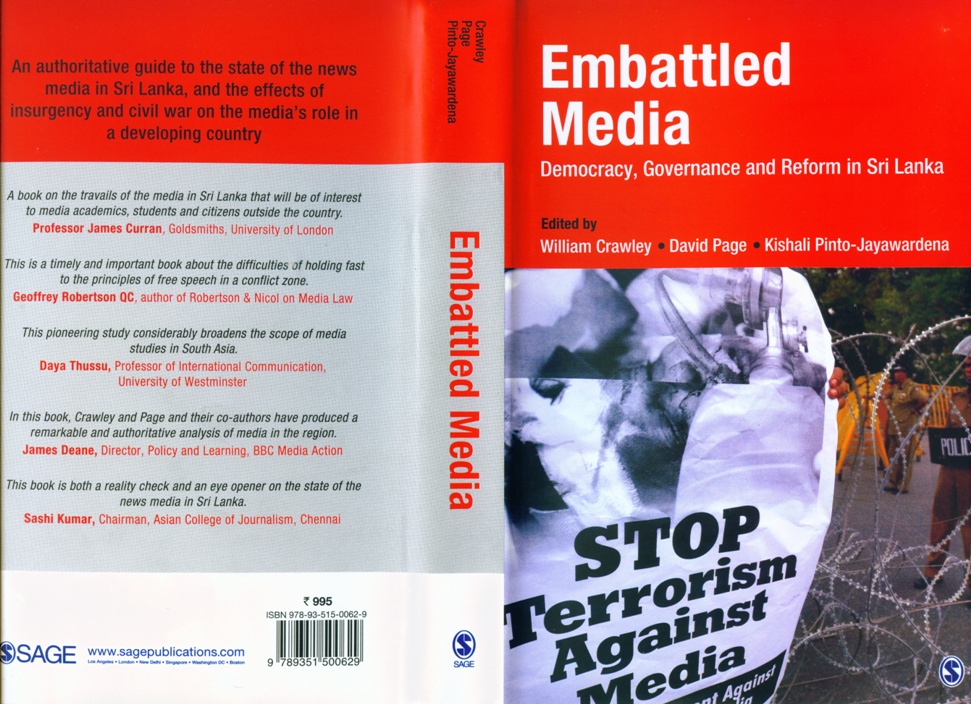
Embattled Media: New Book explores aspects of Democracy, Governance and Reform in Sri Lanka

Embattled Media - Democracy, Governance and Reform in Sri Lanka (Sage, Feb 2015; 416 pages)
Embattled Media – Democracy, Governance and Reform in Sri Lanka (Sage, Feb 2015; 416 pages)

A new multi-author book offers valuable insights into the importance of independent media for democratic governance in the wider South Asian region.

Titled Embattled Media: Democracy, Governance and Reform in Sri Lanka (Sage, Feb 2015; 416 pages), the book examines the role of the media in a state committed to democracy and the rule of law which had suffered extraordinary stresses as a result of ethnic strife, insurrection and civil war.

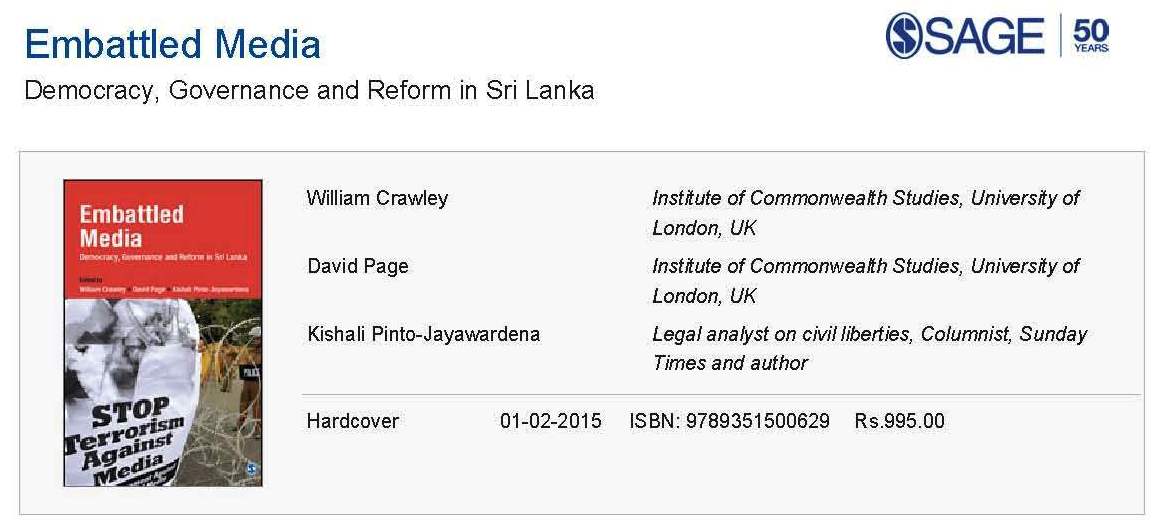
The book is co-edited by William Crawley and David Page, both fellows of Institute of Commonwealth Studies, University of London, UK, and Kishali Pinto-Jayawardena, a legal analyst on civil liberties and columnist with The Sunday Times newspaper in Sri Lanka.

According to its publishers, Sage Publications in India and the UK, the book is an ‘authoritative guide to the state of the news media in Sri Lanka, and the effects of insurgency and civil war on the media’s role in a developing country’.

This is the first book to look comprehensively at the evolution of news media in post-colonial Sri Lanka, with a focus on media policy, law and education. The book reviews the role of new media platforms in widening the scope for public debate.

Further, it provides a detailed analysis of the existing media laws and policies and of campaigns to reform them. It also focuses on the role of institutions in media education by providing a comprehensive analysis of existing media curricula and underlining the importance of improved media literacy and introduction of Right to Information Act for a healthy democracy.

The contributors to this volume, including leading journalists, broadcasters, practitioners in public law, media academics and analysts, write from extensive experience. Chapters have been written by: Sinha Ratnatunga, Ameen Izzadeen, Namini Wijedasa, Amal Jayasinghe, Tilak Jayaratne and Sarath Kellapotha, Nalaka Gunawardene, Kishali Pinto-Jayawardena and Gehan Gunatilleke, Jayantha de Almeida Guneratne, and S. Raguram.

The book is dedicated to the memory of the late Tilak Jayaratne (1943-2013), who ‘ably represented a generation of honourable and committed broadcasters’. Having contributed significantly to the book, he did not live to see its publication.

Embattled Media - Publishing Information
Embattled Media – Publishing Information

In their preface to the book, the co-editors write: “Media liberalisation from the 1990s onwards had extended the range of choice for viewers and listeners and created a more diverse media landscape. But the war in the north and insurrections in the south had taken their toll of media freedoms. The island had lived under a permanent state of emergency for nearly three decades. The balance of power between government, judiciary, the media and the public had been put under immense strain.

“In 2009, with the end of the war in the north, all this seemed about to change, increasing the relevance of our enquiries and raising hopes of media reform and greater freedom of expression. But progress towards a different sort of normality has been slow. The war and its aftermath have continued to cast a long shadow, which has limited the scope of our research…

“Over the past few years, universities have been closed for long periods. University teachers have been engaged in disputes with the government, which has affected their teaching and their research. The NGO sector has been heavily criticised by the government for pursuing foreign-funded agendas and finds itself under fire and on the defensive. Many media proprietors and journalists have maintained their long-established habit of self-censorship, for fear of inviting reprisals of one sort or another. Though not on the same scale as previously, there have been killings and disappearances of journalists since 2009 and the memory of past abuses still affects people’s thinking. All this has made the study more challenging.”

Co-editors of Embattled Media - (L to R) William Crawley, David Page and Kishali Pinto-Jayawardena (photos courtesy Sage Publications website)
Co-editors of Embattled Media – (L to R) William Crawley, David Page and Kishali Pinto-Jayawardena (photos courtesy Sage Publications website)

The book also contains a glossary of media related terms; a bibliography and an index.

The Indian edition is priced at INR 995. It is currently available from Sage Publications India: http://www.sagepub.in/books/Book244886?siteId=sage-india&prodTypes=any&q=Embattled+Media&fs=1