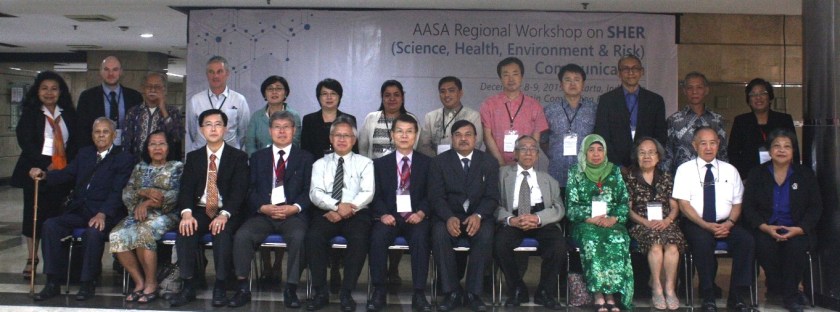
Participants of SHER (Science, Health, Environment & Risk) Communication – Role of S&T Communication in Disaster Management and Community Preparedness held in Jakarta, Indonesia, on 8-9 Dec 2015
It was organised by the Association of Academies and Societies of Sciences in Asia (AASSA) in collaboration with the Indonesian Academy of Sciences (AIPI), Korean Academy of Science and Technology (KAST) and the Agency for Assessment and Application of Technology (BPPT) in Indonesia.
The workshop brought together around 25 participants, most of them scientists researching or engaged in publication communication of science, technology and health related topics. I was one of two journalists in that gathering, having been nominated by the National Academy of Sciences of Sri Lanka (NAASL).
I drew on over 25 years of journalistic and science communication experience, during which time I have worked with disaster managers and researchers, and also co-edited a book, Communicating Disasters: An Asian Regional Handbook (2007).
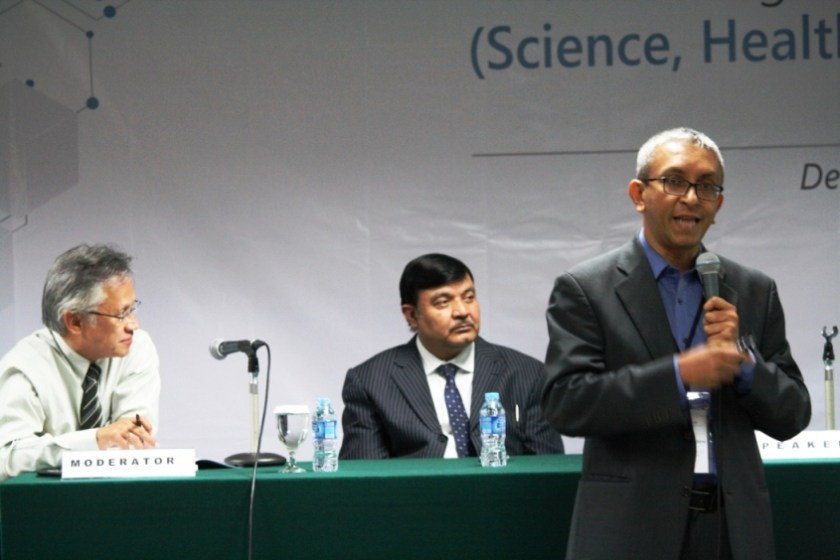
Nalaka Gunawardene speaking at Science, Health, Environment & Risk Communication Asian regional workshop held in Jakarta, Indonesia, 8-9 Dec 2015
The challenge in disaster early warnings is to make the best possible decisions quickly using imperfect information. With lives and livelihoods at stake, there is much pressure to get it right. But one can’t be timely and perfectly accurate at the same time.
We have come a long way since the devastating Boxing Day tsunami of December 2004 caught Indian Ocean countries by surprise. Many of the over 230,000 people killed that day could have been saved by timely coastal evacuations.
The good news is that advances in science and communications technology, greater international cooperation, and revamped national systems have vastly improved tsunami early warnings during the past decade. However, some critical gaps and challenges remain.
The Indian Ocean Tsunami Warning and Mitigation System (IOTWS) was set up in 2005 under UNESCO’s Intergovernmental Oceanographic Commission. Over USD 400 million has been invested in state of the art equipment for rapid detection and assessment. However, the system’s overall effectiveness is limited by poor local infrastructure and lack of preparedness. Some countries also lack efficient decision-making for issuing national level warnings based on regionally provided rapid assessments.
Warnings must reach communities at risk early enough for action. False warnings can cause major economic losses and reduce compliance with future evacuation orders. Only governments can balance these factors. It is important that there be clearer protocols within governments to consider the best available information and make the necessary decisions quickly.
Now, the proliferation of information and communication technologies (ICTs) is making this delicate balance even more difficult. To remain effective in the always-connected and chattering Global Village, disaster managers have to rethink their engagement strategies.
Controlled release of information is no longer an option for governments. In the age of 24/7 news channels and social media, many people will learn of breaking disasters independently of official sources. Some social media users will also express their views instantly – and not always accurately.
How can this multiplicity of information sources and peddlers be harnessed in the best public interest? What are the policy options for governments, and responsibilities for technical experts? How to nurture public trust, the ‘lubricant’ that helps move the wheels of law and order – as well as public safety – in the right direction?
As a case study, I looked at what happened on 11 April 2012, when an 8.6-magnitude quake occurred beneath the ocean floor southwest of Banda Aceh, Indonesia. Several Asian countries issued quick warnings and some also ordered coastal evacuations. For example, Thai authorities shut down the Phuket International Airport, while Chennai port in southern India was closed for a few hours. In Sri Lanka, panic and chaos ensued.
In the end, the quake did not generate a tsunami (not all such quakes do) – but it highlighted weaknesses in the covering the ‘last mile’ in disseminating early warnings clearly and efficiently.
Speakers on ‘ICT Applications for Disaster Prevention and Treatment’ in Jakarta, Indonesia, 8-9 Dec 2015
I concluded: Unless governments communicate in a timely and authoritative manner during crises, that vacuum will be filled by multiple voices. Some of these may be speculative, or mischievously false, causing confusion and panic.
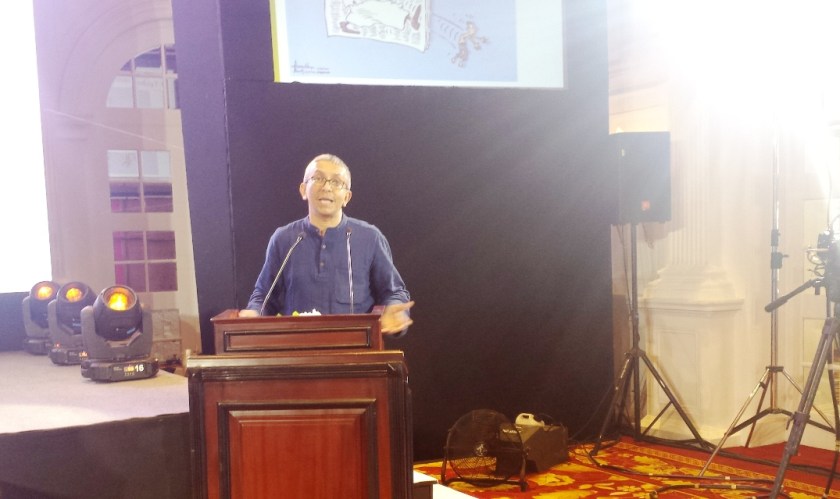
Science writer Nalaka Gunawardene speaks at National Policy Workshop on Prevention of Chronic Kidney Disease, held in Colombo on 16 Dec 2015
On 16 December 2015, I was invited by Sri Lanka’s Presidential Task Force for the Prevention of Chronic Kidney Disease to speak on this topic at the NATIONAL WORKSHOP ON PREVENTION OF CHORNIC KIDNEY DISEASE held in Colombo.
Speaking to an audience of scientists, health and agriculture sector public officials and policy makers, I briefly explored the kind of misinformation, myths and pseudo-science uncritically peddled by Lankan media.
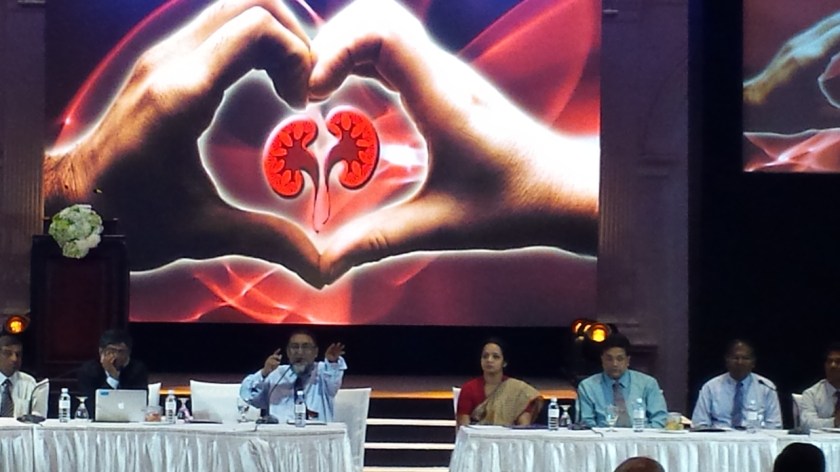
Professor Rezvi Sheriff, Sri Lanka’s top kidney specialist, chairing National Policy Workshop on CKDu in Colombo, 16 Dec 2015
Scientists are researching widely on what causes the Chronic Kidney Disease of unknown etiology (CKDu) in Sri Lanka that affects thousands of people (mostly farm workers) and burdens the public healthcare system. As health officials and policy makers struggle with the prolonged humanitarian emergency, unprofessional and fear-mongering media coverage often adds to public confusion and fear.
As a science writer, I have long been concerned about public communication of risk in times of distress. In late 2012, speaking at an Asian science communication workshop held in Colombo, I first coined the phrase: Mass Media Failure is complicating Mass Kidney Failure.
I revisited and updated this analysis,arguing that there are many reasons for systemic media failure in Sri Lanka that has allowed ultra-nationalists and certain environmental activists to pollute the public mind with half-truths and conspiracy theories. These need media industry level reform.
Meanwhile, for improving the CKDu information flow in society, I proposed some short, medium and long term recommendations.
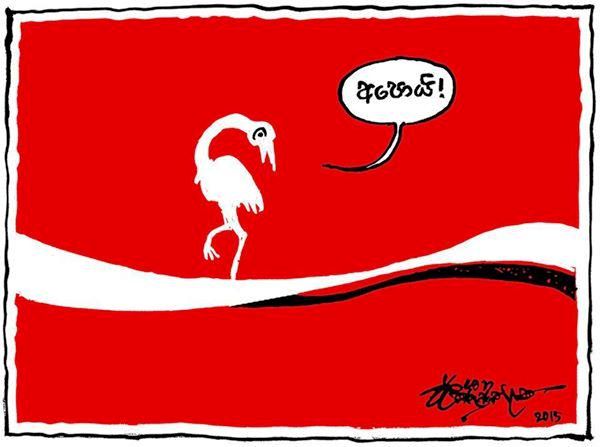
Citizen Meme protesting Coca Cola Sri Lanka polluting Kelani River, source of metro Colombo’s drinking water supplies
In this week’s Ravaya column, (in Sinhala, appearing in issue of 13 Sep 2015), I look at the controversy surrounding Coca Cola Sri Lanka polluting a key river in Sri Lanka on two occasions in August 2015.
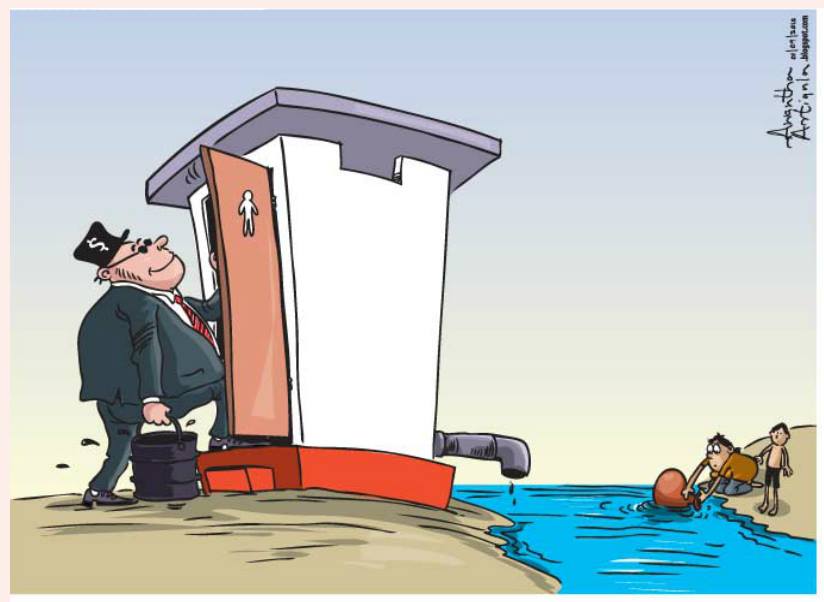
The water contamination was caused when an oil tank at Coca Cola Beverages Sri Lanka Ltd in Biyagama leaked, causing effluents to enter the nearby Kelani River on 17 and 28 August 2015.
Kelani is the second longest river in Sri Lanka, and source of water that is treated and distributed to Greater Colombo and Gampaha metropolitan areas by the state owned utility, the National Water Supply and Drainage Board (NWSDB).
This oil leak aggravated chemical pollution of Kelani River, already the highest polluted water body in the country. The Water Board and state environmental regulator CEA have investigated this oil leak, but details of their findings have not been made public except for media statements.
The incident has highlighted the lack of accountability on the part of both corporate entities and state regulators. It also raised concerns about the country’s environmental monitoring capabilities (samples always have to be sent to India or Singapore for testing, delaying investigations).
High profile Coca Cola is not the only industrial polluter of water sources in Sri Lanka. For example, a diesel powered thermal power plant in Chunnakam, in Jaffna district, has been accused of polluting the groundwater in that area. Over 18,000 residents have been affected, some of who have been protesting for months. The company involved, MTD Walkers PLC, denies responsibility (whereas Coca Cola Sri Lanka belatedly accepted the blame and reportedly paid a heavy fine).
Coca Cola pollutes Kelani River in Sri Lanka: Cartoon by Dharshana Karunathilake
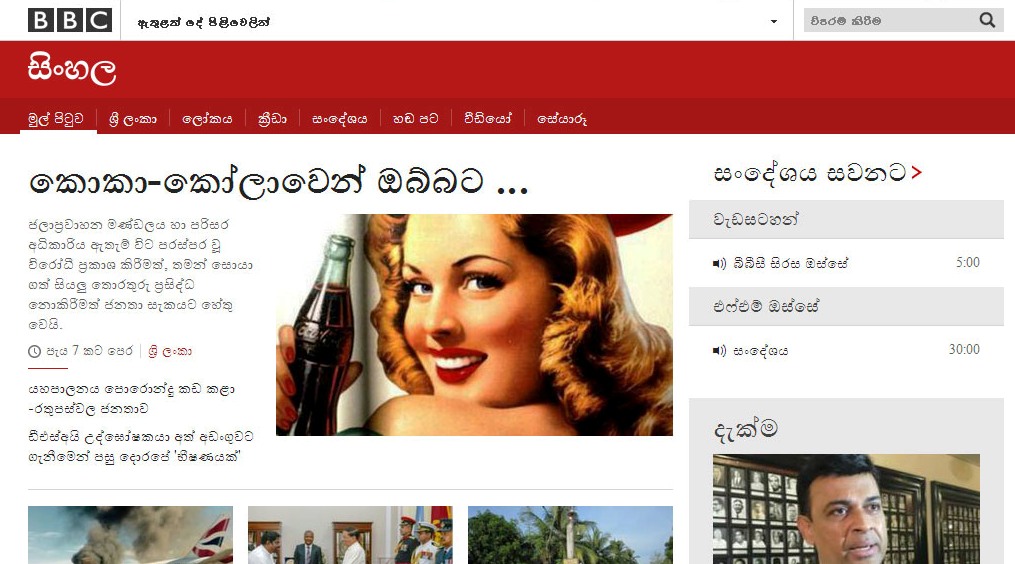
BBC Online Sinhala has just published an opinion article I wrote on Coca Cola Sri Lanka factory polluting the Kelani River, the main source of water supply for Greater Colombo area in Sri Lanka.
Here is my original submission. BBC Online does not, as a policy, provide links to outside websites, but the version below includes some relevant to my commentary.
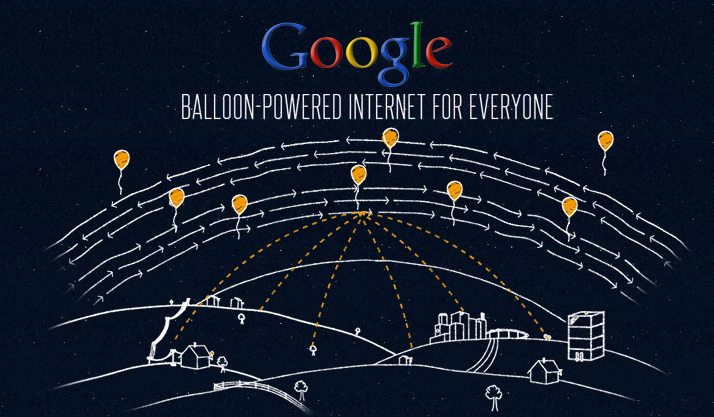
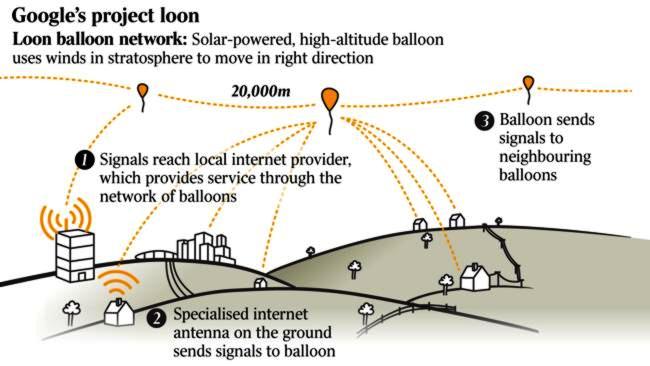
The partnership with Google Project Loon is for setting up a network of 13 high-tech balloons strategically positioned some 20 km above the island. These helium-filled and solar-powered balloons will act as ‘floating cell towers’ that distribute 3G mobile signals wider than ground-based towers can.
When commissioned in early 2016, this system would “make Sri Lanka potentially the first country in the world to have universal Internet access”, according to news reports.
This deal with Google was brokered by Lankan-born Silicon Valley venture capitalist Chamath Palihapitiya. The government’s Information and Communications Technology Agency (ICTA) hailed it as a major accomplishment.
Is it really so? What exactly does this deal bring us, and at what apparent or hidden costs? How will the average Internet user benefit?
Simplified diagram of how Google Loon system would work
Going by generic information available online, Loon partnership seems a useful first step forward in enhancing Internet access in Sri Lanka. But it cannot work by itself. Other factors must fall into place.
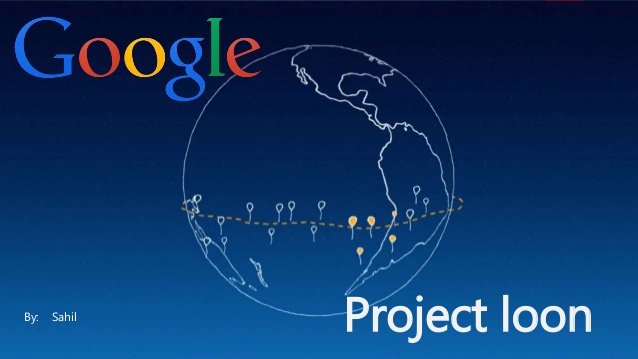
According to Google, Project Loon (www.google.com/loon/) is “a network of balloons traveling on the edge of space, designed to connect people in rural and remote areas, help fill coverage gaps, and bring people back online after disasters”.
Sri Lanka’s Project Loon partnership promises to substantially extend the mobile broadband signal coverage of our existing Internet Service Providers, or ISPs.
Airtel, Dialog, Etisalat, Hutch and Mobitel all use what is popularly known as Third Generation (3G) mobile broadband technologies. Some have also ventured into 4G.
Right now operators rely on their own networks of terrestrial towers for signal coverage. This naturally concentrates on where more people, businesses and offices are located. Thus, the south-western quadrant of the island enjoys much better signal coverage than many other areas. There are gaps that the market alone would probably never fill.
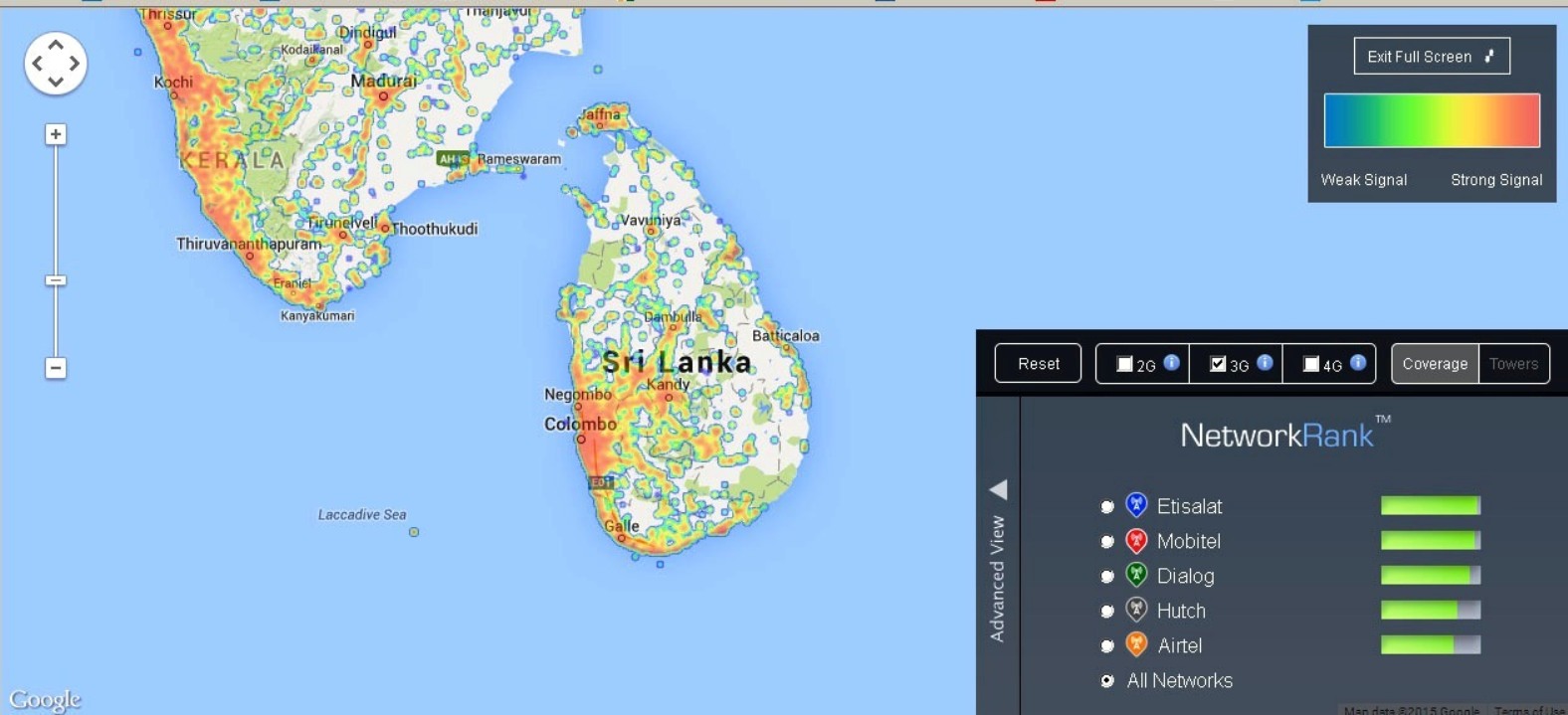
If we look at publicly available signal coverage maps on http://opensignal.com, for example, we see plenty of areas in Sri Lanka not yet covered by 3G from any telecom network.
All networks’ 3G signal coverage – on 30 July 2015
In theory, Google Loon’s 13 balloons over Lanka should extend our ISPs’ mobile broadband coverage to the whole land area of 65,610 sq km (25,332 square miles). Each balloon can provide connectivity to a ground area about 40 km in diameter using a wireless communications technology called LTE.
“To use LTE, Project Loon partners with telecommunications companies to share cellular spectrum so that people will be able to access the Internet everywhere directly from their phones and other LTE-enabled devices. Balloons relay wireless traffic from cell phones and other devices back to the global Internet using high-speed links,” says the project’s website.
There is one clear benefit of extra-terrestrial telecom towers: they are beyond the reach of geological and hydro-meteorological disasters that can knock out terrestrial ones. As a back-up system in the sky, well above most atmospheric turbulence, Loon can be invaluable in disaster communications.
Universal access?
But it’s important to remember that universal signal coverage does not necessarily mean universal access or universal use.
It is now two decades since Sri Lanka became the first in South Asia to introduce commercial Internet services. By end 2014, there were some 3.3 million Internet subscriptions in Sri Lanka, most of them (82%) were mobile subscriptions, says the Telecom Regulatory Commission (TRC).
Internet subscriptions are often shared among family members or co-workers so the number of users is higher. The Internet Society – a global association of technical professionals – estimated last year that 22% of Sri Lanka’s population regularly uses the Internet. So almost one in four Lankans gets online.
What about the rest? There can be different reasons why the rest is not connected – such as the lack of need, non-availability of service, affordability, and absence of skill.
I can think of three other important factors for successful Internet use:
COST: Contrary to some media reports, Project Loon by itself does not provide free wireless Internet or WiFi. Existing rates and packages of mobile operators would continue to apply. We already have some of the lowest data communication rates in Asia, so how much lower can these drop?
QUALITY of service: Mobile companies must ensure that broadband speeds don’t drop drastically as more users sign up. Such increase of backhaul capacity hasn’t always happened, leading to complaints that we get FRAUDBAND in the name of broadband!
USER CAPACITY: The Census and Statistics Department’s latest (2014) survey found basic computer literacy in Sri Lanka has reached 25%. Since the survey covered only desk top computers and laptops, this figure could be under-estimating the digital skills of our young people who quickly master smartphones and other digital devices. But then, most are not careful with privacy and data protection.
So beyond Project Loon, we have much more to do on the ground to reach a knowledge based economy and inclusive information society.
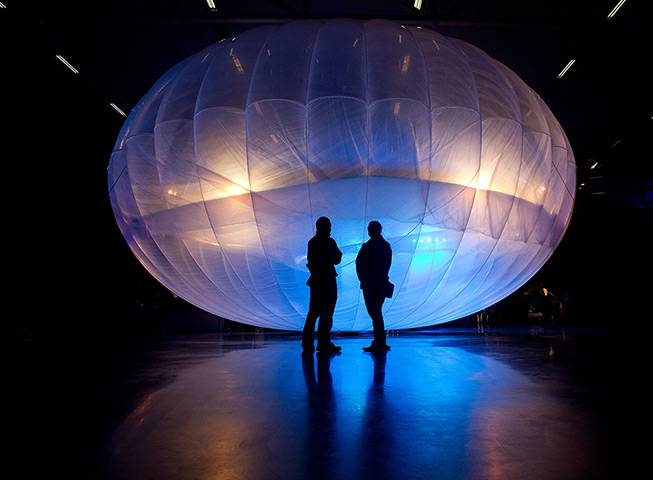
Google Project Loon balloon on display at Airforce Museum in Christchurch, New Zealand
Google’s Benefits
Finally, what is in it for Google? Why are they giving this facility to our telecom companies apparently for free?
The information and media giant is investing millions of US Dollars for research, development and launching the service. Yes Google has deep pockets, but it is not a charity. So what do they gain?
For one thing, the Sri Lanka experience will produce proof of concept for Loon in a relatively small sized market. To operate, Google Loon balloons need permission to hover over Lankan airspace – this concession can inspire confidence in other governments to also agree.
In the long term, more people going online will generate more users for Google, which already dominates search engines globally (over 85%) and offers a growing range of other services. The company can then market its myriad eyeballs to advertisers…
There is no such thing as a free lunch. But as long as we engage Google without illusions, it can be a win-win partnership.
Science writer Nalaka Gunawardene has been chronicling and analysing the rise of new media in Sri Lanka since the early 1990s. He is active on Twitter @NalakaG and blogs at http://nalakagunawardene.com
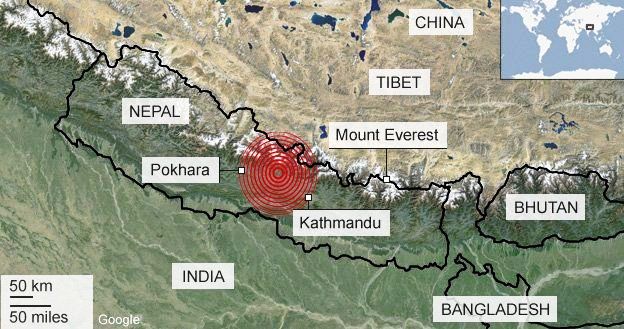
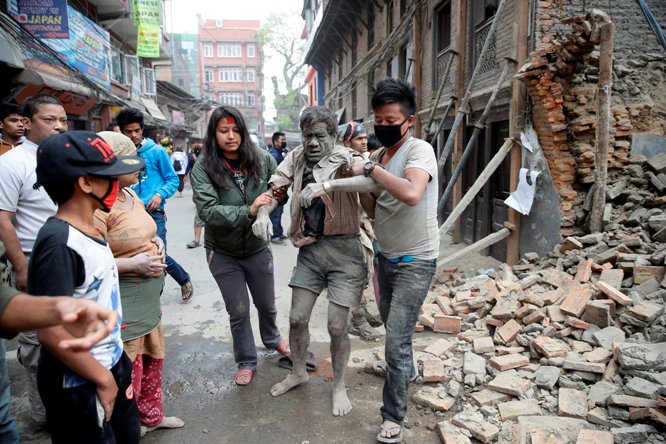
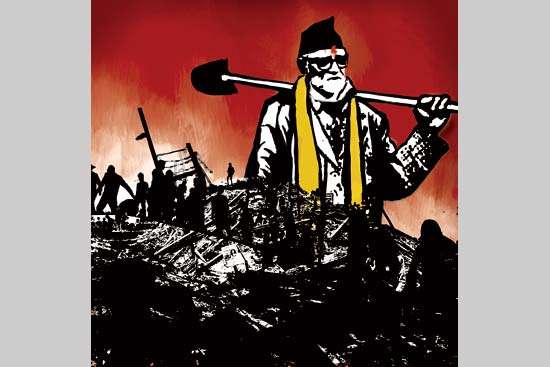
In this week’s Ravaya column (in Sinhala, published in issue of 10 May 2015), I explore the aftermath of the major earthquake that hit Nepal on 25 April 2015, causing widespread damage. I quote Nepali experts and activists on how the lack of preparedness aggravated impact, and the challenge of recovery that now faces Nepali society.
I quote my journalist and activist friend Kanak Mani Dixit, who wrote on May 1: “There’s nothing to do but to try to convert the Great Nepal Earthquake of 2015 into an opportunity to transform the conduct of politics and in the process lift up Nepal at least from the status of a ‘least developed nation’ to that of a ‘developing nation’. For a beginning to be made in that direction, the polity must be jolted out of its stupor. Only then can the advantages Nepal has—of nature, history and demography—be fully realised.”
I also comment on outrageous claim by some religious nuts who make a bizarre claim that Nepal’s earthquake was “karmic justice” for the sacrifice of some 5,000 buffaloes for a religious festival held last year. I paraphrase in Sinhala these words by young Lankan blogger Yudhanjaya Wijeratne.
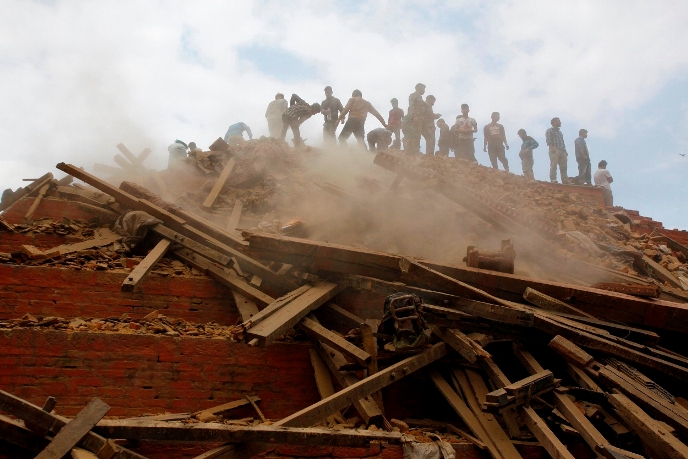
Volunteers help remove debris of a building that collapsed at Durbar Square, after an earthquake in Kathmandu, Nepal, Saturday, April 25, 2015. A strong magnitude-7.9 earthquake shook Nepal’s capital and the densely populated Kathmandu Valley before noon Saturday, causing extensive damage with toppled walls and collapsed buildings, officials said. (AP Photo/ Niranjan Shrestha)
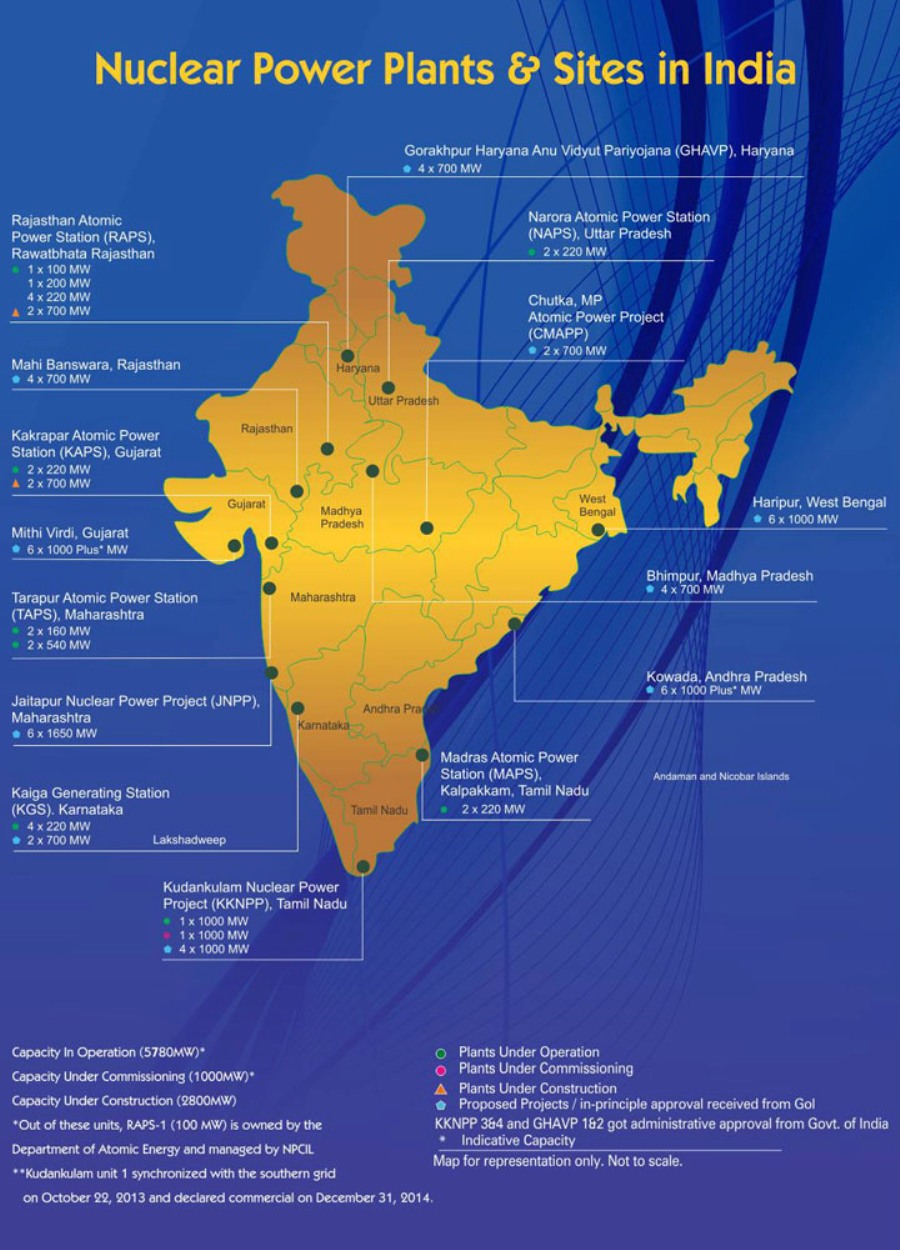
On the same day, Reuters news agency reported: “India could also sell light small-scale nuclear reactors to Sri Lanka which wants to establish 600 megawatts of nuclear capacity by 2030”. Sri Lanka has no nuclear reactors, even though the option has been under discussion for some years.
The full text of the Indo-Lanka nuclear agreement has not been made public. Sri Lanka’s minister of power and energy clarified that it does not allow India to unload any radioactive wastes in Sri Lanka. He also assured that all joint activities will comply with standards and guidelines set by the IAEA.
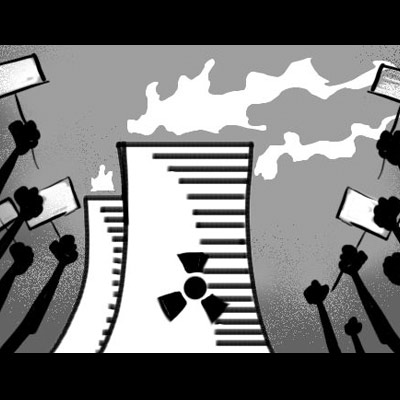
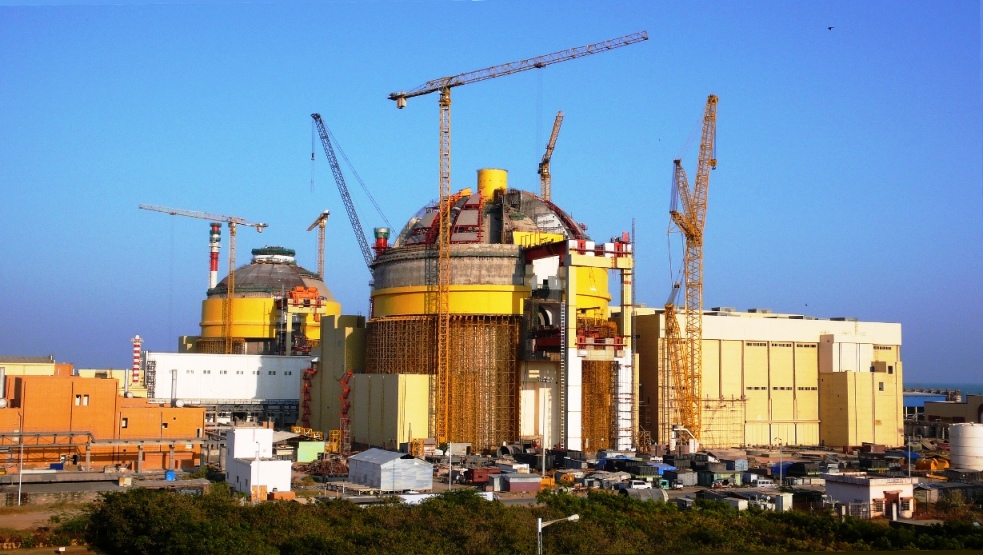
In this week’s Ravaya column (in Sinhala, published in issue of 29 March 2015), I look at nuclear power generation and nuclear technologies used in medicine, agriculture, industry and construction, etc. I advocate moving away from shrilly rhetoric and call for an informed discussion and debate on nuclear related issues.
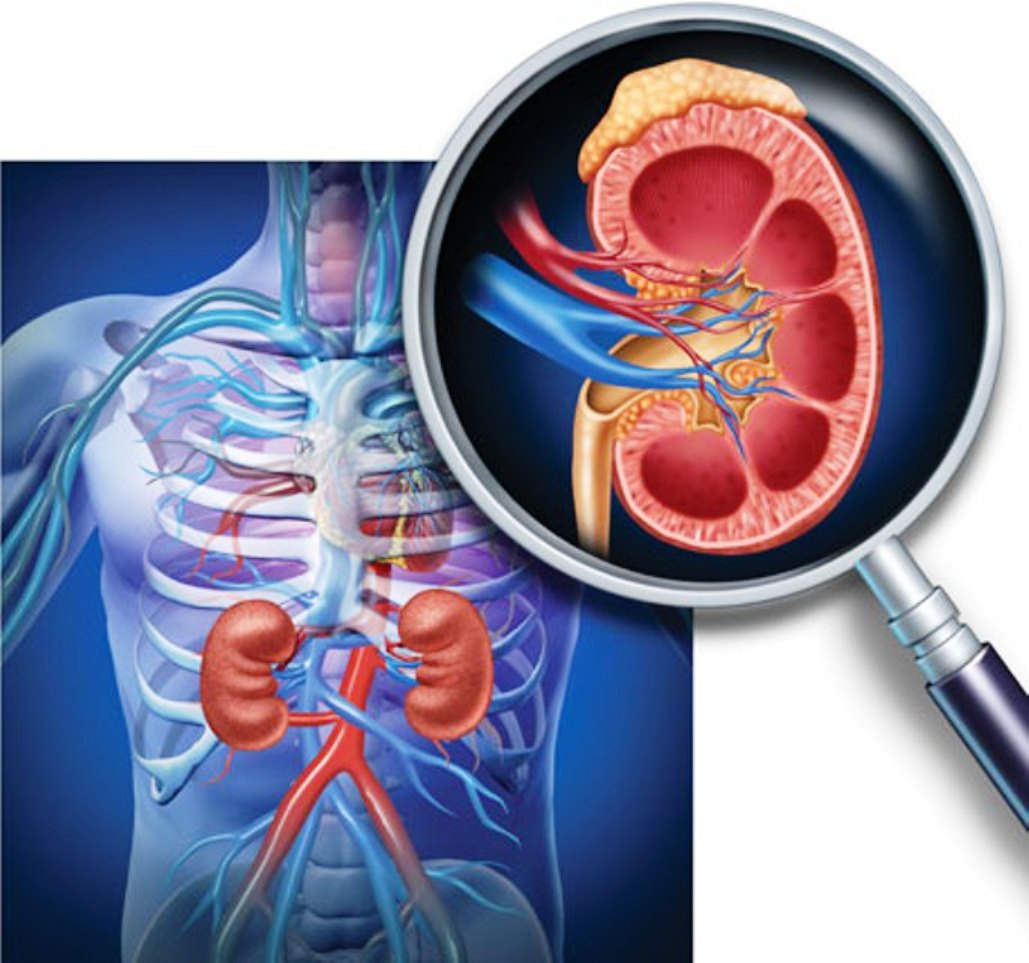
CKDu was first reported in the early 1990s from a single Province in Sri Lanka’s heartland of rice farming, but it has now spread across approximately 17,000 sq km (a quarter of the island). An estimated 20,000 to 22,000 persons have died since the disease was identified. Several thousand more are living with the disease, on medication and (in advanced stages) receiving regular kidney dialysis.
Investigating causes of this ailment — still not pinned down to a specific cause or factor — has been difficult. While scientists follow rigorous scientific methods, ultra-nationalists and politicians trying to hijack the issue for their own agenda setting. Some journalists have added fuel to the fire with sensationalist reporting and fear-mongering.
In this update, I share findings of the National CKDu Research Project carried out by the Ministry of Health of the Lankan government with technical assistance from World Health Organisation, WHO. It was academically published in Aug 2013.
See also my other writing on the subject (some early ones are updated in this latest Ravaya column):
Villagers carry coffin containing body of Seneviratnalage Jayatillake, Lankan farmer who suffered from a mystery kidney disease, during his funeral in Padaviya Sri Lanka – Photo by Eranga Jayawwaardena, Associated Press
I am not a public health or environmental expert, but have long covered related topics as a science journalist.
Among my long-standing interests are the downstream health and environmental effects agrochemicals – both chemical fertilizers and farm chemicals applied against pests and weeds. Parallel to this, I have also been covering chronic kidney disease of uncertain aetiology (CKDu), a mysterious illness that has been affecting thousands of Lankan farmers for nearly 25 years.
A link between agrochemicals and CKDu is suspected, but not yet scientifically proven (even though environmentalists ask us to believe so). It is a current yet contentious topic, which I chose for my presentation to an international workshop on “Pesticides and Global Health: Research, Collaboration and Impact” held at the Department of Anthropology, University of Durham, UK, on 10 – 11 February 2015.
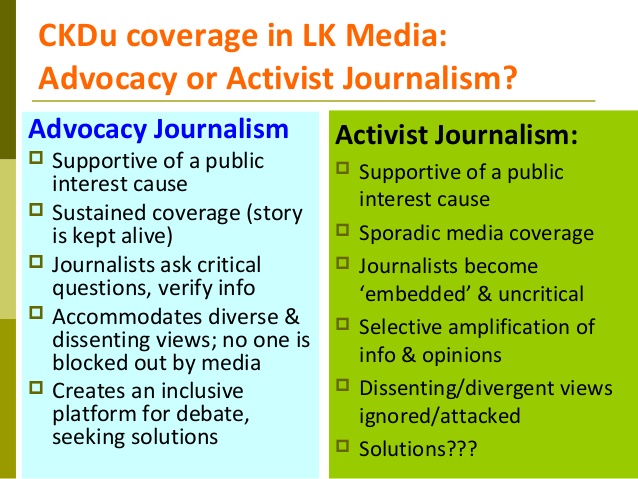
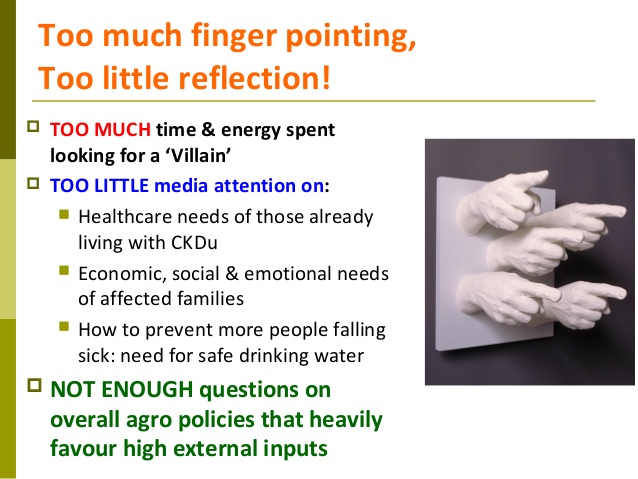
In my presentation, I explore the topic from the angle of public perceptions, which are largely shaped by what appears in the media. This has been problematic since mass kidney failure in Sri Lanka has been compounded by what I call a ‘mass media failure’.
Most of our media have failed to understand, analyse and report adequately on this public health emergency. Instead of helping affected people and policy makers to work out solutions, some journalists have become amplifiers of extreme activist positions. This has led to alarmism and policy confusion.
What is to be done? There are no short-cuts to the scientific investigation process which must follow – that means further research is needed to find definitive evidence for causative factors. That could take a while, given how people are exposed to multiple environmental, lifestyle and genetic factors.
But meanwhile, the welfare of those already affected by the disease and their families needs to receive greater public support. Environmentalists trying to score points from this tragedy overlook this vital humanitarian aspect.
A few excerpts from the presentation below. See full presentation above.
Advocacy journalism is fine; activist journalism is questionableWe need Lankan media to be more reflective, less accusatorySpare a thought for today’s policy-makers who must think and act on the run…
As a science journalist, I have been covering scientific aspects of the public health emergency of mass kidney failure that has killed an estimated 20,000 persons in Sri Lanka over the past two decades.
It emerged in the early 1990s, when hundreds of people in Sri Lanka’s Dry Zone – heartland of its farming — developed kidney failure without having the common causative factors of diabetes or high blood pressure.
Most affected were men aged between 30 and 60 years who worked as farmers. The disease built up inside the body without tell-tale signs or symptoms, manifesting only in advanced stages.
Over the years, many scientific studies have been carried out on what causes this mysterious disease, now called Chronic Kidney Disease of unknown aetiology, or CKDu. Various environmental, geochemical and lifestyle related factors have been probed. Researchers now suspect environmental and genetic factors as causes – but a definitive link to a specific factor has yet to be found.
On 23 January 2015, I answered a few questions posed by BBC World Service (radio) on CKDu, to feed a news report they were producing for global broadcast.
My full answers are shared here in the public interest.
Science writer Nalaka Gunawardene responds to questions from BBC World Service on the mysterious mass kidney failure in Sri Lanka: 23 January 2015
Question 1: What are the various theories that scientists have put forward as a possible cause for this disease which has been studied for 20 years?
Question 2: As a science journalist, you’ve been tracking the research on this public health concern for some years. What do you think is most likely cause?
Question 3: The World Health Organisation supported research has suggested a link with agrochemical use. Don’t you think that such a link is likely?
Question 4: The new government of Sri Lanka has just pledged to give high priority to the kidney disease. What are the challenges faced by the government in dealing with this crisis?











 Open Minds!