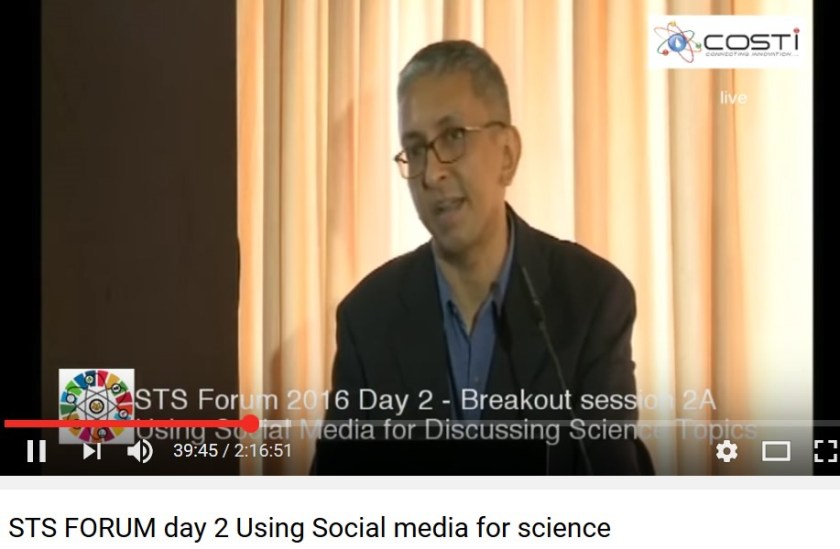
Nalaka Gunawardene speaks on “Using Social Media for Discussing Science” at the Science, Technology & Society Forum in Colombo, Sri Lanka, 9 Sep 2016. Photo by Smriti Daniel
Sri Lanka’s first Science and Technology for Society (STS) Forum took place from 7 to 10 September in Colombo. Organized by the Prime Minister’s Office and the Ministry of Science, Technology and Research, it was one of the largest gatherings of its kind to be hosted by Sri Lanka.
Modelled on Japan’s well known annual STS forums, the event was attended by over 750 participants coming from 24 countries – among them local and foreign scientists, inventors, science managers, science communicators and students.
I was keynote speaker during the session on ‘Using Social Media for Discussing Science Topics’. I used it to highlight how social media have become both a boon and bane for scientific information and thinking in Sri Lanka. This is due to peddlers of pseudo-science, anti-science and superstition being faster and better to adopt social media platforms than actual scientists, science educators and science communicators.
Social Media in #LKA:Do Science & Reason stand a chance? Asks Nalaka Gunawardene
Sri Lanka takes justified pride in its high literacy levels and equally high coverage of vaccination against infectious diseases. But we cannot claim to have a high level of scientific literacy. If we did, it would not be so easy for far-fetched conspiracy theories to spread rapidly even among educated persons. Social media tools have ‘turbo-charged’ the spread of associated myths, superstitions and conspiracy theories!
I cautioned: “Unless we make scientific literacy an integral part of everyone’s lives, ambitious state policies and programmes to modernize the nation could well be jeopardized. Progress can be undermined — or even reversed — by extremist forces of tribalism, feudalism and ultra-nationalism that thrive in a society that lacks the ability to think critically.”
It is not a case of all doom and gloom. I cited examples of private individuals creatively using social media to bust myths and critique all ‘sacred cows’ in Lankan society – including religions and military. These voluntary efforts contrast with much of the mainstream media cynically making money from substantial advertising from black magic industries that hoodwink and swindle the public.
My PowerPoint presentation:
Video recording of our full session:
The scoping note I wrote for our session:
Sri Lanka STS Forum panel on Using Social Media for Discussing Science Topics. 9 Sep 2016. L to R – Asanga Abeygunasekera, Nalaka Gunawardene, Dr Piyal Ariyananda, Dr Ananda Galappatti & Smriti Daniel
Session: Using Social Media for Discussing Science Topics
With 30 per cent of Sri Lanka’s 21 million people regularly using the Internet, web-based social media platforms have become an important part of the public sphere where myriad conversations are unfolding on all sorts of topics and issues. Facebook is the most popular social media outlet in Sri Lanka, with 3.5 million users, but other niche platforms like Twitter, YouTube and Instagram are also gaining ground. Meanwhile, the Sinhala and Tamil blogospheres continue to provide space for discussions ranging from prosaic to profound. Marketers, political parties and activist groups have discovered that being active in social media is to their advantage.
Some science and technology related topics also get discussed in this cacophony, but given the scattered nature of conversations, it is impossible to grasp the full, bigger picture. For example, some individuals or entities involved in water management, climate advocacy, mental health support groups and data-driven development (SDG framework) are active in Sri Lanka’s social media platforms. But who is listening, and what influence – if any – are these often fleeting conservations having on individual lifestyles or public policies?
Is there a danger that self-selecting thematic groups using social media are creating for themselves ‘echo chambers’ – a metaphorical description of a situation in which information, ideas, or beliefs are amplified or reinforced by transmission and repetition inside an “enclosed” system, where different or competing views are dismissed, disallowed, or under-represented?
Even if this is sometimes the case, can scientists and science communicators afford to ignore social media altogether? For now, it appears that pseudo-science and anti-science sentiments – some of it rooted in ultra-nationalism or conspiracy theories — dominate many Lankan social media exchanges. The keynote speaker once described this as Lankan society permanently suspending disbelief. How and where can the counter-narratives be promoted on behalf of evidenced based, rational discussions? Is this a hopeless task in the face of irrationality engulfing wider Lankan society? Or can progressive and creative use of social media help turn the tide in favour of reason?
This panel would explore these questions with local examples drawn from various fields of science and skeptical enquiry.
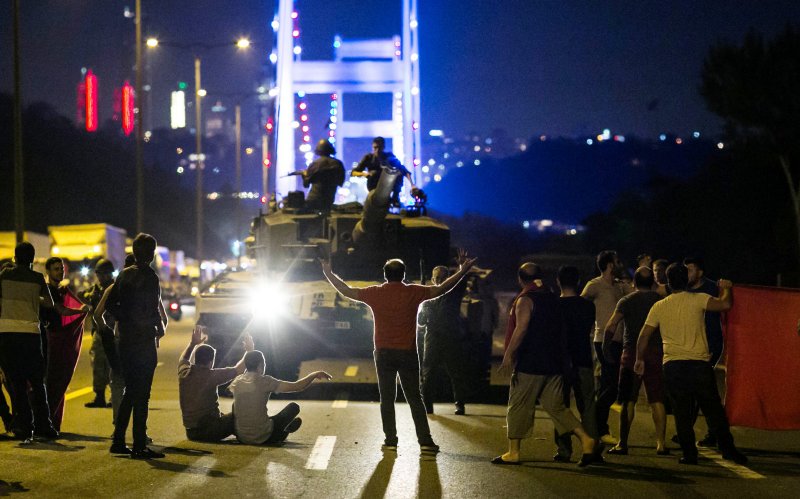
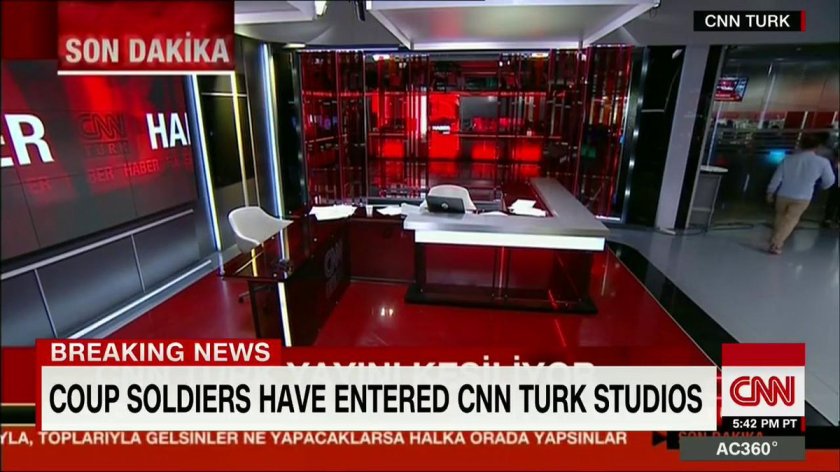
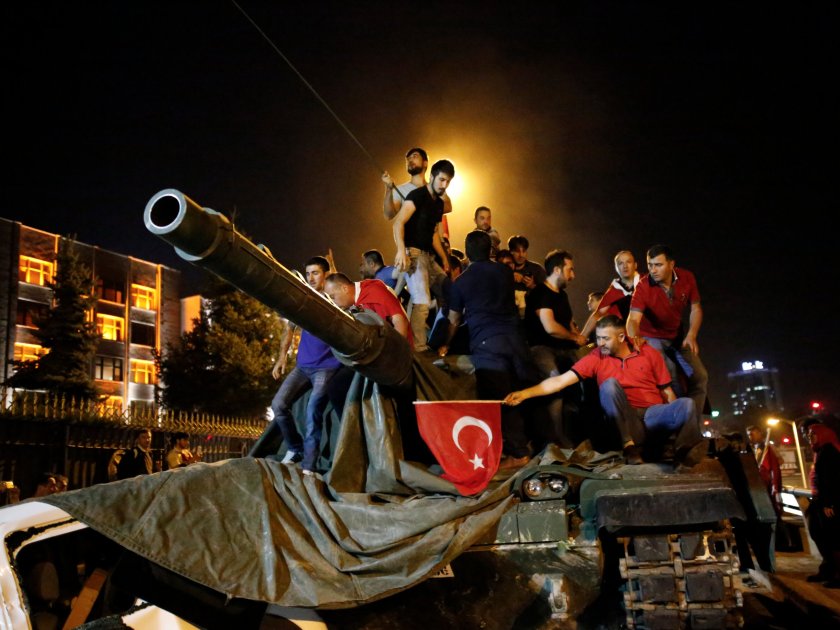
Citizen resistance to Turkey coup on 16 July 2016 – wire service photos
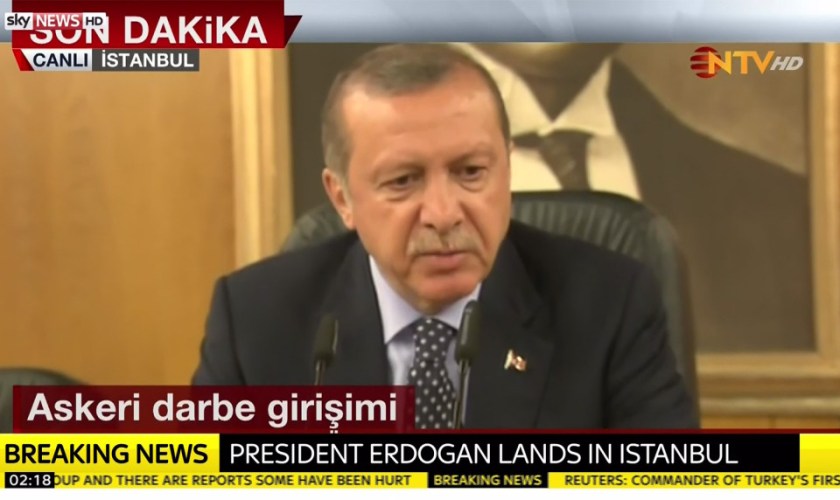
As Zeynep Tufekci, an assistant professor at the University of North Carolina School of Information and Library Science, described in a New York Times op-ed on 20 July 2016: “In the confusing hours after the coup attempt began, the country had heard from President Recep Tayyip Erdogan — and even learned that he was alive — when he called a television station via FaceTime, an easy-to-use video chat app. As the camera focused on the iPhone in the anchor’s hand, the president called on the people of Turkey to take to the streets and guard the airports. But this couldn’t happen by itself. People would need WhatsApp, Twitter and other tools on their phones to mobilize. The president also tweeted out the call to his more than eight million followers to resist the coup.”
She added: “The journalist Erhan Celik later tweeted that the public’s response had deterred potential coup supporters, especially within the military, from taking a side…Meanwhile, the immediacy of the president’s on-air appeal via FaceTime was an impetus for people to take to the streets. The video link protected the government from charges that it was using fraud or doctoring — both common in the Turkish news media — to assure the public that the president was safe. A phone call would not have worked the same way.”
I discuss the irony of a leader like Erdogan, who has been cracking down on independent media practitioners and social media users, had to rely on these very outlets in his crucial hour of need.
I echo the views of Zeynep Tufekci for not just Turkey but other countries where autocratic rulers are trying to censor the web and control the media: “The role of internet and press freedoms in defeating the coup presents a significant opportunity. Rather than further polarization and painting of all dissent as illegitimate, the government should embrace real reforms and reverse its censorship policies.”
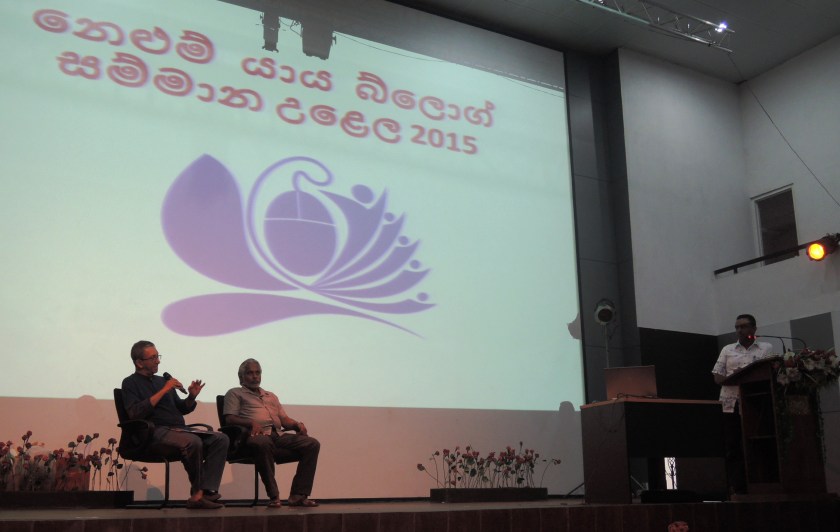
Nalaka Gunawardene (left) & Ajith Perakum Jayasinghe at Nelum Yaya Blog awards for 2015, held on 26 March 2016
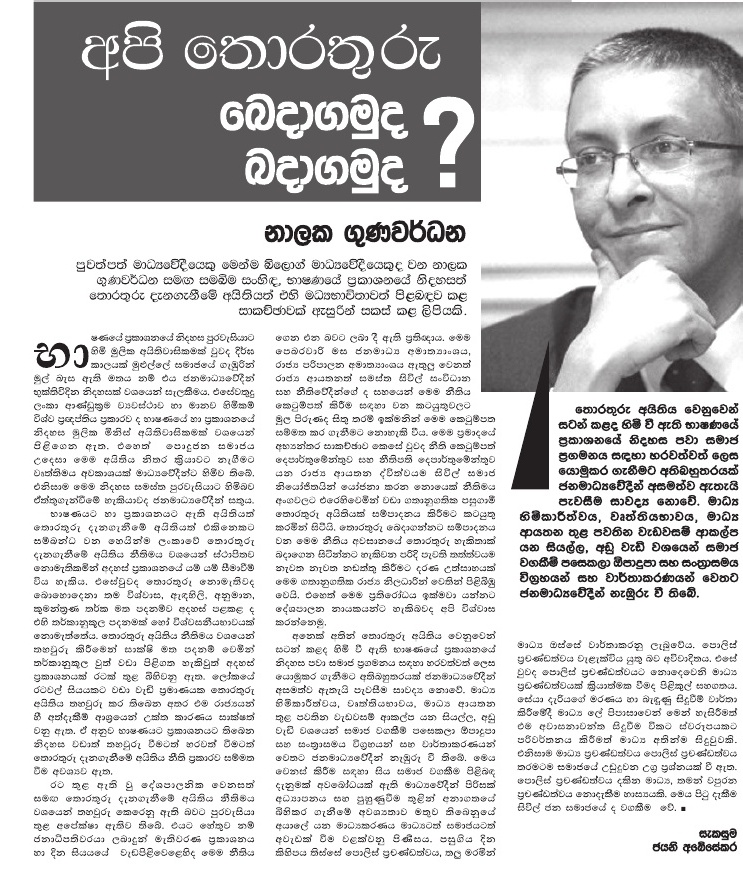
In this week’s Ravaya column (appearing in the print issue of 3 April 2016), I probe why the blogosphere and other social media platforms are vital for public discourse in the Lankan context.
Sri Lanka’s mainstream media does not serve as an adequate platform for wide-ranging public discussion and debate. Besides being divided along ethnic and political lines, the media is also burdened by self-imposed restrictions where most don’t critique certain social institutions. Among the top-ranked ‘sacred cows’ are the armed forces and clergy (especially Buddhist clergy).
No such “no-go areas” for bloggers, tweeps and Facebookers. New media platforms have provided a space where irreverence can thrive: a healthy democracy badly needs such expression. I base this column partly on my remarks at the second Nelum Yaya Blog Awards ceremony held on 26 March 2016.
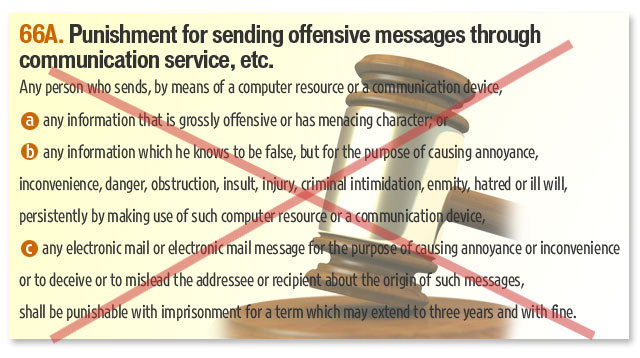
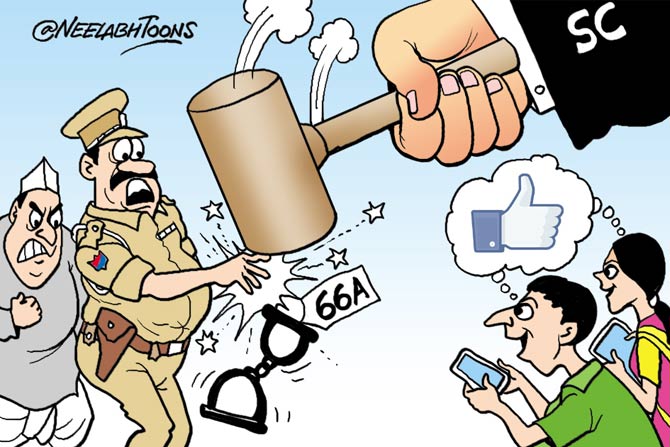
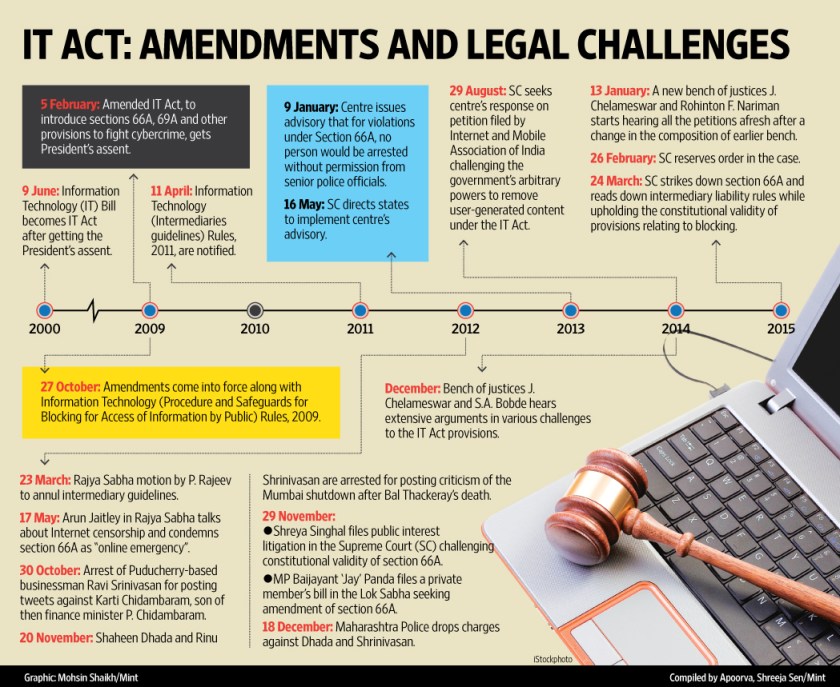
I also refer to a landmark ruling in March 2015, where the Supreme Court of India struck down a “draconian” law that allowed police to arrest people for comments on social media networks and other websites.
India’s apex court ruled that Section 66A of the Information Technology Act was unconstitutional in its entirety, and the definition of offences under the provision was “open-ended and undefined”.
The provision carried a punishment of up to three years in jail. Since its adoption in 2008, several people have been arrested for their comments on Facebook or Twitter. The law was challenged in a public interest litigation case by a law student after two young women were arrested in November 2012 in Mumbai for comments on Facebook following the death of a politician.
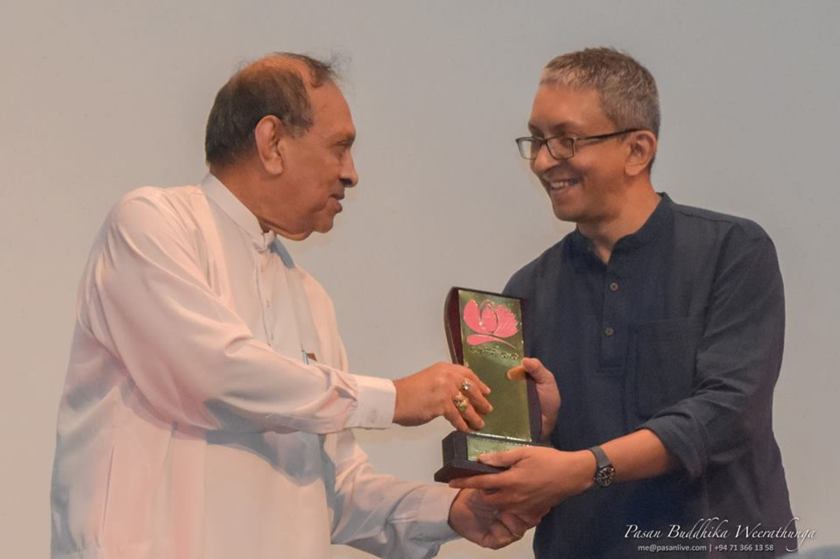
Speaker Karu Janasuriya presents Lifetime Award to Nalaka Gunawardene at Nelum Yaya Blog Awards on 26 March 2016 – Photo by Pasan B Weerasinghe
Can newspapers survive the challenge from digital and online media?
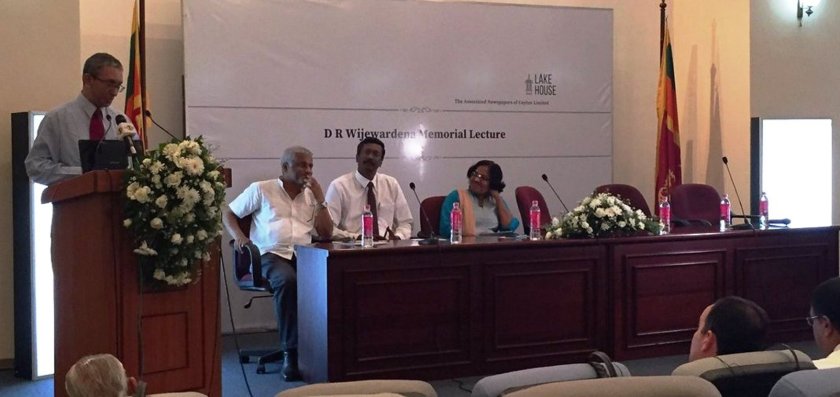
Plenty of printer’s ink has been spent reflecting on this question. I once again addressed it when moderating a panel at the D R Wijewardene commemorative event held on 26 February 2016 at Lakshman Kadirgamar Institute, Colombo.
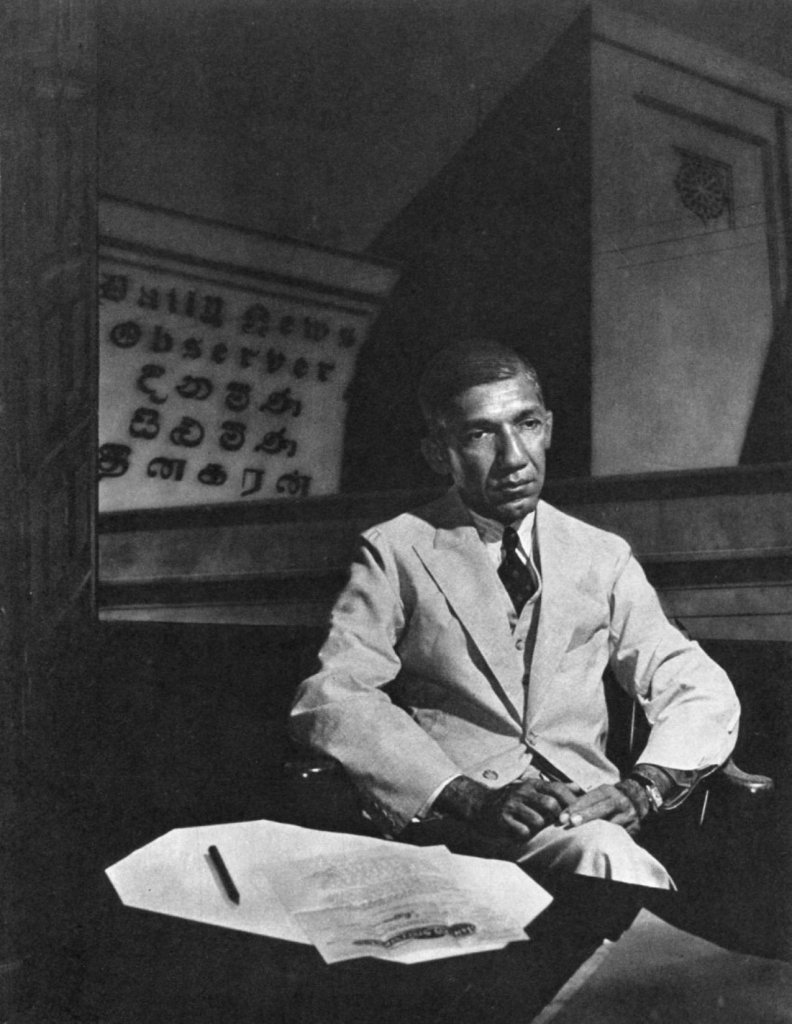
Wijewardene was Sri Lanka’s first Press Baron. About a century ago, he laid the foundation for his publishing house, Associated Newspapers of Ceylon Limited, which still remains a dominant player.
Many like me, of a certain age and above, seem to have a nostalgic attachment to newspapers. One key question for the print industry: beyond tapping such sentimental appeal (which diminishes over time), can newspapers stay relevant and viable? How can they adapt and evolve to keep serving the public interest?
Perhaps the more pertinent question to ask is: where are the budding D R Wijewardenes of the 21st Century? What are their start-ups and how are their dreams unfolding? Are they trying to balance reasonable profits with public interest journalism?
I discuss these in my Ravaya column (appearing in the print issue of 13 March 2016).
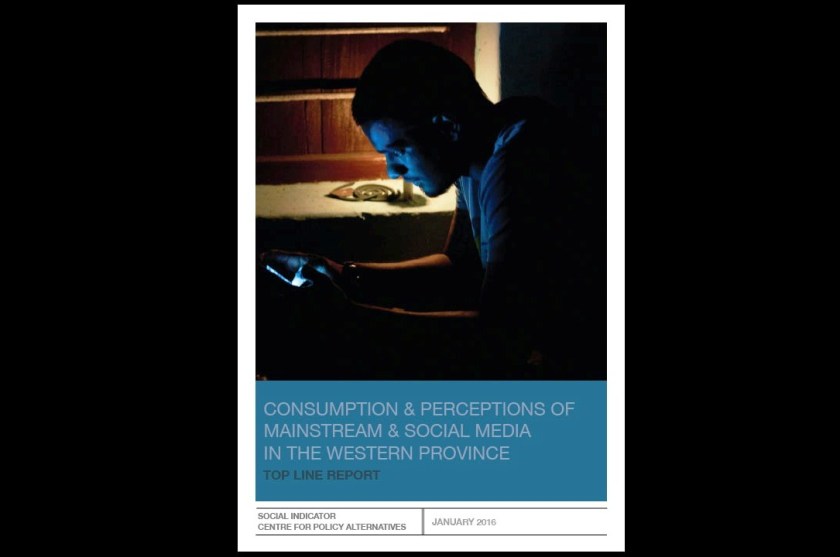
The report draws on a survey of 1,743 randomly selected men and women, interviewed in Sinhala or Tamil language during June-July 2015. They were asked about mobile phone use and web access. The survey was conducted by Social Indicator, CPA’s survey research unit.
As the launch media release noted, “From the use of Facebook to smartphones, from news on TV to news via SMS, from how information read digitally is spread to others who are offline, the report offers insights into how content is produced, disseminated and discussed in Sri Lanka’s most densely populated province and home to the country’s administrative and business hubs.”
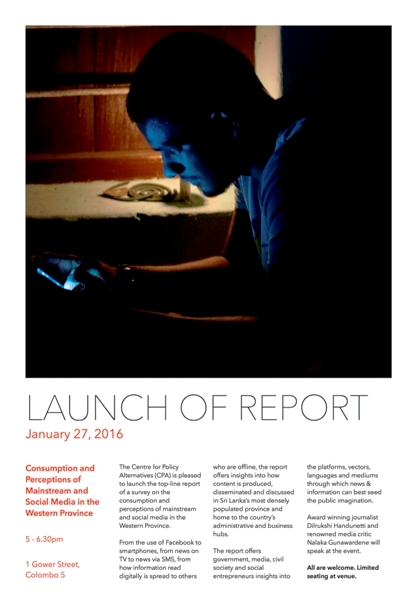
Launch of the top-line report of a survey on the consumption and perceptions of mainstream and social media in the Western Province of Sri Lanka, 27 Jan 2016
On 27 January 2016, the Centre for Policy Alternatives (CPA) launched the top-line report of a survey on the consumption and perceptions of mainstream and social media in the Western Province of Sri Lanka.
I was one of the launch speakers, and my presentation was titled: Information Society is Rising in Sri Lanka: ARE YOU READY?
The report draws on a survey of 1,743 randomly selected men and women, interviewed in Sinhala or Tamil language during June-July 2015. They were asked about mobile phone use and web access. The survey was conducted by Social Indicator, CPA’s survey research unit.
As the launch media release noted, “From the use of Facebook to smartphones, from news on TV to news via SMS, from how information read digitally is spread to others who are offline, the report offers insights into how content is produced, disseminated and discussed in Sri Lanka’s most densely populated province and home to the country’s administrative and business hubs.
It added: “The report offers government, media, civil society and social entrepreneurs insights into the platforms, vectors, languages and mediums through which news & information can best seed the public imagination.”
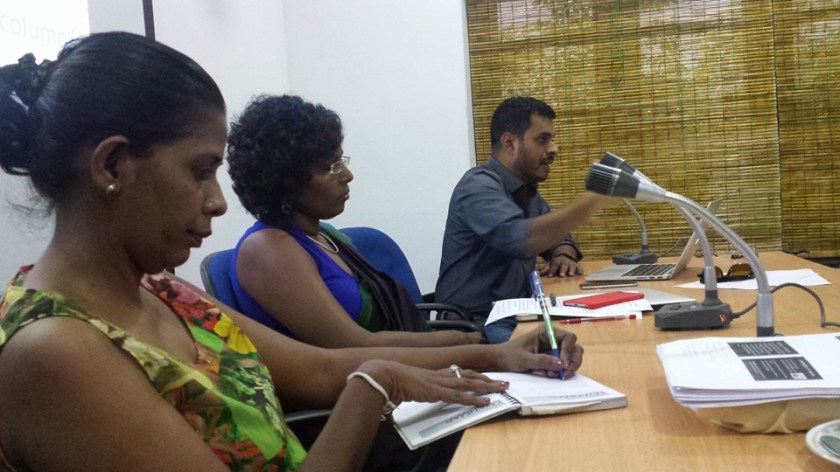
Dilrukshi Handunnetti (centre) speaks as Nalaka Gunawardene (left) and Iromi Perera listen at the launch on 27 Jan 2016 in Colombo – Photo by Sampath Samarakoon
In my remarks, I said it was vital to draw more insights on what I saw as ‘demand-side’ of media. But at the same time, I noted how a growing number of media consumers are no longer passively receiving, but also critiquing, repackaging and generating related (or new) content on their own.
I applauded the fact that this survey’s findings are shared in the public domain – in fact, Iromi Perera, head of Social Indicator, offered to share the full dataset with any interested person. This contrasts with similar surveys conducted by market research companies that are, by their very nature, not going to be made public.
Why do demand-side insights being available in the public domain matter so much? I cited four key reasons:
The new government is keen on media sector reforms at policy and regulatory levels: these should be based on evidence and sound analysis, not conjecture.
Media, telecom and digital industries are converging: everyone looking for ‘killer apps’ and biz opps (but only some find it).
Media companies are competing for a finite advertising budget: knowing more about media consumption can help improve production and delivery.
Advertisers want the biggest bang for their buck: Where are eyeballs? How to get to them? Independent studies can inform sound decision-making.
On this last point, I noted how Sri Lanka’s total ad spend up to and including 2014 does not show any significant money going into digital advertising. According to Neilsen Sri Lanka, ad-spending is dominated by broadcast TV, followed by radio an print. Experience elsewhere suggests this is going to change – but how soon, and what can guide new digital ad spending? Studies like this can help.
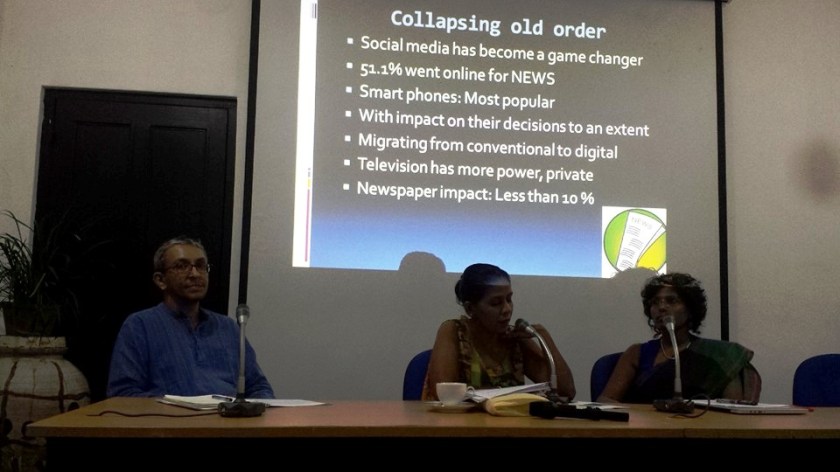
I also highlighted some interesting findings of this new study, such as:
Private TV is most popular source of news, followed by Facebook/web.
Across different age groups, smartphone is the device most used to access web
Online culture of sharing engenders TRUST: peer influence is becoming a key determinant in how fast and widely a given piece of content is consumed
None of this surprises me, and in fact confirms my own observations as a long-standing observer and commentator of the spread of ICTs in Sri Lanka.
Everyone – from government and political parties to civil society groups and corporates – who want to engage the Lankan public must take note of the changing media consumption and creation patterns indicated by this study, I argued.
I identified these big challenges particularly for civil society and others engaged in public interest communication (including mainstream and citizen journalists):
Acknowledge that we live in a media-rich information society (Get used to it!)
Appreciate that younger Lankans consume and process media content markedly differently from their elders and previous generations
Understand these differences (stop living in denial)
Leverage the emerging digital pathways and channels for social advocacy & public interest work
In my view, rising to this challenge is not a CHOICE, but an IMPERATIVE!
I ended reiterating my call for more research on information society issues, and with particular focus on mobile web content access which trend dominates user behaviour in Sri Lanka.
Award winning journalist Dilrukshi Handunnetti, and head of Social Indicator Iromi Perera were my fellow panelists at the launch, which was moderated by the study’s co-author and CPA senior researcher Sanjana Hattotuwa.
L to R – Dilrukshi Handunnetti, Iromi Perera, Sanjana Hattotuwa at CPA report launch, Colombo, 27 Jan 2016
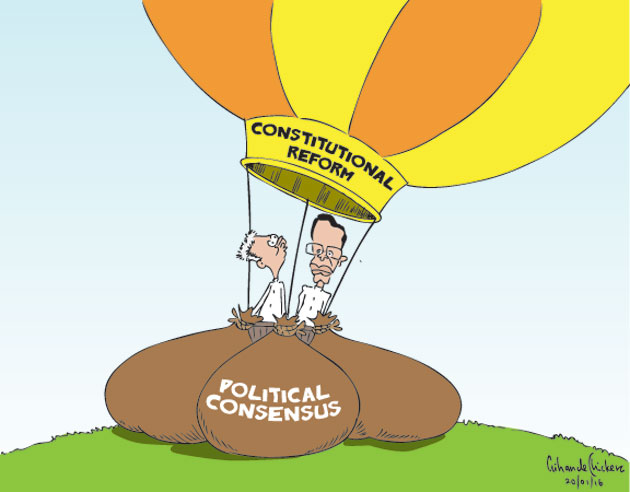
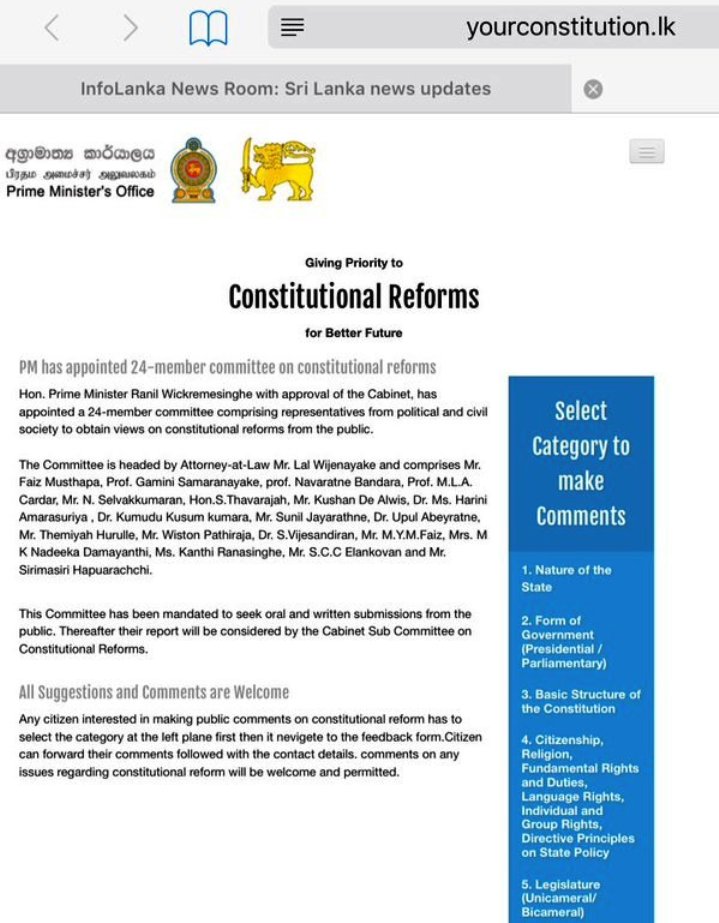
“Sri Lanka wants to make a new Constitution in a radically different way. It is poised to become the first developing country in the world to ‘crowd-source’ ideas for making the highest law of the land.
“That is all well and good – as long as the due process is followed, and that process has intellectual rigour, transparency and integrity. Therein lies the big challenge.”
So opens my latest op-ed essay, just published by Groundviews.org
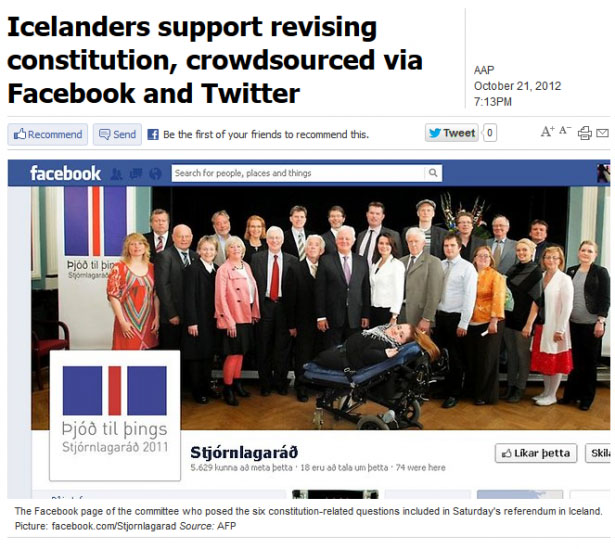
In it, I describe the experience of Iceland which was the world’s first country to ‘crowd-source’ a new Constitution. From 2011 to 2013, the European nation of 330,000 people engaged in an exercise of direct democracy to come up with a modern Constitution to replace the existing one adopted in 1944. That involved many public hearings as well as using social media and other communications platforms to gather public inputs and to ensure public scrutiny.
Facebook was used as part of a public consultation strategy to draft Iceland’s new Constitution in 2011-13
This is the path that Sri Lanka has now chosen: open and participatory Constitution making. To be sure, tropical Sri Lanka is vastly different. Its population of 21 million is 60 times larger than Iceland’s. But the Arctic nation’s generic lessons are well worth studying – both for inspiration and precaution.
I point out: “In doing so, it is important to ensure that public consultative process is not limited to the web and social media. Instead of dominating, technologies should only enable maximum participation.”
“The bottom-line: gathering public proposals is commendable, but not an end by itself. The government needs to adopt a systematic method to study, categorize and distil the essence of what is suggested. And that must happen across English, Sinhala and Tamil languages.”
“For only the second time in my life, I voted for a winning candidate on 8 Jan 2015. I now keep insisting that Maithripala Sirisena delivers on his promises.” – Nalaka Gunwardene, blogger and tweep
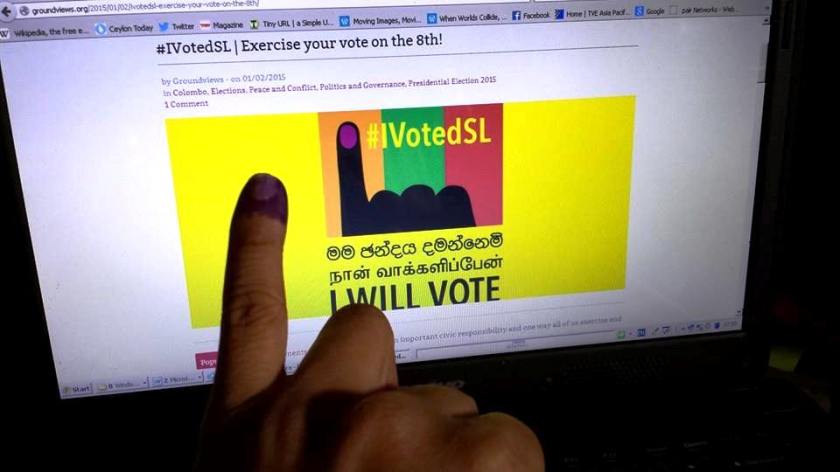
It was also Sri Lanka’s first national level election where smartphones and social media played a key role and probably made a difference in the outcome. During the weeks running up to 8 January, hundreds of thousands of Lankans from all walks of life used social media to vent their frustrations, lampoon politicians, demand clarity on election manifestos, or simply share hopes for a better future.
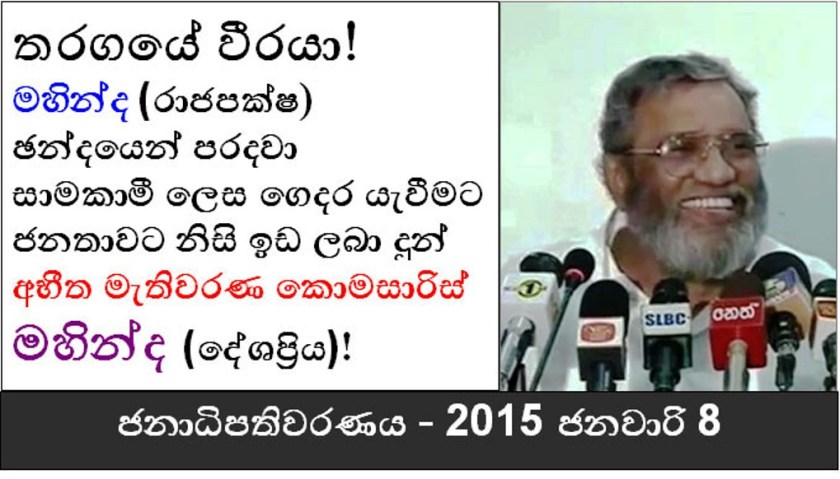
As I documented shortly afterwards, most of us were not supporting any political party or candidate. We were just fed up with nearly a decade of mega-corruption, nepotism and malgovernance. Our scattered and disjointed protests – both online and offline – added up to just enough momentum to defeat the strongman Mahinda Rajapaksa. Just weeks earlier, he had appeared totally invincible.
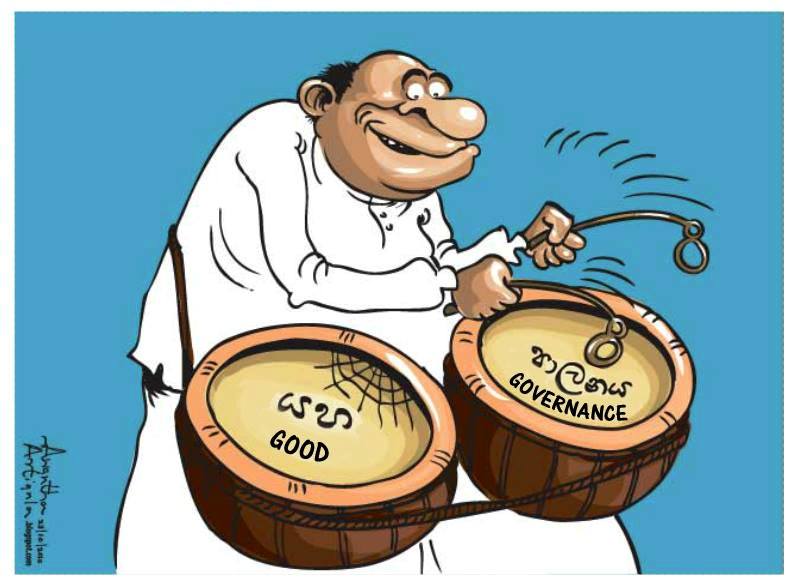
Thus began the era of yaha-palanaya or good governance.
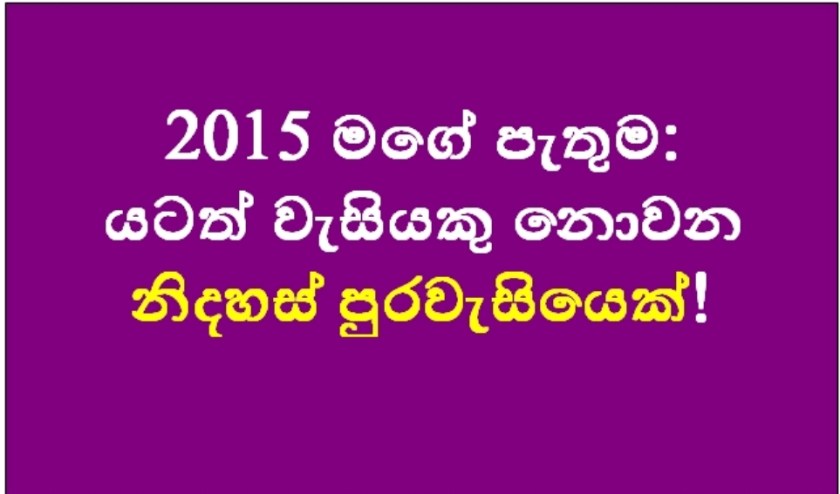
In real life, democracy is a work in progress and good governance, an arduous journey. In this week’s Ravaya column (appearing in issue of 10 January 2016), I argue that voting in two key elections during 2015 (including Parliamtnary Election held on 17 August) was the easy part. We citizens now have to be vigilant and stay engaged with the government to ensure that our politicians actually walk their talk.
Here, we can strategically use social media among other advocacy methods and tools.
මැතිවරණඅතරතුරකාලයේදේශපාලනයහාආණ්ඩුකරණය(politics and governance) එමකාර්යයේපූර්ණකාලීනවනිරතවනදේශපාලකයන්පිරිසකටපවරාඅපේවැඩක්බලාගෙනඔහේඉන්නටඉඩක්අපටනැහැ. දශකගණනක්එසේකිරීමේබරපතලවිපාකඅපදැන්අත්විඳිනවා.
Samabima monthly magazine, published by Rights Now human rights advocacy group in Sri Lanka, has carried an interview with me in its December 2015 issue.
In this, I discuss the societal implications of a Right to Information law, which is to be adopted by Sri Lanka’s Parliament in early 2016. I reiterate that we need to see the new law as only the beginning of a long journey. Proper implementation will require adequate political will, administrative support and sufficient public funds. We would also need sustained monitoring by civil society groups and media to guard against the whole process becoming mired in too much red tape.
I also touch on serious inadequacies in our mainstream media that often fail to serve the public interest because of incompetence, arrogance or indifference. In this interview, I coin a phrase ‘Mass Media Brutality’ meted out to victims of crime or discrimination in Sri Lanka — when the media pack descends on an individual or family and unethical, sensational coverage follows.
Nalaka Gunawardene interview in Samabima magazine, Dec 2015 issue
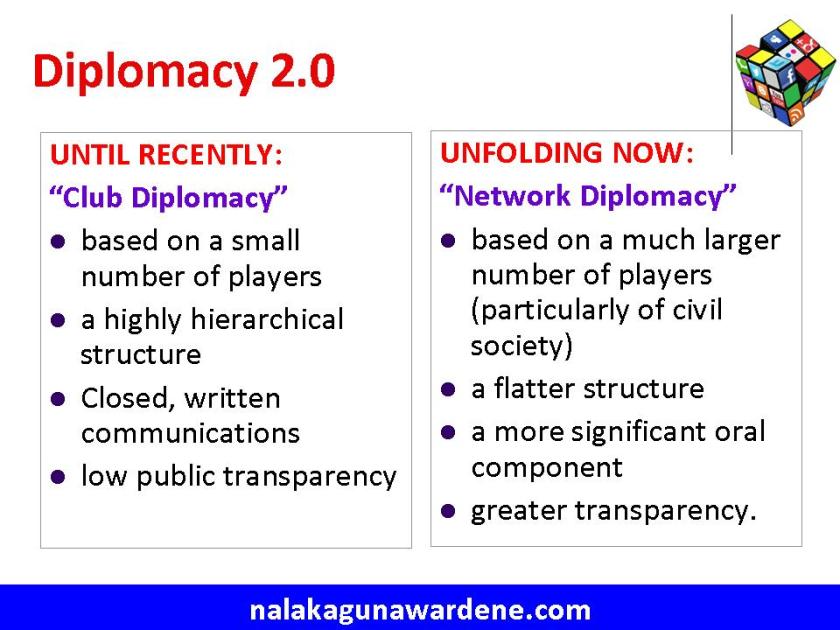
“The key to successful foreign policy in today’s world is networked diplomacy. Managing international crises requires mobilizing international networks of public and private actors,” says Anne-Marie Slaughter, an international lawyer and political scientist who is a former Princeton academic and ex-Director of Policy Planning at the US State Department under U.S. Secretary of StateHillary Clinton.
Diplomacy then…and now
The nature of this ‘networked diplomacy’ is still being documented and studied. Some governments are not even convinced of its value, but meanwhile, others are encouraging it perhaps as a way of ‘exploiting the inevitable’.
I am neither diplomat nor scholar, but sometimes dabble as a writer and researcher on how new media – including social media – impact our society, economy and governance. So I welcomed an opportunity to engage a group of mid-career professionals on the topic Diplomacy & Foreign Relations in the Social Media Age.
I made this presentation on 14 November 2015 as part of the Certificate Course in Creative Diplomacy, conducted by the Regional Centre for Strategic Studies (RCSS) in Colombo, Sri Lanka – a think tank on international relations.
In this, I introduce and briefly explore the new kind of real-time, public diplomacy that is being ushered in with the spreading of social media. I show how diplomats and other government officials can no longer ignore this mass medium, but at the same time their traditional ways of communications need to be reoriented to suit the realities of this new information ecosystem that is informal, irreverent and fleeting.
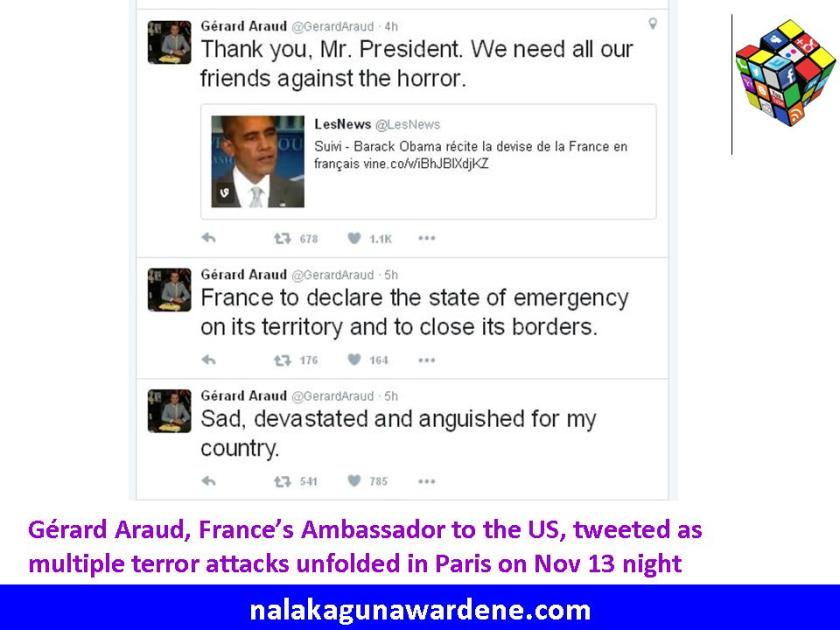
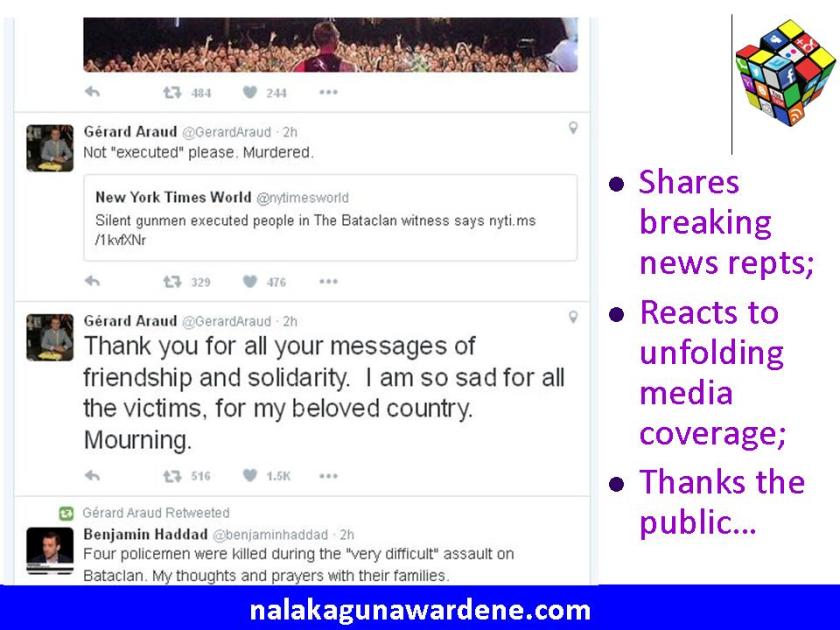
As I spoke on the day after the ISIS terrorist attacks in France, I used (among others) the latest examples of how Gérard Araud, France’s Ambassador to the US, tweeted live as multiple terror attacks unfolded in Paris on Nov 13 night.
Real time tweeting by French Ambassador to the US while Paris attack was underway on 13 Nov 2015…More tweets from Ambassador Gérard Araud on 13 Nov 2015…
To see the bigger picture, I’ve distilled some wisdom of key researchers in this area including: Anne-Marie Slaughter, former Princeton Academic and ex-Director of Policy Planning, US State Department; Philip Seib, Professor of Journalism and Public Diplomacy, University of Southern California; and Ramesh Thakur, Professor, Crawford School of Public Policy, Australian National University (ANU).
I also used the case study of Indian Ministry of External Affairs using social media for crisis management when 18,000 Indian nationals were stranded in Libya in Feb – March 2011 who had to be evacuated urgently.
As Ramesh Thakur has written, it is “a useful case study in the utility of social media tools in connecting the government with people who are normally well outside their range, but who can be a useful channel to send out time-urgent critical information and to receive equally valuable information from sources on the ground.”
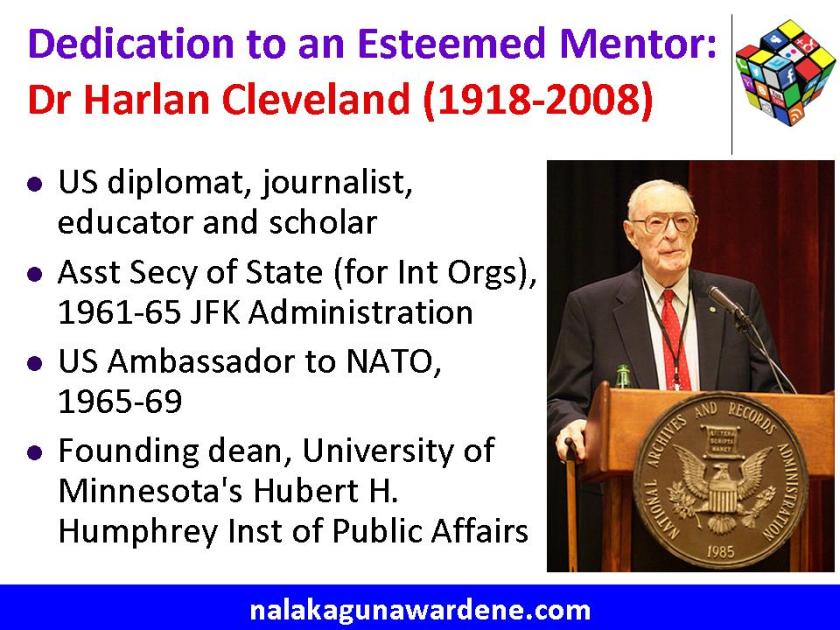
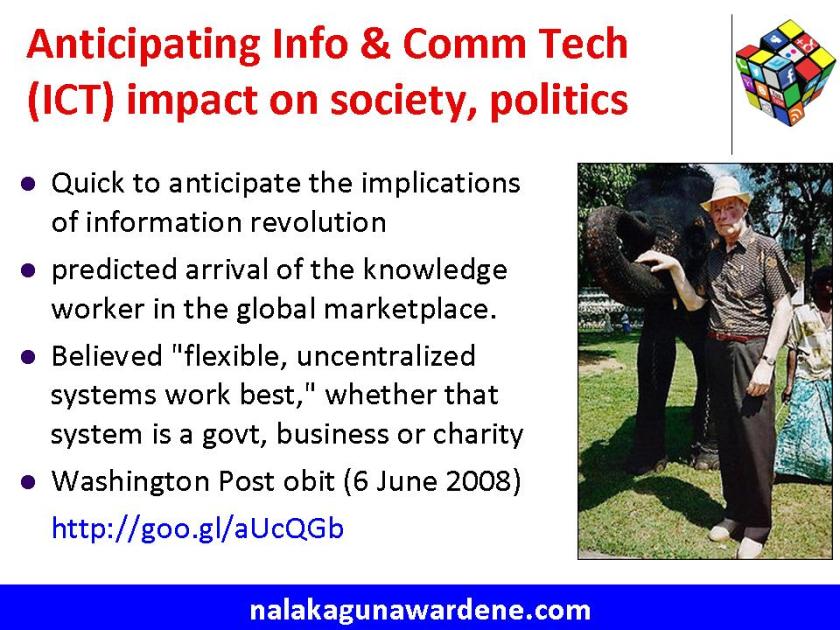
Dedication to a remarkable diplomat-scholar who spent a few days in the Summer of 1995 mentoring a group of youth leaders from around the world, including myself, who were brought to the UN Headquarters in New York…
I dedicated this presentation to a diplomat and scholar whose mentoring I was privileged to receive 20 years ago: Dr Harlan Cleveland (1918 – 2008) who served as US Ambassador to NATO, 1965–1969 (Johnson Administration), and earlier as US Assistant Secretary of State for International Organization Affairs, 1961–1965 (Kennedy Administration).
Harlan Cleveland, among the first ‘philosophers’ of the Information Age
According to RCSS, their Course in Creative Diplomacy “provides theoretical and practical insights into the various facets of Creative Diplomacy. The course will expand participants’ understanding of the concept of diplomacy and expose them to new skills and alternative perspectives to engage with stakeholders. It is further envisioned that this post-disciplinary approach, which will be followed by the course, will explore a whole host of new mediums through which mediation, cooperation and negotiation can be carried out.”






 Open Minds!