Message placement: Gates Foundation discovers TV soaps are good for health!

There's still time for TV to redeem itself...
In the developing (or majority) world, we have been doing it for years: embedding subtle messages on health, environment, family planning or civic behaviour in popular, highly-rated entertainment shows on television.

In parts of Asia, Africa and Latin America, there is a long history of collaboration among non-formal educators, advocacy groups and broadcast companies to mix entertainment with public education — a difficult balance to achieve without putting off viewers who tune in for entertainment. See, for example, my coverage of the BBC World Service Trust’s work in India.

Now, it seems, this ‘edu-tainment‘ approach is also being tried out seriously in the home of ‘soap operas’ or television drama: the United States.

A recent report in the New York Times describes how the Bill and Melinda Gates Foundation is working with video production companies and broadcast networks to shape story lines and insert health-related messages into popular entertainment like the television shows “ER,” “Law & Order: SVU” and “Private Practice.”

Already, the foundation’s messages on HIV prevention, surgical safety and the spread of infectious diseases have found their way into these shows.

The report, written by Tim Arango and Brian Stelter, said: “Now the Gates Foundation is set to expand its involvement and spend more money on influencing popular culture through a deal with Viacom, the parent company of MTV and its sister networks VH1, Nickelodeon and BET.”

They called it “message placement”: the social or philanthropic corollary to product placement deals in which marketers pay to feature products in shows and movies. Instead of selling Coca-Cola or G.M. cars, they promote education and healthy living.

Some viewers in television-saturated US might say: it’s about time! In the past, many American companies producing entertainment content have resisted approaches from social activists to use the mass medium for public good.

In the late 1980s, when I shared some Asian experiences of mixing television drama and public education at an international science communication conference in Spain, American academics and journalists in the audience were intrigued. “But this can never happen in the United States…we keep our education and entertainment separate, and with good reason!” one of them said during question time.

Clearly, those hard attitudes have been changing slowly. As the NYT article says: “The efforts of philanthropies to influence entertainment programming is not new…. The Kaiser Family Foundation, which focuses on health issues, has been doing such work for a dozen years. It has worked story lines about H.I.V. and AIDS into programs on CBS and UPN (now known as the CWnetwork), including the reality show “America’s Next Top Model.”
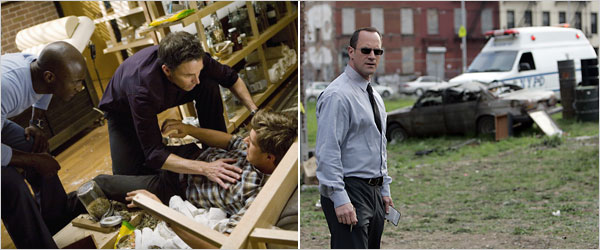
Left, ABC’s “Private Practice,” and NBC’s “Law & Order: SVU.” The story lines of both shows have spread the health-related messages of the Gates Foundation. Images courtesy ABC & NBC

The Norman Lear Center at the University of Southern California’s Annenberg School for Communication is at the forefront of blending entertainment with public education. “There’s a lot of research that shows that when a character in a series says, ‘I’m going to be an organ donor,’ it’s effective, more effective than giving out a pamphlet,” said Martin Kaplan, director of the Centre.

The Centre has a Hollywood, Health & Society programme that provides entertainment industry professionals with accurate and timely information for health storylines. It organises meetings between health specialists and script writers for entertainment shows – not just drama, but also reality and variety shows.

“Our view is you don’t have to sacrifice entertainment value to be accurate,” Kaplan is quoted as saying in the NYT article.

That’s a view – and experience – shared by TV writers, producers and programme managers from Mexico to South Africa, and from India to the Philippines. In fact, this is an approach the Gates Foundation should consider rolling out in the majority world countries where they are already a key player in selected areas of health and development. Despite the recent spread of broadband internet, broadcast television is still the dominant mass medium – and primary source of news and entertainment – for most people in much of the developing world. That’s billions of eyeballs we’re talking about – and the cost of producing quality entertainment (even with education subtly embedded in some places) is significantly less than in the west.

In short, Gates can get a bigger bang for its bucks on the airwaves in the global South. And there’s really no need to convince TV industry gate-keepers and producers on how edu-tainment works: they’ve been at it for years, using whatever resources they can find.

Read full article: Messages With a Mission, Embedded in TV Shows, NYT 2 April 2009
Teenage Affluenza: A viral video to stir our minds

I’m a bit anxious about impending teenhood. No, not my own, thank you, but my kid’s.

As a single parent raising a 12-year-old who will soon turn 13, I keep reading and hearing all kinds of advice these days on how best to cope with a teenager in the house — that phase in growing up that everyone predicts will involve some turbulence.

On top of all else that comes with hormones-on-legs, there’s now the worry of Teenage Affluenza. It’s a condition that affects millions of teenagers around the world. Most of them live in the developed countries, but in this topsy-turvey, globalised world, there’s no stopping the rapid spread of such conditions all over the majority world.

Look closely, and you can see the symptoms of TA
Look carefully, and you can see the symptoms of TA - image courtesy WorldVision Australia

I belatedly came across this campaign video called Teenage Affluenza, made by the charity WorldVision Australia in mid 2007. It was first made for a promotion kit for the 40 Hour Famine, to be used in Australian schools. World Vision media staff worked with Rohan Zerna Films, Melbourne, who had worked on previous spots for World Vision. The team decided to take the route of irony, providing a spoof feel. The budget wasn’t high. A family friend of the producer starred as the Melbourne teenager. The voice-over was donated by a regular with World Vision promotions. Overseas footage, already held by World Vision Australia, was spliced into the story.

Read news story in The Age newspaper, Australia, on 2 July 2007

Erin is a fifteen year old girl living deep in the South Eastern suburbs of Melbourne, Australia. She is at risk from teenage affluenza, like five million children and teenagers in her country. She still sleeps in the wooden colonial bed her parents bought her when she was ten. Although meals, travel and education are readily available to girls like Erin, many are forced to live on less than $40 pocket money each week. Erin’s iPod only holds 1 GB.

And so the satirical commentary continues. Juxtaposed with Erin’s ‘tragic life’ is the reality faced by children and teenagers in Vietnam, Sudan and other countries affected by famine and the long term impact of civil war. The video ends with the message “Do something else. Do something real. Do something.”

Teenage Affluenza is Spreading Fast: From WorldVision Australia

The video has attracted thousands of responses on YouTube’s online-comments section, including some honest self-analysis from teenagers, while others started a discussion about who is to blame – corrupt governments or first-world greed.

Meanwhile, WorldVision US has released another version of the video, slightly shorter and featuring American teeangers. If anything, the condition is more prevalent there.

Teenage Affluenza: from WorldVision United States


The message to parents is clear: we’re the ones who can prevent our teenagers from contracting Affluenza. All it takes is thoughtful and sustained action. When teens say gimme-gimme-gimme, we have to known when it’s really needed and when it’s wanted. Easier said than done. I know, because teenages seem to arrive in pre-teens these days.

We the parents would certainly welcome reinforcements from any sensible source. WorldVision Australia runs an interesting website called Stir, which tries to engage youth on issues of development and global justice. As a direct intervention charity, WorldVision doesn’t leave it to governments, but urges people to get involved — and do something.

Missing Mothers: How acronyms and jargon can kill innocent women

iwd_5“This year alone, more than 500,000 women will die during pregnancy or childbirth. That’s one woman missing every minute of every day. We call these women ‘missing’ because their deaths could have been avoided. In fact, 80 per cent of maternal deaths could be averted if women had access to essential maternal health services.

“We know where and how these women are dying, and we have the resources to prevent these deaths. Yet, maternal mortality is still one of the most neglected problems internationally.”

This sobering message from Unicef is worth reflecting upon as we mark another International Women’s Day.

Unfortunately, critical issues like these often don’t make the news – or worse, are relegated to the background as inevitable. As Joseph Stalin said in a different context, one death is a tragedy; a million deaths a mere statistic.

The challenge to the development community is to go beyond simply counting deaths in cold, clinical terms. UNICEF has recently released a two minute video, “Missing Mothers” as a tool for international development professionals to use in raising awareness of the issue of mothers dying needlessly.

Having a baby is both a very natural process and a joyous occasion for the parents and extended family concerned. Yet having a baby still remains one of the biggest health risks for millions of women worldwide.

Time to make missing women count...
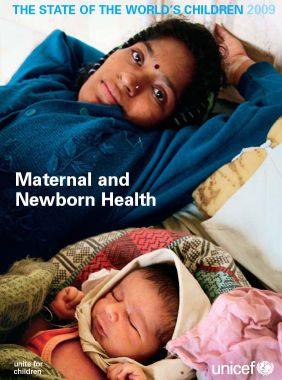
As Unicef’s 2009 State of the World’s Children report reminded us recently, 1,500 women die every day in the world due to complications arising during pregnancy and childbirth. The chances of a woman in developing countries dying before or during childbirth are 300 times greater than for a woman in an industrialised country like the United States. Such a gap does not exist in any other social indicator.

The largest number of maternal deaths in the world is in South Asia. In India alone, an estimated 141,000 women die each year during pregnancy or childbirth. Recently, my Indian journalist friend Kalpana Sharma wrote a perceptive column on this topic in The Hindu newspaper.

She noted: “The solution has been known for years. The problem is the will to make it work. We also know that the solution would benefit everyone, not just women. Yet, affordable and accessible health care, for instance, has not received the thrust that is needed.”

The Missing Women video suggests to activists and campaigners that action can start with five steps: 1. Educate girls, young women and yourself; 2. Respect their rights; 3. Empower them to participate; 4. Invest in maternal health; 5. Protect against violence and abuse. The Unicef website, meanwhile, lists 10 ways in which concerned individuals can make a difference.

All very commendable and necessary — but not sufficient. With all the good intentions in the world, Unicef’s experts and officials come across as, well, detached and geeky. They don’t connect well enough to the real world people whose needs and interests they are genuinely trying to serve. Their messages are lost somewhere in their precise terms, jargon and endless acronyms.

Just take, for example, the very phrase of maternal mortality itself. Precise but also very stiff and dry. Who outside the medical and development circles uses such terms in conversation? When I write or make films about the issue, I prefer to call it ‘mothers dying needlessly while having babies’. Yes, it’s more wordy and perhaps less exacting. But most ordinary people would get what I’m talking about.

If the jargon-ridden language reads dry in text, it completely puts off people when they watch such words being spoken on video. Such films may pander to the Narcissism of Unicef mandarins, but they completely flop in terms of public communication and engagement.

This is the same point I made in October 2008 when commenting on the Unicef-inspired first Global Handwashing Day: “Passion used to be the hallmark of UNICEF during the time of its legendary executive director James Grant, who strongly believed in communicating messages of child survival and well-being. He gave UNICEF a head start in working with the media, especially television.”

Jim Grant’s deputy, journalist Tarzie Vittachi, who came over to the UN children’s agency after a stint at the UN population fund, used to say: “Governments don’t have babies; people do”. We might extend that to: inter-governmental agencies don’t have babies; real women do. That may be why Unicef insists on delivering its life-saving messages so riddled in politically and scientifically correct, but so sterile language.

Unicef’s YouTube channel has a number of short videos related to what they insist on calling maternal mortality. Here’s an example where Unicef’s Chief of Health Dr. Peter Salama says it’s really an unconscionable number of deaths, and a human tragedy on a massive scale:


MDG5: Save Our Moms!
Reducing by three quarters the number of mothers dying needlessly while having babies is one of the Millennium Development Goals or MDGs, the holy grail in international development since the United Nations adopted these in 2000, setting 2015 as the target date.

We have now passed the half way mark, but progress has been patchy and unimpressive. And it will remain so as long as the UN agencies and other development players insist on peddling jargon and acronyms. Considering the issues of life and death involved here, we must view bad communication as a killer — joining the ranks of unsafe drinking water and violence against women and girls.

Writing an editorial for SciDev.Net in September 2005, I noted: “All development workers and UN officials should take a simple test: explain to the least technical person in your office the core message and relevance of your work. Many jargon-using, data-wielding, acronym-loving development workers would probably fail this test. But unless development-speak is translated into simpler language, the MDGs will remain a buzzword confined to development experts and activists.”

I don’t believe in ghosts, but it’s time to bring back the spirits of Jim Grant and Tarzie Vittachi to Unicef to again humanise the agency so mired in its own ‘geekspeak’. The intellectual rigours of evidence-based, scientific analysis must be balanced with clarity and accessibility. It’s fine to be informed by science, but learn to say it simply, clearly and concisely.

The lives of half a million women and millions of children depend on it.

‘The Final Inch’: Real ‘Oscar’ would be polio’s global eradication!

Not longer just a drop in the ocean...
No longer just a drop in the ocean..?
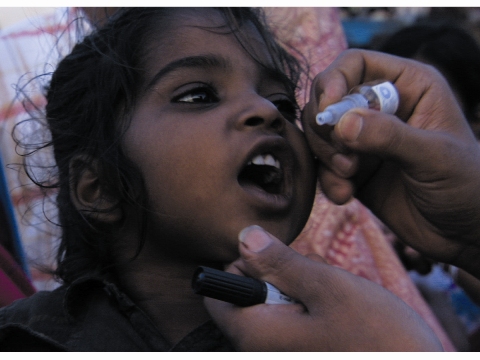
The Final Inch didn’t win the Oscar for the best short documentary film made in 2008. But the nomination has given a boost to the film and its cause: even before its official release in April 2009, it is already raising global awareness on the major public health challenge of banishing polio from the planet.

The Final Inch is a testament of the health workers around the world laboring to make polio the second globally eliminated disease behind small pox, says director Irene Taylor Brodsky.

The 37-minute film, due to air on HBO on 1 April 2009, looks at the “the final stages of a 20 year initiative” to eradicate polio. It focuses the polio vaccine efforts in India and Pakistan, which are among the last four countries where polio is still endemic (the other two being Afghanistan and Nigeria).

Watch the trailer for The Final Inch:

The campaign to eradicate polio is now 21 years old. World Health Organisation (WHO), UNICEF and Rotary Foundation embarked on this campaign in earnest in 1988, and as a young (and equally earnest) science journalist, I remember writing about its early strategies, goals and targets. But the virus has proven to be a lot more stubborn than originally expected.

Well, the campaign has scored remarkable victories, and a little over 1,600 people in the world were stricken by polio in 2008. (AIDS and malaria, in contrast, killed more than three million people.) Compare that with 350,000 cases per year when the global onslaught started, and we see there has indeed been progress.

But the virus – and the crippling disease it causes – persists in several poor, densely populated countries in Asia and Africa. Updates are available from Global Polio Eradication Initiative.

Thus it’s the ‘last inch’ – or last mile, if you like – that’s proving the hardest to traverse. In a perceptive essay published in Newsweek in January 2009, Fred Guterl noted: “It’s not easy to wipe a disease off the face of the planet—especially one like polio, which spreads easily and quickly through contact and occasionally through contaminated food and water. Only one in 200 children who contract the virus shows symptoms (usually paralysis), which makes the other 199 silent carriers.”

It’s not just biology that polio eradicators are up against. Indeed, human superstition and religious dogma have made the final inch particularly contentious and treacherous for public health workers.

In 2005, TVE Asia Pacific started distributing a global documentary on immunisation called Fragile Lives: Immunization at Risk. It showed how at least 2 million children die every year from diseases that that vaccination could easily prevent.

Foot soldiers of the largest non-military army in history engaged in its final battle
At one point, the film takes us to Uttar Pradesh, in northern India, to show how polio, eradicated in most of the world, stubbornly persists in a few countries. This very poor state with its 272 million inhabitants had two thirds of the world’s polio. We talk to the glamorous young cricketer, Mohamed Kaif, who helps publicise a massive campaign to get every single child to the vaccination booths. The film discovers the strange reason behind why so many Muslim parents refuse to have their children vaccinated.

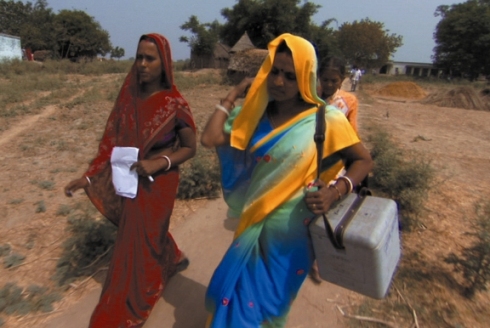
The Final Inch features the heroic efforts of Munzareen Fatima, a field worker in Meerut, Uttar Pradesh, who is a part of UNICEF’s Social Mobilisation Network for ensuring vaccination coverage. She reaches out to her target group through personal and public intervention programmes.

As she told IANS: “It has been a tough journey for me over the last five years to convince 470 families at Dufferin block in Khairnagar to administer polio drops to their children. I met with resistance from the families, who initially refused to immunise their children. The conservative community also belittled me for stepping out of home to campaign against polio.”

India is not alone. If anything, misplaced resistance to polio vaccination has been stronger in Pakistan. As IPS reported in August 2006, the country’s drive against polio was hit by both rumours and litigation.

The news story, filed by Ashfaq Yusufzai in Peshawar, noted: “The reliability and safety of oral polio vaccine (OPV) has been put under scrutiny in Pakistan after wild rumours that it causes impotency snowballed into a writ petition in a high court.”

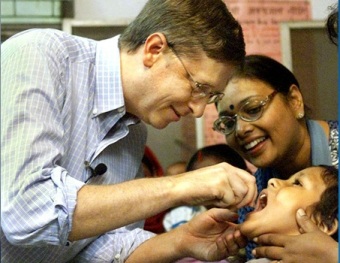
Bill Gates: geek power and bucks to battle polio...
Religion-inspired superstitions have often stood in the way of achieving sufficient vaccination coverage, leaving room for viruses to spread again. Religious leaders sometimes strengthen the hand of those making pseudoscientific claims, says South African science writer George Claassen. Writing in SciDev.Net in April 2008, he noted: “Attempts to eliminate polio in Nigeria, for example, ran into problems when Datti Ahmed, the chair of the Supreme Council for Sharia in Kano state, referred to the Global Polio Eradication Initiative as ‘modern-day Hitlers… who have deliberately adulterated the oral polio vaccines with antifertility drugs and contaminated them with certain viruses which are known to cause HIV and AIDS.'”

This brings up an interesting scenario of virus vs. virus. Richard Dawkins, the well known British evolutionary biologist and writer, has called religion the most malevolent form of a ‘mind virus’. According to Dawkins, faith − belief that is not based on evidence − is one of the world’s great evils. He claims it to be analogous to the smallpox virus, though more difficult to eradicate.

Of course, the mistrust of vaccines is not just limited to the developing world, nor is it always inspired by religion or superstition. Sometimes over-protective moms can be just as irrational. Fragile Lives, for example, took us to Dublin, Ireland, where there have been two serious outbreaks of measles – largely due to mothers rejecting vaccination because of the MMR controversy. In some parts of Ireland only 60% instead of the necessary 95%, have been vaccinated.

“It’s an immensely exciting time for people working with video!” – Sam Gregory

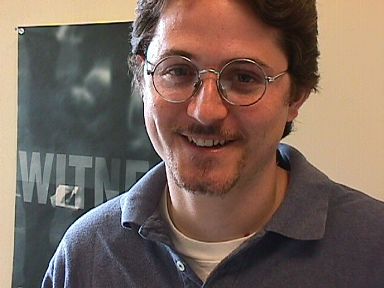
Sam Gregory
Sam Gregory
“It’s an immensely exciting time for people working with video. More and more people creating and using video, more places to share it, more ways to place it in front of people who can make a difference.

“It raises challenges too: saturation of images and compassion-fatigue, finding your place to be heard, and the safety and security and consent issues that arise when many more people are filming each other.

“But overall I think we’re seeing a really powerful moment for individual expression but also collective accountability being supported via image-making.”

So says Sam Gregory programme director of Witness, a human rights organisation which uses video and online technologies to open the eyes of the world to human rights violations. The New York-anchored organisation works around the world to ’empower people to transform personal stories of abuse into powerful tools for justice, promoting public engagement and policy change’.

Sam is a video producer, trainer and human rights advocate who knows and taps into the power of moving images to move people. He was speaking with Indian journalist and cyber activist Frederick Noronha in an interview just published at the Info Activism website.

www.witness.org
http://www.witness.org
Sam recalls how he was once making films and also involved in activism, and ‘frustrated at how the two didn’t fit together’.

He adds: “In the traditional TV documentary world, the advocacy purpose of film was under-utilized. The fact that you got 500,000 viewers for a TV broadcast told you nothing about whether that turned into action. So I started looking for ways to really make the video fit as a tool for real advocacy and change-making, and came upon WITNESS.”

Read full interview on InfoActivism website

We at TVE Asia Pacific worked closely with Sam in 2002-2004, when we implemented a collaborative Asian regional project called Truth Talking where Witness was a partner. It was through Witness that I met courageous info activists like Joey R B Lozano.

Barack Obama: President of the New Media World – and watch out for those citizen journalists!

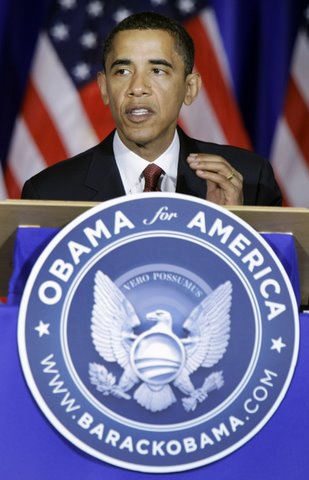
His own brand...
His own brand...
Inauguration Day is finally here! Today, 20 January 2009, Barack Obama will be sworn in as the 44th President of the United States of America.

Obama campaigned – and won – on the core promise of change. And even before he moved into the White House, he achieved many firsts. Among them was being the first American leader to understand the power of new media and to use it effectively to harness both campaign contributions and, eventually, votes.

On 6 November 2008, soon after the election results were confirmed, we noted how Obama had just been elected ‘President of the New Media world’. I explained: “Obama’s rise has epitomised change in many ways. Among other things, he is the first elected leader of a major democracy who shows understanding and mastery over the New Media World, which is radically different from the old media order.”

Of course, others had different takes on the same outcome. One of the funniest was by The Onion, which proclaimed: Black Man Given Nation’s Worst Job.’ It read, in part: “African-American man Barack Obama, 47, was given the least-desirable job in the entire country Tuesday when he was elected president of the United States of America. In his new high-stress, low-reward position, Obama will be charged with such tasks as completely overhauling the nation’s broken-down economy, repairing the crumbling infrastructure, and generally having to please more than 300 million Americans and cater to their every whim on a daily basis.”

The sheer magnitude of Obama’s challenges has become clearer in the weeks following the historic election. While the economy will certainly dominate his agenda, he will also have to live up to the many expectations of hope that his campaign sparked off in hundreds of millions of people — and not just in the United States.

How will the ‘President of the New Media world’ remain engaged with the millions of conversations taking place 24/7 on the web and through mobile devices? Is this realistically possible given his roles as the chief executive of beleaguered America, Inc., and commander-in-chief of the world’s only superpower?

Already, there is much interest whether security concerns and legal requirements will allow Obama to keep using his BlackBerry, to which he admits being addicted. “I’m still clinging to my BlackBerry,” Obama said only a few days ago in an interview with The New York Times. “They’re going to pry it out of my hands.”

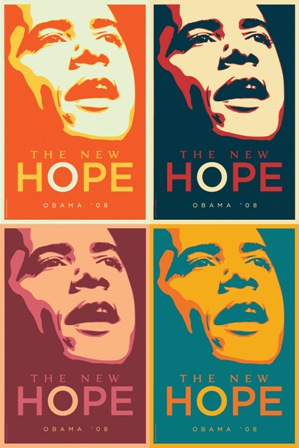
The new face of Hope
More to the point, how long will the mainstream media’s honeymoon with the new President last? And how will citizen journalists, many of who cheerled Obama in his long and arduous campaign, now relate to their man in Washington DC? Can the Obama Administration strike deals with citizen journalists as every administration has done with the mainstream media over the decades? Outside the strict security cocoon of the White House, will this presidency ever be able to have any moments ‘off the record’ with every digitally connected person being a potential citizen journalist?

Remember how his comments about “bitter” small-town Americans clinging to their guns and religion — uttered at a ticket-only and supposedly no-media San Francisco fund-raiser during the campaign — came to be publicised? And that, too, by a pro-Obama blogger writing on the openly pro-Democratic blogger site Huffington Post!

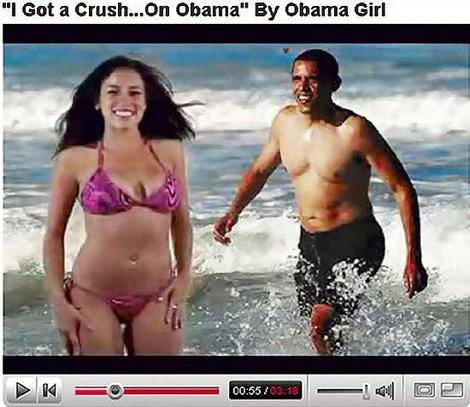
Then there’s the power of moving images moving around online as broadband rolls out across the planet, and speeds improve to support real time video-watching. The day Americans went to the polls to elect Obama, we recalled the hugely popular Obama Girl (‘I got a crush on Obama’) – an internet viral video, first posted on YouTube in June 2007 – and asked Can this little video change history? We had our answer within 24 hours.

While Obama Girl was a well-edited, slick campaign-boosting video released online, the thousands of citizen-filmed videos being posted online are not. And yet, in that no-frills mode, some bring out public interest concerns that have implications for public policy debates and/or law enforcement.

A current example is the sad case of Oscar Grant, a young, unarmed black man who was fatally shot by police officers while laying face-down on a BART subway platform in Oakland, California, on 31 December 2008. Several citizens filmed the incident on their mobile phones. Three separate videos, circulating online at a rapid pace, show various angles and stages of the incident. See one of them here. These have already put the spotlight on police conduct and may influence the judicial process.

President Obama arrives at the White House to lead the executive of a nation that is unlike any his predecessors faced. His inauguration will be the most digitised, but that’s only the beginning. For four or eight years, Obama’s every move, word and gesture will be captured, dissected and debated to exhaustion by admirers and detractors alike. And his administration will be under scrutiny by thousands of citizen journalists who don’t share much except the digital platforms and social networks on which they post their impressions.

Welcome to the New Media Presidency. The hard work – and real fun – begin now!

Watch this cyberspace…

MEAN Sea Level: An ironic film from the frontline of climate change

What does sea level rise mean to you and me?
In October 2008, while attending an Asian regional workshop on moving images and changing climate in Tokyo, I had the chance to see Indian writer and film-maker Pradip Saha‘s latest film, MEAN Sea Level.

As I wrote at the time: “The few of us thus became the first outsiders to see the film which I found both deeply moving and very ironic. With minimal narration, he allows the local people to tell their own story. There’s only one expert who quickly explains just what is going on in this particularly weather-prone part of the world.”

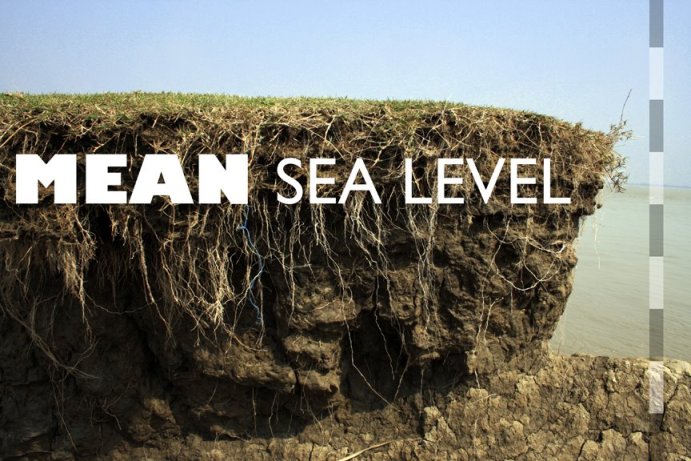
The world’s rich are having a party, and millions living in poverty are the ones footing the bill. This is the premise of the film, which looks at the impact of climate change on the inhabitants of Ghoramara and Sagar islands in the the Sundarban delta region in the Bay of Bengal.

Almost 7,000 inhabitants have been forced to leave Ghoramara in the last 30 years, as the island has become half in size. The biggest island, Sagar which hosted refugees from other islands all these years is witnessing massive erosion now. 70,000 people in the 9 sea-facing islands are at the edge of losing land in next 15 years. For these people climate change is real.

As the sea level rises and takes with it homes and livelihoods in the delta, the villagers of Sagar are paying a hefty price for a problem that they did not create. Meanwhile, middle class India and the political elite are becoming aware of the problem of global warming, but prefer to look the other way.

I’m glad to note that the film is now being screened to various audiences and making ripples. By showing people – including those still not convinced about climate change – what sea level rise is already doing to poor people, the film is stretching the limits of debate and focusing attention on the need to act, not just talk.

It’s also creating ripples in environmental and/or human rights activist circles where all too often, passionate discussions don’t go very far beyond the rhetoric to bring in the real world voices and testimonies. Pradip’s film accomplishes this with authenticity and empathy yet, mercifully, without the shrill and overdose of analysis found in activist-made films. It powerfully and elegantly tells one of the biggest stories of our times.

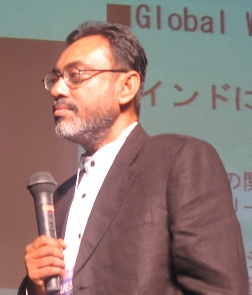
Pradip Saha
Pradip Saha
In November 2008, Pradip showed and talked about his film at a screening organised by SACREDMEDIACOW (SMC), an independent postgraduate collective on Indian media research and production (and much more) at the School of Oriental and African Studies (SOAS) at the University of London. Before it started, Pradip told his audience to ‘forget that this is a documentary about climate change’ and just watch.

As one member of his audience, Sophia Furber, later wrote: “The film’s approach to climate change is completely non-didactic. Mean Sea Level is no acronym-fest sermon or disaster story, but an intimate portrait of a way of life which is on the verge of going underwater.”

In his day job as editor of Down to Earth magazine, published from India with a global outlook, Pradip excels in wading through the (rapidly expanding) sea of jargon and acronyms surrounding many topics related to science, environment and development. In typical style, his recently started blog is named alphabet soup @ climate dinner.

Read Sophia Furber’s account of SOAS screening in London

The more Pradip shares his film, the more people who notice the irony that I experienced in Tokyo. A short review by the Campaign against Climate Change says: “There is a greater irony. These poor people got nothing out of the economy that created climate change, nor do they contribute to global warming. Mean Sea Level is a testimony of reckless political economy of our times. Climate change is real, and only a sign of our recklessness.”

Last heard, Pradip was planning to screen MEAN Sea Level on Sagar Island so that the story’s participants can see the film for themselves. The idea was to power the event entirely through renewable energy sources, such as solar power.

I hope he will soon place his film – or at least highlights/extracts – online on YouTube or another video sharing platform. This film is too important to be confined to film festivals and public screenings. Whether it would also be broadcast on television in India and elsewhere, we’ll just have to wait and see. I won’t hold my breath on that one…


Down to Earth: Is climate changing? Yes, say Sundarbans Islanders

International Herald Tribune, 10 April 2007: Living on the Edge: Indians watch their islands wash away

Look carefully...
Look carefully...

Barack Obama: Just elected President of the New Media world

President Obama and the call at 3 am...

“Congratulations for restoring sanity and intelligence to Washington…and giving the world its first President. Real hard work begins now. Look after him!”

This was my brief message to American friends soon after they elected Barack Obama as the 44th President of the United States of America.

It was entirely appropriate that I sent this message via mobile phone text (SMS). For Obama’s trail-blazing campaign to the White House used the new media innovatively while also using the old media (such as broadcast television) in a complementary manner.

Obama’s rise has epitomised change in many ways. Among other things, he is the first elected leader of a major democracy who shows understanding and mastery over the New Media World, which is radically different from the old media order.

As AFP reported in a story titled ‘Obama surfs the web to the White House‘: “Social networks and Twitter messages may have helped but analysts agree it was the Democrat’s impressive online organization and Internet fund-raising that fueled his victory over Republican John McCain in Tuesday’s election.”

It quoted Julie Germany, director of George Washington University’s Institute for Politics Democracy & the Internet, as saying: “No one’s going to say Obama won the election because of the Internet but he wouldn’t have been able to win without it. From the very beginning the Obama campaign used the Internet as a tool to organize all of its efforts online and offline. It was like the central nervous system of the campaign.”

Both Obama and McCain campaigns had slick websites and TV campaigns. But additionally, Obama inspired thousands of web-savvy volunteers to extend his message way beyond the official outreach. Doing so risked diluting the campaign or losing tight control, but that gamble paid off.

Al Gore, US vice president from 1992 to 2000, also understood the potential of new media, especially the transformative nature of the Internet. But at the time he was in office, the new media tools were not being used by sufficiently large numbers of people for it to make a difference in political campaigning or citizen engagement.

Both the timing and technologies favoured Obama, who successfully tapped into Digital Natives — those relatively younger people who have grown up with digital technology such as computers, the Internet, mobile phones and MP3. (In contrast, Digital Immigrants are those individual who grew up without digital technology and adopted it later.)

But as many commentators are pointing out, the real fight has just begun. It remains to be seen how Obama and his team use New Media tools, platforms and potential to deliver the promise of change.

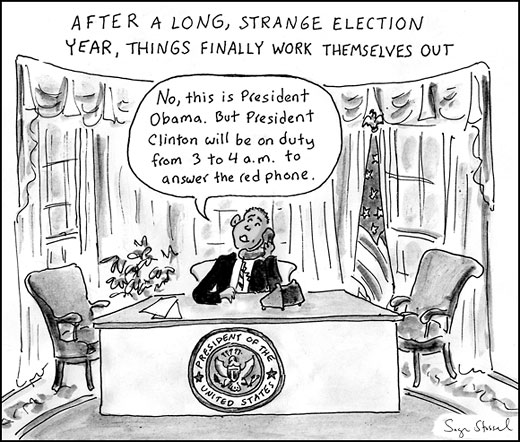
Meanwhile, my own favourite cartoon of Obama election is the one above – and funnily enough, it concerns a piece of old technology: the good old fixed phone. If you recall, in long-drawn campaign for Obama to secure Democratic Party nomination, his rival Hillary Clinton ran this TV commercial which peddled her credentials for being familiar with the corridors of power.

It’s 3 AM and your children are safe and asleep. But there’s a phone in the White House and it’s ringing.
Something’s happening in the world. Your vote will decide who answers that call…


Hillary’s original ad:

Obama’s official response:

There were various unofficial spoofs created by Digital Natives who love to play with new media tools. Just run a search for ‘3 am’ or ‘red phone’ on YouTube and you can watch many of these online!

By the way, isn’t it time that the old-fashioned Red Phone in the White House – the American President’s Hotline to save the world – was replaced with a more modern looking instrument? One more thing for the New Media President Obama…

Obama Girl: Can this little video change history?

Is this the face that launches a revolution?

November 4 is already here in Asia – and the day will dawn a few hours later in the United States. Today is the day Americans go to the polls to choose their next President.

In less than 48 hours, we’ll know who the winner is. All the polls of US voters suggest that it would be Senator Barack Obama. Surveys in different parts of the world also indicate how so many people expect him to win. And I certainly want him to win!

But after what happened with the 2000 US Presidential Election, I hesitate to draw any conclusions.

Whatever the outcome of today’s election, one thing is for sure: a little campaign video by a relatively little known actress and model changed the face of Campaign 2008.

“I Got a Crush… on Obama”
is an internet viral video, first posted on YouTube in June 2007 featuring a young woman seductively singing of her love for Illinois Senator and presidential candidate Barack Obama.

Produced by BarelyPolitical.com, a website for funny political videos, it featured actress and model Amber Lee Ettinger who lip-synched the song which was actually sung by Leah Kauffman (of “My Box in a Box” fame).

This video was named biggest web video of 2007 by People magazine…the AP…Newsweek…and AOL. It certainly helped to project Obama as a cool and hip candidate.

As we wait for democracy to take its course, here’s that history-making viral video, which has been watched on YouTube more than 10 million times…and counting:

These are the principal credits:
Created by: Ben Relles
Starring: Amber Lee Ettinger
Vocals: Leah Kauffman
Music Producer: Rick Friedrich
Directed by: Larry Strong and Kevin Arbouet.

Visit Obama Girl’s blog

And finally, if any of you feel anything at all for the incumbent who is about to be relegated to the dustbin of history, here’s a wicked video from the same creators called: Lil’ Bush Girl…Meet Obama Girl
(Caution: it’s not for the prim and proper, but then readers of this blog aren’t!).

Wash Your Hands – yes, UNICEF, but only if you ask us nicely!

Global Handwashing Day logo

October 15 was marked as the first Global Handwashing Day (GHD). It’s simple yet important mission was to promote the practice of handwashing with soap.

Washing hands can save lives. Washing hands with soap can save more lives. This is the simple message reinforced on this day with public campaigns focusing on schools and school children.

In this UN-declared International Year of Sanitation 2008, the GHD will echo and reinforce its call for improved hygiene practices.

GHD is a Unicef-led initiative involving governments, civil society, volunteers and others around the world.

“Turning handwashing with soap before eating and after using the toilet into an ingrained habit could save more lives than any single vaccine or medical intervention, cutting deaths from diarrhea by almost half and deaths from acute respiratory infections by one-quarter,” says the GHD official website, explaining the background.

IYS 2008 logo
IYS 2008 logo
Trying saying that aloud in one breath – I can’t. Evidently, the crusty technocrat who wrote that text wanted to pack all the rationale into one long, clumsy sentence.

But this message is too important to be spoilt by an inarticulate official. Washing hands with soap can prevent diahrroeal diseases and pneumonia, which together kill more than 3.5 million children under five every year. That’s 400 needless deaths every hour, round the clock.

Fortunately, the campaigning material that went out using moving images were better produced. Here are two good examples (and a bad one).

The popular Australian children’s musical entertainers, The Wiggles, produced and donated a song to mark the Global Handwashing Day. This simple and catchy tune “seeks to motivate millions of children around the world, to transform the simple act of handwashing with soap from an abstract and seldom practiced behaviour into an automatic and enjoyable habit”.

Meanwhile, in India, cricket star Sachin Tendulkar joined forces with UNICEF to get Indian children to improve their health and hygiene as part of GHD. Tendulkar features in a public service announcement (PSA) being broadcast this month in 14 languages across India. It will target students in more than 6 million schools.

And finally, here’s Unicef’s own news story posted this week on its YouTube channel telling us more on GHD. It’s technically well made, but absolutely lacks passion. The narrator delivers her script in such an indifferent, detached tone, and UNICEF Senior Adviser for Sanitation and Hygiene pontificates also in a tone that will not win her many followers. Scenes of senior UN officials washing their hands in a demonstration are laughable. The only saving grace in this story is when we see Hayley Westenra, the well known singer from New Zealand and youngest UNICEF Goodwill Ambassador, visiting water and sanitation projects in Ghana.

If only the rest of GHD promoters had the enthusiasm and passion that Hayley Westenra exudes! Passion used to be the hallmark of UNICEF during the time of its legendary executive director James Grant, who strongly believed in communicating messages of child survival and well-being. He gave UNICEF a head start in working with the media, especially television.

Alas, large UN agencies like UNICEF have little or no institutional memory for more than just a few years. Because if they did, GHD campaigns could have effectively used, at least in South Asia (where nearly half of all people lack access to toilets) an episode of the hugely popular Meena cartoon animation series.

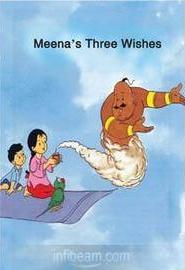
Meena is the enchanting heroine of an animated film series produced by UNICEF in South Asia. The films are part of a package of communication materials promoting the status of the girl child in this region. UNICEF co-produced the series a decade ago with leading animators in the US and South Asia.

Meena's Three Wishes
In Meena’s Three Wishes, Meena dreams of a magic genie that will grant her three wishes so that everyone would be healthy and never again get sick from poor sanitation and unsafe water. When Meena wakes up, she realizes that she must make her dream come true. With the help of her brother Raju, other children in the village, and Mithu, her pet parrot, Meena convinces people to build and use latrines, to use safe water and to wash their hands to stop the spread of germs and disease.

I don’t particularly enjoy it when UN agencies try to play nanny to the whole world, especially if they talk to us in such jargon-ridden, dispassionate terms. Their messages are tremendously important, and deserve wider dissemination — they can literally save lives.

That’s why public campaigns should be left in the hands of communication professionals who know how to reach out beyond the charmed development circle. For the rest of UNICEF, they should perhaps take a lesson or two in passionate communication from Hayley Westenra, The Wiggles – and their own little Meena!