සිවුමංසල කොලූගැටයා #174: සමාජ මාධ්‍ය ඇවිලෙන ගින්නට පිදුරු දැමීමක් ද?

In this week’s Ravaya column (in Sinhala), I discuss the role of mainstream and social media in the immediate aftermath of serious communal riots in Aluthgama, Beruwala and Dharga Town in Sri Lanka on 15 June 2014.

For over 48 hours, there was little coverage of the incidents in newspapers, or on radio and TV. This gap was partly filled by social media and international media reports – but only to the extent they have outreach in the island. Those who rely on local newspapers, radio and TV had to settle for ‘radio silence’ while media gatekeepers hesitated and held back.

I covered the same ground in my English column last week:
When Worlds Collide #112: Social Media ‘Candles’ for Mainstream Media Blackouts
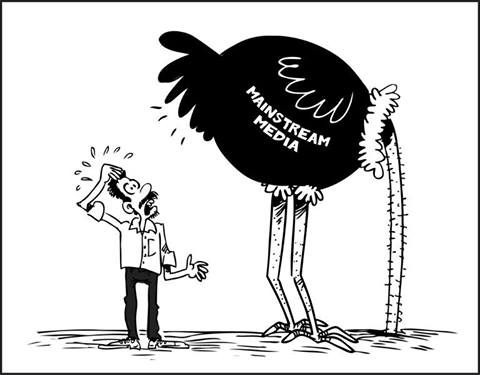
Only candid voices in Sri Lanka's mainstream media these days come from political cartoonists!
Only candid voices in Sri Lanka’s mainstream media these days come from political cartoonists!

‘‘කොහොමද වැඬේ? අන්න ඔහේලා ආවඩපු සමාජ මාධ්‍යකාරයෝ එකතු වෙලා රට ගිනි තියනවා!’’

අළුත්ගම හා බේරුවල ප‍්‍රචණ්ඩත්වය ඇති වී පැය 48ක් ඉක්ම යන්නට කලින් මා අමතා මෙසේ කීවේ සරසවියක ඇදුරුකමක් දරන උගතෙක්.

ඔහුගේ ‘‘චෝදනාව’’ වූයේ අළුත්ගම ප‍්‍රචණ්ඩත්වය පිළිබඳ තොරතුරු හා ඡායාරූප ට්විටර් (Twitter) හා ෆේස්බුක් (Facebook) වැනි ප‍්‍රකට සමාජ මාධ්‍ය හරහා අධිවේගීව සංසරණය වන බවත්, ඒ හරහා ප‍්‍රචණ්ඩ ක‍්‍රියා වෙනත් ප‍්‍රදේශවලටත් පැතිර යා හැකි බවත්. අඩු වැඩි වශයෙන් මේ ආකාරයේ ප‍්‍රකාශ තවත් බොහෝ දෙනකු මෑත දිනවල කරනු මා ඇසුවා.

අළුත්ගම ප‍්‍රචණ්ඩත්වය සිදු වූ ජුනි 15 ඉරිදා සිට පැය 24 – 48ක් ගත වන තුරු ප‍්‍රධාන ප‍්‍රවාහයේ බොහෝ මාධ්‍ය එය වාර්තා කළේ ඉතා අඩුවෙන් හා සුපරීක්‍ෂාවෙන්. එයට හේතුව විය හැක්කේ එම පුවත සැලවීමෙන් වෙනත් ප‍්‍රදේශවල ද කලහකාරි ක‍්‍රියා ඇති වේය යන සැකයයි.

මීට අමතරව රජයෙන් නිල වශයෙන් හෝ නිල නොවන මට්ටමින් මාධ්‍යවලට බලපෑම් එල්ල වූවා ද යන්න දන්නේ අදාල මාධ්‍ය කතුවරුන් හා හිමිකරුවන් පමණයි. එබන්දක් වූවා යයි කිසිවකුත් ප‍්‍රසිද්ධියේ කියා නැති නිසා ඒ ගැන අනුමාන කිරීමේ තේරුමක් නැහැ.

පුවත් පැතිර යා හැකි මාර්ග ගණනාවක් අද මෙරට තිබෙනවා. ජංගම දුරකථන ව්‍යාප්තිය නිසා බහුතරයක් ලෙහෙසියෙන් දුරකථනයක් භාවිතා කිරීමේ හැකියාව ලබා තිබෙනවා. මිලියන් 20.5ක් වන ලාංකික ජනගහනයට ජංගම දුරකථන ගිනුම් මිලියන 20ක් පමණ හා ස්ථාවර දුරකථන මිලියන් 2.7ක් පමණ තිබෙනවා.

මෑත වසරවල ඇමතුම් ගාස්තු පහළ වැටීම නිසාත්, SMS ඊටත් වඩා අඩු වියදම් සහිත වීම නිසාත් අද පෙරට වඩා දුරකථන හරහා ලාංකිකයන් සන්නිවේදනය කරනවා. රටේ එක් තැනෙක ප‍්‍රබල සිදුවීමක් ඇති වූ විට මාධ්‍ය එය වාර්තා කළත්, නැතත් දුරකථන හරහා පෞද්ගලික මට්ටමින් පැතිර යාමේ ඉඩ පෙර කවරදාකටත් වඩා අද ඉහළයි.

එබඳු පෞද්ගලික තොරතුරු හුවමාරුවේදී අතිශයෝක්ති, විකෘති වීම් හා ප‍්‍රබන්ධකරණය ද එයට එක් වීමේ ඉඩ තිබෙනවා. ප‍්‍රධාන ප‍්‍රවාහයේ මාධ්‍ය නිසි වේලාවට රටට ම තොරතුරු බෙදා දුන්නා නම් දුරකථන හා නව මාධ්‍ය හරහා යම් සන්නිවේදන සිදු වීමෙන් ඇතිවන සමාජ හානිය සමනය කර ගත හැකිව තිබුණා.
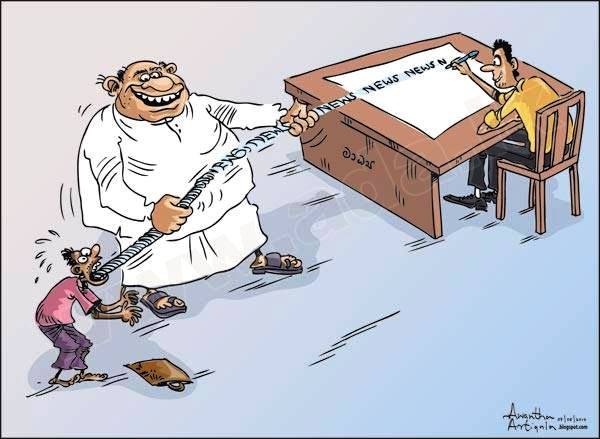
Awantha Artigala cartoon on media manufacturing dead ropes in Lanka

සමාජ මාධ්‍ය තවමත් අළුත් නිසා ඒවායේ ක‍්‍රියාකාරිත්වය හා සමාජීය බලපෑම ගැන අප සැවොම තවමත් අත්දැකීම් ලබමින් සිටිනවා. සමාජ මාධ්‍ය ගැන ඉක්මන් නිගමනවලට එළඹෙන බොහෝ දෙනකු ඒ ගැන ගවේෂණාත්මක අධ්‍යයනයකින් නොව මතු පිටින් පැතිකඩ කිහිපයක් කඩිමුඩියේ දැකීමෙන් එසේ කරන අයයි.

සමාජ මාධ්‍ය යනු බහුවිධ හා සංකීර්ණ සංසිද්ධියක්. එය හරි කලබලකාරී වේදිකාවක් නැතහොත් විවෘත පොළක් වගෙයි. අලෙවි කිරීමක් නැති වුවත් ඝෝෂාකාරී හා කලබලකාරී පොලක ඇති ගතිසොබාවලට සමාන්තර බවක් සමාජ මාධ්‍ය තුළ හමු වනවා.

එසේම සමාජ මාධ්‍ය අන්තර්ගතයත් අතිශයින් විවිධාකාරයි. එහි සංසරණය වන හා බෙදා ගන්නා සියල්ල ග‍්‍රහණය කරන්නට කිසිවකුටත් නොහැකියි.

ෆේස්බුක් සමාජ මාධ්‍ය ජාලයේ පමණක් ගිනුම් හිමියන් මිලියන් එක හමාරකට වඩා මෙරට සිටිනවා. එහෙත් එහි බොහොමයක් සාමීචි සංවෘතව සිදු වන නිසා මිතුරු ඇරැයුම් ලත් අයට පමණක් ඒවා ග‍්‍රහණය වනවා.

නමුත් ට්විටර් වේදිකාව කාටත් විවෘතයි. මෙරට ට්විටර් භාවිත කරන සංඛ්‍යාව පිළිබඳ නිශ්චිත සංඛ්‍යාලේඛණ නැහැ. 2013 මැදදී එක් ඇස්තමේන්තුවක් වූයේ 14,000ක් පමණ බවයි. මේ වන විට එය විසි දහසකට වැඩි විය හැකියි. එක ට්විටර් පණිවුඩයක් (ට්වීට් එකක්) අකුරු හෝ වෙනත් සංකේත 140කට සීමා වනවා. එබඳු සීමාවක් තුළ වුව ද සූක්‍ෂම හා ව්‍යක්ත ලෙස පණිවුඩ දිය හැකියි.

ට්විටර් මාධ්‍යයේ ගිනුමක් විවෘත කළ විට තමන් කැමති අන් ට්විටර් භාවිත කරන්නන් කියන කරන දේ ස්වයංකී‍්‍රයව නිරික්සිය හැකියි (follow). ක‍්‍රීඩා, චිත‍්‍රපට හෝ වෙනත් ක්‍ෂෙත‍්‍රවල නමක් දිනා ගත් ප‍්‍රකට පුද්ගලයන් හා දේශපාලන නායකයන්ගේ ට්විටර් අනුගාමික සංඛ්‍යාව වැඩියි.

උදා: 2014 ජුනි 22දා වන විට මහේල ජයවර්ධනට අනුගාමිකයන් 110,000ක්, කුමාර් සංගක්කාරට ලක්‍සයක් හා ජනාධිපති මහින්ද රාජපක්‍ෂගේ නිල ට්විටර් ගිනුමට අනුගාමිකයන් 38,000ක් පමණ සිටියා. අනුගාමිකයන් වැඩි දෙනකු සිටින අයකු කියන දේ වඩා ඉක්මනින් ප‍්‍රතිරාවය වී පැතිරෙන්නට ඉඩකඩ වැඩියි.

සමාජ මාධ්‍යවලට ආවේණික වූ විශ්වාසය තක්සේරු වීමේ ක‍්‍රමවේද තිබෙනවා. ඒ අනුව අනුගාමික සංඛ්‍යාව පමණක් නොව ට්වීට් පණිවුඩ ප‍්‍රතිරාවය කැරෙන වාර ගණන හා ආකර්ෂණය වන පාඨක අවධානය ආදී සාධක සැළකිල්ලට ගෙන කෙනකුගේ ට්විටර් බලපෑම (influence) ස්වයංකී‍්‍රයව ගණන් බැලෙනවා. මහජන විශ්වාසය (trust) යන්න හැමට ම දිනා ගත හැකි ගුණයක් නොවෙයි.

අළුත්ගම සිදුවීම්වලට රජයේ නිල ප‍්‍රතිචාරය වූයේ එවකට බොලීවියාවේ සංචාරයක යෙදී සිටි ජනාධිපතිවරයා සිය ට්විටර් ගිනුමෙන් නිකුත් කළ කෙටි පණිවුඩ කිහිපයක්. ජනාධිපතිවරයා (හෝ ඔහුගේ කාර්ය මණ්ඩලය) ජුනි 15 වනදා ඉංග‍්‍රීසියෙන් ට්විට් පණිවුඩ 2ක් ද, ජුනි 16 වනදා සිංහලෙන් ට්වීට් 2ක් හා දෙමළෙන් ට්වීට් 3ක් ද නිකුත් කළා.

සිංහල ට්වීට් පණිවුඩ වූයේ ‘‘නීතිය සිය අතට ගැනීමට රජය විසින් කිසිවකුට ඉඩ නොතබන අතර, මා සියළු දෙනාගෙන් සංයමයෙන් යුතුව කටයුතු කරන මෙන් ඉල්ලා සිටිමි’’. දෙවැනි පණිවුඩය ‘‘අලූත්ගම සිද්ධියට සම්බන්ධ පුද්ගලයන් නීතිය ඉදිරියට පැමිණවීමට පරික්‍ෂණයක් පවත්වනු ලැබේ’’

මෙරට ජන ගහනයෙන් ඉන්ටර්නෙට් භාවිත කරන 20-25%ක ප‍්‍රමාණයට පමණක් ග‍්‍රහණය වන මේ පණිවුඩ එබඳු අවස්ථාවක රජයේ නිල ප‍්‍රතිචාරය ලෙස ප‍්‍රමාණවත් නොවූ බව මගේ අදහසයි. රටේ 75-85% ගෘහස්ථයන්ගේ හමුවන ටෙලිවිෂන් හා රේඩියෝ මාධ්‍ය හරහා ද කෙටියෙන් වුවත් සන්සුන්ව සිටීමේ ආයාචනයක් කළ හැකිව තිබුණා. මෙබඳු අවස්ථාවල ඉහළ මට්ටමේ, වගකිවයුතු කෙනකුගේ කට හඬින්ම පණිවුඩයක් ඇසීමට අද සමාජය පුරුදු වී සිටිනවා (ආපදාවක් වූ විට විෂය භාර අමාත්‍යවරයා ප‍්‍රකාශයක් කරන්නා සේ).

සමාජ මාධ්‍ය හරහා ජුනි 16-17 දිනවල තොරතුරු හා ඡායාරූප ගලා ගියේ ප‍්‍රධාන ප‍්‍රවාහයේ මාධ්‍ය ඒ ගැන මුනිවත රකිමින් සිටි පසුබිම තුළයි. මීට පරම්පරාවකට හෝ දෙකකට පෙර නම් ඕනෑකමින් පුවත් අන්ධකාරයක් (media blackout) ටික දිනකට හෝ පවත්වා ගැනීමට හැකි වුණා. මන්ද තැපෑල හැරුණ විට පෞද්ගලික මට්ටමින් තොරතුරු හුවමාරුවට අවශ්‍ය තරම් දුරකථන හා වෙනත් මාධ්‍ය නොතිබීම නිසා.

එහෙත් 21 වන සියවසේ ටෙලිවිෂන්, රේඩියෝ හා පුවත්පත් වෙතින් එවන් පුවත් අන්ධකාරයක් මතු වූ විට ජනතාව ජංගම දුරකථන හා ඉන්ටර්නෙට් වෙත යොමු වනවා.
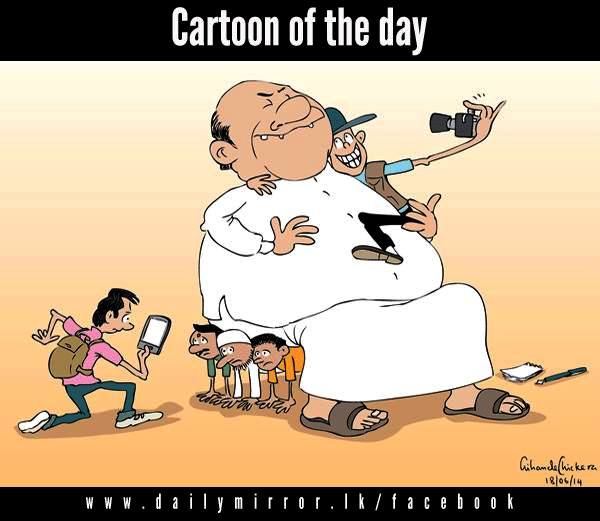
Mainstream and citizen journalists in Sri Lanka contrasted by Gihan De Chickera of Daily Mirror

First Post (India): 17 June 2014: Social media breaks Sri Lankan media’s shameful silence

ප‍්‍රමිතියක් සහිතව සමබරව පුවත් සන්නිවේදනයට පුහුණුව ලැබූ මාධ්‍යවේදීන් ප‍්‍රධාන ප‍්‍රවාහයේ සිටියත් මේ විකල්ප සන්නිවේදනයට යොමු වන බොහෝ දෙනකුට එබන්දක් නැහැ. එනිසා තොරතුරු විකෘති වීමට ඉඩ වැඩියි. ප‍්‍රධාන ප‍්‍රවාහයේ මාධ්‍ය අත්‍යවශ්‍යම වූ මොහොතක නිහඬවීමේ අවදානම මෙයයි.

අලූත්ගම සිදුවීම් ගැන වෙබ් අඩවි, ෆේස්බුක් හා ට්විටර් හරහා කම්පාවට පත් රටවැසියන් අදහස් දැක්වූවා. මෙය ඔවුන් අදහස් ප‍්‍රකාශනයට තමන්ට ඇති පුරවැසි අයිතිය යොදා ගැනීමක්.

අජිත් පැරකුම් ජයසිංහ හා මාතලන් වැනි ප‍්‍රමුඛ පෙළේ සිංහල බ්ලොග් රචකයන් හරවත් ලෙස මේ සිදුවීම් විග‍්‍රහ කළා. සුචරිතවාදී නොවී, අනවශ්‍ය ලෙස හැඟීම්බර නොවී ජාතීන් හා ආගම් අතර සමගිය පවත්වා ගැනීමේ වැදගත්කම ගැන ඔවුන් කථා කළා.

ට්විටර් යොදා ගනුනේ Breaking News මට්ටමේ අළුත් තත්ත්ව වාර්තා බෙදා ගන්නයි. ප‍්‍රචණ්ඩත්වයට ලක් වූ ප‍්‍රදේශ හා අවට සිටත්, වෙනත් තැන්වල සිටත් නොයෙක් දෙනා තොරතුරු ට්වීට් කළා.

මේ අතර ප‍්‍රධාන ප‍්‍රවාහයේ මාධ්‍යවේදීන් ගණනාවක් ද සිටියා. සමහරුන් මෙරට සිට ජාත්‍යන්තර මාධ්‍යවලට වාර්තා කරන අයයි. සිද්ධියක සැබෑ තොරතුරු තහවුරු කර ගෙන පමණක් වාර්තා කිරීම ඔවුන්ගේ මූලික විනය හා ආචාර ධර්මවල කොටසක්. මා නම් ට්විටර් හරහා ප‍්‍රතිරාවය කළේ මෙබඳු විශ්වාස කටයුතු මූලාශ‍්‍රවලින් ආ පුවත් පමණයි. මෙරට සිටින විදේශ වාර්තාකරුවන්ගේ සංගමය සිය ෆේස්බුක් පිටු හරහා අලූත්ගම සිදුවීම්වලට අදාල ක්‍ෂෙත‍්‍ර ඡායාරූප රැසක් මුදා හැරියා.

සමාජ මාධ්‍ය හා පුරවැසි මාධ්‍ය ගැන පර්යේෂණ කරන සංජන හත්තොටුව මේ ගැන කීවේ ‘‘ප‍්‍රධාන ප‍්‍රවාහයේ මාධ්‍ය කුමන හෝ හේතුවක් නිසා අලූත්ගම ගැන නිහඬව සිටියා. ඒවායේ සේවය කරන සමහර මාධ්‍යවේදීන් සිදුවීම වූ ප‍්‍රදේශයට ගොස් තොරතුරු රැස් කළත් ඒවා ප‍්‍රකාශ කිරීමට මුල් දෙදින තුළ ඉඩක් තිබුණේ නැහැ. ඒ තොරතුරු සමහරක් සමාජ මාධ්‍ය දිගේ ගලා ගියත් බහුතරයක් අපේ ජනතාව සිදුවීම් ගැන දැන ගත්තේ කල් ගත වීයි.’’

ජාත්‍යන්තර මාධ්‍යවලට වාර්තා කරන අමන්ත පෙරේරා කීවේ තොරතුරු දැන ගන්නට තිබූ ප‍්‍රධානතම මූලාශ‍්‍රය බවට සමාජ මාධ්‍ය පත්වූයේ ප‍්‍රධාන ප‍්‍රවාහයේ මාධ්‍ය මුළුගැන්වුණු නිසා බවයි.

ප‍්‍රධාන ප‍්‍රවාහයේ මාධ්‍ය හා සමාජ මාධ්‍ය අතර බෙදීම බොඳ වී ගොස් බිඳ වැටුණු බව මගේ වැටහීමයි. එය හොඳ ප‍්‍රවණතාවක්. අපේ ජන සමාජයට අවශ්‍ය කඩිනමින් නිවැරදි හා සමබර තොරතුරු දැන ගැනීමටයි. එය කුමන හෝ මාධ්‍යයක් හරහා ලැබේ නම් එයට ඉක්මනින් මහජන පිළිගැනීමක් ගොඩ නැගෙනවා. තොරතුරු අන්ධකාරයක් පවත්වා ගනිමින් ප‍්‍රධාන ප‍්‍රවාහය කර ගත්තේ තමන්ටම හානියක්.

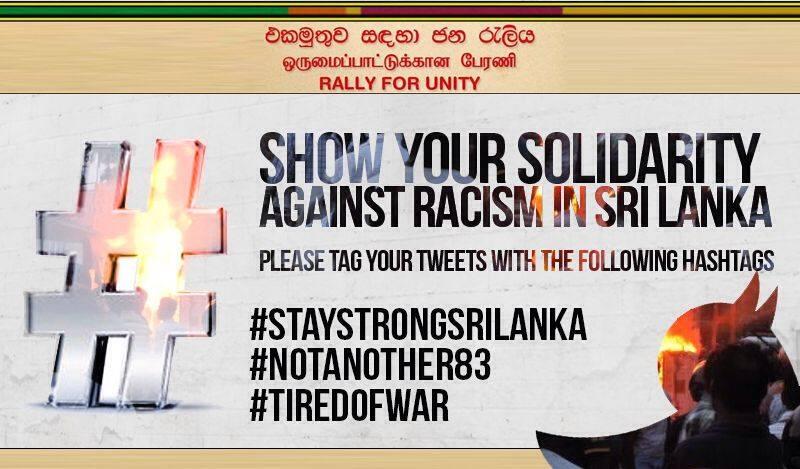
Stand Up Against Racismප‍්‍රචණ්ඩත්වය, ජාතිවාදය හා ආගම්වාදයට එරෙහිව ජනමතය ප‍්‍රකාශ කරන හා සාමකාමී ජනයා එක්සත් කරන තැනක් බවට ද සයිබර් අවකාශය පත්ව තිබෙනවා. සමාජ මාධ්‍ය රට ගිනි තබනවා යයි චෝදනා කරන්නෝ නොදකින අනෙක් පැත්ත මෙයයි.

තව දුරටත් ප‍්‍රභූන්ට හා ඉසුරුබර උදවියට පමණක් සීමා නොවූ ඉන්ටර්නෙට් භාවිතය වඩාත් සමාජගත වෙත්ම ජාතීන් අතර සහජීවනය, සමාජ සාධාරණය හා යහපාලනය වැනි සාරධර්ම සඳහා පොදු ජනතාව දැනුවත් කරන්නට හා පෙළ ගස්වන්නට සමාජ මාධ්‍ය යොදා ගත හැකියි. මෙය අසල්වැසි ඉන්දියාව, පාකිස්ථානය හා නේපාලය වැනි රටවල දැනටමත් සිදු වන්නක්.

අවසාන විනිශ්චයේදී සමාජ මාධ්‍ය හා ඉන්ටර්නෙට් යනු සන්නිවේදනයට ඉඩ සලසන වේදිකා පමණයි. වේදිකාවට පිවිසෙන අය වියරුවෙන් හා අසංවරව මොර දෙන අවස්ථා තිබෙනවා. එහෙත් වාචාලයන්ට දේශපාලන වේදිකා උරුම කොට දී සංවේදී හා සංවර වූවන් බැස ගියා සේ සයිබර් අවකාශය ද අන්තවාදී ටික දෙනකුට ඉතිරි කොට සෙසු අප ඉක්ම නොයා යුතුයි. මේ සයිබර් වේදිකා හුදී ජන යහපතට හා යහ පාලනයට හැකි තාක් යොදා ගත යුතුයි.

සිහි තබා ගත යුතු අනෙක් කරුණ නම් විවෘතව අදහස් ප‍්‍රකාශනයට හා තොරතුරු ගලා යාමට බාධක රැසක් පවතින අප සමාජයේ සාපේක්‍ෂව අළුතින් මතුව ආ ඉන්ටර්නෙට් වැනි මාධ්‍යයක් අනවශ්‍ය රාජ්‍ය නියාමනයට හෝ වාරණයට නතු වීම වළක්වා ගත යුතු බවයි.

අසභ්‍ය හා අපහාසාත්මක දේ සමාජගත වීම වැළැක්වීමට යයි කියමින් ඇතැම් ඉන්ටර්නෙට් වෙබ් අඩවිවලට පිවිසිම අවහිර කිරීම (website blocking) ඇරඹුණේ 2007දී. එහෙත් මේ වන විට ස්වාධීන දේශපාලන විග‍්‍රහයන් හා මතවාද රැගත් වෙබ් අඩවි ගණනාවක් ද අවහිර කරනවා. අධිකරණ අධීක්‍ෂණයකින් තොරව, හරිහැටි නීතිමය රාමුවක් නොමැතිව කරන මෙය සයිබර් වාරණයක්.

සමාජ මාධ්‍ය සංවරව හා වගකීමෙන් යුතුව භාවිත කිරීම අත්‍යවශ්‍ය වන්නේ එසේ නැති වූ විට අපේ පොදු යහපතට යයි කියමින් ඕනෑවට වඩා නියාමනයක් හා වාරණයක් කරන්නට රාජ්‍ය තන්ත‍්‍රය ඉදිරිපත් වීමේ අවදානමක් ඇති නිසයි.

See also: 30 Years Ago: How ICTs Are Changing Sri Lanka
BqQN4IxCIAEKHnW.jpg large


සිවුමංසල කොලූගැටයා #161: සමාජ මාධ්‍යවලට ඇයි මේ තරම් බය?

In this week’s Ravaya column (in Sinhala language), I probe why sections of Lankan society are habouring growing fears of social media, especially Facebook.

A few have called for a blanket ban of Facebook, which the secretary to the Ministry of Media has assured (in his Twitter feed) would not happen. There is an urgent need, however, to enhance public understanding in Sri Lanka of social media use, with particular attention on safety precautions, privacy protection and cyber civility.

I have drawn insights from a recent Colombo event on ‘Online safety for children and youth in Sri Lanka’ organised by Unicef Sri Lanka which brought together a few dozen web-savvy young people.

Social Media montage

කාලයෙන් කාලයට අළුතෙන් මතුව ආ සංසිද්ධීයක් අල්ලාගෙන එයට හැකි තරම් පහරදීම හා ඒ ගැන අස්ථාන බියක් ඇති කර ගැනීම අපේ සමාජයේ ගතියක්.

මෙරටට රේඩියෝ යන්ත‍්‍ර හඳුන්වා දුන් 1930 ගණන්වල ඒවා පුපුරා යන්නට, ගිනි ගන්නට හැකි භයානක පෙට්ටි යයි ඇතැමුන් කී බව මා කුඩා කාලයේ ආච්චි  ආවර්ජනය කළා. 1960-70 දශකවල චිත‍්‍රකථා මාධ්‍යය අපේකරණය වෙද්දි එයට නැගූ අවලාද හා චෝදනා ගැන මීට ඉහත කොලමකින් අප කථා කළා. ළමා මනස දුෂණය කිරීම, අපේ සංස්කෘතික උරුමයන් විනාශ කිරීම, සමාජයේ ප‍්‍රචණ්ඩත්වය තීව‍්‍ර කිරීම, කාලය කා දැමීම ආදී බරපතල චෝදනා මේ අතර තිබුණා.

1979-82 කාලයේ ටෙලිවිෂන් මෙහි ආ විට ටික කලෙකින් අපේ ළමා හා තරුණ පරපුර නෙත් අඳ වූ ඔලමොට්ටලයන් වනු ඇතැයි අපේ සුචරිතවාදියෝ මොර දුන්නා. ජංගම දුරකථන හා ඉන්ටර්නෙට් මාධ්‍යයටත් ප‍්‍රබලව එල්ල වූ මේ සැකයන් හා භීතිකාවන්ට ලක් වන අළුත්ම ප‍්‍රවණතාව වෙබ්ගත සමාජ මාධයයි (Social Media). විශේෂයෙන්ම ෆේස්බුක් Facebook නම් සංවෘත, මිතුරු සාමීචි වෙබ් වේදිකාවයි.

සමාජ මාධ්‍ය යන නම පවා සමහරුන්ගේ අවඥාවට ලක්ව ඇති බව පෙනෙනවා.  එක් පුවත්පත් ලිපියක් මෑතදී කීවේ සමාජ මාධ්‍ය යනු සමාජ ශාලා (ක්ලබ්ස්) යයි හැඟීමක් අපේ සමහරුන් නොදැනුවත්කම නිසා ඇති කර ගෙන තිබෙන බවයි!

අන් හැම මාධ්‍ය හා සන්නිවේදන තාක්‍ෂණයක් මෙන් ම සමාජ මාධ්‍යවලත් විවිධාකාර සමාජයීය බලපෑම් තිබෙනවා.  මේ අතර සමහරක් අහිතකර වීමේ ඉඩක් ද පවතිනවා.  ඒ ඉඩ අවම කර ගෙන සමාජ මාධ්‍යවල ධනාත්මක විභවය උපරිම කර ගන්නට අවශ්‍යයි.

සමාජ මාධ්‍ය යනු Facebook පමණක් නොවෙයි. දොරටුපාලක අධිපතිවාදයකින් තොරව අදහස් සන්නිවේදනය කළ හැකි බ්ලොග් blogඅවකාශ, ඉතා කෙටි හා ක්‍ෂණික සන්නිවේදන කළ හැකි ට්විටර් Twitter වේදිකාව, රූප බෙදා ගත හැකි Flickr වැනි නිදහස් සේවාවන් මෙන් ම විඩියෝ බෙදා ගත හැකි YouTube වැනි සේවාවන් සියල්ලත් සමාජ මාධ්‍යවලට අයත්.

පොදුවේ සමාජ මාධ්‍යවල දැකිය හැකි ආව්ණික ලක්‍ෂණ කිහිපයක් තිබෙනවා. කාගේවත් අවසරයක්, අධීක්‍ණයක් නැතිව කැරෙන මේ සන්නිවේදන ලිහිල් හා විවෘතයි. තවමත් බොහෝ දුරට වැඩවසම් මානසිකත්වයක් ඇති අපේ සමාජයේ මෙබඳු මත දැක්වීම්වලට ඉඩකඩ සිමිතයි. පාසලේ, සරසවියේ, කාර්යාලවල හා වෙනත් බොහෝ තලයන්හිදී තරුණ තරුණියෝ විවිධ ධූරාවලීන්ට   (hierarchies) යටත්ව කි‍්‍රයා කරනවා. එහෙත් දොරටුපාලයන් නැති, අධිපතිවාදයෙන් තොර කලාපයක් වන සයිබර් අවකාශයේ එබඳු සීමා නැහැ.

23 June 2013: සිවුමංසල කොලූගැටයා #123: පුරවැසි මාධ්‍ය සහ අධිපති මාධ්‍ය

4 Aug 2013: සිවුමංසල කොලූගැටයා #128: සීගිරි කැටපත් පවුරෙන් ඇරැඹුණු පුරවැසි මාධ්‍යවේදය

ඉන්ටර්නෙට්  මාධ්‍යයේ ලංකාගමනය සිදුවූයේ 1995 අපේ‍්‍රල් මාසයේ නිසා දැන් මේ මාධ්‍යය සමග අපේ සම්බන්ධයට වසර 19ක් පිරෙනවා. මිනිස් ජීවිතයක නම් මේ කඩඉමට පැමිණෙන විට යම් පරිනත බවක් අපේක්‍ෂා කරනවා. ඉන්ටර්නෙට් මාධ්‍යයේ සමාජයීය බලපෑම් ගැන පරිනත සංවාදයක් කරන්නට නම් හුදෙක් තාක්‍ෂණය,  නීතිය හෝ ඊනියා සුචරිතවාදයට වඩා ඔබ්බට යන විග‍්‍රහයන් අවශ්‍යයි.

20 Nov 2011: සිවුමංසල කොලූගැටයා #41: ඉන්ටර්නෙට්වලට කවුද බය?

මේ බුද්ධිමය නායකත්වය ලබා දීමට මෙරට සරසවි ඇදුරන් හා පොතේ උගතුන් බහුතරයක් අසමත්.  මේ මාධ්‍යය ගැන වැඩිපුර ම අවබෝධයක් ඇත්තේ එය සමග හැදුණු වැඩුණු මෙරට මුල් ඩිජිටල් පරම්පරාවටයි.  ඉස නිකට නොපැසුනත් මේ මාධ්‍යය ගැන වඩාත් හරවත් හා යථාර්ථවාදි උපදෙස් සෙසු සමාජයට දිය හැක්කේත් ඔවුන්ටයි.

24 June 2012: සිවුමංසල කොලූගැටයා #72: ඉන්ටර්නෙට් නොදැන ගොස් මංමුලා වූ උගත්තු…

මේ ඩිජිටල් පරපුරට සවන්දීමේ සංවාදශීලි රැස්වීමක් පසුගියදා එක්සත් ජාතීන්ගේ ළමා අරමුදල හෙවත් යුනිසෙෆ් Unicef ආයතනයේ ශ‍්‍රී ලංකා කාර්යාලය සංවිධානය කළා.  සමාජ මාධය භාවිතය ගැන පෞද්ගලික අත්දැකීමෙන් හා ගවේෂණාත්මක අවබෝධයෙන් කථා කළ හැකි  හා මේ නව අවකාශය ජය ගන්නට ආත්ම ශක්තිය ඇති තරුණ තරුණියන් රැසක් එයට සහභාගී වූවා.

මේ සංවාදයට එක් වූ සැවොම එකඟ වූයේ අවධි වූ සිහියන්, ප‍්‍රවේශම්කාරිව සයිබර් අවකාශයේ සැරසැරීම අද කාලයේ අත්‍යවශ්‍ය කුසලතාවක් බවයි.

‘‘අපේ සමාජය අළුත් හැම දෙයකට ම ප‍්‍රතිචාර දක්වන්නේ බොහොම ගතානුගතිකවයි. නව තක්‍ෂණයක හෝ ප‍්‍රවණතාවක ගති සොබා නොවිමසා මතු පිටින් පෙනෙන දෙයින් එයට දොස් කීම බහුලව  කැරෙනවා’’ යයි මෘදුකාංග ඉංජිනේරු හා සමාජ මාධ්‍ය ක‍්‍රියාකාරික ගයාන් විජේවික‍්‍රම කියනවා.

ඔහුගේ මතය සයිබර් අවකාශයේ සැබෑ අවදානම් මොනවාදැයි හරි හැටි හඳුනාගෙන ඒවායින් ප‍්‍රවේශම් වීමේ ක‍්‍රමවත් සමාජ සූදානමක් ඇති කළ යුතුයි.  මාධ්‍යයට බිය වී එය තහනම් කිරීම හෝ ළමයින් එයින් ඈත් කිරීම හෝ නිසි ප‍්‍රතිචාරය නොවේ.

‘භෞතික ලෝකයේ නොහඳුනන අයගෙන් ප‍්‍රවේශම් වන්නට යයි අප දරුවන්ට කියනවා. නොදන්නා කෙනෙකුට අපේ පෞද්ගලික තොරතුරු හෝ රූප දෙන්නේ නැහැ.  මේ හා සමාන ප‍්‍රවේශම්කාරි බවක් නොතිබීම අද සමාජ මාධ්‍ය භාවිතයට ගොස් අමාරුවේ වැටීමට ප‍්‍රධාන හේතුවක්’ ඔහු කියනවා.

සයිබර් අවකාශයේ ප‍්‍රධාන අවදානමක් නම් අපේ අනන්‍යතාවය වෙන අයකු විසින් අනවසරයෙන් පැහැර ගැනීමයි (identity theft). බොහෝ කොට මෙය සිදු වන්නේ අප හඳුනන (එහෙත් සැබෑවටම අපට හිතවත් නොවන) කෙනකු හරහායි.

Facebook ගිනුම් අරභයා මෙරට බලධාරින්ට ලැබෙන පැමිණිලිවල අති බහුතරයක් මේ ගණයට වැටෙනවා.  තමාගේ නමින් අනවසර ගිනුමක් පවත්වා ගැනීම හෝ තමන් සතු වූ ගිනුම හදිසියේ පැහැර ගැනීම හරහා තමන්ට හානිකර රූප, ප‍්‍රකාශ පළ කිරීම ගැන මේ පැමිණිලි ලැබෙනවා.  විමර්ශනය කරන විට හෙළි වන්නේ එබඳු අක‍්‍රමිකතා පිටුපස බොහෝ විට සිටින්නේ විරසක වූ පෙම්වතුන් හෝ ඉරිසියාවට පත් හිටපු මිතුරන් බවයි. මෙය සමීපතයන් අතර password හෝ මුරපද බෙදා ගැනීමේ පසු කාලීන විපාකයක්.

මූලික මට්ටමේ ආරක්‍ෂක උපක‍්‍රම වන්නේ තමන්ගේ විවිධ සයිබර් සේවා ගිනුම් (accounts)වලට හරිහමන් මුරපද දීමයි.  ලෙහෙසියෙන් වෙන අයකුට අනුමාන කළ නොහැකි මුරපද භාවිතයත්, කිසිම හේතුවක් නිසා සමීපතයන්ට පවා එය නොකීමත් ඉතා වැදගත්.

එහෙත් අපේ බොහෝ දෙනා ඉතා ලිහිල් ආකාරයේ මුරපද තෝරා ගැනීම, එකම මුරපදය විවිධ භාවිත ගිනුම්වලට යෙදීම, රහසිගත බව නොසළකා හිත මිතුරන්ට එය පැවසීම, බොහෝ කලක් එකම පුර පදය පවත්වා ගැනීම වැනි වැරදි රැසක් කරන බව හෙළි වී තිබෙනවා.

වඩාත් ප‍්‍රශස්ත මුරපදයක් තේරිම ගැන නොමිලයේ උපදෙස් සයිබර්  අවකාශය පුරාම හමු වනවා.  එසේම අදියර දෙකක මුරපද : (two-step verification) දැන් සමහර සයිබර් සේවාවලින් ලද හැකියි. Google, WordPress වැනි නිදහස් සේවා තම සාමාජිකයන්ට මෙය නිර්දේශ කරනවා. එහිදී තමා තෝරා ගත් රහසිගත මුරපදය ඇතුල් කළ විට එයට සම්බන්ධිත ජංගම දුරකථනයට  SMS හරහා  තාවකාලික රහස් අංකයක් එසැනින් ලැබෙනවා.  අදාල ගිනුමට පිවිසිය හැක්කේ මුරපදය හා අංකය දෙකම හරියට ගැලපේ නම් පමණයි.  මේ රහස් අංකය අහම්බෙන් ජනනය වන නැවත භාවිතයක් නැති එකක්.

විශේෂයෙන් කාර්යාලවල, සයිබර් කැෆේ හා නැණසල ආදි ස්ථානවල පොදුවේ භාවිත කැරෙන පරිගණක හරහා සයිබර් අවකාශයට පිවිසෙන විට මුරපදයන් සුරැකීමත්, වෙනත් ආරක්‍ෂිත උපක‍්‍රම ගැන විමසිලිමත් වීමත් වැදගත්.  එසේම මුරපද යොදා තමන් විසින් පිවිසි ගිනුම්වලින් යළිත්  ඕනෑකමින්ම බැහැරවීම (log out) අවශ්‍යයි.

අපේ සමහරුන් තමන්ගේ පෞද්ගලික ඊමේල් හා ෆේස්බුක් ගිනුම් පොදු පරිගණකවල විවෘත කොට ඒවා යළිත් බැහැර නොවී තබනවා.  එවිට වෙනත්  ඕනෑම කෙනෙකුට එයට පිවිසී  ඕනෑම මගඩියක් කළ හැකියි.  නිවසේ දොර ජනෙල් අගුලූ නොදමා විවෘතව තබනවා වැනි අවදානම් සහගත ක‍්‍රියාවක්.

පරිගණක, ස්මාට්ෆොන් හා වෙනත් සන්නිවේදන තාක්‍ෂණ ක‍්‍රියාත්මක කරන්නට අවශ්‍ය තාක්‍ෂණික දැනුම (එනම් තොරතුරු සාක්‍ෂරතාව) පමණක් සෑහෙන්නේ නැහැ. ප‍්‍රවේශම්කාරිව, කාර්යක්‍ෂමව හා ආචාරශීලීව සයිබර් අවකාශයේ සැරිසැරීමට ඉන්ටර්නෙට් සාක්‍ෂරතාව (cyber literacy)  හා සමාජ මාධ්‍ය සාක්‍ෂරතාව (social media literacy) ද අවශ්‍යයි. මේවා මෙරට බහුලව හමුවන පරිගණක උපකාරක පන්තිවලින් හරිහැටි ලබා දෙන කුසලතාවයන් නොවෙයි.

Megara Tegal
Megara Tegal

තරුණ මාධ්‍යවේදිනියක් වන මෙගාරා ටෙගාල් කියන්නේ ලක් සමාජයේ ඉන්ටර්නෙට්  භීතියට අපේ බහුතරයක් මාධ්‍ය ද  වගකිව යුතු බවයි.  පාඨක හා ග‍්‍රාහක සංත‍්‍රාසය ඇති කරන ආකාරයේ ප‍්‍රවෘත්ති ආවරණයත්, ‘Facebook මාරයා’ වැනි වචන භාවිතයත් මෙයට දායක වනවා.

‘‘Facebook යනු කාටත් නොමිළයේ බැඳිය හැකි සමාජ මාධ්‍ය ජාලයක්. වේදිකාවක්.  ප‍්‍රශ්න මතු වන්නේ එයට බැඳෙන සමහරුන් දැනුවත්ව හෝ නොදැනුවත්ව කරන වැරදි නිසයි.  ඒත් අපේ මාධ්‍ය වාර්තා බලන විට Facebook යනු මහා භයානක, දුෂ්ට හා දුෂිත තැනක් වැනි හැඟීමක් හටගත හැකියි’’ මෙගාරා කියනවා.

මෙයට එක් හේතුවක් නම් අපේ බොහෝ මාධ්‍යවේදීන් හා මාධ්‍ය කතුවරුන්ට මේ නව තාක්‍ෂණ හා මාධ්‍ය ගැන නිසි අවබෝධයක් නැති වීමයි.  ඉන්ටර්නෙට් ආගමනයෙන් පසු ගෙවී ගිය මුල් වසර කිහිපයේ එය තේරුම් ගත හැකි වුවත් තවමත් මේ නොදන්නාකම හා දුර්අවබෝධය පවතින්නේ ඇයි?

මගේ මතය: ඉන්ටර්නෙට් මාරයා, Facebook මාරයා වැනි යෙදුම් තමන්ගේ මාධ්‍ය ලිපිවල ලියන්නේ ඉන්ටර්නෙට් හීනමානයෙන් පෙළෙන උදවියයි.  තමන් නොදත් හෝ තමන් අසමත් නව තාක්‍ෂණයක් සමාජයේ අන් අයට ලැබෙනවාට නොරිසි මේ අය පොදුවේ ඉන්ටර්නෙට් ගැනත් සමාජ මාධ්‍ය ගැනත් අතිශයෝක්තියෙන් බියකරු කථා පතුරවනවා.

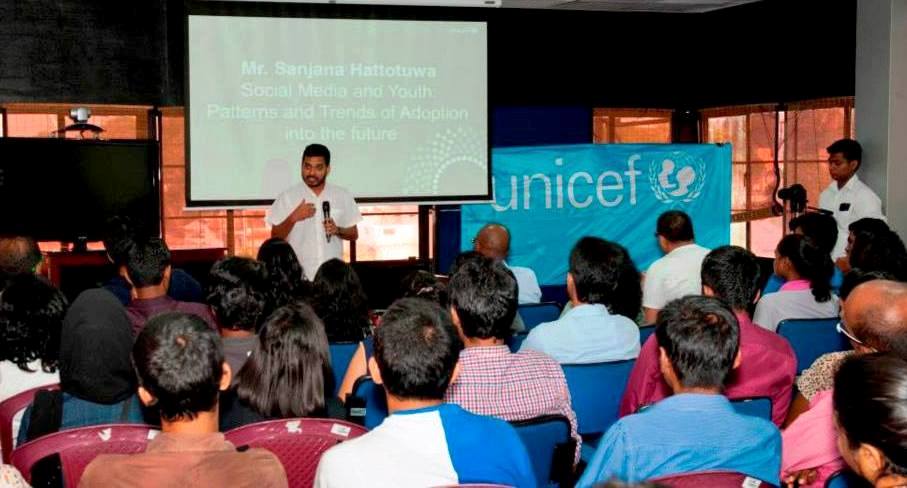
Sanjana Hattotuwa speaking on Social Media & Youth Patterns and trends of adoption into the future’ - photo courtesy Unicef Sri Lanka Facebook page
Sanjana Hattotuwa speaking on Social Media & Youth Patterns and trends of adoption into the future’ – photo courtesy Unicef Sri Lanka Facebook page

ඉන්ටර්නෙට් භාවිතයේදී ඇති වන අක‍්‍රමිකතා හා මූල්‍යමය වංචා ආදිය ගැන මෙරට නීති සම්පාදනය වී ඇතතත් සමාජ මාධ්‍ය ගැන තවමත් රාජ්‍ය තන්ත‍්‍රයට පැහැදිලි අවබෝධයක් නැහැ.  විකල්ප ප‍්‍රතිපත්ති කේන්ද්‍රයේ ජ්‍යෙෂ්ඨ පර්යේෂක සංජන හත්තොටුවගේ අදහස සමාජ මාධ්‍ය ගැන දෙබිඩි පිළිවෙතක් රජයට ඇති බවයි.

‘‘එක් පසෙකින් ජනාධිපතිවරයා හා මහ බැංකු අධිපතිවරයා සෘජුව ම ලක් ජනතාවට සමීප වන්නට සමාජ මාධ්‍ය (Twitter) හරහා සංවාද කරනවා. ඒ අතර සමාජ මාධ්‍ය මහත් වසංගතයක් යයි ජනාධිපතිවරයා ම ප‍්‍රසිද්ධියේ කියනවා. සමාජ මාධ්‍ය මෙරට ජාතික ආරක්‍ෂාවට තර්ජනයක් විය හැකි යයි ආරක්‍ෂක ලේකම්වරයා දේශනයකදී කියනවා. මේ පරස්පරයන් නිසා සමාජ මාධ්‍ය ප‍්‍රශස්ත ලෙස සමාජ උන්නතියට යොදා ගැනීම දුෂ්කර වනවා’’ සංජන කියනවා.

4 Sep 2011: සිවුමංසල කොලූගැටයා #30: නීතිය, සාමය, ජාතික ආරක‍ෂාව හා ඉන්ටර්නෙට්

ටික දෙනකුගේ උද්ඝෝෂණ නිසා රජය සමාජ මාධ්‍ය මෙරට තුළ තහනම් කිරීමක් නොකරන බව මාධ්‍ය අමාත්‍යාංශයේ ලේකම් චරිත හේරත් ප‍්‍රකාශ කොට තිබෙනවා.  දැනුවත් වූ හා ප‍්‍රවේශම්කාරි සමාජ මාධ්‍ය  භාවිතයකට ලක් සමාජය යොමු කිරිමේ අවශ්‍යතාවය මාධ්‍ය අමාත්‍යාංශ ලේකම්වරයා  අවධාරණය කරනවා.

සමාජ මාධ්‍ය නියාමනයට රාජ්‍ය කමිටුවක් පත් කැරෙන බවට මෑතකදී වාර්තා වුවත් ඒ ගැන වැඩි තොරතුරු හෙළිවී නැහැ. සංජන හත්තොටුව කියන්නේ නියාමනය නොව සයිබර් සාක්‍ෂරතාවය හා දැනුවත්බව තීව‍්‍ර කිරීම අත්‍යවශ්‍ය බවයි.  එසේම සමාජ මාධ්‍යවලින් ලැබෙන නිර්නාමික බව (anonymity) හෝ විවිධ මවාගත් අනන්‍යතා (pseudonimity) හෝ හරහා ද්වේශසහගත ලෙස  තමන් නොරිසි ආයතනවලට, ජාතිකයන්ට හෝ ආගමිකයන්ට පහර ගැසීමේ ප‍්‍රවණතා වැඩිවෙමින් පවතින බවත් ඔහු කියනවා.

වික්ටෝරියානු අධිසුචරිතවාදය වෙනුවට සදාචාරාත්මක හා ආචාරශීලි රාමුවක් තුළ සයිබර් සන්නිවේදන කිරීමේ අවශ්‍යතාවය ද අපේ සමාජයේ ප‍්‍රවර්ධනය කළ යුතුයි.  නැතිනම් ඩිජිටල් පරම්පරාවේ දැලිපිහිය අතට ගත් වඳුරන් වැනි පිරිසක් බිහි වීමේ අවදානම තිබෙනවා.

Did youth vote and social media make a difference in Colombo Municipal Council Election of Oct 2011?

Did youth vote and social media make a difference in Colombo Municipal Council election in Sri Lanka held in October 2011?

This was the question that Chanuka Wattegama and I asked ourselves and set out to answer when invited to contribute a chapter to a regional book on how social media are influencing elections in Asia.

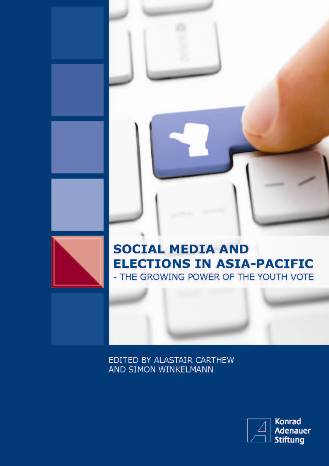
Social Media and Elections in Asia-Pacific - The Growing Power of the Youth Vote - book coverThe book, titled “Social Media and Elections in Asia-Pacific – The Growing Power of the Youth Vote“, has just been published by Konrad-Adenauer-Stiftung’s Media Programme Asia based in Singapore. It is edited by Alastair Carthew and Simon Winkelmann, and available for free download.

The book comprises 10 chapters covering 11 nations written by local contributors from Australia, Indonesia, Japan, Malaysia,  New Zealand, Singapore, South Korea, Sri Lanka, the Philippines, Taiwan and Thailand.

It examines trends and outcomes surrounding recent elections in these countries — and how social media influenced election campaigning and voting, especially among young voters.

Topics include:

• Use of social media surrounding elections
• Digital electioneering
• How social media can make a difference
• How important is voting to young people?
• Detailed polling of political trends

Our summary for the Sri Lanka chapter:

The Colombo Municipal Council (CMC) is the local government body that administers Sri Lanka’s largest city and its commercial capital. Its last election, held in October 2011, saw the nationally ruling coalition losing this key municipality while winning all other municipalities as well as many of the smaller local government bodies.

What made CMC election outcome different? This election saw some apolitical activists and researchers engaging the mayoral candidates on social media, questioning and critiquing their election manifestos and trying to hold them accountable. Did these online activities influence voter behaviour? What lesson does this hold for other elections and the overall political landscape in Sri Lanka?

Read full book at KAS website

Download Sri Lanka Chapter: Did youth vote and social media make a difference in Colombo Municipal Elecction in 2011 – book chapter

#AskLW Twitter Q&A on 19 June 2013: Asking was easy; getting answers was not…

Screen Shot 2013-06-19 at 8.31.53 PM Courtesy Groundviews.org

Along with dozens of tweeps, I took part in an interesting Twitter Q&A session with Lalith Weeratunga, Secretary to the President of Sri Lanka, which unfolded from 14:30 to 16:00 Sri Lanka Time on 19 June 2013.

Our questions were posed using the hashtag #AskLW: they are all displayed on Twitter at https://twitter.com/search/realtime?q=%23askLW While most were in English, some came in the local languages of Sinhala and Tamil too.

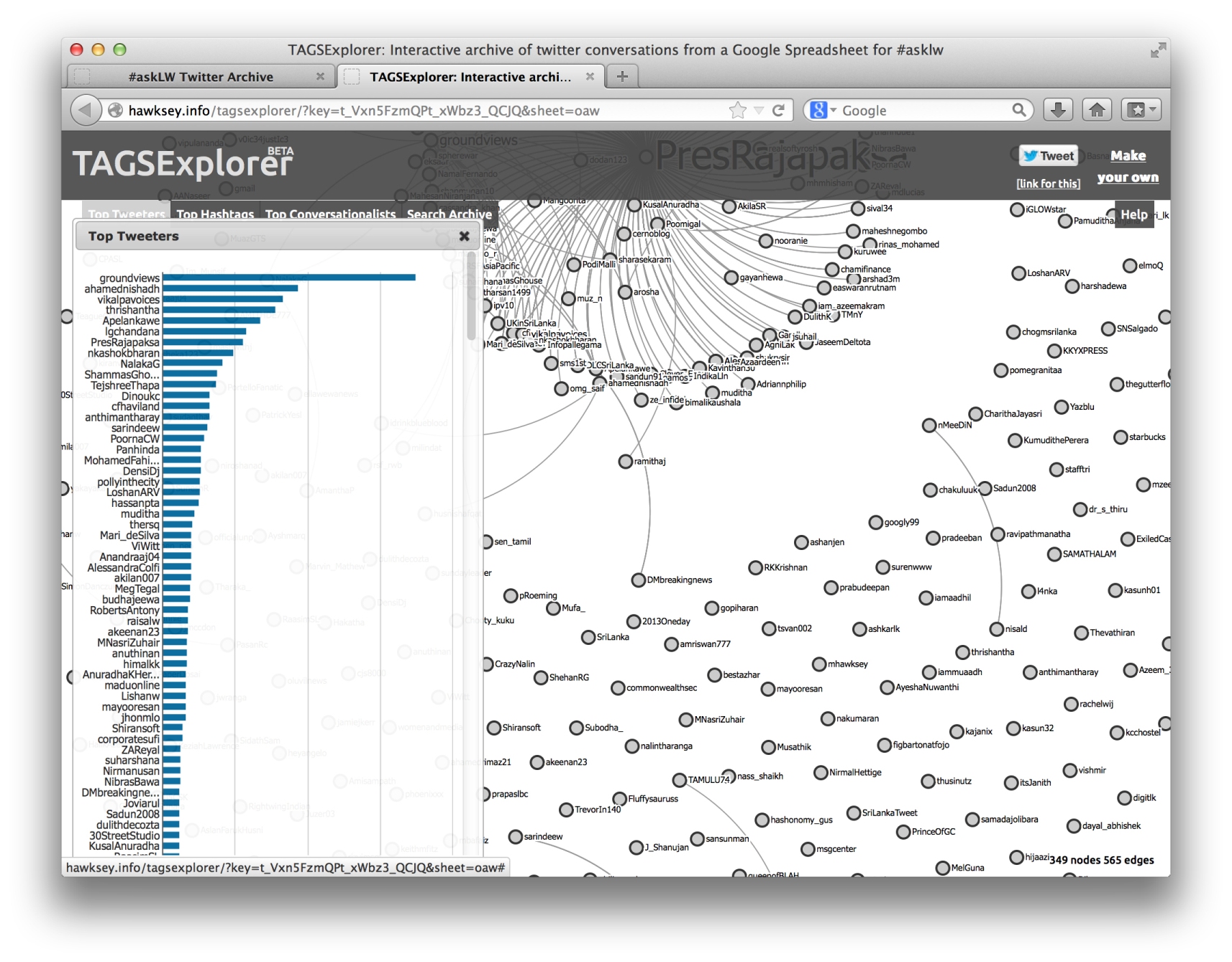
Groundviews.org, the citizen journalism website, has archived online 2,680+ tweets related to this exchange. Of these, some 1,140 are original tweets (posted since 14 June 2013, when #askLW was first announced) while others are retweets.

Twitter user @gopiharan created a bundle of tweets Lalith Weeratunga answered in the one and a half hours of the Q&A session.

As Groundviews.org noted, “There was no historical precedent for this kind of engagement over social media, especially for someone so high up in Government and in daily contact with the (Lankan) President.”

Commenting on the timing of this exchange, Groundviews editor Sanjana added: “Ironically, the announcement of the Twitter Q&A with Weeratunga came on the same day Gotabaya Rajapaksa, the President’s brother, in a spark of unrivalled genius, called social media no less than a national security threat in post-war Sri Lanka.”

Sanjana has done a quick and very good analysis of what was asked, which selected few among many were actually answered, and which topics gained traction among those participating – especially during the period the event was live.

Even more interesting is how contentious and controversial topics were completely ignored. To be sure, Weeratunga isn’t the first public official to do so, and some might even argue that he had the right to choose his questions. (That won’t have been so easy in a physical press conference.)

All the same, it is highly revealing that the top public servant in Sri Lanka chose not to respond to questions on Islamphobia, Buddhist extremism, hate speech, militarisation, human rights and other topics of great public interest in today’s Sri Lanka.

It’s remarkable that such questions were posed, in a public platform, which is more than what the mainstream media (MSM) of Sri Lanka regularly ask at official press conferences given by senior government officials. From all accounts, the monthly breakfast meetings that the President has with newspaper editors is also a lame affair where no critical questions are raised.

Yes, MSM and citizen journalists are not directly comparable. In the prevailing intolerant environment, it is telling that many social media users took cover under pseudonyms to pose questions to the top civil servant of Lanka (while the rest of us asked under our own names). There was even speculation among some tweeps about what might happen to those who ask pesky questions…

In this post, I want to collate and briefly annotate my own questions to Weeratunga – all of which he chose not to answer. I’m not surprised and certainly not sulky: these were admittedly not as easy as some others.

I posed a few questions in advance, and then some more during the live event. They were in one way or another related to the multiple positions that Weeratunga holds in the Lankan government.

Among other things, he is Chairman of the Telecommunication Regulatory Commission of Sri Lanka is also the current Chair of the Information and Communication Technology (ICT) Committee of UNESCAP – the UN Economic and Social Commission for Asia and the Pacific.

One question stemmed from Weeratunga’s meaningful speech at the fifth National Conference on the Role of ICT in Reconciliation held at the Lakshman Kadirgamar Institute for International Relations and Strategic Studies (LKIIRSS) in Colombo in Nov 2012.

Not answered.

I also asked a question on the ICT Agency of Sri Lanka, which has outlived its original lifespan and whose efficacy is in question.

Not answered. See also my 2006 critique, ICT: Hypes and realities

Commenting on the very different – sometimes contradictory – messages given out by senior elected and other public officials of the Lankan government on matters of domestic and global interest, I asked:

Not answered. But then, I didn’t expect one! To his credit, Weeratunga has been the mild, amiable and intelligent face of the government…

Picking up my lasting interesting seeing a secular state in Sri Lanka, I posed this question:

Not answered.

When the live exchange started, and some tweets were asking him on all sorts of specific interventions, I tweeted this reminder to fellow tweeps:

Not quite heeded – but I didn’t expect it either.

Weeratunga, who does not yet have his own Twitter account, gave his selected answers using the President’s official account, @PresRajapaksa. This was noted by others, and I replied to one:

Many tweeps asked him to comment on the Defence Secretary’s recent remark on social media. Having noted, only minutes earlier, that “Social Media is a powerful tool”, Weeratunga added later: “Sec/Defence has a point; since it has been used for destructive purposes elsewhere, he has said so.”

Some tweeps reacted to this observation among ourselves. My contribution:

Knowing well Lankans don’t like to be compared to Indians, who nevertheless hold many lessons for us in managing diversity and in balancing modernity with tradition, I asked:

Not answered — but elicited some supportive replies from other tweeps.

As Weeratunga and team was slow in responding to the torrent of tweets coming in, I remarked:

As I noticed how easy questions were being answered while a whole lot of hard ones were not, I decided to press on with what seemed like a lost cause:

Not answered. (Well, after all, this wasn’t Hard Talk!).

Prompted by @Groundviews, there was a brief exchange on Sri Lanka’s fully state owned budget airline Mihin, which has been losing billions of public funds from Day One. I reacted:

I’ve described myself as a hybrid journalist with ‘one foot in each grave’ — straddling the worlds of mainstream media and citizen journalism. In years of mainstream journalism — practised in Sri Lanka and across Asia — I have sharpened the art of asking pointed questions. I often ask more questions than I find answers for. So this is part of that process.

But I’m very glad all our questions are archived online — which is highly significant as part of the public record of our times. When Weeratunga next speaks about ICTs nationally or internationally, this digital record will be part of his legacy.

For now, many thanks to Weeratunga and @PresRajapaksa new media team for having organised this event. It’s a good start, and hopefully they will repeat this from time to time with improved capability at their end to cope with the info flood…

My last tweet in this exchange was a salute to the original cyber politician of Sri Lanka:

This Blogger is Over-capacity: We’ll be back soon!

Please bear with us while we're out makin' an honest living...

When Twitter experiences over-capacity (i.e. too many demands on its system), users see this delightful image. Known as the “fail whale” error message, it is an image created by Yiying Lu, an artist and a designer in Sydney, Australia. The New York Times Magazine called it ‘a successful failure’.

Well, I’m over-capacity too these days! That’s because I’m out there earning an honest living and that takes most of my waking hours. As a result, I’ve been blogging less and less in recent weeks. On such days, I have just enough energy for a quick tweet or two, but not for a fully-fledged blog post. (Yes, I take my blogging seriously.)

Sorry about that folks! I don’t look anything like the Fail Whale, although I’ve always been fascinated by these creatures. Right now, I’m as over-capacity as Twitter sometimes gets.

As Woody Woodpecker used to say: Don’t go away! We’ll be back soon….

Why are ‘Smart Mobs’ also very fickle? Looking for an antidote to fleeting activism

Smart but fleeting mobs?
‘Smart mobs’ is an interesting term for like-minded groups that behave intelligently (or just efficiently) because of their exponentially increasing network links.

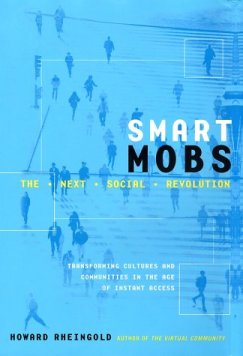
The idea was first proposed by author Howard Rheingold in his 2002 book, Smart Mobs: The Next Social Revolution. It deals with the social, economic and political changes implicated by developing information and communications technology. The topics range from text-messaging culture and wireless internet to the impact of the web on the marketplace.

In the eight years since the book first appeared, we’ve seen a proliferation and evolution of smart mobs, fuelled by the growth web 2.0 tools and, more recently, the many and varied social media. In fact, author Rheingold is credited with inventing the term virtual communities.

But the reality is that smart mobs can also be very fickle — their attention can be easily distracted. A smart mob can disperse just as fast as it forms, even while its original provocation remains.

This was demonstrated in dramatic terms in June 2009. Following a hotly disputed presidential election in Iran, there was a surge of online support for pro-democracy activists there who launched a massive protest. A main point of convergence for online reporting and agitation was micro-blogging platform Twitter. Within a few days, mainstream media like TIME and Washington Post were all talking about this phenomenon in gushing terms.

'Rescued' by Michael Jackson?
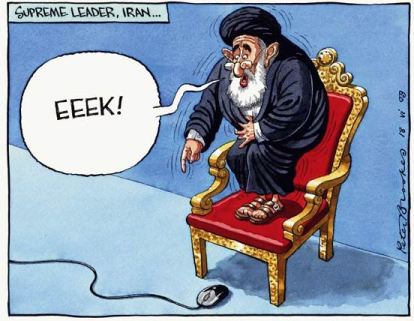
Then something totally unexpected happened. On June 25, Michael Jackson’s sudden death in Los Angeles shocked the world. As the news spread around the world at the speed of light, it crashed some social networking sites and slowed down even the mighty Google. Online interest on Iran dipped — and never regained its former levels.

As I wrote at the time: “I have no idea if the Ayatollahs are closet fans of Michael Jackson. But they must surely have thanked the King of Pop for creating a much-needed diversion in cyberspace precisely when the theocracy in Tehran needed it most.”

Other recent experiences have demonstrated how online interest can both build up and dissipate very fast. Staying with a single issue or cause seems hard in a world where news is breaking 24/7.

Here’s a current example. Following the massive oil spill in the Gulf of Mexico that started on 20 April 2010, local communities and environmental activists deployed various social media tools to track the unfolding disaster. BP, the giant oil company implicated in the disaster, has also tried to use social media to communicate its positions, but not too successfully. On Twitter, it was not BP’s official account but the satirical @BPGlobalPR that was dominating the online conversation. As one commentator wrote: “It is an object lesson in how social media can shape and control a company’s message during a crisis.”

Beyond PR?
By early July 2010, however, there were already signs that online interest on the issue was already waning — even as the oil continued to leak from this largest offshore oil spill in US history. In a detailed analysis of main social media platforms’ coverage of the issue, Mashable noted last week: “An estimated 100 million gallons or more of oil have surged into the Gulf of Mexico…Yet on Twitter, Google, blogs and even YouTube, we’re already wrapping up our collective discussion of the oil spill and how to repair its damage.”

Riding the wave can be fun, but waves form and break quickly. Those who want to use social media tools for social activism still need to learn how to hitch a ride with the ocean current beneath the fickle waves.

How I wish I could get some practical advice on this from a certain ancient mariner named Sinbad.

Updates from Tweet-land: Say it all in 140 characters…and why not?

Tweet, Tweet! Do you follow me yet?
I just passed the 500 mark in tweeting. That’s not a great number considering how some people tweet a dozen or more times every day. But I’m not into such high volume tweeting – the most I’ve done on a given day, I think, is half a dozen. So it took me several months to clock up 500.

I was a late-comer to Twitter. It was my friend David Brewer, new media activist, who persuaded me to sign up in late 2009. On his Media Helping Media website, he has been showcasing the new tools, platforms and opportunities for anyone to become a global media brand in just 100 minutes (he recently updated this quick guide, reducing the time to 60 minutes).

Since then, I’ve been learning the ropes and having fun. What started off as a way to share weblinks to my blog posts or other interesting online content has evolved – in just a few months – into an outlet where I can express my opinions on social, political or cultural topics of current interest. And as my regular readers know, I can be quite opinionated…

I don’t normally tweet about very personal experiences or impressions. But I do share insights from my frequent travels, and meetings with interesting people and ideas.

The past few months have provided me with ample material. I became single again in January, and am now trying to reboot my personal and professional lives, even as I raise a teen-aged daughter as a single parent. Meanwhile my country of anchor, Sri Lanka, is emerging from nearly three decades of civil war, and the trauma and militarisation that went with it, and is struggling to return to normal, peaceful days again. Both processes are fraught with many challenges, and the journey is also the destination.

Slowly but surely, I’ve realised that a good deal can be expressed in 140 characters or less that each tweet allows. The mandarins of verbosity may not agree, but as Shakespeare himself noted in Hamlet, ‘brevity is the soul of wit’. As a writer, I already knew the power of concise and precise expression, and Twitter has only challenged me to be compact, punchy and imaginative.

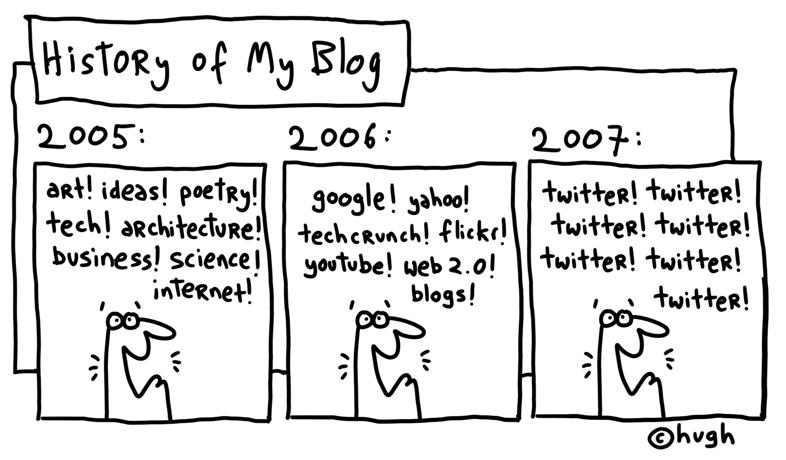
Looking back, I realise that my tweeting has come at some cost to my blogging. It’s not the only reason, or even the main one, but I’ve been blogging less in the past few months even as I tweeted more. Blogging entails more work, whereas tweeting is really micro-blogging on the run. I can tweet in under a minute whereas an average blog post – at the level of hotlinking and illustrating I like to do – can take between 30 mins to an hour.

As I juggle bread-and-butter with my multiple passions (or the ‘jam’ on top), I’ve had less time for more reflective and leisurely blogging this year. It doesn’t mean that my blog will go the way of the blogger in this cartoon – if anything, it serves me as a caution!

Cartoon courtesy Hugh MacLeod

I started tweeting as an occasional habit, but should have known better. It took me a while to realise that it’s become a habit. And then, when I spent a few days in Beijing in late May this year, I almost developed withdrawal symptoms (Twitter is officially blocked in China). My resulting blog post, Twitterless in Beijing, has been widely linked to and discussed.

On a technical note, I’m still quite old fashioned in that I don’t post new tweets from mobile phones or other hand-held devices – all my 500+ tweets so far have been posted from the web, using my regular browser. I have no immediate plans to go for a fancy new mobile phone or ipad or similar device. I know mobile internet is the new wave, but I don’t yet have the urge to be tweeting on the run – I can hold my ideas and communicative urges until I sit down at my laptop…

But who knows what changes would occur on the road to my 1,000th tweet?

Here’s a collection of spoofs on famous quotes, as they apply to Twitter and tweeting. Some are very funny!

Twitterless in Beijing: Talking aspirationally about social media…

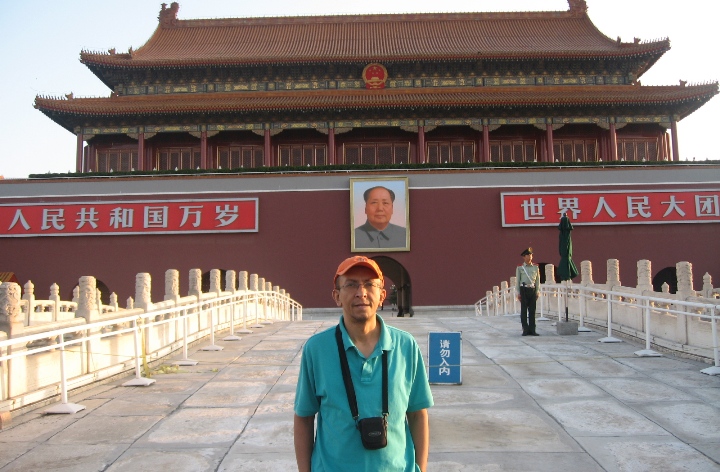
Under Chairman Mao's watchful eyes...

“Reading computer manuals without the hardware is as frustrating as reading sex manuals without the software!”

This is one of the less known, but more entertaining, dicta by Arthur C Clarke – he called it ‘Clarke’s 64th Law’, and I personally know he used to bring it up when meeting with particularly crusty or glum intellectuals. (Not all were amused.)

Clarke’s words kept turning in my mind as I moderated and spoke at a session on social media at Asia Media Summit 2010 held in Beijing China from 24 to 26 May 2010. The country with the world’s largest media market is not exactly the world’s most open or free – and certainly when it comes to social media, it’s a very different landscape to what we are used to…

These days, International visitors arriving in China discover quickly that access to YouTube, Twitter and Facebook is completely blocked. Apparently the brief ‘thaw’ in restrictions, seen before and during the 2008 Beijing Olympics, is now over — the current restrictions have been in place since the spring of 2009.

This doesn’t mean there is no social media in China. In fact, I heard from several Chinese friends and colleagues that there is a very large, dynamic and fast-evolving social media scene in China. For the most part, however, it’s not based on globally used and familiar platforms, and is happening in a digital universe of China’s own — under the watchful eye of the government.

Jump in...but some conditions apply!
For example, I found from this March 2010 blog post by Merritt Colaizzi that:
* 221 million people have blogs, largely in a diary-style.
* 176 million Chinese connect via social networking system (SNS) with their “real” friends and online networks.
* 117 million connect anonymously via bulletin board system (BBS). These interactive online message boards are the heart of social media in China. They’re where people go to find topic-based communities and where consumers talk about products and services.

There are lots of other blogs, mainstream media reports and research commentary on social media in China — just Google and see (now that’s another thing with limited – and uneven – access in China: Google itself is available, but search results come with lots of links that simply aren’t accessible). Much or all of this interaction happens in Chinese, of course. It’s a significant part of the web and social media landscapes, but if you’re in China on a short visit and want to stay connected to your own social media networks, that’s not at all helpful.

And, of course, it undermines one of the key attributes of a globally integrated information society: the interoperability of systems and platforms.

Luckily for me, perhaps, I can survive a few days without my social media fix: I have an appalling record of updating my Facebook account: days pass without me even going there. For the moment, at least, I’m also taking a break from regular blogging (well, sort of). But I’m more regular in my micro-blogging on Twitter, and visit YouTube at least once a day, sometimes more often. I could do neither during the few days in Beijing – and that was frustrating.

So imagine having to talk about social media as a new media phenomenon in such a setting. That’s only a tiny bit better than reading computer manuals without the hardware…But this is just what I did, with all the eagerness that I typically bring into everything I do. I planned and moderated a 90-minute session on Social Media: Navigating choppy seas in search of Treasures?

The session was part of the Asia-Pacific Media Seminar on Ozone Protection and Climate Benefit, so our context was how to use the social media to raise public awareness and understanding on the somewhat technical topics of ozone layer depletion and climate change (two related but distinctive atmospheric phenomena).

With access to key global social media platforms denied, we visitors and Chinese colleagues in the audience could speak mostly generically, theoretically and aspirationally. I didn’t want to place my hosts and seminar organisers in difficulty by harping on what was missing. Instead, we focused on what is possible and happening: how development communicators are increasingly social media networks and platforms to get their messages out, and to create online communities and campaigns in the public interest.

The thrust of my own opening remarks to the session was this: In the brave new world of social media, we all have to be as daring as Sinbad. Like the legendary sailor of Baghdad, we have to take our chances and venture into unknown seas. Instead of maps or GPS or other tools, we have to rely on our ingenuity, intuition and imagination.

More about the session itself in future blog posts.

For now, I want to share this TED Talk by American watcher of the Internet Clay Shirky on how cellphones, Twitter, Facebook can make history. Shirky shows how Facebook, Twitter and TXTs help citizens in repressive regimes to report on real news, bypassing censors (however briefly). The end of top-down control of news is changing the nature of politics.

PS: All this holds more than an academic interest for me, because there have been media reports in recent weeks that the Sri Lankan government is working with Chinese experts in formulating strategies for censoring internet access from Sri Lanka.

TV Will Save the World, says Charles Kenny in TIME’s ’10 ideas for next 10 years’

Photo by Reza Deghati

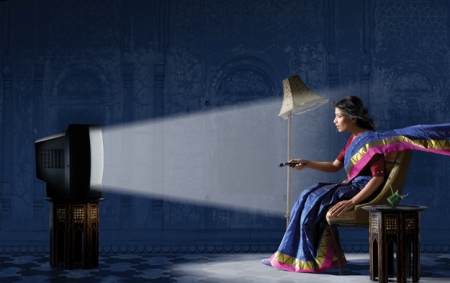
This is one of my favourite photos in media and development. It was taken by Reza Deghati, the renowned Iranian-French photojournalist (who works under the name Reza). I don’t know the story behind this photo, but even without a single word of annotation, it says a great deal.

I like this photo partly because it symobolises the enduring appeal of broadcast television in much of the developing world. For long years, the old-fashioned, boxy TV set used to be the top-selling consumer electronic item in the world — until the mobile phone came along. But even now, the much-maligned idiot box hasn’t lost its appeal to a significant section of humanity, never mind what the jaded academics and geeks might say.

So I was intrigued to read, in the latest issue of TIME Magazine, development economist Charles Kenny, reminding us that television is still the most influential medium around. In this gizmo-ridden new media age, it takes much courage to say so in public.

In a powerful short essay titled ‘TV Will Save the World’, he writes: “Forget Twitter and Facebook, Google and the Kindle. Forget the latest sleek iGadget. Television is still the most influential medium around. Indeed, for many of the poorest regions of the world, it remains the next big thing — poised, finally, to attain truly global ubiquity. And that is a good thing, because the TV revolution is changing lives for the better.”

Across the developing world, he says, some 60% of the households had their own TV set in 2005 — up from 45% in 1995. He adds: “Five million more households in sub-Saharan Africa will get a TV over the next five years. In 2005, after the fall of the Taliban, which had outlawed TV, 1 in 5 Afghans had one. The global total is another 150 million by 2013 — pushing the numbers to well beyond two-thirds of households.”

He ends his essay with these words that strongly resonate with me: “Too much TV has been associated with violence, obesity and social isolation. But TV is having a positive impact on the lives of billions worldwide, and as the spread of mobile TV, video cameras and YouTube democratize both access and content, it will become an even greater force for humbling tyrannical governments and tyrannical husbands alike.”

As Sir Arthur C Clarke, inventor of the communications satellie whose second death anniversary we mark this week, told me in a 2003 interview: “I’m not impressed by the attacks on television because of some truly dreadful programmes. I believe that every TV programme has some educational content. The cathode ray tube – and now the plasma screen – is a window to the world. Often it may be a very murky window, but I’ve slowly come to the conclusion that, on balance, even bad TV is preferable to no TV at all.”

Kenny’s essay is one of 10 ideas for the next 10 years that TIME has put together for its annual innovation issue.

Image courtesy Foreign Policy
The TIME essay is a much compacted version of what he wrote in November 2009 issue of Foreign Policy magazine, titled Revolution in a Box. That article noted the continuing global spread of television sets and an explosion of viewer choice driven by cable, satellite and digital technologies. It suggested this is a good thing, pointing to evidence that access to competitive television can improve womens’ standing in the home, increase girls schooling, reduce fertility rates, lower drug use, improve governance and (possibly) help foster global peace.

The editors of Foreign Policy ran the following blurb: “It’s not Twitter or Facebook that’s reinventing the planet. Eighty years after the first commercial broadcast crackled to life, television still rules our world. And let’s hear it for the growing legions of couch potatoes: All those soap operas might be the ticket to a better future after all.”

The full essay is well worth a careful read. At a time when I have been questioning many of the founding premises of my own work at TVE Asia Pacific, he has provided conceptual clarity and sharper focus.